



Abstract
Violence against youth is a global issue impacting millions each year. Increasingly, research has focused on studying those impacted by multiple forms of violence, or polyvictims. Evidence strongly suggests that polyvictimized youth tend to have worse physical and mental health outcomes than those who have experienced single forms of violence. Moreover, minoritized youth (i.e., racial and/or sexual minority youth, youth with disabilities) are more likely to experience polyvictimization, making this a social justice and equity concern. To date, there is no universal consensus on what exactly constitutes polyvictimization. This systematic review aims to examine the ways in which polyvictimization is being studied to inform both research and practice. As such, relevant databases were searched to amass the extant literature related to youth polyvictimization internationally. Empirical studies published since 2006 that focused on youth (under age 18) polyvictimization were included. After the review process, 264 studies met eligibility criteria, however 55 studies employed person-centered/finite mixture analyses and were removed for a separate review, resulting in 209 featured in the current systematic review. Results demonstrate that researchers are defining and operationalizing polyvictimization in different ways: (a) using individual victimization event counts; (b) employing domain-based counts; and (c) taking a “highest-victimized” percentage of their sample. The most used measurement tool was the Juvenile Victimization Questionnaire, though other validated tools and researcher-constructed questions were frequently utilized. Research on polyvictimization is burgeoning worldwide; however, this research is being conducted in disparate ways, making it difficult to compare findings and further advance the field.
Globally, youth under the age of 18 are victimized at alarmingly high rates, with recent estimates suggesting that one billion of these youth may be exposed to some form of victimization annually (World Health Organization, 2017). Such victimization may include child maltreatment, conventional crime, community violence, cyber violence, exposure to parental violence, and peer or sibling violence. While past researchers often examined single types of violence against youth, this focus has shifted in recent decades. Violence against youth is often complex and does not occur in isolated ways. As such it has become imperative to explore the various compounding circumstances and multifaceted contexts in which youth are victimized.
Finkelhor and colleagues (2007a) promulgated the terms polyvictim and polyvictimization to draw attention to youth who experience more than one type of victimization and thus, potentially, experience the most significant impacts to their well-being. Since its introduction, the term polyvictimization has been used conceptually in research and practice to consider the co-occurrence and/or intersectional nature of victimization and abuse in the lives of youth (Ford & Delker, 2018; Sterzing et al., 2019). Research findings continually support that this subgroup of victimized youth are both sizable in number and proportion and at increased risk for experiencing physical and mental health concerns in comparison to their non-exposed and singly victimized counterparts (e.g., Álvarez-Lister et al., 2017; Baldwin et al., 2018; Feng et al., 2019). However, the employed definition of polyvictimization varies, and the field does not have a universal consensus of who, definitively, is a polyvictim. Clarification regarding the concept of polyvictimization is necessary to unify the field and inform the development of prevention and intervention efforts.
Victimization During Childhood
Youth victimization is a global problem with significant scope and negative impact. A growing patchwork of data points suggests an alarming scale of youth victimization. In a systematic review of youth victimization prevalence studies representing 96 countries, findings showed that at least 50% of youth in Asia, Africa, and the United States encountered victimization in the past year (Hillis et al., 2016). More recently, the World Health Organization (2020) examined data from 40 developing countries and found that 12.5% of youth experienced sexual abuse. Additionally, 42% of boys and 37% of girls reported exposure to bullying. In the United States alone, data suggest that approximately 683,000 youth experience abuse or neglect each year (Office for Victims of Crime, 2018). In terms of impact, research has consistently found that such victimization puts these youth at increased risk for (a) physical and mental health problems, (b) peer and intimate partner relationship issues, (c) poor prosocial behaviors, and (d) re-victimization (e.g., Àlvarez-Lister et al., 2017; Brassard et al., 2020; King, 2021; Ramos de Oliveira & Jeong, 2021).
Youth victimized in one context are not only more likely to be revictimized in that same way (e.g., exposure to child maltreatment by the same perpetrator), but also victimized in new, distinct ways (e.g., peer victimization; Finkelhor et al., 2007b). Therefore, studying a singular type of victimization exposure makes it challenging to pinpoint associations between the type of victimization experienced and youth well-being outcomes (Hickman et al., 2013; Turner et al., 2016). Focusing solely on singular victimization types also ignores the frequently complex and cumulative ways in which victimization manifests (e.g., those who experience multiple forms of victimization tend to exhibit more intense psychological symptoms, thus examining only one form would overestimate the effect of that victimization on symptomology). Empirical evidence now underscores the importance of concurrently considering and measuring the multiple forms of victimization that youth may experience (e.g., Cudmore et al., 2015; Cyr et al., 2013; Pereda & Gallardo-Pujol, 2014; Turner et al., 2017).
Youth Polyvictimization
There is now a robust amount of empirical literature examining youth polyvictimization. In the seminal study that coined the terms polyvictimization and polyvictim, Finkelhor and Colleagues (2007a) found that youth polyvictims experienced more intense psychopathology symptoms (i.e., anger and aggression) than those youth who endured repeated and/or chronic victimizations of the same kind. They also found that the negative effects of cumulative adversities and stressors interact with one another, while noting that the impacts of individuals’ different combinations of these experiences can manifest in diverse ways (Finkelhor et al., 2007a). Recent studies continue to support these initial findings, highlighting the severity of outcomes (e.g., mental health concerns, physical and/or sexual aggression, violent offending, suicidality, and substance use) experienced by polyvictims, especially compared to their peers who have experienced no or single forms of victimization (Álvarez-Lister et al., 2017; King, 2021; Ramos de Oliveira & Jeong, 2021).
Research has started to shift from describing the prevalence and consequences of polyvictimization to understanding vulnerability, risk, and pathways to polyvictimization (Finkelhor et al., 2007b; Finkelhor, Ormrod, Turner, & Holt et al., 2009; Mossige & Huang, 2017) and protective factors (Grych et al., 2015; Hamby et al., 2018, 2020). Continuing to move the field of polyvictimization research forward, scholars have developed theoretical approaches—polyvictimization framework or polyvictimization theory—that many now use to guide youth polyvictimization research efforts (Ford & Delker, 2018; Sterzing et al., 2019). These approaches are guided by the assumption that those who endure multiple types of victimizations report worse and more pervasive negative health outcomes and address the overestimation of the effects of individual victimization types (Finkelhor et al., 2007b; Turner et al., 2016).
Finkelhor, Ormrod, Turner, Holt et al. (2009) examined the typical onset of polyvictimization, with almost half of the sample experiencing their first victimization by a peer or sibling. This introduced an important relational element to understanding polyvictimization—a concept frequently represented in polyvictimization measurement tools with questions specific to the perpetrator of the victimization for this reason (e.g., Juvenile Victimization Questionnaire; JVQ). Finkelhor and their research team have posited four likely pathways to becoming a polyvictim in childhood: (a) residing in a dangerous community (e.g., high levels of neighborhood victimization); (b) living in a dangerous family (e.g., frequent conflict); (c) having a chaotic, multi-problem family environment (e.g., financial issues, substance abuse); and/or (d) having emotional problems that increase risk behaviors or compromise the capacity to protect oneself (e.g., high emotional dysregulation). What is overlooked in these proposed pathways are the vulnerabilities related to structural and systemic issues that exist and disproportionately impact marginalized individuals and populations (e.g., pathways to poverty, lack of support for sexual minority youth; Finkelhor et al., 2007c; Sterzing et al., 2019).
Overall, global interest has proliferated in comprehensively understanding youth polyvictimization. Although the growth in research on this topic is critically necessary, it has also led to disparate ways of measuring polyvictimization, making it difficult to compare findings across studies. Notably, there is still no consensus on how polyvictimization should be conceptualized or operationalized. Some scholars have called attention to this lack of clarity as a limitation to advancing work in the field (e.g., Álvarez-Lister et al., 2017; Haahr-Pedersen et al., 2020; Mossige & Huang, 2017); however, no prior research has systematically examined the ways in which youth polyvictimization is conceptualized and operationalized to coalesce this emerging area of victimization research.
Current Study
To address these gaps, this systematic review aims to examine how youth polyvictimization has been conceptualized and operationalized in peer-reviewed empirical studies since the term was coined in 2007. As the first such endeavor of its kind, this work is a novel and important contribution to the field of youth victimization research. Two research questions guided the review: (a) How are researchers conceptualizing (i.e., defining, understanding) youth polyvictimization?; and (b) How are researchers operationalizing (i.e., measuring, scoring) youth polyvictimization?
Methods
Overall, there were four methodological tasks in the review including (a) identification, (b) screening, (c) data synthesis, and (d) data analysis. Authors worked jointly as a team for all review tasks, with two being co-leads (
Identification
The identification process involved searching for relevant research studies and included selection of information sources, specification of search parameters, and specification of a process for applying the parameters to the sources. Information sources were a priori limited to databases of research studies. Three inputs were used to select the databases: substantive expertise, experiences from previous systematic reviews, and consultation with an experienced university behavioral and social sciences librarian. The search focused on the following six databases: (a) Cumulative Index to Nursing and Allied Health Literature, (b) Google Scholar, (c) APA PsycINFO, (d) PTSDPubs, (e) PubMed, and (f) Social Services Abstracts. All searches limited results to those available in English since 2007 (when the term polyvictimization was coined). Google Scholar results were limited to the first 60 articles sorted by relevance, while all other database searches included all possible results.
The search strategy aimed to elicit studies examining youth polyvictimization and, thus, to identify only those that used the term “polyvictimization” or similar. Each database’s search parameters contained some variation of “poly-victim* OR polyvictim OR poly-victimization OR polyvictimization OR polyvictimisation” AND “youth OR child* OR adol* OR teen*” limited to (a) abstracts, (b) titles, and (c) keywords. Boolean operators were employed when possible, although as some databases did not recognize them, the search terms were modified to include all intended keywords when necessary. In consideration that “polytraumatization” might be used interchangeably with “polyvictimization” in a study, “polytrauma OR polytraumas OR polytraumatization OR polytraumatisation” were also included in each search, limited to title only. The exact search parameters by database are outlined in Supplemental Appendix A.
Screening
The screening process consisted of determining which of the identified studies should be included in the review using specified eligibility criteria. Three general considerations were discussed among the research team relative to the criteria. First, it was decided that the review would be global in scope and thus include all studies. Second, given the expected large number of studies, the research team decided that gray literature and non-peer-reviewed research would not be included. Third, it was decided to include both youth-only samples and adults reporting retrospectively on their youth experiences (before the age of 18). Thus, overall, the review aimed to characterize the entirety of global research on youth polyvictimization available in English.
Five eligibility criteria were pre-specified, with studies needing to meet all for inclusion: (a) be published in 2007 or after; (b) comprised either solely youth with a mean age under 18 or adults retrospectively reflecting on victimization experiences prior to age 18; (c) include specific details about definitions and/or measurements of polyvictimization that is not the result of an accident (i.e., medical trauma); (d) constitute original and empirical research (i.e., quantitative, qualitative, or mixed methods); (e) be published in English in a peer-reviewed academic journal. Assessment of eligibility occurred in three steps based on best practices and recent examples (e.g., Franchino-Olsen et al., 2022; Macy et al., 2021; Page et al., 2021). Step #1 involved removing duplicates. Step #2 involved applying the eligibility criteria to the title and abstract of all remaining studies. Step #3 involved applying the eligibility criteria to the full text of all remaining studies.
Data Synthesis
The data synthesis process involved the collection of relevant and accurate data from the included studies. It was decided that data synthesis would be (a) facilitated by an online form, (b) conducted primarily by two team members identified as the data extractors (
There were four steps to the data extraction process. In step #1, a random block of studies was chosen to be completed by the extractors blinded to each other’s work. Following completion, the extractors had in-person checking of discrepancies and their inter-rater percent agreements were calculated, with 15 of 20 variables having ≥80% agreement and 11 of 20 having ≥90%. This served as both a pilot test of the extraction tool, as well as a training period to ensure congruence among the extractors. As necessary, the Qualtrics form was modified for clarity and ease of completion. In step #2, because of the large number of studies, it was decided that each extractor would independently extract a different random block of studies. In step #3, the extractors once again extracted a shared random block of studies to assess for drift and ensure congruence, followed again by an in-person meeting and review of studies with any discrepancies. Finally in step #4, the extractors divided and independently extracted the remaining studies.
In all, 23 study-independent variables common to all studies were extracted across five domains: (a) extraction information (n = 2 variables; extractor name, extraction date), (b) study information (n = 3; unique identifier, citation, clarity rating), (c) study information (n = 10; location, setting, sample size, sample age mean, sample age standard deviation, sample type, methodological approach, design, sampling strategy, data source), (d) conceptualization characteristics (n = 5; polyvictimization term, joint polyvictimization terms, approach to conceptualizing polyvictimization, use of theory related to polyvictimization, prior study cited for conceptualization), and (e) operationalization characteristics (n = 3; measurement tool and/or methods used, timeframe examined, type of polyvictimization variable). Additional study-dependent variables (n = 14) were also collected as necessary to give a more fulsome picture of the research therein (e.g., if the sample was comprised of youth, who reported the victimization experiences; qualitative follow-up questions to “Other” responses). Also, a qualitative variable was included to flag if a data extractor wanted the study reviewed by the team.
Broadly, the extracted data were synthesized using a narrative synthesis approach following recommendations outlined by Petticrew and Roberts (2006). This approach was deemed appropriate for the review given the focus on conceptualizations and operationalizations of polyvictimization, and that findings would be most logically organized into categories and themes. At the end of the data extraction, the synthesized data were exported into a Microsoft Excel file for data cleaning. Flagged studies were jointly reviewed by three team members (
Data Analysis
The cleaned master data file was imported into Stata 16.1 (StataCorp, 2019) and one team member (
Results
Identification, Screening, and Data Synthesis
The search was conducted by one team member (
Figure 1 depicts the identification and screening process using a PRISMA-based diagram. Of these 264 studies, 55 used some form of person-centered/finite mixture analyses to operationalize polyvictimization—typically via cluster analysis or latent class analysis. As it was deemed these studies constitute a unique body of work that seek to define polyvictimization empirically, for this review only the 209 studies that used an a priori operationalization of polyvictimization were considered, leaving these 55 cluster and latent class analyses for a future review. Given space limitations, the references for all 209 included studies are listed in Supplemental Appendix B.
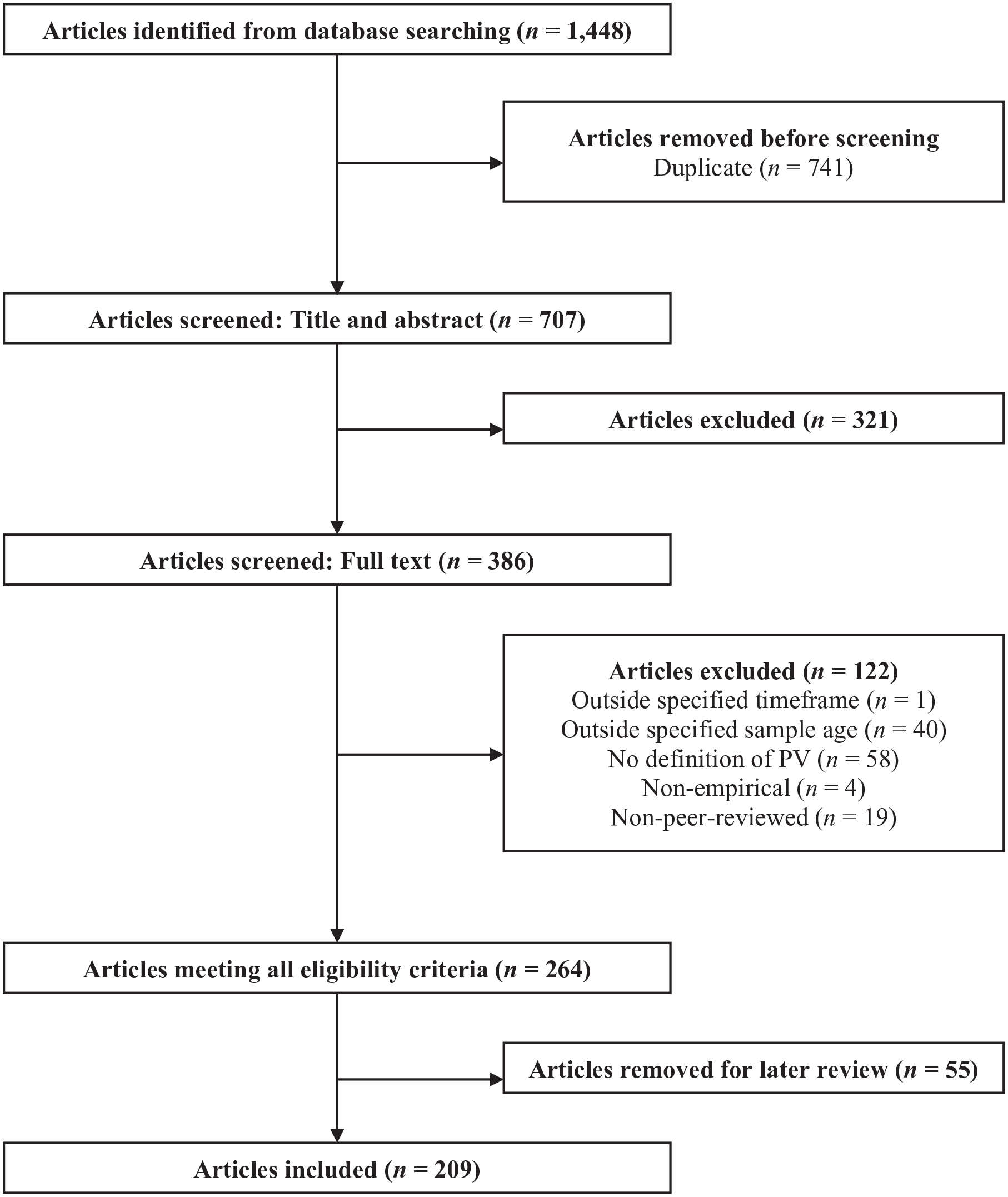
Article identification and screening process.
Data extraction occurred between April 1, 2022 and September 11, 2022. The step #1 mean inter-rater percent agreement was 87.1% over 26 studies. Step #2 involved 50 different studies for each extractor. The step #3 mean agreement was 94.5% over 10 studies. Step #4 involved 32 studies for one extractor (
Study Characteristics
Key study characteristics can be found in Table 1. Six continents and 44 unique countries were represented in the 209 studies. The countries in which youth polyvictimization research was most common were the United States (n = 86, 41.2%), Spain (n = 26, 12.4%), and Canada (n = 12, 5.7%). Notably, the majority of studies (n = 198, 94.7%) conducted their research in one country. In terms of setting, almost one-third (n = 66, 31.6%) of the research was conducted in participants’ homes via interviews or by phone. Sample sizes ranged from 14 to 38,282 (M = 2,865.08, SD = 4,912.82; n = 203 due to missing data) and the sample mean age was 17.07 (SD = 7.48; n = 139 due to missing data). To understand youth polyvictimization, studies included samples of youth (n = 155, 74.2%) and adults who retrospectively reported their experiences with victimization before the age of 18 (n = 51, 24.4%). Only three studies included samples with both types of participants. All methodological approaches (quantitative: n = 202, 96.7%; qualitative: n = 3, 1.4%; mixed method: n = 4, 1.9%) were utilized with both cross-sectional (n = 183, 87.6%) and longitudinal (n = 26, 12.4%) data structures. However, most studies used a quantitative and cross-sectional approach (n = 172, 87.3%). Although a sizable proportion of studies did not articulate their sampling methods (n = 31, 14.8%), those that did were roughly split in terms of their use of probability (n = 84, 40.2%) versus non-probability sampling (n = 94, 45.0%).
Study Characteristics (N = 209).
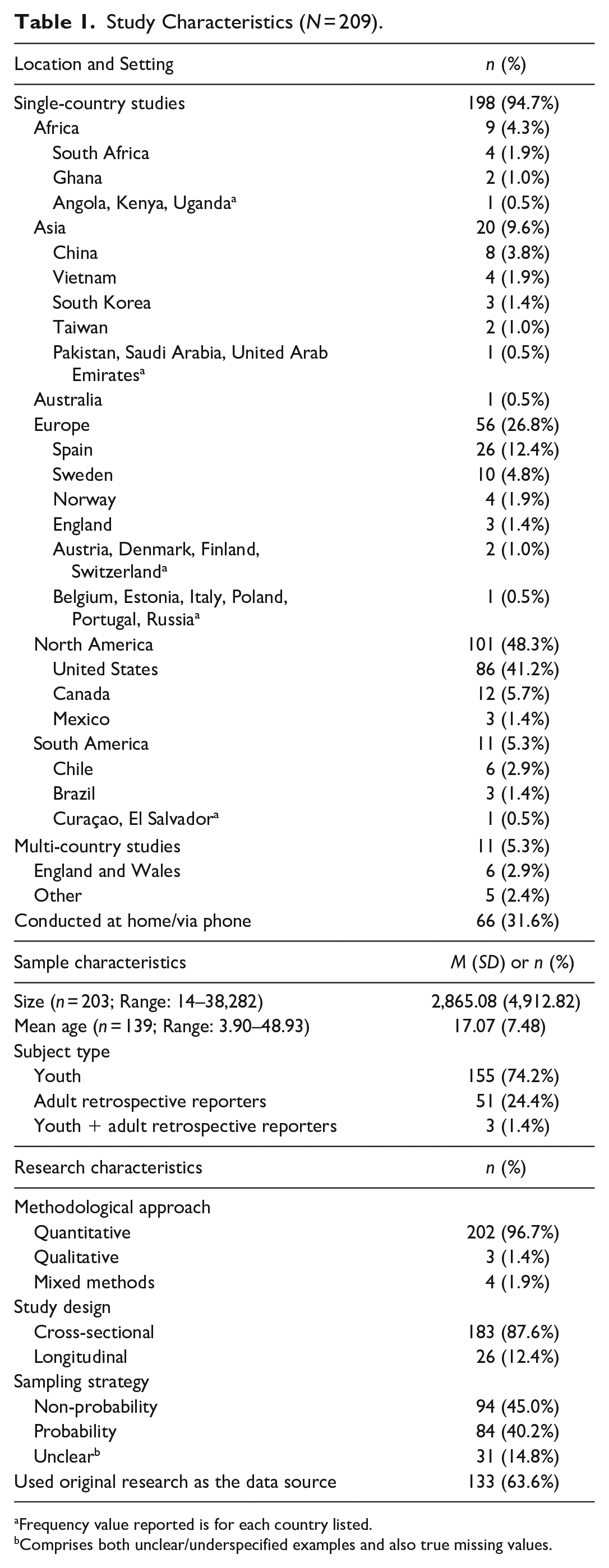
Frequency value reported is for each country listed.
Comprises both unclear/underspecified examples and also true missing values.
Conceptualizations
Polyvictimization was conceptualized in various ways (see Table 2). Among the 209 studies, polyvictimization had four different spellings with “polyvictimization” being most common (n = 110, 52.6%). At times, polyvictimization was used jointly with other terms (n = 36, 17.2%; e.g., “polytraumatization,” “cumulative victimization exposure”). The common feature amongst all conceptualizations of polyvictimization was that an individual had to experience more than one kind of victimization event as opposed to enduring the same type of victimization in the same context repeatedly. Specific definitions and conceptualizations of polyvictimization used in the included studies were quite disparate with Supplemental Appendices C–E summarizing all information.
Conceptualizations of Polyvictimization (N = 209).
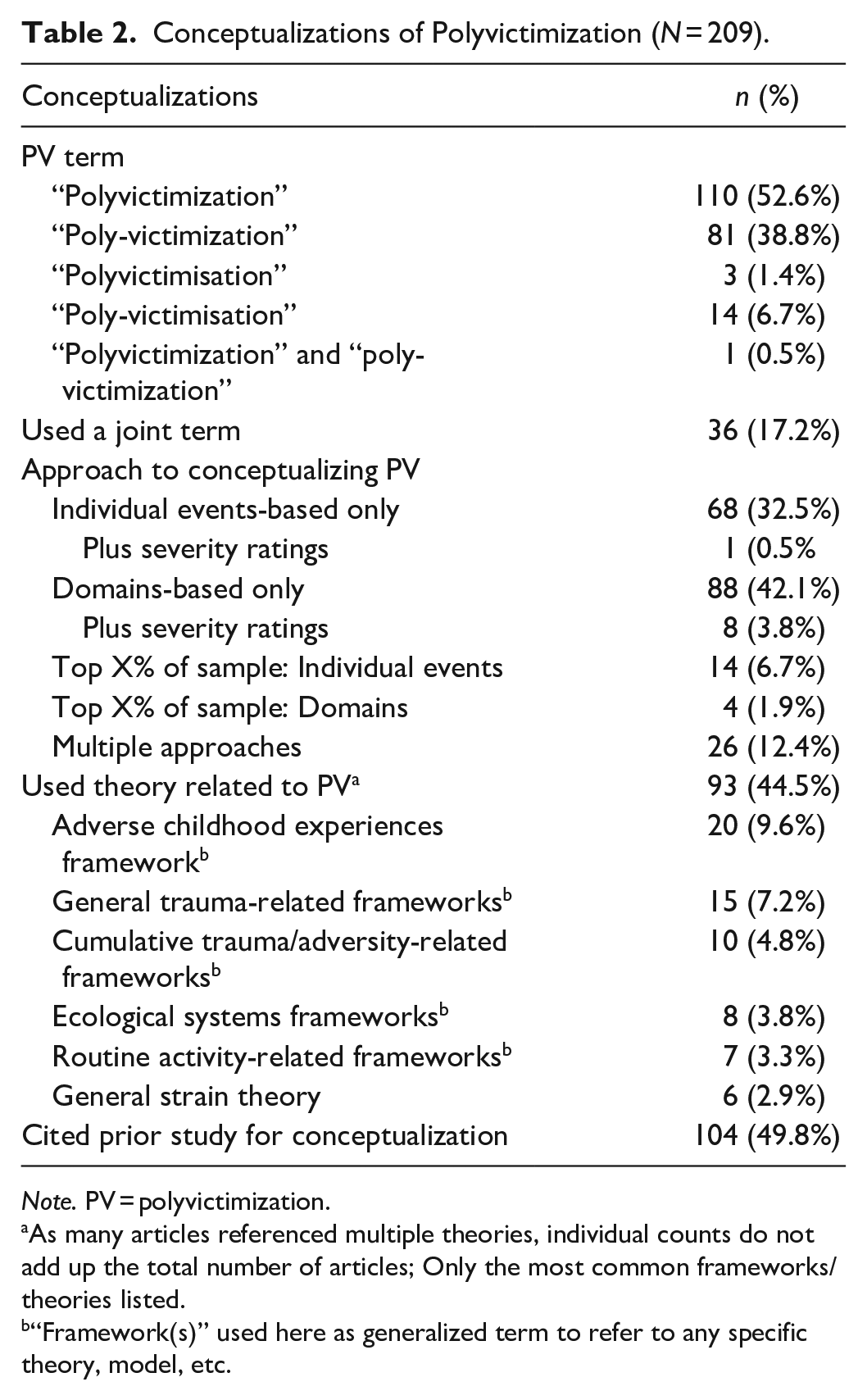
Note. PV = polyvictimization.
As many articles referenced multiple theories, individual counts do not add up the total number of articles; Only the most common frameworks/theories listed.
“Framework(s)” used here as generalized term to refer to any specific theory, model, etc.
Approaches to Conceptualizing Polyvictimization
Researchers approached conceptualizing polyvictimization in various ways that were broadly categorized a priori by this research team into “Individual events-based,” “Domains-based,” and “Top X% of the sample.” An individual events-based approach indicates that the researchers were using endorsements of individual victimization events/items to establish a cutoff score to identify polyvictims (n = 68, 32.5% used an individual events-based approach only). Domains-based approaches were based on the endorsement of any item/event within a domain (e.g., physical abuse, emotional abuse, sexual abuse), such that if a participant indicated two separate events occurred within the same domain, they would still receive a dichotomous “1 = Yes” score for that particular domain (n = 88, 42.1% used a domains-based approach only). It is notable that studies used very different domain types and namings, again drawing attention to the varying conceptualizations of polyvictimization (see Supplemental Appendix E for patterns of domains). When using domains to conceptualize polyvictimization (in various ways; n = 113, 54.1%), the overarching categories of domains used and the percent of studies that used each domain type were: (1) physical violence (69.0%); (2) sexual violence (83.2%); (3) family violence (32.7%); (4) neglect (34.5%); (5) emotional violence (44.2%); (6) peer/sibling violence (33.6%); (7) cyber violence (15.0%); (8) conventional crime (20.4%); (9) community violence (14.2%); and (10) other (written as identified in the study, 51.3%). When using the “Top X% of the sample” approach, researchers typically conceptualized that polyvictims were the top 10% of the most victimized individuals in their sample (although some used different cutoff points), again based off of endorsement of individual events or domains (n = 18, 8.6% used Top X% of the sample only). This third option still necessitates an underlying choice focusing on either events or domains to determine polyvictim status.
A small subset of nine studies (4.3%) established cutoffs using severity ratings of victimization experiences that would count toward their determination of polyvictimization status (Crush, Arseneault & Fisher, 2018; Crush, Arseneault, Jaffee et al., 2018; Crush, Arseneault, Moffitt, et al., 2018; Crush et al., 2020; Elsaesser & Voisin, 2015; Guerra et al., 2019; O’Dea et al., 2020; Tanksley et al., 2020; Zhang et al., 2021). Although studies would often determine a dichotomous cutoff point at which an individual would be considered a polyvictim, some then established subsequent ordinal groupings (n = 7, 33%; e.g., “Low polyvictimization” versus “High polyvictimization”). Twenty-six (12.4%) of the studies utilized multiple approaches to conceptualizing polyvictimization status (e.g., used both individual events- and domains-based cutoffs to delineate different groups of polyvictims).
Use of Theory and Prior Research
When discussing their conceptualization of polyvictimization, 93 (44.5%) studies mentioned the use of theory, with the Adverse Childhood Experiences framework (n = 20, 9.6%), general trauma-related theories and frameworks (n = 15, 7.2%; e.g., developmental trauma theory, traumatic stress theory), and various cumulative trauma perspectives (n = 10, 4.8%; e.g., cumulative trauma theory, cumulative risk theory) being cited most frequently. Of these studies, some (n = 27, 29.0%) cited multiple theoretical foundations which contributed to their understanding of polyvictimization. Further, 104 studies (49.8%) cited prior research to explain the rationale for their conceptualization of polyvictimization. The most frequently cited studies were the early polyvictimization works of Finkelhor and Colleagues (2005, 2007a, 2007b), and Finkelhor, Ormrod, Turner et al. (2009) and subsequent research involving some of the same authors (e.g., Turner and Colleagues, 2010).
Operationalizations
The included studies operationalized polyvictimization in numerous ways (see Table 3), with polyvictimization being measured using various tools, methods, timeframes, and variables.
Operationalizations of Polyvictimization (N = 209).
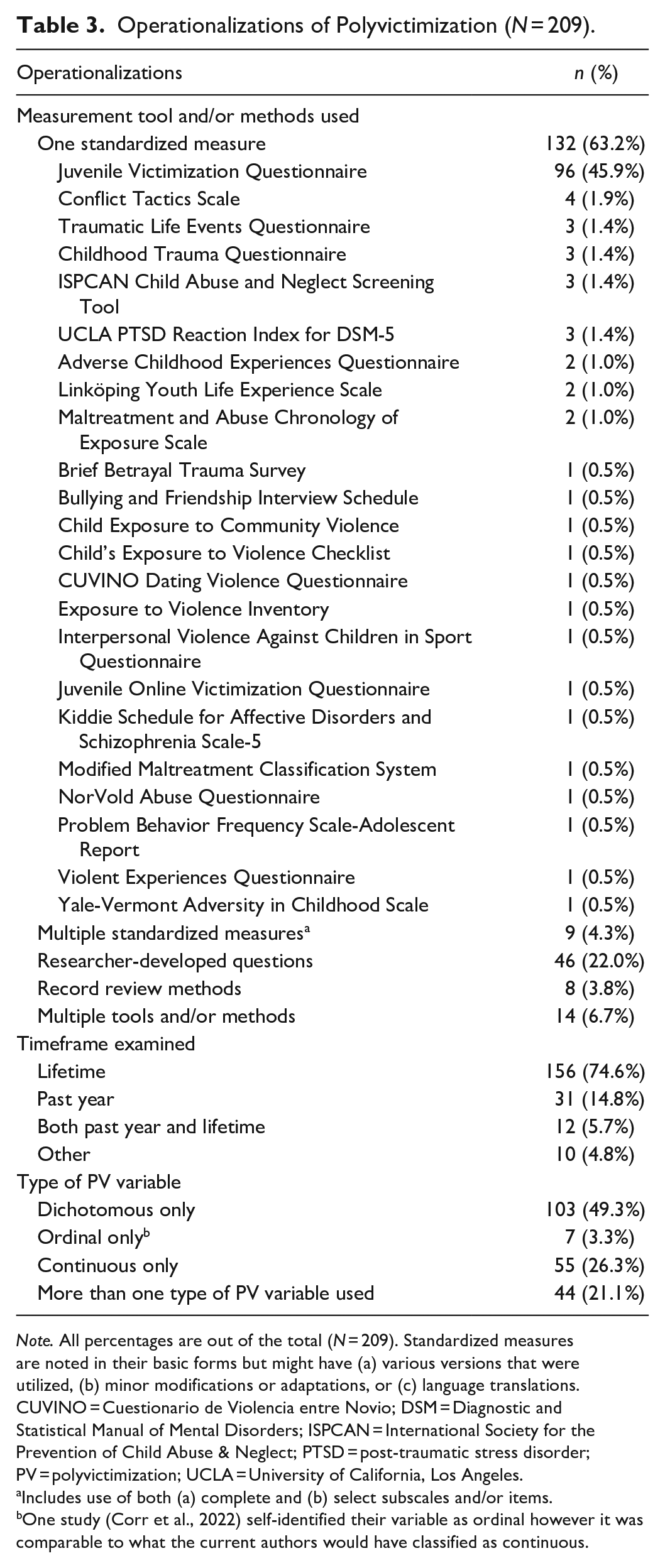
Note. All percentages are out of the total (N = 209). Standardized measures are noted in their basic forms but might have (a) various versions that were utilized, (b) minor modifications or adaptations, or (c) language translations. CUVINO = Cuestionario de Violencia entre Novio; DSM = Diagnostic and Statistical Manual of Mental Disorders; ISPCAN = International Society for the Prevention of Child Abuse & Neglect; PTSD = post-traumatic stress disorder; PV = polyvictimization; UCLA = University of California, Los Angeles.
Includes use of both (a) complete and (b) select subscales and/or items.
One study (Corr et al., 2022) self-identified their variable as ordinal however it was comparable to what the current authors would have classified as continuous.
Approaches to Operationalizing Polyvictimization
The 209 studies utilized over 20 different tools to measure polyvictimiza-tion (see Supplemental Appendix D). The majority of studies (n = 132, 63.2%) employed one standardized measurement tool, while nine (4.3%) utilized more than one standardized measure, and 46 (22.0%) also featured researcher-developed items, including instances where items were pulled and/or adapted from existing tools. Some studies (n = 8, 3.8%) applied record review methods, where victimization experiences were coded from child welfare, administrative, medical, or hospital records. Finally, 14 studies (6.7%) used multiple tools and/or methods.
A total of 96 studies (45.9%) used the JVQ alone. However, among these studies the JVQ was used in three different ways: (a) in one of its complete English language versions (n = 19, 19.8%), (b) translated a complete version into a language other than English (n = 22, 22.4%), or (c) adding or removing a limited number of items or adapting the JVQ to the cultural context in which it was being used (n = 25, 26.0%). Over a quarter of studies that used the JVQ both translated it into another language and modified or adapted it in some way (n = 30, 31.5%). Also, some studies used JVQ items and/or subscales in conjunction with another measure. Other utilized tools included the Conflict Tactics Scale, the Childhood Trauma Questionnaire, the Traumatic Life Events Questionnaire, the IPSCAN Child Abuse and Neglect Screening Tool, and the UCLA PTSD Reaction Index for DSM-5, among others.
Timeframes Examined
The timeframes in which the experiences occurred varied, with the most common being either “lifetime,” interpreted in this review as prior to the age of 18 (n = 156, 74.6%), “past year” (n = 31, 14.8%), and “both past year and lifetime” (n = 12, 5.7%), with some studies (n = 10, 4.8%) designating other specific timeframes.
Types of Variables
While polyvictimization was conceptualized in innumerable ways, studies often either designated a cutoff of endorsed statements to indicate polyvictimization status as a dichotomous variable (n = 103, 49.3%), created ordinal groupings for victimization and polyvictimization (e.g., “non-victims,” “victims,” “low polyvictims,” and “high polyvictims”; n = 7, 3.3%), established a sum count of endorsed events to run analyses with a continuous variable (n = 55, 26.3%), or used multiple approaches to examine polyvictimization in different ways (n = 44, 21.1%).
Discussion
Studying Polyvictimization
Review findings emphasize that polyvictimization is being recognized globally in at least 44 countries. The expansion of research on polyvictimization furthers our understanding of this phenomenon. However, there is no clear consensus on the conceptualization and operationalization of polyvictimization, as demonstrated by the widely divergent approaches found throughout. Below we highlight findings related to the conceptualization and operationalization of polyvictimization, as well as implications for advancing the field.
Conceptualizing and Defining Polyvictimization
Studies used various ways to define polyvictimization and identify polyvictims within their samples, mostly taking a cumulative approach. Many used methods that were dependent on the makeup of their sample, which notably were frequently non-representative samples. Cutoff scores were regularly established by using the sample’s mean number of victimizations (e.g., “above the mean”, “experiencing the mean + 1”) or top 10% of the most victimized individuals within the sample. Some thresholds for polyvictimization were identified through the endorsement of a minimum number of individual events, whereas others determined their cutoff points through endorsements of domains consisting of various victimization events. These dissimilar definitions of polyvictimization across the reviewed studies highlight the lack of a consistent conceptualization of polyvictimization in the field that has been previously noted by other researchers (e.g., Álvarez-Lister et al., 2017; DeHart & Moran, 2015; Haahr-Pedersen et al., 2020; Mossige & Huang, 2017).
As demonstrated by the varied and diverse studies included in this review, many researchers have found value in the polyvictimization framework (Hickman et al., 2013). Given the broad potential of this framework, it is worth noting the lack of agreement in its conceptualization across the reviewed studies. For example, defining polyvictimization within a sample as dependent on the sample, rather than a pre-existing definition (i.e., individual events- or domain-based), is a narrower application of the framework than used by many researchers. By defining polyvictimization as the most victimized in a sample, these studies are inherently restricting the results to the context from which the data was drawn, even in population-based samples. As a result, these studies limit the conceptualization of polyvictimization to context-specific victimization norms. Comparison of polyvictimization findings from two studies which both define polyvictimization to be the top 10% of their sample may find their results are discordant due to one study drawing a sample from a context in which multiple forms of victimization are accepted and common, and the other study drawing from a context with relatively low victimization prevalence and acceptability. The individuals identified as polyvictims in the latter context may match the average individual—not the polyvictims—in the former context despite employing the same working definition of polyvictimization. As a result, attention must be paid to how studies define and conceptualizing polyvictimization when comparing or summarizing findings within and across contexts.
Measuring and Operationalizing Polyvictimization
As previously noted in the field, review findings highlight that polyvictimization has been operationalized in divergent ways (Segura et al., 2018; Updegrove & Muftic, 2019). The majority of studies employed standardized scales. Notably, most used the JVQ in some form as this tool was created by the research team that coined the term polyvictimization (Hamby et al., 2004). The JVQ, and some of its similar counterparts (e.g., Childhood Trauma Questionnaire), aim to measure victimization experiences by utilizing a dichotomous yes/no count of whether a victimization experience has occurred. As such, each victimization is weighted the same. For example, experiencing an incident of peer bullying is counted in the same way as experiencing sexual abuse from a caregiver. This could be problematic when attempting to identify the most at-risk subgroup of youth, particularly when using sample-dependent cut-offs to determine polyvictim status. Some of the more recent research incorporated severity ratings within their cutoff scores (e.g., Crush, Arseneault & Fisher, 2018; O’Dea et al., 2020; Tanksley et al., 2020; Zhang et al., 2021), which might be a start to improve on the dichotomous nature of our current victimization measurement tools. Briggs et al. (2021) further highlight this concern, and relatedly, that certain combinations of victimization or adversity types have interactive effects that vary both by gender and age.
It is also critical to underscore the issue of conflating cumulative victimization or trauma exposure with polyvictimization. This is seen most obviously in the array of studies that operationalize polyvictimization by using a continuous variable either alone or in conjunction with further categorical groupings (e.g., “high” or “low” polyvictimization). The a priori groupings constructed as a result of these cumulative measurements are arbitrary and are not identifying youth who are at the highest risk for negative outcomes with certainty.
Limitations
There are some limitations to this review. First, the research team did not employ methods to assess the quality of the studies and risk of bias. However, as the review did not examine study results, the research team came to a consensus that this would not undermine our results. Second, several studies did not clearly describe the definition and operationalization of polyvictimization employed by the study. Given this lack of clarity, the research team had to use a certain level of subjective judgement. To overcome such challenges, a team-centered approach was used where if one team member was unable to ascertain a polyvictimization definition, the two data extractors would look at the study in question together and come to a consensus. This was viewed by the team as more robust than utilizing a single extractor approach, though it is still potentially limiting. Third, as noted above, this review excluded studies that derived polyvictimization definitions empirically, typically via cluster and latent class analyses. Finally, although the review notes differences, it does not pursue any testing of, for example, whether polyvictimization-related findings might vary by differences in polyvictimization definitions.
Implications
Research Implications
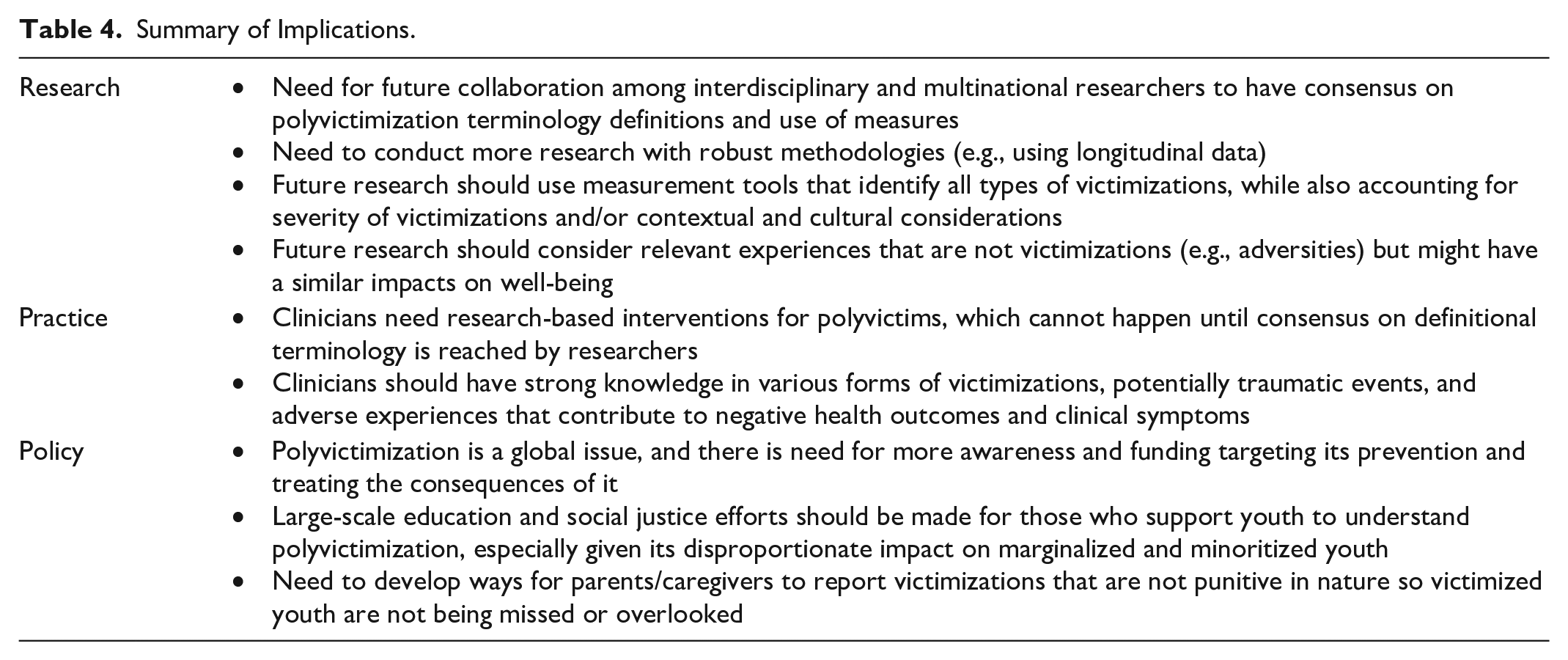
The current review is an important contribution to research on polyvictimization as it highlights the different ways that polyvictimization is being conceptualized and operationalized. Table 4 presents a summary of various implications of this work. Given the current discrepancies in the field, there is a need for future collaboration among interdisciplinary and multinational polyvictimization researchers to create a set of guidelines and recommendations regarding the polyvictimization framework, terminology, definitions, and measurement (e.g., Segura et al., 2018; Updegrove & Muftic, 2019). These guidelines could include recommended best practices and examples of ways to operationalize polyvictimization via standardized or common victimization measures/scales, as well as highlighting the potential priority areas for the field. For example, Álvarez-Lister and Colleagues (2014) propose using diverse methodologies and developing an empirical-based definition instead of a priori definitions that are commonly used. The collaborative endeavor undertaken by the International Society for the Prevention of Child Abuse & Neglect members to develop and validate the Child Abuse Screening Tool. They utilized expert review and a Delphi process with over 100 professionals, followed by field testing in multiple countries with several stages of refinement (ISPCAN, n.d.). This illustrates a comprehensive manner in which this could be done in the field to incorporate diverse opinions and cultural considerations in determining the most effective conceptualization and operationalization of polyvictimization.
Summary of Implications.
Studies are also utilizing measures that exclude certain forms of victimization, both overt and structural, that might occur more frequently for or have differential impacts on minoritized youth. Unjust and exploitative social, political, and economic systems contribute to poverty, which is associated with experiencing polyvictimization. Healthcare biases and disparities occur more often toward stigmatized groups (e.g., sexual and gender minorities, racial minorities; Elster et al., 2003; McDowell et al., 2020). Yet, these forms of victimization are neglected in the measurement of polyvictimization (as seen in Supplemental Appendix E). While many measures include some form of peer victimization or bullying, a component that is not typically addressed is identity-based victimization (e.g., race-based victimization, bullying specific to gender identity). Research on individuals who experience identity-based victimization demonstrates that it is associated with negative outcomes above and beyond those who experience bullying not related to one’s identity (Utley et al., 2022). Future research should take these neglected components into consideration.
This review has highlighted the enormous volume of research happening in the realm of youth polyvictimization. The concept of polyvictimization has been useful in illuminating how cumulative victimization can compound the burden of trauma and heighten poor health outcomes (Hamby & Mariscal, 2021). It would greatly aid polyvictimization research if a standardized set of terminology was available to distinguish patterns or types of polyvictimization such as differentiating between (a) patterns of polyvictimization that reflect single occurrences of many types or domains of victimization and (b) patterns of polyvictimization experiences occurring via repeated and frequent episodes of severe victimization across multiple domains and by many different perpetrators. As the risk factors for and consequences of these differing patterns or dosages of polyvictimization may differ, this potential distinction may be missed if these varied patterns or dosages are all grouped under the same polyvictimization term. It would be helpful to develop terminology to distinguish victimization severity and dosage under polyvictimization while still allowing for the framework to capture the multifaceted nature of victimization. Also, as noted above, there are still limitations in understanding how PV-related findings (e.g., prevalence, impact) might vary by differences in PV conceptualizations and operationalizations. Quantitative analyses related to these relationships might prove fruitful in guiding future PV research.
Practice Implications
Research heavily influences intervention programs; however, without consensus on who polyvictims are, such programs do not have a clearly defined target population. The way in which polyvictimization continues to be researched will impact prevention and response efforts targeting polyvictimized youth. This review highlights that polyvictimization studies are considering disparate kinds of victimization experiences (see Supplemental Appendix E). For assessment purposes, clinicians should be knowledgeable of the various kinds of victimizations, traumatic events, and adverse experiences that might contribute to negative health outcomes or clinical symptomologies.
Policy Implications
Research continually shows that youth polyvictims tend to have worse health outcomes that pursue into adulthood as compared to those who are not victimized or victimized repeatedly in the same way (Brassard et al., 2020; Ford & Delker, 2018). Moreover, research has demonstrated that marginalized and minoritized youth are at higher risk of being polyvictims (Andrews et al., 2015; Sterzing et al., 2019). Polyvictimization should be centered in social justice work, prioritizing efforts to support strong prevention and intervention programs for polyvictimized youth. Hopefully these targeted efforts would see success in promoting better outcomes for marginalized youth and begin to address structural and systemic factors that are related to minoritized youth becoming polyvictims. There should also be more education for youth and those in positions to support youth (e.g., parents and caregivers, teachers, coaches, medical professionals) on victimizations and the dangers of experiencing multiple victimizations.
Conclusions
This review fills a critical gap by synthesizing the definitions, operationalizations, and measurement tools being used in the extant youth polyvictimization literature. In its simplest definition, polyvictimization refers to an individual being exposed to multiple types of victimizations. However, there are many other conceptualizations being employed in empirical works. Overall, there was little clarity regarding standout approaches to conceptualize and operationalize youth polyvictimization. This review highlights the need for further consensus on how to approach youth polyvictimization to conduct rigorous research that will lead to well-supported clinical efforts and effective policy change to aid this high-risk subgroup of youth.
Supplemental Material
sj-docx-1-tva-10.1177_15248380231224026 – Supplemental material for A Systematic Review of Conceptualizations and Operationalizations of Youth Polyvictimization
Supplemental material, sj-docx-1-tva-10.1177_15248380231224026 for A Systematic Review of Conceptualizations and Operationalizations of Youth Polyvictimization by Spenser R. Radtke, Christopher J. Wretman, Cynthia Fraga Rizo, Hannabeth Franchino-Olsen, Denise Yookong Williams, Wan-Ting Chen and Rebecca J. Macy in Trauma, Violence, & Abuse
Footnotes
Declaration of Conflicting Interests
The author(s) declared no potential conflicts of interest with respect to the research, authorship, and/or publication of this article.
Funding
The author(s) received no financial support for the research, authorship, and/or publication of this article.

Supplemental Material
Supplemental material for this article is available online.
Author Biographies
References
Supplementary Material
Please find the following supplemental material available below.
For Open Access articles published under a Creative Commons License, all supplemental material carries the same license as the article it is associated with.
For non-Open Access articles published, all supplemental material carries a non-exclusive license, and permission requests for re-use of supplemental material or any part of supplemental material shall be sent directly to the copyright owner as specified in the copyright notice associated with the article.
