



Abstract
In the past decade, the sending and sharing of sexual images among youth has become normalized. An associated risk of sharing sexual images is the images being nonconsensually shared among peers or uploaded online. This is the first review to systematically identify, summarize, and critically evaluate existing research on the mental health and social impact of nonconsensual sharing of sexual images (NCSSI) on youth. Database (MEDLINE, PsycINFO, PsycArticles, Embase, PubMed, Web of Science, Scopus) and manual searches were conducted to identify eligible studies. A narrative synthesis and a Mixed-Methods Appraisal Tool were used for quality analysis. Of 4,013 articles retrieved, 13 met the eligibility criteria. The findings suggest that NCSSI is associated with negative mental health and social repercussions. Five quantitative studies found evidence suggestive of increased depression, anxiety, and suicidal ideation in young people following NCSSI. The identified qualitative evidence highlighted a range of adverse impacts in the social lives of those affected, including associated bullying, harassment, and victim-blaming attitudes that many individuals face following an experience of NCSSI, which may contribute to a negative sense of self and exacerbate distress. Some of the identified studies used unvalidated tools to assess mental health outcomes, and mainly measured depression and anxiety. Most studies more broadly discussed the sharing of sexual images rather than NCSSI specifically. Future research should adopt a narrow focus on the impact of NCSSI and use validated tools to measure various mental health outcomes.
Introduction
A smartphone has become an extension of a young persons’ social world, with 91% of children aged 12 to 15 years owning their own device (Ofcom, 2021). The smartphone provides young people with opportunities to connect with friends on social media, meet individuals with common interest, and express themselves through creative landscapes (Subrahmanyam & Smahel, 2011). Likewise, the rise in social media has allowed for new methods of flirting, meeting romantic partners, and maintaining relationships through digital mediums, such as messaging and sharing images (Meenagh, 2015). A systematic review and meta-analysis of 39 studies found a mean prevalence rate of 14.8% to 27.4% for sending and receiving sexual images, respectively (Madigan et al., 2018). Thorn (2021) found a similar prevalence rate (25%) of sexual image sharing among girls aged 13 to 17 years. For many, the sending of sexual images is considered: (a) a form of flirting and/or gaining romantic attention; (b) part of a sexual relationship; (c) an experimental adolescent phase; and (d) social pressure from friends/partner (Klettke et al., 2014; Van Ouytsel et al., 2020).
Existing literature varies in the terms used to describe the sharing of sexual images between youth, including unwanted sexual images, unwanted sexting, nonconsensual sexual images, nonconsensual intimate images, or sexual images or videos produced through coercion. The introduction of these terms is very much interwoven with the advances and affordances of technology and how youth are adapting them into their lives and their social groups. For example, when asking young people what they consider to be sexting, they would define it as writing and sharing sexually explicit or intimate words to people they knew. They view sharing of nude or intimate images as sharing “nudes” (UKCIS, 2020). We will use the term sharing of sexual images and the nonconsensual sharing of sexual images (NCSSI) in this review.
Researchers have evaluated the mental health impact of sharing sexual images, with conflicting findings. Some studies do not find evidence of a negative emotional impact of sharing a sexual image (Del Rey et al., 2019), whereas other studies have found that both cyberbullying and depressive symptoms are associated with the sharing of sexual images (Gasso et al., 2019b; Medrano et al., 2018). The differences in study findings can be attributed to difference in sample characteristics, such as high school students (Del Rey et al., 2019) versus university students (Medrano et al., 2018). Additionally, the studies measured different items of emotional impact, cybervictimization, and suicidal ideation versus feeling annoyed or energetic (Del Rey et al., 2019; Medrano et al., 2018). Further, literature has also described the unwanted sending of sexual images, whereby “unwanted” refers to feeling obliged to give consent or feeling social pressure to partake in sending nudes. Much of the research has discussed how heterosexual gender norms contribute to the sending of sexual images (Ringrose et al., 2021). These findings show that girls experience more pressure to send sexual images and, when compared to boys, have more negative experiences with sending sexual images (Buren & Lunde, 2018). For instance, a girl sending a sexual image would be more likely to be viewed as seeking attention (Burén et al., 2022; Naezer & van Oosterhout, 2021). Likewise, many females feel that if they do not consent to sending images, they may find themselves ostracized or shamed by their peers (e.g., Lippman & Campbell, 2014; Naezer & van Oosterhout, 2021).
Although the act of sending a sexual image is in many cases consensual, the re-share of the image can be nonconsensual. NCSSI is defined as being forced into making and/or sending, sexual images of oneself, or re-sharing sexual images without consent that were previously consensually shared (Naezer & van Oosterhout, 2021). There is an existing evidence base on understanding the nuances of sharing sexual images as discussed above. Yet, when discussing the impact of NCSSI, the research is limited. While, in the majority of cases, sharing sexual images among young people does not have negative consequences, young people are aware of the possible consequences of being pressured to send more images and possibility of threats that their images are shared among peers (Katz & El-Asam, 2020). NCSSI can take on the form of sharing images within peer circles or uploading images online. The circulation of images on the internet can often result in fear and worry for victims that the images are permanently on the internet, and result in a feeling of loss of control over the images (e.g., Hanson, 2017; Martin & Slane, 2015; Whittle et al., 2013). When an image is shared among peers, the social repercussions often involve bullying and harassment from peers directed at the individual in the image (e.g., Lippman & Campbell, 2014; Naezer & van Oosterhout, 2021; Ringrose et al., 2013). The bullying and harassment that many victims face can often result in individuals isolating themselves from peers and increasing their vulnerability to negative mental health experiences (Quayle & Cariola, 2019; Wolak et al., 2018).
Within the past decade, researchers have increasingly explored the mental health impact of sharing sexual images, both in a consensual and nonconsensual manner, with research showing that young people often report feeling pressured to send a sexual image and often receive unwanted sexual images (SWGfL, 2017). However, to our knowledge, this is the first article to systematically identify, synthesize, and critically evaluate this emerging literature to understand the mental health and social impacts of NCSSI among youth. For clarity, mental health impact is operationalized here as studies that discuss psychological illnesses and factors that influence the mental health of a young person. Social impact is defined as studies that relate to social repercussions (i.e., peer pressure, bullying, and harassment) that young people experience following NCSSI.
Method
Search Procedure
The review was conducted in accordance with the Preferred Reporting Items for Systematic Reviews and Meta-Analyses (PRIMSA; Moher et al., 2009). A protocol was registered on PROSPERO (CRD42022340926). A systematic search of MEDLINE, PsycINFO, PsycArticles, Embase, PubMed, Web of Science, and Scopus was conducted. The search was informed by the SPIDER (Sample, Phenomenon of Interest, Study Design, and Evaluation Research) approach developed specifically for qualitative reviews (Cooke et al., 2012) using the following search strings: “unwanted sexting” OR “non consensual sexual images” OR “youth produced sexual images” AND “sexting.” Search terms included in the design, evaluation and research type categories were connected with the Boolean search operator “OR.” Search terms included in the Sample and Phenomenon of Interest were connected using the Boolean search operator “AND.” No limits were used during the database search. Searches were restricted to articles published in English and German, and with human participants. As discussions of NCSSI span legal, policy, academia, and third-sector organizations, it is important to obtain evidence from these fields to gather a nuanced understanding of NCSSI. Therefore, manual searches of reference lists, nongovernmental, and governmental reposts, as well as unpublished conference proceedings, were also conducted.
Study Eligibility
Inclusion Criteria
Studies were included if they discussed the: (a) mental health and/or social impact of NCSSI either being taken or shared (this included studies exploring peer pressure, the impact on peer and familial relationships, and any mention of mental health challenges) and (b) impact of NCSSI when an individual was <18 years. Studies were included if the sending of sexual images occurred between young people and were published in either English or German.
The review aimed to discuss an emerging topic with a limited evidence base of empirical studies. However, the authors were aware of an existing evidence base on the nuances of sharing sexual images between youth, which often include findings on NCSSI. For this reason, the inclusion criteria of the review were purposely kept broad to avoid missing potential studies that discuss NCSSI.
Exclusion Criteria
Studies were excluded if the sending of sexual images occurred between adults or there was no discussion of the mental health or social impact of NCSSI.
The database search produced 4,013 articles. Figure 1 provides an overview of the study selection process. After elimination of duplicates, the eligibility of each article was determined through an initial screen of the article title and abstract, and then a full text review. A second researcher independently screened the titles and abstracts of a proportion (20%) of retrieved articles, selected at random. Included studies were compared and disagreements were resolved by consensus. The full text of the remaining articles was screened by two researchers independent of each other, against the eligibility criteria. Studies included and excluded by each researcher were compared and disagreements were resolved by consensus.
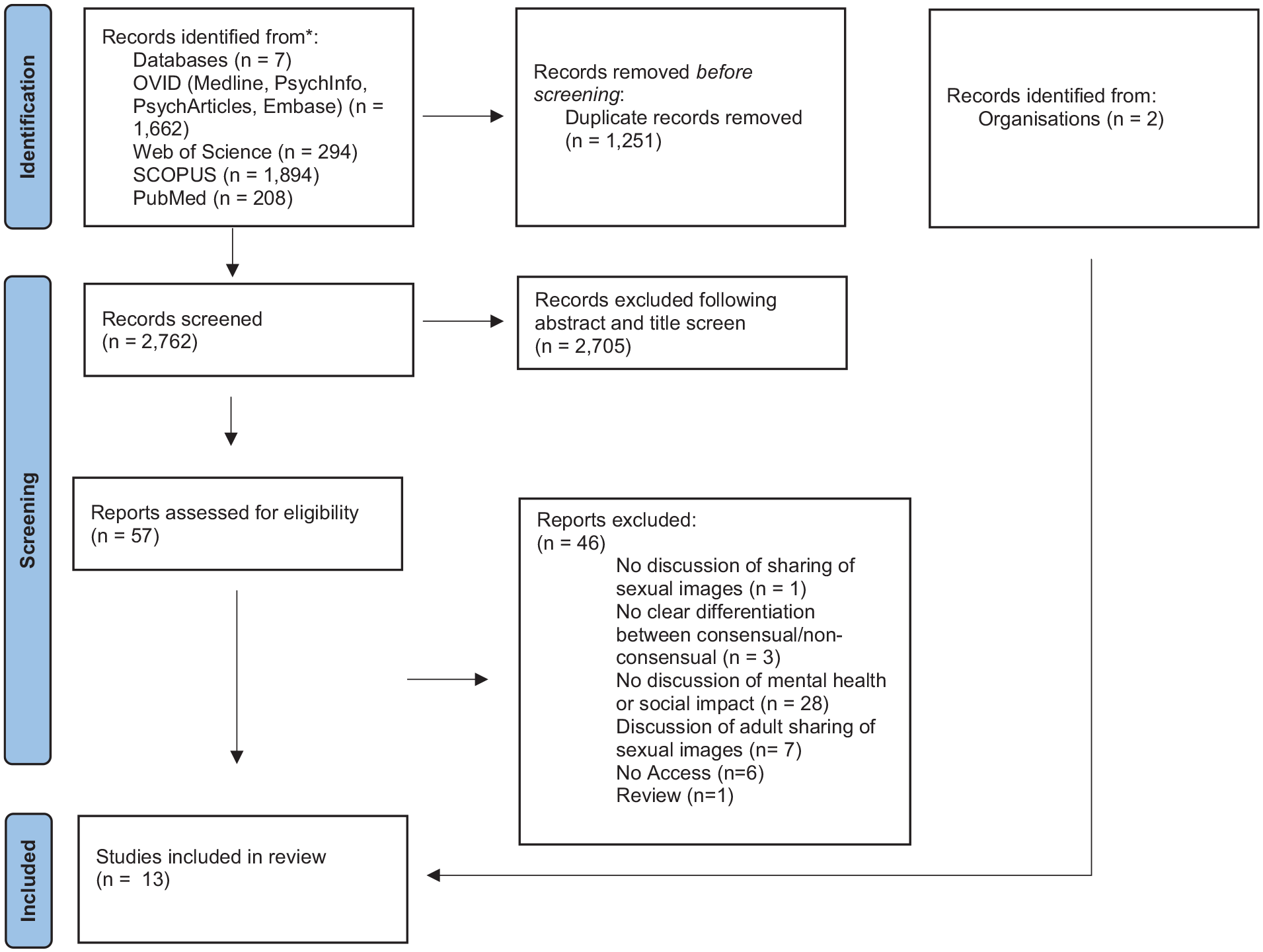
Preferred Reporting Items for Systematic Reviews and Meta- Analysis (PRISMA) flowchart for study selection.
A narrative synthesis approach was chosen for the review, as this seeks to generate new insights or knowledge by bringing together existing research findings. This approach has been used when synthesizing qualitative, quantitative, and mixed-method studies. The guidance described by Popay et al. (2005) was followed and involved developing a preliminary synthesis, exploring relationships in the data, and assessing robustness of the synthesis product.
Quality assessment followed the Mixed-Method Appraisal Tool version 2018. Registration of Copyright (#1148552), Canadian Intellectual Property Office, Industry Canada. (Hong et al., 2018). This method allowed for five different types of studies to be assessed using the same tool: qualitative studies, quantitative randomized control trials, quantitative non-randomized control trials, quantitative descriptive studies, and mixed-methods studies. All 13 selected studies were quality assessed. To begin, two screening criteria questions are answered, asking if the research question is clear and if the data collected can answer the research question. Next, the studies were assessed based on their methodological type. This included five quantitative descriptive, six qualitative studies, and one mixed-methods study. For all but two studies all categories were rated “yes.” For the two studies each study had one category rated “can’t tell.”
The data extracted from these included authors’ names, publication data, the country studied, sample size and participant age, the study design, and findings that relate to mental health and social impact. These features were chosen to provide a thorough understanding of the impact of NCSSI within the context of the study design. It was difficult to generalize findings across the studies as they varied in study design and approaches to data analysis.
Results
Overview of the Design and Characteristics of the Included Studies
Overall, 13 studies published between 2012 and 2021 met the eligibility criteria. Studies were from five countries, United Kingdom, United States, Denmark, Germany, and New Zealand. Table 1 provides an overview of the studies reviewed and other features of studies included before discussing the themes. Eleven studies were published in English, and one in German. Five studies were quantitative, seven qualitative and one mixed method. Themes across the studies include discussions of self-blame and victim-blaming after an image is shared, the breaking of trust across relationships, and difficulties navigating school environments. Additionally, there were complexities of navigating consent when sharing intimate images; this includes feelings of coercion or pressure to send images (Mandau, 2020). Findings regarding the mental health and social impact (including difficulties within the social circle, breach of trust, and how gender norms contribute to the impact of NCSSI) are described below.
Overview of the Studies Included in Reviews.
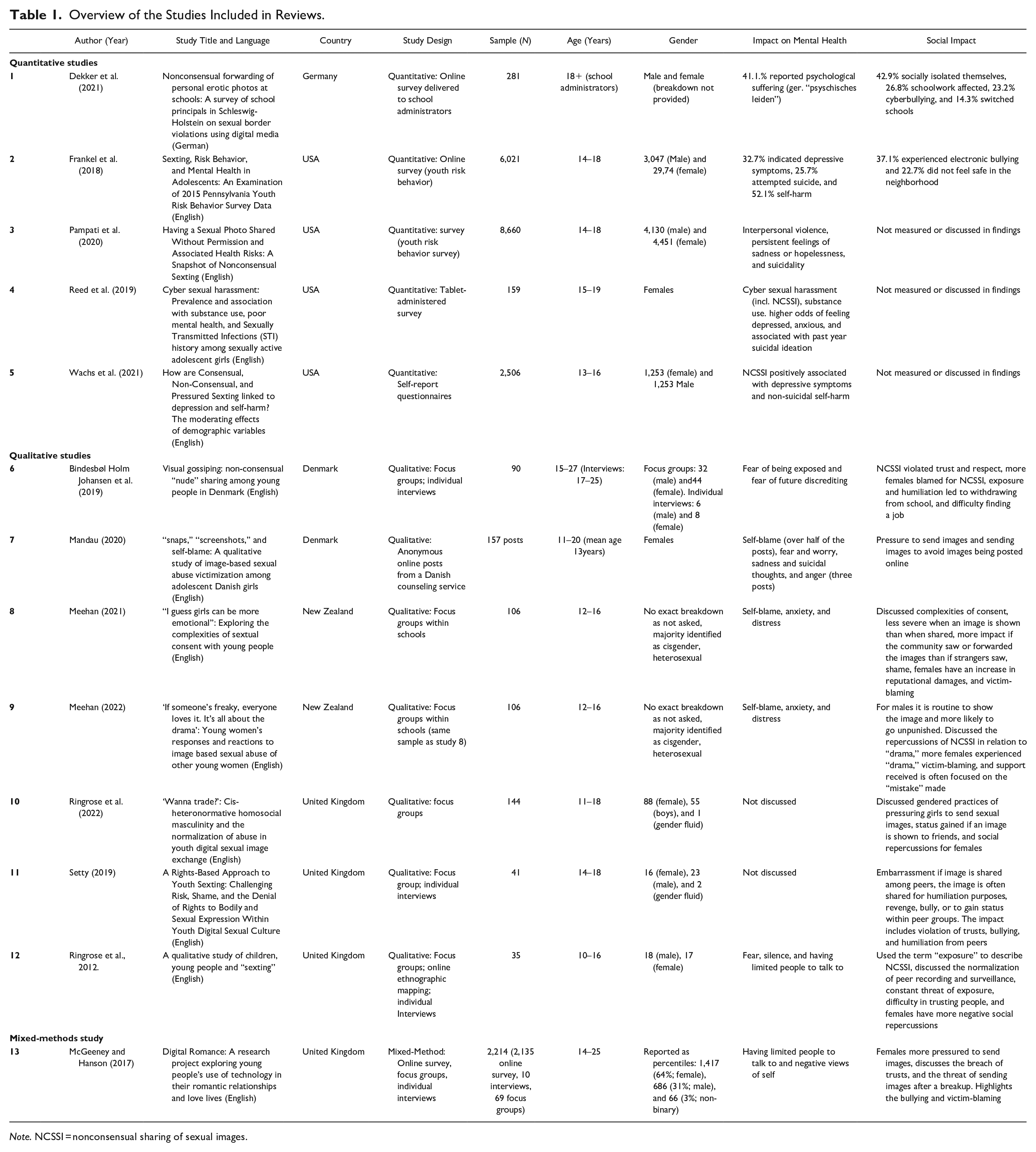
Note. NCSSI = nonconsensual sharing of sexual images.
Mental Health Impact of NCSSI
Nine studies noted an increased likelihood of depression, anxiety, non-suicidal self-harm, and suicidal ideation following NCSSI (Bindesbøl Holm Johansen et al., 2019; Dekker et al., 2021; Frankel et al., 2018; Mandau, 2020; Meehan, 2021, 2022; Pampati et al., 2020; Reed et al., 2019; Wachs et al., 2021
Sample and Characteristics of Quantitative Studies.
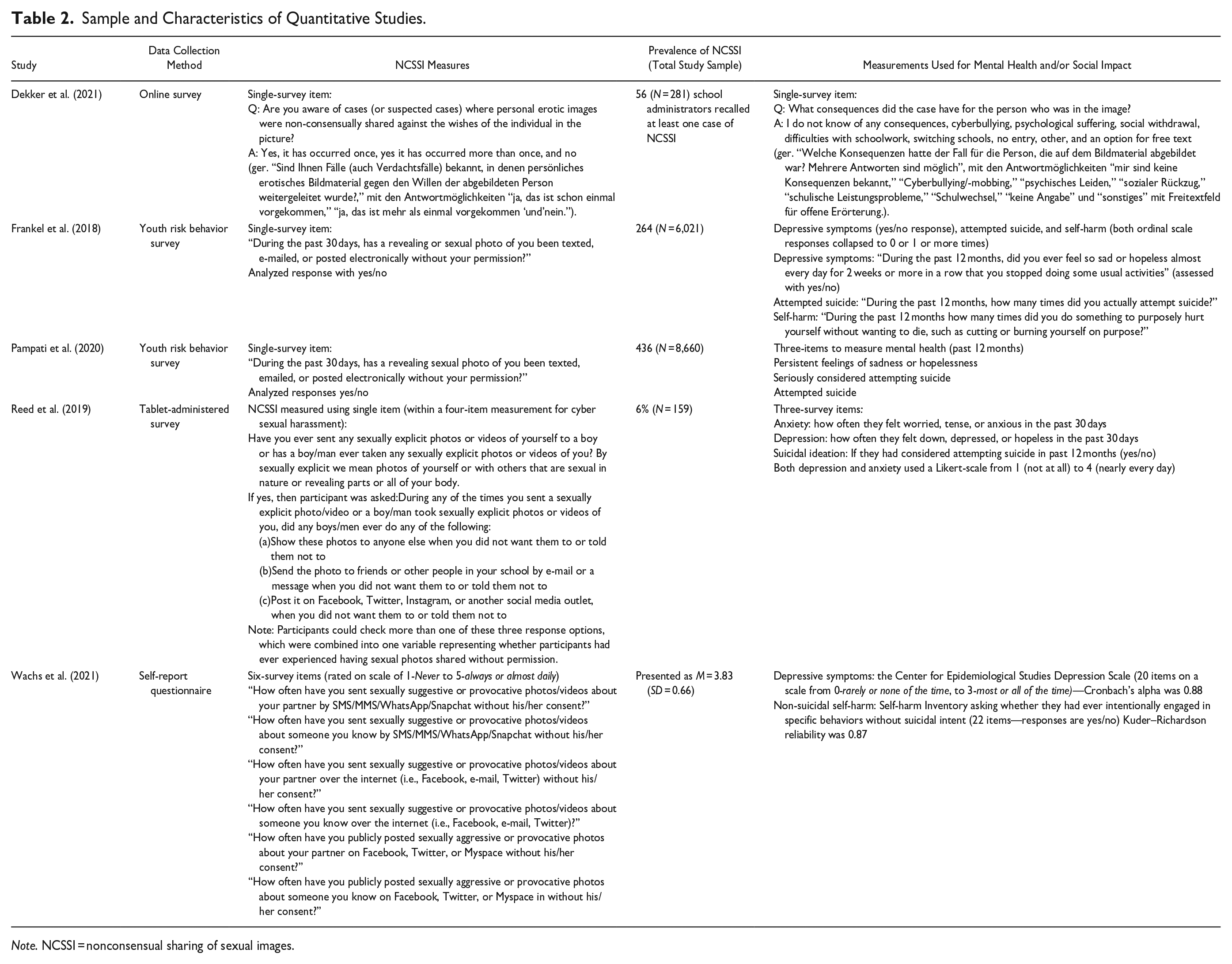
Note. NCSSI = nonconsensual sharing of sexual images.
All five quantitative studies varied in country, measurement tools to assess for mental health impact, and definitions used to describe NCSSI. Dekker et al. (2021) asked German school administrators to complete a survey on the behaviors of students who experienced NCSSI. Using a checklist of potential NCSSI consequences, 41.1% of participants reported that young people would “suffer psychologically” (ger. “psychisches Leiden”) following NCSSI (Dekker et al., 2021). However, sample limitations (i.e., the use of administrators and not young people who directly experienced NCSSI) and the use of a single-item, unvalidated measure of mental health consequences of NCSSI prevents, in this study, an accurate understanding of how these experiences may impact young people.
Frankel et al. (2018) analyzed data from a self-administered biennial survey of U.S. high school students conducted since 1991 (Youth Risk Behavior Survey). In this study, a single-item measure of NCSSI was included (“during the past 30 days has a revealing or sexual photo of you been texted, e-mailed, or posted electronically without your permission.”). NCSSI scores across participants did not significantly vary by demographic characteristics (i.e., sex, age, grade level, academic achievement, and race), and participants who experienced NCSSI were more likely to report recent depressive symptoms (43.7%), suicide attempts (27.5%), and self-harming behaviors (52.1%). In a subsequent analysis of data collected from the Youth Risk Behavior Survey in 2017, Pampati et al. (2020) used similar NCSSI and mental health measurement items as Frankel et al. (2018). The results indicated that NCSSI victims had higher risk of struggling with suicidality and persistent feelings of sadness and hopelessness (“seriously considered attempting suicide in the past 12 months” and “attempted suicide”) compared to individuals who did not report NCSSI experiences.
It is unclear to what extent the samples considered in these two studies drawn from the Youth Risk Behavior Study may overlap and, therefore, to what extent these findings may represent genuine replications of the mental health impacts of NCSSI. However, the above findings were broadly corroborated by a separate study that considered the impact of “cyber sexual harassment” more generally, as opposed to specifically on NCSSI. Reed et al. (2019) examined the impact of different forms of male-perpetrated sexual harassments (pressure to send sexual images, receiving unsolicited sexual images, receiving unsolicited emails/messages asking them to do something sexual, NCSSI) in a sample of 159 females aged 15 to 19 years (Reed et al., 2019). Approximately two-thirds (68%) of participants reported experiencing at least one form of cyber sexual harassment, with 6% reporting NCSSI. While the analyses did not differentiate between the types of cyber sexual harassment, 69.5% of participants exposed to harassment reported elevated depression in the previous 30 days, and 22% experienced suicidal thoughts in the previous month. This study also highlighted other possible emotional consequences of NCSSI, in particular increased anxiety, with 89.7% of individuals exposed to cybersexual harassment reporting feeling anxious in the previous 30 days. Since the study grouped all types of cybersexual harassment into a single analysis, it is not possible to disentangle the extent to which these findings may apply to NCSSI specifically in this sample.
Interestingly, research findings suggest that depressive symptoms and self-harm may not only be a consequence of NCSSI among “victims,” but also feature among young “perpetrators” of NCSSI. Using the Nonconsensual Sexting Subscale of the Sexting Questionnaire to assess consensual, pressured, and NCSSI, Wachs et al. (2021) found that NCSSI (e.g., “how often have you sent sexually suggestive or provocative photos/videos about your partner without his/her consent?”) was positively associated with depressive symptoms and non-suicidal self-harm in a sample of 2,506 U.S. youth aged 13 to 16 years. The cross-sectional nature of the data, however, prevents determining the extent to which depression and self-harm may represent a consequence of engaging in such behaviors, or rather, a risk factor for NCSSI perpetration.
The main findings of the above quantitative studies indicate that there is emerging evidence suggesting that NCSSI increases the risk toward depression and suicidal ideation (Frankel et al., 2018; Pampati et al., 2020). Additionally, it may also be linked toward other clinically important emotional consequences, such as anxiety (Reed et al., 2019). This is not only true for those affected by NCSSI but also for those that participate in NCSSI, as indicated by Wachs et al. (2021). However, the literature is limited and characterized by important methodological limitations, such as the varied definition of NCSSI, the limited range of mental health consequences so far examined, and the lack of validated instruments to assess the mental health difficulties among victims. The quantitative studies are limited in the discussion of emotional impact of those affected by NCSSI. The identified qualitative studies do provide a more nuanced understanding of the mental health and emotional impact of NCSSI. Although, unlike the quantitative studies, the aim of the studies was not to understand the mental health impact but rather to explore a holistic understanding of sharing of sexual images among youth. It was through the qualitative methodologies that the mental health impact was discussed.
The qualitative studies reiterate the quantitative findings of feelings of anxiety, sadness, and suicidal ideation. They provide a deeper understanding of feelings of anxiety being attributed to the fear of the images being distributed nonconsensually (Bindesbøl Holm Johansen et al., 2019). In their qualitative study of focus groups and interview within schools, Bindesbøl Holm Johansen et al. (2019) found that NCSSI and the associated lack of control of the image, the exposure, and the humiliation led the individual to withdraw from school and social networks. This social withdrawal will be discussed in the below section of the social impact of NCSSI. Likewise, the study highlighted fear when describing the saving, sharing, and receiving nudes as methods to be exposed repeatedly. This theme of fear was also replicated when discussing fear and anticipation of future social repercussions that might occur.
Fear and worry described above were also linked with expressions of self-blame in Mandau (2020). The researchers analyzed anonymous online posts from a Danish counseling service, by searching for colloquial words used to describe sharing sexual images, such as “nudes,” and “underwear pictures.” The objective of the study was to understand female experiences of images based sexual abuse, how they are shaped by digital media and how girls attribute blame. In this study, NCSSI was defined as image-based sexual abuse, which described the nonconsensual production, dissemination, or threat of disseminating private sexual images. The study excluded the posts written by males and analyzed the 157 posts written by females aged 11 to 20 years. In their sample of 157 posts written by females aged 11 to 20 years, the posts described the fear and worry (81 posts), self-blame (52 posts) and emotions of sadness and suicidal thoughts (44 posts) following an experience of NCSSI. These experiences of anxiety, sadness, and suicidal thoughts are replicated in Frankel et al. (2018) and Pampati et al.’s (2020) quantitative findings. Additionally, experiences of self-blame could be seen in the way that adolescents signed off their anonymous posts, often using “the dumb girl” and the “scared, stupid, retarded, girl.” This can often be exacerbated by being pressured to send images or being threatened to share images (Mandau, 2020). This thread of self-blame among the narratives of qualitative studies with young people was reiterated by Meehan (2021), who explored how victim-blaming received from social groups can increase feelings of self-blame.
Meehan (2021) and Meehan (2022) used the same data and analysis technique. Meehan (2021) focused on understanding the complexities of consent and the role of technology in young people’s digital sexual lives. Meehan (2022) focused on understanding female’s responses and reactions to NCSSI of other females. The studies have different aims yet overlap in sample characteristics and findings; therefore we evaluated the findings together. Meehan (2021) and Meehan (2022) highlighted experiences of shame, distress, and anxiety after an image had been shared among peers or uploaded online. This is closely linked to feelings of anxiety that are associated with the fear and worry of where images may end up when shared online (Mandau, 2020).
Social Impact of NCSSI
The impact of NCSSI on an individual’s mental health is often exacerbated or minimized through the impact that the images have within a social circle. Images are often shared to gain popularity, or as an act of revenge or out of spite (Meehan, 2022; Ringrose et al., 2013; Setty, 2019). The selected studies discussed three common themes when highlighting the social impact of NCSSI: impact on within the social circle, a break of trust, and gendered impact.
Negative Impact of NCSSI Within a Social Circle
The negative impact on peer relationships and close friendships is closely associated to the name-calling, bullying, and victim-blaming narrative that exists following such an experience (McGeeney & Hanson, 2017). Of the selected studies, two quantitative studies (Dekker et al., 2021; Frankel et al., 2018) and five qualitative studies (Ringrose et al., 2012; McGeeney & Hanson, 2017; Meehan, 2021; Meehan, 2022; Setty, 2019) discussed the impact on the social circle. Within the quantitative literature, 23.2% of high school students experienced cyberbullying, 42.9% became more socially reclusive and 14.3% switched schools (Dekker et al., 2021). Frankel et al. (2018) replicated these findings with a slightly higher percentage of 37.1% of participants experiencing cyberbullying following NCSSI.
In the qualitative studies, the negative impact within a social circle is heavily intertwined with the rumors and gossip that those affected by NCSSI receive. Setty (2019) explored the social meanings and cultural norms that shape harmful behaviors associated with sharing of sexual images. Participants were recruited from schools and youth clubs across southeast England.Findings of the study highlight that once an image is shared among peer circles, rumors and gossip spread rapidly, with much of the bullying directed toward the individual in the image (Setty, 2019). Similarly, one study found that the judgments and rumors of girls from a minority background who experienced NCSSI were often related to the individual in the image by ethnicity and religion (Bindesbøl Holm Johansen et al., 2019). Moreover, popularity and status within social circle often influences the negative experiences that a victim of NCSSI might receive; individuals in a more “popular group” might feel less judgment, and experience a violation of trust and bullying Setty (2019). These findings are also replicated in a qualitative study by Meehan (2022).
Another study discussed similar negative impacts of rumors and gossip but used the term “drama” to refer to the response from peers. Meehan (2022) found that the term “drama” was used throughout the interviews. This was a highly gendered term, whereby “drama” was associated with the treatment that females received following NCSSI. Participants often preferred “drama,” as, for them the power of the responses and respondents is removed. Bullying can often involve name-calling, “slut”-shaming, being ridiculed, laughed at, ostracized from friend groups, targeted sexual harassment, and humiliation (Meehan, 2022; Ringrose et al., 2012; Setty, 2019). Bullying rarely happens in isolation and is often representative of the societal practices that allow for justification of victim-blaming and shaming (Meehan, 2022; Setty, 2019). Likewise, it is heavily influenced by current gender norms, which is explained further below.
The selected studies also highlight a loss of safety felt within a community. Frankel et al. (2018) noted that 22.77% of participants did not feel safe in their neighborhood following NCSSI. In this study, neighborhood safety was measured by asking participants “how often they felt safe and secure in their neighborhood,” rated against “never, rarely, sometimes” as unsafe, and “most of the time, always” as safe. An exact definition of the term neighborhood was not provided, so it is difficult to make inferences across other studies. However, another study that discussed the aspect of community and neighborhood was Meehan (2021), who highlighted that there is a more severe impact if the images are circulated within someone’s known community (as opposed to strangers).
Likewise, community impact was also discussed by McGeeney and Hanson (2017). This was a mixed-methods study led by Brook and the U.K. Child Exploitation and Online Protection National Crime Agency. The project aimed at exploring how young people are using digital technologies in their romantic relationships. The findings highlighted that the community impact of sharing images is often closely linked to name-calling and bullying (McGeeney & Hanson, 2017). Bullying often exists both within the offline community, as well as extending to posts and comments on online forums and group chats dedicated to the sharing of images (McGeeney & Hanson, 2017; Ringrose et al., 2012).
Breach of Trust Following NCSSI
Trust and the breaking of trust following NCSSI is another theme across the studies. Consensual sharing often exists within a trusted environment, and the threat of sharing images is heightened following a breakup (McGeeney & Hanson, 2017). Of the selected qualitative studies, five studies (Bindesbøl Holm Johansen et al., 2019; Ringrose et al., 2012; Livingstone & Smith, 2014; Mandau, 2020; Meehan, 2021, 2022) discussed trust in relation to NCSSI.
Trust when sharing images has adapted to reflect the developments of social media. The popularity of Snapchat and sending images through this platform is discussed by Mandau (2020), who highlighted that the screenshotting of snaps is also a form of NCSSI. A screenshot of a Snapchat image violates the trust that the image would only be viewed for a few seconds. As the platform notifies an individual of a screenshot taking place, that notification evokes a sense of fear, worry and panic of what would happen with the image and whether it could be used for threats (Mandau, 2020; Meehan, 2022). Closely linked to the discussion of trust is consent and how consent is perceived and navigated when sending an image. Meehan (2021) found in their sample that “consent” as a word is rarely used, rather “asking for permission.” For example, showing an image without permission was a breach of trust; but it is not as severe or serious as sending the image (Meehan, 2021).
Ringrose et al. (2012) conducted a qualitative study prepared for the National Society for the Prevention of Cruelty to Children to enhance the understanding of the complex nature of sending of sexual images and the role that digital technology plays. The study referred to “exposure” when discussing the knowledge of private pictures or texts being posted on public communications sites. The narrative across peer groups included normalization of surveillance, recording, sharing, constant threat of sharing, and revenge (Ringrose et al., 2012). However, this normalization of “exposure” often makes it difficult to trust an individual when sharing sexual images (Ringrose et al., 2012).
Girls Receive More Negative Social Repercussions Compared to Boys
There was more worry expressed about the repercussions of NCSSI within female social groups, with an overall understanding that boys will benefit more from NCSSI (Frankel et al., 2018; Meehan, 2021; Ringrose et al., 2012; Setty, 2019). For many, there is an expectation that a sexual image would be shown, which links back to the normalization of the sharing of intimate images that already exists within the narrative of social groups (McGeeney & Hanson, 2017; Meehan, 2021; Ringrose et al., 2022).
Ringrose et al. (2022) explored how masculinity practices and discourses shaped and informed peer-to-peer relationships and group dynamics using a feminist discourse analysis. The article is a sub-study on exploring digital sexual images sharing practices among young people aged 11 to 18 at seven different secondary schools in the United Kingdom(Ringrose et al., 2022). The findings showed that, for boys, receiving and sharing intimate images can often be seen as “trophies” and positively increasing popularity or power (Ringrose et al., 2022). For girls whose image is shared, they are at risk of social reputational damages, being called a “slut,” or ostracized from friend groups (Meehan, 2021; Ringrose et al., 2022). Similarly, there are fewer negative repercussions for boys whose images were shared, but for girls there are lasting reputational damages (Ringrose et al., 2022).
Additionally, there exists a sexual double standard with the social impact of NCSSI; girls are more pressured to send nude images (McGeeney & Hanson, 2017; Ringrose et al., 2012), yet once the image is sent and shared, blame is more so directed to girls, even if that image gets shared or shown nonconsensually (Bindesbøl Holm Johansen et al., 2019; Meehan, 2021; Ringrose et al., 2012). The placement of blame and subsequent shaming and name-calling that girls receive (Ringrose et al., 2022) makes it more difficult for girls to discuss their experiences, creating a silence and fear of discussing it with someone trusted (Ringrose et al., 2012). This links back to the loss of social circle and the breach of trust that are described above. For boys, there is often social capital to gain when obtaining an image from girls (Bindesbøl Holm Johansen et al., 2019; Meehan, 2021). Despite both boys and girls finding NCSSI “humiliating,” there appears to be more reputational damage for girls (Bindesbøl Holm Johansen et al., 2019). Likewise, often the rumors and gossip that rapidly spread following NCSSI shift the focus from the act of sharing to the rumors (Setty, 2019).
Discussion
To the authors’ knowledge, this is the first study to systematically identify, synthesize, and critically evaluate the existing emerging evidence on the mental health and social impact of NCSSI. Overall, we found that NCSSI negatively impacts an individual’s mental health and there are strong negative social repercussions, especially for females. Quantitative studies have found positive associations between NCSSI and depression, anxiety, persistent feelings of sadness or hopelessness, and past suicidal ideation. Qualitative studies have highlighted strong patterns of negative social repercussions following NCSSI, including bullying and harassment as well as feelings of embarrassment and victim-blaming, with females experiencing more negative repercussions and males often receiving more positive social reactions. Table 3 provides an overview of the findings of the review.
Critical Findings of the Review.
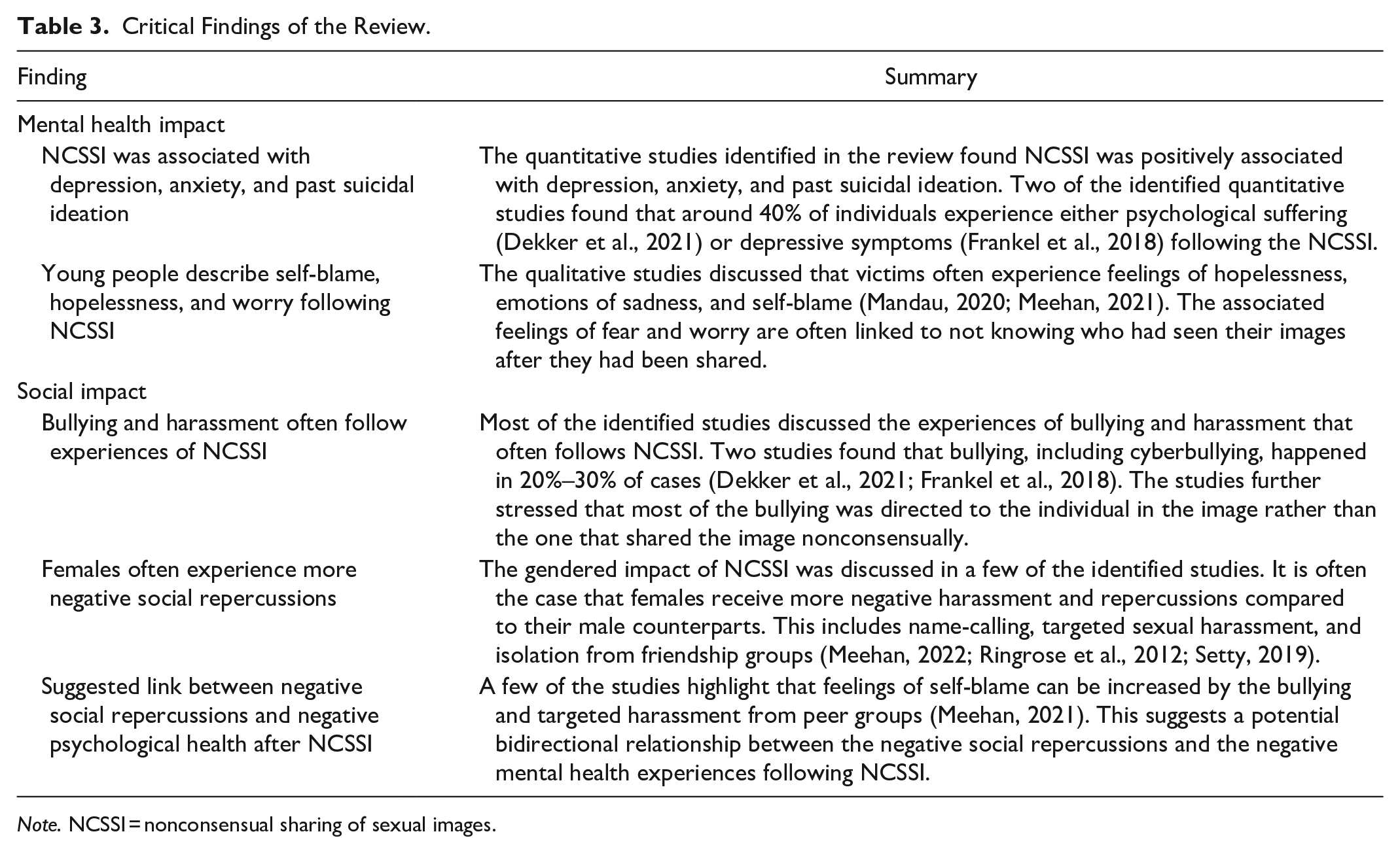
Note. NCSSI = nonconsensual sharing of sexual images.
Mental Health Impact of NCSSI
In the included studies, NCSSI was associated with negative mental health (Dekker et al., 2021), past suicidality, suicidal ideation, and anxiety (Frankel et al., 2018; Pampati et al., 2020; Wachs et al., 2021). Due to the different scales used across the selected studies (Dekker et al., 2021; Frankel et al., 2018; Mandau, 2020; Pampati et al., 2020; Setty, 2019), it is difficult to compare findings across studies. Quantitative studies used different measurement items to define NCSSI and to measure mental health impact. For example, Wachs et al. (2021) asked whether individuals have participated in NCSSI, while Frankel et al. (2018) and Pampati et al. (2020) respectively focused on individuals who had their sexual images nonconsensually shared.
The studies reviewed found a further contributing factor to negative mental health. Four studies (Bindesbøl Holm Johansen et al., 2019; Mandau, 2020; Meehan, 2021, 2022) discussed the fear and worry and associated distress and anxiety after knowing that an image has been screenshotted. Ringrose et al., (2012); Livingstone and Smith (2014) also discussed the sense of fear of the images being shared. The experiences of fear and worry of images being uploaded online is replicated in the Child Sexual Abuse Material (CSAM) literature. Much of the literature highlights that, for many young people, accepting the global accessibility, permeance, and availability of the internet is often the most difficult element of CSAM (Quayle et al., 2012; Whittle et al., 2013). Studies that have examined the impact of young people knowing that their images have been disseminated online highlight the risk for re-traumatization that many young people experience due to the knowledge that many people have seen their image, which can exacerbate distress (Martin & Slane, 2015; Whittle et al., 2013). These findings are also reflected in studies examining the relationships between consensually sending of nude images and depression, anxiety, and feelings of sadness (Gassó et al., 2019a).
NCSSI has also been flagged as a developing issue among practitioners. Research that discusses practitioners’ perspectives on sharing of sexual images among young people finds that in the past decade there has been a rise in cases of young people sharing sexual images (Quayle et al., 2023). The findings of our review highlight the strong negative impact of NCSSI on an individual. However, practitioners often struggle to conceptualize and understand the social and cultural phenomenon that exist when youth are sharing sexual images (Slane et al., 2021). Due to the gap in understanding of NCSSI, practitioners are less equipped to provide appropriate treatment support to young people who have experienced NCSSI (Slane et al., 2021).
Social Impact of NCSSI
After an experience of NCSSI, many girls experienced social repercussions, such as name-calling, slut-shaming, cyberbullying, and being victims of rumors and gossip (Meehan, 2022; Ringrose et al., 2012; Setty, 2019). The studies reviewed found that, for many individuals, these negative social repercussions often led to negative mental health and social withdrawal (Bindesbøl Holm Johansen et al., 2019; Dekker et al., 2021). The findings of the review are substantiated within the existing literature on other adverse experiences experienced by many young people, for example, the know association between bullying and negative mental health experiences (Kowalski et al., 2014). Moreover, young people who have been victimized in an online environment are often victimized offline (Kowalski et al., 2014; Weinstein et al., 2021). Taken together, the findings of the review and the existing literature suggests a strong link between mental health and the negative experiences socially after an experience of NCSSI, where for some the negative social repercussions directly influence the negative mental health experiences of self-blame, anxiety, and distress. Further research is needed to understand whether positive social interactions (i.e., support from peers) following NCSSI can mitigate the negative mental health impact, which can inform support needed for individuals following NCSSI.
The negative social impact highlighted throughout the selected studies’ qualitative findings provides a more nuanced understanding of the identified quantitative findings. Quantitative findings found that a significant number of individuals experienced bullying within school environment (Dekker et al., 2021; Frankel et al., 2018). The identified qualitative studies provide a narrative to the bullying and harassment that individuals often experience. For individuals the social repercussions, such as bullying and harassment following NCSSI, are closely linked to existing gender norms; girls will receive more negative social repercussions, name-calling, and reputational damage compared to boys who will often have more positive social implications (Meehan, 2021; Ringrose et al., 2022). Equally, the name-calling and rumors that spread cause many girls to experience extreme distress and have led to them switching schools (Bindesbøl Holm Johansen et al., 2019; Dekker et al., 2021; Ringrose et al., 2012). The selected studies did collect demographic information, including sexuality. However, all studies that discussed the gendered impact of NCSSI focused the discussion on the heteronormative dynamic. This means that the study findings did not account for differences in the social impact based on sexual orientation or non-cisgender norms. Researchers have found that a higher prevalence rate of LGBTQ+ individuals report experiences of NCSSI. LGBTQ+ individuals who have experienced NCSSI report significant impact on their mental health, including suicidal ideation, depression, and anxiety, which is mirrored in the findings of this study (Meechan-Rogers et al., 2021) Likewise, individuals are reporting difficulty in trusting people after the experience, a sense of isolation, and fear of being recognized (Meechan-Rogers et al., 2021).
In many cases of NCSSI, the perpetrator is known to the victim (Wolak et al., 2018), either the individuals are in a romantic relationship or in the early stages of flirting and getting to know each other (McGeeney & Hanson, 2017). Trust in these relationships is broken when an image is threatened to be shared, screenshotted, and shared among peers or online (Mandau, 2020; Ringrose et al., 2012). The presence of peer surveillance and the normalization of images being shared among peer group often creates a difficult environment for girls to find individuals they fully trust (Ringrose et al., 2012). Indeed, victims were often blamed for misplacing their trust in the individual that shared the image (Meehan, 2022). The normalization, acceptance, and even expectation that images will be reshared has led to girls developing protective behaviors before sending an image, such as blurring or cropping their faces and removing identifiable markers (i.e., tattoos or birth marks) to protect themselves, should their image be shared (Harder, 2021; Quayle & Cariola, 2019). Receiving appropriate support for NCSSI was a challenge, as many girls found that the support revolved around a “mistake” and “bad judgement” than the harms that an individual might experience (Meehan, 2022). Further, the term “mistake” was often used when girls reflect on their experience of NCSSI and was associated with self-blame (Mandau, 2020).
Limitations
The studies included in this review varied in sample size from n = 35 (Ringrose et al., 2012) to n = 8,660 (Pampati et al., 2020). However, apart from two studies (Dekker et al., 2021; Pampati et al., 2020), the study sample includes individuals who did not experience the NCSSI. Therefore, much of the discussion of the mental health and social impact of NCSSI is interpreted and understood in parallel with the findings of consensual sharing of sexual images. This limits the ability to specifically understand the mental health and social impact of NCSSI.
In eight studies in this review, the sample was recruited from schools. A further three studies were recruited from schools and youth centers, and only two studies were recruited outside of school environments. Much of the discussion of social impact is rooted and intertwined with school environments, such as bullying within social circles and negative social repercussions as a result of NCSSI. This limits the understanding of the negative social impact of NCSSI to experiences within school environments making it is difficult to deduce and understand how this can differ outside of a school. The two studies that did measure the community and neighborhood impact of NCSSI had differing definitions of community; thus, it is unclear how NCSSI impacts an individual socially outside of school.
Further limitations relate to the study selection process. Studies were excluded if the study discussed NCSSI among adults. It is possible that studies that included adult participants discussed NCSSI among youth and the subsequent impact may have been missed. Additionally, the review did not exclude studies based on the country studied; this meant that the selected studies included studies from the United States, Denmark, United Kingdom, Germany, and New Zealand. Despite clear themes and patterns emerging in the findings, each country has different social and cultural norms. Therefore, much of the discussion of social impact is rooted in the social and cultural constructs of the country of the study.
The review used the Mixed-Methods Appraisal Tool to guide the critical appraisal of studies. The tool showed that all but two categories for two separate studies were rated as a “yes.” However, due to the variety of study types and the different instruments to both measure the experiences of NCSSI and the mental health impact, direct comparison of the quality is difficult (Hong et al., 2018).
Implications
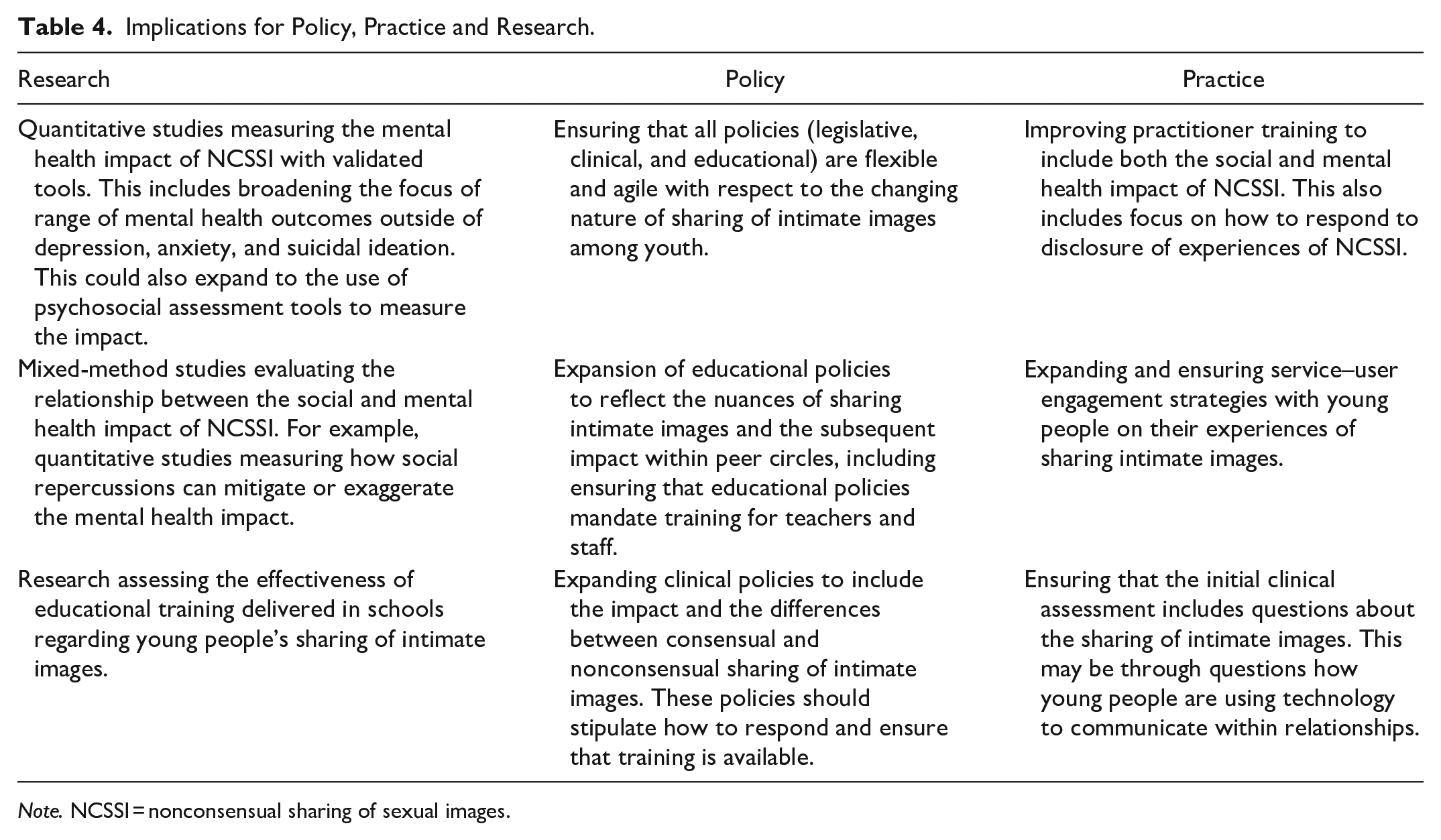
A number of implications related to research, clinical practice, and policy arise from the study findings. A full set of recommendations can be found in Table 4. Foremost, there is a need for research to show how the social repercussions (i.e., bullying, harassment, and victim-blaming) impact the overall mental health of an individual following NCSSI. Therefore, future research should address the relationship between social repercussions and mental health. This can include possible protective factors, which are already highlighted in some literature (Ringrose et al., 2012; Quayle & Cariola, 2019) and factors that can mediate negative mental health.
Implications for Policy, Practice and Research.
Note. NCSSI = nonconsensual sharing of sexual images.
It is crucial that training and knowledge extends to include the mental health and social impact of NCSSI as this can better inform treatment responses that practitioners can draw on. A holistic understanding of the association between the mental health and social impact of NCSSI can contribute to tailoring clinical practice for young people who have experienced TA-CSA. Likewise, it is crucial that training and knowledge extends to include the mental health and social impact of NCSSI as this can better inform treatment responses that practitioners can draw on. This can include promotion of positive practices, such as the expansion of relevant policies within educational and healthcare settings to include screening for mental distress following NCSSI and offering appropriate support.
Conclusion
The review showed that following NCSSI, many young people experience significant social repercussions and negative mental health impacts, such as the increased likelihood of depression, anxiety, and suicidal ideation. The studies found that social repercussions included the loss of social relationships, bullying, cyberbullying, and harassment. Additionally, the bullying and harassment that many young people face often led to feelings of distress and anxiety (Ringrose et al., 2012; Meehan, 2022).
Footnotes
Declaration of Conflicting Interests
The author(s) declared no potential conflicts of interest with respect to the research, authorship, and/or publication of this article.
Funding
The author(s) received no financial support for the research, authorship, and/or publication of this article.
