



Abstract
Theory and research on disclosure of interpersonal victimization, including intimate partner violence, sexual assault, and child abuse, has produced rich scholarship promoting a greater understanding of the challenges and implications of disclosure for survivors. However, in the last decade, social media platforms have opened new online disclosure opportunities that diverge from and overlap with offline disclosure. This highlights the need for adaptation and elaboration of theorizing in this growing area of study. Thus, the study aimed to systematically review the studies published in scientific literature. The following databases were accessed Criminal Justice Abstracts, Medline PsychInfo, Social Work Abstracts, Sociological Abstracts, Web of Science database, and Google Scholar. Twenty-seven studies met the inclusion criteria of peer-reviewed status and focused on the disclosure process. A thematic analysis revealed that online disclosure of interpersonal victimization is a multi-phase (decision-making and disclosure aftermath) and multifactorial (individual, interpersonal, social, and technological) experience for survivors. Specifically, survivors’ motivation was related to therapeutic goals, social support, and a desire to advocate for social change. Survivors faced numerous facilitators (e.g., inspiration from other online disclosures) and barriers (e.g., fear of triggering other survivors) to disclosure. The impact of online disclosure was divided into benefits (e.g., empowerment) and risks (e.g., undermining survivors’ security). The conceptual and empirical limitations of the current research are discussed, including a need for quantitative methods with larger samples and longitudinal designs to better understand how survivors can best benefit from processes of online disclosure, while avoiding harm or re-traumatization.
Interpersonal victimization, including intimate partner violence (IPV), sexual victimization (SV), and child abuse (CA), is a significant public health issue given its negative mental health consequences, including depression, anxiety, and posttraumatic stress disorder (PTSD) (Campbell et al., 2009; Dworkin et al., 2018). In contrast to other victimization such as natural disasters, these highly stigmatized forms of interpersonal victimization occur within social contexts that shape how survivors judge themselves and are evaluated by others (Kennedy & Prock, 2018). Such victimizations may result in the concealment of these identities because of the stigma associated with such experiences (Quinn et al., 2014). Furthermore, interpersonal victimization involves an intention to harm, often by known perpetrators thus these experiences can shatter a survivor’s cognitive understanding of the world and interpersonal relationships (Janoff-Bulman, 2010). In addition, because of the increased risk of multiple forms of gendered violence (CA, SV, and IPV), they are often studied in conjunction with one another (Edwards, Siller, et al., 2022). Lastly, interpersonal victimization is characterized by silence, secrecy, and concealment resulting in unique challenges and risks involved in the disclosure of those experiences (Alaggia et al., 2012; Ullman, 2023). For over four decades, theory and research on disclosure of interpersonal victimization have produced rich scholarship promoting a greater understanding of the challenges and implications of disclosure for survivors (Tener & Murphy, 2015; Sylaska & Edwards, 2014; Ullman, 2011; Ullman et al., 2008, 2020). However, in the last decade, social media platforms have opened up new disclosure opportunities for interpersonal victimization, particularly since the emergence of the #Metoo movement in 2017 (Bogen, Bleiweiss, et al., 2021; Bogen, Orchowski, et al., 2021). Online disclosure by survivors, in contrast with face-to-face offline disclosure, may be private and/or anonymous on platforms devoted to interpersonal victimization (e.g., subreddit forums such as traumatoolbox, Andalibi et al., 2016) or public (non-anonymous) on open public platforms (e.g., Twitter; Banet-Weiser, 2018; Moors & Webber, 2013). Furthermore, online disclosures are made on various social networking platforms (e.g., Facebook, Twitter) that are distinctive in terms of technological architecture and norms of use (Masciantonio et al., 2021). Lastly, online disclosures of interpersonal victimization are embedded in social–cultural contexts of activism aimed at changing the public discourse, encouraging people to disclose their identity as a survivor, and building a sense of shared experience as antidotes to shame and isolation (Weathers et al., 2016).
Despite some overlap in online and offline disclosures, differences in the characteristics and contexts of these disclosures highlight the need for adaptation and elaboration of theorizing and conceptual development for this growing area of study (Bogen, Orchowski, et al., 2021; Gorissen et al., 2023). Thus, given its potential clinical and policy implications, there is a comparable need for online disclosure research to assess and develop interventions and public health guidelines to help survivors approach online disclosure safely (Bogen, Orchowski, et al., 2021; Fawcett & Shrestha, 2016; Gueta et al., 2020). This is important since the offline disclosure literature has resulted in clinical interventions and guidelines for survivors regarding disclosure and help-seeking norms (Edwards, Waterman, et al., 2022). Thus, the current review contributes to this developing area by systematically reviewing research on the process of online disclosures to further develop and refine research, theory, and interventions.
Online and Offline Disclosure of Interpersonal Victimization
Disclosure of interpersonal victimization experiences to formal (e.g., the police) or informal (e.g., family and friends) support sources can facilitate recovery. These support sources may provide survivors with validation, emotional support, and tangible aid (Ullman, 2023). In addition, these support sources may facilitate recovery by connecting survivors to trauma-informed services and care (Sylaska & Edwards, 2014). However, interpersonal victimization is an under-reported crime, particularly when perpetrators are people known to survivors, such as friends and families (Krebs et al., 2016). Research indicates that most survivors will tell another person about their victimization, most commonly a friend (Dworkin et al., 2019). A literature review conducted by Sabina and Ho (2014) found a range of rates of informal disclosure of 41 to 100%; however, regarding formal disclosure, the rate was only 0 to 12.9%. Survivors of IPV are more likely to disclose to an informal source, such as a close friend, than a formal source, such as law enforcement (Sylaska & Edwards, 2014). The low reporting rate may be due to barriers to disclosure, such as stigma, shame, and guilt (Campbell et al., 2009; Kennedy & Prock, 2018). Other barriers to disclosure, such as the anticipation of negative social reactions (e.g., being blamed, judged, and disbelieved) and the circumstances of the assault (e.g., the survivors’ involvement with substance use) may lead to nondisclosure or delayed disclosure (Tener & Murphy, 2015; Ullman et al., 2020).
Taking a contemporary lens to the study of interpersonal victimization disclosure requires expanding our focus to include studies of disclosures in the digital domain (Alaggia & Wang, 2020) given the popularity of social media forums for disclosing interpersonal violence in recent years (Bogen, Orchowski, et al., 2021; Moors & Webber, 2013). Furthermore, similar to recent research on offline disclosure (see Alaggia et al., 2012; Ullman, 2023), the study of the online disclosure process also requires applying an ecological approach (Brofenbrenner, 1977). Accordingly, this lens needs to address the relationship between person and environment and use a multifactorial and multilevel approach with individual, interpersonal proximal (e.g., family, friends), distal (e.g., societal stigma), and technological-related factors.
Specifically, a drawback of research to date on online disclosure is that it explores the content and process of online disclosures together (O’Neill, 2018; Schneider & Carpenter, 2020). Research on the content of disclosure includes assault details from survivors (e.g., perpetrator identity, assault types, location, and age at assault) and online social reactions to disclosures (Bogen, Orchowski, et al., 2021). However, limited research exists on the online disclosure process, including motivations and outcomes, so examination of the effectiveness of online disclosures from survivors’ perspectives is warranted (Andalibi et al., 2016; Bogen, Orchowski, et al., 2021; Schneider & Carpenter, 2020).
The Process of Online and Offline Disclosures
Survivors of interpersonal victimization carry a concealable stigmatized identity that is socially devalued but not readily apparent to others resulting in a dilemma regarding whether, how, when, and to whom to disclose, which adds another level of complication to the disclosure (Chaudoir & Fisher, 2010). The Disclosure Processes Model (DPM) is one theoretical model of offline disclosure for people with concealable stigmatized identities (Chaudoir & Fisher, 2010) that provides a disclosure sequence, from motivation to post-disclosure outcomes. According to the DPM, individuals have different motivations for disclosure including approach goals of pursuing a desired or positive state (e.g., gaining hopefulness) or avoidance goals (e.g., avoiding social rejection), both of which may affect the disclosure outcomes. Accordingly, those who pursue approach goals are more likely to gain from disclosure because, in doing so, they employ self-regulatory strategies to get the results they desire, interpret neutral or ambiguous stimuli favorably, and employ approach-oriented coping to handle adverse reactions. Contrarily, those who seek avoidance goals are more likely to react negatively to stimuli, perceive neutral or positive stimuli negatively, and use avoidance-oriented coping in response to negative emotions. Furthermore, multilevel disclosure outcomes are included at several levels: individual (psychological and physical well-being), interpersonal (intimacy and trust), and social context (norms and stigma).
In contrast, The Disclosure-Making framework (DM; Andalibi & Forte, 2018) specifically addresses online disclosure that posits six types of decision factors shaping the decision-making phase of disclosure on social network sites: self-related (e.g., finding social support), audience-related (e.g., avoiding unwanted conversations), network-level (composition and structure of one’s social network, e.g., exposure to other disclosures), societal (e.g., fighting against the stigma), temporal (e.g., time since disclosure), and lastly, platform-related (e.g., anonymity). However, Masciantonio et al. (2021) indicate that even online disclosure models like the DM model (Andalibi & Forte, 2018) have primarily relied on less stigmatized disclosure topics (e.g., pregnancy loss). In addition, they argue an online disclosure framework needs to consider the diversity of social networking sites that differ in various aspects (technological architecture, norms, anonymity level, and audience) and need to consider the decision-making process and the outcomes.
Motivations for Online and Offline Disclosure
The decision-making phase of disclosure is characterized by a risk-benefit tension, as disclosing interpersonal violence can pose risks to one’s safety and security, including the risk of receiving negative social reactions of blame and judgment (Ullman, 2023). Thus this phase consists of balancing multiple motivations for disclosure. Survivors of interpersonal victimization disclose offline for myriad reasons, including seeking social support (Ullman, 2023), processing trauma, educating others (Ahrens et al., 2007), and seeking justice (Powell, 2015). However, there are unique motivations for survivors to disclose victimization on online platforms (Andalibi et al., 2016; Barta, 2021; Bogen, Orchowski, et al., 2021). For example, Bogen et al. (2022) suggest that survivors may be particularly encouraged to disclose their experiences online given its anonymity and the phenomenon of online disinhibition. That is, online contexts may dissipate personal restraints due to anonymity and a-synchronicity, resulting in distinct cognition, behavior, and emotion than offline (Suler, 2004). Also, exposure to others’ self-disclosures online, leads to less perceived stigma, a concept termed “network-related reciprocal disclosure” (Andalibi, 2020). Lastly, the intersection between online and offline disclosure motivations and whether one form of disclosure facilitates or thwarts the other form is still unclear (Bogen, Orchowski, et al., 2021; Mendes et al., 2019).
Offline and Online Disclosure Outcomes
Understanding the outcomes of the disclosure, whether online or offline, requires exploring various factors that can contribute to the disclosure outcomes. Research on offline disclosure shows it involves benefits and risks, depending on various factors including negative social reactions (e.g., victim blame, disbelief) received in response and their impact on psychopathology (PTSD), depression, problem drinking, and revictimization (Dworkin et al., 2018, 2019; Ullman, 2023). In contrast, positive social reactions (e.g., validation) are perceived to relate to improved mental health (Sylaska & Edwards, 2014). However, a recent meta-analysis showed no protective effect of positive social reactions and psychopathology (Dworkin et al., 2019). Furthermore, empirical findings suggest mechanisms facilitating positive disclosure outcomes for survivors include stress relief, gaining social support, and improved social relations (Ullman & Peter-Hagene, 2014).
In contrast to the well-established literature regarding offline disclosure outcomes, only a few studies have specifically addressed the outcomes of online disclosure in terms of recovery. Those studies stressed benefits survivors receive such as validation and support that was often unavailable offline (Fawcett & Shrestha, 2016; Gallagher et al., 2019; Loney-Howes, 2018), and pursuing alternative forms of justice (Fileborn, 2017; Loney-Howes, 2018). Social reactions online can be associated with both social support and validation, as well as secondary victimization because of the potential receipt of adverse social reactions (Bogen, Orchowski, et al., 2021; Gueta et al., 2020). Similarly, research should assess whether online disclosure resulted in personal and social benefits (e.g., catharsis and help-seeking) and/or harm (e.g., mental health consequences) among survivors (Bogen, Orchowski, et al., 2021).
However, this negative or positive characterization of the disclosure outcome may be too limited since the online technological architecture and norms of online forums may moderate the disclosure outcomes (Masciantonio et al., 2021). For example, the documented permanence of online disclosures may have amplified the long-term negative implications of disclosure, as even years later, survivors can be identified (Bogen, Orchowski, et al., 2021; Gueta et al., 2020). In addition, factors important in offline disclosures (e.g., respondent facial expression, tone of voice, and body language) are absent online and may impact outcomes differently (Bogen, Orchowski, et al., 2021).
Finally, grounded in feminist activist movement goals, online non-anonymous disclosure promises to enhance the politics of visibility and challenge societal norms and misogyny, which may shape disclosure motivation and outcomes (Masciantonio et al., 2021). Thus, there is a need to extend the conceptualization of online interpersonal disclosure to include a social activism lens (Deal et al., 2020; Gallagher et al., 2019). On the one hand, popular and widely used interpersonal violence hashtags, such as #MeToo, represent another unique feature of online disclosure that demonstrates the commonality and visibility of interpersonal violence and enables building a community of solidarity (Peleg-Koriat & Klar-Chalamish, 2020). On the other hand, visibility can be challenging as the virality and interest of a particular hashtag can be difficult to maintain, and popularity may amplify harassment and trolling (Linabary et al., 2020). Similarly, audience responses (e.g., “likes,” “retweets,” “sharing”) may influence outcomes (e.g., number of “likes” could impact catharsis or self-blame; Bogen, Orchowski, et al., 2021).
Current Study
To date, two reviews (one systematic and one not) have examined online disclosure of sexual abuse and social reactions (Bogen, Orchowski, et al., 2021; Gorissen et al., 2023). Gorissen et al. (2023) published the most recent review (reviewed papers published until 2020) including peer-reviewed and gray literature (e.g., dissertation, conference proceedings); however, their review focused exclusively on SV, limiting the scope of analyses on the nature of the disclosed victimization. This is despite the offline disclosures of other interpersonal victimization than SV, such as IPV, is also acknowledged as challenging given the stigma (Kennedy & Prock, 2018) and the risks it carries (Ullman, 2023). In addition, IPV has been the focus of social campaigns such as #metoo (e.g., #whyIstayed) that encourage online disclosures (Linabary et al., 2020). Thus, the current review sought to examine various types of interpersonal violence, including SV, CA, and IPV, that are highly stigmatized and co-occurring so often studied jointly (Masciantonio et al., 2021). In addition, we included only peer-reviewed articles. Moreover, these reviews (Bogen, Orchowski, et al., 2021; Gorissen et al., 2023) included disclosure content, social reactions, and the disclosure process. To our knowledge, no existing systematic review has explicitly focused on the process of the disclosures in terms of motivation and multilevel outcomes to better understand the mechanisms of the relationships between disclosure motivations and outcomes in a broad sample of interpersonal victimization survivors. Thus, given the need to update this review in 2 years (Garner et al., 2016), we sought to extend and elaborate the previous reviews’ findings (Bogen, Orchowski, et al., 2021; Gorissen et al., 2023) by exploring online disclosure motivations and their implications from an ecological perspective, including individual, interpersonal, social, and technological factors. The purpose of this study is to review the domains identified in the literature on survivors’ experiences of online disclosure of interpersonal victimization (SV, CA, and IPV). Based on the general literature about interpersonal disclosure (Tener & Murphy, 2015; Ullman, 2011; Ullman et al., 2008, 2020), we explore three questions: (1) What is known about online interpersonal disclosure motivation? (2) What is known about barriers and facilitators for these disclosures? and (3) What is known about multilevel outcomes of online disclosure?
Methods
Design and Inclusion Criteria
This review was prepared following the Preferred Reporting Items for Systematic Reviews and Meta-Analysis (PRISMA) guidelines (Moher et al., 2009). Articles between 2000 and 2021 were reviewed. Given the proliferation of social media use and the rise in disclosures made online (Siuta et al., 2023), the literature was further supplemented with the most recent publications in a second literature search during May 2023 including publications from 2021 to 2023 and before 2000. For articles to be considered eligible, they were required to meet the following inclusion criteria: (a) studies of the process of online self-disclosure of interpersonal violence inclusive of public or private outlets. When studies included mixed findings regarding the content and the process of disclosure (e.g., information provided by survivor during the online disclosure), only findings about the process of online disclosure were considered; (b) peer-reviewed journal articles in English; and (c) empirical studies using quantitative, qualitative, or mixed methods. Excluded were (a) clinical studies, case studies, or books; (b) publications that discussed professional opinions and responses; (c) non-English language articles; (d) articles on face-to-face disclosure; and (e) articles on content and social reactions to disclosure only and those unrelated to the disclosure process or focused on methodological aspects of studying online disclosures such as text mining (e.g., Karami et al., 2020). We excluded a dissertation (Barta, 2019), a conference proceedings paper (e.g., Andalibi et al., 2016), and papers with unknown peer-review status.
Search Strategy
A qualified native English-speaking research assistant conducted a literature search from May to July 2021. Two methods were used for obtaining eligible articles. First, a search was done of academic databases that reflect the multidisciplinary nature of the phenomenon under study: criminal justice (Criminal Justice Abstracts); health care (Medline with full text); psychology (PsychInfo); social work (Social Work Abstracts); sociology (Sociological Abstracts); and Web of Science database. Second, a search on Google Scholar for articles citing the identified papers was conducted. Keywords related to “sexual assault/sexual victimization” “unwanted sex” “sexual abuse” “Child sexual abuse,” “intimate partner violence,” “domestic abuse” Rape “Disclosure,” “Sexual assault disclosures,” “social media,” “social network” “digital technology” “Facebook” “Yahoo!” “Twitter “#WhyIDidntReport” “#MeToo” “#NotOkay” “#UsToo” “whyIstayed” ”#whyIleft” “#MaybeHeDoesntHitYou” “victim or survivor.”
During the initial search, 1,102 potential studies were identified in the databases. The search located 533 records in Social Work Abstracts, 331 in Sociological Abstracts, 71 Medline-Web of Science, 93 in Criminal Justice Abstracts, 51 in PsychInfo, and 23 in Medline-EBSCOhost. Four hundred eighty-one duplicate records were removed. Next, titles and abstracts of the remaining 621 were reviewed to ascertain relative fit using the criteria mentioned above, which left 130 articles that were subjected to a full-text review based on our exclusion/inclusion criteria. Reasons for exclusion of ineligible studies were documented.
Furthermore, a cautious approach was taken to reduce the potential risk of excluding a possible relevant article; thus, the record was included if the decision for exclusion at this stage was unclear. Each was reviewed independently by the authors. All articles for which there was not 100% interrater agreement were reexamined and discussed with the third author until a consensus was reached. At the end of the review, 23 articles met the inclusion criteria. After completing the initial search, we reviewed Google Scholar for articles citing the 23 identified papers, which yielded four additional articles. Thus, the final sample included 27 empirical journal articles. All selection process steps were recorded in detail to complete a PRISMA flow diagram, see Figure 1 (Moher et al., 2009). Most articles (n = 19) were qualitative, 6 used mixed methods, and 2 were quantitative. Concerning victimization type, 22 articles were focused on SV, 2 on IPV and domestic abuse, 2 on sexual and gender-based violence (GBV), and on sexual violence from intimate partners. Most of the studies included are recent: only 7 were published before 2020 and most (21) were published later. Thirteen were conducted in Australia, South America, Canada, the United Kingdom, United States (or captured English tweets only), two in Israel, two in India, and one article each in France, Turkey, Slovenia, and Brazil. Most of the studies sampled women (see Table 1).
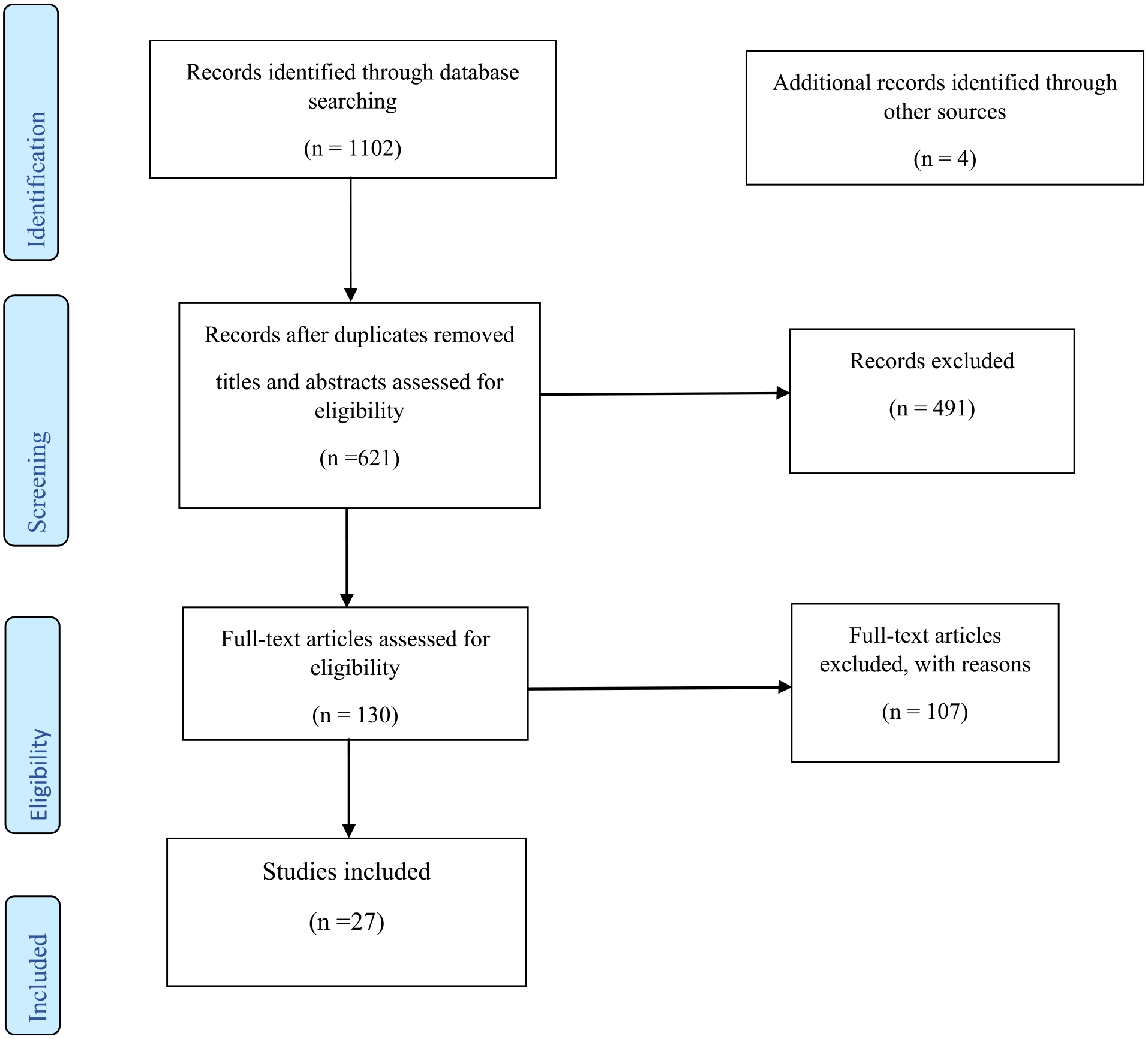
Literature review according to the Preferred Reporting Items for Systematic Reviews and Meta-Analyses statement.
Descriptions of Reviewed Articles.
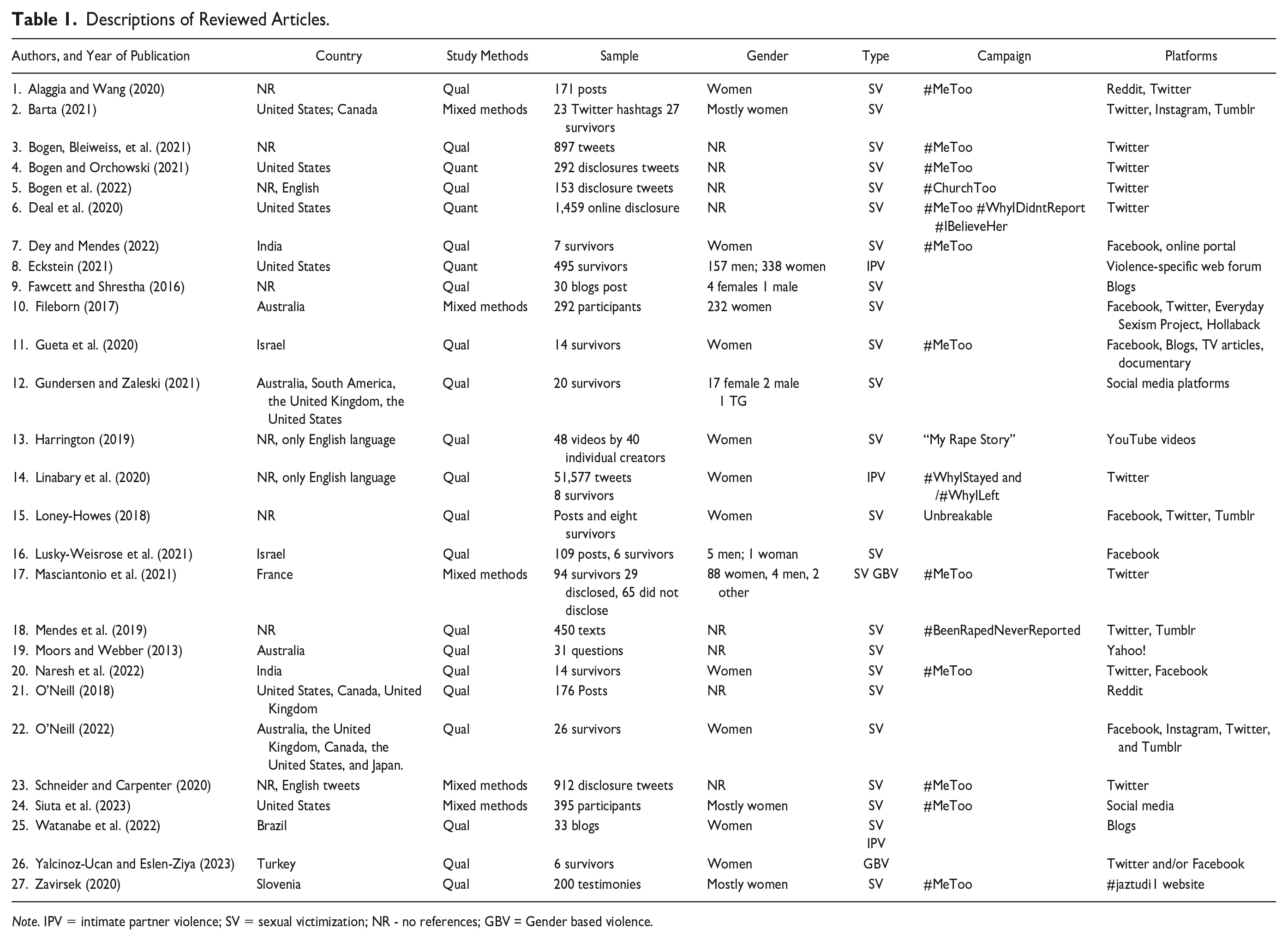
Note. IPV = intimate partner violence; SV = sexual victimization; NR - no references; GBV = Gender based violence.
Data Extraction and Analytic Approach
Using MaxQDA Pro 2020 software, we extracted the following information for each study: author(s), title, year, study methods, sample, victimization type, and study location. We conducted a multistage thematic analysis (Braun & Clarke, 2006). First, a priori codes including the hierarchical codes of the disclosure process were organized based on the literature (e.g., Chaudoir & Fisher, 2010) and the authors’ knowledge of disclosure motivation (e.g., social activism) and online disclosure multilevel risk and benefit outcomes (e.g., catharsis, negative reactions). Second, by reading the review articles we identified categories of the process of online disclosure that were defined and assimilated in the codebook with examples to ensure consistent coding. This mixed inductive and preconstructed codebook allowed the team to be conscious of the preexisting frameworks they would bring to the data while also leaving space for emergent themes.
Results
The reviewed articles indicate that online disclosure of interpersonal victimization is a process that consists of a decision-making phase regarding whether to disclose and the aftermath phase that consists of the impacts of disclosures on survivors. Furthermore, the findings show that online disclosure is a multifaced process determined by a complex interplay of factors (e.g., individual characteristics, victimization, technological interpersonal, and societal).
Decision-Making Phase of Online Disclosure Process
The reviewed articles indicated that the decision-making phase relates first to the motivation (or goal) of the disclosure, and second to multiple factors that can serve as barriers or facilitators affecting the likelihood of disclosure. However, despite this implicit sequential nature of the disclosure and assumption that there is a stage with a dedicated time to consider it, the reviewed articles have not explicitly examined the sequence of events, duration of time in decision-making, and whether disclosure was purposeful. Only one paper looked at decision-making, which showed the spontaneous nature of this process: as one survivor highlighted: “I launched into it without thinking. It was to report the fact that aggressors in the work environment are easily supported” (Masciantonio et al., 2021, p. 9). However, in the reviewed studies, when participants were asked to recall the online disclosure process retrospectively, multiple motivations, barriers, and facilitators for online disclosure by survivors were identified.
Motivation for Online Disclosure
The reviewed articles indicate that online disclosure of interpersonal victimization involves pursuing multiple, simultaneous goal-related or motivational systems (Chaudoir & Fisher, 2010) including pursuit of positive outcomes, like social change and avoidance motivations (i.e., reducing adverse outcomes, preventing perpetrators from harming others) that are classified according to individual, interpersonal, and societal-level motivations.
First, the approach motivation for online disclosure at the individual level was identified across reviewed articles and was related to a therapeutic goal. Accordingly, disclosure was constructed as an instrument for recovery in coming to terms with the abuse experienced by processing it (Linabary et al., 2020; Lusky-Weisrose et al., 2021; Naresh et al., 2022). Specifically, this need for a therapeutic source was related to the victimization narrative construction by finding new meanings in these experiences (Gueta et al., 2020; Loney-Howes, 2018; Lusky-Weisrose et al., 2021).
At the interpersonal level, another approach to motivation was receiving emotional and psychological support as survivors’ mental health was poor (Barta, 2021; Fawcett, & Shrestha, 2016; O’Neill, 2018). Other emotional needs that motivated survivors to make online disclosures included seeking emotional support and practical advice about coping practices, such as how to write a victim impact statement (Lusky-Weisrose et al., 2021; O’Neill, 2018) or learn their legal rights since legislation protecting women against SV is rather recent (Watanabe et al., 2022). Other needs for support were focused on the wish to be believed and validated by a community of peers given their struggles to understand their victimization and the fact that these needs were not addressed by other outlets such as the justice system (Dey & Mendes, 2022; Fileborn, 2017; Loney-Howes, 2018; Lusky-Weisrose et al., 2021; Naresh et al., 2022; Moors & Webber, 2013; O’Neill, 2018; Yalcinoz-Ucan & Eslen-Ziya, 2023).
However, this interpersonal approach motivation was also related to supporting other survivors also struggling with their recovery journeys, by providing encouragement and validation and sharing stories of personal achievement and recovery to instill a sense of hope for recovery (Barta, 2021; Dey & Mendes, 2022; Fawcett & Shrestha, 2016; Fileborn, 2017; Loney-Howes, 2018; Gueta et al., 2020; Gundersen & Zaleski, 2021; Masciantonio et al., 2021; Naresh et al., 2022; O’Neill, 2022; Watanabe et al., 2022). As one survivor stated: “I try to use social media as like, ‘I’m here if you need to talk. I’m here with the resources” (Barta, 2021, p. 2205).
Accordingly, survivors shared in their disclosures the methods they employed to facilitate recovery, such as using religious and spiritual coping, practicing self-compassion, and accessing beneficial resources (Barta, 2021; Fawcett & Shrestha, 2016). Specifically, these disclosures were characterized by survivors’ use of “everyday” hashtags that amplified the visibility and publicity of the disclosure (Barta, 2021; O’Neill, 2022). Furthermore, survivors were motivated to engage in online disclosure as they put a value on the political power of collective action to counter isolation and othering feelings associated with the victimization, which resulted in the creation of a community (Fawcett & Shrestha, 2016; Gueta et al., 2020; Gundersen & Zaleski, 2021; Lusky-Weisrose et al., 2021; Masciantonio et al., 2021; Naresh et al., 2022; Yalcinoz-Ucan & Eslen-Ziya, 2023).
The approach motivation at the societal level was identified across the reviewed articles, particularly in studies focused on open public platforms where disclosures are non-anonymous. Accordingly, survivors recognized the political power of the online arena to change social structures in favor of gender equity and legally mandated systems to be more effective in addressing interpersonal victimization (Gueta et al., 2020; Fileborn, 2017; Masciantonio et al., 2021; Naresh et al., 2022; O’Neill, 2022; Siuta et al., 2023). Specifically, survivors sought to challenge social narratives such as hegemonic rape scripts, victim-blaming, and complicated assumptions about consent (Gueta et al., 2020; Gundersen & Zaleski, 2021; Loney-Howes, 2018; Masciantonio et al., 2021; Naresh et al., 2022; Yalcinoz-Ucan & Eslen-Ziya, 2023). Another societal proactive goal identified was raising awareness and breaking the silence regarding the ubiquity of victimization, given that the culture of silence projects shame and stigma on survivors (Barta, 2021; Bogen, Bleiweiss, et al., 2021; Fawcett & Shrestha, 2016; Fileborn, 2017; Gueta et al., 2020; Gundersen & Zaleski, 2021; Linabary et al., 2020; Loney-Howes, 2018; Lusky-Weisrose et al., 2021; Masciantonio et al., 2021; Naresh et al., 2022; O’Neill, 2022; Siuta et al., 2023; Yalcinoz-Ucan & Eslen-Ziya, 2023).
In contrast, interpersonal avoidance motivations documented in the reviewed studies were related to preventing negative outcomes such as interpersonal victimization. This motivation was divided into revenge by shaming the perpetrators (Lusky-Weisrose et al., 2021) and holding the aggressors accountable for their acts (Masciantonio et al., 2021; Siuta et al., 2023) to prevent further victimization. In addition, other motivations regarding the perpetrators included therapy focused on a therapist confronting the perpetrator to let him acknowledge his acts. As one survivor stated, they [therapist] need “to tell the person to acknowledge that they fucked up. They cannot get away with it every time” (Dey & Mendes, 2022, p. 210). Finally, this motivation was also to establish accountability and inform others of the perpetrators’ actions as an alternative way to pursue justice and prevent further victimization (Dey & Mendes, 2022; Fileborn, 2017; Loney-Howes, 2018; Lusky-Weisrose et al., 2021; Naresh et al., 2022; Siuta et al., 2023; Yalcinoz-Ucan & Eslen-Ziya, 2023). The reviewed studies indicate that motivation for online disclosure is only part of the decision-making process, as barriers and facilitators also affect survivors' disclosure likelihood, and are reviewed next.
Facilitators of and Barriers to Online Disclosure
Facilitators of online disclosures included factors that contributed to and enabled the disclosure, while barriers included factors preventing or delaying disclosure. These factors were related to individual, interpersonal, and technological factors. At the individual level, one of the documented facilitators was related to overcoming emotional burdens such as shame and guilt associated with interpersonal victimization (Gueta et al., 2020; Loney-Howes, 2018; Masciantonio et al., 2021). Specifically, one mechanism for overcoming emotional burdens was achieved by being inspired by other survivors who posted their victimization online and by acknowledging their own experience of SV (Alaggia & Wang, 2020; Dey & Mendes, 2022; O’Neill, 2018; Watanabe et al., 2022). However, maladaptive coping strategies to overcome the emotional burden and to disclose were also documented, such as alcohol use, as one survivor highlighted: “I used the #WhyIDidntReport a few months ago. Actually, if I’m being honest, I’d had too much to drink that evening, and I no longer had any of the filters that I had had since the time of the offense which prevented me from talking” (Masciantonio et al., 2021). Similarly, individual barriers were described as internal barriers to online disclosure, such as feeling responsible for the assault (e.g., self-blame) and being unsure if it was an assault or abuse (Alaggia & Wang, 2020; Lusky-Weisrose et al., 2021; Masciantonio et al., 2021). Furthermore, survivors’ self-perceived legitimacy and likelihood of being considered “real victims” also served as a barrier to online disclosure (Zavirsek, 2020).
In addition, survivors’ demographic and victimization characteristics were also facilitators of and barriers to online disclosure. First, gender was a facilitator of online disclosure. Accordingly, 18 out of the 27 reviewed articles were women-only or predominantly women samples, indicating female gender plays an important role in decisions for online disclosure to raise their plight of interpersonal victimization and pursue discursive struggles against patriarchy. For example, Siuta et al.’s (2023) qualitative findings showed participants felt that men are not “fitting in” with the #MeToo movement; and their quantitative findings revealed that women were twice as likely to post as men. In contrast, in one study (Eckstein, 2021), men reported more preference for and practice of online compared to offline disclosure. Furthermore, online disclosure may correspond to victims’ familiarity and comfort with online channels and may shape disclosure decision-making. For example, in a study of IPV victims (N = 495; 157 men and 338 women), most victims preferred in-person disclosure and support-seeking, but those preferring and seeking digital support were reinforced by their perceptions of technology as more effective than in-person methods (Eckstein, 2021).
Offence-Related Factors
Although 22 of the reviewed studies were focused on SV, 1 study found that physical victimization predicted use of technology-mediated disclosure (Eckstein, 2021). However, survivors of IPV who experienced technological abuse (i.e., online threats, emotional abuse, and coercive control, i.e., psychological abuse online) overwhelmingly preferred in-person methods of disclosure (Eckstein, 2021). In addition, a study found that having more recent victimization (3–6 months) was a barrier to disclosure (Masciantonio et al., 2021), but so was having a longer time since victimization (5–10 years), as survivors had put the event behind them (Masciantonio et al., 2021; Siuta et al., 2023). In addition, the more recent the event, the more it was associated with shame, which may mediate the association between time since the assault and disclosure.
Interpersonal facilitators of and barriers to online disclosures were also identified in the reviewed studies. One of the main considerations for online disclosure discussed in the literature was a reference to face-to-face disclosure but the pattern and association of the two forms of disclosures was not well articulated. In seven studies, feeling unsupported or stigmatized offline or unmet expectations of justice served as an impetus to turn to the online arena (Barta, 2021; Dey & Mendes, 2022; Fawcett & Shrestha, 2016.; Linabary et al., 2020; Moors & Webber, 2013; O’Neill, 2018; Yalcinoz-Ucan & Eslen-Ziya, 2023). Furthermore, in two studies some survivors indicated that they had never shared their experiences of abuse before sharing it online (Linabary et al., 2020; Moors & Webber, 2013), with some getting advice from therapists to disclose online (Barta, 2021). Siuta et al. (2023) show that workplace organizational factors may serve as facilitators for online disclosure. Survivors with perpetrators holding more organizational power than themselves were 2.65 times more likely to post using #MeToo than those with perpetrators equal in organizational power.
The value of anonymity as a facilitator of disclosure was evident in the reviewed articles. Some studies were focused on survivors who disclosed on open public platforms (e.g., Gueta et al., 2020; Gundersen & Zaleski, 2021), while other studies addressed anonymous disclosures made in closed online forums dedicated to the issue of SV (Moors & Webber, 2013; O’Neill, 2018). In those studies, anonymity was described as a facilitator for online disclosure as it provided survivors with the security, they needed to share their stories (Moors & Webber, 2013; O’Neill, 2018; O’Neill, 2022; Watanabe et al., 2022). Moreover, Moors and Webber (2013) concluded that disclosure on this anonymous online forum was appealing to survivors abused by people close to them who were experiencing the most difficulty disclosing offline (Moors & Webber, 2013). In contrast, the lack of guaranteed anonymity was described as a barrier to online disclosure (Lusky-Weisrose et al., 2021). In addition, public platforms such as Twitter were perceived as unsuitable for disclosing private events, and survivors preferred to talk to friends about the victimization, even if they gave up the power of collective action (Masciantonio et al., 2021).
Another interpersonal-related facilitator was platform-related-facilitators. First, online campaigns, such as #MeToo, were identified as facilitators. Specifically, 16 papers out of the 27 were focused on popular and widely used hashtag campaigns, with #MeToo as the leading campaign and the focus of 11 papers (see Table 1). In the studies, campaign encouragement was related to seeing it as a representation of a global phenomenon that validated their experience. Thus, broadcasted testimony of people posting online, breaking news stories, or celebrity statements were perceived as encouragement to share their own experiences of SV (Alaggia & Wang, 2020). The technological facilitators were related to the hashtag’s invitation and a critical mass of survivors and others validating their experiences (Linabary et al., 2020; O’Neill, 2018) and the ability to access support at any time of the day (O’Neill, 2018). In one study, the geographic distribution of utilization of the hashtag #MeToo tweets indicated the presence of a high density of #MeToo tweets in states with lower population density (e.g., Kansas, Missouri, Colorado) compared to states with greater population density, indicating that there may be specific disclosure facilitators like state initiatives or media coverage in these areas (Bogen & Orchowski, 2021).
In contrast, the interpersonal barriers identified across the reviewed articles included: fear of social criticism, fear of triggering other survivors by posting their stories, and fear of backlash from perpetrators (Alaggia & Wang, 2020; Lusky-Weisrose et al., 2021; Masciantonio et al., 2021). Specifically, fear that followers who know the survivor in real life will be informed about their victimization was a barrier to online disclosure (Fawcett & Shrestha, 2016; Masciantonio et al., 2021; Siuta et al., 2023). Specifically, this barrier was amplified among conservative communities because of the taboo nature of discourse on sexuality (Lusky-Weisrose et al., 2021; Naresh et al., 2022). In addition, barriers were also related to resistance to active pressure from the #MeToo campaign on survivors to speak out to bring attention to interpersonal victimization (O’Neill, 2022).
The Aftermath Phase of Online Disclosure: The Impact of Online Disclosure on Survivors
The impact of online disclosure can be divided into benefits and risks. A relatively large portion of the reviewed studies (19 out of the 27) focused on the benefits of disclosures.
The Benefits of Online Disclosures
The benefits of the disclosures identified in the reviewed studies were related to the individual level, such as interpersonal gains, and participation in societal change. Mechanisms that may render these benefits to survivors were also identified across the reviewed articles.
Individual-level benefits relate first to the empowerment of disclosing survivors. The concept of empowerment was not defined or coherent throughout the reviewed articles, but it was related to several factors. First, online spaces were defined as more empowering than in-person communities. For example: “Online spaces for disclosure may, therefore, serve to empower survivors who have experienced negative or harmful responses from their in-person communities” (Bogen et al., 2022, p. 23). A second aspect of empowering disclosure was related to the courage to “come out of the closet” as part of a collective act to open new options for SV disclosures (Alaggia & Wang, 2020) and inspire and encourage other women (Yalcinoz-Ucan & Eslen-Ziya, 2023). However, empowerment was also associated with anonymous disclosure as it was perceived to improve self-affirmation and self-image (Watanabe et al., 2022). The third aspect of empowerment experienced by some survivors was an identity change from a victim to a resilient social activist. This empowering aspect was embedded in online disclosure as a political practice of creating institutional change through adequate policies and practices addressing GBV (Dey & Mendes, 2022; Gueta et al., 2020; Gundersen & Zaleski, 2021; Loney-Howes, 2018). However, with a critical lens, Harrington (2019, p. 1188) also showed the economic benefits of disclosure as she indicated how “Survivors used my Rape Story” YouTube Videos as a “commodity that creators may use to self-brand and emotionally connect with a following.” This is because many survivors provided a link to their websites that promote various products, such as a book about recovery and weight loss, thus positioning survivors as a mentor for resilience given the hardship they went through and the power they needed to overcome the victimization. Such accounts provided opportunities to brand themselves as self-motivated, resilient, or working on themselves to be whole (Harrington, 2019).
Psychological recovery was another individual beneficial aspect of online disclosure identified in the reviewed articles. Many articles described a general self-reported improvement in survivors’ mental health symptoms (e.g., PTSD, depression, anxiety, insomnia) following disclosure described as “therapeutic” and “healing” (Dey & Mendes, 2022; Gueta et al., 2020; Gundersen & Zaleski, 2021). Improved mental health was related to the discloser getting cathartic relief after disclosures of deeply felt emotions, specifically, shame and guilt (Dey & Mendes, 2022; Fawcett & Shrestha, 2016; Fileborn, 2017; Gueta et al., 2020; Gundersen & Zaleski, 2021; Harrington, 2019; O’Neill, 2018; Watanabe et al., 2022; Yalcinoz-Ucan & Eslen-Ziya, 2023). A last final beneficial aspect identified in reviewed studies related to the disclosure as a process of meaning-making, as the victimization narrative helped to name the abuse and find new meaning regarding the underlying reason for it, thus relieving shame and stigma (Linabary et al., 2020; O’Neill, 2018). Furthermore, participants explained that writing personal testimony enabled them to recognize their experiences as caused by structural social inequalities or gendered power relationships, which promoted a growing sense of relief (Dey & Mendes, 2022; Gueta et al., 2020; Gundersen & Zaleski, 2021).
A second beneficial aspect of online disclosure is interpersonal benefits of receiving and providing social support. Social support was described as beneficial when survivors received positive reactions of validation and belief (Barta, 2021; Eckstein, 2021; Fileborn, 2017; Loney-Howes, 2018; Morse & Weber, 2013; Schneider & Carpenter, 2020). Specifically, compared to in-person disclosure, online disclosure, also had a large, unknown audience described as having value, as those reactions were perceived to have a more objective perspective and were particularly valued for not judging or ridiculing survivors (Bogen, Bleiweiss, et al., 2021; Gueta et al., 2020; Gundersen & Zaleski, 2021; Schneider & Carpenter, 2020). Social support was also gained through reading the experiences of those who understand and fully appreciate the challenges associated with recovery (Fawcett & Shrestha, 2016) and by normalizing’ their own experiences resulting in community belonging (Dey & Mendes, 2022). Specifically, this sense of community belonging was stressed by survivors in close-knit religious communities (Bogen et al., 2022; Lusky-Weisrose et al., 2021). Lastly, the relational effects of online disclosure were also evident in the workplace and prompted better relationships with coworkers (as evidenced by expressions of support), and increased job satisfaction (Siuta et al., 2023).
This validation and support from other survivors and non-survivors were described as enabling a process of seeking justice facilitated by recognition from others (Dey & Mendes, 2022; Fileborn, 2017; Yalcinoz-Ucan & Eslen-Ziya, 2023). This support was gained and received via direct visible online messages that were enhanced by hashtags enabling one to locate and read the entire post, as well as private messages, thus providing an alternative channel for disclosure and resource exchange (Barta, 2021).
Furthermore, the specific online affordance may render interpersonal benefits by providing choices between disclosure outlets, thus serving as a possible benefit-enabling mechanism. Findings show that Twitter enabled some survivors to choose disclosing specific details of their victimization experiences, while others utilized the hashtag to affiliate themselves with the online community in a less revealing manner (Bogen, Bleiweiss, et al., 2021). Another disclosure option that renders interpersonal benefits is opening a Twitter account, engaging with others’ stories, sharing their own, and later closing one’s account (Linabary et al., 2020). Lastly, for isolated survivors with minimal offline support, “liking” or “retweeting” disclosures posts, can provide a sense of camaraderie (Loney-Howes, 2018).
At the societal level, the benefits of disclosure identified in reviewed studies were related to participation in campaigns like #MeToo, which connect survivors with global movements creating societal change (Alaggia & Wang, 2020; Bogen, Bleiweiss, et al., 2021; Gueta et al., 2020; Yalcinoz-Ucan & Eslen-Ziya, 2023). Specifically, the studies reviewed revealed unique affordances and architecture of platforms like Twitter and Facebook that facilitate the societal benefits of disclosure. First, survivors are connected with other survivors, by utilizing hashtags, like #MeToo, which gives them visibility, in contrast to invisibility/silence about interpersonal victimization, which serves as an initial step in creating societal change (Barta, 2021; Bogen, Bleiweiss, et al., 2021; Gueta et al., 2020; Mendes et al., 2019). In addition, the circularity of sharing hyperlinks was used to extend narratives beyond one tweet, and even beyond Twitter character limits. For example, survivors linked detailed testimonies of similar assaults, SV statistics, or reports on institutional bias against women in police and judicial systems, thereby challenging historical rape myths that put the onus on survivors to prove they were assaulted (Linabary et al., 2020; Mendes et al., 2019; O’Neill, 2018).
Second, another affordance of technological tools was used to document and visualize the prevalence of interpersonal victimization and its implications by emotionally engaging the audience. For example, only in online spaces can survivors use tools such as a notepad with carefully crafted hand-written messages and common vernacular practices such as “hiding” behind their signs to convey the message of family violence and related shame and fear, thus hopefully generating a broader awareness and social change (Mendes et al., 2019). Furthermore, this online-related ability to disclose victimization with hashtags such as #BeenRapedNeverReported provides a way for survivors to articulate their victimization and ease the burden of “unspeakable” experiences in large numbers that facilitates social change (Mendes et al., 2019). Lastly, the ability to target audiences such as churches responsible for abuse and cover-ups can create social change (e.g., via #Churchtoo), which ensures that survivors’ messages will be seen by church members (Bogen et al., 2022).
Risks From Online Disclosures
Despite the perceived benefits of online disclosure, in 15 studies participants also described its downsides in terms of risks of online disclosure, which can be divided into individual, temporal, offense-related, interpersonal, and societal factors. First, the individual-related risks mentioned in the reviewed articles related to the mere interaction with disclosure hashtags and the disclosure process (Bogen, Bleiweiss, et al., 2021; Loney-Howes, 2018; Schneider & Carpenter, 2020). The disclosure was likened to a coming-out experience and defined as a “really scary experience” (Loney-Howes, 2018, p. 36). Furthermore, the disclosure was described as undermining some survivors’ sense of security who received death threats, which adversely affected their daily functioning (Gueta et al., 2020; Lusky-Weisrose et al., 2021). In addition, the inability to control who sees the disclosure was described as a significant risk in the studies. For example, a CSA disclosure posted on a closed Facebook community was later publicly posted on a multi-audience platform transgressing community boundaries (Lusky-Weisrose et al., 2021). The irrevocability of the online and its long-term implications for future relationships was also described as a risk (Gueta et al., 2020). Regrets by survivors about public disclosure were mentioned in three articles, but they were mitigated by perceived benefits, including the need to disclose (Gueta et al., 2020; Loney-Howes, 2018; Yalcinoz-Ucan & Eslen-Ziya, 2023). Other survivors reported they would not self-disclose again, given the aggressive atmosphere on social media and the harmful responses they received: “No, people are mean. The Internet is a war, I’m weak for wars” (Gundersen & Zaleski, 2021, p. 847). Others regretted the negative financial and employment implications of their online disclosures for their perpetrators (Dey & Mendes, 2022).
The second risk identified in the literature was temporal and offense-type related risks. Regarding temporal risks, participants attributed the negative effects of disclosure on their well-being to the short time between the assault and their disclosure, which meant that they did not have time to process the assault and regain mental stability (Gueta et al., 2020). Regarding offense-type risks, findings indicate that tweets describing assault with penetration had significantly more negative sentiment than those describing gender harassment or unwanted sexual attention (Schneider & Carpenter, 2020). Sexual assault within the family was described as posing more significant risks to survivors and their loved ones (Gueta et al., 2020). Furthermore, reviewed studies indicated a risk management strategy survivors used to balance their desire to disclose with the toxic online environment. For example, participants limited assault details to protect themselves (Gueta et al., 2020; O’Neill, 2022), particularly for those with extensive networks (Deal et al., 2020).
Interpersonal risks were related to receiving negative reactions from strangers, both online and in-person. For example, victim-blaming reactions included questions about why women did not leave the abusive partner or placed individual responsibility on the survivor to end the abuse and, by extension, “solve” the social problem of IPV (Linabary et al., 2020; Loney-Howes, 2018). Other reactions questioned the survivors’ motive for disclosing her story (Gueta et al., 2020). Other negative reactions were mocking and trolling the campaign, such as #Metoo or #WhyIStayed, and undermining the legitimacy of its participants (Fileborn, 2017; Linabary et al., 2020; Loney-Howes, 2018; Mendes et al., 2019; Yalcinoz-Ucan & Eslen-Ziya, 2023). However, even well-intentioned social reactions, such as other survivors who share their victimization stories, were perceived to overwhelm the disclosing survivor (Fileborn, 2017; Gueta et al., 2020). The literature also indicates possible mechanisms that may moderate the impacts where, compared to offline disclosure, risk of harm from negative social reactions was amplified due to the larger audience of public disclosure, which increases negative responses (Gueta et al., 2020).
In contrast, the literature also indicated technological strategies employed by survivors to lower risks, for example, by controlling the audience within the same platform (e.g., targeting friends, not family) or choice of platform (e.g., Twitter followers versus Facebook friend group) (Gueta et al., 2020; Fileborn, 2017). Another strategy survivors noted was deleting offensive reactions or blocking users (Gueta et al., 2020; Loney-Howes, 2018; Schneider & Carpenter, 2020). Second, anticipating backlash, survivors crafted and edited disclosure content in advance pointing out aspects that may lead to questions and skepticism, especially when the victimization narrative challenged rape myths (Loney-Howes, 2018). Choosing private communication channels to select people to tell reduced visibility and tempered disclosure risks for vulnerable survivors (Barta, 2021). Lastly, societal-level risks were related to others’ questioning the role of the campaign or disclosure’s ability to contribute to meaningful or lasting change in addressing interpersonal violence (Bogen, Bleiweiss, et al., 2021; Loney-Howes, 2018).
Discussion
This systematic literature review examined the online disclosure process of interpersonal victimization. Table 2 summarises the critical findings. It provides insight into two phases of the decision-making (motivation, barriers, and facilitators) and outcomes of online disclosure (benefits and risks). The reviewed studies reveal that disclosure is a multifaced process, involving a wide range of individual, interpersonal social, and technological factors that should be considered. These findings also raise questions regarding similarities and distinctive factors in offline disclosures (Sylaska, & Edwards, 2014; Tener & Murphy, 2015) and the disclosures of people with concealable stigmatized identities (Chaudoir & Fisher, 2010). Themes identified at varying levels also suggest the need to adapt a broader, more complex perspective in conceptualizing the process of online disclosure and its impacts to guide this area of study (Bogen, Orchowski, et al., 2021; Gorissen et al., 2023). Adopting an ecological perspective including a multifactorial, multilevel approach led us to systematically consider the different factors identified in this literature review.
Summary Findings.
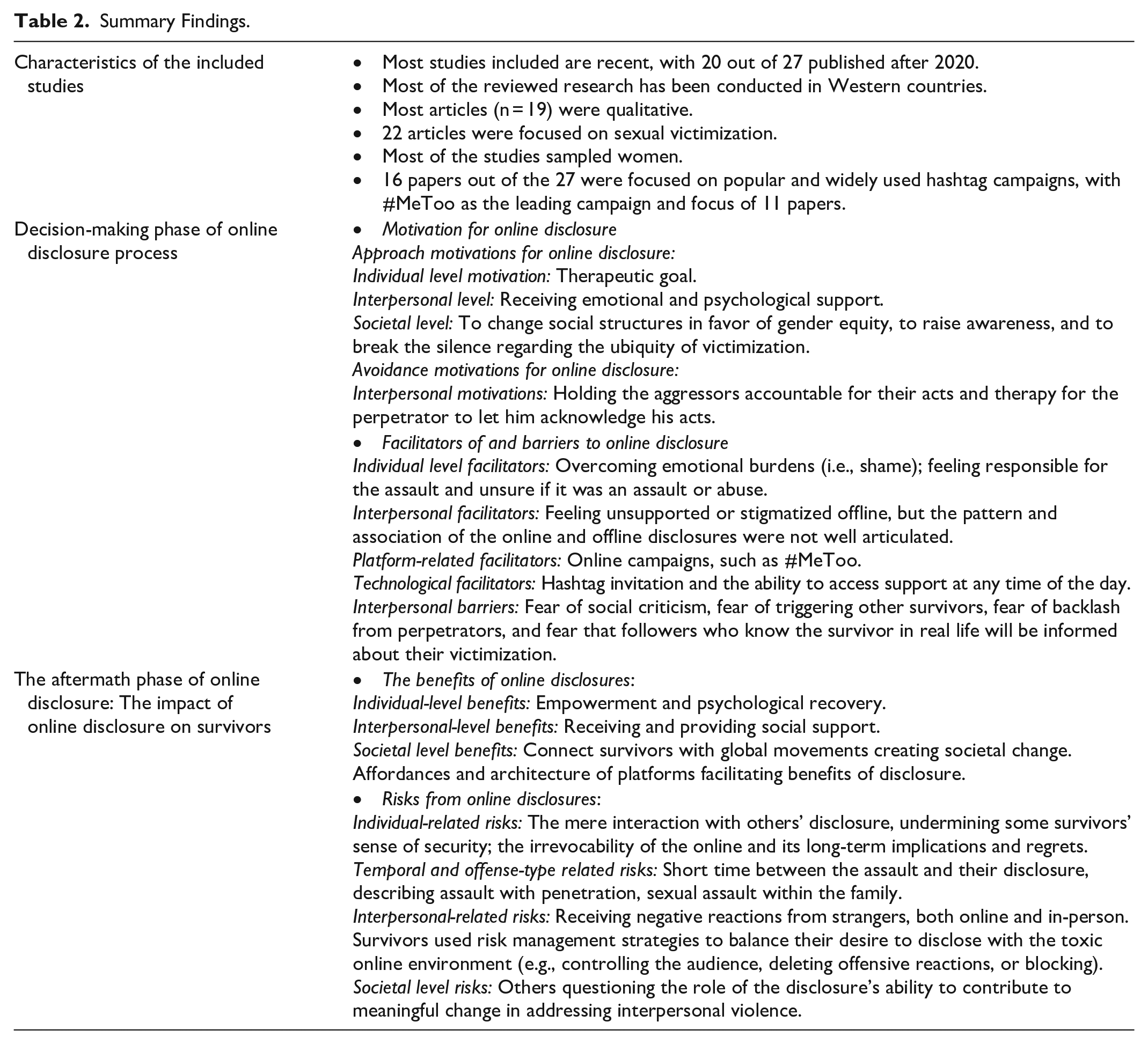
Another finding was related to the characteristics of the reviewed studies. Most studies included are recent, with 20 out of 27 published after 2020, indicating that this field of research is quite new and growing. This is unsurprising considering the recent increased awareness of the scope of interpersonal victimization and the technology revolution occurring in the last decade with the emergence of social media platforms as new disclosure outlets (Bogen, Bleiweiss, et al., 2021; Bogen, Orchowski, et al., 2021; Moors & Webber, 2013). Furthermore, this growing research field may reflect changing social norms resulting in public self-disclosure in the wake of the #Metoo movement in 2017. This led survivors to disclose online and interact with large audiences to publicize sexual assault’s prevalence and impact and served as an antidote to the implicit shame of silence and/or anonymity (Banet-Weiser, 2018).
Most of the reviewed research has been conducted in Western countries, especially the United States, despite the prevalence of campaigns such as #MeToo in non-Western countries (see, e.g., Paiva, 2019). This may suggest that being able to communicate and safely share interpersonal victimization online is mediated by privilege (e.g., technology access) and cultural capital (Fileborn, 2017). Alternatively, these findings may also reflect the interest of researchers from Western countries and the current review’s limitation using English-language and peer-reviewed papers. Another finding regarding the reviewed studies relates to the survivor gender, which was primarily women. This may reflect the prevalence and gendered nature of interpersonal victimization as a form of GBV (Gómez, 2020) and those online campaigns such as #MeToo that were marketed as a women’s movement. This indicates the critical facilitating role of gender in online disclosure decision-making processes (Siuta et al., 2023). Alternatively, this may represent cultural aspects of gendered norms that amplified both offline barriers to disclosure and negative reactions to men’s online disclosures (Dworkin & Weaver, 2021; Levy & Adam, 2018). Finally, most studies focused on SV, and only five focused on IPV or GBV. This may likely reflect the #MeToo movement and such online campaigns’ central roles in encouraging disclosures of SV.
Regarding the decision-making phase of disclosure, given that all reviewed articles are retrospective, the actual time spent, and the decision-making phases are not well articulated or studied in the identified literature. This deficit is important because decision-making about offline disclosure is described in the literature as thoughtful, well-processed, and purposeful (Tener & Murphy, 2015).
The reviewed articles indicated various approaches and in a much more limited way, avoidance motivation goals for online disclosure. This is consistent with the DPM that was developed regarding offline disclosure (Chaudoir & Fisher, 2010). The dominance of approach goals may be associated with the current review’s findings regarding the focus of studies on the benefits of online disclosure and reflects how individuals with approach-focused goals seek to transcend their immediate personal or relationship concerns and may be willing to endure risks involved for the sake of achieving their goal. Specifically, the reviewed studies indicated that disclosers’ individual and interpersonal goal motives (e.g., help-seeking, processing the victimization, educating others) are similar to goals of offline disclosers (Ahrens et al., 2007; Ullman, 2023). In contrast, the avoidance disclosure goal identified in the current review was related to preventing interpersonal victimization by establishing accountability for perpetrators’ actions as an alternative way to pursue informal justice (Dey & Mendes, 2022). However, this disclosure goal may be inadequate on its own and risky in minimizing the state’s obligation to take action (Powell, 2015).
However, the main difference from offline disclosure relates to online disclosure’s aim of changing social norms and raising awareness of interpersonal violence, which is mostly relevant to public self-disclosure. However, it is important to acknowledge that offline parallels exist for public rape disclosure in on-the-ground anti-rape activism of the women’s movement (e.g., marches, public rape speak-outs, rape squads; Bevacqua, 2000).
This indicates that the conceptualization of online disclosure needs to consider sociocultural factors (Masciantonio et al., 2021), just as with offline disclosure. Online, like offline, disclosure takes place in a social context with meanings, norms, and values regarding interpersonal victimization and disclosure, that requires examining these processes holistically.
Our findings indicated that overcoming shame and guilt were facilitators for online disclosure, similar to offline (Sylaska & Edwards, 2014; Tener & Murphy, 2015). However, some facilitators were unique to online disclosure and related to technological aspects such as 24/7 availability of support and campaigns like #MeToo encouraging survivors to share their experiences (Alaggia & Wang, 2020; Linabary et al., 202). This is in line with the Disclosure Decision-Making model (DDM, Andalibi & Forte, 2018) concept of network-related reciprocal disclosure in that seeing others self-disclose on social media platforms encourages stigmatized people to do so, by reducing perceived stigma. Furthermore, facilitators of disclosure motivation, such as anonymity, aided help-seeking for some, while other survivors wanted to “come out” of the victimization closet and create societal change. Barriers to online disclosures identified in this review were fear of social criticism, particularly questions of whether the assault is “real” victimization, similar to offline barriers (Tener & Murphy, 2015). However, some barriers may be enhanced in the online arena, like cultural and/or religious barriers to SV disclosure (Dworkin & Weaver, 2021). For example, cultures like the Ultraorthodox Jewish Community where social media use is unacceptable (Lusky-Weisrose et al., 2020) likely inhibit online disclosure.
Another contribution of this current review was to show how various variables related to disclosure and multilevel benefit or risk outcomes. Regarding benefits, many articles (e.g., Dey & Mendes, 2022; Gueta et al., 2020; Gundersen & Zaleski, 2021) described improved survivors’ mental health symptoms (e.g., lower PTSD, depression, shame, stigma), and empowering transformation experiences following the disclosure. Although this research provides initial insights into the role online disclosure may play in survivor recovery, self-report, and qualitative research cannot determine how/whether disclosure is related to recovery outcomes. Quantitative methods with larger samples and longitudinal designs are necessary to answer these questions. Furthermore, improvement in survivors’ well-being may reflect the nature of reviewed studies on public nonanonymous disclosures (e.g., Twitter) in contrast to private, anonymous disclosures on platform groups for survivors (e.g., Reddit) more relevant to non-clinical samples.
Another multilevel outcome identified in reviewed studies of disclosure relates to risks. Risks at the individual level were related to temporal factors such as shorter time between assault and disclosure, for which there was little time to process the online risks, similar to findings regarding offline disclosure (Alaggia et al., 2012). However, some risks online are distinctive or amplified in online contexts and thus need further examination for impacts on survivor mental health. For example, the risk that disclosures will be passed to other individuals, rather than the person the survivor had intended exists in both online and offline disclosure but is amplified in the online arena and called “contexts collapse” (Marwick & Boyd, 2011). Furthermore, it is not clear from the reviewed studies if survivors are fully cognizant of the risks of identity exposure involved even in online private venues that are perceived as safe. This is particularly important since survivors may feel more uninhibited when anonymous (Andalibi et al., 2016) increasing the likelihood of exposure to context collapse.
Implications for Practice, Policy, and Research
The current review contributes to the growing field of online disclosure and the theoretical conceptualization of interpersonal victimization disclosure in two critical respects. First, by adopting an ecological lens, this review’s strength lies in approaching disclosure as a process, influenced by individual, interpersonal, technological, and social contextual factors such as social media campaigns (e.g., #MeToo). Thus, our work enabled us to preserve the nuanced nature and context of online disclosures reflecting dialectical tensions and inherent complexity, thus laying the foundations for future research. Second, the current review’s findings extend previous research by locating online disclosure of interpersonal victimization within the broader literature on in-person disclosure (Chaudoir & Fisher, 2010). Accordingly, online disclosure of interpersonal victimization is conceptualized as a multi-phase (decision-making and disclosure aftermath) and multifactorial (individual, interpersonal, and social) experience for survivors by examining both disclosure goals, facilitators, and barriers to online disclosures and outcomes. This approach also suggests specific mechanisms that can mediate this process such as risk management strategies, thus contributing to the theoretical understanding of online disclosure. By connecting our analysis of interpersonal victimization disclosures with theories of concealable stigmatized identity, online non-anonymous disclosure promises to challenge societal norms and misogyny that may shape disclosure motivation and outcomes. Thus, disclosures can be perceived as part of the identity struggle by serving as a powerful form of activism through which survivors can a) empower each other to create a collective identity (O’Neill, 2018) and b) resist the negative judgments connected to victimhood (Gueta et al., 2018). This is also in line with ecological systems theory, in that individuals are not just affected by social structures, but they also have the potential to influence them (Bronfenbrenner, 1977). Therefore, collectively, individual decisions to disclose can have an impact on a stigmatized group’s visibility and, as a result, the likelihood of structural-level stigma (Pasek et al., 2017). Table 3 summarises implications to practice, policy and research.
Implication for Practice, Policy, and Research.
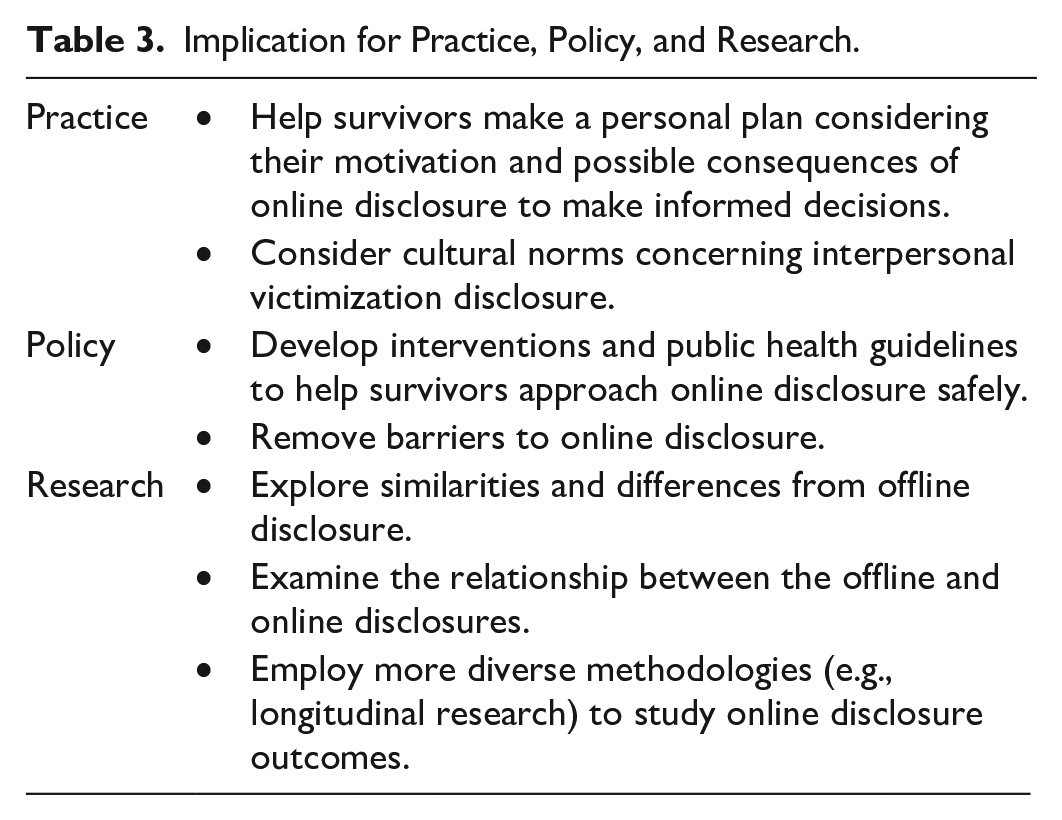
Based on this process, professionals and policymakers can help survivors make a personal plan considering their motivation and possible consequences of online disclosure to make informed decisions and remove barriers to offline and online disclosure. Accordingly, online disclosure should be carefully considered concerning disclosure aims and whether they can be achieved in other venues. Next, the survivors’ current emotional state and any prior disclosure experiences should also shape decision-making. At the interpersonal level, potential support sources, possible social reactions to the disclosure, and potential short and long-term impacts should also be assessed. At the societal level, survivors need to consider cultural norms concerning interpersonal victimization disclosure, as disclosing the abuse in religious or conservative societies can be more challenging.
Further research should focus on the process of online disclosure, exploring similarities and differences from offline disclosure. Platform characteristics like anonymity and communication features to manage risk (e.g., private messages), and alternative channels for disclosure and resource exchange platforms are needed. In addition, the relationship between the offline and online disclosures is still only partly understood. For example, how many survivors turn to online disclosure given the inability to do so offline? Future research should employ more diverse methodologies (e.g., longitudinal research) to study online disclosure outcomes. Research is needed on how audience responses (anonymous or not) and lack of respondent non-verbal cues (e.g., facial expression, tone of voice, and body language; Ullman, 2023) affect survivors and their tendency to tell other support sources. Sampled populations should look at gender, age, and race/ethnic differences among survivors, as online disclosures are affected by social norms differing by gender, culture, and generation. There is also a need for more heterogeneity in research in terms of interpersonal victimization types, particularly on IPV, as most studies identified in our current review were focused on SV. Last, given the limited work in non-Western cultures, research is needed on these societal contexts as they affect the disclosure and recovery of survivors (Dworkin & Weaver, 2021).
Footnotes
Declaration of Conflicting Interests
The author(s) declared no potential conflicts of interest with respect to the research, authorship, and/or publication of this article.
Funding
The author(s) received no financial support for the research, authorship, and/or publication of this article.
