



Abstract
This paper reports the findings of a project that conducted a rapid review of evidence regarding assessment and intervention approaches responding to children and young people who engage in harmful sexual behaviors. A literature review was conducted using a systematic search of academic databases and consultation with subject matter experts. The process resulted in 27 scholarly publications being included and analyzed to explore what was known about effective approaches with children and young people who have engaged in harmful sexual behavior. The review found that the current state of knowledge was limited, with few of the included papers reporting research outcomes. In the absence of a sound evidence base, additional theoretical literature and expert commentary have been drawn upon to better understand issues in this complex practice area. A key finding of this review was that growing awareness that children and young people who engage in harmful sexual behaviors are, first and foremost, children. They should not be regarded as soon-to-be-adults who are engaging in adult offending. This shift in thinking informs contemporary assessment and intervention approaches, challenging those models that previously focused on measuring risk using forensic approaches to predict the likelihood of future offending. A critical failure to understand the needs of specific cohorts of children and young people was also evident.
Introduction
Children and young people who engage in harmful sexual behavior are increasingly focal points of government, practice, and research interest. Most young people who engage in harmful sexual behaviors have experienced childhood adversity in the form of abuse or neglect (Karsten & Dempsey, 2018). This knowledge has implications for approaches to intervention and public policy. Historically, intervention approaches were based on models designed for adult offenders. However, these approaches may not address the unique needs of young people who engage in this behavior (Creeden, 2020).
A range of terms are used to describe children and young people who engage in harmful sexual behaviors, including sex offenders and perpetrators. These terms may not reflect the issues faced by the child or young person who, for example, may not have been convicted of a sexual offence. More importantly, terms such as perpetrators do not recognize the broader context in which the child or young person’s behavior must be understood and can be shaming and blaming of the child or young person. Changing terminology reflects a shift in understanding and approach away from viewing them simply as mini adult sex offenders (Hackett et al., 2005) to a more child-centered philosophy (Myers, 2002). Harmful sexual behavior is adopted as the preferred terminology in this manuscript to minimize stigmatizing and labeling children and young people (Campbell et al., 2020). While children may engage in sexual play as a normative part of their development, typical play and exploration can be distinguished from concerning play which incorporates; . . .the dynamics of age-appropriate, exploratory sex play between young children usually includes spontaneity, joy, laughter, embarrassment and sporadic levels of inhibition and disinhibition. On the other hand, harmful sexual behaviours have themes of dominance, coercion, threats and force. Children seem agitated, anxious, fearful or intense. They have higher levels of arousal and sexual activity may be habitual. (Gil, cited in Gil & Shaw, 2014, p. 19)
Hackett (2014, p. 18) developed a model displaying a continuum of behaviors that assists to “disentangle normal, problematic and harmful sexual behaviours in children and young people.” This continuum locates the sexual behaviors of the child or young person within the context of normative development versus inappropriate, problematic, abusive, or violent behaviors. The prevalence of harmful sexual behavior is difficult to estimate, as problematic, abusive, and violent behavior may go largely unreported for a range of reasons (Campbell et al., 2020). Current estimates suggest that between 30%–50% of all child sexual abuse involves a young person engaging in harmful sexual behavior (Campbell et al., 2020).
Research also suggests that between 90% and 97% of young people who engage in harmful sexual behaviors are male and that the onset of behaviors is typically in early adolescence whilst they are living with their families (Finkelhor et al., 2009; Hackett et al., 2016). Whilst girls are far less likely to become engaged in harmful sexual behaviors, they are reported as making up a minority of cases (Hackett et al, 2013). A disproportionate number live with a cognitive disability (Hackett et al., 2013). Brain impairment resulting from adverse childhood experiences affecting mental health, psycho-social capacities and sexual behaviors have also been associated with harmful sexual behavior (Blasingame, 2018).
Harmful Sexual Behavior by One Sibling to Another
Harmful sexual behavior by one sibling to another is associated with being opportunistic and long-lasting, and those who engage in this behavior often do so because the environment they were in made it more possible to target their siblings (Stathopoulos, 2012). Krienert and Walsh (2011) found that of more than 10,000 cases of sibling sexual abuse, the considerable majority of victims were female (over 70%), under 13 years of age (82%) and more than 5 years younger than the person engaging in the harmful sexual behavior. Harmful sexual behavior by one sibling to another has been claimed to be the most common form of sexual violation encountered by young people in the family context (Tener et al., 2017). This estimate is untested.
The average period over which the violation occurs is thought to be between 4 and 6 years (Welfare, 2010). At the same time, such behavior is most likely to be under-reported, and information on prevalence is lacking (Caffaro & Conn-Caffaro, 2005). Estimates are that it occurs 3 to 5 times more frequently than paternal sexual abuse (Daly & Wade, 2014). The lack of knowledge pertains to the shame and fear that prevents reporting. There may also be language and cultural barriers to disclosure (Sawrikar & Katz, 2018). Put simply, whilst the issue of young people engaging in harmful sexual behaviors has emerged as a concern, little is known about the range of approaches to assessment and intervention in this developing domain. The current review investigated the literature reporting on assessment and intervention approaches to reduce the recurrence of harmful sexual behaviors by children and young people.
Research Design and Methodology
A scoping review was conducted systematically to investigate empirical and theoretical literature reporting on practice responses to young people who engage in harmful sexual behavior. The method of investigation employed strategies that are used in scoping reviews, including the development of clearly defined research questions, using a clear and transparent search approach using consistent keywords, inclusion and exclusion criteria, displaying the study findings before discussion and analyzing their implications for future research and practice (Pickering & Byrne, 2014). Methods used conform to those of a scoping review in which the goal is to “map relevant literature in a field of interest” (Arksey & O’Malley, 2003). As an approach and a methodology, scoping reviews conducted systematically are used to investigate the scope of the available literature, as an exercise to identify research gaps, and may inform future research priorities (Tilbury & Ramsay, 2018). The multi-agency and multi-disciplinary research team included experienced scholars and expert practitioners.
Two research questions framed the project:
What is known about approaches to assessment and intervention with children and young people who have engaged in harmful sexual behavior?
Do these approaches address the needs of diverse cohorts of children and young people?
Search Strategy, Inclusion, and Exclusion Criteria
In January 2022, the research team met to consider the research questions, search terms, and relevant databases, overall search strategy and inclusion and exclusion criteria for the study. The team agreed that the following key search terms were: “harmful sexual behaviour” OR “harmful sexual behavior” OR “offending behaviour” OR “offending behavior” OR “problematic sexual behaviour” OR “problematic sexual behavior” OR “sibling sexual abuse” OR “intra-familial adolescent sexual abuse” OR “peer sexual abuse” OR “child to child sexual abuse” AND AB (children or young or adolescents or youth or child or teenager) AND AB (program OR assessment OR intervention OR treatment). To locate relevant articles, we searched the following nine databases: Academic Search Premier, APA PsycInfo, CINAHL Plus with Full Text, MEDLINE, Health Source: Nursing/Academic Edition, Master file Premier, APA PsycArticles, and Taylor and Francis. Articles and other resources were initially included if they were (a) relevant to the research questions, (b) published in a scholarly journal or credible online resource, or (c) relevant to the research questions and recommended by subject matter experts. Materials were excluded if they did not include information pertaining to harmful sexual behavior, or had an exclusive focus on adult behaviors. They were also excluded if they were not written in English or published before 2012 (except materials provided by subject matter experts and assessed to be relevant).
Charting and Collating the Data
Two researchers were engaged in the initial search and review of relevance. Relevant grey literature was also assessed, including unpublished reports and online resources recommended by subject matter experts. The extraction and inclusion of data were initially charted by constructing a Preferred Reporting Items for Systematic Reviews and Meta-Analyses (PRISMA), illustrated in Figure 1.
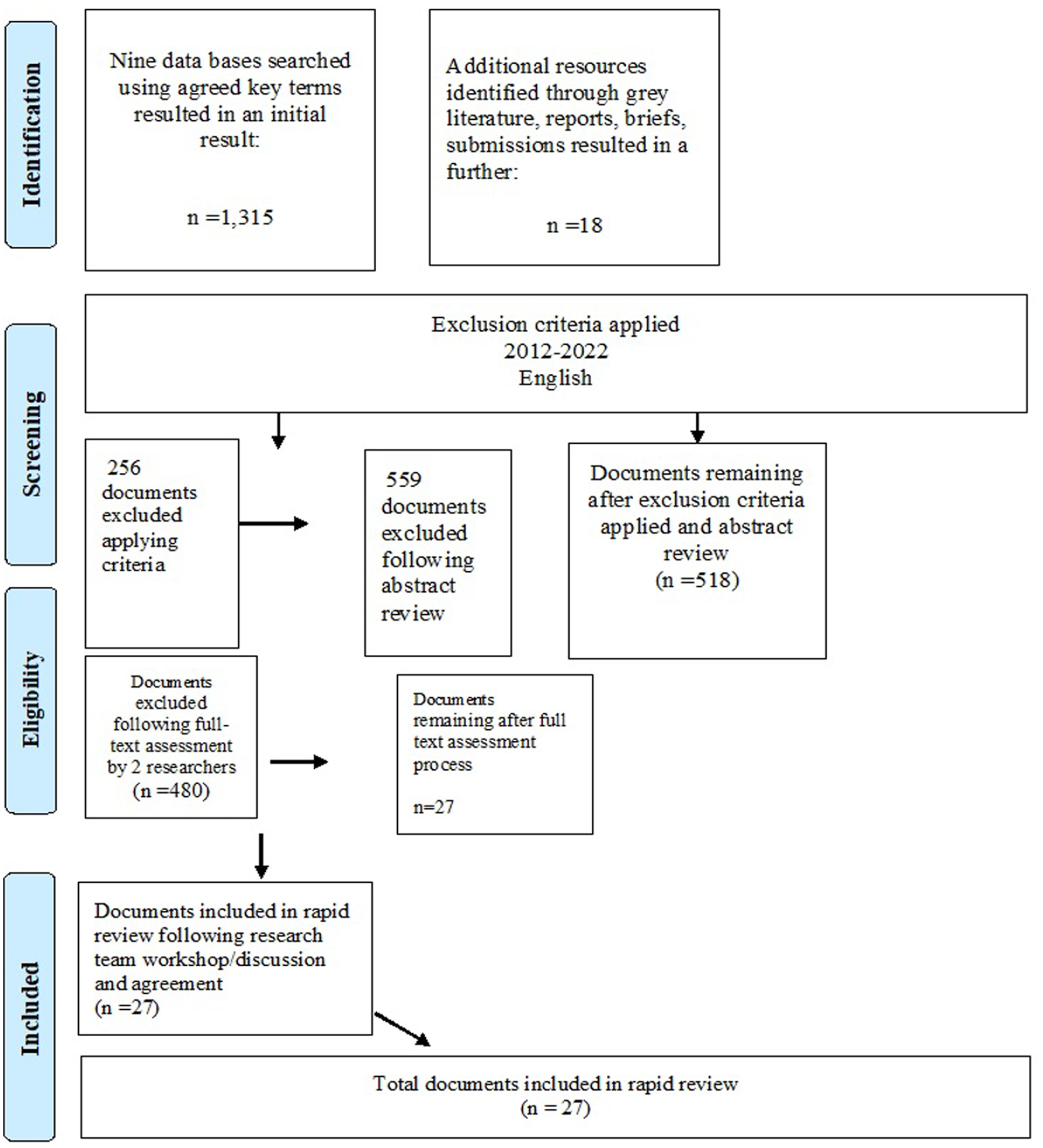
PRISMA chart.
Results
The initial search across the nine databases and grey literature resulted in 1,315 publications. Once the inclusion and exclusion criteria were applied, 256 publications were excluded with 1,077 remaining. Two researchers independently reviewed the 1,077 abstracts for relevance to the research questions, excluding a further 559. A review of 518 full-text publications was conducted for relevance to the research questions. Two researchers independently reviewed each of the 518 full text publications. The agreed protocol for inclusion was that the publication had direct relevance to at least one of the two research questions. For relevance to research question one, it was agreed that manuscripts would be included where they reported on assessment OR intervention approaches (or both). Following the independent screening process, the two researchers met and discussed those manuscripts where there was disagreement only. A third, senior researcher reviewed those papers where there was no initial consensus (n = 19) and subsequently moderated a meeting where further discussions led to consensus decisions in relation to the inclusion and exclusion of full-text publications. Following the exclusion of 480 publications, 27 were included in this review’s final sample. Table 1 lists the 27 publications included for final analysis.
Summary of Included Publications.
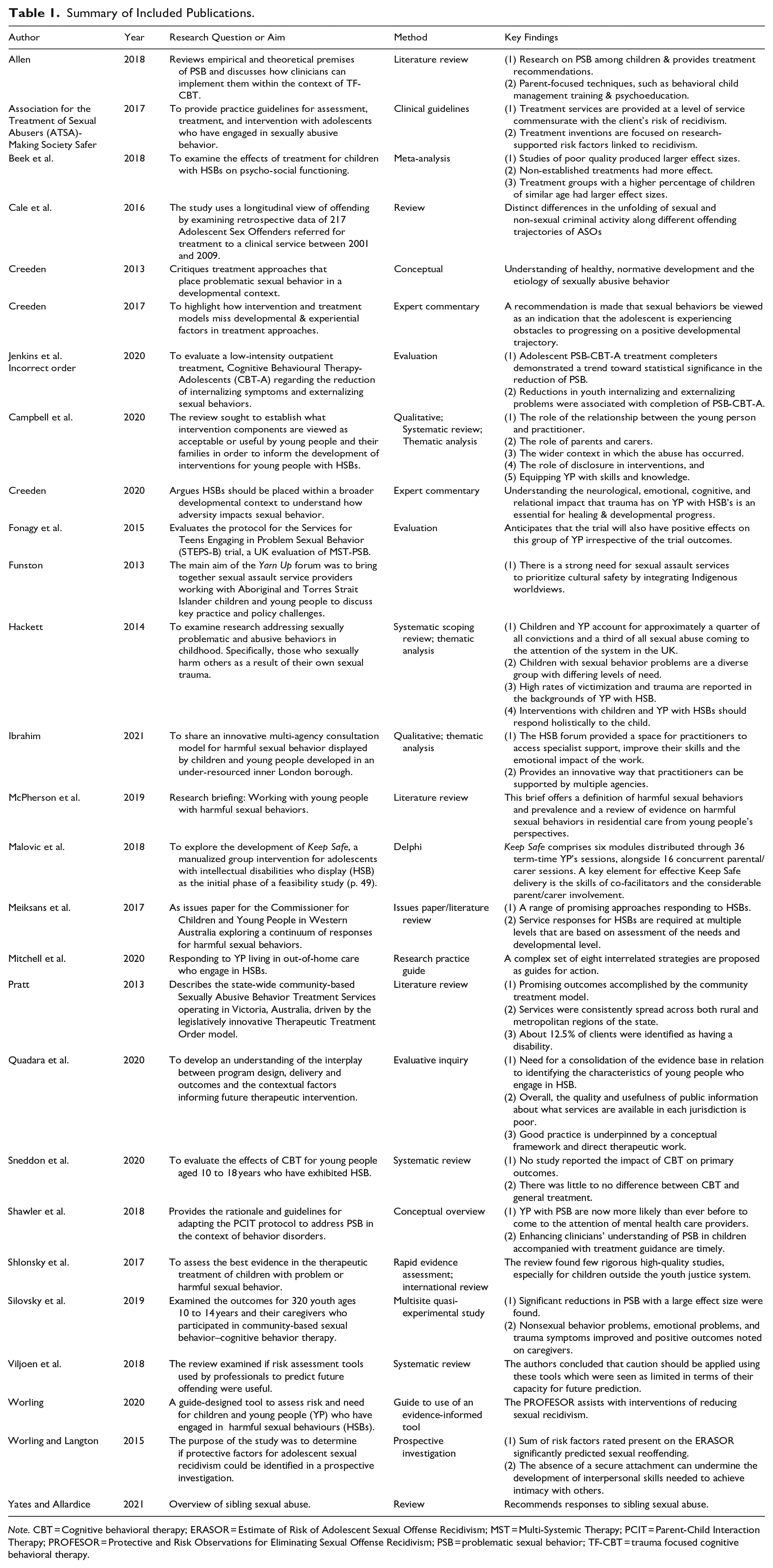
Note. CBT = Cognitive behavioral therapy; ERASOR = Estimate of Risk of Adolescent Sexual Offense Recidivism; MST = Multi-Systemic Therapy; PCIT = Parent-Child Interaction Therapy; PROFESOR = Protective and Risk Observations for Eliminating Sexual Offense Recidivism; PSB = problematic sexual behavior; TF-CBT = trauma focused cognitive behavioral therapy.
Analyzing the Data
The researchers coded the data into emerging themes following stages suggested by Braun and Clarke (2006): (a) organizing and familiarizing ourselves with the data, (b) making general sense of the data, (c) coding the data, (d) categorizing the data into themes, (e) an interpretation of themes, and (f) writing up our analysis of the data. These themes were then workshopped with three subject matter experts, resulting in the three themes presented in this paper. The workshop involved an intensive meeting where the initial coding and categorizing was presented and explored by all research team members for emerging themes. Subject matter experts who held extensive clinical expertise assisted in the identification and discussion of possible implications for policy and practice.
Limitations
There were some methodological limitations. Likely, this review has not identified all relevant literature as a result of the database searches, search criteria, and the terms constructed by the research team. The research questions seek information about programs and approaches; however, it is likely that the majority of programs and approaches, as in any areas of practice, do not have program evaluations published in scholarly journals. Including subject matter experts in the search strategy, inclusion process, and thematic analysis may have offset the potential limitations of a scholarly review in an area of practice. A second limitation was the small number of publications this study sourced regarding assessment approaches. It seems highly likely that assessment guidelines or approaches are more likely to remain in the domain of practice rather than in scholarly publications. A further limitation of this review is that it did not specifically focus on gender issues, which were seen to be outside the scope of this study. Finally, only English-language sources published between 2012 and 2022 were included in the review sample for analysis.
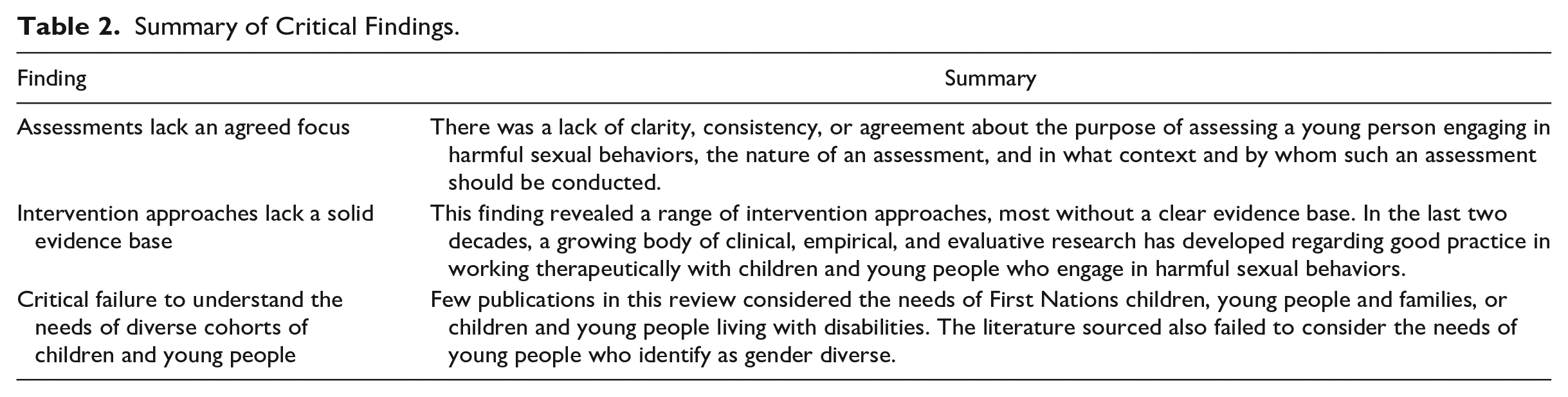
Three major themes emerged from the literature and are discussed below. They are summarized in Table 2 and discussed below.
Summary of Critical Findings.
Assessments Lack an Agreed Focus
There was a lack of clarity, consistency, or agreement about the purpose of assessing a young person engaging in harmful sexual behaviors, the nature of an assessment, and in what context and by whom such an assessment should be conducted. The literature revealed considerable inconsistency about what constitutes an assessment. Research with different populations of young people (i.e., those in the general community, those within the child protection system, and those within the juvenile justice population) has found no single set of characteristics or circumstances that predict a young person’s engagement in harmful sexual behavior (Hackett, 2014). Campbell et al. (2016) argue that the evidence base regarding assessment tools is very limited, concluding in their review (p. 9) that: Children and young people who display harmful sexual behaviours are a very diverse group, whose needs vary, where the causes of the behaviours differ, where the social, cultural, and environmental contexts are individual and where the behaviours displayed may be very different. The evidence to date focuses primarily on male adolescents with harmful sexual behaviours that has resulted in a sexual offence. This limited evidence base was also apparent when considering the evidence for treatment effectiveness
Evidence examining the effectiveness of assessment tools for young children, girls, and harmful behaviors that do not constitute an offence were also not found in Campbell et al.’s (2016) review. In the context of these gaps, Hackett (2014) suggested that the goals in assessing harmful sexual behaviors include explaining the problem, formulating and managing risk and planning intervention. Whilst this sequence of steps may be broadly agreed upon, assessment approaches have shifted markedly over time (Creeden, 2013, 2017). Two major approaches have informed assessment: a forensically oriented, behavior-specific assessment of risk; and a developmentally informed assessment of need. Recent literature on the latter approach has incorporated the impact of early trauma on the developing brain and implications for young people who engage in harmful sexual behavior (Creeden, 2020).
Forensically Oriented Risk Assessment Approaches
These approaches involve assessing the risk of recidivism, initially based on assessment approaches involving adults who offend (Worling, 2013; Worling & Langton, 2015). Two examples of risk assessment tools that predict future sexual violence by young people are the Estimate of Risk of Adolescent Sexual Offense Recidivism (ERASOR) (Worling & Langton, 2015) and the juvenile sex offender assessment protocol II (J-SOAP-11) (Prentky & Righthand, 2020). The ERASOR was a widely used risk assessment instrument designed to assist in evaluating the risk of reoffending for young people aged between 12 and 18 years and who have previously engaged in harmful sexual behavior. Developed more than two decades ago, this manualized tool assesses six subscales of risk, including sexual interests, attitudes and behaviors, historical sexual assaults, psycho-social functioning, family/environmental functioning, treatment, and other factors (Worling, 2013).
Worling (2020) recently developed the Protective and Risk Observations for Eliminating Sexual Offense Recidivism (PROFESOR). The PROFESOR was developed as a result of concerns about the validity of risk assessment tools such as the ERASOR and acknowledges the developmental and contextual nature in which adolescent harmful sexual behavior takes place. Worling (2020) also indicated that measurements designed to predict future risk can be erroneous and only moderately better than chance. The PROFESOR focuses on risk and protective factors and guides intervention to facilitate healthy sexual relationships (Worling, 2020).
The J-SOAP 11, was initially developed in the late 1990s using a numerical scoring system to assess the risk of recidivism by young men convicted of sexually offending behaviors (Prentky & Righthand, 2020). The authors have also amended their assessment protocol to include more developmentally sensitive measures and warned potential users about the inappropriate characterization of risk (Prentky & Righthand, 2020).
A systematic review urged caution in structured assessment and risk management practice (Viljoen et al., 2018). The study found that not only did professionals use these tools in an inconsistent manner, but there was an overall lack of evidence that their use led to a reduction in offending rates (Viljoen, et al., 2018).
Holistic Approaches
There are methodological limitations to abuse-specific risk assessment tools (ATSA, 2017; Creeden, 2017, 2020). The most commonly used tools such as the ERASOR (Worling & Curwen, 2001) and J-Soap 11 (Prentky & Righthand, 2020) have not been adapted for working with young women, and/or young people with disabilities. A focus on risk, at the expense of needs, may not fully capture the young person’s developmental history (Creeden, 2020). The ATSA guidelines support the call for a multi-faceted assessment approach, clearly distinguishing between adolescents’ and adults’ assessments. ATSA (2017, p. 13) state that: Adolescents who have engaged in sexually abusive behaviours are fundamentally different from adults who have sexually offended and require a different set of guidelines with respect to assessment, intervention and public policy approaches. Sanctions and treatment approaches developed for adults should not be applied to adolescents except in rare cases.
Drawing on these guidelines, harmful sexual behavior can be framed in terms of obstructions to normal development (ATSA, 2017; Creeden, 2017). This allows a treatment focus on providing experiences, resources, and opportunities for skill development relevant to broader personal growth, as distinct from simply addressing the maladaptive behavior itself. The ATSA adolescent practice guidelines (ATSA, 2017) describe Risk-Need-Responsivity Principles underpinning practice with young people who have engaged in harmful sexual behavior (ATSA, 2017, p. 12). The risk principle examines factors within the young person’s environment that may be associated with harmful or offending behaviors. The need principle targets dynamic risk factors that, if understood and addressed, may reduce the likelihood of recidivism. The responsivity principle includes those methods that may tailor and target professional responses which may benefit the young person and their family (ATSA, 2017, p. 13).
Based on this broader perspective of risk and need assessment, Creeden (2020) suggested that a range of psychometric tools may assist in developing a fuller picture of the young person’s needs. These may include personality assessments, trauma symptom checklists, violence screening tools, and broader mental health assessment instruments.
Intervention Approaches Lack a Solid Evidence Base
This second theme revealed a range of intervention approaches, most without a clear evidence base. In the last two decades, a growing body of clinical, empirical, and evaluative research has developed regarding good practice in working therapeutically with children and young people who engage in harmful sexual behaviors (O’Brien, 1991; Shlonsky et al., 2017). However, relatively little emphasis has been given to understanding:
the factors that help or hinder the implementation of good practice
good practice with different cohorts of young people
interactions between therapeutic responses and systems responses such as child protection, criminal justice, and education, and
how those interactions impact therapeutic responses for young people engaging in harmful sexual behavior (Quadara et al., 2020).
Interventions may vary in purpose, the central focus of concern, and intended outcomes. For example, intervention approaches that primarily target recidivism as an outcome measure of the intervention are not supported by existing research which suggests that recidivism for young people is relatively low, as most young people engaged in harmful sexual behaviors do not persist with this behavior (Cale et al., 2016). Therefore, recidivism measures may not be a good indicator of program effectiveness.
A meta-analysis reporting on 23 studies measuring the effect of treatment on the psycho-social functioning of young people who had engaged in sexually harmful behavior revealed significant differences in research design, outcome measures used, treatment type, treatment duration, and the characteristics of the young people (Beek et al., 2018). Such differences enable ways to map but not compare approaches with any level of certainty. With a variation in the type of psycho-social improvement measured, the authors concluded that despite the differences, only a moderate improvement in psycho-social functioning was found for young people who had completed treatment using any of the approaches (Beek et al., 2018).
Seven Intervention Approaches
This review identified seven distinct intervention approaches targeting young people who use harmful sexual behavior. These were cognitive behavioral therapy, multi-systemic therapy, behavioral approaches, social learning approaches, specialist abuse-specific approaches, strength-based approaches, and holistic, developmental, and trauma-informed approaches. These are summarized below, with examples of program models where available.
Cognitive Behavioral Therapy
Cognitive behavioral therapy (CBT) approaches target thinking distortions and their impact on behavior, and have been widely used in treating adult sex-offending men (Jenkins et al., 2020). A recent North American study examining outcomes for 31 young people engaged in CBT outpatient treatment for harmful sexual behaviors found that results were promising, with a significant reduction in reported problems (Jenkins et al., 2020). These findings contrast with a Cochrane Collaboration systematic review that examined the effectiveness of CBT interventions for young people with harmful sexual behaviors (Sneddon et al., 2020). The study aimed to evaluate the effectiveness of CBT approaches for young people aged 10 to 18 years who had engaged in harmful sexual behaviors. Four randomized controlled trials were found with a total of 115 participants in the Cochrane review. Whilst the use of CBT was consistent across all four studies, intervention goals varied. The review concluded that “we cannot tell whether CBT reduces harmful sexual behavior in male adolescents” (Sneddon et al., 2020, p. 3).
Multi-Systemic Therapy
Three studies identified by Shlonsky et al. (2017) evaluated MST, which uses an ecological approach and may include cognitive, behavioral, and family therapy. MST involves family or caregivers, important professionals in the young person’s network, and members of the neighborhood or community and recognizes the complexity of harmful sexual behaviors. MST has shown some promise for young people, particularly when compared to more traditional cognitive behavioral approaches (Fonagy et al., 2015; Meiksans et al., 2017).
Behavioral Approaches
Behavioral approaches are often implemented as token economies or reward systems built on points systems and levels for participants to work through (Pritchard et al., 2017). These treatment systems aim to enhance pro-social behaviors and reduce episodes of problem or harmful behaviors (Pritchard et al., 2017). Only one publication outlined a behaviorally based program. The Achieve! program was implemented in a residential school in the USA, and targeted problem sexual behaviors and other forms of violence (Pritchard et al., 2017). The authors suggested that evaluation results were promising with reduced incidence of problem behaviors during treatment. A limitation of the study was that baseline data was not obtained at commencement.
Social Learning Approaches
School-based interventions based on social learning theory are founded on the premise that effective intervention for harmful sexual behaviors requires a public health response involving the whole community. A critical component of this is community education to enable children and young people to understand what are normative versus inappropriate sexual behaviors for their developmental stage (Ey et al., cited in Meiksans et al., 2017). Interventions in school settings are an important aspect of primary prevention (Meiksans et al., 2017) in that they can equally reach the whole community, children, parents, and/or carers. Education on respectful relationships has taken various forms in Australia, with evaluations offering mixed evidence of their efficacy (Shlonsky et al., 2017).
Specialist Abuse-Specific Approaches
Approaches were seen as abuse-specific in that they targeted harmful behaviors using a range of modalities and treatment frameworks, including CBT and trauma-focused CBT, or social learning theory (Allen, 2018; Shawler et al., 2018). Parent-Child Interaction Therapy is an example of abuse-specific treatment targeting interactions between young children and their carers, founded on attachment and social learning theories. These approaches are typically manualized programs where parents and carers participate in educative sessions and are offered skill development and support (Shawler et al., 2018). Other programs focus almost exclusively on a social learning approach where caregivers are provided learning resources in sex education, abuse prevention, managing children’s behavior, supporting healthy development, self-control, and decision-making (Silvosky et al., 2019).
Strengths-Based Approaches
Strengths-based approaches are usually holistic in nature and seek to develop the young person’s capabilities. The Good Lives Model (Ward, cited in Hackett, 2014), which is based on the principles of positive psychology, is a well-known example of this approach. Whilst originally developed for adult offender treatment, the Good Lives Model focused on well-being development. A key aim was to equip the young person with the skills, values, attitudes, and resources necessary to lead a different life that is personally meaningful and satisfying and does not involve inflicting harm (Ward, cited in Hackett, 2014, p. 92). This approach seeks to build on the young person’s skills and capacity to function rather than focusing on a problem, delivered in the context of ongoing risk and needs assessment. The approach has a strong strengths-based orientation; however, it is also holistic and developmental in nature.
Holistic Developmental and Trauma-Informed Approaches
As early as 2005, the Australian Childhood Foundation developed and evaluated a trauma-informed therapeutic program for children and young people who engage in harmful sexual behavior (Staiger et al., 2005). Since then, many scholars and clinicians have argued for therapeutic interventions rather than socially controlling approaches (ATSA, 2017; Creeden, 2017; Leonard & Hackett, 2019). Creeden (2020) theorized that adverse childhood experiences are an important pathway to engaging in harmful sexual behaviors, describing the influence of harm on attachment relationships, the capacity to self-regulate and to make friends for this cohort of young people. Based on this theoretical understanding, Creeden argued for assessment and intervention frameworks that offer developmentally appropriate support that is multi-dimensional and inclusive of young people’s existing skills, strengths, and positive relationships.
Two examples of holistic approaches are summarized here and are both uniquely Australian approaches. The first was New Street Services program in New South Wales, which was informed by trauma theory and family restoration and identified as promising by Shlonsky et al. (2017). It was reported to involve multiple agencies based on specialist protocols and training. The target group was young people who engaged in harmful sexual behaviors and who had not been convicted of a sexual offence. The second approach is a Victorian program developed in response to a legislative framework that enabled the mandating of treatment for young people. Since 2007, therapeutic treatment for children and young people aged 10 to 15 years engaged in harmful sexual behavior has been part of the Victorian legislation and funded by the state government. In 2017, the legislation was expanded to cover young people up to the age of 18 years. Children, young people, and their families have access to services in both metropolitan and rural areas. Treatment is community-based and focuses on helping the young person manage harmful sexual behavior and develop skills in regulation and problem-solving. It also assists the young person to strengthen their relationships with family members, peers, and their communities. A state-wide audit of the program of clients between 2007 and 2012 revealed positive outcomes, with over 92% of clients fully, substantially, or partially reaching their goals (Pratt, 2013).
Approaches/Programs Targeting Younger Children
Most research regarding treatment and intervention for harmful sexual behaviors focuses on adolescents with violent sexual behaviors. Younger children who show behaviors on the less severe end of the continuum, including inappropriate or problematic sexual behaviors, are distinct from adolescents and adults who are abusive or violent, and treatment should be tailored accordingly (St. Amand et al., 2008). A review of approaches targeting younger children revealed that five intervention programs using different approaches had been evaluated, and four of the five programs were designed for younger children who had displayed sexually problematic behaviors (Cox et al., 2018). These were:
The SMART (Safety, Mentoring, Advocacy Recovery, and Treatment) Model
Parent-Child Interaction Therapy (PCIT)
Game-based Cognitive Behavioral Therapy (GB-CBT)
Group Treatment for Preschool Children with Sexual Behavior Problems, and
The Sexualised Behavior (under tens) Program (Cox, et al, 2018, p. 22).
Most programs were founded on parent-child dyadic approaches and/or group treatment models that drew from CBT, trauma-informed principles, and psycho-educational elements. This review found that whilst the evaluations generally reported positive results, they had several limitations. Overall, the evidence supporting the implementation of any of the approaches was limited and should be treated cautiously (Cox, et al, 2018, p. 6). A second review of interventions for children aged up to 10 years identified only two studies that examined their effectiveness (Shlonsky et al., 2017). These studies examined the effectiveness of Cognitive Behavior Therapy, Dynamic Play Therapy, Relapse Prevention, and Expressive Therapy for young children. Studies did not report a significant effect in reducing the behaviors.
Knowledge About Children and Young People From Diverse Backgrounds is Limited
Few publications in this review considered the needs of First Nations children, young people and families, or children and young people living with disabilities. The literature sourced also failed to consider the needs of young people who identify as gender diverse. Literature addressing the needs of young people who identified as First Nations was limited to two publications. One of these was a submission to the Victorian Law Reform Commission’s inquiry into improving the response of the justice system to sexual offending (Victorian Aboriginal Child Care Agency, 2020). Whilst it reported on child protection systems and policies, the report made some specific statements about the need for integrated therapeutic services. The second, focusing on child sexual assault in Aboriginal and Torres Strait Islander communities (Funston, 2013), reported on a forum that consulted with sexual assault managers about how to meaningfully incorporate cultural safety in work with children and young people in this area.
Tailored assessment and intervention are critical for young people living with a disability, a group that is over-represented amongst those who engage in harmful sexual behavior (Hackett, 2014). The ATSA (2017) practice guidelines suggest that the treatment plan for this cohort should also take into account “the youth’s and family’s strengths, risk factors for recidivism and intervention needs” (ATSA, 2017, p. 47). Finally, a recent, small-scale literature review evaluating the impact of treatments for young people living with autism who had engaged in harmful sexual behaviors was included in this review (Schnitzer et al., 2020). The study was unfortunately unable to make any clear or generalizable findings due to methodological limitations.
A report from Australia’s National Research for Women’s Safety (ANROWS, 2020, p. 6) found that: There are variations and gaps in services for young people engaging in harmful sexual behaviours, and information about service availability is not readily accessible. Specialist services operate in a complex environment that may make service provision challenging. . . Complex, siloed services create challenges for effective service provision. These challenges are not specific to services for harmful sexual behaviours, but are common in community, health and human service systems generally, especially for service users with complex needs
The ANROWS report identified that the clashing of different priorities in this context might conflict with creating conditions for effective treatment practice.
Discussion and Implications
This review found a growing awareness in the theoretical and clinical literature that young people who engage in harmful sexual behavior should not be equated with adult sex offenders (Creeden, 2018, 2020; Hackett, 2014; Ibrahim, 2021). Historically, these assumptions fueled assessments and interventions that targeted young people’s “deviant sexual interests” and had a “particular focus on the assessment and punishment of deviant sexual arousal and confrontational approaches to extract details of past sexual offences” (Worling, 2013, p. 80). Treatment approaches were consistent with these assumptions and assessment priorities, most commonly taking the form of punishment-based approaches.
In stark contrast to the deficit-oriented literature based on adult offending typologies, more recently, theorists and clinicians have theorized multi-dimensional developmentally informed conceptualizations of young people who engage in harmful sexual behaviors. This has moved forward recently, and experts now theorize that a common element for young people who engage in these behaviors is the lived experience of childhood trauma (Creeden, 2020; Ibrahim, 2021). This developmentally informed conceptualization is not reflected in the assessment and intervention literature. Authors are beginning to recognize that treatment approaches that operate beyond a risk focus and include wider protective factors might also enable young people to develop a greater sense of well-being, acknowledging that this was an area warranting further research (ANROWS, 2020; Beek et al., 2018). Service systems should support holistic interventions and provide a public repository of information about services available (ANROWS, 2020).
Evidence suggests a need to focus on the whole child or young person, to attend therapeutically to the impact of trauma in their lives and to build on their existing strengths and capabilities. Yet a resounding question emerged from this review: whether current assessment and intervention models are fit for the purpose. Do they address the current state of knowledge concerning children and young people who offend? The implications of this paradigm shift in conceptualizing the problem are profound. Rather than a narrow focus on harmful or problem sexual behaviors, a developmental- and trauma-informed approach would emphasize healing, growth, and wellbeing. Childhood and adolescence are a time of great change, experimentation, and risk-taking in a range of behaviors that will not necessarily be carried over into adulthood (Creeden, 2017; Pratt, 2013).
From a neurobiological perspective, young people’s brains—particularly their prefrontal cortex—are still undergoing significant development. This has implications for making prudent decisions, an issue that often resolves as they mature (Powell, 2015). A developmental focus when considering risk enables children and young people to be considered within the context of their families, peers, and broader communities. It also aids in understanding of the protective factors and limitations that will help a young person return to a healthier developmental trajectory (Pratt, 2013). Developing and adopting frameworks that focus on developing young people’s strengths, skills, and relationships may lead to better long-term outcomes for children and young people (Creeden, 2020).
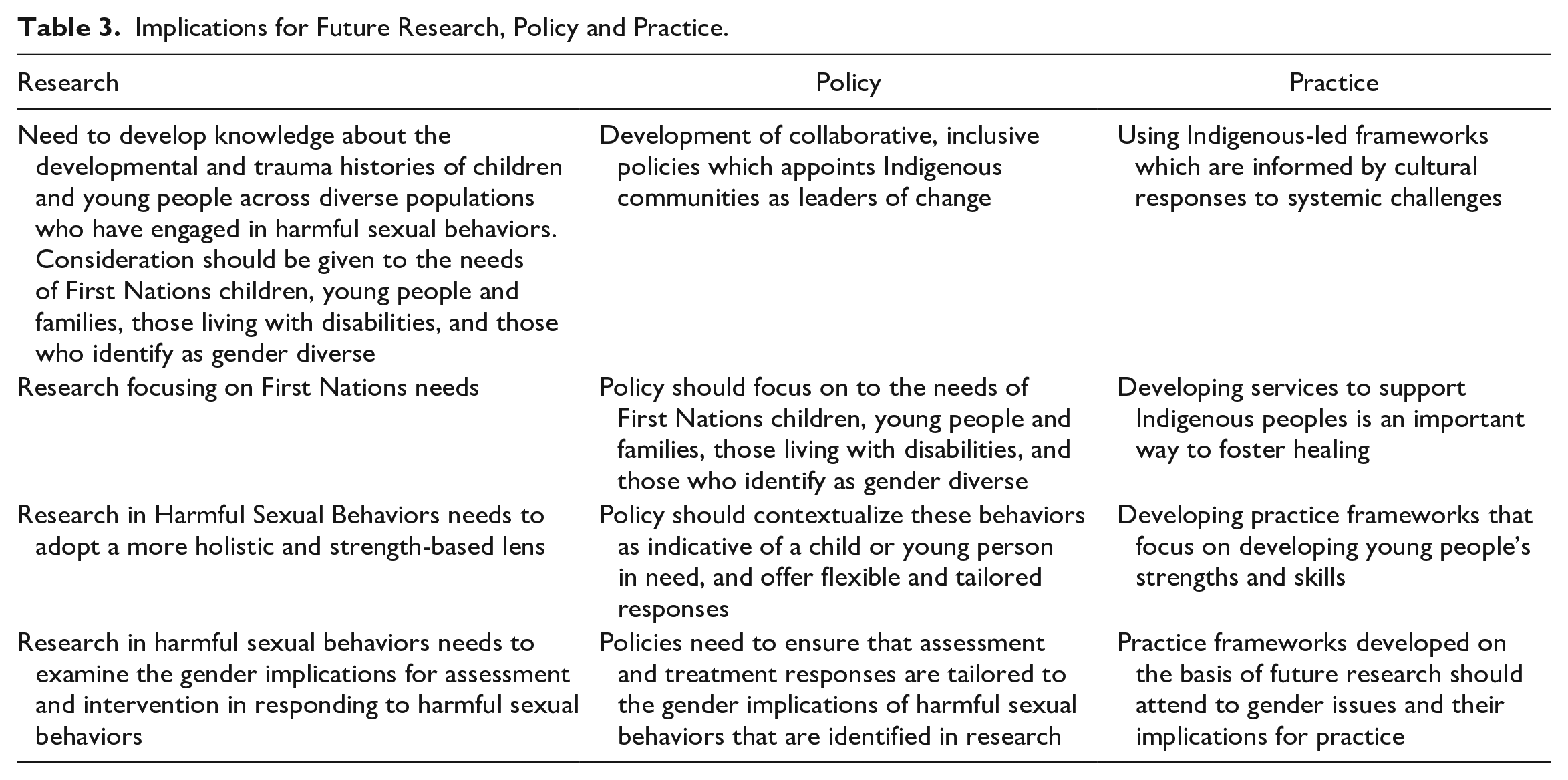
Based on these findings, several priorities for future research emerge. These include the need to develop knowledge about who the children and young people are who have engaged in harmful sexual behaviors and examining the developmental and trauma histories of those children and young people across diverse populations. In particular, consideration should be given to the needs of First Nations children, young people and families, those living with disabilities, and those who identify as gender diverse. Building on the knowledge to emerge from this review, approaches to assessment and intervention might be tailored and trialled to align with the developing evidence base. A summary of the implications for future research, policy, and practice is at Table 3 below.
Implications for Future Research, Policy and Practice.
Conclusion
This review aimed to scope the literature on assessment and intervention approaches responding to harmful sexual behavior. The review found, however, that the current state of knowledge was piecemeal and that very few of the papers included reported on research or evaluation outcomes. Where they reported on outcomes, they were sometimes contradictory and not always clear about the measure of change, making it very difficult to make comparisons with any confidence. The limited published research is not surprising, given the difficulties inherent in this practice field. The lack of clarity concerning the theory of etiology may explain the lack of consistency in assessment and intervention approaches to address the underlying issues. If there is a lack of clarity about the underlying factors influencing behavior, there is likely to be a lack of clarity about the focus of assessment or intervention.
Further research is needed to inform the development of culturally sensitive assessment and intervention frameworks that consider the child and young person’s trauma history, responding to them in the context of their family and community. The development and implementation of contemporary practice models in this domain should be implemented in the context of a wider social policy committed to responding therapeutically rather than punitively to this cohort of children and young people.
Footnotes
Declaration of Conflicting Interests
The author(s) declared no potential conflicts of interest with respect to the research, authorship, and/or publication of this article.
Funding
The author(s) disclosed receipt of the following financial support for the research, authorship, and/or publication of this article: This review was funded by the National Centre for Action on Child Sexual Abuse.
