



Abstract
Economic stress, broadly defined, is associated with an increased likelihood of multiple forms of violence. Food insecurity is a distinct economic stressor and material hardship that is amenable to programmatic and policy intervention. To inform intervention and identify gaps in the current evidence base, we conducted a systematic review to synthesize and critically evaluate the existing literature regarding the association between food insecurity and five forms of interpersonal and self-directed violence: intimate partner violence (IPV), suicidality, peer violence and bullying, youth dating violence, and child maltreatment, in high-income countries. We followed the Preferred Reporting Items for Systematic Reviews and Meta-Analysis (PRISMA) guidelines and searched six electronic databases from their start date through February of 2022. We included studies that examined food insecurity as the exposure and an outcome measure of IPV, suicide, suicidality, peer violence, bullying, youth dating violence, or child maltreatment; were peer-reviewed and published in English; reported quantitative data; and took place in a high-income country. We identified 20 relevant studies. Nineteen studies found that food insecurity was associated with an increased likelihood of these forms of violence. Results highlight the potential for programs and policies that address food insecurity to function as primary prevention strategies for multiple forms of violence and underscore the importance of trauma-informed approaches in organizations providing food assistance. Additional theory-driven research with validated measures of food insecurity and clearly established temporality between measures of food insecurity and violence is needed to strengthen the existing evidence base.
Keywords
Introduction
Household food insecurity, or lack of sufficient food due to financial and resource constraints, (Coleman-Jensen et al., 2021), is a pressing public health concern worldwide (FAO, 2021) that has only been exacerbated by the COVID-19 pandemic (Ling et al., 2022). Food insecurity is a form of material hardship, defined as difficulty meeting a variety of basic needs (Nelson, 2011). While connected to poverty, existing studies show that poverty and income are only moderately correlated with measures of material hardship, including food insecurity (Iceland & Bauman, 2007; Rodems & Shaefer, 2020; Sullivan et al., 2008). Thus, food insecurity is widely considered to be a distinct form of deprivation and a unique stressor for individuals and families (Rodems & Shaefer, 2020; Weon & Rothwell, 2020). While most individuals experiencing food insecurity live in low- and middle-income countries, food insecurity is also pervasive in high-income countries (FAO, 2021). As of 2020, the prevalence of moderate or severe food insecurity in high-income countries was almost 8% (FAO, 2021), with 10% of households in the United States (Coleman-Jensen et al., 2021) and 14% of adults in the United Kingdom experiencing food insecurity (Pool & Dooris, 2021). Importantly, food insecurity is consistently associated with an increased risk of poor outcomes in childhood, adolescence, and adulthood (Gundersen & Ziliak, 2015).
Multiple forms of violence, including intimate partner violence (IPV), suicide and suicidality, peer violence and bullying, youth dating violence, and child maltreatment, are also critical public health issues. By age 18 years, more than one-third of U.S. children experience a child protective services investigation for suspected maltreatment (Kim et al., 2017). Data from the 2019 U.S. Youth Risk Behavior Survey indicate that 1 in 12 teens experienced physical or sexual dating violence in the past year (CDC, 2022). Global estimates show that more than one in three students ages 13–15 years are victims of bullying (UNICEF, 2017), and 27% of women ages 15–49 years have experienced IPV. More than 700,000 people die by suicide each year (WHO, 2021a, 2021b), with increasing rates of suicide in many high-income countries (Commonwealth Fund, 2020; WHO, 2021b, 2021c). Similar to food insecurity, experiences of violence are consistently associated with an increased risk of poor health outcomes across the life course (Rivara et al., 2019).
Theory and empirical research studies suggest that economic stress broadly, and food insecurity specifically, is associated with an increased risk of experiencing or perpetrating multiple forms of violence (Fedina et al., 2022; Hatcher et al., 2022). The general strain theory (GST) provides a theoretical basis for conceptualizing the association between food insecurity and violence (Hong et al., 2021; Neppl et al., 2015; Wadsworth & Achenbach, 2005). The GST hypothesizes that sources of strain can cause individuals to experience emotions such as anxiety, depression, and anger (Hong et al., 2021). While some may have access to resources that help them to adaptively cope with these feelings, others may not have access to positive coping strategies (Hong et al., 2021). This, in turn, can lead to maladaptive functioning and internalizing and externalizing of these emotions through violent behaviors (Hong et al., 2021).
The GST also posits the concept of vicarious strain. Through this lens, hardships and trauma experienced by others, such as food insecurity experienced by a family member, can also lead to an increased risk of violent behaviors and experiences (Hong et al., 2021). This is particularly relevant in the context of food insecurity and children. In many cases, even if a household experiences severe financial strain and food insecurity, caregivers often take steps to ensure that children in the home do not experience substantial food deficits by, for example, substantially reducing their own food intake (Coleman-Jensen et al., 2021). Under the GST, the vicarious strain that a child experiences by witnessing their caregiver’s food insecurity can lead to externalizing and internalizing behaviors (Hong et al., 2021) and potentially contribute to experiences and perpetration of violence.
In summary, food insecurity may contribute to both internalizing and externalizing behaviors which may then give rise to acts of self-directed and/or interpersonal violence. While the GST provides clear theoretical support for an association between experiences of food insecurity and multiple forms of violence, it is unclear to what extent extant empirical research supports these theoretical associations. Food insecurity is a modifiable risk factor that can be addressed by programs and policies (e.g., the Supplemental Nutrition Assistance Program [SNAP], the Special Supplemental Nutrition Program for Women, Infants, and Children [WIC]), as well as food banks and pantries (Byrne & Just, 2022). A comprehensive assessment of the evidence base regarding the association between food insecurity and multiple forms of violence can provide practitioners and policymakers with the information needed to understand and address these pressing public health issues. It can also provide researchers with the information needed to guide future studies to fill remaining gaps in knowledge.
We aimed to systematically synthesize and critically evaluate the existing research literature on the association of food insecurity with multiple and distinct forms of interpersonal and self-directed violence, including IPV, suicide and suicidality, peer violence and bullying, youth dating violence, and child maltreatment. While food insecurity and violence are global concerns, the context surrounding food insecurity is vastly different in high-income countries from that in low- and middle-income countries. To facilitate a focused discussion of the implications of existing research for policy and practice, we focused this review on studies conducted in high-income countries.
Methods
Search Strategy
We followed the Preferred Reporting Items for Systematic Reviews and Meta-Analysis guidelines. In collaboration with a trained health sciences librarian, we developed search terms related to food insecurity, IPV, suicide and suicidality, peer violence and bullying, youth dating violence, and child maltreatment (Dahlberg & Krug, 2002). We searched six electronic databases from their start date through February of 2022: PubMed, Scopus, PsycInfo, CINAHL, Social Work Abstracts, and Sociological Abstracts (Supplemental Methods 1). We also searched the reference lists of included articles for potential articles missed in the electronic search.
Eligibility Criteria
We included studies that examined food insecurity as the specific exposure of interest; included an outcome measure of IPV, suicide, suicidality, peer violence, bullying, youth dating violence, or child maltreatment, including witnessing parental violence (Leeb et al., 2008, p.18); were peer-reviewed and published in English; reported quantitative data; and had taken place in a high-income country as defined by the World Bank (World Bank, n.d.). We excluded studies that evaluated a program as we were interested in understanding these associations in the absence of programmatic intervention.
Screening Process
We first conducted double-blind screening of the titles and abstracts of the articles collected through the electronic database search to identify potentially relevant articles. We then conducted a double-blind review of full texts to further assess eligibility. At each stage, we resolved discrepancies through discussion and consensus.
Data Extraction
We created a data extraction tool that captured the following information: study aims, design, data sources, and sample; study sample characteristics; exposure and outcome measures; covariates; analytic approach and results; and conclusions, strengths, and limitations. A primary reviewer extracted data from each article, and a secondary reviewer verified this information.
Results
Study Selection
The electronic database search returned 2,415 articles (Supplemental Figure 1). We screened the titles and abstracts of these articles and determined that 2,272 articles were not relevant. We assessed the full text of the remaining 143 articles and determined that 123 articles did not meet eligibility criteria. We completed extraction for the 20 articles that fully met inclusion criteria.
Study Characteristics, Design, and Data Sources
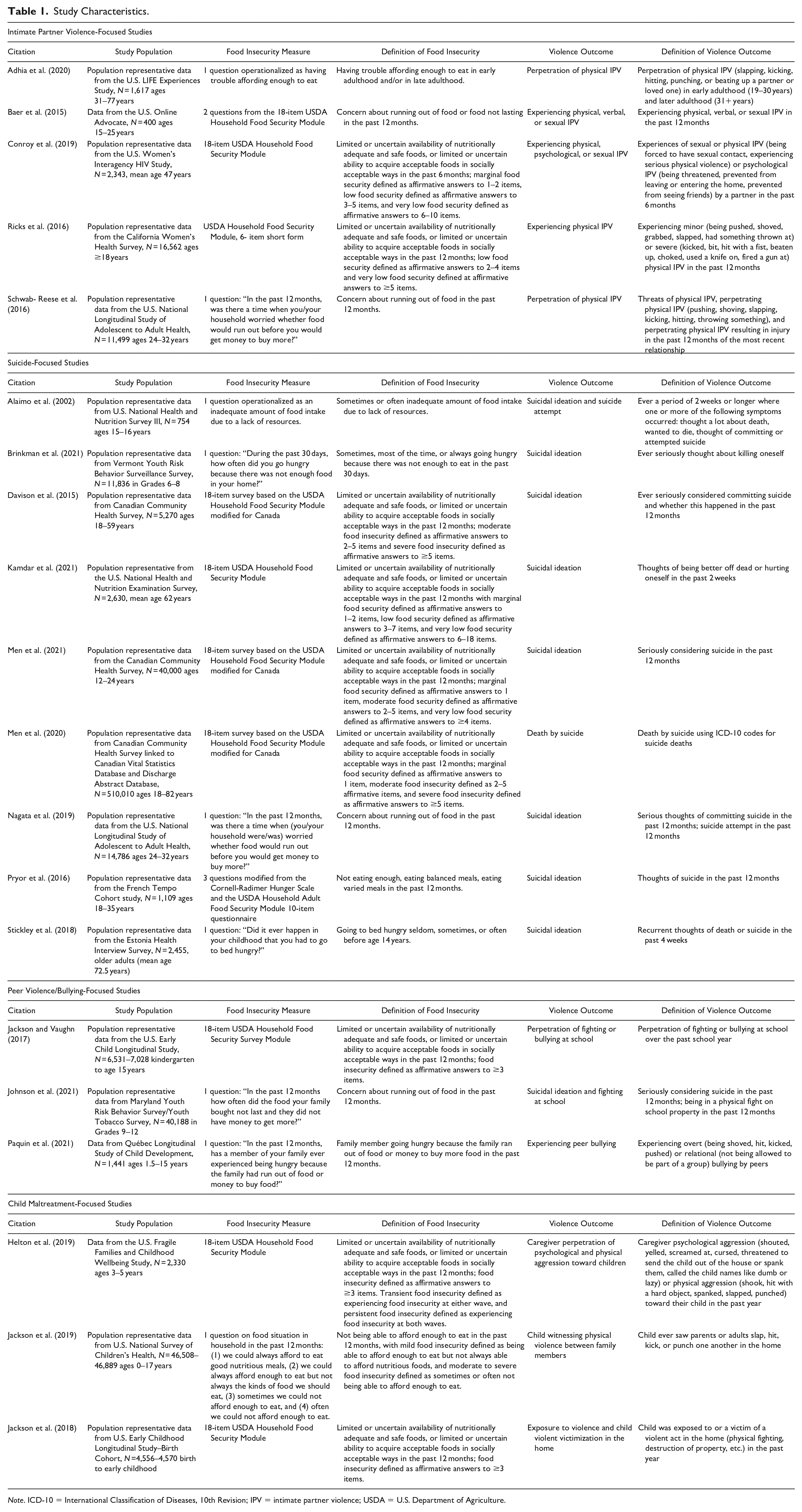
Study characteristics and definitions of food insecurity and violence are presented in Table 1. Of the 20 studies identified, 14 studies took place in the United States, four in Canada, one in Estonia, and one in France. Fourteen studies used a cross-sectional design, five used a prospective cohort design, and one used a retrospective cohort design. Seventeen studies used population-representative data, or data from a representative sample of the population of interest, as defined by the study authors. The remaining three studies did not specify the type of data sample.
Study Characteristics.
Note. ICD-10 = International Classification of Diseases, 10th Revision; IPV = intimate partner violence; USDA = U.S. Department of Agriculture.
Eight studies specifically focused on youth and adolescents, five studies focused on young adults (≤35 years), one study focused on older adults (≥60 years), and six studies included participants of a broad range of ages. Of the 14 studies that provided additional demographic information on study participants, eight included a majority of White individuals and three included primarily Black individuals. Seven studies had a majority or all women participants. One study sample consisted of all veterans, most of whom were men. All studies recruited participants, and one study used administrative data in addition to study collected data.
Food Insecurity Measures and Definitions
Measures of food insecurity ranged from one question to 18-item questionnaires. Of the eight studies that used an 18-item questionnaire, five studies used the Household Food Security Survey Module developed by the U.S. Department of Agriculture (USDA) which has been psychometrically validated among diverse populations (Conroy et al., 2019; Helton et al., 2019; Hromi-Fiedler et al., 2009; Jackson & Vaughn, 2017; Jackson et al., 2018; Kamdar et al., 2021) and three used an adapted version of the 18-item USDA Household Food Security Survey Module, adapted for use in Canada (Davison et al., 2015; Men et al., 2020, 2021). Of the 12 studies that did not use the 18-item USDA Module, only one study used a validated measure, the USDA 6-item short form version of the Household Food Security Module (Ricks et al., 2016).
The nine studies (Conroy et al., 2019; Davison et al., 2015; Helton et al., 2019; Jackson & Vaughn, 2017; Jackson et al., 2018; Kamdar et al., 2021; Men et al., 2020, 2021) that used the 18-item USDA Household Food Security Survey Module or the 6-item short form version (Ricks et al., 2016) defined food insecurity, per the USDA, as limited or uncertain availability of nutritionally adequate and safe foods or limited or uncertain ability to acquire acceptable foods in socially acceptable ways (USDA, 2022a). Four studies defined food insecurity as concern about running out of food (Baer et al., 2015; Johnson et al., 2021; Nagata et al., 2019; Schwab-Reese et al., 2016). Other definitions included trouble affording enough to eat (Adhia et al., 2020), not eating enough or not eating balanced meals (Alaimo et al., 2002; Jackson et al., 2019; Pryor et al., 2016), and going hungry (Brinkman et al., 2021; Paquin et al., 2021; Stickley et al., 2018). Fifteen studies captured experiences of food insecurity in the past 12 months (Baer et al., 2015; Davison et al., 2015; Helton et al., 2019; Jackson & Vaughn, 2017; Jackson et al., 2018, 2019; Johnson et al., 2021; Kamdar et al., 2021; Men et al., 2020, 2021; Nagata et al., 2019; Paquin et al., 2021; Pryor et al., 2016; Ricks et al., 2016; Schwab-Reese et al., 2016). Other timeframes included food insecurity experienced in the past 30 days (Brinkman et al., 2021), in the past 6 months (Conroy et al., 2019), and at various points across the life course (i.e., in childhood, early adulthood, or late adulthood) (Adhia et al., 2020; Stickley et al., 2018).
Violence Outcome Measures and Definitions
Measures of interpersonal and self-directed violence varied depending on the specific form of violence examined and are summarized in Table 1. Within each form of violence, no studies measured the form of violence in the same way. All outcomes were based on self-report or caregiver report for some forms of violence among children and youth. Of the five studies that focused on IPV, two examined IPV perpetration only (Adhia et al., 2020; Schwab-Reese et al., 2016) and three examined experiences of IPV only (Baer et al., 2015; Conroy et al., 2019; Ricks et al., 2016). Three studies (Adhia et al., 2020; Ricks et al., 2016; Schwab-Reese et al., 2016) examined physical IPV only, while two studies (Baer et al., 2015; Conroy et al., 2019) examined physical, sexual, psychological, and verbal IPV. Two of the studies measured experiences of IPV within the last 12 months (Baer et al., 2015; Ricks et al, 2016). Of the ten studies that examined suicidality, seven studies measured suicidal ideation (Brinkman et al., 2021; Davison et al., 2015; Johnson et al., 2021; Kamdar et al., 2021; Men et al., 2021; Pryor et al., 2016; Stickley et al., 2018), two studies measured suicidal ideation and suicide attempts (Alaimo et al., 2002; Nagata et al., 2019), and one examined death by suicide (Men et al., 2020). Three studies measured lifetime suicidal ideation and/or suicide attempts (Alaimo et al., 2002; Brinkman et al., 2021; Davison et al., 2015), while three measured suicidal ideation and/or suicide attempts within the last 12 months (Men et al., 2021; Nagata et al., 2019; Pryor et al., 2016). Of the three studies focused on peer violence and bullying, one measured peer violence as physical fighting at school (Johnson et al., 2021), one examined physical fighting or bullying at school (Jackson & Vaughn, 2017), and one measured both overt (e.g., being shoved, hit, or kicked) and relational (e.g., being intentionally left out of a peer group) bullying (Paquin et al., 2021). Two studies measured involvement in peer violence within the last 12 months (Jackson & Vaughn, 2017; Johnson et al., 2021). Of the three child maltreatment-focused studies, measures included the child witnessing physical violence in the home (Jackson et al., 2019), child exposure to violence and violent victimization in the home (Jackson et al., 2018), and caregiver psychological and physical aggression toward the child (Helton et al., 2019). Two studies measured child exposure to or experiences of violence in the home in the last year (Helton et al., 2019; Jackson et al., 2018). No studies examining youth dating violence were identified.
Key Results
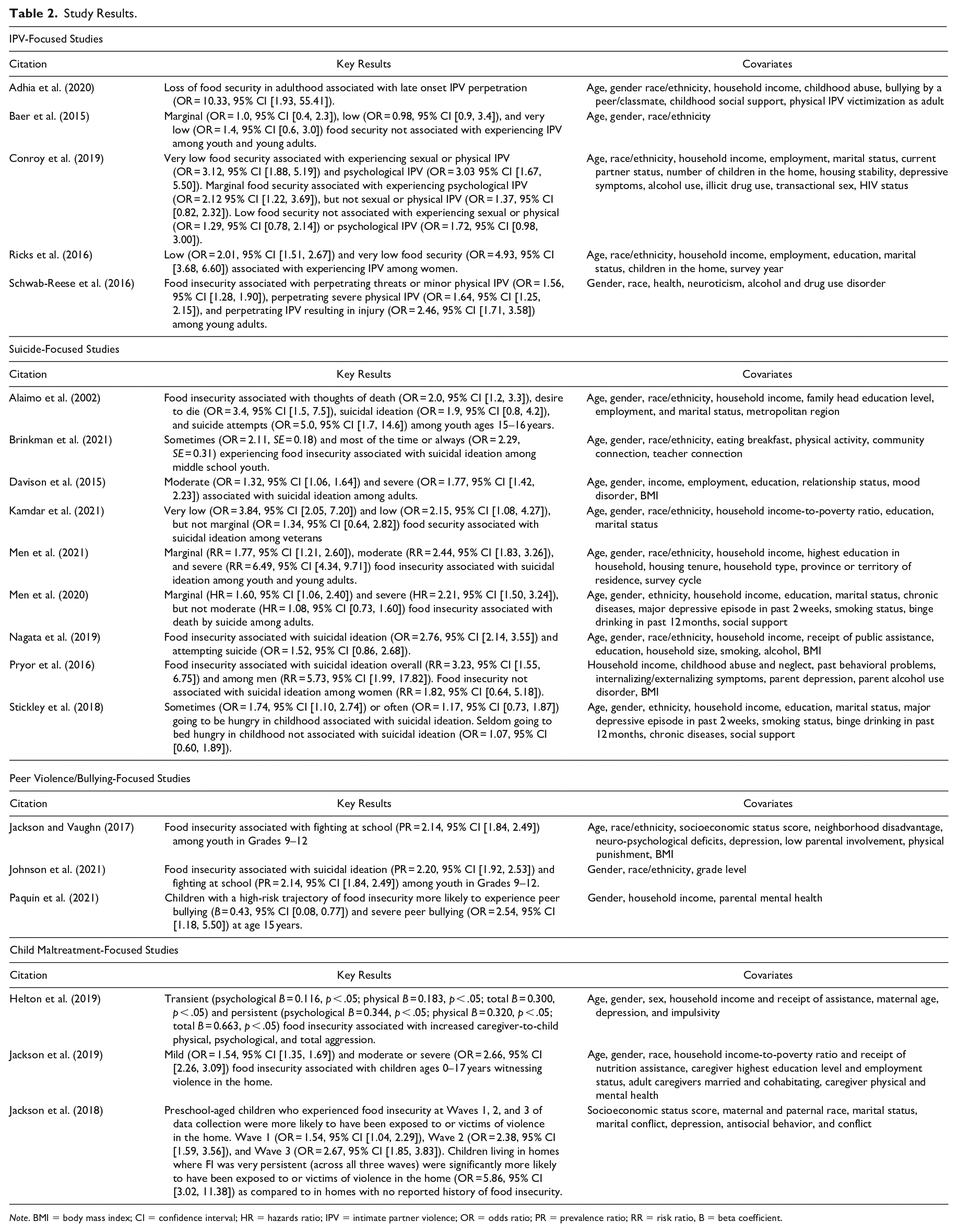
Table 2 shows key results from each study, in addition to covariates included in multivariable models to adjust for bias due to confounding, organized by the form of interpersonal or self-directed violence examined.
Study Results.
Note. BMI = body mass index; CI = confidence interval; HR = hazards ratio; IPV = intimate partner violence; OR = odds ratio; PR = prevalence ratio; RR = risk ratio, B = beta coefficient.
Intimate partner violence
Of the five studies that examined the association between food insecurity and IPV (Adhia et al., 2020; Baer et al., 2015; Conroy et al., 2019; Ricks et al., 2016; Schwab-Reese et al., 2016), all but one (Baer et al., 2015) found that food insecurity was associated with an increased likelihood of experiencing or perpetrating IPV. Two studies (Conroy et al., 2019; Ricks et al., 2016) found that among women, very low food security was more strongly associated with experiencing physical (Ricks et al., 2016) and both physical and psychological (Conroy et al., 2019) IPV than higher levels of food security. One study (Schwab-Reese et al., 2016) showed that food insecurity, as compared to not experiencing food insecurity, was associated with physical IPV perpetration in young adults. One study (Adhia et al., 2020) found an association between food insecurity in early or late adulthood and physical IPV perpetration later in life. One study did not find an association between food insecurity in late adolescence or early adulthood and experiences of IPV (Baer et al., 2015).
Suicidality and suicide
Ten studies found that food insecurity was associated with an increased likelihood of suicidality (Alaimo et al., 2002; Brinkman et al., 2021; Davison et al., 2015; Johnson et al., 2021; Kamdar et al., 2021; Men et al., 2020, 2021; Nagata et al., 2019; Pryor et al., 2016; Stickley et al., 2018). Four studies showed that experiencing higher levels of food insecurity was more strongly associated with suicidal ideation than experiencing lower levels of food insecurity in young adults (Brinkman et al., 2021; Men et al., 2021) and across adulthood (Davison et al., 2015; Kamdar et al., 2021). One study (Stickley et al., 2021) found similar associations of varying levels of childhood hunger with suicidal ideation in late adulthood. One study (Men et al., 2020) showed that those who experienced severe food insecurity were more likely to die by suicide than those who were food secure (Men et al., 2020). Two studies found that food insecurity was associated with an increased likelihood of suicidality in high school-aged youth (Alaimo et al., 2002; Johnson et al., 2021), and two found this association in young adults (Nagata et al., 2019; Pryor et al., 2016).
Peer violence and bullying
Three studies examined the association of peer violence and bullying with food insecurity (Jackson & Vaughn, 2017; Johnson et al., 2021; Paquin et al., 2021). Two studies (Jackson & Vaughn, 2017; Johnson et al., 2021) found that experiencing food insecurity was associated with fighting at school among high school-aged youth. One study (Paquin et al., 2021) found that those who experienced persistent food insecurity from early childhood up to age 15 years were more likely to experience both overt (e.g., being shoved) and relational (e.g., being excluded from a group) peer bullying.
Child maltreatment
Three studies found that food insecurity was associated with an increased likelihood of various measures of child maltreatment. (Helton et al., 2019; Jackson et al., 2018, 2019). One study found that food insecurity was associated with an increased likelihood of exposure to violence in the home among children (Jackson et al., 2019), and one found that food insecurity was associated with exposure to violence and violent victimization in the home among young children (Jackson et al., 2018). Results from both studies indicated that higher levels of food insecurity were associated with a higher likelihood of children witnessing violence in the home (Jackson et al., 2018, 2019). One study showed that both transient and persistent food insecurity were associated with increased caregiver-to-child physical and psychological aggression among caregivers of young children (Helton et al., 2019).
Youth dating violence
No studies examining the association between food insecurity and youth dating violence were identified.
Discussion
To inform current and future research, practice, and policy, we conducted a comprehensive systematic review and synthesis of the existing literature on the association between food insecurity and multiple forms of violence. We identified 20 peer-reviewed articles that examined the association between food insecurity and four forms of interpersonal and self-directed violence: IPV, suicide and suicidality, peer violence and bullying, and child maltreatment. Notably, though our initial conceptualization of this review included examining the association of food insecurity with experiences and perpetration of youth dating violence, our search did not return any such studies, identifying a clear gap in the evidence base and direction for future studies.
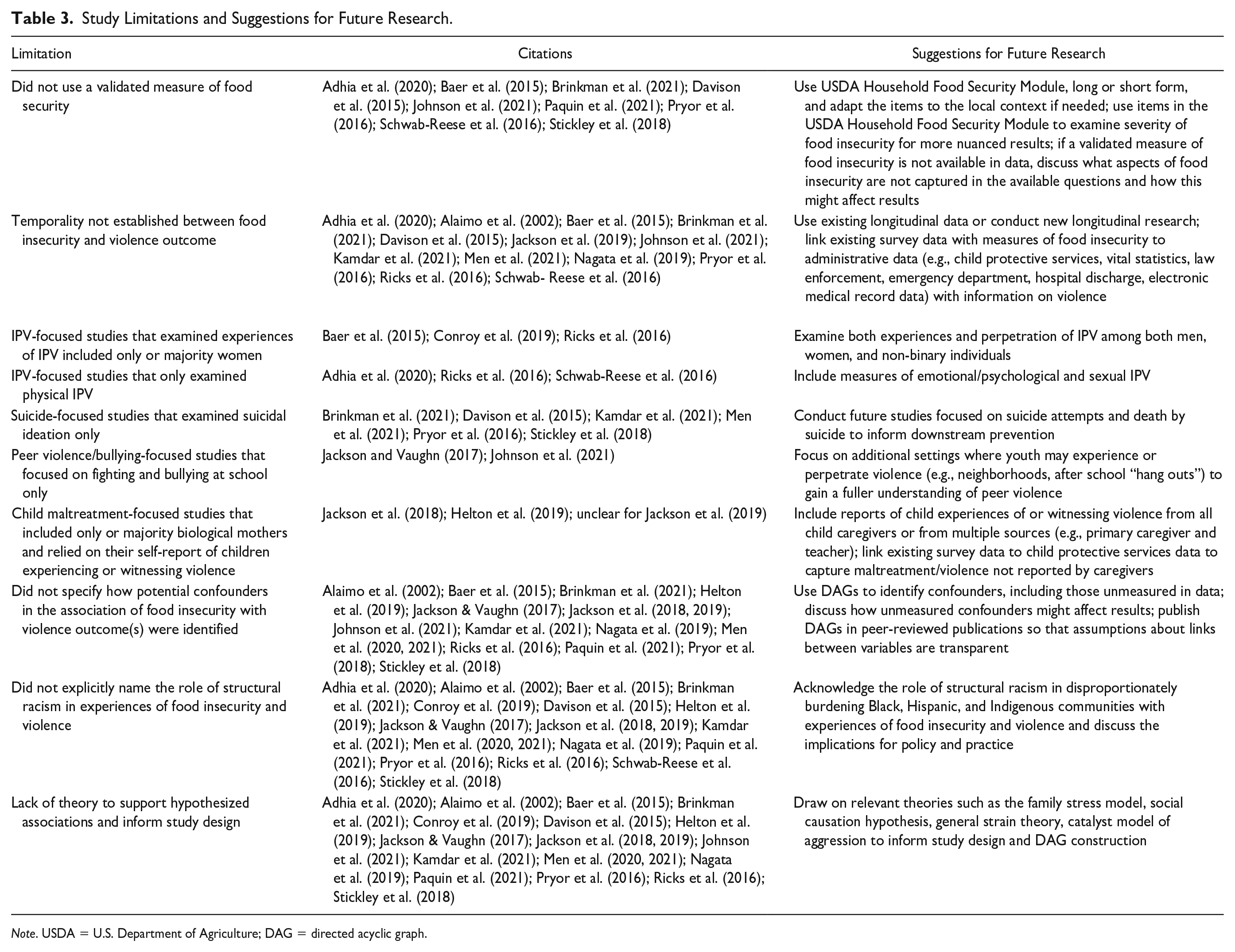
Collectively, results from the reviewed studies align with the core hypothesis under GST, that food insecurity, a source of strain, may increase vulnerability for developing externalizing and internalizing behaviors that increased the risk for experiencing or perpetrating interpersonal and self-directed violence. While studies consistently revealed an association between food insecurity and experiencing or perpetrating multiple forms of violence, there are several methodological considerations that have implications for interpretation of results and that provide directions for future research. These include limitations specific to measures of food insecurity and violence used, study population characteristics, and limited use of causal inference tools and theoretical frameworks to guide study design and analytic approaches. Table 3 provides an overview of limitations and suggestions for future research.
Study Limitations and Suggestions for Future Research.
Note. USDA = U.S. Department of Agriculture; DAG = directed acyclic graph.
Food Insecurity Measurement
The most common measure of food insecurity across reviewed studies was the 18-item USDA Household Food Security Survey Module or the shortened 6-item version (Conroy et al., 2019, Davison et al., 2015; Helton et al., 2019; Jackson & Vaughn, 2017; Jackson et al., 2019; Kamdar et al., 2021; Men et al., 2020, 2021; Ricks et al., 2016). Among studies that did not use the validated USDA questionnaire, most of the studies measured food insecurity with a single question (Adhia et al., 2020; Alaimo et al., 2002; Brinkman et al., 2021; Jackson et al., 2019; Johnson et al., 2021; Nagata et al., 2019; Paquin et al., 2021; Schwab-Reese et al. 2016; Stickley et al., 2018). Overall, 1-item food insecurity measures tended to focus on a household’s concern about or trouble affording food or going hungry due to limited financial resources.
The USDA 18-item Food Security Survey Module, first developed in 1995 and revised in 2012 (Carillo-Álvarez et al., 2021), is considered the most comprehensive and valid questionnaire for assessing food insecurity in high-income countries (Jones et al., 2013). The 18-item questionnaire assesses multiple aspects of household food insecurity and captures experiences of food insecurity for both adults and children in a household. The 6-item short form version is an acceptable alternative to the 18-item questionnaire, though it does not ask about children’s food security or about the most severe forms of adult food insecurity (USDA, 2012c). There is debate surrounding the validity of other short questionnaires for assessing food insecurity, particularly 1-item questions. Food insecurity is a multidimensional construct encompassing lack of financial resources to afford sufficient food, anxiety about running out of food, skipping meals due to lack of money or food, and inability to purchase quality foods to support a balanced diet for both adults and children in a household (USDA, 2022b). While shorter questionnaires are less burdensome to complete, they do not necessarily capture the full intensity and complexity of food insecurity and may miss households and families that experience some aspects of food insecurity but not others (Carillo-Álvarez et al., 2021). Given that food insecurity was measured with one to three questions in more than half of the reviewed studies, future research that uses the full 18-item USDA Household Food Security Survey Module or the 6-item short form is needed to confirm associations and to better understand whether specific aspects of food insecurity are more strongly associated with different forms of violence than others. The USDA 18-item questionnaire captures food insecurity along a continuum, allowing researchers to examine different levels of the severity of food insecurity. While some included studies examined associations between varying levels of food insecurity and violence, showing an increasing likelihood of violence at higher levels of food insecurity (Brinkman et al., 2021; Conroy et al., 2019; Davison et al., 2015; Helton et al., 2019; Jackson et al., 2018, 2019; Kamdar et al., 2021; Men et al., 2020, 2021; Ricks et al., 2016), additional research is needed to understand the magnitude and nature of these specific associations, including potential nonlinear associations.
Temporality Between Food Insecurity and Violence
Lack of temporality between measures of food insecurity and violence is an important limitation of this body of research. Establishing temporality between the exposure and outcome is key to understanding complex causal pathways in observational research. Only seven of the reviewed studies were able to establish temporality between the measure of food insecurity and the measure of violence used (Conroy et al., 2019; Helton et al., 2019; Jackson & Vaughn, 2017; Jackson et al., 2018; Men et al., 2020; Paquin et al., 2021; Stickley et al., 2018). Thus, in the remaining 13 studies, it is difficult to determine whether food insecurity may have been a contributing or causal factor in experiences or perpetration of violence, or vice versa. Of the studies that were able to establish temporality, one examined IPV (Conroy et al., 2019), two examined suicidality (Men et al., 2020; Stickley al., 2018), two examined peer violence (Jackson & Vaughn 2017; Paquin et al., 2021), and two examined child maltreatment (Helton et al., 2019; Jackson et al., 2018), highlighting the need for additional research with clear temporality for all forms of violence assessed in this review. It may be possible to leverage existing longitudinal data, such as data from the Fragile Families and Child Wellbeing Study and the National Longitudinal Study of Adolescent to Adult Health, in future research to establish temporality and examine experiences of food insecurity and violence across the life course. It may also be possible to establish temporality by linking existing survey data with measures of food insecurity to administrative data sources with information on violence outcomes, such as child protective services, vital statistics, or electronic medical record data. However, for some forms of violence, new prospective data collection may be needed. For example, studies capturing day-to-day experiences of food insecurity and violence using Ecological Momentary Assessment methods may be useful for capturing acute associations and further understanding the direction and mechanisms of underlying causal pathways.
Study Populations and Measures of Violence
There were limitations to the study populations and measures of violence used in some studies. Specifically, most studies that examined child maltreatment studies included only or majority biological mothers and relied on their self-report of children experiencing or witnessing violence (Helton et al., 2019; Jackson et al., 2018), potentially missing maltreatment unknown to their mothers or perpetrated by their mothers and thus unreported due to social desirability. Including reports of child experiences of violence from all child caregivers or from multiple sources, such as the child’s primary caregiver and teacher, may help accurately capture this outcome. In addition, using data from child protective services agencies to understand associations of food insecurity with official reports of maltreatment can help bolster this specific area of research.
Most studies that examined experiences of IPV included only or majority women participants (Baer et al., 2015; Conroy et al, 2019; Ricks et al., 2016). While experiences of IPV are more common among women than men, one in three men in the United States experience IPV during their lifetime (Smith et al., 2018). Future studies can build in this area by examining experiences and perpetration of IPV among female, male, and non-binary identifying individuals and within the same relationship. Furthermore, most studies that measured IPV perpetration focused on physical IPV only (Ricks et al., 2016; Schwab-Reese et al., 2016). Studies can build in this area by examining the association of food insecurity with multiple types of IPV perpetration, including emotional/psychological, economic, and sexual IPV, to inform tailored prevention and intervention.
Similarly, most suicide-focused studies examined suicidal ideation only (Brinkman et al., 2021; Davison et al., 2015; Kamdar et al., 2021; Men et al., 2021; Pryor et al., 2016; Stickley et al., 2018). Future research can expand our understanding in this area by including measures of suicide attempts and death by suicide to further inform prevention efforts. In addition, two of the three peer violence and bullying-focused studies examined fighting and bullying at school (Jackson & Vaughn, 2017; Johnson et al., 2021). Future studies can help expand our understanding of the potential implications of food insecurity for peer violence by focusing on additional settings where youth may experience or perpetrate violence, such as after school “hang outs.”
Only 14 of the reviewed studies provided demographic data. Of these studies, six had predominantly White participants (Ricks et al., 2016; Men et al., 2021; Kamdar et al., 2021; Johnson et al., 2021; Jackson et al., 2017; Adhia et al., 2020). Due to structural racism, particularly in the United States, Black, Hispanic, and Indigenous populations are disproportionately impacted by food insecurity and experiences of violence (Odoms-Young, 2018). Understanding nuanced associations between food insecurity and violence among the populations most impacted is critical to informing programmatic and policy intervention. Furthermore, 19 of the 20 reviewed studies did not explicitly name the role of structural racism in contributing to experiences of food insecurity and violence, despite many studies adjusting for race and ethnicity in multivariable models. Given the disproportionate impact of food insecurity and violence among populations of color, this represents a missed opportunity to highlight and understand an underlying driver of these experiences.
Limited Use of Causal Inference Methods and Theoretical Frameworks
Of the 20 reviewed studies, only one specified the method for selection of covariates included in multivariable models to adjust for bias due to confounding (Schwab-Reese et al., 2016). In addition, only one study used a theory or conceptual framework to guide study hypotheses and analysis (Schwab-Reese et al., 2016). Future research on the association of food insecurity with violence can be strengthened by use of both causal inference tools and theory to justify and support the overall study design. For example, future studies may benefit from use of directed acyclic graphs (DAGs). DAGs are graphical depictions of causal associations among variables that can be used to identify potential confounders (i.e., common causes of both the exposure and outcome) and guide selection of covariates to adjust for in multivariable models to minimize confounding bias (Austin et al., 2019; Greenland et al., 1999). We created an example DAG (Supplemental Figure 2) and specified hypothesized causal pathways among the variables included using existing evidence, theoretical expectations, and our subject matter expertise (Austin et al., 2019; Greenland et al., 1999). We analyzed our DAG and determined that, under our assumptions regarding causal mechanisms among multiple variables, we would need to adjust for measures of poverty, structural racism (e.g., measures of residential segregation or interpersonal discrimination), gender inequality (e.g., measures of gender differences in economic participation and educational attainment or gender discrimination), and prior experiences of violence or trauma to account for bias due to confounding. Importantly, the specific variables included on a DAG will likely differ depending on the form violence examined, and our example DAG is purely for illustrative purposes.
In addition to guiding covariate selection, DAGs are useful for helping researchers to clarify and clearly communicate the assumptions they are making regarding causal associations among multiple interrelated variables. In our DAG, for example, we conceptualized mental health and substance use disorders as mediators of the association between food insecurity and violence (i.e., as variables on the causal pathway from food insecurity to violence). Other researchers may conceptualize mental health and substance use disorders as confounders in the association between food insecurity and violence. Without clear graphical depictions or explanation in the text, it is difficult to determine why researchers selected specific covariates for inclusion in their multivariable models and for future research to build on the specific assumptions made.
Future research will also likely benefit from a greater use of theory to guide study hypotheses and to complement causal inference tools in generating study hypotheses and determining appropriate analytic approaches. Theories that are particularly relevant to understanding associations between food insecurity and violence are GST (Hong et al., 2021; Neppl et al., 2015; Wadsworth & Achenbach, 2005), the Social Causation Hypothesis (Wadsworth & Achenbach, 2005), the Catalyst Model of Aggression (Schwab-Reese et al., 2016), and the family stress model (Conger et al., 2000). All provide a framework for understanding the pathways by which economic and material hardships, such as food insecurity, can impact functioning in families and relationships by creating stress, depleting emotional and relational resources, causing emotional and behavioral problems, and triggering conflict. Under these theories, negative impacts of stress are posited to have a cascading effect on multiple forms of interpersonal and self-directed violence. Grounding future research in theory can strengthen study conceptualization, interpretation of results, ability to infer causality, and translation of findings into practical applications for programs and policy.
Of note, in using causal inference tools and theory to inform future research, it will be important to acknowledge and consider the complex interconnections between multiple forms of violence (Decker et al., 2018; Wilkins et al., 2014). For example, the reviewed studies indicated that food insecurity is associated with peer violence and bullying, and experiencing peer violence or bullying then has the potential to increase risk for suicidality (Holt et al., 2015). On our DAG, we simplified these interconnections by indicating that prior experiences of trauma/violence can impact later experiences of multiple forms of violence. In examining the association of food insecurity with a specific form of violence, considering the role of other forms of violence will be important.
Implications for Policy and Practice
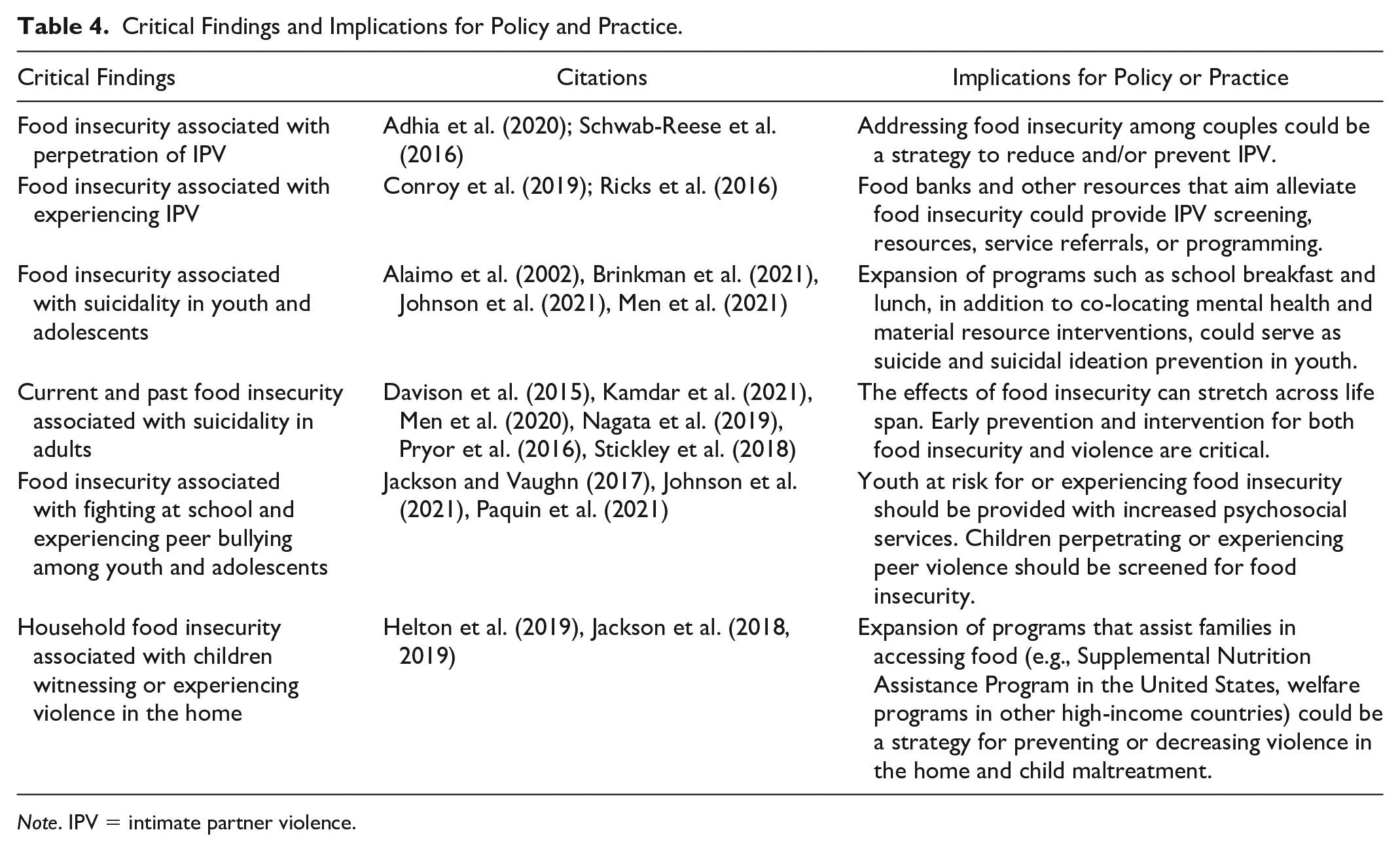
Despite these methodological limitations, results from the studies included in this review have several implications for policy and practice (Table 4). Importantly, unlike some risk factors for violence, food insecurity is amenable to programmatic and policy intervention. Given associations between food insecurity and IPV, suicidality, peer violence and bullying, and child maltreatment, expansion of programs that assist individuals and families in affording or accessing food, such as school breakfast and lunch programs, SNAP, and WIC, may function as primary prevention strategies for multiple forms of violence. A large body of literature indicates that in the United States, state adoption of policies that expand eligibility for food purchasing assistance through SNAP is associated with decreases in household food insecurity (Han, 2016; Shaefer & Gutierrez, 2013; Tiehen, 2021). By decreasing household food insecurity, state adoption of these SNAP policies may help to reduce violence. Indeed, a recent study showed that state adoption of these SNAP policies was associated with substantial reductions in child protective services investigations for suspected maltreatment (Austin et al., 2023). These results highlight the potential for policies that expand eligibility for food assistance and welfare programs in high-income countries to contribute to reductions in both food insecurity and violence. This is especially relevant in the context of the COVID-19 pandemic (U.S. Global Leadership Coalition, 2022). Several studies indicate that food insecurity increased during the pandemic and was particularly exacerbated among households with children (Parekh et al., 2021).
Critical Findings and Implications for Policy and Practice.
Note. IPV = intimate partner violence.
Community programs such as food banks or pantries and soup kitchens play a vital role in helping individuals and families experiencing food insecurity in most high-income countries (Pollard and Booth, 2019). Co-locating violence prevention and intervention resources and services within such community programs may help to increase accessibility and effectively reach populations in need, with food insecurity functioning as a concrete point of intervention to prevent or potentially reduce violence. This would likely require enhanced partnerships between food banks and other community organizations and health systems providing violence prevention and intervention services. Importantly, these efforts may be challenging in communities with few violewnce prevention and intervention resources. However, existing research shows acceptability and effectiveness of chronic disease programming located within food banks in the United States (An et al., 2019; Feeding America, 2018; Humana, 2020), and lessons learned from these endeavors can be used as a foundation for similar approaches focused on violence prevention and intervention. Community organizations and health systems providing violence prevention and intervention services can also screen and provide resources to mitigate food insecurity. In-house food pantries may be particularly beneficial and may have shown promising impacts when embedded within health clinics (Mirsky et al., 2021). This indicates that it may be possible to embed food pantries within other types of organizations as well.
Given demonstrated associations between experiences of food insecurity and violence, community programs that address food insecurity can likely benefit from operating within a trauma-informed framework. Trauma-informed frameworks focus on enhancing safety, trust, transparency, collaboration, peer support, choice, and cultural humility (Hecht et al., 2018). Existing studies point to the effectiveness and importance of trauma-informed approaches. Since 2017, more than 50 food pantries in the United States have implemented a trauma-informed intervention called the Nutrition Pantry Program (USDA, 2016d). The intervention provides food pantries with resources, tools, and training to become client-centered and trauma-informed by acknowledging how adversity and stress affect health and avoiding shaming and stigmatization promoting resilience among those experiencing food insecurity (Leah’s Pantry, 2022; USDA, 2016d). A recent evaluation found that after implementing the intervention, food pantries improved with respect to use of trauma-informed client food distribution and policies. The program is part of the USDA’s SNAP-Ed Toolkit and is free to implement (USDA, 2016d).
Limitations
This systematic review has limitations. First, while we created comprehensive search strings with the assistance of a trained health sciences librarian and hand-searched article reference lists for articles missed by our electronic search, it is possible that we missed relevant studies. Second, our systematic review aimed to examine the association between food insecurity and multiple forms of violence in high-income countries. However, most studies were U.S.-based. Thus, our conclusions may not be applicable to all high-income countries. Future reviews are needed to assess the state of the evidence regarding the association of food insecurity with violence in low- and middle-income countries. Third, although we aimed to include studies on the association of food insecurity with youth dating violence, we did not identify any such studies. Fourth, though two reviewers examined each included article, it is possible that we incorrectly captured or missed specific details during the data extraction process. Fifth, given that consensus is currently lacking as to the “gold standard” tool to use when assessing results from observational studies (Farrah et al., 2019; Page et al., 2018), we did not use a risk of bias tool. Instead, we created a thorough data extraction form to collect information from each article reviewed, including potential methodological limitations, which we discussed in detail.
Conclusions
Results from the 20 studies included in this systematic review showed evidence of an association between food insecurity and four forms of interpersonal and self-directed violence: IPV, suicidality, peer violence and bullying, and child maltreatment. The results highlight the potential for programs and policies that address food insecurity to function as primary prevention strategies for multiple forms of violence. Increased funding for and creation of such programs and policies could make important contributions to violence prevention. Future research should continue to examine the implications of food insecurity and material hardship more broadly on interpersonal and self-directed violence, with a specific focus on youth dating violence, the association of multiple dimensions of food insecurity with violence, and the impacts of the COVID-19 pandemic on these associations.
Supplemental Material
sj-docx-1-tva-10.1177_15248380231165689 – Supplemental material for Association of Food Insecurity With Multiple Forms of Interpersonal and Self-Directed Violence: A Systematic Review
Supplemental material, sj-docx-1-tva-10.1177_15248380231165689 for Association of Food Insecurity With Multiple Forms of Interpersonal and Self-Directed Violence: A Systematic Review by Madeline Frank, Leah Daniel, Caroline N. Hays, Meghan E. Shanahan, Rebecca B. Naumann, H. Luz McNaughton Reyes and Anna E. Austin in Trauma, Violence, & Abuse
Footnotes
Declaration of Conflicting Interests
The author(s) declared no potential conflicts of interest with respect to the research, authorship, and/or publication of this article.
Funding
The author(s) disclosed receipt of the following financial support for the research, authorship, and/or publication of this article: This study was funded by an award from the Centers for Disease Control and Prevention, National Center for Injury Control and Prevention (R01CE003334).

Supplemental Material
Supplemental material for this article is available online.
Author Biographies
References
Supplementary Material
Please find the following supplemental material available below.
For Open Access articles published under a Creative Commons License, all supplemental material carries the same license as the article it is associated with.
For non-Open Access articles published, all supplemental material carries a non-exclusive license, and permission requests for re-use of supplemental material or any part of supplemental material shall be sent directly to the copyright owner as specified in the copyright notice associated with the article.
