



Abstract
The COVID-19 pandemic has fostered an environment for increased risk of child maltreatment (CM) as families experience increased psychosocial and financial burdens and spend unprecedented amounts of time together in the home. This narrative review aimed to summarize empirical findings on existing or new pandemic-related risk factors among caregivers. A combination of search terms related to CM and COVID-19 were used to identify articles published within five databases between February 2020 and July 2022. Literature searches produced 113 articles, of which 26 published across 12 countries met inclusion criteria. Four previously well-established risk factors for CM perpetration continued to persist during the pandemic, including stress, parental mental health, financial concerns, and parental substance use. Of note, inconsistent definitions and measures were used to capture these risk factors. Several additional emerging and understudied risk factors were also identified among limited articles, such as food insecurity and parental education. Findings emphasize the ongoing need for evidence-based interventions to address CM risk during the pandemic, including parent training programs. However, consolidated measures and consistent conceptualization of risk factors are needed to advance the study of CM. Going forward, practitioners and researchers should (a) strengthen the identification process for families at greatest risk for CM, and particularly those vulnerable to pandemic-related stressors; and (b) augment delivery of CM prevention strategies and evidence-based programs to fit the pandemic context.
Keywords
Coronavirus disease 2019 (COVID-19) is an ongoing public health crisis with over six million related deaths globally (World Health Organization [WHO], 2022). In addition, COVID-19 has disrupted family functioning for millions (Fosco et al., 2021), with 258 million jobs lost (Farge, 2022) and school closures affecting over 168 million children globally at the height of the pandemic (United Nations International Children’s Emergency Fund [UNICEF], 2021). Such disruptions ultimately increased psychosocial burdens upon families (Le & Nguyen, 2021; Megatsari et al., 2020) and led to unprecedented amounts of time spent together within the home (International Labour Organization, 2021; UNICEF, 2021). With social distancing and quarantine regulations limiting family interactions to the household and concurrent increases in financial and psychosocial burdens, the pandemic indirectly fostered an environment for increased risk of familial conflict and dysfunction (Feinberg et al., 2021). This change has since been reflected in the increased prevalence of negative parenting behaviors such as verbal hostility and physical coercion (Oliveira et al., 2022).
Such parenting behaviors may serve as indicators of child maltreatment (CM), defined as witnessing domestic violence and/or experiencing physical, sexual, or emotional abuse or neglect among children under 18 years of age. CM is associated with development of negative coping behaviors, serious injury, impaired psychosocial functioning, videogame addiction, sleep disturbances, behavior problems, and death among children (Hillis et al., 2016; Oliveira et al., 2022). These effects may extend into adulthood, with risk of mental and behavioral health problems, including internalizing disorders, substance use, engagement in risky health behaviors, and abuse perpetration (WHO, 2020).
CM During the COVID-19 Pandemic
It is estimated that following the pandemic onset, approximately 85,993 and 104,040 children in the United States were unable to receive prevention services and were missed for the detection of CM, respectively (Nguyen, 2021). However, released CM reports during the pandemic suggest a general decline in rates (Bullinger et al., 2021a; Bullinger et al., 2021c), with decreases as much as 20 to 70% in some U.S. states (Welch & Haskins, 2020), and 13 to 55% internationally (Katz et al., 2021). These counterintuitive numbers may reflect limited in-person contact between children and mandated reporters such as educational, medical, and social services personnel (Barboza et al., 2021; Baron et al., 2020; Bullinger et al., 2021c; Child Welfare Information Gateway, 2021; Nguyen, 2021; Rapoport et al., 2021; Rebbe et al., 2021; Swedo et al., 2020).
Reports from other sources are mixed; violence and abuse hotlines note general increases in call volume (De Boer et al., 2021; Loiseau et al., 2021; Petrowski et al., 2021; Rapoport et al., 2021), whereas emergency department records show more variation with reports of no changes (Caron et al., 2022b; Chaiyachati et al., 2022; Russell et al., 2020), decreases (Bullinger et al., 2021b; Chaiyachati et al., 2022; Stivaros et al., 2022;), as well as increases in both cases (Amick et al., 2022; Bullinger et al., 2021c; DeLaroche et al., 2021; Kovler et al., 2021; Loiseau et al., 2021; Sidpra et al., 2021), and severity of abuse (De Boer et al., 2021). Several studies have also demonstrated a change in the distribution of types of CM, including dramatic increases in admissions related to neglect or lack of supervision (Bullinger et al., 2021b), and admissions related to pediatric abusive head trauma since the pandemic onset (Sidpra et al., 2021).
Risk Factors of CM During COVID-19
Understanding the prevalence of CM risk factors during the pandemic is critical in determining which evidence-based practices and government programs will be most responsive to individual, community, and global needs. Risk factors for CM perpetration can be specifically contextualized through the lens of Katz et al.’s (2021) global ecological framework for CM and COVID-19. This model is an extension of Bronfenbrenner’s (1977) socioecological theory, integrating COVID-19 specific considerations from a globally diverse group of CM researchers. This framework expands based on Bronfenbrenner’s (1977) model with the distinction of individual and interpersonal interactions, neighborhood and communities, and societal and cultural context systems. Each of these systems houses context-specific considerations for CM occurrence during the pandemic and considers the COVID-19-related changes that have occurred at individual, community, and societal levels (Katz et al., 2021). Using the global ecological model to contextualize new and existing risk factors for CM may provide a framework, for those working to prevent CM, to effectively respond in the face of COVID-19. Although factors within the societal and cultural context system are relevant to CM risk given the culturally sensitive contextual changes that have occurred post-pandemic onset, learning how to best support caregivers, who are arguably the primary and direct points of contact with children, is of utmost importance. The current narrative review examines the individual and interpersonal interactions system of the Katz et al. (2021) framework, particularly focusing on caregivers, the most common perpetrators of maltreatment (U.S. Department of Health and Human Services [HHS], 2021). For the purposes of this paper, we define caregivers as those who are biological or adoptive parents, foster parents, or legal guardians to children and adolescents under the age of 18 years old.
Several factors may increase caregiver CM potential, including experiencing domestic violence, receiving public assistance, inadequate housing, history of substance abuse, and low socioeconomic status or educational attainment, among others (HHS, 2021; CDC, 2021a). Unfortunately, these factors were magnified during the pandemic, placing at-risk families at higher risk and introducing risk previously absent among others (Barboza et al., 2021; De Boer et al., 2021; Loiseau et al., 2021; Sharma et al., 2021). Notably, alcohol sales and consumption rose sharply during the pandemic (Pollard et al., 2020) and drug overdoses reached new records in 2021, topping 100,000 (CDC, 2021b). Furthermore, as indicated by rates of job loss and unemployment following the onset of the pandemic, many caregivers worldwide experienced financial instability (Rothwell & Smith, 2021; Saenz & Sparks, 2020; Vilar-Compte et al., 2022), with the greatest impact in the United States observed among minority and lower income families (Saenz & Sparks, 2020). In some cases, unemployment led to 24 hours of familial interaction per day, potentially contributing to increases in familial stress (Brooks et al., 2020; Wang et al., 2020). Longitudinal work by Adams et al. (2021) reflects this steep increase in parental stress levels in May of 2020. Although rates did decline over the course of their study, the authors report that parental stress remained elevated above pre-pandemic levels (Adams et al., 2021).
The Current Review
To date, published reviews have examined how reporting and CM prevalence changed during the pandemic (Cappa et al., 2021); or published reviews have examined general CM risk among families using theory and prevalence work, highlighting the need for a comprehensive review of empirical risk factors for CM at different ecological levels (e.g., see: Ahad et al., 2021; Fegert et al., 2020; Marmor et al., 2021; Martinkevich et al., 2020; Pereda & Díaz-Faes, 2020; Proulx et al., 2021; Rajmil et al., 2021). To our knowledge, no published reviews have identified interpersonal CM risk factors solely at the caregiver level during the COVID-19 pandemic. This narrative review addresses this gap by presenting a consolidation of the empirical literature on caregiver risk factors for CM and specific subtypes as available. We conclude with a discussion of implications for trauma-focused interventions and future research on the prevention of CM in the context of the pandemic.
Method
Inclusion and Exclusion Criteria
This review included peer-reviewed studies using empirical data to examine caregiver risk factors for perpetrating CM during the COVID-19 pandemic. Studies that did not use empirical or primary data relevant to factors influencing CM perpetration were excluded from the review, such as studies that only reported general prevalence of CM during the pandemic. In consideration of the relatively recent onset of the pandemic and limited scope of findings surrounding CM experiences during the pandemic, preprints and unpublished studies were included in the eligibility criteria.
Studies were limited to those conducted following the first documented case of COVID-19 (February 2020 through July 2022). Articles included those with both caregiver- and child-level data. Articles that were not translated or written in English were excluded. However, there were no geographic limitations on inclusion. Articles that did not include original quantitative or qualitative data were excluded from the review; those solely providing opinions, commentary, or theoretical explanations for CM experienced during the pandemic were excluded.
Search Strategy
The following keywords were searched in Google Scholar, PubMed, OVID, EBSCO Host, and Galileo: “child maltreatment”; “childhood maltreatment”; “child abuse”; “child neglect”; “child physical abuse”; “child sexual abuse”; “child emotional abuse”; “Coronavirus”; “COVID”; “COVID-19”; “risk factors”; “parental stress”; “parental substance use”; “adverse child experiences”; “psychosocial risk factors”; “interpersonal violence”; and “financial concerns.” Various combinations of these keywords were used (e.g., “child maltreatment” AND “COVID-19”). Articles listed in references of published CM reviews associated with the pandemic were also reviewed for eligibility.
Two authors completed independent searches using identical search terms and criteria (see Figure 1 for a flowchart detailing the search process). Upon completion of literature searches, the authors screened all abstracts for eligibility and relevancy. Full-text versions of eligible articles were retrieved and reviewed to confirm eligibility. Consensus between both authors was required for inclusion in the final sample. When consensus could not be reached, a third author was referenced to determine eligibility.
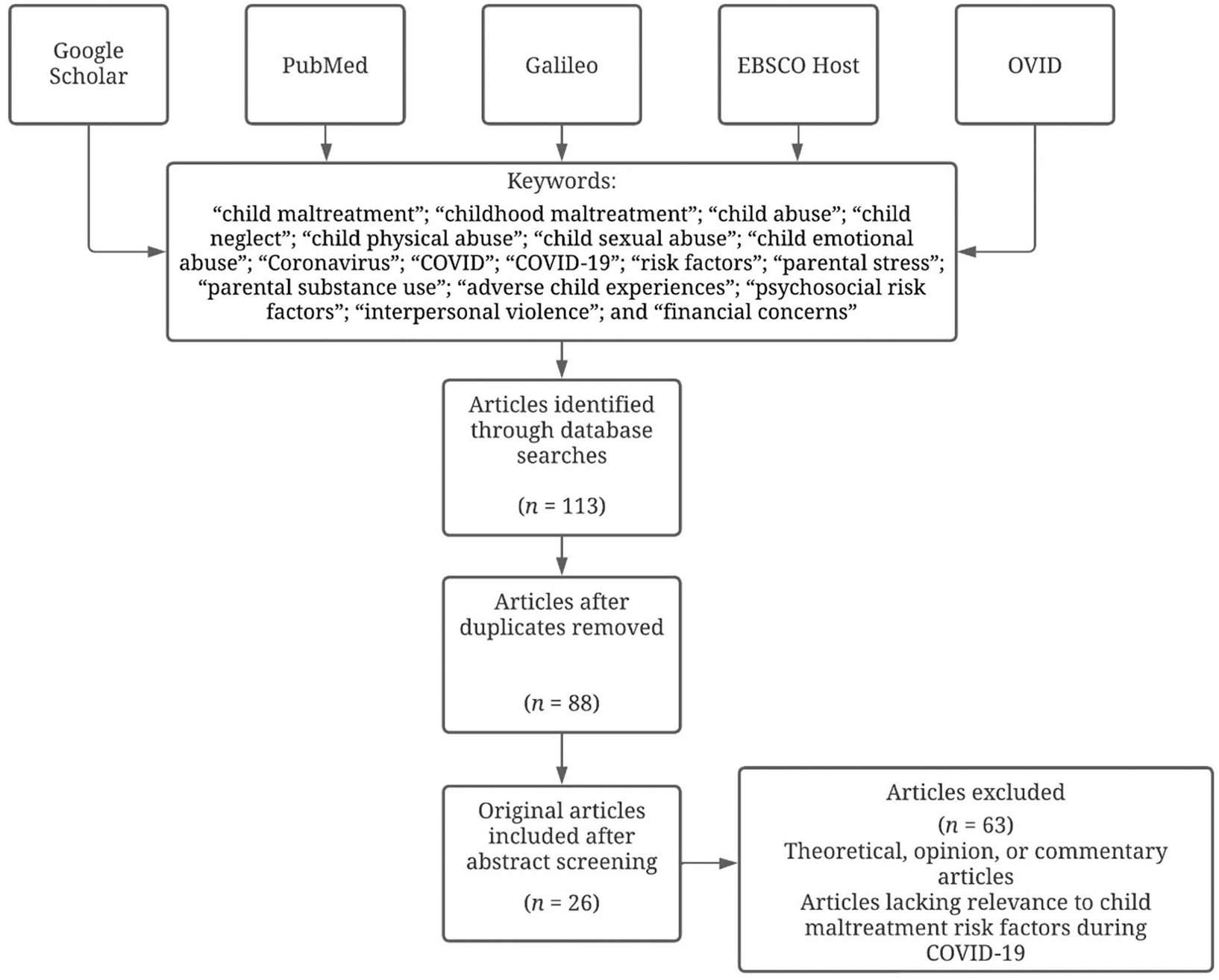
Search process.
Results
General Overview
One hundred thirteen articles published between February of 2020 and July of 2022 were identified. After assessing for eligibility and removing duplicate findings, 26 articles were included in the final sample. Included articles examined how COVID-19-related events influenced the occurrence and presentation of CM, and affected risk for perpetrating acts of CM. Eleven studies were conducted in the United States, three in Canada, two in China, two in Germany, and one each in The Netherlands, Pakistan, Norway, Japan, Italy, Israel, and Thailand. Only one article explored these relationships in more than one region (i.e., the United States and Singapore). Twenty-three articles obtained caregiver-level data and five received reports about CM perpetration directly from children. Demographic and contextual findings on risk factors are presented below.
Risk Factors
Demographics
Caregiver-focused studies were conducted among parents ≥18 years of age. Mothers and married or cohabitating partners were the primary participants of these studies. Fourteen of the 26 articles included race-level data, 10 of which described samples in which participants identifying as White/Caucasian were the majority (Brown et al., 2020; Connell & Strambler, 2021; Craig et al., 2021; Freisthler et al., 2021; Lawson et al., 2020, Lee et al., 2021; Rodriguez et al., 2021; Rodriguez & Lee, 2022; Russell et al., 2020; Wolf et al., 2021). The three remaining studies included Asian American and Pacific Islander samples from the United States, and mostly Chinese samples from Singapore (Chung et al., 2020) and China (Freisthler et al., 2021).
Five studies noted significant differences in stressors and subjective mental health across sociodemographic characteristics. Parents who were younger in age (<35 years), whose children had experienced childcare or school closure, and whose children were four years of age or younger reported greater levels of stress compared to their counterparts (Chung et al., 2020; Connell & Strambler, 2021). Several studies indicated that mothers were more likely to report higher levels of stress (Calvano et al., 2021) and poorer mental health than fathers (Calvano et al., 2021; Gadermann et al., 2021), while only one study found that fathers reported greater symptoms of depression than mothers (Russell et al., 2020). Of note, Brown et al. (2020) found that caregivers identifying as Latinx were more likely to experience COVID-19-related stressors than those who were identified as non-Latinx White or Black.
Six studies examined parental demographic characteristics as risk factors for CM perpetration, with gender, parent age, number of children in the home, caregiver relationship status, and caregiver education level found to be significant predictors for CM. Reports of parent–child conflict were significantly higher among fathers than mothers (Russell et al., 2020). In addition, parental age was negatively correlated with the likelihood of perpetrating psychological maltreatment both prior to and during the pandemic (Lawson et al., 2020). Corporal punishment was exacerbated for parents who had more than one young child (<10 years) in the home (Ebert & Steinert, 2021). Other studies also showed that abusive behavior increased relative to the number of children within the home (Jeharsae et al., 2021; Yamaoka et al., 2021). Caregiver educational attainment was positively associated with emotional violence but negatively associated with verbal abuse (Jeharsae et al., 2021) and witnessing family violence (Zhang et al., 2021). Risk for witnessing family violence, however, only increased relative to decreases in educational attainment among fathers (Zhang et al., 2021). Caregivers who were separated were at increased risk of perpetrating physical violence (Zhang et al., 2021).
Frequently reported risk factors
Four frequently reported risk factors were found to increase risk of CM perpetration during the pandemic. Stress, parental mental health, and financial concerns were identified by at least nine articles, and parental substance use was identified by three. Below we discuss these factors and their relation to subtypes of CM as relevant (see Table 1 for a full list of risk factors).
Risk Factors.
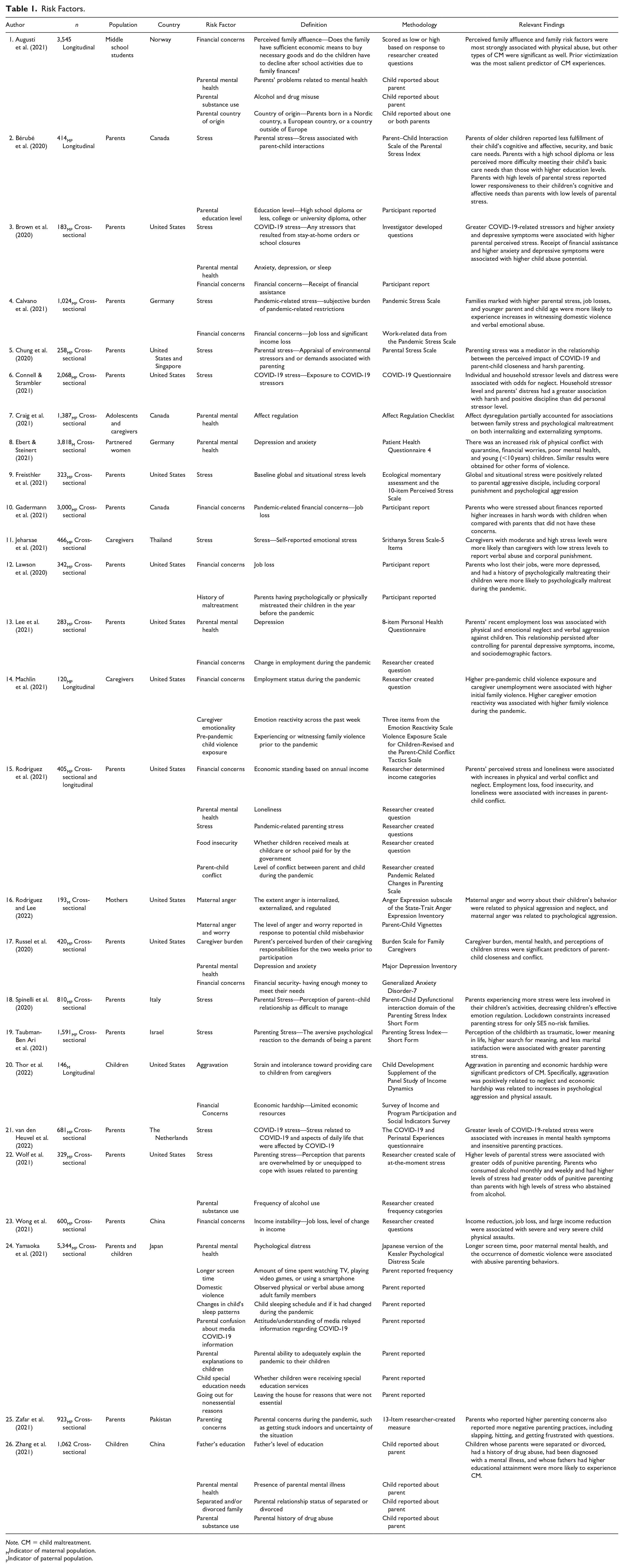
Note. CM = child maltreatment.
MIndicator of maternal population.
PIndicator of paternal population.
Stress
Twelve articles examined two distinct types of stress during the pandemic, including parental and pandemic-related stress (Bérubé et al., 2020; Brown et al., 2020; Calvano et al., 2021; Chung et al., 2020; Connell & Strambler, 2021; Freisthler et al., 2021; Jeharsae et al., 2021; Rodriguez et al., 2021; Spinelli et al., 2020; Taubman-Ben Ari et al., 2021; Wolf et al., 2021). Most cited was parental stress, which was implicated as a significant predictor for general CM, neglect, or punitive parenting across 5 of the 11 articles (Bérubé et al., 2020; Chung et al., 2020; Spinelli et al., 2020; Taubman-Ben Ari et al., 2021; Wolf et al., 2021). Several measures were used to capture parental stress with some focusing on stress within the context of parent–child interactions (Bérubé et al., 2020; Spinelli et al., 2020), and others administering previously established measures of parental stress, such as the Parental Stress Scale (Calvano et al., 2021; Chung et al., 2020), or the Parenting Stress Index—short form (Taubman-Ben Ari et al., 2021).
Four of the 11 articles examined COVID-19-related stress placed upon caregivers (Brown et al., 2020; Calvano et al., 2021; Connell & Strambler, 2021; Rodriguez et al., 2021). These included financial, psychological, and interpersonal impacts. Such stressors were measured by either researcher created (Brown et al., 2020; Rodriguez et al., 2021) or previously established instruments (Calvano et al., 2021; Connell & Strambler, 2021). Pandemic-related stress was indicated as a significant predictor of CM risk in three of the four articles. Of note, one article identified pandemic-related stress as a significant predictor of perceived stress. Brown et al.’s (2020) findings revealed increases in levels of perceived stress as parents reported more pandemic-related stressors (Brown et al., 2020). However, Brown et al. (2020) did not find that these pandemic-related stressors directly impacted risk for CM perpetration.
Financial concerns
Eleven articles identified financial concerns as a significant risk factor for CM perpetration during the pandemic (Augusti et al., 2021; Brown et al., 2020; Calvano et al., 2021; Gadermann et al., 2021; Lawson et al., 2020; Lee et al., 2021; Machlin et al., 2021; Rodriguez et al., 2021; Russell et al., 2020; Thor et al., 2022; Wong et al., 2021). Seven of these articles defined financial concerns as types of income instability, which included experiencing job loss or income reduction during the pandemic (Calvano et al., 2021; Gadermann et al., 2021; Lawson et al., 2020; Lee et al., 2021; Machlin et al., 2021; Rodriguez et al., 2021; Thor et al., 2022; Wong et al., 2021). Findings indicate experiencing job loss or a relatively large reduction in income was associated with increases in CM perpetration. Remaining articles used varying measures to constitute financial concerns (Augusti et al., 2021; Brown et al., 2020; Russell et al., 2020). Whereas Rodriguez et al. (2021) utilized income categories ranging from USD 10,000 to $90,000 or more per year to define economic standing, Augusti et al. (2021) measured perceived family affluence, Brown et al. (2020) measured receipt of financial assistance, and Russel et al. (2020) obtained self-reports of financial security. Russel et al. (2020) indicated that caregivers whose financial needs were not met reported more parent–child conflict than those whose needs were met or exceeded. Perceived family affluence was related to specific subtypes of abuse (Augusti et al., 2021). Specifically, low perceived family affluence predicted increases in witnessing domestic violence and experiencing online sexual abuse. Brown et al.’s (2020) work found a positive association between receiving unemployment checks, food stamps, or other forms of financial assistance, and potential for CM perpetration during the pandemic.
Parental mental health
Poor parental mental health was identified as a significant predictor for CM perpetration among nine articles (Augusti et al., 2021; Brown et al., 2020; Craig et al., 2021; Ebert & Steinert, 2021; Lee et al., 2021; Rodriguez et al., 2021; Russell et al., 2020; Yamaoka et al., 2021; Zhang et al., 2021). In general, mental health was defined by previously established measures of anxiety, depression, and sleep, including the General Anxiety Disorder-7 scale, Center for Epidemiologic Studies Depression Scale, and the Personal Health Questionnaire.
One article measured loneliness as an indicator of mental health (Rodriguez et al., 2021), while another investigated affect regulation as a contributing factor to mental health (Craig et al., 2021). Findings indicate that parents with higher levels of generalized anxiety and depression symptomatology reported higher levels of parent–child conflict (Russell et al., 2020). Of note, Yamaoka et al. (2021) found that depressive symptoms among parents were associated specifically with psychological and physical abuse.
Parental substance use
Three articles found parental substance use as a significant risk factor for CM perpetration (Augusti et al., 2021; Wolf et al., 2021; Zhang et al., 2021). Substance use was defined as either the combination of alcohol and drugs (Augusti et al., 2021) or as alcohol (Wolf et al., 2021) or drug consumption alone (Zhang et al., 2021). Two nonoverlapping measures were used to capture substance use: child report (Augusti et al., 2021; Zhang et al., 2021) and parent report of frequency (Wolf et al., 2021). The study by Wolf et al. (2021) demonstrated that parental consumption of alcohol at least monthly or weekly was correlated with increased punitive parenting. Augusti et al. (2021) found that parental alcohol and drug misuse, when combined with parental mental health, increased risk for psychological abuse, physical abuse, online sexual abuse, and witnessing domestic violence in the home. Of note, Gadermann et al. (2021) suggest that negative or poor mental health related to the pandemic may contribute to increased consumption of alcohol among parents.
Novel risk factors
As mentioned (Table 1), multiple articles cited independent risk factors (Augusti et al., 2021; Bérubé et al., 2020; Lawson et al., 2020; Machlin et al., 2021; Russell et al., 2020; Rodriguez et al., 2021; Rodriguez & Lee, 2022; Yamaoka et al., 2021; Zafar et al., 2021). Yamaoka et al. (2021) investigated four of these risk factors, including longer screen time, changes in child sleep patterns, child special needs, and going out for nonessential reasons. Of note, two articles cited independent protective factors that decreased risk of CM perpetration, including limiting exposure to news about COVID-19 and empathy toward the child (Yamaoka et al., 2021), and parental support and perceived present control (Brown et al., 2020) (Tables 2 and 3).
Implications for Practice, Policy, and Research.
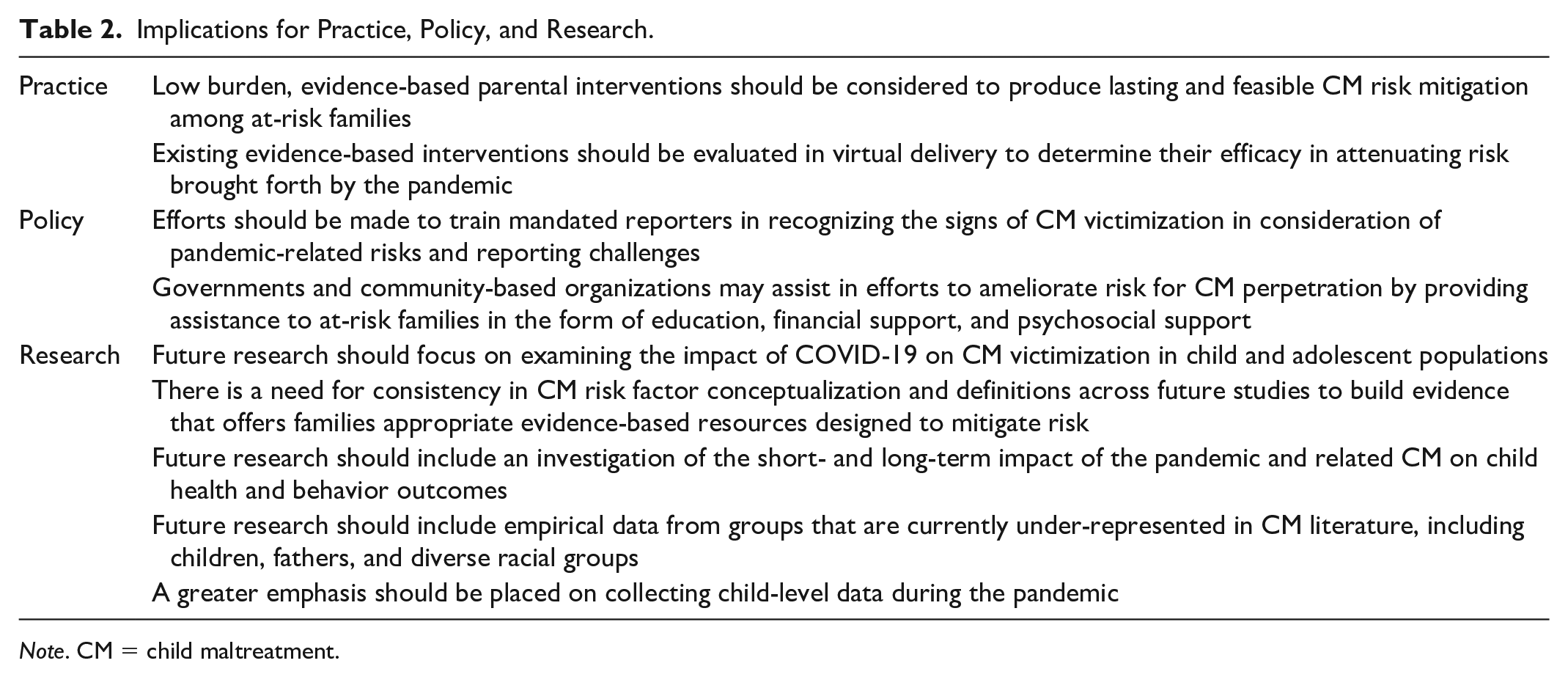
Note. CM = child maltreatment.
Critical Findings.

Note. CM = child maltreatment.
Discussion
The pandemic has presented new challenges for both caregivers and children that will have long-term implications for families if left unaddressed. This narrative review sought to explore the published empirical findings to date on interpersonal, caregiver-level risk factors for CM almost two and a half years since the onset of the pandemic. Our findings demonstrate the ongoing presence and influence of several well-established risk factors for CM perpetration, as well as emerging novel risk factors, albeit limited in their exploration. Taken together, however, the presence of multiple persisting and novel risk factors during the pandemic indicates the need for resources to address caregiver risk going forward.
Persisting Risk Factors
Findings highlight that stress, parental mental health, parental substance use, and financial concerns were prominent risk factors for CM within the pandemic context. Current data are commensurate with pre-pandemic work in the field (Beckerman et al., 2017; Deater-Deckard, 1998; Doidge et al., 2017; Famularo et al., 1992; Paxson & Waldfogel, 2002; Rodriguez-JenKins & Marcenko, 2014; Rodriguez & Richardson, 2007; Walsh et al., 2003). Yet, it is likely that recent studies on caregiver risk factors such as stress were attributed to more pandemic-specific disruptions; for example, abrupt changes in familial dynamics, as well as newfound financial concerns, have been associated with increased stress levels among many caregivers (Turna et al., 2021).
While beyond the scope of this review, it is important to consider the presence of other factors that may drive the complex relationship between factors such as stress and CM risk among caregivers (Justice et al., 1985; Wu, & Xu, 2020). One potential explanation may be the interplay among noted risk factors in this review. For example, pre-pandemic evidence indicates that heightened stress is associated with risk for substance use and addiction, and mental illness (Andersen, 2019; Arora et al., 2016; Cattaneo & Riva, 2016; Gordon, 2002; Sinha, 2001; Staufenbiel et al., 2013), both of which may in turn, increase risk of CM perpetration (Kelley, 1998; Kettinger et al., 2000; Walsh et al., 2003). However, the specifics of these relationships, and others, remain to be explored during the pandemic. As the effects of the pandemic are still being understood, additional longitudinal data are needed. Specifically, more data are needed concerning the measured influence of these factors on caregiver risk for CM to provide insight on the mechanisms under which these risk factors may act.
Emerging Risk Factors
Seventeen additional risk factors were implicated across no more than one article (Yamaoka et al., 2021). Nonetheless, it is important to give consideration to many of these understudied risk factors going forward. For instance, identified factors such as food insecurity are associated with underlying societal social problems such as poverty and unemployment (Cohen et al., 2018), both of which were exacerbated by financial disruptions and changes in job accessibility following the pandemic. Furthermore, novel identified risk factors such as going out for nonessential reasons and changing child sleep patterns (Yamoka et al., 2021) could impact the levels of stress through disruptions to routines and increasing desire to leave the home environment. As such, nuanced constraints among families may require further exploration to understand pandemic-specific changes and complex interactions of factors that may contribute to the rise in caregiver risk for CM perpetration.
Importantly, while this review contextualized interpersonal risk factors at the caregiver level, many are not mutually exclusive from the effects of larger ecological systems under the Katz et al. (2021) framework. The severity of CM risk among caregivers may vary in relation to adverse or protective influences based on geography, government responses, and culture. Post-pandemic literature shows that COVID-19 has disproportionately affected societies based on economic and social resources; regions with greater access to funding, social welfare grants, children and youth care centers, and housing have fared relatively better than those with more limited resources (Katz et al., 2021; UNICEF, 2020). It is also plausible that minority or disadvantaged groups living in communities with higher levels of poverty, racism, and general CM risk continued to experience disparities during the pandemic as access to resources decreased and occurrences of racism increased (Devereux et al., 2018; Katz et al., 2021).
Additionally, the nature of CM during the pandemic has changed for families. Our findings suggest that the occurrence of specific types of CM, such as psychological, sexual, and physical abuse, and witnessing domestic violence, was influenced by persisting risk factors, including, perceived family affluence, parental mental health, and parental substance use (Augusti et al., 2021; Yamaoka et al., 2021). Lacking were studies on caregiver-level risk factors associated with increases in severity of abuse, such as low maternal age (Lee, 2009; Stier et al., 1993). Future researchers may consider investigating how COVID-19 has impacted CM risk among young caregivers, as well as new parents who may be an emerging at-risk and underserved group during the pandemic tenure.
Limitations
This narrative review must be considered in light of several limitations. First, while articles across all geographical locations were considered for inclusion, parameters were limited to articles written or translated in English. Second, while the summary of international works highlights broad-based findings, findings may be unique to the occurrences and practices of specific regions. Third, lending to this lack of generalizability are inconsistencies in CM risk factor operationalization, which limit the true comparison of risk factors across studies. Fourth, we acknowledge that over the next decade, the scope of work will expand with publications from ongoing longitudinal work. As such, our review presents preliminary insights into the early effects of the pandemic on CM risk. As part of this limitation with budding literature, we were unable to fully explore CM risk across diverse contexts. Going forward, it is critical that we explore the risk factors and contextual domains affecting underrepresented children, families, and racial and ethnic groups. Finally, we recognize that the data summarized cannot fully address the global devastation that has resulted from COVID-19 with regard to changing government and social structures. Based on the findings from this review, the direct effects of the social damage have not yet been measured in the published empirical data. We urge more research-related investigations into the impact of the social shift on multiple ecological levels to create large-scale CM prevention. However, as our findings on risk factors within the family context suggest, it is still important to understand additional drivers of social ecology at multiple levels, including the microsystem, to support future directions of parent prevention and intervention efforts.
Recommendations
Our findings advocate for current policy efforts and allocation of multiyear federal level funding in response to COVID-19, including social programs for affordable daycare and health care, and resources targeting caregivers at risk of perpetrating CM. For example, legislation such as the Coronavirus Aid, Relief, and Economic Security Act has provided financial assistance to low-income households, as well as families in need through several programs and state, territory, and tribe grants. However, the sustainability of these efforts must be addressed following the end of these funds.
To this end, we also recommend the delivery of effective parenting interventions addressing stress, mental health, substance use, financial health, and healthy coping behaviors among caregivers. Such interventions can lead to improved parenting outcomes and reduced maltreatment among families in non-pandemic circumstances (Chaffin et al., 2012; Özyurt et al., 2018; Schilling et al., 2019; Whitaker et al., 2020). Even more importantly, emerging data suggest that these interventions can be preventative when widespread trauma circumstances, such as the COVID-19 pandemic, emerge. For instance, Behrens et al. (2021) investigated the effects of a pre-pandemic parenting intervention on parenting behaviors and child internalizing symptoms during the pandemic. In this study, improvements in child maladjustment and maternal sensitive guidance, pre-pandemic, mediated the relationship between the pre-pandemic intervention delivery and child internalizing symptoms during the pandemic (Behrens et al., 2021). To our knowledge, however, few studies have examined the effects of evidence-based parenting interventions in the pandemic context (Brown et al., 2020; Fogarty et al., 2022).
There is also an increasing need for community-led approaches aimed at preventing CM. Targeting neighborhood-level factors, as well as access to community-based social and structural supports, may help to alleviate much of the burden placed on caregivers. Although there is strong potential for many community-based programs, additional work is needed in the context of the COVID-19 pandemic (Molnar et al., 2016; Molnar et al., 2021) for sustainable efforts. The presence of evidence-based parenting and community-led models taking the pandemic-related needs of families into consideration is likely to be of increasing utility to improving family well-being as we consider the compounding effects of COVID-19 on households and surrounding ecological systems.
It is important to consider how such programs can be delivered in mass trauma or pandemic circumstances to families at risk, especially in situations where social distancing is required. Most studies on parenting interventions to date have used delivery approaches in the clinic or home setting, with limited studies on digital or telehealth approaches pre-pandemic. Evolving research demonstrates that virtually delivered interventions show promising results in attenuating risk for CM during the pandemic (Fogarty et al., 2022; Self-Brown et al., 2020). Self-Brown et al. (2020) surveyed providers of a widely disseminated evidence-based prevention program targeting child physical abuse and neglect 3 months into the pandemic. Their results indicated that the transition from home- to web-based intervention delivery had no negative impact on parental progression during the pandemic (Self-Brown et al., 2020). Furthermore, research concerning implementation of the evidence-based home visiting program, Attachment and Behavioral Catch-Up, shows positive behavioral changes among parents and maintained fidelity when delivered in telehealth formats post-pandemic (Caron et al., 2022a; Roben et al., 2022; Schein et al., 2022). Thus, it is warranted to consider the benefits of continued virtual delivery to increase access and reach of strong prevention programs among families in need. It is important, nevertheless, to recognize that a lack of access to technology and safe spaces for virtual sessions may serve as a barrier to prevention efforts (Racine et al., 2020). We urge researchers to consider flexible interventions for caregivers with limited access to technology (i.e., mailed materials), and the careful re-examination of previously established interventions in the pandemic context.
As previously alluded to, we call for inclusion of fathers in CM-related research to ensure accurate representation of CM risk among households. We also bring attention to the need to obtain other data from non-caregiver sources, including mandated reporters and healthcare workers interacting with families. Furthermore, parental reports of household characteristics and/or behaviors may not be indicative of experiences at the child level. Previous findings indicate that children as young as eight years old can serve as reliable reporters of their CM experiences (Jackson et al., 2019); however, few pandemic-related studies have examined child-level data in the context of CM (Augusti et al., 2021; Craig et al., 2021; Yamaoka et al., 2021; Zhang et al., 2021). Multiple data sources will, together, provide a comprehensive picture of family dynamics and risk among households.
As previously mentioned, the current review findings also indicate several discrepancies in definitions and measurements of CM risk factors, which have been the subject of considerable debate and confusion in extant, pre-pandemic CM-related research (Manly, 2005; Jackson et al., 2019). Although there is no argument on the importance of studying CM and related risk factors, lack of common definitions and shared measures increases difficulty in comparing results across multiple works (Mathews et al., 2020; Mehta et al., 2021). In part, this inconsistency may stem from the growing number of measures available to researchers and an increasing need to capture nuanced aspects of constructs. We highlight the need for consolidated measures and consistent agreement in the conceptualization of risk factors to increase cohesion and advancement within the field.
Conclusion
This narrative review provides early insight on the role of the pandemic on CM risk factors among parents. For many families, affected caregivers and children may have, and may continue to endure, chronic trauma related to the pandemic concurrently with our slow resumption of pre-pandemic activities and support systems. Moving forward, a central focus should involve increasing social programs and implementing evidence-based strategies for at-risk families in need. Doing so will allow us to improve risk among caregivers most affected by the pandemic and general well-being of these families.
Footnotes
Declaration of Conflicting Interests
The author(s) declared no potential conflicts of interest with respect to the research, authorship, and/or publication of this article.
Funding
The author(s) received no financial support for the research, authorship, and/or publication of this article.
