



Abstract
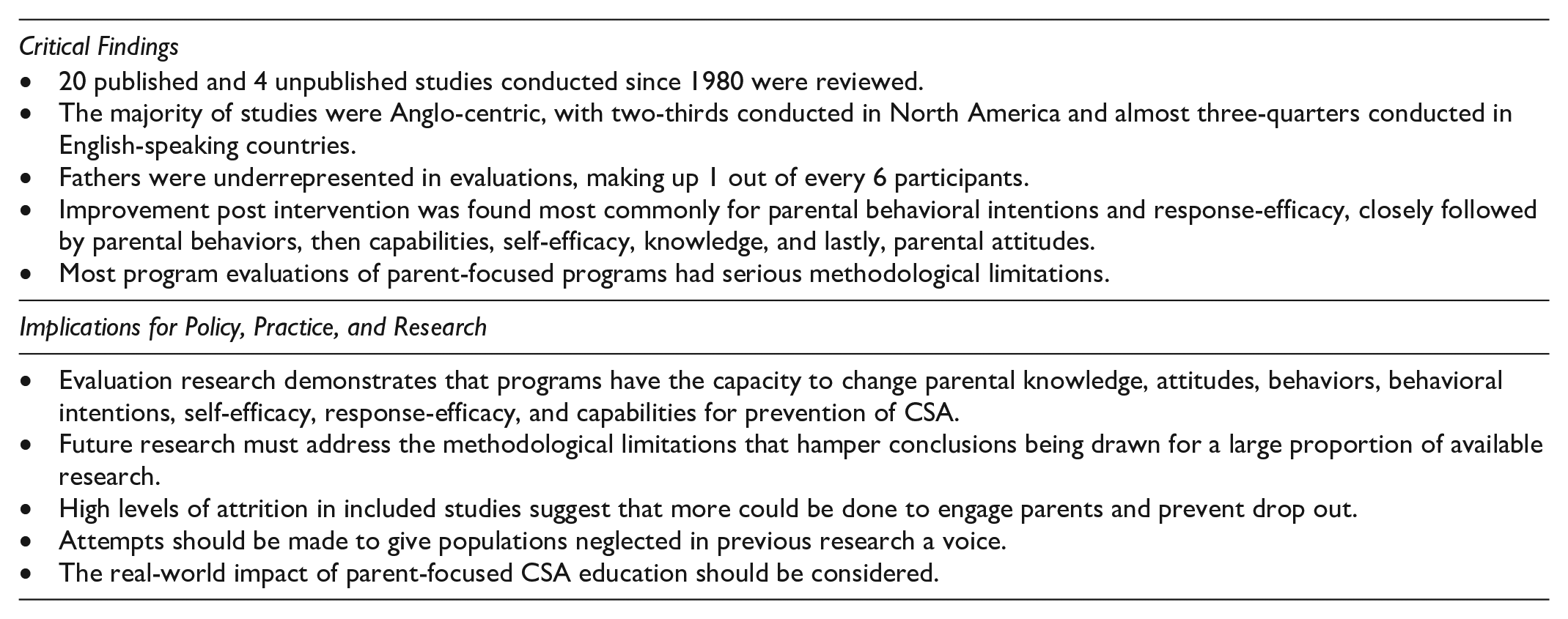
This systematic review is the first to synthesize knowledge of parental involvement in child sexual abuse (CSA) prevention programs. Guided by the Preferred Reporting Items for Systematic Reviews and Meta-Analyses (PRISMA) criteria, 24 intervention evaluations met the inclusion criteria of aiming to change parental knowledge, attitudes, behaviors, behavioral intentions, self-efficacy, response-efficacy, or capabilities for prevention of CSA. Included papers were identified via a combination of electronic database searches (PsycINFO, Web of Science, Scopus, Google Scholar, Cochrane Library, World Health Organization’s International Clinical Trials Registry Platform, google.com.au, open.grey.eu, Global ETD, Open Access Theses & Dissertations, EThOS, and Trove) and direct communication with researchers. Improvement post intervention was found most commonly for parental behavioral intentions and response-efficacy, closely followed by parental behaviors, then capabilities, self-efficacy, knowledge, and lastly, parental attitudes. Improvements in behaviors, intentions, and response-efficacy occurred in 88 to 100% of the studies in which they were addressed, improvements in self-efficacy and capabilities occurred in 67 to 75%, and improvements in knowledge and attitudes occurred in only 50 to 56%. Many of the included evaluation studies suffered from methodological and reporting flaws, such as high participant attrition, lack of control group, lack of statistical tests, missed testing time points, and a lack of (or short) follow-up. Future parent-focused CSA prevention evaluations must address these concerns by conducting rigorous empirical research with sound methodologies and comprehensive reporting. Furthermore, study designs should consider measuring the real-world impact of increases in assessed parent variables, including their ability to prevent sexual victimization of children.
Keywords
Despite many intervention programs, child sexual abuse (CSA) is experienced by many children around the world, with far-reaching personal, familial, and societal ramifications such as anxiety, depression, post-traumatic stress disorder, self-harm and suicidality, poor quality of life, loss of productivity and reduced income, alcohol and drug misuse, revictimization, family breakdown, chronic health conditions, and treatment and healthcare costs (Bonomi et al., 2009; Hailes et al., 2019; Kamiya et al., 2016; Macmillan, 2000; Stoltenborgh et al., 2011). Thus, effective prevention approaches continue to be a high public health priority. Although child-focused, school-based prevention education programs have been the most used primary prevention strategy, parental involvement has long been highlighted as an untapped resource in both academic and community spheres (Darkness to Light, n.d.; Elrod & Rubin, 1993). Yet, there has been no comprehensive systematic review of what is known about parental involvement in CSA prevention. Our aim in this review was to synthesize 40 years of parent-focused programs that aimed to improve parental CSA prevention knowledge, attitudes, or behavior as a pathway to the prevention of CSA.
Targeting Parents with CSA Prevention Interventions
Parental involvement in child-focused CSA prevention education refers to interventions that are delivered to children but also have an adjunct parent component. It is theorized that parental participation in child-targeted interventions contributes to children’s learning gains (Kenny et al., 2008); however, parental components in school-based programs are not widely utilized. For example, a large survey by Finkelhor et al. (2014) found that, although 72% of programs in the United States included take-home materials, only 18% invited parents to be involved. Parent-focused CSA interventions, in contrast, refer to interventions specifically designed for parents, which may or may not also include a child component. Again, the use of such programs is limited. Walsh and Brandon (2012, p. 745) concluded in their review of programs in Australia, that there was a dearth of “programmatic interventions designed to support and/or encourage parents to talk with their children about sexual abuse prevention.”
There are many good reasons for including parents in intervention programs aimed to improve child safety. Parents are the most proximal members of a child’s ecology (Wurtele, 2009) and have been shown to be effective in the prevention of child maltreatment, and other child public health concerns (Altafim & Linhares, 2016; Hart et al., 2015), and are uniquely positioned to affect their child’s environment. However, evaluations of parent programs have been mixed, and methodological flaws are common. Some studies suggest that parental exposure to CSA education can result in more intended or actual parent-led sexual abuse education (PLSAE) (Binder & McNeil, 1987; Burgess & Wurtele, 1998; Kenny, 2010), while others have reported no increases in parental CSA knowledge after attending a CSA education program or at follow-up (Berrick, 1988; Briggs, 1988; Cırık et al. 2020; Reppucci et al., 1994; Rheingold et al., 2007). Evaluations of the effectiveness of PLSAE are limited, and mixed, with some studies reporting PLSAE can increase children’s knowledge and self-protection skills (Cırık et al., 2020; Jin et al., 2019; Pandia et al., 2017), but another study showing no benefit of PLSAE on child outcomes (Miltenberger & Thiesse-Duffy, 1988).
Despite calls for more parental involvement in CSA prevention, the extent of parental involvement, the type and nature of interventions targeting parents, the outcomes measured, and the effectiveness of interventions has, to our knowledge, never been systematically reviewed (see Babatsikos, 2010; Rudolph et al., 2018; Wurtele & Kenny, 2010 for narrative reviews). To understand how parent programs contribute to the CSA prevention program landscape, the purpose of this study was to review the last 40 years of research on initiatives that aimed to change parental knowledge, intentions, attitudes, self-efficacy, or behavior regarding the prevention of CSA. Specifically, there were four research questions guiding this review:
To what extent have parents been targeted for CSA prevention?
What kinds of interventions have been used to target parents?
What parental outcomes have been measured?
How effective were the interventions in achieving their objectives?
Method
The Preferred Reporting Items for Systematic Reviews and Meta-Analyses (PRISMA) criteria (Moher et al., 2015) were used as a guideline for this systematic review.
Search Strategy
PsycINFO, Web of Science, and Scopus electronic databases were searched in June 2021 using the following search terms: child* AND (sex* abuse OR sex* assault OR sex* violence OR sex* victim* OR rape OR molest* OR incest) AND (prevent* OR intervention OR program OR train* OR educat* OR communicat*) AND (parent* OR mother* OR father* OR caregiver* OR carer*). Google Scholar was searched with the terms child AND sex abuse OR assault AND prevent AND parent. The Cochrane Library (https://www.cochranelibrary.com) and the World Health Organization’s International Clinical Trials Registry Platform (https://www.who.int/clinical-trials-registry-platform) were searched with the abovementioned search terms. Authors with registered trials were contacted if their details were available. To identify unpublished research, google.com.au, open.grey.eu, and dissertation databases (Global ETD, Open Access Theses and Dissertations, EThOS and Trove) were searched. Finally, all first authors from included papers were contacted via email to establish whether they had access to, or were aware of, any unpublished data and/or outputs. No date limiters were applied to searches. Results were limited to papers published in English, German, and Dutch. The review was prospectively registered with PROSPERO (ID CRD42021257683).
Inclusion and Exclusion Criteria
We included papers that reported on an intervention for the prevention of CSA. The following inclusion criteria were used:
Eligible participants: The prevention targets were parents or primary caregivers.
Eligible interventions: The intervention, program, training, or education initiative was (a) designed to change parental knowledge, attitudes, behavior, intentions, self-efficacy, response-efficacy, or capabilities regarding CSA prevention, and (b) delivered to parents in any format (i.e., face-to-face, online, mobile device application, written/visual resources, phone calls, text messages, emails, etc.).
Eligible outcomes: One or more of the following parental outcomes were assessed: (a) knowledge, (b) attitudes, (c) protective/prevention behaviors, (d) behavioral intentions, (e) self-efficacy, (f) response-efficacy, and (g) behavioral capabilities.
We excluded papers based on the following criteria:
Ineligible participants: The prevention targets were not parents or primary caregivers: (a) children were the prevention targets, (b) other adults were the prevention targets, (c) parental exposure to the intervention was incidental, or (d) parents were study informants for their children but were not directly exposed to the intervention.
Ineligible interventions: The intervention was not focused on CSA prevention, focusing on: (a) the prevention of other child maltreatment subtypes, (b) prevention of child maltreatment generally but not CSA specifically, (c) on prevention of other types of child victimization or violence, or (d) the intervention was not designed to change parental knowledge, attitudes, behavior, intentions, self-efficacy, response-efficacy, or capabilities regarding the prevention of CSA.
No intervention: Parents/caregivers were studied in the absence of a prevention intervention.
Ineligible outcomes: (a) Outcomes did not assess the outcomes of interest, or (b) there was no outcome measurement.
Study Selection
A study flow diagram is shown in Figure 1. Electronic database searches yielded 2,789 records, of which 689 were identified as duplicates. The first two authors, working independently, used Rayyan (Ouzzani et al., 2016) to double-blind screen records against the inclusion and exclusion criteria. Seventeen studies were included unanimously. There was disagreement about inclusion of three studies, which was resolved through discussion and resulted in including one additional study. Trial registers, gray literature searches, and hand-searching of included studies’ reference lists resulted in the addition of eight more studies. Email communication with corresponding authors yielded three additional studies, with one meeting the inclusion criteria. Three studies were excluded during data extraction, resulting in a final k = 24 included studies.
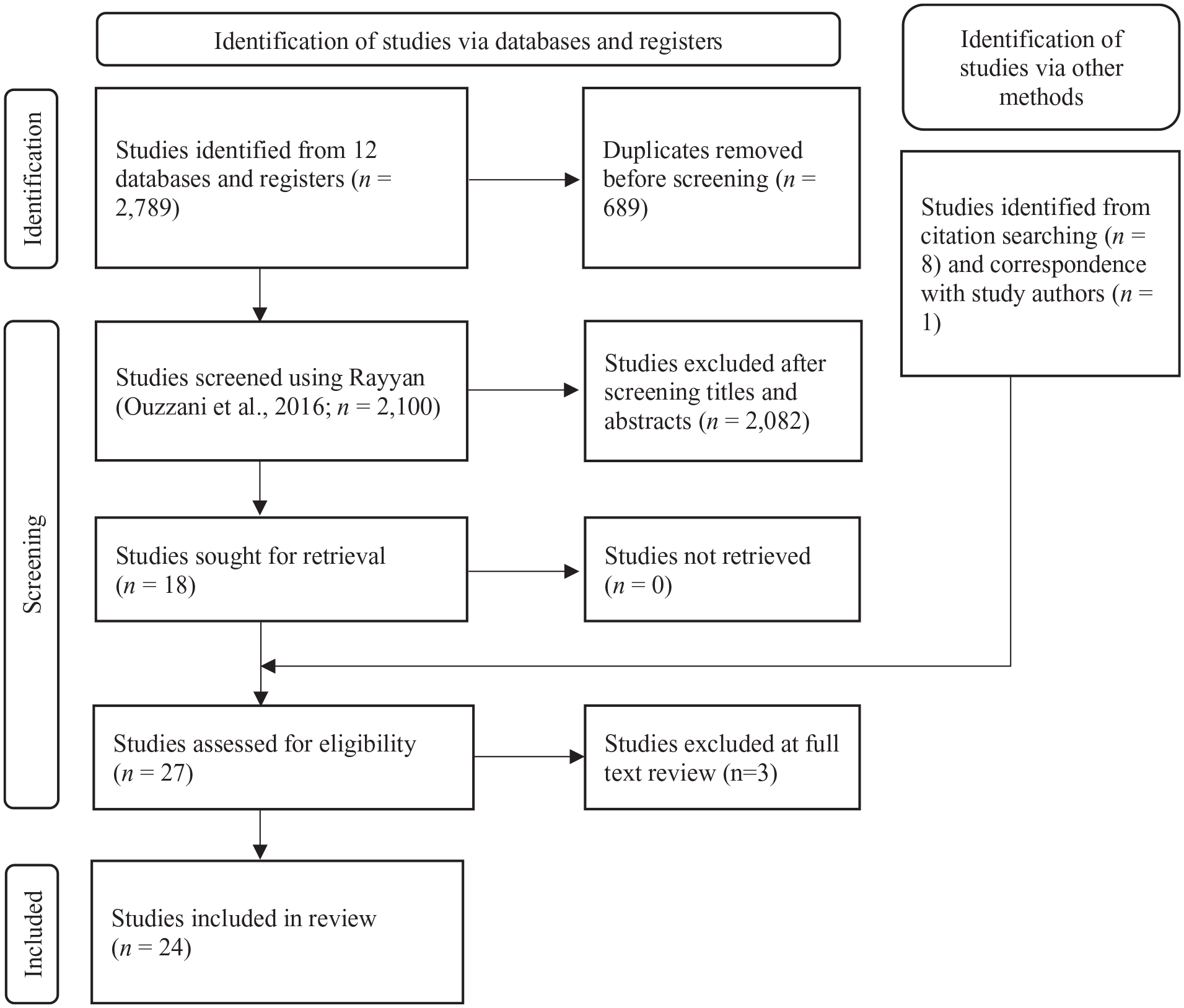
PRISMA flow diagram.
Assessment of Study Design Quality
Independent quality assessments of the 24 studies were conducted by the first, fifth, and sixth authors, utilizing Kmet et al.’s (2004) standard quality assessment criteria. The second author checked the interrater agreement of the assessments. Quantitative studies were evaluated with responses of “yes,” “partial,” “no,” or “not applicable” to 14 statements. The statements assessed each study’s objective, design, sample, methodology, measurement outcomes, intervention evaluated, analyses, conclusions, and reporting considerations. Qualitative studies were evaluated with responses of “yes,” “partial,” and “no” to 10 statements. The statements assessed each study’s objective, design, sampling strategy, theoretical framework, methodology, analyses, verification, conclusions, and reflexivity. For both designs, responses were weighted as follows: “yes” = 2 points, “partial” = 1 point, “no” = 0 points. A final quality score was obtained by summing the response for each statement and dividing by the total possible score. Total possible scores, therefore, ranged from 0 (lowest quality) to 1 (highest quality). Statements for which the response was “not applicable” were removed, thereby reducing the total possible score for these calculations.
Data Synthesis
Data were extracted and summarized based on the Cochrane Public Health Group (2011) Data Extraction and Assessment Template. In addition to methodology details, data extracted included the extant parents and nature of the parent-targeted interventions, the parental outcomes measured, and how effective these interventions have been in bringing about the desired outcomes as measured in each individual study. In this systematic review, we did not plan to conduct meta-analysis owing to heterogeneity in evaluation studies. Instead, we assembled the eligible studies, presented risk of bias assessments, and provided a detailed narrative summary to set directions for future research.
Results
Overview of Studies
Table 1 presents an overview of the 24 studies in chronological order, along with quality scores. Two studies were qualitative (Gesser-Edelsburg et al., 2017; Snavely, 1991) and three studies used mixed qualitative and quantitative methodologies (Berrick, 1988; Hudson, 2018, 2020). The remaining 19 studies were quantitative. Of the 22 studies with a quantitative component, 7 were randomized controlled trials (RCTs; Burgess & Wurtele, 1998; Guastaferro et al., 2020; Lak et al., 2017; McGee & Painter, 1991; Navaei et al., 2018; Nickerson et al., 2018; Rheingold et al., 2007), 5 were quasi-experimental studies (Berrick, 1988; Hébert et al., 1997, 2002; Reppucci et al., 1994; Wilkerson, 1994), and 10 used a within-group design (i.e., no comparison group; Binder & McNiel, 1987; Christian et al., 1988; Cırık et al., 2020; Hudson, 2018, 2020; Kenny, 2010; MacIntyre & Carr, 1999; Shaw et al., 2021; Smasal, 2006; Wurtele et al., 2008). Eighteen studies (75%) described evaluations of established programs (or amalgamations thereof; e.g., ESPACE, Talking About Touching, Parenting Safe Children, and Second Step). Thirteen studies (54%) were conducted in the United States, with three studies from Canada, two studies each from Iran and the United Kingdom, and one study each from Ireland, Israel, Turkey, and Zimbabwe.
Papers Meeting Criteria for Inclusion (N = 24).
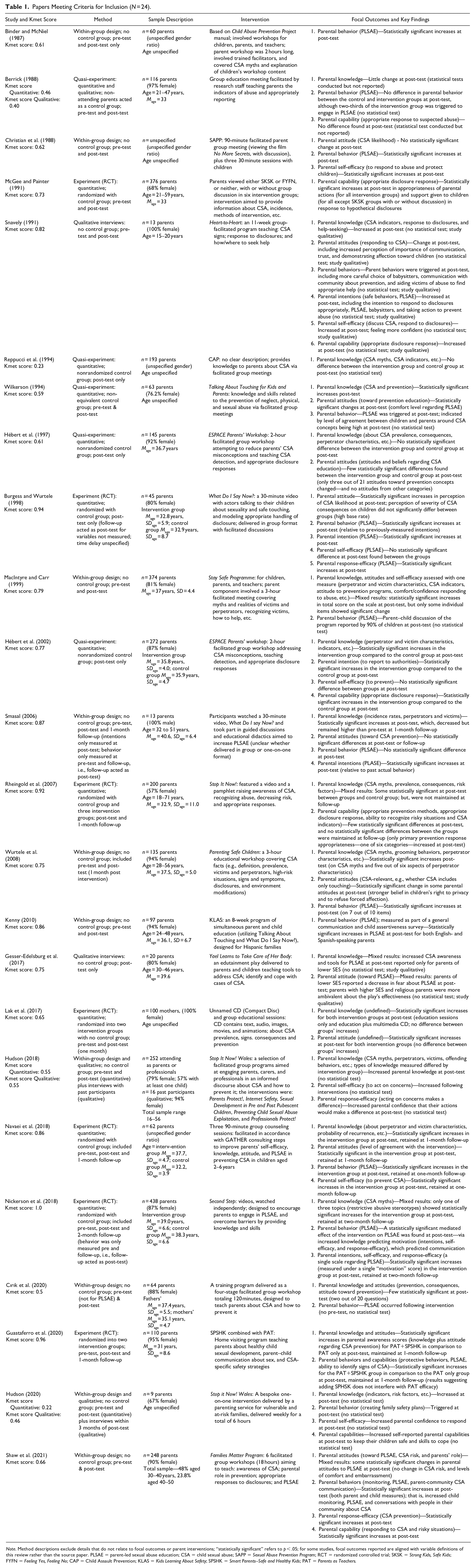
Note. Method descriptions exclude details that do not relate to focal outcomes or parent interventions; “statistically significant” refers to p < .05; for some studies, focal outcomes reported are aligned with variable definitions of this review rather than the source paper. PLSAE = parent-led sexual abuse education; CSA = child sexual abuse; SAPP = Sexual Abuse Prevention Program; RCT = randomized controlled trial; SKSK = Strong Kids, Safe Kids; FYFN = Feeling Yes, Feeling No; CAP = Child Assault Prevention; KLAS = Kids Learning About Safety; SPSHK = Smart Parents–Safe and Healthy Kids; PAT = Parents as Teachers.
Participants
Sample sizes ranged from 9 to 438 parents, with a total of over 3,400 participants. Almost all studies combined data from mothers and fathers (k = 17, 70%). Mothers were the sole focus of two studies (Lak et al., 2017; Snavely, 1991), one study targeted fathers exclusively (n = 13, Smasal, 2006) and four studies did not report participant gender. In 13 of the 17 mixed-sex studies, mothers made up more than 80% of participants; specifically, of the 3,090 parents for whom gender was reported, 528 (17%) were fathers. Two studies also included other carers, such as grandparents (Kenny, 2010; Shaw et al., 2021). One study recruited teen mothers (Snavely, 1991); and one study included only vulnerable parents (with low socioeconomic status backgrounds, sole parents, and parents having contact with statutory child protection agencies; Berrick, 1988). Ten studies (42%) reported majority White Caucasian participants, 2 reported minority-dominated samples (Kenny, 2010 had majority Hispanic participants; Snavely, 1991 had majority Black participants), and 12 studies did not report participant ethnicities.
Study participants were predominantly parents of young children. Nine studies (38%) included parents of children under 8 or 9 years (Berrick, 1988; Burgess & Wurtele, 1998; Cırık et al., 2020; Gesser-Edelsburg et al., 2017; Guastaferro et al., 2020; Kenny, 2010; Navaei et al., 2018; Wilkerson, 1994; Wurtele et al., 2008), three studies included parents of children aged 9 to 12 years (Hébert et al., 1997; Shaw et al., 2021; Smasal, 2006), two studies included parents of elementary school children (Binder & McNeil, 1987: 5–12 years; Nickerson et al., 2018: 3–11 years), and two studies included parents of children under age 18 years (Lak et al., 2017; Rheingold et al., 2007). Three studies referred to young children (Christian et al., 1988: Preschoolers; McGee & Painter, 1991: Preschoolers; MacIntyre & Carr, 1999: second and fifth graders), and five studies did not report child age (Hébert, 2002; Hudson, 2018, 2020; Reppucci et al., 1994; Snavely, 1991).
Intervention Characteristics
Two-thirds (k = 16, 67%) of the interventions described in the included studies were designed for parents only, whereas the remaining one-third (k = 8, 33%) involved parents adjunct to child interventions. Six interventions/studies were supported by a theoretical framework: Protection Motivation Theory (Burgess & Wurtele, 1998; Nickerson et al., 2018), Bandura’s Social Cognitive Theory (Gesser-Edelsburg et al., 2017), Empowerment Model (Hébert et al., 2002), Transtheoretical Model (Smasal, 2006), and Self-Help Group Concepts (Snavely, 1991).
Interventions ranged from 1 minute (viewing a public health announcement in the Stop It Now! video intervention; Rheingold et al., 2007) to 18 hours (three 1-hour sessions per week for 6 weeks in the Families Matter Program; Shaw et al., 2021). In just over half of the studies (k = 13, 54%), interventions were delivered in school or pre-school settings (e.g., the Yael Learns to Take Care of Her Body play; Gesser-Edelsburg et al., 2017). Other venues were also used such as private homes (k = 2, 8%, e.g., Parenting Safe Children; Wurtele et al., 2008), and community centers (k = 5, 21%, e.g., the Stop It Now! video and pamphlet interventions; Rheingold et al., 2007). Most interventions (k = 21, 88%) aimed to increase parental knowledge about CSA, including its definition, incidence and prevalence, indicators, warning signs, risk factors, effects and consequences, victim and perpetrator characteristics, and handling of disclosures. Just over one-half of the interventions (k = 14, 58%) focused on PLSAE (e.g., about appropriate and inappropriate touching and safety behaviors) and how to respond to children’s questions (e.g., to answer questions honestly and age-appropriately; k = 12, 50%). Two studies (8%) also gave parents information about available community resources. One study included teenage mothers; therefore, participants were also taught how to protect themselves from CSA (Heart-to-Heart intervention; Snavely, 1991).
A variety of delivery modes were used, but most interventions (k = 18, 75%) involved face-to-face group psycho-educational sessions, meetings, or workshops (e.g., Families Matter Program; Shaw et al., 2021) including one educational play (referred to as edutainment—the Yael Learns to Take Care of Her Body play; Gessser-Edelsburg et al., 2017). The remaining six studies consisted of face-to-face facilitated individual sessions (two studies; e.g., Parents as Teachers + Smart Parents—Safe and Healthy Kids; Guastaferro et al., 2020), independent self-paced digital or online learning (two studies; e.g., the Second Step videos; Nickerson et al., 2018), a combination (one study; McGee & Painter, 1991), or an unspecified delivery mode (one study; Smasal, 2006).
In terms of learning strategies, four studies (17%) utilized role plays and other group interactive activities (e.g., the Smart Parents—Safe and Healthy Kids intervention; Guastaferro et al., 2020) and six studies (25%) supplied parents with take-home materials (e.g., Kids Learning About Safety; Kenny, 2010). One study utilized a multi-faceted public awareness campaign involving television and radio announcements, pamphlets, and a website (Rheingold et al., 2007). Six studies (25%; Burgess & Wurtele, 1998; Christian et al., 1988; McGee & Painter, 1991; Nickerson et al., 2018; Rheingold et al., 2007; Smasal, 2006) used educational videos teaching parents how to talk to their child about sexuality and safe touching, how to appropriately handle a CSA disclosure, and how to identify signs of CSA (e.g., What Do I Say Now? video; Burgess & Wurtele, 1998). Across these six studies, instructional videos ranged from 1 to 90 minutes in length. Finally, one study incorporated weekly group counseling sessions, each running for 90 minutes per week, for three consecutive weeks (Navaei et al, 2018).
Outcomes Measured
Outcomes were assessed at pre-test and post-test (k = 14, 58%); post-test only (k = 5, 21%); post-test and follow-up (k = 1, 4%); or pre-test, post-test, and follow-up (k = 4, 17%). The shortest follow-up interval was 1 month and the longest was 2 months.
Outcomes were classified into seven categories; however, within each of the categories, there was substantial heterogeneity in the approach to measurement (see Table 1 for a description of measures). Across the 24 studies, the effectiveness of interventions was measured on a variety of parental outcomes, including knowledge, attitudes, behaviors, intentions, two forms of self-efficacy (parental self-efficacy and response-efficacy), and capabilities. Parental knowledge of CSA was defined as parents’ awareness of facts about any aspect of CSA, such as knowledge of abuse prevalence, indicators, perpetrator and victim characteristics, consequences of abuse, and prevention strategies. Knowledge was measured in 18 (75%) of the 24 studies. CSA-relevant attitudes and beliefs were defined as any parental belief, evaluation, or appraisal relevant to CSA, such as attitude toward discussing proper names for private parts with children, or attitude toward how severe the consequences of CSA are on children. Parents’ attitudes were measured in 14 studies (58%). Parental behaviors relevant to preventing or responding to CSA were defined to include parents’ own reports of behaviors they used to protect, monitor, or educate their children. Parents’ behaviors were measured in 16 studies (67%). Parental intentions to enact protective behaviors were defined as intentions to use monitoring, devising rules, or discussing safety. Parents’ intentions were measured in five studies (21%). Parental self-efficacy was defined as confidence in oneself to enact a behavior, and response-efficacy was defined as confidence that one’s behavior is effective or makes a difference. These two aspects of efficacy were measured in nine (38%) and four (17%) studies, respectively. Finally, parental capability was defined as skill to correctly enact a behavior and was measured in eight studies (33%).
To measure these parent outcomes before and following intervention, studies utilized numerous established (i.e., previously created by other authors) and/or custom-made self-report questionnaires (k = 21, 88%). Five studies (21%) utilized individual interviews (Berrick, 1988; Gesser-Edelsburg et al., 2017; Hudson, 2018, 2020; Snavely, 1991), three studies (15%) utilized vignette responses (Hébert et al., 2002; Rheingold et al., 2007; Wilkerson et al., 1994), and one study (Snavely, 1991) utilized role-play demonstrations in combination with participants’ personal learning journals. Twelve of the 24 studies (50%) reported on the psychometric properties of all or some of the measures used.
Reported Results
Of the 22 quantitative studies, only 15 (63%) included statistical analyses for all reported results, 3 studies (13%) lacked statistical analyses for just one variable, and 4 studies (18%) did not report statistical analyses for any result reported. Figure 2 shows the proportion of studies that reported improvement for each category of outcome, both at post-test and at follow-up. As RCTs are the gold standard for examining causal relationships, we present the results at post-test as a proportion of studies overall and a proportion of RCTs, for the purpose of comparing the findings overall with the findings of studies of high quality. This was not done for follow-up results as four of the five studies which utilized follow-up measures were RCTs. More details of these results per parent variable are explored in the following sections.
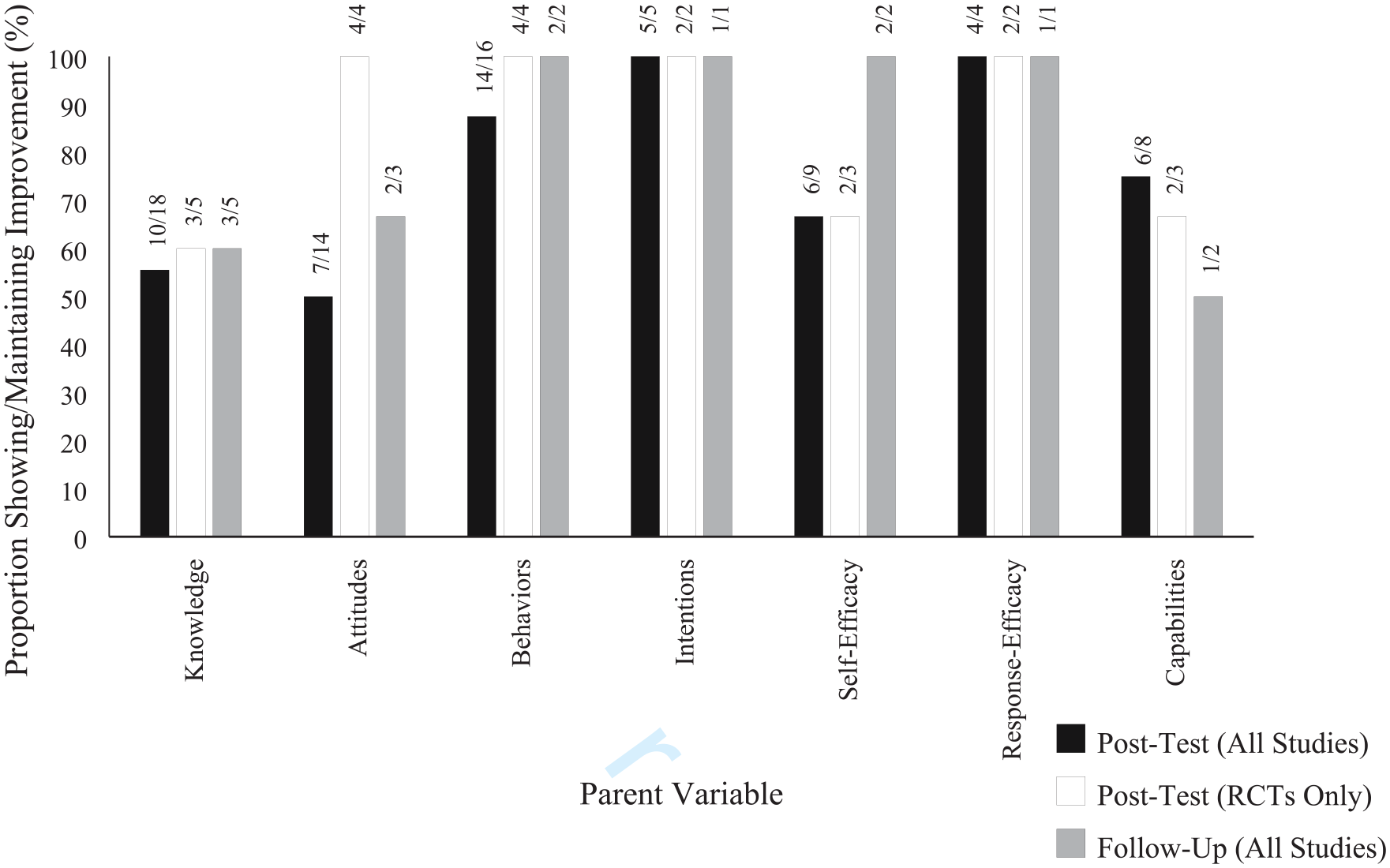
Proportion of studies reporting improvement from pre-to-post-test or reporting no change (or additional improvement) from post-test to follow-up.
Parental Knowledge
Parental knowledge was investigated in 18 (75%) of the reviewed studies. Of these, 10 (56%) reported improvements at post-test (three without statistical evidence, one qualitative), 4 (22%; one qualitative) reported mixed results with only some knowledge domains improved or knowledge improvements applied to only a sample subset, and 4 (22%; two without statistical evidence) reported no significant improvement in knowledge. Five studies assessed follow-up (all with statistical evidence): three of these found improvements at post-test were maintained, one found the mixed results at post-test were maintained, and one found the mixed results at post-test decreased to no-change by follow-up. The studies reporting intervention effects for knowledge used a variety of delivery methods including facilitated group sessions, audiovisual stimulus + discussion, counseling sessions, one-on-one education sessions, and home visitation. Program duration ranged from 30 minutes + discussion to 11 weeks. Some programs utilized were ESPACE, Stop It Now!, Talking About Touching, What do I Say Now?, Parenting Safe Children, and Smart Parents–Safe and Healthy Kids.
Parental Attitudes
CSA-relevant parental attitudes were investigated in 14 (58%) of the reviewed studies. Of these studies, seven (50%) reported positive change following interventions (one qualitative), three (21%) showed mixed results (one qualitative), and four (29%) reported no improvement (all with statistical evidence). Three studies included follow-up (all including statistical evidence): two found positive results at post-test were maintained at follow-up, and one found the no-change result from post-test was maintained at follow-up. The studies reporting intervention effects for attitudes used a variety of delivery methods including facilitated group sessions, audiovisual stimulus + discussion, group workshops, and home visitation. Program duration ranged from 30 minutes + discussion to 11 weeks. Some programs utilized were Heart to Heart, Talking About Touching for Kids and Parents, and What do I Say Now?.
Parental CSA Prevention Behaviours and Behavioral Intentions
Most studies that measured parents’ behaviors or behavioral intentions to engage in CSA prevention reported improvements following intervention. Parental PLSAE and safety behaviors were investigated in 16 (67%) of the reviewed studies. Of these studies, 14 (88%) showed increases following interventions (five without statistical evidence, one qualitative), and 2 showed no effects (one without statistical evidence). Two studies included follow-up assessment (both with statistical evidence), where both found post-test increases were maintained at follow-up. Parental intentions to enact CSA-preventative behaviors were investigated in five of the reviewed studies. All five showed increases following interventions at post-test (one without statistical evidence since evaluation was purely qualitative). Only one study included follow-up (with statistical evidence), wherein post-test increases in behavioral intentions were maintained at follow-up. The studies reporting intervention effects for behavior and intentions used a variety of delivery methods including independent learning with audiovisual stimulus, facilitated group sessions/workshops, group counseling, and home visitation. Program duration ranged from 90 minutes to 11 weeks. Some programs utilized were Stop It Now, Families Matter, Talking About Touching, What do I Say Now?, No More Secrets, and Second Step.
Parental Self-Efficacy and Response-Efficacy
Parental self-efficacy to enact CSA-preventative behaviors was investigated in nine of the reviewed studies. Of these studies, six (67%) reported improvement following intervention (three without statistical evidence, one qualitative), one study (with statistical evidence) found mixed effects, and two found no effects (both with statistical evidence). Two studies included follow-up assessment (both with statistical evidence), wherein both found post-test increases were maintained at follow-up.
Parental response-efficacy regarding the perceived usefulness of CSA-preventative behaviors was investigated in four of the reviewed studies. Increases in parental response-efficacy were found in all four studies following interventions (one without statistical evidence). One study also assessed follow-up (with statistical evidence), which found post-test improvements were maintained at follow-up.
The studies reporting intervention effects for self- and response-efficacy used a variety of delivery methods including independent learning with audiovisual stimulus, facilitated group sessions/workshops, group counseling, one-on-one sessions, and audiovisual stimulus + group discussion. Program duration ranged from 30 minutes + discussion to 11 weeks. Some programs utilized were Stop It Now, Families Matter, What do I Say Now?, No More Secrets, and Second Step.
Parental Capabilities
Parental capabilities to appropriately respond to CSA and disclosures or to appropriately enact protective behaviors were investigated in eight (33%) of the reviewed studies. Of these studies, six (75%) reported improvements following interventions (two without statistical evidence, one qualitative), and two found no improvement (one without statistical evidence). Two studies also included follow-up assessment (both with statistical evidence): one found post-test increases were retained, while the other reported nonsignificant improvement remained at follow-up. The studies reporting intervention effects for parental capabilities used a variety of delivery methods including viewing of audiovisual stimulus (with and without discussion), facilitated group sessions/workshops, home visitation, and one-on-one sessions. Program duration ranged from 30 minutes to 11 weeks. Some programs utilized were Feeling Yes, Feeling No, ESPACE, Smart Parents–Safe and Healthy Kids, and Stop It Now!
Study Quality
The quality and appropriateness of the methodology and reporting for each study was evaluated against the Kmet et al. (2004) criteria (Table 1). Although there are no standardized cut-off levels for quality rankings of Kmet scores (2004), most authors define a score of >80% as “strong quality,” 70–79% as “good quality,” 50–69% as “fair quality,” and <50% as “poor quality” (Lee et al., 2020; Teixeira-Machado et al., 2019). Using these quality rankings, 6 (27%) of the 22 studies with a quantitative component included in this review were of strong quality, 5 (23%) were of good quality, 7 (32%) of fair quality, and 4 (18%) were of poor quality. The main shortcomings that were identified in the quantitative studies were lack of control groups, nonrandom allocation, and limited reporting of participant characteristics. Of the five studies with a qualitative component included in this review, one (20%) was of strong quality, one was of good quality (20%), one of fair quality (20%), and two (40%) were of poor quality. The main problems that were identified in the qualitative studies were the limited descriptions of sampling strategies, data collection methods, and data analysis methods. Other major limitations were the omissions of verification procedures to establish credibility and the reflexivity of accounts (i.e., considering the effect of the researcher’s prior experiences, assumptions and beliefs on the research process or findings).
Of the 17 studies (71%) that reported attrition (i.e., the loss of study participants over the course of the research, for example from pre-test to post-test, to follow-up), rates varied widely from 0 to 63%. The literature suggests that attrition under 5% is not likely to introduce bias, while attrition rates above 15% should be labeled as high risk of bias (Babic et al., 2019). Guided by these classifications, 5 (29%) of the studies that reported attrition fell within the low-risk category (Gesser-Edelsburg et al., 2017; Guastaferro et al., 2020; Lak et al., 2017; Navaei et al., 2018; Shaw et al., 2021), 2 (12%) studies fell within the acceptable range of 5% to 15% (MacIntyre & Carr, 1999; Wilkinson, 1994), and 10 (59%) studies fell within the high-risk category (Berrick, 1988; Burgess & Wurtele, 1998; Christian et al., 1988; Cırık et al., 2020; Kenny, 2010; Nickerson et al., 2018; Rheingold et al., 2007; Smasal, 2006; Snavely, 1991; Wurtele et al., 2008).
Discussion
This systematic review identified 24 empirical studies investigating 18 CSA prevention interventions specifically targeting parents. A variety of intervention delivery modes was represented, with most of the programs including at least one face-to-face group session. Additionally, there was a range in intervention duration from several minutes to multiple weeks; however, most programs provided one session of around 1 to 3 hours. Although the characteristics of the programs varied substantially, all aimed to improve at least one of the following outcomes: parental knowledge, attitudes, behaviors, behavioral intentions, self-efficacy, response-efficacy, or capabilities through some form of parent education initiative.
Overall, across all seven categories of outcomes, we identified only improvement or no change in outcomes (i.e., there was no evidence of negative outcomes). These improvements in focal outcomes occurred at a minimum rate of 50% of studies which measured them (for parental attitudes), and 100% of studies at maximum (for parental behavioral intentions and response-efficacy). Other outcomes categories fell within this range (see Figure 2): knowledge (56%), self-efficacy (67%), capabilities (75%), and behaviors (88%). These results indicate that the available parent-focused CSA interventions represented in literature are effective to some extent in enhancing parent variables related to CSA prevention directly following interventions (i.e., at post-test). In terms of the longevity of the improvements, few studies (5 out of 24) included follow-up and no follow-up was longer than 2 months. However, the results showed that at one- to two-month follow-ups (where conducted), post-test results for each variable were almost always maintained (i.e., improvements remained improvements; no change remained no change).
The programs that were successful in affecting change in participant variables were heterogeneous and no similarities between them and the programs that did not yield increases in parent variables can be drawn. Effective programs included one-on-one sessions, independent study, single or multiple group sessions/workshops, and counseling. Some programs utilized audiovisual stimulus, with or without discussion, and programs ranged from 30 minutes to 11 weeks.
When comparing overall post-test results to results gained with high-quality experimental design (i.e., RCTs), the proportion of studies showing improvements was consistent for almost all variables (see Figure 2). This consistency of results overall and in comparison with RCTs exclusively suggests reliability and generalizability of the findings for those variables. One variable displayed a noteworthy discrepancy, however, with 100% of the RCTs addressing parental attitudes finding improvements. This stands in contrast to the 50% of all reviewed studies addressing parental attitudes finding improvements at post-test. These results suggest there may be an underlying factor in lower quality experimental designs that influenced results. For example, studies with no control group might leave reported attitudes among intervention groups vulnerable to undetected effects of anticipation or social desirability at pre-test, where it could be that the anticipation of receiving CSA education led to reporting of attitudes believed to be in line with those of the intervention-to-come. Otherwise, studies that lack pre-tests but instead only use control groups as reference could be vulnerable to undetected differing baseline attitudes between the control and intervention groups at pre-test, especially where randomization was not employed. This could have hidden real change otherwise observable at post-test in the higher quality research, potentially explaining the discrepancy between RCTs-only and overall results. In any case, this variability between overall results and RCT-only results suggests a degree of uncertainty.
There are some limitations in the body of research reviewed, requiring the use caution when interpreting results. Firstly, nine (38%) of the studies did not report results for all of the variables described in their method sections. Furthermore, the quality of about half of the studies was rated as low, in that of the 22 studies with a quantitative component, 7 (32%) were of fair quality and 5 (18%) were of poor quality as measured by the Kmet instrument (2004); and, of the 5 studies with a qualitative component, 1 was assessed to be of fair quality (20%) and 2 (40%) were of poor quality. Ten studies (42%) were also considered at high-risk for bias due to high attrition rates (up to 63%), with 7 studies not reporting attrition rates. Many of the included studies also suffered from methodological flaws, such as the lack of clear theoretical frameworks, the absence of control groups, absence of pre-tests and/or follow-ups, and limited follow-up timeframes.
There was a general lack of adequate reporting in the reviewed studies and future research should provide more detailed information concerning the program being investigated, the theoretical underpinnings of interventions, participants, study design, and the theory and mechanisms of change (congruent with guidelines such as the PRISMA extension statement and TIDieR checklist for intervention description). Furthermore, this review demonstrates that future research should aim to use control groups, include three points of data collection (pre-tests, post-tests, and follow-ups), use follow-ups at timespans beyond 2 months, and employ methods to prevent attrition.
Of further concern is the issue of diversity, with 66% of the included studies originating from North America and 71% representing English-speaking populations. Likewise, fathers were grossly underrepresented, making up only 17% of participants included in this review. Future research should prioritize recruiting fathers where possible (as was done by Smasal, 2006), perhaps by recruiting from male-dominated social spaces; however, it is understood that cultural factors impinge on this somewhat. None of the studies included in this review reported participants’ sexual orientation or gender identification, and future research into parental involvement in CSA prevention would benefit from attempting to understand the unique contributions and challenges faced by parents in the LGBTIQA+ community. This could be achieved by involving LGBTIQA+ support organizations in recruitment campaigns.
Finally, only two of the included studies in this review (Cırık et al., 2020—no statistical analyses; Wilkerson, 1994—unpublished dissertation) assessed the downstream effect of a change in parent variables on child outcomes. For example, an important measure of effectiveness is confirming whether the reported increases in PLSAE following parental program attendance, resulted in enhanced child knowledge of sexual abuse prevention strategies. Furthermore, evidence of increases in parental variables (knowledge, attitudes, behavior, etc.) does not necessarily equate to the prevention/reduction of CSA. Without empirical evidence or grounded theory on which parental factors may protect children from sexual abuse, effectiveness of parent-focused CSA prevention programs cannot ultimately be assessed. With a view to investing scant public resources in the best possible initiatives, future research should at least consider whether the parent variables being measured are genuinely influential in preventing CSA and improving parental responses to it. For example, Rudolph and colleagues suggest that parents may be better employed as protectors rather than educators, proposing that parents can be protective via the creation of safer environments and the enhancement of child well-being (Two Pathways Model; Rudolph et al., 2018; Rudolph & Zimmer-Gembeck, 2018).
As the wider costs and/or benefits of parent education to encourage PLSAE have not been measured, we can only speculate; it is possible that PLSAE has wider benefits for children such as increasing parent–child communication about sensitive topics in general, enhancing parent–child relationships and heightening the likelihood that a child will disclose unwanted or abusive encounters. However, conversely, it is also possible that PLSAE results in unintended side-effects such as worry, fear, anxiety, loss of trust, wariness of touch, and wariness of familiar and unfamiliar adults (Rudolph, 2022).
In summary, this review suggests that parent-focused CSA prevention programs are generally effective in facilitating change in measured parent variables such as knowledge, attitudes, and behaviors. However, some of these findings were borne of research suffering from methodological flaws, so caution should be used in their interpretation. More research is necessary to draw firmer conclusions on the efficacy of such programs on parent variables, as well as to detect the extent to which changes in assessed parent variables affect the desired change in child outcomes, and ultimately, whether enhancing these parent variables has real-world preventive value.
Footnotes
Author’s Note
Julia I. Rudolph’s affiliation changed from Griffith University to University of Greenwich in June 2022.
Melanie J. Zimmer-Gembeck is also affiliated to Centre for Mental Health, Queensland, Australia.
Declaration of Conflicting Interests
The author(s) declared no potential conflicts of interest with respect to the research, authorship, and/or publication of this article.
Funding
The author(s) disclosed receipt of the following financial support for the research, authorship, and/or publication of this article: Support for this paper was provided by a Griffith University post-doctoral research grant awarded to the first author.
