



Abstract
Studies have extended and applied lifestyle-routine activity theory (L-RAT) to direct-contact sexual violence (SV). Yet, operationalizations of theoretical concepts—exposure, proximity, target suitability, and guardianship—have not been consistent across studies within this context, and therefore the ultimate conclusions on the robustness of the theory remain an open empirical question. In this systematic review, we compile scholarship on the application of L-RAT to direct-contact SV to identify how core concepts have been operationalized as well as their association with SV. Studies met the inclusion criteria if they were published before February 2022, examined direct-contact sexual victimization, and explicitly categorized measures into one of the aforementioned theoretical concepts. Overall, 24 studies met the inclusion criteria. Certain factors, such as alcohol and substance use as well as sex behaviors, emerged as consistent operationalizations of exposure, proximity, target suitability, and guardianship across studies. Alcohol and substance use, sexual orientation, relationship status, and behavioral health conditions were common correlates of SV. Nevertheless, there was considerable variability in measurement and significance, clouding how these factors affect risk of SV. In addition, several operationalizations were unique to single studies, reflecting context-specific operationalizations about the population and research question at hand. Conclusions drawn from this work have implications for the generalizability of the body of knowledge related to the application of L-RAT to SV and identify the need for systematic replication efforts. Implications for future research, especially as it relates to replication efforts and claims around generalizability, are discussed.
Sexual violence (SV) is a serious public health concern, with national estimates indicating 19.3% of women and 1.7% of men have been raped during their lifetime (Breiding et al., 2015). Estimates of SV—inclusive of being made to penetrate, sexual coercion, unwanted sexual contact, and noncontact sexual experiences—are even higher, with 49.3% of women and 23.4% of men experiencing SV during their lifetime (Breiding et al., 2015). Consequently, SV is pervasive, and scholars have long sought to understand the processes that increase the risk of SV through multiple theoretical perspectives.
While some have criticized the extension of general theories, like lifestyle-routine activity theory (L-RAT), to forms of violence that predominantly affect women (e.g., Daly & Chesney-Lind, 1988), a sizable body of research has demonstrated the successful extension and application of L-RAT to SV victimization (e.g., Fisher et al., 2010; Schwartz et al., 2001; Schwartz & Pitts, 1995). Indeed, much of the extension of L-RAT to gender-based violence has focused on SV, particularly offenses that require direct contact between the victim and perpetrator. While the body of research on this topic continues to grow, it is important to understand how scholars are conceptualizing and operationalizing key concepts within the theoretical framework as well as the consistency in which these indicators are associated with SV. If concepts are not measured in the same ways or are inconsistent in their association with SV, claims around the applicability of the theory but also policy implications may be called into question. This, in turn, may indicate that conceptual replication efforts have not been met (Pridemore et al., 2018).
As we elaborate in the following systematic review, key concepts of L-RAT—exposure, proximity, target suitability, and capable guardianship—have been operationalized in a multitude of ways and findings have been mixed. As this systematic review will also demonstrate, many of these studies have developed the main indicators of the theory in a context-specific way not only to SV but also to the population examined in the analyses. This has serious implications for the evidence base on the robustness of applying L-RAT to SV.
In this systematic review, we compile scholarship on the application of L-RAT to direct-contact SV victimization. We include all studies published on this topic through February 2022. This therefore includes seminal works that first extended L-RAT to SV but also more contemporary applications. In total, 24 studies met the inclusion criteria for our systematic review. First, we provide an overview on SV as well as L-RAT. Next, we describe our search process and present the results. Implications and directions for future research are discussed.
Sexual Violence
SV is an umbrella term that includes many behaviors, both involving direct, physical contact between victims and perpetrators, and indirect forms of abuse (Tenkorang et al., 2021). Particularly, direct-contact SV is defined as a range of nonconsensual sexual acts committed or attempted against a victim, including but not limited to coercion or pressure aimed to elicit unwanted sexual contact, sexual touching, or nonconsensual sexual penetration—whether forced or facilitated by the use of drugs or alcohol (Basile et al., 2014; DeGue et al., 2014). SV requires the proximal convergence of a victim with a potential perpetrator and aligns with the principles of L-RAT. Conversely, indirect forms of SV reflect a range of offenses which are not characterized by direct contact between victims and perpetrators, such as verbal or nonphysical sexual harassment or a range of cybercrimes falling under the umbrella of technology-facilitated SV (Henry & Powell, 2018), such as unauthorized distribution of compromising materials (i.e., revenge porn) or cyber sexual-harassment (DeGue et al., 2013). While this study focuses upon direct-contact SV, it is important to recognize the scope of SV and the emergence of new forms in the online context. In addition, non-contact SV may occur in diverse contexts and consequently reflect more varied routine activities. Therefore, our efforts are focused on SV that requires the proximal convergence in time and space of victims with perpetrators. Stated differently, we consider how elements of L-RAT map onto the experiences of SV that require direct physical contact and whereby offenders’ perceptions may shape target suitability.
Lifestyle-Routine Activity Theory
L-RAT is an integrated theory of two opportunity perspectives aimed to explain criminal events: lifestyle-exposure theory (Hindelang et al., 1978) and routine activity theory (Cohen & Felson, 1979; Cohen et al., 1981; Garofalo, 1987). Lifestyle-exposure theories originally postulated that victimization was the result of one’s lifestyles—referring to daily routines such as work, school, and social engagement—that facilitate convergence with offenders. Around the same time, Cohen and Felson’s (1979) routine activity theory understood criminal events as requiring the convergence of three elements: (1) likely offenders, (2) suitable targets, and (3) a lack of capable guardianship. Lifestyle-exposure and routine activities theories were first integrated into a single framework by Cohen et al. (1981), wherein five principles were cited as affecting victimization: (1) exposure, (2) proximity, (3) attractiveness of targets, (4) guardianship against crime, and (5) contextual properties of criminal events (Cohen et al., 1981; McNeeley, 2015). A brief overview of these core components is provided.
Exposure within the integrated framework refers to accessibility and visibility of prospective victims and suggests that those who share characteristics with offenders are more at risk for victimization, echoing Hindelang et al.’s (1978) notion of homogamy. That is, individual characteristics will affect exposure, influencing the accessibility of targets to potential offenders. Given this, measures of exposure are often centered upon demographic characteristics of victims and the extent to which these characteristics mirror those among offenders, which may facilitate their greater visibility and accessibility. McNeeley (2015) notes that “more often, exposure is measured as public activities” (p. 33), referring to those activities one engages in outside of their home or in public, given time spent in such ways is presumed to increase the likelihood with which one will encounter offenders. Conversely, proximity reflects the geographic and spatial distance between offenders and targets and proposes that a negative relationship exists between victimization risk and distance between parties (Cohen et al., 1981). Therefore, the concept of proximity emphasizes the actual physical distance between where victims and offenders are located. Geographic closeness in this sense may reflect a range of themes, such as one’s home being centrally located within the city or a high-crime area, as well as one’s engaging in social activities where offenders are likely to be present (McNeeley, 2015).
Attractiveness reflects offender perceptions of a potential target’s desirability relative to others and can include economic or symbolic components relating to a target. This concept was later expanded by Finkelhor and Asdigian (1996) to capture notions of target congruence, referring to the utility of a victim relative to others in satisfying offenders perceived motives or needs, and can thus reflect themes such as potential gratification stemming from victimizing a particular target relative to others (McNeeley, 2015). Guardianship against crime refers to actions or tools, which reduce the probability of victimization, and can refer to bystanders, social support, or tools against victimization (Cohen et al., 1981; McNeeley, 2015). However, the latter concept has been subject to debate among routine activity theorists, given that adoption of technologies or tools has been considered as reflecting decreased suitability or attractiveness rather than guardianship per se (Hollis et al., 2013). Finally, contextual properties of crime refer to the extent that the foregoing four categories are influenced by offense type and setting, and that factors affecting convergence are not equal across crime types (Cohen et al., 1981; McNeeley, 2015). While these concepts have been developed to better understand direct-contact SV, the consistency of operationalization across studies to this specific form of victimization, and therefore, the ultimate conclusions on the generalizability of the theory remain an open empirical question.
Search Method
The search for relevant literature focused on direct-contact SV and L-RAT was conducted in January–February 2022. Early in the process, it was acknowledged that literature examining themes relevant to the present analysis used varied language in describing victimization, lifestyles, and routine activities. Examples include categorizing the phenomena of direct-contact SV as sexual victimization, sexual assault, or rape. Ultimately, the varied language limited the effectiveness of search strings that targeted each form of victimization. Consequently, the following search string was employed to capture relevant literature: ((sexual assault OR rape OR sexual violence OR sexual victimization) AND (routines OR Routine activities)). Two search engines—EBSCOhost and Google Scholar—were used to identify the broadest range of studies. Subsequent searches to capture concepts of lifestyles, in addition to the foregoing criteria, were conducted in October 2022. This confirmatory search produced a reduced pool relative to the string above. Given this, the search string above was employed to capture the broadest range of studies for review. Studies met the inclusion criteria if they were published before February 2022. Furthermore, studies needed to examine direct-contact SV. Forms of direct-contact SV included sexual assault, rape, drug- or alcohol-facilitated sexual victimization, and more generalized measures of SV (see Table 1).
Description of Study Characteristics and Operationalizations (n = 24).
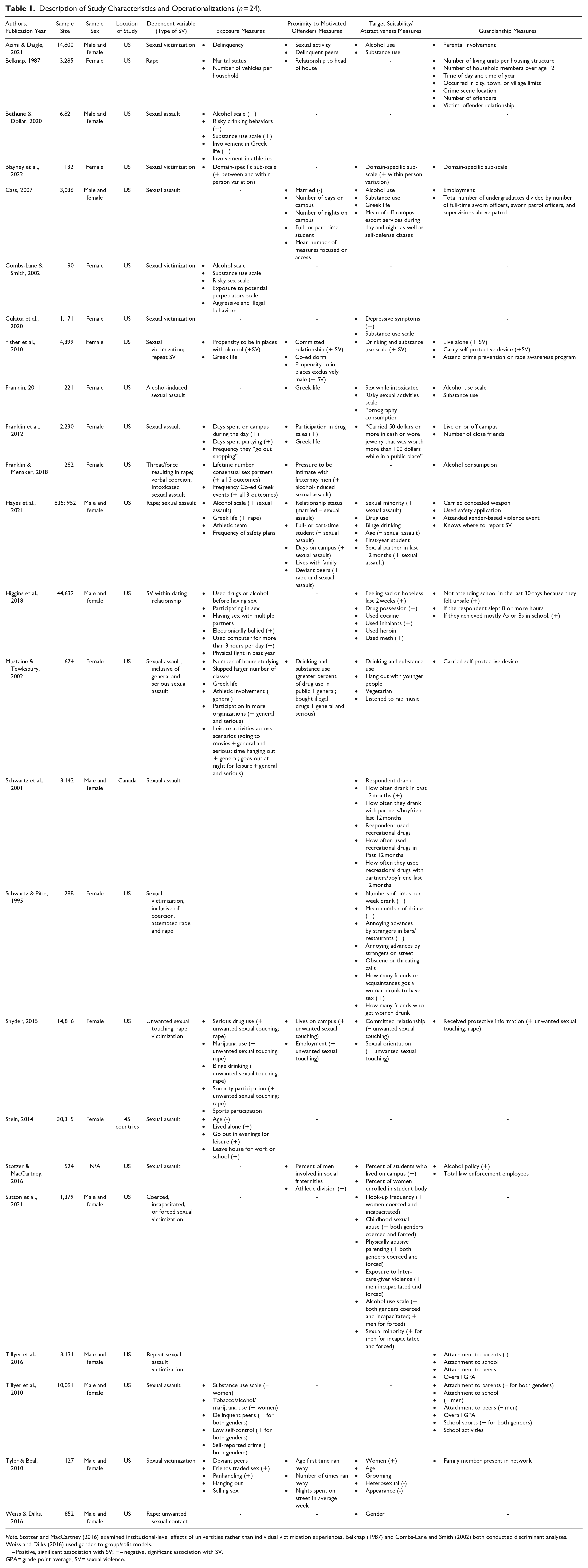
Note. Stotzer and MacCartney (2016) examined institutional-level effects of universities rather than individual victimization experiences. Belknap (1987) and Combs-Lane and Smith (2002) both conducted discriminant analyses. Weiss and Dilks (2016) used gender to group/split models.
= Positive, significant association with SV; − = negative, significant association with SV.
GPA = grade point average; SV = sexual violence.
Furthermore, we were interested in the operationalization of measures within the four central facets of L-RAT—(1) exposure, (2) proximity, (3) target suitability, and (4) guardianship. Therefore, studies that did not explicitly categorize measurement according to these dimensions or that used a more general lifestyles-routine activities framework were excluded (e.g., Reyns & Scherer, 2019). Finally, to ensure findings were based on valid, methodologically rigorous analyses, only peer-reviewed publications were considered. Within the inclusion requirements, only quantitative studies published in English were considered.
Initial searches employing the above search string through EBSCOhost and Google Scholar databases yielded 120 and 5,160 eligible articles, respectively. Within EBSCOhost, searches were conducted among included criminal justice abstracts with full text, to ensure that relevant and peer-reviewed analyses were considered. A thorough review of articles’ titles and abstracts was then conducted to determine the relevance of literature to the research topic. Through this search, a total of 5,079 articles were then removed, with 76 removed from EBSCOhost search results and 5,003 removed from Google Scholar search results. This resulted in a total of 201 articles for consideration. Supplemental searches were conducted through ProQuest criminal justice databases in October of 2022, which did not yield any additional articles. Following title and abstract review, a full-text review of the remaining 201 articles was conducted, resulting in the exclusion of 180 articles. Among these, rejections were made due to the use of generalized measures of routine activities (n = 19), qualitative analysis techniques (n = 3), outcome variables not reflecting direct-contact SV (n = 64), articles being offender-centric in analysis (n = 7), and articles being theoretical in nature (n = 19). Finally, several articles were removed from consideration from the Google Scholar search (n = 68) as duplicates from EBSCOhost search results. Following full-text review, 21 articles were included into the analytic sample from initial searches.
In addition, and consistent with contemporary systematic reviews (Brands & van Doorn, 2022; Sprague et al., 2014), a final supplementary search for relevant articles was conducted through references of articles already identified. Bibliographic searches were conducted among all 22 articles, resulting in 46 potentially relevant articles. Following full-text review, articles were then removed for employing generalized measures of routine activities (n = 4), qualitative analytic techniques (n = 1), examining victimization outside the scope of the current study (n = 10), centering upon theoretical considerations rather than empirical analysis (n = 2), and duplication of previously identified articles (n = 26). Following full-text review of articles, the bibliographic search yielded three articles for consideration in addition to those previously gathered, resulting in an analytic sample of 24 articles. The search process is displayed in Figure 1.
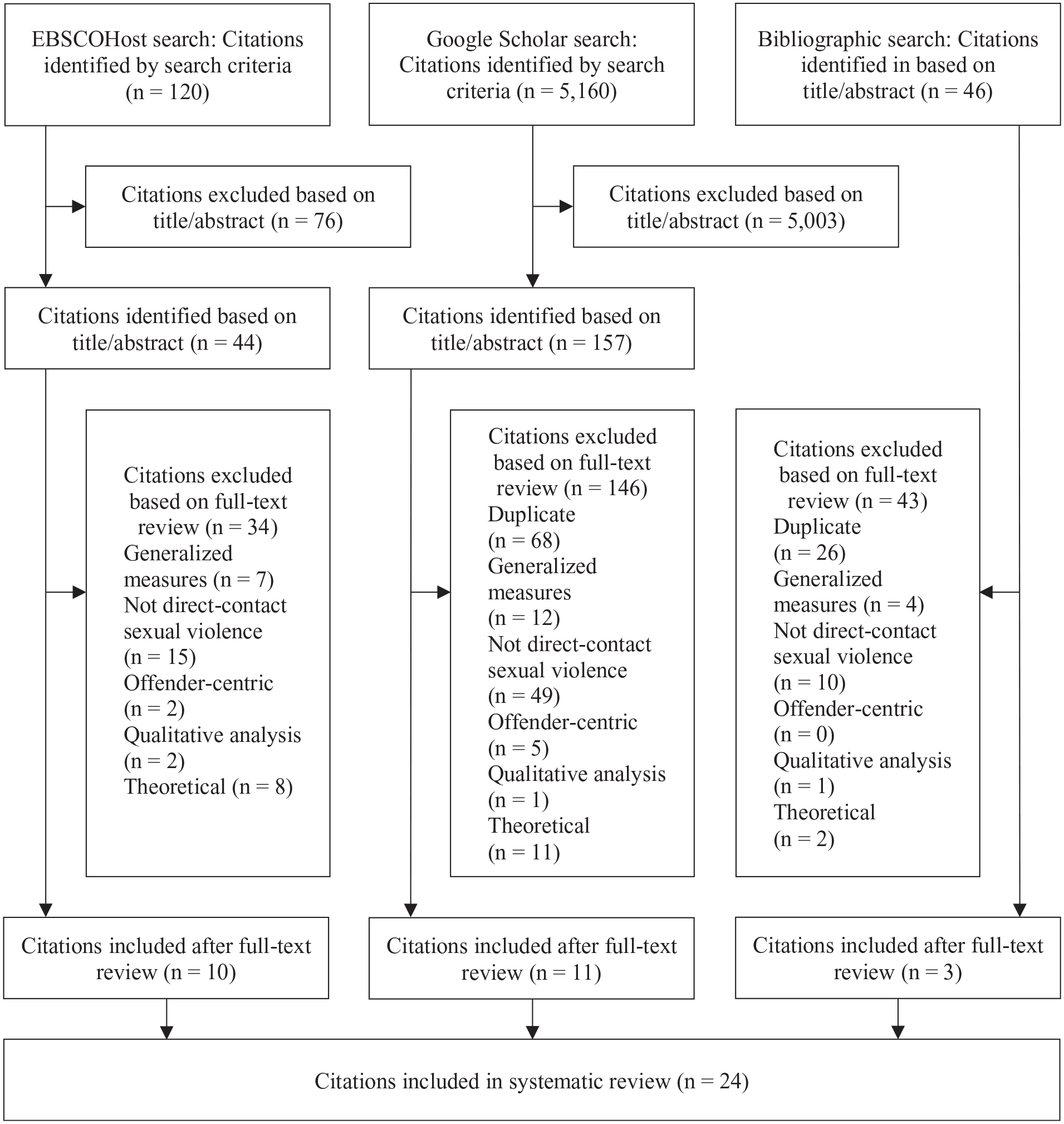
Flow chart of citation collection process.
Coding Process
If the study met our inclusion criteria, we then categorized variables within these studies for if they were conceptualized under (1) exposure, (2) proximity, (3) target suitability, and/or (4) guardianship. We then open-coded each of the indicators into dimensions of these four broader concepts (Creswell, 2007; Glaser, 1965). We initially include a broad scope of dimensions and then worked to refine our thematic analysis. In many cases, these dimensions crossed across these broader four concepts as scholars conceptualized the same measures under different concepts. For example, alcohol use and related behaviors were included under all four of these concepts.
It is also important to emphasize that some authors included the item across two categories (e.g., both exposure and guardianship; both target suitability and proximity or guardianship) or created new categories. If this occurred or if the authors did not explicitly categorize the measure, we did not include it in the systematic review. We elaborate on these decisions as well as the implications for the consistency of measurement across concepts in the Section “Discussion.” Following thematic coding processes, a measure of inter-rater reliability was obtained by comparing coding schemes of both authors for discrepancies. Initial inter-rater reliability measures were high (89.36%), and authors reconciled the remaining coding for all cases.
Results
Concerning studies within the present analysis, several initial findings are apparent. First, sample sizes were variable, ranging from 127 (Tyler & Beal, 2010) to 44,632 individuals (Higgins et al., 2018). In addition, Stotzer and MacCartney’s (2016) sample (n = 524) reflects academic institutions. Furthermore, the majority of analyses were conducted within the United States with only two studies (Schwartz et al., 2001; Stein, 2014) employing samples from outside the US. Given this, the majority of literature employing L-RAT to understand SV is characterized by US-based samples, thus potentially affecting the external validity of core components to non-US-based routines.
When considering sample characteristics related to gender, an almost equal portion of studies employed samples of only women (n = 12) or samples of men and women (n = 11). Importantly, no studies considered exclusively male populations. Again, one study (Stotzer & MacCartney, 2016) focused exclusively on institutional-level data (see also Cass, 2007). Finally, the majority of analyses employ measures of sexual assault or rape (n = 15), while a portion employ measures reflecting respondents’ general sexual victimization history (n = 7). Findings relating to operationalization of key components of L-RAT and their association with SV are discussed below. An overview of the studies is provided in Table 1.
Exposure to Crime
Exposure can be defined as one’s visibility and/or ease of access to dangerous places or persons (Cohen et al., 1981). Theoretically, items related to exposure center on risky situations or behaviors or those that increase the likelihood of potential victims converging with motivated offenders (Elvey et al., 2018). According to Cohen et al. (1981), exposure focuses on individual characteristics. Within exposure, variables were recoded into seven dimensions: (1) alcohol or substance use, (2) relationship status/sex behaviors, (3) athletics and Greek life, (4) delinquent peers, (5) time spent out/with Strangers, (6) delinquency, and (7) other.
Alcohol and substance use
By far, the most common theme of exposure to crime centered on substance use, inclusive of alcohol and drug use. Nevertheless, within this theme, there was significant variability in whether the measure captured individuals’ personal drinking behaviors and/or substance use, exposure to friends’ drinking behaviors, location of alcohol and substance use, or the consequences of alcohol and substance use. These latter indicators depart from Cohen et al.’s (1981) original focus on individual characteristics that influence exposure.
The first series of measures concentrated on the respondent’s personal alcohol and substance use behaviors. Scholars captured (excessive) consumption through parsimonious scalar items (Bethune & Dollar, 2020; Combs-Lane & Smith, 2002; Hayes et al., 2021) and binary measures around binge drinking (Snyder, 2015). Substance use was significantly and positively associated with SV in three of these studies (Bethune & Dollar, 2020; Hayes et al., 2021; Snyder, 2015). Such items center on drinking patterns within a group context. Potential risky behaviors associated with drinking—like accepting drinks from strangers or leaving one’s drink unattended—and potential consequences were also positively associated with SV (Bethune & Dollar, 2020; Hayes et al., 2021, included in scalar measure). In terms of substance use, binary measures of serious drug use and marijuana use (Snyder, 2015) and scalar measures were also included in the analyses as they are risky behaviors (Bethune & Dollar, 2020; Tillyer et al., 2010). While substance use was positively associated with SV in Snyder’s (2015) and Bethune and Dollar’s (2020) works, contrary to expectations it was negatively associated with sexual assault among female adolescents in Tillyer et al.’s (2010) analysis. Some scholars have also embraced more formal scales (e.g., illicit drug use; Combs-Lane & Smith, 2002).
Across studies, a variety of items focused on individual use of illegal substances and alcohol and were combined in a number of different ways. For Tillyer et al. (2010), whose sample was adolescents, two items captured tobacco/alcohol/marijuana use compared to other drug use. Unlike the other drug use items, tobacco/alcohol/marijuana was positively associated with SV among female adolescents (Tillyer et al., 2010). Similarly, Hayes et al. (2021) combined alcohol and drug use in question wording (e.g., risky outcomes because of drinking or drug use; emphasis added). This presents a tension in terms of measurement for many populations—especially early career college students but also grade-school students—because alcohol, as well as other substances, are illegal for such populations. Furthermore, these measures are not mutually exclusive, precluding researchers from being able to disentangle the processes between these substances and SV. In addition, some of these items, while not included in multivariate models, focused on the intersection of substance use and alcohol with sex behaviors. Such behaviors may expose respondents to likely offenders and considered if the respondent used drugs or alcohol before having sex (Higgins et al., 2018). Finally, the propensity to be in places with alcohol has been entered in analyses (Fisher et al., 2010) and was significant. This item centers on vulnerability in terms of risky settings associated with alcohol.
In regard to friends’ alcohol and substance use within exposure, Blayney et al. (2022) included items as part of a larger scale focused on exposure to potential perpetrators to assess if the respondent was ever around men who encourage women to use drugs or if they were around men that drank or used drugs. As part of measurement development, behaviorally specific risk factors were collapsed into domain-specific subscales. Therefore, while the questions from Blayney et al. (2022) are presented under each theme, they were ultimately collapsed for analyses. The majority, but not all, of these items included within this dimension centered on the respondents’ characteristics or vulnerability associated with risky settings though some extend beyond the theoretical focus of respondents’ characteristics (Cohen et al., 1981).
Relationship status/sex behaviors
Other scholars operationalized exposure to crime through indicators of relationship status and/or sex behaviors, both of which could be conceptualized as individual factors that would influence the likelihood of victims and offenders converging in time and space. While involvement in a committed relationship may reflect target attractiveness, it also reflects exposure in terms of sexual safety (Franklin & Menaker, 2018) and proximity to risky situations or persons where SV may occur (Stein, 2014). General relationship indicators included being married or living alone (Belknap, 1987; Stein, 2014). Measures focused on sexual partners or risky sex behaviors comprised the Risky Sex Scale (Combs-Lane & Smith, 2002), and the number of consensual sex partners one had in their lifetime (Franklin & Menaker, 2018). Similarly, Higgins et al. (2018) reviewed indicators of participating in sexual intercourse and having sexual intercourse with multiple partners to capture risky behaviors that expose teens to potential motivated offenders. Yet, these items were not included in multivariate models. Across these items, only if the respondent lived alone (Stein, 2014) and the lifetime number of consensual partners (Franklin & Menaker, 2018) were significantly associated with SV.
Athletics and Greek life
As it relates to the victimization of college students, connections to athletic teams, intramural clubs, or Greek life increases the likelihood of potential victims coming into contact with motivated offenders (Martin, 2016; Schwartz & Pitts, 1995). The operationalization of this concept includes binary measures of whether the respondent was a pledge or member of Greek life (Fisher et al., 2010; Hayes et al., 2021; Mustaine & Tewksbury, 2002; Snyder, 2015). When Greek life was categorized as a form of exposure, it was only positively associated with SV in two of the four studies (Hayes et al., 2021; Snyder, 2015). Athletic involvement was similarly measured through dichotomous indicators (Hayes et al., 2021; Mustaine & Tewksbury, 2002; Snyder, 2015). Participation in a higher number of organizations has also been considered as an indicator of exposure (Mustaine & Tewksbury, 2002). Within this dimension of exposure, Mustaine and Tewksbury’s (2002) analysis was the only study to find athletic involvement or participation in organizations as positively associated with SV.
Beyond crude indicators of membership, items also captured individuals’ connection to such activities. Bethune and Dollar (2020) captured level of involvement in both Greek life and athletics. Only involvement in Greek life was positively associated with SV within their study. Blayney et al.’s (2022) scale centered on exposure to potential perpetrators and included items related to exposure to fraternity members and exposure to male athletes. The remaining items in this scale are better categorized as exposure to more general delinquent peers and are described in detail below. Similarly, Franklin and Menaker (2018) included an ordinal scale on how often one attended co-ed Greek-sponsored events each week, which was positively associated with SV. Attending such events may be risky as they increase the exposure between victims and perpetrators.
Time spent out/with strangers
In routine dating and social contexts—like dates, parties, and bars—one may have greater exposure to potential perpetrators. To capture this within their Exposure to Potential Perpetrators scale, Combs-Lane and Smith (2002) created items like—“Leaving a social event with a guy I recently met or don’t know well,” “Staying at a party or social event after my friends have left,” and “Accepting a ride from someone I don’t know well” (p. 170). In a similar vein, scholars have operationalized this theme as the number of days spent hanging out (Tyler & Beal, 2010), the number of nights spent partying or out for leisure activities across a variety of scenarios (Franklin et al., 2012; Mustaine & Tewksbury, 2002), the number of days spent on campus (Franklin et al., 2012), the frequency of making safety plans with friends (Hayes et al., 2021), and the frequency of “going out shopping” (Franklin et al., 2012). Relatedly, how often respondents go out during the evenings for leisure or leave the house for work/school are routines that will influence exposure to risk (Stein, 2014). There is tremendous variability in measuring daily routines centered on time away from home. However, many of these studies found a positive association between time spent out/with strangers and the likelihood of experiencing SV (Franklin et al., 2012; Mustaine & Tewksbury, 2002; Stein, 2014).
Delinquent peers
Scholars have also considered exposure to delinquent peers in general. As noted above, Blayney et al. (2022) created a domain-specific subscale on exposure to potential perpetrators. General delinquent peer items encompassed “Were you around: more men than women, men who you have heard have negative or hostile attitudes toward women, men who you have heard are sexually aggressive with women, men who have a reputation as ‘players’?” (p. 55). In addition, in their study of homeless young adults, Tyler and Beal (2010) considered if the respondents’ friends traded sex as an indicator of exposure. Homeless young adults whose friends’ traded sex was positively associated with SV. Similarly, Tillyer et al. (2010) note that peer delinquency indicates exposure to motivated offenders, enhancing opportunity. To consider this dimension, Tillyer et al. (2010) used a 17-item scale, which was significantly associated with SV for both male and female adolescents.
Delinquency
In the same vein, one’s own delinquency can increase exposure to potential perpetrators and produce opportunity for crime. Measurements included a 14-item frequency scale of criminal behaviors (Tillyer et al., 2010), a subscale focused on aggressive and illegal behaviors (Combs-Lane & Smith, 2002), whether the respondent participated in a fight over the last year (Higgins et al., 2018), and a binary measure created from a nine-item delinquency scale in the Add Health (Azimi & Daigle, 2021). Tyler and Beal’s (2010) study was focused on homeless young adults and included panhandling and time spent selling sex. Individuals’ own delinquency was only positively associated with SV in two of these studies (Tillyer et al., 2010; Tyler & Beal, 2010).
Other
There were a series of measures that were only included in one study. Mustaine and Tewksbury (2002) considered dedication to academic studies, which was presumed to lead to less risky behaviors. This measure was operationalized as if the respondent spent more hours studying and if they skipped a larger number of classes. One’s living situation has been operationalized as the number of vehicles per household (Belknap, 1987). Having a vehicle should decrease exposure to potential offenders, which, in turn, should make guardianship less necessary. Again, this item highlights the murkiness of these processes. Higgins et al. (2018) included measures that could “place respondents in the potential path of a person who could victimize him or her” (p. 631). Items included whether the respondent was ever electronically bullied and if they used a computer for more than 3 hours per day—both of which were positively associated with SV. Stein (2014) included a continuous measure of age that was inversely related to SV. Tillyer et al. (2010) included an 11-item low self-control scale that was positively associated with SV for both male and female adolescents. Though the process between self-control and victimization is complex, as low self-control may increase exposure and reduce guardianship, self-control exerts an independent effect on SV (Tillyer et al., 2016). The process between routine activities, self-control, and victimization remains a worthwhile avenue of research as self-control has been differentially integrated across studies (Franklin et al., 2012; Tillyer et al., 2010, 2016).
Summary
Collectively, there was variability in the dimensions included under the broader concept of exposure to crime. Measures included subjects’ personal alcohol and substance use and involvement in Greek life among collegiate samples, as well as indicators of whether subjects engaged in risky sexual behaviors. Each of these indicators may increase one’s vulnerability within risky settings. Items also focused on contexts that could increase time spent with potential perpetrators—like going out or delinquency.
Proximity to Motivated Offenders
Proximity to motivated offenders can be defined as the nearness in space, time, or relationship between potential victims and offenders (Cohen et al., 1981). The key characteristic of this explanatory concept is that potential victims and offenders converge in physical space due to their shared routines. Measures should therefore focus on the physical space between victims and offenders. Extant research supports this theoretical argument by suggesting that a reduction in the proximity between motivated offenders and potential victims increases the risk of SV (Schwartz & Pitts, 1995). Within proximity, variables were coded into five dimensions, which included (1) alcohol or substance use, (2) relationship status/sex behaviors, (3) time on campus, (4) proximity to peer groups/persons, and (5) delinquency.
Alcohol/substance use
Mustaine and Tewksbury (2002) were the only scholars to conceptualize alcohol use, substance use, and tobacco use as proximity and included a wide variety of measures centered on drinking and drug lifestyles. In their analysis, Mustaine and Tewksbury (2002) note that intoxicated persons are perceived by others as more vulnerable and thus susceptible to control, and that some men “actively seek to get a woman intoxicated so as to make her more vulnerable to sexual advances” (p. 97), thereby increasing proximity. A greater percent of drug use, which occurred in public, was positively associated with general SV while buying illegal drugs was positively associated with both general and serious SV.
Relationship status/sex behaviors
Given the majority of SV victims know their offender (i.e., acquaintance, date, and intimate partner; Morgan & Oudekerk, 2019), as well as the presence of “hook-up” cultures on college campuses (Bogle, 2007), having multiple partners may increase the risk of SV given one is more likely to be in physical contact with potential offenders. This concept has been measured as a scale of sexual activity that was dichotomized (Azimi & Daigle, 2021), if they were in a committed relationship (Fisher et al., 2010), or their relationship status (Cass, 2007; Hayes et al., 2021). While both Hayes et al. (2021) and Cass (2007) found an inverse relationship between being married and SV, Fisher et al. (2010) reported that those in a committed relationship were more likely to experience SV. Similar to research on IPV and marital status, level of commitment may be an important characteristic of this dimension.
Time on campus
For analyses focused on students, full-time students who theoretically spend more time on campus are at increased risk of coming into physical contact with motivated offenders (Cass, 2007; Fisher et al., 1998, 2002; Mustaine & Tewksbury, 2002). This theme has been operationalized as whether the respondent lives on campus (Snyder, 2015) but also who the respondent lives with. This includes if they live with family or friends (Hayes et al., 2021), if they lived in a co-ed dorm (Fisher et al., 2010), or their relationship to the head of the household (Belknap, 1987). Who the respondent lives with matters less (i.e., not significant; Fisher et al., 2010; Hayes et al., 2021) than if the respondent lives on campus or not (Snyder, 2015).
More general items focused on the number of days or nights the respondent spent on campus (Cass, 2007; Hayes et al., 2021). This departs from other work that has conceptualized these items as exposure (Franklin et al., 2012). Enrollment characteristics, like if one is a full-time or part-time student, have also been assessed (Cass, 2007; Hayes et al., 2021) though the associations are equivocal. At the institutional level, Cass (2007) included a scale focused on access to the campus. Theoretically, these features deter offenders as they require more effort to commit a criminal act (Cass, 2007). These items were not significantly associated with SV.
Proximity to peer groups/persons
Proximity to motivated offenders may also be captured through engagement with deviant peer groups or potential offenders. For this latter point, in regard to the gender dynamics associated with the victim–offender relationship related to SV, this includes time women spend with men. Furthermore, persons who think or know that their friends engaged in deviant behaviors, but especially victimizing behaviors that center on gender-based violence, will decrease the physical proximity between potential victims and offenders, thereby increasing the risk of victimization (Schwartz et al., 2001). This has been considered both generally but also in terms of proximity to certain groups, like athletics or Greek life.
In analyses of Add Health data, additive scales have considered if one’s friends smoke cigarettes, drank alcohol, or used marijuana (Azimi & Daigle, 2021). Analyses focused on college students included a binary measure of if the respondent believed their friends “may have forced someone to have sex with them” or “used physical force that was not playful against their partners” (Hayes et al., 2021, p. 2052). Fisher et al.’s (2010) analyses of collegiate women examined an additive scale on the likelihood one was in places that were exclusively male. These latter items were positively associated with SV (Fisher et al., 2010; Hayes et al., 2021).
Other scholars conceptualized proximity as Greek life membership (Franklin, 2011; Franklin et al., 2012) and employment (Snyder, 2015). While employment was associated with a greater likelihood of SV, Greek life membership was not in these analyses. Overlapping with relationship characteristics, pressure to be intimate with fraternity men, which would increase proximity, was positively associated with alcohol-induced sexual assault (Franklin & Menaker, 2018). Stotzer and MacCartney (2016) included institutional-level measures related to the percent of men involved with social fraternities, as well as if the institution was a member of an athletic division. As noted by Stotzer and MacCartney (2016), athletic division, which was significant, was included as an indicator of proximity given that higher intercollegiate athletic division was associated with greater athletic involvement, and that division rankings and involvement are often associated with greater numbers of sexual assaults among students.
Delinquency
The respondent’s own engagement in delinquent behaviors represents how intertwined victimization and delinquency often are. This theme included participation in drug sales over the last 2 years, which was positively associated with SV (Franklin et al., 2012). Delinquent behaviors within a sample of homeless young adults included age at which they first ran away, the number of times they had ran away, and the average number of nights per week they spent on the street (Tyler & Beal, 2010). None of these items were significant.
Summary
Overall, measures designed to capture proximity to motivated offenders focused on reduced physical space between victims and offenders. Items centered on behaviors that increase this convergence, like intimate relationships, being on campus, or involvement in peer groups. Again, many of the associations with SV were equivocal.
Target Suitability
Cohen et al. (1981) note that definitions of target suitability or attractiveness broadly center upon “material or symbolic desirability of persons . . . to potential offenders” (p. 508). In doing so, potential offenders rely on identifying someone whom they perceive as suitable or vulnerable for victimization. While we do not dive deeper into target congruence, there are overlaps as it relates to SV risk. Namely, Finkelhor and Asdigian (1996) expanded upon the concept of attractiveness to consider target congruence, referring to the potential gratification or utility of a particular target relative to others, as perceived by offenders. This in no way suggests or means that victims of SV are to blame for the crimes that are committed against them. Rather, it recognizes the socio-structural processes associated with rape culture that fuel offender’s perceptions of target suitability. Among measures of target suitability, variables were recoded into seven themes: (1) alcohol or substance use, (2) relationship status/sex behaviors, (3) sexual orientation, (4) school-related items, (5) time spent with strangers, (6) behavioral health measures, and (7) demographics/other.
Alcohol/substance use
Similar to exposure to crime, alcohol and/or substance use has been a common way to capture target suitability as it may affect likely offenders’ perceptions of target suitability. Schwartz et al.’s (2001) seminal research (Schwartz & Pitts, 1995) provided the theoretical foundation for the inclusion of alcohol and substance use as measures of target suitability. They also considered this within the context of peer behaviors.
Both the times per week woman drank and the mean number of drinks consumed were positively associated with SV (Schwartz & Pitts, 1995). Schwartz and Pitts (1995) also asked respondents how many of their friends and acquaintances “Would you estimate have gotten a woman (not you) drunk or high in order to have sex with her?” (p. 22) and found this was positively associated with SV. Finally, Schwartz and Pitts (1995) compared annoying advances by strangers that took place in bars/restaurants to those on the street or through obscene/threatening phone calls. Only annoying advances by strangers in bars/restaurants was positively associated with SV, as women who spend more time in bars are more at risk. In later analyses of a nationally representative Canadian survey, items included whether or not the respondent drank, how often they drank in the past 12 months among those who drank, and how often they drank with their partners or boyfriends/girlfriends in the last 12 months (Schwartz et al., 2001). Very similar items were included for substance use (Schwartz et al., 2001). Nevertheless, only frequency of alcohol use was positively associated with SV (Schwartz et al., 2001).
Other measures of alcohol consumption include a binary measure of binge drinking in the last 2 weeks (Hayes et al., 2021), a 10-item scale (1 = definitely not likely to 10 = definitely likely), or how regularly they drank more than three alcoholic beverages (Cass, 2007). For analyses of the Add Health, a binary measure focused on if the respondent drank alcohol in the last 12 months (Azimi & Daigle, 2021). Sutton et al. (2021) studied the consequences of alcohol through the use of a scale. Their analysis and those by Schwartz et al. (2001; Schwartz and Pitts 1995) were the only analyses within the sample to find a significant positive relationship between alcohol use and SV when it was considered a dimension of target suitability.
In regard to substance use, analyses of the Add Health also included a binary measure of if respondents used any of a series of substances in the last 12 months (Azimi & Daigle, 2021). In the same vein, Hayes et al. (2021) examined a binary measure of drug use. Analyses of the Youth Risk Behavior Survey focused on whether the respondent was “offered, sold, or given an illegal drug on school property in the past 12 months” and if they had used illegal substances (Higgins et al., 2018, p. 632). Cass (2007) included a 10-item scale on the likelihood of taking recreational drugs. Scalar measures (Blayney et al., 2022; Culatta et al., 2020; Fisher et al., 2010) but also binary measures (Mustaine & Tewksbury, 2002) of drinking and drug use have been used. In terms of substance use, results were mixed. Higgins et al. (2018) reported that respondents who possessed drugs, had used inhalants, and had used meth were more likely to experience SV. Relying on an alcohol and substance use scale, Fisher et al. (2010) also found a positive relationship. Yet, a number of studies did not find a significant association (Azimi & Daigle, 2021; Cass, 2007; Culatta et al., 2020; Hayes et al., 2021; Higgins et al., 2018 for cocaine and heroin; Mustaine & Tewksbury, 2002). Similar to exposure, Blayney et al. (2022) included a domain-specific subscale on target vulnerability. Four of the seven items focused on drinking and substance use and were found to have significant within person variation.
Relationship Status and Sex Behaviors
Again, given the rate of SV committed by partners, acquaintances, or friends, scholars have measured the respondent’s relationships or sexual activity as a dimension of target suitability. This included binary measures of if the respondent was in a committed relationship (Snyder, 2015) or if they had a sex partner in the last 12 months (Hayes et al., 2021). Within a domain-specific scalar measure of target vulnerability, Blayney et al. (2022) included if the respondent engaged in any sexual activity, ranging from kissing to sex. Similarly, Franklin (2011) employed three measures of target suitability. First, respondents’ experiences with risky sex behaviors were assessed through a scale informed by Fromme et al. (1997) study of risky sexual activities. Second, how often respondents viewed pornographic material was considered. Finally, Franklin (2011) included a logged ordinal measure of how likely the respondent said they would be to “have sex after drinking alcohol or using drugs” (p. 273). None of the items included by Franklin (2011) as indicators of target suitability were significantly related to SV. Sutton et al. (2021) examined an ordinal measure ranging from 0 = none to 4 = 10 or more times of how often in the last 12 months they hooked up. Snyder (2015) reported that persons in a committed relationship were less likely to experience sexual touching. However, having sex in the last 12 months (Hayes et al., 2021) and greater frequency of hooking-up (Sutton et al., 2021) were both positively associated with SV. Collectively, this contemporary research suggests a potential shift in the perceptions of target suitability as “hook-up” cultures continue to evolve (Bogle, 2007).
Sexual Orientation
Sexual minority students are at elevated risk of victimization (Walters et al., 2013). Ordinal measures of sexual orientation have been included in survey instruments, though these items were ultimately collapsed into a binary measure for analyses (Hayes et al., 2021; Sutton et al., 2021). Snyder (2015) as well as Tyler and Beal (2010) also included a binary measure of sexual orientation to capture target attractiveness. All analyses found an elevated risk of SV among sexual minorities.
School-Related Items
First-year students are at increased risk of SV (Sweeney, 2011), which may shape perceptions of target suitability and vulnerability. As a result, scholars have included a binary measure of if the respondent was or was not a first-year student (Hayes et al., 2021). In addition, members of Greek life have been shown to be at increased risk of victimization, given that Greek members are more likely to engage in behaviors which make them perceived as suitable targets for victimization, such as excessive alcohol consumption (Cass, 2007; Mustaine & Tewksbury, 2002). While Franklin et al. (2012) conceptualized this as proximity, Cass (2007) conceptualized Greek life membership as a measure of target suitability related to campus recreational activities. At the institutional level, Stotzer and MacCartney (2016) included a measure representing the percent of students who lived on campus as it reflects opportunity to potential victims. Comparatively, Cass (2007) included a scalar measure of off-campus escort services (both during the day and at night) as well as the availability of self-defense classes as such services should make a target less suitable. The only item within this dimension that was positively associated with SV was the percent of students who lived on campus.
Time Spent With Strangers
As part of a scale on target vulnerability, Blayney et al. (2022) included a measure that inquired if the respondent received “A ride home from someone you didn’t know well” (p. 55)? As mentioned in the relationship status and sex behaviors theme, Franklin (2011) included the six-item Risky Sex Practice Scale. This scale also included questions like “accepting a ride from someone I don’t know well” or “leaving a social event with someone I have just met” (p. 273). It is important to recognize that items focused on time spent with strangers within target attractiveness have only been included in scalar measures. Tangentially related to this theme, Mustaine and Tewksbury (2002) considered if they respondent hung out with younger people, describing that peer group age may be an indicator of “lifestyle status” which may increase suitability. Ultimately, this indicator was not significant. While we identify it as a dimension, few stand-alone items have been developed or analyzed.
Behavioral Health Measures
Potential offenders may perceive individuals with behavioral health conditions as more vulnerable and thus more suitable targets. Higgins et al. (2018) considered mental health by focusing on feeling sad or hopeless almost every day for the last 2 weeks. Culatta et al. (2020) included the depression subscale of the Mental Health Inventory as a measure of target attractiveness, nevertheless they also theorized it would increase exposure to motivated offenders when capable guardians were not present. This reinforces the challenges of mutually exclusive categories within the routine activity framework. For both of these analyses, behavioral health concerns were associated with a greater likelihood of experiencing SV. Finally, Blayney et al.’s (2022) scalar measure of target vulnerability included if the respondent was “visibly distressed or upset such that others could notice” (p. 55)?
Demographics/Other
Within select analyses, demographic measures were employed to reflect a subjects’ degree of suitability as a target for SV as opposed to being employed as control variables. The individual characteristics may shape likely offenders’ perceptions of vulnerability. First, age—measured continuously—was inversely associated with sexual assault among college students (Hayes et al., 2021) but not a sample of homeless young adults (Tyler & Beal, 2010). Gender has been included to control for target suitability in analyses where the sample included both men and women whereby homeless women were more likely to experience SV than homeless men (Tyler & Beal, 2010). Weiss and Dilks (2016) used gender to group/spilt models.
In addition, a range of measures were featured across analyses. For instance, Sutton et al. (2021) considered childhood sexual victimization, physically abusive parenting, and exposure to inter-caregiver violence. All were positively associated with SV. Because Franklin et al. (2012) focused on three general victimization outcomes, including sexual assault, target attractiveness was operationalized as the number of days the respondent “carried 50 dollars or more in cash or wore jewelry that was worth more than 100 dollars while in a public place” (p. 1304) and was not significant. In addition, Mustaine and Tewksbury (2002) considered whether the respondent was a vegetarian or if they listened to rap music, both of which were not significant in multivariate models. Tyler and Beal’s (2010) analysis of homeless young adults included an interviewer assessment of the respondent’s attractiveness and grooming. More attractive respondents, as judged by the interviewer, were less likely to experience SV. In a macro-level analysis of institutional factors, the availability of victims was operationalized as the percent of women enrolled in the student body and was not significant (Stotzer & MacCartney, 2016).
Summary
Again, there was tremendous variability in the items used to capture target attractiveness ranging from demographic characteristics to time spent with others. Frequently, these items were not significant. Yet, sexual minorities and individuals with behavioral health conditions were consistently more likely to experience SV.
Capable guardianship
While there are some scholars who conceptualize guardianship exclusively as the presence of others which makes victimization unlikely (Hollis et al., 2013), scholars who have researched SV have distinguished between social guardianship (e.g., a person who may prevent a crime) and physical guardianship (e.g., self-protection tools or education about prevention; Fisher et al., 2010). As such, items related to guardianship were categorized under social and physical guardianship.
Social Guardianship
Social guardianship includes the presence of people to prevent crime, as well as social bonds that lead to informal social control to discourage crime (Fisher et al., 2010; Tillyer et al., 2016). Indicators reflect whether the respondent lived alone or with roommates (Fisher et al., 2010) or if they lived on or off campus (Franklin et al., 2012). In contrast to the findings when these items were included as measures of proximity to motivated offenders, living alone, but not living on campus, was associated with a greater likelihood of experiencing SV. Conceptually, these items should introduce more people into the individual’s daily routines. Early discriminant analyses of national rape data considered the victim–offender relationship, time of day, time of year, if the incident occurred in the city, town, or village limits, the number of offenders, the crime scene, location, number of living units per housing structure and the number of household members who were over the age of 12 (Belknap, 1987). Each of these measures indicate the greater presence or absence of people, which may affect the likelihood of SV.
In terms of social bonds that may discourage crime and, in turn, decrease exposure to potential offenders, scalar measures of attachment to parents, school, and peers as well as the student’s overall grade point average have been assessed (Tillyer et al., 2010, 2016). While attachment to parents has a more consistent inverse association with the likelihood of experiencing SV (Tillyer et al., 2010; 2016), Tillyer et al. (2010) found that attachment to school or peers were both negatively associated with SV for male adolescents. Involvement in school sports was positively associated with SV for both male and female adolescents, while participation in school activities was not significant (Tillyer et al., 2010).
In addition, the number of close friends one has proxies for if someone may look out for them during risky situations (Franklin et al., 2012). Blayney et al. (2022)—in their scalar measure—considered women’s access to both formal and informal guardians, which would enhance one’s formal and informal social control. Examples include university staff or security, friend’s alcohol and substance use, and safety planning. Among homeless young adults, Tyler and Beal (2010) assessed if the respondent had a family member present in their network who may be able to mitigate risky behaviors. Analyzing the Add Health, Azimi and Daigle (2021) included a 13-item scale on parental involvement. Questions focused on participating in activities with one’s parents as well as how much the respondent told their parent as parents may provide informal social control. Finally, Cass (2007) considered if employment increased one’s proximity to capable guardianships. The majority of these items meant to capture social guardianship were not significant (Azimi & Daigle, 2021; Blayney et al., 2022; Cass, 2007; Franklin et al., 2012; Tyler & Beal, 2010; see also items from Tillyer et al., 2010, 2016).
Physical Guardianship
To reiterate, physical guardianship centers on self-protection or enhancing one’s knowledge to better prevent crime. One of the most common ways of measuring self-protection was carrying a self-protective device (Fisher et al., 2010; Hayes et al., 2021; Mustaine & Tewksbury, 2002). While two studies did not find an association (Hayes et al., 2021; Mustaine & Tewksbury, 2002), Fisher et al. (2010) findings were counterintuitive—those who carried self-protection were more likely to experience SV. Another common measure of physical guardianship was acquiring knowledge about SV. Ways to improve knowledge include attending crime or rape prevention programs on campus (Fisher et al., 2010; Hayes et al., 2021; Snyder, 2015). Scholars also considered general knowledge on SV and where to report (Hayes et al., 2021). Downloading the school safety application was another way to enhance knowledge in the digital age (Hayes et al., 2021). Snyder’s (2015) analysis was the only analysis to find a positive association between receiving protective information and sexual assault. Contrary to what might be expected, this is in fact consistent with earlier work that finds prevention can be associated with victimization (Fisher et al., 1998).
Departing from this conceptualization, Franklin (2011) included the respondent’s alcohol consumption and illegal substance use to represent one’s inability to guard themselves or engage in self-protection. This may be a function of the dependent variable, which was focused on alcohol-induced sexual assault, and highlights that operationalization is highly context specific. In later work, Franklin and Menaker (2018) also theorized alcohol consumption as a form of self-guardianship that may shape potential offender’s perceptions of target attractiveness. None of these measures were significant (Franklin, 2011; Franklin & Menaker, 2018).
A number of other measures have also been considered which constitute physical guardianship. Higgins et al. (2018) included a series of measures that focused on the lack or presence of protective measures such as (a) not attending school in the last 30 days because they felt unsafe, (b) if the respondent slept eight or more hours, and (c) if they achieved mostly As or Bs in school. Both feeling unsafe at school and achieving good grades were positively associated with SV. At the institutional level, alcohol policy was positively associated with SV (Stotzer & MacCartney, 2016) but the presence of law enforcement was not (Cass, 2007; Stotzer & MacCartney, 2016). That is, engaged officials may either exacerbate or temper the risk of SV while alcohol policies may suggest a density problem (Stotzer & MacCartney, 2016).
Summary
Overall, many—but certainly not all—of the social and physical guardianship measures were also not significant. This may be related to scholars’ arguments that guardianship should center on the presence of others (Hollis et al., 2013). Indeed, none of these items capture if bystanders were present during the incident.
Discussion
Collectively, this systematic review of L-RAT and direct-contact SV demonstrates the varied ways in which scholars have operationalized key theoretical concepts to better understand the processes that influence risk of this specific phenomenon. Key significant associations between components of L-RAT and SV are noted in Table 2. In addition, a summary of critical findings and implications for future studies are provided in Tables 3 and 4, respectively. Briefly, findings demonstrated that a range of dimensions are included within the concepts of exposure, proximity, target suitability, and guardianship. Each concept is multifaceted as it relates to understanding SV. In addition, certain dimensions, particularly alcohol and substance use, were included across all four concepts. Across indicators—regardless of the concept it was conceptualized under—there was mixed evidence on its association with SV.
Studies’ Significant and Nonsignificant Predictors by Thematic Coding (n = 24).
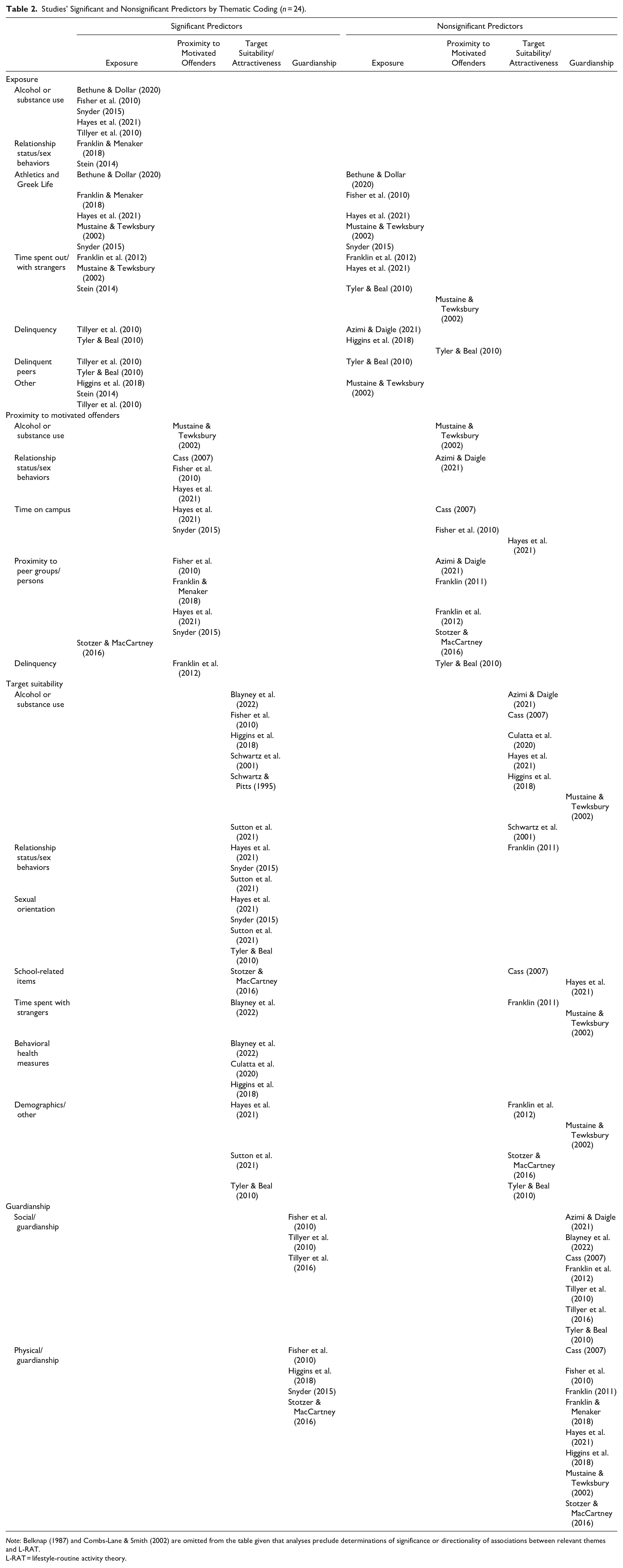
Note: Belknap (1987) and Combs-Lane & Smith (2002) are omitted from the table given that analyses preclude determinations of significance or directionality of associations between relevant themes and L-RAT.
L-RAT = lifestyle-routine activity theory.
Critical Findings from Review.
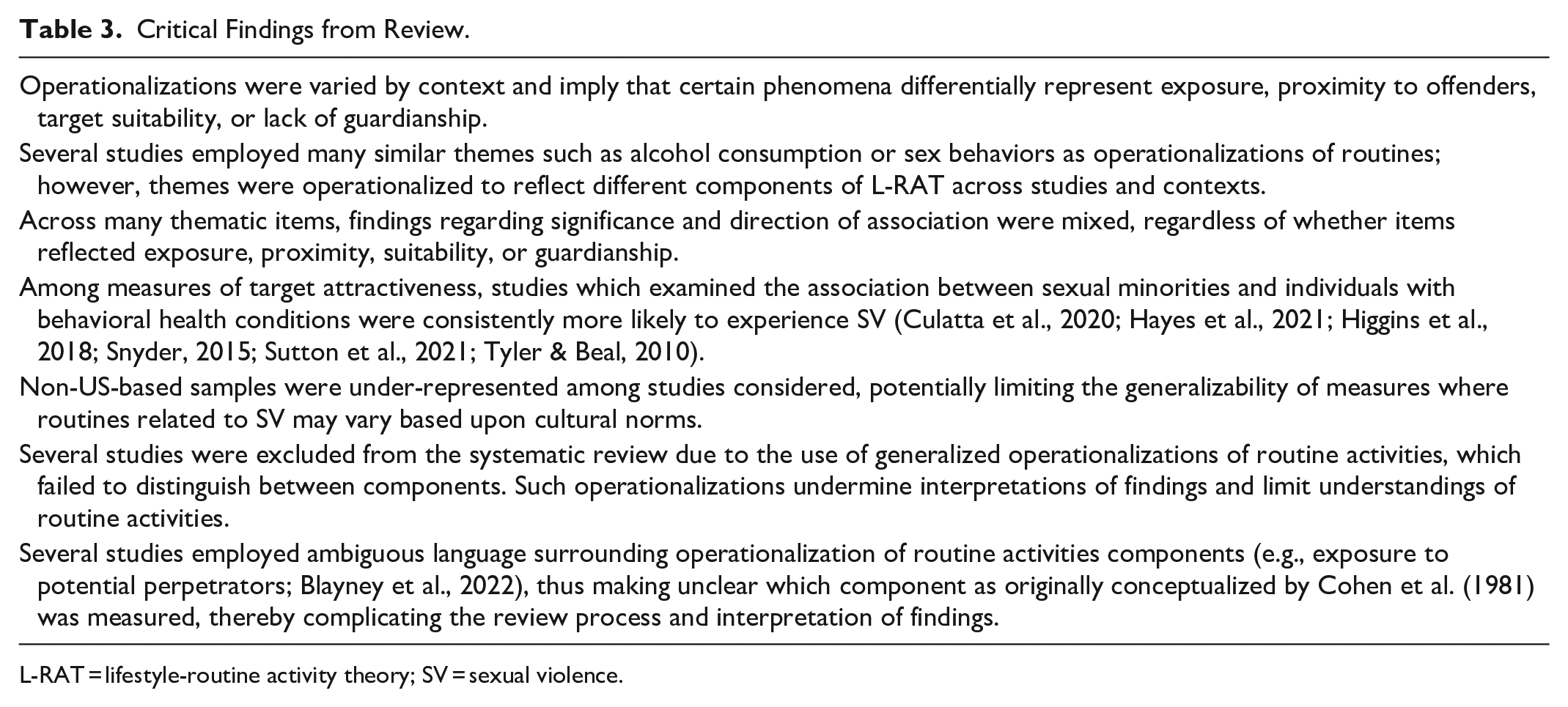
L-RAT = lifestyle-routine activity theory; SV = sexual violence.
Future Research and Policy Implications Associated With Findings.
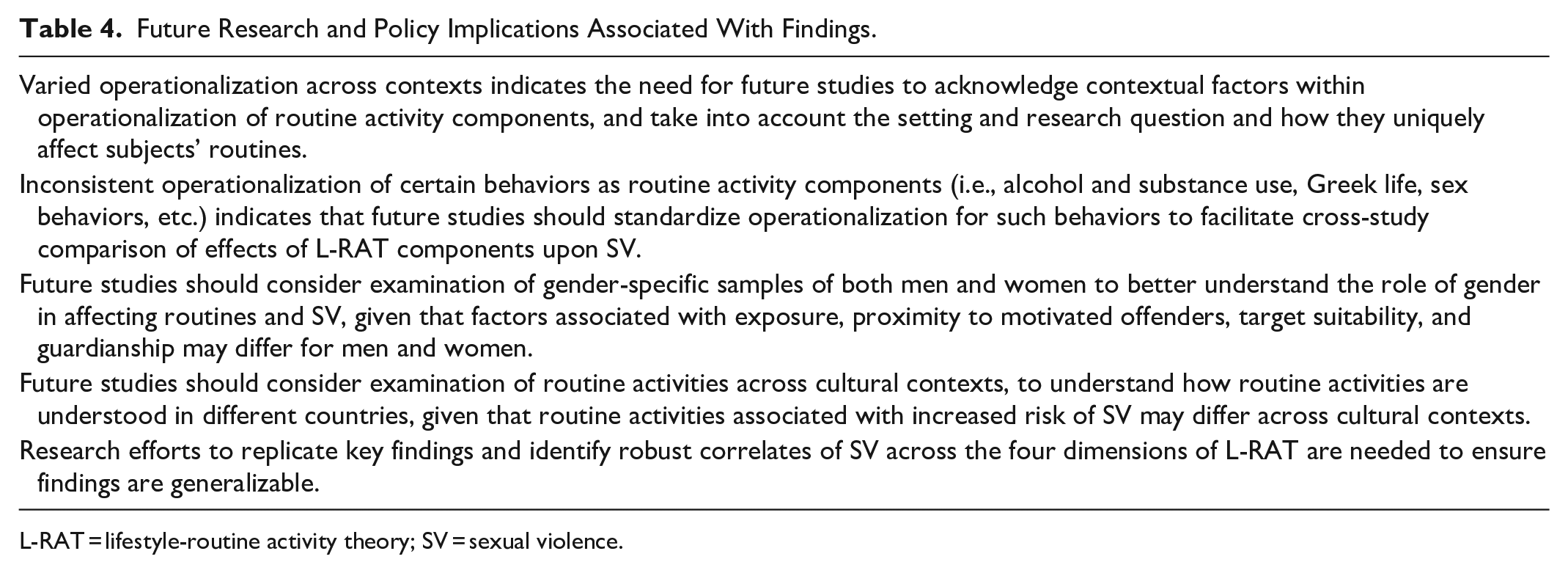
L-RAT = lifestyle-routine activity theory; SV = sexual violence.
Conclusions drawn from this work have implications for the generalizability of the evidence base related to the application of L-RAT to direct-contact SV. It calls attention to the importance of replication efforts, which work to identify robust correlates of phenomenon. Few items emerged as consistent correlates of direct-contact SV within this theoretical framework. In addition, findings from this study can provide a roadmap for scholars undertaking original data collection efforts or who map L-RAT measures onto secondary data. While there were dimensions within the four major concepts, there was also tremendous variability in the measurement of items (e.g., binary vs. ratio) and the actual items/scales that were used within each dimension. Importantly, and again related to the conclusions drawn from this body of work, this may affect estimates of risk and our understanding of SV. As we elaborate below, part of this challenge may stem from the complex processes within the theoretical framework but also the sampling and research questions of each project that should drive measurement decisions.
To begin, alcohol and substance use emerged as one of the key dimensions within the concepts of L-RAT as it relates to SV. However, as noted in Table 2, the association between alcohol and substance use with SV was equivocal. Similarly, proximity to peer groups, inclusive of Greek life memberships and/or membership in athletics, was also captured under exposure, proximity, and target suitability. Yet, again, the evidence was mixed. Nevertheless, a few items appeared to be consistently related to SV. Among measures of target attractiveness, studies which examined the association between sexual minorities and individuals with behavioral health conditions were consistently more likely to experience SV (Culatta et al., 2020; Hayes et al., 2021; Higgins et al., 2018; Snyder, 2015; Sutton et al., 2021; Tyler & Beal, 2010). Such robust relationships provide insight for future research and should be included in analyses as failure to do so may lead to omitted variable bias.
While these articles were not framed as replication efforts, in many ways this systematic review illuminates if such findings are generalizable or robust (Freese & Peterson, 2017; Pridemore et al., 2018). Many of the studies were variations of conceptual replication (i.e., alter some component to test generalizability), inclusive of external replication (i.e., data from new samples, settings, or times), and operational replication (i.e., updated data or methods are used; Christakis & Zimmerman, 2013; Pridemore et al., 2018). While some studies did engage in external replication, such as Tyler and Beal’s (2010) analysis of homeless young adults, many centered on operational replication with updated measures or more sophisticated analyses. As noted above, some items were consistently related to SV, but this was not always the case. While “precise meaning of the same results” remains open to debate (Pridemore et al., 2018, p. 23), the variability in measurements and associations is quite illuminating. Consistent with the conclusions of Pridemore et al. (2018), there are real threats to our body of knowledge if findings cannot be reproduced. These are important considerations for scholars who will apply L-RAT to understand SV.
Second, two immediate challenges arose as we coded within the four concepts. First, scholars often noted that, for example, increased target attractiveness augmented other aspects of the routine activity triangle, like the presence of guardians or proximity to offenders (see Culatta et al., 2020). As a result, there was oftentimes ambiguity in the categorization of these measures. This ambiguity limited if and how measures could be included in the systematic review. But this challenge also extends to how scholars understand the theoretical processes that underlay and inform these associations. Related, some scholars used a general L-RAT framework and did not explicitly categorize measures across the four dimensions (e.g., Reyns & Scherer, 2019). These studies could also not be included in the systematic review. What remains uncertain then is if these concepts operate in complex mediation or moderation processes. Disentangling, while also clearly conceptualizing and operationalizing measures, within the theoretical framework remains worthwhile avenues for empirical research to untangle these processes. Without this, it will be unclear how items and concepts consistently map onto the association of direct-contact SV.
Third, and related to methodological decisions researchers must more broadly make, the context of the study was critical to the operationalization of key concepts. Indeed, this was a point raised by Cohen et al. (1981), who explain that definitional properties of specific crimes are a key component of understanding risk. Tyler and Beal (2010) included many items not seen in other studies—panhandling, trading sex—because their sample was homeless young adults who likely have very different lived experiences than college students. This reinforces the importance of diversity centered around human differences but also the sample that is included in analyses. Failure to consider how one’s identity intersects with the research question may lead to incorrect measurement, ultimately leading to incorrect conclusions. Similarly, Franklin (2011; Franklin & Menaker, 2018) operationalized measures of guardianship with items focused on alcohol use. This is likely a function of their dependent variable being alcohol-induced sexual assault whereby guardianship was conceptualized as a form of self-protection (Franklin, 2011). In other words, incapacitation would temper one’s ability to engage in self-protective behavior. This leads to a much larger takeaway in general—the measurement should always correspond to the research question and sample at hand. While all of these studies focused on SV, there are nuances across samples, their lived experience, and research questions that are critical to consider. This recognizes that while there are patterns across studies, it is important to include context-specific dimensions and that findings might not be applicable to all experiences.
Examining Table 1, it may be noted that while many studies examined SV and routines across samples of both men and women, several studies employed samples of women only. While this decision may be rooted in the tendency for women to be overrepresented as victims of SV (Breiding et al., 2015), the emphasis upon women’s routines may undermine scholarly attempts to understand SV experienced by men, non-binary, and transgender persons through the lens of L-RAT. Future studies may consider stratified sampling designs across gender identities to assess how gendered routines may be operationalized and examined to determine if a differential impact upon SV exists across groups.
Finally, the majority of studies featured within the systematic review had US-based samples. Indeed, only two studies (Schwartz et al., 2001; Stein, 2014) included samples drawn from outside the United States. Given this, measures discussed above may not reflect routine activities that facilitate SV across cultural contexts. For example, while many studies above employed alcohol consumption as reflecting various concepts within the theoretical framework, analyses of cultures where alcohol consumption is not normative may consider alternative routines, given the limited applicability of alcohol-based measures within such contexts. These context-specific considerations may shape the generalizability of the theory across groups.
Conclusion
Overall, the findings from the systematic review emphasize the ways in which concepts within L-RAT have been operationalized in regard to SV. A series of patterns did emerge. Certain factors, such as alcohol and substance use as well as sex behaviors, were consistent operationalizations of exposure, proximity, target suitability, and guardianship across studies considered and were often associated with SV. While certain thematic patterns did emerge, there was still tremendous variability—both in operationalization and also the associations between indicators and risk of SV. In addition, several operationalizations were unique to single studies, reflecting context-specific operationalizations relating to the population and research question at hand. This reflects Cohen et al.’s (1981) analysis, which noted that lifestyle-routine activities were dynamic across contexts, and that factors affecting risk in one setting may not necessarily indicate risk in another. It is also in line with methodological best practices. However, what this means for replication efforts presents challenges. Together, scholars can use the findings from this study to ground their measurement in prior research in an effort to guide replication efforts to understand the processes between L-RAT and SV.
Footnotes
Declaration of Conflicting Interests
The author(s) declared no potential conflicts of interest with respect to the research, authorship, and/or publication of this article.
Funding
The author(s) received no financial support for the research, authorship, and/or publication of this article.
