



Abstract
Emerging evidence has documented the positive association between child maltreatment and both phenotypes of pathological narcissism (i.e., vulnerable and grandiose narcissism). However, results across these studies are inconsistent. Therefore, the present meta-analysis aimed to examine the extent to which child maltreatment is associated with vulnerable and grandiose narcissism, and whether these associations differed by study or sample characteristics. A systematic literature review was conducted in Web of Science, ScienceDirect, PubMed, Google Scholar, and China National Knowledge Infrastructure. Three-level meta-analyses were performed in R to synthesize the effect sizes. A total of 15 studies (N = 9,141 participants) producing 129 effect sizes were included. Results showed that child maltreatment was positively related to both vulnerable narcissism (mean r = .198; p < .001) and grandiose narcissism (mean r = .087; p < .001), but only to a small extent. Further, the association between child maltreatment and vulnerable narcissism was stronger for neglect (r = .278) than for physical abuse (r = .130). The strength of the association between child maltreatment and grandiose narcissism was larger for samples that were on average younger than 18 years (r = .187) than for samples that were on average older than 18 years (r = .068). Also, the strength of the association was stronger for females than for males. Child maltreatment is a risk factor for developing both vulnerable and grandiose narcissism. Interventions targeting pathological narcissism should be aware of potential trauma resulting from victimization of child maltreatment.
Keywords
Child maltreatment is a universal, global phenomenon affecting the lives of millions of children across the world (Stoltenborgh et al., 2015). It is referred to as any act of commission or omission by a caregiver that results in harm, potential for harm, or threat of harm to a child under 18 years of age (Gilbert et al., 2009). Child maltreatment is recognized as a critical risk factor for developing adult psychopathology (Johnson et al., 1999), such as borderline personality disorder, antisocial personality disorder, and schizoid personality disorder (Wang et al., 2022). Of particular interest to the current study is the finding that child maltreatment predicts adult narcissistic traits (Talmon & Ginzburg, 2019). Although a growing body of research has investigated the association between child maltreatment victimization and narcissism (e.g., Bertele et al., 2022; Ensink et al., 2017; Keene & Epps, 2016), research findings varied considerably across studies, suggesting a need to synthesize the findings to obtain a better insight into this association. Therefore, the aim of the current study was to conduct such a quantitative synthesis.
Narcissism has received increasing attention due to its social consequences, such as violence, aggression, and antisocial tendencies (Fatfouta et al., 2022; Green et al., 2020a; Lambe et al., 2018; Velotti et al., 2020). Krizan and Herlache (2018) defined narcissism as entitled self-importance. Although this personality trait may be considered a normal and adaptive quality, it may develop in a pathological and dysfunctional manner and occur in two phenotypes: vulnerable narcissism and grandiose narcissism (Pincus & Lukowitsky, 2010). Vulnerable narcissism is characterized by defensive, anxious, hypersensitive, resentful, and socially reticent behavioral patterns (Pincus & Lukowitsky, 2010; Wink, 1991). Individuals with high levels of vulnerable narcissism are further characterized by a conscious experience of helplessness, emptiness, low self-esteem, and shame (Pincus et al., 2009). They tend to be dependent, introverted, and hypervigilant (Pincus & Lukowitsky, 2010). Grandiose narcissism on the other hand refers to having an overvalued, entitled self-image that is characterized by exploitative and exhibitionistic behaviors, being absorbed in idealized fantasies, and other maladaptive self-enhancement strategies (Pincus & Lukowitsky, 2010). It is most similar to the Diagnostic and Statistical Manual of Mental Disorders-IV (DSM-IV) (American Psychiatric Association, 1994) narcissism conceptualization and primarily reflects traits related to grandiosity, entitlements, aggression, and dominance (Miller et al., 2010). Individuals with high levels of grandiose narcissism perceive themselves as unique and expect a special treatment (Pincus et al., 2009).
Vulnerable and grandiose narcissism have several features in common, such as unmet desires for attention, love, and recognition (Kohut, 2013), but are regarded as two distinct phenotypes (Pincus & Lukowitsky, 2010). Researchers argued that vulnerable and grandiose narcissism differ not only in behavioral patterns and interpersonal outcomes (Lobbestael et al., 2014) but also in their developmental profiles (Mechanic & Barry, 2015). Social-developmental theories of narcissism conceive parenting styles, and specifically parental overvaluation (Millon, 1981) and parental coldness (Kernberg, 1975), as particularly significant for the development of narcissism. Empirical studies show that adverse childhood experiences, but not parental overvaluation, predict vulnerable narcissism whereas parental overvaluation, but not adverse childhood experiences, predicts grandiose narcissism (Nguyen & Shaw, 2020). Similarly, Nehrig et al. (2019) reported that the association between child maltreatment and grandiose narcissism seems to be weaker than the association between child maltreatment and vulnerable narcissism.
It is important to stress that even though the concept of narcissism and its types have drawn substantial attention in research, the narcissism literature suffers from a criterion problem (Pincus & Lukowitsky, 2010). As a result of inconsistencies in definitions and assessment methods across disciplines, it is difficult to integrate information provided by each discipline and to get a clear insight into the antecedents and consequences of narcissism (Derry et al., 2019). Pincus and Lukowitsky (2010) argue in their review that narcissism is reflected in both normal adaptation and pathological personality functioning, but that it is not clear yet whether this distinction is best captured in a bipolar dimension ranging from normal to pathological or in two distinct narcissism dimensions. When it comes to the assessment of narcissism, researchers in nonclinical contexts often assess pathological narcissistic traits rather than pathological narcissistic disorders as described in the DSM-5 (American Psychiatric Association, 2013). Given the complex nature of personality disorders, making a distinction between the “normal” and the pathological is not easy due to the arbitrary nature of the categorical approach to diagnosis. Because this categorical approach is empirically problematic and of limited utility, an evidence-based dimensional model of personality disorder has been proposed and supported in recent years to improve both assessment and treatment (Hopwood et al., 2018). In recent years, more efforts have been devoted to the integration of social-personality and clinical approaches to conceptualizing narcissism which are needed to further address the criterion problem.
As for the etiology of narcissism, recent theoretical and neurobiological work suggests that childhood trauma may be related to the development of pathological narcissism (Nguyen & Shaw, 2020; Talmon & Ginzburg, 2019). In addition, psychodynamically oriented theorists have emphasized that childhood adversity is a primary risk factor for pathological narcissism (Kealy & Ogrodniczuk, 2014), while clinically oriented researchers have proposed that pathological narcissism results from developmental interruption (Kohut, 1971) that may induce a psychological (narcissistic) injury invoking mental defense mechanisms (e.g., Kernberg, 1975). Finally, Howell (2003) states that pathological narcissism may be a relational aspect of trauma-generated dissociation, which protects the self from experiencing the trauma to an extent that would be overwhelming (Tendler, 1995). In light of these perspectives, experiencing child maltreatment as a form of trauma may be a risk factor for pathological narcissism.
Recent evidence emerging in the neurobiological field demonstrated that child maltreatment exerts a prepotent influence on brain development leading to structural and functional abnormalities in the brain (Teicher & Samson, 2016). For example, lack of empathy is one of the key symptoms of narcissistic personality disorder according to DSM-IV (American Psychiatric Association, 1994). In women with a functional neurological disorder, researchers have observed an inverse association between child maltreatment and left anterior insular volume (Perez et al., 2017). Functional neuroimaging research evidenced that the anterior insular cortex is involved in empathy (Lamm & Singer, 2010). Similarly, in a large healthy sample of college students, researchers also found that frontal cortex thickness and cortical volume are significantly negatively associated with pathological narcissism (Mao et al., 2016). These findings suggest that child maltreatment may elicit structural or functional brain changes, especially in regions of insular and frontal cortices, which could lead to pathological narcissism.
Despite the theoretical basis and neurobiological mechanisms described above, empirical evidence on the association between child maltreatment and pathological narcissism is inconsistent. For example, in a sample of college students, Ménard and Pincus (2014) reported a nonsignificant correlation between child physical abuse and vulnerable narcissism in female students. However, in a community sample of females aged 14 to 21 years old, Ensink et al. (2017) found a moderate and significant positive association between child maltreatment and vulnerable narcissism. Similar patterns are observed on the association between child maltreatment victimization and grandiose narcissism. For example, in a study among undergraduate students, researchers found that the association between child sexual abuse and grandiose narcissism was nonsignificant among women (Ménard et al., 2021). However, in a study among adolescent girls, researchers reported a moderate and significant positive association between child maltreatment and grandiose narcissism (Ensink et al., 2017). Although vulnerable and grandiose narcissism have different features, entitlement and self-importance are the core personality characteristics that most consistently co-occur with vulnerable and grandiose narcissism in both normal and clinical populations (Krizan & Herlache, 2018).
The association between child maltreatment and pathological narcissism may be moderated by sample and research design characteristics, and therefore multiple variables were tested as moderator in the current meta-analysis. First, as a rather prevalent form of adverse childhood experiences, child maltreatment comprises multiple forms including emotional neglect, physical neglect, emotional abuse, physical abuse, and sexual abuse (e.g., Bernstein et al., 2003; Fang et al., 2012; Stoltenborgh et al.,2015). Different forms of child maltreatment may contribute differently to pathological narcissism (Nehrig et al., 2019), and therefore, maltreatment type was tested as moderator. Further, findings on gender differences in narcissism are mixed (Grijalva et al., 2015; Wright et al., 2010), and therefore, the moderating effect of gender on the association between child maltreatment and narcissism was tested as well. Existing research has also reported age differences in narcissism (Carlson & Gjerde, 2009; Foster et al., 2003), which may affect the association between child maltreatment and narcissism. Therefore, the potential moderating effect of the (mean) age of the participants was also examined. Besides these three potential moderating variables, several other study characteristics were tested as moderators in a more exploratory manner.
Taken together, to better understand the association between child maltreatment and pathological narcissism, a quantitative synthesis of the available empirical evidence is necessary. Therefore, this review meta-analytically summarized primary studies on the association between child maltreatment and pathological narcissism and to examine potential moderating variables of this association. Given the differences in the nature of vulnerable and grandiose narcissism, this review describes the results of two separate meta-analyses. In both meta-analyses, an overall association was estimated first, after which several variables were tested as moderators, such as type of child maltreatment, gender, and mean age of primary study samples. Based on prior theory and research, we hypothesized that child maltreatment is significantly and positively associated with both vulnerable and grandiose narcissism. As previous research is not conclusive about how variables such as type of maltreatment, gender, and age moderate these associations, we did not formulate hypotheses on potential moderating effects and conducted the moderator analyses exploratively.
Method
A systematic review was conducted and subsequent results were reported in accordance with the PRISMA 2020 statement (Page et al., 2021).
Literature Search
In searching for studies that were eligible for inclusion, we implemented several complementary search strategies. First, we searched for studies in the electronic databases Web of Science, Science Direct, PubMed, Google Scholar, and China National Knowledge Infrastructure. The following two syntax components were used in searching these databases: (“child maltreatment” OR “child abuse” OR “child neglect” OR “childhood trauma”) AND (“narcissism” OR “narcissistic”). In each search command, we used different combinations of these keywords. Our search was restricted to studies in English or Chinese that were published up to July 31, 2022. Second, reference lists of relevant studies (e.g., Nehrig et al., 2019) and relevant review studies (i.e., Grijalva et al., 2015) were manually searched to identify eligible studies that may not have shown up in the database searches.
Eligibility Criteria
For the selection of studies, inclusion and exclusion criteria were formulated that were based on the criteria as proposed by Field and Gillett (2010). To determine whether a primary study could be included in this review, we set out a number of inclusion criteria: (i) The study design had to be quantitative and empirical in nature; thus, review articles, qualitative studies, and case studies were excluded. (ii) The study had to be published in English or Chinese in a peer-reviewed journal. (iii) The study design had to be cross-sectional or longitudinal. (iv) The study had to examine the association between one or more forms of child maltreatment and pathological narcissism (i.e., vulnerable and/or grandiose narcissism). (v) The study had to report at least one effect size representing the association between victimization of (a form of) child maltreatment and pathological narcissism or sufficient statistical information to calculate at least one effect size. (vi) Primary studies had to follow the World Health Organization’s definition of child maltreatment (World Health Organization, 2020) and Pincus’s definition of narcissism (Pincus & Lukowitsky, 2010). Pincus and Lukowitsky (2010) summarized the phenotypic labels for pathological narcissism in the existing literature and convincingly proposed two distinct dimensions of pathological narcissism (i.e., narcissistic grandiosity and narcissistic vulnerability) that guided the current review. This implied that studies using phenotypic labels for pathological narcissism reflecting grandiosity and vulnerability were included (i.e., the labels “grandiose,” “grandiosity,” “vulnerable,” and “vulnerability”). (vii) Studies had to examine vulnerable narcissism, grandiose narcissism, or both forms of narcissism separately, as these types of narcissism differ in nature given their different developmental profiles (Mechanic & Barry, 2015).
A number of exclusion criteria were also formulated: (i) Studies were excluded when they used other (irrelevant) labels than the ones described above, such as irrelevant labels mentioned by Pincus and Lukowitsky (2010) (e.g., “arrogant,” “manipulative,” “fragile,” and “diffident”). (ii) Whenever primary studies examined samples from the same source of participants, only one of the studies were included and in particular the study that examined the most variables that were of interest in the current review (e.g., Talmon & Ginzburg, 2021 was excluded because Talmon & Ginzburg, 2019 described more relevant information and was therefore included). (iii) Studies examining merely parenting variables (e.g., psychological control) were excluded.
Coding of Studies and Data Extraction
To meaningfully describe, synthesize, and analyze the primary studies, each study was coded and evaluated on the basis of the following characteristics: (i) study author(s), (ii) year of publication, (iii) research design (i.e., cross-sectional, longitudinal), (iv) country in which a study was performed, (v) sample type (which was coded as “clinical” when participants were recruited from clinical settings, and “community” when participants were recruited from general community settings), (vi) sample size, (vii) gender (i.e., percentage of females in primary study samples), (viii) mean age (if mean age was not reported, the median age was coded), (ix) age-group (samples were coded as “younger than 18 years” or “18 years or older”), (x) measurement of child maltreatment victimization, (xi) type of child maltreatment victimization (i.e., physical abuse, verbal abuse, emotional abuse, sexual abuse, and neglect), (xii) measurement of pathological narcissism, (xiii) type of pathological narcissism (i.e., vulnerable or grandiose narcissism), and (xiv) effect size (i.e., the zero-order correlation coefficient). All extracted effect sizes were unadjusted effect sizes (i.e., study results not controlled for variables such as gender, and/or age).
Calculating Effect Sizes
A correlation coefficient was extracted or calculated for each association between (a form of) child maltreatment victimization and vulnerable or grandiose narcissism as reported in a primary study. As recommended by several scholars, correlation coefficients should be transformed to their corresponding Fisher’s z-scores, as correlation coefficients are not normally distributed (e.g., Cooper et al., 2019). Therefore, in the final step of calculating effect sizes, we transformed all correlation coefficients into Fisher’s z-scores. After the statistical analyses were performed, the Fisher’s z-scores were converted back into correlation coefficients to facilitate interpretability.
Assessment of Study Quality
We assessed all included studies against each criterion of the National Institutes of Health Quality Assessment tool for Observational Cohort and Cross-Sectional Studies (Koren-Hakim et al., 2021) and coded whether the criterion was met (Value 1) or not (Value 0). The highest possible quality score was fourteen. Disagreements in study quality coding were resolved by discussions between the authors of this review (XM and SG), or by external consultation of an expert in this field of research until consensus in coding was reached, after which a final agreed-upon rating was assigned to the quality of each study.
Statistical Analyses
We used a three-level meta-analytic model to synthesize the combined effect sizes and to conduct moderator analyses. The three-level random effects model examined three sources of variance to model effect size dependency: the sampling variance of the observed effect sizes (Level 1), the variance between effect sizes extracted from the same study (Level 2), and the variance between studies (e.g., Assink & Wibbelink, 2016). By using this three-level meta-analytic model, the dependency of effect sizes could be modeled, and all relevant information reported in the primary studies could be preserved. Consequently, maximum power could be achieved in the statistical analyses, and therefore, relative to more traditional meta-analytic techniques, the three-level approach to meta-analysis is quite strong (Assink & Wibbelink, 2016).
In this study, we first estimated an overall association between child maltreatment victimization and vulnerable and grandiose narcissism, respectively, by building two separate three-level meta-analytic intercept-only models. In interpreting the overall associations, we followed Cohen’s (1992) criteria, with the cutoff value .10, .30, and .50, for small, medium, and large effect sizes, respectively. We performed two separate meta-analyses, so that we could examine whether the association between child maltreatment and vulnerable narcissism is influenced differently by (moderating) variables than the association between child maltreatment and grandiose narcissism.
However, before conducting moderator analyses, we first assessed the degree to which the extracted effect sizes differ in strength, or put differently, whether effect size heterogeneity exists. Heterogeneity in effect sizes indicates that the differences in the strength of the extracted associations cannot be attributed to chance alone and are likely affected by variables such as study and sample characteristics. Specifically, if significant variance at Level 2 of the model (variance in effect sizes extracted from the same studies) and/or Level 3 of the model (variance in effect sizes extracted from different studies) could be identified, effect size heterogeneity is identified, after which moderator analyses can be performed to test whether any of the coded variables are significant moderators of an overall association. We conducted each of the bivariate moderator analysis in a mixed-effect model, and separately for the two meta-analyses. Prior to all moderator analyses, we created dummy variables for each category of a discrete variable and centered each continuous variable around its mean. Then, we built a separate three-level meta-analytic model to examine the potential moderating effect of a coded variable by adding (the categories of) this variable as a covariate to the model.
To assess publication bias, we conducted Duval and Tweedie’s trim-and-fill analysis (Duval & Tweedie, 2000), which is a funnel-plot-based method that determines whether or not the distribution of effect sizes is symmetric, and if not, how much “missing” effect sizes should be imputed to restore the symmetry of the distribution. If the trim-and-fill algorithm reveals asymmetry in the effect size distribution, an “adjusted” overall effect can be estimated after the “missing” effect sizes have been imputed to the original dataset. If the adjusted overall effect size is lower than the initially estimated effect size, then publication bias may be present in the meta-analysis.
All analyses were conducted in R version 4.1.2 (R Core Team, 2021) using the metafor package (Viechtbauer, 2010). The R syntax followed the tutorial of Assink and Wibbelink (2016). All model parameters were estimated using the restricted maximum likelihood method (Viechtbauer, 2005), and a two-tailed p-value smaller than .05 was considered statistically significant.
Results
Literature Search and Study Characteristics
A flow chart of the study selection process is presented in the Online Appendix A. We identified 1,249 studies through electronic searches of five databases and of these studies 15 studies met our inclusion criteria and were subsequently included in the review. The study quality assessment revealed that the quality of all included studies ranged from fair to good (Table 1). In terms of the country where the primary studies were conducted, seven (46.6%) were conducted in the United States, two (13.3%) in Canada, two (13.3%) in Israel, one (6.7%) in Turkey, one (6.7%) in Croatia, one in China (6.7%), and one study (6.7%) was conducted in multiple countries. Fourteen studies (93.3%) used community samples and one study (6.7%) used clinical samples. The mean/median age of participants in the included studies ranged from 17.08 to 45 years. Twelve out of 15 studies used a student sample, and only two studies provided participants’ information on socioeconomic status. Specifically, Bertele et al. (2022) reported that 30.7% of participants had a socioeconomic status that was below average, and 22% of participants had a socioeconomic status far below average. Şar and Türk-Kurtça (2021) reported that 12.8% of the participants belonged to a lower economic class. Further, 2 out of 15 studies involved participants with mental health problems. In a study conducted by Kealy et al. (2020), participants were recruited in an outpatient mental health clinic and the majority (61.3%) of these participants reported previous psychiatric treatments. In another study, 36.5% of the participants reported depressive disorders and 34.6% reported anxiety disorders (Nguyen & Shaw, 2020). Table 1 presents the study characteristics of the included studies. A summary of the operationalizations of pathological narcissism and child maltreatment is presented in Online Appendices B and C. The summary of participants’ demographics is presented in Online Appendix D. The primary studies included for the current meta-analysis are presented in Online Appendix E
Characteristics of Included Studies.
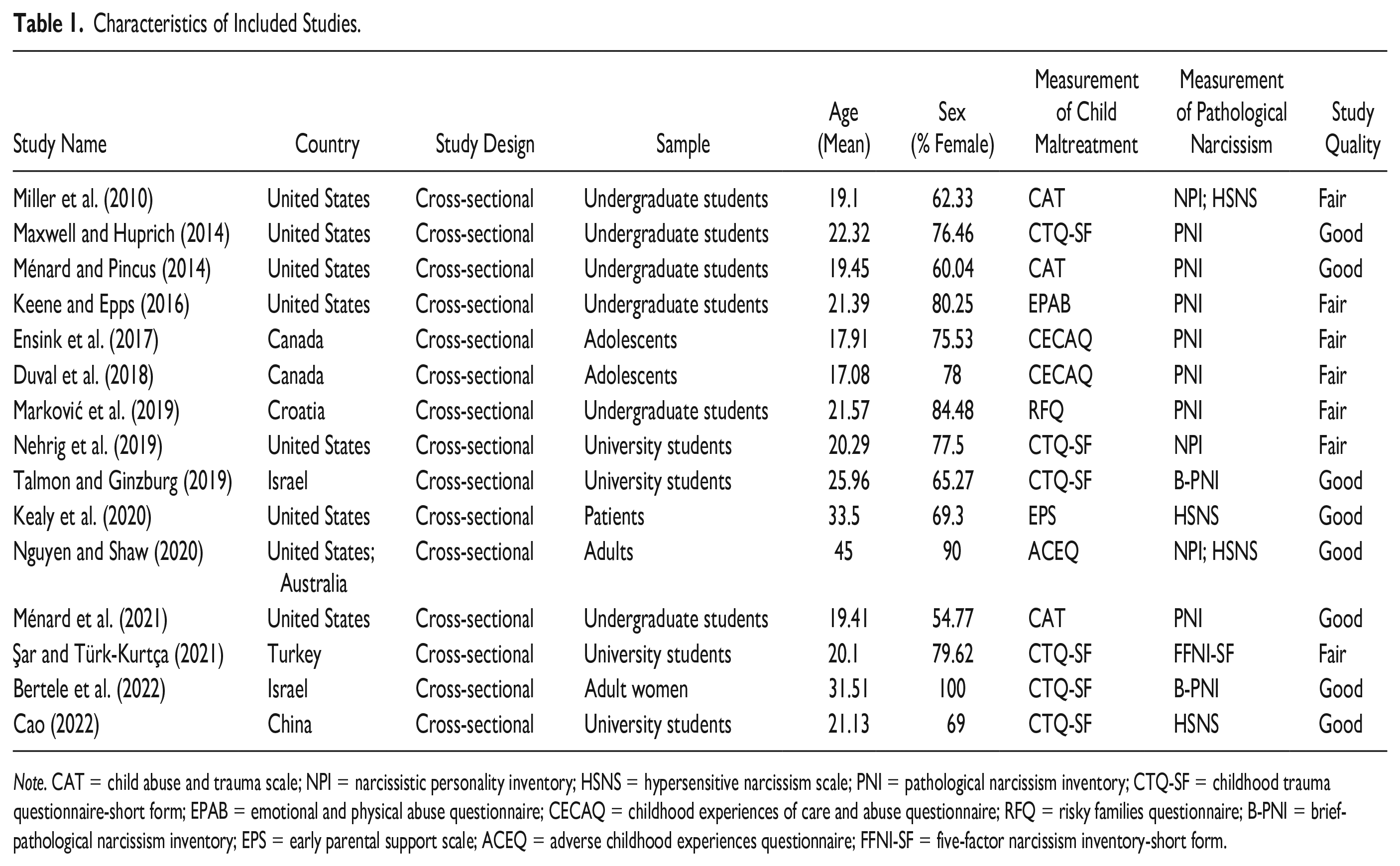
Note. CAT = child abuse and trauma scale; NPI = narcissistic personality inventory; HSNS = hypersensitive narcissism scale; PNI = pathological narcissism inventory; CTQ-SF = childhood trauma questionnaire-short form; EPAB = emotional and physical abuse questionnaire; CECAQ = childhood experiences of care and abuse questionnaire; RFQ = risky families questionnaire; B-PNI = brief-pathological narcissism inventory; EPS = early parental support scale; ACEQ = adverse childhood experiences questionnaire; FFNI-SF = five-factor narcissism inventory-short form.
Overall Effect Sizes and Publication Bias
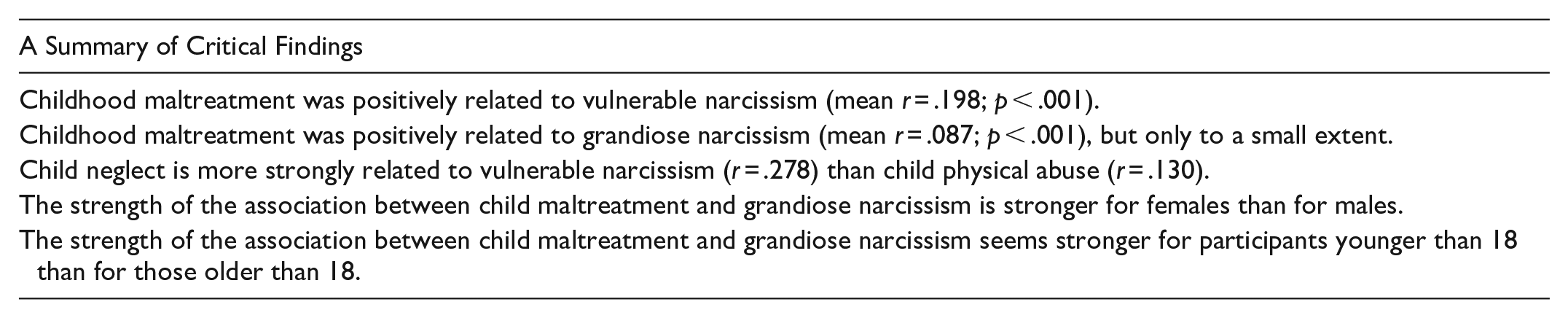
Table 2 displays the overall association between victimization of child maltreatment and vulnerable and grandiose narcissism, respectively. As for vulnerable narcissism, a significant and positive correlation was found (mean r = .198, p < .001), which is small according to Cohen’s (1992) criteria for interpreting effect sizes. For grandiose narcissism, the overall association was also significant, positive, and small in magnitude (mean r = .087, p < .001).
Overall Association for Vulnerable Narcissism and Grandiose Narcissism.
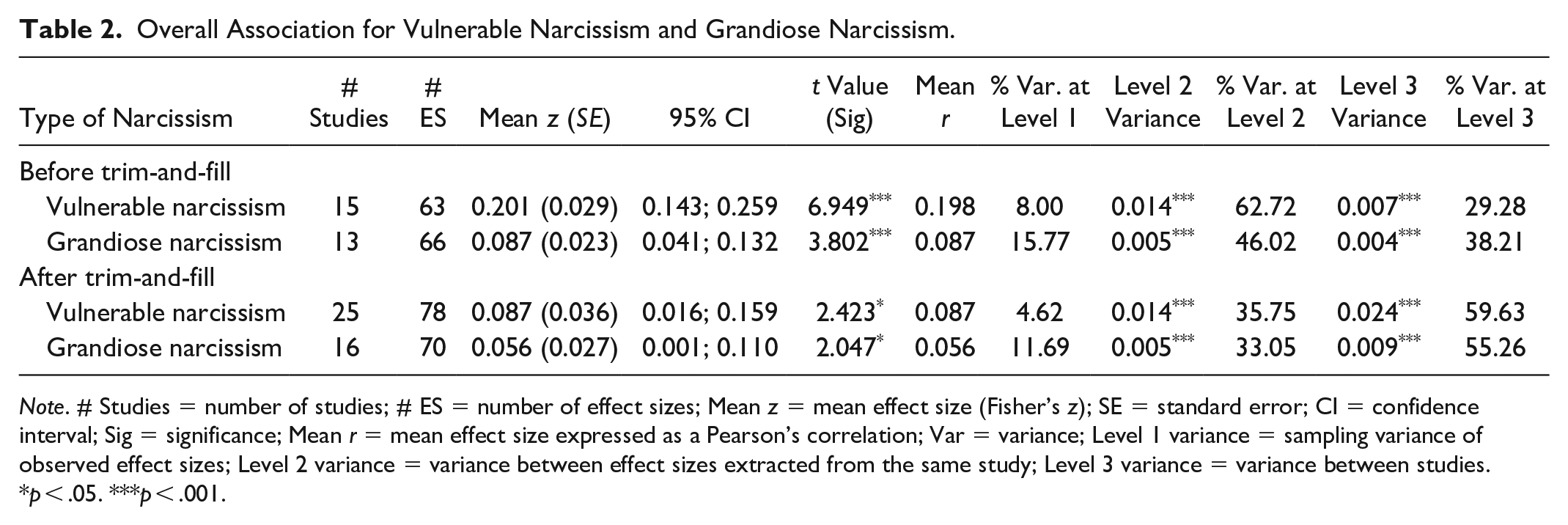
Note. # Studies = number of studies; # ES = number of effect sizes; Mean z = mean effect size (Fisher’s z); SE = standard error; CI = confidence interval; Sig = significance; Mean r = mean effect size expressed as a Pearson’s correlation; Var = variance; Level 1 variance = sampling variance of observed effect sizes; Level 2 variance = variance between effect sizes extracted from the same study; Level 3 variance = variance between studies.
p < .05. ***p < .001.
Figures 1 and 2 show the funnel plots for the two meta-analyses. For vulnerable narcissism, the trim-and-fill analysis revealed an asymmetric distribution of effect sizes, and 15 effect sizes from 10 studies had to be imputed in the left side of the funnel plot to restore its symmetry. After the estimated “missing” effect sizes were imputed into the datasets, the association between child maltreatment and vulnerable narcissism (mean r = .087, p < .05) became smaller in magnitude but still significant, suggesting that our initially estimated overall association may be an overestimation of the true association. As for grandiose narcissism, similar results were detected in the trim-and-fill analysis. After the estimated “missing” effect sizes were imputed into the datasets, the association between child maltreatment and grandiose narcissism (mean r = .056, p < .05) became smaller in magnitude, but was once more still significant.
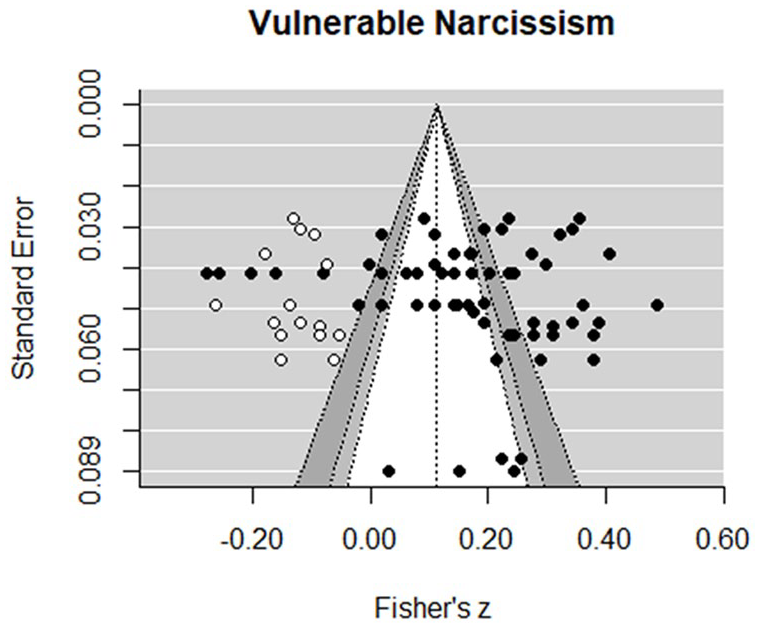
Trim-and-fill plot for the association between childhood maltreatment and vulnerable narcissism. There were indications for publication bias, as the trim-and-fill algorithm imputed 15 effect sizes from 10 studies to the left of the overall mean effect.
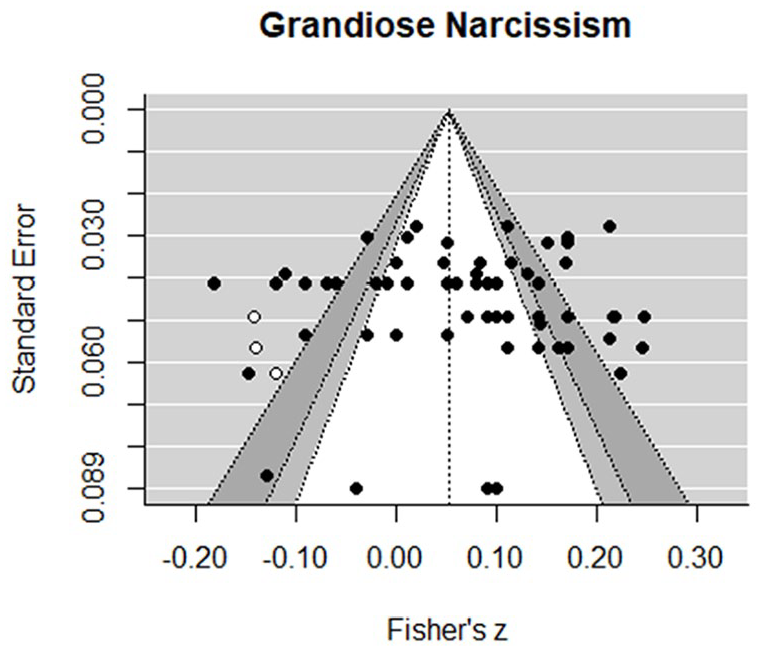
Trim-and-fill plot for the association between childhood maltreatment and grandiose narcissism. There were indications for publication bias, as the trim-and-fill algorithm imputed four effect sizes from three studies to the left of the overall mean effect.
Moderator Analyses
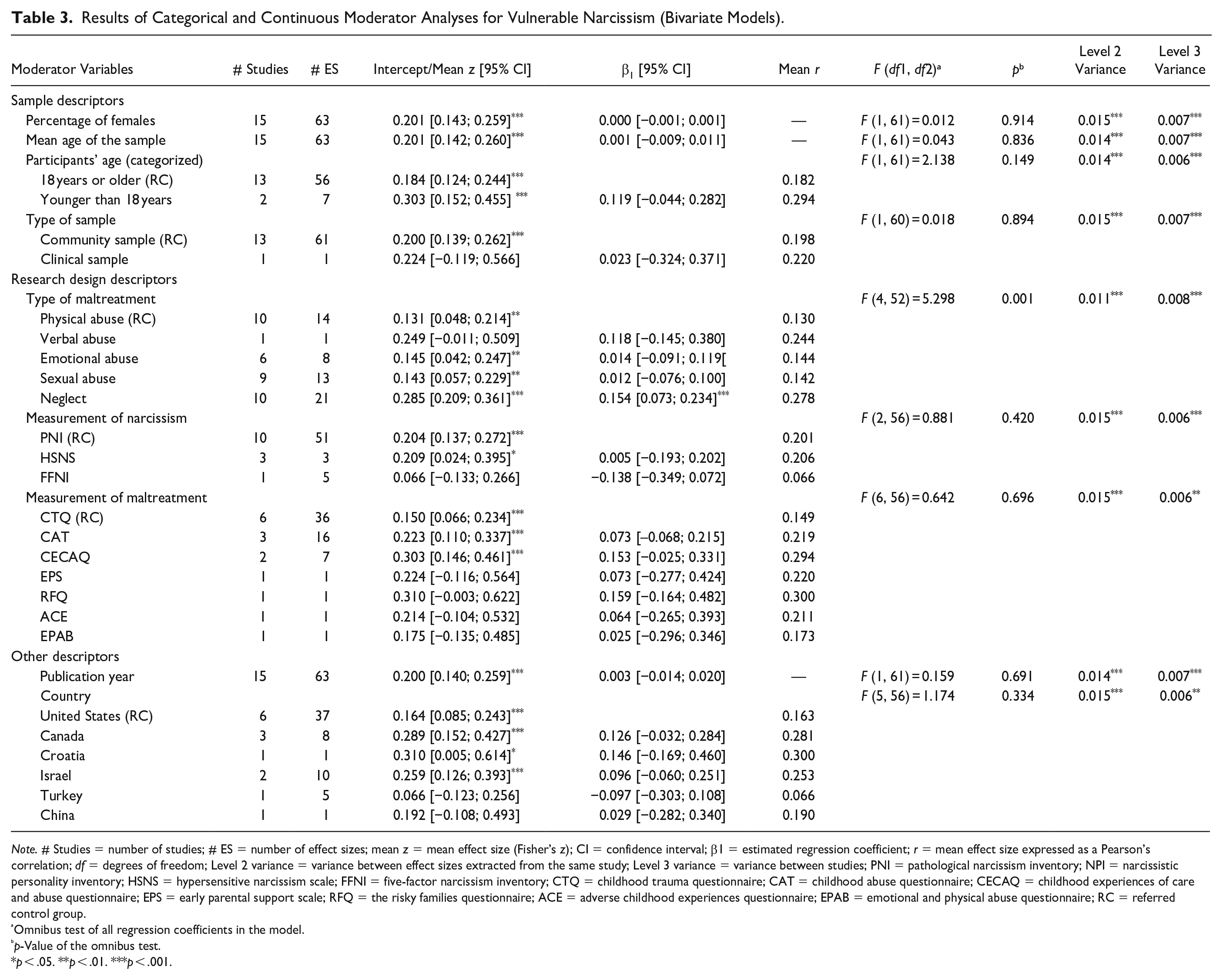
As the effect size distributions were heterogeneous in both meta-analyses (Table 2), we conducted moderator analyses in both meta-analyses, and first for the association between child maltreatment and vulnerable narcissism (see Table 3). We found a significant moderating effect of type of abuse, F (4, 52) = 5.298, p < .01, in the sense that the association between child maltreatment and vulnerability narcissism is stronger for neglect (mean r = .278) than for physical abuse (mean r = .130). No other significant moderating effects were found.
Results of Categorical and Continuous Moderator Analyses for Vulnerable Narcissism (Bivariate Models).
Note. # Studies = number of studies; # ES = number of effect sizes; mean z = mean effect size (Fisher’s z); CI = confidence interval; β1 = estimated regression coefficient; r = mean effect size expressed as a Pearson’s correlation; df = degrees of freedom; Level 2 variance = variance between effect sizes extracted from the same study; Level 3 variance = variance between studies; PNI = pathological narcissism inventory; NPI = narcissistic personality inventory; HSNS = hypersensitive narcissism scale; FFNI = five-factor narcissism inventory; CTQ = childhood trauma questionnaire; CAT = childhood abuse questionnaire; CECAQ = childhood experiences of care and abuse questionnaire; EPS = early parental support scale; RFQ = the risky families questionnaire; ACE = adverse childhood experiences questionnaire; EPAB = emotional and physical abuse questionnaire; RC = referred control group.
Omnibus test of all regression coefficients in the model.
p-Value of the omnibus test.
p < .05. **p < .01. ***p < .001.
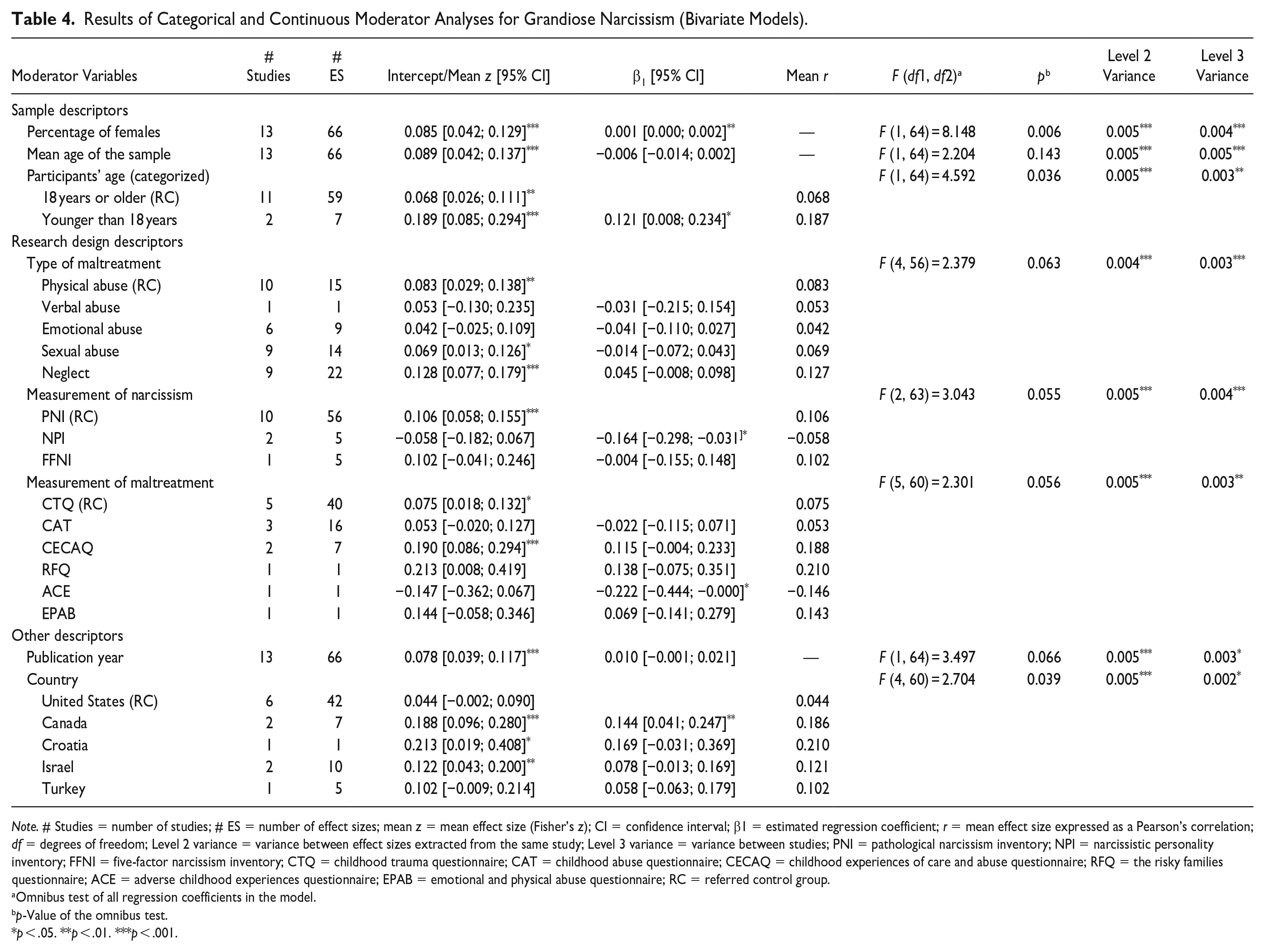
Table 4 presents the results of the moderator analyses for the association between child maltreatment and grandiose narcissism. We found a significant moderating effect of the percentage of females in primary study samples, F (1, 64) = 8.148, p < .01, in the sense that studies reported stronger association as the percentage of females in primary study samples increased. Although no moderating effect was detected of mean sample age as a continuous variable, mean sample age as a categorical variable did moderate the overall association. Specifically, the strength of the association between child maltreatment and grandiose narcissism was stronger in samples that were on average younger than 18 years (r = .187) than in samples that were on average older than 18 years (r = .068). Also, we found a significant moderating effect of country in which primary studies were performed, F (4, 60) = 2.704, p < .05, in the sense that Canadian studies produced larger associations (r = .186) than studies performed in the United States (r = .044). No other significant moderating effects were identified.
Results of Categorical and Continuous Moderator Analyses for Grandiose Narcissism (Bivariate Models).
Note. # Studies = number of studies; # ES = number of effect sizes; mean z = mean effect size (Fisher’s z); CI = confidence interval; β1 = estimated regression coefficient; r = mean effect size expressed as a Pearson’s correlation; df = degrees of freedom; Level 2 variance = variance between effect sizes extracted from the same study; Level 3 variance = variance between studies; PNI = pathological narcissism inventory; NPI = narcissistic personality inventory; FFNI = five-factor narcissism inventory; CTQ = childhood trauma questionnaire; CAT = childhood abuse questionnaire; CECAQ = childhood experiences of care and abuse questionnaire; RFQ = the risky families questionnaire; ACE = adverse childhood experiences questionnaire; EPAB = emotional and physical abuse questionnaire; RC = referred control group.
Omnibus test of all regression coefficients in the model.
p-Value of the omnibus test.
p < .05. **p < .01. ***p < .001.
Discussion
This review is the first quantitative synthesis of primary studies on the association between child maltreatment and pathological narcissism. As vulnerable and grandiose narcissism can be differentiated from each other given their developmental profiles (Mechanic & Barry, 2015), two separate meta-analyses were performed for vulnerable and grandiose narcissism, respectively. In total, 15 primary studies were identified that reported on the association between child maltreatment and vulnerable and/or grandiose narcissism. These studies examined a total of 9,141 participants and produced 129 effect sizes in total.
Overall Associations
The results of our three-level meta-analyses suggest that child maltreatment is significantly associated with both vulnerable narcissism and grandiose narcissism. Although the overall associations are quite small in magnitude, these results suggest that child maltreatment victimization serves as a risk factor for pathological narcissism. Our findings are in line with results reported by other scholars who identified a broad range of negative consequences of child abuse victimization. For example, in a systematic review, Carr et al. (2020) found significant associations between a history of child maltreatment and adjustment in the domains of physical health, mental health, and psychosocial adjustment. Furthermore, findings of this study are congruent with neurobiological evidence that reported in neuroimaging studies. For example, it has been documented that childhood maltreatment is related to alterations in the left inferior frontal gyrus and/or anterior insular cortex (Lamm & Singer, 2010; van Schie et al., 2017). The structural or functional changes of insular and frontal cortices may shape empathy and further lead to pathological narcissism (Lamm & Singer, 2010; Mao et al., 2016; Perez et al., 2017).
The association between child maltreatment and vulnerable narcissism was found to be stronger than the association between child maltreatment and grandiose narcissism, which provides evidence for the argument that vulnerable and grandiose narcissism have different developmental profiles (Mechanic & Barry, 2015). The difference in effect size magnitude may be explained by the nature of the child maltreatment and the disruption it causes to the self. More specifically, child maltreatment victimization is associated with a shameful and inferior sense of self (Ross et al., 2019) that may lead to a fragile self-confidence, which is a characteristic of vulnerable narcissism. Thus, the expression of the vulnerable narcissistic phenotype seems more consistent with the nature of the maltreatment than the grandiose narcissistic phenotype.
After trim-and-fill analysis, the association between child maltreatment and vulnerable narcissism was smaller than the initially estimated associations. This may imply that the true association between child maltreatment and vulnerable narcissism may have been overestimated in our meta-analysis because of publication bias. On the other hand, studies have revealed that the performance of the trim-and-fill algorithm is limited when there is heterogeneity in effect sizes, which was the case in both of our meta-analyses (Peters et al., 2007; Terrin et al., 2003). The results of the trim-and-fill algorithm should therefore be interpreted with caution.
It should be noted that the observed associations between child maltreatment and vulnerable and grandiose narcissism were quite small, and interpretations of these small relationships should therefore not be overstated. After all, various other external and internal etiologic factors must also exist that contribute to the development of pathological narcissism. In specific, of the 15 primary studies that were eligible for inclusion in the current review, only 3 involved people with a low socioeconomic status and mental health problems, whereas 12 studies sampled participants from the normal population. The low proportion of included participants that had to deal with systematic and familial adversities may have attenuated the strength of the association between child maltreatment and pathological narcissism. Further, from a gene–environment interaction perspective, individual temperamental factors may play a crucial role in developing pathological narcissism. For example, neuroticism seems a robust correlate and predictor of many different mental and physical disorders (Lahey, 2009), and it seems therefore warranted that future efforts are directed to exploring the mediating role of neuroticism in the association between child maltreatment and pathological narcissism. On the other hand, it is likely that the cumulation of risk factors rather than a single risk factor contribute to the development of pathological narcissism. From this perspective, the experience of one or more child maltreatment episodes may be the decisive risk factor when other risk factors are already present. The way in which a cumulation of risk factors is associated with pathological narcissism is worth studying in the future.
All included studies were retrospective studies using self-report methods, implying that the results of these studies may have been affected by recall bias and attenuated associations because of the time that has passed between the occurrence of child maltreatment and the moment at which the studies were conducted. Consequently, we cannot ignore that the results of the present review may have been affected by time-related biases as well, which needs to be taken into account when interpreting the current results. Future meta-analytic reviews would benefit from synthesizing studies that are prospective in nature, so that time-related biases are minimized.
Moderating Variables Related to Vulnerable Narcissism
We found a significant moderating effect of type of abuse on the association between child maltreatment and vulnerable narcissism. Specifically, this association was stronger for neglect victimization than for physical abuse victimization. These findings provided evidence for theories that were posed by prior researchers (e.g., Kernberg, 1975; Kohut, 1971). Kernberg (1975) and Kohut (1971) argued that vulnerable narcissism results from emotionally cold or rejecting parenting. This type of parenting leads to distorted inner representations in children, and a sense of self as subjugated and abandoned, yet entitled (Zeigler-Hill et al., 2019). To cope with child maltreatment, individuals tend to become hypersensitive and dependent upon caretakers in order to maintain attachment to the abusive caretaker(s) (Bertele et al., 2022). The perpetuation of hypersensitivity and dependency is likely to manifest in vulnerable narcissism in adulthood (Van Buren & Meehan, 2015).
Notably, this study did not observe a moderating effect of mean sample age, suggesting that the strength of the association between child maltreatment and vulnerable narcissism seems to hold across participants of different ages. However, the age range of the studies that were synthesized is quite limited, as most included studies examined a sample of university students. Hence, prospective studies on diverse populations are recommended to determine whether and under what conditions age moderates the association between child maltreatment and vulnerable narcissism.
Gender, sample type, measurement of child maltreatment, measurement of vulnerable narcissism, publication year, and country in which studies were also conducted were not significant moderators. These results suggest that the strength of the association between child maltreatment and vulnerable narcissism holds across these variables. However, this should be interpreted with caution, because the rather small number of primary studies on which some of the moderator analyses were based limits the statistical power needed to detect a true moderating effect.
Moderating Variables Related to Grandiose Narcissism
As for the association between child maltreatment and grandiose narcissism, we found a significant moderating effect of gender in the sense that females are more likely to develop grandiose narcissism than males. This finding was interesting but unexpected, as previous studies reported that men generally tend to score higher on grandiose narcissism (Grijalva et al., 2015; Wright et al., 2010). Future research studying samples that are more equally balanced in terms of gender is required to provide more evidence for the moderating effect that we found.
As for the moderating effect of (categorized) mean age of primary study samples, findings of this study showed that the magnitude of the association between child maltreatment and grandiose narcissism was larger for participants with a mean age younger than 18 years old than for those with a mean age older than 18 years old. This finding is interesting and is in congruence with existing evidence indicating that adolescents experience significant changes in emotion development in terms of emotional frequency, intensity, instability, and clarity compared to adults (Bailen et al., 2019; Yuan, 2020). Thus, the significant moderating effect of (categorized) mean age could be explained by differences in emotional reactivity and emotional regulation between adolescence and adulthood.
Also, the present study observed that the country in which primary studies were conducted is a significant moderator of the association between child maltreatment and grandiose narcissism. This finding suggests that the association between child maltreatment and grandiose narcissism may differ across different cultures. This finding was supported by empirical evidence showing that the prevalence rates of child maltreatment differ substantially by continent (Moody et al., 2018). However, this moderator analysis was based on categories that comprised a rather small number of studies. We found a difference in mean association between United States and Canada, but there may be other differences between countries. To examine these potential differences, more cross-national primary research is required. Finally, the association between child maltreatment and grandiose narcissism did not change significantly by type of maltreatment, measurement of child maltreatment, measurement of grandiose narcissism, and publication year.
Limitations
Several limitations should be noted. First, since all studies analyzed in this meta-analysis were cross-sectional, the present study does not permit conclusions about temporal or causal relations between variables. To delineate temporal relations between variables, future studies with a longitudinal design and a sufficient follow-up length are needed. Second, due to a limited number of studies that specifically examined child neglect, we collapsed emotional neglect and physical neglect into a single “overall” neglect category in the moderator analysis. However, emotional neglect and physical neglect may have different influences on the development of narcissism. For instance, Jia et al. (2020) revealed that the association between emotional neglect and narcissism was stronger than the association between physical neglect and narcissism (Jia et al., 2020). Futures studies are therefore needed to further examine differences in the association between emotional neglect and physical neglect on one hand and pathological narcissism on the other. Third, the self-report method was predominantly used in the primary studies that were included in this review, which may lead to the inflationary effects of common method variance (CMV) (MacKenzie & Podsakoff, 2012). To reduce CMV, future studies need to use multiple-report methods, such as self-report, parent-report, clinician-report, and official records. Furthermore, the self-report method is prone to social desirability and recall bias. For instance, participants may feel ashamed of their childhood experiences of being maltreated or they cannot clearly remember their child maltreatment experiences because of their traumatic nature, which contributes to bias in the results. Last but not least, a small number of studies on which moderator analyses are based limits the statistical power for detecting true moderating effects. Therefore, more prospective studies are needed to verify the moderating results that we found.
Implications for Research, Practice, and Policy
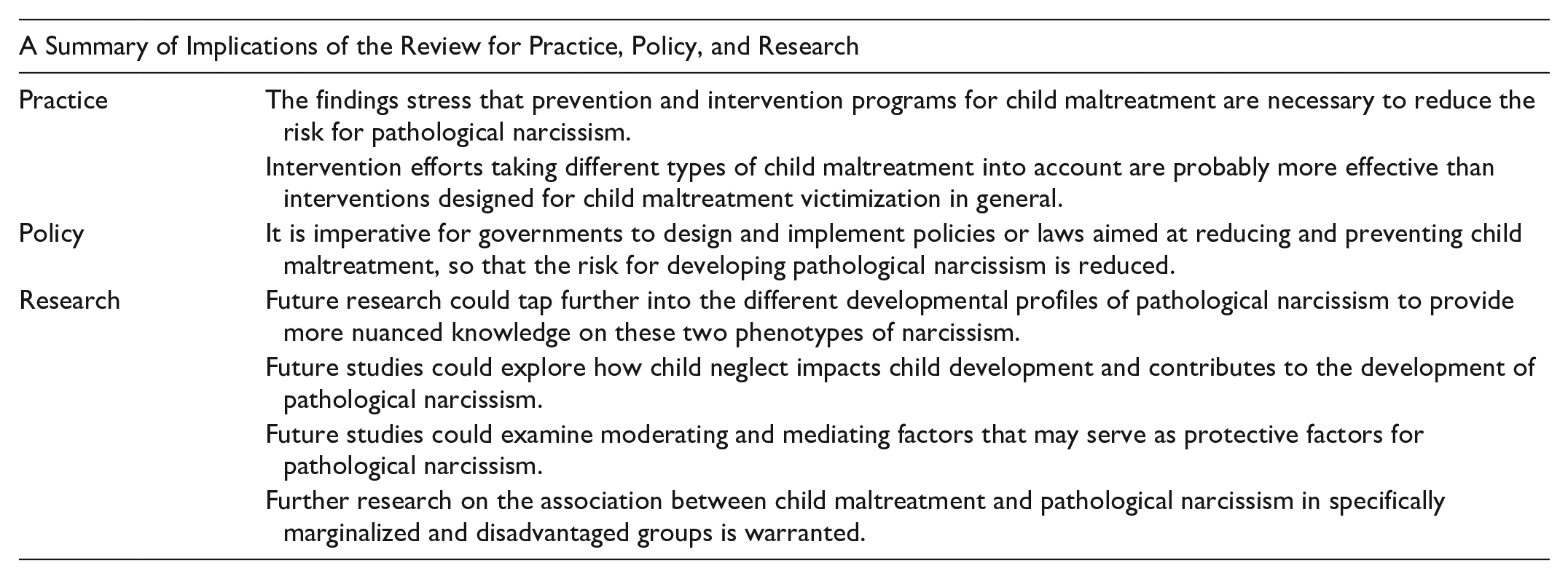
Our findings provide some important implications for research, practice, and policy. In terms of research, this study found that the association between child maltreatment and vulnerable narcissism was stronger than that for grandiose narcissism, and future research could therefore tap further into the different developmental profiles of pathological narcissism to provide more nuanced knowledge on these two phenotypes of narcissism. Since our study found that compared to physical abuse, neglect is more strongly associated with vulnerable narcissism, future studies could explore how child neglect impacts child development and contributes to the development of pathological narcissism. Moreover, future studies could examine moderating and mediating factors that may serve as a protective factor for pathological narcissism, such as supportive relationships (Starbird & Story, 2020; Green et al., 2020b). This type of research may contribute to knowledge about how the intergenerational transmission of pathological narcissism can be stopped (Cerniglia & Cimino, 2020).
In addition, further research on the association between child maltreatment and pathological narcissism in specifically disadvantaged and marginalized groups is warranted (e.g., people with physical, intellectual, or mental disability, people of sexual/ethnic minority, people from low socioeconomic status, or children of caregivers with record of criminal offenses or mental illness). These people are vulnerable to being rejected or neglected and may thus experience more rejection and adversity during childhood and/or adulthood. Examining their experiences of being rejected and doing research on their pathological narcissism would offer new insights into our understanding of pathological narcissism. Moreover, in the current study, the strength of the association between child maltreatment and pathological narcissism is small, suggesting that other internal and/or external etiological factors must exist. The disadvantaged or marginalized environments may serve as internal or external factors contributing to pathological narcissism. For instance, in a sample of university students it has been found that exposure to high levels of betrayal trauma is related to both vulnerable and grandiose narcissism (Yalch & Levendosky, 2020). Future research is needed to explore salient etiological factors that contribute to the development of pathological narcissism. Additionally, examining simple univariate causal models (i.e., A causes B) has both pros and cons. On the one hand, it enables exploring the relation between two variables, but on the other, without considering covariates, the relation between two variables may be a spurious one.
In terms of practice, the current findings stress that prevention and intervention programs for reducing child maltreatment are necessary, as maltreatment victimization poses a risk for developing pathological narcissism. As we found that the association between child maltreatment and vulnerable narcissism differed by type of child maltreatment, intervention efforts tailored to individuals may probably be more effective than interventions addressing maltreatment victimization in general. Indeed, empirical studies have indicated that the effectiveness of interventions is dependent on the extent to which programs are customized to the specific needs of individuals (Law et al., 2009). Further, we saw that the primary studies that were synthesized predominantly used non-clinical samples, and hence clinical samples are underrepresented in the results of this review. Moreover, results from the trim-and-fill analysis revealed remarkably small correlations between child maltreatment and pathological narcissism. Therefore, the clinical utility of the current results may seem limited, but should not be ignored as a significant association was found before and after the trim-and-fill analysis. The current results underline that child maltreatment victimization is in itself a risk factor for pathological narcissism. From a cumulative risk perspective, having experienced child maltreatment may substantially or even exponentially increase the risk for narcissism when several other risk factors are present as well. However, this should be further studied.
Finally, in terms of policy, the results of this review contribute to the already vast empirical base of studies on the impact of child maltreatment underlining it. It is imperative for governments to design and implement policies or laws aimed at reducing and preventing child maltreatment, so that a heathy development is promoted.
Conclusion
This review quantitatively synthesized primary research on the association between child maltreatment victimization and pathological narcissism using advanced three-level meta-analytic methods. Our findings revealed that child maltreatment is significantly associated with both vulnerable narcissism and grandiose narcissism, and that the strength of the association is stronger for the former than for the latter. We found that the association between child maltreatment and vulnerable narcissism varied by maltreatment type with neglect being more strongly associated with vulnerable narcissism than physical abuse. Women and people younger than 18 years old are more likely to develop grandiose narcissism after experiences of child maltreatment. Interventions targeting pathological narcissism should be aware of potential trauma resulting from child maltreatment victimization.
Supplemental Material
sj-docx-1-tva-10.1177_15248380221147559 – Supplemental material for The Association Between Child Maltreatment and Pathological Narcissism: A Three-Level Meta-Analytic Review
Supplemental material, sj-docx-1-tva-10.1177_15248380221147559 for The Association Between Child Maltreatment and Pathological Narcissism: A Three-Level Meta-Analytic Review by Shuling Gao, Delin Yu, Mark Assink, Ko Ling Chan, Ling Zhang and Xianxin Meng in Trauma, Violence, & Abuse
Footnotes
Declaration of Conflicting Interests
The author(s) declared no potential conflicts of interest with respect to the research, authorship, and/or publication of this article.
Funding
The author(s) disclosed receipt of the following financial support for the research, authorship, and/or publication of this article: This research was funded by Humanities and Social Science Research Fund of Ministry of Education of China (Grant No. 20YJC840012); the National Natural Science Foundation of China (Grant No. NSFC31600886) and the Shanghai Academy.

Supplemental Material
Supplemental material for this article is available online.
Author Biographies
References
Supplementary Material
Please find the following supplemental material available below.
For Open Access articles published under a Creative Commons License, all supplemental material carries the same license as the article it is associated with.
For non-Open Access articles published, all supplemental material carries a non-exclusive license, and permission requests for re-use of supplemental material or any part of supplemental material shall be sent directly to the copyright owner as specified in the copyright notice associated with the article.
