



Abstract
Public health professionals use a three-pronged approach to address broad-reaching issues of societal concern: primary prevention, secondary prevention, and tertiary prevention. Applying this framework to the study of elder abuse, the purpose of this review is to describe the status of elder abuse prevention research on a global scale. Elder abuse prevention articles published between 2015 and 2021 were identified through electronic bibliographic searches (PubMed, Medline, CINAHL, APA PsycINFO, and AgeLine). After removing articles based on inclusion and exclusion criteria, articles were sorted into the three main prevention types and further divided into subcategories for a more in-depth review. Most of the studies identified were conducted in North America (n = 42). Of the 72 articles identified, 13 articles focused on primary prevention (agism, education, and intervention), 35 articles focused on secondary prevention (developing and evaluating screening tools, identifying and reporting abuse, and barriers to detecting and reporting abuse), and 21 focused on tertiary prevention (professional response to cases of abuse, intervention methods, and impact of policy). Collectively, findings bring greater understanding of elder abuse as a public health problem and identify ways of addressing the complexities of elder abuse. Several gaps were identified in the elder abuse prevention literature including the need for global research that includes older adults as stakeholders, evidence-based education and intervention programs, and cultural sensitive and valid tools to identify elder abuse.
The World Health Organization (WHO) defines elder abuse as, “a single or repeated act, or lack of appropriate action, occurring within any relationship where there is an expectation of trust, which causes harm or distress to an older person” (WHO, 2022). The types of violence toward older adults WHO identifies as abuse are physical, sexual, psychological and emotional abuse, financial and material abuse, neglect, and serious loss of dignity and respect. An estimated one in six people aged 60 years and older worldwide have experienced some form of abuse in the last year (WHO, 2022). This is likely a vast underestimate of the prevalence of abuse as WHO postulates that only 1 in 24 cases of abuse worldwide is reported. These estimates underscore just how profound this problem is, making elder abuse a worldwide public health problem (WHO, 2022).
Elder abuse has serious consequences for older victims as well as society. Older adults who experience elder abuse have a 300% higher risk of dying within 1 year of the abuse than those who have not experienced abuse (Dong et al., 2009). They are also more likely to require hospitalization even when controlling for varying levels of health issues, cognitive impairment, or mental health (Dong & Simon, 2013). Elder abuse also has serious financial impacts on society. The United States Centers for Disease Control and Prevention (CDC) estimated that elder abuse injuries result in approximately US$5.3 billion healthcare expenses annually (CDC, 2016).
Public health professionals use a three-pronged approach to address pervasive health issues such as elder abuse. This framework can be applied to public health practice approaches to prevent elder abuse from occurring and to reduce the impact of elder abuse on those experiencing abuse. Primary prevention efforts work to prevent abuse before it occurs by focusing on the source of the problem, whether that is caregiver burden, lack of education, or lack of proper regulations. Strategies employed include public awareness campaigns, caregiver support interventions, as well as caregiver training and residential care policies. Secondary prevention strategies are used to identify the abuse as early as possible to prevent the abuse from escalating. These strategies include an emphasis on early detection and screening, improved screening methods, and increased training for professionals on recognizing the signs and symptoms of abuse. Tertiary prevention approaches focus on reducing recidivism of elder abuse through the development of self-help groups, helplines, safe-houses, and emergency shelters for older persons who are abused, as well as psychological treatment programs for perpetrators of elder abuse. This type of prevention occurs when the abuse has already happened and professionals are trying to reduce the likelihood of the abuse occurring again, while simultaneously treating post-abuse consequences.
The purpose of this scoping review was to describe the extent of elder abuse prevention research. Because approaches to addressing elder abuse are multidisciplinary in nature, we sought publications from across disciplines to characterize practices in preventing, recognizing, detecting, and addressing elder abuse across the globe. Findings bring greater understanding to this public health problem and identify ways of addressing the complexities of elder abuse.
Previous Reviews
The current review builds upon three recent reviews of the elder abuse literature (Dong, 2015; Johannesen & LoGiudice, 2013; Pillemer et al., 2016). Johannesen and LoGiudice (2013) focused their review on risk factors for elder abuse for the older adult, the perpetrator, the relationship between the older adult and the perpetrator, as well as environmental factors such as the older adults’ social supports and living arrangements. They identified 13 risk factors for abuse including cognitive impairment, behavioral problems, poor physical health, low income, caregiver burden, family disharmony, and low social support. Dong’s (2015) review of the epidemiology of elder abuse focused on elder abuse prevalence, risk factors, and consequences. They identified several gaps in the literature including insufficient research regarding screening, intervention, and prevention of elder abuse. Pillemer et al.’s (2016) scoping review examined elder abuse prevention efforts. They identified five promising intervention strategies: caregiver interventions, money management programs, helplines, emergency shelter, and multidisciplinary teams. In concluding their review, they identified the need for international comparison of the elder abuse prevention literature to see how different countries and cultures may be prioritizing the different types of elder abuse prevention. These three reviews of elder abuse literature primarily focused on risk factors and collectively revealed the gap that exists in the review literature related to prevention areas that may need additional research on a global scale.
Method of Review
We conducted a scoping review of the elder abuse prevention literature worldwide to determine the overall scope of existing knowledge about elder abuse prevention and identify knowledge gaps in the literature. Adopting a scoping review approach allowed for broad inclusion criteria that enabled us to gain a better understanding of the overall breadth of elder abuse prevention literature.
Inclusion criteria for studies included in review were (1) empirical studies focused on any type of elder abuse (as defined by WHO) and that addressed one of the three types of prevention; (2) studies published between January 1, 2015, and February 29, 2021; and (3) studies published in English. Studies were excluded if they (1) were not empirical in nature, (2) focused only on risk factors of elder abuse, or (3) did not explicitly or implicitly focus on at least one type of prevention, detection, or intervention methods. Based on these parameters, relevant literature was identified through a scoping search. Five electronic databases, PubMed, MEDLINE, CINAHL, APA PsychInfo, and AgeLine, that included publications in public health, social work, and gerontology were used to identify the existing research.
Search terms were developed based on existing elder abuse literature. A Boolean Search Phrase was created based on the relevant search terms and was used to search all five databases: (elder abuse OR elder neglect OR elder mistreatment OR elder maltreatment) AND (older adult OR older people OR old people OR elder OR elderly OR old age OR aged OR seniors) AND (prevention OR intervention OR detection). After searching each database, articles were populated into a library reference management software, Endnote. Once articles were imported, duplicate articles were removed using the “Find Duplicates” tool.
The search process was conducted by the first author with the second author providing verification at each step of the process. The initial search captured a total of 693 articles. Once duplicates were removed, 318 articles remained. The remaining articles were examined for relevancy to the inclusion criteria. Articles were first evaluated based on their titles. Articles with titles that were clearly not associated with the inclusion criteria were removed (n = 179). Next, abstracts of the remaining 139 articles were reviewed, which excluded an additional 64 articles. The remaining 75 articles were then reviewed in greater depth to determine eligibility for review. This elimination process resulted in a total of 72 articles for analysis.
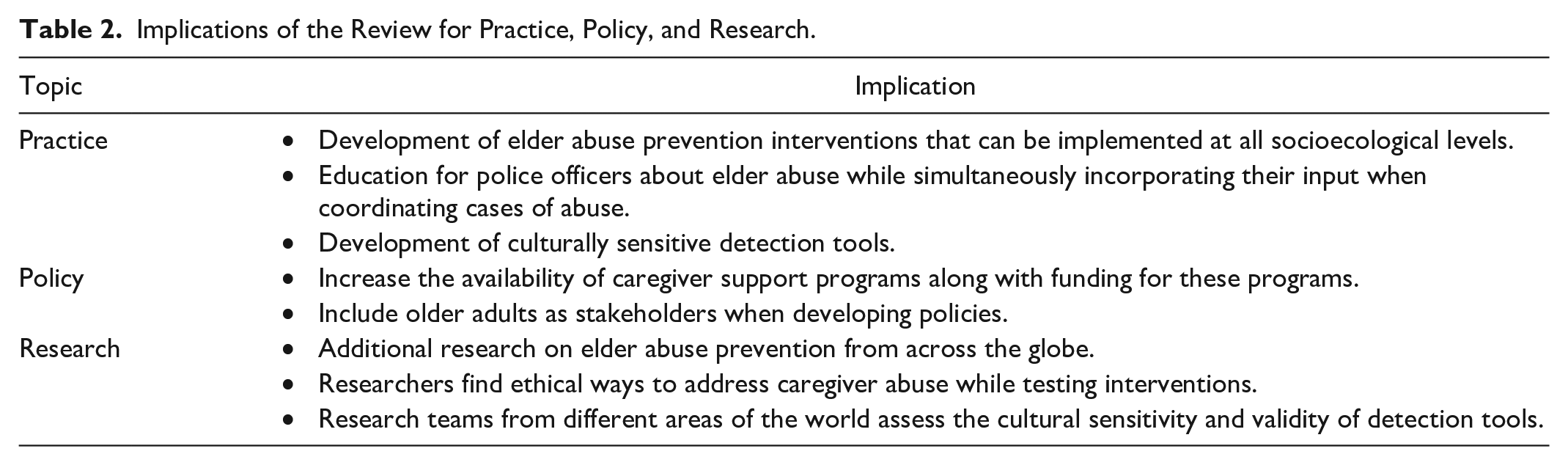
The analysis process began by categorizing the 72 articles according to the different levels of elder abuse prevention (i.e., primary, secondary, tertiary). We used content analysis to discern the key themes within each prevention area. The first author coded the articles for the key findings. The second author contributed to the thematic development and resolution of all categorization and thematic discrepancies. The 72 articles highlighted were not chosen based on any systematic assessment of their method or outcome, but instead simply to illustrate typical and innovative elder abuse prevention work being conducted (Tables 1 and 2).
Article Comparison.
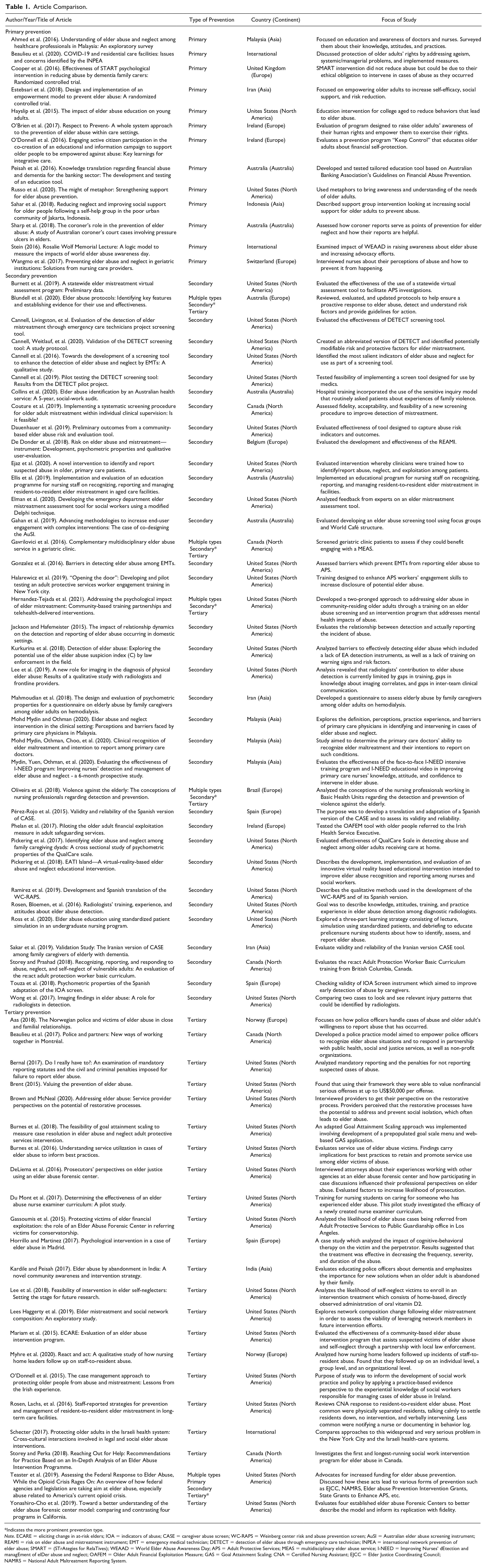
Indicates the more prominent prevention type.
Note. ECARE = eliciting change in at-risk elders; IOA = indicators of abuse; CASE = caregiver abuse screen; WC-RAPS = Weinberg center risk and abuse prevention screen; AuSI = Australian elder abuse screening instrument; REAMI = risk on elder abuse and mistreatment instrument; EMT = emergency medical technician; DETECT = detection of elder abuse through emergency care technician; INPEA = international network prevention of elder abuse; SMART = (STrAtegies for RelaTives); WEAAD = World Elder Abuse Awareness Day; APS = Adult Protective Services; MEAS = multidisciplinary elder abuse service; I-NEED = Improving Nurses’ dEtection and managEment of elDer abuse and neglect; OAFEM = Older Adult Financial Exploitation Measure; GAS = Goal Attainment Scaling; CNA = Certified Nursing Assistant; EJCC = Elder Justice Coordinating Council; NAMRS = National Adult Maltreatment Reporting System.
Implications of the Review for Practice, Policy, and Research.
Findings
While the articles included in this scoping review spanned the globe, most of the studies were conducted in North America (n = 42). Furthermore, most of the studies were conducted in the United States (n = 37). Europe was the next most common continent with 11 articles, followed by Asia (n = 9 articles), Australia (n = 6 articles), and South America (n = 1). Three articles presented research that took place in more than one continent. The examples of studies presented below were conducted in the United States unless otherwise noted. In addition, most studies identified were cross-sectional investigations, with authors using surveys and questionnaires to gather information and descriptive statistics to analyze their data. Intervention studies relied on single group designs.
Primary Prevention
The 13 primary prevention articles focused on preventing abuse before it occurred through upstream methods (e.g., education). Beaulieu et al. (2020) focused on ageism as a means of addressing primary prevention of elder abuse on a societal level. They discussed the need to protect the rights of older adults during the COVID-19 pandemic at the international level. The authors argued that ageism places older adults in a marginalized position, making them vulnerable to abuse. For example, the safety measures during the pandemic could be viewed as an infringement on older adults’ rights to see loved ones, as well as forced social isolation. The authors concluded by stressing the importance of creating an international convention of human rights of older persons to ensure older adults’ rights are not being taken away. The other 12 primary prevention articles focused on two areas: knowledge gaps and education and intervention.
Knowledge gaps and education
Six articles focused on education as a point of primary prevention intervention. These articles focused on understanding knowledge gaps about elder abuse in professionals (Ahmed et al., 2016; Sharp et al., 2018; Wangmo et al., 2017), college students (Hayslip et al., 2015), and the general public (Russo et al., 2020; Stein, 2016) to increase awareness of elder abuse. Articles focused on understanding education of professionals typically discussed doctor and nurses as focal populations. Ahmed et al. (2016) surveyed doctors and nurses in Malaysia about their knowledge, attitudes, and practices surrounding elder abuse. They found that both the doctors and the nurses showed a poor understanding of signs of elder abuse and exhibited misperceptions on reporting requirements. Similarly, Wangmo et al. (2017) concluded, based on their interviews with doctors and nurses in Switzerland, there is a need to hire additional staff and increase education and training for healthcare professionals to reduce abuse. In Australia, researchers expanded education efforts for coroners (Sharp et al., 2018). The authors of this study noted that coroner reports can serve as points of prevention for elder neglect. For example, they found that out of the four reports examined, two coroners had given preventative recommendations including education for providers on how to avoid neglect in the provision of care (e.g., pressure ulcers) and regulatory tools that agencies could use (e.g., clearly outlined roles and responsibilities of caregivers).
An innovative educational approach proposed by Russo et al. (2020) increased public awareness and understanding of elder abuse by using metaphors to explain social supports and services. For example, they compared the need of support beams for a building to the need for a social structure to support older adults. When surveyed, diverse community members reported that the social support metaphor was effective in helping them understand the importance of interconnecting systemic supports for older adults.
Interventions
Six articles focused on developing and implementing interventions for older adults and caregivers. The goal of interventions for older adults was to enhance social support (Estebsari et al., 2018; Sahar et al., 2018) and increase their awareness and understanding of their rights (O’Brien et al., 2017; O’Donnell et al., 2016; Peisah et al., 2016). By implementing these interventions directly with the older adults, researchers empowered older adults and provided them the opportunity to avoid abusive situations before they occurred.
With respect to caregivers, the aim of one United Kingdom-based intervention study was to prevent abusive behaviors in caregivers before they begin (Cooper et al., 2016). However, the authors quickly discovered a barrier in implementing this type of a primary prevention intervention. As researchers they were under an ethical obligation to intervene in cases of abuse as they occurred. They believed that because they immediately intervened when they suspected abuse was occurring, testing the effectiveness of their intervention was impeded. This is an important finding that highlights the complexity of primary prevention interventions in attempting to stop abuse in caregivers before it occurs. Because researchers have an ethical obligation to report elder abuse, it may be difficult to identify a direct association between an intervention and a reduction in elder abuse.
Secondary Prevention
Secondary prevention articles were by far the most common type of elder abuse prevention studies identified. The 35 articles identified typically focused on the development and evaluation of screening tools. Other themes included identifying and reporting abuse, and barriers to detecting and reporting abuse.
Screening tools
Nineteen articles focused on the development and evaluation of screening tools. Eleven tools were discussed including tools designed specifically for medical providers: (1) TEAM-FACN (Burnett et al., 2019), (2) detection of elder abuse through car emergency care technician (DETECT) (Cannell et al., 2019; Cannell, Livingston, et al., 2020; Cannell, Weitlauf, et al., 2020), (3) QualCare Scale ( et al., 2017) and social workers: (4) EARAE tool (Dauenhauer et al., 2019), (5) OAFEM tool (Phelan et al., 2017), and the (6) Emergency Department Elder Mistreatment Assessment Tool for Social Workers (Elman et al., 2020). The other five tools were designed for use by all professionals: (7) indicators of abuse Screen instrument (Touza et al., 2018), (8) the caregiver abuse screen tool (Pérez-Rojo et al., 2015; Sakar et al., 2019, (9) the Weinberg center risk and abuse prevention screen (Ramirez et al., 2019), (10) risk on elder abuse and mistreatment instrument (De Donder et al., 2018), and (11) Australian elder abuse screening instrument (Gahan et al., 2019). In addition, an unnamed tool was developed by researchers in Iran specifically to assess abuse by family caregivers of older adults on hemodialysis. (Mahmoudian et al., 2018). The authors of each of the 19 studies reported that screening tools and protocols assessed were effective, valid, and reliable.
Three articles focused on procedures when administering screening tools to older adults who have been potentially abused. One Canadian study evaluated the effectiveness of a systematic screening procedure at two local community service centers (Couture et al., 2019) while another Canadian study evaluated a screening procedure for older adults coming into a geriatric clinic (Gavrilovici et al., 2016). The first study deemed the screening procedure as a useful tool for identifying potential abuse by the social workers administering the screening, but they also identified barriers to the procedure including the feasibility of administering the screening (Couture et al., 2019). For example, social workers felt that they had competing priorities that made the added administrative responsibilities of the screening more difficult. The purpose of the latter study was to determine if the older adults could benefit from a recommendation to the Complementary Multidisciplinary Elder Abuse Service (CMEAS). Researchers found that most participants with a confirmed suspicion of abuse (77.3%) were open to receiving services from CMEAS (Gavrilovici et al., 2016). The third study, conducted in Australia, relied on focus groups of older adults to assist with reviewing, evaluating, and updating their Elder Abuse Protocols: Guidelines for Action (Blundell et al., 2020). The authors reported that the protocols were useful because they were simple and easy to understand, but also noted several areas for improvement for future protocol developments, such as example policies and resources as well as the need for additional direction and training for front-line workers and information about issues for diverse groups. Each of these three studies emphasized the importance of a proactive response to detecting elder abuse and having protocols in place to know how to handle cases of abuse when they arise.
Four articles published by Cannell’s research team focused on the DETECT Tool. This tool was designed to assist paramedics and emergency medical technicians with assessing potential cases of elder abuse. The team first identified the most salient indicators of elder abuse and neglect for potential inclusion on a screening tool (Cannell et al., 2016). They went on to evaluate the general effectiveness of the tool (Cannell, Livingston, et al., 2020), feasibility of implementing DETECT into medic’s field-based practice (Cannell et al., 2019), and the validity of an abbreviated version of the tool (Cannell, Weitlauf, et al., 2020). Overall, they found that the DETECT tool was effective in increasing emergency medics’ frequency of reporting. The shortened validated tool was also easily implemented in the field.
Identifying and reporting elder abuse
Education and training to identify and report elder abuse was the second theme that emerged from the secondary prevention literature. Five articles focused on educational programs for healthcare staff (Collins et al., 2020; Ellis et al., 2019; Hernandez-Tejada et al., 2021; Mohd Mydin, Othman, Choo, et al., 2020; Ross et al., 2020), while three articles focused on educating social workers (Ejaz et al., 2020; Halarewicz et al., 2019; Storey & Prashad, 2018). An innovative approach used by Pickering et al., (2018) described an educational intervention for both nurses and social workers that used a virtual reality tool, EATI Island, to improve recognition and reporting of elder abuse. Participants virtually interacted with computer-programmed patients that were designed using different elder abuse case scenarios. Researchers found that participants had 99% accuracy in their mandatory reporting decisions after participating in the training, and that they made changes in their daily practices in recognizing signs of abuse. Because there was no true control group, researchers tentatively attributed the high accuracy to the intervention, but could not be certain. Hernandez-Tejada et al. (2021) took screening for abuse a step further, by addressing tertiary prevention methods through the development of an intervention program that addressed the mental health impacts of elder abuse and encouraged use of telehealth to reach more older adults. Findings showed the benefits of coordinating multiple types of elder abuse prevention. Specifically, the researchers found that the intervention was useful in addressing anxiety, improving perceptions related to quality of life, and reducing social isolation.
Radiologists were the focus of three articles (Lee et al., 2019; Rosen, Bloemen, et al., 2016; Wong et al., 2017. The study authors discussed the importance of radiologists receiving training on elder abuse because older adults who are physically abused are likely to receive radiographic imaging if they come into the emergency room (Lee et al., 2019; Rosen, Bloemen, et al., 2016). They also discussed the importance of radiologists having the ability to utilize their training to recognize relevant injury patterns in elder abuse cases as a point of detection and then intervention for cases of elder abuse (Wong et al., 2017). They found that the strategies employed to identify child abuse cases were also relevant in identifying cases of elder abuse. For many older adults, a radiologist may be one of the first professionals they encounter in the hospital, so earlier detection of the signs of physical abuse by radiologists could be instrumental in identifying and addressing additional cases of abuse in the emergency room.
Barriers to detecting and reporting elder abuse
The secondary prevention literature also recognized the barriers in detecting and reporting of elder abuse. Lack of training and a lack of confidence in identifying abuse and making referrals to protective services were the two major issues discussed (Gonzalez et al., 2016; Kurkurina et al., 2018; Mohd Mydin & Othman, 2020; Mohd Mydin, Othman, Choo, et al., 2020; Oliveira et al., 2018). Jackson and Hafemeister (2015) found that both the relationship quality of the older adult to the perpetrator and the relationship quality of the older adult with the Adult Protective Services worker impacted the likelihood of the abuse incident being reported. The authors of all four studies concluded that further education and training could serve as points for intervention in reducing barriers that exist to detecting and reporting elder abuse.
Tertiary Prevention
Tertiary prevention articles were less common than secondary prevention articles but were more common than primary prevention articles. The authors of the 21 tertiary prevention articles discussed a range of topics from police officer responses to elder abuse, to interventions designed specifically for older adults, to the impact of policy on elders’ rights. The main themes that emerged from the tertiary articles were (1) professional response to cases of abuse, (2) intervention methods, and the (3) impact of policy.
Professional response
Most of the tertiary prevention articles related to professional response to abuse focused on nurses or police officers. Articles that focused on nurses often examined their response to abuse of older adults living in nursing homes. For example, one study addressed resident-to-resident abuse in nursing homes (Rosen, Lachs, et al., 2016) while another Norwegian study examined nurses’ responses to viewing staff-to-resident abuse (Myhre et al., 2020). In both cases, nurses varied in how they addressed the abuse. The researchers recognized the need for additional education and training for nurses on proper response to cases of abuse, whether inflicted by another resident or a staff member. One Canadian group investigated the efficacy of a curriculum that was developed to assist nurses in best practices for caring for an older adult who has experienced some type of abuse (Du Mont et al., 2017). They found significant improvements in self-reported knowledge and perceived skills-based competence in all six content domains of the curriculum. Integrating education and training about proper person-centered care for victims of elder abuse could be instrumental in better preparing nurses for their role as not only a healthcare provider, but advocates for older adults as well.
Articles focused on police officers discussed how law enforcement handled cases of abuse (Aas, 2018) as well as educational interventions on how to respond to cases of elder abuse (Beaulieu et al., 2017; Kardile & Peisah, 2017). All three articles focused on law enforcement recognized the importance of police officers capitalizing on a multidisciplinary approach and engaging in their network of contacts to assist older adults in getting out of abusive situations in the best way possible. Yonashiro-Cho et al., 2019 continued the conversation about multidisciplinary teams (MDT) with their comparison of four programs in California which use a Forensic Center Model (Yonashiro-Cho et al., 2019). One of the four sites specifically implemented one meeting a month for cases referred to the team by law enforcement. They held these meetings in an effort to increase attendance by law enforcement and because they recognized the communication challenges that can occur between different disciplines with social workers more focused on processes and law enforcement more focused on facts and evidence.
Two articles focused on the likelihood of professionals pursuing prosecution of elder abuse perpetrators after participating in MDTs (DeLiema et al., 2016; Gassoumis et al., 2015). Both studies found that participating in MDTs increased the likelihood of prosecuting a case of elder abuse. Findings of these studies suggest that MDTs effectively break down barriers that professionals may encounter if they are not connected with professionals in other disciplines.
Taking a different approach, Brown and McNeal (2020) discussed governmental and community social service professionals’ opinions on the use of the restorative process for perpetrators of abuse (Brown & McNeal, 2020). Most professionals believed that the restorative process would be a beneficial way to avoid future abusive situations, as well as reduce social isolation of older adults. This type of an innovative tertiary prevention approach is an example of a way to address abuse from the perspective of the perpetrator.
Intervention methods
Intervention studies were common among the tertiary prevention articles. Seven out of the 21 tertiary prevention articles focused on interventions for older adults following their experience with abuse. Typical interventions involved improving the social network of older adults (Lees Haggerty et al., 2019; Mariam et al., 2015), using cognitive-behavioral therapy (Horrillo & Martinez, 2017), Goal Attainment Scaling (Burnes et al., 2018), addressing self-neglect (Lee et al., 2018), and increasing service-use of victims (Burnes et al., 2016). All of the tertiary prevention intervention articles recommended that social determinants of health for older adults include social support, mental health, financial resources, and housing status.
Impact of policy
Policy development is a key component to tertiary prevention. Policy-related articles focused on the impact of mandatory reporting (Bernal, 2017), priorities for policy development (O’Donnell et al., 2015; Schecter, 2017), and the importance of funding through legislative action (Teaster et al., 2019). Based on their analysis of mandatory reporting laws and the penalties for not reporting suspected cases of abuse, Bernal (2017) suggested that mandatory reporting laws should be a federal standard and that there should be civil fines associated with underreporting to incentivize institutions to properly train professionals on mandatory reporting and elder abuse. Another study conducted interviews with social workers to hear their perspectives on social work practice and policy related to elder abuse (O’Donnell et al., 2015). Workers recommended policies on (1) elder abuse case management, (2) practice strategies for overcoming challenges, and (3) augmenting protective practice. The fourth study addressed the large gap in funding that exists to address elder abuse and advocates for increased funding (Teaster et al., 2019). Researchers concluded that an increase in funding and a cohesive national strategy to address elder abuse would increase public awareness, increase access-to-justice resources, and increase enforceable solutions. In addition, one article attempted to value the cost of elder abuse to make the argument that financial resources should be provided to support prevention programs (Brent, 2015). They found that using their framework, they were able to value nonfinancial serious offenses at up to US$50,000 per offense. Overall, an underlying theme of the policy-related literature was the need for additional funding to support elder abuse prevention. The consensus among authors was that elder abuse prevention requires additional funding to properly address this public health issue.
Discussion
The literature reviewed on the prevention of elder abuse was divided into three different prevention categories: primary, secondary, and tertiary prevention. This three-pronged approach proved to be an effective framework that allowed us to dive deeper into the content of each article and group them into subcategories to identify where potential gaps in the literature may exist. We identified gaps for each of the three prevention types where we saw opportunities for further research.
Most of the elder abuse prevention literature identified came from North America. This disproportionate distribution of articles from this area of the world could be due to our exclusion criteria that required articles to be written in English, or it could suggest a larger issue of the lack of elder abuse prevention research in other areas of the world. The lack of studies from outside of North America was the most obvious in the tertiary prevention category, followed by the secondary prevention articles. The primary prevention category had the most even distribution of articles from around the world, with Europe leading the literature with four articles, followed by Asia with three articles. Findings point to the need for conducting additional research as well as publishing the findings of research on elder abuse prevention from across the globe. Cultural sensitivity will be an essential part of developing elder abuse prevention methods because approaches successful in North American culture may not necessarily be successful in other cultures around the world.
Primary prevention measures attempted to address abuse at the source by dismantling underlying ageism, educating professionals and the public about elder abuse, as well as developing interventions meant to reduce risk factors for abuse. Only one article in the primary prevention category addressed preventing abusive situations from the perspective of the caregiver. Researchers need to find ethical ways to address caregiver abuse while testing interventions in order to develop effective evidence-based programs (Chu et al., 2017). This approach to prevention research is needed to help dismantle abuse at the source and may make a better argument for increasing the availability of caregiver support programs along with funding for these programs.
Many articles were identified that discussed education for healthcare professionals and the general public, but none of the articles focused on community gatekeepers (Albright et al., 2016). Public health professionals know that community gatekeepers can be extremely influential in addressing abuse. Interventions should be developed to create evidence-based programs which educate gatekeepers on preventing elder abuse from occurring in the first place. By approaching elder abuse from the grassroots level, the collective community could be instrumental in preventing elder abuse before it even happens, which could have an enormous impact on the overall cases of abuse which occur. This would allow communities to begin to see the value in developing evidence-based public health prevention interventions that can be implemented at all socioecological levels, not just for professionals.
The literature focused on secondary prevention was robust. While most screening tools tested were effective and valid, researchers are encouraged to continue assessing tools. It is unknown whether cultural differences or language barriers could have an impact on the effectiveness of an early detection tool. For example, because all the studies conducted on the validity of the DETECT tool occurred in the United States (Cannell et al., 2019), research teams from different areas of the world will need to assess the cultural sensitivity and validity of this tool and others like it. This is an important practice implication that addresses the significance of considering how intersectionality should play a role in developing evidence-based public health prevention screening tools.
Finally, tertiary prevention articles identified areas of improvement in professionals’ response to abuse, development of evidence-based interventions for persons most impacted by abuse, and creation of prevention policies that will make a difference in the lives of older adults who have experienced elder abuse. For example, articles that focused on law enforcement in the multidisciplinary public health practice approach highlighted the need for not only educating police officers about elder abuse but also giving them a seat at the table when it comes to coordinating cases of abuse for a more streamlined continuum of care. In addition, with more research pointing to the role of underlying ageism in elder abuse cases (Pillemer et al., 2021), it is important to include older adults as one of the most important stakeholders when developing policies that could affect their rights and lives. Having older adults’ perspectives on what their priorities are when developing policies may empower them to protect themselves and would ensure that older adults are having their voices heard on a serious subject that directly affects them. More research is necessary to assess the effectiveness of including diverse groups of older adults in the policymaking process at the local, state, and federal levels.
Limitations
Using a public health framework, the collective findings of this review shed light on the prevention of elder abuse. Our review is not, however, without its limitations. By limiting the research reviewed to articles published in English only, we may have excluded articles which could have changed the breadth and nature of the research conducted. Another potential limitation was some overlap between prevention types. While the focus of a few individual studies addressed multiple layers of intervention, this overlap was minimal, and the review authors agreed upon a more prominent prevention type for each of these articles. Finally, due to the scoping nature of this review, we included studies based on a specific inclusion/exclusion criterion, no articles were excluded on the bases of methodological rigor. While taking this approach allowed us to understand the full scope of the literature that exists, we did not critically address or evaluate the quality of the research presented.
Conclusion
Overall, the literature for each type of prevention was comprehensive in nature and provides a wide-ranging picture of how older adults and families, service providers, and communities are attempting to address abuse before it occurs, at the onset of an incidence of abuse, and after the abuse occurs. For prevention strategies to be effective, it is important to address abuse at each stage. Continuing to assess prevention strategies and creating systems that utilize each type of elder abuse prevention will be the most successful in helping older adults avoid abusive situations.
Footnotes
Acknowledgements
(1) The data, analytic methods, and materials from this scoping review will be made available to other researchers for replication purposes; (2) data, analytic methods, and materials can be accessed by contacting the corresponding author; and (3) the studies reported in the manuscript were not preregistered due to the scoping nature of the manuscript.
Declaration of Conflicting Interests
The author(s) declared no potential conflicts of interest with respect to the research, authorship, and/or publication of this article.
Funding
The author(s) received no financial support for the research, authorship, and/or publication of this article.
