



Abstract
Arguments about the associations between child maltreatment and empathy remain controversial. This systematic review and meta-analysis aim to estimate the direction and magnitude of the relationships between child abuse and neglect and empathy. Four English databases (Web of Science, PsycInfo, PubMed, and Cochrane Library), three Chinese databases (China National Knowledge Infrastructure, Wanfang, and Weipu), and grey literature were systematically searched. We extracted data related to the associations between child maltreatment and empathy and pooled them using random effects models. A total of 24 eligible studies involving 22,580 participants and 176 estimates were included in the analyses. Overall, child maltreatment was significantly related to reduced empathy (
Introduction
Childhood maltreatment is a significant global public health concern causing tremendous damage to the short-term as well as long-term well-being of children. It typically includes five forms of maltreatment: physical abuse, emotional abuse, sexual abuse, physical neglect, and emotional neglect (Bernstein et al., 2003; Gilbert, 2009). A series of meta-analyses have revealed that child abuse and neglect are positively associated with both internalizing problems, such as depression and anxiety (for a review, see Gardner et al., 2019), and externalizing problems, including aggression, violence, and suicidal behaviors (Angelakis et al., 2020; Maas et al., 2008; Miller et al., 2013). Additionally, child abuse and neglect in early life have been found to be positively associated with poor adolescent and adult interpersonal functioning (Davis & Petretic-Jackson, 2000; Haslam & Taylor, 2022).
The main line of studies worldwide has demonstrated that child maltreatment can impair children’s empathy development (Chen et al., 2016; Marta et al., 2018; Ometto et al., 2015). Empathy is the ability to recognize and understand other people’s thoughts, share their feelings, and accordingly respond with an appropriate emotion (Baron-Cohen & Wheelwright, 2004); it involves both cognitive and emotional processes and is other-focused (Davis, 1980; Jolliffe & Farrington, 2004). Cognitive empathy refers to the ability to place oneself in another’s shoes, imagine their emotional states, and predict their behaviors (Ang et al., 2010; Baron-Cohen, 1995). Affective empathy, meanwhile, is the ability to experience another’s mental states and respond with an appropriate emotion (Jolliffe & Farrington, 2006). The negative impacts of child maltreatment on empathy have been reported in both the general population and clinical samples (Meidan & Uzefovsky, 2020; Sun et al., 2020; Wang et al., 2021).
Why does child maltreatment reduce empathy? Previous studies have explored several lines of inquiry to explain the impacts of child abuse and neglect on empathy (Bertsch et al., 2013; Locher et al., 2014; Yang et al., 2019). First, neuroscientific evidence suggests that empathy is shaped by biological dispositions and caregiving experiences (Levy et al., 2019). Early traumatic experiences impact the developing brain, which might result in a dysfunctional superior temporal sulcus and gyrus (Roepke et al., 2013), and they also altered brain function that underlie deficits in affective facial expressions and cognitive empathy (Read et al., 2001). Second, attachment theory argues that early child abuse and neglect are the source of insecure attachment (Bifulco et al., 2002; Bowlby, 1977; Bowlby, 1982) and that the ability to identify and understand another person’s emotions is rooted in an individual’s attachment experience (Gobodo-Madikizela, 2008). Individuals with secure attachment to their parents are more likely to care for others and display empathetic behaviors (Mikulincer et al., 2013); in contrast, maltreated children tend to refuse to take their parents’ perspective or understand others’ emotions (Parlar et al., 2014). Third, social learning theory posits that parents are role models for their children’s development of empathy. Negative parenting behaviors, including abuse and neglect, reflect insensitivity and a denial of children’s needs, which can inhibit children’s empathy development (Yu et al., 2012).
However, the associations between the subtypes of child maltreatment and different components of empathy (e.g., perspective-taking, fantasy, empathic concern, and personal distress) remain inconclusive. For instance, using the Interpersonal Reactivity Index (IRI) to measure empathy, Xu et al. (2010) observed that physical abuse and physical neglect were negatively associated with perspective-taking unlike emotional abuse, emotional neglect, and sexual abuse. Furthermore, all five types of abuse and neglect were positively associated with personal distress but not with fantasy. Other studies have found that emotional abuse, emotional neglect, and sexual abuse are negatively associated with perspective-taking and empathetic concern but not with fantasy (Chen et al., 2016; Dittrich et al., 2019). Using the Basic Empathy Scale (BES), some studies have demonstrated that psychological maltreatment is negatively associated with both cognitive and affective empathy (Li, 2016; Sun et al., 2020). More research has shown that childhood trauma, including emotional maltreatment, is significantly and negatively associated with cognitive empathy but not significantly associated with affective empathy (Meidan & Uzefovsky, 2020; Wang, 2021).
In contrast, another line of studies has indicated that early trauma is positively associated with empathy. Specifically, Greenberg et al. (2018) found that the experience of sexual abuse before the age of 17 years was positively associated with affective empathy and global empathy during adulthood but not associated with perspective-taking, empathic concern, fantasy, or personal distress. The authors also found that other types of child abuse were positively associated with global empathy but not with either cognitive or affective empathy. Meanwhile, using a sample of college students, Ozdemir and Sahin (2020) observed that the five types of child maltreatment were all positively associated with global empathy. The different findings regarding the relationship between child maltreatment and empathy may be related to the onset of trauma, measurement inconsistencies, and the various samples used.
Given the mixed results on the associations between child abuse and neglect and empathy, there is a need to synthesize the available evidence for assessing these associations. To the best of our knowledge, no published research has meta-analytically explored the relationship between child maltreatment and empathy to date, although increasing theories and empirical studies have emerged recently. Thus, the present study aims to estimate the associations between childhood maltreatment and empathy using a systematic approach. Identifying the associations between the different types of childhood maltreatment and empathy is important to allow both researchers and practitioners to design and implement tailored child protection and empathy enhancement programs.
Method
Data Sources and Study Selection
A literature search was performed following the guidelines of the Preferred Reporting Items for Systematic Reviews and Meta-Analyses (Moher et al., 2009). This comprehensive literature search was conducted using four English databases (PsycInfo, PubMed, Cochrane Library, and Web of Science), three Chinese databases (Chinese National Knowledge Infrastructure, Wanfang, and Weipu) and grey literature (e.g., unpublished conference papers and dissertations) since their inception until March 1, 2022. The Chinese databases were specifically selected to improve the diversity of included samples, and the authors of this review have rich experience in Chinese literature and thus are well positioned to contribute.
The following search terms and algorithm were used in both the English and Chinese databases: if (child* maltreat* OR child* neglect OR child* abuse OR child* mistreat* OR child* physical abuse OR child* emotional abuse OR child* sexual abuse OR child* physical neglect OR child* emotional neglect) AND if (empathy). This process yielded 1,429 articles.
Inclusion Criteria
Two researchers deleted any duplicate results, independently reviewed the titles and abstracts of the retrieved literature, and read the full text to select eligible studies. The meta-analysis included studies that met the following criteria: (1) they were original quantitative studies, (2) some of or all the samples had experienced one or more of the five types of child maltreatment, (3) child maltreatment and empathy were assessed with reliable and valid measurement tools, and (4) the association between child maltreatment and empathy was presented in any form of data (i.e., correlation coefficient, regression coefficient, or t-test values). Studies were excluded if they: (1) were not quantitative research, (2) were not in English or Chinese, (3) used overlapped samples, (4) did not focus on child maltreatment, (5) focused on the empathy of professionals, (6) did not use any scale to measure child maltreatment or empathy, or (7) did not present enough information on the relationship between child maltreatment and empathy. A total of 24 independent studies were included in the final analysis (see Figure 1).
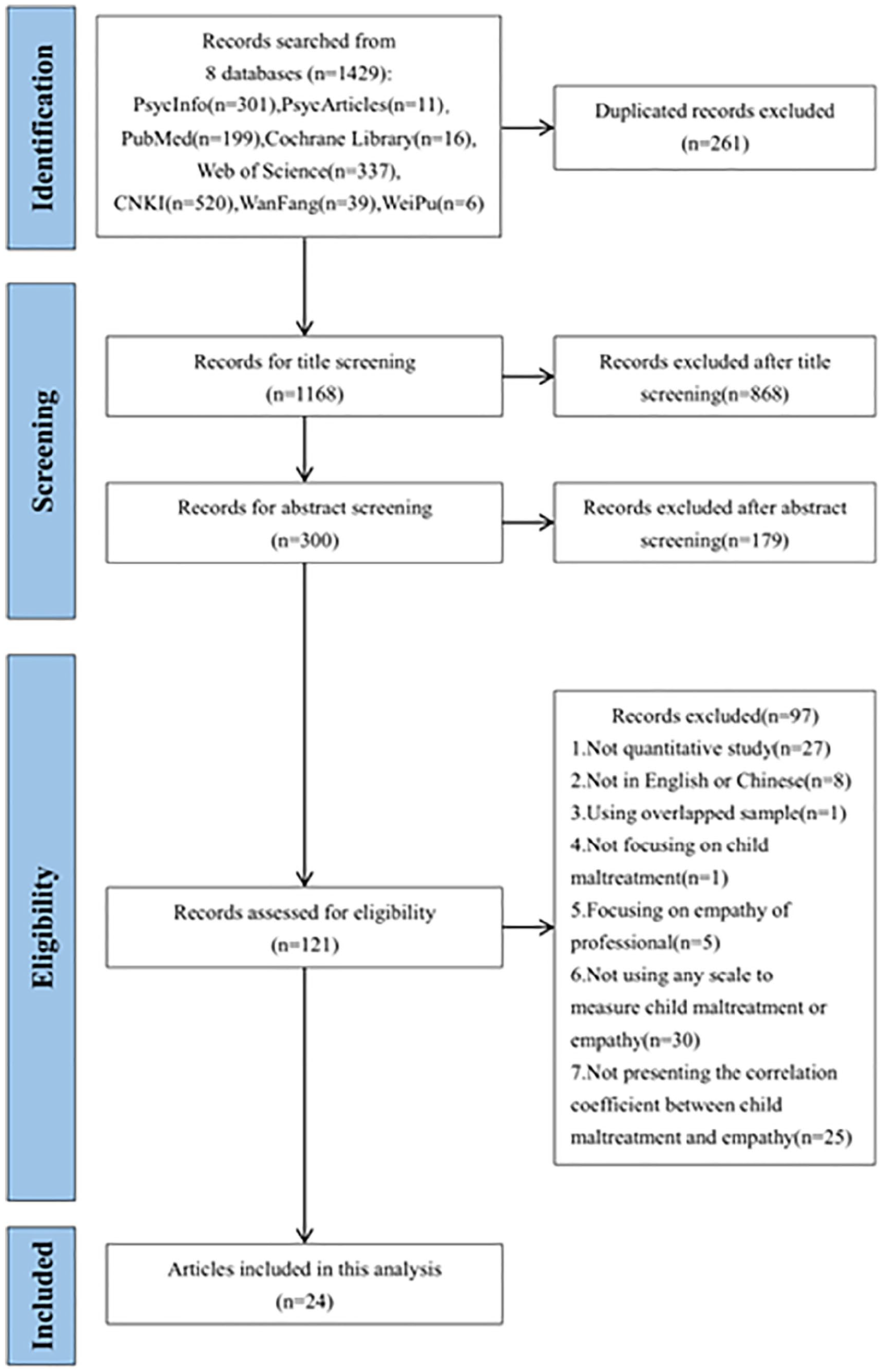
PRISMA flow diagram.
Data Extraction and Coding
We first extracted the following data from the eligible articles using a standardized form: (1) authors and publication year of the study; (2) sample characteristics, including sample size, study region, age (mean), and percentage of female participants; (3) characteristics of the methods used, including study design (cross-sectional or longitudinal), sampling methods (probability sampling or not), report category (parents or children), and tools used to measure child maltreatment (e.g., childhood trauma questionnaire [CTQ]; adverse childhood experience questionnaire) and empathy (e.g., IRI; BES); (4) data characteristics of the two core variables, including the scores of the scales (mean and standard deviations) and the effect sizes (correlation coefficients, regression coefficients, or t-test values) of the relationship between child maltreatment and empathy.
Finally, the quality of each eligible article was assessed based on a five-item checklist (Chen et al., 2019), as follows: (1) Was the research question clearly stated? (2) Did the study report its sampling procedure? (3) Was the study’s response rate higher than 60%? (4) Did the study define child maltreatment and empathy? (5) Was the association between child maltreatment and empathy presented objectively? The scores of each item ranged from 0 to 1, depending on whether the criterion was met or not. The total quality score ranged from 0 to 5, based on the mean scores given by two researchers who evaluated each item independently. If the score was higher than 3 points, the article was considered to be of high quality.
Data Analysis Procedures
Effect size calculations
Since child maltreatment and empathy are both typically measured continuously, effect sizes were represented as Pearson correlations (r). However, different estimation procedures had been employed in the empirical literature on child maltreatment and empathy (e.g., partial correlation, linear regression, F test, and others), meaning that the interpretation of the estimations varies greatly. This is a common situation in meta-analyses, the common solution to which is to convert the respective estimates into partial correlation coefficients. Therefore, we first transformed all effect sizes for analysis from Pearson’s r to Fisher’s Z to provide an approximately normally distributed metric and then transformed them back into



The number of effect sizes of the associations between the subtypes of child maltreatment and the different components of empathy reported in the literature varied greatly (e.g., the number of effect sizes of physical abuse on general empathy was eight, while the numbers of effect sizes of physical abuse on perspective-taking, fantasy, empathic concern, personal distress, cognitive empathy, and affective empathy were four, three, four, three, two, and two, respectively). As suggested by Card (2012), too few effect sizes (less than five studies) can affect the accuracy of the estimate; thus, we aggregated all the effect sizes of child maltreatment on empathy according to the different types of child abuse and neglect. It should be emphasised that a complication arises because increases in the empathy variable can mean an improvement or decline in empathy, depending on how it is measured; for example, a positive correlation between physical abuse and personal distress indicates that child maltreatment has negative effects on empathy. To achieve a consistent sign of the effect across the studies, we standardized the signs of the estimates so that a negative estimate implied that an increase in child maltreatment was associated with a decrease in empathy. Meanwhile, since the studies varied in design and methodology, random effects (RE) models were employed. Cohen’s (1988) guidelines (i.e., correlation values of 0.10, 0.30, and 0.50 in absolute value should be interpreted as “small,” “medium,” and “large” effects, respectively) were used to interpret the magnitude of the effect size for significant correlations.
Heterogeneity
I2 statistics were calculated for each pooled estimate to determine heterogeneity. The I2 statistic is the proportion of the observed variance that reflects variance in true effect sizes. I2 values <25%, <50%, and ≥75% represent low, moderate, and high levels of heterogeneity, respectively (Higgins et al., 2003).
Publication bias
No consistent methods of identifying and correcting publication bias have been presented in the meta-analysis literature; thus, we took several steps to check for publication bias. First, an informal “funnel plot” test was employed to determine any publication selection bias. A funnel plot graph estimated the effects against the standard error of Fisher’s Z, with the most precise estimates at the top. If estimated effects are all drawn from the same normal distribution, the most precise estimates should be closely clustered around the mean of that distribution, with less precise estimates fanning out, thus producing a funnel formation (Sterne & Egger, 2001). If the funnel plot is “lopsided,” with estimates favoring one side or the other, especially for less precise Fisher’s Z values, it indicates evidence of publication selection bias (Gunby et al., 2017).
Second, the classic fail-safe N, Egger’s tests, and the trim-and-fill method were employed. The fail-safe N calculated the number of potential unpublished studies with nonsignificant findings required to reduce the pooled effect size in the meta-analysis to below the level of significance (Zhang et al., 2021). In accordance with the established principles, selective publication bias exists when the fail-safe N is less than 5 times the number of published studies plus 10 (Rosenthal, 1979). Egger’s tests were also conducted to assist in funnel plot interpretation, which are statistical tests used to detect funnel plot asymmetry (Egger et al., 1997). We also conducted trim-and-fill analyses to impute the missing effect sizes for filling in asymmetrical areas of the funnel plot and then recalculated the overall effect size to test for publication bias (Duval & Tweedie, 2000). If the combined effect size estimate does not change significantly compared with the real outcome, it indicates that the influence of publication bias is not large, and that the result is relatively credible (Steichen, 2001).
Third, based on the above tests, as a more precise check, we aggregated all the effect sizes together. A commonly employed statistical test of publication bias is the Funnel Asymmetry Test (FAT), which involved adding the standard error of the estimated effect to the regression specification of equation (4) and testing for its significance. In this analysis, the estimated effect

A publication bias test is
Meta-regression analysis
To determine whether there were heterogeneities and the effect of the different study characteristics on the mean true effect, we needed to investigate factors that affected the size of the mean effect. As abovementioned, the number of effect sizes of the associations between the subtypes of child maltreatment and the different components of empathy in the literature varied widely; therefore, we examined moderators at the aggregated level, adding potential moderator variables into the specification of equation (5):

Here,
Furthermore, when we ran the FAT test and meta-regression analysis, a related issue emerged concerning the weighting of the estimates of each study. If all the effects were estimated with equal precision, the meta-regression estimators would give equal weight to every (respectively standardized) estimate. For example, suppose there are two studies: Study A reports one estimate and Study B reports five estimates. A consequence of giving equal weights to the observations is that Study B will be weighted 5 times as much as Study A. An alternative approach is to provide equal weights to each study. In this case, the standardized estimates are further weighted by the inverse of the number of estimates reported by that study. Thus, each standardized estimate from Study B would receive one-fifth the weight of its counterpart from Study A. In the analysis reported below, these weighting schemes were identified as Weight 1 (equal observations) and Weight 2 (equal studies; Doucouliagos & Paldam, 2013). Our study used both for comparing the results and ensuring the robustness of the analyses.
Results
Study Characteristics
Based on the inclusion criteria, 24 studies with 22,580 participants were included in the analyses (see Table 1 for details of the included studies). The number of effect sizes ranged from 1 to 30 per article, providing a total of 176 effects coded for the meta-analysis. Table 2 reports the study characteristics that were included in our analysis. Among the studies, 78% used mixed-gender samples, 61% used adult samples, and 56% used samples larger than 300. The study’s participants were from three continents (Asia: 61%; Europe: 11%; North America: 28%). Among the studies, 50% were written in English, and 50% were in Chinese. In terms of measurement tools, 67% of the studies used the CTQ or CTQ–Short Form, and 33% of the studies used the IRI or IRI-Short Form. The analyzed studies reported on the relationships of empathy with general child maltreatment (58%), physical abuse (33%), emotional abuse (29%), sexual abuse (42%), physical neglect (29%), and emotional neglect (38%).
Summary of Study Characteristics.
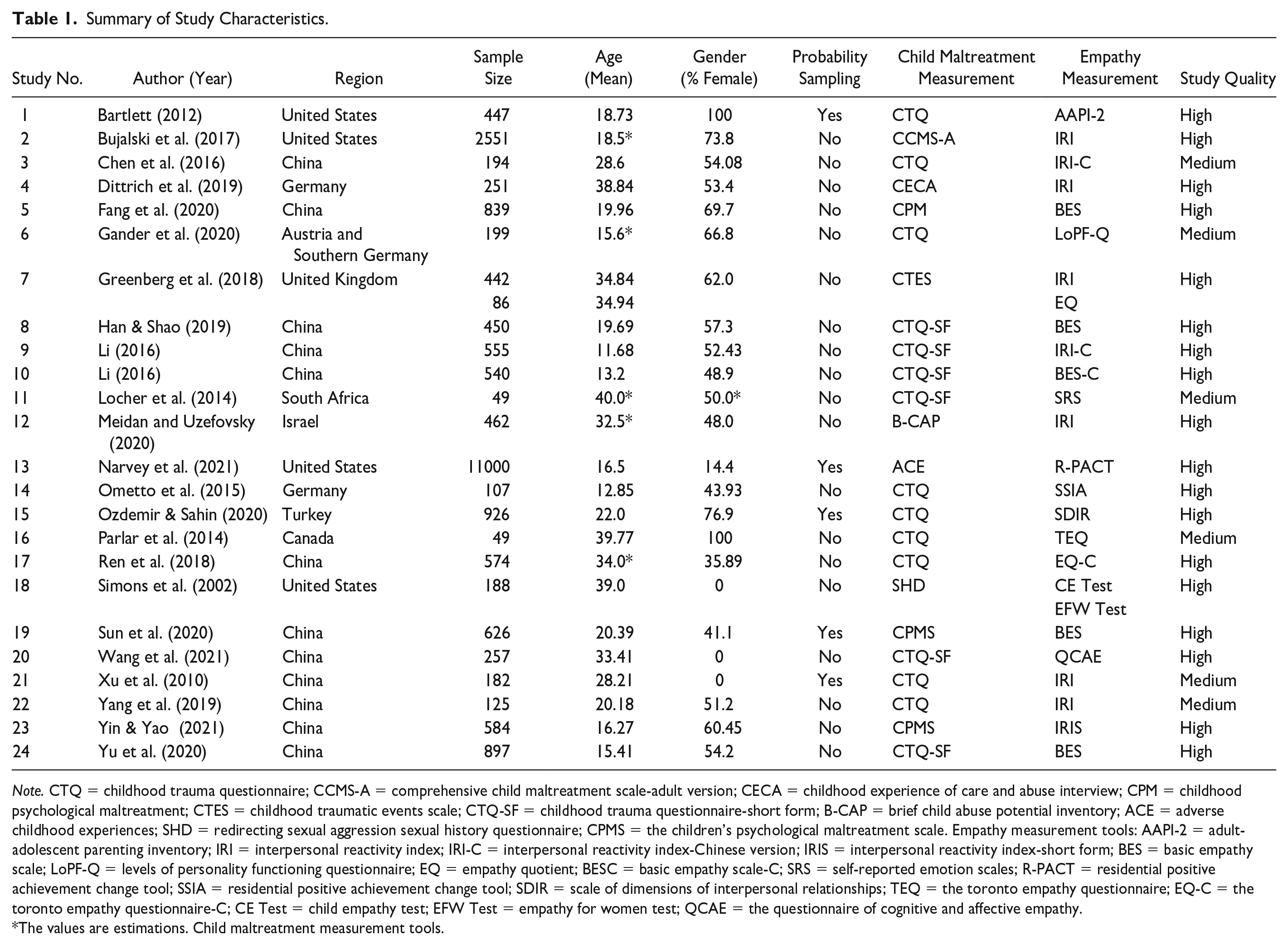
Note. CTQ = childhood trauma questionnaire; CCMS-A = comprehensive child maltreatment scale-adult version; CECA = childhood experience of care and abuse interview; CPM = childhood psychological maltreatment; CTES = childhood traumatic events scale; CTQ-SF = childhood trauma questionnaire-short form; B-CAP = brief child abuse potential inventory; ACE = adverse childhood experiences; SHD = redirecting sexual aggression sexual history questionnaire; CPMS = the children’s psychological maltreatment scale. Empathy measurement tools: AAPI-2 = adult-adolescent parenting inventory; IRI = interpersonal reactivity index; IRI-C = interpersonal reactivity index-Chinese version; IRIS = interpersonal reactivity index-short form; BES = basic empathy scale; LoPF-Q = levels of personality functioning questionnaire; EQ = empathy quotient; BESC = basic empathy scale-C; SRS = self-reported emotion scales; R-PACT = residential positive achievement change tool; SSIA = residential positive achievement change tool; SDIR = scale of dimensions of interpersonal relationships; TEQ = the toronto empathy questionnaire; EQ-C = the toronto empathy questionnaire-C; CE Test = child empathy test; EFW Test = empathy for women test; QCAE = the questionnaire of cognitive and affective empathy.
The values are estimations. Child maltreatment measurement tools.
Description of Study Characteristics.
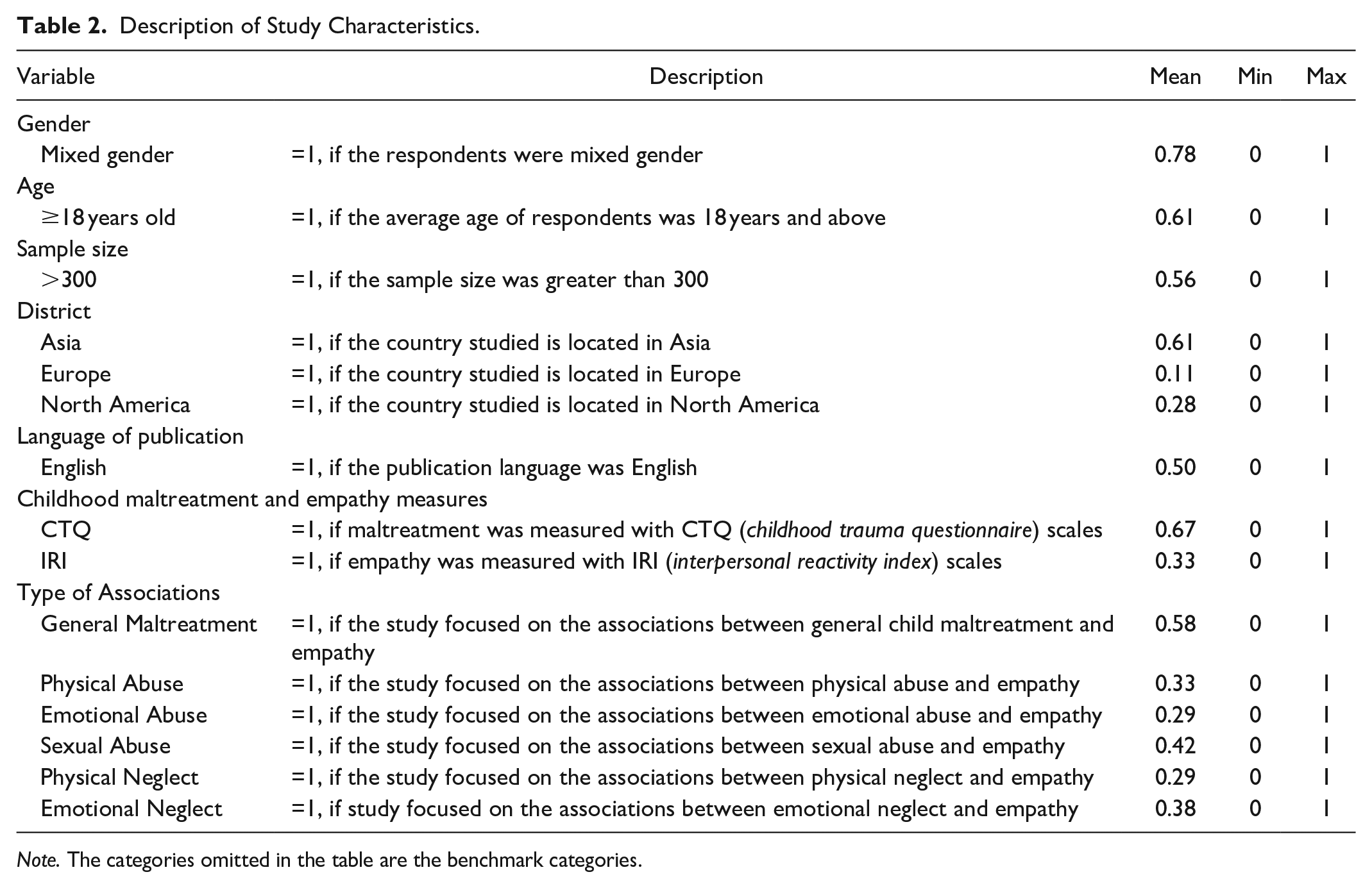
Note. The categories omitted in the table are the benchmark categories.
Associations Between Child Maltreatment and Empathy
The results of the associations between each subtype of child maltreatment and the different domains of empathy, including the number of estimates (n), mean effect size (
Pooled Effects of Effect Size and Heterogeneity from the Meta-Analysis.
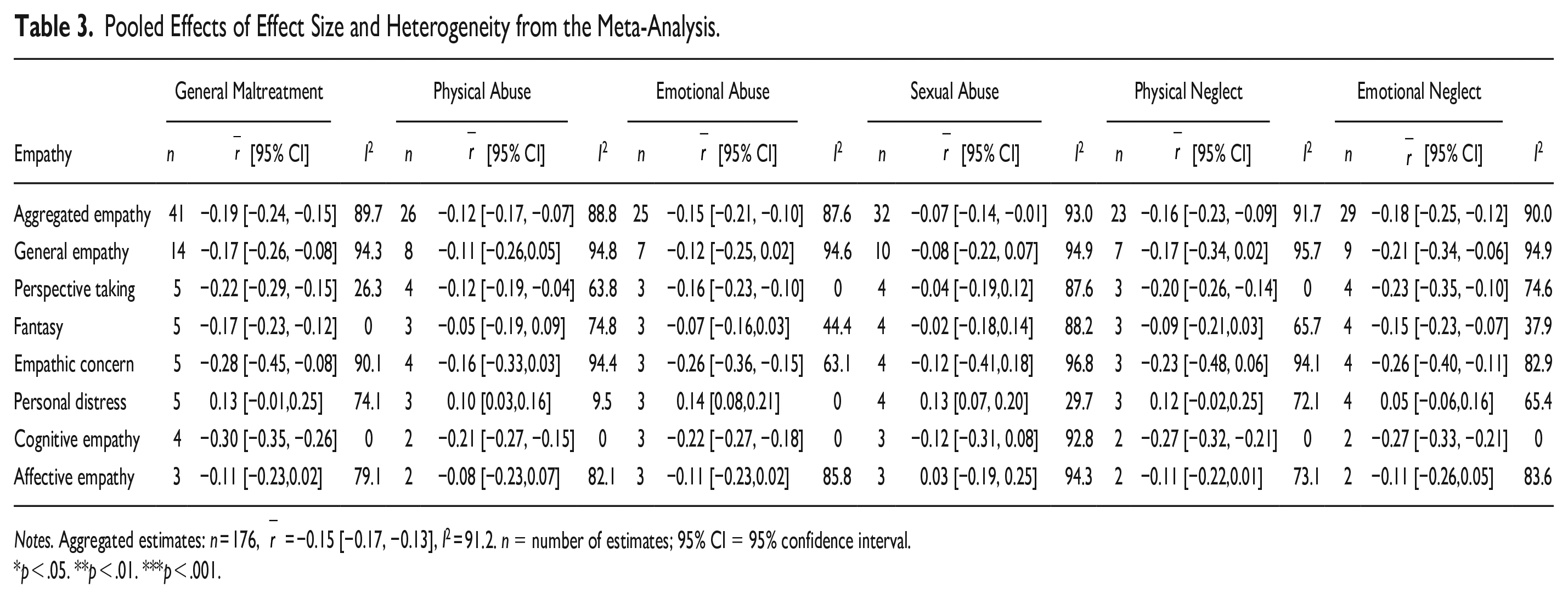
Notes. Aggregated estimates: n = 176,
p < .05. **p < .01. ***p < .001.
This analysis yielded the following results. Among the studies that examined the relationships between general maltreatment and empathy, all but four estimates reported negative correlations, and the pooled estimate was
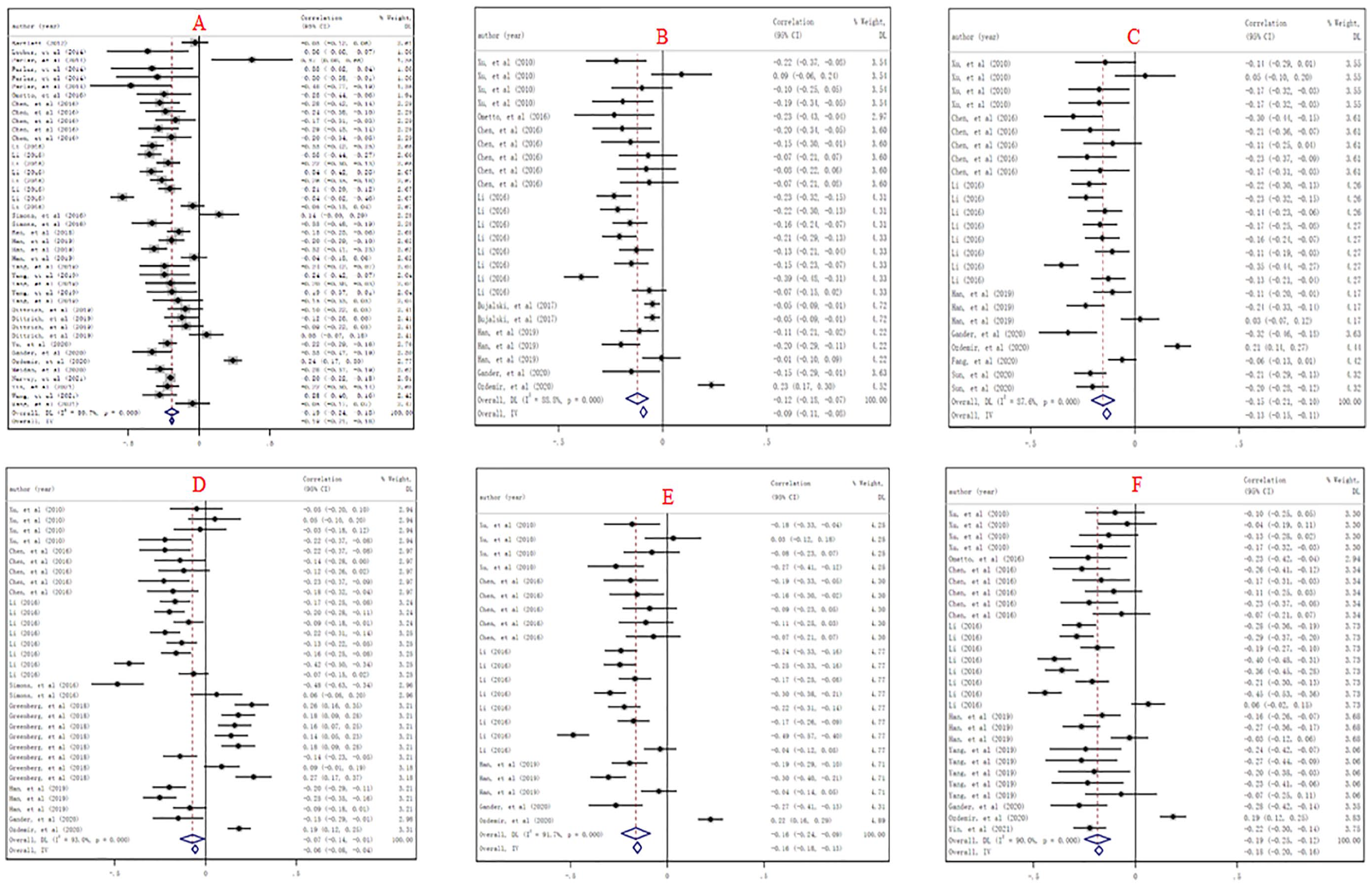
Forest plots of the associations between child maltreatment and empathy. The square shape and bar line represent the estimate of effect size and 95% CI for each study. The diamond shapes represent the pooled estimates of the effect sizes for different maltreatments. DL represent the total effect sizes of the outcome of the random effect models, IV represent the total effect sizes of the outcome of the fixed effect models: (A) Studies of general child maltreatment and empathy, (B) studies of physical abuse and empathy, (C) studies of emotional abuse and empathy, (D) studies of sexual abuse and empathy, (E) studies of physical neglect and empathy, and (F) studies of emotional neglect and empathy.
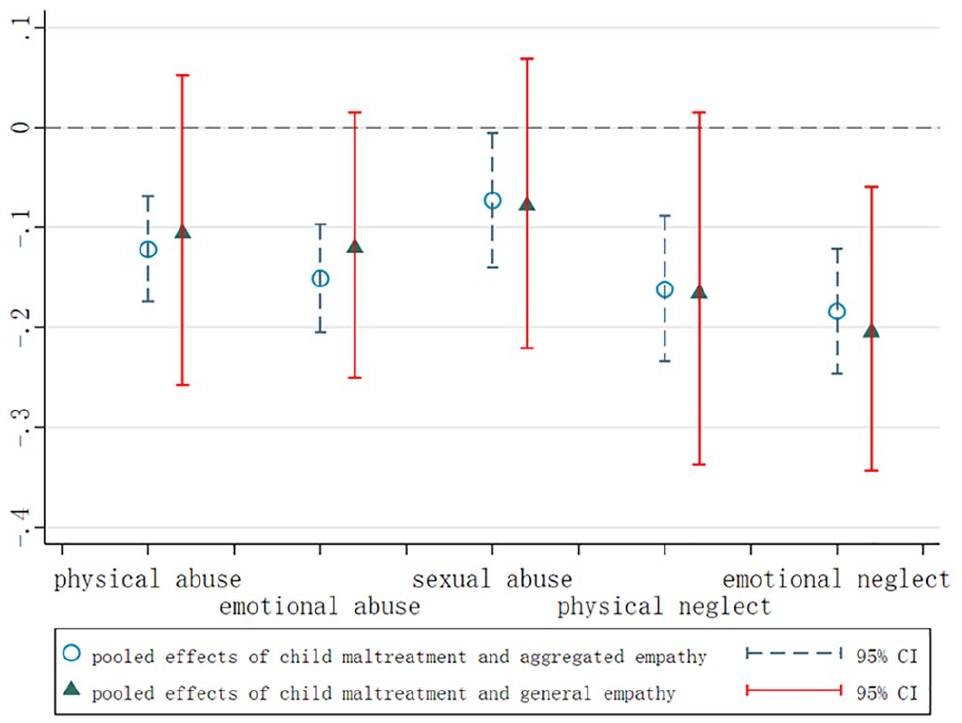
Pooled effects of effect size of child maltreatment and empathy (from Table 3).
In addition to the aggregated effects, the associations between the multi-facets of maltreatment and the separate aspects of empathy also showed differential features. In terms of the four dimensions of empathy, both general child maltreatment and its subtypes had stronger negative effects on empathic concern compared with the other dimensions. When empathy was divided into two dimensions, general maltreatment, child abuse, and child neglect were significantly associated with cognitive empathy but not affective empathy. It must be emphasized that these results should be considered with caution as the number of estimates included in each dimension of empathy was small (n ≤ 5) due to the different measures used in the studies.
Publication Bias
Publication bias occurs for many reasons. The key reason is selection bias, which typically favors estimates that are statistically significant and consistent with researchers’ and journals’ preconceived beliefs (Xue et al., 2020). Publication bias represents a serious challenge to the validity of meta-analyses: if the estimates in the literature are disproportionately large and significant, averaging them will preserve this bias, producing a distorted assessment of the mean true effect.
First, an informal funnel plot test was conducted to identify any publication selection bias. Figure 4 illustrates funnel plots of the estimated effects in our analysis. The dispersion at the top of each funnel, with the most precise estimates, is evidence of differences in the “true” effects across the analyzed studies. Judging intuitively, the funnel plots were generally symmetrical, with no serious publication bias exit.
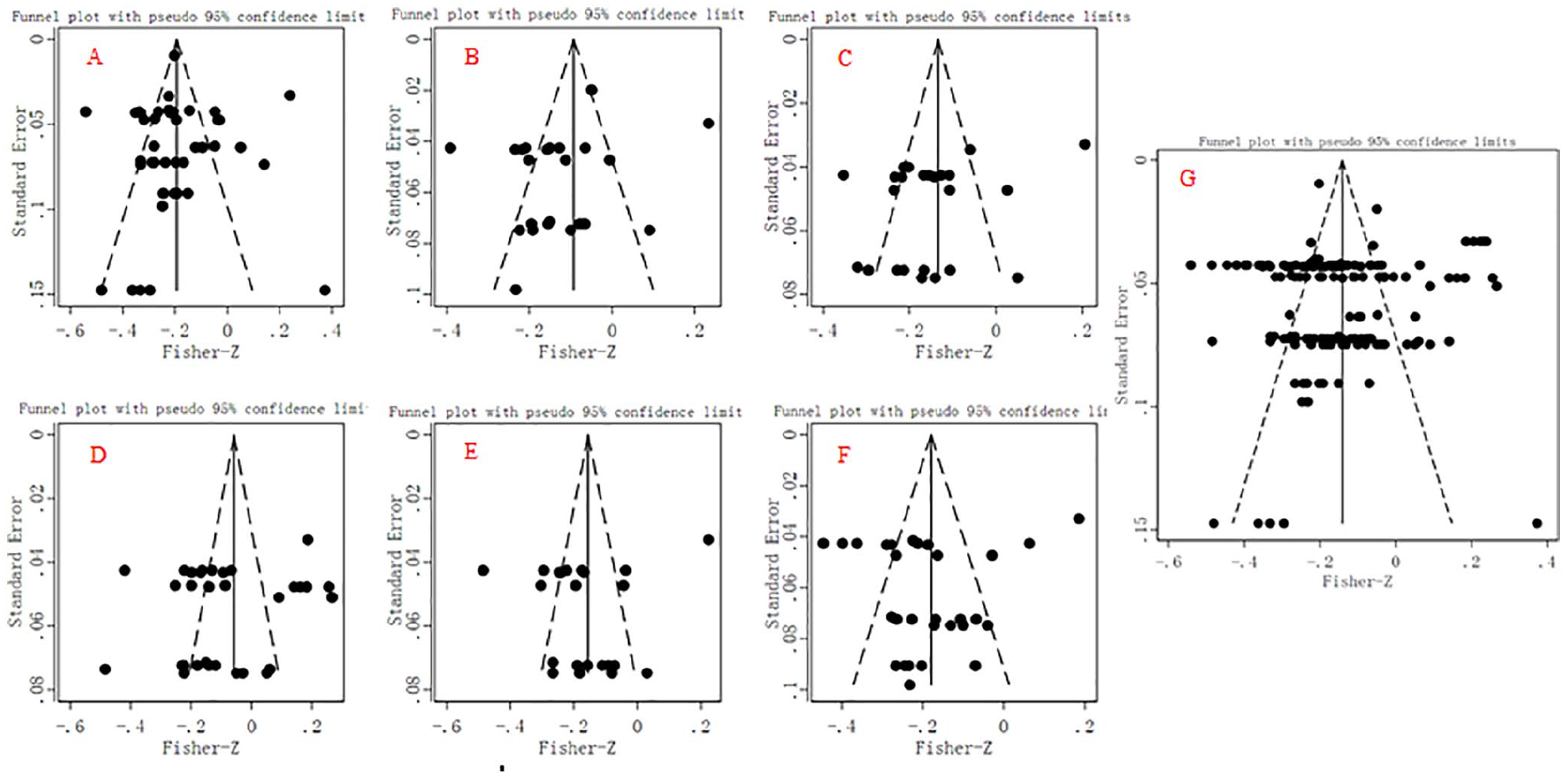
Funnel plots of the included studies. The hollow circles represent each study included in meta-analysis, and the dashed lines represent the symmetrical boundary: (A) Studies of general child maltreatment and empathy, (B) studies of physical abuse and empathy, (C) studies of emotional abuse and empathy, (D) studies of sexual abuse and empathy, (E) studies of physical neglect and empathy, (F) studies of emotional neglect and empathy, and (G) aggregated studies of child maltreatment and empathy.
Second, classic fail-safe N, Egger’s tests, and the trim-and-fill method were employed; none of them revealed any evidence of publication bias (see Table 4). The fail-safe N indicated that large numbers of unpublished studies would be required to reduce the mean effect size below the level of significance. This would be applicable for the relationships of empathy with general maltreatment (N = 9,333), physical abuse (N = 1,339), emotional abuse (N = 1,959), sexual abuse (N = 683), physical neglect (N = 1,723), emotional neglect (N = 371), and aggregated maltreatment (N = 92,338). To overcome the shortcomings of the funnel plot method, we used Egger’s linear regression test. The results were not significant, indicating that there was no publication bias in our meta-analysis. Finally, the trim-and-fill method did not identify any missing studies for these relationships.
Tests for Publication Bias.
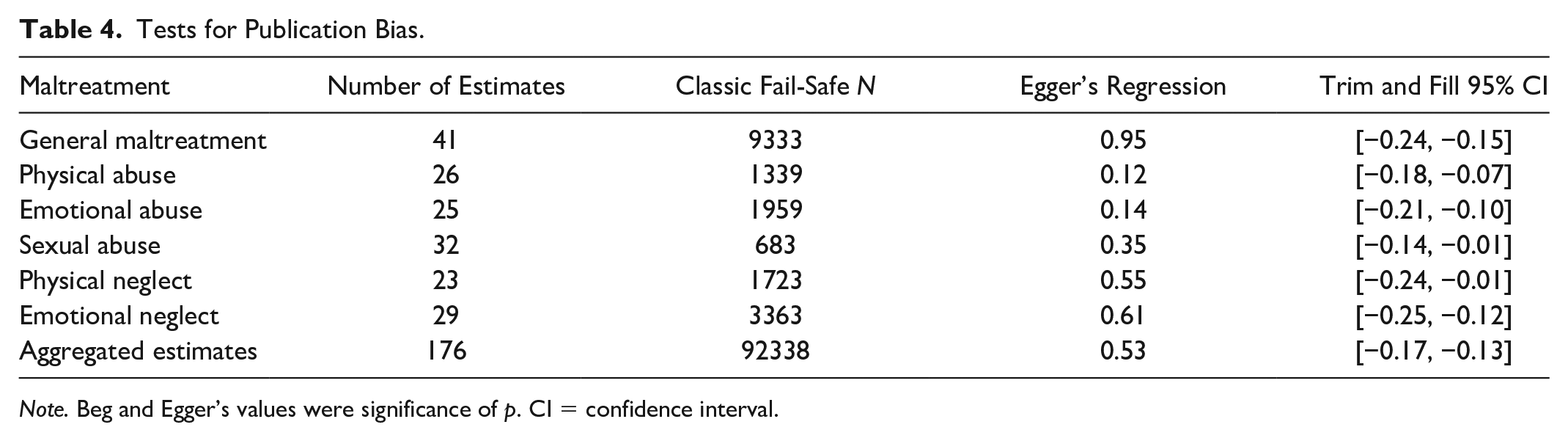
Note. Beg and Egger’s values were significance of p. CI = confidence interval.
Third, a commonly employed statistical test of publication bias is the FAT. Table 5 reports the FAT/PET results, with the FAT results reported on the first row and the PET results on the second. The first four columns report the various combinations of “FE”/“RE” and weighting by individual estimate (“Weight 1”)/weighting by study (“Weight 2”). In all four cases, we accept
FAT and PET.
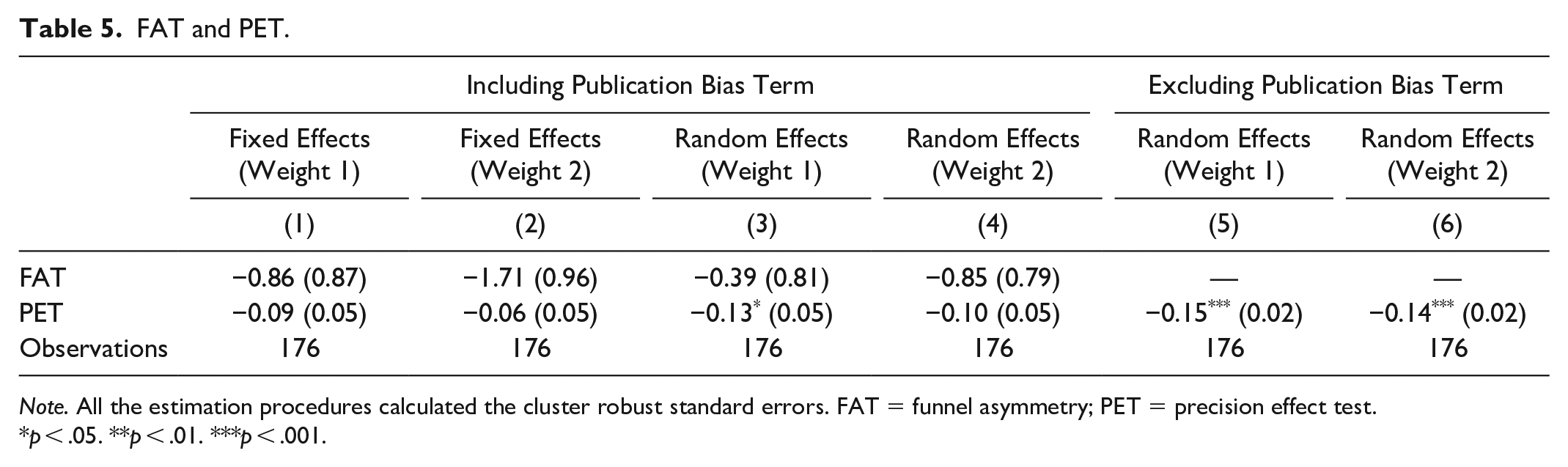
Note. All the estimation procedures calculated the cluster robust standard errors. FAT = funnel asymmetry; PET = precision effect test.
p < .05. **p < .01. ***p < .001.
In summary, the results shown in Table 5 suggest that the “small” effects of child maltreatment found in the analyzed literature were not biased by the publication selection process. Given the large number of studies, data, and estimation characteristics included in our dataset and the substantial heterogeneities among studies included in the meta-analysis (see Table 3), we proceeded with multivariate analysis.
Meta-Regression Analysis
In order to ensure the robustness of the results, a variety of specification tests through the following strategies were performed: First, we examined both fixed effects (FE) and RE models. Second, under each model specification, we explored the results weighted by different study weights (Weight 1 and Weight 2). Third, in each weighted model, we compared the results after including the publication bias term (SE) and omitting it. Thus, eight different estimation procedures were yielded. The meta-regression results are reported in Table 6; the included moderators are listed in Table 2. Due to missing values for different variables, the total number of observations from the meta-regression was 147.
Meta-Regression Analysis.
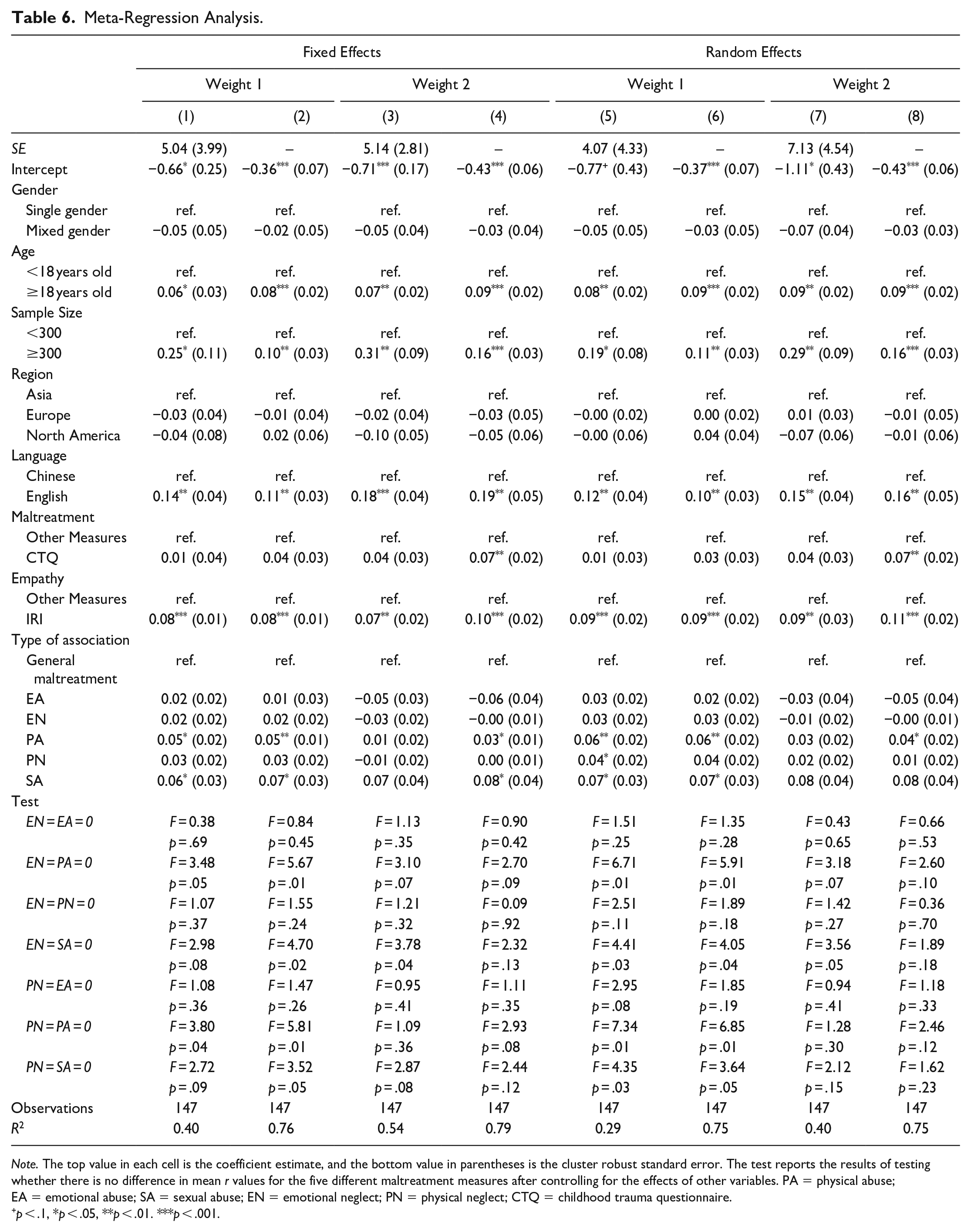
Note. The top value in each cell is the coefficient estimate, and the bottom value in parentheses is the cluster robust standard error. The test reports the results of testing whether there is no difference in mean r values for the five different maltreatment measures after controlling for the effects of other variables. PA = physical abuse; EA = emotional abuse; SA = sexual abuse; EN = emotional neglect; PN = physical neglect; CTQ = childhood trauma questionnaire.
p < .1, *p < .05, **p < .01. ***p < .001.
The first four columns report FE estimates, and the next four columns report RE estimates. It is to be noted that the SE terms (in Columns (1), (3), (5), and (7)) were positive and statistically not significant once the explanatory variables were included. In other words, the estimated coefficients suggest that the size of the publication bias was small, supporting the previous conclusion drawn from the results shown in Table 5. In comparisons between Columns (1)–(4) and Columns (5)−(8), the conditional mean effects (intercept) were all positive and statistically significant regardless of the weighting scheme and whether SE was included or not, indicating that there is a robust negative correlation between child maltreatment and empathy after strictly controlling the influence of publication bias and study characteristics.
As we proceed to our discussion of the other variables included in the meta-regressions shown in Table 6, we limit this discussion to those that were significant at the 5% level in at least four of the eight regressions. The respondents’ age and the studies’ sample sizes, publication language, empathy measurements as well as the type of relationships reported were identified as potential moderators that might have contributed to the heterogeneity.
First, the distribution of respondents’ age had a significant effect (β-values ranged from .06 to .09; all p-values were less than .05); that is, compared to adults, the adverse effects of child maltreatment on empathy were more obvious in children. Second, the negative effects of child maltreatment on empathy were relatively weaker in large samples (n ≥ 300) (β-values ranged from .10 to .31; all p-values were less than .05). Third, interestingly, articles published in English reported relatively weaker negative effects of child maltreatment on empathy (β-values ranged from .10 to .19; all p-values were less than .01). Fourth, compared with the results of other measures of empathy, the negative effects of child maltreatment on empathy were significantly weaker when using the IRI scales (β-values ranged from .07 to .11; all p-values were less than .01). Fifth, compared with general child maltreatment, physical abuse (β-values ranged from .01 to .06; six of the eight p-values were less than .05) and sexual abuse (β-values ranged from .06 to .08; five of the eight p-values were less than .05) had more negligible negative influences on empathy.
To verify the differences in magnitude of the relationships between subtypes of child maltreatment and empathy (see Table 3 and Figure 3), a series of F-test were conducted. After controlling for the effects of other variables, the findings demonstrate that compared with emotional neglect, physical abuse (F-values ranged from 2.60 to 6.71; four of the eight p-values were less than .05) and sexual abuse (F-values ranged from 1.89 to 4.70; five of the eight p-values were less than .05) have lesser negative influences; compared with physical neglect, physical abuse (F-values ranged from 1.28 to 7.34; four of the eight p-values were less than .05) and sexual abuse (F-values ranged from 1.62 to 4.35; three of the eight p-values were less than .05) also have more negligible negative influences. These results provide further evidence that emotional neglect and physical neglect generate more negative impacts on empathy than other types of maltreatment. In addition to the above variables, there was weak evidence that other variables included in the regressions had different estimated effects.
Discussion
Accumulating evidence has recently explored the associations between child maltreatment and empathy. Most studies have argued that child abuse and neglect are negatively associated with empathy. However, several contrasting studies have found that child maltreatment is associated with elevated empathy; therefore, these ambiguous findings require further investigation. In the present systematic review and meta-analysis, we synthesized 24 studies to assess the associations between childhood maltreatment and empathy. In general, the findings support those experiences of abuse and neglect during childhood are positively associated with reduced empathy in later life. Although no publication bias was determined, the heterogeneity among the analyzed studies cannot be ignored.
The findings of this meta-analysis suggest that, overall, child maltreatment is negatively associated with empathy, although the estimated effect size was small, which is consistent with most of the previous studies (Chen et al., 2016; Dittrich et al., 2019; Narvey et al., 2021; Yang et al., 2019). Social neuroscience research has revealed that child abuse and neglect can alter empathy-related brain structure (Decety & Michalska, 2010; Levy et al., 2019). Furthermore, attachment theory postulates that an empathic response is formed by the security provided by sensitive caregivers (Mikulincer et al., 2001; Schore, 2001), while abused and neglected children fail to gain psychological safety (Obsuth et al., 2014). As such, abused and neglected children find it considerably difficult to understand others’ mental states or resonate with other’s pain and distress (Fonagy & Luyten, 2009), which results in severe and long-lasting consequences for children’s cognitive and affective development (Currie & Widom, 2010).
Our findings also demonstrate that the estimated effect sizes between the subtypes of child maltreatment and cognitive empathy range from small to moderate. Specifically, emotional neglect and physical neglect are more likely to have destructive impacts on cognitive empathy than physical abuse and sexual abuse, which is consistent with previous research (Locher et al., 2014). Compared with those exposed to physical abuse and sexual abuse, neglected children may display impaired mentalization and unresponsive emotion regulation pattern during their daily interactions with primary caregivers, and thus fail to engage with the thoughts and feelings of others, which has been linked to poor cognitive empathy (Cummings, 1987; Fonagy, 2000). However, physical and emotional neglect are usually overlooked by governments and societies due to their invisible nature and have lagged behind physical and sexual abuse in terms of paediatric practice and training, resource allocation, and political priority (de Braal, 2010). The adverse effects of neglect on cognitive empathy deserve more academic and government’s close attention.
It was further found that neither general child maltreatment nor its subtypes are associated with affective empathy, regardless of the measures of empathy used, which is also consistent with previous findings (Davidov et al., 2013; Wang et al., 2021). Neuroscience and developmental psychology have suggested that affective empathy appears earlier, is involuntary, and relies on mimicry and somato-sensorimotor resonance between others and the self (Decety & Michalska, 2010; Uzefovsky & Knafo-Noam, 2016). Another plausible explanation may be that self-report measures might fail to identify child maltreatment during very early childhood due to the timing of the measurement or recall bias in previous studies.
However, cognitive empathy integrates higher-order cortical regions to understand others and can be trained through psychological interventions (Levy et al., 2019; Pfeifer et al., 2008). Previous studies have shown that the deficits in empathy caused by parental abuse and neglect can eventually lead to the formation of antisocial personalities in adulthood (Jovev et al., 2013) and even criminal behaviors (Docherty et al., 2018). Therefore, cognitive empathy intervention programs should also be implemented for children with a history of maltreatment.
It should be noted that a wide heterogeneity existed across the studies included in our review. First, the negative impacts of child maltreatment on empathy in children’s samples were more significant than those observed in adult samples. This confirms the attachment theory argument that early insecure attachment to primary caregivers can generate more negative influences on younger children (Bowlby, 1982; Levy et al., 2019). Second, measurement inconsistencies were a factor that influenced the association between child maltreatment and empathy. Specifically, compared with the use of IRI scales to measure empathy, the negative association between child abuse and empathy was stronger when adopting the BES and other scales. This may be because the BES is more inclusive than the IRI scales (Davis, 1983). Third, the sample size is another factor influencing the results on the impacts of child maltreatment on empathy, which may be associated with the low robustness of smaller sample sizes. Finally, the association between these two variables was more significant among the Chinese studies than the English studies after excluding publication bias. One plausible explanation is that most of the Chinese studies were based on clinical samples, and these patients are more likely to report more severe child maltreatment and empathy problems (Chen et al., 2016; Xu et al., 2010).
Study Limitations
The present study has several limitations that should be strengthened in future research. First, all the studies included in the analysis adopted a cross-sectional design; therefore, a causal relationship between child abuse and neglect and empathy cannot be inferred. Longitudinal designs should be adopted in future surveys of the impacts of child maltreatment on empathy. Second, there is no consistent measurement of empathy as well as child maltreatment, which may result in an overestimation or underestimation of the relationships between child maltreatment and empathy. Consequently, there is a great need for more reliable measurements of child maltreatment and empathy. Third, only a small number of studies were included under each dimension of empathy due to the different measures used; thus, the true relationship between child maltreatment and empathy may not have been revealed. Therefore, more studies are called for in this field.
Conclusion
This study contributes to our understanding of the negative impacts of child abuse and neglect on empathy, offering relatively reliable evidence to contradict the opposing arguments regarding this relationship. The results regarding the negative influence of child maltreatment on empathy vary depending on the age, sample size, publication language, empathy measurement, and maltreatment type. One important implication is that parents and caregivers should be equipped with scientific knowledge about the negative consequences of child abuse and neglect on empathy to prevent emotional abuse and neglect, allowing them to care for their children more sensitively, especially in the Chinese context. Furthermore, empathy enhancement programs should be designed and implemented as early as possible for those children who have suffered from child abuse and neglect to alleviate the long-term adverse impacts of child maltreatment.
Critical Findings of this Review
Childhood maltreatment is significantly and negatively associated with empathy.
Emotional neglect and physical neglect generate more negative impacts on empathy than other types of maltreatment.
The effects of child maltreatment on empathy vary depending on the age of respondents, sample size, publication language, empathy measurement, and maltreatment type.
Implications for Policy, Practice, and Research
Child protection policy should be given top priority by the government. Meanwhile, parenting programs that aim at child maltreatment prevention and intervention are urgently needed, especially in the Chinese context.
Empathy enhancement programs should be designed and implemented for individuals with a history of childhood maltreatment as early as possible.
More solid studies on the measurement of empathy are needed, and longitudinal designs in the causal relationship between child maltreatment and empathy should be adopted in future research.
Footnotes
Declaration of Conflicting Interests
The author(s) declared no potential conflicts of interest with respect to the research, authorship, and/or publication of this article.
Funding
The author(s) disclosed receipt of the following financial support for the research, authorship, and/or publication of this article: The research has been supported by Supported by National Social Science Fund of China (20ASH018).
