




Abstract
Research examining the prevalence and impacts of stalking on mental health professionals (MHPs) has grown over the last two decades. Yet only one previous review has been undertaken examining impacts on staff and focusing on clients as stalkers, with prevalence estimated between 10% and 13%. This systematic review sought to assess prevalence of stalking, and associated impacts and methods of coping reported by MHPs, irrespective of perpetrator type. The search included all healthcare professional groups working in a mental health setting, reported in English or with available translation. Secondary searches were conducted through references cited in primary papers. Of the 7,060 papers identified in five databases, 11 peer-reviewed papers met rigorous inclusion criteria and were quality appraised. Reviewed studies reported prevalence rates between 10.2% and 50%, with higher quality papers reporting a narrower band, 13.9% and 14.3%. However, substantial variability in stalking definitions, and quality of methodology precluded precise prevalence estimation. Participants within the included studies disclosed significant adverse impacts on confidence and competence at work as a consequence of their experiences. Staff invoked substantial workplace and lifestyle changes to mitigate impacts of stalking. However, studies revealed staff disclosed stalking by perpetrators other than clients, notably colleagues and intimate partners, as often or more frequently than by clients. Limitations of the included research and future directions are discussed.
Stalking is a complex phenomenon described variously in media and literature for hundreds of years. Yet the first legal intervention to address stalking was introduced in California as recently as 1990. Given that published literature affords little consensus concerning precise definition and legal definitions vary within and between countries, Pathé and Mullen’s (1997) definition is often prominent. They describe stalking as a constellation of behaviors in which one individual inflicts on another unwanted and repeated intrusions including: following or watching someone, writing letters, telephoning, cyber communication, unsolicited gifts and nuisance ordering, or cancelling of a victim’s services (Mullen et al., 2000). Many definitions, including legal, require victims to be fearful of their experiences, yet this requirement is contested given that stalking thus becomes the only violent crime requiring a victim to prove they experienced fear to prosecute (Dietz & Martin, 2007). Clarity in respect of stalking definition is also hampered by the nature of the phenomenon, as many acts of alleged harassment can, in isolation, represent societally sanctioned forms of courtship (e.g., telephone calls, messages, sending flowers). More consensus has emerged in defining stalking via perpetrator actions, characterized as unsolicited, persistent (despite instructions to desist), and potentially causing fear and distress in the victim or their loved ones. The victim’s perception of the behavior as threatening or unwanted is thus key (Emerson et al., 1998).
Prevalence of stalking in the general population has been measured in many developed countries. A meta-analysis reporting 175 studies of stalking noted lifetime prevalence rates for male victims of between 2% and 13%, and for female between 8% and 32% (Spitzberg & Cupach, 2007). A substantial proportion of stalking emerges from an existing relationship, driven by diverse motives and triggers, notably intimacy seeking, abandonment, relationship ending, reconciliation, infatuation, and jealousy (Harris, 2000; Meloy & Boyd, 2003; Nicastro et al., 2000), aggression or revenge (Dreßing et al., 2005; Meloy & Boyd, 2003), control and possession (Meloy & Boyd, 2003; Tjaden & Theonnes, 1998), or dispute (Harris, 2000; Meloy & Boyd, 2003). Stalking motive and the triggering event can influence the subsequent method of stalking, its severity, and duration.
Stalking appears most often perpetrated by male ex- and current intimate partners against female victims in the context of domestic violence (Harris, 2000; Spitzberg & Cupach, 2007), followed by service-related stalking, for example, those in helping professions. Components of abusive behaviour (a power differential, exaggerated sense of entitlement, justified coercion and abdicated responsibility) constitute “prescriptions or recipes for adequacy, competence and success in dominant masculine culture”, and reflect values that promote ownership, conquest and entitlement to power without a sense of responsibility for actions or potential harm done to others (Jenkins, 2009). A sense of entitlement to a relationship with another person, whether that be intimate or destructive, can be understood as a vital component of stalking behavior. Compounding this, cultural discourses in heteronormative courtship and gender expression also appear entrenched, with men encouraged to take a pro-active role in pursuit of relationships (Woźniakowska-Fajst, 2018). Discourses of romance and “true love” also discourage pursuers to respect “no” and instead hear “perhaps” or “maybe,” underpinning discourses of courtship potentially fueling stalking behavior and justifying perpetrator actions.
Impact of Stalking
The impact or consequences of stalking are also well documented, prominently “relational order effects” (Spitzberg & Cupach, 2007) privileging the emotional/physical toll on the victim, and the financial costs of trying to keep safe (e.g., moving to a new house or undergoing counseling). Second and third order effects refer to systemic impacts of the stalking campaign, with distal effects on loved ones and friends. Third order effects also encompass another person inadvertently becoming a target after helping a victim. Enduring effects on victims have been increasingly documented (L. J. Cox, 2006; L. Cox & Speziale, 2009; Johansen & Tjørnhøj-Thomsen, 2016), capturing the impact of protracted and evolving campaigns in which stalkers’ unpredictable activities elicit confusion and fear of ongoing threat.
Mental Health Professionals
Previous literature has emphasized that mental health professionals (MHPs) appear to be at greater risk of victimization despite evidence of lifetime prevalence rates being similar to that in the general population; for example, 24% prevalence in psychological therapists being stalked by former or current clients (Hudson-Allez, 2002), and 25.4% prevalence by clients in one UK NHS trust (Clarke et al., 2016). The sole previous review of stalking of MHPs by patients reported a 10% to 13% prevalence rate (Galeazzi & De Fazio, 2006), which the authors noted as difficult to establish given varying definitions used within research. This review also focused specifically on clients who stalk, potentially underestimating prevalence through excluding professionals stalked in the context of intimate relationships or by other means. Further exploration seems warranted to understand whether MHPs are in fact at greater risk of stalking than the general population.
A widely accepted explanation for stalking behavior draws on attachment theory (Meloy, 1998) construing stalking as a maladaptive response to social incompetence, loneliness, and isolation (Meloy, 1995). Indeed, case histories of 25 stalkers reveals significant evidence of loss or disruption of early relationships, or abusive experiences from primary caregivers (Kienlen et al., 1997), with the vast majority disclosing psychosocial stressors in the 7 months prior to stalking beginning (via relationship break-up, losing employment, or potential loss of a child). Some stalkers may thus seek to repair attachment distress and recent stressors through fantasy relationships, via inappropriate maintenance of a lost relationship, or preventing further loss of power and control. Those offering therapy may inadvertently maintain stalking behavior through sustained empathetic engagement (Farber, 2015). Where therapy seeks to provide a consistent and healthy attachment relationship, perhaps one of the first available to a stalker and with which they are unwilling to part, aspects of therapy may render a MHP more vulnerable.
The impacts of stalking for MHPs are less well-established than in the general population. Galeazzi and De Fazio’s (2006) review discloses the emotional toll of stalking by clients, with 70% of participants across 22 studies reporting anger, anxiety and helplessness, alongside practical consequences such as changing routines, losing income, and changing jobs. Participants sought support from colleagues and friends, with up to 40% reporting their experiences to police. It is important to understand the risk of stalking from client populations, and from other relationships resulting in stalking, to develop management plans and service provision affording adequate support in the workplace.
This review aims to build upon Galeazzi and De Fazio’s (2006) review by assessing the prevalence of stalking in MHPs, the types of relationship between MHP and their stalker, and the psychosocial impacts of stalker behavior.
Method
A research protocol was prepared specifying the focus of the review, its scope and aims, specifying search terms, data extraction, and quality appraisal. International standards of reporting in systematic reviews were met by reviewing standards recommended by Preferred Reporting Items for Systematic Reviews and Meta-Analyses (PRISMA; Moher et al., 2009).
Identification of Papers
Given the tentative consensus around stalking, an initial scoping review of the literature focused on three areas: how impact is described and measured in published literature, healthcare professional roles, and how stalking has been operationalized. Impact comprised consequences defined as both emotional (such as feelings of anger, fear, or distress), cognitive (e.g., loss of confidence), and physical (changes made to behaviors/routine because of experiences, e.g., support seeking from police or workplace). Specific emotional and physical responses such as anger, anxiety, and avoidance were not used within the titles or tags of papers since they elicited numerous irrelevant search results focused on the study of emotions, so adopting broader search terms to identify the emotional impact of stalking, to include impact, experience, and effect, ensured relevant papers were not omitted through premature specificity. A full list of search terms is available upon request.
The search included all healthcare professional groups working in a mental health setting, reported in English or with available translation. Secondary searches were conducted through references cited in primary papers. Five electronic databases were searched between October 25th and November 1st 2020 to understand the impact of stalking on healthcare professionals: Medline, PsychInfo, AMED, Web of Science, and Criminal Justice Abstracts. Searches were repeated in April 2021 to ensure all relevant papers were identified. Databases selected were those offering citations of research in the fields of social science and psychology broadly, as well as those containing forensic or criminology resources.
Criteria for inclusion comprised: peer-reviewed publication examining the physical and/or emotional impacts of stalking on healthcare professionals, papers published between 2000 and the search dates, and consistency with legal definition embedded since the introduction of the Protection from Harassment Act (1997) in the United Kingdom. Papers were excluded if their focus was exclusively on the pathology of stalkers or prevalence of stalking, without addressing the impact on healthcare workers.
Initial reviewing sought to incorporate both quantitative and qualitative research; however, the initial scoping review revealed very limited qualitative research, which was deemed to be of insufficient quality or didn’t focus on impact or prevalence; hence our review includes only quantitative research.
Quality Appraisal
An explicit appraisal process sought to assess quality rather than exclude selected papers. The cross-sectional design of all included papers argued for use of the Appraisal tool for Cross-Sectional Studies (AXIS; Downes et al., 2016) and it considers risk of bias from quality of design as well as of reporting (Downes et al, 2016). The AXIS focuses on providing a framework to assess quality of reporting, study design, and assessing potential bias (Kiss et al., 2018). A total score for each paper has been included in Table 1 to provide an indicator of quality.
Quality Appraisal Ratings Using the Appraisal Tool for Cross-Sectional Studies (AXIS; Downes et al., 2016).
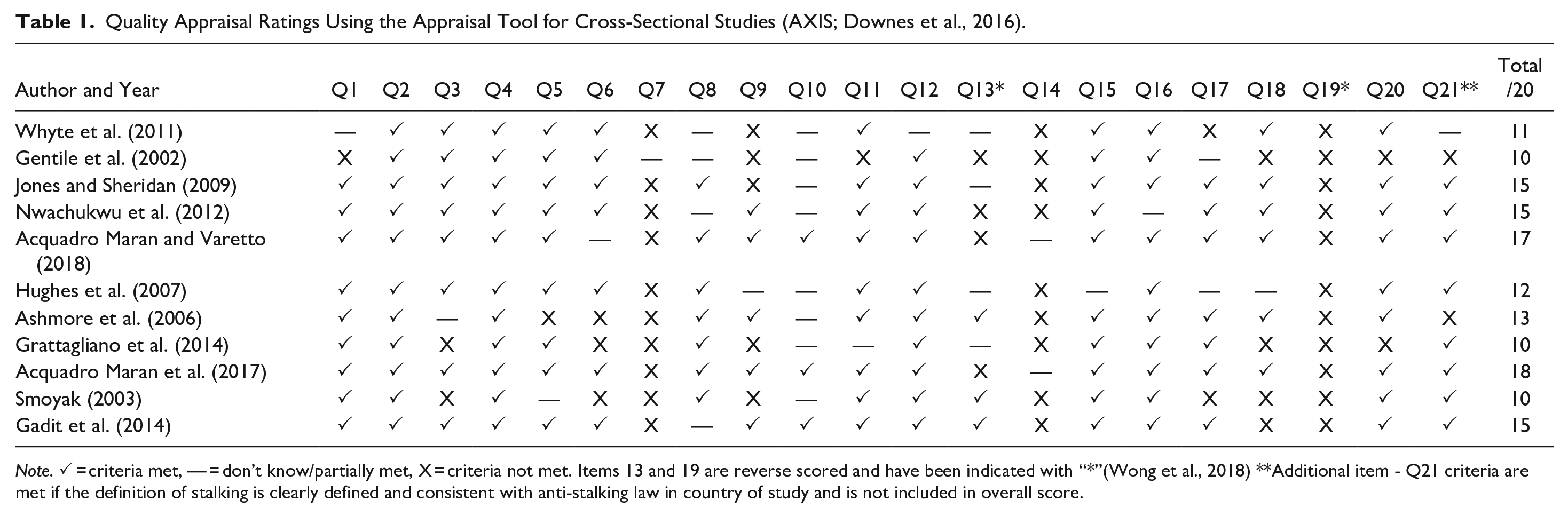
Note. ✓ = criteria met, — = don’t know/partially met, X = criteria not met. Items 13 and 19 are reverse scored and have been indicated with “*”(Wong et al., 2018) **Additional item - Q21 criteria are met if the definition of stalking is clearly defined and consistent with anti-stalking law in country of study and is not included in overall score.
As noted, a previous review acknowledged the diversity of definitions of stalking employed, and that studies applying less stringent definitions reported higher rates of stalking (Galeazzi & De Fazio, 2006). Our review therefore added a question to the quality appraisal tool for this review to determine whether stalking was defined, and if so, that the definition was consistent with the legal definition in the country in which the study was undertaken.
Results
Literature Search
A total of 7,060 papers were identified in the literature search and imported to RefWorks reference management software. Duplicate papers (120) were removed, and titles and abstracts of non-duplicate articles (n = 6,940) were then assessed for relevance according to inclusion criteria. After exclusions (n = 6,906), 34 full-text articles remained to be assessed, with 11 papers remaining for systematic appraisal (see Table 2). See Figure 1 for a flowchart describing the literature search process.
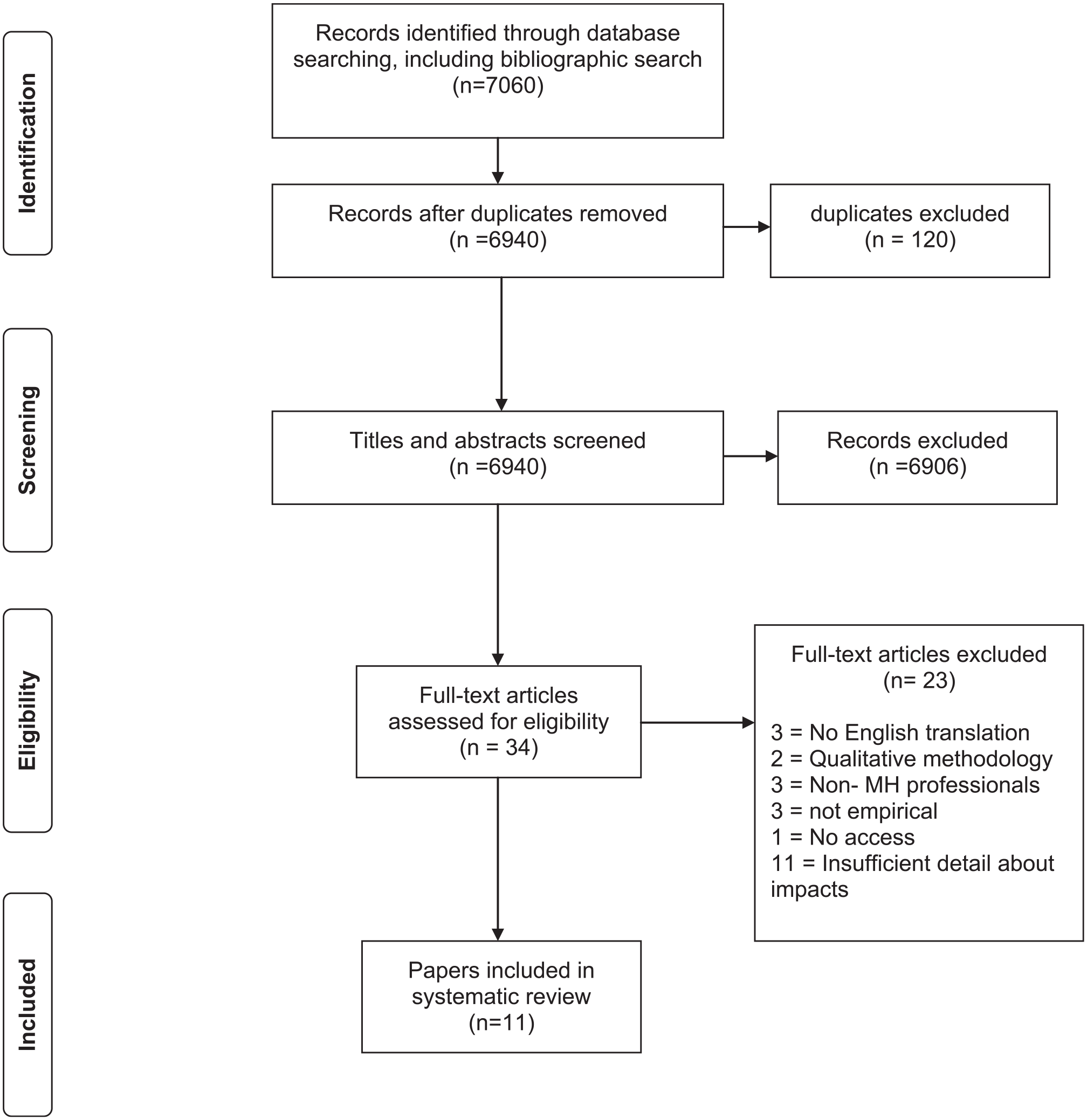
PRISMA flowchart of systematic review process (Moher et al., 2009).
Summary of Critical Findings.
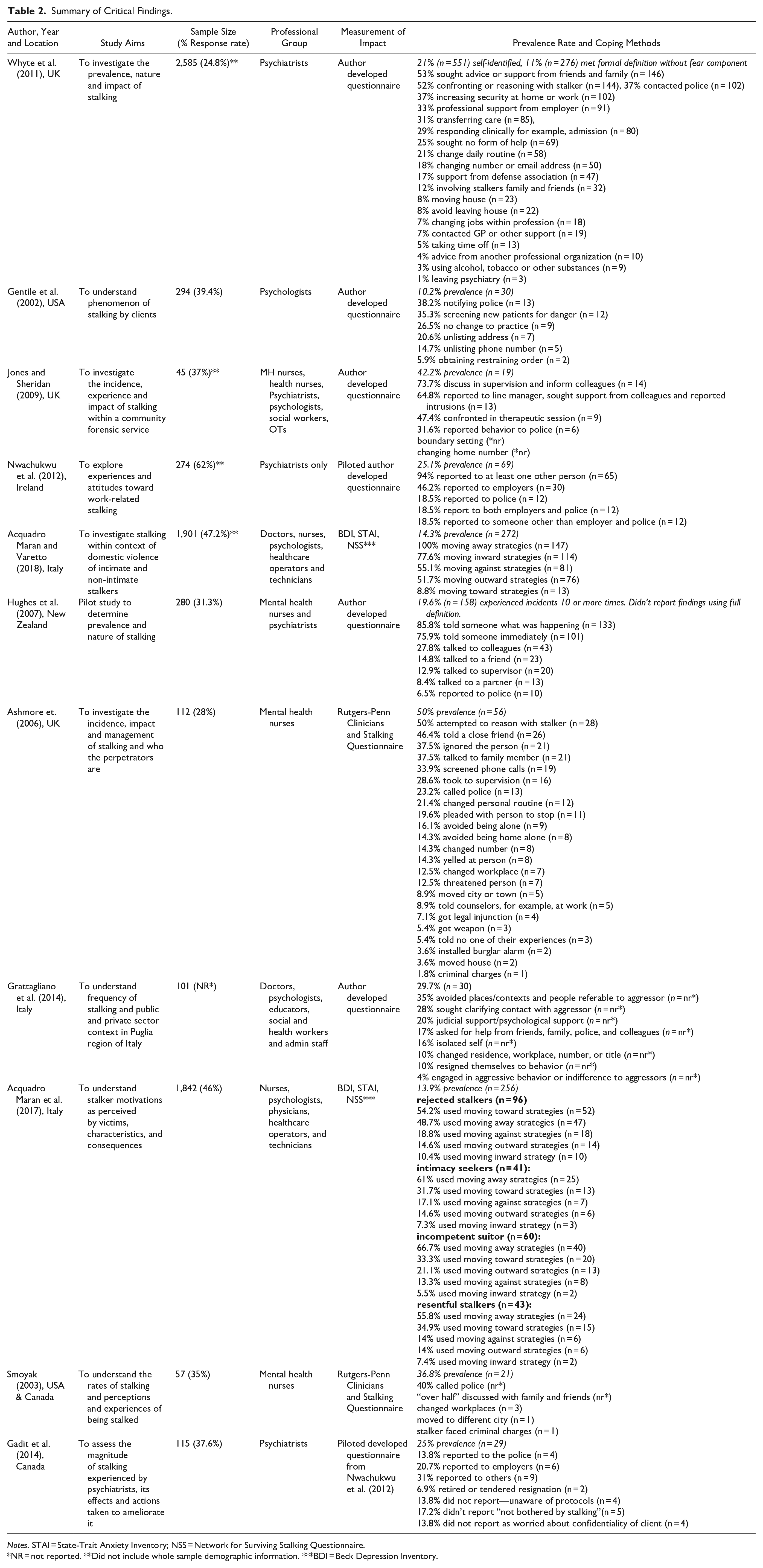
Notes. STAI = State-Trait Anxiety Inventory; NSS = Network for Surviving Stalking Questionnaire.
NR = not reported. **Did not include whole sample demographic information. ***BDI = Beck Depression Inventory.
Study Characteristics
A total of 7,606 participants took part in surveys across the 11 studies. Demographic data for total samples were not reported by four papers (Acquadro Maran & Varetto, 2018; Jones & Sheridan, 2009; Nwachukwu et al.,2012; Whyte et al., 2011), who instead published demographics of only those who identified as having been stalked. Of the studies including whole sample demographics, most respondents were female (see Table 2). Most studies were conducted in Europe: three studies reporting on United Kingdom populations, three in Italy, one in Ireland, one in New Zealand, and three in North America. The range of professions examined included psychiatrists, mental health nurses, psychologists, social workers, and occupational therapists.
All studies used self-report measures to establish impact of stalking on MHPs. Two papers from Italy utilized established measures of distress such as the Beck Depression Inventory (BDI; Beck et al., 1961) and State-Trait Anxiety Inventory (STAI; Spielberger, 1983). Ashmore et al. (2006) used the Rutgers-Penn Clinicians and Stalking questionnaire which was developed by another included study (Smoyak, 2003) and Gadit et al. (2014) adapted and re-piloted the questionnaire used by Nwachukwu et al. (2012). The remaining studies designed their own tailored questionnaires, with varying degrees of transparency in reporting processes of construction and content of questions.
Methodological Quality
Included studies varied in quality of methodology and reporting. The AXIS tool is a 20-item checklist and uses seven questions to assess the quality of reporting, six assessing the possible introduction of bias and seven on quality of the study design (Downes et al., 2016). All questions require a “yes,” “no,” or “don’t know” answer. The AXIS is not designed to provide an overall quality score; however, previous research has indicated a score of 16 or above suggests high-quality research (Henderson et al., 2019; Wong et al., 2018). On this basis, two of the ten included studies met this threshold (Acquadro Maran & Varetto, 2018; Acquadro Maran et al., 2017). A random selection of four papers were appraised by a second rater as a measure of reliability with a Kappa test of agreement showing good agreement, κ = .692, p = .002. The three areas of assessment outlined will be summarized in turn (see Table 1).
The quality of reporting (questions 1, 4, 10, 11, 12, 16, and 18) varied across the studies. All studies except one reported a clear aim, which stated a broad aim of understanding “the potential seriousness” of stalking of psychologists by obtaining information about their experiences (Gentile et al., 2002). The target population was well defined and reported in all studies. Quality of reporting was weaker in respect of conclusions drawn and discussion of findings, and four studies did not sufficiently acknowledge the limitations or generalizability of their findings (Gadit et al., 2014; Gentile et al., 2002; Grattagliano et al., 2014; Smoyak, 2003).
The quality of method (questions 2, 3, 5,8,17, 19, and 20) also varied across studies; however, assessing quality of methodology was hindered by quality of reporting. A cross-sectional survey design was an appropriate design for all the studies’ reported aims. No studies reported power calculations to inform necessary sample size and one of the studies had a relatively small sample size, given their aim to establish prevalence of stalking phenomena (Smoyak, 2003). Two studies used convenience samples at nursing conferences and failed to acknowledge this as a source of bias, given such attendance may reflect a specific subset of the profession holding managerial positions or carrying additional responsibilities (Ashmore et al., 2006; Smoyak, 2003). Two of the studies did not report seeking or being granted ethical approval (Gentile et al., 2002; Grattagliano et al., 2014), and four of the included studies did not explicitly report how participants were asked about the impact of stalking on them (Gadit et al., 2014; Grattagliano et al., 2014; Hughes et al., 2007; Whyte et al., 2011). This lack of transparency in reporting makes it difficult to establish how authors determined stalking consequences to be included in their questionnaire, and/or whether questions were based on previous research. Nwachukwu et al. (2012) undertook a review to inform questions asked of participants and piloted the questionnaire with 10 psychiatrists, which was repeated by Gadit et al. (2014). Two of the studies used the Network for Surviving Stalking Questionnaire. The remaining studies appear to assess impact via either open questions such as “How did the stalking impact you?” or cued endorsements from author-generated lists of potential impacts.
The final question added to the AXIS assessed the definition of stalking, and it’s fit with the anti-stalking legislation of a country’s jurisdiction. A list of the definitions of stalking used can be requested from the authors. All selected studies referenced a formal definition of stalking in the introduction; however, operationalization of stalking within studies varied, with only nine studies explicitly defining stalking. Gentile et al. (2002) elected to use “obsessional following” (Meloy & Gothard, 1995), described as a clinical definition of stalking, to address a difference between the clinical population of clients who stalk their clinicians and those who stalk within the general population. One study used no formal definition, rather requiring respondents to self-report whether they had felt they had been stalked (Ashmore et al., 2006). Amar (2007) explored self-identified rates of stalking in college students and compared this with the legal definition of stalking, in particular the dimension of fear, finding rates of self-identification were significantly higher than those meeting the legal definition of stalking. The use of specific definitions or self-definition requires careful consideration when attempting to measure stalking prevalence.
The risk of the introduction of bias (6, 7, 9, 13, 14, and 15) was assessed as poor across most of the studies. Several of the studies used whole populations to draw a sample: for example, Whyte et al. (2011) sent the survey to all members of the Royal College of Psychiatrists. Whilst some studies reported a high response rate and larger sample sizes, all failed to adequately describe non-responders. No study reported funding sources or conflicts of interest which may affect their interpretation, and two studies failed to adequately describe the ethical approval process.
Prevalence
Prevalence rates reported within the included studies vary between 10.2% and 50% (see Supplemental Appendix C) and appear affected by several factors, notably the stringency of the definition used (Amar, 2007), sample size, and source of participant recruitment.
Four papers were deemed to report a sufficiently large sample to allow inferences about population prevalence. Of these, two used census methods to establish prevalence (Nwachukwu et al., 2012; Whyte et al., 2011). Whyte et al. (2011) reported 21% of UK psychiatrists self-identifying as having been stalked (n = 551) and 11% (n = 276) of respondents as meeting Mullen’s definition (Mullen et al., 2000). Nwachukwu et al. (2012) reported a prevalence of 25.1% (n = 69) in psychiatrists in Ireland based also on Mullen and colleagues’ definition. Acquadro Maran et al. (2017) reported a prevalence of 13.9% (n = 256) in Italian hospitals, using their legal definition of stalking and a definition outlined by Galeazzi and Curci (2001). Gentile et al. (2002) reported a prevalence of 10.2% (n = 30) in psychologists in state jurisdiction in California stalked by clients only using a clinical definition of obsessional following (Meloy & Gothard, 1995). None of the studies found a significant difference in prevalence across professional groups.
Who Stalks?
Two papers chose to focus on stalking by clients exclusively (Gentile et al., 2002; Jones & Sheridan, 2009), asserting stalkers to be as likely female as male. Hughes et al. (2007) compared their client group with stalkers with a different relationship to the victim, for example, colleague or ex-partners, and reported that those clients stalking had an evenly split gender distribution: 33 women (47.1%) and 32 men (45.7%), whereas non-client stalkers were more often male (73.7%, n = 56). In the general population, women are stalked at significantly higher rates than males; Tjaden and Thoennes (1998) and Acquadro Maran and Varetto (2018) focusing on stalking in the context of interpersonal violence, found that those who self-identified as being stalked (14.3%, n = 272) identified significantly more often as female than male. This may suggest that the motivation of the stalking influences the gender breakdown of victims and of perpetrators; however, included papers did not contextualize their findings regarding the samples’ gender breakdown, potentially skewing rates reported. Assertions regarding who is more likely to stalk appeared complicated by unequal samples of genders within papers; therefore, a chi-squared test of goodness of fit was employed to further examine gender distribution, excluding one paper since participant count in one cell was too low (Smoyak, 2003). Of the remaining studies, three samples’ gender proportions significantly differed (Acquadro Maran et al., 2017; Acquadro Maran & Varetto, 2018; Grattagliano et al., 2014). Papers which focused more broadly on stalking experiences revealed clients comprised only a minority of those who stalk Healthcare Professionals. Ashmore et al. (2006) reported that service users constituted 31.4% of stalkers (n = 22), 22.9% were colleagues, specifically other mental health nurses (n = 16), and 20% were former partners/spouses (n = 14). Similarly, Smoyak (2003) reported a third of stalkers were current/former clients, one-third were strangers, 19% were former partners, and 9.5% were non-work-related acquaintances. Grattagliano et al. (2014), categorizing relationships to the stalker by gender of victim, found that male HCPs were stalked by colleagues and superiors at a lower rate (3%) than female HCPs (15%). Such findings emphasize the importance of not construing stalking as solely perpetrated by pathologized client groups, as evidence suggests that a significant threat comes from colleagues.
Emotional, Cognitive, and Physical Impact of Stalking
Given the limited consensus on evaluating the impact of stalking, we organized data from included studies in relation to cognitive, emotional, or physical impact of stalking (see Supplemental Appendices) and by most to least endorsed statements in each study.
Two studies used established measures of distress (Acquadro Maran & Varetto, 2018; Acquadro Maran et al., 2017): the BDI (Beck et al., 1961) and STAI (Spielberger, 1983) to establish the impact of stalking on participants’ mood. Acquadro Maran et al. (2017) used the measures to assess participants’ self-reported distress, based on the perceived motivation of the stalker, that is, rejected, intimacy seeker, incompetent, or resentful, and found no significant difference between victims of different classifications of stalker, and mild levels of anxiety and depression in the overall participant scores. Acquadro Maran and Varetto (2018) similarly used the measures to investigate the psychological consequences of stalking, but within the context of domestic violence. Comparing scores by gender revealed females both more likely to “reach the cut off for moderate anxiety (STAI-Y2)” and experience symptoms of depression than males. Diagnostic measurement of distress appears favored in research; however, it provides little information about the emotional experience of being stalked.
The remaining studies listed identified impacts, outlining percentage incidence of each (see Supplemental Appendices). Studies predominantly identified professionals’ fear, anger, and anxiety, as well as reduced confidence and perceived competence contingent on their experiences. Whilst cognitive and emotional reactions experienced were positively evidenced, studies did not report potential absence of negative effects or disclosed post-traumatic growth.
Two papers did attempt to capture the temporal dimension of stalking, asking people whether they had felt more or less of an emotion since the stalking campaign (Ashmore et al., 2006; Smoyak, 2003). Ashmore et al. (2006) reported that 46.4% participants were significantly more anxious, 35.7% reporting increased anger, and 28.6% reported feeling significantly less outgoing. Two studies appeared to ask participants if they experienced no symptoms since the stalking campaign (Acquadro Maran et al., 2017; Gentile et al., 2002) and one acknowledged possible positive outcome from stalking like feeling “less shy” or “more competent” (Ashmore et al, 2006). No paper adequately captured the interactional nature of stalking, and a potential artefact of the largely cross-sectional designs is an inability to capture the effect of time and accumulation of trauma on the stalking impact (Spitzberg & Cupach, 2014).
Physical impacts of stalking were largely categorized in the same manner as emotional and cognitive, with a list of physical impacts and percentage prevalence of each. All studies reported fewer physical impacts than emotional, a likely reflection of a dearth of specific questions about physical effects. Whyte et al. (2011) asked only generally if health had been impacted. Two studies did however acknowledge wider relational order effects, including the impact of stalking on relationships, although reporting appeared very circumscribed when compared to studies in the general population (Ashmore et al., 2006; Nwachukwu et al., 2012). In Nwachukwu et al.’s (2012) study, 34.7% (n = 24) of participants reported a negative impact on their partner or family. Additionally, Ashmore et al. (2006) reported 10.7% (n = 6) of participants lost friends because of stalking. The relative absence of focus in this area is notable, since if support networks are diminished because of stalking, isolation may flourish and capacity to cope may be adversely affected.
Coping and Management
The strategies employed by participants reported in included studies were collated and structured according to an existing framework describing stalking in the general population which organizes behaviors into five coping methods (see Supplemental Appendices; Spitzberg & Cupach, 2014): Moving Toward/With (Any discursive efforts to engage with the pursuer, e.g., reasoning, arguing, yelling), Moving Against (Any intentional act to cause harm, injury, or damage to pursuer, e.g., physically attacking, filing charges, attempting to damage career), Moving Away (Any act or effort to avoid contact with pursuer, e.g., changing phone number, address, changing routines), Moving Inward (Effort to repair, empower or focus on self, e.g., therapy, taking drugs, preparing for encounters like carrying weapons) and Moving Outward (Seeking assistance or guidance from others, e.g., speaking to friends, family, colleagues).
Included studies reported 38 coping strategies. In studies focused on stalking by client populations, most frequently endorsed methods of coping comprised “moving outward,” then “moving toward/with,” and then “moving away”; this corresponds to MHPs’ seeking out colleagues along with managerial and clinical supervision structures, and addressing therapeutic ruptures with the client (Safran, 1993). By contrast, the strategies reported in the study which focused on MHPs stalked within broader interpersonal violence, appeared the obverse. Acquadro Maran and Varetto (2018) reported 100% of participants used “moving away” strategies, 77.6% used “moving inward,” and 55.1% used “moving against” strategies. This difference alerts to the importance of understanding the context in which stalking occurs, rather than an exclusive focus on professional groups.
In the sole paper acknowledging an interactional impact of stalking, categorization of the responses to stalker motivation helped capture bi-directional effects. Acquadro Maran et al. (2017) found that the stalker motivation altered victims’ responses and appraisals of impact—notably victims of rejected stalkers reported suffering more physical and emotional experiences than victims of other stalker typologies. Inferential statistics revealed relationships between the behaviors endured by victims and the strategies used to cope. For example, the moving away strategies were significantly correlated with the number of instances of harassment experienced (r = .46, p = .029), suggesting victims enduring more harassing behaviors are more likely to implement strategies to mitigate contact with the stalker, such as moving to a new house or job.
Discussion
This systematic review assessed the prevalence and impact of stalking on MHPs, primarily mental health nurses, psychiatrists, and psychologists in 11 studies of cross-sectional design. Prevalence reported varied between 10.2% and 50% and is likely to reflect diverse operationalization of stalking, sample sizes, and stalker–victim relationship. Included papers were of variable quality, with quality of reporting being the most common vulnerability. Papers appraised as being of higher quality—having used established measures of distress, clearly reported procedure and findings, rooted their findings in the literature, and reported limitations—disclosed prevalence rates of 13.9% (Acquadro Maran et al., 2017) and 14.3% (Acquadro Maran & Varetto, 2018), respectively. However, given the variation in aims and context of stalking between these papers, and that both report on findings in Italy, comparison with general population statistics should be tentative. Indeed, De Fazio (2011) reported findings from a large-scale telephone survey completed by the National Statistics Institute in Italy (ISTAT) in which 18.8% of women reported stalking in the context of interpersonal violence. General population lifetime prevalence rates in the United Kingdom were recorded via the National Crime Survey (Office of National Statistics, 2020) as 19.9% for women, 9.6% for men, with an overall rate of 14.8%. As such, our review would not necessarily support the contention that MHPs are at a higher risk of stalking; rather they may face different risks and their responses to stalking may be moderated by specific factors, which will be discussed in turn.
Impacts of Stalking
The impacts of stalking identified in this review focused on the emotional, cognitive, and physical consequences. Victims of stalking disclosed feeling fearful, anxious, and angry, and reported reduced confidence and competence at work. Studies that best encapsulated such impacts attempted to capture the temporal aspects of stalking by evaluating whether emotions had changed since the stalking campaign (Ashmore et al., 2006). The physical impacts of stalking were much more broadly conceptualized and failed to consider second and third order effects particularly. Only two of the included papers acknowledged relational order effects such as change in relationship dynamics, and no study explored financial corollaries of stalking conferred by moving to a new house or jobs. Nevertheless, the findings from our review resonates with findings from within the general population—victims often feel anxious, confused, scared, angry, and distrustful of others (Davis et al., 2000; Melton, 2007; Pathé & Mullen, 1997), that they doubt their reactions to stalking behaviors, and feel disempowered (Spitzberg & Cupach, 2014).
Research undertaken on general populations has evolved to acknowledge the relentless and pervasive impact of stalking on victims’ lives and longer-term impacts years after active stalking ceases, notably post-traumatic stress responses (Pathé & Mullen, 1997). No paper within this review captures enduring effects clearly, nor do they capture the interactional nature of the relationship between victim and stalker.
Research focused on general populations has also established that trajectories of stalking vary, and violence can escalate in response to actions taken by a victim to ensure their safety. Sheridan et al. (2001) found that 72% of stalking victims felt that stalking behavior had worsened over time. Similarly, Meloy and Boyd (2003) found that two-thirds of stalkers included in their sample escalated their stalking activity as time progressed. Our review of studies on MHPs reveals little focus or recognition of the dynamic impact of escalation in stalking threat to staff.
Our review reveals that studies of MHPs are dominated by cross-sectional design, which can capture prevalence data and a broader, albeit deterministic, understanding of effects. However, such designs cannot provide a rich or nuanced picture of the experience of being stalked as an MHP over time. That research on stalking impacts is dominated by epidemiological foci or psychiatric categorizations in the general population (Korkodeilou, 2017) also appears evident in this review focusing on MHPs. Further examination of stalking impacts in MHPs would benefit from qualitative approaches to explore nuanced interactional and temporal processes.
Strategies Employed to Cope
A total of 38 coping strategies were identified across the 11 studies, emphasizing the extent and extremes of approaches employed to mitigate impacts of a stalking campaign, including moving to a new house or city, leaving jobs, and adapting routines to stay safe (Hall, 1998; Korkodeilou, 2017; Melton, 2007; Tjaden & Thoennes, 1998). The strategies most endorsed were moving outward, moving toward/with, and then moving away. Interestingly, when the focus of the study included professionals experiencing domestic violence, the strategies were the obverse; moving away and moving against being most endorsed strategies (Acquadro Maran & Varetto, 2018). This suggests that MHPs adjust strategies contingent on the source of threat, perhaps reflecting training about how professionals should manage client threat. Moving away strategies (particularly when applied consistently) are argued to be most effective in ending a stalking campaign as they deprive a pursuer of access and contact (Spitzberg & Cupach, 2007), whilst Moving toward/with strategies may be more ineffective as they can offer hope to a pursuer.
Strategies employed by MHPs may inadvertently elevate threat, since remaining supportive and empathically “therapeutic” may inhibit the use of moving away strategies (Farber, 2015). Perceptions of what is normal or expected treatment of MHPs may also affect reporting and management of stalking, if perceived as a “hazard of the job” (Maclean et al, 2013). Given that managing ruptures and repairs are often deemed necessary facets of therapeutic work and a powerful tool in relational change (Eubanks et al., 2018; Gersh et al., 2017), MHPs may misattribute or diminish stalking threat or escalation, which may also delay or inhibit help-seeking. This may be further inhibited by fear of complaint or litigation.
Stalkers of MHPs
Papers included in this review identified that stalking of MHPs is enacted by diverse perpetrators including clients and their family members, colleagues, and acquaintances. Importantly, some studies highlighted that MHPs are also likely to be stalked in the context of interpersonal violence (Acquadro Maran & Varetto, 2018). In research focusing on general population, males are significantly more likely to stalk than females, usually within the context of seeking to establish or maintain an intimate relationship (Spitzberg & Cupach, 2007). However, studies focusing on client-only populations (Gentile et al., 2002; Jones & Sheridan, 2009) reported no significant difference in gender of stalker. When compared with stalking perpetrated by any group, stalkers are more likely male (Hughes et al., 2007). This could indicate that the motivations which drive clients to stalk differ from those who stalk in the general population. Clients may stalk to maintain relationships, not seeking for possession and control, nor out of jealousy, but from a fear of losing attachment figures, or to cause retaliatory harm because of such loss, or as revenge for a perceived lack of reciprocal care. Further research is needed to understand the gender breakdown of perpetrators of stalking of MHPs, provided within the context of the gender breakdown of the samples.
Regarding vulnerability of MHPs, understanding of stalker motivations may be limited by a dominant focus mental illness or client-focused stalking, despite our analysis suggesting staff are as likely to be stalked by colleagues (Ashmore et al., 2006; Hughes et al., 2007; Smoyak, 2003). Additionally, research to date with MHPs does not focus sufficiently on perceived stalking motives, but is overly diagnostic, offering little understanding of stalker motivations which can inform strategies to mitigate risk and address staff support. Future research should explore who stalks MHPs (alongside their motivations), and rather than focusing on clients as stalkers or diagnosis as an explanation for motivation, should offer greater detail on the process of stalking of these professional groups.
Limitations and Future Directions
This, the first systematic review examining prevalence, impacts and coping methods of MHPs, acknowledges some areas of vulnerability. Firstly, we excluded three papers not available in English, which inevitably constrains generalizability of these findings, particularly since cultural norms can mediate the self-identification of stalking (Smoyak, 2003). Similarly, much of the research derives from Western populations which may reflect a lack of acknowledgement or experience of the phenomenon in other countries, or may reflect other dominant discourses, such as perceptions of acceptable courtship methods. Cross-cultural research on this phenomenon in staff would be of benefit.
A lack of consensus for both a clinical and legal definition of stalking impinges on validity of findings in each study. A victim’s sense of threat or fear in response to a series of harassing interactions over time are the key elements of many legal definitions. However, Dietz and Martin (2007) argue that fear is not a necessary component of other violent crimes and stalking is the only statute which requires the victim to say they were fearful due to harassment. MHPs in some contexts may not feel fearful of their stalker which may reduce the acknowledgement of their experiences. This review used “fear-inducing” as an element of quality assessment of the operationalized definition. Future research should consider whether the use of fear as a factor in determining experience is necessary or ethical. Absence of fear may inhibit MHPs from reporting experiences within a work setting or some may feel that experiences outside of their workplace are not salient issues, despite potential effects on work.
In addition, cross-sectional designs used in this review can suffer from sampling bias and this review focused on studies using this methodology. Almost all included studies provided no demographic information about non-responders, constraining assessment of sample representativeness. Though some of the included papers used census sampling, non-responders were not categorized in these cases. Future research should take steps to understand the demographics of non-responders. Similarly, when considering client stalking in particular, a clearer understanding of who stalks and with what frequency could be enabled if gender and other demographics of client groups are collected. For example, if a study concludes that 50% of client stalkers were male, but 90% of the clients were male, then inferences may differ from a demographic group who are 90% female, yet 50% of stalkers are male.
As evidenced by this review, research insufficiently considers how culture and societal views intersect with professionals’ experiences of stalking. Smoyak (2003) noted that victimization experiences create future vigilance and professionals too have life experiences which serves to entrench this vigilance. Little is known about how characteristics like gender intersect with responses to stalking of professionals and how this might be affected by the motivation for the stalking. Perceived threat will reflect multiple factors, including, but not limited to, gendered norms of threats of violence, including harassment and sexual violence, race, and other protected characteristics (Dietz & Martin, 2007). Future research should consider previous victimization and how this may mediate current responses and management.
Finally, our elicited studies utilized cross-sectional designs, constraining our understanding of temporal and cumulative consequences of stalking. Future research deploying qualitative methodologies could provide a richer and nuanced understanding of experiences, and inform future quantitative research, which would itself benefit from greater transparency regarding survey construction.
Conclusion
This review suggests that stalking is a significant phenomenon for MHPs with threat emergent from both clients and personal and professional relationships, and with significant adverse repercussions. The significant repercussions of MHPs being stalked may contribute to their capacity to offer optimal care. Given the extent of impacts reported in this review, support and threat management is required, both inside and out of the workplace, underpinned by enhanced understanding of the sources, context, and motivation for stalking. Appropriate signposting and support for stalking in the contexts of intimate partner violence, nuisance complaints, or other motivations will assist in ensuring that staff are not left to deal with the consequences of stalking alone. Equally, workplace structures should educate staff in the potential manifestation of stalking and prevention techniques and encourage the utilization of moving away strategies to help staff to manage tendencies to ‘move toward’ clients and face stalking as a therapeutic rupture. Attitudes and beliefs that stalking behavior is expected, particularly in mental health settings (Sheridan et al., 2019), needs to change.
Implications for Policy, Practice, and Research
The use of fear as a key component of operationalization of stalking definition needs review in policy and in research
Staff experiencing stalking from clients should be supported to utilize “moving away” strategies rather than prolonged therapeutic contact which could further escalate experiences
Workplaces should provide adequate information and support for staff who are experiencing stalking
Staff experiencing threat from outside of the workplace should also be able to seek support.
Future research should utilize methods used in stalking in the general population to capture the temporal and interactional nature of stalking in MHPs. Greater attention should be given to collecting non-responder information to accurately understand the demographics of both victim and stalker.
Supplemental Material
sj-docx-1-tva-10.1177_15248380221129581 – Supplemental material for Prevalence and Psychosocial Impacts of Stalking on Mental Health Professionals: A Systematic Review
Supplemental material, sj-docx-1-tva-10.1177_15248380221129581 for Prevalence and Psychosocial Impacts of Stalking on Mental Health Professionals: A Systematic Review by Natashia Harris, Lorraine Sheridan and Noelle Robertson in Trauma, Violence, & Abuse
Supplemental Material
sj-docx-2-tva-10.1177_15248380221129581 – Supplemental material for Prevalence and Psychosocial Impacts of Stalking on Mental Health Professionals: A Systematic Review
Supplemental material, sj-docx-2-tva-10.1177_15248380221129581 for Prevalence and Psychosocial Impacts of Stalking on Mental Health Professionals: A Systematic Review by Natashia Harris, Lorraine Sheridan and Noelle Robertson in Trauma, Violence, & Abuse
Supplemental Material
sj-docx-3-tva-10.1177_15248380221129581 – Supplemental material for Prevalence and Psychosocial Impacts of Stalking on Mental Health Professionals: A Systematic Review
Supplemental material, sj-docx-3-tva-10.1177_15248380221129581 for Prevalence and Psychosocial Impacts of Stalking on Mental Health Professionals: A Systematic Review by Natashia Harris, Lorraine Sheridan and Noelle Robertson in Trauma, Violence, & Abuse
Footnotes
Declarations of Conflicts of Interest
The author(s) declared no potential conflicts of interest with respect to the research, authorship, and/or publication of this article.
Funding
The author(s) received no financial support for the research, authorship, and/or publication of this article.

Supplemental Material
Supplemental material for this article is available online.
Author Biographies
References
Supplementary Material
Please find the following supplemental material available below.
For Open Access articles published under a Creative Commons License, all supplemental material carries the same license as the article it is associated with.
For non-Open Access articles published, all supplemental material carries a non-exclusive license, and permission requests for re-use of supplemental material or any part of supplemental material shall be sent directly to the copyright owner as specified in the copyright notice associated with the article.
