




Abstract
Sexual harassment is a pervasive form of gender-based violence that has negative social and health impacts, yet there is only limited research available on sexual harassment in low- and middle-income countries (LMICs). The aim of this qualitative systematic review was to better understand how participants across a variety of countries and settings conceptualized sexual harassment and to investigate its causal factors, consequences, coping strategies, and recommendations for prevention and interventions. We searched eight databases and included English language qualitative studies published from 1990 until June 2021 if they mentioned sexual harassment in LMICs and included female or male participants aged 12 and older. This resulted in 34 included studies. Overall, this review established that sexual harassment was salient in participants’ lives, yet their conceptualizations of sexual harassment varied widely and were strongly influenced by contextual and sociocultural factors. Overall, our review has highlighted (1) the conflation of sexual harassment and sexual violence, (2) the intersections of gendered power with other hierarchies of authority, age, and socio-economic status and how the role of power is different in street versus educational and workplace settings, (3) the patriarchal norms, gender inequalities, and normalization of gender-based violence that enable sexual harassment and silence those affected by it, (4) the varied expectations of how women should cope with sexual harassment in order for their experiences to be validated, and (5) the need for gender norms change and fair and effective policies in order to not only prevent sexual harassment but also address the underlying causes.
Keywords
Introduction
Sexual harassment is as a global concern, with detrimental social and health consequences for individuals and negative impacts on the economic growth of countries. Over the past few years, social movements like “#MeToo” and “Time’s Up” have spoken out against sexual harassment, yet many of these protests occurred in high-income countries (HIC) and urban centers of low- and middle-income countries (LMICs) (Sen et al., 2018).
Sexual harassment can encompass a variety of unwanted behaviors that are verbal (e.g., sexual comments, requests for sexual favors), nonverbal (e.g., exhibitionism, sexual gestures, staring), and physical (e.g., physical contact, sexual assault) (Ranganathan et al., 2021). Although sexual harassment is particularly prevalent in occupational and educational settings, it also occurs in public spaces, and generally women are at greater risk than men (Sen et al., 2018). The International Labour Organization (2018) specifies two categories of sexual harassment: “quid pro quo” and “hostile working environment” relevant to the workplace. Quid pro quo harassment occurs when an employee is asked for a sexual favor and acquiescing to or rejecting the request is used to evaluate their employment status. Hostile work environment refers to any behaviors that create an intimidating, hostile, or humiliating workplace for the recipient. Perpetrators of sexual harassment can include supervisors, teachers, colleagues, clients, and young men in the community and in schools (Chaudhuri, 2007; Worke et al., 2021). Gendered power dynamics that intersect with other hierarchies of authority, age, and socio-economic status contribute to sexual harassment because they reinforce the sociocultural and gender norm that men are entitled to demand sexual favors from women (Eller, 2016; Wamoyi et al., 2021).
To account for the complexity, the contributing factors as well as consequences of sexual harassment can be described in terms of the spheres of the socio-ecological model, such as individual, interpersonal, community, organizational, and societal (Bronfenbrenner, 1977; Sallis et al, 2008). Studies on sexual harassment, primarily in HIC, established its serious effects on the mental and physical health, including anxiety, depression, headaches, and fatigue (Chan et al., 2008). Workplace sexual harassment can impede career advancement and contribute to economic hardship and financial stress due to job loss and changes, and unemployment. It is also linked to increased absenteeism, staff turnover, and legal costs, while decreasing job motivation, performance, and productivity (Chan et al., 2008). In higher education settings, sexual harassment negatively impacts female students’ participation, performance, and has an overall negative effect on the learning environment (Eller, 2016; Keswara et al., 2017).
A recent systematic review and meta-analysis on sexual harassment in LMICs included 49 studies mostly from Asia and sub-Saharan Africa. The review cautioned against prevalence comparisons of sexual harassment, due to a lack of definitional clarity on what constitutes sexual harassment and limited data quality: Using a direct query measurement method, the prevalence of sexual harassment ranged from 0.6% to 26.1% and using a list of behaviors the prevalence ranged from 14.5% to 98.8% (Ranganathan et al., 2021). To provide further insights, the aim of this systematic review is to synthesize existing evidence from qualitative studies conducted in LMICs on conceptualizations of sexual harassment, its causal factors and consequences, coping strategies, recommendations, and potential interventions.
Method
Search Strategy and Selection Criteria
The protocol of our systematic review was registered on the PROSPERO international prospective register of systematic reviews CRD42020176881. We searched eight databases: MEDLINE, Embase, Global Health, Psycinfo, EconLit, Scopus, Web of Science, and Social Policy and Practice on April 14, 2020. Two additional studies published afterwards were included (Wamoyi et al., 2021; Worke et al., 2021). The search terms used were the names of all LMICs as defined by The World Bank (2022) classifications and the term “sexual harassment” in the abstract or title of papers published in English on or after January 1, 1990. Additionally, the reference lists of included papers were screened. The study selection process is depicted in the preferred reporting items for systematic reviews and meta-analyses flowchart in Figure 1 (Page et al., 2021).
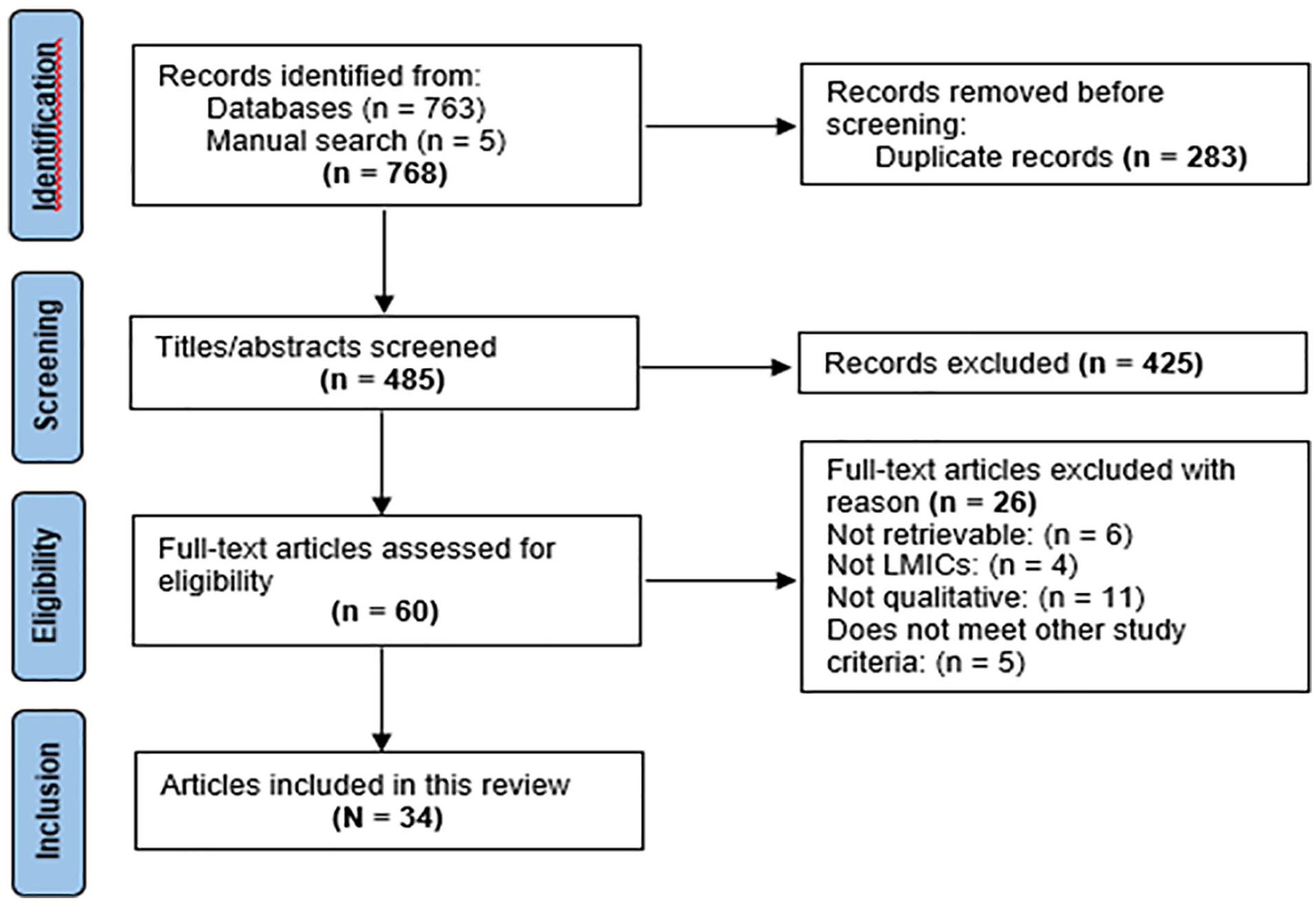
Systematic review flowchart.
Studies were included if they (a) were published in English; (b) were conducted in LMICs between January 1, 1990 to June 2021; (c) mentioned sexual harassment in the main body (d); were peer-reviewed papers, (e) used a qualitative methodology; and (f) included female or male participants aged 12 years and older. Studies were excluded if they did not align with the inclusion criteria and were focused on groups of people who are especially vulnerable to sexual harassment due to their circumstances such as those in military services, in war zones, or in refugee camps.
Data Screening, Extraction, Quality Appraisal, and Analysis
Initially, records were double screened by title and abstract according to the inclusion and exclusion criteria. The full texts of included articles were then reviewed for eligibility by two authors. Uncertainty about the eligibility of certain articles was resolved by discussions between all authors. The final set of included full-text papers was formally appraised by two authors.
Data extraction was separated into the two main categories “study characteristics” and “information on sexual harassment.” Relevant study characteristics included: first author and year; country; whether the study was focused on sexual harassment; description; objectives; timeframe and setting; sample; methodology; analysis; and the main themes and overall findings. Thematic analysis was used to analyze the data. A combination of inductive and deductive coding were used to organize and synthesize data to gain an understanding of participants’ experiences with sexual harassment across a variety of studies and settings (Thomas & Harden, 2008). One author developed a coding framework, then the articles were double-coded by two authors who solved discrepancies through discussions, and relevant changes to the coding framework were made. The next steps involved grouping similar codes into descriptive themes, and identifying patterns from the data across studies. We then developed analytic themes to synthesize findings across studies and interpret their meaning based on our research question.
To evaluate the quality of the studies, a scoring system of low (0–6 points), medium (7–13 points), and high (14–20 points) was created using the Critical Appraisal Skills Programme (2018) qualitative checklist, featuring 10 questions related to research aims, methodology, the research design, recruitment strategy, data collection, reflexivity, ethical issues, data analysis, findings, and implications. Each question included several prompts and had three possible ratings, “yes” (2 points), “can’t tell” (1 point), and “no” (0 points). Autoethnographies and narrative reports were not subjected to quality review. Questions were answered “can’t tell” if some of the prompts were addressed and others were not. No studies were included or excluded based on their quality score.
Results
Description of Included Studies
A total of 485 abstracts were screened, identifying 34 studies presented in Table 1. Of these, 16 studies were from Asia, 12 from sub-Saharan Africa, 3 from the Middle East and North Africa region, 1 from Latin America, and 1 from Turkey. The workplace was the focus of 14 studies, while eight focused on educational settings, four on public spaces, and three on the general population. Three studies combined settings, whereas two did not specify the type of setting. Seven studies focused on populations especially vulnerable to sexual harassment due to occupational or lifestyle characteristics, including, female beer promoters, hospitality employees, survivors of a natural disaster, domestic workers or employees in a public workplace. More than half of studies (n = 21) had less than 50 participants, the remaining studies ranged up to 675. Of all 34 studies, 19 studies were of high, 10 studies medium, and 4 studies of low quality.
Study Characteristics.
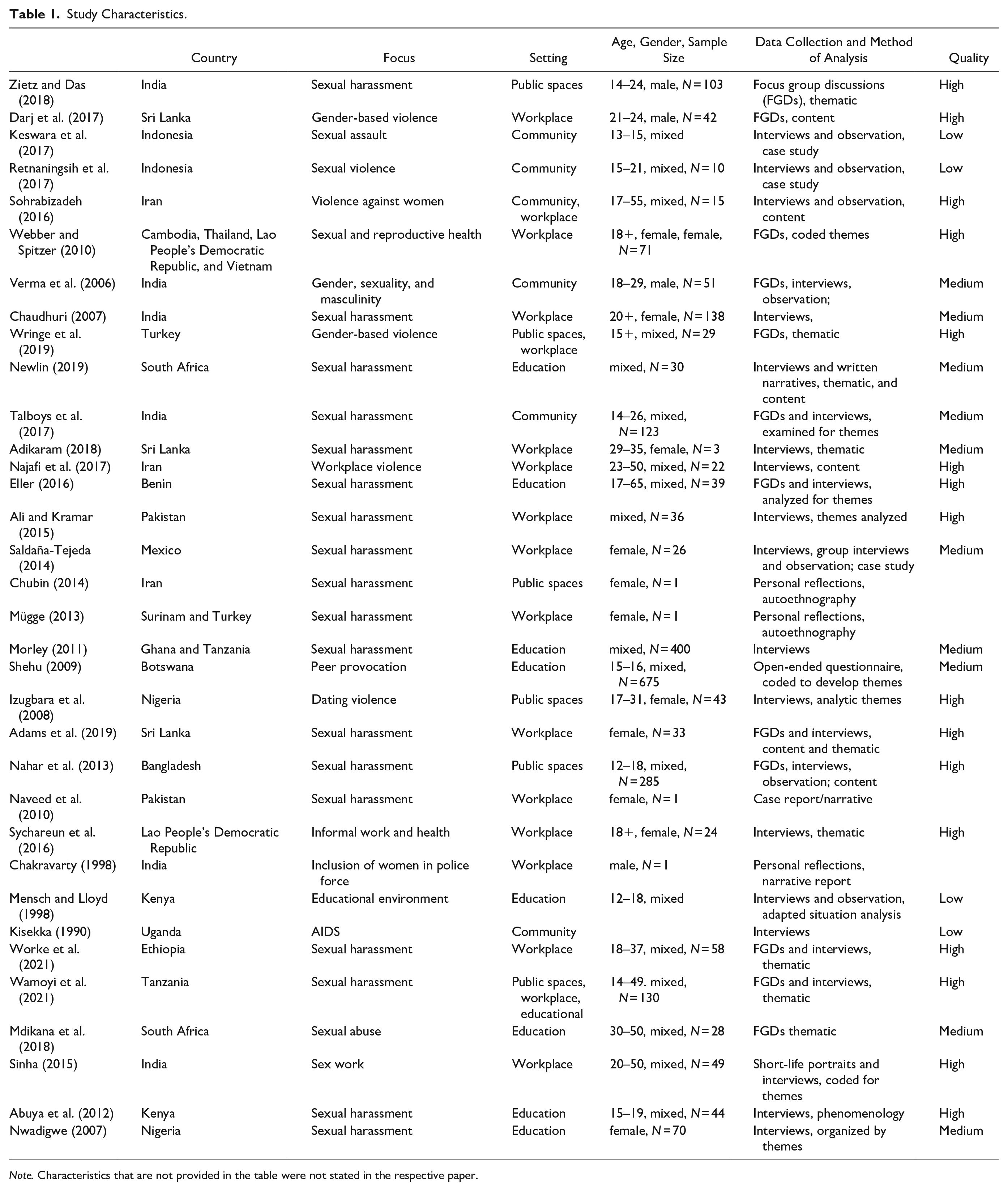
Note. Characteristics that are not provided in the table were not stated in the respective paper.
Emerging Themes
We identified seven main themes, as presented in Table 2. These were (a) ambiguity surrounding sexual harassment; (b) sexual harassment as a manifestation of gendered power; (c) risk and protective factors for experience and perpetration; (d) understanding and coping with sexual harassment; (e) barriers and facilitators to disclosure, help-seeking, and bystander intervention; (f) consequences; and (g) recommendations for prevention and intervention.
Emerging Themes.
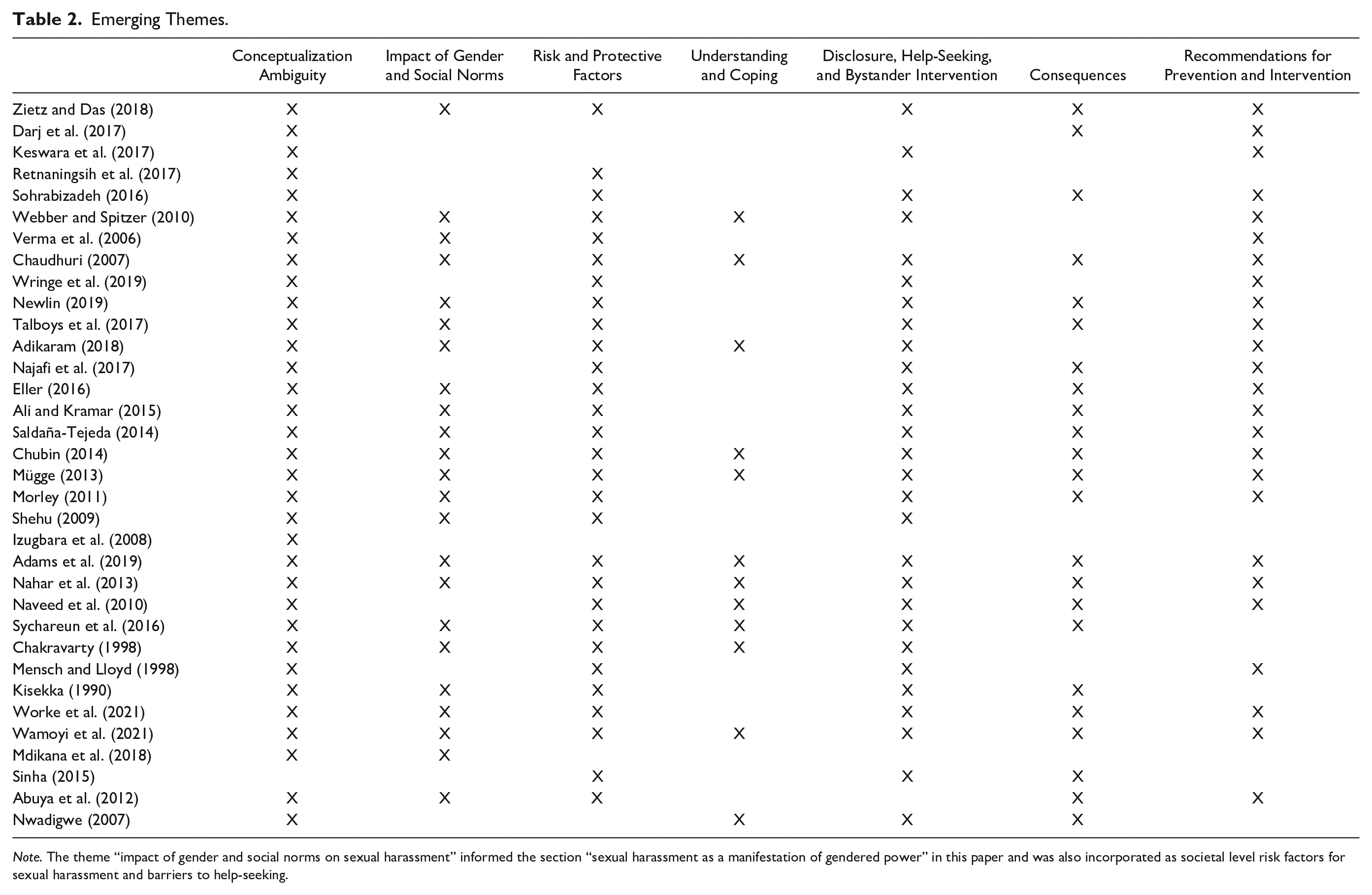
Note. The theme “impact of gender and social norms on sexual harassment” informed the section “sexual harassment as a manifestation of gendered power” in this paper and was also incorporated as societal level risk factors for sexual harassment and barriers to help-seeking.
Ambiguity surrounding sexual harassment conceptualization
Women in our studies described sexual harassment as pervasive and mentioned a variety of behaviors they considered constituting sexual harassment. Nonverbal sexual harassment for them included staring, stalking, indecent gestures and exposure, and invasion of space. Verbal sexual harassment captured vulgar language, demeaning jokes, comments about appearance, compliments, sexual propositions, and threats while physical consisted touching, for example, fondling, tickling, and kissing or sexual favors, such as intercourse and rape. While all studies acknowledged sexual harassment to include harmful and offensive actions, there was a lack of clarity on its boundaries regarding specific behaviors, intent, consent, and perpetrator identities.
Study definitions of sexual harassment ranged from broad statements describing sexual harassment as a form of sexual violence to specific citations of national legislations. A common element of all definitions included the word “unwanted” followed by acts of physical contact, verbal conduct, sexual advances, and sexual favors (Adams et al., 2019; Wamoyi et al., 2021). Two studies included “rape” in their study definition of sexual harassment, participants across other studies also mentioned more severe forms of sexual violence (Abuya et al., 2012; Kisekka, 1990; Sohrabizadeh, 2016). One study specifically juxtaposed rape with sexual harassment, emphasizing that sexual harassment is characterized by a sense of ambiguity (Nahar et al., 2013).
Three studies on sexual harassment in India and Bangladesh used the local terminology “eve-teasing” to refer to sexual harassment in public whereas Iranian study participants on workplace violence used the term “honor insults” because the term sexual harassment is highly stigmatized (Nahar et al., 2013; Najafi et al., 2017; Talboys et al., 2017; Zietz & Das, 2018). In a Sri Lankan study on workplace sexual harassment, some participants did not self-acknowledge or label their experiences as sexual harassment, although they described their experiences as “unwanted,” “unacceptable,” or “offensive” (Adikaram, 2018). In Sri Lanka and Tanzania, behaviors were only considered sexual harassment if there was intention to cause harm, therefore excluding sexualized jokes (Adams et al., 2019; Wamoyi et al., 2021).
In a Tanzanian study, the majority of male and female participants used consent to determine whether behaviors were considered to constitute sexual harassment (Wamoyi et al., 2021). However, consent was primarily expressed implicitly, and lacked clear communication prior to sexual relations. Similarly, nurses in a Sri Lankan state hospital described ambiguous consent in sexual relations with doctors, which could manifest as sexual harassment: There can be the affairs [by junior doctors] with nurses, but I’m not sure if they are exploitative – we don’t know. We know only they have an affair. Some doctors just come and say they are interested in us and then ask if we will start an affair with them. They ask for our consent, but if we don’t consent, a lot of the time they use their influence to transfer us out of the ward or hospital. (Adams et al., 2019, p. 4)
Distinguishing sexual harassment from transactional sex is challenging. A study of university students in Benin showed that some students engage in transactional sex to obtain good grades, food, and monetary gifts. This becomes sexual harassment if there is an underlying threat that a student who does not want to engage in transactional sex with the professor fails her class or faces other negative consequences, which undermines her ability to consent (Eller, 2016). Abuya et al. (2012) featured a similar issue with transactional sex in Kenya if the sexual partners were only a few years older than participants. Thus, the ambiguity surrounding consent must be understood within the context of gendered power (Wamoyi et al., 2021).
Transactional sexual relations at university settings in a variety of African countries were also characterized by a sense of ambiguity with regard to who could perpetrate sexual harassment. Male students and male professors were identified as perpetrators by female participants (Eller, 2016). Professors, specifically, were described as “not good, they approach girls” (Morley, 2011, p. 109). Yet, academic and administrative staff in universities in Ghana and Tanzania often focused their descriptions of sexual harassment on male to female student relations to avoid engaging with the power boundaries (Morley, 2011). Participants’ perception that men are not in control of their sexual desires, therefore making sexual harassment inevitable, was demonstrated by a participant’s quote that, “If a woman shows off her body to a man and seduces him, a man cannot really resist, he will give in. Men are that way, they are more sexually inclined (Charles, Student, 21 years old)” (Eller, 2016, p. 750).
Newlin (2019) used social exchange theory, whereby people seek to maximize reward and minimize costs of their social relationships, to explain that male academics were the victims of sexual harassment. According to him, female students at a South African high education institution “come to class and sit strategically wearing short skirts without panties and open their legs fishing us” and “talk in a suggestive manner,” whereas male administrative staff were perpetrators because they took advantage of disadvantaged female students (Newlin, 2019, p. 15). The author reiterated that male professors are not in control of their sexual urges and traced the sexual harassment back to the female student’s provocative behavior and clothing (Newlin, 2019). This view was strongly contrasted by a study from Benin stating that female students cannot be considered to be perpetrators of sexual harassment because of the gender and age-related power imbalances and that discourses that suggest otherwise attempt “to absolve professors of culpability for their behaviours” (Eller, 2016, p. 750).
Sexual harassment as a manifestation of gendered power
Power dynamics between perpetrator and those experiencing sexual harassment and societal norms surrounding gender have been identified as central by most of the studies included in this review to understand the causes of sexual harassment as well as the barriers and facilitators to help-seeking and disclosure (Adikaram, 2018; Mügge, 2013). Studies featured a variety of male perpetrators, including male students, teachers, professors, colleagues, supervisors, and customers. Only one study considered women to be perpetrators of sexual harassment (Newlin, 2019). Wamoyi et al. (2021) drew on Connell’s (1987) gender and power theory to suggest that systemic oppression experienced by women such as the unequal distribution of power and gender-related norms contribute to sexual harassment. While perpetrators mostly held positions of authority, many women also reported being harassed by male colleagues of equal authority who solely used their gender to enforce power (Chaudhuri, 2007). For instance, women in higher education who entered highly masculine spaces, therefore disrupting traditional gender roles, were confronted with the phenomenon of “See-saw gender relations (i.e., if one sex is up, the other must be down)” (Morley, 2011, p. 105). Similarly, due to the increased visibility of girls in physical education classes of Botswana’s secondary schools, boys used sexual harassment as a tool to reestablish the patriarchal social order and reaffirm their masculinities (Shehu, 2009). Wamoyi et al. (2021) cited the sex-role spillover theory to explain this phenomenon and expanded on it to suggest that women engaging in traditionally feminine economic activities such as cooking were also more vulnerable to sexual harassment due to the sexual objectification of feminine traits.
Authority played a prominent role across many studies that focused on sexual harassment, as “Men in positions of power or wealth took advantage of girls and women by asking them for sex in exchange for employment, promotion, and other favors” (Wamoyi et al., 2021, p. 18; see also Adikaram, 2018). While Ali and Kramer (2015) specifically reference the Equal Employment Opportunity Commission’s legal definition of sexual harassment in Pakistani organizations which includes “hostile” and “quid pro quo” harassment, other studies provided examples of “quid pro quo” harassment even if they were not explicitly referred to as such. For instance, a female beer promoter from Cambodia described how she was pressured to have sex with an outlet manager in exchange for money under the threat “that if I don’t agree to sleep with him - he will fire me. He will report to my company to take me away from this place” (Webber & Spitzer, 2010). The vulnerability of the hospitality and entertainment industry workers due to their working conditions was underscored by unequal power dynamics that promote the perception that male customers are superior to the female employees, creating an environment of male entitlement, sexual objectification, and exploitation (Worke et al., 2021).
Perpetrator’s age and socio-economic status, closely linked to authority, can put women at further risk for sexual harassment and make it challenging for them to give consent. The difference in age between the perpetrator and the person who experienced sexual harassment, also referred to as “intergenerational sexual encounters,” largely influenced whether a behavior was considered sexual harassment (Wamoyi et al., 2021). In one study on sexual harassment in the hospitality industry in Ethiopia, participants considered older wealthy men as especially threatening because they: . . .have brokers whom they will bring girls from hospitality workplaces and universities. Brokers are doing senseless work. The low-income family sends their daughters to work and universities, but brokers bribe women and girls and sell them to elderly people whom they want to have sex with. (Worke et al., 2021, p. 7)
Girls and women from impoverished families in Mexico, who worked as domestic workers in their upper- and middle-class employers’ home, experienced sexual harassment at the hands of men in the household (Saldaña-Tejeda, 2014). The intersectionality between authority, age, and socio-economic status further strengthens the gendered power of men, making it a societal phenomenon of systematic oppression that reinforces the status quo of privileged upper- and middle-class employers. Girls and women who worked as domestic workers in their employers’ home experienced sexual harassment at the hands of men in the household, even boys as young as 11 years old (Saldaña-Tejeda, 2014). This suggests that such oppression may be sustained through an intergenerational transmission of power as depicted in studies featuring school-aged boys in South Africa and Botswana (Mdikana et al., 2018; Shehu, 2009).
Risk and protective factors for sexual harassment experience and perpetration
Talboys et al. (2017) used O’Hare and O’Donohue’s (1998) four-factor theory to explain the risk factors for sexual harassment at the individual and societal level. Studies included in this systematic review aligned with those risk factors, most notably with gender (i.e., being a woman) being a primary risk factor across a variety of settings: “Being a girl costs sometimes. . .There are some things in which people can take advantage of you because you are a girl. . .(Female student, public university, Tanzania)” (Morley, 2011, p. 109). Youth was considered a risk factor, however it was unclear how youth was defined (Najafi et al., 2017) as, for example, university students were considered old enough to manage sexual relationships with professors (Eller, 2016). Other individual risk factors for sexual harassment included poverty, displacement, working, lack of social capital, limited work experience, and an unawareness of sexual harassment laws (Najafi et al., 2017; Naveed et al., 2010). The intersection of sexual harassment in the workplace and public places is particular to women with limited financial means, for instance, young female food vendors in Tanzania who interacted predominantly with men in public spaces who had to tolerate sexual harassment to maintain an income (Wamoyi et al., 2021). However, informal organizational settings and working conditions also increased women’s risk for sexual harassment in India and the Lao People’s Democratic Republic (Sinha, 2015; Sychareun et al, 2016). Women working in the hospitality industry in Ethiopia identified organizational risk factors including a revealing dress code for female employees contributing to their objectification, lack of a financial security, lack of sexual harassment related guidelines, and unequal power relations between female employees and men in authority positions (Worke et al., 2021). There was also an increased risk of sexual harassment associated with working in employer’s private residences (Wringe et al., 2019), compounded by social hierarchies of race, age, gender, and income: They [employers] see us coming from the ranch and think ‘this poor girl’, he actually told me ‘Don’t worry, I would help you and I would give you money for your family’. If I had been another type of woman I would have accepted because my family was in great financial need, I was the oldest and the only one working. I asked myself how many girls in my position actually accept because of need. (Saldaña-Tejeda, 2014, p. 202)
In educational settings due to the absence of women in higher academic positions, men had more opportunities to exercise their power and privilege negatively (Morley, 2011). Professors usually had higher socio-economic status than the students, a basis for transactional sex (Eller, 2016). Across other settings, perpetrators had distinct characteristics. For instance, customers were more likely to engage in sexually harassing behaviors if they had consumed alcohol, had demeaning perceptions of women, were unhappily married, and were addicted to sex (Webber & Spitzer, 2010). Men were more likely to sexually harass women in public places if they had low socio-economic status, lacked education, used drugs and alcohol, were involved in gangs or in other illegal activities (Zietz & Das, 2018). Gender segregation and increased access to media have reinforced stereotypical gender and sexuality norms and expectations, including male dominance and pleasure: For example, one boy said that friends told him he could demonstrate his valour by touching a girl’s breast in front of them. So the boy ran up to a girl and suddenly squeezed her breast in front of his friends on the street to prove his masculinity. (Nahar et al., 2013, p. 83)
Very few studies mentioned protective factors against sexual harassment. In an urban Indian study, participants revealed that being related to a man who was well known and respected in the community reduced women’s vulnerability to sexual harassment (Zietz & Das, 2018). In Kenyan schools, family life education classes could help female students navigate sexually risky situations. Sports education could also increase their self-confidence, thus providing them with tools to manage sexual harassment (Mensch & Lloyd, 1998). The women who worked as beer promoters in the capital city of Lao People’s Democratic Republic felt that their company limited opportunities for harassment: We are not allowed to sit down with clients, eat or drink with them. Also, we are not allowed to come to work or go home after work alone - by ourselves. We have to be in the company’s bus. Importantly, we set rules for ourselves to follow to protect ourselves from being harmed at/from work. (Webber & Spitzer, 2010, p. 9)
It is worth noting that the nonconfrontational regulations put in place primarily focused on policing women’s behavior to reduce the risk of sexual harassment as opposed to holding the male customers accountable (Adams et al., 2019). In another study, half of the participants thought that community members would help stop sexual harassment, because “they already stop boys from standing in groups” (Talboys et al., 2017). Only one study in Bangladesh mentioned protective factors for sexual harassment perpetration, which mainly related to boys being afraid of getting in trouble (Nahar et al., 2013).
Risk and protective factors for sexual harassment are context dependent; however across all settings, rigid patriarchal norms and gender inequalities contributed to it. Women who were perceived to challenge sociocultural norms of what it means to be a woman, by dressing inappropriately, flirting, having sex with multiple men, selling sex for money, having affairs, and marrying for love were at greater risk of experiencing sexual harassment (Talboys et al., 2017). Gender norms prescribing how women should behave in order to be feminine also contributed to sexual harassment in the workplace: “We are expected to be very friendly and communicative for customers. However, this may lead to a casual relationship (FGD, 3 years experience in a bar)” (Worke et al., 2021, p. 9). According, to Chubin (2014), womanhood in Iran was defined by religious conceptions of gender, sex, and sexuality, therefore women’s morality and worth were determined by their sexuality and appearance. There was a dichotomy between a “bad girl” versus a “good girl,” although what exactly was “bad” about a “bad girl” was left unclear so that anticipated or previous acts of sexual harassment could be justified (Verma et al., 2006; Webber and Spitzer, 2010; Zietz & Das, 2018). Similar to the image of an ideal woman, there was an understanding of what it meant to be a “real man.” For instance, it was believed that men should be the financial providers of the family and in charge of family planning decisions (Webber & Spitzer, 2010). A “real man” had to express his sexuality, because that was viewed as a way to be superior to and in control of women,. . ., an object or item to be possessed by men” (Verma et al., 2006, p. 137). While looking after family was a positive attribute, being dominant was another quality of a real man: “My friends challenged me. They said if you are a Real Man then engage that girl [to get her to have sex] within eight days” (Verma et al., 2006, p. 137).
Coping with sexual harassment
Women across different studies manage sexual harassment by either staying silent, trying to avoid it, asserting themselves, or acquiescing to it. Families also developed informal strategies to protect their female relatives from it. Yet study participants had contradictory opinions as to whether women should challenge sexual harassment. In two Indian studies, participants thought that if a woman did not respond to sexual harassment she was a good girl and if she fought back it could lead to retaliation (Verma et al., 2006; Zietz & Das, 2018). In a Tanzanian study, participants reported that if a girl did not disapprove the behavior, then it would be dismissed by the community as acceptable courtship (Wamoyi et al, 2021).
In the included studies, most women tried to respond passively, identified and avoided potential perpetrators and risky situations, stayed quiet, and managed their outward appearance, demeanor, and behaviors: “I had kept my purse between us, as a technique I had learned over these years, so our hips won’t touch” (Chubin, 2014, p. 187). In a Nigerian study, female students talked about “settling” the matter by buying expensive gifts for the professor and his family in order to avoid sexual harassment (Nwadigwe, 2007).
While other authors conceptualized such avoidance as passivity, Chubin (2014), emphasized that it was an active expression of feelings of humiliation, shame, anger, and helplessness, as well as an act of performative resistance: That silence expressed in the form of “I will not listen” or “I will not speak” can imply an action by the person who wishes to exert some control over her own behavior and over the situation. As I walk down the street and encounter verbal sexual harassment, my silence by which I imply “I will not listen” is the way by which I actively protest. Remaining silent about these victimizing experiences is also a way to avoid further victimization and the perpetuation of powerlessness. (p. 184)
Societal norms place importance on women’s virtue, femininity, and respectability yet some women responded assertively and confidently to the sexual harassment, especially when they faced continued harassment (Adikaram, 2018). This was rare for those who experienced sexual harassment especially in South Asia where women’s submissiveness and passivity is encouraged: Whatever is said and done, I am a woman. So, I went to the ladies room and cried. But then I thought I will not leave this place if that is what that person wants. Nobody can force me to leave. (Adikaram, 2018, p. 112)
On the occasion, that beer promoters in Lao People’s Democratic Republic did confront customers’ inappropriate behavior, they conformed to femininity gender norms and did so in a friendly manner: Sometimes after work, I wait for the company car to take me home, some men call me and ask me to go with them at night, and I answer ‘No, thanks’. If they still call, I don’t care, I keep a little smile and not look at them (Beer promoter, 19 years). (Sychareun et al., 2016, p. 6)
A bedside nurse in a clinical unit of a private hospital in India who retaliated against the sexual harassment by a senior male staff member was confused about her own unexpected response, which seemed to defy such femininity gender norms: She assertively asked him to move back, which he did but then abruptly he rushed and came close to her with an attempt to touch her physically. She moved backward and saved herself from that deliberate and ill-intentioned move of that aggressor; however in her annoyance she slapped him. (Naveed et al., 2010, p. 222)
Internally, some women struggled to make sense of their own identity in the face of sexual harassment. Whether they understood their experience as unwanted influenced how they responded. Their identities shifted between someone who has experienced sexual harassment, an aggressor, and a friend and they experienced a variety of emotions, such as shock, anger, disbelief, guilt, and uncertainty: “Every time she sees me she apologizes. I feel very bad, because I think I caused her anguish. She is also suffering like me. . .I think I am a cruel person. I can be very cruel” (Adikaram, 2018, p. 113).
Families also took matters into their own hands to prevent sexual harassment. Participants reported restrictions placed on women’s behaviors and mobility by their families, and early marriage, as a primary way of reducing their vulnerability to sexual harassment: “I am constantly worried about them, to be honest. I don’t allow them to go play outside the house. They play inside” (Wringe et al., 2019, p. 5)
Barriers and facilitators to disclosure, help-seeking, and bystander intervention
Across all studies and settings, few women disclosed or sought help for sexual harassment as they faced a variety of interconnected barriers. On the individual level, these included timidity, avoidance of attention, protecting one’s reputation, pity for the perpetrator and his family, financial dependence on their job and fear—fear related to job insecurity, reprisal, being blamed, not being believed or ridicule against men reporting sexual harassment (Adams et al., 2019; Adikaram, 2018; Chaudhuri, 2007; Eller, 2016; Morley, 2011; Mügge, 2013; Nwadigwe, 2007; Newlin, 2019; Saldaña-Tejeda, 2014; Sinha, 2015; Wamoyi et al., 2021; Webber & Spitzer, 2010; Zietz & Das, 2018). A sense of shame was emphasized in multiple studies as a major barrier: “. . . there is only one legitimate feeling after such incidents – shame; and there is only one legitimate reaction – walking away in silence” (Chubin, 2014, p. 177). On the community level, common barriers included victim-blaming attitudes, general lack of awareness of policies and guidelines, a lack of trustworthy support, criticism when one fights back, organizational barriers such as company culture, and a lack of legal protections (Adams et al., 2019; Ali & Kramar, 2015; Chakravarty, 1998; Chubin, 2014; Eller, 2016; Morley, 2011; Nahar et al., 2013; Naveed et al., 2010; Sychareun et al., 2016; Worke et al., 2021).
Even when organizations had sexual harassment policies and guidelines, they did not account for non-reporting, did not outline specific procedures, and were inconsistent and not transparent (Morley, 2011). In addition to employees not receiving any training on sexual harassment in the workplace, even human resources managers did not have a good grasp of sexual harassment legislation or gender equality-related issues (Worke et al., 2021).
Across different settings, participants agreed that if perpetrators are well known, respected, and have higher status, then they can act with impunity and won’t be held accountable (Chaudhuri, 2007). On the other hand, women experiencing sexual harassment often faced victim-blaming, retaliation, and additional victimization for filing a complaint (Adams et al., 2019; Adikaram, 2018). This double standard had detrimental consequences for women: First, of course the administration will calm her down, tell her they’ll do something about it. Then they’ll send her away and call the professor and tell him that this girl reported him. The professor will stop after that, but she’ll fail. He’ll punish her for telling (Ulriche, Student, 20 years old). (Eller, 2016, p. 752)
Moreover, the legislative system was considered to be biased, corrupt and ineffective for instance by demanding evidence and witnesses (Naveed et al., 2010). The lack of confidence in the law was related to socio-economic means and a community acceptance of violence, because: Most of the perpetrators can be able to stop the case with money. Therefore, since it is not simple to take the issue to court, I will not go to court because no one will consider the issue (FGD, three years experience in a restaurant). (Worke et al., 2021, p. 10)
Communities accepted stereotyping and victim-blaming narratives to legitimize sexual harassment. The lack of repercussions for perpetrators at the community level further promotes the sense that sexual harassment is normal and even acceptable (Zietz & Das, 2018). Individual and community factors were thus reinforced by societal level factors that relate back to sociocultural and gender norms. An Iranian study identified those as stigma, the normalization of sexually harassing behaviors, sociocultural sanctions about sexual behavior, and cultural norms surrounding modesty and shame due to the taboo nature of sexual harassment (Sohrabizadeh, 2016). These contributed to passive responses and lack of reporting: In our culture it [SH] is considered a shame to openly discuss especially for unmarried girls. . . Our culture is like that if something like this happens people will not say anything to the man but they will blame the girl to be the main culprit behind such issues (Organization D, F2). (Ali & Kramar, 2015, p. 241)
Unequal power dynamics also played an important role: “The power relations that enable the existence of sexual harassment can also serve to silence it” (Morley, 2011, p. 111). Men were socialized from a young age that they are superior over women, have control over women, the right to punish them, and they feel sexual entitlement (Wamoyi et al., 2021).
Overall lack of bystander intervention was ascribed to a fear of negative consequences and retaliation by other community members, police, and people with higher authority for reporting sexual harassment. Chubin (2014) also describes how witnessing sexual harassment made a bystander feel uncomfortable: A young man passes by us right in the middle of this [verbal street harassment incident]; he stops for a second confused whether he should meddle, but the second passes by and so does he. He walks as if the embarrassing moment I’ve created should end right there. (p. 182)
Despite the number of barriers faced by women, there were some facilitators of disclosure and help-seeking. Women’s social capital, understanding the nature of workplace violence, and strong sexual harassment policies increased the likelihood of reporting an incident (Morley, 2011): “. . .being on a sports team, and potentially even more important, being associated with girls with similar levels of self-esteem, may have increased her sense of self-efficacy. She was therefore better able to defend herself” (Talboys et al., 2017, p. 7).
Consequences of sexual harassment
Across all studies, participants spoke about the consequences of sexual harassment, agreed that it causes great distress and has a negative impact on women and their sense of safety. There seemed to be a double standard, whereby women experiencing sexual harassment often faced harmful outcomes, yet it had no impact on the male perpetrators (Adams et al., 2019).
The detrimental psychological and emotional effects of sexual harassment being traumatic were frequently mentioned by participants, including anger, difficulty sleeping, loss of appetite, nightmares, anxiety, humiliation, fear, lack of self-confidence and self-esteem, and depression, hopelessness, and suicide: A female FGD participant shared a story about an adolescent girl from a nearby village who received an unwanted kiss from a boy while picking mangos. They said she was so ashamed that she fell into a depression, isolated herself from her friends, and committed suicide. (Talboys et al., 2017, p. 7)
Sexual harassment also had physical health consequences for women, such as stomachaches, headaches, bruises, injuries, fatigue, abnormal vaginal discharge, menstruation issues, unplanned pregnancies, and STIs and HIV infections (Kisekka, 1990; Worke et al., 2021).
A few studies also touched on the social impacts of sexual harassment, such as restricted mobility, early age at marriage and issues with their family (Zietz & Das, 2018). Participants described challenges they faced in their career and educational pursuits due to sexual harassment, such as quitting their jobs, because they were humiliated and dissatisfied with the formal actions taken against the perpetrators, feeling uncomfortable after making a report, or wanting to avoid actual or potential sexual harassment (Ali & Kramar, 2015; Saldaña-Tejeda, 2014). In addition to job loss, job hopping, lateness, job stress and dissatisfaction, absenteeism, and lack of productivity were individual- and organizational-level consequences (Adikaram, 2018; Naveed et al., 2010). In one Indian study, repeated experiences of workplace sexual harassment were mentioned by women as reason for pursuing sex work in attempt to have more control over their lives (Sinha, 2015). Sexual harassment was also linked to interrupted education, academic decline, for example, bad grades, absences, and dropping out, and an overall negative impact on the learning environment and female students’ identities as learners (Keswara et al., 2017; Morley, 2011): “If women fail, this is evidence of lack of academic abilities and preparedness for higher education. If they achieve, this is attributed to women’s “favored” position in gendered academic markets” (Morley, 2011, p. 101).
Recommendations for sexual harassment prevention and intervention
Study authors and participants made several recommendations for formal sexual harassment prevention strategies. Across all settings, those included awareness-raising and education about the seriousness of sexual harassment, increasing sanctions against the perpetration of sexual harassment and addressing harmful masculinity norms in order to reinforce gender equity (Chaudhuri, 2007; Verma et al., 2006): You know when we enlighten the students about gender issues, they know that we are all equal besides the sex differences. . .Sometimes ignorance of gender matters, in our environment; it is the factor for sexual harassment (Male staff, public university, Tanzania). (Morley, 2011, p. 110)
Authors also suggested that this information should be discussed in sexuality education classes, so that youth can gain healthy interactional skills with members of the opposite sex (Abuya et al., 2012; Nahar et al., 2013). They further stated that in organizational and educational settings, strong sexual harassment policies that raise awareness about the negative effects of sexual harassment and serious consequences of sexual harassment perpetration should be implemented and enforced no matter who the perpetrators are and what position they hold. Participants and study authors emphasized the importance of effective monitoring systems, practical support and security, while keeping in mind the “three major factors which influence sexual harassment redressal; these are socio-cultural factors (e.g., female modesty), institutional factors (e.g., inappropriate redress procedures), and managerial expertise/bias” (Ali & Kramar, 2015, p. 229). Yet, given the diversity in sexual harassment experiences and settings, authors also called for culturally relevant tools for assessing workplace sexual harassment to better assess the phenomenon and aid in the development of prevention strategies (Najafi et al., 2017).
In addition to the prevention of sexual harassment, it is important to consider possible resources for survivors of sexual harassment. Participants and study authors emphasized the need for counseling services, support groups and reproductive health services (Naveed et al., 2010). In the long term, empowering women through access to education is important to counter gender inequality and power differentials as it helps them advocate for their rights, increase their capacity to respond to sexual harassment and report it (Najafi et al., 2017).
Sexual harassment reports should be evaluated with an understanding of why those experienced sexual harassment responded in certain ways, preferably by external agencies to reduce bias (Adikaram, 2018; Eller, 2016). Accountability should be implemented in a nonjudgmental way to reduce the risk of victim-blaming or retaliation (Adams et al., 2019). It is crucial for individuals who experienced sexual harassment to have social support, therefore HR personnel should also strengthen informal and support-based mechanisms as opposed to only formal ones in addressing sexual harassment (Talboys et al., 2017).
Discussion
Our qualitative systematic review identified several key insights for understanding sexual harassment in LMICs. Firstly, the conceptualization of sexual harassment varies widely. Secondly, patriarchal norms and gendered power were key underlying factors that intersected with young age and poor socio-economic status, factors that also silenced those experiencing sexual harassment and framed how women should cope with sexual harassment for their experiences to be validated. Lastly, changing gender norms was seen as most effective to prevent and address sexual harassment.
The confusion about the terms sexual harassment with sexual violence has also been identified as an issue in the quantitative sexual harassment systematic review in LMICs (Ranganathan et al., 2021). Theoretically, sexual violence is an umbrella term for nonconsensual sexual behaviors, including sexual harassment (World Health Organization, 2012). However, it is often only used in reference to sexual assault and rape. In addition, it remains unclear too whether sexual harassment includes sexual assault and rape. This was also the case in this review, where some study authors included rape in their definition of sexual harassment, whereas others did not. Similarly, some participants mentioned rape as an example of sexual harassment whereas others did not. Including more severe acts, such as sexual assault and rape, may lead to a minimization and normalization of less forceful sexually harassing behaviors, in turn leading to lower reporting rates as they may be perceived as not serious enough. The definitional complexity also makes it difficult to measure sexual harassment correctly and to compare it across different settings (Ranganathan et al., 2021).
Theories used in this systematic review to explain sexual harassment in LMIC differed from those used in HIC (Pina et al., 2009). Only the sex role spill-over theory, the spill-over theory and four-factor theory were applied. Wamoyi et al. (2021) extended the sex-role spillover theory to include women who work in traditionally feminine fields. Newlin (2019) used social exchange theory, ignoring though the power dynamics present in student-professor sexual relations. A study focused at higher education settings in Africa only utilized the social exchange theory to interpret quid pro quo harassment (Kheswa, 2014). Eller (2016) criticized this, describing female students’ participation in exchange-based sexual relations an “alternative form of power.” This follows the discourse that sexual harassment is gendered power that maintains gender inequality and social control over women (Crouch, 2009). Studies in this review have demonstrated the intersections of gendered power with other hierarchies of authority, age, and socio-economic status. In workplace and educational settings, power differentials are often institutionalized through hierarchies and an absence of enforceable zero-tolerance policies. Sexual harassment in public places is understudied; however, based on the studies reviewed, power dynamics seemed to be less distinct in public places (Nahar et al., 2013; Wamoyi et al., 2021). Power in public places was primarily generated through gender, such as men’s stronger physical strength, sexual entitlement, and masculinity ideologies (Zietz & Das, 2018).
This may explain why street sexual harassment tends to be dismissed, for instance by being excluded from legislations on sexual harassment. Crouch (2009) points out that sexual harassment in public places not only constrains women’s space, but also their freedom. Our review found that family-based strategies to prevent sexual harassment in public spaces may also reinforce harmful gender inequalities and norms, which is supported by Whitzman’s (2012) report on women’s safety and mobility, emphasizing that the restrictions on women’s mobility that are meant to keep them safe end up controlling women’s freedom of movement and physical space in a similar fashion to the actual sexual harassment.
Study authors and participants in this review mentioned community and society level factors that increase women’s vulnerability to sexual harassment and also acted as barriers to help-seeking and disclosure. Most of the participants in the studies of this review were women; however, some of the male participants blamed women for the sexual harassment (Eller, 2016; Morley, 2011). An Australian quantitative study found that men were more likely to show a lack of empathy and higher blame attribution toward women who experienced sexual harassment and they gave more empathy to male perpetrators (Bongiorno et al., 2020). Working women in this review were especially vulnerable if workplace conditions tolerated sexual harassment and often had the sense that sexual harassment is unavoidable. Norms surrounding modesty and shame were prevalent in our review and this culture of silence was also identified as an important risk factor for sexual harassment identified in Bondestam et al.’s (2020) systematic review, similar to harmful masculinity ideologies, patriarchal norms, and gender inequalities. Negative attitudes toward women not only contributed to sexual harassment perpetration, a quantitative study in Ecuadorian universities found that rape myth acceptance and previous perpetration of sexual harassment both decrease the likelihood of intervening (Lyons et al., 2021).
Women’s sense of agency in their responses to sexual harassment was contested. Most women in our study tried to cope by staying quiet and avoiding potential perpetrators or risky situations, thinking that women who confronted their harasser would face negative consequences (Verma et al., 2006; Zietz & Das, 2018). Yet in Crouch’s (2009) study in sexual harassment in public places, it was argued that this could intensify sexual harassment. The tendency to focus on women’s responses as a means of determining whether an act was sexual harassment also places responsibility on the individual experiencing sexual harassment as opposed to the perpetrator and may invalidate her experience if sexual harassment is only considered as such if the woman reacts to it in a specific way.
Participants and study authors made several recommendations for preventing sexual harassment. Most of these recommendations relate to sexual harassment in the workplace or educational settings. Awareness-raising about the seriousness of sexual harassment and the gender norms that promote sexual harassment were considered crucial, as well as strong policies and fair implementation and monitoring systems. Literature from HICs has also emphasized that policies should be clear and procedures for reporting to ensure confidentiality. Like some of the studies in this review, ineffective anti-harassment training was identified to be a major barrier to sexual harassment prevention in HICs. Lastly, a cultural change and zero-tolerance toward sexual harassment was emphasized as important in HICs, which included tangible steps such as reducing the gender gap in wage and promotion (Zugelder et al., 2018). There is very little research available on the effectiveness of sexual harassment prevention in LMICs and HICs. One study focused on gender-based violence against young female apprentices in Ibadan, Nigeria, found that after an intervention consisting of skills training for the apprentices, sensitization training for the instructors, police and judicial officers, and awareness-raising materials, there was only a small decrease in sexual harassment prevalence (from 22.9% to 22.7%) (Fawole et al., 2005). Two school-based curricula addressing gender-based violence, including sexual harassment, were implemented and evaluated in Cleveland, United States. Neither was associated with decreased sexual harassment experience or perpetration (Taylor et al., 2010). There is clearly a need for more targeted research on the effectiveness of sexual harassment prevention initiatives.
Strengths and Limitations
This review did not include non-peer-reviewed literature or articles not published in English. We attempted to highlight the commonalities and differences of participants’ perceptions, however the lack of definitional clarity and the confusion between sexual harassment and sexual violence meant that in some studies participants may not have shared their sexual harassment experiences fully. If sexual harassment was not the primary focus of or highlighted in the abstract, this review was likely to have missed it, thus resulting in publication bias. Still, to our knowledge, this is the first qualitative systematic review on sexual harassment in LMICs that provides in-depth insight into participants’ understanding and interpretations of their experiences with sexual harassment across a variety of countries and settings.
Recommendations for Future Research, Practice, and Policies
This systematic review, particularly the findings on sexual harassment risk and protective factors and the barriers and facilitators to help-seeking and disclosure, have important implications for future research, practice, and policies, as summarized in Table 3.
Integrated Table of Critical Findings on Sexual Harassment and Relevant Implications.
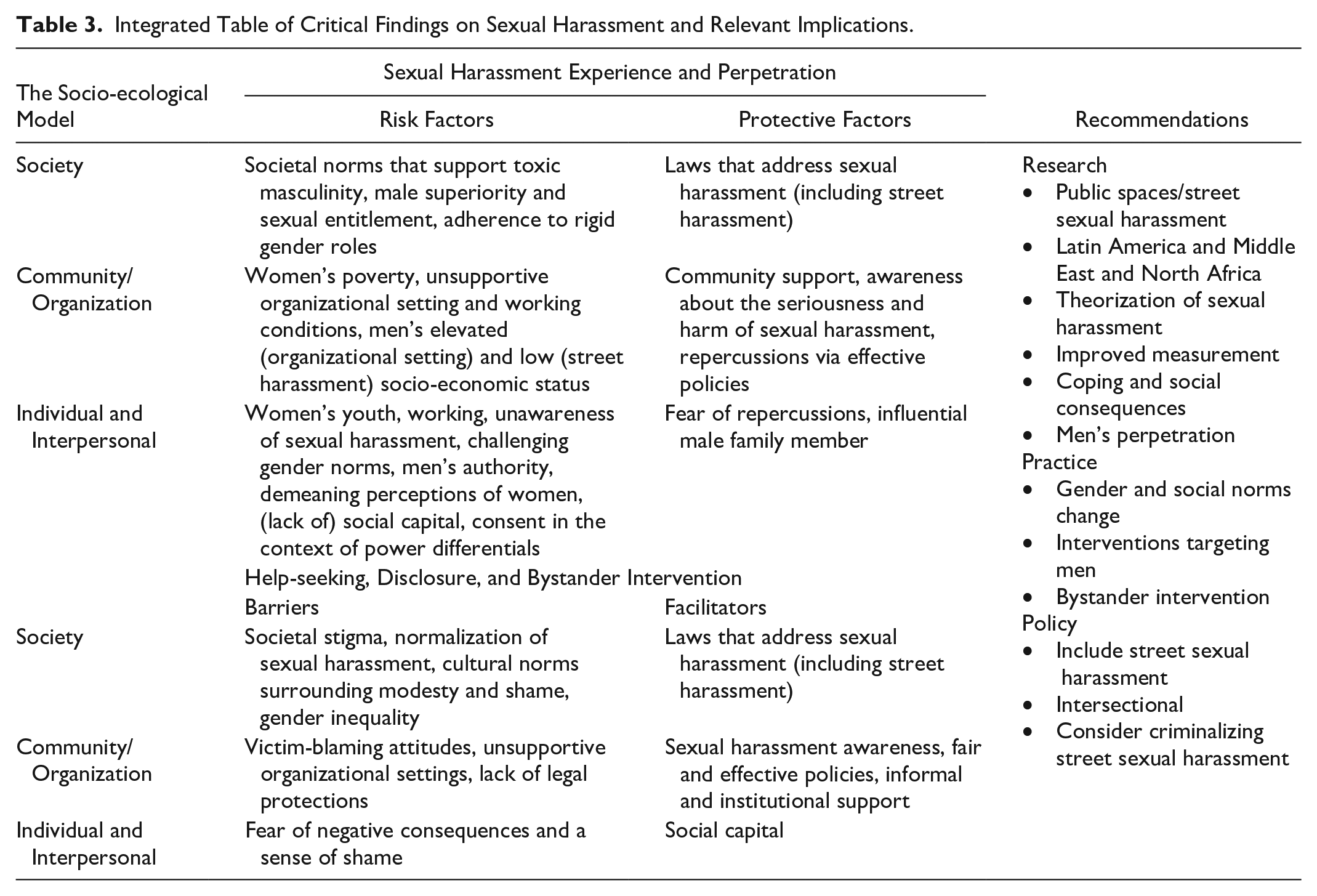
Overall, there is need for more research on sexual harassment in public spaces, in Latin American, Middle Eastern, and North African countries, and with marginalized populations, theorization to better identify, understand, and address sexual harassment, improved measurement through definitional clarity and incorporation of root causes, women’s coping and social consequences given the prevailing stigma, effectiveness of bystander interventions, men’s motivations, contexts, and attitudes toward the harm they might have caused is needed.
Interventions that attempt to change gender and social norms by promoting notions of gender equality and positive masculinities are needed. There is some evidence from HICs and LMICs that interventions targeting men by focusing on empathy and allyship can reduce sexual harassment and could be pursued further (Chakraborty et al., 2020). Bystander intervention training could be used to increase individual and community capacity (Lyons et al., 2021).
The development of sexual harassment policies in workplace and educational settings needs to focus on the gendered inequalities underlying sexual harassment (Marshall et al., 2014). Existing legislations should incorporate street sexual harassment to emphasize its seriousness and consider the multiple marginalizations of those at risk for perpetration and experience of sexual harassment.
Conclusion
Our qualitative systematic review has demonstrated that sexual harassment is a salient issue in women’s lives that negatively impacts their mental and physical well-being. Its conceptualization, however, varies across settings and is influenced by contextual and sociocultural factors. In particular, this review has emphasized the importance of understanding the context-dependent nature of the risk and protective factors of sexual harassment as well as the barriers and facilitators to help-seeking, so that these underlying causes can be used to inform future research, the development and implementation of needs-oriented interventions, and bottom-up policy-making pertaining to sexual harassment in LMICs.
Footnotes
Declaration of Conflicting Interests
The author(s) declared no potential conflicts of interest with respect to the research, authorship, and/or publication of this article.
Funding
The author(s) disclosed receipt of the following financial support for the research, authorship, and/or publication of this article: The study was funded by the British Academy Sustainable Development Grant Programme (SDP2\100069) and the European Research Council Starting Grant (IPV_Tanzania 716458).
