



Abstract
Attacks perpetrated using acid are a particular form of interpersonal violence, possibly one of the most heinous manifestations of Intimate Partner Violence (IPV). Acid attacks are mainly motivated by extramarital cheating, marital conflicts, women’s rejection of marriage proposals, and sexual advances. As these attacks are not well understood from a psychological perspective, we conducted a systematic review, following Preferred Reporting Items for Systematic Review and Meta-Analyses (PRISMA) guidelines, of 284 articles identified, 13 were eligible for inclusion. Three main focuses were identified: “Risk and vulnerability factors,” “Consequences and implications,” and “Interventions and treatments.” Acid attacks seem to be more frequent in countries where social and economic development leads to greater tensions over traditional gender roles like Bangladesh, Pakistan, and India. Identified risk factors were young age, low socioeconomic status, low educational attainment, ethnicity, unemployment status of the victim, alcohol, and drug use of the perpetrator. Among the main psychosocial consequences of acid attacks, isolation and social exclusion emerged. Additionally, the paper will discuss the role of mental health consequences and specific treatments from psychological, clinical, and medical-legal points of view.
Keywords
Introduction
Aggression perpetrated using acid (Vitriolage) is a particular form of interpersonal violence (Anwary, 2003; Kaur & Kumar, 2020). Vitriolage is an act of vengeful nature and a form of physical violence, resulting in severe consequences to the face and body of the victim (Karunadasa et al., 2010). As highlighted by Sharmin et al. (2019), those who are responsible for this criminal behavior use corrosive substances, such as sulfuric, muriatic, or nitric acid, against another person’s face or body, causing skin burns and often severe tissue damage in the victim.
In most cases, these assaults are one of the most brutal expressions of gender-based violence, as women are the primary victim (Haque & Ahsan, 2014). Given these circumstances, it seems consequential to identify a link between vitriolage and IPV (Micheau et al., 2004), since victims’ gender and marital status represent risk factors, as well as the nationality of the victims. In fact, in some countries, where the domination of men over women and their total submission are still tacitly accepted, despite the recent and increasing social struggles to achieve a radical cultural change (Marshall & Furr, 2010). Moreover, where acids such as sulfuric and nitric are readily accessible and inexpensive (e.g., India, Bangladesh, and Cambodia) attacks with corrosive substances seem to be more prevalent (Faga et al., 2000). Using acid or corrosive chemical substances has the intent to irreparably produce damage aesthetically, injure, and in the worst cases kill another person, as an effective strategy of revenge, which can have different purposes (Biswas & Chatterjee, 2021). The main drivers for vitriolage are extramarital betrayals, marital conflicts, also involving the families of origin of the two spouses, women’s refusal of marriage proposals and sexual advances, and in some cases even disputes determined by economic reasons such as dowry disputes (Solberg, 2010; Yeong et al., 1997). Authors are usually people close to the victims, particularly those who share or have shared in the past a sentimental and emotional relationship with the victim (Branday et al., 1996; Sabzi Khoshnami et al., 2017). The phenomenon is increasing worldwide, although there are significant differences between different countries, especially between developed and developing countries (Grundlingh et al., 2017; Mannan et al., 2004, 2006, 2007; Nagarajan et al., 2020).
Aims
Although this phenomenon can be considered a public alarm, research conducted on the topic is still scarce and disparate; for this reason, it seemed relevant to carry out a literature review of available studies. The main objective was to identify and systematize the most important elements and aspects related to acid attacks and gender-based violence, including risk and vulnerability factors (i.e., the characteristics of the perpetrators and victims that can increase the possibility of the occurrence of attacks). Evaluating the existence of a series of risk factors will allow researchers to better understand the motivations underlying the different spreading of this phenomenon among countries.
Materials and Methods
Procedures
This systematic review was conducted following the Preferred Reporting Items for Systematic Review and Meta-Analyses (PRISMA) guidelines (Moher et al., 2009). Articles about vitriolage and the phenomenon of gender and/or intimate partner violence were included. Inclusion criteria comprised: (1) empirical and qualitative research studies; (2) sample including adult women victims of vitriolage; (3) the presence of gender-based violence and/or intimate partner violence as study variable; (4) papers written in English, Italian, French or Spanish. Exclusion criteria were: (1) children abuse and/or a non-adult population; (2) different languages from those listed above; (3) unavailable full-text papers, even after contacting the corresponding author; and (4) pre-print and/or unpublished papers.
Literature Search
We used a systematic search strategy to identify relevant articles. We conducted a literature search on January 27, 2021. Three electronic databases (Medline/Pubmed, PsycInfo, and Scopus) were searched with the following string: (vitriol*) OR (acid attack) OR (burning assault) AND ((gender violence) OR (domestic violence abuse) OR (gender-based violence) OR (intimate partner violence) OR (IPV) OR (DVA).
Titles and abstracts were screened by two researchers independently (B.B. & M.M). Full texts were obtained for studies meeting inclusion criteria or where a decision could not be made from the title and/or abstract only. Full texts were independently assessed for eligibility by two reviewers. Discrepancies were resolved by an initial discussion or through consensus with a third author (G.L.), and eventually, Delphi rounds with all other authors.
A standardized form was used to extract data from the included studies to assist in study quality and evidence synthesis. Extracted information included: study focus, participant characteristics, measures, and authors’ conclusions, as well as information required for assessment of the risk of bias. Extraction was completed by two reviewers independently. A third researcher was consulted when needed.
Quality Evaluation
The assessment of the quality of the observational study was conducted using the Newcastle-Ottawa Scale (NOS), a tool used for assessing the quality of non-randomized studies included in a systematic review and/or meta-analyses (Deeks et al., 2003). Using the tool, two reviewers independently judged the methodological quality of the studies using the NOS for case-control study in three domains: (1) subject selection: a score of 0 to 4, (2) comparability of the case and control groups: a score of 0 to 2, and (3) the ascertainment of either the exposure or outcome of interest: a score of 0 to 3 (Deeks et al., 2003). Disagreements were resolved through Delphi rounds until full consensus was reached.
Results
Characteristics of Included Papers
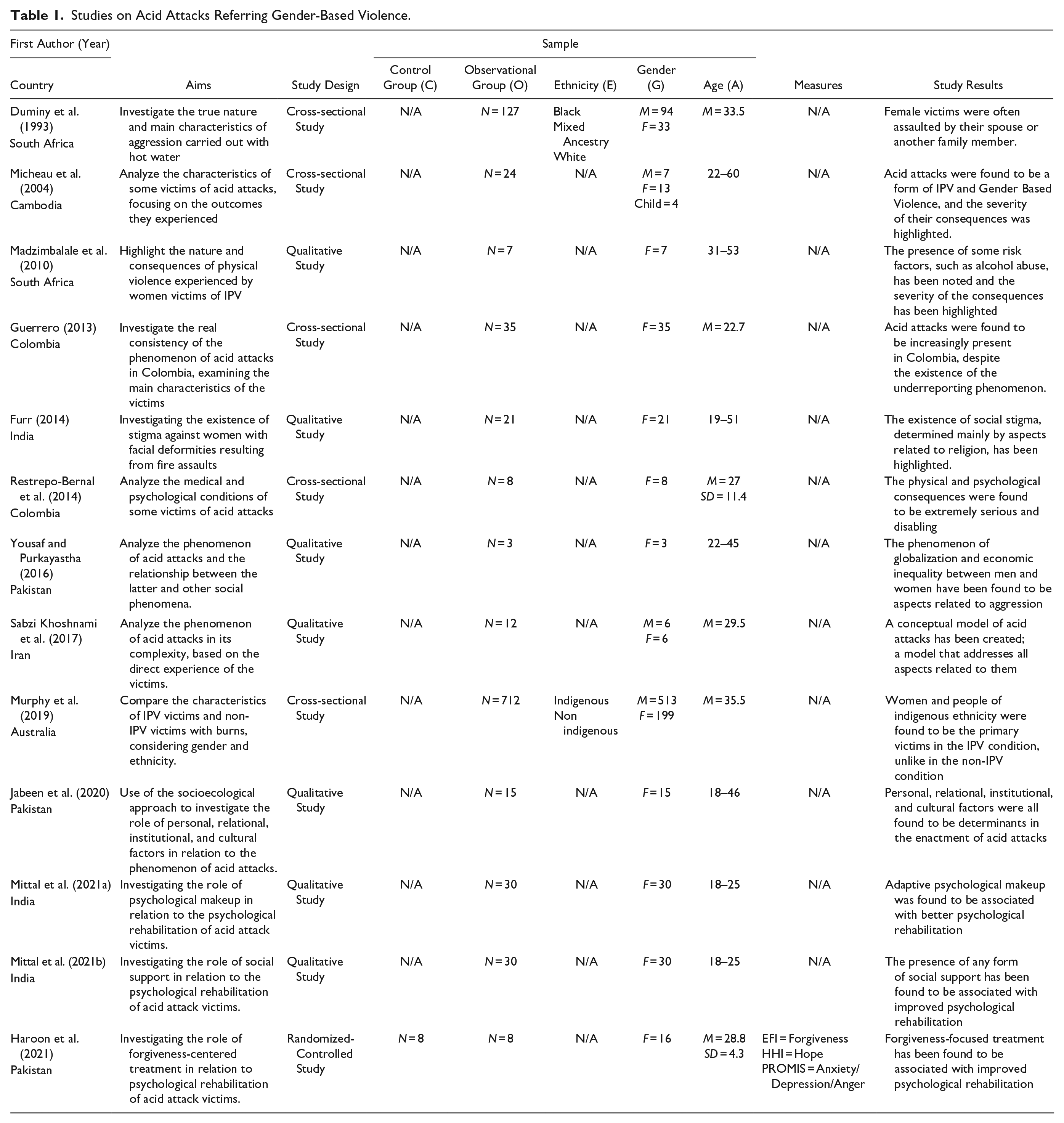
The search yielded the following results: 90 articles on PubMed, 163 articles on MEDLINE, 11 articles on PsycInfo, and 20 articles on Scopus. Once duplicates were eliminated, the titles and abstracts of all remaining articles were double-blind screened to identify those potentially relevant to the main purpose of the review. There were 41 selected articles against which full-text analysis was performed. Of these, 13 were selected and subsequently used in the review (Figure 1 and Table 1), whereas the remaining 27 were excluded for several reasons. For the list of the excluded studies see the Supplemental Data file.
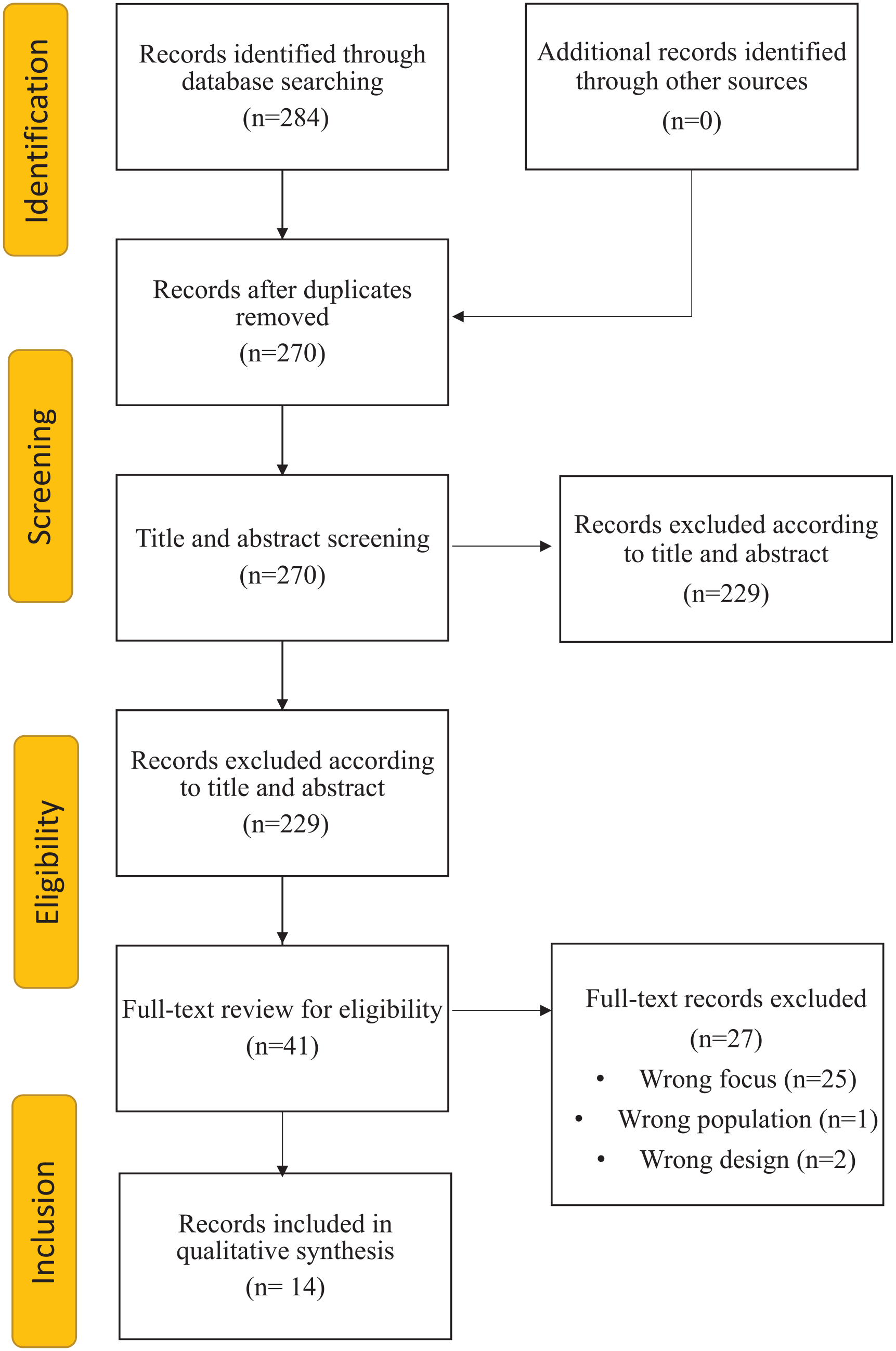
Flow chart of studies screened according to PRISMA guidelines.
Studies on Acid Attacks Referring Gender-Based Violence.
Quality Evaluation
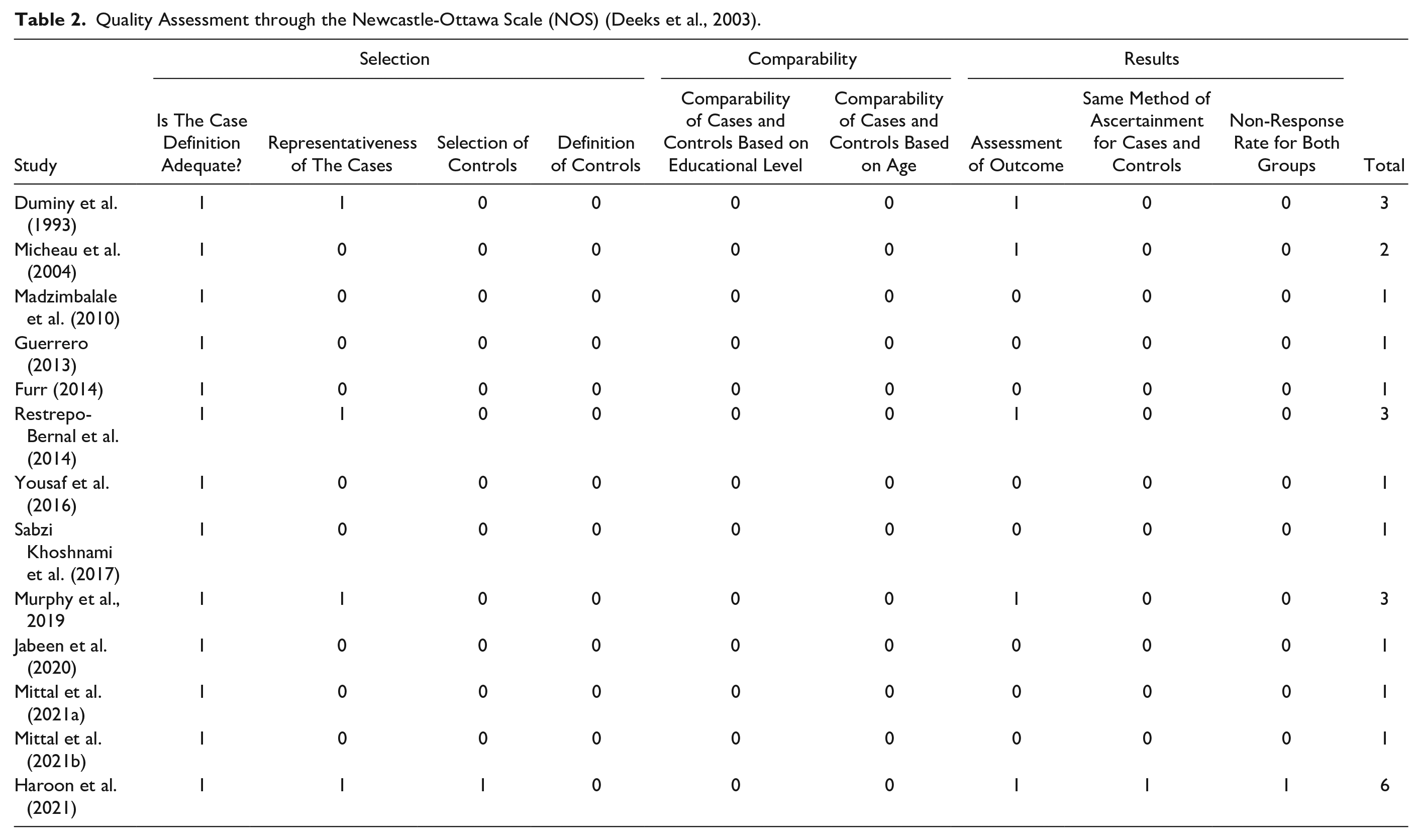
The NOS scores of the 13 studies ranged from 1 to 6 points (Table 2). Case definitions were adequate with independent validation for virtually all studies. The main limitation in most cases, also given their qualitative nature, was the absence of a control group and, therefore, the impossibility of performing comparisons between the control and experimental groups. Methodology in many cases consisted of unstructured or semi-structured interviews, without any validation of results by an independent third party. The presence of bias was also possible due to the representativeness of the cases since many studies used non-probabilistic sampling.
Quality Assessment through the Newcastle-Ottawa Scale (NOS) (Deeks et al., 2003).
Themes
Taken together, this review revealed a wide range of intersectionality among gender-based violence and vitriolage; to help interpretation, the results were divided into three thematic areas: (1) risk and vulnerability factors of the victims; (2) consequences and implications of the assaults; and (3) interventions and treatments.
Risk and Vulnerability Factors
The risk and vulnerability factors that increase the likelihood that acts of violence against women will occur by using acid, or otherwise chemical and/or corrosive substances, are numerous. One of the factors on which there is greater agreement among researchers is the gender of the victims (Furr, 2014; Guerrero, 2013; Haroon et al., 2021; Jabeen et al., 2020; Madzimbalale & Khoza, 2010; Micheau et al., 2004; Mittal et al., 2021a, 2021b; Murphy et al., 2019; Restrepo-Bernal et al., 2014; Yousaf & Purkayastha, 2016). The amount of research, therefore, indicates that within the dimension of interpersonal violence even acid attacks have women as their main victims.
A second equally relevant risk factor is the young age of the victims (Duminy & Hudson, 1993; Furr, 2014; Guerrero, 2013; Haroon et al., 2021; Jabeen et al., 2020; Micheau et al., 2004; Mittal et al., 2021a, 2021b; Murphy et al., 2019; Restrepo-Bernal et al., 2014; Sabzi Khoshnami et al., 2017) although with few inconsistencies. For instance, according to Guerrero (2013), the average age of victims is 23 years old; while, according to Murphy et al. (2019) is instead 35 years. Generally, victims’ age range is from 20 to 35 years.
Low socioeconomic status is another recognized risk factor for vitriolage victimization (Duminy & Hudson, 1993; Guerrero, 2013; Jabeen et al., 2020; Murphy et al., 2019; Yousaf & Purkayastha, 2016) and in some cases illiteracy (Duminy & Hudson, 1993; Guerrero, 2013; Jabeen et al., 2020; Madzimbalale & Khoza, 2010; Restrepo-Bernal et al., 2014; Sabzi Khoshnami et al., 2017). Linked to these risk factors, victims’ employment status, especially unemployment (Guerrero, 2013; Jabeen et al., 2020; Murphy et al., 2019; Restrepo-Bernal et al., 2014), may also be a contributing factor for vitriolage victimization, along with victim’s married status (Furr, 2014; Jabeen et al., 2020; Sabzi Khoshnami et al., 2017).
Being a member of an ethnic minority also increases the risk of vitriolage victimization (Duminy & Hudson, 1993; Murphy et al., 2019). Murphy et al. (2019) have shown that the percentage of vitriolage victims belonging to minorities is far higher than for individuals who belong to the ethnic majority. Moreover, some geographical areas appear to be more represented and therefore nationality was considered a risk factor (Furr, 2014; Guerrero, 2013; Haroon et al., 2021; Jabeen et al., 2020; Micheau et al., 2004; Mittal et al., 2021a; Murphy et al., 2019; Restrepo-Bernal et al., 2014; Sabzi Khoshnami et al., 2017; Yousaf & Purkayastha, 2016). There are substantial differences between developed and developing countries; thus, for women born or, otherwise, living in a particular country may pose a greater risk of victimization.
As some religions’ interpretations are largely associated with the culture of a specific context, the religious fundamentalists and misinterpretation of the victim and assailant may be another risk factor of violence (Guerrero, 2013; Jabeen et al., 2020).
Another relevant, and two-way risk factor is alcohol abuse associated or not with the use of drugs by perpetrators, and in some cases by the victims (Duminy & Hudson, 1993; Guerrero, 2013; Jabeen et al., 2020; Madzimbalale & Khoza, 2010; Murphy et al., 2019; Sabzi Khoshnami et al., 2017). Murphy et al. (2019) found that among victims of vitriolage, approximately 50% have a prior history of alcohol and/or drug addiction. Men who develop these addictions experience increased aggression resulting in an increased risk of enacting violent behaviors and especially acts of physical violence (Jabeen et al., 2020; Sabzi Khoshnami et al., 2017).
As highlighted by Restrepo-Bernal et al. (2014), sometimes aggressors suffer from mental disorders or have experienced traumatic experiences in childhood, such as sexual abuse. Sabzi Khoshnami et al. (2017) illustrated the fact that aggressors with a mental disorder have often behavioral symptoms, including impulse discontrol. These subjects manifest a severe inability to manage interpersonal conflicts and if this difficulty is also experienced by victims, the risk of victimization increases significantly.
The existence of any type of disability, whether physical or mental, greatly increases the possibility that the victim will become the target of some form of physical violence, including acid attacks (Mittal et al., 2021a).
Consequences and Implications
Victims of vitriolage experience multiple consequences, both physically and psychosocially (Duminy & Hudson, 1993; Furr, 2014; Guerrero, 2013; Haroon et al., 2021; Jabeen et al., 2020; Madzimbalale & Khoza, 2010; Micheau et al., 2004; Mittal et al., 2021a, 2021b; Murphy et al., 2019; Restrepo-Bernal et al., 2014; Sabzi Khoshnami et al., 2017; Yousaf & Purkayastha, 2016). At the physical level, usually the most affected areas are the arms, shoulders, trunk, neck, and especially the face. The burns caused by the attack can lead to severe complications; for instance, infections can complicate the lesions and greatly extend the time needed for the healing of injuries or, in the worst cases, even irreparably complicate the clinical picture (Duminy & Hudson, 1993; Micheau et al., 2004). As most of these attacks are performed in low-income countries, the health standards are not always adequate for complex lesions as the ones produced by vitriolage violence, which may aggravate their physical consequences (Guerrero, 2013; Micheau et al., 2004; Mittal et al., 2021a; Murphy et al., 2019; Yousaf & Purkayastha, 2016); timely interventions correctly performed may significantly reduce the consequences.
The manifest physical damage also has an economic consequence (Furr, 2014; Haroon et al., 2021; Jabeen et al., 2020; Sabzi Khoshnami et al., 2017; Yousaf & Purkayastha, 2016). As most of the victims belong to low-income social classes, the stigma of victimization is socially enhanced by the scars, creating more work difficulties for these women, who can’t support themselves and, consequently, achieve full economic independence. Given that, as illustrated above, usually the victims of this form of violence belong to a low or even very low socioeconomic status even before their victimization, and in this condition the economic impact due to aggression is more substantial.
The psychological and psychosocial consequences are very serious for the victims, already heavily affected by the aggression suffered. Victims experience a profound alteration of their body image, and this causes them intense psychological distress. This malaise in some cases can take the form of psychopathological disorders (Jabeen et al., 2020; Restrepo-Bernal et al., 2014). In addition, deformities—especially facial deformities—resulting from vitriolage have a more severe impact on female victims, for the humiliation of the appearance (Furr, 2014; Jabeen et al., 2020; Mittal et al., 2021b; Sabzi Khoshnami et al., 2017; Yousaf & Purkayastha, 2016).
Furthermore, from a social point of view, victims may be believed responsible for their current condition, which is considered a consequence of their misbehaviors (Furr, 2014; Haroon et al., 2021; Mittal et al., 2021b; Sabzi Khoshnami et al., 2017). Abandonment by family and friends is also possible under these conditions (Furr, 2014; Jabeen et al., 2020; Mittal et al., 2021b; Sabzi Khoshnami et al., 2017; Yousaf & Purkayastha, 2016). Thus, the main psychosocial consequences of vitriolage are isolation and social exclusion (Furr, 2014; Haroon et al., 2021; Jabeen et al., 2020; Mittal et al., 2021a, 2021b; Restrepo-Bernal et al., 2014; Sabzi Khoshnami et al., 2017; Yousaf & Purkayastha, 2016). This condition causes considerable distress to the victims since they can experience a situation characterized by the total absence of social support, both practical such as economic, and informative, as accompaniment, during all the various psychological, medical, and legal challenges that they must face because of the assault. This situation of isolation favors the onset of disorders such as anxiety and depression.
Interventions and Treatments
The interventions that are implemented to curb the phenomenon or reduce the impact of acid vitriolage, act at different levels, considering all the multiple dimensions involved. The first interventions to be performed are those concerning the medical aspect (Duminy & Hudson, 1993; Furr, 2014; Guerrero, 2013; Haroon et al., 2021; Jabeen et al., 2020; Micheau et al., 2004; Murphy et al., 2019; Restrepo-Bernal et al., 2014; Sabzi Khoshnami et al., 2017; Yousaf & Purkayastha, 2016). Micheau et al. (2004) outlined treatments that can be used to counteract and mitigate the physical effects of vitriolage. The three goals underlying these interventions are safeguarding the victim’s life in a dangerous condition, safeguarding the vision, and safeguarding eyes and mouth function.
Other interventions concern the legal dimension (Guerrero, 2013; Haroon et al., 2021; Mittal et al., 2021a; Restrepo-Bernal et al., 2014; Yousaf & Purkayastha, 2016). These interventions mainly concern the improvement at the judicial level and the implementation of very strict controls, concerning the sale of all substances with corrosive properties.
To prevent the phenomenon of vitriolage and to help women victims of this devastating form of violence, several organizations and some movements focused on women empowerment have arisen (Furr, 2014; Jabeen et al., 2020; Mittal et al., 2021a, 2021b; Yousaf & Purkayastha, 2016). These organizations provide different kinds of support to victims, both financial and informational. Their purpose is to greatly improve the condition wherein victims find themselves by allowing them to participate in training courses, encouraging the learning of practical skills and abilities, expendable in the work environment (Yousaf & Purkayastha, 2016).
According to Mittal and colleagues (Mittal et al., 2021a), social support is a critical element during the recovery process that acid attack victims must engage in. Support can be provided by their family members, peer group, and, therefore, friends of the victims, and the community. In the case of family members and friends, it is necessary to implement a process of sensitization, informing them about the importance of their support and, consequently, the difficulties that victims might manifest if this support were to be lost.
Another aspect that can be addressed to facilitate the recovery and psychological rehabilitation of acid attack victims is what is known as the psychological makeup (Mittal et al., 2021b). Psychological makeup refers to the cognitive element that causes and supports a certain reaction, a mental model that leads the individual to react in a certain way. Depending on whether it improves the functioning of the individual or not, psychological makeup can be adaptive or maladaptive. Adaptive psychological makeup includes positive life orientation, belief in a just world, self-efficacy while maladaptive psychological makeup refers to cognitive distortions, hopelessness, shame, and suicidal ideation.
In addition to interpersonal interventions, and community-based interventions, Sabzi Khoshnami et al. (2017) highlighted the existence of important individual strategies, such as avoidance, self-restoration, and a range of active personal strategies. There is a need to assist victims and accompany them in developing and subsequently using these multiple strategies. Another intervention focused on forgiveness has been proposed by Haroon et al. (2021). Researchers have shown that the participation of vitriolage, in psychological sessions focused on forgiveness toward their assailant, has significant positive effects, both compared to the absence of psychological treatment and compared to classical treatment.
Discussion
Risk and Vulnerability Factors
To the best of our knowledge, this is the first review on vitriolage based on medical-legal and psychological perspectives. We confirmed the existence of multiple risks and vulnerability factors responsible for the high incidence of vitriolage in specific social and cultural contexts, such as countries where social and economic development leads to greater tensions over traditional gender roles (Guerrero, 2013; Madzimbalale & Khoza, 2010; Murphy et al., 2019; Yousaf & Purkayastha, 2016). Although some risk factors (i.e., educational level and alcohol abuse) could be easily controlled with specific and targeted interventions, others such as gender and low socioeconomic status are impossible to control. In this case, it is necessary to design interventions aimed at raising awareness and changing the cultural context in which this phenomenon prevails (Restrepo-Bernal et al., 2014). However, these interventions are problematic, as it is not easy to eradicate a culture when it is well absorbed by the context (Bibi et al., 2021; Taft et al., 2009). Furthermore, culture varies in every context, yet sometimes with minor differences, so these interventions do not appear to be entirely generalizable. Most studies were conducted in specific countries and those referring to other contexts are still limited and lacking, even though the number of severe acid attacks has been increasing in recent years, especially in London (Grundlingh et al., 2017), and broadly in England (Nagarajan et al., 2020), with Italy showing an alarming trend, as different press reports showed (Cavestri, 2017). Nonetheless, being aware of factors that may increase the likelihood of the enactment of these assaults is critical and represents the first step in the future design of interventions.
Consequences and Implications
About the consequences of vitriolage, Mittal et al. (2021a, 2021b) have focused on the psychological and psychosocial implications that were previously somewhat neglected, rather than medical ones. The literature on medical interventions is extensive and comes from all over the world, partly because, in most cases, victims of vitriolage are triaged by medical teams from more developed countries (Micheau et al., 2004). However, since the psychosocial consequences of these attacks are as severe and disabling as the physical ones, the psychological aspect is of utmost importance to the victims. The absence of support in such a delicate phase is a problematic issue and is one of the main causes of the numerous problems experienced by victims (Mittal et al., 2021a), such as post-traumatic stress disorder, obsessive disorder, frustration, body dysmorphic disorder, and misandry (Chandrashekar & Johny, 2017). In addition, as it has been pointed out (Restrepo-Bernal et al., 2014) aggressors can manifest mental disorders, sometimes correlated with traumatic childhood experiences, such as sexual abuse, that could have impaired their mental and emotional stability. These disorders frequently affect the aggressors’ behavior, including self-control, thus afflicting the ability to manage interpersonal conflicts (Llor-Esteban et al., 2016; Sabzi Khoshnami et al., 2017). Where the inability in conflict management is also experienced by victims, the risk of victimization increases significantly, thus configuring an additional focus of intervention.
Interventions and Treatments
Recent increased attention to these implications has led to the development of appropriate interventions and treatments that account for both victims’ physical and psychosocial well-being. These interventions may involve the victims, or those who are most familiar with them, or the entire community and its institutions (Sabzi Khoshnami et al., 2017), highlighting the existence of multiple approaches that can be used to mitigate the impact of assaults perpetrated using acid. Some interventions require virtually no financial effort by the community but simply education toward the victims and their full involvement. Even when a more individual intervention is preferred, the importance of social support must be highlighted, especially when this is provided by the victims’ family and friends (Mittal et al., 2021a). Among all the interventions analyzed, two are particularly interesting as they focus on two differentially striking aspects. The first by Haroon et al. (2021) is based on forgiveness, something that may seem difficult for those who have been victims of such violence. On the other side, Mittal et al. (2021b) propose the so-called Psychological Makeup. This kind of intervention emphasizes the benefits of adopting a psychological approach, which makes the victims more aware of what has happened, of their potential, and the many opportunities offered by life to them. Another widely investigated area is the legal system, as in recent years, the excessive prominence assumed by vitriolage has required the creation of special regulations (Yeasmeen, 2015). Nevertheless, the action of governmental institutions should not be left behind but should be enhanced. Recently, NGOs such as Acid Survivors Trust International have made significant efforts to globally raise awareness of vitriolage and develop strategies to prevent it (Hopkins et al., 2021). Studying the phenomenon of corrosive substance carrying and throwing to identify the factors that prompt offenders to use acid, Hopkins et al. (2021) designate some areas where preventative interventions could be developed, including efforts aiming at controlling the availability/accessibility of acids, developing laws to discourage offenders from their use to make individuals less receptive to the idea of carrying/using these substances and developing approaches focused on communities where this behavior is prevalent. Hence, many improvements have been made, but many flaws persist in preventing the resolution of this problem (Guerrero, 2013). In this regard, despite the many actions taken, the incidence of these attacks is increasing (Chandrashekar & Johny, 2017; Jaiswal & Bhartiya, 2020). Unfortunately, the public interventions designed often refer to the constantly increasing penalties for offenders only (Kaur & Kumar, 2020), neglecting the psycho-physical experience of the victims. Despite aiming to curb these assaults, and in part succeeding, these interventions are not enough, while interventions intended to control risk factors and those concerning the outcomes experienced by victims are still too limited. Their economic impact is not considered, and medical treatment is sometimes lacking. Organizations try to overcome these shortcomings, but their resources are very residual. On the other hand, the most recent scientific evidence has uncovered elements such as risk factors, psychosocial consequences, and certain treatments that must be strongly considered to provide comprehensive and effective strategies. The establishment of a dedicated space for the analysis of the phenomenon of vitriolage for law enforcement officers would not be sufficient to solve this serious phenomenon. It is necessary to establish a specific psychological and psychotherapeutic program for the victims of vitriolage. The primary objective must be to counteract all the psychosocial consequences, which in turn can lead to the onset of serious psychopathological disorders (Mittal et al., 2021a). It is necessary to provide interventions based on listening and counseling, where victims can receive instrumental and informative support from the operators. The psychological process should begin simultaneously with the medical one and before surgery: victims of vitriolage in most cases must face a long series of surgical operations that involve physical pain and determine a temporary forced social isolation (Micheau et al., 2004). Adapting to a new look is one of the main difficulties and is one of the aspects on which psychologists should base their interventions (Restrepo-Bernal et al., 2014).
Limitations and Practical Implications
While we present an approach that may be informative and useful for the field, there are several limitations of our approach that must be noted. First, the sample sizes of the included studies, as well as the overall sample, were relatively small, the studies were mostly observational and with a moderate risk of bias. Second, due to the dearth of studies, we pooled together studies using different tools to investigate the medical and psychological aspects of the victims. Our review is limited by the populations studied within the studies selected, and thus, results may not generalize to women or populations over the age of 30. Although some samples included in this review were racially and ethnically diverse. The research included in this review was largely cross-sectional, with retrospective reports of traumatic experiences. Future studies of risk and protective factors for acid attacks should include longitudinal and prospective study designs, involving both victims and perpetrators to understand how, when, and why vitriolage has been used within the intimate relationship. In addition, our review is limited by our chosen search strategy and selection process.
Despite these limitations, the presented work indicated the importance of developing appropriate interventions for victims of vitriolage; it’s almost important for policymakers to understand the psychological aspects of vitriolage beyond the medical intervention to better prevent episodes of vitriolage and to correctly support victims after the violent episode.
Conclusion
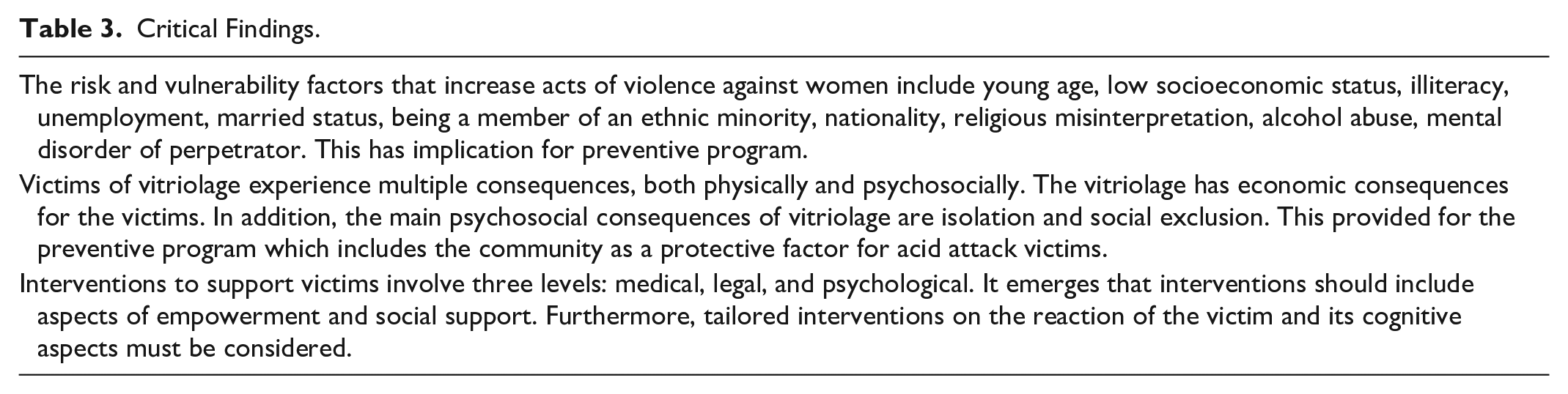
The link between acid attacks and gender-based violence is a partially explored phenomenon. This thematic review attempted to organize the data from articles that discussed gender-based violence and vitriolage. Future research should examine how acid attacks are used within gender-based violence victimization. Furthermore, although it is acknowledged that acid attacks in gender-based violence are a worldwide occurrence, most articles only mention South Asian nations. Studies should be motivated by the phenomenon’s particular cultural characteristics. Moreover, in order to address the complex issue of vitriolage and gender-based violence and to maximize the contribution of integrated care for victims from both medical-legal and psychological perspectives, evaluative research for developing evidence-based solutions is essential. In addition to the value of victim treatments, prevention is a key tool in fighting the problem. The fact that acids are readily and inexpensively available over the counter has turned them into a weapon, and it’s necessary for a structured clampdown on acid sales (Table 3).
Critical Findings.
Implications for Practice, Policy, and Research
The review demonstrated the importance of designing an intervention that is appropriate for victims of acid attacks, it is crucial to adjust the intervention according to specific psychological needs beyond purely medical interventions.
Intervention approaches for victims of acid attacks should consider the additional advocacy and support that may be needed for relocating, identifying a new job, and protecting victims’ safety.
Prevention and intervention programs should work on amelioration of proven risk factors (particularly malleable factors)—as identified in this review—rather than untested or less robust factors, to prevent and reduce acid attacks related to gender violence.
Efforts to increase public awareness that risk factors apply to men and women and that reducing risk for both sexes may ultimately reduce acid attacks related to gender violence.
The phenomenon of vitriolage should not be considered an aggravating factor of intimate partner violence but an actual crime.
Welfare services worldwide must develop quality community responses to prevent vitriolage as a form of gender violence. The interventions can include residents and stakeholders in the community to facilitate a much more sustainable change regarding at-risk women than is possible in other more individualized interventions. Interventions should be based on ideology of solidarity and mutual assistance.
We recommend that future studies include direct interviews with victims and perpetrators, to explore the contexts for how, when, and why vitriolage is used within intimate relationships. Specifically, in reference to vitriolage as a coercive control tactic.
Further research is needed in developed countries to investigate relationships outcomes between vitriolage and psychological conditions of victims.
Future research should work on cultivating more widely accepted definitions and methods of assessing the psychological conditions of victims of acid attacks and to assess the risk of the phenomenon.
Footnotes
Declaration of Conflicting Interests
The author declared no potential conflicts of interests with respect to the authorship and/or publication of this article.
Funding
The author(s) received no financial support for the research and/or authorship of this article.
