




Abstract
Children in foster care face heightened risk of adverse psychosocial and economic outcomes compared with children in the general population. Yet, the effects of foster care as an intervention are heterogeneous. Heterogeneity outcomes by race and ethnicity are of particular interest, given that Black and Indigenous youth experience foster care at higher rates than other racial/ethnic groups and experience group differences in setting, duration, and exits to permanency. This meta-regression explores racial disparities in education, employment, mental health, and behavioral outcomes during and following foster care. A systematic search of PsycINFO, ERIC, and Academic Search Complete using a series of search terms for studies published between January 2000 and June 2021 found 70 articles and 392 effect sizes that provided outcomes of US-based foster care by race/ethnicity. Findings reveal that Black foster care impacted persons (FCIPs) have 20% lower odds (95% CI: .68–.93) of achieving employment or substantial financial earnings and have 18% lower odds (95% CI: .68–1.00) of mental health concerns compared to White FCIPs. Hispanic FCIPs have 10% lower odds (95% CI: .84–.97) of achieving stable housing compared to non-Hispanic FCIPs. Moderator analyses revealed certain study features (i.e. publication type, timing of the study, location of the study, and placement status of the participants) have a significant impact on the gap between Black and non-Black and Hispanic and non-Hispanic FCIPs. The findings provide important implications for racial disparities in foster care outcomes, as well as highlight important gaps and missing information from published studies.
Foster care provides full-time temporary care for children deemed unable to remain safely with their families of origin, typically as a result of child abuse or neglect. Yet, foster care is a highly disruptive intervention and may not provide adequate compensatory care to mitigate the impacts of child maltreatment. Overall, research suggests heterogeneous––positive, negative, and null—effects of foster care, with the direction and magnitude of effects varying by sample composition, outcome of interest, location of study, methodology, and other factors (Font & Gershoff, 2020a). Consequently, there are growing calls for more research into the heterogeneous effects of foster care (Font & Kennedy, 2022), and particularly the nature and extent of disparate foster care experiences and outcomes by race (Barth et al., 2020).
It is widely established that in the United States, as well as other majority Anglo countries, Black and Indigenous children experience foster care placement at higher rates than white children (Cénat et al., 2021), and typically also at higher rates than Hispanic and Asian children (Yi et al., 2020). This gap has diminished, but not disappeared, for Black children in the United States over the past two decades (U.S. Department of Health and Human Services, 2006, 2020). Thus, the impacts of foster care––whether positive, neutral, or negative–are disproportionately conferred on Black and Indigenous children.
Beyond different rates of exposure, some have argued that foster care is differentially harmful to children of color (UpEnd Movement, 2021). Children of color are more likely than White children to be placed in communities and with caregivers who do not share children’s racial, ethnic, and cultural origins. In the absence of proactive mitigation efforts, foster care may increase their exposure to racism and induce challenges related to identity and self-esteem (Smith et al., 2008). Further, limited research suggests that Black children may encounter less supportive foster care experiences than White children, such as higher rates of sibling separation (Font & Kim, 2021) and running away (Wulczyn, 2020) and greater exposure to group and institutional care (U.S. Children’s Bureau, 2015). Lastly, despite a sufficient number of prospective adoptive families (Karmack et al., 2012), Black and American Indian/Alaska Native youth are subjected to disproportionately longer foster care stays (Huggins-Hoyt et al., 2019) and lower rates of adoption (Akin, 2011; Barth, 1997).
Yet, there is little evidence on whether the health and wellbeing outcomes of children who experience foster care differ by race. In the general population, racial disparities in high school dropout rates have narrowed significantly (Child Trends, 2021), though large and persistent racial disparities among youth in the general population persist in employment (Spievack & Sick, 2019), justice systems involvement (Rovner, 2016), and teen parenthood (Osterman et al., 2021). Foster care may sustain, aggravate, or mitigate those disparities. A recent review article examined racial differences in outcomes following Child Welfare System (CWS) involvement and found little evidence of profound negative effects of CWS involvement, regardless of race, nor substantial racial disparities in outcomes following CWS involvement (Barth et al., 2020). These findings were somewhat limited, as this study used a systematic review format, focused on all types of CWS involvement, and had little data specifically on Black youth. By using a meta-analytic approach, we are able to analyze more studies, including those that utilize race as a control even if they did not explicitly address race in their results. Using a meta-analytic framework, this study assesses racial disparities in health and wellbeing outcomes among children during and after foster care.
Methods
Inclusion Criteria
The purpose of this meta-analytic review was to synthesize and analyze results from research studies that reported wellbeing outcomes by race and ethnicity for individuals residing in or previously placed in foster care (inclusive of non-relative family foster care, kinship care, group homes, and residential facilities) via the Child Welfare System. For brevity, we will refer to this subpopulation as foster care-impacted persons, or FCIPs. Included studies were based on the United States foster care population, written in English, and published (in peer review or dissertation format) between January 2000 and June 2021. We included studies of participants currently in foster care as well as studies of children or adults with prior foster care experience (e.g., youth aging out of care). In addition, in order to assess racial disparities in outcomes, included studies needed to provide disaggregated (separately reported) data on two or more racial or ethnic groups. We concentrated on outcomes of “foster care as usual,” and thus excluded studies that focused exclusively on intervention programs or treatment foster care, unless we were able to discern outcomes for a “care as usual group.” Relatedly, we excluded samples that were recruited or limited based on specific characteristics (e.g., juvenile justice involvement, developmental disabilities, high-risk, emotionally disturbed, or homeless populations). We did not restrict studies based on research design or methodological quality (Lipsey & Wilson, 2001). In addition to peer-reviewed literature, we included reports and dissertations in our systematic search to reduce publication bias. The meta-analysis protocol was submitted to PROSPERO.
Identification of Studies
To locate all studies that addressed outcomes of foster care by race/ethnicity, the lead author conducted a systematic search of PsycINFO, ERIC, and Academic Search Complete using a series of search term combinations. These search terms addressed the type of placement (e.g., “foster care,” “kinship care,” “out of home care”) and the type of outcome (e.g. “behavior* problem” or “externalizing” or “internalizing,” “mental health” or “depress*”). For more information about the specific terms and combinations, see Appendix B. We chose not to include race/ethnicity terms in the search criteria because that would likely omit studies that considered race/ethnicity as a covariate or descriptive indicator rather than a main focus of the analysis. We sought to include studies that report outcomes by race/ethnicity or include race/ethnicity as a control variable regardless of whether they highlighted race/ethnicity in keywords, titles, or abstracts.
Figure 1 presents a flow chart of the search process and the reasons for exclusion during full-text review. The search yielded 10,086 studies, with 5,323 removed as duplicates. Forty-one additional studies were added from the reference list of a related review article (Barth et al., 2020). Abstracts were reviewed for 4804 studies by the lead author using Rayyan QCI. After abstract review, 323 studies were included for full-text review. Full-text review was conducted independently by the first and second authors using Rayyan QCI. Conflicts were reviewed and discussed. The final analytic sample included 70 studies with 392 effect sizes. For a summary table of included studies, see Appendix A–Table 1. Flow chart of systematic search.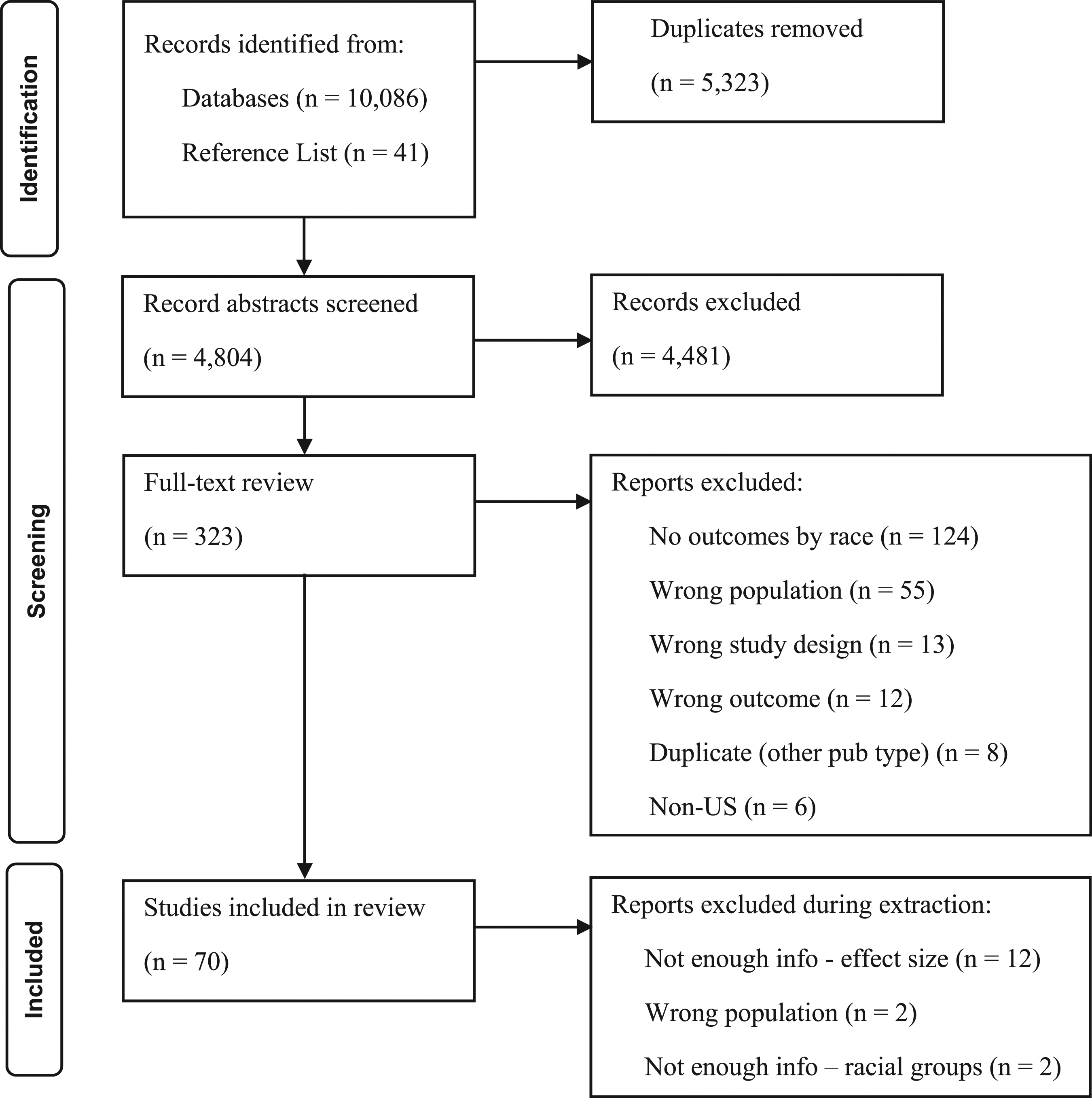
Data Extraction and Coding Process
A comprehensive coding scheme was developed a priori using previous research as a guide (see Appendix B for more details about study selection and coding, including the coding scheme). Data extraction was completed by the first and second authors. Extracted data were compared and disagreements were discussed until agreement was reached.
Effect sizes
Domain Details.
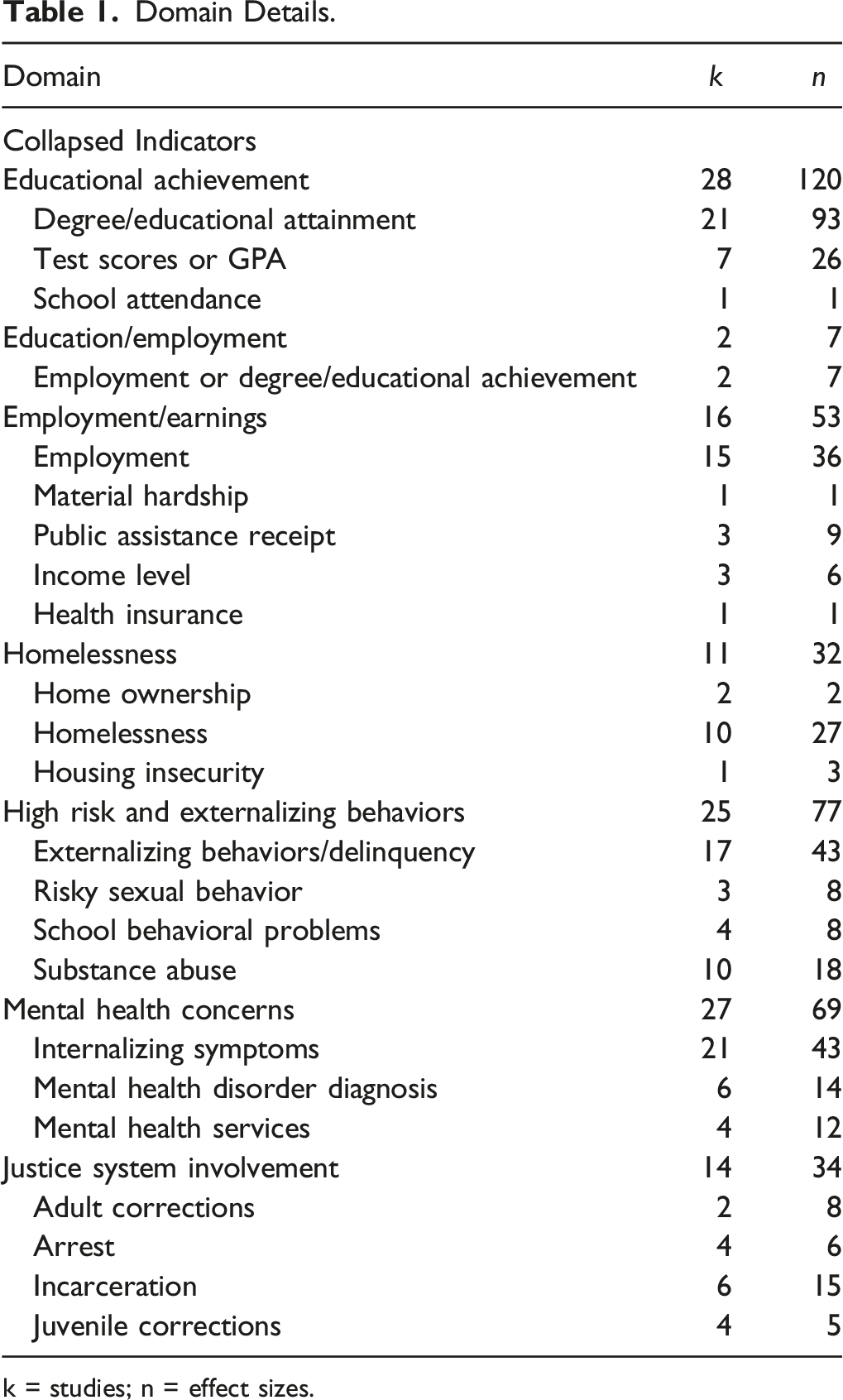
k = studies; n = effect sizes.
Study and sample attributes
In addition to effect sizes, extracted data elements included study characteristics (publication type, study design, sampling method, data source, data type, region of data collection, date of baseline data collection, and date of outcome data collection) and sample attributes (independent living services, modal placement setting, age at entry, average length of stay, average number of placements, type of exit, and mean age at outcome). Due to substantial missingness on many of these attributes, not all were able to be considered as potential moderators of effect size. Ten covariates were considered in the meta-regression analysis: baseline year (0 = < 2002, 1 = 2002+) refers to the first year of baseline data collection and outcome year (0 = <2008, 1 = 2008+) refers to the first year of the outcome data collection. These cutoff points represent the approximate median years at both the study level and effect size level. In addition, there have been shifts in policies for and the demographics of foster care since the late 1990’s/early 2000’s (Font & Kennedy, 2022), so using a cut-off date from the early 2000’s helps capture those shifts. Survey random refers to studies that used survey methods and random sampling, as opposed to administrative data (survey random = 1, administrative = 0). Survey non-random refers to studies that used survey methods but did not have a random sample, as opposed to administrative data (survey non-random = 1, administrative = 0). Effect size type refers to the type of effect size data that was extracted from each study (regression coefficient = 1, other type = 0). National refers to whether the sample was nationally representative (national = 1). Out of care adult refers to whether the participants were out of care and over 18 at the time of outcome data collection, as opposed to participants who were still in care (out of care adult = 1, in care = 0). Out of care––minor indicates whether the participants were out of care and under age 18, as opposed to participants who were still in care (out of care minor = 1, in care = 0). Self-report refers to whether the source of the data was self-report (self-report = 1). Lastly, we included an indicator for peer-review (peer-reviewed publication = 1, dissertation = 0).
Statistical Analysis
We conducted random effects meta-regressions using robust variance estimation (RVE) to calculate summary effects for each racial group comparison within six 1 outcome domains, then we employed a moderator analysis to assess the impact of select study and sample level predictors. Random effects meta-regressions were used because we expect there to be heterogeneity in effect sizes due to differences across studies and samples, this is in contrast with a fixed effects meta-regression that expects more homogenous effect sizes (Borenstein et al., 2009). RVE adjusts models to account for correlation both within and between studies (Hedges et al., 2010), which allowed us to include as many relevant studies as possible, despite repeated datasets among studies––six out of 39 datasets were used by more than one study 2 ––and multiple effect sizes per study. Extracted effect sizes pertain to specific racial group comparisons (e.g., Black vs. White). Due to the small number of studies examining other racial and ethnic groups, we focus our analysis on the following comparisons: Black-White; Black–non-Black, Hispanic–White; and Hispanic–non-Hispanic. Separate meta-regressions were conducted for each comparison group within each outcome domain. We used inverse variance weights with Hedges variance estimation (Hedges et al., 2010).
First, we produced intercept-only models, which provide the average weighted effect size for each comparison group within each domain (Tanner-Smith & Tipton, 2014). Second, multivariate RVE meta-regressions were used to consider study and sample attributes as potential moderators. Because meta-regression requires a minimum of 10 effect sizes per covariate (Borenstein et al., 2009), we could only examine one covariate at a time. All meta-regressions were conducted in Stata using Robumeta (Hedberg, 2014). In Robumeta, due to correlated effect sizes, it is necessary to identify a within-study effect size correlation value, we used RHO (.08). Robumeta works best when there are a minimum of 40 studies included in the meta-analysis with five effect sizes per study (Tanner-Smith & Tipton, 2014). However, Robumeta includes a default small sample adjustment that adjusts both the estimator and the degrees of freedom (DF) (Tipton, 2015), thus improving the estimate and p-value for samples that include fewer than 40 studies, which is very common in meta-analysis. Despite the small sample adjustment, some of our models had DF < 4, which is likely due to imbalances in the data, so these were noted. When DF < 4, the incidence of Type 1 error is likely underestimated (Tanner-Smith et al., 2016; Tipton, 2015), so the p-values need to be interpreted with caution. In these instances we used a conservative p < .001 to indicate significance (Tanner-Smith et al., 2016; Tanner-Smith & Tipton, 2014). Relatedly, if the number of effect sizes per domain and comparison group was less than 10, they were not included in the covariate analysis. Similarly, if the events per variable (EPV) for a covariate was less than five within a given domain/comparison group then we did not include them in our covariate analysis (Vittinghoff & McCulloch, 2007).
Sensitivity Tests and Publication Bias
We conducted a series of sensitivity tests to assess the robustness of our analysis, all of which had no significant impact on our primary findings. The first set of sensitivity tests involved testing different within-study correlation values in our RVE meta-regression. Our primary analyses used RHO (.08): for the sensitivity tests we ran all analyses with RHO (.07) and RHO (.09). This approach is consistent with previous literature (Collins et al., 2018; Pham et al., 2021; Tanner-Smith & Tipton, 2014). The second set of sensitivity tests assessed the impact of 20 effect sizes that were highly correlated (measured the same or extremely similar constructs with the same sample) with other within-study effect sizes. These tests also had no impact on our primary findings. Publication bias was assessed using funnel plots and egger regressions tests for small study effects. Funnel plots identify asymmetry in effect sizes, which may reflect heterogeneity rather than or in addition to publication bias (Sterne et al., 2011), while the egger regression test is a linear test used to determine if smaller studies show different effects than larger studies (Egger et al., 1997; Sterne et al., 2011). For more details and results from the sensitivity tests and tests for publication bias, see Appendix C.
Results
Attributes of Included Studies
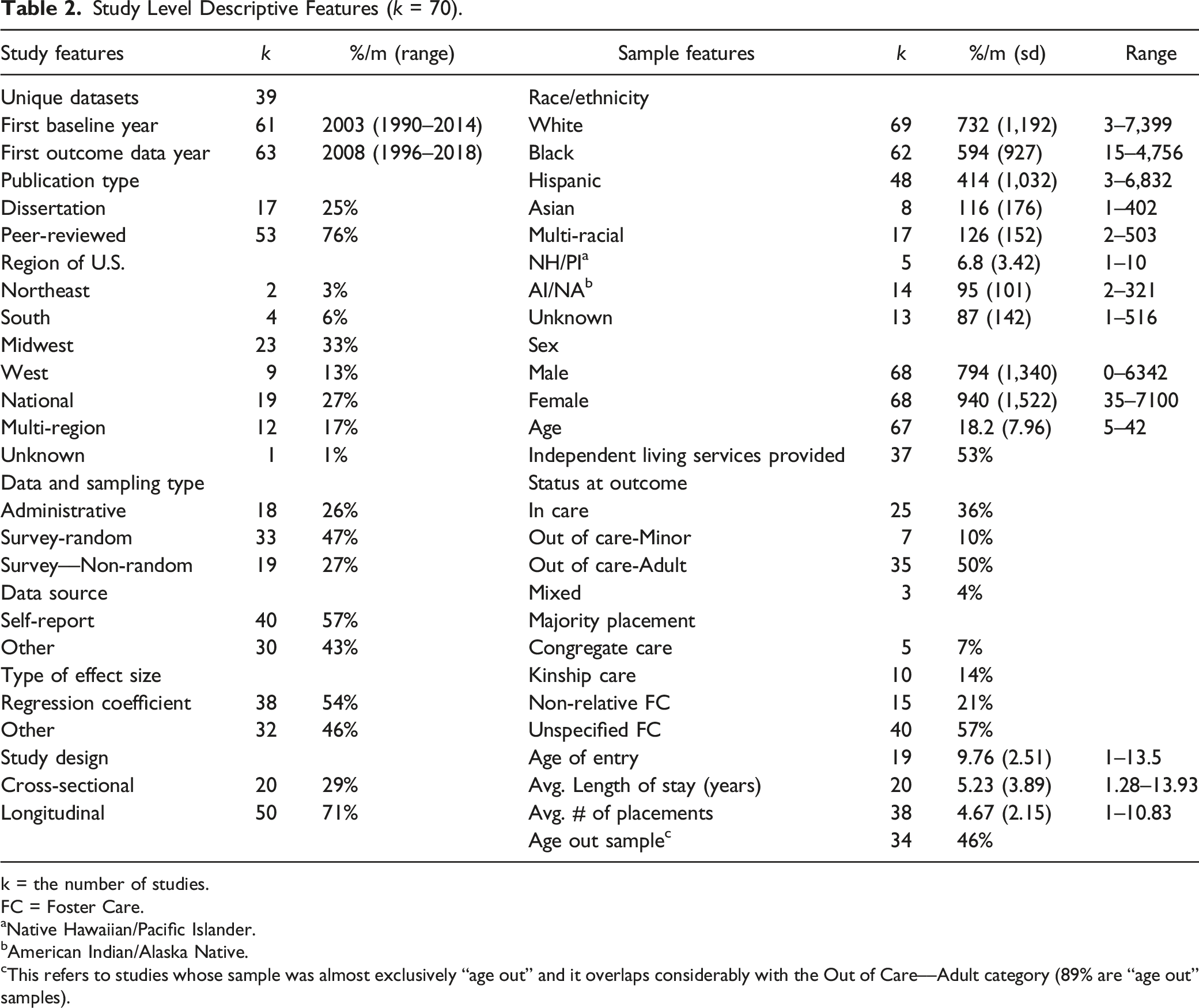
Study Level Descriptive Features (k = 70).
k = the number of studies.
FC = Foster Care.
aNative Hawaiian/Pacific Islander.
bAmerican Indian/Alaska Native.
cThis refers to studies whose sample was almost exclusively “age out” and it overlaps considerably with the Out of Care––Adult category (89% are “age out” samples).
Nearly all included studies had White (k = 69) and Black (k = 62) participants, and most included Hispanic (k = 48) participants. Despite an in interest in other racial groups, in particular American Indian and Indigenous populations, other groups were under-represented in the data, likely due to factors such as small total population size and geographic concentration in select states or regions. Only 14 studies reported outcomes for American Indian or Alaska Native youth, and these outcomes were spread thinly across domains.
Fifty percent of studies were based on youth who were over the age of 18 and no longer in foster care at the time of outcome data collection; most of these were studies of youth who aged out of foster care (89%). Few studies focused on the outcomes of children who exited foster care to reunification (n = 4) or adoption (n = 1). Thirty-six percent of studies were based on youth in foster care at the time of outcome measurement. Despite the wide variability in and importance of characteristics of the foster care experience, such as age at entry, placement settings, and stability or mode of discharge, many studies did not include this information.
Summary Effects
Overall Summary Effect Sizes by Domain and Comparison Group.
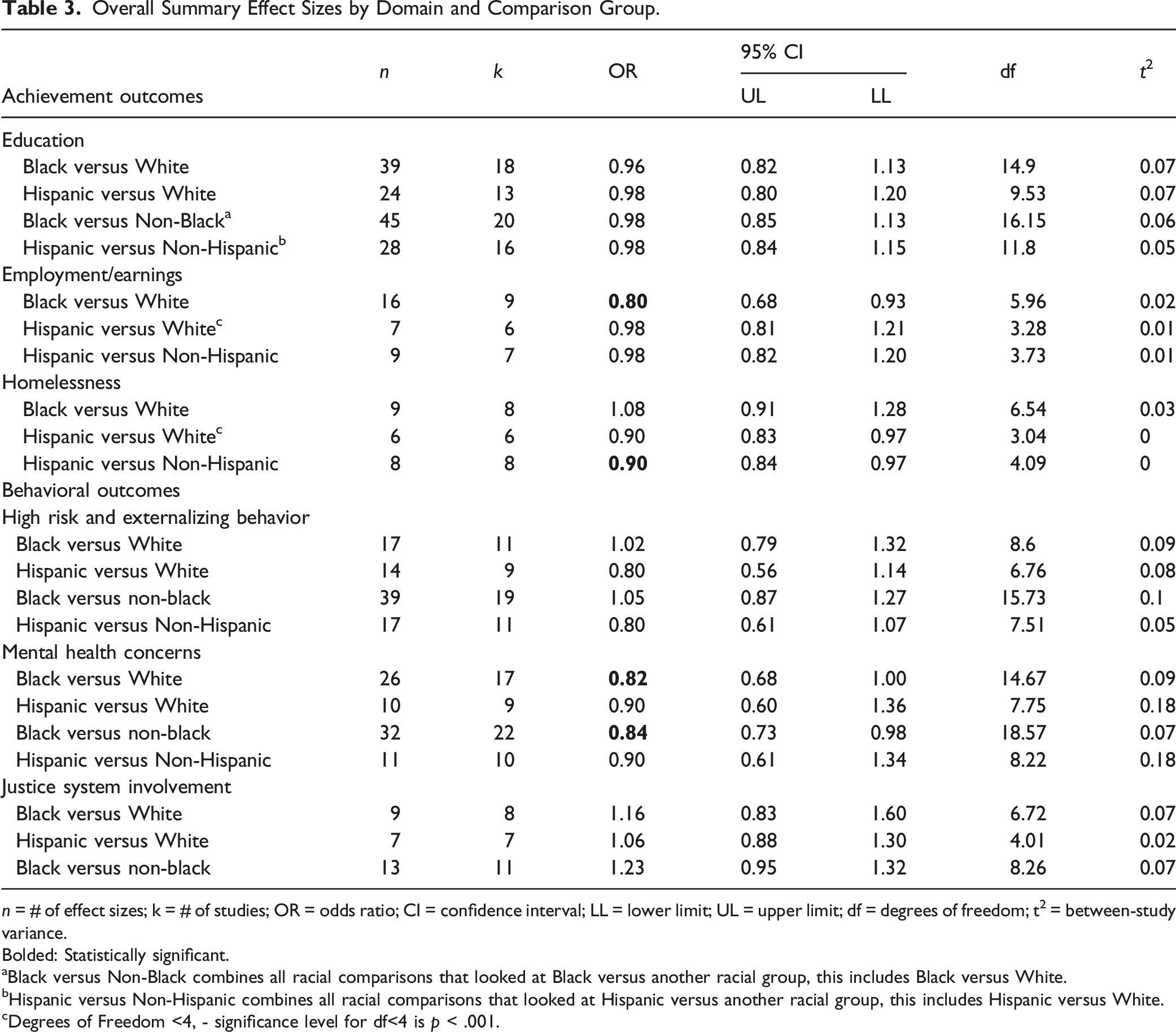
n = # of effect sizes; k = # of studies; OR = odds ratio; CI = confidence interval; LL = lower limit; UL = upper limit; df = degrees of freedom; t2 = between-study variance.
Bolded: Statistically significant.
aBlack versus Non-Black combines all racial comparisons that looked at Black versus another racial group, this includes Black versus White.
bHispanic versus Non-Hispanic combines all racial comparisons that looked at Hispanic versus another racial group, this includes Hispanic versus White.
cDegrees of Freedom <4, - significance level for df<4 is p < .001.
Study Features Meta-Regression
To gain a better understanding of how study level factors impact racial comparisons across the domains, we performed a moderator analysis. We conducted individual RVE meta-regressions for Black versus non-Black and Hispanic versus non-Hispanic comparisons across five domains (educational achievement, high risk and externalizing behaviors, mental health concerns, and pooled negative and positive outcomes). These domains were selected because they had a minimum of 10 effect sizes within each domain/racial comparison combination. To ensure that data imbalances did not impact the interpretation of our findings, we excluded all models where the events per variable (EPV) was less than five. The coefficients from the meta-regressions are presented in Appendix D. The odds ratios discussed in this section represent the direction and magnitude of the gap between Black and non-Black FCIPs and between Hispanic and non-Hispanic FCIPs compared to studies without the identified feature.
For ease of interpretation, in addition to the meta-regression coefficients and 95% confidence intervals, we present predicted effect sizes (ORs) for coefficients with statistical significance at p < .05. Specifically, we calculated the average odds ratio reported in studies for each category of the study-level predictor variable. For example, we report the average odds ratio for the association between Black (vs. non-Black) race and mental health concerns in studies that began baseline collection on or before 2002 and for studies that began baseline data collection after 2002.
Four covariates significantly moderated the gap between Black and non-Black FCIPs: studies published after 2002 compared to those published before 2002 in the mental health domain (OR: .79, 95% CI: .64–.97), peer-reviewed studies compared to dissertations in the educational achievement (OR: 1.60, 95% CI: 1.15–2.23) and positive outcomes (OR: 1.42, 95% CI: 1.02, 1.97) domains, and nationally representative compared to regional studies also in the positive outcomes domain (OR: 1.30, 95% CI: 1.02, 1.63). For the predicted effect sizes, studies that began baseline data collection in or after 2002 found that Black FCIPs had 29% lower odds (mean OR: .71) of mental health concerns compared to non-Black FCIPs, whereas studies that began baseline data collection prior to 2002 found that Black FCIPs had only 10% lower odds (mean OR: .90) of mental health concerns compared to non-Black FCIPs (See Figure 2a). On average, peer-reviewed journals reported slightly more favorable educational outcomes for Black FCIPs than non-Black FCIPs (mean OR = 1.09) whereas dissertations reported substantially less favorable educational outcomes for Black FCIPs (mean OR = .68). Similarly, dissertations found that Black FCIPs had lower odds of positive outcomes (mean OR: .68) than non-Black FCIPs whereas peer reviewed articles reported roughly equal odds of overall positive outcomes (mean OR: .96) (Figures 2b and 2c). In addition, studies that used a nationally representative sample reported similar odds of positive outcomes for Black FCIPs and non-Black FCIPs (mean OR: 1.04) whereas studies with a regional sample found lower odds of positive outcomes among Black FCIPs than non-Black FCIPs (mean OR: .80). Significant Predictors by Domain and Comparison: Predicted estimates in Odds Ratios. (a) Predicted odds ratios for Black versus Non-Black on Mental Health Concerns by baseline start year: pre 2002 and 2002+. (b) Predicted odds ratios for Black versus Non-Black on Educational Achievement by type of publication: peer reviewed journal article and dissertation. (c) Predicted odds ratios for Black versus Non-Black on Overall Positive Outcomes by type of publication: peer reviewed journal article and Dissertation and by sample location: regional and nationally representative. (d) Predicted odds ratios for Hispanic versus Non-Hispanic on Overall Negative Outcomes by extracted effect size (ES) type: regression coefficient and other type and by placement type at outcome.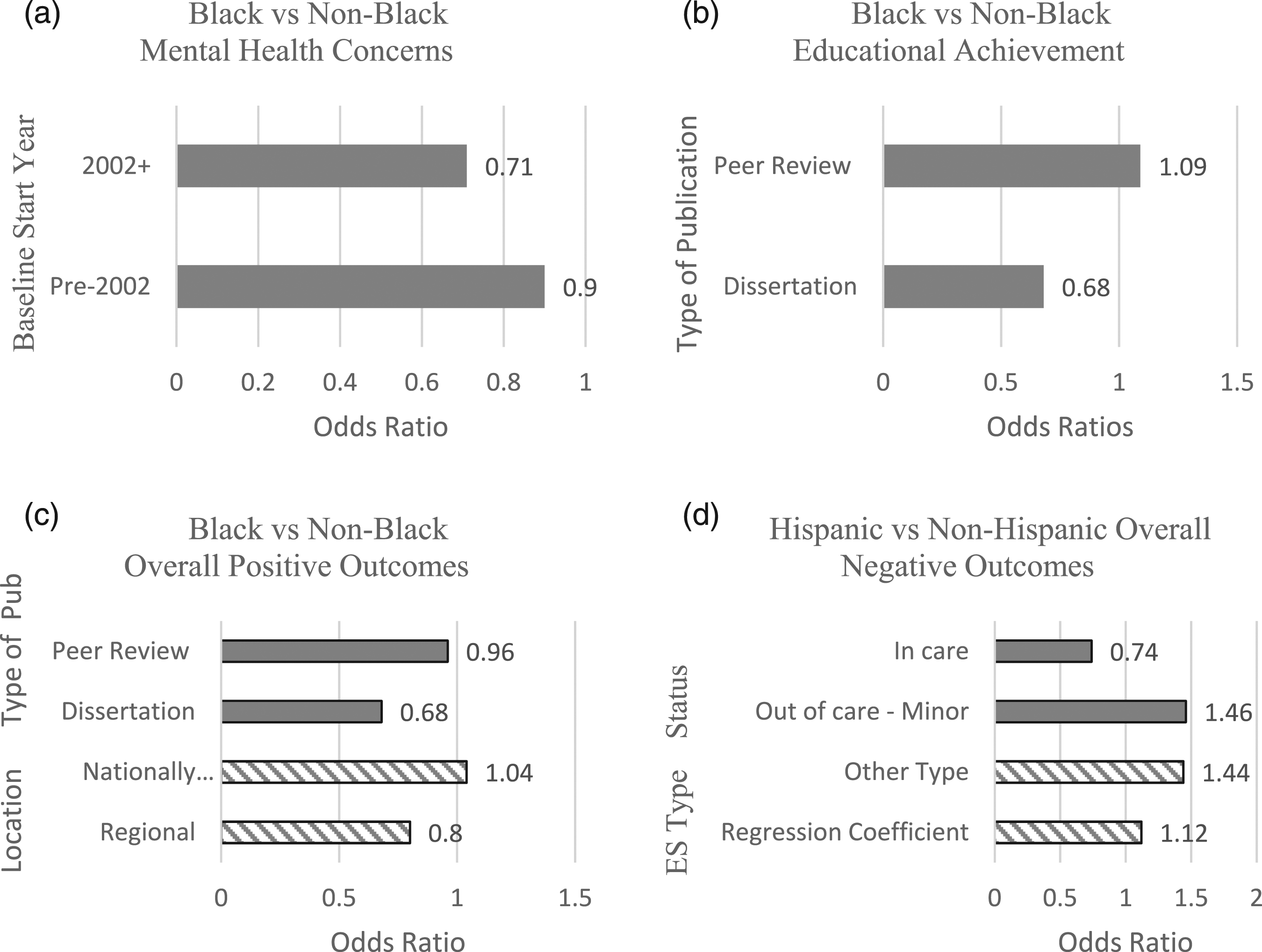
Two covariates significantly moderated the gap between Hispanic and non-Hispanic FCIPs for the negative outcomes domain: studies with regression adjusted effects sizes compared to unadjusted effect sizes (OR: .78, 95% CI: .61–.99) and studies whose participants were out of care and under age 18 compared to studies whose participants were in care (OR: 1.97, 95% CI: 1.43, 2.75). Studies reporting regression-adjusted effect sizes found smaller differences in negative outcomes for Hispanic and non-Hispanic FCIPs (mean OR: 1.12) than studies reporting unadjusted effect sizes (mean OR: 1.44). That is, studies that included covariates found more similar levels of negative outcomes than studies just reporting bivariate group differences. Finally, studies whose participants were out of care and under age 18 at the time of outcome data collection reported higher odds of negative outcomes for Hispanic versus non-Hispanic FCIPs than studies where participants were still in care at the time of outcome data collection. Specifically, estimates suggest that studies of participants who were out of care but still under 18 found that Hispanic FCIPs had 46% higher odds (mean OR: 1.46) of negative outcomes compared to non-Hispanic FCIPs, while studies were still in out-of-home care found that Hispanic FCIPs had 36% lower odds (mean OR: .74) of negative outcomes compared to non-Hispanic FCIPs.
Discussion
This meta-regression study sought to characterize the nature and magnitude of racial disparities in various wellbeing domains among foster care involved persons (FCIPs). As concerns about the persistent overrepresentation of Black and Indigenous youth in the US foster care system have risen to the forefront (Dettlaff et al., 2020) following increased public attention to racial inequalities in various social institutions, there is a need for more assessment of the nature and extent of racial disparities in the outcomes of children who have experienced child welfare systems involvement (Barth et al., 2020). Foster care, though affecting a small proportion of all CWS-involved persons (Putnam-Hornstein et al., 2021), was the focus of this analysis because it is among the most intensive and controversial interventions that CWS provides. Our analysis reveals substantial limitations of the extent research to adequately assess racial disparities in foster care outcomes. First, the proportion of studies focused on the experiences of individuals who have or are about to age out of foster care is misaligned with the comparatively small proportion of children and youth with foster care experience who age out. Groundbreaking work detailing the hardships of youth aging out (i.e., the Midwest Study) led to large-scale and sustained public investment in providing youth who age out with extended time to prepare for adulthood, free college tuition, health insurance, and other crucial resources. Despite these contributions, research on youth aging out provides relatively little insight into the more than 90% of FCIPS who do not age out of care (U.S. Department of Health and Human Services, 2020). The body of research on wellbeing outcomes following reunification, adoption, and guardianship is quite small (Font & Gershoff, 2020b; Font & Kennedy, 2022), and the number of studies evaluating racial disparities in post-discharge outcomes is smaller still. A majority of children who exit foster care either return to their biological parents or reside permanently with a biological relative (U.S. Department of Health and Human Services, 2020). Given large and persistent racial disparities in neighborhood disadvantage (Reardon et al., 2015), income and wealth, and family structure (McLanahan & Percheski, 2008), racial disparities in outcomes may be larger after discharge than within foster care as children are placed in environments with vastly different resources (Font et al., 2021). Our analysis does find some evidence that gaps in negative outcomes are larger for Black FCIPs than White FCIPs in studies of minors who have exited foster care than in studies of individuals in foster care at the time of outcome measurement, but it is based on a small number of studies.
Second, the nature of foster care varies by child and family circumstances, place, and time and thus, unsurprisingly, estimated effects of foster care on various aspects of wellbeing vary too (Font & Kennedy, 2022). Many of the largest and most troubled foster care systems––which disproportionately placed Black children and youth––drastically reduced both entry rates and length of stay in 2000’s (U.S. Department of Health and Human Services, 2013) and the US system as a whole has seen increases in adoptions and guardianships, decreases in congregate (group/institutional) care, and younger age at entry to care (U.S. Department of Health and Human Services, 2006, 2020). Because racial/ethnic groups are not evenly distributed across the US, the agencies (which are typically county-based) vary in these foster care dynamics, children of different racial/ethnic group may experience widely different foster care experiences depending on where they live and when they come into care. Yet, many studies did not report information on aspects of the foster care experience that are widely thought to be pertinent for child development, such as age at entry, placement stability, type of placement, or length of time spent in foster care. Our analysis suggests that time and place of data collection appear to moderate racial disparities for some outcomes, but it is plausible––likely even––that time and place are capturing unmeasured factors related to the quality and nature of foster care. Additional research is needed to understand the role of such factors on the direction and magnitude of racial disparities in wellbeing during and after foster care.
Third, we note the lack of studies that report outcomes for Indigenous and Asian and Pacific Islander FCIPs. Indigenous children experience comparatively high rates of foster care entry (Yi et al., 2020) and they can be subject, under the Indian Child Welfare Act (1978), to different policies and practices that may result in different types and durations of foster care, and consequently different wellbeing outcomes.
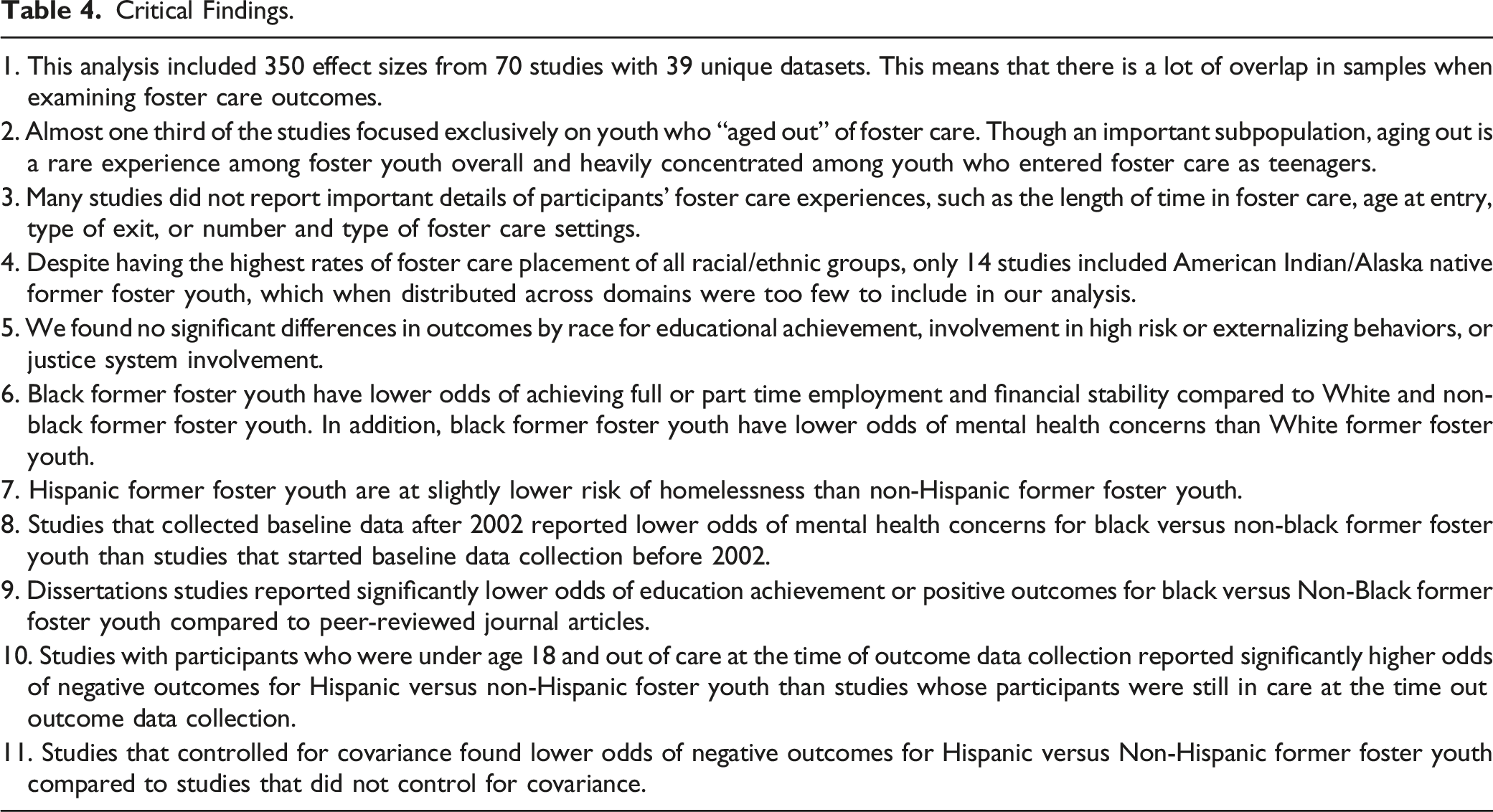
Critical Findings.
Implications for Practice, Policy, and Research.
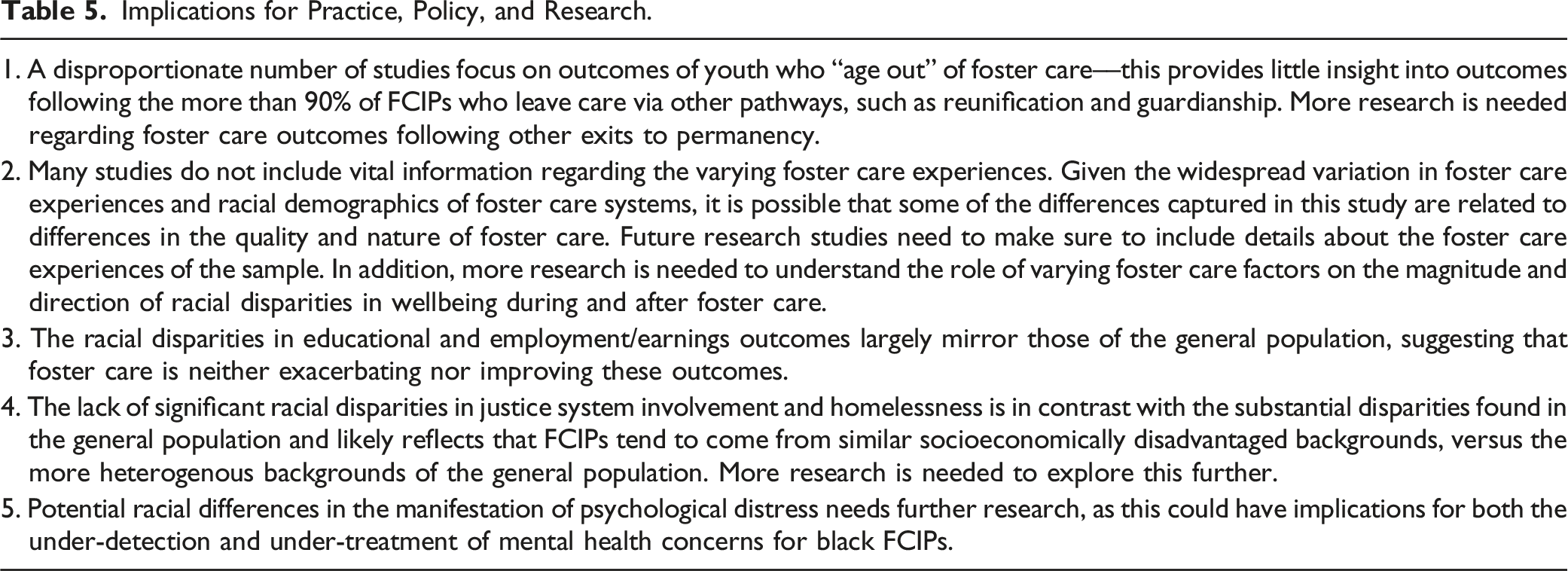
The meta-regression indicated fewer mental health concerns among Black FCIPs than non-Black FCIPs, and this was especially true in more recent studies. This is generally consistent with what has been deemed a race paradox in mental health (Erving et al., 2019), in which Black children and adults exhibit better mental health than would be predicted given heightened exposure to poverty, discrimination, and other stressors (Kysar-Moon, 2020; Williams, 2018) and heightened rate of physical health problems. Although differences in familial or social relationships have often been cited as a possible explanation, research evidence does not find support (Mouzon, 2013, 2014). Further, given that FCIPs tend to have weakened family relationships overall, reflecting both periods of separation and the effects of child maltreatment on relationship quality and attachment, social ties do not appear to be a viable explanation. Of note, a recent systematic review found consistently higher overall psychological distress among Black individuals than Whites despite lower rates of related conditions such as depression (Barnes & Bates, 2017). This discrepancy may point to racial differences in the manifestation of psychological distress, resulting in possible under-detection––and thus under-treatment––of mental health concerns for Black individuals.
Supplemental Material
Supplemental Material - A Meta-Regression of Racial Disparities in Wellbeing Outcomes During and After Foster Care
Supplemental Material for A Meta-Regression of Racial Disparities in Wellbeing Outcomes During and After Foster Care by Reeve S. Kennedy, Marina H. Potter, and Sarah A. Font in Trauma, Violence, & Abuse
Footnotes
Declaration of conflicting interests
The author(s) declared no potential conflicts of interest with respect to the research, authorship, and/or publication of this article.
Funding
The author(s) received no financial support for the research, authorship, and/or publication of this article.

Supplemental Material
Supplemental material for this article is available online.
Notes
Author Biographies
References
Supplementary Material
Please find the following supplemental material available below.
For Open Access articles published under a Creative Commons License, all supplemental material carries the same license as the article it is associated with.
For non-Open Access articles published, all supplemental material carries a non-exclusive license, and permission requests for re-use of supplemental material or any part of supplemental material shall be sent directly to the copyright owner as specified in the copyright notice associated with the article.
