




Abstract
Topic:
This scoping review investigated research regarding the magnitude of minor sex trafficking (domestic minor sex trafficking and/or commercial sexual exploitation of children) in the United States, summarizing estimates, methodologies, and strengths and weaknesses of the studies.
Method:
Using Preferred Reporting Items for Systematic Reviews and Meta-Analyses (PRISMA) guidelines, peer-reviewed articles and the gray literature were accessed via databases searches, reference harvesting, and expert advice. Articles were included if they provided a count or prevalence proportion estimate of trafficked or at-risk minors across or within a region of the United States. Six empirical studies, published from 1999 to 2017, were included in the review.
Results:
Included studies produced count estimates (n = 3) or prevalence proportion estimates (n = 3) for youth at risk of minor sex trafficking (n = 2) or reporting victimization (n = 5). Studies examined sex trafficking risk and victimization in different geographical areas, including across the United States (n = 2), in New York City (n = 1), and in Ohio (n = 1). Further, several studies focused on particular populations, such as street and shelter youths (n = 1) and adjudicated males (n = 1). Sampling methodologies of reviewed estimates included traditional random sampling (n = 1), nationally representative sampling (n = 2), convenience sampling (n = 1), respondent-driven sampling (n = 1), purposive sampling (n = 1), and use of census data (n = 2).
Conclusion:
Little research has estimated the prevalence of minor sex trafficking in the United States. The existing studies examine different areas and populations and use different categories to estimate the problem. The estimates reviewed here should be cited cautiously. Future research is needed on this important topic, including methodologies to produce more representative estimates of this hard-to-reach population.
Keywords
U.S. federal policy developed to combat and prevent human trafficking—the Trafficking Victims Protection Act (TVPA; U.S. Trafficking Victims Protection Act, 2000)—defines sex trafficking as: the recruitment, harboring, transportation, provision, or obtaining of a person for the purpose of a commercial sex act…induced by force, fraud, or coercion, or in which the person induced to perform such an act has not attained 18 years of age.
Despite awareness that sex trafficking of minors is a reality for some children in the United States and has been identified as occurring across the United States (Miller-Perrin & Wurtele, 2017), there is limited information regarding the prevalence of this crime and contention around the use of prevalence estimates to describe the scope of the problem (National Academies of Sciences Engineering and Medicine, 2020). To better understand the nature, strengths, and limitations of existing prevalence estimates, this study reviews research focused on estimating the prevalence of sex trafficking of minors in the United States. This scoping review considered research using the terms DMST and CSEC and therefore hereafter uses the term DMST/CSEC to refer to instances of minor sex trafficking.
Background
Prevalence of DMST/CSEC in the United States
Prevalence, defined as the proportion of cases in a population either at a specific point in time (point prevalence), during a given time period (period prevalence) or at some point in one’s lifetime (lifetime prevalence), is a key measure used to determine the scope and size of a problem (K. J. Rothman, 2012). To adequately address a given social and public health problem, such as DMST/CSEC, it is first necessary to estimate its scope and size (Nemeth & Rizo, 2019). Anti-trafficking advocates, organizations, and researchers all agree on the importance of enhancing our ability to compute more reliable and more precise estimates of DMST/CSEC prevalence to inform the development and evaluation of prevention strategies, intervention efforts, and policies aiming to protect youth (Clawson et al., 2009; Mukasey et al., 2007; Reid et al., 2017; E. F. Rothman et al., 2017; Salisbury et al., 2015; Smith et al., 2009). Moreover, in identifying key priorities for advancing the field of antihuman trafficking, E. F. Rothman and colleagues (2017) declared the first priority for the field as developing more precise estimations of human trafficking prevalence and incidence (i.e., number of new cases within a specified time period). Despite such calls, thus far, most of the research, practice, and policy on human trafficking has taken place without a reasonable understanding of the prevalence of the problem or standardized and consistent strategies for determining prevalence (Gozdziak & Bump, 2008).
Notably, there are a number of difficulties to more accurately estimating the prevalence of DMST/CSEC, whether point, period, or lifetime prevalence. Previously identified challenges include (a) the often hidden nature of this crime and hard-to-reach nature of trafficked minors; (b) reluctance among victims to disclose victimization, seek services, or participate in research because of fear (e.g., fear of retribution from traffickers, fear of law enforcement, fear of being identified as criminals), shame and stigma, lack of access to services, not self-identifying as a victim of DMST/CSEC, and a belief that they will not be believed or truly protected; (c) varying definitions of DMST/CSEC based on context (victims vs. law enforcement vs. industry) and scale (local vs. national); (d) lack of a uniform, centralized, and integrated system for tracking DMST/CSEC in part due to legal and policy barriers to the collection, sharing, and analysis of trafficking data; (e) lack of training and identification by law enforcement and service providers; and (f) challenges to collecting data from trafficked youth (e.g., informed consent from parents/guardians; concerns regarding further exploitation; and accessing potentially vulnerably youth who are homeless, in the foster-care system, or adjudicated; Barnert et al., 2017; Fedina & DeForge, 2017; Macias-Konstantopoulos & Bar-Halpern, 2016; Macias Konstantopoulos et al., 2013; Macy & Graham, 2012; Miller-Perrin & Wurtele, 2017; National Academies of Sciences Engineering and Medicine, 2020; Rafferty, 2008; Raymond & Hughes, 2001; E. F. Rothman et al., 2018; Smith et al., 2009). For all these reasons, it is not surprising that existing prevalence estimates vary considerably and that there is growing debate regarding the scope of the problem as well as discussions surrounding trends in prevalence (Hodge, 2008; Weitzer, 2010).
In a related vein, some researchers have identified a “Woozle effect” in the literature that discusses the prevalence of DMST/CSEC (Salisbury et al., 2015; Weiner & Hala, 2008). This effect refers to instances in which initial estimates are provided with certain caveats and limitations, but these findings are subsequently cited without such qualifications, and soon after the estimate is presented as a matter of fact (Gelles, 1980; Salisbury et al., 2015; Weiner & Hala, 2008). For this reason, as well as inherent limitations in prior attempts to estimate prevalence, some researchers recommend not citing DMST/CSEC prevalence estimates or even providing a range for them (Stransky & Finkelhor, 2008).
Despite considerable challenges in researching DMST/CSEC prevalence, varying methods have been employed to provide estimates. Early research relied on exploratory studies, using qualitative analysis of case studies and prosecuted legal cases (Fedina & DeForge, 2017). Over the past decade, the U.S. government has led several large quantitative data collection projects on human trafficking, administrative data have been extracted from state screening tools, and multiple studies on human trafficking have analyzed qualitative interviews with victims and professionals who work with this population (Fedina & DeForge, 2017; Weiner & Hala, 2008). In addition, researchers have called for the use of innovative prevalence estimation methods, such as local community-based approaches using respondent-driven sampling (RDS) as well as local and national studies using capture–recapture techniques (Fedina & DeForge, 2017; Nemeth & Rizo, 2019).
Current Study
An important step to advancing the field’s estimation of DMST/CSEC prevalence is to determine what is known about DMST/CSEC prevalence and to examine the various strategies used for estimating this prevalence. Examining prior prevalence estimates, including a focus on the characteristics of the data and methodologies, can provide guidance on moving the field forward. To address this need, this study aims to better understand current knowledge on the prevalence of DMST/CSEC in the United States by systematically identifying and critically reviewing existing research. The current scoping review was guided by the following research questions:
Method
This review followed the PRISMA guidelines (Moher et al., 2009). Objectives, methods of analysis, and eligibility criteria were specified in advance and documented in a review protocol. Figure 1 includes a PRISMA flow diagram that illustrates the steps taken during this review.
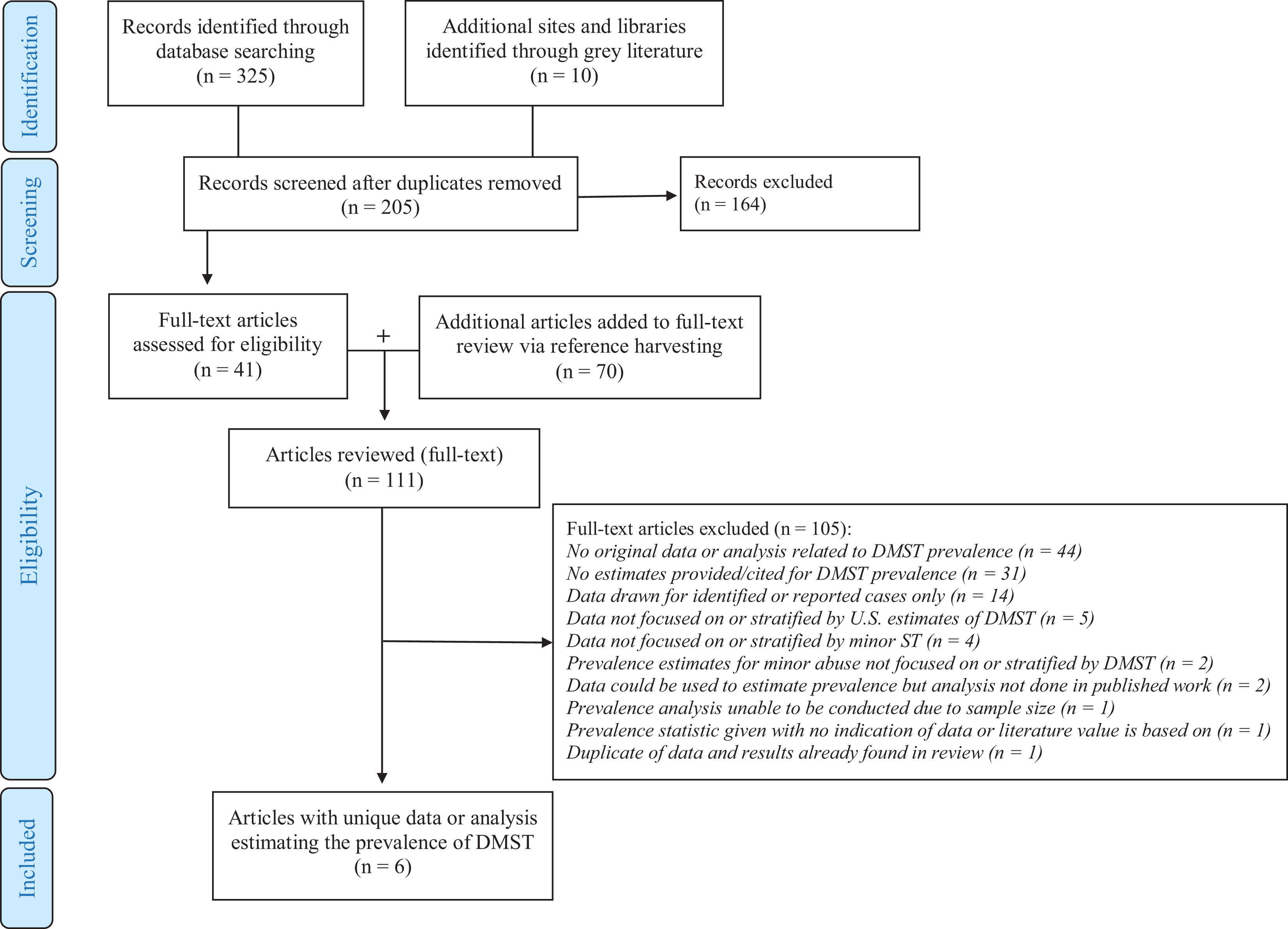
PRISMA flow diagram of search result.
Eligibility Criteria
First, for the purpose of this study, we defined our measure-of-interest of prevalence as follows: Any statistic estimating the total number or epidemiological prevalence (percent or proportion) of victims of DMST/CSEC in a given year or across a specified time period, in the population of all minors or a specified subpopulation (e.g., homeless youth), and across the United States or in a specified city or region of the country.
Accordingly, studies were included in the review if they estimated the proportion or count of all domestic youth or a specific population of youth who had either experienced DMST/CSEC (including via “survival sex”) or who were “at-risk” of DMST/CSEC exploitation. Studies were excluded if the statistics reported the number of known or suspected cases of DMST/CSEC (e.g., via arrest or hotline reports) without additional analysis to estimate the size of total—known, suspected, and unknown—DMST/CSEC population for the group of youth or geographical region of interest.
In addition, studies were not included if the estimates did not contain original data or analysis but were rather an overview of what was published elsewhere, including opinion and call-to-action pieces; if the estimates were pooled and not focused or stratified by United States, minors only, or sex trafficking only; and if the estimates were vague (e.g., cited as “high prevalence”) or unsubstantiated.
Study Selection Process
Our research used three methods to identify relevant articles: (1) database searches of peer-reviewed literature, (2) scans of reference lists for all articles selected for full text review, and (3) gray literature searches using an expert-generated list to investigate ten specific gray literature sites and libraries.
Studies were first identified through a search between December 2018 and January 2019 of electronic databases which included PubMed, Web of Science, Scopus, PsychINFO, CINAHL, Social Work Abstracts, ProQuest Criminal Justice Database, and Embase. Search terms were developed based on expert feedback from a university social sciences reference librarian. The following search terms were used to identify studies related to trafficking, prevalence, youth and the United States: (sex* OR traffick* OR “domestic servitude” OR “domestic minor sex trafficking” OR “DMST” OR “child* OR sex* OR exploitation” OR “commercial sexual exploitation of children” OR “CSEC”) AND (prevalence OR estimate OR number OR total) AND (adolescen* OR youth OR teen* OR child* OR minor) AND (United States OR USA OR US OR U.S. OR America OR domestic).
Review Process
As displayed in Figure 1, the search returned 205 unique results, after the removal of duplicates. Two members of the research team independently reviewed titles and abstracts to determine eligibility for inclusion. The independent reviewers agreed to include 36 peer-reviewed articles for full-text review. In addition, the gray literature site searches and associated libraries revealed an additional five gray literature reports for full-text review. Further, reference harvesting returned an additional 70 unique articles to be included in the full-text review process. A total of 111 articles were included in the full-text review process, and 15% of these articles were reviewed independently by two reviewers. After full-text reviews, seven articles were determined to meet study eligibility. However, two of these articles reported the same data from the same study, and therefore, we selected the more comprehensive of the two reports. The final sample size included six articles that met the full criteria for study inclusion.
To complete the next step in the review process, a study-specific abstraction form was created, piloted, and modified based on feedback from members of the research team. Pertinent details about each article (i.e., sampling design, population of interest, prevalence results, and strengths and limitations) were gathered and synthesized through the abstraction form. Abstraction data were then transferred into a table to provide a brief summary of relevant information for each study.
Results
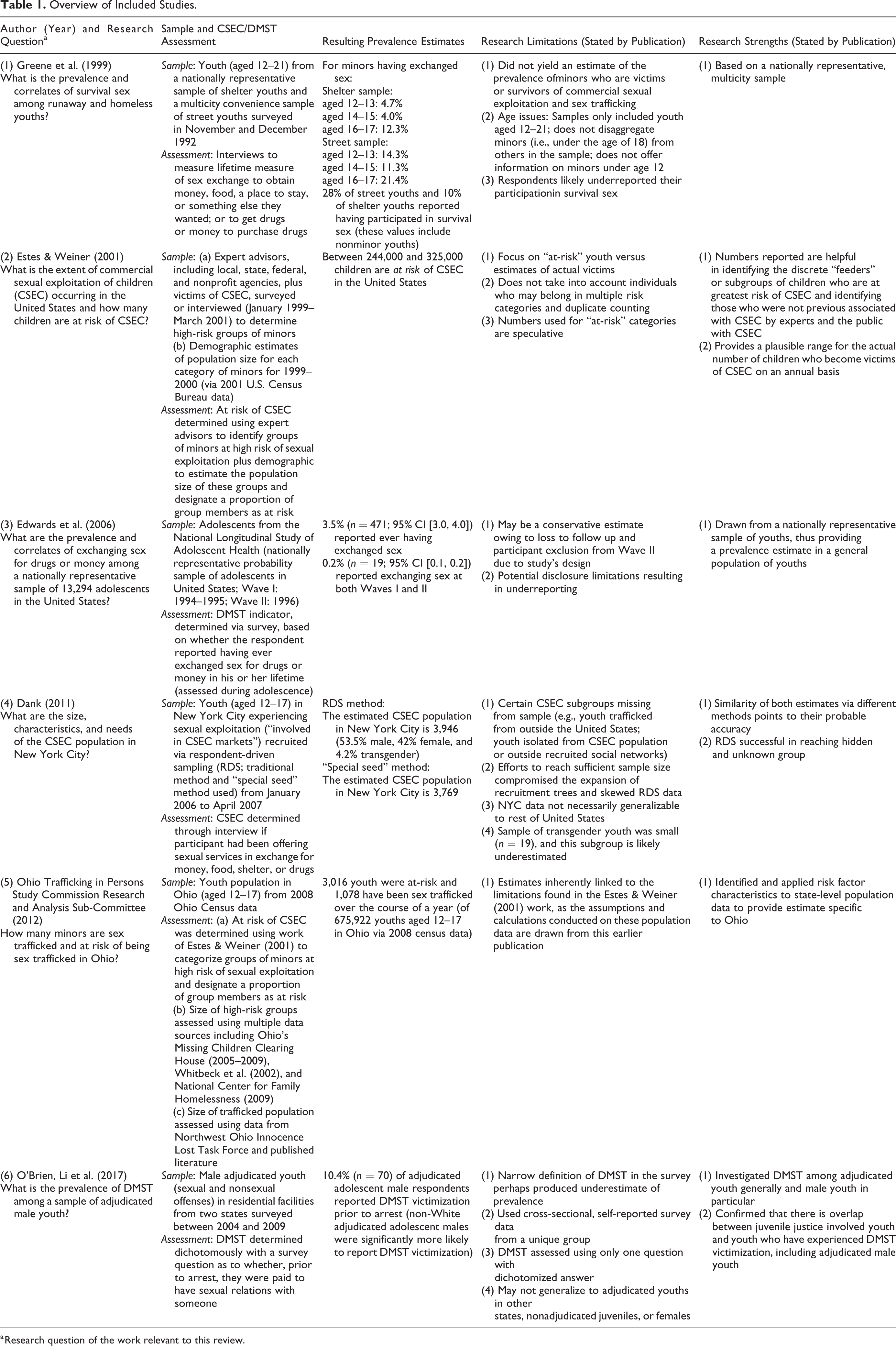
Table 1 presents results of the review of these six articles published between 1999 and 2017, and Table 2 summaries key features related to measurement, data collection, sample, and target population. Two of the studies provided count estimates for the number of children or youth at risk of CSEC or DMST: one for the whole United States and the other for Ohio. Others focused their sample and lifetime prevalence proportion estimates of DMST on vulnerable populations of youth—homeless, shelter, or adjudicated youth—or count estimates for victimized youth in NYC or Ohio. One study used a nationally representative sample to produce a prevalence proportion estimate of minor sex exchange for adolescents in the United States. The nature of the evidence for these included studies does not allow for a full systematic review, given the varied types of estimates, populations studied, and methodologies employed which prevents clear synthesis of the evidence base. Instead, the mapping of the existing literature and evidence base for these six studies is more appropriate for a scoping review (Armstrong et al., 2011; Pham et al., 2014). Each of these six studies will now be briefly described.
Overview of Included Studies.
a Research question of the work relevant to this review.
Summary of Measures, Data Collection, Samples, and Populations.
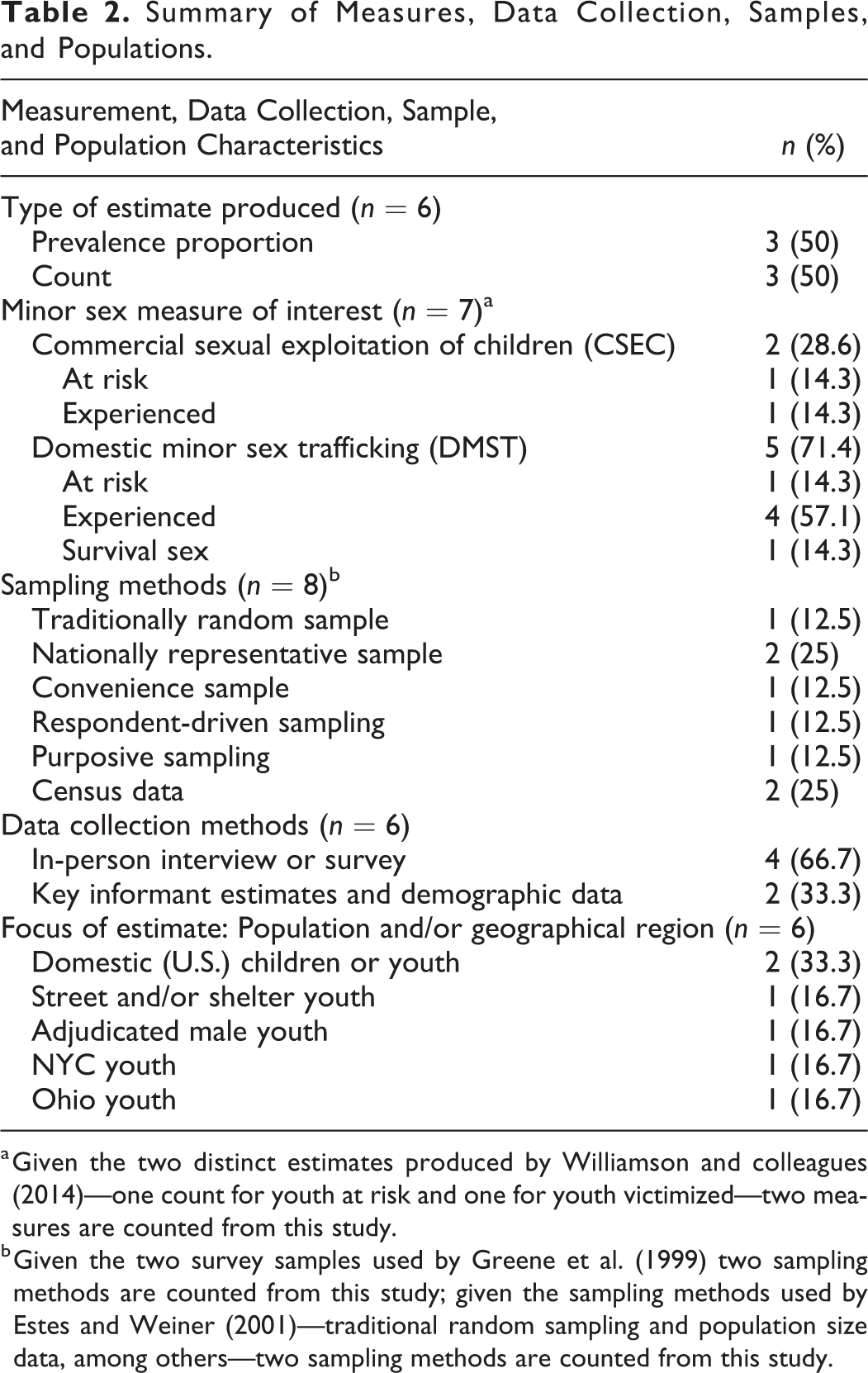
a Given the two distinct estimates produced by Williamson and colleagues (2014)—one count for youth at risk and one for youth victimized—two measures are counted from this study.
b Given the two survey samples used by Greene et al. (1999) two sampling methods are counted from this study; given the sampling methods used by Estes and Weiner (2001)—traditional random sampling and population size data, among others—two sampling methods are counted from this study.
Study 1: Greene et al.
Description of Study and Estimate
Greene and colleagues (1999) estimated the prevalence of survival sex (including ever having sex with someone to get money, food, a place to stay, drugs, or something else youth wanted) among youth (aged 12–21) living in shelters and on the streets in the United States. These estimates were based on face-to-face interviews with the youth collected during 1992, including data from a nationally representative sample (via multistage sampling techniques) of 631 youth living in shelters and a convenience sample of 528 youth living on the streets of 10 U.S. cities. Youth were interviewed face-to-face for approximately 30 min and were asked whether they had ever had sex with someone to “get money, food, a place to stay, or something else [they] wanted” or to “get drugs or money to buy drugs.” Their responses were used to create a dichotomous measure of survival sex in their lifetime. The investigators estimated that 10% of youth in shelters across the United States have participated in survival sex, with the prevalence increasing with increasing age of the youth (estimates for minors: 4.7% among those aged 12 or 13; 4.0% among those aged 14 or 15; 12.3% among those aged 16 or 17). Investigators also estimated that 28% of homeless street youth have participated in survival sex, with the prevalence increasing with increasing age of the youth (estimates for minors: 4.3% among those aged 12 or 13; 11.3% among those aged 14 or 15; 21.4% among those aged 16 or 17).
Strengths and Limitations Noted by Greene et al. (1999)
Strengths of this study include the use of a nationally representative sample for the shelter youth and the focus on homeless youth, a vulnerable and difficult-to-measure population. However, by only producing estimates for the homeless and runaway youth population, these estimates are not generalizable to all domestic minors.
Study 2: Estes and Weiner
Description of Study and Estimate
Estes and Weiner (2001) estimated the prevalence of children (under age 18) who were at risk of CSEC within the United States, Canada, and Mexico. Being at risk of CSEC was defined as a minor being part of a group or category found to be at a disproportionally high risk of sexual exploitation (i.e., runaway or homeless minors, etc.). Along the potential pathways leading to CSEC, inclusion in these groups/categories heightened a child’s chances of experiencing CSEC. These estimates focused on youth at risk of CSEC in 29 cities in the United States, 7 cities in Mexico, and 4 cities in Canada over a 27-month period (from January 1, 1999, to March 31, 2001). Investigators collected their own data from traditional random samples of experts familiar with CSEC via surveys mailed to and completed by 111 local agencies (i.e., Municipal and County Law Enforcement), 28 state agencies (i.e., State Welfare Directors and Public Defenders), 40 federal agencies (such as the Federal Bureau of Investigation (FBI) and Immigration and Naturalization Service (INS)), and 89 nonprofit agencies (i.e., Child and Family Agencies Servicing Runaway and Homeless Youth). Survey responses provided data on the expert respondents’ experiences with sex trafficking of children. Additional data were collected via convenience and purposive sampling to generate estimates of the proportion of vulnerable groups are at risk of CSEC. These efforts included expert focus groups (6–15 people) with law enforcement and human service professionals, interviews with “key decision makers” familiar with CSEC, interviews with child victims of sexual exploitation, interviews with traffickers and sex buyers/clients (Canada and Mexico only), and interviews and meetings with international advisory groups. These survey efforts generated experts’ and providers’ best estimates concerning the proportion of certain high-risk populations of minors experiencing CSEC (e.g., youth who have run away from home). Survey data were then considered alongside previously published work of other investigators, data from agencies serving youth (e.g., National Runaway Switchboard), and demographic data to approximate the proportion of youth at risk of CSEC from each of the 17 empirically identified high-risk populations. The investigators estimated that annually 244,000–325,000 children are at risk of CSEC in the United States.
Strengths and Limitations Noted by Estes and Weiner (2001)
Estes and Weiner (2001) recognized the potential for duplicate counting in these estimates (i.e., a child may exist in multiple vulnerable groups/categories and be counted more than once as at risk) and sought to remedy that by presenting a high estimate (325,000) and low estimate (244,000; discounted 25% from the high estimate to reduce duplicate counting). Even still, the potential for duplicate counting remains in the estimates, which provide a broad range of at-risk youth rather than an annual victimization estimate.
Study 3: Edwards et al.
Description of Study and Estimate
Edwards and colleagues (2006) estimated the prevalence of youth (Grades 7–12) in the United States who exchanged sex for money or drugs. These estimates were based on surveys with a longitudinal study of a nationally representative sample of youth (namely, data from the National Longitudinal Study of Adolescent to Adult Health or Add Health) with the data from two waves of data collection that occurred between 1994 and 1996 (Waves I and II). Youth were asked whether they had ever exchanged sex for money or drugs (Wave I), whether they had exchanged sex for money or drugs since the first survey (Wave II), and the number of times they experienced this exchange of sex for money or drugs (Waves I and II). The investigators estimated that 3.5% (95% CI [3.0, 4.0]) of youth this age in the United States exchanged sex for drugs or money during their lifetime. Of those who reported having exchanged sex, 67.9% were boys.
Strengths and Limitations Noted by Edwards et al. (2006)
This study provided an estimate of sex exchange of youth among a nationally representative sample of a general population of male and female youth. Edwards and colleagues (2006) highlight the potential that this estimate is too conservative due to study design for the Wave II survey, which resulted in exclusion of certain participants and underreporting in both Wave I and Wave II due to disclosure limitations.
Study 4: Dank
Description of Study and Estimate
Dank (2011) examined the prevalence of CSEC (youth aged 12–17) within New York City (NYC) using youth surveys collected via RDS from January 2006 through April 2007. Youth were recruited to the study, interviewed, and asked to refer others they knew in their networks who were less than 18 years old and were sexually exploited (noted as “CSEC market involvement” by Dank (2011). Eligible survey respondents included in the final sample (n = 249) were based in NYC although their places of origin expanded beyond NYC to capture multiple U.S. states and nations abroad. The RDS sample was considered in conjunction with the Department of Criminal Justice Services arrest statistics in NYC in the time period during sampling for “prostitution” or “loitering for prostitution.” This methodology generated a population estimate of 3,946 youth in NYC comprised of 53.5% male, 42% female, and 4.2% transgender youth. An alternative RDS sampling method (“special seed” method) was also used for comparison and resulted in a similar estimate of 3,769 youth.
Strengths and Limitations Noted by Dank (2011)
Dank (2011) leveraged RDS methodology to recruit a population of youth experiencing CSEC and then further estimate the size of the CSEC-victimized NYC population. The similarity in estimates that were determined using both the traditional and “special seed” methodologies point to the potential accuracy of the estimates for these years in NYC. Although missing certain CSEC subgroups, including those who are more isolated or outside social networks and thus beyond the reach of the RDS methods, this study’s findings revealed the social networks that exist between and among youth experiencing CSEC. Additionally, this work noted that, in attempts to achieve sufficient sample size, sampling efforts may have skewed RDS data. Likewise, this research also noted that its sample of transgender youth was likely an underestimate of transgender youth overall.
Study 5: Williamson et al.
Description of Study and Estimate
Conducted by Williamson et al. (2014), the Report on the Prevalence of Human Trafficking in Ohio estimated the number of American-born children in Ohio (aged 12–17) who were at risk of sexual exploitation and the number who had experienced sexual exploitation over the course of a year. Guided by prior work (Estes & Weiner, 2001), the investigators created categories of at-risk youth, which included youth who were runaways, abandoned or forced to leave home, homeless, female gang members, transgender, or born outside of the United States. Informed by these categories, the investigators estimated that 25% of youth in these groups were at risk of CSEC using data from the Ohio’s Missing Children Clearing House (2005–2009), a study of Midwestern states in 2001 (Whitbeck et al., 2002), the National Center on Family Homelessness (2009), the 2008 United States Census Bureau data for Ohio, and the Northwest Ohio Innocence Lost Task Force. Once data sources and findings were combined, overall estimates of at-risk youth were reduced by 25%, based off Estes and Weiner (2001) recommendations, to reduce potential duplication across these categorical estimates. The number of Ohio youth who experienced sex trafficking was estimated using 2008 Census Bureau data for Ohio and the Northwest Ohio Innocence Lost Task Force in addition to literature on the proportion of exploited youth unknown to law enforcement and the population proportion of gay, bisexual, or transgender boys. To sum, the investigators estimated that 3,016 Ohio youth were at risk for sexual exploitation each year, and of those, 1,078 Ohio youth had actually experienced sex trafficking.
Strengths and Limitations Noted by Williamson et al. (2014)
By identifying risk factors and applying previously developed methodologies to population data for Ohio, researchers were able to generate a statewide annual count estimate for youth at risk of and having experienced sex trafficking. Nonetheless, these estimates were inherently limited by this study’s applied methodology, which was patterned after the approach of Estes and Weiner (2001).
Study 6: O’Brien, Li et al.
Description of Study and Estimate
O’Brien, Li et al. (2017) estimated the prevalence of DMST among adolescent (age 12–20 when surveyed) male adjudicated youth (including sexual and nonsexual offenders) from two states. DMST was assessed with a survey question as to whether, prior to arrest, they were “paid to have sexual relations with someone.” The estimates were based on surveys conducted between 2004 and 2009 with 800 youth within six residential facilities for adjudicated adolescents from the two states. Investigators estimated that 10.4% of these youth experienced DMST prior to arrest and noted that non-White adjudicated males were significantly more likely to report such victimization.
Strengths and Limitations Noted by O’Brien, Li et al. (2017)
Although this study focuses on a unique sample of male adjudicated youth, the reported prevalence is likely an underestimate due to self-reported nature of these data on a stigmatized topic as well as the narrow definition of DMST from the survey question. Additionally, with the sample only drawn from two states, these findings may not be generalizable for adjudicated males across the United States and are not generalizable to nonadjudicated youth and/or females.
Discussion
This review sought to investigate and summarize studies concerned with the prevalence of DMST/CSEC in the United States, including the methods used to produce the estimates, the findings of such studies, and the strengths and limitations of these studies.
Methodologies of Reviewed Studies
Sampling methods included random and representative samples, in addition to convenience samples, RDS, purposive sampling, along with census data for minor populations. The majority of these methods collected data via in-person interviews or surveys although two studies relied on key informant estimates and demographic data. The method employed was heavily determined by the specific population or geographic focus of the study. For example, to produce an estimate of CSEC victimization in a large and diverse city (NYC), Dank (2011) employed RDS to produce a sufficient sample size for a valid estimate. Greene and colleagues (1999) and O’Brien, Li et al. (2017) relied on samples focused on minors potentially at high risk of DMST/CSEC to create estimates for the unique and difficult to measure populations of street/shelter youth and adjudicated male youth, respectively. Conversely, in an effort to create estimates applicable to a geographically broad population of minors across the United States or in Ohio, Estes and Weiner (2001) and Williamson and colleagues (2014) utilized key informant interviews and census data to inform and calculate estimates of CSEC victim counts. Thus, wide diversity exists across the reviewed studies in their sampling and data collection methodologies and, inherently, in the focus of their research questions and prevalence estimates.
Prevalence Findings of Reviewed Studies
The prevalence findings are equally divided in the type of estimates produced with three studies producing a prevalence proportion of DMST/CSEC and three producing a count of DMST/CSEC-victimized individuals. This likely leads to ambiguity around what is meant when we speak of DMST/CSEC prevalence, both among researchers and those engaged in this work and among the general U.S. population. These reviewed estimates are split between determining the number of youth at-risk of DMST/CSEC and determining the prevalence of previous or ongoing DMST/CSEC victimization. Few of the estimates cover the same geographic region or subpopulation of minors. Focus areas of the estimates include all domestic (U.S.) children or youth, street and/or shelter youth, adjudicated male youth, NYC youth, and Ohio youth. Thus, it is difficult to compare results across studies given the limiting nature of incongruent estimates between type of victimization (at-risk, previous/ongoing) and the setting and population for which the prevalence count or proportion was estimated.
Strengths and Limitations of Reviewed Studies and Their Methodologies
Each of the reviewed studies thoughtfully considered the strengths and limitations of their methods and estimates as presented alongside their findings in Table 1. Interest in DMST/CSEC prevalence estimates has grown noticeably since the passage of the TVPA, and consequently, some of these reviewed studies, their strengths, and their limitations have been discussed and debated in other publications. To help provide meaningful recommendations for future DMST/CSEC prevalence research, we thus provide a discussion of additional limitations of the reviewed studies alongside the highly relevant critiques and caveats of these estimates published elsewhere.
Limitations of individual studies
The sample used by Greene and colleagues (1999) included both minors (aged 12–17) and nonminors (18–21). Given how the findings were presented in this study, an overall estimate cannot be produced for minors in the sample. The only estimates available are for the published age ranges which include minors (ages 12–13, 14–15, and 16–17) disaggregated by shelter and street samples.
The limitations and considerations for the estimates and methodologies presented in Estes and Weiner (2001) have been discussed in other publications. For one, the estimates reported in Estes and Weiner (2001) focus on youth “at-risk” of CSEC rather than actual victims and a distinction between the population at-risk and those victimized is not made (Institute of Medicine & National Research Council [IOM & NRC], 2013). Additionally, the at-risk categories inherent in the methods are “highly speculative” given the unknown quantification of how a risk factor (e.g., runaways away from home for more than a week) translates into eventual victimization (Stransky & Finkelhor, 2008). As Stransky and Finkelhor (2008) noted, the at-risk numbers reported by Estes and Weiner (2001) do not correct for individuals who belong in multiple categories of risk, and, while Estes and Weiner (2001) mention efforts to correct for potentially duplicated counts in certain categories, the extent of such duplicate counting is not known (IOM & NRC, 2013). The entire validity of the count estimate for minors at risk of CSEC hangs on the methodology employed, and the authors note that a different, higher resource methodological approach would result in improved estimates and is needed to produce an “actual headcount” or a more precise count estimate (Estes & Weiner, 2001; IOM & NRC, 2013). In spite of these limitations, as noted by IOM and NRC (2013), these estimates provided by Estes and Weiner (2001) are the most widely cited estimates regarding the national scope of CSEC. Moreover, our study confirmed that Estes’s and Weiner’s (2001) work was most frequently cited among all the reviewed papers.
The wording of the survey questions used by Edwards et al. (2006) limits potential CSEC to a situation in which a respondent traded sex for money or drugs only, thus excluding potentially other qualifying commercial transactions for CSEC/DSMT. Although Edwards and colleagues (2006) do not specify the reported sex exchange as DMST, given the nature of the question, we have categorized it as such (Table 2).
The methodologically rigorous findings presented by Dank (2011) are geographically limited, are only applicable to NYC, and do not distinguish domestic respondents from those hailing from outside the United States (i.e., domestic minor victims from international victims of sex trafficking) who comprised somewhat more than 5% of their sample. The RDS methodology used by Dank (2011) has gained popularity as a way to access hard-to-reach populations, but it is not without its limits (McCreesh et al., 2013; Platt et al., 2006; Sabin & Johnston, 2014). The success of the method hinges on the strength of the social networks among the population of interest. In the case of CSEC/DMST, certain exploited or trafficked populations may be fully connected to one or more social networks, while others remain isolated and thus missed by researchers. Those who are more isolated or disconnected lack the social networks required for this methodology and remain a hard-to-reach population for researchers. Therefore, estimates derived from RDS remain at-risk of bias as they do with other sampling methodologies (McCreesh et al., 2013; Platt et al., 2006; Sabin & Johnston, 2014).
Nature of the data across reviewed studies
Finally, the time frame and diversity of the data used in all of the reviewed studies should be considered. Most of the estimates are from data that are more than a decade old, and while it is possible that policy, practice, and context in the United States have not dramatically impacted these prevalence estimates between now and when the data were collected, the dated nature of the data should not be ignored. Additionally, each study examined DMST/CSEC in varied populations—from homeless youth to adjudicated males to NYC minors and beyond—which enhances the diversity and complexity of these estimates. While certain high-risk, key groups are not included in these estimates (e.g., adjudicated females, sexual minority populations, rural minors), the reviewed studies examine a heterogeneous and diverse collection of minors experiencing or at risk of sex trafficking.
Strengths and Limitations of This Review
To the best of our knowledge, this is the first scoping review to summarize and compare peer-reviewed and other published literature containing estimates on the prevalence or count of minors victimized by DMST/CSEC. The focus of the research questions on estimates beyond those obtained from crime reports or other suspected cases, along with the systematic nature of review, ensured that this review captured relevant population estimates for DMST/CSEC from a diverse collection of methodologies.
Nonetheless, our review is not without limitations. Firstly, we only include estimates of the number or prevalence of DMST/CSEC cases in a given population. We did not include publications of reported, suspected, or identified cases. We acknowledge that many cases of DMST/CSEC go unidentified, leading to an undercount of the problem of trafficking when using identified case statistics. Secondly, our study only considers cases of domestic sex trafficking of minors. Labor trafficking of domestic minors and trafficking non-U.S. nationals into or within the United States remain grave issues as well that are not reflected in these prevalence values. That said, research on the prevalence of these forms of human trafficking is scant and is an area of future work. Finally, while we attempted to accurately represent the methods used in the included studies, we recognize we may have misinterpreted some of the nuances of these complex investigations. Despite these limitations, and with appropriate caution, our study offers implications for practice, policy, and research related to DMST/CSEC.
Context and Recommendations for These Findings
Importantly, we must caution that the findings from our review and corresponding implications and recommendations should not be cited without context. As previously mentioned, many studies of trafficking prevalence have been subject to the Woozle effect, in which initial statistics are cited with numerous caveats and limitations and eventually that statistic is cited alone and as “fact” without any acknowledgement of the initial context (Weiner & Hala, 2008). We urge the reader to thoughtfully cite and apply the findings presented here.
Conclusions
Overall, this review determined that such research is sparse and fragmented and that estimates of the prevalence of minors who experience DMST/CSEC in the United States remain largely unknown and underinvestigated. However, the procedures used to generate the existing estimates utilize varied methodologies, each with its own strengths, and may inform future work to improve our understanding of the prevalence of DMST/CSEC victimization in the United States. Future work should build on the reviewed methods and findings to address the urgent need for improved DMST/CSEC estimates.
Implications for Practice, Policy, and Research
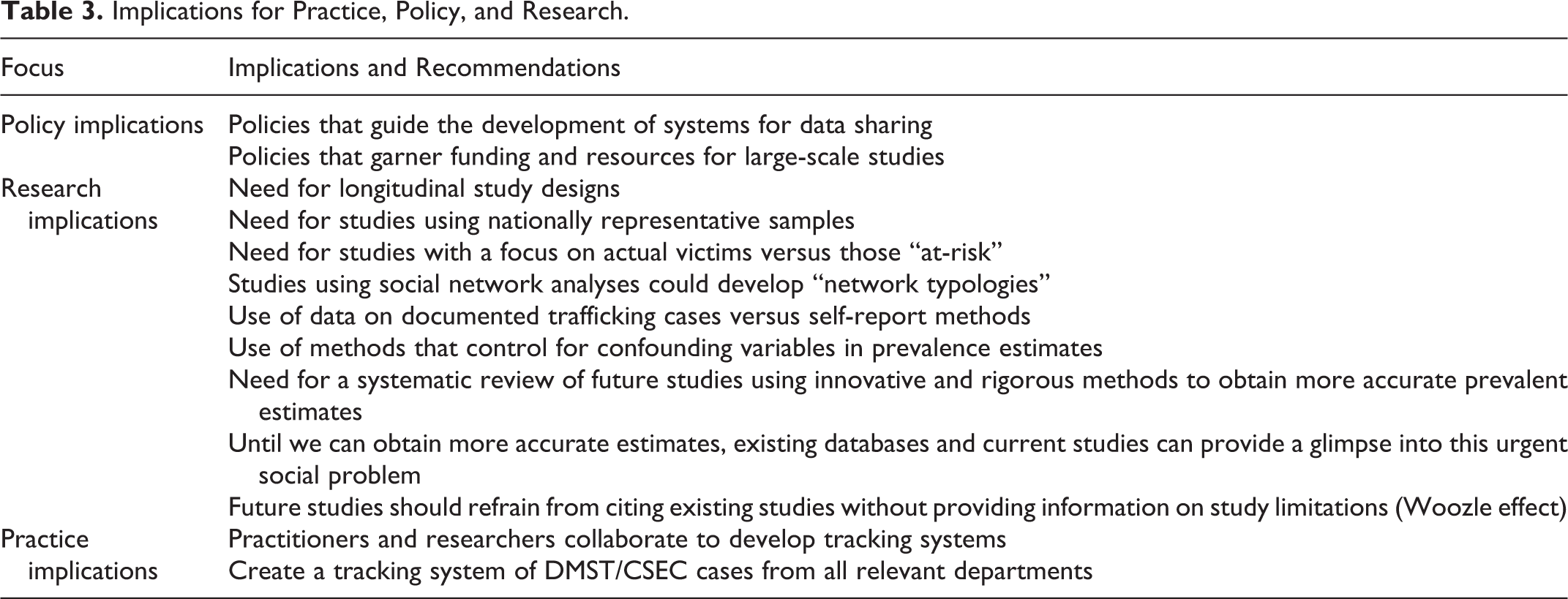
Table 3 highlights some of the practice, policy, and research implications of this review. The methodological strengths, gaps, and limitations of the studies reviewed can inform potential next steps the field can take to improve our understanding of the prevalence of sex trafficking among children and youth. Although it is not possible to determine the true value of sex trafficking prevalence, taking steps to improve methods and access to data will allow us to obtain more precise estimates.
Implications for Practice, Policy, and Research.
Policy implications
Policymakers could create and implement policies that facilitate the process of collecting data to obtain prevalence estimates. One way to facilitate this process is through creating systems for data collection and data sharing among systems that are likely to encounter DMST/CSEC youth, including child protection and child welfare, health care, juvenile justice systems, and law enforcement, as examples. Currently, it is difficult for researchers to conduct replication studies and compare estimates due to limited access to data sets (National Academies of Sciences Engineering and Medicine, 2020). Further, policies could be implemented that garner the funding and resources necessary to obtain improved national prevalence and incidence estimates using promising.
Research implications
Given the limited knowledge on the prevalence of minors who experience DMST/CSEC in the United States, many recommendations have been made regarding how future research can advance the field. While acknowledging the limitations involved in obtaining such estimates, we echo and highlight some of these key recommendations here. We underscore that more information is needed regarding the scope and extent of minor sex trafficking based on reliable, representative data and/or better estimates of victims identified and not identified by law enforcement or other systems (e.g., child protection and child welfare, health care, juvenile justice). Foremost, there is a pressing need for more studies using longitudinal designs that can provide information on when youth enter and exit DMST/CSEC situations as well as the shift in prevalence rates within a given time period (Dank, 2011). There is also an important need for studies using nationally representative samples to yield improved estimates on prevalence and incidence rates (Greene et al., 1999).
In terms of the population studied, future research should focus on youth who are actual victims versus youth who are “at-risk,” as these are very distinct categories. Further, categorizing “at-risk” is complex and requires additional methods to prevent duplicate counting of individuals with multiple risk factors (Estes & Weiner, 2001). Although, notably, recent research has shifted away from at-risk estimates, the classification of at-risk minors still remains in some estimates (Kellison et al., 2019). Another consideration regarding the population studied is that DMST/CSEC populations in a given geographical area may be highly networked. Given this, future analyses on social networks could be conducted and inform the development of “network typologies,” which may ultimately become a valuable tool for future prevalence studies (Dank, 2011).
With respect to data collection methods, several of the studies in this review relied on self-reports (Edwards et al., 2006; Greene et al., 1999; O’Brien, Li, et al., 2017), which can prove to be unreliable and lead to underestimates whether, for instance, youth fear perceived legal consequences or social desirability biases are present. One way to address this is by having systems in place for making data available on documented trafficking cases rather than relying on self-reports of youth (Dank, 2011). Relevant covariates and potentially confounding variables related to the prevalence of DMST/CSEC (i.e., race, parental education) need to be considered in analyses given that certain contextual characteristics have been found to be highly correlated with DMST/CSEC (Edwards et al., 2006). Finally, as rigorous and innovative methods begin to increase the accuracy of prevalence estimates, future research should include a full systematic review that can provide a synthesis of these newer estimates and help move us closer to an understanding of trafficking prevalence.
Notably, while the field is working to improve prevalence estimates through more rigorous methods, the studies in this review, as well as additional existing data sources of identified cases (i.e., Polaris National Hotline Reports, cases prosecuted by federal prosecutors, or federally funded anti-trafficking task forces) can be used to offer a glimpse of this problem. However, it must be acknowledged that the currently available data from any source are not sufficient to provide an adequate estimate of the extent of trafficking, and as such, it is critical that researchers refrain from becoming subject to the Woozle effect by citing studies on trafficking prevalence without discussing the relevant limitations (Weiner & Hala, 2008).
Practice implications
As previously discussed, there is a pressing need for data on trafficking that is more accurate and easily accessible than what exists now. Practitioners and other professionals within governmental and nongovernmental departments, agencies, and organizations that encounter survivors of CSEC are uniquely positioned to have access to data on DMST/CSEC cases. Given this, it may be beneficial for practitioners to collaborate with researchers to develop data collection systems for identified cases. Estimates of identified or confirmed cases of trafficking encountered by various departments and agencies may be able to enhance the methodologies used to estimate unidentified cases and add nuance to the application of these unidentified case estimates. One way this could be accomplished is through developing and implementing a comprehensive and systematic method for gathering data on trafficking cases (Kotrla & Wommack, 2011). For example, there could be a single tracking software system—to which researchers could be granted access once robust ethical and data protections are in place—that includes data on trafficking cases from all relevant sources, such as juvenile justice, law enforcement agencies, public child welfare departments, nongovernmental agencies that provide services to trafficking victims, among others (Kotrla & Wommack, 2011). Through using their agency or department resources and information, practitioners can help put an integrated system of data collection in place to make these pertinent data readily available to researchers.
Footnotes
Acknowledgments
The authors would like to thank L. B. Klein, Marlowe Crews, and Raye Dooley (School of Social Work, University of North Carolina–Chapel Hill). They also thank Brittany Love (Duke University, Durham) and Kate Crissman (Maternal and Child Health, University of North Carolina–Chapel Hill).
Declaration of Conflicting Interests
The author(s) declared no potential conflicts of interest with respect to the research, authorship, and/or publication of this article.
Funding
The author(s) received no financial support for the research, authorship, and/or publication of this article.
