




Abstract
Objective:
The disappearance of a loved one is claimed to be the most stressful type of loss. The present review explores the empirical evidence relating to this claim. Specifically, it summarizes studies exploring the prevalence and correlates of psychological symptoms in relatives of missing persons as well as studies comparing levels of psychopathology in relatives of the disappeared and the deceased.
Method:
Two independent reviewers performed a systematic search in PsychINFO, Web of Science, and Medline, which resulted in 15 studies meeting predefined inclusion criteria. Eligible studies included quantitative peer-reviewed articles and dissertations that assessed psychopathology in relatives of missing person.
Results:
All reviewed studies were focused on disappearances due to war or state terrorism. Prevalence rates of psychopathology were mainly described in terms of post-traumatic stress disorder and depression and varied considerably among the studies. Number of experienced traumatic events and kinship to the missing person were identified as correlates of psychopathology. Comparative studies showed that psychopathology levels did not differ between relatives of missing and deceased persons.
Conclusions:
The small number of studies and the heterogeneity of the studies limit the understanding of psychopathology in those left behind. More knowledge about psychopathology postdisappearance could be gained by expanding the focus of research beyond disappearances due to war or state terrorism.
Systematic reviews have shown that the death of a significant other can lead to serious mental health issues including depression, post-traumatic stress disorder (PTSD), and complicated grief 1 (Kristensen, Weisæth, & Heir, 2012; Lobb et al., 2010; van Denderen, de Keijser, Kleen, & Boelen, 2015). One of the risk factors for developing psychological symptoms following the loss of a significant other is the type of loss (Kristensen et al., 2012; van Denderen et al., 2015). Unnatural, sudden, and violent losses, such as homicide and suicide, are associated with increased risk of psychopathology (Boelen, de Keijser, & Smid, 2015; Currier, Holland, & Neimeyer, 2006).
A unique type of loss is the disappearance of a loved one, also referred to as an “ambiguous loss” 2 or “unconfirmed loss” (Boss, 1976; Powell, Butollo, & Hagl, 2010). Disappearances of persons affect thousands of people around the world yearly, especially in the context of war and/or state terrorism 3 (i.e., acts of cruelty conducted by a state against its own people; Aust, 2010, p. 265). A frequently cited assumption (e.g., Betz & Thorngren, 2006; Heeke & Knaevelsrud, 2015) originating from family stress theories (Betz & Thorngren, 2006) and family systems theories (Carroll, Olson, & Buckmiller, 2007) is that “Ambiguous loss is the most stressful loss because it defies resolution and creates confused perceptions about who is in or out of a particular family” (Boss, 2004, p. 553).
Recently, Heeke and Knaevelsrud (2015) presented a brief overview of seven quantitative studies focusing on psychopathology after the disappearance of a loved one due to war and state terrorism. They concluded that (a) PTSD, depression, and complicated grief symptoms are common following the disappearance of a loved one, and (b) these symptoms are more severe compared to symptoms observed in people confronted with the death of a loved one. However, there are some limitations that preclude firm conclusions. From a methodological perspective, the review may not give a complete and valid overview of the existing literature because it lacked a systematic approach (e.g., no systematic search strategy, specifics about study selection criteria, and quality assessment of the reviewed studies). Furthermore, the evidence does not unequivocally support Heeke and Knaevelsrud’s (2015) conclusions. For instance, indices of psychopathology were only significantly higher among relatives of missing persons compared to relatives of deceased persons in three of the five comparative studies (Powell et al., 2010; Quirk & Casco, 1994; Zvizdic & Butollo, 2001). Moreover, in these three studies, some but not all indices of psychopathology differed significantly. All in all, Boss’s (1976, 2004) claim that the disappearance of a loved one is the most stressful type of loss does not seem to rest on a solid empirical basis.
The current review provides a systematic overview of the scientific research on psychological symptoms in people confronted with the disappearance of a loved one. Our review complements Heeke and Knaevelsrud’s (2015) review in that we used a systematic approach, in order to prevent selection bias of the reviewed studies and to guarantee replicability. Given the large number of people who are confronted with a disappearance due to war and state terrorism, it is important to give a systematic overview of current state of the literature regarding psychological symptoms in relatives of missing persons. This may contribute, among others, to (1) knowledge about the nature and severity of psychopathology in relatives of missing persons, (2) the identification of risk factors for psychopathology, and (3) directions for future research. In the following, we address three objectives. First, we aimed to summarize the studies examining prevalence rates of psychological symptoms in relatives of missing persons. Second, we sought to describe correlates of psychological symptoms. Our third goal was to enumerate the results of studies exploring differences in severity of psychopathology among relatives of disappeared people compared to relatives of deceased people.
Method
Inclusion Criteria
Quantitative studies published in peer-reviewed academic journals and dissertations of which the abstract is indexed in scientific literature databases were included. The studies needed to report about psychological symptoms in spouses, family members, and/or friends of missing persons. A missing person is defined as: “Anyone whose whereabouts is unknown whatever the circumstances of disappearance. They will be considered missing until located and their well-being or otherwise established” (Association of Chief Police Officers, 2010, p. 15).
An article was excluded if it (1) was a qualitative or case study, (2) did not include data of participants (e.g., a literature overview), (3) was focused on participants of whom a relative had returned after a period of disappearance, (4) was focused on ambiguous loss in terms of being physically present but psychologically absent (e.g., dementia patients; cf. Boss, 1976), or (5) concerned relatives of persons whose loved one was absent but not missing (e.g., foster care). A protocol of the review can be obtained in the PROSPERO register (Lenferink, de Keijser, Boelen, & Wessel, 2015). The preferred reporting items for systematic reviews and meta-analyses (PRISMA) guidelines were followed (Moher, Liberati, Tetzlaff, Altman, & PRISMA Group, 2009).
Search Strategy
Three topics structured the search terms: (1) missing persons, (2) people who are left behind, and (3) psychological symptoms. Because of the different words that can be used for each of the three search topics, we entered multiple search terms (at least 12 per topic) to be as complete as possible (see Appendix Figure A1 for the search terms). Three electronic literature databases (PsychINFO, Web of Science, and Medline) were searched in June 2015. No date or language restrictions were applied in the search strategy.
Study Selection
The consecutive steps for the selection of studies that were performed independently by two reviewers are displayed in Figure 1. In sum, the search terms in three databases resulted in 770 hits. After removal of duplicates, the remaining articles were screened first by title, second by abstract, and lastly by full text based upon the inclusion and exclusion criteria. Finally, the raters screened the reference lists of the eligible studies (n = 17) for additional studies meeting the inclusion criteria. As for interrater reliability, the percentages of absolute agreement between the raters ranged from 81% to 92%. In case of disagreement, consensus was reached through discussion. The databases were again searched in March 2016 for recently added literature, which resulted in zero eligible studies.
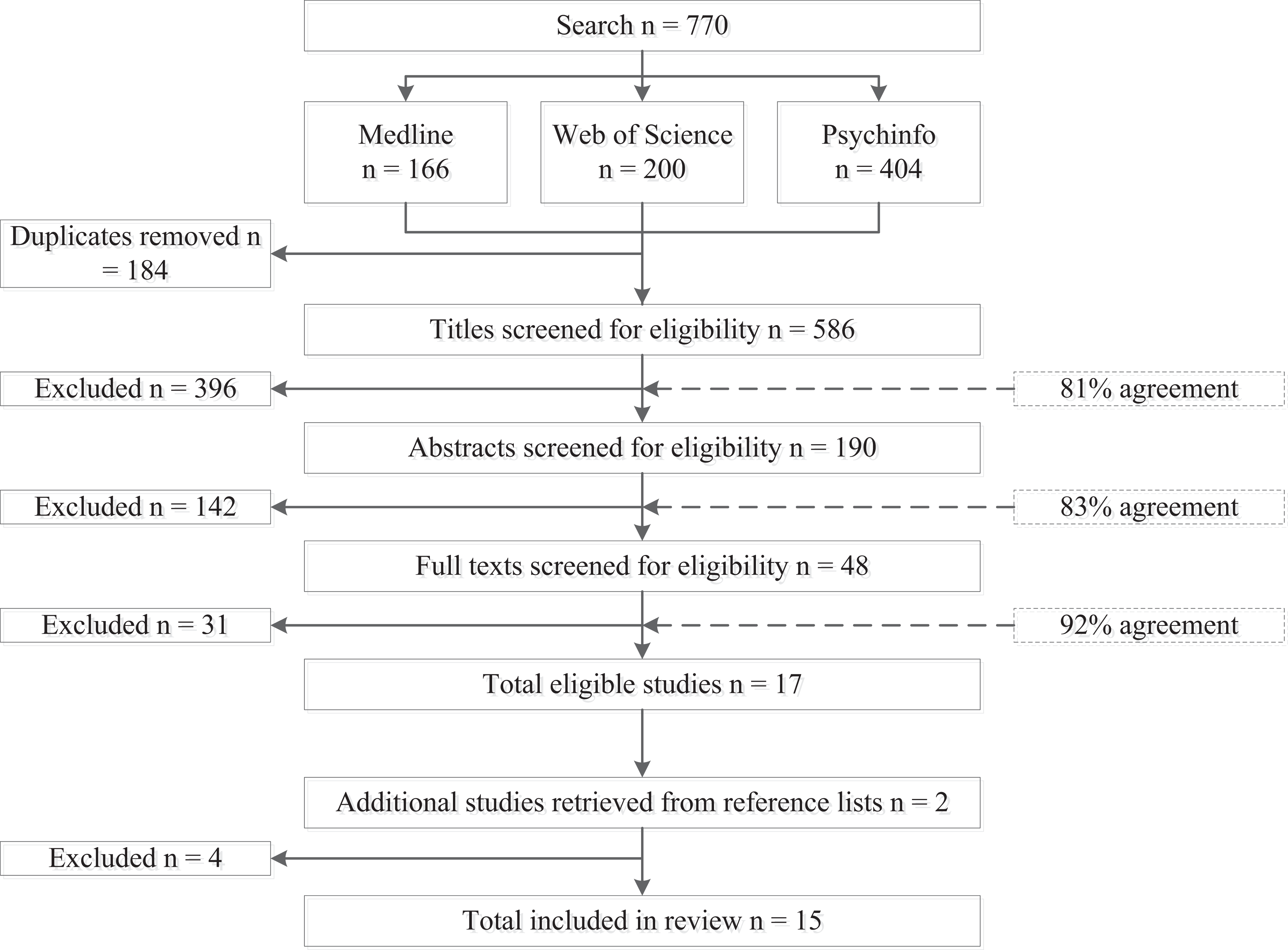
Study selection.
Two dissertations (Boss, 1976; Munczek, 1996) initially deemed eligible for inclusion were eventually excluded from the current review because reading the full text revealed that they provided the basis for published articles that were already included (Boss, 1977; Munczek & Tuber, 1998). Likewise, one study (Hagl, Rosner, Butollo, & Powell, 2014) was excluded because it appeared to be a clinical trial of which the relevant data were reported in another study (Powell et al., 2010) that was already included in the review. In addition, a language barrier necessitated discarding a study published in Croatian after including it based upon the abstract (Bek, Buzov, & Bilić, 2001).
Synthesis of Results
First, current and/or lifetime prevalence rates of psychopathology in relatives of missing persons are described for each study. The prevalence rates reflect the percentages of participants scoring beyond the established clinical threshold of the specific measure used. Second, results of correlation analyses or regression analyses, t test, χ2 test, and/or F test, to assess correlates of psychological symptoms are summarized. Third, Cohen’s d effect sizes were computed for the studies that compared the severity of psychological symptoms between relatives of missing persons and relatives of deceased persons. According to Cohen’s (1988) effect sizes, d = 0.2 to 0.5 are small, d = 0.5 to 0.8 medium, and d = ≥0.8 large.
Quality Assessment of the Included Studies
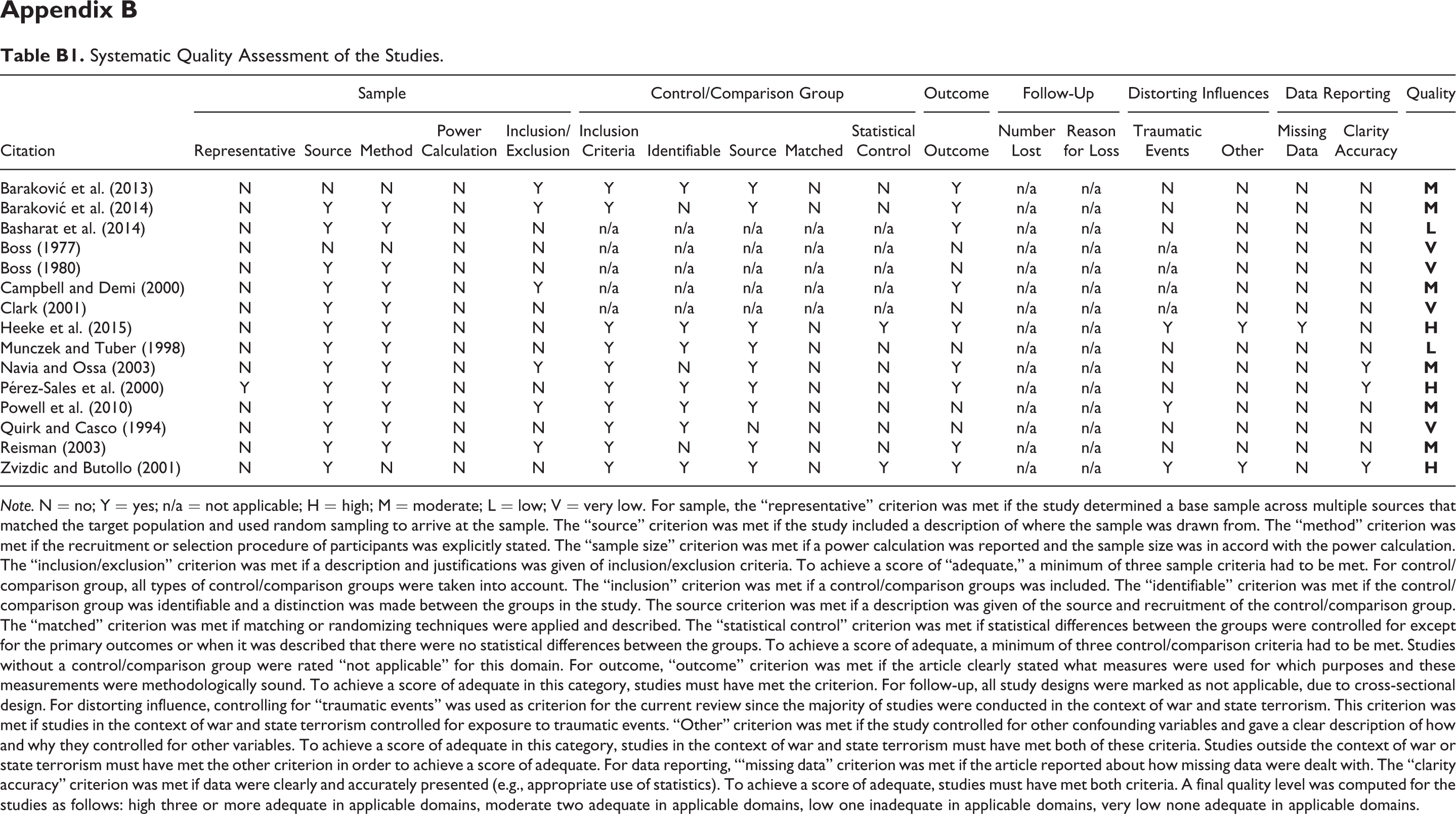
Performing a quality assessment of observational studies in systematic reviews is one of the criteria in the PRISMA guidelines for reporting systematic reviews (Moher et al., 2009). We assessed the quality of the included studies using the systematic assessment of quality in observational research (SAQOR; Ross et al., 2011), a checklist that is developed for (Ross et al., 2011) and previously used in quality assessment of psychiatric observational studies (e.g., Kohrt et al., 2014). The SAQOR evaluates the quality of studies based on meeting criteria in six domains: (i) sample, (ii) control/comparison group, (iii) quality of exposure/outcome measurements, (iv) follow-up, (v) distorting influences, and (vi) reporting data. Each domain consists of multiple criteria. The domain is rated as “adequate,” “inadequate,” “unclear,” or “not applicable” based on the frequency of fulfilled criteria of the subsequent domain. An overall quality rating—high, moderate, low, or very low—of each study is then determined based on frequency of adequate domains. As recommended by the authors of the tool (Ross et al., 2011) and consistent with authors using it (e.g., Kohrt et al., 2014), we slightly adapted the SAQOR to fit our specific population (see Appendix Table B1 for more details).
Results
Quality Assessment
Three studies met SAQOR criteria for high quality (Heeke, Stammel, & Knaevelsrud, 2015; Pérez-Sales, Durán-Pérez, & Herzfeld, 2000; Zvidic & Butollo, 2001), six studies for moderate quality (Baraković, Avdibegović, & Sinanović, 2013, 2014; Campbell & Demi, 2000; Navia & Ossa, 2003; Powell et al., 2010; Reisman, 2003), two studies for low quality (Basharat, Zubair, & Mujeeb, 2014; Munczek & Tuber, 1998), and four studies for very low quality (Boss, 1977, 1980; Clark, 2001; Quirk & Casco, 1994; see Appendix Table B1 for more details about the quality assessment of the 15 studies). The four very low-quality studies are not addressed in the following.
Characteristics of the Included Studies
All 11 low to high quality studies used a cross-sectional design. The sample sizes varied from 14 to 225 relatives of missing persons. Two studies (Baraković et al., 2013, 2014) relied on a sample of women (n = 120) whose male family member disappeared during the war in Bosnia Herzegovina 15–18 years earlier. Another sample included women from Bosnia Herzegovina (n = 56), whose husbands disappeared during the war on average 7 years earlier (Powell et al., 2010). A fourth study included a sample of adolescents (n = 201) whose fathers had been missing since 3–4 years in the context of war in Bosnia Herzegovina (Zvizdic & Butollo, 2001). Two studies were conducted in the United States among a small sample of family members of men listed as missing in action (MIA; Campbell & Demi, 2000; n = 20) or prisoner of war (POW; Reisman, 2003; n = 14) for over 25 years ago. Two studies were executed among relatives of disappeared persons in Colombia; one due to state terrorism 13 years earlier (n = 73; Heeke et al., 2015) and another due to economic extortive kidnapping (n = 46; Navia & Ossa, 2003). Navia and Ossa (2003) did not provide information on the amount of time that had passed since the disappearance. In Chile, Pérez-Sales, Durán-Pérez, and Herzfeld (2000) studied people (n = 75) whose relative disappeared due to state terrorism more than 20 years earlier. Children (n = 16) whose fathers disappeared 9 years ago, on average, due to state terrorism were the subjects of a study in Honduras (Munczek & Tuber, 1998). The last study was focused on Pakistani family members (n = 225) who lived for 1–9 years with the disappearance of a loved one due to state terrorism (Basharat et al., 2014).
Prevalence of Psychological Symptoms (Objective 1)
In four unique samples, described in five articles, prevalence rates of psychological symptoms were reported (Baraković et al., 2013, 2014; Heeke et al., 2015; Navia & Ossa, 2003; Pérez-Sales et al., 2000). Due to the heterogeneity of the studies (e.g., studies varied in terms of instruments used to assess symptoms and in terms of ethnic background of study samples), the prevalence rates of psychological symptoms are reported separately for each study (see Table 1 for a summary of the characteristics and the main findings of the studies).
The Characteristics of the Studies.
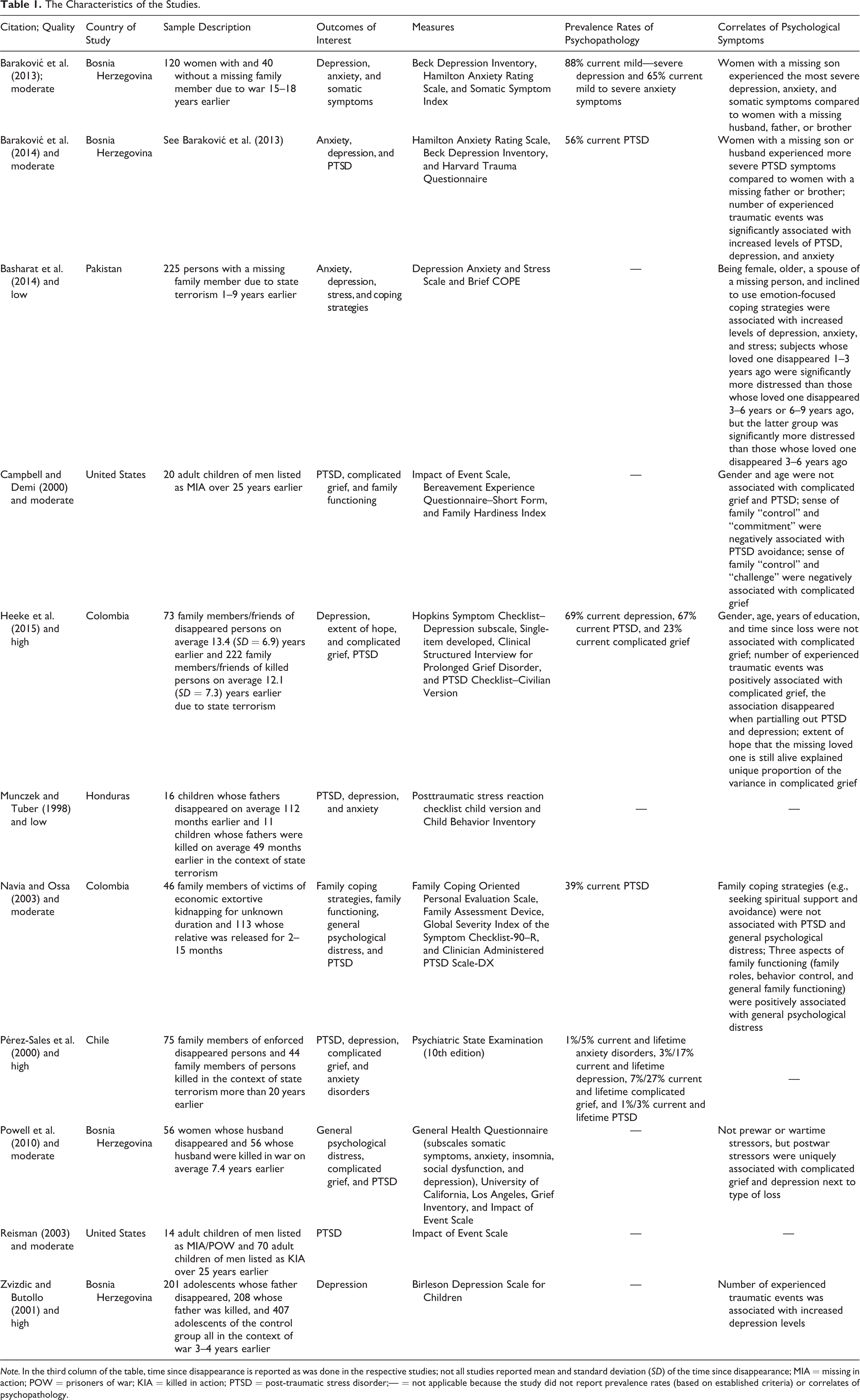
Note. In the third column of the table, time since disappearance is reported as was done in the respective studies; not all studies reported mean and standard deviation (SD) of the time since disappearance; MIA = missing in action; POW = prisoners of war; KIA = killed in action; PTSD = post-traumatic stress disorder;— = not applicable because the study did not report prevalence rates (based on established criteria) or correlates of psychopathology.
The two studies of Barakovic et al. (2013, 2014) relied on the same sample and showed current self-rated prevalence rates of 88% for depression, 65% for mild to severe anxiety complaints, 56% for PTSD, and 43% for somatic complaints. Heeke et al.’s (2015) study showed that 69% reported current depression, 67% PTSD, and 23% complicated grief based on interviews. Interview-based current prevalence rate of PTSD was 39% in a study of Navia and Ossa (2003). A final study reported considerably lower interview-based current and lifetime prevalence rates of PTSD (1%/3%), depression (3%/17%), anxiety (1%/5%), and complicated grief (7%/27%; Pérez-Sales et al., 2000).
Correlates of Psychological Symptoms Among Relatives of the Disappeared (Objective 2)
Gender
Three studies examined whether psychopathology levels varied as a function of gender (Basharat et al., 2014; Campbell & Demi, 2000; Heeke et al., 2015). To begin with, Basharat et al. (2014) found that females were significantly more stressed (d = 0.41), depressed (d = 0.52), and anxious (d = 0.38) than males. A second study reported that gender was not significantly associated with complicated grief severity (Heeke et al., 2015). A third study reported that gender was unrelated to severity of complicated grief and PTSD (Campbell & Demi, 2000).
Age
Three studies explored the association between age and psychological symptoms (Basharat et al., 2014; Campbell & Demi, 2000; Heeke et al., 2015). The first showed that older participants were significantly more generally distressed than younger participants (Basharat et al., 2014). Two further studies reported nonsignificant associations between age and psychopathology in terms of complicated grief and PTSD (Campbell & Demi, 2000; Heeke et al., 2015).
Kinship
In two samples, the difference in severity of psychopathology according to type of kinship was examined (Baraković et al., 2013, 2014; Basharat et al., 2014). Women with a missing son experienced significantly higher levels of PTSD, depressive, anxiety, and somatic symptoms compared to women with a missing husband, brother, or father (Baraković et al., 2013, 2014). Basharat et al.’s (2014) study showed that spouses were significantly more distressed than parents and siblings. In addition, parents were significantly more distressed than siblings.
Time since disappearance
The association between time since disappearance and psychopathology was studied twice (Basharat et al., 2014; Heeke et al., 2015). Basharat et al. (2014) showed that participants whose loved one disappeared 1–3 years earlier reported significantly higher levels of general distress than those whose loved one disappeared 3–9 years ago. However, in the same study, participants whose loved one disappeared 6–9 years ago experienced significantly higher levels of general distress than participants whose loved one disappeared 3–6 years ago. Heeke et al.’s (2015) study reported a negative correlation (r = −.31, p < .01) between time since disappearance (in months) and complicated grief severity, but time since disappearance was not a significant predictor of complicated grief after controlling for other variables (e.g., depression).
Educational level
The association between educational level and psychopathology was only examined by Heeke et al. (2015). They found education (in terms of number of years of education) to be unrelated to complicated grief.
Number of experienced traumatic events
Four studies assessed the number of traumatic events the relatives of missing persons had been exposed to (Baraković et al., 2014; Heeke et al., 2015; Powell et al., 2010; Zvizdic & Butollo, 2001). Baraković et al. (2014) found an increase in the number of experienced traumatic events to be associated with increased levels of depression (r = .61, p < .001), PTSD (r = .58, p < .001), and anxiety (r = .44, p < .001). Zvizdic and Butollo (2001) found that more exposure to several war-related events (e.g., loss of home) and postwar-related events (e.g., family problems) were both also associated with depression (r = .26, p < .01 and r = .26, p < .01). A third study performed 11 regression analyses with type of loss (disappearance vs. death), number of prewar, wartime, and postwar stressors as predictors and several psychological symptoms as outcome variables. Number of postwar but not prewar or wartime stressors were associated with one of the complicated grief subscales (defined as traumatic grief; t = 3.03, p < .01) and depression (t = 2.37, p < .01) next to type of loss (Powell et al., 2010). Finally, Heeke et al.’s (2015) study showed that an increase in the number of experienced traumatic events was associated with complicated grief (r = .30, p < .01); this association disappeared, however, when gender, severity of PTSD, and depression were partialled out.
Family functioning
Two studies examined the association between perceived functioning of the family and psychopathology (Campbell & Demi, 2000; Navia & Ossa, 2003). Navia and Ossa (2003) found no significant associations between five family coping strategies (e.g., seeking spiritual support and passive appraisal) and PTSD and general psychological distress in a subgroup (n = 18) of their sample. This subgroup included one family member per missing person in order to handle the within-family clustering effect. In addition, within the same subgroup of their sample, a significant association was found between general psychological distress and aspects of family functioning (i.e., family roles, r = .52, p < .05, i.e., the way in which family members allocate responsibilities; behavior control, r = .52, p < .05, i.e., the way in which families provide clear standards and rules of behavior; and general family functioning, r = .50, p < .05). A higher score on family functioning was indicative of unhealthier family functioning. No significant association was found between PTSD and family functioning. Campbell and Demi (2000) reported that individuals experienced less PTSD symptoms of the avoidance cluster, when they felt their family was cooperative in solving problems (r = −.47, p < .05) and is in control over dealing with adverse life events (r = −.49, p < .05). Furthermore, individuals reported less complicated grief when they viewed their families as active in managing challenging situations (r = −.50, p < .05) and in control over dealing with these situations (r = −.62, p < .05).
Coping strategies
The association between use of coping strategies and psychopathology was examined in only one study (Basharat et al., 2014). That study showed that greater use of emotion-focused coping strategies (e.g., seeking sympathy from others) was associated with increased levels of depression (r = .38, p < .001), anxiety (r = .24, p < .001), and stress (r = .41, p < .001). Greater use of problem-focused coping strategies (e.g., thinking about dealing with the problem) was associated with decreased levels of depression (r = −.48, p < .001), anxiety (r = −.35, p < .001), and stress (r = −.26, p < .01).
Extent of hope that the missing person is alive
The association between extent of hope that the loved one is still alive and psychopathology was explored in one study. Extent of hope explained 5% of the variance in complicated grief above gender, depression and PTSD severity, number of experienced traumatic events, and time since disappearance (Heeke et al., 2015).
Summary of the results of correlational studies
No clear conclusions can be drawn about the association between psychopathology and gender or age. The results with respect to the association between kinship and psychopathology were consistent across two samples. More specifically, spouses and parents of missing persons seem to be the most affected compared to siblings. Based on one study, years of education were unrelated to complicated grief. The two studies that explored the association between time since disappearance and symptom severity yielded contrasting results. The results of four studies indicated that number of traumatic events that people had been exposed to was significantly associated with increased levels of psychopathology. Two studies assessed the association between family functioning and psychological symptoms and found inconsistent results. Using emotion-focused coping strategies, more frequently and problem-focused less frequently coping strategies were related to higher psychopathology levels based on a single study. One study showed a positive association between extent of hope that the loved one is still alive and psychopathology.
Disappearance Versus Death (Objective 3)
Six studies, all cross-sectional studies, compared relatives of disappeared to deceased persons, all in the context of state terrorism or war. Homicide was the cause of death in all cases, with an exception of the study of Heeke et al. (2015) of which 93% of the deceased persons were victims of homicide and the other 7% died due to another reason related to state terrorism (e.g., illness). A summary of the studies is offered in Table 2.
Effect Size Estimates for Differences in Psychological Symptoms Between Relatives of Victims of Disappearance and Homicide.
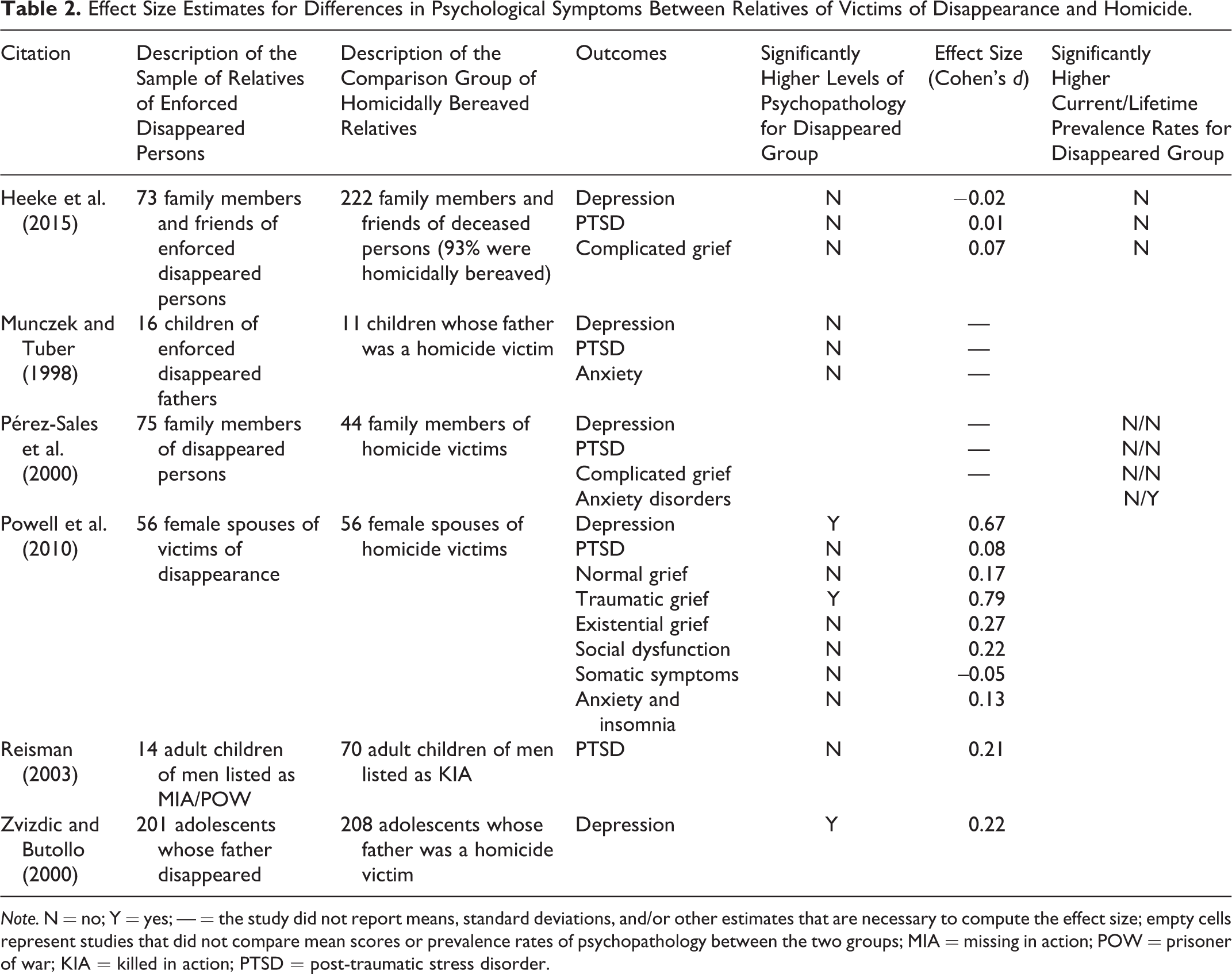
Note. N = no; Y = yes; — = the study did not report means, standard deviations, and/or other estimates that are necessary to compute the effect size; empty cells represent studies that did not compare mean scores or prevalence rates of psychopathology between the two groups; MIA = missing in action; POW = prisoner of war; KIA = killed in action; PTSD = post-traumatic stress disorder.
PTSD
In four studies, the severity or prevalence of PTSD symptoms did not differ significantly between relatives of victims of disappearance to relatives of homicide victims (Heeke et al., 2015; Munczek & Tuber, 1998; Powell et al., 2010; Reisman, 2003). A fifth study showed that lifetime prevalence rate of PTSD since the loss was significantly higher among homicidally bereaved individuals (9.0%) than individuals confronted with the disappearance of a family member (1.3%; Pérez-Sales et al., 2000).
Depression
One study showed that spouses of men who disappeared had significantly more severe depressive symptoms than homicidally bereaved spouses (Powell et al., 2010). This difference had a medium effect size (d = 0.67). Another study reported that those for whom a loved one disappeared also experienced significantly higher depression levels than homicidally bereaved individuals (d = 0.22; Zvizdic & Butollo, 2001). Three other studies did not find significant differences in severity or prevalence of depression between relatives of victims of disappearance or homicide (Heeke et al., 2015; Munczek & Tuber, 1998; Pérez-Sales et al., 2000).
Anxiety
Anxiety symptom severity did not differ significantly between children and spouses of men who were victims of disappearance or homicide (Munczek & Tuber, 1998; Powell et al., 2010). Lifetime prevalence rates of anxiety disorders since the loss was significantly higher for the relatives of the disappeared (5.3%) compared to the homicidally bereaved (0.0%; Pérez-Sales et al., 2000).
Complicated grief
Women whose husbands disappeared reported significantly higher levels of “traumatic grief” compared to homicidally bereaved women (Powell et al., 2010). This difference can be interpreted as a medium effect (d = .79). Within the same study, no significant differences were found between groups in terms of “existential grief” (Powell et al., 2010). It remains unclear in this article how traumatic and existential grief were defined and how they differed from each other. A second study also failed to show significant differences in severity or prevalence of complicated grief between relatives of the disappeared compared to homicidally bereaved family relatives (Heeke et al., 2015). Pérez-Sales et al. (2000) reported nonsignificant differences in prevalence rates of complicated grief between family members of persons who disappeared or were victims of homicide.
Social dysfunction and somatic symptoms
One study examined the differences in severity of social dysfunction and somatic symptoms between wives whose husbands disappeared or were victims of homicide. No significant differences were shown for the two groups (Powell et al., 2010).
Summary of the results of comparative studies
In sum, results across six studies, conducted in the context of war or state terrorism, indicated that relatives of disappeared persons and relatives of homicide victims overall did not significantly differ in severity or prevalence rate of psychopathology. Only 4 of the 24 comparisons across six studies yielded significantly higher levels of severity or prevalence of psychological symptoms in the disappeared group compared to the homicide group, and these differences had a small to medium effect size (see Table 2).
Discussion
The present study reviewed research relevant to Boss’s (2004) frequently cited claim that the disappearance of a loved one is more traumatic than other types of loss. The first aim was summarizing the results regarding prevalence rates of psychological symptoms in relatives of missing persons. Prevalence rates of psychopathology were mainly described in terms of PTSD and depression and varied widely across a small number of studies (i.e., 1–67% for PTSD, 3–88% for depression, 1–65% for anxiety, 7–23% for complicated grief, and 43% for somatic complaints). Several things stand out from this summary of prevalence rates. Only 5 of the 11 studies assessed prevalence rates of psychological symptoms. Furthermore, these five studies varied in (a) instruments used to assess psychopathology (e.g., none of the studies used the same instrument), (b) ethnic background of study samples, (c) composition of study samples (e.g., female family members or children of missing persons and relatives of missing persons due to war vs. due to state terrorism), and (d) methodological quality. Therefore, no general conclusive statements can be made about which psychological symptoms are most common among relatives of missing persons.
The second aim was exploring correlates of psychological symptoms in relatives of missing persons. Compared to other background characteristics, the type of kinship as correlate of psychopathology yielded the most consistent results. Spouses and parents of missing persons seem to be the most affected compared to siblings. However, only two studies explored the association between type of kinship and psychopathology. The association between other demographic variables—gender, age, educational level, and time since disappearance—and psychopathology was conflicting. The results of these correlational studies are roughly in accord with earlier studies among bereaved individuals. Reviews (Kristensen et al., 2012; Lobb et al., 2010; Stroebe & Schut, 2001) on grief-related distress indicate that the relationship between gender, educational level, age, and time since loss on the one hand and psychopathology on the other hand is conflicting. The relationship between kinship to the deceased and psychopathology is more consistent and indicates that parents and spouses are most strongly affected by a loss.
It should be noted that our systematic review does not warrant drawing firm conclusions about the association between background characteristics and psychopathology because, taken together, the evidence is not sufficient. The composition of the majority of the study samples precluded the examination of the association between some of the background characteristics and psychopathology. For example, some samples consisted of solely females, which precluded studying the association between psychopathology and gender (Baraković et al., 2013, 2014; Powell et al., 2010). Others only included one type of kinship (e.g., children of missing persons) and therefore did not allow to study the potential differences in severity of psychopathology across different familial relationships (Campbell & Demi, 2000; Munczek & Tuber 1998; Powell et al., 2010; Reisman, 2003; Zvidic & Butollo, 2001).
Furthermore, four studies (Baraković et al., 2014; Heeke et al., 2015; Powell et al., 2010; Zvizdic & Butollo, 2001) yielded evidence that the number of traumatic events participants had experienced is associated with increased levels of psychological symptoms. This is in line with previous trauma research indicating that cumulative trauma heightens the risk of development of PTSD (e.g., Johnson & Thompson, 2008; Kolassa et al., 2010; Wilker et al., 2015). More specifically, several studies showed that being exposed to traumatic events and the loss of a loved one heightens the risk of development of complex psychopathological symptom patterns characterized by comorbid symptoms of complicated grief, PTSD, and depression (cf. Mutabaruka, Séjourné, Bui, Birmes, & Chabrol, 2012; Nickerson et al., 2014). Relatives of missing persons with comorbid symptoms may benefit most from interventions targeting different types of symptoms, such as brief eclectic psychotherapy and cognitive behavioral therapy (cf. Smid et al., 2015).
It has been postulated that holding on to hope for the return of the missing loved one may be associated with less emotional distress (Wayland, Maple, McKay, & Glassock, 2016). However, inconsistent with this notion, the single empirical study (Heeke et al., 2015) examining this linkage actually showed that the extent of hope that the loved one was still alive was associated with higher levels of complicated grief. The present review revealed mixed results regarding the use of coping strategies and family functioning as correlates of psychopathology. No further conclusions can be drawn about to what extent psychopathology is related to these constructs, since these potential associations were only explored in three studies, which yielded inconclusive results and differed from each other in many ways (e.g., sample composition and measures used).
The third aim of the present systematic review was exploring whether the disappearance of a loved one is associated with more severe distress compared to the death of loved one (Boss, 2004). The claim that people who experience an ambiguous loss suffer from more severe psychological symptoms than individuals who experience another type of loss does not seem to be supported by the comparative studies reviewed here. Only 4 of in total 24 comparisons across six comparative studies revealed that relatives of missing persons suffered from significantly more severe psychological symptoms compared to homicidally bereaved individuals. This is in contrast with the conclusion drawn in Heeke and Knaevelsrud’s (2015) overview. Although there is overlap in the reviewed studies of the overview of Heeke and Knaevelsrud (2015) and our review, incompleteness of this former overview and different weighing of the empirical evidence may explain the difference in conclusion drawn. For instance, Heeke and Knaevelsrud (2015) omitted some comparative studies in their review (e.g., Munczek & Tuber, 1998). In addition, they elaborated on significant findings of a study of Quirk and Casco (1994) that we rated as very low quality and was therefore not discussed.
It is possible that methodological drawbacks of the reviewed studies are responsible for the lack of differences in psychopathology between relatives of the disappeared and the deceased. One of the major methodological shortcomings was the small sample size of the studies, increasing the risk of Type II error. Furthermore, all comparative studies were conducted in the context of war or state terrorism. Both groups were traumatized by different stressors, which might have made it difficult to distinguish between the effect of the loss of a loved one and the effects of other traumatic experiences. Lastly, we believe it is important to emphasize that studies conducted in the context of war-related disappearances may not be comparable to disappearances in the context of state terrorism. Our conclusion therefore needs to be interpreted with caution.
To the best of our knowledge, the current study is the first providing a systematic review of empirical findings about the nature and severity of psychological symptoms in relatives of the disappeared. However, this present review has primarily revealed gaps in the literature on psychological symptoms in relatives of missing persons. The field of psychological research in relatives of missing persons could benefit from at least two types of improvements: (1) expanding the focus of research to comparing relatives of missing persons in the context of war and state terrorism as well as focusing on relatives of missing persons outside the context of war and state terrorism and (2) employing more rigorous research methods.
Expanding the Focus of Research
The results of our systematic review indicate that with no exception, the existing literature is focused on disappearances in the context of armed conflict (e.g., war or state terrorism). It would be interesting to study to what extent the experience of the disappearance of a loved one due to war differs from the disappearance due to state terrorism. Losing a significant other in war due to lack of protection by the state may not have the similar impact as experiencing the disappearance of a significant other due to violations conducted by the state. In the latter case, it is possibly more likely that the missing person is still alive, but those left behind may avoid searching for the missing person out of fear for prosecutions or reprisals. In addition, professional support may be less available in the case of disappearances due to state terrorism because, among others, professionals are at risk to become a victim of state terrorism as well. Enhancing knowledge about the similarities and differences in psychological consequences but also assessments of needs and barriers to care for relatives of missing persons in the context of war and state terrorism may be relevant for developing support tailored to the needs of people with different types of enforced disappeared relatives.
Disappearances outside the context of war and state terrorism may occur in a wide range of circumstances varying in intentionality (e.g., deliberately leaving without informing relatives vs. being murdered and hidden or accidentally drowning; Biehal, Mitchell, & Wade, 2003). As an example, consider the incidence rate of persons reported as missing to the Australian police. This rate (1.55 per 1,000 yearly) is higher than the number of reports of sexual assault, homicide, and unarmed robbery combined (Henderson, Henderson, & Kiernan, 2000). Expanding the focus of research from disappearances due to war or state terrorism to other types of disappearances is of interest for at least two reasons.
First, the type of disappearance might be a risk factor for the development of psychopathology, as the type of death is a risk factor for the development of psychological symptoms in the bereaved (Lobb et al., 2010). For example, violent deaths are associated with increased complicated grief symptoms (Kaltman & Bonnano, 2003; Lobb et al., 2010). This might also be the case for disappearances that are probably caused by an act of violence (e.g., kidnapping) compared to accidental disappearances (e.g., drowning accident). Enhancing our knowledge about severity and correlates of psychopathology related to different types of disappearances may facilitate identifying people at risk for developing post-disappearance psychopathology.
Second, studying post-disappearance psychopathology outside of the context of war or state terrorism could verify to what extent the results of our review are applicable to relatives of missing persons in general. With the exception of studies that are focused on relatives of men listed as MIA/POW, inherent to the studies about relatives of enforced disappearances due to war or state terrorism are the confounding effects of the (1) exposure to additional potential traumatic events (e.g., torture and death of family members) and (2) ethnic background of the participants. It has been repeatedly shown that cumulative trauma heightened the risk of development of psychopathology (e.g., Johnson & Thompson, 2008). Previous research also support that intensity of grief-related distress differs as function of ethnic background (Laurie & Neimeyer, 2008; Oltjenbruns, 1998). Studies in Western societies outside the context of war and state terrorism could explore to what extent the results of our review are applicable to relatives of missing persons without the confounding effects of cumulative trauma and ethnic background.
Methodological Improvements for Future Research
Our review revealed several methodological drawbacks in the literature. First, only 5 of the 11 studies assessed prevalence rates of psychopathology. Other studies did assess psychopathology but used nonvalidated measures and/or measures without established cutoff criteria for determining “caseness” of psychological disorders (e.g., Munczek & Tuber, 1998). Future research should use validated measures, preferably clinical structural interviews, for assessing the severity of psychopathology among those left behind in order to gain more insights into the extent of the mental health issues. Noteworthy is that the majority of the studies reporting interview-based prevalence rates focused on PTSD and depression. Prevalence rates of complicated grief, conceptualized and measured in different ways, were only studied twice (Heeke et al., 2015; Pérez-Sales et al., 2000). Two other studies (Campbell & Demi, 2000; Powell et al., 2010) did use a measure assessing grief manifestations, but these measures were not validated or lacked an established cutoff. Likewise, studies including measures of complicated grief are not self-evident in the literature about psychopathology following the death of a loved one (Kristensen et al., 2012; van Denderen et al., 2015). It has been repeatedly shown that complicated grief shows overlap with, yet is distinguishable from depression and anxiety (e.g., Boelen & van den Bout, 2005; Prigerson et al., 1996). In order to encourage further research into complicated grief, persistent complex bereavement disorder (PCBD) has been included as condition for further study in the Diagnostic and Statistical Manual of Mental Disorders Fifth Edition (American Psychiatric Association [APA], 2013). Expanding the study of PCBD to relatives of missing persons might yield more insight into normal and disturbed grief processes of individuals who experience this unique type of loss.
A second methodological drawback of existing studies focused on psychopathology in relatives of missing persons is that only one study examined multiple potential correlates of psychopathology in relatives of missing persons simultaneously in one regression model (Heeke et al., 2015). Results of zero-order correlational analyses might be spurious due to confounding effect of other variables. Two other studies also performed regression analysis but also included participants of the comparison group in the analysis, and as a result, these analyses do not reflect the unique effect of the disappearance (Baraković et al., 2014; Powell et al., 2010). More research that examines potential associated variables of psychopathology simultaneously is needed to gain more insights into psychological variables underlying the occurrence and maintenance of psychopathology. Up until now, correlational studies primarily focus on the association between psychological symptoms and background characteristics and number of experienced traumatic events. Theories about complicated grief and PTSD following the death of a loved one highlight the importance of cognitive and behavioral variables, as well as attachment styles, in the development and persistence of complicated grief and PTSD symptoms (e.g., Boelen, van den Hout, & van den Bout, 2006; Ehlers & Clark, 2000; Maccallum & Bryant, 2013; Shear & Shair, 2005). It would be interesting to study whether these variables are also associated with psychological symptoms following the disappearance of a loved one. This may help to identify individuals at risk for development of psychological symptoms following the disappearance of a loved one and to develop interventions to target these variables in treatment.
Third, all reviewed studies used a cross-sectional design. Longitudinal studies are needed to gain knowledge about prospective risk factors for the development and maintenance of psychopathology in relatives of missing persons.
Fourth, although most of the reviewed studies consisted of clustered data (i.e., multiple relatives of the same missing person), none of the studies used statistical techniques that could handle this clustering. Ignoring the nested structure of the data heightens the risk of spurious significant results. Using multilevel modeling could solve this problem in future research.
Fifth, the results of the comparative studies are highly likely biased due to again a lack of use of validated measures and solely use of mainly nonprobability samples that consisted of relatives of enforced disappearances that were exposed to additional traumatic events that might interact with psychopathology. Moreover, due to nonprobability sampling methods, the generalizability of the results to relatives of missing person within the same context is also limited. Comparative studies using probability sampling methods outside the context of war and state terrorism could give more insights into the unique potential differential effect of the disappearance and the death of a loved one on severity and correlates of psychological symptoms in those left behind.
Sixth, multiple studies were excluded from the current review because they did not distinguish between relatives of missing persons and relatives of formerly missing persons (e.g., Greif & Hegar, 1991) or individual confronted with other potential traumatic experiences (e.g., Al Obaidi & Atallah, 2009). Future research could benefit from subgroup analyses to explore the potential differential effect of the disappearance of a loved one.
Conclusion
The small number of studies and heterogeneity of the studies limit understanding of the complex and unique experience of those left behind after the disappearance of a loved one. However, based on the findings of our review, we conclude (with caution) that (1) prevalence rates of psychopathology, mainly described in terms of PTSD and depression, varied considerably among the studies; (2) spouses, parents, and those who are more exposed to additional traumatic events are vulnerable for the development of psychological symptoms post-disappearance of a loved one; and (3) the severity of these symptoms does not significantly differ from homicidally bereaved individuals in the context of war and state terrorism. Researchers are challenged to further explore this underresearched field to gain more insights into the nature, prevalence, and correlates of psychopathology in relatives of missing persons.
Footnotes
Appendix A
Appendix B
Systematic Quality Assessment of the Studies.
| Citation | Sample | Control/Comparison Group | Outcome | Follow-Up | Distorting Influences | Data Reporting | Quality | |||||||||||
|---|---|---|---|---|---|---|---|---|---|---|---|---|---|---|---|---|---|---|
| Representative | Source | Method | Power Calculation | Inclusion/Exclusion | Inclusion Criteria | Identifiable | Source | Matched | Statistical Control | Outcome | Number Lost | Reason for Loss | Traumatic Events | Other | Missing Data | Clarity Accuracy | ||
| Baraković et al. (2013) | N | N | N | N | Y | Y | Y | Y | N | N | Y | n/a | n/a | N | N | N | N |
|
| Baraković et al. (2014) | N | Y | Y | N | Y | Y | N | Y | N | N | Y | n/a | n/a | N | N | N | N |
|
| Basharat et al. (2014) | N | Y | Y | N | N | n/a | n/a | n/a | n/a | n/a | Y | n/a | n/a | N | N | N | N |
|
| Boss (1977) | N | N | N | N | N | n/a | n/a | n/a | n/a | n/a | N | n/a | n/a | n/a | N | N | N |
|
| Boss (1980) | N | Y | Y | N | N | n/a | n/a | n/a | n/a | n/a | N | n/a | n/a | n/a | N | N | N |
|
| Campbell and Demi (2000) | N | Y | Y | N | Y | n/a | n/a | n/a | n/a | n/a | Y | n/a | n/a | n/a | N | N | N |
|
| Clark (2001) | N | Y | Y | N | N | n/a | n/a | n/a | n/a | n/a | N | n/a | n/a | n/a | N | N | N |
|
| Heeke et al. (2015) | N | Y | Y | N | N | Y | Y | Y | N | Y | Y | n/a | n/a | Y | Y | Y | N |
|
| Munczek and Tuber (1998) | N | Y | Y | N | N | Y | Y | Y | N | N | N | n/a | n/a | N | N | N | N |
|
| Navia and Ossa (2003) | N | Y | Y | N | Y | Y | N | Y | N | N | Y | n/a | n/a | N | N | N | Y |
|
| Pérez-Sales et al. (2000) | Y | Y | Y | N | N | Y | Y | Y | N | N | Y | n/a | n/a | N | N | N | Y |
|
| Powell et al. (2010) | N | Y | Y | N | Y | Y | Y | Y | N | N | N | n/a | n/a | Y | N | N | N |
|
| Quirk and Casco (1994) | N | Y | Y | N | N | Y | Y | N | N | N | N | n/a | n/a | N | N | N | N |
|
| Reisman (2003) | N | Y | Y | N | Y | Y | N | Y | N | N | Y | n/a | n/a | N | N | N | N |
|
| Zvizdic and Butollo (2001) | N | Y | N | N | N | Y | Y | Y | N | Y | Y | n/a | n/a | Y | Y | N | Y |
|
Note. N = no; Y = yes; n/a = not applicable; H = high; M = moderate; L = low; V = very low. For sample, the “representative” criterion was met if the study determined a base sample across multiple sources that matched the target population and used random sampling to arrive at the sample. The “source” criterion was met if the study included a description of where the sample was drawn from. The “method” criterion was met if the recruitment or selection procedure of participants was explicitly stated. The “sample size” criterion was met if a power calculation was reported and the sample size was in accord with the power calculation. The “inclusion/exclusion” criterion was met if a description and justifications was given of inclusion/exclusion criteria. To achieve a score of “adequate,” a minimum of three sample criteria had to be met. For control/comparison group, all types of control/comparison groups were taken into account. The “inclusion” criterion was met if a control/comparison groups was included. The “identifiable” criterion was met if the control/comparison group was identifiable and a distinction was made between the groups in the study. The source criterion was met if a description was given of the source and recruitment of the control/comparison group. The “matched” criterion was met if matching or randomizing techniques were applied and described. The “statistical control” criterion was met if statistical differences between the groups were controlled for except for the primary outcomes or when it was described that there were no statistical differences between the groups. To achieve a score of adequate, a minimum of three control/comparison criteria had to be met. Studies without a control/comparison group were rated “not applicable” for this domain. For outcome, “outcome” criterion was met if the article clearly stated what measures were used for which purposes and these measurements were methodologically sound. To achieve a score of adequate in this category, studies must have met the criterion. For follow-up, all study designs were marked as not applicable, due to cross-sectional design. For distorting influence, controlling for “traumatic events” was used as criterion for the current review since the majority of studies were conducted in the context of war and state terrorism. This criterion was met if studies in the context of war and state terrorism controlled for exposure to traumatic events. “Other” criterion was met if the study controlled for other confounding variables and gave a clear description of how and why they controlled for other variables. To achieve a score of adequate in this category, studies in the context of war and state terrorism must have met both of these criteria. Studies outside the context of war or state terrorism must have met the other criterion in order to achieve a score of adequate. For data reporting, “‘missing data” criterion was met if the article reported about how missing data were dealt with. The “clarity accuracy” criterion was met if data were clearly and accurately presented (e.g., appropriate use of statistics). To achieve a score of adequate, studies must have met both criteria. A final quality level was computed for the studies as follows: high three or more adequate in applicable domains, moderate two adequate in applicable domains, low one inadequate in applicable domains, very low none adequate in applicable domains.
Acknowledgments
We would like to thank Sander Sprik, MSc, for his assistance with the development of the search strategy, Liesbeth E. A. Rischen-Sindram, MA, for translating a French article, and Marjolijn Dijkhuis for translating a Spanish article.
Declaration of Conflicting Interests
The author(s) declared no potential conflicts of interest with respect to the research, authorship, and/or publication of this article.
Funding
The author(s) disclosed receipt of the following financial support for the research, authorship, and/or publication of this article: The current review is part of a PhD project “Living With the Disappearance of a Loved One,” which is funded by the Victim Fund, Foundation for the stimulation of Bereavement Research, and the University of Groningen.