



Abstract
Despite extensive efforts to reduce STEM (science, technology, engineering, and mathematics) dropout, the United States still faces a shortage of STEM professionals. Prior research has mainly focused on long-term academic trajectories, but less attention has been given to challenging introductory STEM courses known to prevent many students from pursuing STEM degrees. Existing STEM dropout prediction models primarily rely on demographics and prior academic performance, neglecting the role of motivation in dropout decisions. We address these gaps by developing a prediction model that integrates prior academic performance, motivation, and early course performance in a course at a community college with an academically underprepared and ethnically diverse student population. Results show that dropout patterns do not vary significantly by gender, ethnicity, or first-generation status. However, students’ perceived cost of course engagement interacts with early course performance to predict dropout intentions. We argue for incorporating motivational factors into dropout models and offer recommendations for prediction modeling and intervention.
Keywords
Graduates with science, technology, engineering, and mathematics (STEM) degrees are vital to the workforce, economy, and national security. However, the pathway to earning an STEM degree is long and fragile, requiring years of coursework in which even a single discouraging course can disrupt students’ progress and lead them to abandon their career aspirations. Research on the entire STEM degree trajectory underscores the importance of supporting aspiring degree seekers to complete their studies and join this workforce. For example, Rosenzweig et al. (2020, 2022) highlighted the essential role of students’ motivation in initiating and sustaining their STEM degree pursuits. Strengthening this pipeline is also economically urgent. According to estimates from the US Bureau of Labor Statistics, STEM jobs are expected to grow 10.5% between 2020 and 2030, equating to 1 million more job openings (American Immigration Council, 2022). As a result, there will be a rising demand for STEM workers to keep the United States competitive in the global economy. However, a persistent shortage of STEM graduates threatens this goal, because many students opt out of STEM majors before or during college, with less than one-sixth of high school students pursuing STEM majors and only 50% of entering STEM college majors matriculating into STEM fields (U.S. Department of Education, 2015).
Researchers who study STEM dropout have mainly focused on longitudinal data, tracking students from entering college to dropping out or graduating with degrees (Ackerman et al., 2013). However, there has been less research on the early, large lecture courses, where many students earn poor grades and repeat the course, although performance in these courses plays an important role in the majors that students will choose in the future (Crisp et al., 2009). Our study focuses on an introductory STEM course, but we intentionally situate it within a less frequently studied educational context: the community college setting. Researchers who study only students in 4-year institutions risk misrepresenting the undergraduate population they study, because community college students and the places where these students study each possess unique features. For example, community college students vary in academic preparation and achievement due to open admissions and have diverse educational goals ranging from general education to associate degrees (Varty, 2022). These prominent research gaps in literature on STEM attrition, specifically about introductory STEM courses and community college students, call for more attention to more fully document the challenges faced by all undergraduates who pursue STEM degrees. We addressed these research gaps by concentrating on one introductory course in a community college where 50% of those who enroll ultimately retake it at least once en route to satisfying the course requirement and earning their STEM degrees. This re-enrollment rate bottlenecks a regional STEM pathway into nursing and allied health professions in a highly populated and problematically underserved area and illustrates how essential close study of gateway courses can be. We modeled students’ dropout on a week-to-week basis across the entire semester and considered how the early data available about learners, including their prior educational experiences, academic motivations, and early successes and struggles in coursework, predicted their likelihood of abandoning their STEM pathway. We addressed the following research questions in this study:
What is the overall dropout rate in an anatomy and physiology course? Does students’ dropout across an anatomy and physiology course differ by their gender, ethnicity, or first-generation status? Do students’ prior achievement, motivation (e.g., goal orientations, self-efficacy, theory of intelligence, expectancy-value beliefs, and self-regulation tendency), and early course performance predict students’ dropout across the whole course?
Literature Review
Theoretical Foundations of Dropout Research
Most studies in STEM dropout prediction literature focus only pragmatically on available data within student information systems like demographic and historical academic data from admissions and registrar databases as predictors of dropout (Bernacki et al., 2020). When approached this way, researchers do not employ a guiding theory or framework to consider available data and select variables that could be hypothesized to predict dropout. In those few studies with theoretical frameworks, social cognitive career theory (Lent et al., 1994), integration theory (Tinto, 1993), and dropout theory (Seymour & Hewitt, 1997) are most prominent.
Social cognitive career theory (SCCT) builds on theories of self-efficacy to link students’ learning experience with outcome expectations and self-efficacy in their career development process (Bandura, 2001). According to SCCT, students’ learning experiences contribute to their self-efficacy and outcome expectations, which, in turn, shape their interests and their academic and career-related goals. All these factors, when considered alongside contextual support (e.g., mentorship and financial aid) and barriers (e.g., discrimination and lack of resources), lead to students’ career-related choices and behaviors. Robbins et al. (2004) found that student retention was strongly correlated with academic self-efficacy and goals, and was moderately correlated with institutional commitment, social involvement, and social support.
Tinto (1993) posited that students’ social and academic integration within the institutions played a crucial role in predicting their persistence and retention. In the context of STEM education, students’ academic experiences (e.g., scores and Grade Point Average [GPA]) and their social integration (e.g., relationship with faculty and peers and sense of belonging) interact to shape their likelihood of persisting in their chosen field. Chang et al. (2014) suggested that studying with peers and joining academic clubs significantly enhanced the persistence of underrepresented racial minority STEM undergraduates. Zwolak et al. (2017) demonstrated that students’ social integration in an introductory physics course, measured by their perceived closeness to peers, predicted persistence in the subsequent physics courses. Conversely, negative social experiences, such as discrimination from faculty, can hinder retention (Park et al., 2020).
In their dropout theory, Seymour and Hewitt (1997) argued that students’ decisions to switch from STEM to non-STEM majors were not primarily due to their academic preparation or performance but rather driven by loss of interest, poor instruction, overwhelming workload, and preference for non-STEM subjects. Chen (2013) found that the intensity of STEM course-taking in the first year was strongly associated with their likelihood of switching to non-STEM fields. Marra et al. (2013) identified curriculum difficulty, poor teaching and advising, and lack of belonging as significant factors to students’ decisions to leave engineering programs. Active learning, a pedagogical approach that provides students with agency to learning by emphasizing student engagement, collaboration, and hands-on learning, helps mitigate some traditional barriers to STEM persistence (Lombardi et al., 2021). Many studies have demonstrated the positive impacts of active learning on students’ retention (e.g., Miller et al., 2021).
Predictive Factors for Dropout
Each of the prevailing theories that describe degree pursuit and career development describes a common set of factors that span prior experience, personal characteristics, learner motivations, and variables relating to one's ability to succeed. We conducted a review of the empirical literature about STEM dropout prediction, identified research on four themes, and reported the way they served as predictors of dropout in the literature: (1) academic preparation, (2) demographics, (3) motivational factors, and (4) cognitive factors.
Academic Preparation
Students’ pre-college academic preparation (e.g., high school GPA, American College Testing [ACT] or Scholastic Assessment Test [SAT] scores, and number of math and science courses) and college academic performance (e.g., STEM course grades, cumulative GPA, first-semester or first-year GPA) have been the most commonly studied factors used to predict dropout (Ackerman et al., 2013). Hall et al. (2015) indicated that high school academic performance was a statistically significant predictor of first-year engineering students’ dropout. However, Snyder and Cudney (2018) found that high school GPA was not a statistically significant predictor of STEM dropout among community college students. Crisp et al. (2009) demonstrated that SAT math score positively predicted earning a STEM degree at a Hispanic Serving Institution, whereas Ackerman et al. (2013) found that high school GPA and SAT math scores predicted STEM degree completion, but SAT verbal scores were not statistically significant predictors. The number of, and performance in, high-level math and science courses and Advanced Placement (AP) courses have been predictors of STEM dropout. Griffith (2010) found that taking more AP classes in STEM fields positively related to underrepresented groups’ persistence. However, Zabriskie et al. (2019) suggested that the number of AP courses was not a statistically significant predictor in predicting students’ dropout in physics courses.
Factors during college also affect dropouts. These factors include STEM course taking and performance at the higher education institutions where students are currently enrolled, their cumulative GPA to date, and GPA earned in their first-semester or first-year. King (2016) found that students’ GPA in college STEM courses significantly related to STEM dropout. The first-semester GPA, when combined with high school GPA and ACT math scores, negatively predicted STEM dropout (Larson et al., 2014). In community colleges, college GPA was also a statistically significant variable in predicting STEM dropout (Snyder & Cudney, 2018).
In summary, factors concerning pre-college academic performance have been found to be statistically significant predictors in most studies. When available, factors concerning academic performance in college serve as more proximal indicators related to students’ dropout and have shown to be stronger predictors of dropout than more distal performance variables. Thus, in our research, we included only academic performance in college as predictors and further augmented these with the performances that accrued in the earliest days of a semester.
Demographics Factors
Students’ demographic data (e.g., gender, ethnicity, and first-generation status) has always been used to build STEM dropout models. There has been a substantial amount of research documenting that women are more likely to leave STEM (e.g., Chen, 2013). However, other researchers have found no significant differences in women's and men's dropout (King, 2016). In terms of the differences across ethnic groups, Hurtado et al. (2012) found that groups underrepresented in STEM were twice as likely to leave STEM majors than their peers because underrepresented students generally had inadequate training in STEM-related foundational courses in high school. However, a few studies have indicated neither race nor gender related to STEM degree completion (Maltese & Tai, 2011).
Research has shown that first-generation college students tend to encounter more economic, social, and academic barriers than continuing-generation students and thus are more likely to leave higher education at the end of the first year (Bettencourt et al., 2020). Thompson (2021) found the gap in persistence between first- and continuing-generation students was attributed to first-generation students earning lower grades in early STEM courses. However, research on dropouts in specific STEM disciplines has demonstrated different results. Crisp et al. (2009) showed first-generation status did not influence students’ dropout in engineering. Suárez et al. (2021) considered the intersection of gender, ethnicity, and first-generation status for STEM degree completion. They found that International and Asian students had the highest probability of persisting, whereas white students had the lowest. Their results also indicated that for Black, Latinx, Asian, and international students continuing-generation women and men had higher probability of persisting than first-generation counterparts.
Most studies have revealed that differences in dropouts exist across gender, ethnicity, and first-generation status. Women are more likely to drop out and underrepresented groups and first-generation students are at a disadvantage. When gender, ethnicity, and first-generation status intersect, they have produced more complicated results, and no regular patterns have been found.
Motivational Factors
Research in motivation includes many different theories and components. In this review, we focused on expectancy value theory, self-efficacy, achievement goal theory, and theory of intelligence because these motivation constructs strongly relate to students’ achievement and persistence (e.g., Eccles & Wigfield, 2020; Elliot & Dweck, 2005). Eccles and Wigfield (2020) proposed that students’ performance and persistence could be influenced by expectancy of success and subjective task values. Expectancy for success refers to students’ beliefs about how well they will do in the following task. Task values include four components: attainment value (i.e., the importance of doing well on a task for one's identity), intrinsic value (i.e., the enjoyment that a person gains from a task), utility value (i.e., the usefulness of a task that fits into a person's future plans), and cost (i.e., the limitation on efforts while engaging in one task or negative emotions experienced while doing a task; Eccles & Wigfield, 2020). Researchers have developed utility-value interventions that enhance students’ motivation and achievement in introductory STEM courses by making course content personally relevant to their lives (Priniski et al., 2019). Cost has been either excluded in studies assessing task values or integrated with other value components into a single task value score (Eccles & Wigfield, 2020). Perez et al. (2014) explored cost from three perspectives: effort costs (i.e., the hard work required by the task), opportunity costs (i.e., the lost opportunities to do other valued tasks because of engaging in this task), and psychological costs (i.e., negative feelings because of being involved in this task). They found that if students felt the tasks required huge effort and time commitment, they would be more likely to leave STEM fields. Because cost is a multidimensional construct and more research is required to explain its complicatedness (Eccles & Wigfield, 2020), we included these three dimensions in our research to identify their relationships with dropout.
Self-efficacy, defined as people's belief in their abilities to achieve desired performances, predicts students’ persistence and academic achievement (Bandura, 2001). Self-efficacy specific to STEM intentions can drive achievement and persistence (Kuchynka et al., 2021). For example, among those students with an intention to declare STEM majors or in STEM majors, people who stop pursuing STEM majors demonstrate lower self-efficacy than those who persist (Shaw & Barbuti, 2010).
Achievement goal theorists have found students’ competency goals influence their learning behaviors (Elliot & Dweck, 2005). Most research has focused on three types of goals: mastery-approach, performance-approach, and performance-avoidance goals (Elliot & Dweck, 2005). Students with mastery-approach goals value learning and try to learn as much as possible, students with performance-approach goals try to outperform others, and students with performance-avoidance goals avoid trying challenges that might show their incompetence. Findings have indicated mastery goals are most beneficial for learning, performance-approach goals have positive relationships with achievement, but performance-avoidance goals are associated with lower motivation or achievement (Senko et al., 2011).
The extent that people view their intelligence as malleable, or not, influences their thoughts, behaviors, and their academic success (Dweck, 1999). Students who believe their intelligence can improve with effort are more likely to try difficult tasks and persist in challenges whereas students who believe their intelligence is fixed tend to avoid challenges (Yeager & Dweck, 2020). Many researchers have conducted interventions to change people's mindset (Yeager & Walton, 2011). Despite positive results in many studies, a meta-analysis conducted by Burnette et al. (2023) revealed a high degree of heterogeneity in effect sizes with larger effects for changing people's mindset but smaller effects for impacting academic performance.
STEM dropout has been a complex phenomenon affected by various motivational factors, including students’ perceived value of the course, their own goal orientation, and their mindsets. However, these motivation constructs have predominantly been examined individually, making it difficult to understand the interdependence of different constructs. We aimed to combine these constructs to capture the multifaceted nature of STEM dropout and to identify which factor had greater impact on students’ decisions to leave STEM fields.
Cognitive Factors
There is ample empirical evidence that students’ self-regulated learning (SRL) knowledge and skills relate to academic performance for college students (Theobald, 2021). SRL includes the process of activating and sustaining learners’ cognition, motivation, behaviors, and emotions when they pursue learning goal and students periodically engage in such processes to reflect on and improve their learning skills (Greene et al., 2024). SRL processes, including cognitive and metacognitive strategy use, are associated with sustained academic achievement and thus reduced dropout probability. For example, Bernacki et al. (2021) designed digital skill training modules to teach students in introductory STEM courses key SRL skills (e.g., task definition, goal setting, and strategy selection) and found that they increased students’ academic performance, especially for first-generation students. This intervention indicated the importance of measuring SRL skills as a predictor of academic performance and dropout. Therefore, in our research, we also measured students’ SRL skills (e.g., goal setting, self-control, and self-monitoring) and included them as predictors of students’ dropout.
Interaction Between Motivational Factors and Early Course Performance
Many theoretical frameworks have been proposed to examine students’ motivation in academic settings. However, to explore the interaction between motivation and early course performance, we focused on the expectancy-value theory (EVT). EVT indicates that individuals’ expectancies for success and their subjective task values have been the most proximal predictors of academic choices, effort, and achievement (Eccles & Wigfield, 2020). Prior research has shown that students’ task values relate to key educational outcomes, including dropout intentions (e.g., Schnettler et al., 2020). Although task values have traditionally been treated as a unidimensional construct, recent evidence suggests distinct patterns among their components in predicting students’ outcomes (Robinson et al., 2019). For example, Part et al. (2020) found that the general task value and cost positively related to achievement, whereas utility values negatively predicted achievement. Schnettler et al. (2020) indicated that intrinsic values, attainment values, and cost, but not utility values, were associated with students’ dropout intentions.
Among the components of task value, cost has been increasingly recognized as a complex multidimensional construct comprising effort cost, opportunity cost, and psychological cost (Eccles & Wigfield, 2020). Prior research has demonstrated differential relationships between these cost components and educational outcomes. For instance, Perez et al. (2014) found that effort cost and opportunity cost were strong predictors of intention to leave STEM fields, whereas psychological cost was not. Part et al. (2020) showed that opportunity cost positively predicted achievement. All these relationships reinforce the need for a nuanced understanding of cost dimensions in motivation research.
However, a critical gap in EVT research remains the interplay of task values and the contextual influences within the course environment (Eccles & Wigfield, 2020). Specifically, there is a lack of research examining how students’ perceptions of cost interact with course structures, such as quizzes and exams, to influence retention. To address this gap, we incorporated interaction terms between students’ perceived cost and their early course assessments (i.e., quizzes and exams). This focus was motivated by two theoretical considerations. First, given that perceived cost has an inherently negative valence (Eccles & Wigfield, 2020), it may interact with quizzes and exams, which demand substantial time and effort investments, potentially amplifying dropout risk. Second, unlike other task values, perceived cost is assumed to be more strongly related to students’ academic choices (e.g., major retention or dropout) rather than achievement outcomes (Perez et al., 2014).
Statistical Methods for Persistence Research
In terms of statistical methods to predict students’ dropout and identify the important factors behind it, the most widely used in literature have been logistic regression, structural equation modeling, and machine learning techniques. However, these methods only model dropout as the final status. Investigations of dropout should model the entire time between enrollment and dropout, to determine not only what causes dropout but also when (Ameri et al., 2016), because students’ dropout is a longitudinal process and in some cases a factor has a strong influence at the beginning of the course, but the effect may become less pronounced over time. Survival analysis, also called time-to-event analysis, incorporates two important components: whether an event such as dropout occurs and when the event occurs, and has been used to examine students’ dropouts. For example, Ishitani (2003) used this method to model first-generation college students’ attrition and found that first-generation students were more likely to drop out than their counterparts over time. In our study, students dropped out at different times across the whole semester. We wished to model not only whether students persisted across the whole course but also when students dropped. Therefore, survival analysis, using the Cox proportional hazard model, is the most appropriate method. Hazard ratio (HR), akin to relative risk, is used to represent the relative risk of dropout occurring at any given time based on that predictor (Singh & Mukhopadhyay, 2011).
Purpose of This Study
To date, most STEM dropout studies have understandably relied on available data sources including prior achievement and demographic backgrounds. The models that researchers have produced explain some variance in learner's dropout decisions but yield little opportunity to react when students’ characteristics indicate they have a higher likelihood of dropout. In this study, we aimed to augment this traditional approach with additional data sources that could not only explain variance but also inform educators and administrators about malleable factors that could be addressed when learners’ risk of dropping out appears elevated. Our second aim was to expand the theoretical frameworks for STEM dropout to include motivational variables that, though less frequently studied, have been known to predict academic and achievement related choices and that can be addressed through interventions. Although influential models such as social cognitive career theory, Tinto's dropout theory, and Seymour and Hewitt's work on attribution provided important perspectives, our focus was theory-guided by motivational constructs, as our dataset did not include variables directly aligned with those influential frameworks. A third aim of the study was to model not only whether someone was likely to drop out, but to further observe when they did so, and what predictors might be particularly important indicators of dropout moments. We explored students’ dropout patterns to observe differences across gender, ethnicity, and first-generation status and whether students’ prior achievement, motivation, and course performance predict dropout across the whole course. This scope of inquiry can clarify how one's personal background characteristics, early performance, and motivations could explain and predict dropout and build systems to address dropout risks that threaten the degree pursuits of future undergraduate STEM learners.
Methods
Participants
Participants consisted of 173 undergraduate students enrolled in an Anatomy and Physiology course at a community college in the Southwest of the United States during the Fall 2022. The response rate was 57.8%, with 410 students completing the week 1 motivation survey and 237 consenting to data use. After excluding 63 students who transferred or withdrew before exam 1 and one with incomplete motivation data, 173 complete cases remained for analysis. The mean age of students was 25.71 years (SD = 7.64); 80.9% were female. Regarding ethnicity, 36.5% identified as Hispanic, 27.2% as White, 20.2% as Asian, 4.6% as Black and African American, 1.7% as Native Hawaiian and Other Pacific Islander, and 9.8% as unknown races. Concerning first-generation status, 28.9% identified as first-generation students, 31.2% as nonfirst-generation students, and 39.9% preferring not to respond. All the demographics data were obtained from the university Registrar. First-generation status was the only variable that contained a large number of missing values. This course, a prerequisite for health science majors, combined lectures and lab sessions for hands-on learning and was taught by 12 instructors across 21 sections using a standardized syllabus and common instructional methods. Students were required to earn a C or higher to advance to upper-level courses.
In the first week, participants completed an online survey measuring motivation constructs and provided consent for the research. Throughout the whole semester, they took six lecture exams (five unit-based and one cumulative final), nine lab quizzes (lowest score dropped), and two lab practicals (midterm and final). Final grades were based on total points, with C or higher requiring at least 70%.
Measures
Measures included the Achievement Goals Questionnaire-Revised (Elliot & Murayama, 2008), academic efficacy scales (Midgley et al., 2000), mindset (growth, fixed; items drawn from Dweck, 1999), Motivated Strategies for Learning Questionnaire (Pintrich et al., 1991), task values and perceived costs (Perez et al., 2014), students’ prior GPA, two lab quizzes, and the first exam. Descriptive statistics and the internal consistency of measures are in Table 1.
Descriptive Statistics and Measures of Internal Consistency of Variables.
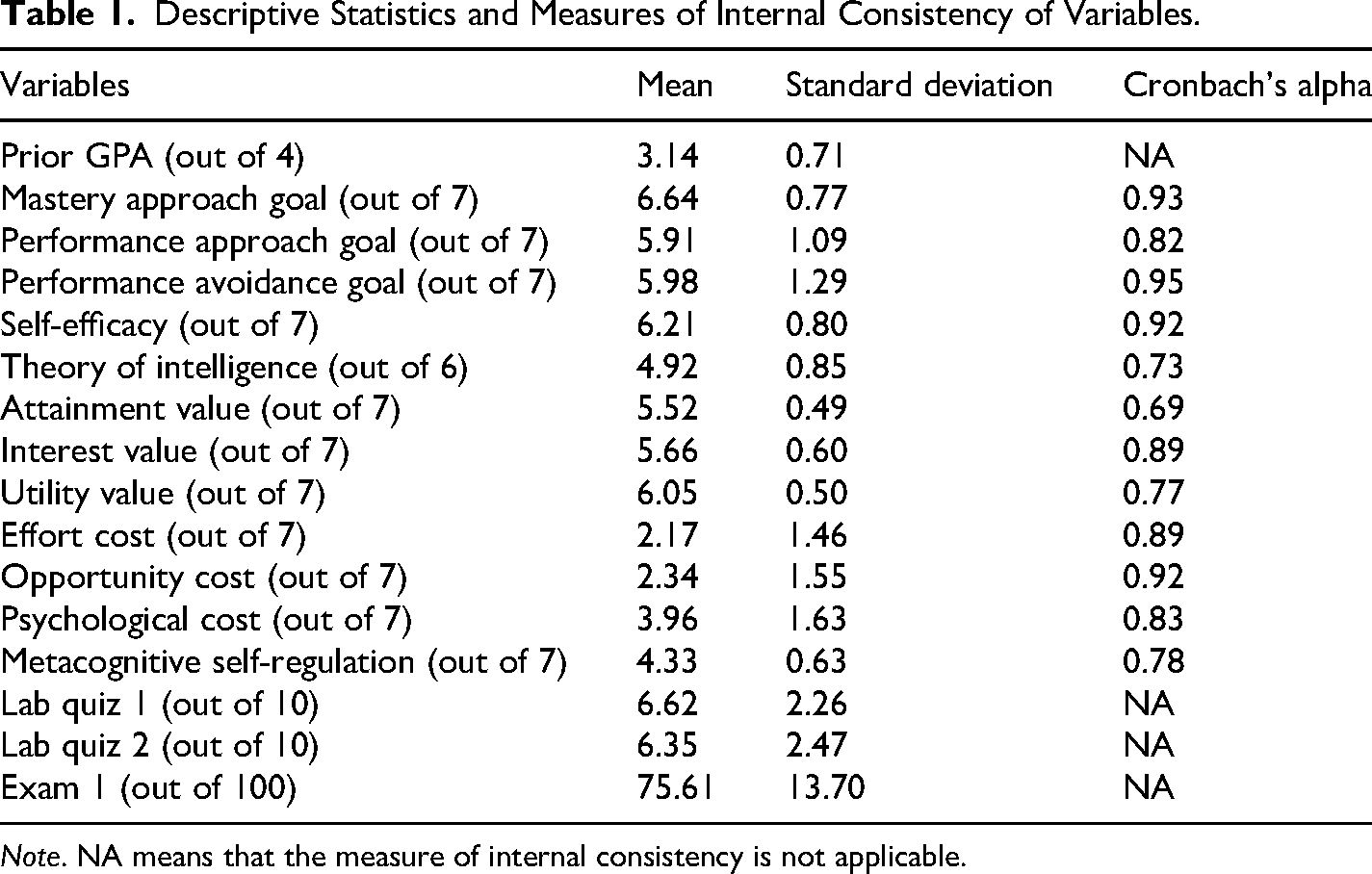
Note. NA means that the measure of internal consistency is not applicable.
Achievement Goal Orientation
Students’ goal orientations were measured with the Achievement Goals Questionnaire-Revised, focusing on three subscales: mastery-approach, performance-approach, and performance-avoidance goals. Each subscale consisted of three items on a seven-point Likert-type scale. Example items included, “My aim is to completely master the materials presented in this class” (mastery approach), “I am striving to do well in comparison to other students” (performance approach), and “My goal is to avoid performing poorly compared to others” (performance avoidance). Reliability of this instrument is summarized in Table 1.
Academic Self-Efficacy
Students’ academic self-efficacy was measured using the construct from Midgley et al., (2000), which consisted of five items on a seven-point Likert-type scale. Example items included, “I am certain I can master the skills taught in this course” and “I am certain I can figure out how to do the most difficult class work.” Reliability of this instrument is summarized in Table 1.
Mindset (Growth, Fixed)
To measure students’ beliefs in intelligence malleability, we adopted a six-item construct from Dweck (1999) to a six-point Likert-type scale. Example items included, “You have a certain amount of intelligence, and you really cannot do too much to change it.” Reliability of this instrument is summarized in Table 1.
Metacognitive Self-Regulation
Metacognitive self-regulation was measured by the Motivated Strategies for Learning Questionnaire, which included 12 items on a seven-point Likert-type scale. Example items included, “When reading for this course, I make up questions to help focus my reading.” Reliability of this instrument is summarized in Table 1.
Value Beliefs and Perceived Costs
We measured students’ perceived value of task engagement on three subscales (e.g., attainment value, interest value, and utility value) and students’ perceived cost on three subscales (e.g., effort cost, opportunity cost, and psychological cost). Each subscale consisted of four items on a seven-point Likert-type scale. Example items included, “How important is it to you to get a good grade in this course?” (attainment value), “Learning the material covered in this course is enjoyable” (interest value), “How useful is this course for what you want to do after you graduate and go to work” (utility value), “Considering what I want to do with my life, this course is just not worth the effort” (effort cost), “I am concerned this course may cost me some treasured friendships” (opportunity cost), and “My self-esteem would suffer if I tried in this course and was unsuccessful” (psychological cost). Reliability of this instrument is summarized in Table 1.
Prior Academic Performance and Early Course Performance
Students’ prior academic performance refers to their grade point average on a four-point scale before enrolling in this course. The first two lab quizzes were administered during the second and third weeks of the semester and were scored on a 0 to 10-point scale. The first unit exam, held in the third or fourth week depending on section progress, included approximately 45 multiple-choice questions and five short-answer questions, with scores converted to percentages.
Measurement Models
We used survival analysis to predict students’ dropouts across the entire semester because we wished to see whether dropouts occurred and when they occurred. The exam scores took up approximately 75% of the total points and missing one exam or receiving a low score on one could significantly affect the final grades and lead to their dropout. Therefore, we set six exams as six time points to observe students’ dropout (see Figure 1). We applied the Kaplan–Meier method to visualize students’ dropout over time. We used the log rank test to evaluate whether students’ dropout patterns differed in terms of gender, ethnicity, and first-generation status. To examine the effects of prior achievement, motivation, and early course performance on dropout, we employed the Cox proportional hazards model. Variables were entered into the model in a stepwise fashion. Prior achievement (e.g., prior GPA) was first included, followed by various motivation variables and early course performance (e.g., quiz 1, quiz 2, and exam 1). In the final model, we also tested the interaction terms of course performance and the perceived cost components of the expectancy value framework. For each step, we used forward and backward selection to choose the statistically significant variables. All the analyses were conducted with R programming language within the RStudio environment.
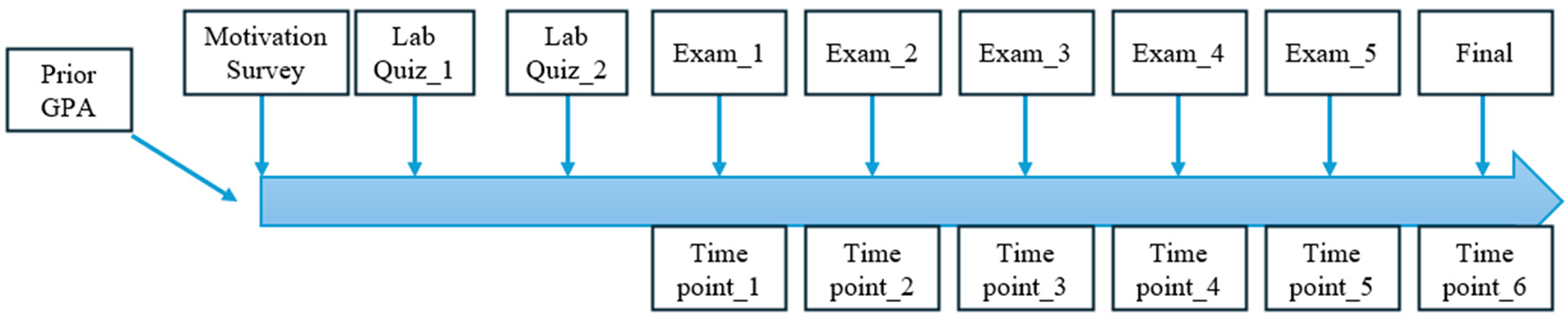
Overview of the Whole Semester and Data Generation. Note. Six exams serve as six time points to observe students' dropout. Two out of nine Lab quizzes are represented.
Results
Question 1: Overall Dropout Rate
The results of the Kaplan–Meier analysis indicated that, across the entire semester, 19.1% of students dropped out of the Physiology and Anatomy course (see Figure 2).
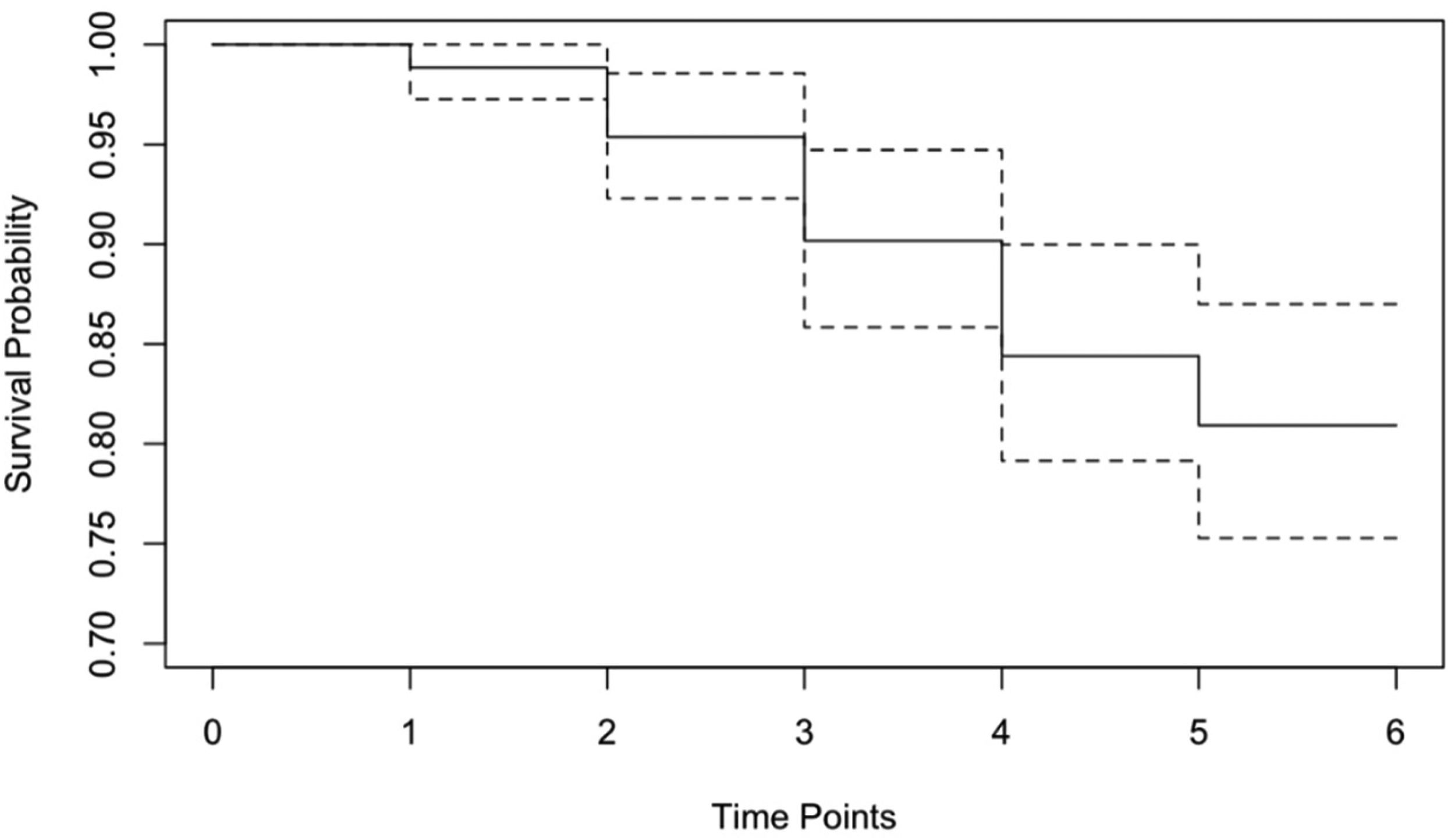
Students' Dropout Across the Whole Semester. Note. Survival probability at a certain time point means the estimated proportion of students who have persisted over this time point.
Question 2: Dropout Patterns Based on Demographics
The log rank test results showed that there were no differences in dropout patterns in terms of gender (
Question 3: Variables to Predict Students’ Dropout
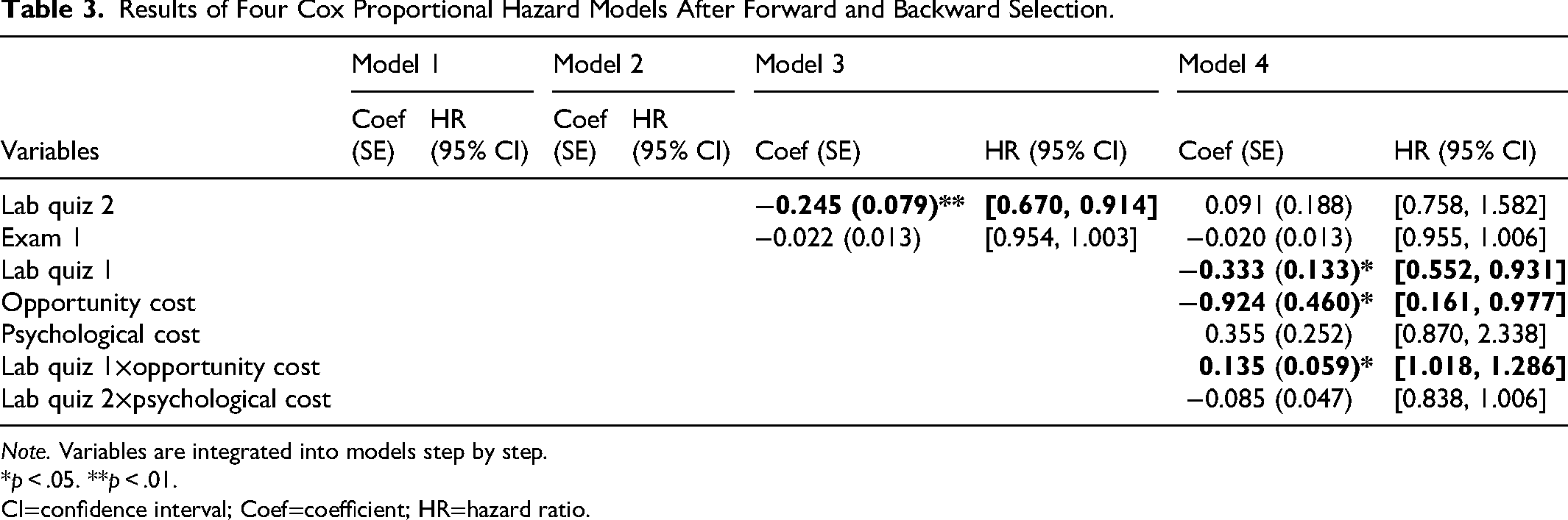
Model 1 (only including prior academic achievement) and model 2 (including prior academic achievement and students’ motivation) yielded no statistically significant predictors before and after applying forward and backward selection (see Tables 2 and 3). Model 3 including prior GPA, motivation, and early in-course grades (e.g., quiz 1, quiz 2, and exam 1) indicated that higher quiz 2 scores were associated with a substantially lower hazard of dropout (HR = 0.78, 95% CI [0.67, 0.91]; see Table 3). This corresponds to about 22% reduction in dropout risk for each additional point earned on quiz 2. Exam 1 scores showed a much smaller association (HR = 0.98, 95% CI [0.95, 1.00]), suggesting only a 2% reduction in dropout risk for each point increase (see Table 3).
Results of Four Cox Proportional Hazard Models Before Forward and Backward Selection.
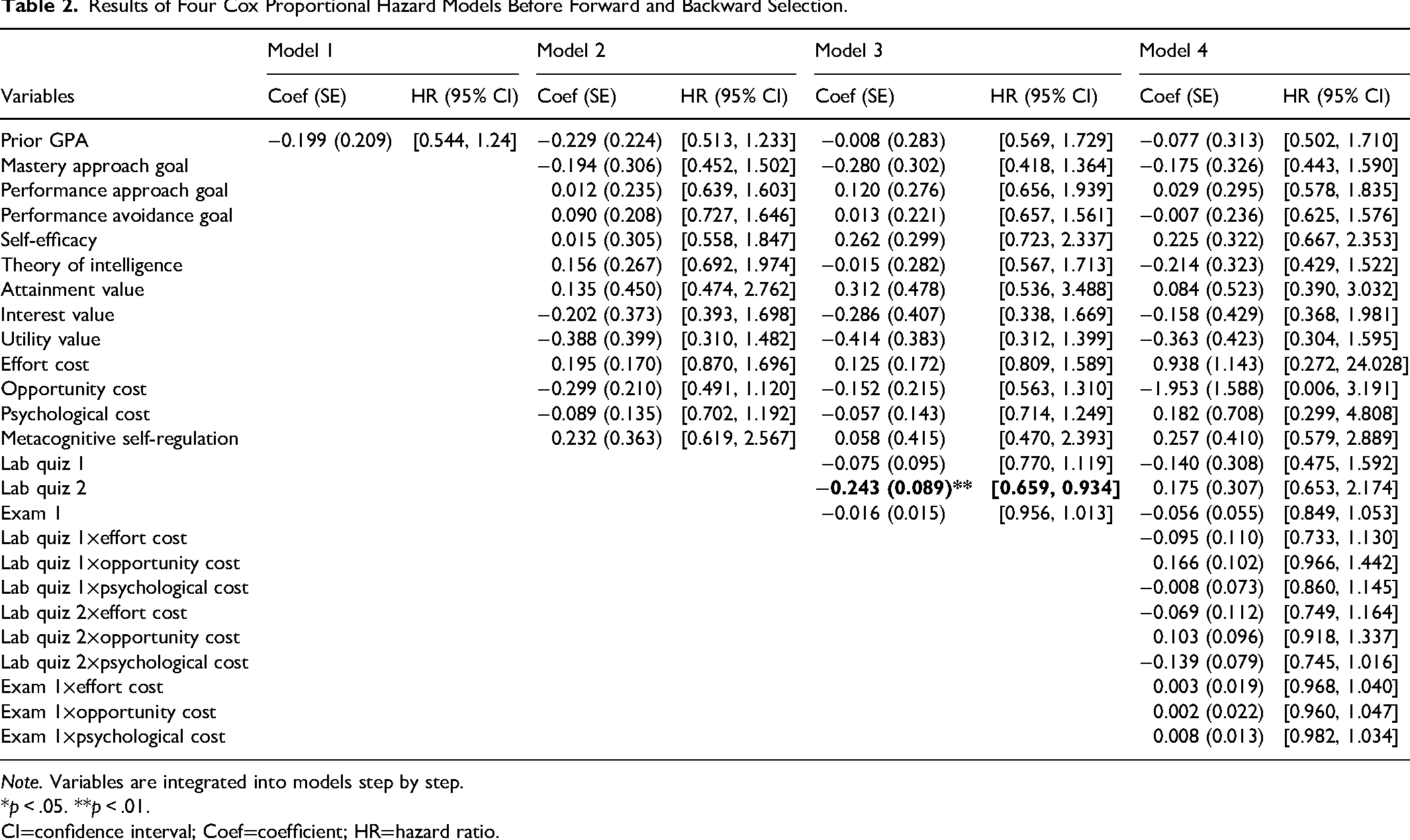
Note. Variables are integrated into models step by step.
*p < .05. **p < .01.
CI=confidence interval; Coef=coefficient; HR=hazard ratio.
Results of Four Cox Proportional Hazard Models After Forward and Backward Selection.
Note. Variables are integrated into models step by step.
*p < .05. **p < .01.
CI=confidence interval; Coef=coefficient; HR=hazard ratio.
Model 4 including prior GPA, motivation, early in-course grades and the potential interactions showed that quiz 1, cost opportunity, and the interaction between quiz 1 and cost opportunity were important predictors (see Table 3). Regarding the main effects of quiz 1 and opportunity cost, they both negatively predicted students’ dropout. However, we found the interaction between quiz 1 and opportunity cost was interesting because the relationship between quiz 1 scores and dropout risk varied depending on opportunity cost (see Figure 3). At low opportunity cost (e.g., when opportunity cost equals 1), higher quiz 1 scores were associated with lower hazard of dropout. At the moderate opportunity cost (e.g., when opportunity cost equals 4), quiz 1 scores had little association with dropout risk. However, at high opportunity cost (e.g., when opportunity cost equals 7), higher quiz 1 scores were linked to greater dropout risk. This pattern indicated that opportunity cost qualified the protective effect of early course performance. The benefit of doing well on quiz 1 diminished as perceived opportunity cost increased (Table 4). 1
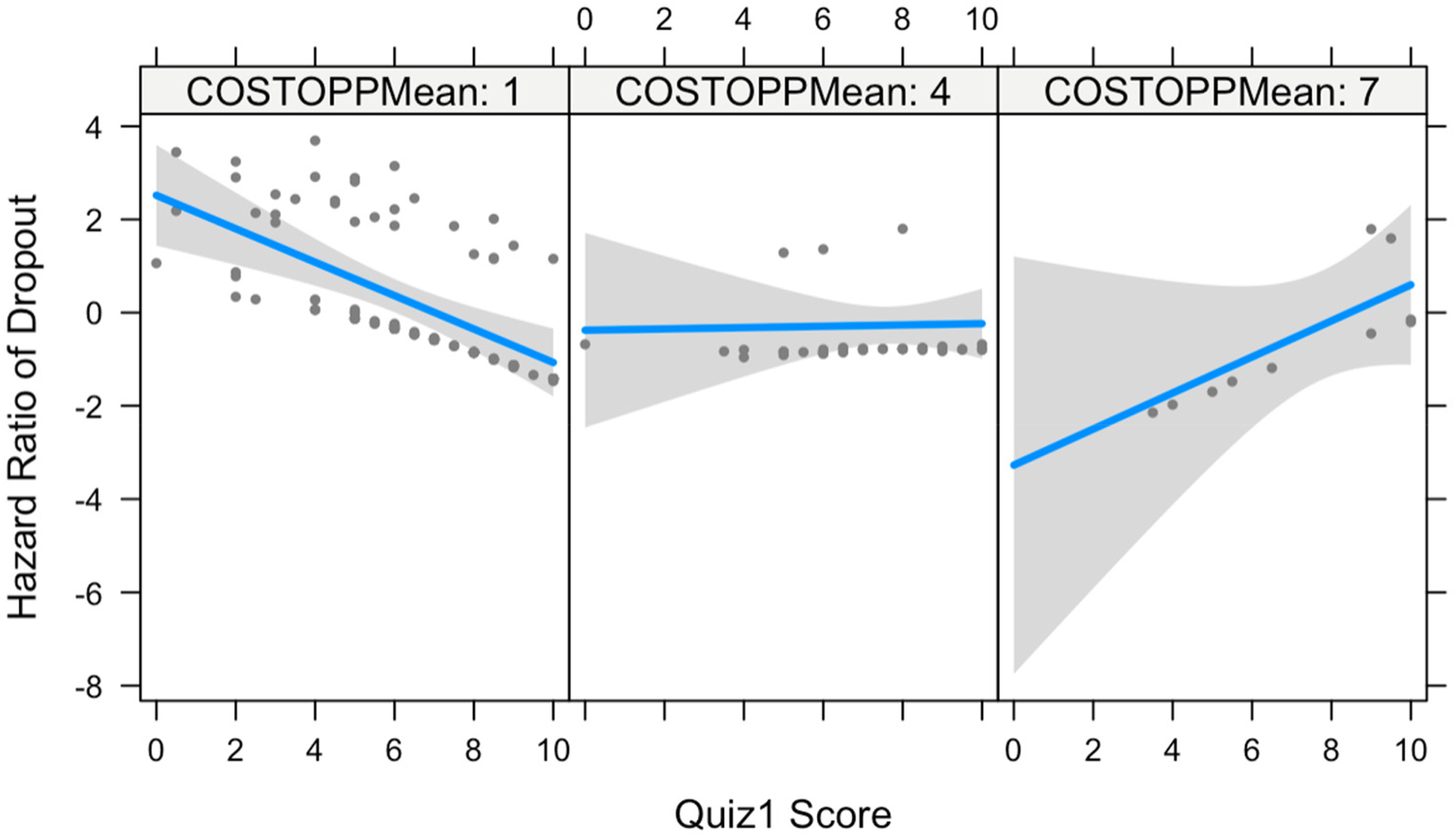
The Interaction Between Opportunity Cost and Dropout. Note. This figure shows the data points when opportunity cost equals 1, 4, and 7. Jittering has been applied to the overlapping data points to improve visibility. At low opportunity cost, higher quiz 1 scores reduced dropout risk; at moderate opportunity cost, the effect was minimal; at higher opportunity cost, higher quiz 1 scores increased dropout risk.
Results of Model 3 With Nine Interaction Terms Added Individually.
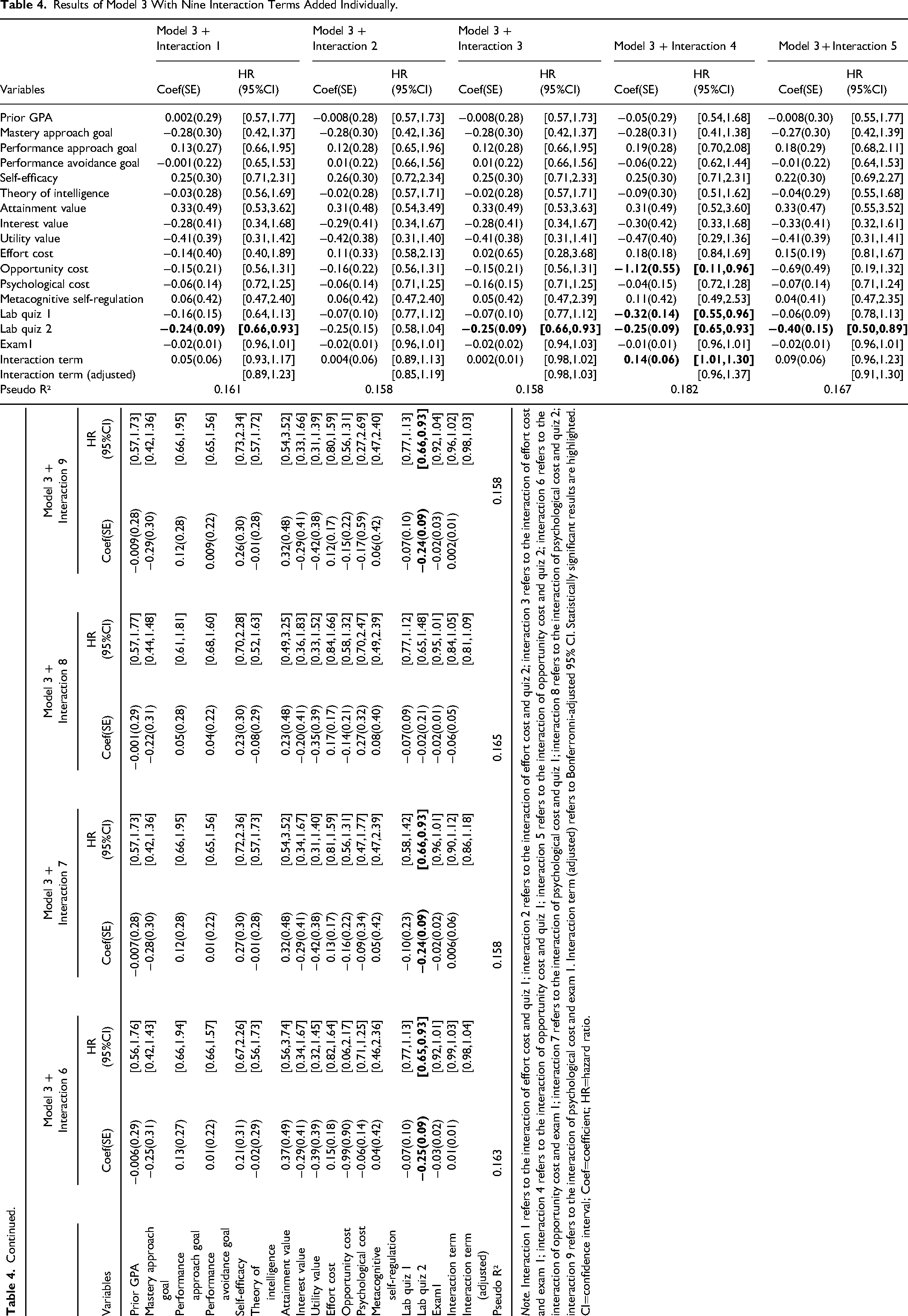
Note. Interaction 1 refers to the interaction of effort cost and quiz 1; interaction 2 refers to the interaction of effort cost and quiz 2; interaction 3 refers to the interaction of effort cost and exam 1; interaction 4 refers to the interaction of opportunity cost and quiz 1; interaction 5 refers to the interaction of opportunity cost and quiz 2; interaction 6 refers to the interaction of opportunity cost and exam 1; interaction 7 refers to the interaction of psychological cost and quiz 1; interaction 8 refers to the interaction of psychological cost and quiz 2; interaction 9 refers to the interaction of psychological cost and exam 1. Interaction term (adjusted) refers to Bonferronni-adjusted 95% CI. Statistically significant results are highlighted.
CI=confidence interval; Coef=coefficient; HR=hazard ratio.
Discussion
In this study, we set out to consider the dropout rate in a gateway STEM course, how the dropout patterns differed based on gender, ethnicity, and first-generation status, and how learners’ academic preparation, motivation, and course performance related to dropout. We further explored whether interactions between motivation and early course performance were important predictors. We found that (1) almost one-fifth of students dropped out of this introductory STEM course at different stages throughout the semester; (2) there were no meaningful variations in dropout patterns concerning gender, ethnicity, or first-generation status; (3) prior academic performance, as measured by students’ GPA before enrolling in this course, was not a significant predictor of dropout. These largely align with prior literature on the topic. Novel in our findings was (4) that early course grade, as measured by quiz 1 score, interacted with students’ opportunity cost in predicting dropout. Specifically, when opportunity cost was low, higher quiz 1 scores were linked to lower dropout risk; when opportunity cost was high, higher quiz 1 scores were associated with higher dropout risk. We first considered how these findings contributed to the ongoing dropout research in higher education and community college contexts. Thereafter, we considered how the integration of theories on learning and motivation might enrich STEM educators’ approaches to support STEM undergraduates. We closed with practical consideration of how the data could be collected and modeled to empower timely, responsive student support to prevent STEM course attrition.
Contribution to Dropout Research
The findings first underscore the ongoing challenge of STEM dropout that higher education institutions must continually address, despite decades of efforts in curriculum design, instructional innovations, student support initiatives, and policy reforms aimed at improving retention (Louten, 2022). Priority should be given to introductory STEM courses, given their role as critical entry points into STEM majors. Students’ learning experiences and performance in these foundational courses significantly influence their decision to persist in STEM fields (Bernacki et al., 2020). Special attention should also be directed toward community colleges, which enroll a higher percentage of STEM degree earners but serve a disproportionately larger population of underrepresented minority students, part-time learners, low-income individuals, underprepared students, and first-generation students (Varty, 2022). Moreover, the finding that dropout patterns did not differ by gender and ethnicities contrasts with the conclusions of most previous studies, which suggest that women and underrepresented group face a higher risk of dropout. However, these previous studies typically examine students’ entire trajectory from college enrollment to graduation (Chen, 2013), whereas fewer studies have focused on dropout within a single introductory STEM course. It is worth noting that Cohen and Kelly (2019) reported similar findings in their analysis of community college chemistry course-taking that demographic factors (e.g., gender, socioeconomic status, and ethnicity) were not significant predictors of persistence in STEM majors. The finding that first-generation status was not associated with students’ dropout is unexpected, considering that numerous studies have indicated higher dropout rates among first-generation students (Thompson, 2021). One possible explanation for this surprising result is the substantial missing data for this variable because many students chose not to disclose their first-generation status.
Contribution to Dropout Prediction Modeling
Many universities have implemented early warning systems to monitor students’ performance, identify struggling students, and issue alerts to students, instructors or related staff to facilitate timely interventions. The predictive modeling to support these systems commonly relies on students’ demographics (e.g., gender, ethnicity, and socioeconomic status), early performance (e.g., assignments before the alert cutoff), or their engagement with course sites (e.g., their activities in Learning Management Systems; Hong & Bernacki, 2017). Our study provides compelling evidence that students’ motivation can serve as a valid predictor of dropout, offering an important yet often overlooked dimension in retention modeling. Prior studies have demonstrated that loss of interest is a common reason why students depart from an STEM major, suggesting the critical role of motivational beliefs in STEM retention (e.g., Perez et al., 2014). However, motivation is seldom included in the early warning systems despite its theoretical and empirical relevance to student retention. By integrating motivation-related variables into the predictive models, institutions can enhance the accuracy of dropout risk prediction and develop more targeted, proactive interventions. Our findings indicated that students’ early course performance, such as the quiz 1 score, was negatively associated with dropout, reinforcing previous research finding that early performance is a strong predictor of final outcomes (e.g., Baker et al., 2015). Although prior studies have shown that incorporating early performance metrics can enhance accuracy of later performance predictions, some researchers have cautioned against over-reliance on such measures (Bernacki et al., 2020), because poor initial performance highly likely predisposes students to continued struggles throughout the course. However, in our study, these two quizzes used as early performance indicators functioned more as formative assessments and only accounted for a small part (2.5%) of the total score. Given that these assessments were administered within the first 2 weeks, we considered them valuable for capturing an early snapshot of students’ motivation and engagement rather than solely measure content mastery.
Contribution to Theory
Finding that opportunity cost, quiz 1 score, and the interaction of opportunity cost and quiz 1 score predicted students’ dropout carries more theoretical implications. Cost has long been a part of EVT and is conceptualized as three subcomponents: effort cost, opportunity cost, and psychological cost (Eccles & Wigfield, 2020). Previous research has suggested that cost acts as a predictor of maladaptive academic behaviors, such as test anxiety and disorganization (Jiang et al., 2020), as well as dropout intentions (Schnettler et al., 2020). However, studies that have examined these three subcomponents separately have shown that their relationships with students’ academic outcomes and dropout risks are not uniform. For instance, the effort cost has been found to positively relate to dropout risk (Perez et al., 2014) but negatively relate to students’ academic performance (Muenks et al., 2023). Christiaans et al. (2024) found that psychological cost negatively predicted final course grades but positively predicted major and career intentions among computer science students. These nuanced findings underscore the importance of disaggregating cost components when examining their impact on student persistence and academic success. Our study indicated that the main effect of opportunity cost on students’ dropout was negative, aligning with the findings from Part et al. (2020) and Perez et al. (2019), which suggested that opportunity cost positively predicted students’ achievement. This relationship may reflect the fact that students who invest significant time and effort in a course often do so at the expense of socializing with their families and friends (the measure of opportunity cost in these studies mainly focuses on social, romantic, and family relationships). However, when the cost opportunity interacted with early course performance (on quiz 1), its relationship with dropout became positive. This shift suggests that quiz scores may make students with high opportunity cost rethink their likelihood of success in this course, ultimately increasing their dropout risk. Rather than viewing cost as a uniformly negative factor, these findings indicate that opportunity cost can have adaptive and maladaptive effects, depending on contextual factors such as early academic performance, and the signal it provides as to whether giving up opportunities is a worthwhile investment (Lee et al., 2022). Overall, all these findings highlight the multifaceted nature of cost perceptions and support that cost has been a complex multidimensional construct that requires more research in the future (Perez et al., 2014).
Contribution to Practice
Our study presents a viable and scalable approach to predict and monitor student dropouts that can be adopted by various institutions. Students’ motivational data can be collected through surveys administered via platforms such as Qualtrics, their demographics and prior academic performance can be accessed through Registrar, and their early course performance are recorded by instructors in existing grading systems. To facilitate real-time monitoring and intervention, learning dashboards can be designed to visualize both students’ profiles and academic performance, providing instructors and learning support specialists with accessible and data-driven insights. In this way, institutions can proactively identify those students at the risk of dropping out and give timely and personalized interventions. Our study also provides valuable insights into the development of targeted interventions aimed at improving student persistence. Specifically, our findings highlight the role of perceived cost as a significant barrier to prevent students persisting across the whole semester. Despite the well-documented impact of cost on academic outcomes, intervention studies specifically designed to reduce perceived cost remain limited. However, the existing research in this area has produced promising results. Rosenzweig et al. (2020) found that a cost-focused intervention enhanced lower performing students’ academic performance. Similarly, Cromley et al. (2020) suggested that a combined motivational-cognitive intervention to alleviate perceived costs and instruct learning strategies improved undergraduate Biology grades. Given these findings, educational researchers can explore and refine cost-reduction interventions to improve STEM retention and performance.
Limitations and Future Directions
One limitation of this research concerns the sample size and the missing data. With a modest sample size, the study might have insufficient statistical power to detect additional significant relationships. Moreover, the variable indicating first-generation status had a significant amount of missing data, possibly because students were hesitant to disclose this information. However, we still included this variable in our analysis due to the substantial body of research indicating that first-generation status is a key predictor of students’ intention to dropout. Future studies could address these challenges by recruiting more participants and providing clear explanations about data use to encourage more complete reporting. Another limitation of this research is that we only included interaction terms between early course performance and the perceived cost in the model. This decision was informed by the relatively less attention given to students’ perceived costs in existing literature on STEM dropouts. Future studies could expand the model by incorporating additional interaction terms involving other motivation constructs, such as self-efficacy and goal orientations, to provide a more comprehensive understanding of how various aspects of motivation relate to students’ decisions to leave STEM programs. Thirdly, in this study, we employed forward and backward stepwise selection to identify important variables in the model. Although widely used, this approach has limitations, because it is a greedy strategy that prioritizes the immediate improvement in model fit rather than the globally optimal solution (Steyerberg et al., 1999). Our relatively small sample size constrains our ability to split the data into training and test sets or to apply resampling methods such as cross-validation. However, when we re-estimated models by introducing interaction terms individually, the results were largely consistent with those obtained from the stepwise procedure, lending support to our findings. Nevertheless, we caution that future STEM dropout researchers should be mindful of the limitations of the stepwise selection and, when possible, employ alternative approaches that allow for more rigorous validation. In addition, future work could also use other forms of multimodal data, such as digital trace data generated by students’ engagement with learning management systems during the initial weeks of the course, to gain deeper insights into students’ learning behaviors (Bernacki et al., 2020). For instance, digital trace data would reveal how frequently students access different materials and what types of learning strategies they employ (e.g., retrieval practice). Such data could enhance the development of predictive models aimed at identifying patterns with student persistence and success in STEM fields. It will be important for researchers to bear in mind that sociocultural factors are well known to influence college aspirations (Brown et al., 2022), applications (Jeffrey & Gibbs, 2024), admission (Kim & Bastedo, 2024), and yield (Miller et al., 2024), and to factor in to students’ retention, progression and completion (Belando-Montoro et al., 2022). Collecting and reporting on data that give context to learners’ experiences will remain important, if challenging, in this line of research. Finally, the Anatomy and Physiology course may not be one foundational course for many STEM fields, which places some limits on the generalizability of our findings. However, we aim to demonstrate how educators or instructors can leverage the data that are often readily available to monitor students’ dropout patterns and to identify opportunities for timely interventions. Future studies can examine dropout in other STEM courses and across the college context more broadly.
Conclusion
Overall, the present study explored how students’ prior achievement, early course performance, and their motivation related to dropout throughout the course, as well as whether dropout patterns varied in terms of their gender, ethnicities, and first-generation status. Findings indicated that students’ early course performance was negatively associated with dropout, suggesting that their higher initial performance would reduce the likelihood of leaving the course. Additionally, students’ perceived costs, such as opportunity cost, interacted with early course performance to further affect their dropout decisions. Although this interaction did not remain statistically significant after Bonferroni correction, the pattern it revealed was theoretically meaningful: the protective influence of early quiz performance on dropout risk weakened as students’ perceived opportunity cost increased. Taken together, these results underscore the importance of addressing students’ motivation and performance during the early weeks of a course to support their retention. By identifying factors related to students’ dropouts, institutions can create effective interventions to help students persist and succeed in STEM fields.
Footnotes

Funding
The authors received no financial support for the research, authorship, and/or publication of this article.
Declaration of Conflicting Interests
The authors declared no potential conflicts of interest with respect to the research, authorship, and/or publication of this article.