




Abstract
Gender-based violence (GBV) is a multilayered problem with well-established health and social consequences. Unique to undergraduate students are the impacts of GBV on their academics. Despite this reality, little is known about how students navigate their academic lives after experiencing GBV. The purpose of this cross-sectional, qualitative study was to explore how GBV impacted undergraduate students’ academics both immediately and over time. Seventeen undergraduate students were interviewed and identified both immediate (i.e., increased difficulty concentrating on schoolwork, avoidance of schoolwork/classes/campus, decreased academic achievement) and long-term (i.e., lower academic standing, crossroads and decisions, reclaiming academic careers) academic consequences of GBV. A timeline of academic impacts emerged providing insight into the trajectory and extent of the consequences that the continuum of violence has on students’ academics. As the crisis of GBV persists on university campuses, it is imperative that academic policies be revised to mitigate the consequences of violence on students’ academics.
Introduction
Gender-based violence (GBV) is a global public health endemic and can be defined as any harmful acts directed at an individual based on their gender (World Health Organization, 2021). The incidence and prevalence of intimate partner violence (IPV), the most common form of GBV, is highest among young adults aged 15 to 24 years (Cotter, 2021). Within this age cohort, post-secondary students experience higher rates of IPV when compared to high school students (Cotter, 2021; Desmarais et al., 2012; Smith et al., 2017). Globally, between 4% and 17% of women and 7% and 8% of men in post-secondary education report experiencing sexual violence (Christensen et al., 2023). In the Canadian context, these rates are even more staggering, with the most recent reports from the 2019 Survey on Individual Safety in the Postsecondary Student Population finding that most students (71%) witnessed or experiences unwanted sexualized behaviors (Statistics Canada, 2002). In the most populous province in Canada, Ontario, a recent survey of 116,627 university students reported that 63% had been sexually harassed and 23% experienced a non-consensual sexual experience since the beginning of their academic year (CCI Research, 2019). Given this high prevalence of GBV among post-secondary students, it is unsurprising that GBV on Canadian higher education campuses has been a concern for decades (Possibility Seeds, 2019). In 2016, four Canadian provincial governments, including Ontario, passed legislation mandating all post-secondary institutions (which includes colleges, universities, Colleges of General and Professional Teaching, trade schools) establish sexual violence policies (Possibility Seeds, 2019).
The occurrence of GBV on university campuses and as experienced by post-secondary students is an ongoing multilayered problem with well-established consequences for students including poorer health, well-being, and social involvement (Rothman et al., 2021). Specifically, Pengpid and Peltzer (2020) conducted a study of 18,335 university students across 25 countries, to explore the associations between physical partner violence victimization and/or sexual violence victimization and various risky health behaviors and mental health outcomes. This study found that victimization was associated with risky health behaviors (i.e., unhealthy diet), sexual risk behaviors (e.g., pregnancy), violence related behaviors (e.g., weapon carrying), mental health indicators (e.g., depression, loneliness, post-traumatic stress disorder), and addictive behaviors (e.g., binge drinking, tobacco use). Socially, sexual assault survivors tend to retract from social engagement (Nguyen et al., 2017), experience social stigma or blame which may lead to socially withdrawing (Kelley & Gidycz, 2017), emotionally distance themselves from social supports (Dworkin et al., 2018), and face an increase of fear and mistrust of others (Georgia et al., 2018).
Beyond the well-established health and social consequences of GBV and unique to the post-secondary student population is the reality that students also experience impacts on their academics. The literature has established violence can result in declines in overall grades as well as a loss of engagement in school across all ages/grade level of students (Brewer et al., 2018; Mengo & Black, 2016; Schrag et al., 2020; Stermac et al., 2020). Most studies to date that have investigated the academic impacts of violence have focused on one form of violence (e.g., sexual or physical; e.g., Pengpid & Peltzer, 2020, Rothman et al., 2021), failing to account for the range of violent acts that GBV encompasses and that students have been known to experience while at university. Moreover, studies tend to focus on the academic impacts of violence at the time of occurrence or immediately after (Stermac & Cripps, 2019) or focus on the impacts of violent experiences on retention rates within programs and post-secondary institutions (e.g., Mengo & Black, 2016), which leaves the long-term academic impacts of violence on students who remain enrolled in university largely unknown. The lived experiences of students are also currently missing from literature, as historically, students have primarily been studies using mass surveys (Stermac et al., 2020).
While past research has identified the short-term academic impacts of sexual and physical violence on campus (e.g., decrease in grades, loss of academic engagement), there remains a dearth of research on the lived experiences of post-secondary students in Canada navigating their academic lives following broad experiences of GBV. Given the alarming rates at which violence on university campuses is occurring, understanding the lived experiences of students is crucial to ensure that programs and policies are targeting most beneficial for bolstering the health and well-being of students following experiences of GBV. To this end, the purpose of this study was to explore how GBV impacted undergraduate students’ academics both immediately and over time at a large university in Southwestern Ontario.
Methods
Study Design
This qualitative study, situated within the broader “Exploring the Experiences of University Students wh
Sampling and Recruitment
Purposive and snowball sampling occurred over 8 weeks at a university in Southwestern Ontario. Recruitment employed a wide range of strategies, including the following: (1) university-affiliated social media posts on accounts relevant to undergraduate students (e.g., clubs); (2) social media posts by the research team; (3) contacting university-affiliated and community-affiliated GBV groups and services; and (4) contacting professors to ask if they would share recruitment information with students. Participants were eligible for this study if they (a) had experienced GBV while enrolled at the host institution; (b) were currently enrolled as a full-time student at the host institution; (c) were at least 18 years old; (d) had the ability to speak/read English; and (e) were willing to be audio-recorded during an interview.
Study Procedures
Interested participants contacted the research team and were subsequently screened for eligibility, provided the letter of information, following which consent to participate was obtained. After the consent was received, a safety plan was co-created and a mutually convenient time for a 60-min, in-depth, semi-structured interview was arranged. The interview either took place via Zoom (n = 9), over the phone (n = 3), or in-person on campus (n = 5), depending on the preference of the participant. The interviewer was trained in trauma-informed interview practices by the Principal Investigator of this study who has over 10 years of experience conducting interviews with populations who have experienced gender-based violence. In recognition of their time and contributions, each participant was provided an honorarium of a $20 Amazon e-gift card. After the interview was completed, all recordings were transcribed verbatim and de-identified, and participants were assigned pseudonyms.
Data Collection
The semi-structured interview included a demographics survey and semi-structured interview questions. All interview questions were open-ended and related to students’ experiences of GBV (e.g., “How have your changes in health impacted your school and/or personal life?”, “What impact has your experience with GBV had on your academic performance?”). Demographic questions pertained to participants’ age, gender, sex, sexuality, ethnicity, employment status, financial strain, children, degree type, year of study, program, enrolment status, campus affiliation, living arrangement, marital status, relationship length, experiences of GBV, and the gender of their current/former partner(s)/person(s) who perpetrated GBV.
Data Analysis
To ensure participants’ experiences were honored and acknowledged in a way that felt meaningful and authentic to themselves, the practice-based framework of ID was employed to highlight the possibility of multiple perspectives of reality and the importance of the co-construction of knowledge between researchers and participants. In line with ID, data analysis included the following: (1) comprehending the data; (2) synthesizing meaning from the data; (3) theorizing relationships; and (4) recontextualizing the data into findings (Thorne, 2016). All researchers involved in analysis underwent rigorous training in ID methods in the context of sensitive data related to experiences of gender-based violence. Regular check-ins between analysts also occurred during the analysis phase of this project to ensure an accurate portrayal of participants’ experiences was captured. The first step involved re-reading each transcript two to three times to become familiarized with the dataset and to note initial impressions and biases in reflexive journals. In the second step, the research team identified each component of the data and determined how components of the data existed individually and how they worked together through open coding or the process of taking apart the data and examining the discrete parts for similarities and differences and to identify and define major themes from the interviews. This was continued until there was a sense of clarity with the data. Step 3 involved axial coding, wherein the research team examined the relationship between emerging themes. Finally, step 4 involved multiple iterations of coding, making refinements to themes and definitions along the way until data was fully analyzed and situated into findings within the broader literature. The process of memoing was also employed wherein any thoughts, insights, or interpretations to further analysis, generate new ideas, and communicate findings were noted (Birks et al., 2008).
To attend to data trustworthiness, Lincoln and Guba's (1985) criteria of credibility, transferability, dependability, and confirmability were followed. Three strategies were used to ensure credibility, including (1) prolonged engagement, (2) peer-debriefing, and (3) member-checking. Transferability was established by using thick and rich description which described the behavior, experience, and context in enough detail that the conclusions drawn could be transferred to other settings and situations (Korstjens & Moser, 2017; Lincoln & Guba, 1985). Dependability was demonstrated by noting any biases in a reflexive journal and consulting with the principal investigator regularly regarding data analysis, interpretations, and the identified biases (Lincoln & Guba, 1985). Finally, confirmability was maintained through external auditing, memoing, and the use of a reflexive journal to document and examine explicit and implicit assumptions, preconceptions, and values.
Results
Demographic Characteristics
A total of 17 undergraduate students (Mage = 20 years; SD = 2.03) participated in the VOICE study. All participants were full-time students, had no children, and were no longer experiencing GBV. Most students identified as women (n = 15, 82%), straight (n = 12, 71%), single (n = 11, 65%), and part of a racial or ethnic minority group (n = 11, 65%). Employment status varied among students; however, over half (n = 10; 59%) found it was not difficult to live on their current income. Students also ranged in their year of study, with 12% (n = 2) being in first year, 29% (n = 5) in second, 35% (n = 6) in third, and 24% (n = 4) in their fourth year.
Most participants experienced multiple instances of GBV throughout their lives; however, participants routinely referred to their self-identified most impactful experience of violence when asked, which tended to be the most recent. Almost all participants identified their perpetrators as men (n = 15, 88%) and the types of self-reported GBV experienced included a combination of the following: sexual violence (n = 16), emotional violence (n = 15), IPV (n = 14), sexual harassment (n = 12), psychological violence (n = 12), stalking (n = 5), physical violence (n = 4), and cyber violence (n = 3). Within this sample, GBV was typically experienced during the first or second year of university (n = 13, 76%). Full demographic details of participants can be found in Table 1.
Participant Demographics.
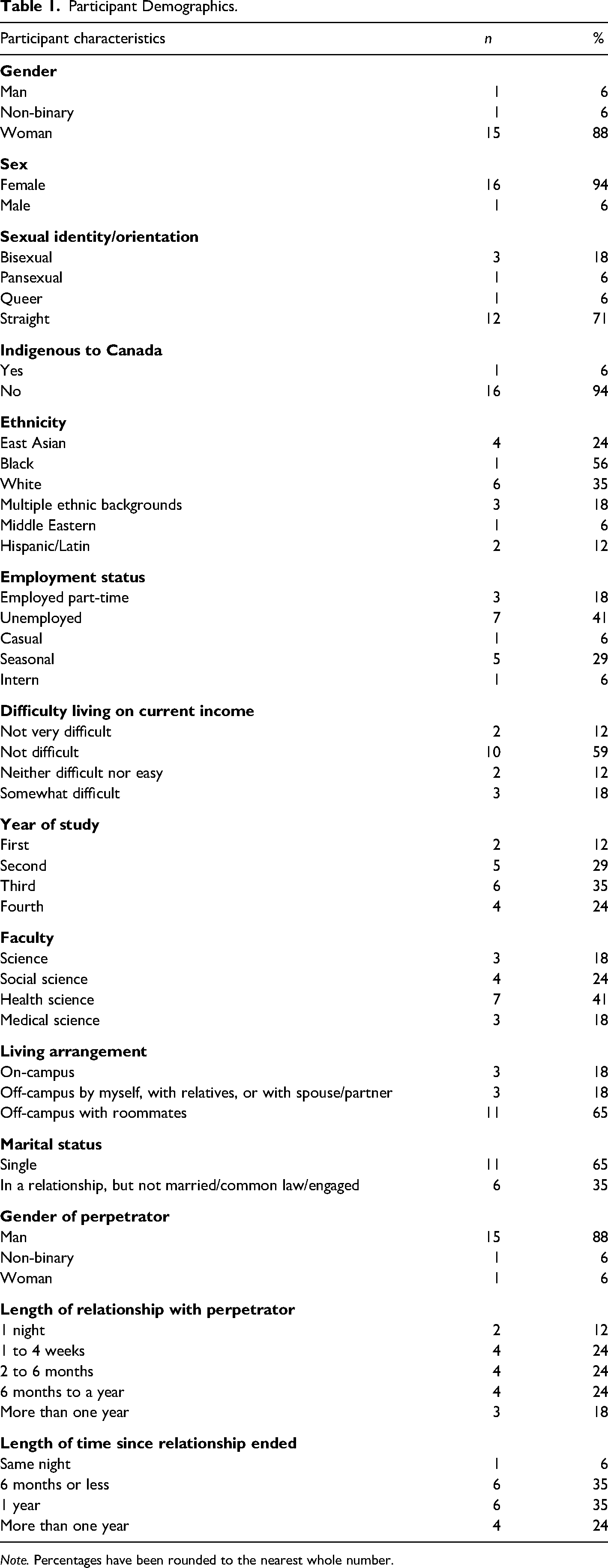
Note. Percentages have been rounded to the nearest whole number.
Perceived Impact of GBV on Students’ Academics
During interviews, participants shared how their experiences of GBV impacted their academics. The perceived impact of GBV on academics depended on whether students acknowledged their experience of violence. If they avoided acknowledging their experience, they tended to compartmentalize and perceived little to no impact on their academics. Conversely, if they chose to acknowledge the GBV experience, students discussed the impacts in terms of how their undergraduate studies were affected: (1) immediately, (2) in the long-term, as well as (3) their academic recovery and improvement. See Figure 1 for an overview of the timeline of the perceived impact of GBV on students’ academics.
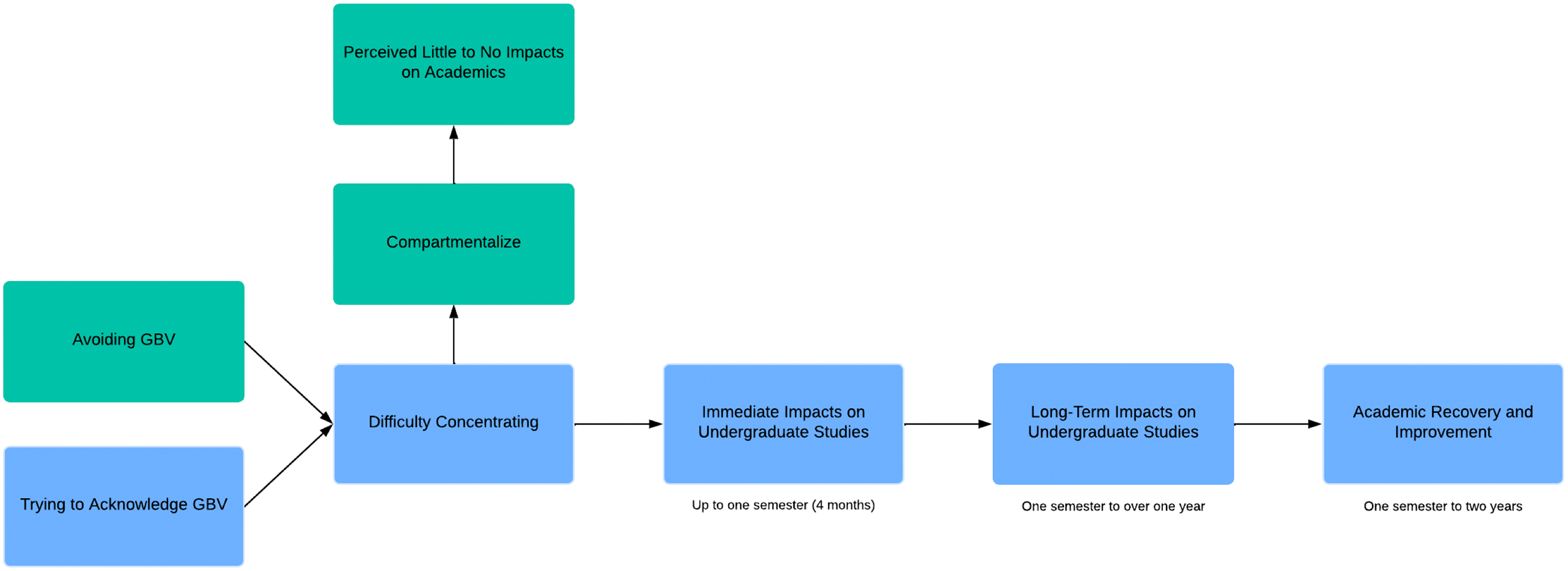
Timeline of the perceived impact of GBV on students’ academics.
Little to No Impacts on Academics
Students who did not perceive an impact on their academics chose to consciously set aside or compartmentalize their GBV experience so they could focus on their academics. One student, Ivy said, “…school is the priority…so do school first, and then deal with that [GBV] later.” The compartmentalization allowed students to avoid thinking about the GBV that was experienced. Students described throwing themselves into their schoolwork to stay preoccupied so there was no time to think about their violent experience. Terra explained, “I would say I’m much more focused with school…I just try not to think of these things [GBV].” Setting aside their experience of violence was a strategy some students felt was the only way to deal with their experience while being a student.
Immediate Impacts on Undergraduate Studies
For students who acknowledged their GBV experience, when describing the immediate effects on their academics, students identified a cascading impact beginning with (1) increased difficulty concentrating on schoolwork, (2) avoidance of schoolwork/classes/campus, and eventually, (3) decreased academic achievement.
Increased Difficulty Concentrating on Schoolwork. Experiencing GBV impacted students’ ability to concentrate on their schoolwork. Students attributed this challenge of focusing on schoolwork to them ruminating in their experience resulting in emotional distress. Terra described, “…I was just thinking of what happened. I was emotionally distressed… it took away my focus from school.” For students, acknowledging their experience required significant mental resources leading to exhaustion and fatigue impacting the energy and focus available for schoolwork. Rue explained: After it happened, I just, my focus was completely off. And this was also at a time where I didn’t really understand what had happened… And so, when I’m mentally exhausted, there's not much left- there's not much energy left for school.
Students highlighted that despite valuing and wanting to prioritize their academics, it was incredibly difficult, with Ivy saying, “…it does become hard to focus. And I do get unmotivated…My academics is something I take very seriously. So, it definitely takes a toll there.” Many students described that acknowledging the experience of violence required significant space in their lives—leaving little emotional and mental capacity for academics.
Avoidance of Schoolwork, Classes, and Campus. Students shared that the emotional distress of experiencing GBV meant they started to miss classes and/or only completed the minimum amount of schoolwork. One student, Clove, explained, “I barely went to class. I did not do much schoolwork beyond the bare necessary.” This avoidance of schoolwork and classes resulted in heightened levels of stress for students. With students avoiding classes, often stress would magnify as they knew they were falling behind academically. As explained by Willow: …along with avoiding specific places, I tend to avoid other things that would stress me out. So, my schoolwork would stress me out, I would just avoid it because I’m already, I’m feeling so much, I push everything to the side.
This stress associated with missed schoolwork compounded with existing stress from their GBV experience, leading to a pattern of further avoidance of schoolwork.
Decreased Academic Achievement. The avoidance of schoolwork and heightened stress levels culminated in marked decreases in school performance on assignments and exams, compared to before experiencing GBV. For instance, Indigo said, “…the first semester of second year, I could not concentrate very well on my studies, on my exam. So, I failed terribly just because I could not concentrate, I could not do as I am supposed to.” The loss of concentration, the avoidance, and the absenteeism created a compounding effect for students who had experienced GBV, which was particularly detrimental on their grades during heavily weighted assessments, such as midterms and exams.
Long-Term Impacts on Undergraduate Studies
Students who acknowledged their experience of GBV discussed the long-term impacts on their undergraduate studies in the following three ways: (1) lower academic standing; (2) crossroads and decisions; and (3) reclaiming academic careers. Students found that their course grades began to decline which led to a lower overall academic standing. At this point, students described being at a crossroads and having to decide how to continue successfully in their undergraduate career. Students also detailed the path to reclaiming their academic standing. Each will be discussed in turn.
Lower Academic Standing. Students described how their experiences of violence impacted their overall academic standing. Eventually, the repeated low marks on these assessments led to overall course and semester averages decreasing, compared to prior to experiencing GBV, and for some students culminated in academic probation or no longer being eligible for their program of study. Aspen explained how her grades went from honor roll status to no longer being competitive for her desired program, “…the first semester I had an 80 average, maybe just above that. And after that, my average tanked to about a 69. Which…pretty much ruined my chances to get into a program that I wanted to next year.” These drastic changes in course grades from being a previously high achieving student generally led to students doubting themselves and their place at university, as articulated by Clove: It was kind of like everything was hitting rock bottom all at once. I had almost nothing to cling on in a way. I’ve always been a good student, so I always was like I’m good at this [school], and then with the [GBV] incident, and then the diminished academic performance, I just felt a sense of worthlessness.
It was evident that students’ sense of worth and self-esteem were connected to their academic performance, and when their overall academic performance deteriorated, this influenced their identity of being a “good” student. Further, the drop in academic performance had very real implications for their futures, adding further stress for students.
Crossroads and Decisions. These academic consequences of the violence put many students at a crossroads for their future academic options. For students, a crossroads was understood as an impasse, wherein their strategies for coping with the experience of violence and the stresses of being a student were no longer working for them. Students often needed to take a step back from their academics to process their experiences of violence so it would no longer negatively impact their academic achievement. At this crossroads, students described adjusting their workloads in terms of the number of courses they were taking, transferring to less competitive programs, or taking a gap year. Fern explained their choice to adjust their course workload and retake courses saying, “So, at that point, I was just tired, I ended up just settling for, dropping two of my courses from second semester and then retaking them in the summer.” Other students voluntarily or were forced to switch programs because they no longer met the grade requirements. Hazel reluctantly switched programs saying: So, I was in [program name] for the first two years but then I switched to [new program]. I feel like part of the reason was because my grades weren’t so good in first and second year. I felt like I wasn’t enough for that program.
Another student, Viola, shared their decision to take a gap year saying, “After I got out of that relationship, I dropped out of school a year later. I took a gap year.” This gap year offered students the opportunity to process their experience without the pressure of schoolwork; however, many students were frustrated and disappointed that they had to take a gap year, when prior to the violence this would have never been needed. Students articulated this loss of a year as another consequence of violence. A longer-term consequence of GBV was that students had to rethink, adjust, and at times, completely change the trajectory of their academic careers.
Reclaiming Academic Careers. In striving to reclaim their academic careers in the long term, students described motivations for improving their academic performance and reflecting on the progress made to reclaim their academics. As overwhelming as the academic consequences were for students, the anger toward the perpetrator was commonly used by students as motivation to improve their academic performance. Clove explained: And then for some reason in second year it [the GBV] became like an odd motivation to do well. So, it kind of became like one extreme to the next. I was just hyper-focused on school, so after that my grades went back up…I wanted to prove to myself that I was worthy of I don’t know just like everything.
The desire to reclaim and refocus their academics was often fueled by fear of failing out of university which turned into anger which students used to improve their academics. Fern expressed this saying, “…I do not want to be kicked out. I did not fight so hard for a semester to be kicked out…the moment you [the perpetrator] affect my academics, that's when I get mad.” Students used this anger to fuel the shift in their academic trajectory. Students’ anger toward the perpetrator or from the GBV experience motivated themselves to create and stick to a plan to improve their academic performance.
Academic recovery required considerable effort and planning to stay on track. Students desired to continue aiming for their original career and program aspirations; however, some students had fallen so far behind they needed to be more realistic, thus creating back-up plans given their current academic standing. As students reflected on the years following their experiences of violence, they shared that their grades had improved. Clove explained how her grades improved following her experiences of GBV in the first year of university saying, “I’ve done pretty well in my past few years…my grades have been a lot better than first year.” Students who adjusted their original plans also found their academic standing improved. For Hazel, switching programs brought about peace with her saying, “I’m doing well with the program now so I’m really glad I made the switch.” University is academically rigorous, and students are under pressure to succeed. For those who have experienced GBV, academic setbacks are, for most, a reality. However, among those that have experienced violence, students shared that to reclaim their academic futures this involved an immense amount of work and at times changing their academic program.
Discussion
Students in this study shared how, when they acknowledged their experience of GBV, they were able to identify how it impacted their academics both in the short and long term. The impacts of violence on academics included an increased difficulty concentrating on schoolwork, avoidance of schoolwork, and subsequently, decreased academic achievements. These impacts cascaded into a lower overall academic standing leading to a crossroads where students had to make decisions about their academic futures. For some students this meant working hard to reclaim their academic trajectory, and for others it meant forging new paths, as the academic consequences were such that their original academic trajectory was no longer an option.
Students in the current study largely experienced negative academic impacts in the form of lower grades, decreased quality of work, missed classes, withdrawing from courses, and an overall decrease in their academic standing. These findings align with previous research in this area (Baker et al., 2016; Banyard et al., 2020; Brewer et al., 2018; Jordan et al., 2014; Mengo & Black, 2016; Schrag et al., 2020; Stermac et al., 2020). Specifically, students described how, in the short term, experiences of GBV impacted their ability to concentrate on schoolwork due to emotional distress, often causing them to miss classes or only complete the minimum amount of schoolwork required to get by. This avoidance of class and work often led to students’ marks decreasing, when compared to before their experience of GBV. Ultimately, the repeated low marks on assessments led to course and semester averages decreasing, leading to some students being placed on academic probation or no longer being eligible for their desired program of study. Of importance is the fact that these academic consequences impacted most students in this study, regardless of the type of GBV experienced and/or demographic characteristics. Currently, most interventions aimed at supporting university students who have experienced violence focus specifically on sexual violence among first- or second-year students (Bows et al., 2015; Senn et al., 2018). The findings from this study suggest that the academic impacts of violence extend beyond sexual violence and are not markedly different across the four years of post-secondary education; therefore, the differences in experiences between the types of violence should be considered when developing academic interventions and accommodations aimed at supporting university students across all years of education. In recognition of the different types of violence that students may experience, universities in the United States have been developing campus-based advocacy (CBA) programs, which aim to support survivors of interpersonal violence through supportive connections, resource acquisition, and safety planning (Voth Schrag et al., 2024; Wood et al., 2021), which have been found to support survivors and facilitate positive safety and academic outcomes (Voth Schrag et al., 2024). Despite these promising outcomes, evidence of CBA programs in the Canadian context are lacking, however, might be a promising avenue to consider when supporting post-secondary students following experiences of GBV.
In the current study, the academic impacts of GBV appeared to be the result of an impaired ability to focus while studying due to students having to simultaneously process their GBV experience and balance school responsibilities. These academic consequences extended beyond the immediate timeframe of the incident. Important to recognize is these negative academic consequences occurred despite students sharing they had established study routines prior to their experience of violence that had supported their academic success. Understanding the consequences of violence do not all emerge immediately and can be long lasting has been established in other GBV research with other age cohorts, not related to academic achievement (Ford-Gilboe et al., 2009; Olofsson et al., 2012). This emphasizes the need for academic accommodations for students who have experienced violence, both immediately following the event and for a period of time after the event. For students in this study, the impact of the violence had a pronounced impact on their academics for anywhere from a semester to a year. While this range of time will differ depending on the individual, it is imperative that universities and colleges understand that consequences can be long lasting and that accommodations need to match in duration, so not to disadvantage students who have experienced GBV.
Through the current study, a timeline of academic impacts emerged which provided unique insight into the trajectory and the extent of the consequences that violence has on students’ academics. These are important findings as they demonstrate the long-term struggle students may endure following their experience of GBV, despite their best efforts to be successful academically. While studies have highlighted academic outcomes influenced by IPV, such as completing fewer years of education, can impact long-term economic health and well-being far beyond the end of post-secondary pursuits (Adams et al., 2013; Zhan & Pandey, 2004), this study focused on how violence can impact future trajectories while students were still enrolled in post-secondary education. This finding is partially in line with a longitudinal study of 498 women by Adams and colleagues (2013) that found women who had experienced victimization from a partner during adolescence obtained less education than those women who had not been victimized. Unique to this study was how students used their experience of violence as a source of motivation to undo the negative academic consequences of violence. The experience of violence fueled some students to reclaim their original academic trajectory. Taken together, these findings emphasize the importance of ensuring that academic environments support students who have experienced violence by developing readily accessible formal supports to prevent and mitigate the long-term impacts of GBV on academics.
Recommendations and Future Research
Current Gender-Based and Sexual Violence (GBSV) policies at Ontario universities are meant to “identify ways to recognize and prevent Gender-Based and Sexual Violence through policies, resources, education, and community support and provide members of the University community with information to help them respond effectively to incidents of Gender-Based and Sexual Violence” (Policy on GBSV, 2023, p. 1). At the host institution of the current study, a survivor who is a student may receive academic accommodations, including, but not limited to, permission for: late submissions of assignments, writing makeup exams/tests, a waiver of participation requirements, late withdrawal from courses without penalty, or a leave of absence. These accommodations, while supportive of students who have experienced GBV, are open to interpretation by academic counsellors in terms of the timeframe in which to afford students the accommodations. Given that typical accommodations at post-secondary institutions only last until the event that is impacting academic performance has ended (i.e., students are accommodated until their physical illness has been resolved and then assignments/test/exams must be made up shortly thereafter), there is cause for concern that the interpretation of the accommodation for experiencing violence may be interpreted and used in the same way. This could be problematic given the reality that the consequences of violence can be long-lasting and can impact different academic work in different ways (e.g., some students may be able to complete assignments at home but taking exams may be problematic). These differences in experiences must be considered when providing accommodations to students and clear delineation of how accommodations are to be interpreted in cases of GBV should be provided to academic counsellors to ensure effective support is being provided to students.
Accommodations are available so long as the student discloses violence, defined as the sharing of information by a survivor with a member of the university community concerning an incident of GBSV, regardless of when or where the GBSV took place and whether or not a Complaint is made (Policy on GBSV, 2023). Despite these supportive portions of the policy regarding academic accommodations, the GBSV policy at the host institution, and that of many institutions across Ontario, do not specify the action(s) that will be taken against a member of the University who commits an act of GBSV. The policy states that the perpetrator “will be held accountable in a manner that recognizes the dignity and needs of the Survivor, the health and safety of Members of the University Community and the educational mission of the University” (Policy on GBSV, 2023, p. 3). While this provides a vague overview of what actions may be taken, there is no certainty within this description about consequences of GBSV behaviors, which may leave students who have experienced violence with feelings of unease or worry about bringing forth a formal complaint. Moreover, under the current policy, if a student files a complaint, the name of the student and the allegations being made are disclosed to the respondent (i.e., the perpetrator of the alleged violence; Policy on GBSV, 2023). This disclosure is problematic for a number of reasons given that, in most cases, the student filing the complaint and the respondent are attending the same university, which poses significant threats to the students’ safety on campus. Current GBSV policies across campuses must be updated to reflect these serious safety implications to ensure the health and well-being of students who have experienced GBV are prioritized.
While this study highlighted the ways in which experiences of GBV negatively impacted students’ academic success immediately and long-term, there is still work to be done to further understand these implications and how students can be supported following these experiences. Currently, most interventions that aim to support university students who have experienced violence focus specifically on sexual violence (Bows et al., 2015; Senn et al., 2018); however, we know that the academic impacts of violence extend to many forms of violence. As such, future research is required to develop and evaluate interventions aimed at supporting students following experiences of GBV broadly. Moreover, research is required to understand what supportive academic environments look like for students who have experienced violence, including formal and informal support systems and academic consideration policies. There is a clear institutional need to provide accommodations and services to those who have experienced GBV for however long it takes to recover from this victimization. Further, this study contributed to the field of academic retention by providing a description of the academic impact of students who experienced GBV. While some students were negatively impacted and had to take breaks, change programs, or drop out to recover, GBV experiences sometimes served as a builder of resilience—with some students emerging with a deeper commitment to and confidence in their academic success. Future research could be conducted on the multi-pronged impacts of GBV to explore the possible resilience-building opportunities that could be included in GBV-related supports. Finally, future research would benefit from targeting historically under-represented groups in research to ensure the findings are reflective of the broader student population while also ensuring minoritized groups’ voices are heard when developing academic supports.
Limitations
The limitations of this study should be considered. Although the sample was not entirely representative of the undergraduate university population, there was gender and sexual diversity represented in the sample. While the in-depth interview provided insight into the breadth of experiences, the results still only reflect the experiences of 17 students, all of whom were from one large university in Ontario, Canada. This limits the generalizability of findings. Further, online methods were the primary method for recruitment, which meant it was possible that students experiencing ongoing forms of GBV did not participate because of a threat of increased abuse and coercive control which prevented them from safely accessing electronic devices.
Conclusion
Students in this study shared the different ways in which GBV impacted their academics immediately and in the long term, which had implications on their current academics as well as their career trajectories. This study was the first to highlight students’ description of the academic impact and how they adjusted their academic trajectory and reclaimed their academic careers. Understanding how violence impacts academics sheds important light on how academic institutions can effectively and constructively support students who have experienced violence. Specifically, there is a need for tailored accommodations and supports over a long period of time to help students following experiences of GBV. The reality is that the crisis of GBV persists on university campuses, and it is imperative that academic policies are designed and enacted in ways to mitigate the consequences of violence on students’ academics.
Footnotes
Acknowledgments
The authors would like to thank the participants of this study for their willingness and bravery in sharing their experiences with our research team.
Declaration of Conflicting Interests
The authors declared no potential conflicts of interest with respect to the research, authorship, and/or publication of this article.
Funding
The authors received no financial support for the research, authorship, and/or publication of this article.
