




Abstract
This study examined the relationship between test anxiety and early indicators of dropout at the largest distance university in Germany. Specifically, we examined how test anxiety correlated with first-year students’ intention to take their first exam, the postponement of it and their performance in it (N = 542). Results indicated a negative association of (motivational) test anxiety with students’ intention to sit the exam. The postponement of the exam did not correlate with test anxiety. However, our results suggest that male students and students with a migration background were more likely to postpone the exam when test anxiety was high. Furthermore, we observed a strong negative association between (motivational) test anxiety and performance. Additionally, there was a negative association of the intention to sit the exam and exam postponement. Participation intention weakened the negative association between test anxiety and performance. Our findings provide insights for developing interventions aimed at reducing dropout.
Introduction
The issue of study dropout gained significant prominence in the field of education and was particularly exacerbated by the COVID-19 pandemic (Bernardo et al., 2022). During this period, the global educational landscape witnessed a rapid transition from conventional face-to-face instruction to remote learning (St-Onge et al., 2022), with distance education offering a multitude of advantages, including enhanced flexibility, accessibility, and inclusivity (Stoessel et al., 2015). In response to a higher demand for lifelong learning and the need to adapt to evolving educational paradigms, distance universities have been at the forefront, pioneering online degree programs since the early 2000s (Seaman et al., 2018). However, distance universities in particular have faced challenges, including extended graduation times and higher dropout rates compared to traditional face-to-face programs (Boston et al., 2011). These issues have the potential to cause further complications, such as mental health issues and financial burdens, affecting not only individuals but also their immediate communities and society at large (Aulck et al., 2017; Behr et al., 2020; Böttcher et al., 2021).
Consequently, dropout rates have become a significant concern for educators, institutions, and policymakers (Tinto, 2006). The pandemic has heightened the relevance of this issue, as it is assumed that the pandemic increased anxiety and stress levels globally among students, with significant implications for their well-being, academic success and retention rates (Basheti et al., 2023). Considering these concerns, there has been a growing emphasis on the implementation of early warning systems (Antoni, 2020; Behr et al., 2020; Hong et al., 2024; Pires, 2023). It is hoped that identifying potential issues at an early stage could enable institutions to intervene promptly and allocate resources efficiently (Respondek et al., 2017). This notion is supported by many scholars who emphasize the importance of the first year of study and the first exam (Aulck et al., 2017; Credé & Niehorster, 2012). Hence it is plausible that early indicators of dropout would include the frequency of exam postponements within the first semester and low performance in first-semester exams (Aulck et al., 2017; Böttcher et al., 2021; Pekrun et al., 2002).
The theory of planned behavior posits that behavioral intentions, influenced by attitudes, subjective norms, and perceived behavioral control, are key predictors of actual behavior (Ajzen, 1991). In this context, the intention to participate in exams could be regarded as a crucial precursor to actual exam attendance. Here, it is essential to acknowledge that factors outside of academic preferences and abilities can also exert a significant influence on decision-making and academic performance. These factors include student's individual differences, for example, the ability to cope with performance-related demands, subject expectations and identification, stress, motivational issues, procrastination, and test anxiety (e.g., Aulck et al., 2017; Respondek et al., 2017). Respondek et al. (2017) argue that test anxiety plays a pivotal role in predicting low academic success and eventual dropout among undergraduate students. Test anxiety is a situation-specific personality trait characterized by emotional distress and apprehension closely tied to the prospect of taking exams (Zeidner, 1998).
However, it currently remains unclear whether test anxiety is associated with early indicators of dropout. Consequently, the primary aim of this study was to investigate the association of test anxiety with early indicators of dropout, including students’ intention to participate in their first module exam at the beginning of their study and the postponement of this exam, as well as their exam performance. Our study aimed at complementing previous research that solely relied on cross-sectional data (e.g., Respondek et al., 2017) by examining the behavior related to the first exam of a cohort of students in their first year of study. Our study was conducted at the FernUniversität in Hagen, Germany's largest distance university, hosting approximately 70,000 students as of the summer semester 2023. Funded publicly, the university provides a diverse range of academic programs via digital learning platforms, facilitating access to higher education for students irrespective of their geographical location or time constraints.
A deeper understanding of the influence of test anxiety on early indicators of dropout holds the potential to improve early warning systems and offer insights for creating effective interventions.
Theoretical Background
Test Anxiety
Situations in which one's ability is evaluated (e.g., exams) are familiar to all people, and many experience discomfort or anxiety in these situations (Test anxiety; Zeidner, 1998). Test anxiety is characterized by “a set of phenomenological, physiological, and behavioral responses that accompany concern about possible negative consequences or failure on an exam or similar evaluative situation” (Zeidner, 1998, p. 17). This kind of anxiety is widespread, affecting 25% to 60% of all school and university students (Pekrun et al., 2002; Putwain & Daly, 2014; Zeidner, 1998). As for other anxieties, pronounced fears also have a debilitating effect and hinder students from demonstrating their full potential (Cassady & Johnson, 2002).
Test anxiety could have both academic and personal consequences such as a low test performance (von der Embse et al., 2018) and mental illnesses (Schaefer et al., 2007).
The prevalence of anxiety and other mental health issues among college students has been increasing globally even before the COVID-19 pandemic (Jehi et al., 2024; Wang et al., 2022). Despite the end of the public health emergency, these issues remain prevalent on campuses.
The research literature distinguishes between two main components of anxiety: the cognitive component and the affective component (see meta-analysis of von der Embse et al., 2018). While the cognitive component encompasses concerns, intrusive thoughts regarding potential failure, and a preoccupation with negative outcomes, the affective component encompasses feelings of nervousness, unease, or physical discomfort. Zeidner (1998) distinguished an additional component covering behavioral test anxiety, which includes “poor study skills, avoidance and procrastination of work” (p. 19).
However, Pekrun et al. (2011) proposed dividing test anxiety into four components. In addition to the cognitive and affective components, they also distinguish between a motivational and a physiological aspect. The motivational component includes the impulse to withdraw from the exam, indicating a lack of motivation to engage in the task. The physiological component encompasses physical reactions such as elevated heart rate, sweating, and arousal. However, research still primarily focuses on the cognitive and affective dimensions, as highlighted in the meta-analysis by von der Embse et al. (2018).
Test Anxiety and Exam Postponement
Avoiding an academic task and the urge to unnecessarily postpone any academic activity until a person experiences discomfort is understood as academic procrastination (Andujar & Cruz-Martínez, 2020), and could be a coping mechanism to manage test anxiety. It is believed that anxious individuals have a pessimistic attitude toward future events and tend to avoid strong negative emotions, try to avoid difficult tasks and tend to delay starting or completing a task (Andujar & Cruz-Martínez, 2020). Academic procrastination is negatively associated with academic success in a variety of academic activities, such as learning for an upcoming exam, writing term papers, and meeting deadlines (Ariani & Susilo, 2018). The postponement of exams can also be viewed as a manifestation of academic procrastination as it aligns with the broader pattern of avoiding tasks to escape from negative emotions such as test anxiety (Howell et al., 2006).
Existing studies suggest a positive association between the cognitive component of test anxiety and academic procrastination in learning contexts (Cassady & Johnson, 2002). To our knowledge, other components of test anxiety and academic procrastination, especially addressing the postponement of exams, have not been investigated so far.
Test Anxiety and Exam Performance
The impact of exam performance on students’ academic and emotional paths is substantial, as good exam performance not only correlates with overall academic success, but it also plays a significant role in shaping students’ career prospects (Respondek et al., 2017). Numerous studies show that test anxiety is negatively correlated with different measures of academic performance, including typical classroom testing, grade point average, and standardized exams (von der Embse et al., 2018). According to van der Embse et al. (2018), the negative association is predominantly driven by worrying (the cognitive component). It is presumed that worrying consumes working memory resources, thereby diminishing an individual's capacity to focus and retrieve information, particularly during tasks that impose a high cognitive load (Richards et al., 2000). For the affective component, the findings seem more heterogeneous. While some studies report a negative correlation with performance, other studies suggest that higher affective anxiety is not or even positively associated with performance (see Roos, Goetz, Voracek et al., 2021 for an overview).
Despite the conflicting findings, a commonly held belief suggests that it is not the simple nervousness experienced during a test that impedes performance but rather the anxiety arising from apprehensions about one's performance in the exam, as noted by von der Embse et al. in 2018. This perception of the physical fear response might inadvertently activate task-irrelevant thoughts linked to one's emotional state, a phenomenon known as incidental processing, as described by Mayer and Moreno (2003). For the motivational and physiological components, no association with performance has been found so far (Roos, Goetz, Voracek et al., 2021). In previous studies, especially females displayed a significant negative correlation between (especially cognitive) test anxiety and performance (Cotner et al., 2020), although the levels of anxiety did not differ between genders. This could be explained by the assumption that male students have more confidence and therefore their anxiety did not predict their performance to such an extent.
Study Overview and Hypotheses
Academic procrastination behavior, particularly when it manifests as a delay in taking the first exam, and low performance in that initial exam were identified as possible early indicators of dropout (Böttcher et al., 2021). Test anxiety could correlate with these early indicators due to its potential to intensify the emotional distress concerning academic tasks which is associated with procrastination and undermining performance in crucial initial exams (von der Embse et al., 2018).
The present study examines the associations of test anxiety with two outcomes of academic procrastination (intention to participate in the first exam and the postponement of this exam), and exam performance as a third outcome. Based on the theoretical foundation, we proposed that test anxiety is associated with a reduced intention to participate in the first exam (H1). We further presume that test anxiety correlates with increased postponement of the first exam (H2) and decreased exam performance (H3).
In addition, we performed the following exploratory analyses: First, a differentiated analysis of the cognitive, motivational, and affective components of test anxiety was conducted for each dependent variable (E1). Second, as recent research suggests that students’ sociodemographic variables play a significant role in their acceptance of e-exams (Froehlich et al., 2023), we also explored the influence of students’ sociodemographic characteristics as potential moderators. We thereby focused on students’ age, their gender, and their migration background (E2). For hypotheses H2 and H3, additional interactions with the intention to participate in the exam were examined (E3).
We pre-registered the hypotheses and an analysis plan on Aspredicted.org (https://aspredicted.org/blind.php?x=BTL_TJK). The anonymized dataset and analyzed scripts can be downloaded from the open repository (https://osf.io/2hzvk/?view_only=58c999584bf347259da434b42c89396c).
Method
We carried out a quantitative correlational study that combines survey data with students’ actual performance data over a two-year period at the FernUniversität in Hagen. The participants were enrolled in the BSc Psychology program at the FernUniversität in Hagen. With more than 70,000 students enrolled in more than 28 study programs in five faculties, the FernUniversität in Hagen is Germany's largest public university by student number and one of the largest distance education institutions worldwide. The blended learning approach of the FernUniversität in Hagen combines classroom teaching and print-based study materials with computer-mediated activities and online learning-management systems. Similar to other campus-based universities in Germany, the FernUniversität in Hagen awards undergraduate and postgraduate degrees in psychology. The gender ratio in the program at the time of our study was 69% female to 30% male (1% were diverse). This gender disparity is typical for psychology programs in Germany (Raimann et al., 2024). All participants included in the present research were enrolled in the Introduction to Psychology module (i.e., the entry-level module including introductory courses to psychology and research methods). Students took their written exams in this module at the end of the academic semester.
Data Sources
Two data sources were used for this study: (a) a survey (winter semester 2019/2020) and (b) exam scores over a two-year period (winter semester 2019/2020 to summer semester 2021). The codebook listing all the variables assessed in the evaluation project, data, and data analytic code is provided at [https://osf.io/2hzvk/?view_only=58c999584bf347259da434b42c89396c]. The survey was part of an evaluation project on e-exam acceptance among students under the supervision of one of the co-authors (Froehlich et al., 2023). The survey included self-reported information such as test anxiety, computer anxiety, socio-demographic information (e.g., job hours per week, migration background), and exam-related statements (e.g., self-reported information about previous completion of module exams, registration, and intention to take a particular module exam). Exam scores were obtained with student consent from the examination office. The present analyses used students’ scores from the introductory module (“Module 1”) in the undergraduate psychology program, which was an introduction to psychology and psychological research methods.
To match the two data sets and follow institutional data protection policies, we used hash codes for students’ matriculation numbers. More information about the data sources is provided in the supplementary material SM1.
Participants
A total of n = 1,623 students (all enrolled in the universities’ psychology program) participated in the survey, while a total of n = 5,937 exams (semester wise: 2,254 / 963 / 2,198 / 522) were taken in the introductory module during the observed two-year period (exam retakes were included, see flowchart Figure 1). The final sample consisted of N = 542 students (male: n = 120, 22.14%; female: n = 422, 77.86%, and no entry for diverse gender).
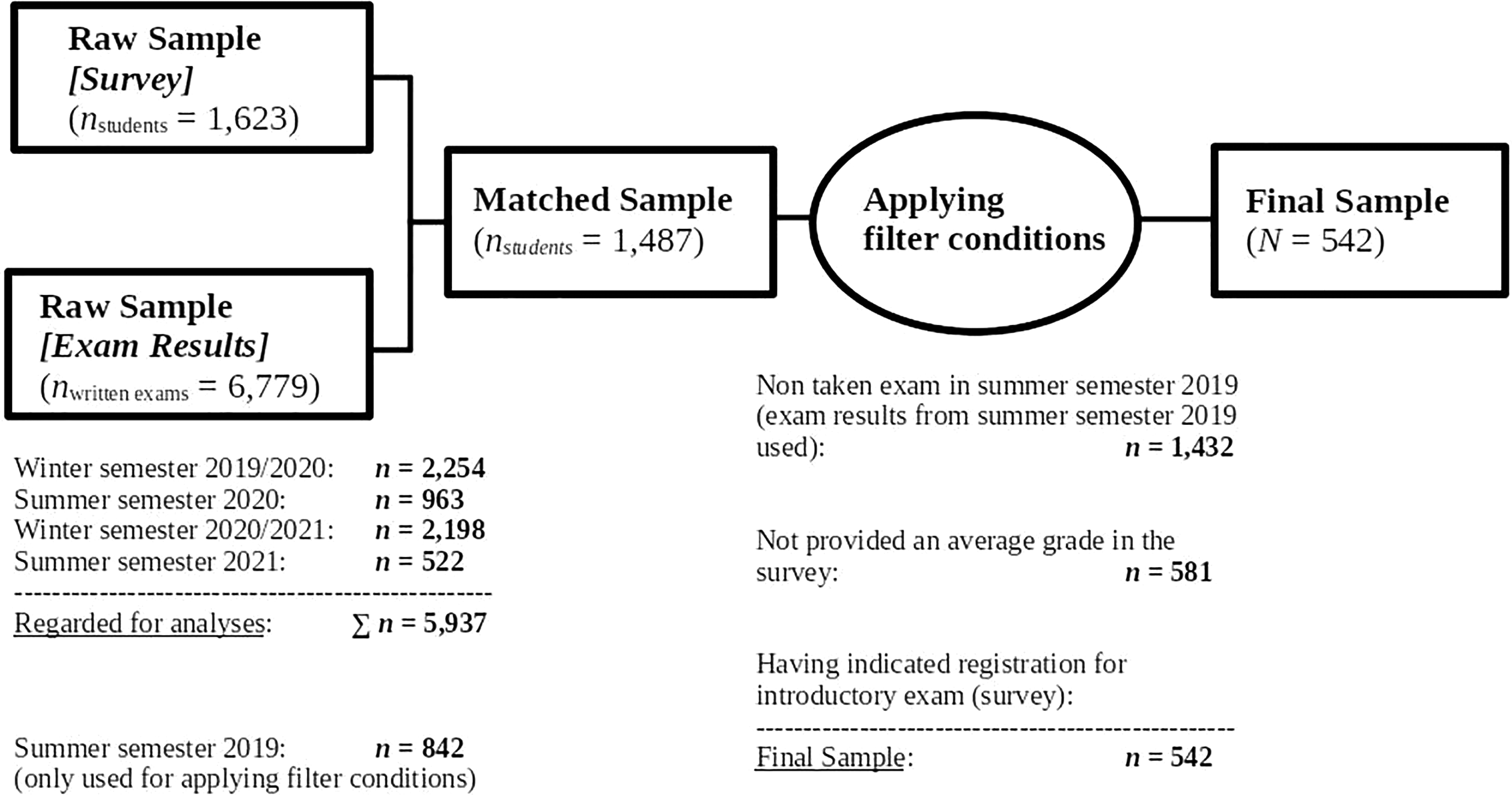
Flowchart: combining the two data sources into final samples.
Only students who a) completed the evaluation survey (including self-reporting on test anxiety) in the winter semester 2019/2020, b) were registered for the first exam in the Introduction to Psychology module in March 2020 and c) had not taken and failed the exam in an earlier semester were considered.
A total of 88 (16.24%) students obtained a score of zero (0 out of 100) in all exams that were taken within the entire observation period (N = 454; used for H3 only). The students had a mean age of 35.76 years (SD = 10.76), n = 85 (15.68%) indicated a migration background and reported M = 25.16 job hours per week (SD = 12.12).
Measures
Mean scores were computed for all scales comprising more than one item (see overview in Table 1). Confirmatory analyses revealed the expected dimensional structure for all scales (see supplementary material SM2 for confirmatory analyses and example items).
Means and Standard Deviations.
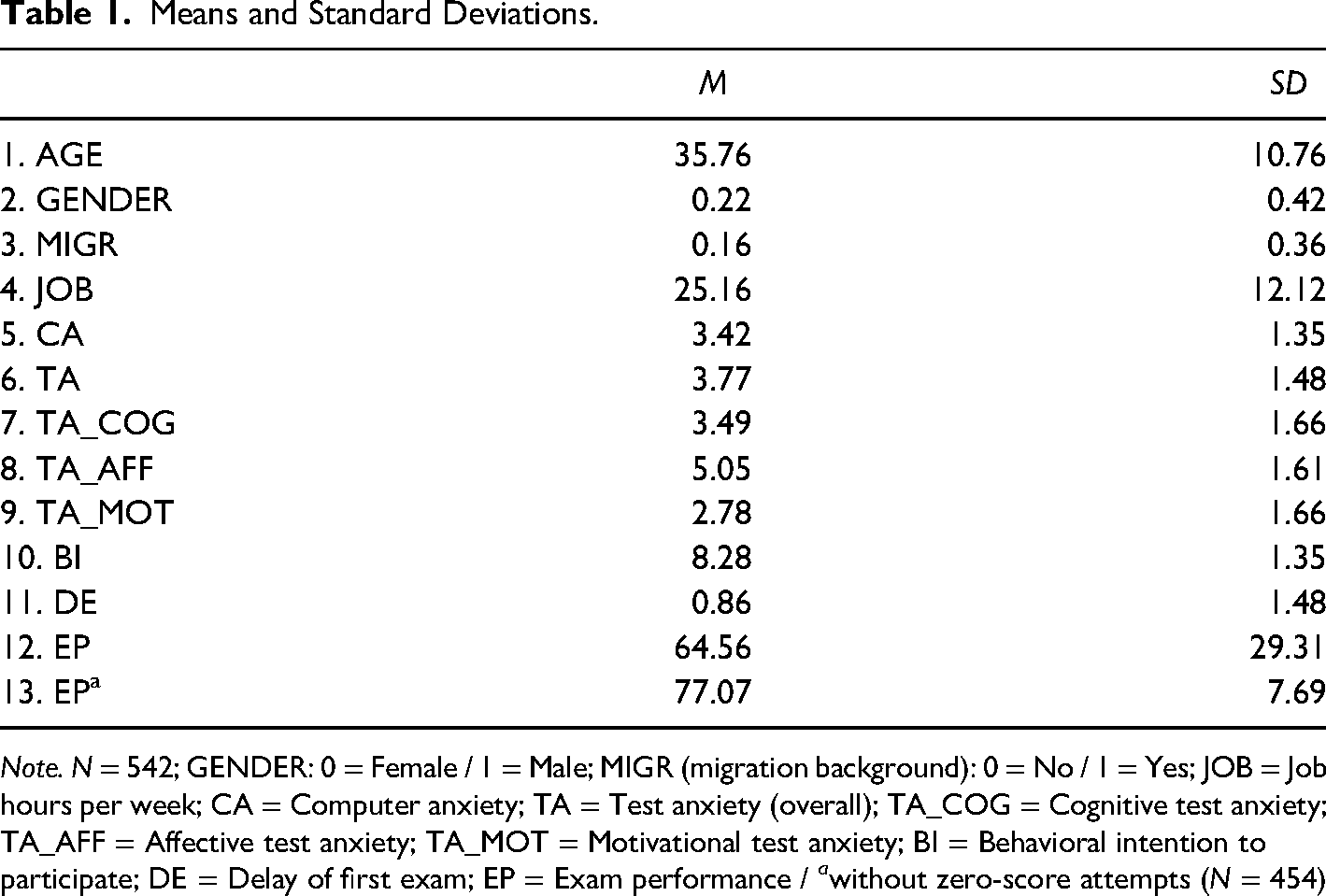
Note. N = 542; GENDER: 0 = Female / 1 = Male; MIGR (migration background): 0 = No / 1 = Yes; JOB = Job hours per week; CA = Computer anxiety; TA = Test anxiety (overall); TA_COG = Cognitive test anxiety; TA_AFF = Affective test anxiety; TA_MOT = Motivational test anxiety; BI = Behavioral intention to participate; DE = Delay of first exam; EP = Exam performance / a without zero-score attempts (N = 454)
Test Anxiety
Test anxiety was assessed with an adapted German version of the Achievement Emotions Questionnaire (AEQ; Pekrun et al., 2002). This uses nine items covering cognitive (α = .89), affective (α = .85), and motivational test anxiety (α = .88) with three items for each anxiety component (overall test anxiety; 9 items; α = .88) and a seven-level Likert scale ranging from 1 = not true at all to 7 = completely true.
Computer Anxiety
To measure computer anxiety, a revised German version of the COMA instrument was used as part of the INCOBI-R inventory (Richter et al., 2010). Four items, using 1 = not true at all to 7 = completely true, built a unidimensional scale (α = .82).
Intention to Participate
A single item in the entry survey was used to measure the behavioral intention to take the exam: “How confident are you that you will take this module exam?.” A Likert scale ranging from 1 = “I will most likely not take the exam” to 9 = “I will most likely take the exam” was implemented.
Postponement of the First Exam
We calculated the delay in taking the module exam for the first time as we interpreted both real non-participation (no data entry for the corresponding time point) and zero-scored attempts as non-attendance (see SM1). In total, the delay of the first exam participation ranged from 0 (winter semester 2019/2020, n = 364 students: 67.16%); 1 (summer semester 2020, n = 70 students: 12.92%); 2 (winter semester 2020/2021, n = 15 students: 2.77%); 3 (summer semester 2021, n = 5 students: 0.92%); to 4 (no valid trial within the observational span, n = 88 students: 16.24%).
Exam Performance
Up to 100 points could be achieved in the exam. However, we excluded zero-score attempts (exam score = 0) from the analyses regarding hypothesis H3 because we categorized these as exam simulations (see SM1 for details). The sample size after exclusion was N = 454.
Demographics
Age (classified), gender (coded with 0 = female, 1 = male), migration background operationalized as speakers of another or a second native language other than German (0 = no, 1 = yes), and working hours per week were included as sociodemographic variables.
Data Analyses
We built several hierarchical regression models to test our hypotheses and included gender, migration background, job hours per week, age, and computer anxiety as control variables in the baseline (covariate) model. Regarding the main hypotheses, this covariate model was extended in a second step by testing anxiety as composite.
In our exploratory analyses for E1, we extended our hierarchical regression models. First, we replaced the overall test anxiety with its three components as the second step. Then, for E2, we proceeded with a third step, introducing interaction terms involving test anxiety and sociodemographic factors. For E3, as the third step, we incorporated behavioral intention to participate, followed by introducing interaction terms involving both test anxiety and intention to participate in the fourth step.
All metric variables were mean-centered when using interaction terms. See supplementary material SM1 for handling missing data and violations of model assumptions. As gender, migration background, job hours per week, and age have been identified as important predictors of dropout (Stoessel et al., 2015), these variables were controlled in all analyses.
Additionally, since in this study exams were mostly taken as digital assessments, analyses were controlled for computer anxiety, which has been shown to have a dysfunctional effect on procrastination tendencies (Rahardjo et al., 2013).
Results
Means and standard deviations of all variables are shown in Table 1 (for bivariate correlations, see ST1).
Hypothesis 1: Association of Test Anxiety and Intention to Participate in the Exam
There was a significant negative relationship between overall test anxiety and behavioral intention to participate, b = −0.15, SE = 0.04, p < .001 (support for H1; see Table 2). Different components of test anxiety showed that both the cognitive component (b = −0.12, SE = 0.05, p = .023) and the motivational component (b = −0.14, SE = 0.06, p = .025) were negatively associated with behavioral intention (H1-E1, see supplementary table ST2). Furthermore, there was a significant interaction between overall test anxiety and age, b = −0.01, SE = 0.004, p < .001 (conditional slopes: b− 1 SD = −0.01, SE = 0.05, p = .487, bMean = −0.16, SE = 0.05, p = .001, b+1 SD = −0.31, SE = 0.09, p < .001; H1-E2; for simple slopes, see supplementary material SF1). However, no significant interactions with test anxiety components were found (all ps > .11).
Regression Results: Behavioral Intention to Participate as the Criterion (H1)
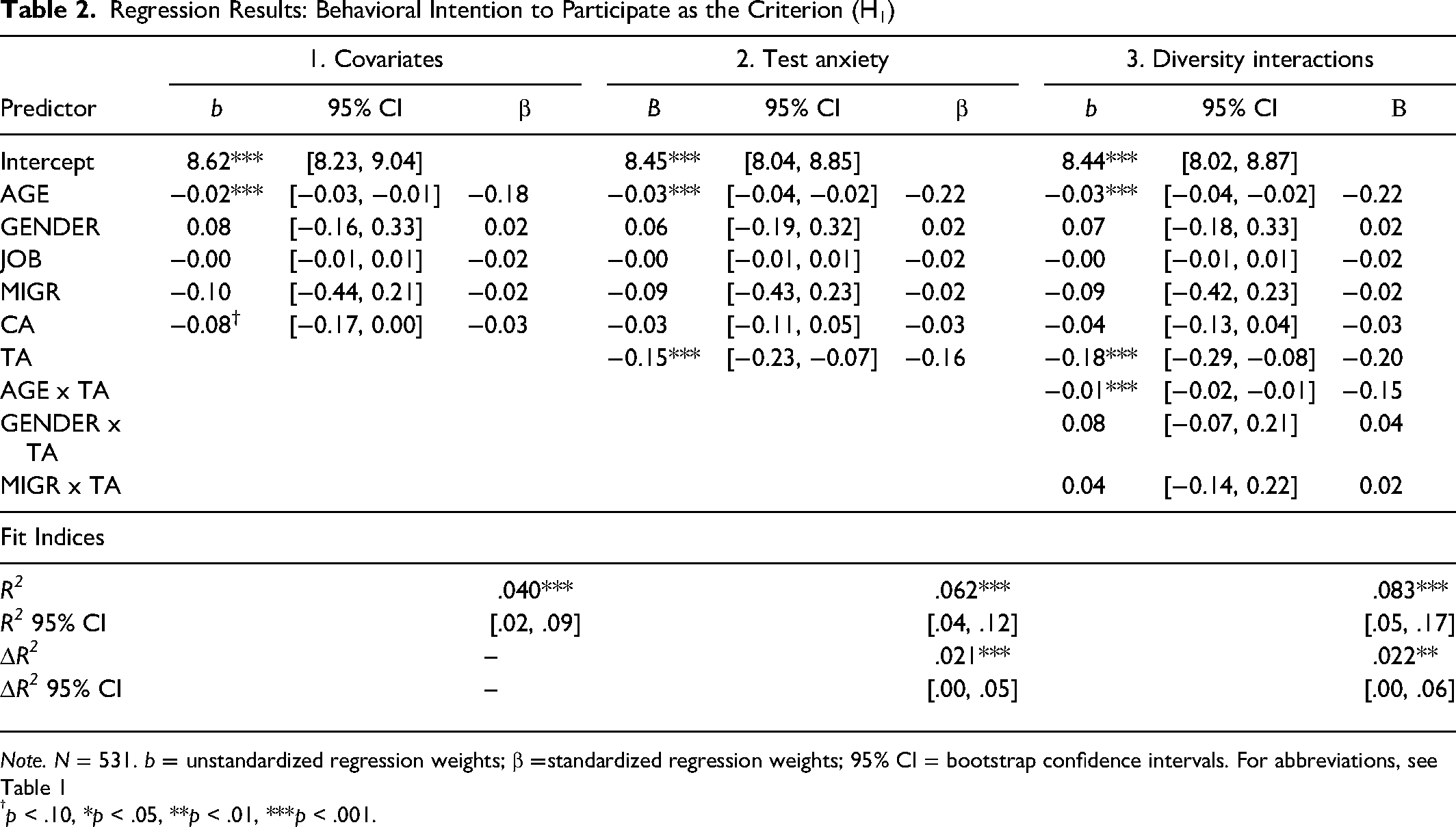
Note. N = 531. b = unstandardized regression weights; β =standardized regression weights; 95% CI = bootstrap confidence intervals. For abbreviations, see Table 1
p < .10, *p < .05, **p < .01, ***p < .001.
Hypothesis 2: Association of Test Anxiety and Exam Postponement
No association between (overall) test anxiety and exam postponement was found, b = 0.03, SE = 0.05, p = .465 (no support for H2; see Table 3). Different components of test anxiety revealed a positive but non-significant trend for the motivational component, b = 0.12, SE = 0.07, p = .076 (H2-E1, see supplementary table ST3). However, there were significant interactions for gender, b = 0.24, SE = 0.10, p = .021 (conditional slopes: bmale = 0.17, SE = 0.11, p = .116, bfemale = −0.08, SE = 0.06, p = .214) and migration background, b = 0.33, SE = 0.11, p = .002 (conditional slopes: byes = 0.25, SE = 0.09, p = .007, bno = −0.08, SE = 0.06, p = .214; see Figures 2 and 3, for simple slopes). Investigating the test anxiety components, interaction terms yielded significant interactions for the affective component for gender, b = 0.41, SE = 0.20, p = .047, and for the cognitive component for migration background, b = 0.32, SE = 0.14, p = .025 (H2-E2). Furthermore, a negative association between behavioral intention to participate and exam postponement was found, b = −0.20, SE = 0.05, p < .001 (H2-E3), but there were no interactions with overall test anxiety or its components (all ps > .22).
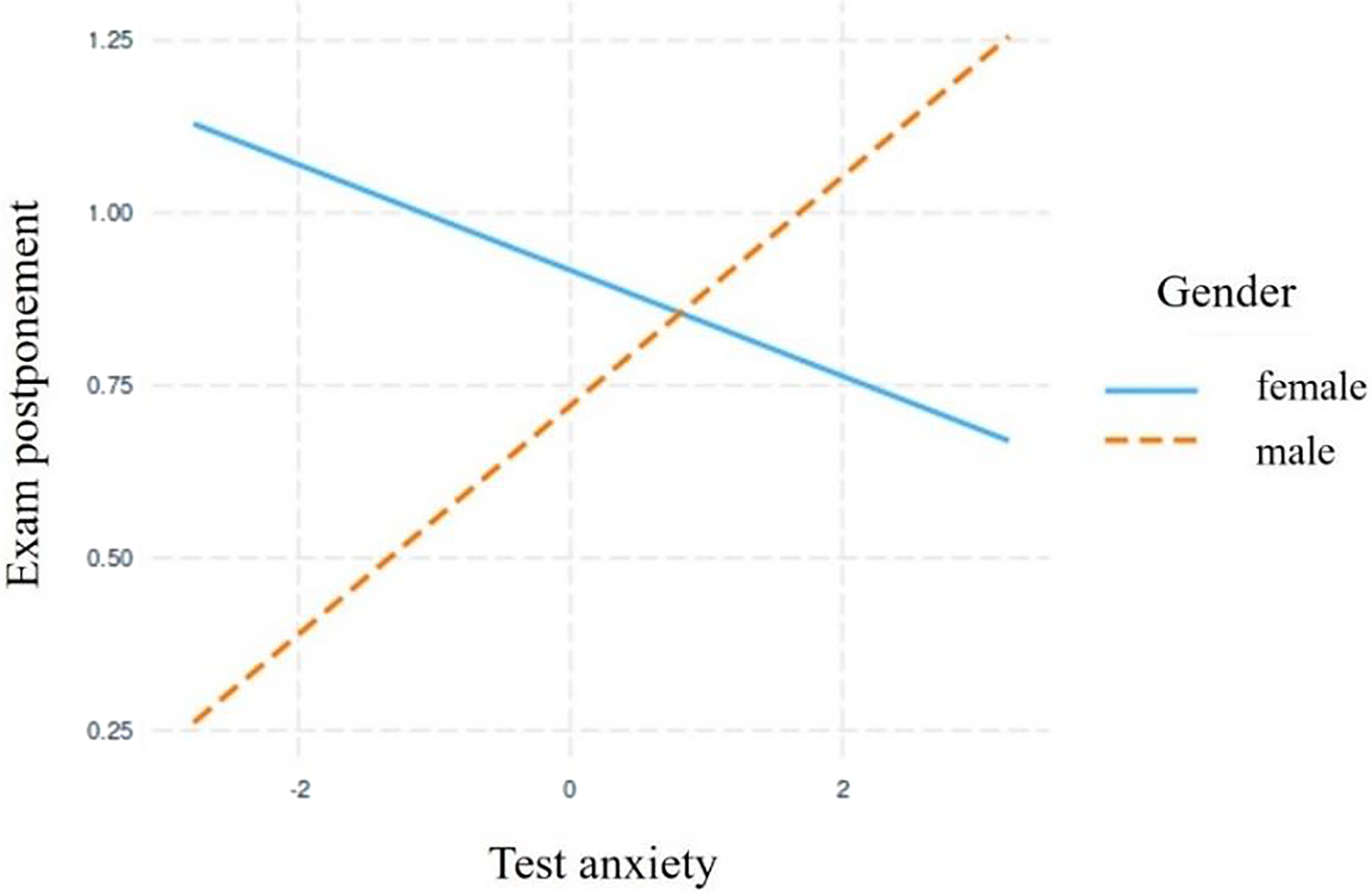
Simple slopes for H2-E2 (gender).
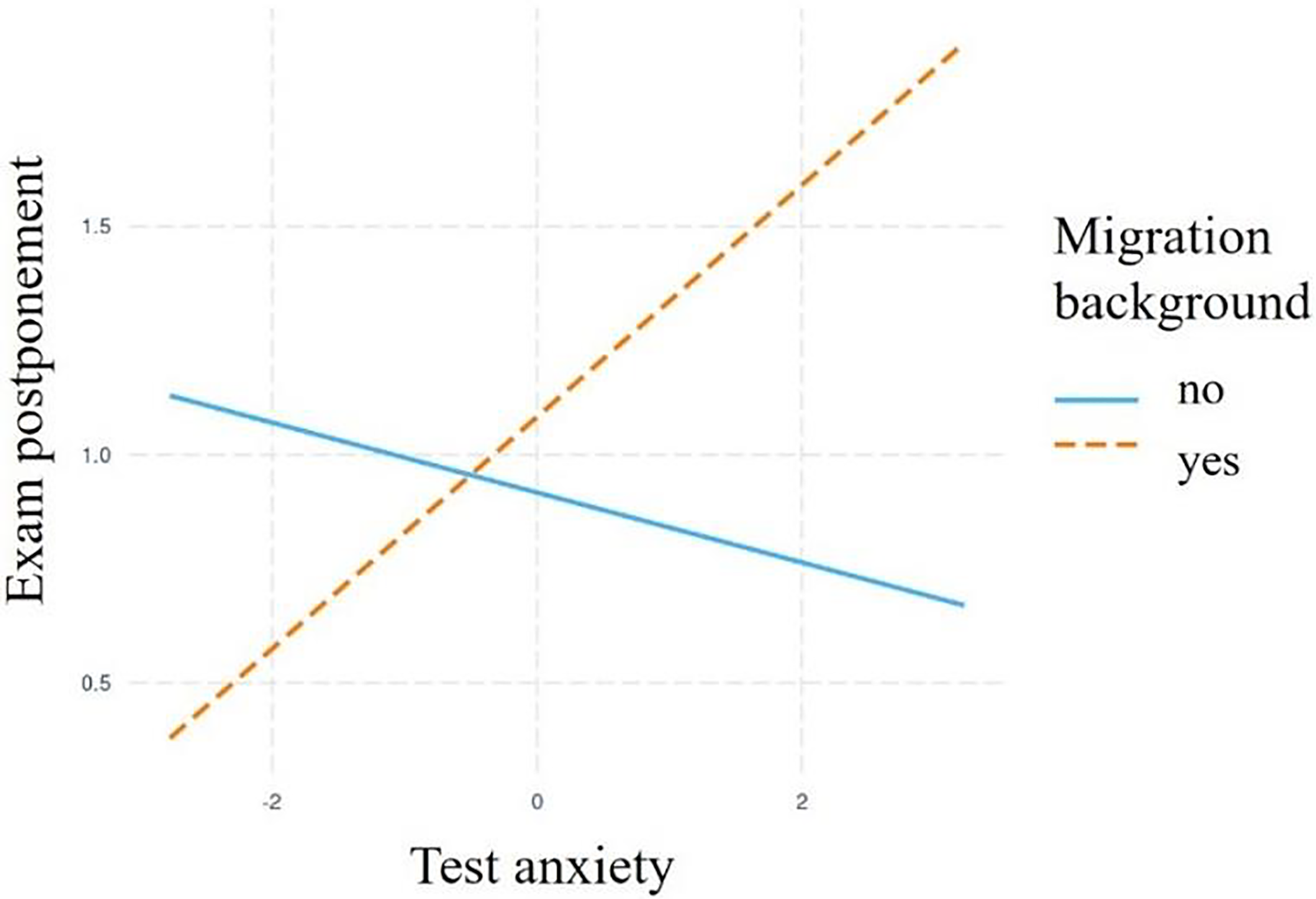
Simple slopes for H2-E2 (migration background).
Regression Results: Delay of First Exam as the Criterion (H2).
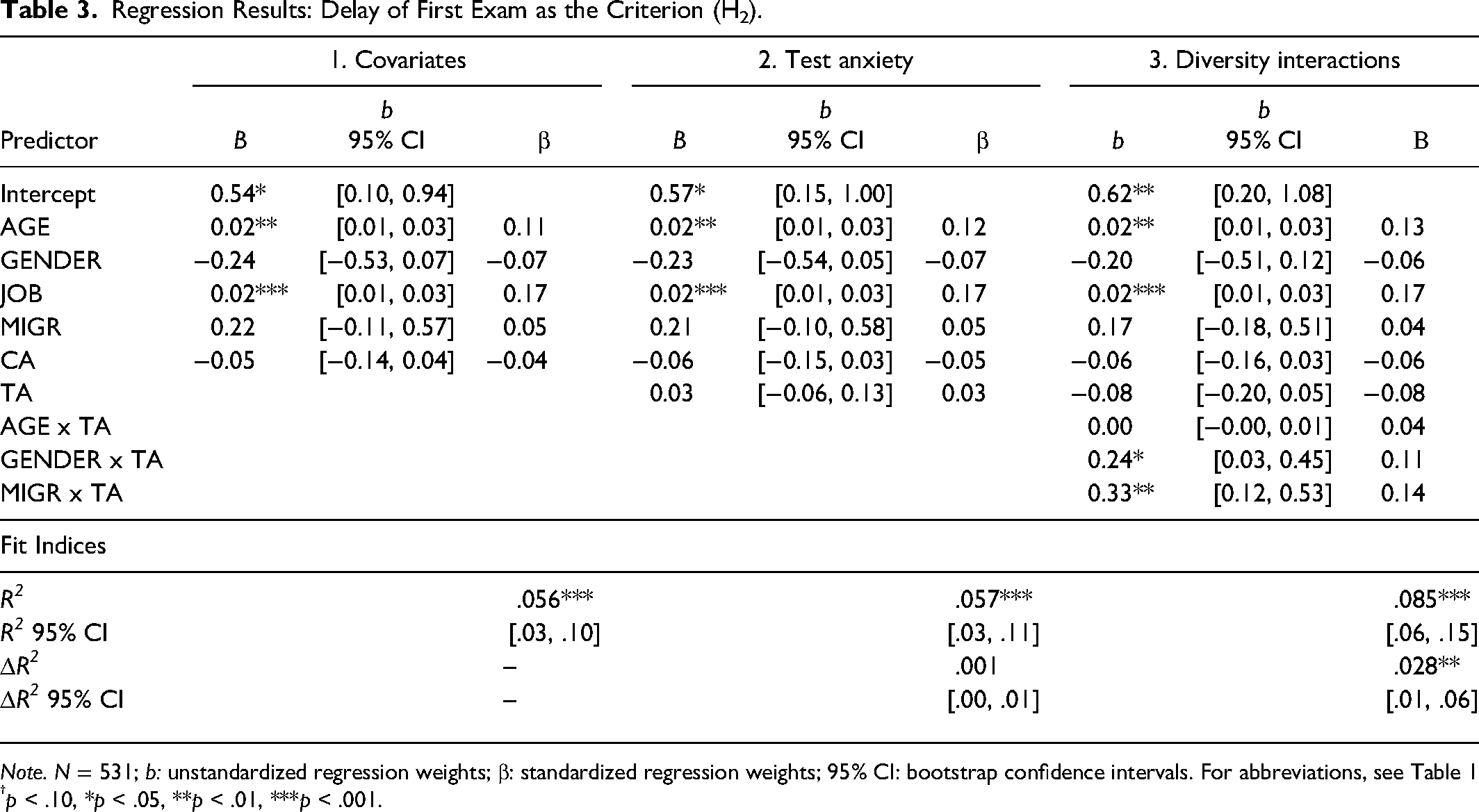
Note. N = 531; b: unstandardized regression weights; β: standardized regression weights; 95% CI: bootstrap confidence intervals. For abbreviations, see Table 1
p < .10, *p < .05, **p < .01, ***p < .001.
Hypothesis 3: Association of Test Anxiety and Exam Performance
Test anxiety showed a negative, but non-significant trend for the association with exam performance, b = −0.48, SE = 0.27, p = .082 (tentative support for H3, see Table 4). Regarding different components of test anxiety (H3-E1, see supplementary table ST4), we observed a significant negative relationship for the motivational component (b = −1.10, SE = 0.38, p = .005), but a positive, non-significant trend was observed for the affective component (b = 0.77, SE = 0.46, p = .095). Concerning H3-E2, there was no substantial incremental model growth in the composite model (p = .307). Only the interaction term with the cognitive component of test anxiety and gender yielded significant results: b = −1.69, SE = 0.80, p = .034 (conditional slopes: bmale = −1.44, SE = 0.77, p = .062, bfemale = 0.26, SE = 0.77, p = .565), while another interaction term with the affective component and age yielded a weak trend: b = 0.08, SE = 0.04, p = .082 (conditional slopes: b− 1 SD = −0.15, SE = 0.64, p = .813 bMean = 0.69, SE = 0.54, p = .197, b+1 SD = 1.54, SE = 0.86, p = .074). Behavioral intention to participate was positively associated with exam performance, b = 0.61, SE = 0.30, p = .04, but only a trend regarding the interaction term with test anxiety was found, b = 0.43, SE = 0.22, p = .056. However, the motivational component yielded a significant result, b = 0.53, SE = 0.24, p = .025, with following conditional slopes: b−1 SD = −1.61, SE = 0.46, p < .001, bMean = −0.94, SE = 0.38, p = .013, b+1 SD = −0.28, SE = 0.48, p = .564 (H3-E3, see SF2 for simple slopes).
Regression Results: Exam Performance as the Criterion (H3).
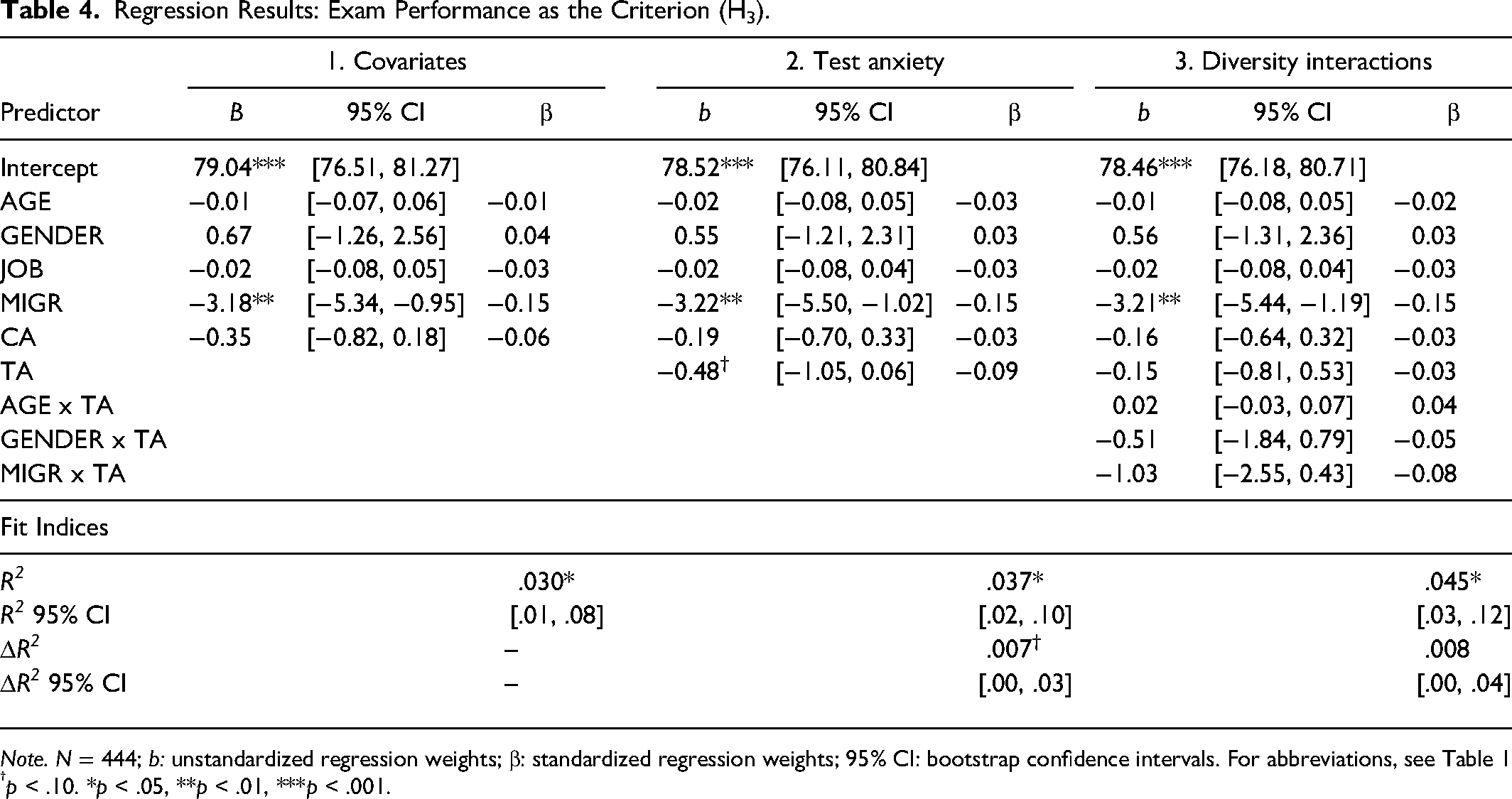
Note. N = 444; b: unstandardized regression weights; β: standardized regression weights; 95% CI: bootstrap confidence intervals. For abbreviations, see Table 1
p < .10. *p < .05, **p < .01, ***p < .001.
Discussion
Early warning systems point to specific behavioral patterns as early indicators of dropout. These include delaying exams, abstaining from exam participation, and performing poorly in exams in the first year of study (Berens et al., 2019). The present study aimed to uncover the association of test anxiety with students’ intentions to participate in their first study exam, their subsequent tendencies to postpone it, and their ultimate exam performance.
Test Anxiety, Intention to Participate in an Exam and Exam Postponement
Our research findings provide support for the assumption that test anxiety is associated with a reduced intention to participate in the first exam (H1). This aligns with prior research indicating that individuals with high levels of test anxiety exhibit more pronounced performance avoidance behaviors than those with lower levels of test anxiety (Neuderth et al., 2009). Notably, our study found that the connection between test anxiety and the intention to participate in the first exam is mainly influenced by the motivational and cognitive aspects of test anxiety (H1-E1). This aligns with prior research indicating a robust correlation between doubts, worries, and indecisiveness (Germeijs & Verschueren, 2011). Furthermore, students experiencing high motivational anxiety may doubt their abilities and feel overwhelmed by the prospect of failing, leading them to avoid the exam entirely. Our results further suggest that the negative relationship of test anxiety on a student's intention to participate in the initial exam intensifies with age (H1-E2). This aligns with the idea that test anxiety often originates in childhood or early adolescence, and without intervention, can intensify over time (Putwain & Daly, 2014). External pressure, such as social, family, or financial factors, might worsen anxiety, creating a cycle of anxiety (Symes & Putwain, 2020). The positive correlation we found between age and weekly job hours further supports this assumption. However, we cannot rule out a reverse causal direction with our correlational data.
Contrary to our expectation, our study did not reveal a significant association between test anxiety and exam postponement (no support for H2). It is important to note, however, that other researchers have also observed that procrastination behavior might lead to test anxiety, but test anxiety did not predict procrastination behavior. For instance, Wang (2021) conducted a cross-lagged panel analysis with students of a psychological health course at a high school and showed that while academic procrastination led to an increase in test anxiety, test anxiety did not predict future levels of academic procrastination. Additionally, the cross-lagged panel analysis by Lindner et al. (2023) found that study procrastination was rather a predictor, not an outcome of dissatisfaction which led to an increased dropout intention. In our study, again, we did not test a causal relationship. Another explanation, which does not contradict the previous assumption, is that variations in the measures of test anxiety and the types of procrastination can lead to different findings. In a more detailed analysis of test anxiety components, we indeed found a positive but statistically insignificant link between the motivational aspect of test anxiety and exam postponement (H2-E1). Another potential explanation for conflicting results could be the variations across different student groups. In fact, and in support of this interpretation, we found that the relationship between distinct components of test anxiety and exam postponement is moderated by the sociodemographic characteristics gender and migration background (H2-E2). With regard to gender, our findings tentatively suggest that male students with higher affective test anxiety may be more likely to delay their exams than female students with high affective test anxiety. As the critical simple slope among male students was not statistically significant, however, this (nonsignificant) trend should be interpreted with appropriate caution. If reliably replicated in future research, a stronger association between affective test anxiety and procrastination in men (than in women) would fit well with the findings of other analyses in the same study context. Long-term evaluations by the university's Research and Quality Monitoring Office, based on data from over 40,000 psychology students in the psychology bachelor degree program at FernUniversität in Hagen show, for example, that male students are around 13% less likely to successfully complete their psychology studies than female students overall (reported in Raimann et al., 2024). Raimann et al. also show that male students drop out of the introductory module disproportionately more often than female students. In addition, male students benefit more in terms of their academic performance from a positive diversity climate in virtual group collaborations than female students. We therefore regard the interactive effects between affective test anxiety and gender observed in this study as an interesting starting point for future studies on gender differences in the relationship between affective test anxiety and procrastination.
We also observed an interesting interaction between the cognitive component of test anxiety and students’ migration background, indicating that students with a migration background and higher cognitive test anxiety are more likely to delay their exams. As earlier research by Stoessel et al. (2015) identified male migrant students as being at a higher risk of dropping out, we investigated the dependence of gender and migration background in detail. However, no dependence was found in our sample (χ2(1) = 0.435, φ = .03, p = .509). It therefore appears that a high level of cognitive test anxiety leads to procrastination in men and women with a migration background in the same way. One possible explanation for this could be that the effects of cognitive test anxiety are linked to migrant students’ self-assessments of their second language proficiency. This explanation should be investigated in more detail in subsequent research.
All in all, our results suggest that postponing exams as a form of academic procrastination has a different dynamic and different determinants than other forms of academic procrastination, for example, doing homework or assignments. Although we observed associations between test anxiety and exam postponement, the intention to participate in an exam appears to be an even stronger predictor. Students with a strong intention to sit an exam seem to be less likely to postpone it, even when experiencing high test anxiety (H2-E3). This finding aligns with the theories of reasoned action and of planned behavior (Ajzen, 1991; Fishbein, 1979), in which the intention to engage in a specific action is considered the most robust predictor of one's behavior.
Test Anxiety and Exam Performance
While there is substantial evidence supporting the negative association of test anxiety with exam performance, evidence concerning which specific components of test anxiety exert the most influence remains limited (von der Embse et al., 2018). For overall test anxiety, we found only tentative evidence to support the hypothesis that higher test anxiety is linked to lower exam performance (tentative support for H3). For the motivational component of test anxiety, however, we discovered a negative association with test performance (H3-E1). Past research has indicated that the cognitive aspect of test anxiety is most closely linked to academic outcomes (Cassady & Johnson, 2002; Roos, Goetz, Krannich et al., 2021). Roos, Goetz, Krannich et al. (2021) propose that excessive rumination during a test, involving thoughts of potential failure consequences or questioning one's abilities, can deplete cognitive resources and lead to less effective coping strategies, ultimately hampering test performance. Notably, both cognitive and motivational components include test-irrelevant thoughts. Given that prior research primarily examined data collected close to or during actual exams and our measurements of test anxiety occurred at the beginning of the semester, the timing of the assessment could influence which component is more strongly associated with exam performance. At the start of the semester, thoughts of avoiding the impending exam (the motivational component) might negatively impact study habits and overall performance. However, as the exam approaches or during the exam itself, thoughts related to performing poorly or inadequate preparation (cognitive component) may have a greater impact on test performance. For the affective component of test anxiety, which is characterized by emotions like nervousness or restlessness, we found a weak positive but non-significant correlation with test performance. Previous research presented mixed results. Some authors suggested a direct positive impact on performance, while others argue that it impairs concentration and effective test management (for further details see Roos, Goetz, Voracek et al., 2021). It is presumed that moderate levels of affective anxiety can positively impact performance, while excessive levels of affective anxiety can hinder performance as they may lead to heightened worry and rumination (cognitive test anxiety). We tested possible non-linear relationships between (affective) test anxiety and performance using quadratic terms, but none of these terms were significant.
The contrasting effects of the different components of test anxiety discussed above could explain the relatively modest influence of the overall construct of test anxiety in our study. Similarly, other authors in the field have highlighted the limited research on the effects of distinct anxiety components on performance and have criticized the use of composite/overall scores or single-item measures, which could skew the overall findings in the field (Roos, Goetz, Krannich et al., 2021; Roos, Goetz, Voracek et al., 2021).
Exploratory analyses indicated gender-related mean differences in all test anxiety components, with female students exhibiting higher anxiety levels than male students (see ST1). However, our study found that gender-related factors did not significantly alter the association between test anxiety and exam performance (H3-E2). Previous studies have suggested that test anxiety tends to have a more adverse impact on female test takers (Szafranski et al., 2012). Nevertheless, the influence of gender-related factors on the connection between test anxiety and exam performance may vary depending on the educational context, conditions, domain, and testing methods, leading to divergent effects in different research studies.
Interestingly, we observed that students who possess a strong intention to take the exam generally achieve better results, even in the presence of elevated (mainly motivational) test anxiety (H3-E3). These results align with our assumption that students who have a high intention to participate in their first exam are less likely to delay it, even when they experience high levels of anxiety (as discussed in the previous section).
Limitations and Directions for Future Research
This study is limited in that it is a correlational investigation, in which causal inferences are not feasible. Additionally, we assessed test anxiety, computer anxiety, and behavioral intention only once at the semester's start, subsequently relying on self-reporting measures.
Future studies could consider incorporating additional components of test anxiety, such as the physiological aspect, and collecting data at multiple time points. Furthermore, predictors specific to exam procrastination beyond test anxiety should be examined. Understanding these dynamics can aid in dropout prevention, particularly for first-semester students. The next step in future research should involve designing support systems or integrating the newly acquired knowledge in already existing interventions to create equitable testing environments and assist students in realizing their full potential. This may require personalized approaches (Malespina & Singh, 2022). Furthermore, since students often hesitate to seek help on their own, proactive identification and assistance for students at risk may be necessary (Ugwuanyi et al., 2021).
Summary and Conclusion
This study centered on examining the connections between test anxiety and indicators of exam postponement on the one hand, and test anxiety and exam performance on the other hand, specifically among first-year university students. We found that high levels of motivational test anxiety were linked to reduced intention to participate in the first exam, with age potentially intensifying this effect. Exam postponement did not exhibit a significant correlation with test anxiety, although sociodemographic factors seem to be influential in this regard. Concerning performance, we observed a strong association between high levels of test anxiety, particularly the motivational component, and poor exam performance. Interestingly, a strong intention to take an exam appeared to counteract the negative effects of heightened test anxiety on both exam performance and exam postponement.
The COVID-19 pandemic has introduced new stressors and uncertainties, further complicating students’ educational experiences. Additionally, the lasting effects of the pandemic have continued to influence student well-being and academic performance (Jehi et al., 2024). This underscores the urgent need for effective interventions and support systems to improve students’ mental health and academic success in the post-pandemic era. Our study offers valuable insights into the intricate relationship between different components of test anxiety and early indicators of dropout. Thus, our study reveals potential factors that could be considered in interventions aimed at reducing dropout rates and study delay.
Supplemental Material
sj-pdf-1-csr-10.1177_15210251241266547 - Supplemental material for Early Indicators of Study Delay and Dropout: Test Anxiety and its Link to Exam Participation and Performance
Supplemental material, sj-pdf-1-csr-10.1177_15210251241266547 for Early Indicators of Study Delay and Dropout: Test Anxiety and its Link to Exam Participation and Performance by Sina Lenski, Nikolai Zinke, Martin Merkt, Natalia Reich-Stiebert, Stefan Stürmer, and Hannes Schröter in Journal of College Student Retention: Research, Theory & Practice
Footnotes
Author Contributions
All authors have contributed to this work in all aspects including study conception and design, data analysis, manuscript writing, and final approval of the version to be published. The authorship of this paper is equally shared between Sina Lenski and Nikolai Zinke. Both have contributed significantly to the research and writing process, collaborating closely from the conceptualization to the final drafting of the manuscript.
Declaration of Conflicting Interests
The authors declared no potential conflicts of interest with respect to the research, authorship, and/or publication of this article.
Funding
The authors disclosed receipt of the following financial support for the research, authorship, and/or publication of this article: This present study is part of the project Innovation Cluster E-Assessments (NOVA:ea) funded by the Stiftung Innovation in der Hochschullehre (Foundation for Innovation in Higher Education; FBM2020-VA-294-3-97008).

Supplemental Material
Supplemental material for this article is available online.