




Abstract
Introduction:
Automated insulin delivery (AID) systems represent a major advancement in the management of type 1 diabetes (T1D). While their metabolic efficacy is well established, limited data are available on the impact of catheter type and/or wear duration on glycemic outcomes. This study aimed to evaluate these parameters in real-life conditions.
Methods:
We conducted a single-center, retrospective, observational study including 321 adults with T1D using an AID system. Analyses focusing on infusion set characteristics were restricted to the 279 patients using tubed pumps. Clinical and glycemic data were extracted from medical records and device software (pumps and sensors). The main parameters assessed were catheter type (perpendicular or angled), cannula length, wear duration, and continuous glucose monitoring (CGM) derived glycemic outcomes.
Results:
The cohort included 321 patients (51% female), with a mean age of 48 ± 15.1 years, diabetes duration of 25 ± 13.3 years, and a mean body mass index (BMI) of 27 ± 4.9 kg/m2. The mean time in range was 70% ± 16.2, time below range 2% ± 2.5, and coefficient of variation 34% ± 7.1. Comparisons between perpendicular (88.9%) and angled catheters (11.1%), as well as between different cannula lengths, showed no significant differences in glycemic outcomes. The mean wear duration was 4.6 ± 2.0 days, longer than recommended, but not associated with poorer glycemic control. Conversely, wear duration was inversely correlated with body weight, BMI, and total daily insulin dose, particularly for perpendicular catheters.
Conclusion:
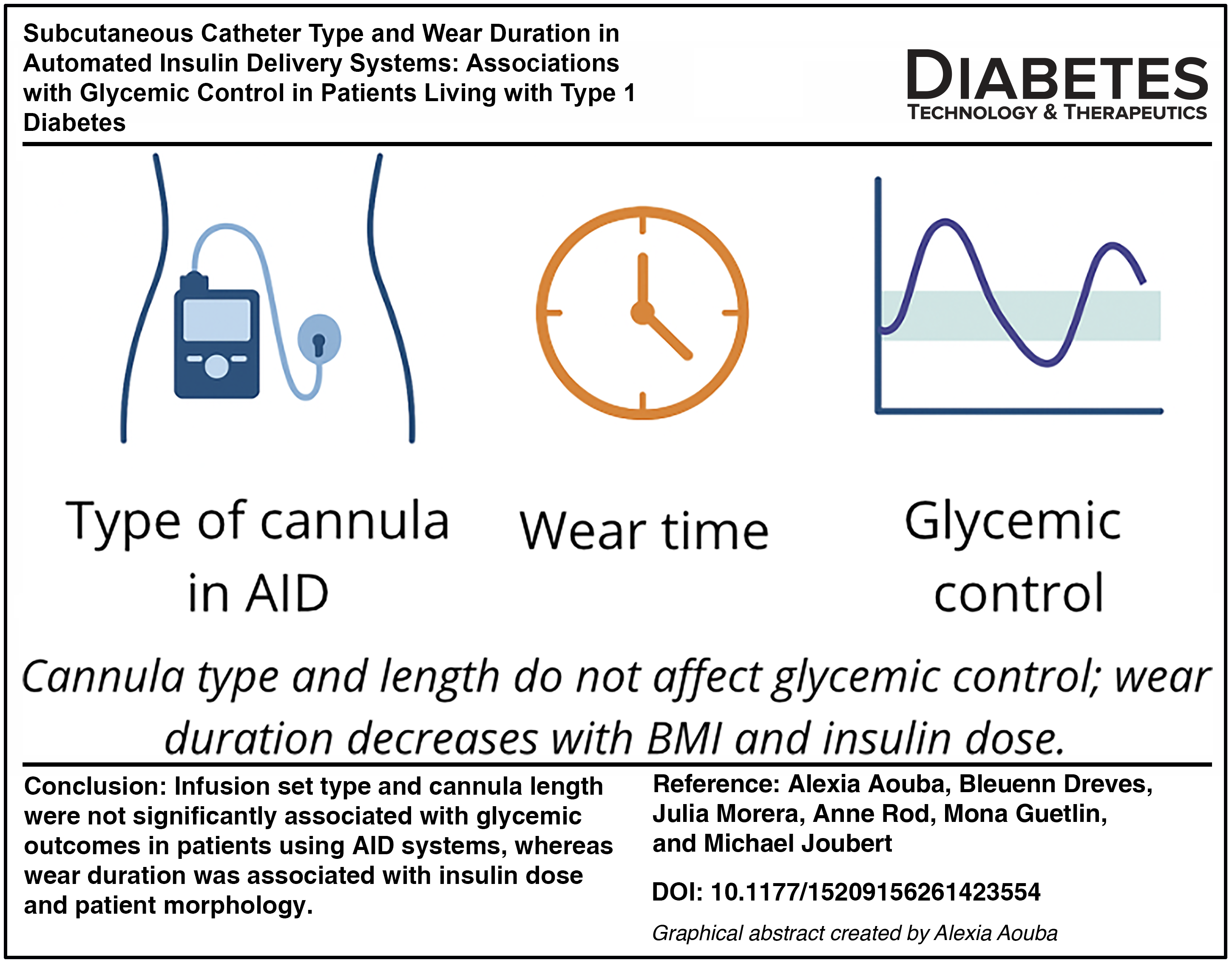
Infusion set type, cannula length, and wear duration were not significantly associated with glycemic outcomes among patients using tubed pumps in real-life AID use. Wear duration was associated with anthropometric parameters and insulin requirements.
Get full access to this article
View all access options for this article.
References
Supplementary Material
Please find the following supplemental material available below.
For Open Access articles published under a Creative Commons License, all supplemental material carries the same license as the article it is associated with.
For non-Open Access articles published, all supplemental material carries a non-exclusive license, and permission requests for re-use of supplemental material or any part of supplemental material shall be sent directly to the copyright owner as specified in the copyright notice associated with the article.
