




Abstract
Political engagement is vital to the functioning of democratic systems, yet a significant portion of the population remains disengaged from conventional political activities as voting. These individuals often lack the opportunities and motivation to cultivate their reasoning abilities for understanding politics. This study explores the potential of deliberative minipublics to foster the development of reasoning skills among those excluded from the political discourse. By focusing on individuals with low levels of political engagement, the study investigates three minipublics on the topic of climate change in Switzerland. Utilizing the Deliberative Reason Index, the analysis uncovers how dialogue-driven engagement can enhance political understanding and involvement. The results demonstrate the potential of deliberative practices to bridge the gap between the politically disengaged and the complex world of political participation, offering fresh insights into citizens’ capabilities to deliberate on intricate issues.
Introduction
Political participation, notably voting, is a process that transcends the simple idea of civic engagement. High-quality political engagement entails the understanding of political dynamics, thinking critically, and often, participating in politically active groups (e.g. Brady et al., 1999; Van Camp and Baugh, 2016). Voting is a complex act that calls for voters to sift through political information, form judgments about political issues, and create their own political beliefs (Luskin, 1990). It is therefore often assumed that those with stronger cognitive abilities and reasoning capabilities might be better equipped to comprehend politics and thus, more likely to participate in voting and other political activities (Dawes et al., 2014).
One interesting part of this is how people’s thinking skills connect to their political involvement. People who are good at thinking and understanding complex issues might be better at understanding politics (Dawes et al., 2014). So, they might be more likely to get involved in political activities like looking for political information, thinking about political issues, and forming their own political beliefs (Carreras, 2016). They also might know more about civic issues (Galston, 2001), which could help them understand and process political information (Grönlund and Milner, 2006).
However, this relationship between reasoning skills and political involvement can be tricky. While individuals with lower cognitive abilities tend to be not engage as actively in politics, our existing representative democratic systems do not necessarily foster cognitive abilities, as they do not necessitate dialogic understanding of diverse perspectives (Downs, 1959; Druckman et al., 2013). As highlighted by Mercier and Sperber (2011) and empirically observed by Niemeyer et al. (2024), reasoning abilities can indeed be nurtured through dialogue. Deliberative practices such as minipublics can potentially serve as reasoning enabler (Niemeyer et al., 2024). When people participate in deliberative practices—like minipublics—they might activate their ability to think effectively (Niemeyer et al., 2024).
This article examines whether active participation in deliberative minipublics can contribute to the development of people’s reasoning abilities, particularly focusing on those who tend not to engage in conventional politics, or that the individuals that usually lack exposure to or engagement with diverse political discourses and information.
To achieve this aim, the study examines three minipublics on the topic of climate change in three cities of Canton Zurich in Switzerland. The study employs the Deliberative Reason Index (Niemeyer and Veri, 2022) to assess the extent to which dialogue-based thinking can benefit individuals who are self-excluded from conventional political engagement. Findings underscore that deliberation not only enables the reasoning skills of participants with low levels of political engagement but also raises their competences to levels comparable with those more actively self-exposed to political discourses.
Cognitive Abilities and Political Engagement: Understanding the Interplay
Scholarly literature has extensively examined the relationship between cognitive abilities and voter turnout from various analytical standpoints. Cognitive disparities have been convincingly linked to political engagement. People with greater cognitive abilities demonstrate more interest in politics and are more likely to participate in voting (Denny and Doyle, 2008). However, on the other side of the spectrum, lower cognitive abilities are associated with diminished political knowledge, reduced critical thinking skills, and a lesser ability to entertain alternative viewpoints (Galston, 2001; Van Camp and Baugh, 2016).
Numerous studies have identified a significant correlation between cognitive abilities and political engagement, with educational attainment often serving as a complex mediator for these abilities (Dawes, 2009). This correlation underscores the multifaceted role of education in enhancing political participation by fostering social integration and connections within influential social and political networks (Le and Nguyen, 2021; Nie et al., 1996). The relationship between education and voter turnout is not straightforward, yet it suggests that higher levels of education contribute to increased political involvement, voter turnout, civic engagement, political awareness, and democratic attitudes (Le and Nguyen, 2021). This seems to be particularly true for those educated in the fields of social sciences and humanities, who often exhibit stronger verbal skills compared with numeric skills (Hillygus, 2005).
However, it is crucial to recognize that despite the potential indirect advantages associated with education, representative democratic systems do not guarantee equal access to resources for underprivileged individuals to express their claims and interests. While cognitive resources significantly influence individual attitudes, they are constrained by socio-economic factors, which contribute to the development and stratification of political interests (Schlozman et al., 2012). Solt (2008) exemplifies this stratification by highlighting the role of economic inequality in augmenting the relative power of politically active citizens over those less engaged.
At the individual level, cognitive capabilities play a crucial role in political decision-making during election cycles and campaigns. Those with limited cognitive resources may face challenges in critically evaluating information and expressing their political aspirations (Friker, 2007). This dilemma is exacerbated by mechanisms influencing electoral behavior, such as rational ignorance (Downs, 1959) and motivated reasoning (Druckman et al., 2013, Kunda, 1990). Rational ignorance, or the tendency of voters to remain uninformed due to the perceived negligible impact of their vote compared with the effort needed to gather information, becomes more prevalent when quality information is hard to acquire (Caplan, 2007; Robbett and Matthews, 2018). This issue becomes more complex due to the observed effects of motivated reasoning due to elite polarization (Druckman et al., 2013; Kunda, 1990) or contentious elections (Redlawsk et al., 2010). Motivated reasoning, defined as the cognitive process where individuals selectively interpret and evaluate information in a manner that confirms their pre-existing beliefs or preferences, can lead to biased evaluations of candidates or issues. In this context, mass participation may inhibit the development of cognitive capabilities due to information access difficulties, while campaign dynamics may constrain cognitive processes into selectively evaluating information that aligns with citizens’ pre-existing beliefs.
This complex interplay between cognitive abilities and political engagement often results in a challenging cycle that produces a positive feedback loop, amplifying the challenge. Individuals with lower cognitive abilities are more likely to self-exclude from political processes. Concurrently, the structures inherent in representative democratic processes do not provide an optimal environment for enhancing cognitive capabilities or stimulating reasoning. This foundational understanding sets the stage for the next section’s discussion on the role of deliberative reasoning in minipublics and the potential solutions they might offer to mitigate these challenges.
Reasoning in Deliberative Minipublics
The recent developments in cognitive psychology, as proposed by Mercier and Sperber (2017), suggest that human reasoning is primarily a social, dialogical activity, as opposed to being an individual and introspective one. In particular, Mercier and Sperber (2011) argue that reasoning evolved for argumentation: to devise and evaluate arguments intended to persuade others posits that human reasoning is intrinsically dialogical, designed to convince and be convinced by others. This perspective stands in stark contrast to traditional models of reasoning which assume an individualistic approach, as a tool for individual cognition, which is used primarily to make decisions and solve problems. Instead, it proposes that our cognitive processes are primarily oriented toward dialogue and interaction, a fact that has significant implications for our understanding of democratic practices.
Reflecting the innately dialogical nature of reasoning explicated by Mercier and Sperber (2017), deliberative democratic practices, such as citizens’ assemblies, offer an ideal setting to amplify this type of reasoning. These platforms not only encourage dialogue, enhancing knowledge and civic skills as outlined by Kuyper (2018) in his critical review of the instrumental benefits o minipublics, but they also facilitate the construction of shared, intersubjective understanding of complex issues (Niemeyer et al., 2024; Niemeyer and Veri, 2022). A very recent study on deliberative reasoning by Niemeyer et al. (2024) highlights the important role of group-building activities where the group discusses and establishes shared discursive norms that also serve to enhance their collective reasoning capabilities. Their findings emphasize the importance of deliberative ideals (Niemeyer and Dryzek, 2007) such as intersubjective understanding and dialogical reasoning in political participation, re-emphasizing the importance of inclusive involvement of citizens within the democratic process.
As platforms grounded in discourse, deliberative minipublics focus their activities on dialogical exchanges (Veri, 2023), therefore, they play a crucial role in activating pre-existing cognitive abilities, by reducing the individual cognitive load, particularly for those individuals who might be disadvantaged by conventional democratic practices. Consequently, deliberative minipublics are potentially more than just platforms for fostering understanding and agreement; they could serve as a catalyst for enabling reasoning capabilities, particularly among individuals who may be marginalized in conventional democratic processes. Hypothetically, these assemblies could provide an environment conducive to dialogical reasoning, assisting individuals with a lower level of civic and political skills who are typically self-excluded from the decision-making processes of referenda or electoral voting.
Hypotheses
The underlying hypothesis posits that political reasoning inherently thrives in a dialogical environment, a feature often absent or inadequately supported in traditional representative democracy. Narrowly conceived, representative systems commonly fail to provide effective platforms for dialogical development of reasoning. In contrast, minipublics emerge as dialogical tools designed to foster reasoned debate, and therefore offering to individuals an avenue to enhance their cognitive engagement in the political sphere. By offering a dialogical platform, minipublics facilitate the growth of reasoning skills, particularly for those marginalized by traditional political processes.
This key premise underlying contemporary political engagement is the belief that the creation of deliberative contexts that improve reasoning can offer significant benefits, especially to individuals who are often sidelined in traditional voting and political participation. These individuals, frequently marginalized in political processes, may find themselves deprived of the resources and opportunities required to articulate their political claims effectively (Anderson, 2012).
Furthermore, as discussed above, elections and referendum campaigns tend to inhibit dialogic reasoning, perpetuating motivated reasoning and rational ignorance. This leads individuals to reason in isolation, guided more by their own biases than by open discussions. This context leads to an essential hypothesis concerning the relationship between deliberative reasoning and political engagement. Specifically, it posits that individuals who are not actively involved in conventional political activities exhibit a deficit in deliberative reasoning compared with those who are manifestly politically engaged. This hypothesis can be articulated as follows:
H1. Less-politically engaged individuals show lower levels of reasoning.
Deliberative democratic practices, such as citizens’ assemblies, represent a paradigm shift from conventional political engagement, specifically targeting those often marginalized in traditional political activities. These practices offer these individuals a platform to engage in meaningful dialogues and collective decision-making, thereby amplifying their voices (Niemeyer et al., 2024).
Contrary to traditional electoral campaigns, which often foster motivated reasoning (Druckman et al., 2013), deliberative processes actively counter such effects (Niemeyer et al., 2024). The power of deliberation lies in its ability to promote dialogue and a critical evaluation of diverse viewpoints. This emphasis on dialogic reasoning, essentially based on group building (Niemeyer et al., 2024), fosters open-mindedness and informed decision-making among participants. It overcomes individual cognitive biases by inducing participants to take seriously different views and accommodating their considerations to be integrated by the whole group (Mercier and Sperber, 2011).
Participation in a deliberative minipublic provides the ideal contextual environment for reasoning, creating a dynamic wherein perspectives can be shared, challenged, and synthesized. The implications of this approach are profound, leading to the following hypothesis:
H2. Deliberation equalizes deliberative reasoning between less-politically and more-politically engaged participants.
Good deliberation is also an inclusive process that specifically aims at the inclusion of diverse discourses (Dryzek and Niemeyer, 2008). Deliberative processes are designed to empower all voices, regardless of prior political engagement or other socio-demographic characteristics. This empowerment is not only about leveling the playing field but also enhancing it. As such, by the end of the deliberative process, the reasoning potential between the two cohorts should not only be equal but may be most beneficial to participants with lower levels of political engagement, when controlling for other socio-demographic characteristics.
H3. Politically less engaged participants most benefit from deliberation.
These hypotheses reflect a transformative potential in deliberative democratic practices, suggesting that they can level the playing field in political discourse and decision-making. By facilitating a more inclusive environment that encourages dialogic reasoning, these practices can bridge gaps in political engagement and promote a more robust and responsive democratic system.
Empirical Analysis
The analysis draws on data collected from three minipublics focused on climate change, which were conducted in the Canton of Zurich between 2021 and 2022.
In this study, we utilized the Deliberative Reason Index (DRI) (Niemeyer and Veri, 2022) as the primary measure, which was determined in two specific times, before and after the deliberation to capture deliberative differences and effects of the process. These measures are further employed as the dependent variable in a regression analysis in testing who mostly benefit from the deliberative process by controlling for different socio-demographic variables. As discussed below, the DRI, designed to encapsulate the dialogical nature of reasoning, gauges the intersubjective relationship between the varying degrees of agreement or disagreement and decision-making preferences.
To address the first hypothesis, a Mann–Whitney U test (Mann and Whitney, 1947) was applied to the levels of political engagement. This non-parametric statistical test helps to determine if there are significant differences across these variables in terms of their impact on deliberative reasoning prior to the deliberation.
To examine the second hypothesis, a paired Wilcoxon (1992 (1945) test was conducted within the groups of less and more politically engaged participants. This test enabled the detection of any significant improvements in deliberative reasoning between pre- and post-deliberation across the participant sample. A second Mann–Whitney U test assessed whether any substantial differences remained in DRI scores between the two groups after the deliberation.
Finally, to test the third hypothesis, a regression analysis was run with the change in DRI scores (ΔDRI) as the dependent variable. This allowed for the examination of the potential contribution of political engagement to changes in DRI. In this analysis, the impact of political engagement on DRI was isolated and assessed, while controlling for other socio-demographic variables such as gender, education, political ideology, and age. This analysis aimed to determine whether changes in political engagement are causally associated with shifts in DRI scores, providing insights into who may benefit most from the deliberative process.
Taken together, this methodological approach aims to provide a comprehensive exploration of potential influences on deliberative reasoning, using a robust suite of statistical tools to probe the data gathered from these minipublics.
Case Studies
Our empirical analysis is based on a series of citizen panels that were conducted in three distinct municipalities between September 2021 and February 2023. These panels, hosted in three Swiss municipalities—Uster, Winterthur, and Thalwil—brought together 20–21 randomly selected Swiss citizens and foreign residents above 16 years old, to delve into various aspects of climate change from different angles (Heimann et al., 2023). This initiative served as a key pillar in the Canton Zurich’s legislative goal to enhance democratic engagement and civic participation, directly aligning with the cantonal legislative objectives for the 2019–2023 period. To actualize these objectives, the cantonal Department of Justice and Home Affairs (DJHA) crafted a comprehensive participation program for the legislative term, emphasizing the promotion of innovative political participation methods, notably through citizens’ panels (Heimann et al., 2023). Integral to this endeavor, the Canton enlisted the Center for Democracy Aarau (ZDA) to execute and scientifically support the citizen panels focused on climate protection across three municipalities. The primary objectives of these panels were twofold: first, to invigorate democracy within municipalities and enhance the dialogue between local authorities and the population; and second, to engage residents in discussions on contentious topics, encouraging them to collaboratively develop solutions (Heimann et al., 2023). The focus of these discussions has been on climate policy, a global issue with direct implications for the daily lives of Canton Zurich’s inhabitants and a subject of considerable debate in many communities.
In all three panels, participants were selected through a stratified lottery process. Each member of the minipublic was compensated 600 francs for their full participation in the 4-day deliberative face-to-face process. The stratified random selection considered multiple criteria including age, gender, education level, political ideology, and the level of political engagement. This comprehensive approach was designed to create a sample of citizens that was not only diverse in socio-demographic characteristics but also inclusive of different political perspectives and cognitive abilities. Finally, to enhance public transparency and trust the selection process took place live on site as part of a public event.
The process followed in each of the panels consisted of four successive and interconnected phases (Heimann et al., 2023):
(a) Learning Phase: This foundational phase was designed to ensure that all participants were provided with essential information related to the panel’s focus. They were also briefed on the deliberative norms and rules that would guide their interactions, fostering an environment of mutual respect and collaboration.
(b) Hearing Phase: This phase involved engaging with external experts and various stakeholders chosen by a board composed of members of the ZDA, the DJHA and the Municipality. Participants listened to experts and stakeholders’ perspectives and exchanged views, deepening their understanding of the subject matter.
(c) Deliberation Phase: Facilitated by trained professionals, this phase encouraged an open and respectful dialogue where various viewpoints could be explored without bias or prejudice. Facilitators guided the conversation and ensured that each voice was heard.
(d) Decision-Making Phase: Here, the participants worked together to find common ground and agree on outcomes that reflected a consensual viewpoint. The process was designed to be inclusive and to capture a representative view of the participants. At the conclusion of the decision-making process, each minipublic drafted a final report outlining specific recommendations. Local authorities reviewed these recommendations and choose whether to incorporate them into the municipal climate protection initiatives. This report was also presented and discussed with the public between 2 and 5 months after the deliberative process, ensuring transparency and fostering community and accountability from the side involvement in the final stages.
As previously mentioned, minipublics were conducted in Uster, Winterthur, and Thalwil. In the city of Uster, the panel was formed with the objective to gain insights into the public’s preferences regarding different climate protection measures. Through a selection process designed to ensure a broad demographic representation, the panel highlighted various perspectives within the community toward this pressing global issue (Heimann et al., 2023). Winterthur’s panel approached the complex issue of climate change through the lens of sustainable nutrition, a topic of high contention. The main goal was to foster representative dialogue on this matter and to develop concrete strategies to promote sustainable nutrition within the city, thereby addressing climate change indirectly (Heimann et al., 2023). The panel in Thalwil served a consultative role on proposed climate protection measures by the municipality. Instead of creating new initiatives, these participants were tasked with reviewing and providing feedback on existing proposals, offering an opportunity for citizens to directly influence local climate policy (Heimann et al., 2023).
These cases are all situated within the same cultural-geographic region. Their collective focus on climate change at the local level, albeit from differing angles, provided a robust exploration of community attitudes and participatory democracy. The similarities in the socio, political, and cultural context of the minipublic’s location, size of the panel, and structure of the three panels led to a greater comparability of results and enhanced the validity of the research. These shared cultural, geographical, and demographic conditions allowed for a more accurate attribution of observed effects to the citizen panel interventions. The consistency of topic and the deliberative methods employed across the panels reinforced the reliability of the findings by minimizing variable results.
Deliberative Reason Index
The DRI, proposed by Niemeyer and Veri (2022) provides a practical measure to capture collective dialogical reasoning. The DRI measure considers the intersubjective relationship on pairs of individuals between agreement or disagreement on relevant considerations and decision-making preferences (Niemeyer and Dryzek, 2007). As such, the DRI reflects the extent to which these preferences align within the same discursive framework, thereby offering insights into shared and intersubjective understanding of specific issues. Importantly, such dialogical approach transcends the traditional outcomes sought by deliberative democratic literature, which typically focus on fostering understanding and agreement (e.g. Fishkin and Luskin, 2005).
DRI measures the extent of shared reasoning, including mutual agreement in relevant considerations and intersubjective understanding of cause and effect (via shared representational framework), particularly concerning choice among policy preferences on specific issues (Niemeyer and Dryzek, 2007). The method provides a theoretically informed snapshot of the extent that deliberators integrate relevant considerations into their shared reasoning, thus uncovering the multifaceted nature on how well representational discursive framework are shared within participants.
Calculate DRI, first involved collection of opinions regarding relevant considerations about a particular topic, alongside a ranking of preferences regarding the policy alternatives that follow (Niemeyer and Veri, 2022). These considerations, based on authentic discourse, are subjectively scored by individuals using a Likert-type scale. Following this, individual preferences for alternative policy options are ranked by the same participants (Niemeyer and Veri, 2022). The analysis includes Spearman’s correlations between pairs, which are then plotted against an intersubjective consistency line in which considerations are consistently aligned to preferences. This is then translated into a normalized numerical value that ranges from 1 to −1 and it represents the degree of alignment within the group (for more details on the calculations, see Niemeyer and Veri, 2022).
As a metric, DRI captures complex processes beyond a simple numerical expression. DRI encapsulates how deliberators understand the relationship between their preferences and underlying reasons. A high DRI score not only detects a shared representational framework but also indicates that such shared understanding can exist despite substantial disagreement in preferences. With applications in both pre- and post-deliberation stages, the DRI can uncover how deliberative techniques might either enhance or diminish the reasoning process.
Linking the DRI with cognitive capabilities offers fresh insights into deliberative practices. Cognitive functions include abilities like memory, attention, problem-solving, and language comprehension (Baddeley, 1992). Reasoning, a subset of these capabilities, entails logical thinking, comprehension, judgment, and conclusion drawing (Johnson-Laird, 1983). This reasoning fosters intersubjective consistency, shaping thoughts and beliefs to mirror individual understanding of the world. Mercier and Sperber’s (2011) work further elaborates on the dialogical function of reasoning, underscoring its role in argumentation and group context. Deliberation builds on this shared ground, clarifying individual interpretations within a shared representational framework over the issue at stake (Niemeyer et al., 2024). The DRI focuses on such a dialogical cognitive insight, correlating participants’ discursive representational frameworks and aligning them with actions and preference outcomes. It capitalizes on intersubjective consistency as evidence of preference transformation through discourse. This reflection captures the maturation of cognitive capabilities during the deliberation, revealing group abilities to recognize, build shared knowledge, and integrate various perspectives.
As participants within the deliberative context are challenged to overcome biases and broaden reasoning by isolating shared representational frameworks (Niemeyer et al., 2024), the DRI mirrors this development. It highlights the cognitive adaptability needed to handle complex issues and the capacity to refine thinking through reflection and dialogue.
Through the DRI, it’s possible to capture a multifaceted view of deliberative, blending statistical measurement with deep insights into participants’ cognitive capabilities. This approach solidifies the DRI’s standing as a premier tool for exploring how differences in cognitive capabilities correlate with socio-demographic characteristics, unraveling the intricate dynamics of human collaboration and decision-making.
Survey Overview
Participants in each panel were invited to complete a DRI survey both before and after the deliberative sessions. This instrument, which consisted of 38 meticulously selected questions, including 31 climate change considerations and 7 preference-related items, was tailored to grasp the rich tapestry of discourses surrounding climate change. It aimed to capture attitudes ranging from deep climate skepticism to full acceptance, while not overlooking the nuanced territories of ambiguity and uncertainty, resonating with the conceptual foundations laid out by Hobson and Niemeyer (2013).
The structure of the survey was based on Q methodology (Stephenson, 1953) and sought to explore the broad spectrum of climate change perceptions. Drawing from the thematic parallels with Hobson and Niemeyer’s (2013) examination of climate change discourses in the Australian Capital Region, it can be observed that the Swiss cases align closely with the Australian one in terms of subject matter, geographical scope and scale, and assembly objectives. The survey was contextualized to reflect the unique Swiss environment and socio-political context. It encompassed various attitudes toward climate change on multiple scales—from individual to local, national, and global perspectives—and addressed both specific actions, responses and more general attitudes related to climate change. This comprehensive design facilitated an in-depth exploration of the participants’ understanding of, and responses to, climate change within their immediate and wider contexts.
Detailed information about the survey instrument can be found in the attached Appendix 1.
Descriptive Statistics
After the first and second surveys, we collected a total of 45 valid responses out of 62 participants, resulting in a response rate of 72.6%. The response rate related to the socio-demographic characteristics generally reflected the original structure of the deliberative minipublics. As depicted in Figure 1, there are virtually no differences between the representation of diverse ideological perspectives from the participants of the three panels and the respondents to the DRI survey (less than 1% for each category). There is a slightly higher representation of female respondents (+4.1%), a slightly higher representation of survey respondents belonging to Generation X (+5.2%) at the expense of the Boomers (−3.4%), and a slight overrepresentation of respondents who graduated from apprentices (+4.5%) and professional university (i.e. “Fachhochschule”) (+1.9%) as opposed to those who graduated from a traditional university (−9.3%).
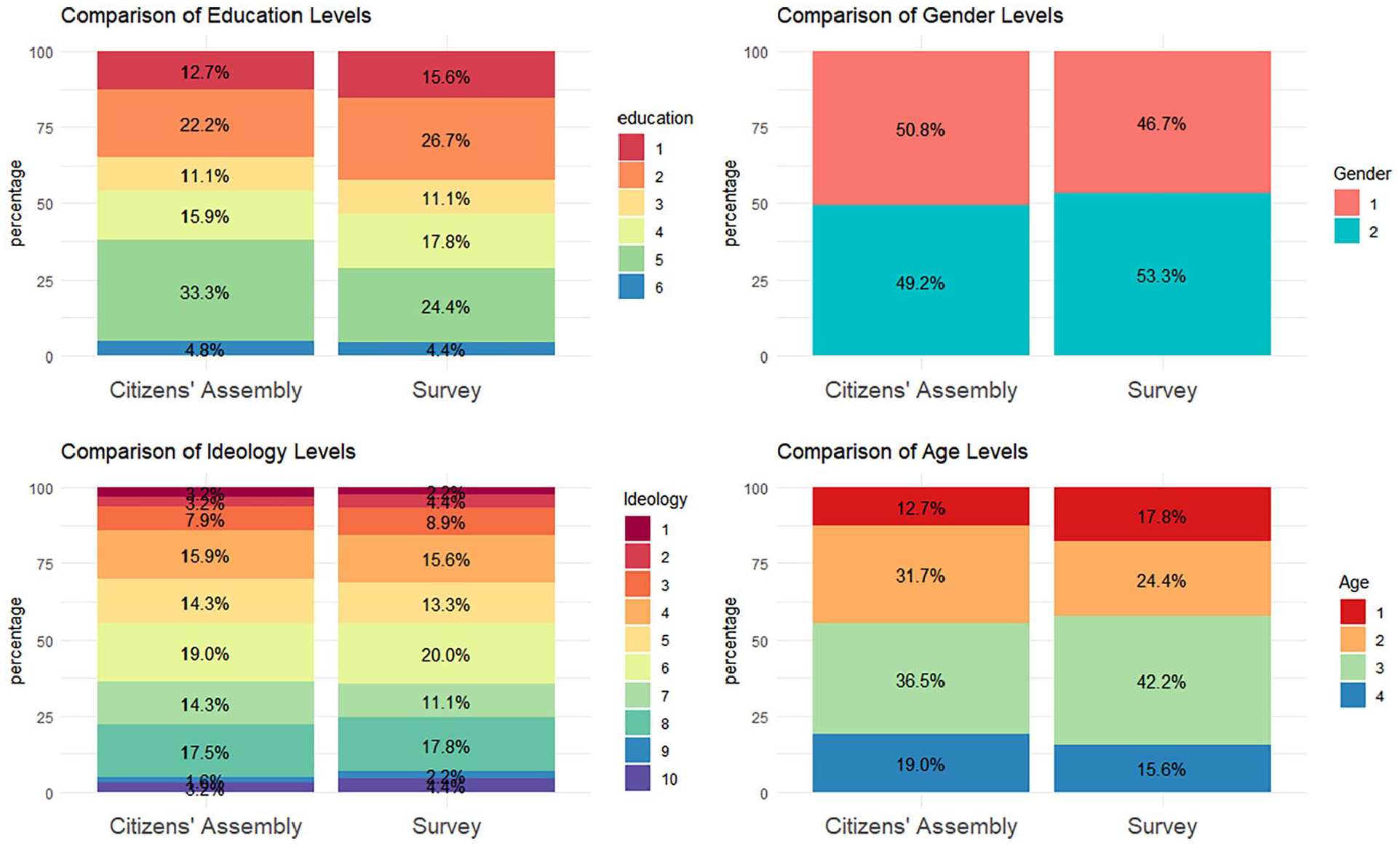
Sample Survey Respondents: Education, Gender, Ideology, and Age.
Overall, the sample characterizing the respondents to the survey was slightly younger, less educated, and more female-dominated than the population representing the three panels.
Finally, the data related to the tested variable of political engagement reveal a tendency toward a higher representation of participants with lower levels of political engagement (Figure 2). Respondents who never participate in voting procedures were overrepresented by +5.4%, and rarely participate (+1.9%) and often participate (+2.5%) compared with those who sometimes participate (−6%) or always participate (−3.8%).
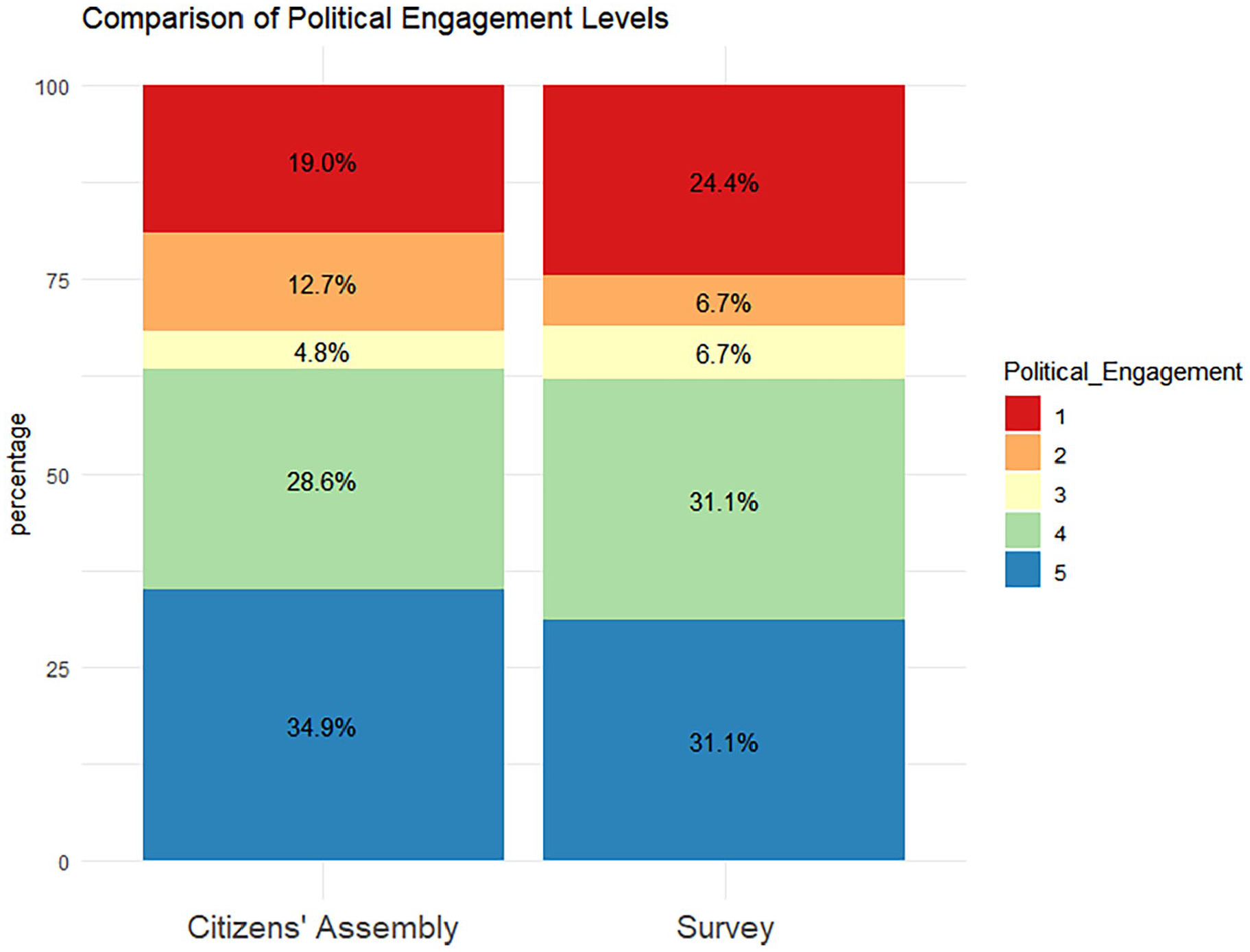
Sample Survey Respondents: Political Engagement.
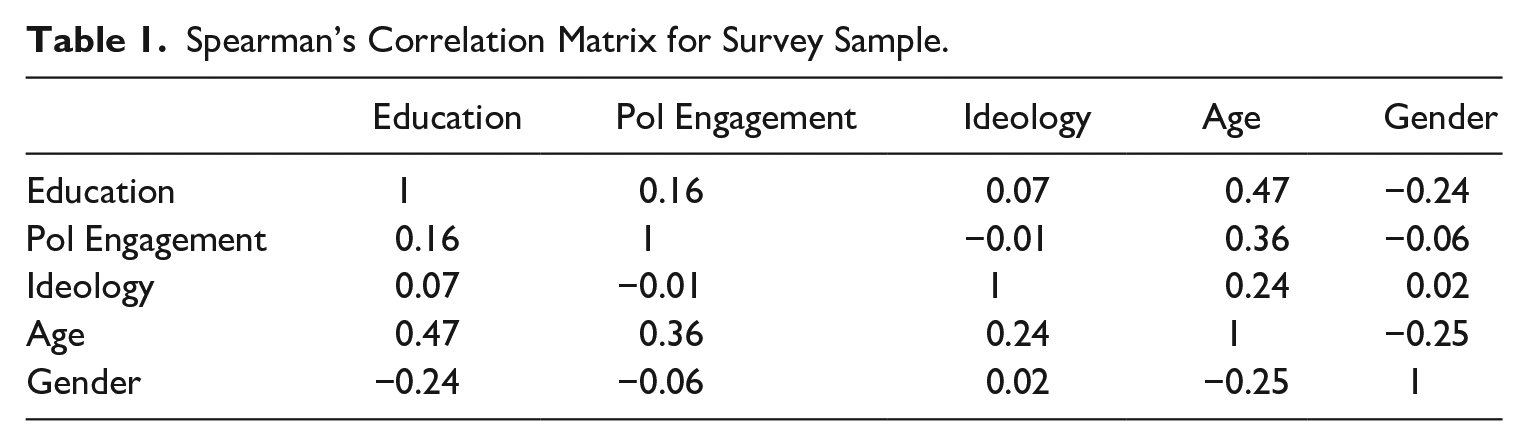
To evaluate the reliability of our survey, we conducted a Spearman correlation analysis, comparing the correlation matrices between our survey sample and the original population dataset across the five socio-demographic and political variables.
The results of the Spearman correlation matrices are reported in Tables 1 and 2.
Spearman’s Correlation Matrix for Survey Sample.
Spearman’s Correlation Matrix for the Three Panels.
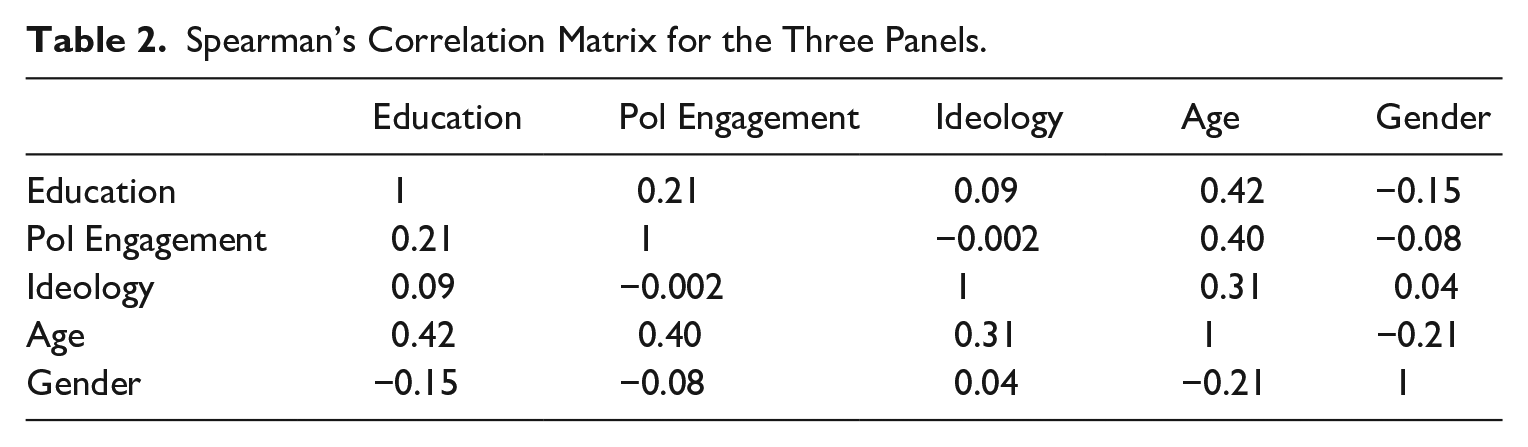
In comparing the two matrices, we find that the correlations and the direction of the relationship between the variables in our survey sample generally align with those of the original population data. Specifically, considering our variable of interest, Political Engagement, we observe a positive and similar correlation in both the sample and the panel population for all four remaining variables (ΔEducation = −0.05, ΔIdeology = 0.01, ΔAge = −0.04, ΔGender = −0.02). Very similar patterns, without any major noticeable differences, are observable for all the other correlation values. Finally, the correlation of the sample analyzed also aligns with Swiss national electoral data on voting participation that have been reported in Appendix 1. Overall, we can infer that the survey dataset aligns with the panels, the Swiss population, and the survey sample in terms of frequency and directional correlation, showing consistency and validity in reflecting the broader trends and relationships within the community.
The Mann–Whitney U and Wilcoxon Paired Tests
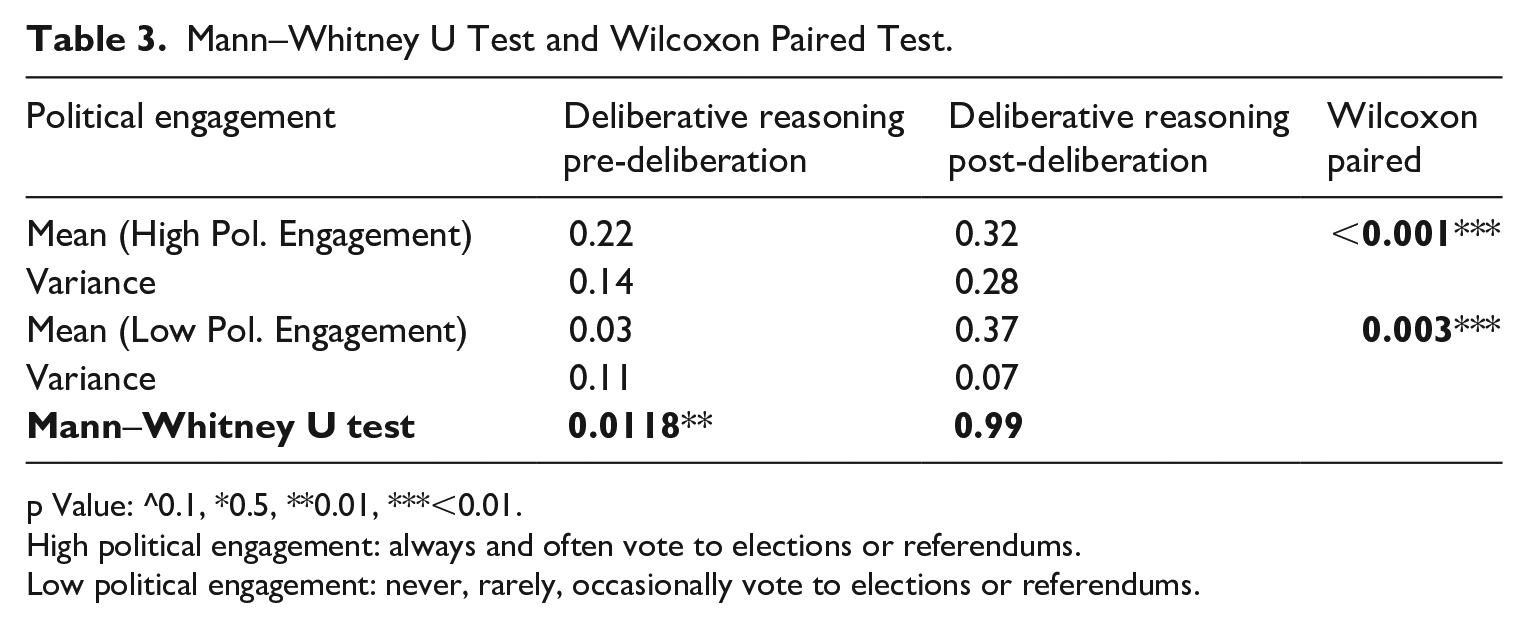
To test H1 whether people with lower level of political engagement have also underlined lower deliberative reasoning capabilities we employed a Mann–Whitney U test. In addition, it was used a Wilcoxon paired test to check whether the improvement in deliberative reasoning within the two groups were significant. In this respect, as reported by the Wilcoxon paired tests value from Table 3, we can observe in both group a positive and significant improvement in deliberative reason showing that deliberative process had successively allows all participants to produce higher level of deliberative reflexivity.
Mann–Whitney U Test and Wilcoxon Paired Test.
p Value: ^0.1, *0.5, **0.01, ***<0.01.
High political engagement: always and often vote to elections or referendums.
Low political engagement: never, rarely, occasionally vote to elections or referendums.
The Mann–Whitney U test allows us to examine whether there’s a significant difference in the deliberative reasoning scores between the two groups. This allows us to check H1 or that to find evidence on the underline epistemic differences in reasoning capabilities between participants with lower and participant with higher level of political engagement.
The test is also applied after the deliberation to examine if there remains any significant difference between the two groups after the deliberation and test H2 on whether the deliberative process allows participant with lower political engagement to reach the same reasoning capabilities of their cohort with higher levels of political engagement.
Table 3 presents the means of deliberative reasoning among two distinct groups—those with high political engagement and those with low political engagement, before and after a deliberative process. It’s important to note that political engagement is defined by the frequency of voting in elections or referendums. The high engagement group are those who always or often vote, whereas the low engagement group are those who vote rarely, or never.
Addressing H1, it is supported by the data presented. At the pre-deliberation stage, participants with high political engagement demonstrated a higher level of deliberative reasoning (DRI mean = 0.22) compared with those with lower political engagement (DRI mean = 0.03). The difference between these groups was statistically significant, as evidenced by a p-value of 0.0118 in the Mann–Whitney U test with the lowest political engaged group to be more compact in their reasoning capabilities (σ2 = 0.11) than the higher politically engaged (σ2 = 0.14).
Turning to H2, the table shows that after the deliberative process, the mean deliberative reasoning level for participants with high political engagement increased in DRI to 0.32 (ΔDRI = 0.10), and that of the lower engagement group improved remarkably in DRI to 0.37 (ΔDRI = 0.34). In similar fashion the levels of σ2 for low politically engaged remain compact (σ2 = 0.07) showing an even deliberative effect over the participants. A Mann–Whitney U test comparing the post-deliberation levels produced a p-value of 0.99. This suggests that there is no significant difference in the deliberative reasoning levels of the two groups after the deliberative process. Hence, the analysis supports the second hypothesis that a deliberative process allows participants with low political engagement levels to reach the same level of deliberative reason as those with higher levels of political engagement.
Regression Model
The examination of pre-post DRI change (ΔDRI) necessitated a rigorous analytical approach to uncover intricate relationships between socio-demographic and political behavior variables. To ascertain the most reliable and robust insight, the analysis incorporated a Least Trimmed Squares (LTS) (Rousseeuw, 1984) regression technique, which allows us to handle the presence of outliers.
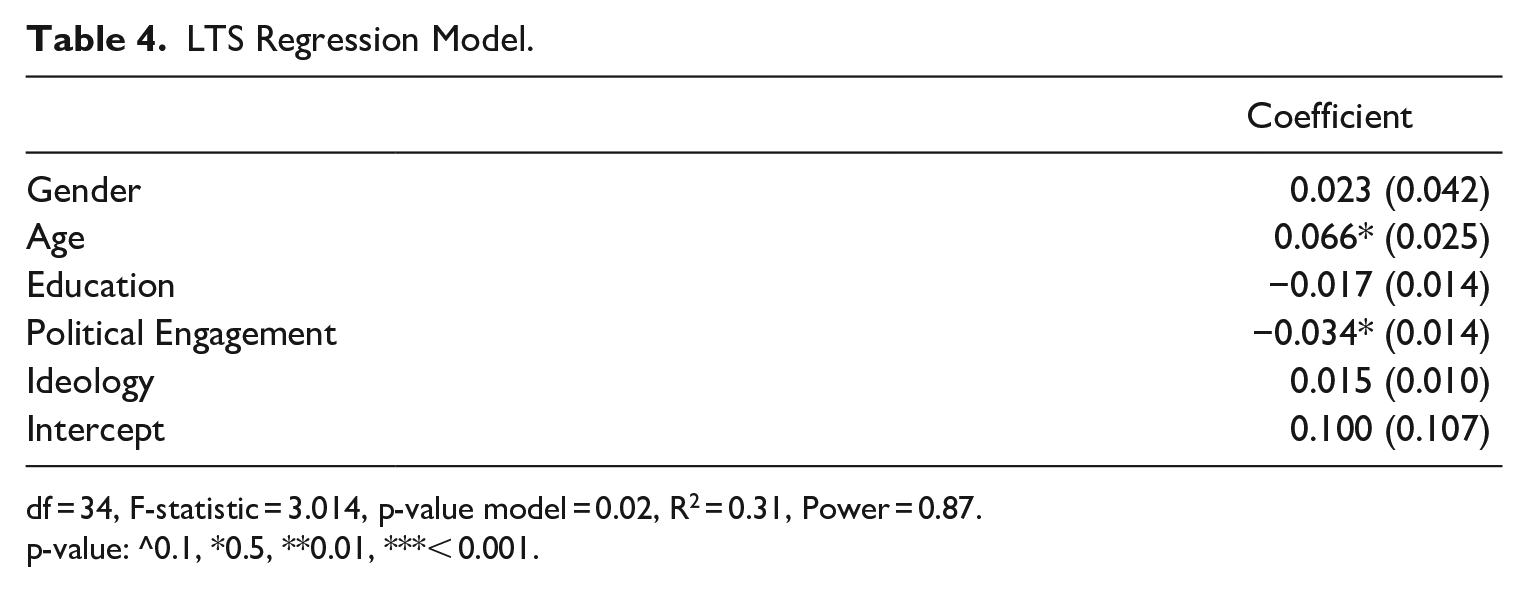
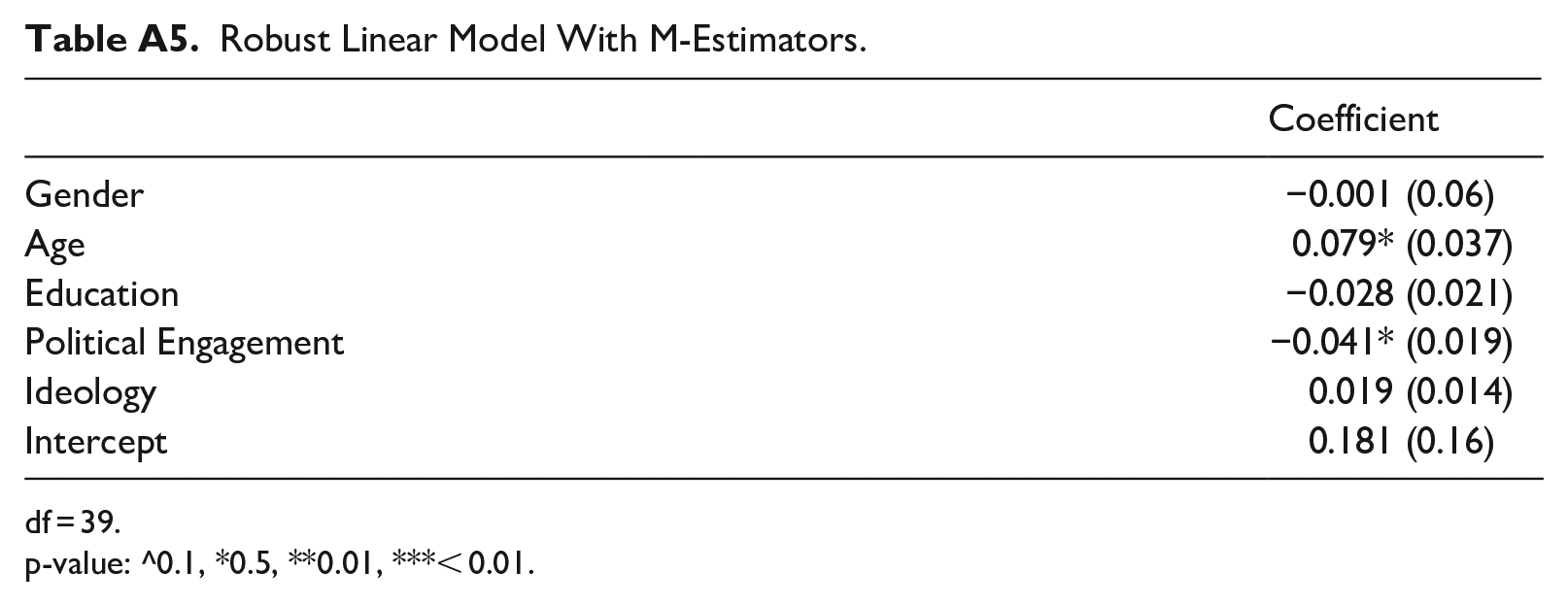
As DRI is an intersubjective index based on correlational value, the mere presence of an outlier point might have a disproportionate effect on the index itself. Outliers can substantially affect the ordinary least squares regression results, leading to biased estimations. The choice of LTS regression in this context offered a more resilient approach, minimizing the influence of extreme observations. Prior to the implementation of the LTS regression (Table 4), visual inspection of the dataset and Grubbs (1969) tests were conducted to detect the presence of outliers (in Appendix 1). The visual inspection (provided in Appendix 1) indicates the presence of a relatively high number of outliers (at least 3). The Grubbs tests further validate our visual observations, confirming the existence of data points that deviate significantly from the expected range. Given these concerns, the LTS approach is favored over other methods, such as the robust linear model using M-estimators. The primary reason being that the LTS approach boasts a higher breakdown point, making it better suited for handling a larger number of outliers. However, for the sake of completeness, the results from the robust linear model are also presented in Appendix 1. Notably, these results do not demonstrate any significant differences with respect to our hypothesis testing.
LTS Regression Model.
df = 34, F-statistic = 3.014, p-value model = 0.02, R2 = 0.31, Power = 0.87.
p-value: ^0.1, *0.5, **0.01, ***< 0.001.
With a large R2 value of 0.3014 and a power value of 0.87, the model offers interesting insights into the of deliberative reasoning. While the unexplained variance invites the consideration of additional variables or a more intricate model that accounts for complex interactions, the model p-value suggests that model fits the data better than a model without predictors.
As anticipated, voting behavior (Political Engagement) exhibits a statistically significant negative relationship with the ΔDRI (p = 0.018), consistent with H3. This finding underlines that participants with lower levels of political engagement stand to benefit more from the deliberative process. It supports the theoretical framework that deliberation can foster increased reasoning, especially among those who may initially be less politically involved. This result provides effective empirical evidence for the notion that deliberation serves as a tool in bridging gaps in political participation and can be instrumental in empowering less politically active individuals in meaningful discourse.
Unexpectedly, the analysis reveals a positive association between Age and ΔDRI (p = 0.013). This result could be attributed to specific topic-related factors to generational dynamics around climate change. The positive influence of age on ΔDRI may reflect the less informed and reflective stance of the Boomers and older generations, possibly resulting from initial internal biases regarding climate change (Hamilton and Saito, 2015; Hornsey et al., 2016; Tranter, 2011). This finding is consistent with prior research indicating that older generations may possess differing attitudes and knowledge levels on environmental topics (Hornsey et al., 2016), and be more aligned with political parties that are skeptical of climate change (Hamilton and Saito, 2015; Tranter, 2011) and therefore reflecting a complex interplay between political affiliation and generational identity but also be more subject on motivated reasoning on such specific topic.
In conclusion, our analysis validates H3, concerning voting behavior, and introduces nuanced insights into the role of age in deliberative reasoning. While confirming the expected negative relationship with political engagement, the findings challenge assumptions about age and call for more targeted research to dissect its influence on deliberation, particularly around climate change. This multifaceted picture enriches the academic understanding of deliberation and points to new avenues for empirical investigation and practical application in fostering inclusive and reflective democratic discourse.
Conclusion
This study explores the role of deliberation within democratic processes, focusing on its impact on deliberative reasoning abilities across varying levels of political engagement. Participants exhibited improved reasoning abilities, with a pronounced effect among those with low political engagement, narrowing the gap with their more politically active peers.
An additional layer of complexity is introduced by the study’s examination of age and its relationship with deliberative reasoning. This analysis challenges conventional perspectives and highlights how deliberation may bridge not just political, but also generational differences, such as those related to climate change.
The practical implications of these findings are considerable. Deliberation is not just theoretical but serves as an applicable tool to enhance reasoning, notably among the politically disengaged. However, the study’s methodological complexity and the specific focus on the Canton of Zurich introduce limitations. These include unexplained variance, confining the results to specific political circumstances and calling for wider investigation. In this respect, the study points to further research opportunities, particularly concerning the role of deliberative instruments across political contexts. The theorized role of deliberative minipublics as reasoning facilitators, as per Niemeyer (2014), presents an intriguing area for exploration.
In conclusion, while recognizing its limitations, the study affirms deliberation’s significant function in democratic discourse. It emphasizes the necessity of clear dialogue and reasoning as essential tools for enhancing political participation. This includes addressing challenges in representative participation such as motivated reasoning and misinformed political voting.
Supplemental Material
sj-csv-1-psw-10.1177_14789299241239909 – Supplemental material for Fostering Reasoning in the Politically Disengaged: The Role of Deliberative Minipublics
Supplemental material, sj-csv-1-psw-10.1177_14789299241239909 for Fostering Reasoning in the Politically Disengaged: The Role of Deliberative Minipublics by Francesco Veri in Political Studies Review
Supplemental Material
sj-csv-2-psw-10.1177_14789299241239909 – Supplemental material for Fostering Reasoning in the Politically Disengaged: The Role of Deliberative Minipublics
Supplemental material, sj-csv-2-psw-10.1177_14789299241239909 for Fostering Reasoning in the Politically Disengaged: The Role of Deliberative Minipublics by Francesco Veri in Political Studies Review
Supplemental Material
sj-csv-3-psw-10.1177_14789299241239909 – Supplemental material for Fostering Reasoning in the Politically Disengaged: The Role of Deliberative Minipublics
Supplemental material, sj-csv-3-psw-10.1177_14789299241239909 for Fostering Reasoning in the Politically Disengaged: The Role of Deliberative Minipublics by Francesco Veri in Political Studies Review
Footnotes
Appendix 1
Acknowledgements
The article has benefited from the input from Andri Heimann, Daniel Kübler, Simon Niemeyer, and Hugo Mercier. The author is also grateful for the support provided during the fieldwork by Céline Colombo, Head of the Participation Coordination Office in Canton Zurich. In addition, the author would like to thank the reviewer for their valuable feedback.
Author’s note
An earlier version of this article was presented at the 2023 ECPR Annual Conference in Prague.
Declaration of conflicting interests
The author(s) declared no potential conflicts of interest with respect to the research, authorship, and/or publication of this article.
Funding
The author(s) disclosed receipt of the following financial support for the research, authorship, and/or publication of this article: This work was supported by the Ministry for Justice and Home Affairs of the Canton Zurich (Switzerland).

Supplemental material
R script and raw data attached in the online appendix.
Author Biographies
References
Supplementary Material
Please find the following supplemental material available below.
For Open Access articles published under a Creative Commons License, all supplemental material carries the same license as the article it is associated with.
For non-Open Access articles published, all supplemental material carries a non-exclusive license, and permission requests for re-use of supplemental material or any part of supplemental material shall be sent directly to the copyright owner as specified in the copyright notice associated with the article.
