



Abstract
Despite Hungary's nearly quarter-century membership in the European Union (EU), less than half of its citizens hold a positive mental image of the EU. Education plays a crucial role in fostering and reinforcing a sense of European identity and awareness among students, with textbooks serving as key tools in shaping students’ understanding of European values, citizenship, and identity. This study aims to assess how European identity is represented and integrated into contemporary Hungarian primary school geography textbooks within the framework of the European dimensions in education. In the Hungarian public education system, only textbooks that have been prepared by the state may be ordered from the lists of textbooks for use in state schools. Consequently, these textbooks are significantly dependent on the National Core Curriculum (NCC), as they must comply with its standards, although differences in proportions may occur. The study employs content analysis to evaluate the reflection of European identity in regulatory documents (NCC, framework curricula) and across different grade levels and textbook versions, with a particular focus on the incorporation of the European Dimension in Education (EDE) indicators (Ledic et al., 2016). The textbooks were subjected to a systematic review to ascertain their implementation of EDE indicators. The findings suggest that while the textbooks adequately address European topics, they lack sufficient depth and thought-provoking content to effectively foster the development of European awareness and identity. There is a lack of consistency in how European social diversity and pluralism are presented across different textbook versions. Nevertheless, specific elements of European citizenship, such as consumer rights, are presented only superficially and require further attention. Moreover, deficiencies are observed in the discussion of the European Union and its democratic nature. A decline in the proportion of European content in the geography curriculum has been observed since 2000. Moreover, in the introductory section of the NCC 2020, the term “Europe” is no longer explicitly mentioned, in contrast with its presence in previous curricula. The study offers recommendations, including the enhanced integration of EDE indicators into geography textbooks to promote intercultural understanding and active citizenship. Additionally, the incorporation of interactive elements, such as QR codes, could enhance student engagement and facilitate the cognitive processing of geographical data. By improving these areas, educators can better prepare students for an increasingly interconnected and diverse European environment.
Keywords
Introduction
European identity and European awareness
With the development of European integration, significant changes have occurred on the continent, such as establishing peace and enabling free movement among numerous European countries. Additionally, it has a noticeable impact on people's lives in various areas, such as telecommunications, environmental protection, climate change mitigation, and online data privacy. However, European school curricula focus on history, geography, and economics, lacking coverage of the democratic nature of the European Union (EU), its diversity, and human rights. This deficiency may result in decreased support for the EU among the populace (Diestro Fernández and García Blanco, 2016; European Commission, 2021). According to Voicu and Ramia (2021), the interpretation of ethnic European identity is common across the 27 EU countries, although cultural values may vary. Considering these observations, formed opinions among citizens need to rely on knowledge rather than speculation or misinformation. According to the Eurobarometer public opinion survey by the European Parliament (2024), 41% of the Hungarian population holds a positive mental image of the EU. In light of this, any representation of the EU in public education is of significant importance.
European awareness plays a crucial role in shaping the cultural identity of its citizens by fostering a sense of shared history, values, and diversity. This multifaceted identity is influenced by various mechanisms, including cultural policies and heritage recognition.
Martonyi (2021) and Botos (2022) argue that national identity is the dominant and fundamental form of collective identity. In contrast, European identity is secondary but also has historical roots, primarily drawing from Christianity, ancient culture, and Roman law. The concept of cultural identity in Europe is deeply influenced by shared histories and heritage, which serve as a foundation for collective memory (van Gorp and Renes, 2007). The European Union's recognition of World Heritage Sites reflects a unified narrative that contributes to a common European identity, emphasizing the importance of preserving historical traces. In addition to heritage, the EU implements cultural policies aimed at reinforcing this identity. Initiatives such as the ‘European Cities of Culture’ aim to enhance European consciousness while respecting national identities, thereby promoting a sense of belonging among citizens (Wang, 2008). Wang (2008) argues that the EU's cultural policy fosters what Benedict Anderson would describe as an “imagined community,” where citizens identify with shared values and collective experiences, thereby reinforcing their European identity. According to Brie et al. (2012), specificity and diversity serve as essential mechanisms for fostering intercultural dialogue among European peoples.
European awareness can indeed promote a sense of unity among its member states, but achieving a shared European identity requires concerted efforts. Promoting a sense of “Europeanness” is essential for the EU's functionality and for motivating its citizens. Without proactive measures to enhance this consciousness, the integration achievements that have been made could gradually erode. However, a lack of interest from EU institutions in fostering this awareness has led to a rise in anti-European sentiments, highlighting the urgent need for renewed efforts, particularly in pro-European education (Brett et al., 2024; Piasecki and Woroniecki, 2016).
A shared political identity, especially one rooted in the promotion of human rights, has the potential to serve as a foundation for unity within the EU. This identity must be cultivated through an open public sphere that encourages dialogue among diverse member states (Jiménez Lobeira, 2012). The EU's motto, “united in diversity,” underscores the importance of balancing unity with the representation of the unique characteristics of its member states (Bieber and Bieber, 2021). However, despite the potential for unity through increased awareness, skepticism remains about the feasibility of achieving true intercomprehension among the diverse cultures and languages of the EU (Alves, 2016). This skepticism can pose significant obstacles to fostering a cohesive European identity.
Based on European values and the associated geographical perspective, Hungary can be classified in several ways. According to data from the Atlas of European Values, if we examine, for example, the proportion of people in favor of remaining in the EU, Hungary shows similar figures to countries like Germany, Poland, or the northern member states. Moreover, a distinctive Central European feature of Hungary is that the majority of its population opposes the process of European unification. At the same time, a significant portion believes that, for successful integration, immigrants should adopt European values and culture. In this context, there is a lower level of sympathy for immigration; for instance, compared to Spain and France, only half as many Hungarians support immigration. Additionally, a characteristic trait of the Eastern member states is the higher presence of Christianity and religious practices in daily life (Halman et al., 2022).
The European identity and the textbooks
Since the 1990s, parallel to the shaping of a new European identity, there has been an increasing international interest in textbook research. Researchers have primarily focused on the worldviews conveyed by textbooks, the new thematic nodes included in the content, and the extent to which the representation of Europe is forward-looking. They have also explored whether these textbooks motivate students to understand the unification of Europe and promote international cooperation (Dárdai, 2002). This is significant because textbooks in public education could serve as a prominent tool for fostering European consciousness, EU identity, and cohesion by systematically and hierarchically presenting democratic values and expected thoughts regarding the future of Europe to society (Galani and Karatza, 2019). In general, textbooks play a significant role in educational practice within the Hungarian public education system as instructional tools (Makádi, 2022; Seres and Makádi, 2022). This role may strengthen in the coming years, as the government has restricted the use of mobile phones in schools, which, in most cases, hinders the process of digitalization (Government of Hungary, 2024).
Stöber (2010) defined a textbook as a pedagogical publication that is scientifically substantiated and integrally contains comprehensive study material for a given academic year. It aims to support students in thoroughly understanding educational materials and learning objectives. Stein (1995) distinguished three main functions of textbooks: Politicum, defining the textbook as a tool for political assertion of will, also examinable as an ideological manifestation of power; Informatorium, interpreting the textbook as an informational tool conveying scientific findings, significant societal, political, economic, and cultural changes, as well as societal expectations; and Paedagogicum, describing the textbook as a pedagogical tool aiding learning, considering the learning abilities and habits of the respective age group (Balázs et al., 2017). Furthermore, according to Stein (1995), Crawford et al. (2002), and Issitt (2004), the textbook is a product created by societies, reflecting societal content, conditions, and values, acting as a “mirror” from which much can be gleaned, including the reflection of the intellectual life of the era and interpretable as a historical document (Fisherné Dárdai, 2001). Therefore, textbooks are crucial for learning and reflect numerous aspects that can significantly influence the perspectives of learners.
Cîineanu (2019) underscores a diminished emphasis on tasks necessitating cognitive approaches to data systematization based on specific criteria within Romanian geography textbooks. To enhance the processing of geographic data at the granular level, it is recommended that activities such as identifying geographic relationships, hierarchy, comparison, explanation, and data organization be integrated. Although Hungarian textbooks demonstrate commendable organization, further improvements are warranted, and their interactivity could be enhanced by integrating QR codes.
European dimension in education
The concept of the European dimension in education (EDE) has undergone notable terminological changes and conceptual evolution, reflecting shifts in focus over time. Initially, the European dimension in education emerged as a broad framework to promote European integration through curricula emphasizing shared languages, history, and cultures (Ledić et al., 2016; Turk, 2022; Zidarić, 1996). In 1993, the European Commission's Green Paper further defined this as an “added value” of education that fosters European citizenship through shared democratic values (Turk, 2022). Polish sociologist Sztompka (2004) emphasizes that this identity is shaped by geographical, historical, and cultural factors, including shared values derived from antiquity, the Judeo-Christian tradition, and the Enlightenment. British sociologist Pagden (2002) contributes to this discourse by asserting that Europeans collectively agree on the possibility of belonging to something greater than the nation while simultaneously being part of something more specific than humanity, which further delineates the concept of “European exceptionalism”.
An illustrative example of EDE's integration into national education policy is the statement of the German Standing Conference of Ministers of Education regarding the European dimension in education in 1990, “make the rapprochement of European peoples and states and the restructuring of their relationships conscious. It (i.e., the school) should contribute to the development of an awareness of European belonging in the emerging generation and foster understanding that in many areas of our lives, European references are effective and European decisions are required.” (Mitter, 2007 p. 4).
The European dimension in education operates at two interconnected levels. At the systemic educational level, emphasis is placed on initiating and implementing cross-border projects such as student and teacher exchanges, joint actions, and collaborative meetings. Simultaneously, curricular innovations are prioritized to integrate European perspectives into educational content (Lourenço et al., 2018; Mitter, 2007).
In recent years, attention has shifted towards the European Dimension of Teaching, as highlighted in the 2018 Council Recommendation. This shift emphasizes the growing importance of teaching practices and the role of teachers in implementing these policies. According to the European Council's proposal (2018), the introduction of a European dimension in teaching should foster a sense of European identity in its diversity, while strengthening a positive, inclusive sense of belonging. This approach complements local, regional, and national identities and traditions, promoting a better understanding of the European Union and its Member States (Council of the EU, 2018, p. 7). The 2020 communication from the European Commission and the European Parliament reinforces this shift through the adoption of the same terminology (Turk, 2022).
Scholars note that the terminological shifts—from European dimension in education to European dimension of education, and more recently to European dimension of teaching—reflect a transition in focus from the broader educational system to the teaching process and teachers as central actors. However, this shift may also imply a reduction in the broader scope of the concept, potentially concentrating its implementation within prescribed regulations. This could limit teachers’ autonomy and risk fostering meritocratic or authoritarian teaching approaches rather than democratic or participatory ones, raising critical questions about the direction and inclusivity of European education policies (Turk, 2022). In line with the purposes of our study, we adopt the most comprehensive term, “European dimension in education”.
Ledic et al. (2016) compiled a set of criteria based on the indicators of EDE, examining Croatian education. The indicators of EDE are included in Table 1. In practice, the implementation of the European dimension in education and European consciousness in primary education still shows significant deficiencies (Schmeinck, 2013). Schmeinck (2009) suggested that enabling the effective realization of the European dimension in education in primary education requires the consideration of four different yet interrelated areas of educational competence that interact with each other. As shown in Table 1, these include knowledge, attitudes, understanding, and skills.
Indicators of European dimensions in education (EDE)
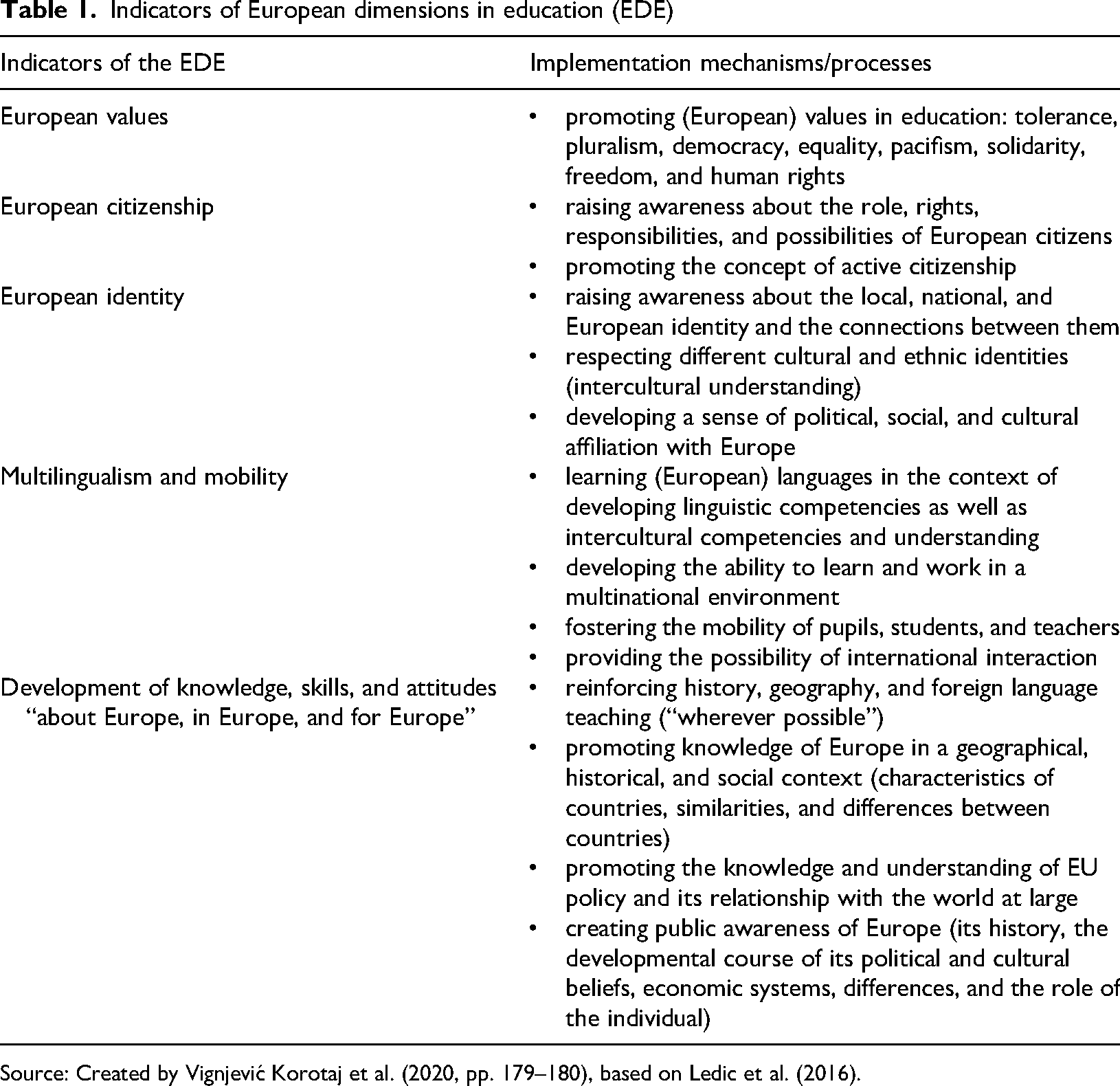
Source: Created by Vignjević Korotaj et al. (2020, pp. 179–180), based on Ledic et al. (2016).
Literature background
In Hungary, only two researchers have addressed the European dimension in education in the context of geography. M. Császár (2004) and Karlovitz (2004) highlight that the concept of Europe is not defined in the geography textbooks of the time, there is a lack of comprehensive analysis of Europe, no reference to European diversity, yet the EU is presented as a positive concept.
Internationally, the European dimension in education is examined primarily in geography and history. According to a study by Ledic et al. (2016), Croatian education professionals have a positive attitude toward integrating the European dimension in education into subjects. However, because of the educational workload, they find it difficult to incorporate this into their daily work. The contribution of pedagogical training programs is relatively weak, with differences observed among universities. Although the Croatian education system still has a long way to go to integrate the European dimension in education, the positive attitude and willingness of education professionals are encouraging. Nonetheless, Vignjević Korotaj et al. (2020) found that indicators of the European dimension of teaching are not significantly present in any Croatian geography textbooks; where they are present, they primarily convey factual knowledge related to Europe or the EU.
Barkhof's (2007) study compares the challenges of implementing the European dimension in education between the English and German systems. The study highlights several obstacles, such as Euroscepticism, lack of teacher training, time constraints, insufficient resources, and an absence of legal frameworks, which hinder the integration of European topics into the curriculum. English teachers primarily cited the lack of training as a barrier, while German teachers struggled more with time management. The study found that teachers who are more knowledgeable about the European Union are more likely to incorporate European elements into their lessons. German teachers showed stronger support for integrating European content, often intending to foster European identity to counterbalance nationalism. They considered it important to ensure the recognition of qualifications and diplomas across European countries to enable young people to work anywhere in Europe. In contrast, many English teachers prioritized national education policies, expressing concerns about losing sovereignty and national identity, as well as disparities between European school systems.
According to Resnik Planinc (2012), Slovenian curricula lack the definitions and explanations of European identity and citizenship. However, high school geography and history curricula state that students “should know the concept of European identity by the end of high school”. Still, it does not specify which grade should cover this. A review of textbooks reveals that neither concept has been utilized. This raises the question of how teachers interpret the general objective of European identity and implement it in the classroom (Resnik Planinc and Ilc Klun, 2011).
Regarding Greek-Cyprus, Philippou (2007) notes that the geography textbook adopted an encyclopedic and utilitarian approach to the concept of Europe, the EU, and various countries. The European dimension of teaching seemed contradictory to both the content and pedagogical assumptions of syllabuses and textbooks. In geography, ground morphology, colonization, and ecological problems were examined to illustrate the constructedness of frontiers and the interdependency of Europe with the world, as well as within Europe and the EU. Greek-Cypriot geography textbooks contain content related to European representation in 17.41% of their pages (Philippou et al., 2008).
Galani and Karatza (2019) highlighted that most references in Greek textbooks are found in the second year of high school, but due to outdated curricula, students do not learn about the current challenges and responses of the EU. Moreover, neither Greek, Spanish, nor British textbooks introduce European values gradually, elaborate on them, or consistently reinforce them during the years of primary education, resulting in students being unable to assimilate these values.
In Spain, García-Álvarez and Arias-García (2022) emphasize that content related to the EU is generally rare and is never considered as important as content presenting the Spanish political system, citizenship, geography, and history.
The position of geography education in Hungary
In the Hungarian public education system, geography falls under the domain of natural sciences and geography. Examining the subject of geography reveals a highly diverse and multidisciplinary composition based on the National Core Curriculum (NCC) and the framework curriculum. Geography stands out among other natural science subjects because it explores various social science knowledge through a natural science perspective.
According to the NCC 2020, students encounter geographical topics in the fifth and sixth grades as part of the natural sciences, preceded partly by environmental studies in primary school. In most schools, geography is taught either by biology-geography specialized teachers or by teachers with dual specialization, as the subject mainly relies on these two disciplines. Currently, the number of teachers specializing in natural science-environmental studies or general science is far from sufficient (Juhász et al., 2018). Geography is introduced in the seventh and eighth grades, where students learn the subject based on the provisions of the NCC, with two and one weekly class hours, respectively.
In the past three decades, the Hungarian National Core Curriculum has undergone significant reforms, particularly in geography education. As outlined in the study by Dancs and Fülöp (2020), following the change of regime, “The Act on Public Education (1993) defined the National Core Curriculum and the school-level curricula as the regulators of education. […] finally, a three-level regulation emerged within which mid-level regulators (e.g., framework curricula, elaborated teaching programmes, requirements of the school leaving examination, etc.) are also present and they help to reduce the uncertainty of the NCC which contains only general goals and does not prescribe every detail of the teaching process” (Dancs and Fülöp, 2020, p. 49). In the NCC 2020, the primary objective is now to underscore the interaction between terrestrial space and the natural and socioeconomic environments of humanity. Geography education prioritizes contemporary societal and environmental issues, adopting a pragmatic approach to tackle global challenges. Its content is multifaceted, aiming to shape attitudes from various perspectives and fostering students’ awareness of the pivotal role of geographical knowledge in comprehending environmental phenomena and processes (Farsang and Ütőné Visi, 2020; M. Császár and Vati, 2012).
Objectives
In the analysis, we aim to summarize the implementation mechanisms and processes of the EDE indicators as articulated by the textbook functions of the Informatorium, as shown in Table 1. This includes detailing how and to what extent these indicators manifest in the geography subjects of the contemporary Hungarian education system in primary schools, 1 where a significant portion of the curriculum pertains to European identity (European Commission, 2021). Based on our preliminary expectations, the modern NCC 2020 aligns with the 2018 European Council's recommendations, and the accompanying textbooks will incorporate the principles of the European dimension in education.
Methods
In Hungarian public education, only textbooks prepared by the state – through the Educational Authority – can be ordered from textbook lists for use in state schools. These textbooks are based on the latest, National Core Curriculum 2020. For each grade level, two publisher-coded (OH-FOL78TA or “A” and OH-FOL78TB or “B”) versions of geography textbooks have been produced, all of which are available to schools (Table 2). In our study, we examined these two textbooks, as they are the only resources students encounter in state schools. This situation reflects a process of state centralization, whereby the state has currently assumed responsibility for textbook publishing through the Educational Authority. Consequently, the dependency of these textbooks on the NCC is significant, as they must comply with its requirements; only differences in proportions may theoretically arise. As Báthory (1997) states, the NCC is primarily directed towards program- and textbook authors. The insights published by Niaz (2013) further support the connection between curricula and textbooks, emphasizing the necessity of a parallel examination of these two types of documents. He asserts that “[…] the textbook very commonly being the only representation/interpretation of the intended curriculum that students use and often that the teacher uses. Although textbooks are not the only factor responsible for students’ learning, in many parts of the world, they constitute the most important curriculum material.” (Niaz, 2013, p. 1) Through a vertical analysis of the curriculum, we examine the progression across grade levels and the depth of the topics covered. The study can be categorized as a process analysis (Tholey, 1996), which guided our search for the keywords “Europe” and “European.” Additionally, workbooks and atlases are available as supplementary resources for students; however, these were not examined in this study.
The examined geography textbooks (grades 7–8)
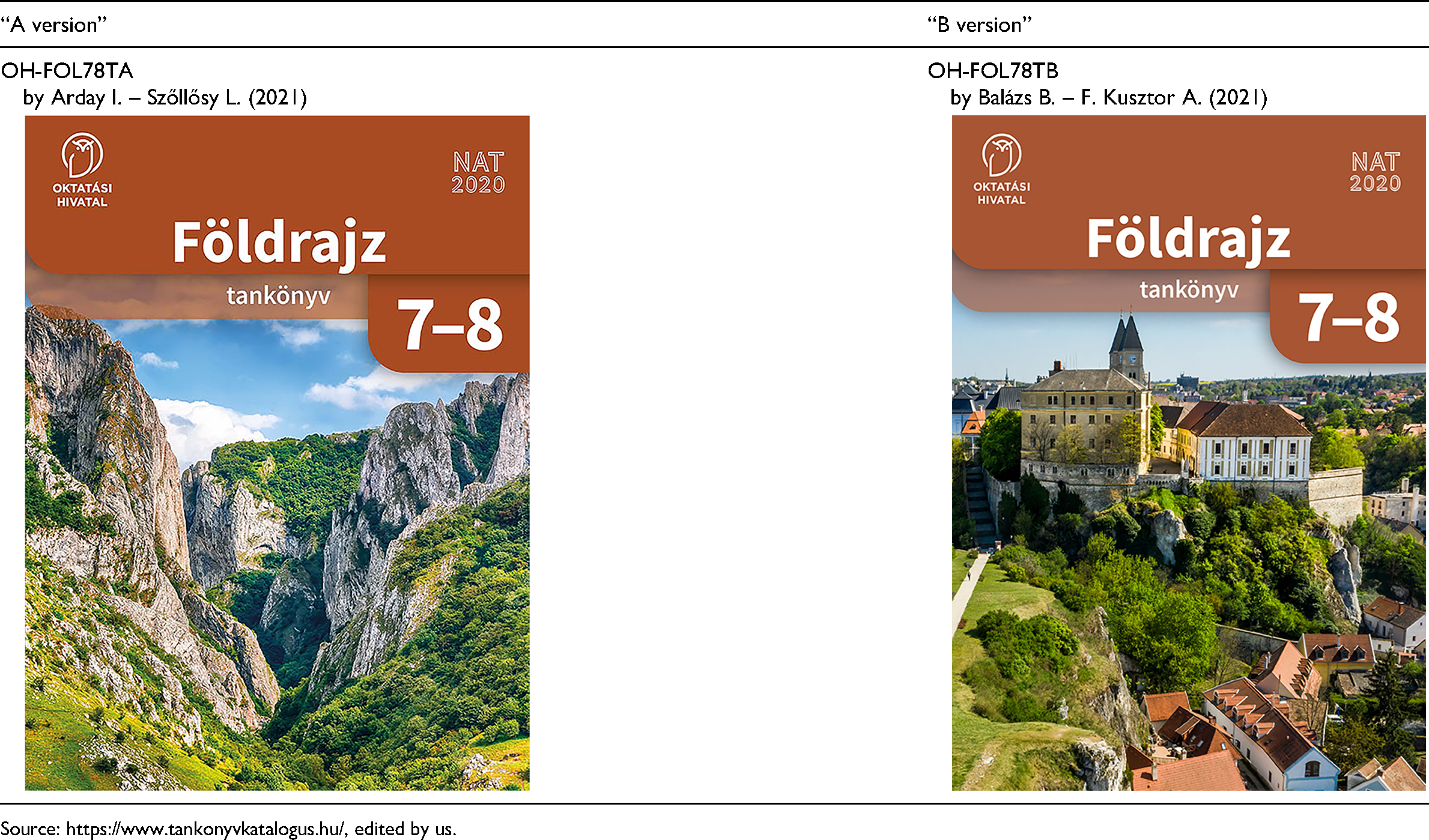
We analyzed these two textbooks in relation to content about European identity and conducted a document analysis, specifically content analysis from the perspective of EDE criteria to explore the state of European awareness and associated knowledge.
For the regulatory documents, we conducted both quantitative and qualitative content analysis. In this process, we utilized predefined categories, thus employing a deductive approach. Initially, we reviewed the examined documents to familiarize ourselves with the texts. Subsequently, we analyzed the lines of EDE indicators by systematically reviewing the implementation mechanisms/processes. We went through each lesson in the two textbooks to identify where these mechanisms were fulfilled in the geography textbooks being examined. In addition to the main text of the textbooks, we also checked the exercises, illustrations, tables, and charts to ensure a comprehensive assessment of how the EDE indicators were integrated throughout the material.
EDE could play a significant role in national curricula to promote a deeper understanding of European identity and citizenship. Several research underscores numerous key benefits of EDE. Its integration into national education systems broadens students’ awareness of European identity, fostering a sense of shared citizenship (Vignjević Korotaj et al., 2020). In countries like Romania, EDE addresses marginalization and discrimination, contributing to more inclusive educational environments (Răileanu, 2022). Additionally, EDE acts as a framework for shaping supranational educational policies, encouraging collaboration between the European Union and the Council of Europe, thereby strengthening cross-national educational initiatives (Diestro Fernández and Valle López, 2014). Despite its merits, EDE faces challenges that limit its effectiveness. Educators often report a lack of preparedness to implement EDE effectively in their teaching, which points to a need for enhanced professional development and support (Turk and Ledić, 2014). Moreover, the overall impact of EDE remains limited in practice, as many member states have not fully embraced its principles, reducing its potential influence on national education systems (Fernández and García Blanco, 2016). These challenges illustrate the complexities involved in integrating EDE into educational practices across Europe.
Results
Requirements and objectives of the National Core Curriculum regarding European knowledge and identity
The curriculum analysis is best initiated by reviewing and briefly comparing the Europe-focused and EU-related content outlined in the introductory sections or preambles of the five National Core Curricula (NCC) published to date (Magyarország Kormánya, 1995, 2003, 2007, 2012, 2020). A common feature of the first four NCCs (1995, 2003, 2007, 2012) is the emphasis on the shared European value system and content reinforcing the sense of belonging to Europe. The first NCC, introduced in 1995, was enacted in the decade before Hungary's EU accession, associating Europe with expressions such as “positive attitude” and “openness”. Starting from the NCC 2003, the term “European Union” appears alongside “Europe” and the preamble identifies the EU as a “community of European nations”. The NCC 2012 describes Europe as the broader homeland of the Hungarian people, whose history and diverse culture should be understood. However, in the introductory section of the NCC 2020, the term “Europe” is not explicitly mentioned.
Delving deeper into the requirements and objectives of the current NCC 2020, it becomes evident that, according to the National Core Curriculum 2020, by the end of the educational stage, students in the geography subject should be able to describe and exemplify the socio-economic characteristics of the European Union and its role in the global economy. They should also be able to explain the geographical foundations of the European Union's functioning, illustrate socio-economic disparities within the EU with examples, and identify tools that aid convergence. Additionally, students should be able to characterize and evaluate Hungary's position within the European Union using examples.
Since the introduction of the National Core Curriculum 2020, significant changes have been made in geography. The new curriculum places a greater emphasis on practical approaches and regional geographical knowledge. The goal is to provide students with fundamental knowledge and skills to assist them in everyday life and independent learning. However, teachers face new challenges, particularly due to the reduced available timeframe. Despite this, the new NCC and framework curricula reflect positive changes and methodological renewal in geography education. The paradigm shift and content focus initiated by the National Core Curriculum impacts the content and structure of textbooks, which must reflect the new educational paradigm, particularly emphasizing practical approaches and regional geographical knowledge (Farsang and Ütőné Visi, 2020).
The first Hungarian framework curriculum was introduced in 2000 (Nemzeti Erőforrás Minisztérium, 2000). It placed much less restriction on schools and teachers, primarily outlining teaching objectives and tasks. The geographical framework curriculum of 2000 already emphasized the goal of “contributing to the development of a realistic national and European consciousness, as well as attachment to the homeland, through the introduction of domestic and European natural, social, cultural, and scientific values.”. This objective remains in the current curriculum framework. According to the framework curriculum of 2000, approximately 45% of lessons in the seventh grade addressed European Union topics, while European content as a whole constituted approximately 30% of the geography curriculum. The next significant modification came with the framework curriculum of 2012 (Emberi Erőforrások Minisztériuma, 2012), based on the National Core Curriculum of 2012, where the recommended proportion of lessons focusing on the societal and physical geography of European countries decreased to 29%. This reduction continued in the framework curriculum of 2020 (Oktatási Hivatal, 2020).
In geography teaching, the perspective of moving from nearby to distant can be observed in terms of space. Starting from the local environment, the subject covers Hungary, then the Carpathian Basin, and finally situates this knowledge within the context of Europe and other continents (Table 3). This culminates in a practice-oriented economic curriculum for primary schools. Specifically, the framework curriculum of 2020 units focused on Europe constituted 21.57% of the primary school geography curriculum (Table 3).
The topics of geography in the framework curriculum of 2020 for primary schools, with recommended hours and their percentage share
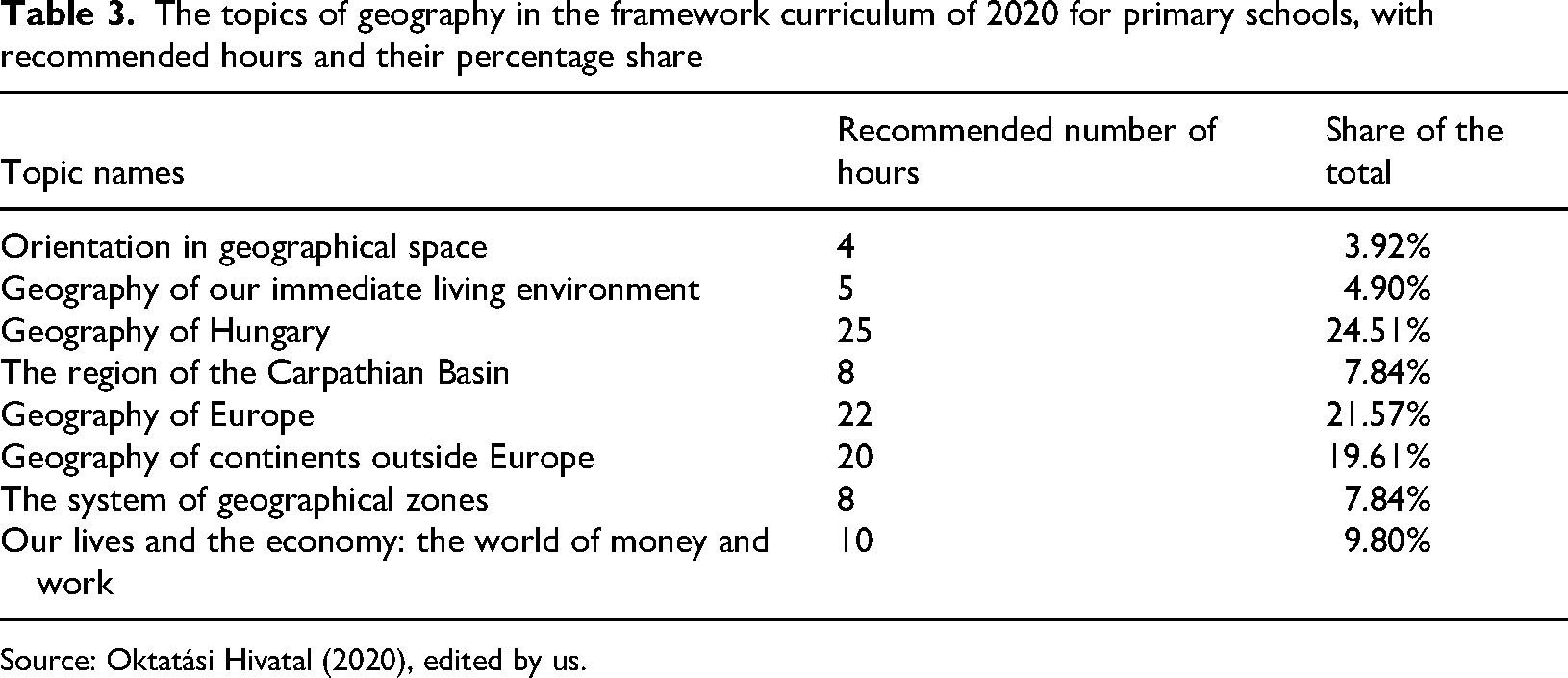
Source: Oktatási Hivatal (2020), edited by us.
Descriptive overview of geography textbooks
In the upper grades of primary school, the examined topic appears sporadically in several thematic areas of the textbooks. For example, in the fifth grade, there is a discussion of the classification of EU regions and their objectives, which precedes the students’ knowledge at this age. Additionally, in the sixth grade, within the lesson on the protection of aquatic habitats, the Natura 2000 program, supported by the European Union, is mentioned.
Furthermore, we primarily focused on the geography textbooks for seventh and eighth grades, as the theme of European identity is prominently featured in these materials (Table 4). In the table, we indicate by grade level which lessons in the textbooks directly address the subject of the research or only touch upon it by topic. The primary focus of the content in the textbooks aligns with the seventh-grade textbook part, in accordance with the framework curriculum 2020.
The lessons on European identity in the two textbook versions, grouped by thematic units
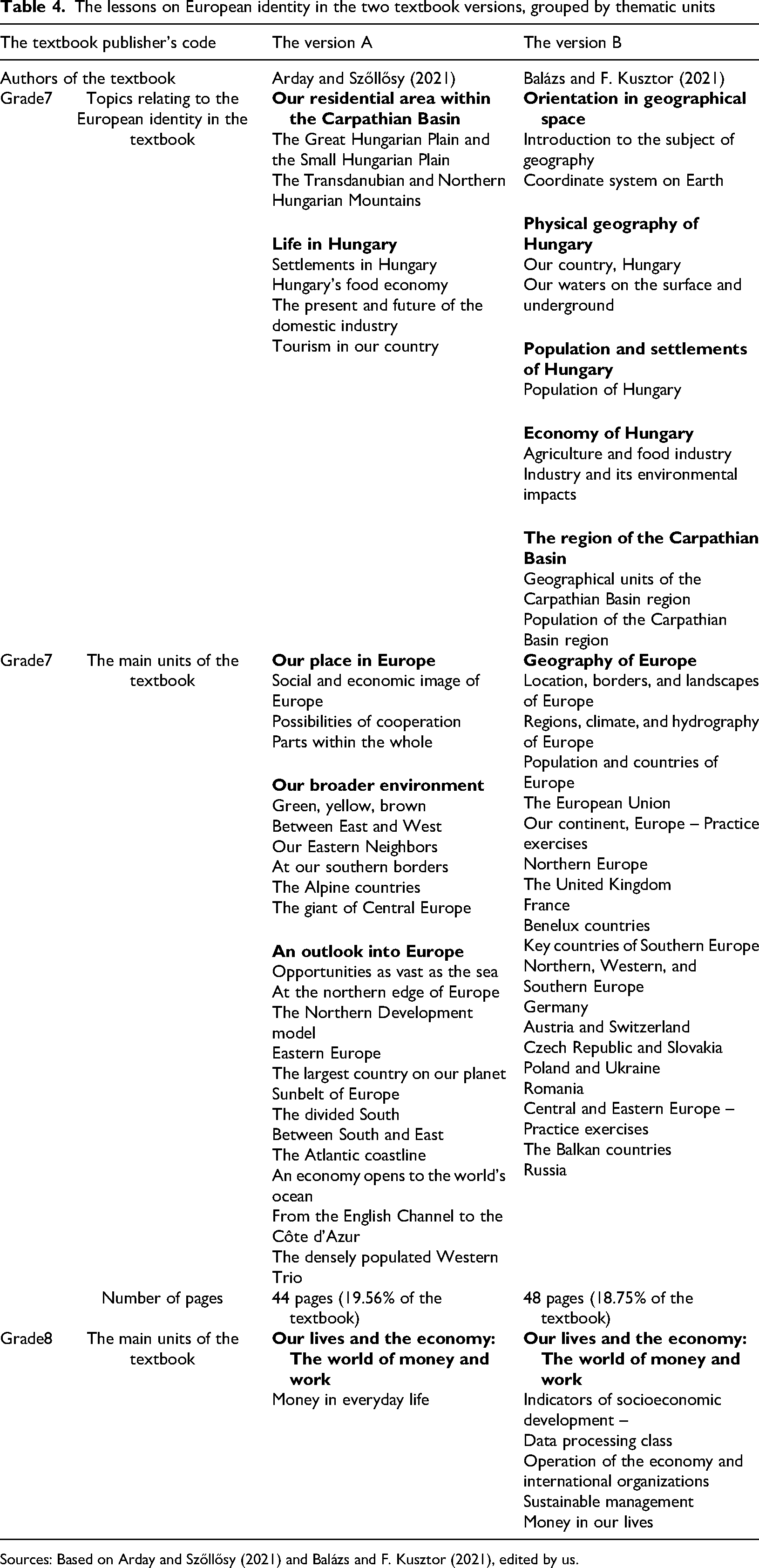
Sources: Based on Arday and Szőllősy (2021) and Balázs and F. Kusztor (2021), edited by us.
European values
These textbooks address the social diversity of Europe, emphasizing that both languages and cultures, as well as religions, are diverse on the continent, a diversity that intensifies in the context of globalization. Regarding pluralism, it is highlighted that in terms of the form of government, most European countries are republics, but there are also several monarchies. Pluralism also comes up in the functioning of the EU, particularly concerning its institutions such as the European Commission and the European Parliament. One of the textbooks prompts students to explore their connection with demographic concepts through an exercise (Figure 1).
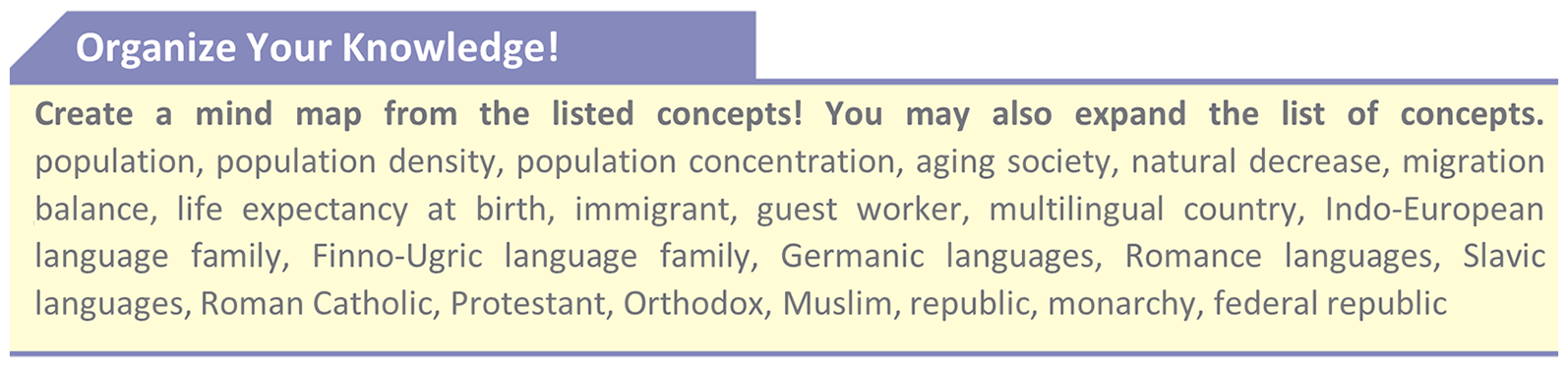
Task for creating a mind map including concepts related to European values.
European citizenship
The eighth-grade textbooks partly mention EU law, which emphasizes consumer rights: “We may purchase a faulty product, or it does not appear as advertised, or it does not function as advertised; then, according to EU law, the merchant must repair or replace it, provide a discount, or even refund the entire purchase price. For products and services ordered online or purchased through other nonstore means (e.g., by phone or by mail), the buyer has the right to withdraw from the purchase within 14 days for any reason, without justification.” (Arday and Szőllősy, 2021 p. 217).
Textbooks also explore the opportunities for European citizens. This is realized, for example, through the discussion of the EU's four fundamental freedoms (the single market seeks to guarantee the free movement of goods, capital, services, and people, known collectively as the “four freedoms”).
European identity
In Version B, Hungary's positioning within Europe is highlighted. In the first subchapter of the first lesson on the geography of Hungary, the textbook authors clarify that the country is part of the EU. Local cohesion is reinforced at several points in the textbooks, exemplified by Hungary's placement in the Carpathian Basin and the grouped discussion of EU countries, such as Scandinavia or Southern Europe (Balázs and F. Kusztor, 2021).
Regarding intercultural understanding, one example provided in the textbooks is depicted in Figure 2, titled “Blondes and brunettes”, along with subsections discussing languages and religions. The textbooks emphasize that multifaceted cooperation has developed among countries due to shared history, cultural interconnection, and the influence of cognate languages (Arday and Szőllősy, 2021).
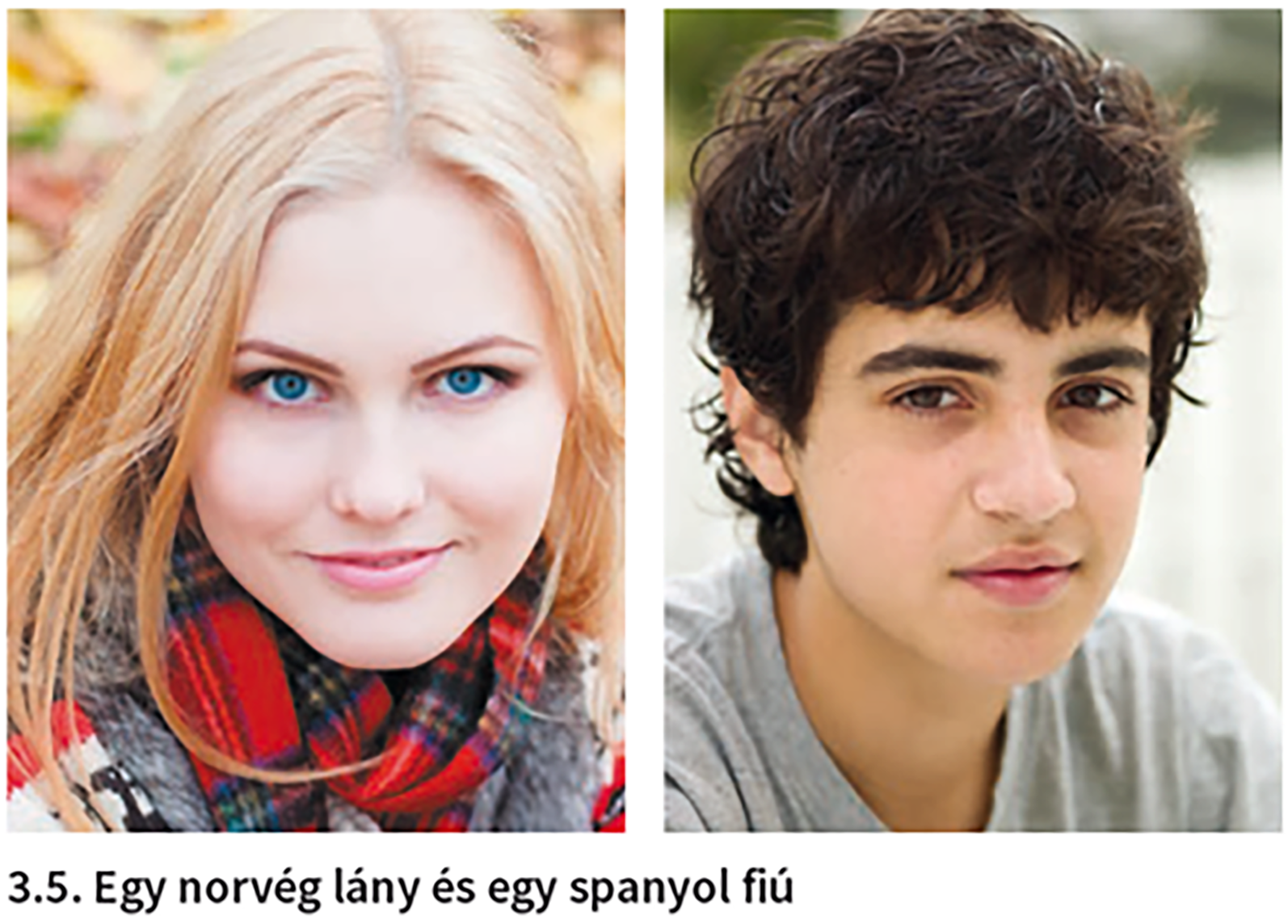
A textbook image depicting European diversity (a Norwegian girl and a Spanish boy).
Version A formulates as a point of keynote the future of European economic and social cooperation: “An important question regarding the future of European economic-social cooperation is how member states can preserve their national identities, traditions, and unique cultures.” (Arday and Szőllősy, 2021 p. 87).
The textbooks emphasize various “superlatives” in relation to Hungarian lessons preceding European lessons concerning national identity. Examples include Hajdúszoboszló, as Europe's largest spa complex; Lake Balaton, as the largest freshwater lake; Hévíz, as the largest thermal lake fed by hot springs; Pannonhalma Archabbey, with the world's largest Benedictine collection; and Pécs’ early Christian burial chambers, recognized as UNESCO World Heritage sites (Arday and Szőllősy, 2021, Balázs and F. Kusztor, 2021).
This perspective has continued in European countries in the textbooks, highlighting other countries’ “superlatives”, such as Germany's highest peak, Zugspitze; the Rhine, Europe's busiest waterway; Norway's Geiranger Fjord as a highly visited tourist destination; cultural landmarks such as Saint Sava Temple, one of the world's largest Orthodox churches; London's stock exchange as one of the world's most important; or the Loire Valley, with its riverside castles forming part of UNESCO's World Heritage sites (Arday and Szőllősy, 2021, Balázs and F. Kusztor, 2021).
Multilingualism and mobility
The issue of mobility appears in geography textbooks in several instances, particularly concerning employment. Mobility is addressed at various points due to subject-specific characteristics, such as graphs discussing the aging of European society, which include data on migration. However, detailed discussions on this topic are not provided (Arday and Szőllősy, 2021, Balázs and F. Kusztor, 2021).
Version B addresses multilingualism in several places; for example, “What are the official languages of Switzerland? Find other multilingual European countries!” or “Investigate which European countries speak the following languages: Basque, Catalan, Romansh, Galician, Welsh, Rusyn, Breton!” (Balázs and F. Kusztor, 2021 p. 119).
Development of knowledge, skills, and attitudes “about Europe, in Europe, and for Europe”
The promotion of European knowledge within geographical and social contexts is extensively addressed in the textbooks, particularly in the fourth table, where approximately twenty percent of the content is Europe-centric in seventh to eighth-grade textbooks. The two versions employ different approaches, while Version A analyzes country groups based on territorial and locational criteria, Version B highlights specific countries such as the UK, France, and Germany, dedicating separate lessons to their detailed discussion. Furthermore, Version A, preceding the presentation of countries, significantly emphasizes the opportunities of the respective country groups under the theme “Our broader environment,” focusing on European identity in an outstandingly organized manner, grounded on geographical and social characteristics (Arday and Szőllősy, 2021, Balázs and F. Kusztor, 2021).
In the lesson “Green, yellow, brown”, textbook authors examine various sectors. The differences between lowlands in the northern and southern parts of Europe, where animal husbandry or agriculture predominates, are delineated. The lesson delves into industrial areas in mountain ranges, such as the Ruhr area or the North Moravian industrial region. Finally, the utilization of local resources, including forestry, industrial settlements, mining, or agriculture, is discussed, and transit areas are interpreted. European awareness is further reinforced through tasks at the end of the lesson, for instance, “Locate the significant mountain passes of the Alps and the Carpathians on the map! Which regions of Europe do these connect?” (Arday and Szőllősy, 2021 p. 95).
In the lesson “Between East and West”, the transformative impacts of regime changes are detailed, summarizing the outcomes in each country, notably in Czechoslovakia and Poland. Among the concluding questions, one enhances interdisciplinary focus: “Present the history of a traditional industrial area!” (Arday and Szőllősy, 2021 p. 97).
The lesson “Our Eastern Neighbors” examines Romania and Ukraine, discussing Hungarian minorities, alpine pastoralism, geographical advantages, economic opportunities, and capital flows. The engagement of students with European identity prompts questions such as “How could we invite more Hungarian travelers to Ukraine?” (Arday and Szőllősy, 2021 p. 99).
In the lesson “At our Southern Borders”, the social segmentation of the Balkans is analyzed, referencing the disintegration of former Yugoslavia and wars. Croatia and Serbia are highlighted as areas of significant Hungarian tourist interest or with Hungarian minorities. The analysis underscores the coastline, Yugoslav gastronomy, and picturesque Belgrade. Regarding the common European identity, questions such as “What economic and social benefits would EU membership bring to Serbia?” (Arday and Szőllősy, 2021 p. 101) are posed.
In the lesson “The Alpine countries”, Austria, Switzerland, and Slovenia are examined, detailing their roles in Alpine life, such as animal husbandry, forestry, hydroelectric power, and tourism. Each country is briefly analyzed in 80–150 words. As a comparative task, students are encouraged to compare the territory and population of the Alpine countries presented in the lesson with those of Hungary and to draw conclusions.
In the lesson “The Giant of Central Europe”, the textbook delves into Germany, characterizing it as “one of the most important member states of the European Union, a leading economic power in Europe, the fourth-largest economy globally, and one of the world's largest exporters.” This lesson is one of the most extensive, spanning four pages. Several tasks at the end of the lesson aimed to enhance workforce skills development, such as “Choose a major German city and present it to your classmates! Outline its geographical location, economic sectors, other roles, and tourist attractions! Utilize the internet as well!” (Arday and Szőllősy, 2021 p. 107).
Summary and Recommendations
Summary
Based on our overview, it is evident that the textbooks comprehensively address European topics; however, different textbook versions employ varying emphases and approaches in representing European identity. The proportion of content related to European awareness in textbooks is acceptable, but it is noteworthy that these sections are not always thought-provoking or aimed at identity development. Like Croatian textbooks, the aim of the lessons seems to be primarily to transfer factual knowledge about Europe or the EU.
The analysis of the National Core Curriculum and the geography textbooks indicates a systematic approach to fostering European knowledge and identity among Hungarian primary school students. The curriculum, structured to move from a local to a global perspective, dedicates 21.57% of the geography content to European topics. The curriculum aims for students to understand the socio-economic characteristics of the European Union, its role in the global economy, and Hungary's position within it. However, this amount of knowledge does not measure the depth of whether European awareness and identity are being developed in these lessons or not. Most of them convey descriptive, lexical knowledge, and their explicit aim is not to enhance the sense of European identity. Specifically, only one source, figure, task, or sentence relates to European awareness and identity. Finally, we should emphasize that the proportion of this knowledge has shown a decreasing trend compared to the 2000s, which raises the question of how important this educational policy goal is in relation to or alongside national identity.
Textbooks for the upper primary grades sporadically incorporate European themes across various contexts. The fifth-grade textbooks introduce the classification of EU regions, while the sixth-grade lessons touch on the EU-supported Natura 2000 program. In the seventh and eighth grades, European identity is a significant focus. Textbooks address European values by emphasizing social diversity, government pluralism, and the functioning of EU institutions. Practical aspects of EU citizenship, such as consumer rights and the four fundamental freedoms of the single market, are also explored.
The analysis yielded several interesting findings, which could have been explored in greater depth. For instance, the reference to “blondes and brunettes” in the representation of European diversity is peculiar because hair color is a biological characteristic that does not deeply reflect the continent's true cultural, ethnic, or linguistic diversity. Europe is a highly diverse continent not only in terms of appearance but also in its historical, linguistic, and religious dimensions. Focusing on hair color might seem superficial, as it overshadows the deeper distinctions and commonalities that better represent European diversity.
Similarly, the generalization of the importance of neighboring countries is surprising, as while there are indeed cases where strong cultural, historical, or economic ties exist between neighboring nations, such as between France and Germany, there are other instances where these relationships are far weaker or even characterized by tensions, as seen between Poland and Russia. Such broad generalizations risk overlooking the specific historical and geopolitical contexts of different regions, demanding a more nuanced understanding.
Finally, the portrayal of Germany as the “Giant of Central Europe” is notable, yet somewhat reductive. While it is true that Germany plays a significant economic and political role, Central Europe is more than a single dominant country. Nations, such as Poland, Austria, and Hungary, are also key players in the region, each with distinct historical and economic trajectories. Such a one-sided narrative may overstate Germany's influence while neglecting the importance and contributions of other Central European nations to the region's dynamics.
Our evaluation indicates a limited integration of the European dimension in education indicators across all textbooks. While some indicators are sporadically present throughout various sections, they are more prominently featured in the concluding segments. There is a discernible need for additional content addressing local, national, and European identities and their interrelations, particularly within the realm of geography, to enhance European awareness. Augmenting social geography summaries with diverse interview-style sources could significantly contribute to the cultivation of intercultural understanding.
Conversely, Hungarian elementary school geography textbooks notably emphasize European social diversity, pluralism, and the roles of the European Union and its institutions. While aspects of European citizenship, particularly consumer rights, are briefly mentioned, a more thorough exploration of EU civil rights (benefits) is lacking in elementary-level materials. Hungarian geography textbooks predominantly adhere to the phenomenon outlined by M. Császár (2004), wherein they primarily provide superficial information regarding Europe, its extent, population, and general characteristics.
Future research directions include examining the integration of the EDE (European Dimension in Education) in secondary school geography textbooks for grades 9–10. It would also be beneficial to conduct a questionnaire survey at the end of eighth grade to assess the impact of teachers and textbook materials on the development of students’ European identity. Additionally, interviews with teachers could provide insights into how important they consider the development of European identity in their teaching. Moreover, another significant contribution of this work lies in the attempt to transfer the EDE indicators developed by Ledić et al. (2016) to a different European context, which has the potential to enhance the identified indicators further. By linking the integration of EDE in textbooks with teachers’ insights and the adaptation of indicators, the research aims to provide a more holistic understanding of how European identity can be nurtured in education.
Recommendations
Enhancing curriculum integration: The National Core Curriculum should be reviewed to ensure a more seamless integration of the European dimension in education indicators throughout the geography curriculum and the textbooks. This can be achieved by embedding European identity topics consistently across all grades, rather than concentrating them in the concluding segments.
Emphasizing identity development: The NCC enhances Hungarian identity, yet the development of European identity is lacking. The curriculum and the corresponding textbooks should shift from merely transferring factual knowledge to fostering identity development. This can involve designing lessons that are more thought-provoking and encourage students to reflect on their local, national, and European identities and their interrelations. Activities that promote critical thinking and self-reflection on these identities can be incorporated.
Increasing interdisciplinary content: The curriculum should include interdisciplinary content that connects geography with social studies, history, and cultural studies, along with relevant textbook material. This approach can provide a more holistic understanding of European identity and values. For instance, integrating historical events with their geographical impact can deepen students’ comprehension of European integration and diversity.
Integration of technology: Incorporating technology can enhance the learning experience. Interactive digital maps, virtual reality tours of European landmarks, and online collaborative platforms can facilitate a more engaging and informative study of geography and help explain complex topics such as socio-economic disparities within the EU. This integration should also be reflected in the textbooks.
Focus on contemporary issues: The curriculum should explicitly address current European issues, such as Brexit, the refugee crisis, and climate change. Integrating these topics into existing lessons can provide students with a comprehensive understanding of contemporary European challenges and their implications.
Enhanced content on EU civil rights: To address the gap identified, the curriculum and the textbooks should include more detailed discussions on EU civil rights and benefits. This can involve case studies, real-life scenarios, and interactive activities that explore various aspects of EU citizenship beyond consumer rights.
By acknowledging these areas for improvement and implementing targeted enhancements, educators can better equip students with the knowledge and skills necessary to navigate an increasingly interconnected and diverse world.
Footnotes
Declaration of Conflicting Interests
The authors declared no potential conflicts of interest with respect to the research, authorship, and/or publication of this article.
Funding
The authors received no financial support for the research, authorship, and/or publication of this article.
