




Abstract
The microstructure and localised corrosion behaviour of a nickel-based alloy fabricated by laser powder bed fusion (L-PBF) using a rotational scanning strategy are investigated, with emphasis on the role of the heat-affected zone (HAZ) in microstructural evolution. It is shown that the rotational scanning strategy disrupts continuous thermal gradients, promoting a mixed columnar/equiaxed grain structure and inducing a high density of low-angle grain boundaries (LAGBs) within the HAZ. Scanning Kelvin probe force microscopy was employed to directly correlate micro-scale electrochemical heterogeneity with specific microstructural features, including LAGBs and bimodal grain size distribution. Electrochemical tests demonstrate that the inherent micro-electrochemical inhomogeneity persists as the dominant factor governing localised corrosion at elevated temperatures, although crystallographic texture is randomised and grains are refined by the rotational strategy, reducing macro-scale anisotropy. A direct linkage between the microstructural characteristics and corrosion susceptibility in L-PBF alloys is established, providing critical insights for optimising processing strategies to achieve improved microstructural uniformity and corrosion resistance in aggressive high-temperature environments.
This is a visual representation of the abstract.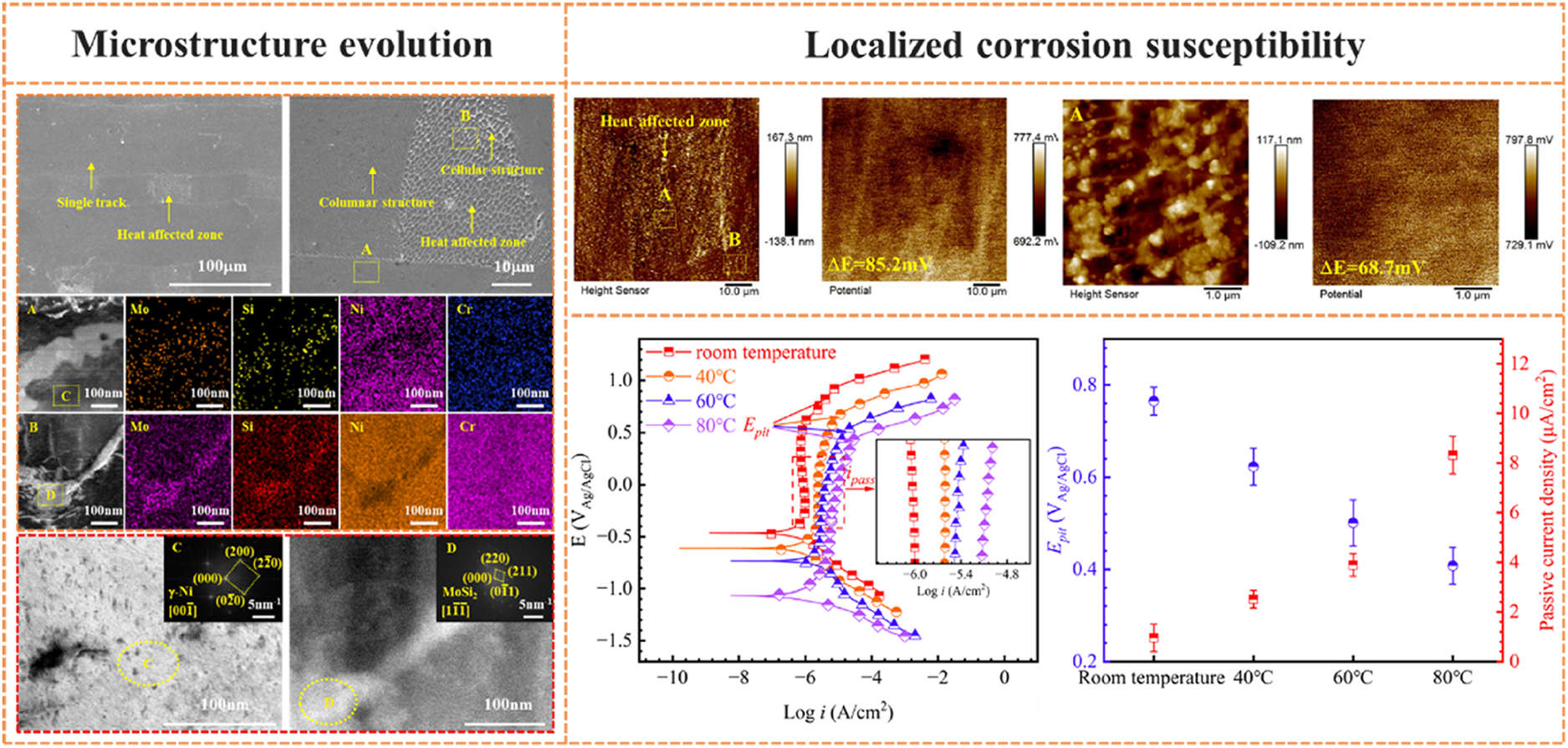
Keywords
Get full access to this article
View all access options for this article.