



Abstract
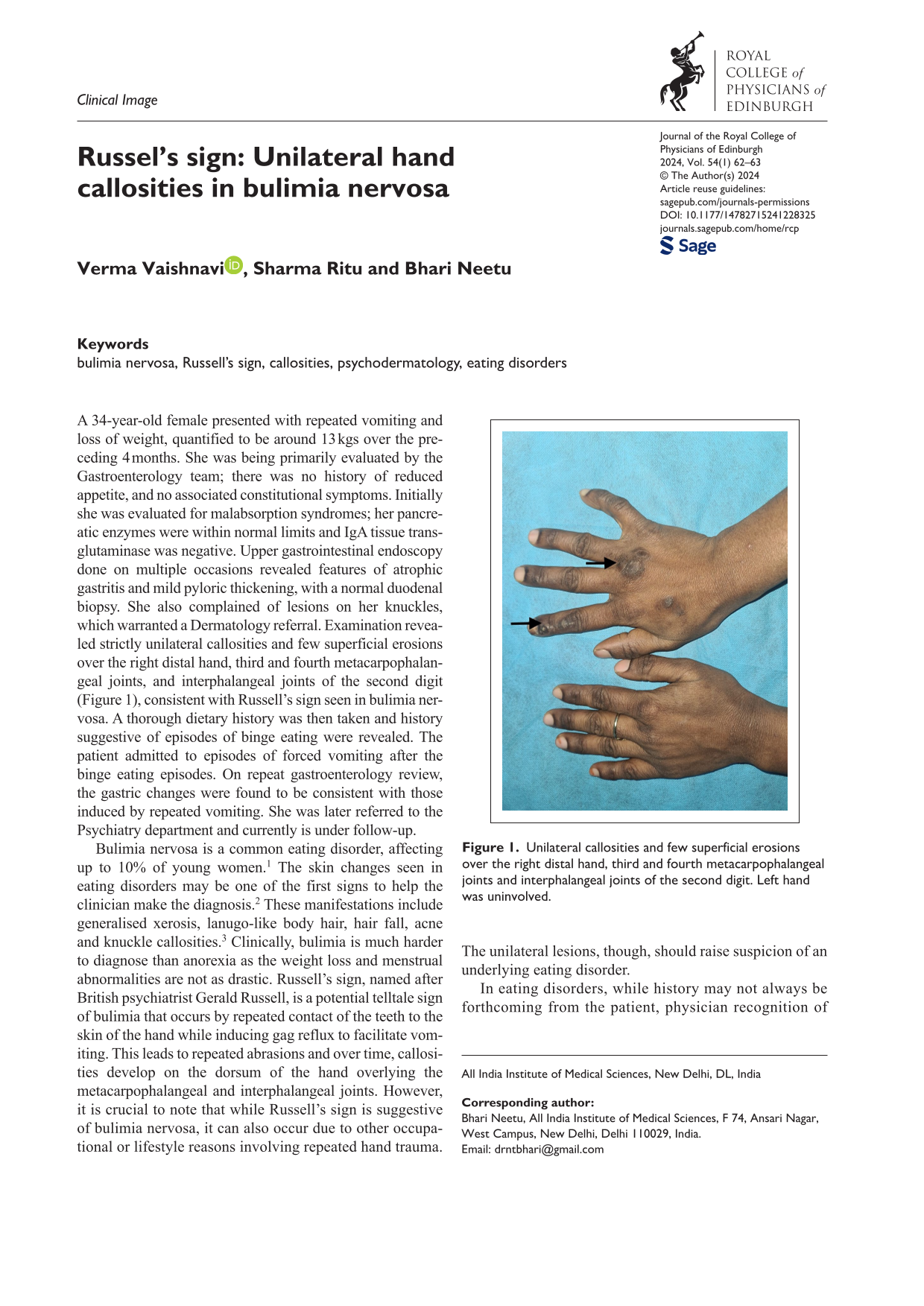
A 34-year-old female presented with repeated vomiting and loss of weight, quantified to be around 13 kgs over the preceding 4 months. She was being primarily evaluated by the Gastroenterology team; there was no history of reduced appetite, and no associated constitutional symptoms. Initially she was evaluated for malabsorption syndromes; her pancreatic enzymes were within normal limits and IgA tissue transglutaminase was negative. Upper gastrointestinal endoscopy done on multiple occasions revealed features of atrophic gastritis and mild pyloric thickening, with a normal duodenal biopsy. She also complained of lesions on her knuckles, which warranted a Dermatology referral. Examination revealed strictly unilateral callosities and few superficial erosions over the right distal hand, third and fourth metacarpophalangeal joints, and interphalangeal joints of the second digit (Figure 1), consistent with Russell’s sign seen in bulimia nervosa. A thorough dietary history was then taken and history suggestive of episodes of binge eating were revealed. The patient admitted to episodes of forced vomiting after the binge eating episodes. On repeat gastroenterology review, the gastric changes were found to be consistent with those induced by repeated vomiting. She was later referred to the Psychiatry department and currently is under follow-up.
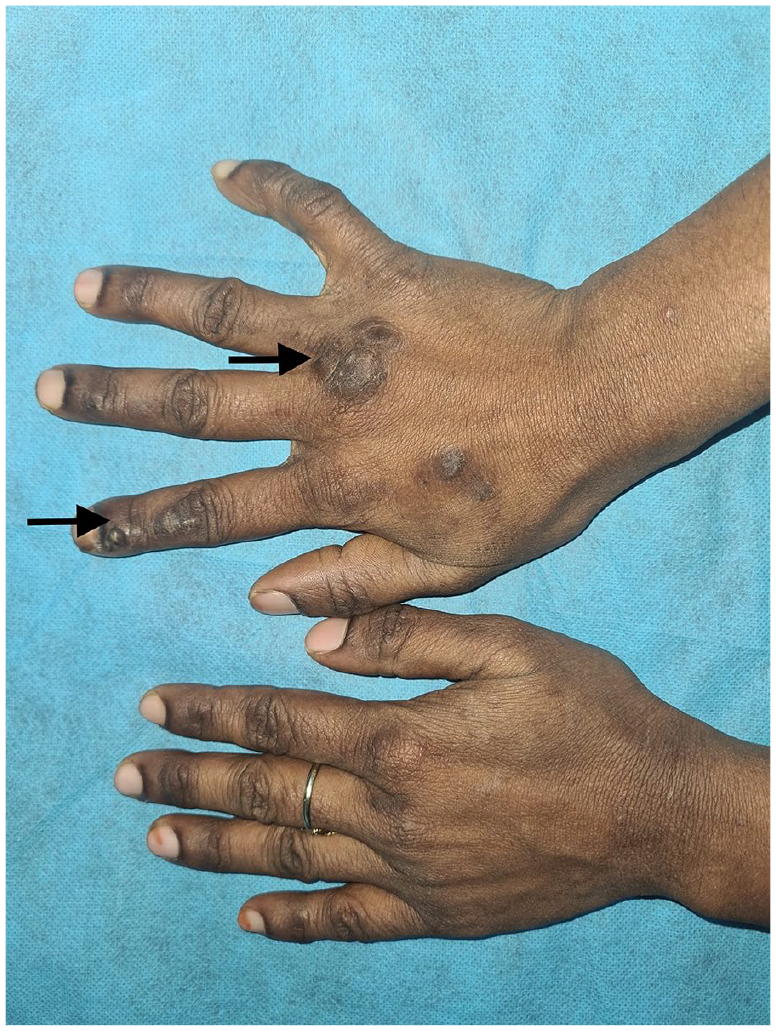
Unilateral callosities and few superficial erosions over the right distal hand, third and fourth metacarpophalangeal joints and interphalangeal joints of the second digit. Left hand was uninvolved.
Bulimia nervosa is a common eating disorder, affecting up to 10% of young women. 1 The skin changes seen in eating disorders may be one of the first signs to help the clinician make the diagnosis. 2 These manifestations include generalised xerosis, lanugo-like body hair, hair fall, acne and knuckle callosities. 3 Clinically, bulimia is much harder to diagnose than anorexia as the weight loss and menstrual abnormalities are not as drastic. Russell’s sign, named after British psychiatrist Gerald Russell, is a potential telltale sign of bulimia that occurs by repeated contact of the teeth to the skin of the hand while inducing gag reflux to facilitate vomiting. This leads to repeated abrasions and over time, callosities develop on the dorsum of the hand overlying the metacarpophalangeal and interphalangeal joints. However, it is crucial to note that while Russell’s sign is suggestive of bulimia nervosa, it can also occur due to other occupational or lifestyle reasons involving repeated hand trauma. The unilateral lesions, though, should raise suspicion of an underlying eating disorder.
In eating disorders, while history may not always be forthcoming from the patient, physician recognition of this eponymous sign can have a profound impact on early diagnosis and therefore the prognosis of the patient.
Footnotes
Acknowledgements
Nil.
Declaration of conflicting interests
The author(s) declared no potential conflicts of interest with respect to the research, authorship, and/or publication of this article.
Funding
The author(s) received no financial support for the research, authorship, and/or publication of this article.
Informed and written consent of the patient
Taken.
