




Abstract
The fruit fly, Drosophila melanogaster, is a simple and powerful model organism. It has played a critical role over more than a century, for example in establishing the field of genetics, and in foundational insights into the molecular basis of development. From the 1930s until today, researchers at the University of Edinburgh have used Drosophila to tackle questions in basic and biomedical science. Here the history of the initial decades of this research is explored, beginning with the introduction of Drosophila research to Edinburgh by Francis Albert Eley Crew, in the newly established Institute of Animal Genetics. This period of research includes the discovery that chemicals can cause genetic mutation. This was demonstrated by research of the effects of mustard gas on flies by Charlotte Auerbach and colleagues, guided by the future Nobel laureate Hermann Muller. Drosophila research was also formative in Conrad Hal Waddington’s conceptual thinking about developmental biology, including in his vision of the epigenetic landscape. This holistic, systems-level view of the control of development was far before its time and has continued to be influential to this day in our conceptualisation of developmental biology and in the increasingly important field of systems biology. Waddington’s experiments with Drosophila in Edinburgh also gave rise to the evolutionary concept of genetic assimilation, in which an environmentally induced phenotype subsequently becomes genetically encoded.
Keywords
Introduction
Each month, Drosophila researchers from across the University of Edinburgh gather at King’s Buildings for ‘Fly Club’ where we discuss our efforts to understand diverse questions: how do animals build the cilia required for hearing? how do we build the renal systems that maintain fluid and ionic homeostasis? how do animal immune cells migrate to wounds? how do we co-evolve with the pathogens which infect us? among many others. One strength of using this humble fly is the vast wealth of knowledge built up by studying it for over a hundred years. Indeed here at King’s Buildings, Drosophila has played a part in biological research since the 1930s, originally in the Institute of Animal Genetics which had just been established.
Introduction of Drosophila genetics to Edinburgh by F.A.E. Crew
The Institute of Animal Genetics (initially the Department of Research in Animal Breeding) was established by Francis Albert Eley Crew (Figure 1(a)). Crew, who had served as an army Major, returned to Edinburgh in the wake of the First World War. He had studied medicine before the war, and now began to do research and demonstrating in Physiology. Money had been allotted to establish an animal breeding institute in Edinburgh, but the death toll from the war had been so great that there was no one suitable remaining to establish it, and so Crew was approached. He wrote of his surprise to his father saying he knew nothing of the job, but mixed the letter up, sending it in the place of his application for the post. Apparently the chairman of the Board of Agriculture found this very amusing and it didn’t stop Crew being given the position. In 1928, Crew built a home for the Institute (now the Crew building) at King’s Buildings, and later spoke about talking to the builders as they dug the foundations, saying they had read Wallace and Darwin and that ‘they were very knowledgeable and it was a terrific pleasure to talk to them about it, what it was all about, what it was all for’. 1 Crew is not remembered for major scientific discoveries, but his place in this story is nonetheless essential, as a great organiser and the man who lay the foundations for what was to come.
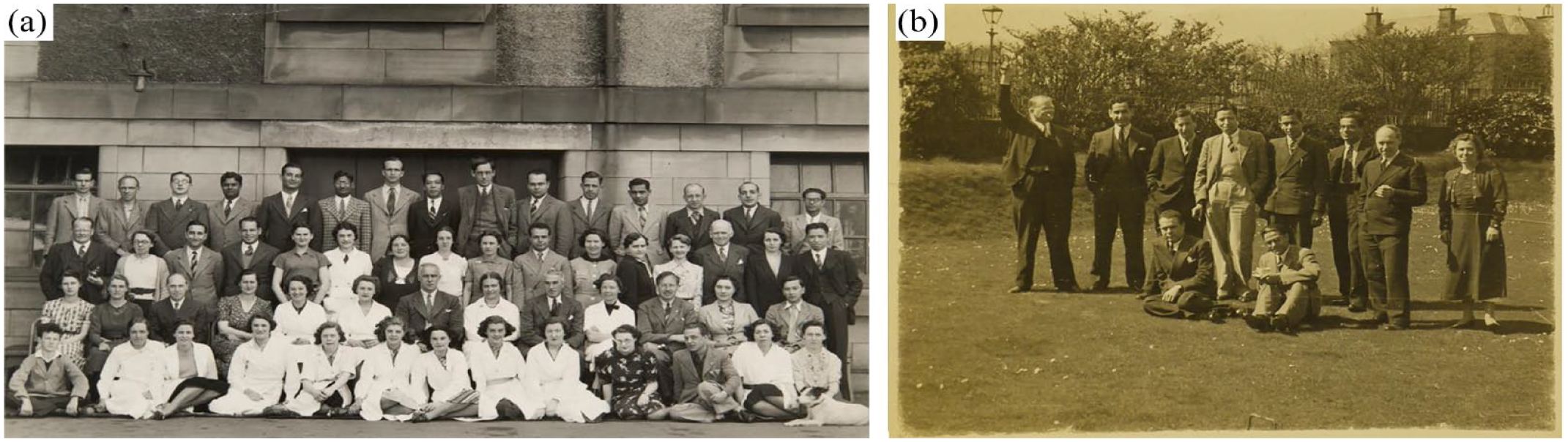
(a) Institute members, Spring 1939. F.A.E. Crew (second row, centre), Hermann Muller (second row, third from left), Guido Pontecorvo (third row, third from left) and Peo Koller (second row, third from right). 2 (b) Hermann Muller (second from right) outside guest house of the Institute of Animal Genetics. 2
To Crew, who was trying to establish world class genetics research at Edinburgh, it was clear that genetics in Britain had been left far in the wake of American research, largely thanks to the Drosophila group of Thomas Hunt Morgan, and lab members Calvin Bridges, Alfred Sturtevant and Hermann J. Muller. 1 Their findings had confirmed the theory that genes are carried on physically separate chromosomes, and they had also hypothesised mechanisms of how chromosomes are inherited, notably the process of ‘crossing over’. Each chromosome is present in two copies, one from the father and one the mother, only one of which is passed to the next generation in the egg or sperm cell. But there also seemed to be a shuffling process between these two chromosome copies; an occasional exchange of a large chunk carrying many genes. Morgan’s group found gene mutations which they could visually follow through successive generations (e.g., a mutant causing white eye colour in place of the normal red). This allowed them to map, in remarkable detail, the position of genes along each chromosome, as the further apart two genes are the more likely they are to be separated when a shuffling or ‘crossing over’ event occurs. 3 The ease of keeping huge numbers of Drosophila in the lab had enabled them to find many mutations as they randomly occurred, and Drosophila’s short generations allowed them to carry out their genetic tests with remarkable speed, so they hugely outpaced researchers working with other organisms.
Following the First World War there was no genetics at Edinburgh besides a few lectures in the Department of Zoology, with British genetic research largely focussed around Bateson at John Innes and Punnett at Cambridge. Crew set about to rectify this situation, and Drosophila would play an important part as ‘one had to get acquainted with that creature, you couldn’t avoid it, otherwise you couldn’t follow the arguments of the American school’. 1 During this period he visited Morgan’s lab, and would later describe how ‘it was an extraordinary sight, extraordinary, electrical atmosphere altogether. I got completely bitten. I learned the techniques of Drosophila culture and all the rest of it and brought stuff back with me’. 1 Crew was ahead of the trend in Britain; Bateson and Punnett had been largely hostile to the theories of chromosomal inheritance emerging from Morgan’s lab, until Morgan and Sturtevant came to Britain in 1922 to a meeting of the Genetical Society, bringing hatboxes full of flies and slides. Crew later recounted how Punnett said at this meeting, ‘I now believe in the chromosome theory’. 1
Future Nobel Prize winner Hermann Muller’s time in Edinburgh
Then in 1937 Crew gave Hermann Muller, from Morgan’s original fly group, a place in his Institute (Figure 1(a) and (b)). Though Muller had already made major breakthroughs in Texas, for example in discovering X-ray mutagenesis, he suffered a mental breakdown and even attempted suicide. This has been attributed to the stresses of work, collapse of his marriage, and despair at seeing the suffering caused by the Depression, combined with a climate which meant he was attacked for his socialist views. He decided to do a sabbatical in Germany, but when Hitler came to power he chose to move to the Soviet Union, due to his political convictions. Although Muller had several fruitful years in the USSR, this move eventually proved to be a mistake. Lysenko, who rejected genetic theories in favour of Lamarckism, gained the favour of Stalin and a campaign of persecution was launched against geneticists. 4 So Muller crossed Europe again, this time working with the Canadian Blood Unit on the Republican side in the Spanish Civil War. 5 As the Nationalists advanced, Muller found himself once more in danger, and eventually Julian Huxley put him in touch with Crew, who gave Muller a place at Edinburgh. 4 Crew described Muller as a tortured and defeated man, arriving in Edinburgh a wreck from his tumultuous time on the continent. 1 But Crew recognised Muller’s magnificent intellect, and though fate may have delivered Muller to Edinburgh, his arrival clearly fitted Crew’s ambition to build the reputation of genetics here.
Many besides Muller were fleeing the totalitarian regimes emerging across Europe, but this was to Edinburgh’s benefit. This city has long been a great meeting place; a sentiment which must have rung true in 1886 when the International Exhibition of Industry, Science and Art took place here, or in 1947 when the first Edinburgh International Festival was held, and certainly would have felt so for the scientists at King’s Buildings at the end of the 1930s. In the Institute, Muller met Dorothea ‘Thea’ Kantorowicz, a German refugee who he married in 1939. 4
Geneticist Guido Pontecorvo’s time with Muller
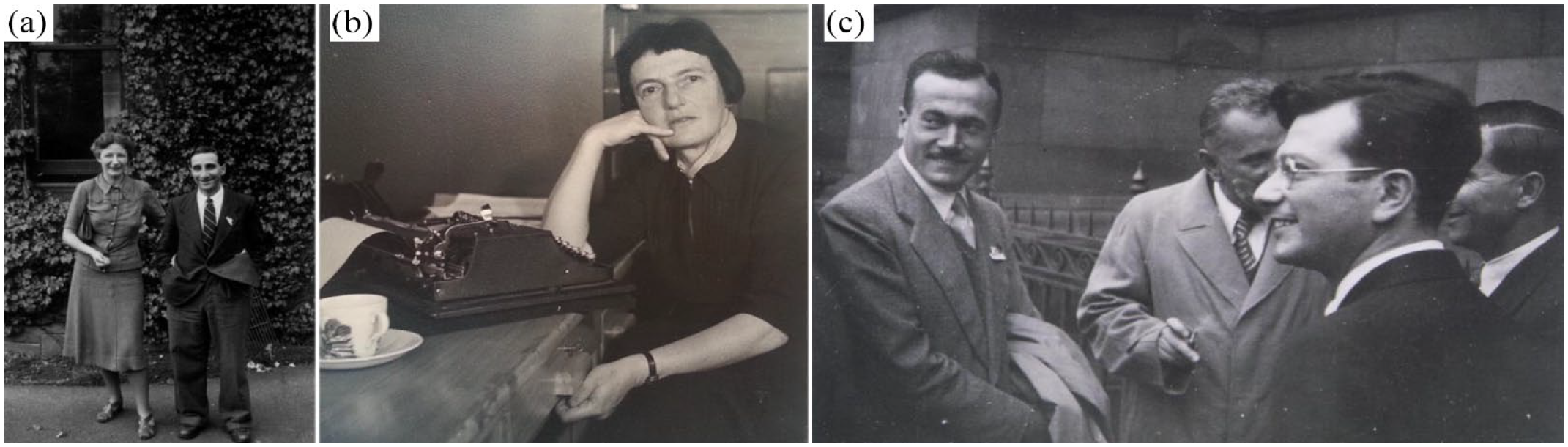
Another of the arrivals was Guido Pontecorvo, known as Ponte, who came from a large Jewish Italian family (Figures 1(a) and 2(a) and (c)). He had been leading a cattle breeding programme in Tuscany and visited Edinburgh’s Institute of Animal Genetics in 1937. A year later the racial policies of fascist Italy meant Ponte was dismissed from his post, and he returned to Edinburgh to work in the Institute, joined soon after by his Swiss art-historian fiancé Leni (Figure 2(a)). They planned to stay for a year and then take up a position in Peru; however the outbreak of the Second World War caused this to be cancelled. Thankfully he received help from the Society for the Protection of Science and Learning, which worked to assist refugee academics. 6
Ponte stayed at the Institute’s guest house which Crew had purchased (today Crew House) on Mayfield Road, which was also Muller’s home at the time. Ponte was greatly impressed by Muller’s ideas, and decided to begin a PhD with him. Using Drosophila, Ponte worked to advance understanding of the mechanics of chromosome transmission from one generation to the next. In one project he achieved the apparently impossible feat of creating fertile hybrids of Drosophila melanogaster and its relative Drosophila simulans, using tricks to manipulate the chromosomal contribution from the melanogaster and simulans parents. One outcome was to identify the approximate chromosomal locations of genes causing the male and female sterility normally occurring in these hybrids, with important implications for understanding how new animal species arise. 6 Muller would later describe Ponte’s work as the ‘most masterly piece of work that has ever been done for the PhD degree under my guidance’. 10
When Italy declared war, Ponte was interned on the Isle of Man as were many others now considered potential enemy aliens. Leni had married Ponte, which also placed her under suspicion, and as naval ships were based on the Firth she was required to move. She went to Glasgow, and when Ponte was released, he was given a post there. Ponte’s work with Muller using the simplicity of Drosophila to understand fundamental genetic principles was clearly formative, as he turned to the even simpler genetics of microorganisms, particularly Aspergillus nidulans. By doing so Ponte was able to resolve the structure of the gene in much greater detail, during his long career in Glasgow. 6
Mustard gas research: Charlotte Auerbach’s contribution to the discovery of chemical mutagenesis
Another refugee who arrived at the Institute was Charlotte Auerbach, known as Lotte (Figure 2(b)).
She was from a German Jewish family of many scientists including her grandfather Leopold, the anatomist. She had begun a PhD in Berlin under Otto Mangold. To say she did not have academic freedom with him would be an understatement; she would later recount that when she raised changing her project, he reacted in ‘a typical German-Nazi way’ saying ‘you are my student, you do as I say. What you think is of no consequence’. 11 Indeed Mangold would later become active in the Nazi party. Lotte had to abandon her studies when money ran out, taking up work as a teacher, but shortly after, the employment of Jewish teachers was terminated by the Nazis. She planned to take a post in a Jewish school, but her mother suggested she go to Britain, and a friend of her father contacted Professor Barger, the chair of Biochemistry at Edinburgh. She later knew that this decision probably saved her life. 12
She worked as a PhD student with Crew, carrying out some of the earliest developmental studies of appendages in Drosophila. Crew managed to help her acquire British nationality which meant she could remain in Edinburgh when the war began, unlike Ponte with whom she maintained a friendship. Her German accent and late-night tapping (on her typewriter) must have raised suspicion which led to a police visit on one occasion.11,13 After her PhD, Lotte worked as an assistant to Crew, and also undertook teaching. Muller had expressed a desire for Lotte to do some work with him, which she initially refused. However the conversations which ensued were to prove most influential for her. Crew had put pressure on Lotte to take up Muller’s offer; however Muller reassured her that he would only want to work with people who were genuinely interested in his area of research. She talked about her current interest in understanding the genetic basis of animal development, and Muller discussed how in order to understand how genes operate it would be important to understand what happens when they are mutated. 12 She would later say that ‘his enthusiasm for mutation research was infectious and from that day on I switched to mutation research. I have never regretted it’. 14 Lotte remained lifelong friends with Muller and spoke of his kindness and generosity, and perhaps most importantly how inspiring it was to work with him. 12
Work was being conducted at Edinburgh into the effects of mustard gas, and the pharmacologists Alfred Joseph Clark and John Michael Rabinovich, known as Robson, suggested that it may act to cause mutations. So Robson and Lotte set about testing this idea. Muller had developed ideal fly stocks for observing and quantifying when mutations had taken place, which Lotte utilised. This was using Muller’s ClB method in which sex-linked lethal mutations are identified. They heated mustard gas over a Bunsen burner on the roof of the Pharmacology building, with which to expose the flies, although this crude technique also resulted in burning the skin of their hands. But they saw a clear mutational effect, and so demonstrated chemical mutagenesis for the first time. The work could not immediately be published, indeed they could not even use the word mustard gas in their discussions, referring instead to ‘substance H’, and a ban on publication stood until a year after the war. Lotte was rightly acknowledged for the importance of this work, being awarded the Keith medal from the Royal Society of Edinburgh. Sadly this was not awarded jointly to Robson, as Lotte felt it should have been, and a rift formed between them which was never healed. Lotte spent much of the rest of her career carrying out meticulous work to further understand the mechanisms by which chemicals such as mustard gas could induce mutations.11,13
To Lotte ‘the events of the Nazi period were a profound blow’, but in Edinburgh she found, as far as is possible, her second home. When she was later offered a senior position in Germany she said she would ‘rather work as a lab girl in Scotland than a professor in Germany’. 11
Drosophila genetics and early developmental biology at the International Congress of Genetics
Circumstance would also deliver to Crew the opportunity to host the International Congress of Genetics in Edinburgh, in 1939. Vavilov had planned to hold the meeting in Moscow in 1937, but the political situation disrupted this plan, due to the persecution of geneticists resulting from the increasing power held by Lysenko. A decision was therefore made to hold it in Edinburgh. Twenty Russian geneticists were due to attend, but did not arrive, and the imminence of war meant that only six or seven hundred attended instead of the planned two thousand. It would be an extraordinary meeting, not for the reasons that Crew would have hoped, as half-way through, war in Europe broke out. There were many Germans there who divided into Nazis and non-Nazis. There were also Poles, some of whom rushed straight back, and others who became stranded in Britain. Two American delegates died on their return, as their ship the Athena was sunk. They were Fred W. Tinney and his wife Madeline.1,15,16,17
There was a strong showing of Drosophila geneticists at the meeting (Figure 2(c)), with many presenting papers stemming from a relatively new technique for mapping chromosomes. It had been found that in the fly salivary glands the chromosomes are duplicated many times, and the identical copies aligned, producing so called polytene chromosomes. In these a characteristic pattern of dark and light bands could be observed, reflecting regions where the DNA is more or less condensed respectively. This provided an incredibly useful visual map and changes such as the movement of a chromosomal chunk to another location could easily be tracked. Notably, Theophilus Painter, who had pioneered this technique, presented at the meeting. 17 Peo Koller was the Secretary of the Cytology Section. 18 He was a Hungarian cytologist, who had started scientific research during his studies for Benedictine priesthood. 19 Peo worked in Edinburgh in the 1930s and 1940s (Figure 1(a)), and his research included use of the new Drosophila polytene chromosome approach. 20 Among the Poles stranded by the outbreak of war were Helena Slizynska and her husband Bronislaw Slizynski who would then teach in the Polish School of Medicine in Edinburgh which Crew established during the war, and remain in Edinburgh for the rest of their careers. Both were trained in Drosophila research from a year working with Milislav Demerec at Cold Spring Harbor. During her time in Edinburgh, Helena would carry out studies using the salivary gland mapping technique, first collaborating with Muller, and subsequently meticulously characterising the different effects of X-rays and chemicals upon chromosomes, to better understand chromosome mechanics and repair mechanisms. 21
Another important advance that was presented at this meeting were the early attempts, in particular by Drosophila researchers, to apply genetic approaches to the understanding of embryogenesis. The developmental mechanisms during embryogenesis were being studied in vertebrates such as salamanders, but mutations, and so the ability to use genetics as a research tool, had not been identified in these organisms. Indeed it was not even universally accepted that there was a genetic role for the mechanisms being studied. One example of these early attempts can be seen in the work of Donald Poulson, who presented a paper regarding Notch deficiencies; flies lacking a section of chromosome which results in wings with characteristic notches in their margin. Poulson had looked at the embryos of these fly stocks and identified a new defect; as they went through the earlier steps of development they did not correctly specify the cells of their nervous system. 17
Epigenetic landscapes and genetic assimilation: The role of Drosophila research in C.H. Waddington’s pioneering theoretical biology
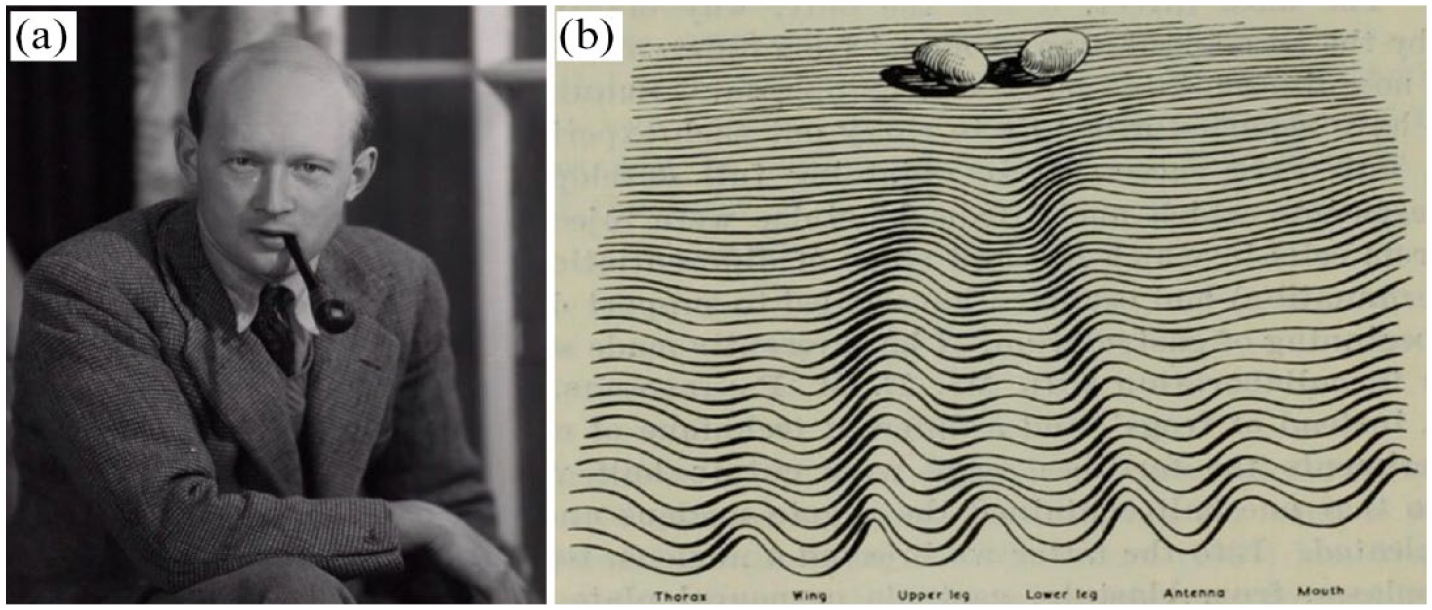
Conrad Hal Waddington (or Wad to his friends) was at the meeting, and would later replace Crew as director of the Institute (Figure 3(a)). Waddington had also begun to try and demonstrate a genetic role in the mechanisms of embryogenesis, turning to Drosophila to these ends. Waddington’s path to genetics was an unusual one and reflects the broad range of his interests and intellect. Pursuing his passion for palaeontology and natural history, he studied natural sciences at Cambridge and later combined this with studying philosophy. 22
During his studies, Waddington’s interest in palaeontology led him to an interest in evolution, and to studies of ‘live’ biology. He began working on vertebrate embryology, inspired by the work of German researchers such as Spemann. They had recently discovered the process of induction through experiments in which they grafted pieces of tissue from one embryo to another, and found that a specific piece of tissue could induce neighbouring tissue to develop into neural tube which gives rise to the central nervous system. Waddington now took part in the hunt for the inducing substance believed to be passing between the tissues. This led him to work with Otto Mangold (a few years after Lotte’s studies with him had terminated) who had formerly been a student of Spemann. Though unsuccessful in identifying the inducer, this work led Waddington to the view that a genetic approach was now needed to determine the mechanisms of development. Believing the inducing substance to have a genetic basis, he considered that many genes could be acting in a similar way, producing inducers which could shape the course of development, though perhaps often functioning within the tissue or cell in which they are produced. 25
In 1939, he arrived for three months research in Morgan’s group, 26 now in the California Institute of Technology, where Donald Poulson and Alfred Sturtevant were carrying out their developmental studies with Notch deficiencies.27,28 Waddington decided to study development of the wing where many defect-causing mutations had been identified. Like other Drosophila appendages, each wing develops in the pupa from a disk of cells already present in the larva. 29 Interestingly Lotte had done some of the first work in this direction while with Crew, tracing the development of wings back to the newly hatched larva and studying the developmental defects of some wing mutants. 30 Waddington carried out a more extensive analysis, with particular attention to the relative timings when abnormalities first occurred in the different mutants. He revealed a complicated series of developmental events, with different genes acting at different points, and considered that this was likely to be similar in other developmental processes (ultimately it would not be until the 1970s that genetic approaches would shed significant light on developmental mechanisms, with the Nobel Prize winning Drosophila research of Christiane Nüsslein-Volhard, Eric Wieschaus and Edward Lewis. This identified many of the critical genes regulating animal embryonic development). 29
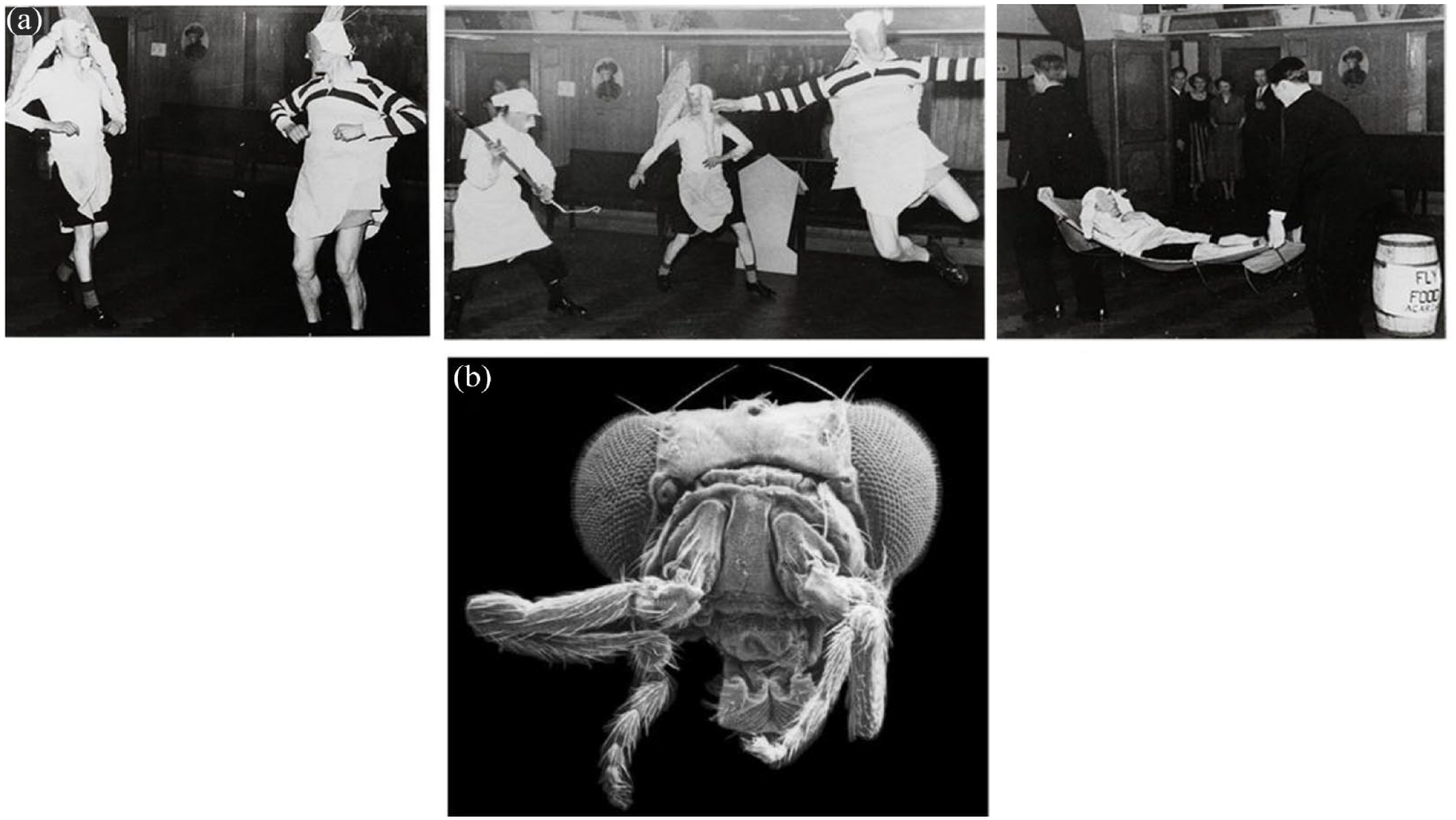
This period was formative in Waddington’s thinking and in 1940 he wrote Organisers and Genes where he first laid down his concept of an epigenetic landscape, a metaphor which became central to his thinking about development. He envisaged the course of development as a sloping landscape, down which lie a series of branching valleys (Figure 3(b)). A ball rolls down this landscape, representing a group of cells passing through developmental time, and the path it takes represents the developmental course of these cells. The top of the slope is the very first stage of development, from where the tissue could end up in any of the multiple valleys at the bottom of the slope, representing its potential to become any tissue type (i.e., it is pluripotent). As the ball roles down the slope, it takes a certain course at each branch point, representing the process of differentiation by which the tissue’s fate becomes ever more restricted. Crucially, Waddington envisaged the terrain of his epigenetic landscape to be shaped by the action of many genes, and this idea must have been informed by his wing experiments in which he found different genes to impose their effects at different stages of development. Another example which he took as compelling evidence for his idea was the aristapedia mutant of Drosophila. In this remarkable case, part of the fly antenna is transformed into a leg like structure (Figure 4), and what’s more, mutations normally affecting the leg also affected the leg-like antenna while mutations normally affecting the antenna did not have an impact on this structure. In the epigenetic landscape model there is a branching valley representing development into a leg or into an antenna, and the aristapedia mutant altered the branch of the two valleys such that cells in the antennal disc instead follow the valley of leg development. 29 Indeed Waddington’s epigenetic landscape was labelled with different parts of the fly in one of its earliest representations (Figure 3(b)).31,32
Waddington’s description of development which incorporated co-operative gene action has been described as revolutionary, shaping the way researchers think about development to this day. He was ahead of his time in conceiving of the process of development as resulting from the integrated function of multiple components, and rejecting the reductionist view that a detailed understanding of the individual components could be assembled to build an understanding of the process as a whole. His thinking was influenced by reflection on the process philosophy of Alfred North Whitehead. Waddington’s perspective anticipated modern systems biology, which seeks to understand the properties which emerge from complex biological systems by using mathematical modelling and computer simulation, 25 as well as the fledgling field of systems medicine.35–37
When the Second World War broke out Crew was posted to the military hospital at Edinburgh Castle. Following the war, he took up a position as Chair of Social Health, and in 1947 Waddington replaced him as Professor of Animal Genetics. Crew felt that genetics had moved on so rapidly during his absence as to be barely understandable. As he later put it he ‘could serve genetics best by getting out . . . And by Jove, it’s one of the finest things I ever did because Waddington is just the man’. 1 Under Waddington the Institute grew into the largest genetics department in the UK. 38 Waddington’s pursuits were broad, ranging from ecology, to ethics, 25 to the links between science and art. 39
Waddington also carried out further Drosophila research while at Edinburgh. Notably he proposed an evolutionary concept he termed ‘genetic assimilation’. In one study he found that some flies exposed to heat-shock during development showed a crossveinless phenotype; they lacked a specific vein in the wing. When he bred from these flies and repeated the experiment for several generations, he eventually produced crossveinless flies even when development occurred at a normal temperature. 40 Similar results were found when inducing a bithorax phenotype; a duplicated thorax bearing an additional wing pair, using treatment with ether. 41 Waddington explained his findings by evoking canalisation, drawing on his view of the epigenetic landscape. He described the ball rolling down its path at the valley bottom as ‘canalised’ in that perturbations caused by the environment may push the ball from its course but that it would then fall back to the valley bottom; ultimately development would proceed as normal. However a big perturbation, for example from heat shock, could push the ball further causing it to move into a different valley, and then subsequent selection could stabilise this new path.40,42 Waddington proposed that genetic assimilation could represent an evolutionary mechanism, and underlie rapid changes of a species in response to encountering a new environment, which subsequently become genetically encoded.
Waddington’s concept of genetic assimilation as an explanation of his crossveinless findings drew controversy. In the prevailing view of evolution (i.e., the neo-Darwinian synthesis) evolutionary change was explained in selectionist terms; new alleles emerge randomly by mutation, and their prevalence in a population is then determined by natural selection depending on the advantageousness of the given allele. Lamarckian inheritance, in which evolution proceeded by inheritance of acquired characteristics was considered as the only alternative, and this explanation had been discredited.42–44 Several leading evolutionary biologists including Dobzhansky (Figure 2(b)), Mayr and Stern, who were architects of the neo-Darwinian synthesis, rejected Waddington’s canalisation explanation of genetic assimilation. In their view, genetic assimilation could be explained with a threshold model, leaving the canalisation concept unnecessary. ‘Sub-threshold’ alleles present in the population are revealed, and therefore available to the forces of selection, following the perturbation such as heat-shock treatment. Ultimately the accumulation of these alleles in the population would proceed to a point where the phenotype could occur in the absence of the environmental perturbation.45,46 Waddington considered the ‘sub-threshold’ concept as a ‘cloak to cover up all the more interesting questions’.
47
Indeed the origins of his thinking about genetic assimilation lay in his dissatisfaction with the neo-Darwinian synthesis. In his view ‘It is doubtful, however, whether even the most statistically minded geneticists are entirely satisfied that nothing more is involved than the sorting out of random mutations by the natural selection filter’
43
and he considered that By speaking of mutations as ‘random’, which is true enough at the level of the gene as a protein-DNA complex, we obscure the fact that the effect of a mutation, as far as natural selection is concerned, is conditioned by the way it modifies the reaction with the environment of a genotype which has already been selected on the basis of its response to that environment. This is not neo-Lamarckism, but it is a point which has been unduly neglected by neo-Darwinism.
48
Waddington contested the population genetics framework which ignored the fact that an organism is not a collection of alleles, each of which can be assigned a selective coefficient, but is rather a highly evolved and constrained system. In thinking about the properties of evolved systems, Waddington considered the seemingly problematic issue of how an organism achieves robustness (the ability to develop in a reproducible manner in the face of environmental fluctuations and genetic mutations) on the one hand, and plasticity (the ability to evolve, e.g., in response to environmental changes) on the other. He saw canalisation as the key to understanding this problem.42,44 Canalised pathways, shaped by evolution, could provide potentially useful alternative developmental outcomes in response to environmental changes. Furthermore, being canalised could allow organisms to build up reserves of ‘cryptic genetic variation’, that is, alleles which produced no discernible phenotype in normal environmental conditions, which could then be recruited to the process of genetic assimilation.
The processes underlying genetic assimilation, and its evolutionary implications, continue to be debated to this day.44,49 In the field of evolutionary developmental biology (evo-devo), which emerged towards the end of the twentieth century, the properties of developmental systems play a central role in explaining evolutionary processes. Such an attempt to integrate genetics, development and evolution has its roots in Waddington’s thinking, particularly regarding the epigenetic landscape, and canalisation underlying genetic assimilation.50–52
Conclusion
Science progresses through the interplay of evolving ideas, and new observations. In biology there has been a tendency to sideline theoretical thinking, which is often denigrated as excessively speculative, in contrast to other fields such as physics. However theoretical thinking is important for guiding experimental practice and advances in our conceptual understanding of complex living systems. The progress of ideas and observations also occurs in specific contexts of place and time, and is shaped by many factors including the tools available to researchers, such as the model organisms we develop, the ‘moral economies’ of the scientific communities in which we work, 2 as well as the wider changing society around us. Drosophila research runs as a thread through the work conducted at Edinburgh’s Institute of Animal Genetics during the 1930–1950s. During this period, Edinburgh benefited immeasurably by welcoming refugees from across the world, as well as becoming home to diverse thinkers including Waddington whose views lay outside the prevailing framework of the time. Their studies, enabled by the relative simplicity of the fly system, contributed crucially to some of the most important insights into the workings of living systems to come from Edinburgh during this period, providing new observations, as well as fuelling advances in theoretical thinking.
Footnotes
Acknowledgements
Thanks to Clare Button for her extensive knowledge and help with the Edinburgh University Animal Genetics archive material, and to David Finnegan for his valuable comments.
Declaration of conflicting interests
The author declared no potential conflicts of interest with respect to the research, authorship, and/or publication of this article.
Funding
The author received no financial support for the research, authorship, and/or publication of this article.
