




Abstract
The advent of digital transformation will launch a new age for global higher education, one that presents numerous opportunities for administrative and instructional reform. Although there is a growing corpus of literature on digital transformation in higher education, there are still several important research gaps, especially when it comes to the examination of national policy documents in unique geopolitical situations like Vietnam. This study has identified the key strategies of digital transformation through the examination of 21 national policy papers, namely (1) Digital infrastructure and governance, (2) Equity and capacity building, (3) Digital pedagogy and administration, (4) Strategic planning and stakeholder collaboration, and (5) Financing and resource allocation. Based on the findings and Lewin’s change theory as a conceptual framework, this research developed a conceptual model for guiding digital transformation at the institutional level, encompassing Activation, Implementation, and Institutionalisation Layers that can be broadly applied in various settings. The results of this study have important implications for educators, policymakers, and other stakeholders engaged in the advancement of digital transformation, not only in Vietnam but also in other nations starting similar paths toward the digital transformation of higher education.
Introduction
Global higher education (HE) is entering a transformative era driven by the rapid advancements in digital technology. This digital transformation presents unprecedented opportunities for enhancing administrative processes, educational management, and overall academic improvement (Bygstad et al., 2022). Within the context of globalisation, the implementation of digital strategies has led to significant developments in virtual learning and program management aimed at delivering high-quality educational experiences (Mohamed Hashim et al., 2022). As HE institutions adapt to these evolving demands, it becomes increasingly crucial to integrate technology effectively into educational policies to meet contemporary educational goals (Koseda et al., 2024). The widespread adoption of online learning platforms, educational apps, and digital libraries has democratised access to high-quality resources, narrowing the educational gap across geographical and socioeconomic divides (Richter and McPherson, 2012).
Given these profound changes, it is imperative for HE institutions to embrace digital transformation to remain relevant in the 21st century – a period marked by a strong emphasis on innovation and educational quality enhancement. This highlights the essential role of educational policies in navigating the challenges and opportunities presented by the digital era (Koseda et al., 2024). Globally, there is a growing focus on developing policies that support effective digital management within the educational sector. These policies do more than serve as frameworks; they shape the future of digital transformation by determining how effectively technology is harnessed to achieve educational objectives (Xiao, 2019).
A well-structured digital learning environment, supported by sound policies, can foster social inclusion and encourage the adoption of innovative practices in education. For instance, the Digital Education Action Plan of the European Commission exemplifies a policy initiative designed to equip member states with the tools needed to optimise the use of digital technology for educational purposes (European Commission, 2020). Vietnam, a rapidly developing Southeast Asian country, presents a compelling case study in leveraging digital transformation to enhance educational access and quality. While enrolment in tertiary education has shown modest growth, the sector faces significant regional disparities, particularly between urban centres such as Hanoi and Ho Chi Minh City and rural or mountainous regions with limited infrastructure. According to the Ministry of Education and Training (MOET), digital literacy levels vary widely, with students and faculty in underdeveloped areas encountering greater challenges in accessing and utilising digital tools for education (Khan, 2024). Additionally, the persistent issue of mismatched skills remains a concern; employers frequently find graduates theoretically knowledgeable but deficient in practical skills and digital competencies required for a modern workforce (Tuyet, 2022). The Vietnamese government, recognising the potential and challenges of the digital era, formally launched the National Digital Transformation Program in June 2020, with education as a central focus (Government of Vietnam, 2020). This program aims to drive innovation, improve learning outcomes, and contribute significantly to the country’s broader digital transformation strategy, positioning Vietnam to capitalise on the opportunities presented by the Fourth Industrial Revolution (Giang et al., 2021).
Vietnam’s digital transformation policies have evolved from an initial focus on infrastructure during the pandemic to more comprehensive strategic goals in the post-pandemic era, reflecting broader global trends in educational policy (Nguyen et al., 2024). Despite the expanding body of literature on digital transformation in HE (Benavides et al., 2020), significant research gaps remain, particularly in the detailed analysis of national policy frameworks within specific geopolitical contexts like Vietnam. Firstly, there is a lack of in-depth research on the impact of government policies on the digital transformation processes within Vietnamese HE institutions. This includes a detailed examination of policy provisions related to digital pedagogy, equality and inclusion, digital infrastructure, and strategic resource management. Secondly, digital technology’s dynamic and rapidly evolving nature continually challenges existing policy frameworks (Nguyen et al., 2023), necessitating ongoing research to ensure that these policies remain relevant and effective. Moreover, the shift from infrastructure-focused policies to those prioritising collaboration and innovation presents substantial challenges. Implementing these strategies requires adaptable policies addressing varying levels of digital literacy and resource disparities across regions (Navaridas-Nalda et al., 2020). Furthermore, integrating digital innovation into educational curricula is essential, as research suggests that this approach enhances educational outcomes and sustains global competitiveness, particularly in the context of Education 4.0 and the Fourth Industrial Revolution (Benavides et al., 2020).
This study seeks to determine the strategies required by the MOET in Vietnam to implement a comprehensive digital transformation in HE. To address the research question (RQ) – ‘What strategies are required by the MOET to implement a comprehensive digital transformation in Vietnamese HE?’ – we conducted a systematic analysis of 21 national policy documents issued by the Government of Vietnam and MOET. These documents provided the foundation for identifying key interventions and informed the development of a conceptual model that aligns high-level policy directives with practical, institution-level measures. This targeted approach is especially significant given the challenges in translating overarching digital transformation goals into tangible, sustained progress within HE institutions. Furthermore, drawing on Kurt Lewin’s (1947) three-phase change theory – unfreezing, changing, and refreezing – we propose a three-layer digital transformation model that integrating the governmental strategies into different stages. This model directly responds to the RQ by providing a structured framework to guide MOET’s strategies for implementing a comprehensive digital transformation in HE. The findings of this study offer valuable insights for policymakers, educators, and stakeholders involved in digital transformation efforts, not only in Vietnam but also in other countries pursuing similar educational digitalisation initiatives.
Literature review
Digital transformation in HE and the role of national policies
Digital transformation within HE entails incorporating cutting-edge technologies such as artificial intelligence, cloud computing, and the Internet of Things (Mohamed Hashim et al., 2022). These innovations are deployed to augment educational frameworks and enhance student experiences. Such technological integration has become a strategic priority for HE institutions, which demonstrate diverse levels of digital proficiency (Fernández et al., 2023).
In modern education, digital technologies permeate various operational and academic domains within HE institutions. Platforms like Moodle, Blackboard, and Canvas support blended and online learning environments, promoting a shift towards more individualised and adaptive educational experiences (Hong and Gardner, 2018). Additionally, enhancements in digital infrastructure, including high-speed Internet connectivity and cloud services, play a pivotal role in expanding educational resources (Al-Malah et al., 2023). The influence of digital technology extends to administrative functions, with innovations such as blockchain introducing transformative changes in processes like certificate verification, thereby improving efficiency and security (Thakare et al., 2024).
The rate and efficacy of digital transformation in HE are critically influenced by national policies, which can significantly shape the adoption and implementation of new technologies (Broberg and Golden, 2023; Butler et al., 2024). These policies can either facilitate the introduction of innovative technologies through supportive measures or hinder progress by maintaining outdated standards that suppress innovation. For example, the United States’ National Educational Technology Plan sets forth strategic objectives to enhance digital equity (U.S. Department of Education, 2024), while the United Kingdom’s digital strategy aims to improve digital infrastructure and literacy (UK Government Digital Service, 2022). This emphasises the necessity for policies that support technological advancements and adapt flexibly to the evolving educational landscape.
Nevertheless, the transition towards digital education faces substantial hurdles, particularly in developing countries where infrastructure and digital access gaps exacerbate educational disparities (Gottschalk and Weise, 2023). The COVID-19 pandemic has further highlighted these challenges while demonstrating how digital technologies can help bridge educational gaps and foster inclusive learning environments (Otto et al., 2024). Consequently, it is essential for policy frameworks to comprehensively address critical aspects such as access, equity, quality, and innovation. This approach will ensure the sustainable integration of digital technologies into education, aligning with global educational systems’ immediate needs and long-term objectives. For instance, UNESCO highlights the need for quality assurance systems in HE to evolve in response to the sector’s changing demands, ensuring equitable access to high-quality education for all students. Furthermore, addressing issues of equity and access is essential for improving educational outcomes and fostering social inclusion across diverse educational contexts (Butler et al., 2024; Chan, 2023).
Towards a comprehensive model for digital transformation
Digital transformation in HE is a key factor that enables new pedagogical options, administrative models, and the value system of institutions to be developed because of the rapidly evolving digital technology landscape (Mohamed Hashim et al., 2022). Besides, scientific studies have shown the necessity of using a systemic approach for digital transformation in HE institutions, which is supposed to provide a framework for a smooth digital transition. A robust digital infrastructure is a cornerstone of digital transformation in education. Nurhas et al. (2022) highlighted that the accelerated digital transformation during the COVID-19 pandemic revealed significant infrastructural challenges, necessitating HE institutions to adapt both their working and learning cultures to meet these demands.
Furthermore, the use of digital technologies by teachers and students from a multimodal layer perspective offers insights into how technology intersects with human activities in educational practices, showing that a multimodal layer perspective can be fruitful for understanding effective technology use and design in educational settings (Schnaider et al., 2020). Digital literacy also plays a crucial role, empowering educators and students to effectively use and develop digital applications. It emphasises the role of content and curriculum as well as teaching in the digital environment (Nikou and Aavakare, 2021). Thus, digitalisation encompasses not only the adoption of tools and practices but also broader, multi-layered implications that impact the entire educational ecosystem.
However, HE institutions are facing problems in accepting digital technologies, including issues related to funding, training, infrastructure, etc. These challenges are particularly pronounced in developing countries, where the digital divide exacerbates inequities, making it more difficult for students and faculty in rural or impoverished areas to access digital technologies compared to their urban counterparts (Nguyen, 2023). Financial constraints further complicate digital adoption, with funding emerging as a critical obstacle, especially in institutions lacking inherent technological capabilities for online teaching (García-Morales et al., 2021). This call for a comprehensive model is rooted in the belief that digital transformation should be a social and inclusive process to achieve a more participative and human-centred university environment supported by technology and to address technological challenges (García-Peñalvo, 2021).
Conceptual framework
Kurt Lewin’s change theory, known to be the three-phase model – unfreezing, changing, and refreezing – stepped out to be an adopted technique in organising changes within an organisation (Lewin, 1947). This theory consistently proves its effectiveness not only in leading change initiatives but also in dealing with other issues. This conceptual framework is often metaphorically described through the process of altering the shape of a block of ice, encompassing three stages: unfreezing (loosening or establishing formidable impediments for change), changing (inserting new behaviours or methods of working), and refreezing (making the newly established ones permanent by creating new stable conditions) (Lewin, 1947). His perspective was that change was ‘a complicated and iterative learning process’ (Burnes, 2004: 993), where stability was always fluid, rather than a predictable and planned transition from one stable state to another (Cummings et al., 2016). The theory has been employed at the institutional level, especially to look at various aspects of HE, such as research, student success, and faculty development. By applying Lewin’s change model to his research, Gearin (2017) investigated the coping mechanisms of new heads of institutions with the changing dynamics and expectations and key themes, which will include disequilibrium, transition/change, resistance, and change readiness. Taking Lewin’s theory further, Burnes (2004) and Endrejat and Burnes (2024) note that the model is still valid and that it remains as significant as it ever was, particularly regarding strategic aspects associated with effective change management.
In the current study, Lewin’s theory provides a conceptual structure for a three-phase model applied to the digital transformation implementation at the institutional level. Each layer corresponds to a particular stage in Lewin’s theory. The ‘unfreezing’ phase in Lewin’s model, focuses on preparing the educational institution by performing the assessment of how digital it is and creating a community for the changes. In Vietnam, this stage involves conducting a thorough assessment of an institution’s current digital infrastructure and readiness. In particular, The National Digital Transformation Program aims to build digital platforms supporting online teaching and learning, develop digitalised learning materials, and create shared data repositories for HE institutions (Le, 2024). The ‘changing’ phase points to learning and implementation of digital resources and applications for education either as a process or management activity. In Vietnam, universities have rapidly adopted online learning systems due to the COVID-19 pandemic, which has accelerated digital transformation efforts (Nguyen-Anh et al., 2023). The ‘refreezing’ stage promotes the integration of technological changes and is a place where innovation is an ongoing process. For instance, embedding digital culture in Vietnamese HE institutions fosters continuous improvement and ensures that these innovations are not only adopted but evolve with emerging educational needs (Wall et al., 2024). However, despite its advantages, there are limitations with the model. Critics reckon that the rigidity of the refreezing stage is often seen as incompatible with the modern nature of change (e.g. Clegg et al., 2005). We would argue that Lewin’s model remains highly relevant when appropriately adapted to modern contexts. While the need for flexibility in the refreezing stage is a valid concern, studies suggest that refreezing does not need to be static. Instead, it can represent a dynamic stabilisation where continuous improvement and iterative adjustments are part of maintaining the new status quo (Hanelt et al., 2021). Research also shows that organisations that attempt continuous change without periodic stabilisation face burnout and strategic drift (Mahoney and Thelen, 2010). In this sense, Lewin’s model can be interpreted as cyclical rather than linear, allowing institutions to periodically unfreeze and adjust as necessary. This approach provides a balance between stability and adaptability, which is essential for managing complex digital transformation processes effectively.
Through analysing the policy initiatives of strategic implementation of digital modernisation in HE, this paper presents a model for comprehensive digital transformation in HE. The model acts as the compass that helps HE institutions to orient themselves throughout the complex digital integration process, and this, in turn, enables them to benefit as much as possible from digitalisation by enhancing quality, access, and innovation.
Methods
Data collection: selection of policy documents
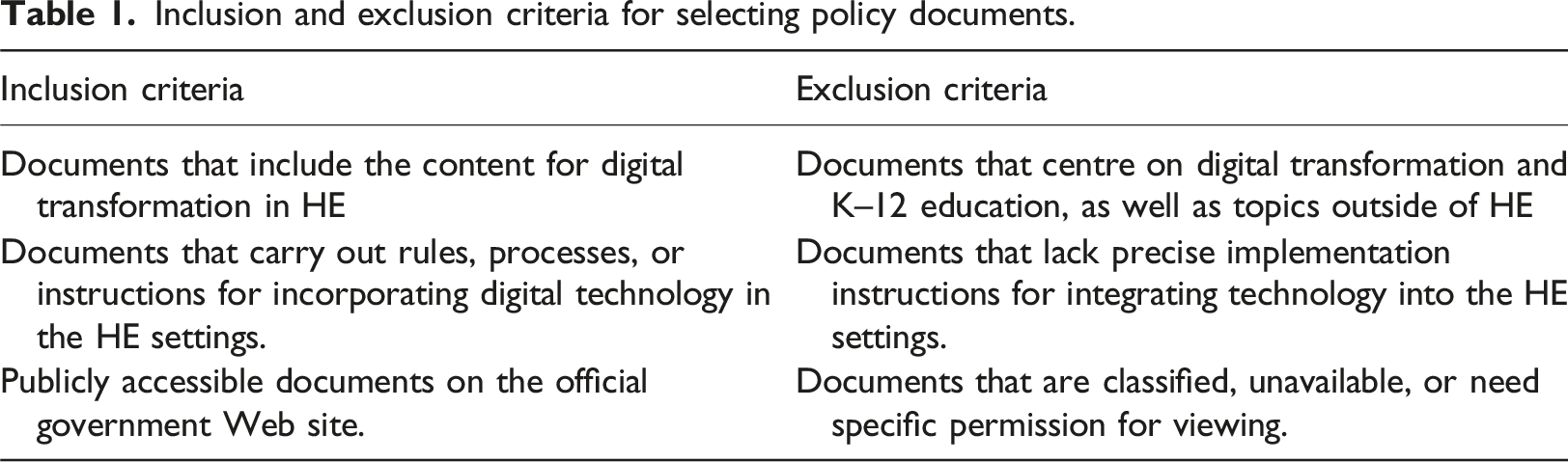
For relevant papers, we searched the MOET Web site and the Vietnamese government. The targeted search approach contained terms in the Vietnamese language. Because the Web site does not by default allow multiple keywords to be entered into the search task bar, the search terms ‘Giao duc dai hoc’ (HE) and ‘Cong nghe thong tin’ (information technology) were used separately to gather documents on HE policies and to look for policies on the use and integration of technology in education, respectively. The evaluation period filter was set in 2023 and went backwards until all relevant materials were found, including 2019.
Inclusion and exclusion criteria for selecting policy documents.
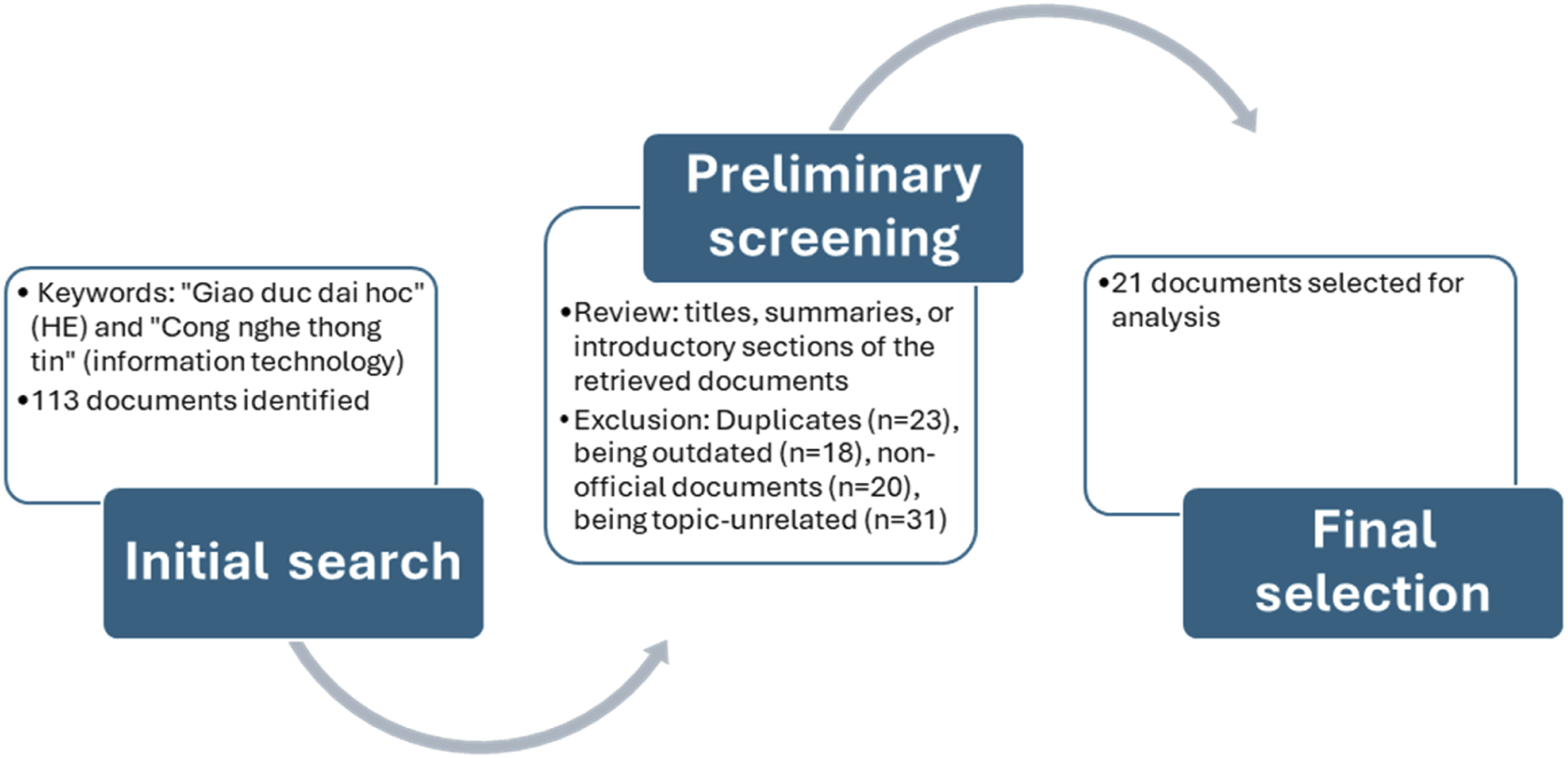
A process of documents search, screening and selection.
Policy documents analysis
The authors employed the thematic analysis approach of Braun and Clarke (2006) to draw inferences and discover the policy narratives regarding digital transformation in the HE of Vietnam. This analytical technique was adopted for its strength in identifying, analysing, and reporting patterns (themes) in the data. The analytical task began with gathering 21 digital transformation-related policies in HE institutions, in which the first researcher translated the relevant parts into English. These might be all the documents or one of the parts of the range of regulations, strategic frameworks, and guidelines issued by the MOET of Vietnam. After the screening stage, we engaged in the next step to search for data elements within the documents, including particular words, phrases, sentences, and even paragraphs that gave insights into different aspects of digital transformation. After translating the documents into English, the first author conducted an initial review to identify key themes and categories emerging from the text.
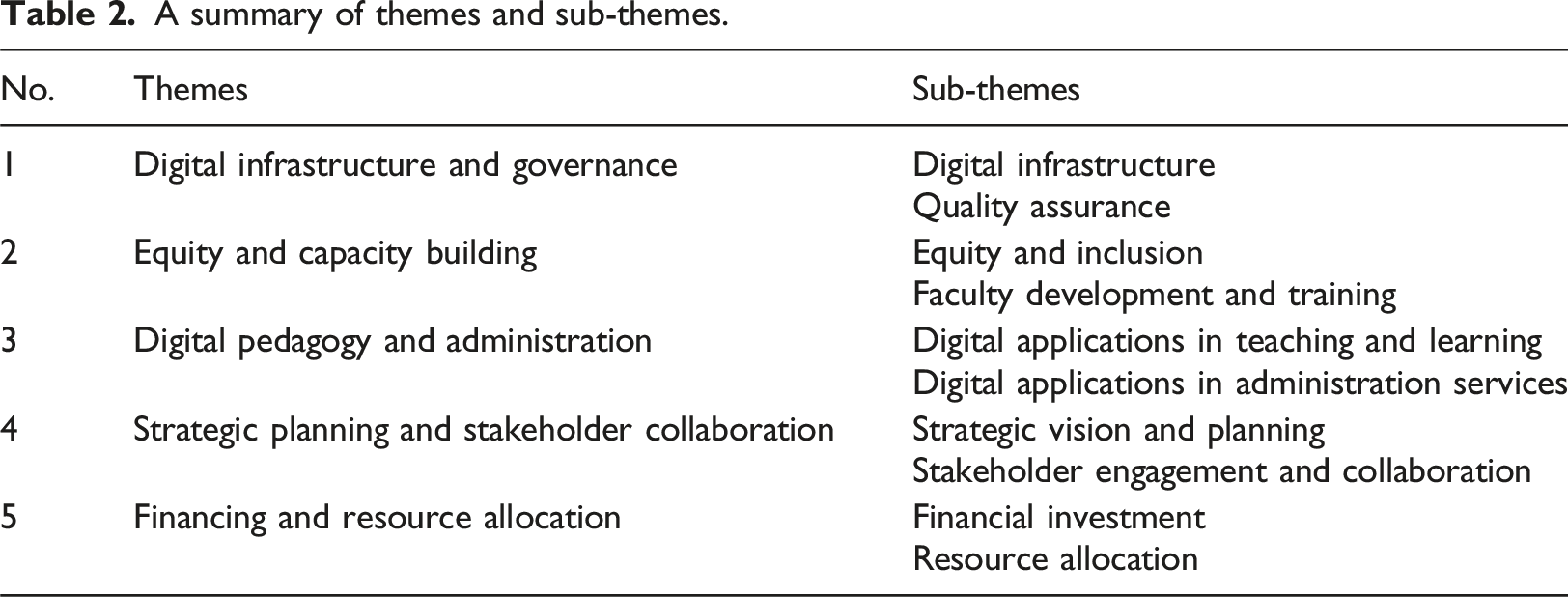
Intercoder reliability, which refers to the consistency of coding decisions across different researchers, is crucial for ensuring the accuracy and credibility of a study’s findings. In this study, we maintained this consistency by carefully reviewing the coding process and conducting intercoder reliability checks to identify and address discrepancies early on (Lombard et al., 2002). Additionally, both authors developed a theoretically valid coding protocol, grounded in relevant theories, and tested its validity by applying it to a sample of the data. Both researchers reviewed the preliminary codes and discussed their relevance and clarity. They jointly refined the definitions of the codes to ensure they were specific, comprehensive, and aligned with the research focus. This rigorous approach ensured that the coding process was both reliable and valid, producing robust and trustworthy results (Rourke and Anderson, 2004). Coding resulted in the first group of ten sub-themes. All of them corresponded to a complex dimension of the digital transformation discussion as reflected in the policy documents. Then, we underwent a thorough review and made sure that all themes structured the key ideas of policy documents and their content. The dual-coder method was utilised where two separate researchers conducted the coding and connectedness process. This ensured that the integrity and rigour of the thematic analysis were guaranteed.
A summary of themes and sub-themes.
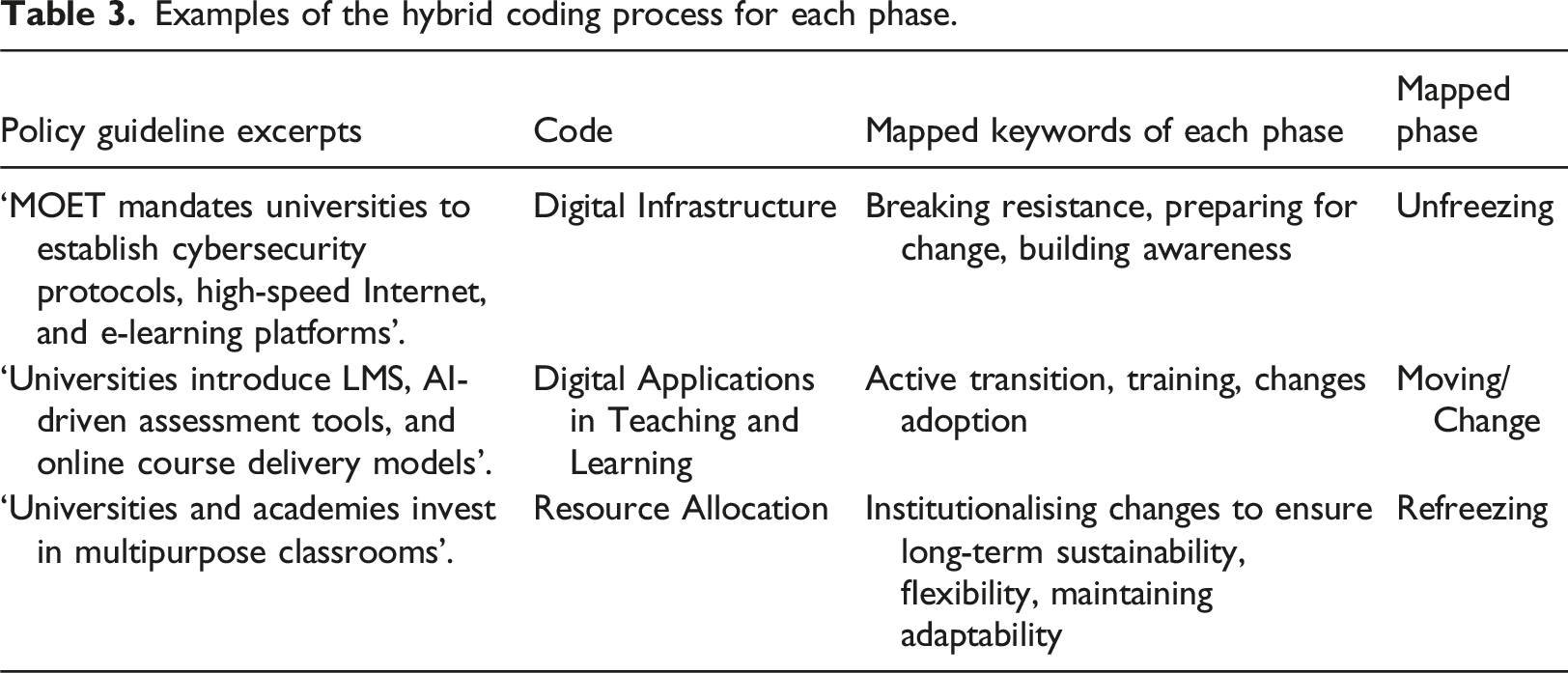
Examples of the hybrid coding process for each phase.
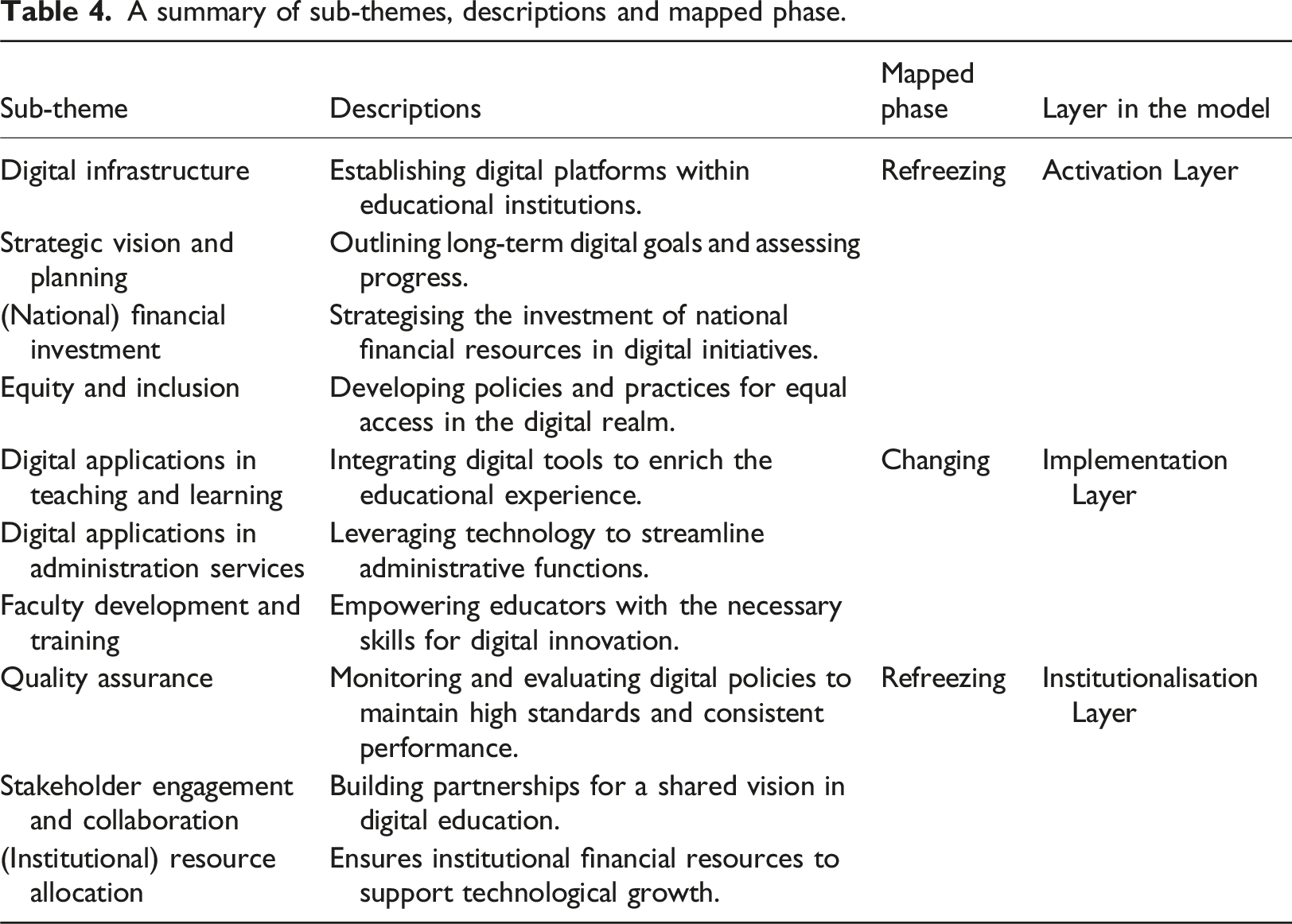
A summary of sub-themes, descriptions and mapped phase.
Findings
Required guidelines and strategies for implementing digital transformation
Descriptive statistics of policy strategies for digital transformation.
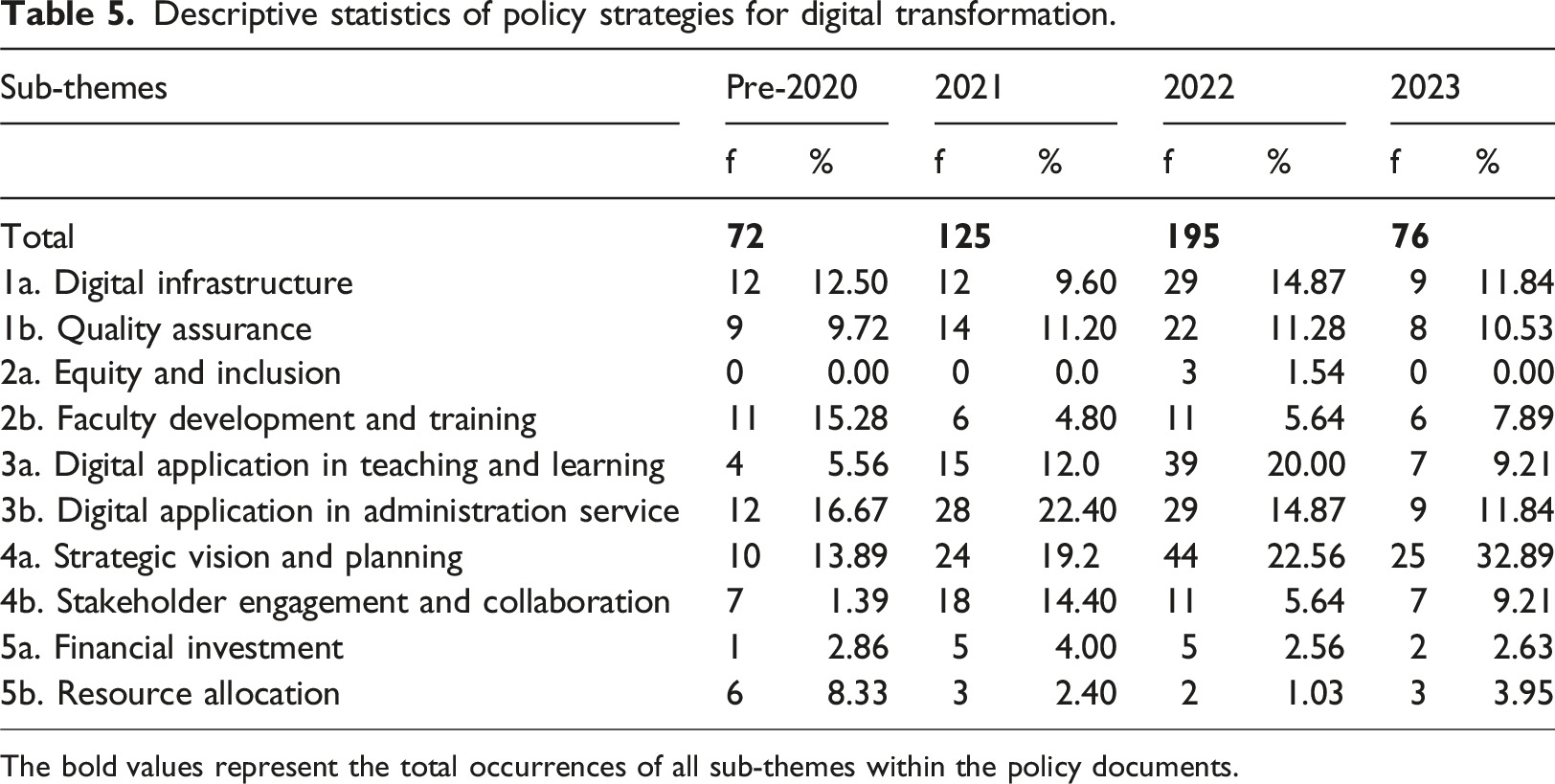
The bold values represent the total occurrences of all sub-themes within the policy documents.
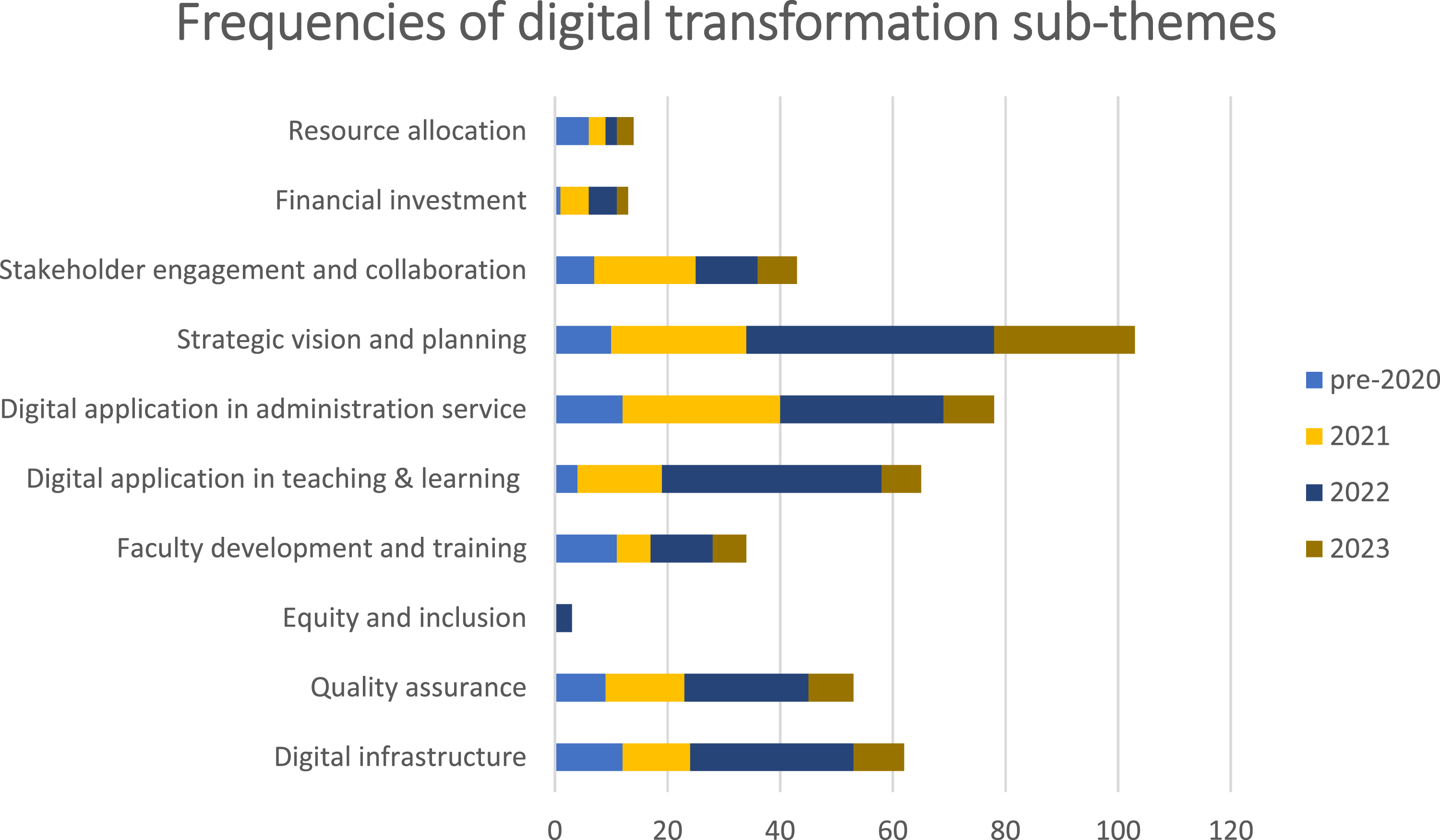
Trends of digital transformation guidelines by frequencies from pre-2020 to 2023.
Digital infrastructure and governance
The MOET of Vietnam naturally displays its dedication to improving digital infrastructure in education and creates a set of policies, which include many aspects aimed at promoting the use of technology in education at all levels. Figure 3 shows the different strategies as directives and guidelines from Vietnamese educational authorities comparatively among the frequencies. From the point of view of digital infrastructure and governance, the sustained focus on building solid digital infrastructure is of tremendous value, as evidenced by states influenced before the year 2020 at a rate of 12 instances (12.50%), kept uniform all through the year 2021 with similar frequency (12 instances, 9.60%), and attained a prominent peak in 2022 with 29 instances (14.87%). In 2023, the number was measured as 9 (11.84%), an obvious indicator of their continuous efforts. Strengthen conditions to ensure technical infrastructure and capacity to apply information technology in online teaching and learning and testing and evaluating educational quality. (No 5155/BGDĐT-GDĐH, MOET, 2023c). Digital transformation model based on national policy documents.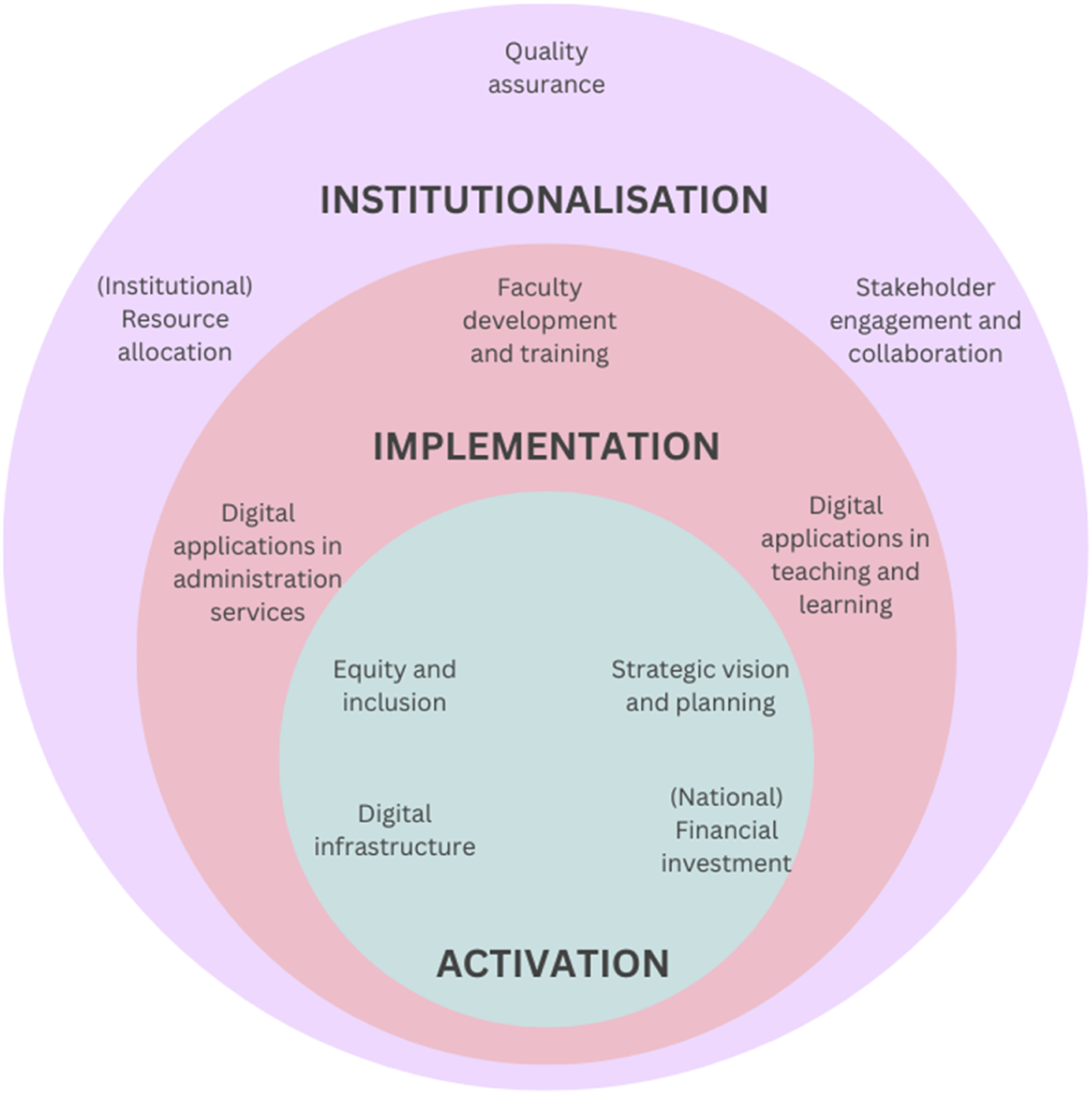
Quality assurance within the Vietnamese HE sector is a growing point in national policies, underscored by a consistent increase in recorded instances over the years. The findings also indicate a surge in the number of instances where multidimensional poverty was mentioned in media during the crisis, reaching 14 mentions (11.20%) in 2021 before declining in 2023 to only 8 instances (10.53%). This indicates an intact desire to ensure digital sites and software are designed for use and diverse for the changing educational requirements. Implement a pilot project for a digital HE model based on deploying a shared online teaching platform, and then developing a shared online course system for several university-level training majors. (No 4735/BGDDT-GDĐH, MOET, 2022d)
Vietnamese policy efforts, such as the implementation of a pilot project for digital HE models, aim to improve the quality of online platforms and create a scalable and replicable framework that emphasises the robustness of technology.
Equity and capacity building
The national policy foregrounds the strategies of digital equity and capacity building. The equity and inclusion aspect is vital but has shown limited occurrence in policy implementation, with no documented (before 2020 and 2023) incidents in these periods. Three instances in 2022 (1.54%) echo the fact that this area might be the one where a shift in the community’s approach is more necessary. Promoting equitable digital transformation across all members of the educational system is the essence of inclusive education. This involves ensuring equal access to digital resources and educational training for students in less privileged and underrepresented communities. Develop foreign language training programs on the Internet so that students in rural areas, ethnic minority, and mountainous areas can access and study for free. (No 619//QĐ-BGDĐT, MOET, 2022b)
In parallel, Faculty development and training have been a significant consideration. There was a robust initial focus, as evidenced by 11 instances (15.28%) before 2020, suggesting a strong priority on equipping educators with the necessary skills to navigate and leverage digital education tools effectively. The frequency decreased in 2021 to 6 occurrences (4.80%) but saw a resurgence to 11 instances (5.64%) in 2022 before settling at 6 occurrences (7.89%) in 2023. However, the varying frequencies indicate that policy and program design must be adaptive, building upon previous experiences and feedback to ensure the training remains relevant, effective, and responsive to both educators’ needs and pedagogical advancements. Implement teacher training linked to needs to ensure sufficient structure, quantity, and quality to meet the requirements of educational innovation; effectively implement the Project to improve the capacity of lecturers and managers of HE institutions to meet the requirements of fundamental innovation, to achieve basic and comprehensive education and training for the period 2019 - 2030. (No 2457/QĐ-BGDĐT, MOET, 2023a)
Digital pedagogy and administration
Digital pedagogy and administration have become increasingly central to the narrative of digital transformation within the educational sphere, which refers to the integration of digital technology into teaching and administrative tasks. Digital applications in teaching and learning first saw an upward trend in 2021 with 15 instances (12.00%) followed by a spike in 2022 that recorded 39 instances (20.00%). Such significant growth exemplifies the initiatives aimed at reforming education delivery in ways that are innovative and responsive to fast-changing contexts, given the crisis and the whole set of new requirements. Nevertheless, if we look at a reduction from 26 to 7 occurrences (9.21%) recorded in 2023, it could indicate either post-pandemic stabilisation of the adoption of digital tools or a possible shift towards the consolidation and optimisation of digital practices already implemented in the previous years. Implementing Decision No. 1373/QD-TTG dated July 30, 2021, of the Prime Minister promulgating the Project ‘Building a learning society for the period 2021-2030’, the MOET develops an Implementation Plan Current Project: Applying information technology, digital technology, and online teaching in organising teaching and learning activities to improve the operational efficiency of educational and training institutions to meet the needs social learning. (No 1112/CT-BGGDT, MOET, 2022c)
At the same time, digital applications in administration services also gained importance. This is evident by the remarkable increase from 22.40% to 28 occurrences in 2021, and peaked at 14.87% after recording 29 occurrences in 2022, though later settled down to the rate of 11.84% in 2023. The highest peak in 2022 matches a collective trend by key stakeholders to switch to digitised workflows, perhaps following the dictate of pandemic-induced remote administration which necessitated the adoption of digital tools for student admissions, records keeping, financial management, and resource planning. The next decline in 2023 would likely point out that the most important digital integration into the administration has been accomplished, and main systems are now on the site, letting the managers shift their attention to fine-tuning and polishing these digital processes. The decline, in fact, could be the result of a period in which the MOET and HE institutions assess and evaluate the digital tools introduced, with a focus on efficiency, leading to corresponding adjustments. The Information Technology Department must deploy the online public service portal with specialised professional systems to provide digital services, connecting with the National public service portal and expand online public services. (No 1282 /QĐ-BGDĐT, MOET, 2022a)
Strategic planning and stakeholder collaboration
The theme of Strategic planning and stakeholder collaboration has consistently been the focus of education policy, with Strategic vision and planning climbing from 10 (13.89%) before 2020 to a high of 44 (22.56%) in 2022, before moderating to 25 (32.89%) in 2023, reflecting the continued prioritisation of long-term educational strategies. This upward trajectory reflects a deliberate policy shift towards long-term planning and robust stakeholder engagement as cornerstones of educational reform. The peak in 2022 indicates an intensive phase of strategic policy formulation and collaboration, likely a response to the educational challenges highlighted by the pandemic. The slight reduction in instances by 2023 may suggest a transition from developing strategic frameworks to their implementation and refinement. Develop plans and implement tasks and solutions of the Project ‘Increasing the application of information technology and digital transformation in education and training in the period 2022-2025, with an orientation to 2030’. (No 4735/BGDDT-GDĐH, MOET, 2022d)
Stakeholder engagement and collaboration are integral aspects of educational policy, particularly as it pertains to digital transformation. Starting with 7 instances (1.39%) before 2020, the number of focused engagements rose to 18 instances (14.40%) in 2021, with a decrease to 11 instances (5.64%) in 2022 and stabilising at 7 instances (9.21%) in 2023. The initial increase suggests a mobilisation of stakeholders in response to the urgent need for digital integration brought about by external pressures, likely the COVID-19 pandemic. The subsequent decrease could indicate a shift from broad-based coalition-building to more focused, perhaps more sustainable, partnership activities. The stakeholders for digital transformation include HE institutions, government and policymakers, and industry experts in the field of digitalisation. Functions of the Digital Transformation Steering Committee is to research, propose, and advise the Minister to direct the implementation of guidelines, strategies, mechanisms, and policies to create a legal environment to promote the digital transformation process in education and training, closely linked with administrative reform; contributing to creating favourable conditions for fundamental and comprehensive innovation in education and training. (No 4977 /QD-BGDDT, MOET, 2021)
Financing and resource allocation
Lastly, financing and resource allocation have been a critical yet measured component of the digital transformation strategy. Financial investment for digital transformation has followed a conservative yet steady path, with a slight rise to 5 instances (4.00%) in 2021, holding steady in 2022, and dipping to 2 instances (2.63%) in 2023. The financial investment data reflects a careful balancing act: allocating national funds to ensure the progressive development of digital infrastructure and programs while maintaining fiscal responsibility. The Vietnamese government has taken proactive steps to fund resources for digital transformation in HE. The funding source for implementing the ‘Action Plan to implement the National Cyber Safety and Security Strategy’ is guaranteed by the State Budget. (No 4241 /QD-BGDDT, MOET, 2023b)
Resource allocation for technological growth in Vietnamese HE has varied, with instances decreasing from 6 (8.33%) before 2020 to 3 (2.40%) in 2021, further declining to 2 (1.03%) in 2022, and then slightly increasing to 3 (3.95%) in 2023. This trend suggests a shift from the initial phase of resource setup to a more strategic approach in deploying and utilising existing institutional resources to lay the ground within each HE institution. It implies a more focused and efficient use of funds or more policies about funds from the institutional budgets to cope with the pandemic and establish new normalcy in the later years. (Universities and academies) invest in multipurpose classrooms and IT labs to advance scientific research and teaching-learning techniques; integrate investment into the employment of efficient IT services that are appropriate for the requirements of the university. (No 4966/ BGDDT-CNTT, MOET, 2019)
Conceptualisation of a digital transformation model for effective implementation at an institutional level
We conceptualise a three-layer model for digital transformation in the modern era based on national policy guidelines (Figure 3). This model is an all-encompassing strategy that aligns with the strategic goals outlined by the Vietnamese MOET and nuances of research.
As the basis of digital transformation, the Activation Layer encompasses the critical infrastructure and protocols essential for initiating and supporting digital endeavours. Lewin highlighted that the goal of unfreezing is to lessen the factors upholding the current situation norm in order to facilitate change (Lewin, 1947). This layer includes Digital infrastructure, Strategic vision and planning, (National) financial investment and Equity and inclusion. The MOET policy directives have also highlighted digital infrastructure development in the primary phase as a key element of digital transformation. Financing of high-speed Internet, safe learning tools, and digital governance models is the first step towards building a robust platform-upon which all digital processes are based. Also, MOET’s strategic planning policies lay the groundwork for long-term digital transformation, fostering an environment conducive to innovation and continuous improvement. Though not emphasised in the past years in the policy, the commitment to equity and inclusion highlights the Ministry’s recognition of the need to promote a diverse and inclusive educational landscape shortly.
The Implementation Layer is driven by the national pedagogy and curriculum policies from MOET, which is the necessary foundation of the model in reality. Lewin (1947) argues that a shift in behaviours entails a process of transitioning to a new level. As a reflection of the organisation’s learning curve, this takes time, process realignment, and maybe trial and error. The layer covers Digital applications in teaching and learning, Digital applications in administration services, and Faculty development and training. The emergence of COVID-19 has created an opportunity for MOET to implement policies to integrate digital technologies into the pedagogy to achieve the set goals of effectiveness in instruction and student engagement. This strategy can be observed through the increased use of digital applications in teaching and learning, especially, the current need for distance education demands. The increased instances of digital applications in teaching and learning, particularly observed during the necessity for remote education, reflect this strategic shift. Administrative digital applications streamline operations, including digitalising public services, completing the industry-wide database, and connecting with national databases. At this stage, organisations that implement iterative changes rather than abrupt transitions tend to have higher adoption rates and employee satisfaction (Hornstein, 2015).
The uppermost layer of the model, the Institutionalisation Layer, represents a process of institutionalising adaptability, ensuring that digital transformation is sustained through continuous monitoring, feedback, and innovation. The objective of this phase is to integrate the modifications into the organisation’s culture (Lewin, 1947) so that they endure and become standard procedures. This stage involves a dynamic stabilisation process, where institutions embed digital transformation in their culture while allowing improvements (Burnes, 2004) rather than becoming static. In organisational terms, refreezing often requires changes to organisational culture, norms, policies and practice. In this digital transformation roadmap that we propose, the goal is to make the new practices seamless and comfortable ‘as a group activity’ (Burnes, 2004: 986), with an institutionalised commitment to sustaining change. In this light, this layer includes these strategies: (Institutional) Resource allocations, Quality assurance, and Stakeholder engagement and collaboration. The refreezing phase is critical to sustaining digital transformation efforts. Literature suggests that embedding new digital tools into company culture and reinforcing their benefits through incentives and policies help in preventing relapse into old habits (Cameron and Green, 2019). Performance metrics and feedback mechanisms play an important role in ensuring long-term success (By, 2005). The allocation of institutional resources to support technological initiatives is strategically managed to ensure sustainability and progressive development of the educational institutions’ digital capabilities. Quality assurance helps to ensure that this infrastructure meets rigorous standards so that it can provide a consistent digital experience to all users, which conforms to MOET’s values of providing high digital and educational quality in the current era. Collaboration between educational institutions, industry partners, and government entities is integral to piloting and adopting new technologies.
Discussion and implications
In the context of Vietnam’s dynamic economic growth and strategic positioning in Southeast Asia, this paper sought to address the significant research gaps in the digital transformation of HE. Despite existing literature, previous studies have often overlooked the intricate effects of national policy frameworks on digital transformation processes in Vietnamese HE institutions. This research aimed to fill these gaps by analysing 21 national policy documents to better understand and model the implementation of digital transformation strategies in Vietnamese HE.
We exemplify that digital transformation should not be just a technological change but rather a social process that makes the policymakers and education system stakeholders more inclusive and participative (Nguyen et al., 2023). Based on the thematic analysis of these policy documents, this paper analysed and logically collated the strategies that the government is working towards, followed by conceptualisation, and mapping the operationalisation of these strategies into the digital transformation model for HE, comprising three key layers: fundamental, central, and breakthrough. The foundation layer component covers the core topic that provides the base necessary for other digital initiatives to be built upon. On the contrary, the core layer emphasises the coordination of digital tools in the curriculum and operational processes, while the innovation layer facilitates creative thinking that technology can be used in education. Lastly, this third layer stresses the need for long-term focus and bringing all the stakeholders on board in the mission of shaping the future of digital transformation in HE.
As government efforts progress to refine the policy elements of HE, an articulated multi-faceted framework could sharpen their attention on installing the appropriate technology in HE. To illustrate, the fast-paced growth of 5G networks in Vietnam (OpenGov Asia, 2024) has significantly enhanced the digital infrastructure allowing for AI tools to go online and wider connectivity. This upgraded infrastructure opens the floodgate for course delivery transformation through immersive technologies, such as virtual and augmented reality, which became a hindrance due to limited bandwidth (Orlosky et al., 2017). The latest directives create evidence of the authorities’ endeavour to set up a broader and steadfast digital environment. The preoccupation with an effective digital agenda encompassing the development of electronic platforms, apps, and services shows that digital infrastructure is of critical importance for enabling the integration of technology in education without hindrance (Mannuru et al., 2023).
On top of the digital transformation impact, the AI tools that are integrated with a high rate of connectivity into the core and innovation layers can have a significant effect on teaching and learning processes. AI-powered analytics enable educators to get to the bottom of learning schemes through system learning patterns so more personalised educational strategies can be achieved (Hong et al., 2022; A. Nguyen et al., 2020). To establish the efficiency of digital pedagogy, investment in the training and development of faculty members must be considered. This is to guarantee that educators effectively use these gadgets. Educators need both technological knowledge and pedagogical approaches to match it with their teaching practices and integrate digital tools seamlessly into their teaching practices (Gottschalk and Weise, 2023; Mohamed, 2024). Moreover, the introduction of such technologies must be managed prudently to prevent exacerbating existing disparities within the educational system. As AI tools become increasingly common, there is a risk that individuals without access to the latest technologies or the skills to use them could be disproportionately disadvantaged. This underscores the importance of ensuring equitable access to these technologies for all students (Gottschalk and Weise, 2023).
The partnership between educational institutions and government bodies is indispensable in overcoming the challenges of digital transformation. The partnership should be aimed at setting up an environment where innovations in technology are bonded with curriculum development, teacher training, and infrastructural improvements (Bragg et al., 2023). Moreover, stakeholder engagement should not only involve policymakers and educators (Burbules et al., 2020) but also students, the main beneficiaries of educational innovation. Their inputs are essential in the process of examining how well the tools of the digital age are matching or even exceeding their learning requirements (Dai et al., 2023).
However, it is likewise crucial that we are perpetually assessing and improving the framework of our digital strategies to match the changes driven by the technology. The policies that will be adopted in the beginning will require constant reconsideration and modification as new technologies emerge and more information becomes available (Mirata et al., 2020). This approach will bring with it the realisation of a dynamic HE for the Vietnamese system of education, which will ensure that the system remains the leading actor in achieving educational excellence and innovation and is prepared to handle the challenges that come with a rapidly changing digital world.
Theoretical, practical and policy implications
The proposed digital transformation model enhances theoretical understanding by showing how national policies can effectively drive the integration of digital technologies in HEn. By aligning with strategic national goals, the model provides a structured approach that emphasises the role of policy in shaping infrastructure, operations, and innovation for sustainable digital transformation. It also fills gaps in the existing literature by incorporating quality assurance, stakeholder engagement, and equity – elements often overlooked in policy-driven digital transformation studies (García-Peñalvo, 2021).
Practically, this model serves as a comprehensive guide for HE institutions aiming to implement digital transformation. By following this model, institutions can improve their operational efficiency, enhance the quality of education, and remain competitive in the rapidly evolving educational landscape. The model also highlights the importance of faculty development and the strategic allocation of resources, ensuring that institutions are well-equipped to sustain their digital transformation efforts over the long term (Hashim et al., 2022).
It is important to address the potential challenges and barriers that could arise when implementing the proposed model of digital transformation. One significant challenge is the varying levels of digital literacy among educators, students, and administrators (Alhubaishy and Aljuhani, 2021). Without sufficient training and support, there is a risk that the adoption of new technologies could exacerbate existing disparities and hinder the overall effectiveness of the transformation process. Furthermore, the complexity of integrating digital transformation across various aspects of HE – such as curriculum development, administrative processes, and student engagement – can create logistical and operational challenges (Coral and Bernuy, 2022). Institutions need to develop more tailored strategies that specifically address the unique challenges within their institutions.
Based on the three-layer model, we also provide implications for policymakers. Policies driven by the core layer can standardise digital practices across institutions, ensuring consistent quality. Long-term policies stemming from the innovative layer ensure inclusivity in digital education. Initiatives like scholarships for underrepresented groups and tailored programs for marginalised students address inequities and foster a more inclusive educational landscape (Gottschalk and Weise, 2023). From a multi-ministerial perspective, policy coordination between education, technology, and finance ministries can ensure holistic support for digital transformation. Vietnam’s collaborative efforts between MOET and tech agencies exemplify how aligned policies enhance resource allocation.
Conclusion
This study addresses the extremely urgent need in the literature on digital transformation in universities in Vietnam, which is the absence of research at the national level aimed at systematic analysis of overall policy documents. Elaborating on Kurt Lewin’s change theory, we suggest a new three-layer model that is in line with the aims of Vietnamese MOET to effectively incorporate digital technologies in HE institutions with due diligence toward dynamic and ever-changing technologies. The main argument of our study is the development of an explicit scheme that is adaptable to the peculiar geopolitical and current policy problems of Vietnamese HE institutions. In this manner, our study adds to the ongoing debate on digital transformations and offers a map for policymakers that can help them design an environment that is resilient, inclusive, and progress-oriented for HE institutions to ensure their capability of coping with the modern era.
Footnotes
Declaration of conflicting interests
The author(s) declared no potential conflicts of interest with respect to the research, authorship, and/or publication of this article.
Funding
The author(s) received no financial support for the research, authorship, and/or publication of this article.

A summary of policy documents being analysed
No
Document types
Key objectives
Released year
Reference number
1
Official Dispatch
Implementation of information technology application tasks at universities and colleges
Pre-2020
4966/ BGDĐT -CNTT
2
Decision
Approving the Ministry of Education and Training’s strategy to utilise information technology, establish digital government, and ensure network information security for the period 2021-2025.
Pre-2020
4919/QD-BGDĐT
3
Decision
Creating a digital transformation steering group inside MOET.
2021
4977/QD-BGDĐT
4
Decision
The decision to approve the survey strategy ‘Assessing the quality of online training being implemented at higher education institutions during the COVID-19 pandemic period’
2021
937/QĐ-BGDĐT
5
Decision
Implementation plan for Prime Minister’s directive No. 69/QD-ttg dated January 15, 2019.
2021
2622/QĐ-BGDĐT
6
Official Dispatch
Guidelines for completing internal inspection and assessment assignments for higher education institutions for the 2021–2022 academic year
2021
4555/BGDDT-TTr
7
Strategic Plan
Organising research and compilation of online training programmes and resources for key managers of higher education institutions on university administration expertise.
2021
478/KH-BGDĐT
8
Official Dispatch
Using information technology to implement educational quality accreditation
2021
5778/BGDĐT-QLCL
9
Decision
The release of the Implementation Plan: Project ‘Building a learning society for the period 2021-2030’
2021
2646/QĐ-BGDĐT
10
Decision
Guidelines for completing internal inspection and assessment assignments for higher education institutions for the 2021–2022 academic year
Education and training database system at the Ministry of Education and Training2022
4279/QĐ-BGDĐT
11
Decision
The issuance of the Plan to enhance the application of information technology and digital transformation in education and training for the period 2022–2025 of the Ministry of Education and Training
2022
1282/QĐ-BGDĐT
12
Decision
The establishment of a set of metrics and criteria for assessing the digital transformation of higher education institutions
2022
4740/QĐ-BGDĐT
13
Decision
The promulgation of the Plan to implement the Strategy for Vietnamese Youth Development in the Education Sector for the period 2021–2030
2022
619/QĐ-BGDĐT
14
Official Dispatch
Instructions for implementing the year’s tasks 2022–2023 academic year for higher education
2022
4735/BGDĐT-GDĐH
15
Strategic Plan
Creating online training programs and materials for lecturers at higher education institutions on training program development.
2022
387/KH-BGDĐT
16
Directive
Regarding main responsibilities for the academic year 2022–2023.
2022
1112/CT-BGDDT
17
Official Dispatch
Regarding instructions on implementing duties for the 2023–2024 academic year in higher education and pedagogical colleges
2023
5155/BGDĐT-GDĐH
18
Official Dispatch
Concerning evaluating the present status of activities of research groups in higher education institutions and implementing policies and legislation on training and scientific research development in the priority industry 4.0
2023
2254/BGDĐT-KHCNMT
19
Official Dispatch
Regarding the introduction of university admission process; College entrance in Early Childhood Education in 2023.
2023
3996/BGDĐT-GDĐH
20
Directive
The publication of the strategy, major tasks, and solutions for the 2023–2024 academic year in the Education sector
2023
2457/QĐ-BGDĐT
21
Directive
Promulgating an action plan to achieve national cyber safety and security, proactively reacting to cyberspace concerns until 2025, with a vision for 2030.
2023
4241/QĐ-BGDĐT