



Abstract
Globally, the past 10–15 years has seen universities experiencing increasing governmental reforms, including expectations for greater societal engagement. This places demands on the most senior university leaders to address and be seen to address these expectations. How do they situate themselves and negotiate their demanding role both inwardly and outwardly? We addressed this question in a case study of four rektors in four (of the eight) universities in Denmark. Using in-depth multi-mode data collection and analysis processes, we documented their lived experience negotiating the societal expectations of universities within the affordances and constraints of their roles in particular universities. Each was deeply committed to enhancing ‘their’ university’s societal engagement, externally representing the reality of ‘their’ university’s past, current and future visions of U-SE – against societal perception of the lack of such engagement. This involved outward, tête-à-tête, relationships with a range of societal actors, alongside downward, ‘leader-of-leaders’ distanced interaction throughout the institution. As the portal between the university and society, they were tracking, filtering, shaping the movement of knowledge between the two. The study contributes a richer conceptualisation of university leadership and university-societal engagement, alongside demonstrating the value of an analytic approach focused on examining individual and structural interactions.
Context
Globally, universities have increasingly experienced growing policy demands and societal expectations to be engaged societal actors (Watermeyer 2015), which can create university-societal tensions. In Denmark, this tension is real: two decades of extensive political reforms, one of which radically redefined the nature of university-societal engagement (U-SE), requiring the university community, especially leaders, to ensure these demands were met. In this context, we undertook a case study of U-SE, examining how four rektors 1 each with unique biographies understood and negotiated their roles, situating their experiences in the 2023–24 nested national and institutional contexts of Denmark and the five (of eight) Danish universities that included the full spectrum of disciplines.
Our inquiry required a framework that examined the interaction between unique biographies and the geo-historical contexts in which they lived, thus avoiding over-privileging individual or structural explanations (e.g. Jiang et al. 2019). The empirically derived framework used (McAlpine and Amundsen 2018) provided an analytic tool distinguishing the different geo-historical nested structural contexts in which individuals are embedded. Specifically, the micro- (e.g. a department or faculty) is embedded within the meso-organisational (e.g. missions, regulations and regimes), with such organisations nested within macro national (e.g. national policies 2 and labour markets) and global (e.g. trends/ events) contexts. Within these nested contexts, individuals are seen as agentive: intentional to varying degree in negotiating towards their goals. They do this not only regarding current influences but also in response to their biographies, the historical times and places in which they have lived, with their pasts influencing present and future hopes and intentions. This approach, in line with Archer’s (2000) separability of structure and agency for analytic purposes, has earlier proved useful (Bengtsen and McAlpine 2022; McAlpine et al., 2024). By distinguishing the two, we can more easily examine the interactions that constitute the phenomenon (Selg 2020). Further, this stance enabled us to frame the rektors’ perceptions within the nested structural policies and practices, even if these were not operative for them.
Nested university leadership
Studies of university leadership are dispersed from management to higher education (HE) and across varied roles from PhD school co-ordinators, through PhD school heads, heads of departments, to deans and rektors. What is consistent across studies is the complexity of the notion of leadership, including that leaders cannot be conceived in the abstract. Leading is relational and social (e.g. Haslam and Reicher, 2016); individual motives for taking on such roles vary (Machovkova et al. (2023); and leaders through their sense of agency respond to the structural factors they consider affordances and constraints. Thus, they act in varied ways within their designated responsibilities. Further, studies highlight the importance of future-oriented inspiring AND day-to-day organising/ managing (e.g. Bolden et al., 2008). Thus, being a university leader is just as much a collective, structural practice as it is an individual, agentive one, which we have earlier conceptualised as ‘nested leadership’ (Bengtsen and McAlpine, 2023).
The nestedness of university leadership extends even beyond the institution. Regarding university-societal engagement (U-SE), many studies have noted this expectation over the past 20 years, with Heffernan et al. (2021) reporting empirical evidence that universities provide substantial social, cultural and economic benefit to their contexts, for instance, transforming lives, driving community economic growth. Looking specifically at Denmark, PhD humanities school heads experienced U-SE being actively taken up by PhD students in their research so aimed to support it (McAlpine et al., 2024). A sample of deans in Austria (Zinner et al., 2022) viewed U-SE positively, but based on the choices of individual researchers, with humanities’ researchers engaged in social progress activities, while scientists tended towards economic cooperation. Similarly, McAlpine et al. (under review) reported Danish humanities deans viewed their universities as already societally engaged in more varied, pluralistic ways than a strongly economically focused perspective suggests. Still, given leaders may focus on how individual researcher enact U-SE, they may not recognise, or try to change, the internal constraints limiting U-SE (US medical deans in Martinez et al. (2023)).
The findings from Denmark are reflected also in four international studies about rektors while highlighting unique features of this leadership role: Heffernan et al. (2021); Bosetti and Walker (2010); Badillo-Vega and Buendia-Espinosa (2022); Liu et al. (2020). All four reported national policy demands, for instance, meeting societal needs, addressing governance structures. Generally, these rektors held a broader view of U-SE than promoted in these policies, with Heffernan et al. (2021) and Bosetti and Walker (2010) differentiating immediate more visible manifestations, alongside long-term less apparent contributions. They also noted the context-embeddedness of universities, with rektors recognising local through national spheres of U-SE influence. They valued external engagement to better understand societal demands, gain greater legitimacy and develop strategic plans, in this way bridging external policies and internal organisation. Liu et al. (2020), 3 Bosetti and Walker (2010) and Badillo-Vega and Buendia-Espinosa (2022) explored the internal context and challenges. Possible tension between vertical-organisational and horizontal-disciplinary structures meant rektors needed to use effective communication strategies: (a) downwards to coordinate structures to build trust in a context in which they could not tell people what to do, and (b) upwards through intelligence gathering to catch tensions/ resistance. Overall, they aimed to raise U-SE aspirations, while persuading reluctant academics who guarded their traditional roles.
A fifth study, Badillo-Vega et al. (2021), a systematic review (1969–2018), in which anglosphere countries predominated, reflected these findings. They reported few studies integrated national, organisational and individual perspectives – recommending future studies do so. Our own literature review supported this argument: individual perspectives were described against a broad characterisation of national (and institutional) contexts, rather than separate analyses of the three perspectives before integrating them – something we have done in this study.
Research question
How do rektors enact (understand, practice, and navigate/ negotiate) the challenges of their responsibilities particularly within ‘their’ university’s U-SE? What ideas of ‘the university’ underpin their thinking?
Methodology
Approach
Our team of four researchers, bringing different areas of expertise, all value robust team-based research processes (Houston et al., 2010), including integrating different data sources and in-depth data analysis. We first conducted a critical review of policy documents to understand the macro- and meso-contexts 4 ; then drew on that work to develop biographical profiles of individuals’ work experience before conducting and analysing in-depth interviews: our intent to generate overall design coherence from data collection through analysis to interpretation.
Policy
Document collection
To empirically situate each rektor’s experience within their particular macro-meso-contexts, we collected national and institutional policy documents (national N = 54, institutional N = 108, total N = 162) primarily published in English – Danish ones were translated. The national ones were found on Ministry and Danish parliamentary websites, and the institutional ones on university websites and rektors’ offices (strategies, annual reports, research policies, and statutorily required ‘Strategic Framework Agreements’ with the Ministry).
Document analysis
A policy ontology-informed (Gibson and Bengtsen, 2024a; Gibson and Bengtsen, 2024b) approach to critical policy content analysis (Krippendorf, 2004) to map the historical and contemporary national policy context and trajectory of each university. The results informed our interpretation of the macro- and meso-contexts.
Individual experience
Once Aarhus University approved the study, we contacted the rektors from the five institutions via email to participate. The four agreeing signed consent forms before the interviews. Two requested and were sent the interview questions ahead of time.
Developing protocols and profiles
The semi-structured interview was informed by a literature review and the policy analysis described above. The two members conducting the interviews developed the protocol with the two others providing feedback. Then, to ensure a sense of each interviewee’s unique trajectory, the two interviewers created three profiles for each interviewee from online data: • Personal: career trajectory: educational/ disciplinary background, academic/ administrative professional roles, board memberships, public recognitions. • Institutional for current university: organisational charts, institutional mission, values, recent and future-looking strategies. • Public: press articles, debates, etc.; academic publications relevant to U-SE and leadership.
Before each interview (about 60 minutes, recorded in English over Zoom), the two interviewers discussed the three profiles, and created pre-interview memos of their impressions. The audio files were auto-transcribed via Word, manually corrected, with Danish phrases double-checked by the Danish speaker.
Within 24 hours after each interview, the two discussed their immediate responses, incorporating these impressions with interview notes into post-interview memos (Saldana 2015). The two sets of memos expanded understanding beyond the transcripts for the third team member: the experience of communication with the interviewees (the speaker-listener frame) with the pre- and post-interpretation more distanced (Ricoeur 1976).
Analysis
We began with an initial discussion as to what we tentatively ‘saw’ and how to approach our joint analysis. Then, we all read through the transcripts at least two times in seeking emergent themes, and regularly discussed issues and interesting insights we had to generate an integrative interpretation. One used a qualitative analysis software program and two analysed manually on printed or digital copies of the transcripts. Figure 1 illustrates the phases in the process (McAlpine et al. under review). Our process.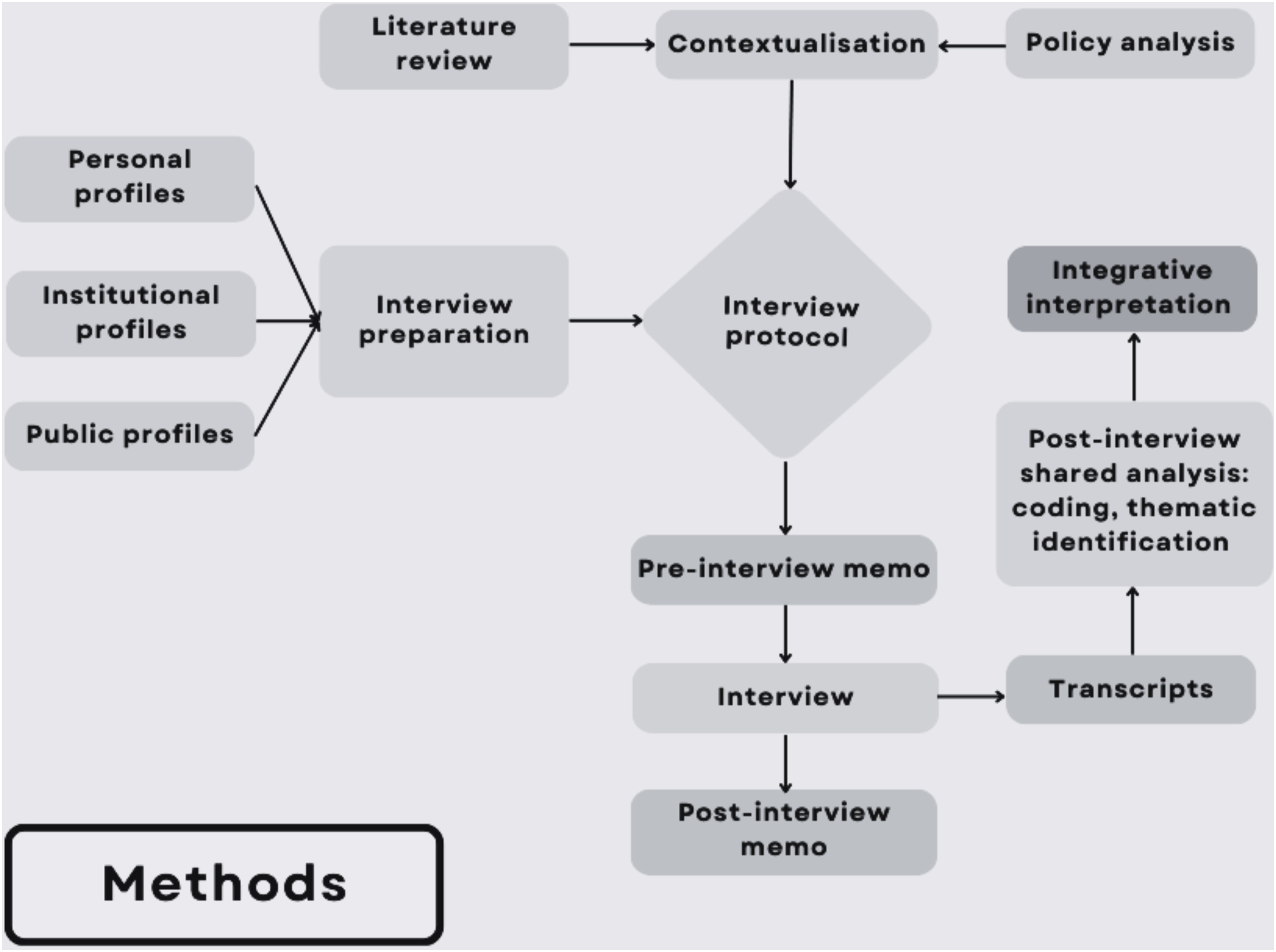
One, using a narrative approach (Riessman 2008), analysed each leader independently before reviewing coding across all transcripts to ensure consistency of coding. For each leader: (a) all of an individual’s documents were read for a sense of the lived experience, and a brief case memo created; (b) then, larger chunks of text representing emergent themes were coded; (c) after a day or two, the transcript was reread to assess previous coding and modify as needed.
The second used a hybrid inductive/deductive approach (Fereday and Muir-Cochrane 2006) – with some inductive/emergent codes classified either as inductive themes or as deductive thematic codes regarding the research question. The pre- and post-memos provided the context for the individual and the institution in each case, enabling reflection on any affective, immediate responses in light of the more systematic transcript analysis. As new codes emerged and were characterised, earlier transcripts were reviewed to ensure consistent analysis across the transcripts. This included reviewing the codes and rearranging the themes in an overview of the four.
The third building on the three-way discussion and memos developed his interpretation in hermeneutic loops, that is edited in each round of discussion. After printing the transcripts, he applied a phenomenological-hermeneutical analysis (Brummett 2019): initially a close-reading and then open coding line-by-line through bracketing and suspending any meta-narrative. Then, the transcripts were read with a more ‘closed’ (but still phenomenological) approach, aiming to identify themes and categories across initial codes. Last, he read hermeneutically regarding the research questions to develop a meta-narrative of the emerging interpretation (i.e. active preconceptions rather than bracketed/suspended perspective).
Limitations
Case-based studies are designed to capture the specificity of the case to sensitise other researchers (and practitioners who read the studies) to interesting patterns and unique phenomena when undertaking future studies around similar issues. Always a challenge in small case studies is a concern to fully protect participant identity. Thus, we have (a) used gender-neutral names, (b) provided information about the five universities with humanities faculties, and (c) not linked specific statements between leaders and their universities, though they did indeed refer to specific characteristics of ‘their’ university – for instance, influence of their location, size, origins/ missions when describing their U-SE work. The robustness of our team-based processes (Houston et al., 2010) provides assurance as to our interpretations.
Results: External ‘tête-à-tête’ intimacy and internal distanced U-SE relationships
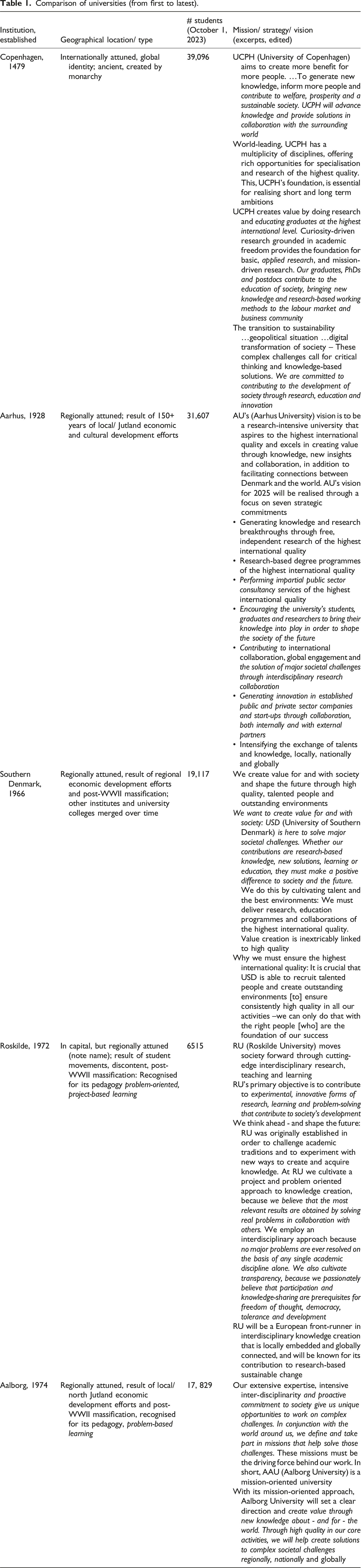
We describe the macro-Danish policy context (in particular, two pertinent reforms); and then characterise the five university meso-contexts before the rektors’ views, to emphasise the nestedness of their experiences – and the interactions.
Danish policy context
Danish governments, like national governments elsewhere, want universities to address the ‘global knowledge economy’ (Wright et al., 2019), resulting in a range of HE and research policy ‘reforms’ (Bolden et al., 2008). Of particular importance regarding U-SE was the 2003 ‘Universities Law’. This framed U-SE as ‘contribut [ing] to promoting growth, prosperity and the development of society’ (Folketinget 2019, §2.3). Notably, what counts as ‘surrounding society’ (in Danish, ‘omgivende samfund’) is limited to large companies in the private sector, private research-funding foundations (e.g. The Velux Foundations, Carlsberg Foundation), non-research HE colleges, and other state organisations (i.e. the Ministry). This is much more constrained than what most individuals would imagine, so this law (p)re-forms the world in a narrower mode than the full diversity of existing possibilities (Gibson and Bengtsen, 2024a, Gibson and Bengtsen, 2024b), which would include individuals/ citizens; civil society; charities; cultural entities (e.g. music and art academies, theatres); media; public organisations (e.g. art, design, archaeology, history museums); libraries (both public and research); even small and medium private enterprises (e.g. publishers, software-developers, consultancies).
As in many EU countries (De Boer et al., 2010), the government has also ‘reformed’ governance, specifically, the mandate of supervisory boards, their role in the selection of rektors, with the government retaining overall power. The Universities Law §§10–13 (Folketinget 2019) states: The board is the university's supreme authority. The board safeguards the university's interests as an educational and research institution and determines the guidelines for its organisation, long-term activities and development. … The board lays down the university's statutes and amendments thereto. The Minister approves the university's statutes.
Further, ‘If the board fails to comply with orders from the Minister to rectify any unlawful acts, the Minister may order the board to resign with a view to appointing a new board’. As to board composition: External members and members representing the university’s academic staff, including PhD students with university contracts, the technical and administrative staff and the students …the majority of its members [must be] external members …appointed in their personal capacity. …must have experience in management, organisation and finance, including assessment of budgets and financial statements' (italics added)
Additionally, ‘the board appoints and dismisses the rector and appoints and dismisses the university’s remaining senior management on recommendation from the rector’. The rektor’s responsibilities are telegraphically denoted: ‘The …day-to-day management is handled by the rector within the framework established by the board. The rest of the management undertake their assignments by authorisation from the rector’. Finally, as regards U-SE, the Law states: ‘The rector must approve all external collaboration binding the university’.
The university contexts
Comparison of universities (from first to latest).
The rektors’ experience
Five intertwining themes or strands emerged from our analysis: (a) long-term commitment to leadership; (b) distinct, lonely position; (c) boundary existence (internal distanced and external close relationships); (d) unquestioned belief in ‘their’ university’s U-SE; and (e) prickly political governance tensions. To ground the themes, we provide transcript excerpts so individual variation as well as similarity is evident. The themes build on each other, intertwining and merging to make a whole, which we explore fully in the discussion.
Past experience: ‘Fall [ing] into leading’
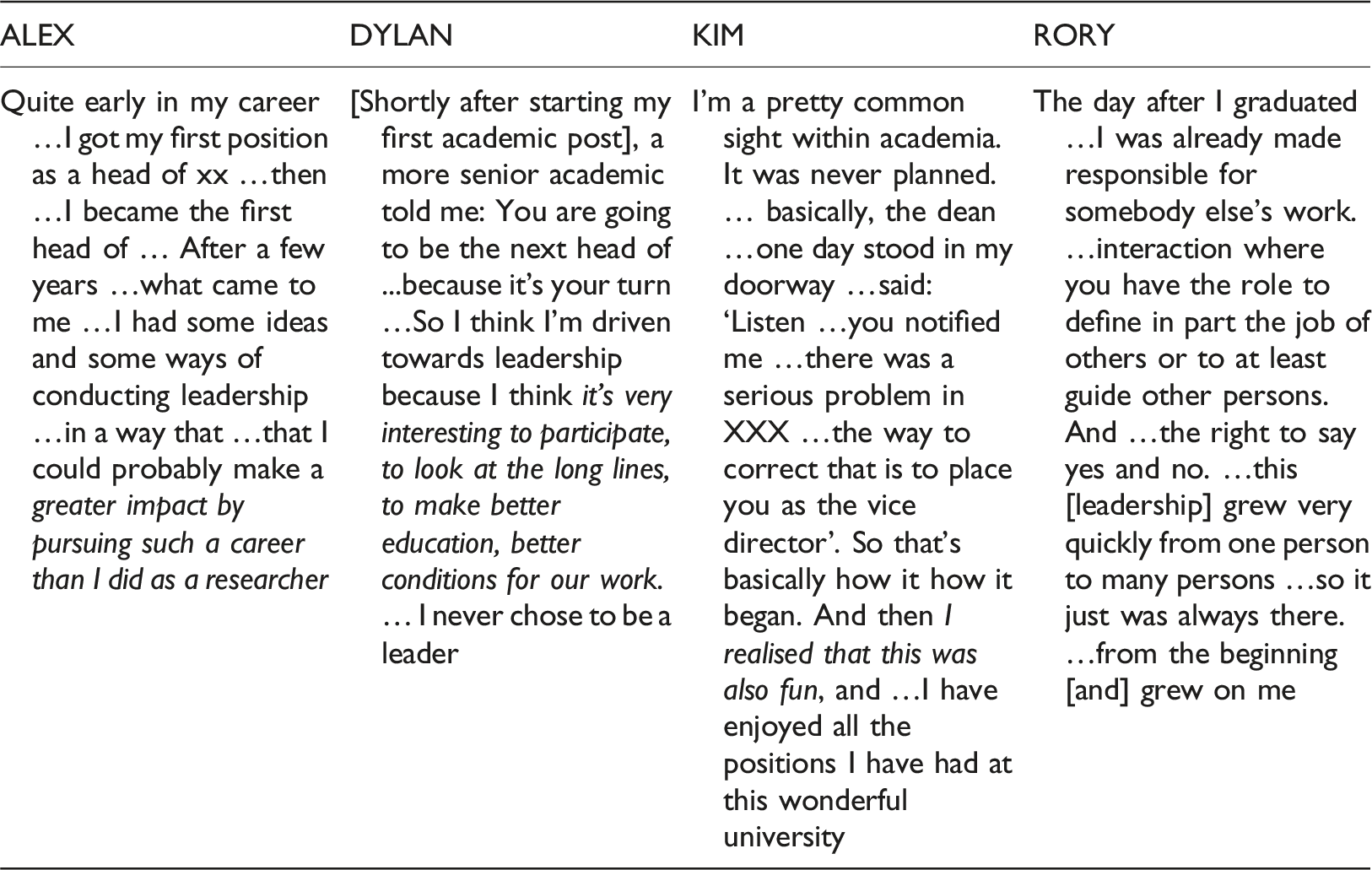
As can be seen, they all appeared to ‘fall into leading’ (becoming leaders without intent or premeditation), though finding it potentially fruitful for different reasons: the potential for greater impact, enhancing education and work, enjoyment, ‘growing on me’ (Machovkova et al., 2023). So, they continued to accept as well as seek out such positions, clearly committed to supporting and enhancing their universities’ own missions, since never at any point did they express concerns about the direction of travel of their universities.
Distinct, lonely position: ‘For’ but ‘not of’ the university
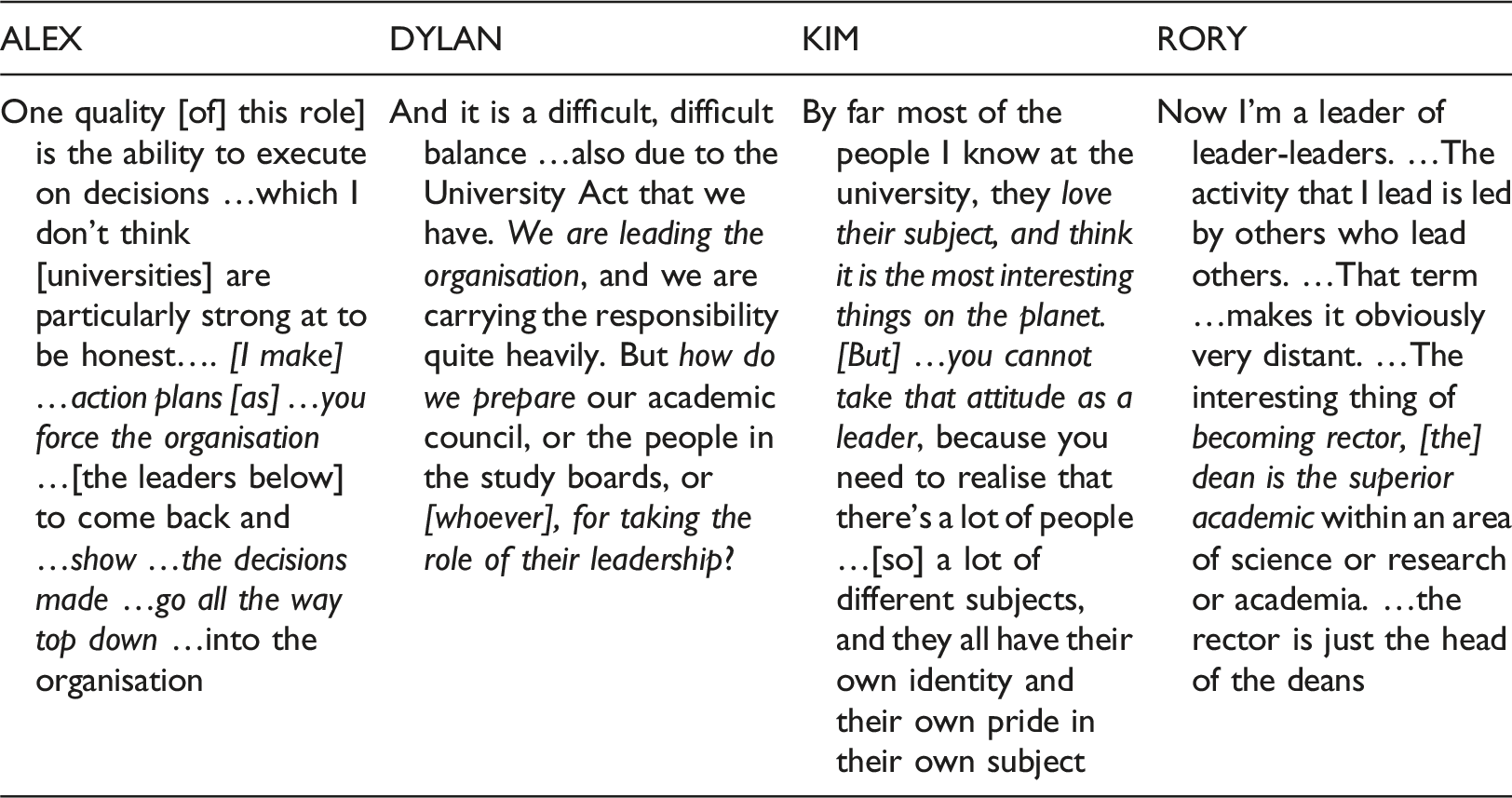
This ‘power over’ carries with it a range of emotional undertones: for instance, Kim both ‘great fun’ but ‘have humanity’; Dylan ‘not being about to trust’; Rory, the need to ‘extract the joy’. Rory expanded on the solitary challenges of the responsibility. S/he must: Manag[e] the least imperfect compromises of wicked problems - which, of course, is the essence of top leadership. Because in …a university where everyone …[is] highly capable of managing most of their own work in their own …spheres, …only the most unsolvable of the unsolvable problems reaches me. That means …they really stink …there are no good solutions. You just have to decide …do I want to try to find a compromise? Or who do I want to …make enemies with today? That's …because it's usually these hard conflicts where you cannot please everyone. And …actually, there are no obviously good solutions. (Rory)
Such a demand implies holding a provisional, responsive, open, vigilant stance to emerging conditions both internally and externally – aiming internally to address the perceived weaknesses in the university to reduce them and externally negotiate and mitigate negative influences.
Given this distanced leadership, they characterised their roles as ‘facilitator’ (Dylan), ‘diplomat’ (Rory), ‘foreign policy minister’ (Alex). As Alex said: To make decisions …to understand the pulse of the organisation, you have to allow yourself to interact with your organisation …to understand what are the co-workers worried about right now? …What's really the governing interest in the individual department? What worries the researchers in relation to teaching, to research, to innovation? What worries the students?
Being effective at this internal dispersed distance-based leading called for a comprehensive communication stance (Badillo-Vega and Buendia-Espinosa 2022): (a) Current knowledge of the weaknesses, flaws, and challenges of the university ‘reality’ (as well as the pluses) to bring the university to a better version of itself, for instance, ‘We [universities] also show …sometimes …[that] we’re better than the rest of society. That’s very bad’. (Dylan) (b) Good communication skills, including listening carefully to others (Dylan, Kim) (c) Effective communication structures as messages move through successive embedded leadership structures both downward and upward. Examples include the creation of ‘overlapping teams’ (Kim) and working ‘immensely with [in] the organisation …developing management at all levels’ Alex.
Another feature of isolation is they were no longer ‘of’ the university, actually engaged in legitimate academic work, as Rory and Kim noted above (though they draw on their general research skills).
And, unfortunately, while building others’ trust through good down and up communication, ‘when you are the top leader, basically, you cannot trust anybody. That’s the problem about being number one in an institution. …I think everybody who is number one knows that enormous difference’ (Dylan). So, the internal role of rektor was qualitatively different from other university leadership roles. At this point their closest colleagues were other rektors (national and international), individuals with whom they could openly discuss issues, develop ‘power with’, though nationally there was also some competitiveness.
Janus-faced boundary existence: Enacting ‘their’ university
Existing at the institutional boundary, they gained clear sight and insights inwards and outwards – of both the perception (true and false) of the university by society and of the internal ‘reality’, including challenges and weaknesses. It was this distance between the perception and the reality which underlay much of their work around U-SE. While the external-internal dimension has been previously reported, the perception-reality dimension has not.
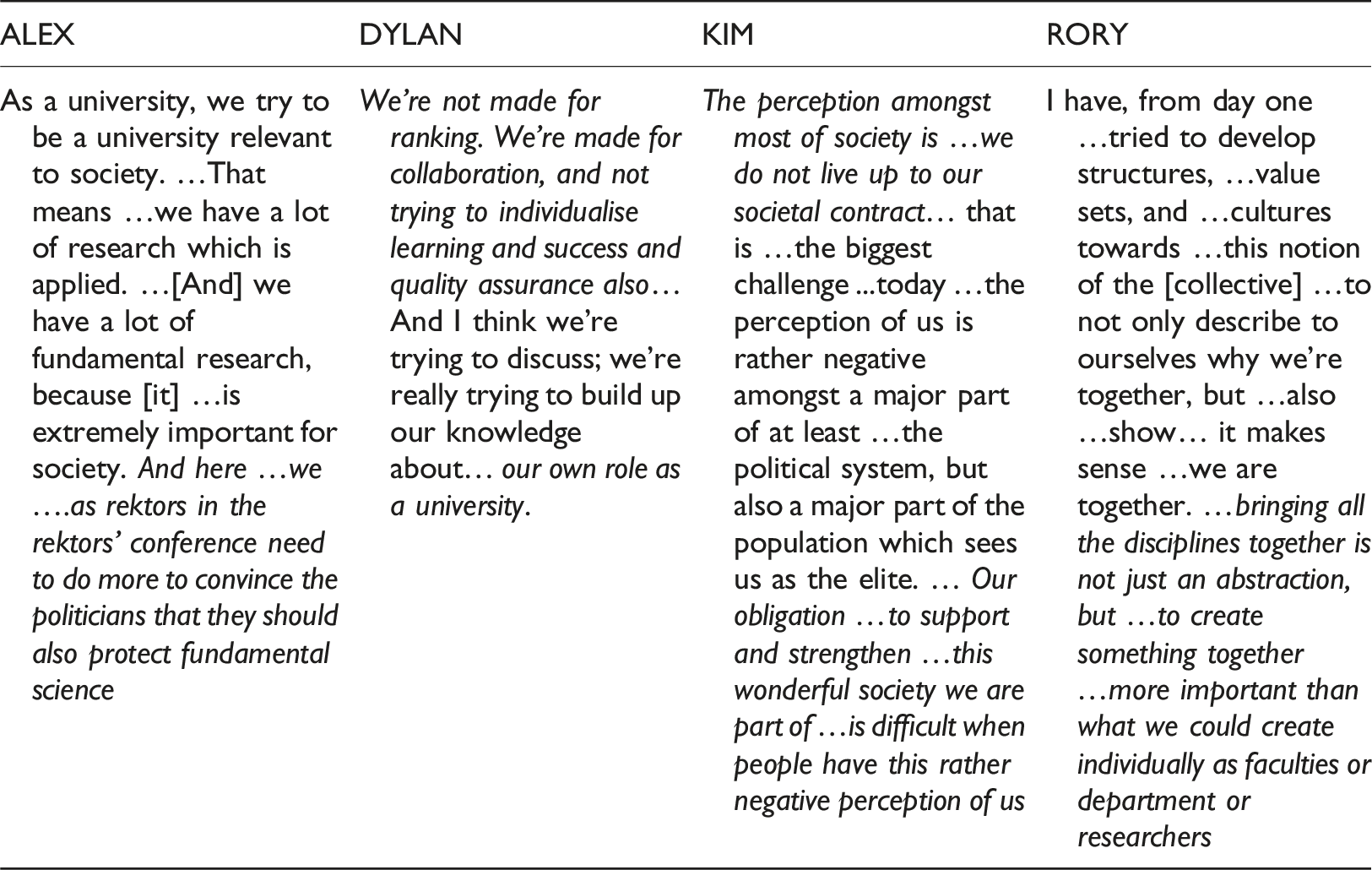
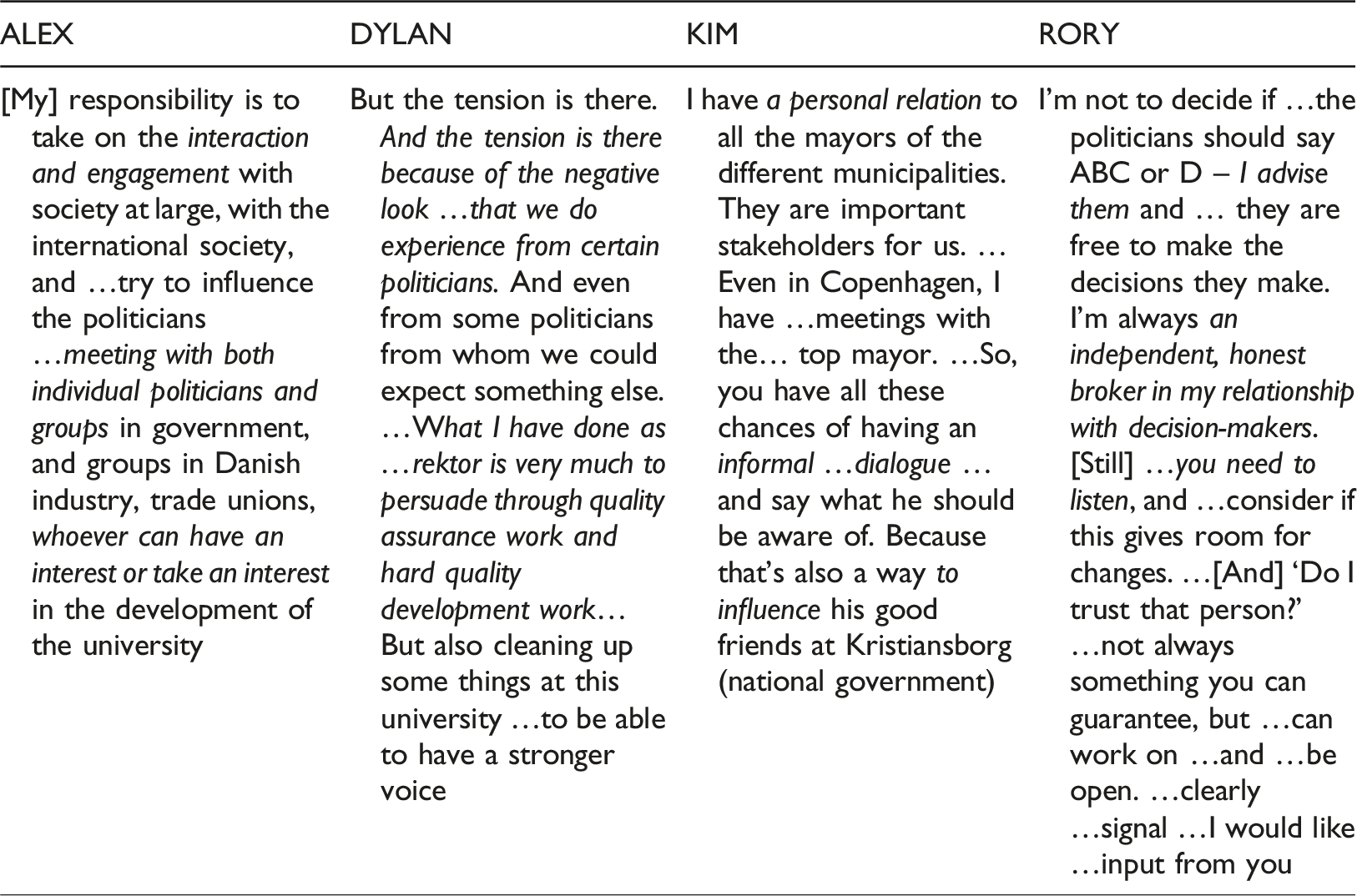
Being (at) the portal between their institutions and surrounding societal contexts, the rektors are a central pivot (Badillo-Vega et al., 2021), tracking, filtering, shaping inward and outward movement of ideas, people, activities. In doing this, they aimed to demonstrate their university’s embeddedness within, as well as commitment to, society. Rory summarised the importance of this succinctly: ‘Actually, being aware of the situation, what’s going on, inside and outside, and being able to decide which situation, or whatever, do we have to work on, to address, to mitigate, to develop processes around, is insanely important’. This portal role of the rektor in leading the university helps to explain not only what is distinct in university leadership, but also how university leadership is enacted and why.
‘Their’ university’s unquestioned U-SE: Societal actors as collaborators and allies
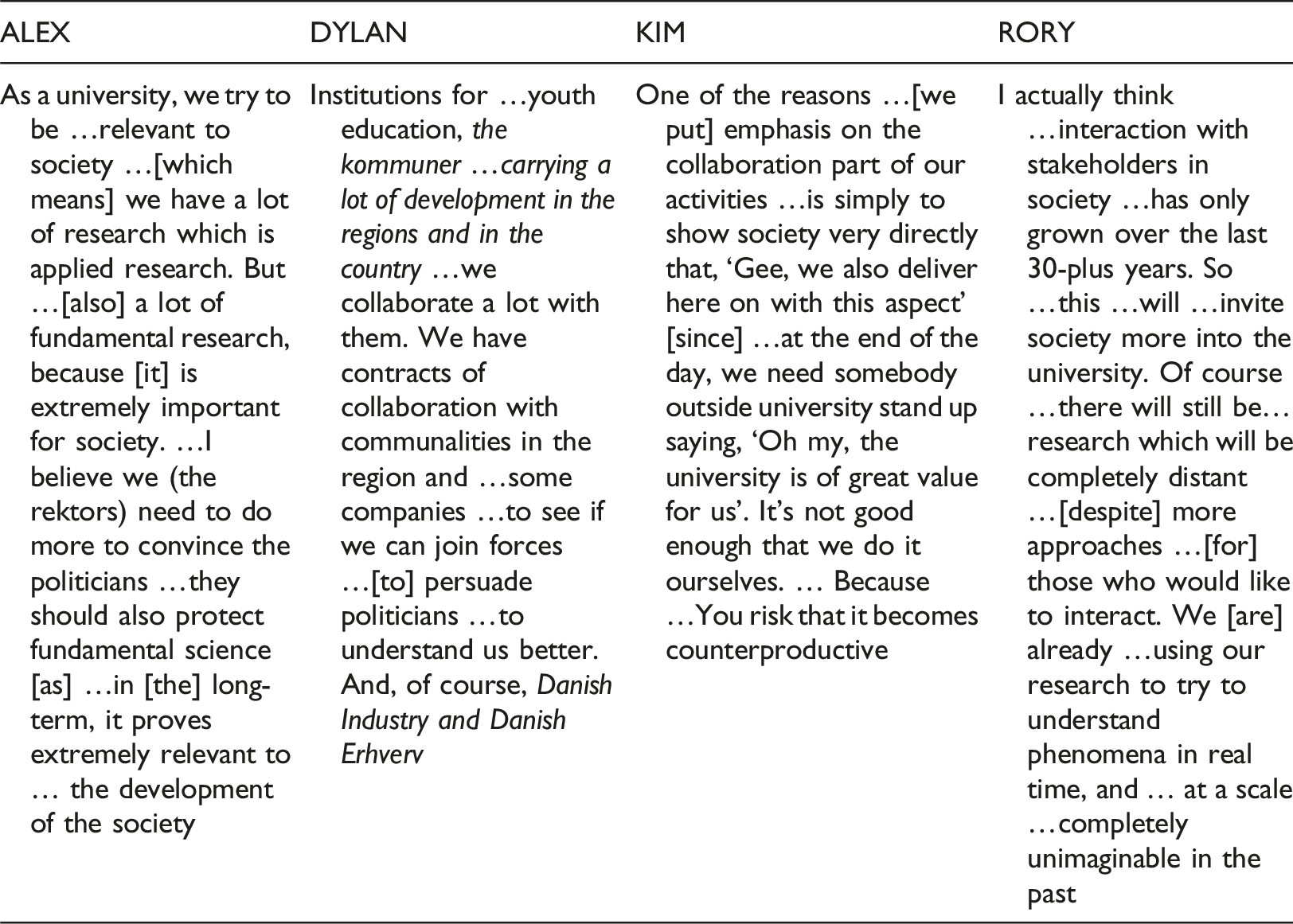
These excerpts suggest the challenges in communicating their message. As Rory said: ‘We are too inward-looking [so] …end up punching below our weight’ (Rory).
Their intent was not only to educate other societal actors, but hope through these interactions and collaborations to develop allies and promoters who were experientially convinced of the reality of their institution’s U-SE. This meant investing in close personal ongoing relationships: Kim tells the deans to ‘go out and meet people …listen …build trust’. Alex elaborated: ‘It all comes down to …establish [ing] good personal relations …a good mutual understanding. …It’s not something you can do in a short period of time …to build trust in one another’. These tête-à-tête interactions, often over coffee (ad hoc and informal), with short briefing papers contrasted considerably with their distanced internal relationships – in addition to cross-university cohesion described above by Dylan.
Internally, Alex also aimed to educate the board, an inward-outward university structure by government law. Given its makeup, it is potentially powerful in successfully convincing society: [It is] important, for the board to understand the university …boundary conditions as a university …[as] they have …relations in industry, …the public …[and] political sector, so they need to be ambassadors for the university …wherever they go. …[So] it's our responsibility to equip them with the knowledge …they can …exercise when they interact in the greater society, both national and international.
Rory notes another internal-external structure, an advisory panel of external representatives or potential employers from public and private organisations that can inform universities on labour market needs: The repræsentantskab …from the aftagerpaneler in the organisation …with the representatives from stakeholders outside. And they are really high-quality stakeholders. …And they give extremely good advice on stuff I put before them in terms of …interpreting the situation and the opportunities or challenges of the university in the context of the situation outside.
While only one rektor was a humanist, they all recognise that some disciplinary clusters have more difficulty in being societally recognised for U-SE. They strongly defended the humanities (and social sciences) against the troubling notion held by politicians of humanities’ lack of value – a feature of the difference between the reality and the perception. As Kim noted: I think we have had some success [convincing] politicians. …I've heard several …say, “Okay …the time has probably come that we should not just …blame everything on humanities. We need to do something else.” So I feel that the ship is beginning to turn, but it's a little bit like a super freighter …it takes time.
They were in accord as to the value of the humanities: as an essential contribution to societal challenges, to holistic understanding of problems, of each other, of conflict, of what really happens between people, between people and society, and simply for a ‘happy and meaningful life’ (Kim).
Notably, while research is often the focus of policy U-SE, all four talked clearly about the students/ the graduates as an added value, a form of continuous U-SE (in and out), noting what education should do. As Rory said: We are …really creating impact [when]… the students …can go out and …have a great life, ideally, but also …create value beyond themselves, in whatever they …do in the rest of their life. …And that's, of course, something we should be extremely cognizant of when we invite them in.
Dylan linked this to good educational design: It means …they develop as human beings, and …develop skills and competences and knowledge that is relevant, and …become strong experts and strong persons, strong citizens, because they get engaged in an education that is well thought and well planned. So good education is for the students.
Overall, given that ‘people have negative perceptions of us’ (Kim), the rektors worked to convince societal actors of their university’s already deep and expanding investment in U-SE, both to educate and to gain allies.
‘Prickly’ political governance tensions
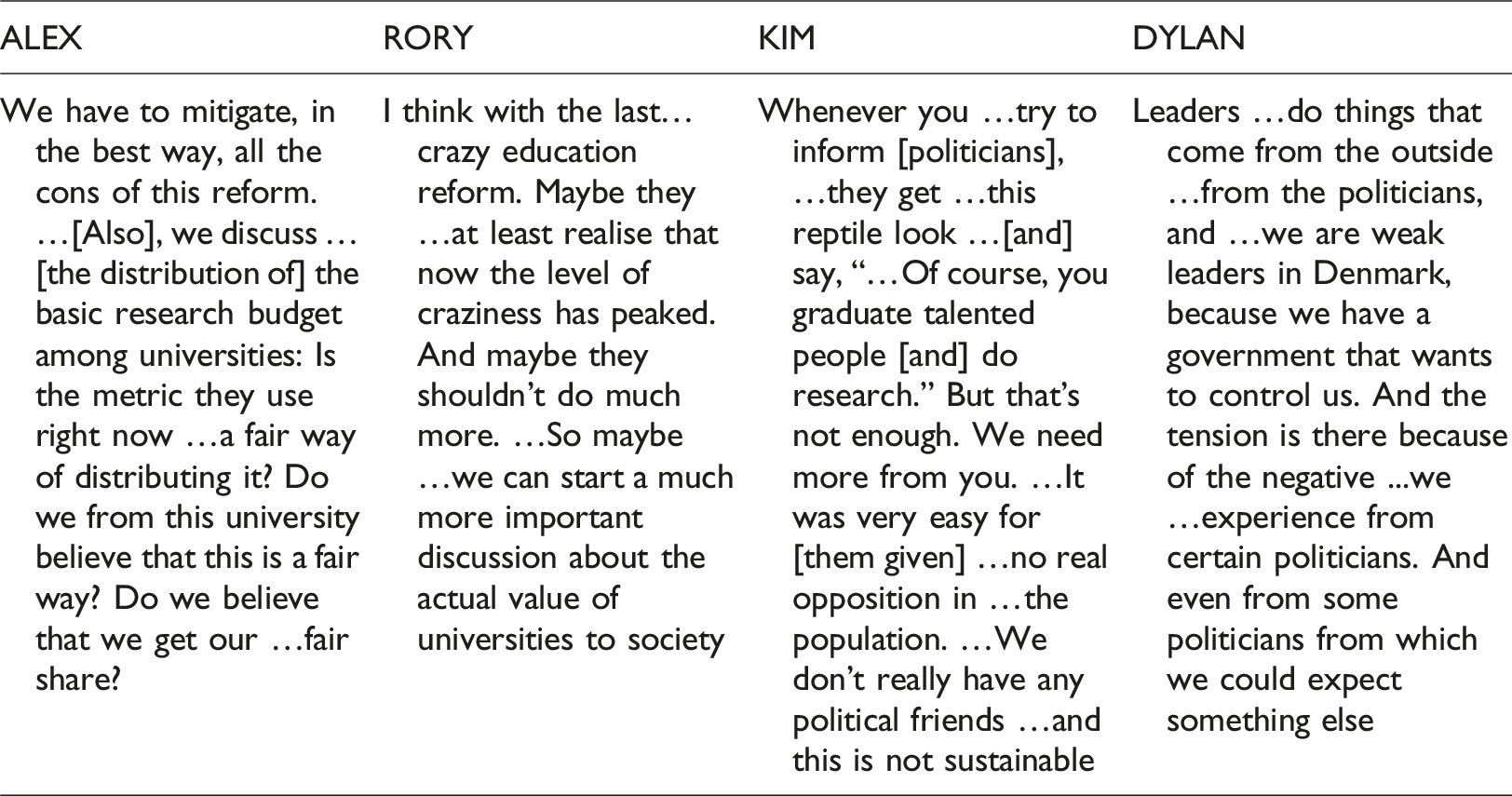
This tension appeared very visceral, concrete; they were after all responsible for all aspects of their university, so finances were important both for research and education. All government pronouncements had the potential for damage, particularly in difficult socio-economic times. Further, the governmental discourse was not representative of the multiple ways in which value could be assessed, particularly humanities (and social sciences). As Dylan noted: ‘We’ve shown – because we’ve had to show that …it “pays off,” because that’s the language that is understood today’. And Kim commented: ‘Engineering in the perception of politicians and of society is important today. …But we need the politicians to respect all the other subjects which also give a lot to society of great value’.
Expanding our understanding of leading universities in society
How did rektors in Danish universities enact their role both inwardly and outwardly, especially regarding U-SE? There is much in our results that supports earlier reports. The unique nature of the findings lie in our focus on geo-historical and biographical interactions.
One example of these interactions in the personal-institutional context is that the rektor, effectively, becomes the university, embodying it in a way. In effect, this enactment of the idea of ‘their’ university incorporated, or nested, their own biographies within ‘their’ university’s origins and identity and manifestations of U-SE. Their view of U-SE in ‘their’ university encompassed a broad framing incorporating both carefully designed education programmes to prepare graduates to be active contributors to society, and institutionally driven research around pressing societal problems, such as sustainability. Further, it encompassed all disciplinary clusters.
Another example of these interactions in the institutional-societal context is that the rektor is the portal for inward and outward movement of ideas, people, and activities in ‘their’ geo-historically embedded university; this movement can be more or less regionally, nationally and/or internationally attuned. This means tracking, filtering, shaping information and knowledge both internally and externally to educate and promote change. (See Figure 2.) Internally rektors re-presented societal perceptions of their U-SE as well as potential U-SE opportunities. Given their relations here were distanced, they made careful use of their downward and upward ‘power over’ to instill a shared, powerful vision of the collective ‘reality’ of U-SE in ‘their’ institution, one to expand on in the future. Knowing the internal reality, including weaknesses and challenges, they also used strategy and decision-making to bring to life a better version of ‘their’ university. Externally, to counter societal perceptions, they re-presented ‘their’ university’s unique U-SE, with the general idea of the university. They did this through multiple, personal relationships to develop collaborations (‘power through’) that demonstrated soft economic and social power, hoping that through such alliances they might mitigate the worst features of governmental demands. Within the university institution-to-institution context, they also forged relationships with other rektors, nationally and internationally, for ‘power with’ to enhance their legitimacy. Rektors’ experiential positioning/navigating nested contexts.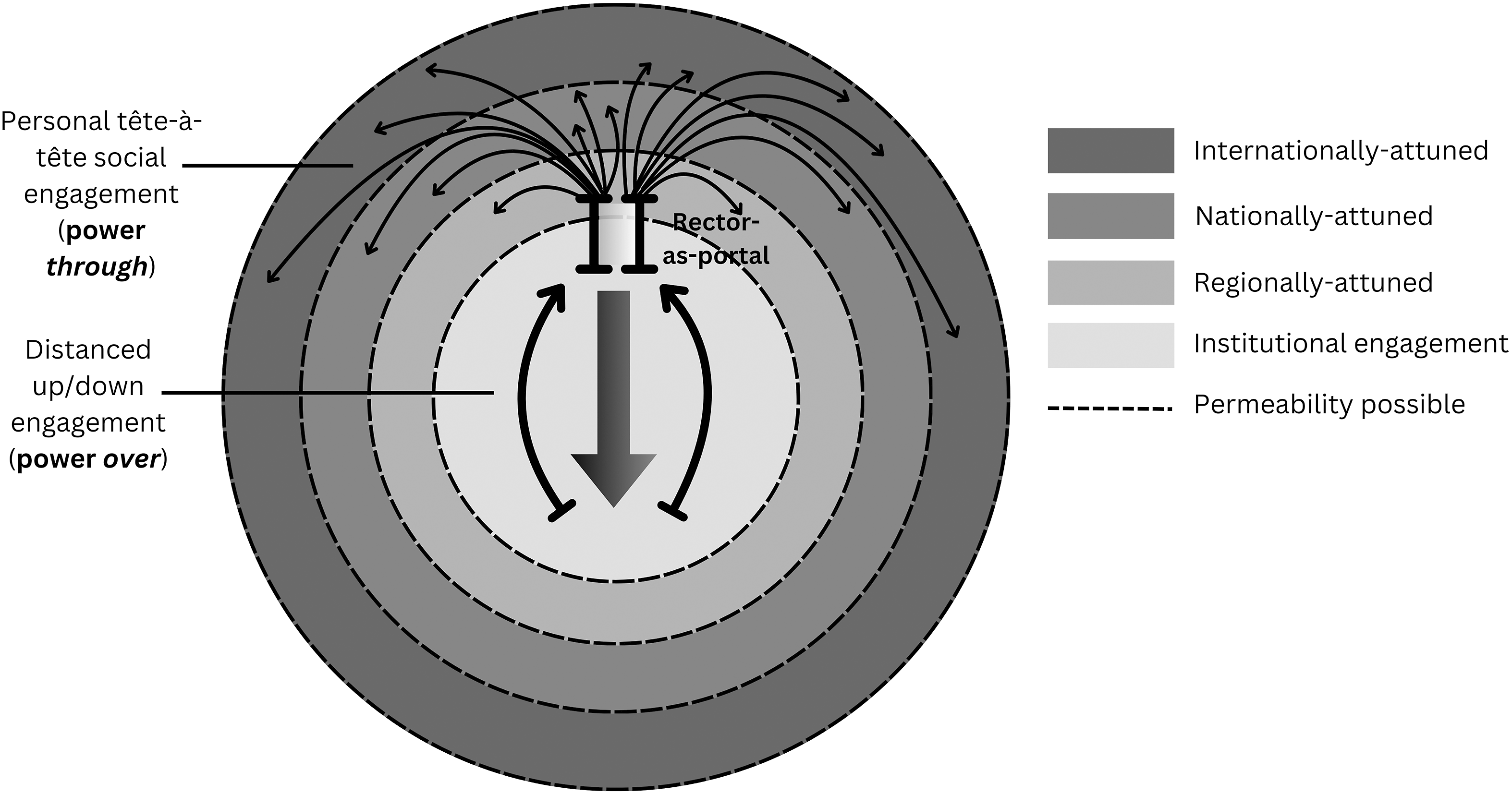
These findings resulted from our framing of the study around the interplay of individual, institutional and national evidence, highlighting the nested interactions amongst the three through a fine-grained, in-depth embedded series of analyses. Future studies could use a similar framing, as recommended by Badillo-Vega et al. (2021). Other future research directions include (a) to what extent rektors through their work have ‘real’ effects on the nature and role of U-SE in the individual institutions they lead, and the nested contexts in which their university is embedded; (b) how other leaders within the university experience their role in navigating the rektor’s distanced relations both down and up; and (c) how deans navigate their own internal and external U-SE work in relation to their rektor’s initiatives. This research on how university leaders enact and affect the relationship between universities and society in international, regional, and national contexts also has implications for the way policy-makers frame and evaluate U-SE.
Conclusion
The work these rektors did to ensure ‘their’ universities were perceived and understood by societal stakeholders extensively hinged on the relationships they established and nurtured both internally and externally. Overall, the study demonstrates how universities engage/connect with their surrounding societal contexts THROUGH leadership, and how leadership becomes an ongoing negotiation and interpretation of those relationships – both externally AND internally. The study shows that how universities are seen and understood as valuable by societal stakeholders hinges to a significant degree on the personal serendipitous and strategic encounters, relationships and dialogues university rectors enact. Further, the study shows that trust-building both internally (in institutions) and externally (beyond institutions) plays a greater role than hitherto known or acknowledged in changing and influencing the public image or societal profile of an individual university.
Footnotes
Declaration of conflicting interests
The author(s) declared no potential conflicts of interest with respect to the research, authorship, and/or publication of this article.
Funding
The author(s) disclosed receipt of the following financial support for the research, authorship, and/or publication of this article: Research partially supported by funding from the Independent Research Fund Denmark (DFF) Sapere Aude: 0163-00003A.
