




Abstract
Under the context of globalization and marketization, the internationalization of higher education has become a common pursuit of nations and higher education institutions. Nonetheless, current studies on the internationalization of higher education are still largely dominated by the westernized paradigm. There is relatively limited research on the internationalization of Russian higher education, especially on the strategies and challenges of internationalization at the institutional level. By conducting a case study of a Russian elite research university, this paper explores the strategies and challenges of internationalization of higher education in Russia. It finds there are some doubts behind the practice from the faculty’s perspective, which would be the improvement direction for future internationalization of Russian universities.
Keywords
Introduction
Facing the evitable trend of globalization worldwide, nations and higher education institutions have adopted internationalization into their agenda and internationalized their higher education. Studies on the internationalization of higher education (IHE) are largely in the westernized English-speaking paradigm (Jones and de Wit, 2012) while non-western countries in the rest world (Kostrykina et al., 2017) do not get enough attention. The first of priorities proposed by Jones and de Wit (2012) was “to learn from other non-western national and cultural contexts” to “understand the full extent of internationalization as a phenomenon and what we can learn from each other to benefit students, employers and nations” (Jones and de Wit, 2012: 50).
In the global knowledge race, Russia is one among the rest world that was historically strong but currently lagged in internationalization (Lane and Kinser, 2016). Neoliberalism, commercialization, and globalization—these global trends have deeply sharpened Russia’s higher education and speeded up its internationalization and marketization of higher education. Russia had adopted a neo-liberal approach for education policy—including the IHE. However, due to rapid changes in economy and politics during the last three decades and major reforms in higher education, Russia has fallen behind other competitors (Frumina and West, 2012: 51). There is relatively limited literature on the internationalization of Russian higher education, especially on the strategies and challenges of internationalization at the institutional level. This paper is thus a response to the research gap. Based on the thematical analysis, this paper explores institutional IHE strategies and the challenges it faces by taking a Russian elite university as a studied case. This paper also offers the perspectives of faculty on university internationalization in Russia.
Structurally, this paper first reviews the literature regarding internationalization at the institutional level on rationales, strategies, and challenges briefly as the theoretical basis. Then, it introduces the historical development of IHE in Russia as the research background. After introducing the research methods and design, strategies of internationalization at the selected case, S University, are introduced and analyzed. Then, perspectives from three faculty members from different departments on the challenges of IHE at their university are introduced and explained. Conclusion and discussion are given in the last two sections.
Internationalization of higher education on the institutional level: Rationales, strategies, and challenges
The understanding and definition of internationalization are changing. Kostrykina et al. (2017) offered a comparative overview on traditional and alternative perspectives on IHE. It is necessary to evolve internationalization into a more comprehensive, intentional, and inclusive process (de Wit, 2019). Thus, de Wit et al. (2015) extended the definition of IHE from Knight (2004: 11) into the following: The intentional process of integrating an international, intercultural or global dimension into the purpose, functions, and delivery of post-secondary education, to enhance the quality of education and tresearch for all students and staff and to make a meaningful contribution to society (de Wit et al., 2015: 1).
By this definition, de Wit et al. (2015) proposed the new dimension and agenda towards positive social contribution. Responding to the growing complexity and increasing dimensions under the evolving internationalization, Hudzik (2011) proposed the term “comprehensive internationalization” which refers to Commitment is confirmed through action to infuse international and comparative perspectives throughout the teaching, research and service missions of higher education. It shapes institutional ethos and values and touches the entire higher education enterprise... It is an institutional imperative not just a desirable possibility .... [It] not only impacts all of campus life but the institution’s external frames of reference, partnerships, and relations (Hudzik, 2011: 6).
By this definition, internationalization is expected to act by everyone in the institution and integrate into the core ethos, values, and missions of the institution to better serve students, clientele, and society (Hudzik, 2014b). However, institutions have their own decision and selection on internationalization strategies based on their conditions and requirements; it would be unrealistic and even risky to be too comprehensive towards internationalization (Knight, 2021). It thus results in similarities (towards comprehensive internationalization), and differences (due to university’s conditions and requirements) in university internationalization strategies.
Many scholars studied the rationales and driving forces for university internationalization. Rationales are important and needed to be stated clearly, “as policies, programs, strategies, and outcomes are all linked and guided by explicit and even implicit rationales” (Knight, 2004: 28). There are generally four rationales for internationalization, namely social/cultural, political, academic, and economic ones (Knight and de Wit, 1995, 1997). Knight (2004) later added several new rationales applied to the institutional level: international profile and reputation, student and staff development, income generation, strategic alliances, research, and knowledge production. She updated rationales at the institutional level in 2021 into eight aspects, namely improve quality, enhanced research and innovation, international branding and profile, capacity building, student and staff development, strategic alliances, knowledge production, and income generation (Knight, 2021: 76). Shaydorova (2014) found that there are all four rationales for IHE at the national level and mainly academic and economic rationales at the institutional level in Russia. Academic rationales for internationalization—international profile and status, international academic standards, and research and knowledge production—remain dominant while economic ones are less important at the institutional level in Russia (Shaydorova, 2014).
Knight (2007) listed several examples of program and organizational strategies at the institutional level. The program strategies include academic programs (e.g., student exchange programs, foreign language study, internationalized curricula, international students), research and scholarly collaboration (e.g., joint research projects, international conferences, and seminars), and domestic and cross-border external relations, and extra-curricular (e.g., international and intercultural campus events). The organization strategies include governance (e.g., recognition of international dimension in institutional mission), operations (e.g., the balance between centralized and decentralized promotion and management of internationalization), services (e.g., student support services for incoming and outgoing students), and human resources (e.g., faculty and staff professional development activities). This framework is said to be “most applicable to the conventional public and private higher education institutions” (Knight, 2007: 223). Adapa (2013) pointed out that besides carrying out these core strategies for internationalization, it is essential to offer incentives to faculty, staff, and students and initiate programs (e.g., provision of international seed funding, enhance international student experience) to facilitate the entire process.
At the institutional level, the main challenges are funding and resource issues, quality control, standardization, recognition, delivery methods, location, institutional structures, and cultures (Qiu, 2020). The International Association of Universities (IAU) 5th Global Survey found the main internal obstacles to internationalization at the institutional level are successively insufficient financial resources, administrative/bureaucratic difficulties, lack of knowledge of foreign languages; while external ones are funding, language barrier, difficulties of recognition and equivalences of qualifications, study programs and course credits (Marinoni, 2019). It was said that the results are quite similar in most regions (except North America) (Marinoni, 2019). Frumina and West (2012) listed and analyzed ten factors that would limit internationalization in Russian universities: namely geographical space and distance, alignment and recognition of Russian qualifications, quality assurance, infrastructure (campus and accommodation facilities), bureaucracy, visas and work permits, limited opportunities for workplace practice in Russian companies and enterprises, educational management and marketing, government policy on international education, and language.
In addition, academic rankings—remaking global higher education in the ways of competition, hierarchy, and performance (Marginson, 2017)—have become a rationale, a strategy as well as a challenge to IHE at the institutional level worldwide. Firstly, as a signal of global branding and reputation, many nations and universities have adopted special policies and strategies to increase their status in the global university rankings. Higher standing in the rankings is working as the driver of soft power for these nations and an ultimate goal for universities to practice and develop IHE (Hazelkorn, 2016b; Mok and Cheung, 2011). Secondly, policymaking, strategic priorities, resource allocation, partner choosing, and study location are guided by rankings sometimes (Lane and Kinser, 2016). Meanwhile, as a tool, the rankings offer various dimensions for nations and universities to perform “well.” Rankings—their indicators to be more precisely and most of them quantitative—then are used as the strategic directions. Global university rankings, however, have produced challenges to intuitional IHE as well. They stimulate comparison and competition among HEIs globally and nationally, resulting in competition rather than cooperation and inequality between the west and the rest. At the same time, the pursuit for global rankings may result in trade-offs with locally oriented activities and programs and ignorance of local culture and value (Lane and Kinser, 2016).
These studies on the definition, rationales, strategies, and challenges of IHE at the institutional level offer the theoretical basis for this research. Reviewing current studies, the academic internationalization of Russia’s universities shares a similar definition, rationales and strategies and challenges to those studied in the Western world. By carefully examining the case of Russian universities, we hope to explore the reality especially the differences regarding academic internationalization in a non-western country. Next, this paper will introduce the developmental history of IHE in post-Soviet Russia.
The development of IHE in post-Soviet Russia (1992–2019)
The Soviet Union higher education was regarded as the best worldwide and was adopted by other nations such as China (Studin, 2018; Taradina and Yudkevich, 2016). IHE then was and still is employed as a geopolitical tool (Hazelkorn, 2016b). It has shaped the legacy pathways for international education and inbound international students since then. It has left great legacies that support its international education industry in post-Soviet Russia.
After the disintegration of the Soviet Union, Russia changed the former Soviet Union’s education mode, began to carry out the reform and innovation of higher education internationalization, and explored the Russian model of modernizing and internationalizing its higher education. The academic sector landscape is described as a “mixture of newly introduced market-oriented mechanisms and still existing and powerful principles of government governance and control over higher education institutions and academic markets” (Taradina and Yudkevich, 2016: 145). These policies, such as Actively Joining the Bologna process and Implementing the new University Development Strategy of Federal University and Research University, had played a positive role in promoting the international status of Russian higher education. Generally speaking, after the disintegration of the Soviet Union, the internationalization of Russian higher education has experienced three stages of development from 1992 to 2019.
Phase 1 (1992–2000): Internationalization under HE reform
As early as the Yeltsin era, Russia put forward the agenda for IHE. Internationalization is regarded as an essential element of the modernization of the Russian higher education system since 1992 (Kuraev, 2014). In 1995, the Minister of Education of the Russian Federation, Keneliev, proposed that internationalization is one of the three major tasks faced by Russian education. In the same year, Prime Minister Chernomyrdin signed government order No. 774 to support the internationalization of universities in policy (Xia and Qu, 2014). In 1996, Russia promulgated the Law of the Russian Federation on Higher and Post University Vocational Education, which promoted the integration of higher education with the international academic system, implemented the mutual recognition of international degrees, reformed the educational system and degree system of its higher education, and regarded the construction of multi-level higher education as an important task to improve the internationalization level of higher education (Xiao and Wang, 2020).
Phase 2 (2000–2010): Towards Europe and Asia-Pacific region
In 2000, it was the first time proposed in the Education Development Outline of the Russian Federation to develop Russian Federation’s international cooperation and activities in the field of education and to formulate and implement corresponding measures to ensure the implementation of international contracts for mutual recognition of educational diplomas between Russian Federation and foreign higher education institutions. In 2003, Russia officially joined the Bologna process, an intergovernmental initiative to bring more coherence to higher education systems across Europe and the globe. The engagement with the Bologna process helped Russia to better engage in Europe and promote international academic mobility and university cooperation. In 2007, the Federal Law on the Implementation of the two-level Higher Education System of Bachelor’s Degree and Master’s Degree was passed in Russia, which implemented the “double track” educational system and accepted the new educational system in line with international standards.
During the period, Russian colleges and universities had gradually entered the international education market under the promotion of the government. Since then, the number and scale of overseas education in Russia have increased greatly and rapidly, and the distribution areas have also been further expanded.
Phase 3 (2011–2019): Comprehensive internationalization
In the Russian Federation Education Service Export Outline 2011–2020, IHE is determined as one of the future development directions. Russia gradually opened the door and reached agreements with more and more countries on mutual recognition of higher education diplomas and academic qualifications.
In 2013, a national program named Project 5-100 was launched by the Russian Government, which aimed to promote five Russian universities to rank top 100 in the QS World University Ranking in 2020. The goal of Project 5-100 is to maximize the competitive position of a group of leading Russian universities in the global research and education market, to attract a large number of international higher education students, and to send scholars abroad and encourage them to return. Meanwhile, another project started in 2014 named Global Education Program, is aimed to sponsor Russian talented students to study abroad to receive their graduate degrees in the top-ranked universities worldwide. The Concept of Promotion of Russian Education, approved in 2014, is aimed at promoting Russian higher education abroad and supporting universities’ international activities.
In recent years, there have been some new forms of internationalization of Russian education, including receiving distance education provided by foreign universities, cooperating in running schools, setting up overseas branch campuses, and attracting foreign capital to establish universities, etc. Comprehensive and various efforts and measures have been conducted by the government to increase the internationalization level of Russian higher education (Hudzik, 2014a).
After years of efforts, it has witnessed great achievements for Russian IHE. There are 278,000 international students in Russia now, constituting 6.7% of the whole Russian higher education students (Study in Russia, 2020). According to the newest results of three global university rankings in 2020, there are 17 Russian universities ranked among the top 500 in QS ranking, 7 in THE ranking, and 3 in Academic Ranking World University. The number of Russian universities in QS ranking top 500 was smoothly increasing from 13 to 17 from 2018 to 2021.
Meanwhile, there also exist challenges together with achievements. Project 5-100 is considered “too ambitious” to achieve (Taradina and Yudkevich, 2016). In fact, until now, there are only one of Russia’s universities ranking top 100 in QS ranking (QS, 2021). Meanwhile, the academic mobility challenges for students and staff are mainly due to financial reasons, recognition issues, motive deficiency, and language barriers (EACEA, 2017). These challenges are further explored and articulated in a case study of a Russian elite research university, which allows a better understanding of the rationales, strategies, and challenges in Russian university internationalization, and the similarities and differences between the western world and the rest world.
Research methods and design
The qualitative research, presented in this paper, explored the specific strategies adopted by one of the top Russian universities as well as the challenges related to IHE. We employ thematic analysis on the textual data from documents and interviews and conduct a case study of one elite university in Russia.
Thematic analysis is “a method for identifying, analyzing and reporting patterns (themes) within data” (Braun and Clarke, 2006: 79)—similar to content analysis (Berelson, 1952; Krippendorff, 1980; and Weber, 1990) but pays more attention to data’s qualitative aspects. This study mainly uses policy documents collected from university websites regarding internationalization. These documents include the Charter of the state budgetary educational institution of higher education “S University”, About S University, International Cooperation, Joint Research Projects, Postdoc Programme, Russian Language Programmes, Students’ exchange programme and Visits of international experts. Iosava and Roxå (2019) argued it is important to know faculty’s perspectives on internationalization in their teaching and research due to their centrality. Thus, three faculty members from different departments were interviewed, one from humanities (local staff, female, named F1), one from science (local staff, male, named F2), and one from social science (international staff, male, named F3).
These data were carefully exanimated and coded through thematic analysis. Themes were generated from the coding process which mainly had six phases—familiarizing with data, generating initial codes, searching for themes, reviewing themes, defining and naming the themes, and producing the report (Braun and Clarke, 2006: 87). We followed these six phases and captured and extracted themes on internationalization strategies, outcomes, and challenges from the selected university policy documents and other official documents, together with interviews with faculty members. The detailed themes under these three aspects will be introduced and analyzed in the next section.
This research was conducted by two scholars who carefully checked all the qualitative data and conducted the thematical analysis independently at first; we discussed and decided the themes together. Later, we asked for feedback from an independent outside reviewer—as suggested by Vaismoradi et al. (2016)—to identify and evaluate the themes. Thus, by the internal comparison and external comparison of coding themes, we decided the final themes, by which reliability and validation are achieved.
Among 741 universities with different organizational statuses (state and private) and various standing (federal, regional, and local) in 82 regions of Russia in 2020 (Study in Russia, 2020), the selected studied case—S University is a federal state-owned prestigious research university. There are two reasons for the case selection. First, it is directly led and governed by the government; thus, it presents governmental policies and initiatives more clearly. Second, this university represents one of Russian best universities where prominent internationalization strategies and practices have been observed. In short, the selected case—S University is a good example for us to explore Russia’s IHE strategies and challenges at the institutional level. The findings of this university represent the wider number of Russian universities. Next, we will move to introduce the case we selected to explore university internationalization in Russia.
Internationalization of higher education in S University
Internationalization strategies
As introduced in the previous section, IHE in Russia has become comprehensive since 2011. The internationalization strategies in S University thus show similarities towards comprehensive internationalization and differences due to the university’s conditions and requirements.
The importance of internationalization is emphasized at the university level. It is said that internationalization is one of the most important strategies of S University. In its Charter, it states S University “shall have the right to maintain international cooperation in the field of higher and additional education, research and (or) scientific and technological, teaching and other activities” (Putin, 2010: 30) and “has the right to engage in foreign economic activity following the legislation of the Russian Federation and this Charter” (Putin, 2010: 31). According to the Charter, its main areas of international activity are as follows: (a) participating in programs of bilateral and multilateral exchange of students and academic staff; (b) implementing joint research and applied research projects, organizing congresses, conferences, symposiums, and other events; (c) conducting fundamental and applied research as well as development projects under contracts with foreign legal entities; (d) repealed…; (e) inviting foreign teachers, researchers, and experts to participate in the educational process and research work; (f) sending … staff members abroad on business and internship trips; (g) training foreign citizens and stateless persons based on implemented educational programs, as well as providing additional paid educational services to foreign citizens under contracts with legal entities and (or) individuals; (h) providing consulting services to foreign organizations; (i) participating in international and foreign grant competitions; (j) signing cooperation agreements with foreign legal entities and (or) individuals; (k) participating in international higher education improvement programs; (amended…) (l) participating in international societies and other associations of educational institutions and research organizations; (m) maintaining international cooperation in other areas following the legislation of the Russian Federation (Putin, 2010: 30-31).
These activities have been carried out at S University. Specifically, there are various courses for international students taught in English or Russia, Student Exchanges Programme (SEP) and free-mover program, and Academic Staff Exchange Programme aimed to promote short and long-term outbound and inbound personal mobility. These activities constitute increasingly comprehensive internationalization. Thus, internationalization is expected to act by everyone—faculty, researchers, students, schools, administrators, and play a role in various aspects of S University. The university aims to integrate internationalization into the core ethos, values, and missions of S University to better serve students, staff, and society (Hudzik, 2014b).
From the perspective of international status, the internationalization of S University not only helps to improve its ranking in the world but also is of great significance to the development of Russian higher education. To promote the internationalization of the university, S University mainly starts from two aspects: teaching and scientific research. In terms of teaching and curriculum, S University offers a wide range of additional educational courses for its students, including a variety of foreign language courses and other subjects taught exclusively in English. In addition, S University is one of the world’s largest Russian language teaching centers for international students, offering Russian language learning courses for those in need both at home and abroad. In terms of scientific research, S University actively expands national and international cooperation in scientific activities, conducts academic exchange programs, and sets up specialized institutions to manage the internationalization of the schools. Following, we will introduce some main internationalization strategies applied in S University, including academic mobility, institutional cooperation, and joint research projects.
Academic mobility
Student Exchange Programme (SEP) is for students from S University’s partner universities who plan to study at S University for not more than one year. This reciprocal student exchange program also encourages outbound exchange. And it is open for both undergraduates and postgraduates. Courses in the SEP include specialized courses and language courses in three design schemes, which students can choose according to their situation. The period of SEP ranges from one term (5 months) to the entire academic year (10 months, from September to June). At the end of the exchange period, SEP students get Transcript of Records listing all the completed courses with their workload and grades.
In addition to SEP, S University also offers other exchange programs, such as Visiting Students Programme and Short-term Research Internship. Visiting students’ program is available to students from non-partner universities who wish to study at S University for 1-2 semesters without obtaining an S University diploma. These programs do not require reciprocal student exchange. Tuition fees depend on the student’s chosen field of study. The application procedure for the visiting students is the same as for the SEP students. A short-term Research Internship is available for students who are not interested in taking courses but plan to research at S University.
Visits of international experts to S University are mainly arranged by the International Research & Technology Department of S University Research Office (IRTD) under international cooperation agreements with other universities. The duration of exchange visits is determined by the conditions specified in the relevant exchange agreements. Priority is given to young and talented researchers and participants in major international events. In addition, S University offers a competitive fund on research or internship visits and trips to institutions in Russia and abroad.
Institutional cooperation
S University has established partnerships with many foreign universities. So far, there are 485 partner universities from 80 countries in the world. More than 25 international summer and winter schools are held at S University annually. In addition, S University is a member of many international associations and student exchange programs, such as Erasmus+ and others.
Joint research projects
S University pays much attention to the development of international scientific cooperation and actively implements and participates in joint projects in several key areas. Currently, the university has participated in 65 major international research projects jointly with foreign partners from many countries, which involve fields of natural sciences, engineering sciences, humanities, medicine and biology, economics, and so on. Additionally, S University is the first university in Russia to launch the postdoctoral program (postdoctoral grants) in 2013. The program welcomes postdocs from home and abroad to research at S University. So far, the project has attracted young researchers from Germany, Spain, Canada, China, Lithuania, Morocco, Ukraine, and France.
These internationalization activities compose the internationalization strategies of S University, involving both program and organizational strategies (Knight, 2007). It is observed that the range of internationalization activities is increasing, which turns to more and more comprehensive (Hudzik, 2011, 2014b). As we argued earlier, moving towards more comprehensive results in the similarities and differences in internationalization strategies and accompanying challenges, which we will discuss and identify in the next section.
As the earlier mover in Russia, S University emphasizes internationalization and pursuit it through adopting comprehensive strategies, which may compensate for the lack of national international strategy and demonstrates the efforts at the institutional level to compete for international status. However, according to the authors’ observation, it is moving to comprehensive internationalization but yet under the quadrant of ad hoc-central (Davies, 1992). Its international business was considerable and increasing but marketing was ill-focused; curriculum did not gear to international issues particularly in coordinated ways; some agreements were not operational; tensions were rife, and support services were mismatching—these are what Davies (1992: 188) described as the typical operating characteristics of institutions in ad hoc-central quadrant. We will discuss these issues more in the challenges section after introducing its internationalization outcomes.
Internationalization outcomes
S University has achieved significant improvement in internationalization. There are 3875 international students—48% undergraduate students and 52% postgraduate students—from 103 countries in total, among which are 3714 international students for degree study—16% of the total students in S University. There is 129 international staff, accounting for 3.9% of the total faculty (QS, 2020).
S University has established partnerships with over 450 universities from 60 countries around the world. It offers various academic mobility programs, for example, Erasmus and European University Foundation (Campus Europe). There are about 2,000 long-term collaborative agreements with leading international corporations, such as IBM and Google. These partner companies and organizations offer internship opportunities to students.
According to QS ranking—the main indicator used by the Russian Government regarding internationalization (cf., Project 5-100)—S University has experienced a slow and tortuous increase in the ranking (see Figure 1). The recent and highest position of S University is 225th in 2021. It implies that the efforts have been put but challenges are remaining. There is still a long way to go to reach the Russian Government’s goals and its ambitions. S University in QS Rankings over the years. Source: compiled from QS annual rankings 2013-2021.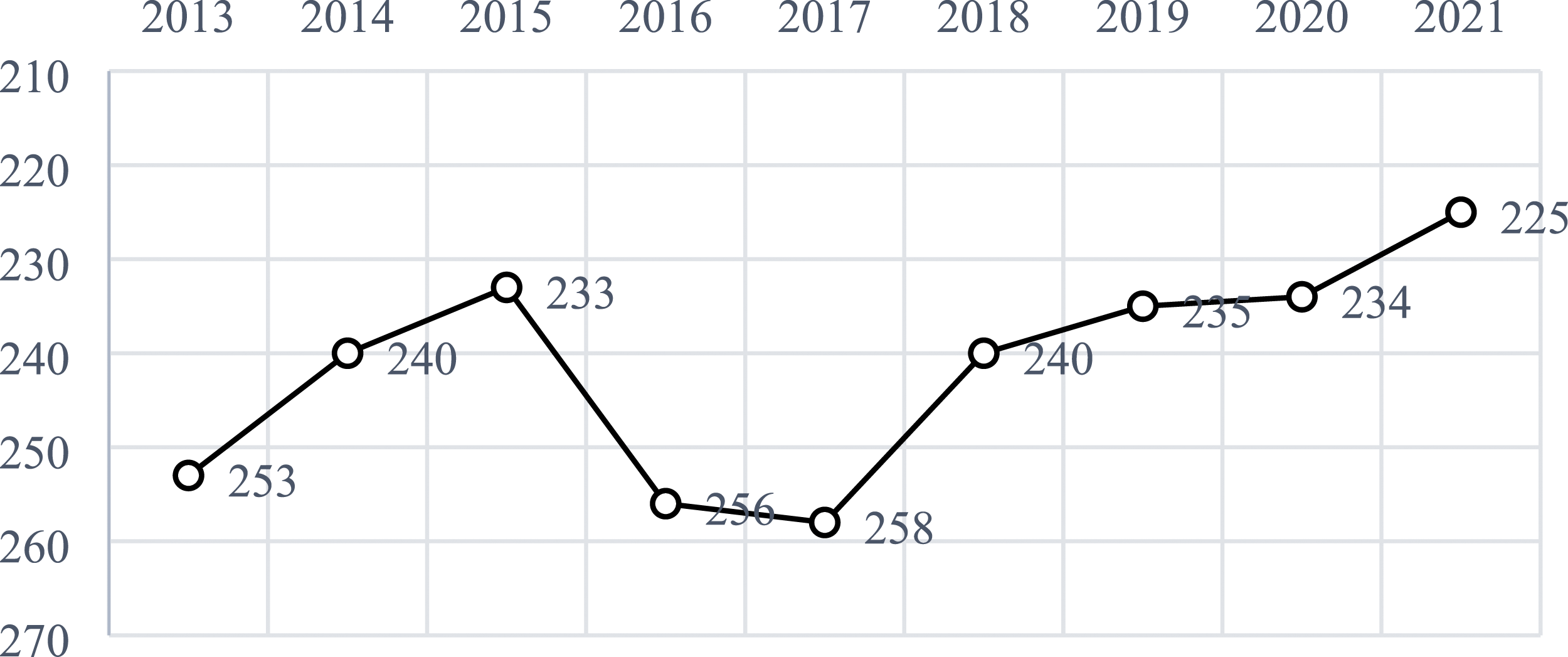
Challenges to university internationalization: from faculty’s view
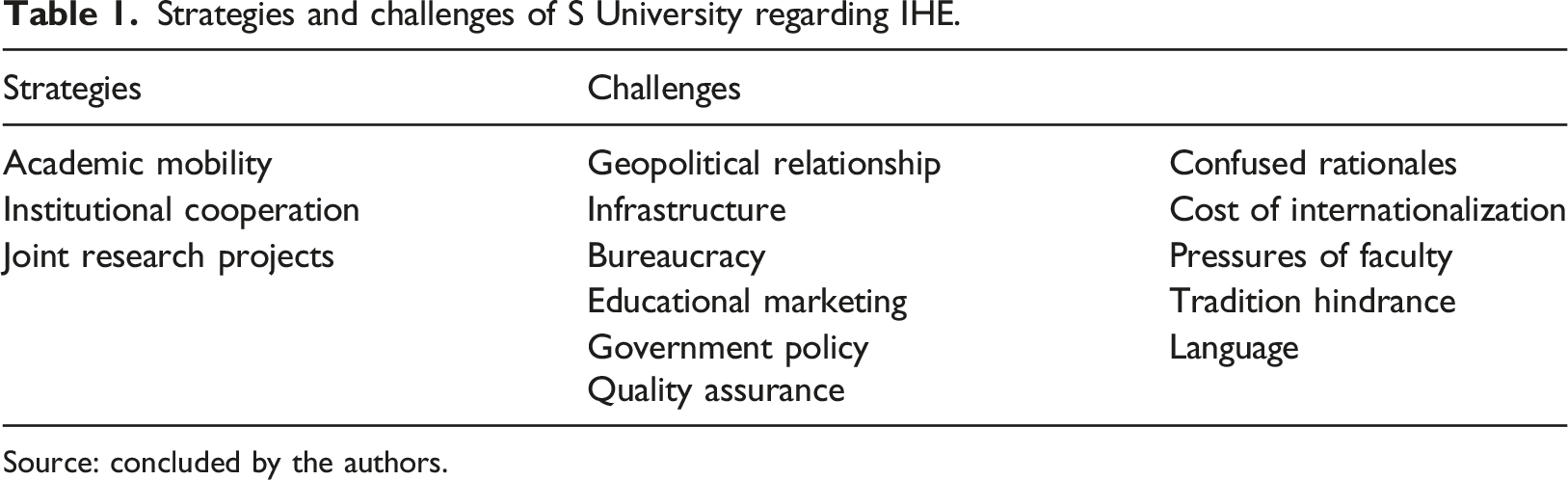
Three interviewees expressed their concerns about internationalization. There are some common points were mentioned by three faculty members as well, including geopolitical relationship, infrastructure, bureaucracy, educational marketing, government policy, and language. Meanwhile, they expressed several points that were not mentioned by the previous literature regarding the common IHE practice—confused rationales, cost of internationalization, pressures of faculty, and tradition hindrance.
Geopolitical relationship
The university is located in St Petersburg, a historical city close to Europe with rich tourist attractions. It is its advantage, compared to other Russian universities located in other cities. However, as the F1 mentioned, “it’s not just related to geographical location, but also to the geopolitical relationship (F1).” It is a crucial factor for Russia’s IHE. The geopolitical significance of IHE has been strengthened under the power of globalization (Hazelkorn, 2016b). F3 mentioned the complex relations between Russia and Europe. Europe’s recognition of Russian higher education certifications remains at a relatively low level because of historical and political factors. As the result, there is a relatively low rate of international students from Europe, even though under the support of the Erasmus+ program under the Bologna process.
There are several solutions for geographical distance, for example, through transnational higher education and distance learning programs. However, these require the national endeavors of Russia to change the image portrayed in the media and develop an attractive marketing policy (World Bank, 2019).
Quality assurance
Quality remains a core position in international education. Generally speaking, Russian universities do not have a good performance in the global view, which can be seen from all the international university rankings. As Frumina and West (2012) argued there are still no regular and systematic evaluations of universities regarding their education quality. F3 talked about the situation in their department, maybe a little exaggerated, but it implies quality concern: How many points of grade to mark completely depends on the teacher’s mood... Some teachers find it difficult for foreign students to study... Then give him or her pass... There are no uniform standards, depending on the teachers (F3).
There implies the lack of formal quality standards for higher education. Under these conditions, the education quality is hard to improve because there is no exact assessment of student performance. In fact, due to the low trust and tension between the state and universities in Russia, the quality evaluation and peer review system is conducted mainly by the state, which does not work efficiently (Taradina and Yudkevich, 2016). The external measurement—global rankings are thus employed and emphasized by the Russian Government. We will discuss it later in detail.
Infrastructure
Inadequate or poor infrastructure (e.g., classrooms and dormitories) may impact the interests of prospective international students, which would decrease the number of incoming international students (Frumina and West, 2012). One faculty member mentioned the concern about the capacity of the university to host more international students as the classrooms are limited: The scientific research funds, equipment, and other aspects are not able to be compared with Europe and the United States, nor with China... Computers like the ones in our department are seven or eight years old. The classroom is a big problem... It doesn’t have a classroom that can hold three or five hundred people as it does in China (F3).
According to the OECD, Russia spent the lowest percentage of GDP on educational institutions (primary to tertiary) among ten OECD countries. Russia’s total expenditure on tertiary educational institutions as a percentage of GDP was 1% while the highest was 2.5% in the United States and the OECD average was 1.4% in 2018 (OECD, 2021). It reveals insufficient input for higher education and IHE.
Bureaucracy
As Frumina and West (2012) argued, there is a long and bureaucratic process for international students and academics to conduct education qualification recognition. In fact, for many matters related to IHE, it is impressed as heavy bureaucracy. F1 directly expressed that “the bureaucracy is still very, very heavy (F1).” F2, as the local staff, thought it is normal: Maybe like some bureaucracy, I don’t know how much it’s for international guys to come here. Maybe they have difficulties in getting some needed documents from our university. But for me, I think it could be less bureaucratic, but it’s normal (F2).
Educational marketing
According to F3, he thought educational marketing was unnecessary as there were already a lot of students from China in university; the university lacks sufficient capacity to host more international students (related to infrastructure issues). Due to its long history (established in 1724), a good reputation (the second in Eastern Europe and Central Asia according to the QS Rankings; home to 9 Nobel prize winners, two presidents of the Russian Federation, and six government leaders), and location (close to Europe), prospective students are easily attracted without much efforts on large marketing. We cannot directly judge whether he is right or wrong. However, the data is shown the percentage of international students (16%) is not high, giving the percentages of international students in some Australian universities can exceed 30%—the percentage is 38.2% in the University of Sydney, one of the best universities in Australia (Study in Australia, 2019). Thus, if the university wants to expand the scale and increase the number of international students, it needs to put infrastructure improvement ahead of international educational marketing. This finding is in line with the observation of Frumina and West (2012).
Further, the contradiction between infrastructure issues and educational marketing has affected the sustainable international development of S University. These problems link with each other.
Government policy
Frumina and West (2012) pointed out the lack of coherent national policy on international marketing strategy as the main obstacle for IHE. Nekhoroshkov et al. (2019) argued the exceptional activities of some Russian universities partly compensates for the absence of performance of a national and regional policy or strategy for IHE. Similarly, F1 put this issue first when talking about the challenges to university internationalization. First of all, there is no very clear logic for policy and no clear process. There still exists contradictory to the requirement of many aspects. For example, there are the teacher exchange programs, I can go to register, if approved, I may be away for one or two weeks… these one or two weeks I’m not able to give classes. On the one hand, they encourage us to participate in the faculty exchange, but on the other hand, they said, if you don’t come to class for two weeks, who will? You can’t transfer this course to another week… I won’t let you go, you have to choose, either internationalization or you stay. so, there are internal contradictions in many aspects, I may think this is the key point (F1).
Although F3 offered an example to explain this contradiction: …in the past, doctoral dissertation defence only required domestic teachers. Now, you have to include a foreign teacher…let’s say you have to do a PhD defence, the panel was originally from the city and the country. Now is from both the domestic and foreign… there must be at least two to the scene (F3).
It is well-understood that it aims to set a higher standard and increase the quality of doctoral dissertation. But according to the F3, panels invited from overseas are paid by the doctoral students themselves. In other words, the university set up rules for doctoral education but there is no appropriate mechanism, funding or other support. It would be flagged as an equity and ethical issue but it also implies the contradiction in the policies and lacks a coherent national policy to some degree. Just as F1 expressed, “I always feel that the university and government have so many things to do but doesn’t have enough energy (F1).”
Language
The language challenge is both for Russian scholars who did not know English well, and for international students and academics not speaking Russian. On the one hand, in a world where English is the lingua franca, western leading scholars of academic internationalization published various works based on western experience while the rest world (e.g., Russia) has language barriers to them—they are hard to read research in English and publish research in English. They published their works mainly in their own languages which cannot be understood by western scholars and they face difficulties in publishing or translating their works into English, especially in humanities and social sciences. On the other hand, challenges coming with language include access to courses taught in English and other foreign languages, and personal communication: It could be a problem. But I think at least now it’s better than maybe five years ago because there are much more courses taught in English. And in our course, which I and my colleagues teach, there are usually several students who don’t speak English, but they successfully work on this course…I think there should be more English courses. I mean the courses teaching in English (F2). The second is the problem of language communication. Although some teachers in some departments have a relatively high level of language proficiency, especially in English, in some departments some can speak a little bit, not able to do scientific research work together. Therefore, I think language is also a great obstacle (F1).
At the same time, F3 pointed out that it would be awkward if English, the so-called international language, is widely used on the campus: I think this is a little crazy, if I have a foreign student in my class, I’m sure we have to speak English. But if I’m Russian, and they’re Russian students, why speak English to them, right? (F1) Unless you are from China and he/she knows you are from China, he will use English to communicate with you. However, if he knew you were studying here for a long time, he wouldn’t use English (F3).
Confused rationales
It is said the political rationale is dominant in the internationalization of Russian higher education, recovering the previous position in history. As F3 argued, it is aimed to “showing the true colours of a big country… It has a strong political purpose. Same in China. Build an international university (F3).” Because of Russia, Putin wants to reinvent, wants to put S University back in the top 30… In the 1980s, the S University was called... It was one of the top 30 universities in the world (F3).
Two faculty members expressed their doubts about the pursuit of higher international rankings. So many teachers are still very, very disappointed with this research work. They just don’t understand the real purpose of this research work. Is it to do research work or just to rank...? And when it comes to scientific research, he also evaluates our research in terms of rank, in the case of the QS one (F1). No, it means improving international ranking and competitiveness. All of its goals are to move up the international rankings... Anyway, its whole purpose is to improve the international ranking, no others (F3).
As mentioned previously, the one role of global rankings is to work as an external measurement of academic excellence. The supports and criticism for global rankings are widely discussed by scholars (e.g., Hazelkorn, 2016a). Russia’s “ranking fever” implies that its rationales for IHE are dominated by political considerations, such as geopolitics and soft power.
Cost of internationalization
Student exchanges programs for Russian students and international students are designed for good purposes and it does bring benefits to participating students individually. However, the cost of the exchange programs is neglected relatively. For the students, their living expenses, dormitory fees, and accommodation fees, the university does not provide... Therefore, although there is an agreement between the two universities, the content of this agreement does not include such a mechanism. Therefore, for most students, such an agreement does not work anymore, because all the students’ expenses have to be covered by themselves, which is a major problem (F1).
Pressures of faculty
For faculty, although due to the small number, they have more financial supports than students, they have to face another cost—time cost, as well as work pressure. Research and teaching, as the main two tasks of one normal faculty member, are time-consuming work, occupying large time and energy of the faculty. If they decide to take international exchange overseas, it will affect their teaching work. As the F1 and F3 said, The second key point is that the university is not willing to pay a lot of money for all the necessary expenses. I think is a very critical issue, it has been hoping other universities to provide the money, not its own money (F1). In recent years, to be honest, there is still a lot of pressure on many teachers to teach and do research, and we also have to hand in a lot of courses. Therefore, if you are still doing some other research work, you are at least willing to do it (international exchange), but you are still not willing to strengthen such more workload…We don’t have a lot of teachers, we don’t have a lot of faculty capacity, to do projects with every school (F1). You let me go too long also have no way, because our department, our teaching and research office’s this double degree program, mainly depends on me. If I take part in the exchange, the program can’t be last (F3).
Tradition hinders innovation
Additionally, F1 talked about the unique challenge that S University is facing. The university seems to be impeded by its long history and its lasting advantages in its traditional areas. She thought there are no new areas that could increase its appeal and its advantage remains in the traditional disciplines. On the one hand, the university is a very famous one. However, among many young students, it has gradually become a university with no development potential. The traditional university is not a commendatory term, but it is a derogatory term. Its research and technology are very backward, and the teachers will not follow the latest theory and the latest publication. this feeling, the feeling is the content of the education is very outdated, also can’t keep up with current development, feel this way (F1).
At the same time, there exist differences in disciplines and departments. It is the same as the worldwide tendency—a discrepancy between STEM and Arts funding. Three interviewees come from different subjects and disciplines where the salaries differ. “Let’s say you pay a science lecturer several times more than a liberal arts lecturer (F3).” The interview with F2 verified F3’s argument. It is obvious F2 is satisfied with his work, the condition, and the equipment of their department. “The funding here is sufficient and the equipment here is the newest,” said F2.
Discussion and analysis
Strategies and challenges of S University regarding IHE.
Source: concluded by the authors.
According to de Wit et al.’s (2015) definition, IHE is expected to bring quality and equity, which are related to the academic and social rationales driving university internationalization. At S University, it is observed that academic and political rationales are prominent, in line with the findings of Shaydorova (2014). These academic rationales are enhancing international profile and status, increasing international academic standards and research, and promoting knowledge production (Shaydorova, 2014). As a result, the position of S University has been promoted gradually in the global rankings and Russia’s universities are becoming visible internationally. Meanwhile, confusion about rationales among faculty reflects the need to increase the awareness of internationalization among faculty.
Internationalization brings extra costs to students and extra pressures on the faculty regarding exchange programs, which hinders the motivation of faculty, staff, and students to participate. It is against equity—“enhance the quality of education and research for all students and staff” (de Wit et al., 2015: 1), one of the purposes of IHE. It results in inequity between students under different economic conditions and faculties with different teaching workloads. Thus, it is necessary to provide extra funding or other financial support for students who are willing to take part in the exchange programs and build a flexible mechanism to arrange the teaching tasks of faculty. It implies the current funds provided may not be enough. That is, as mentioned before, a need to offer incentives to faculty, staff, and students and initiate programs to facilitate the entire process (Adapa, 2013).
Endeavors are required beyond universities. The challenges identified here, the geopolitical relations, recognition of Russian qualifications, quality assurance, infrastructure, bureaucracy, educational marketing, government policy, and language, all call for systematic strategies and long-term efforts by the government. The federal government first needs to make a long-term systematic blueprint and policy for the development of IHE, which can offer directions and references for the universities and avoid confusion. In other words, the government needs to consider the new dimension and agenda (de Wit et al., 2015) of IHE and employ it intentionally towards positive social contribution. Second, the lack of quality assurance at the national level as well as institutional level would hinder the sustainable development of its international higher education. The government needs to create effective instruments on education quality and carry out systemic quality assurance mechanisms, combining the use of global rankings with caution and rationality. Third, more funds may be needed to improve universities’ infrastructure. Generally, universities’ infrastructure can be improved by the income generated from international students. However, economic rationale remains secondary dominance at the institutional level. It implies the university attaches insufficient importance to the income attributes from international students currently. IHE in Russia is mainly initiated and led by the government. It is still in the early developing phase. The government may need to leverage more financial responsibilities.
Conclusion and implication
This case study indicates a possibility of differences in strategies and challenges of IHE at the institutional level between Russia and other western countries. Some unique and interesting differences are found in this case study. At the institutional level, we find political rationale (geopolitics and soft power) and academic rationale (international branding and profile) dominate among other IHE rationales (Knight, 2021: 76); comprehensive IHE strategies are adopted but still with the characteristics of ad hoc (Davies, 1992). Meanwhile, compared with the western countries, the challenges at the institutional level such as geopolitical issues, bureaucracy, the contradiction between marketing and infrastructure, lack of national quality assurance mechanism, language issues, confused rationales, faculty pressure, and tradition hindrance were all affecting even hindering the process of institutional internationalization in some degree. The differences are worth being further studied and compared with other cases—especially those deeply influenced by the Soviet Union’s internationalization legacy in the past and those in the western world—on the institutional, regional, and national levels.
Bearing the Soviet Union’s internationalization legacy and history, Russia has a strong desire to retrieve its international recognition and leading position. This case study shows the efforts of one of its best elite universities by analyzing the internationalization strategies. The challenges identified here—especially from the view of the faculty members—and the suggestion made here could help its policymaking and strategy selection for better and comprehensive internationalization at the institutional level in the future.
There is still a lack of research on Russian higher education internationalization, both at the national level and institutional level. Especially, the views from stakeholders (faculty, students, and staff) would be an interesting and meaningful research direction for the future. Scholars have already expressed the need to know about and learn from the practice of the unheeded world, beyond the westernized English-speaking paradigm (Jones and de Wit, 2012). Thus, this study contributes to the knowledge by presenting the practice of IHE in Russia, an unheeded and under-researched place.
Footnotes
Acknowledgements
We thank the interviewees for their support and the reviewers for the detailed and helpful comments for improving our previous manuscripts.
Declaration of conflicting interests
The author(s) declared no potential conflicts of interest with respect to the research, authorship, and/or publication of this article.
Funding
The author(s) disclosed receipt of the following financial support for the research, authorship, and/or publication of this article: Humanities and Social Sciences Research Youth Foundation of Ministry of Education of China (Project Name: Key elements and promotion strategies of Study in China brand construction: from the perspective of consumers):21YJC880027; General Project of Educational Science Planning in Hubei Province, China: 2021GB002.
