



Abstract
The Early Information Technology ecosystem (Early IT) developed at a large R1 university in the Midwest has created a direct linkage between K-12, higher education, and industry, eliminating barriers throughout the pipeline for students. The program was created within a unique policy window, with the shortage of IT talent in the workforce converging with both the call for computer science education at the K-12 level and for dual credit options to reduce the cost of higher education. The limited capacity of K-12 schools to meet these demands on their own resulted in a window of opportunity for disruptive policy innovation. This opportunity resulted in a program that is broadening participation in computing and meeting the call for a scalable and sustainable talent pipeline, but that also serves as evidence for the potential of transformational change across various education policy domains. We use early successes in the program to highlight potential futures in the areas of dual credit, college access and affordability, and teacher professionalism.
Keywords
There is a shortage of computing professionals in the country, and further, a lack of diversity within computing industries (Harvey Nash/KPMG, 2019; K-12 Computer Science Framework Steering Committee, 2016; Kaczmarczyk and Dopplick, 2014). The general talent shortage is problematic for economic reasons, and the lack of diversity is problematic for reasons related to both representation and economic mobility (Santo et al., 2019). Addressing these shortages is an economic and workforce development issue, as well as an equity and social justice issue (Vogel et al., 2017). These problems are in part driving state and national efforts to embed computer science education in the K-12 curriculum (SREB Commission on Computer Science and Information Technology, 2016; Kaczmarczyk and Dopplick, 2014). However, to increase the quantity, quality, and diversity of the computing pipeline, it is critical to also engage higher education in these K-12 computing initiatives. Focusing efforts on expanding P-20 partnerships, and using them to leverage existing policies and push for new policies, is key. To overcome the computing talent deficit, we need not only innovative partnerships and programming that eliminate barriers for students, but policies that enable these programs to succeed. This paper will profile the comprehensive solution designed by the School of Information Technology (SoIT) at the University of Cincinnati (UC) to address the computing talent shortage and to empower a wider segment of our society to enter a highly lucrative career.
While there are many examples of impactful standalone programs that aim to broaden participation in computing, there is little scholarship that connects those efforts to wider policy discussions in order to facilitate replication and scalability. In fact, a common critique in computer science education literature is assuring quality and equity while scaling (Margolis et al., 2015). Further, many of the initiatives grown from calls to address the computing talent deficit do not address common college access issues and have been insufficient in overcoming gender, racial, and social class enrollment disparities (Ericson et al., 2016; Goode et al., 2018). The large-scale changes needed to address both scalability and impact are difficult in an education policy world that is typically incremental and resistant to change. Without addressing larger issues related to dual credit programs, college access and affordability, and the role of K-12 teachers in these efforts, these programs are unlikely to achieve large-scale change.
We tackled these challenges by creating the Early Information Technology ecosystem (Early IT), in hopes of fully realizing a more equitable, sustainable, and scalable computing pipeline. The Early IT creates a direct linkage between K-12, higher education, and industry, eliminating barriers throughout the pipeline for students. The program was created within a unique policy window, with the shortage of IT talent in the workforce converging with both the call for computer science education at the K-12 level and for dual credit options to reduce the cost of higher education. The limited capacity of K-12 schools to meet these demands on their own resulted in a window of opportunity for disruptive policy innovation. This opportunity resulted in a program that is broadening participation and increasing opportunity and access to traditionally underrepresented students, but that also serves as evidence for the potential of transformational change across various education policy domains. This paper contributes to the computer science education literature by explicitly connecting the Early IT to these domains by using early successes in the program to envision potential futures in the areas of dual credit, college access and affordability, and teacher professionalism. We believe the program we have developed is unique and, in its innovation and scope, has potential to address the computing problems outlined above and also has implications for wider education policy.
Background
We come to this work as university administrators, scholars, and practitioners. The first author serves as Director of Advising and Academic Services and is also a doctoral candidate in Educational Leadership and Policy Studies. The second author is the Director of the SoIT at UC where he developed the Early IT ecosystem in response to regional and national needs. Our experience allows us to explore the impact of this innovative ecosystem in novel ways that cut across different bodies of scholarship (i.e., computing education, college access and success, teaching and teacher education, and education policy).
In this section, we first position IT within the computing disciplines to explain its relevance to computer science education. We then describe the Early IT program in greater detail, followed by a discussion of the theoretical policy frameworks and context that situate this work.
Information Technology
National calls for K-12 computer science
1
curricula include IT as a critical component (Tucker et al., 2006; Computer Science Teachers Association Standards Task, 2011; Field, 2020; K-12 Computer Science Framework Steering Committee, 2016). Using the academic definitions of the disciplines (ACM, 2020), we distinguish Information Technology as the solution layer where an IT professional selects, creates, integrates, applies, secures, and administers a solution to serve the needs of users within organizational or societal context. We define computing domains as verticals across this solution layer and include domains such as Software Development (including applied machine learning/artificial intelligence), Cybersecurity, game and simulation development, cloud technologies, and data technologies. See Figure 1 for our conceptualization of Information Technology’s place within the computing disciplines. Anatomy of the phone, as a computing device, as used to present the Computing space.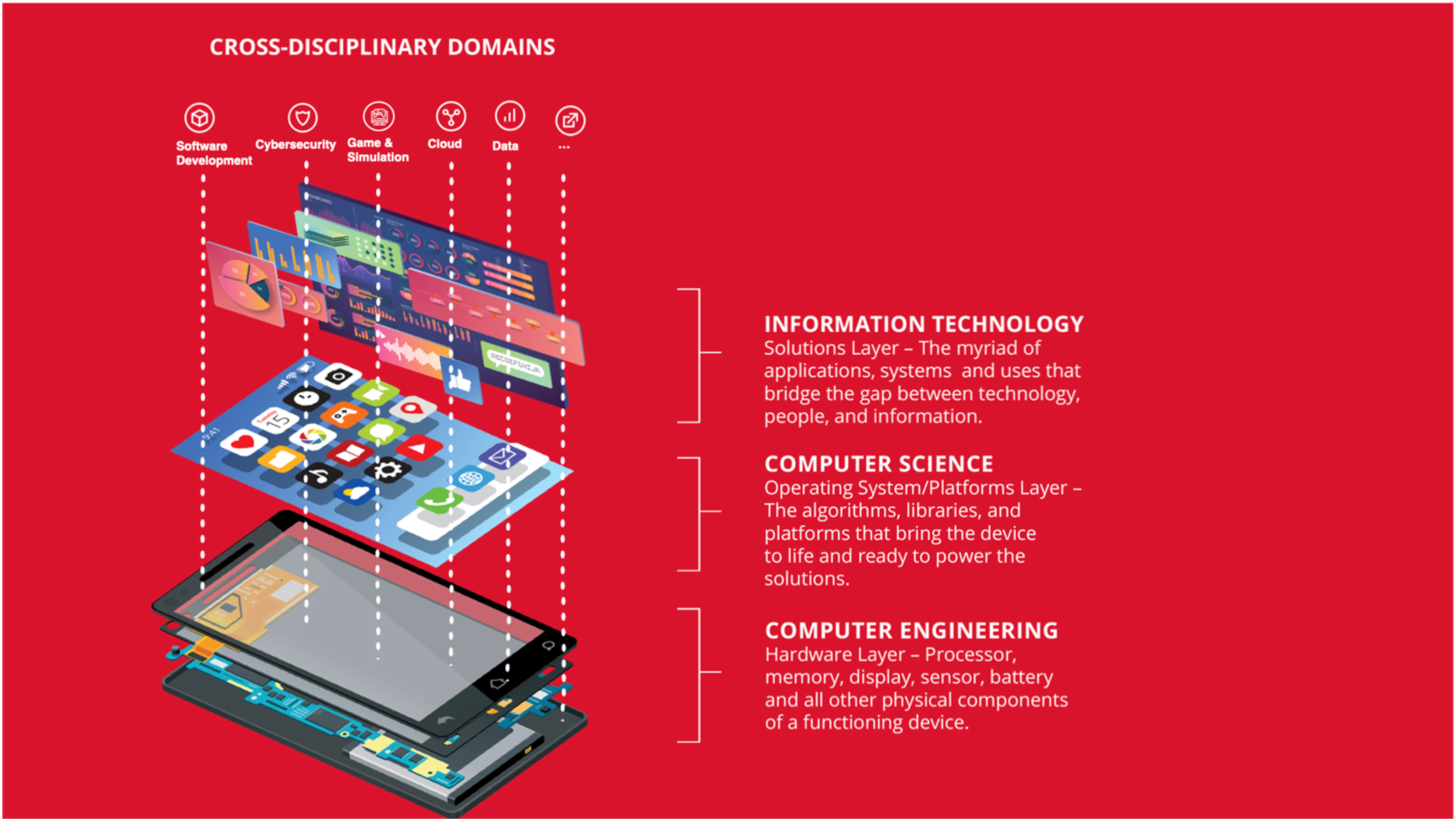
The demand for skilled IT professionals continues to grow beyond the current capacity of the educational system. The Bureau of Labor Statistics (2020) projects that the number of computer and IT jobs will grow by 11% between 2019 and 2029, much faster than the average 4% growth rate for all occupations. The Harvey Nash/KPMG survey of Chief Information Officers (CIOs), the largest IT leadership survey in the world, revealed in 2019 that skills shortages are at an all-time high with 67% of CIOs struggling to find the right talent in their organizations. This solutions layer, where the talent deficit is highest, requires high levels of hands-on technical skills, problem solving skills, and communication skills, compared to high levels of cognitive and abstract thinking skills that are required in the Computer Engineering and Computer Science disciplines. This conceptualization enables us to recognize a computing space where interventions related to hands-on practice would enable broader populations of students to enter the computing field.
Early IT Explained
The Early IT ecosystem is designed to address the needs outlined above by removing barriers and increasing the capacity of the education system. In short, we want to broaden participation in computing by challenging the status quo for college access and affordability. We accomplished this by delivering the first year of the ABET-accredited bachelor’s degree in IT (BSIT) in high schools, for college credit. By using course performance as the primary measure for college readiness, automatic and guaranteed admission is offered to students who successfully complete the courses that make up the first year of the BSIT degree. The success criterion is the same used for college freshmen—to receive a C or above in each course. In doing this, we reduced the cost to degree by up to 25%, and have a better indicator of readiness more closely aligned with the skills necessary for success in the degree program and career field. We note that the various modalities of delivering the courses have been effective in enabling K-12 partners to have shared-ownership in the program. The Early IT also maps the first-year courses to those offered by community colleges to expand opportunities for K-12 districts and their students. Furthermore, by embracing the bilateral agreement model, we provide K-12 districts with a cost-free self-contained option to support the diversity of their student populations. See Appendix A (Tables A1, A2, A3) for a list of first year BSIT courses taught at the high schools, and their method of delivery. Appendix A also includes descriptors of the credit pathways allowed in Ohio and utilized by the Early IT.
Typology of public school district partners.
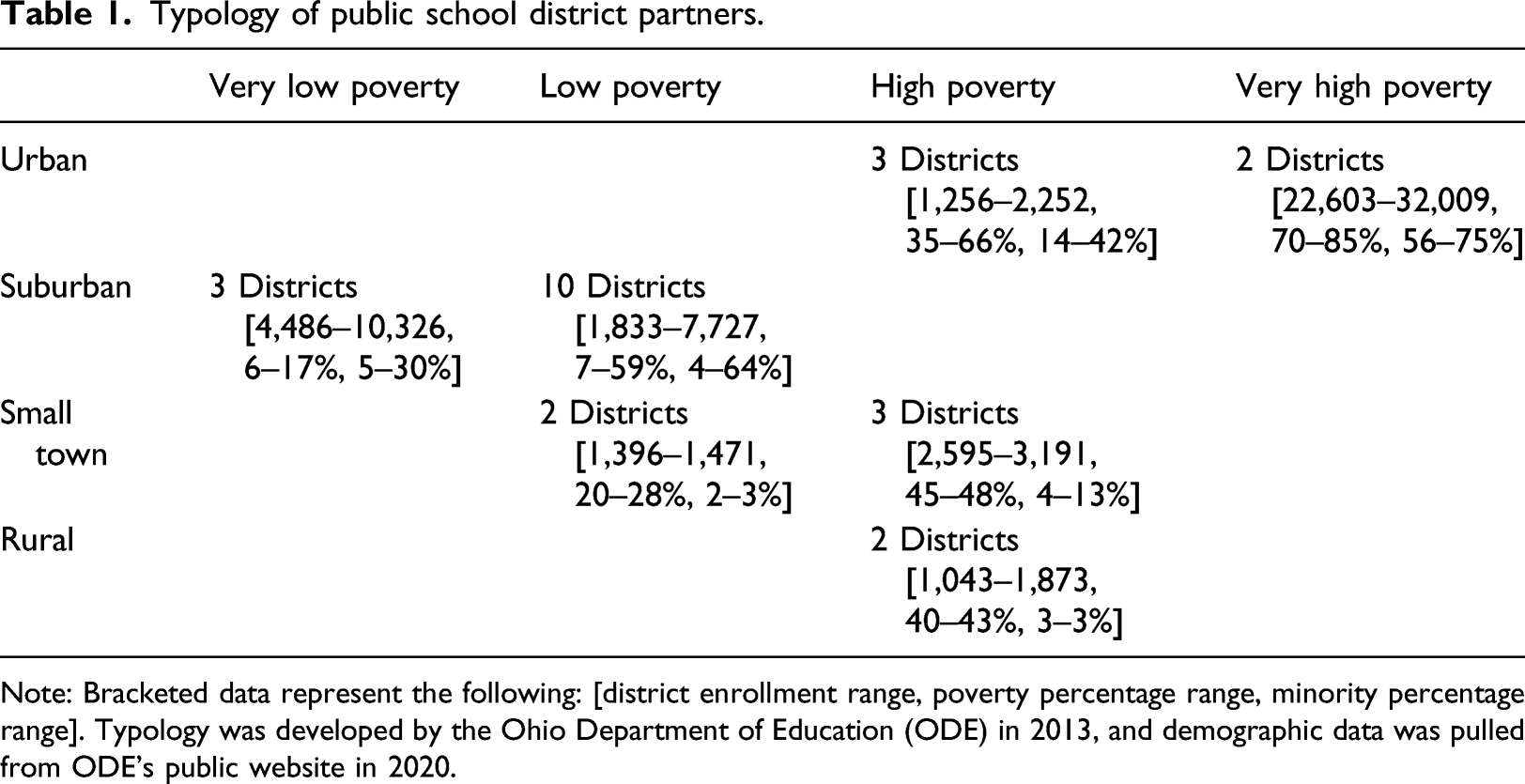
Note: Bracketed data represent the following: [district enrollment range, poverty percentage range, minority percentage range]. Typology was developed by the Ohio Department of Education (ODE) in 2013, and demographic data was pulled from ODE’s public website in 2020.
Enrollment of high school students in Early IT college courses.

Two cohorts have successfully completed the Early IT courses in their high school and transitioned to the BSIT. Figure 2 shows the number of Early IT students who enrolled in the BSIT through the automatic admission process. We are in the application process for the third cohort and initial indicators show large enrollment growth for Fall 2021. Early IT high school students transitioning to the BSIT (Fall, 2021 is projected).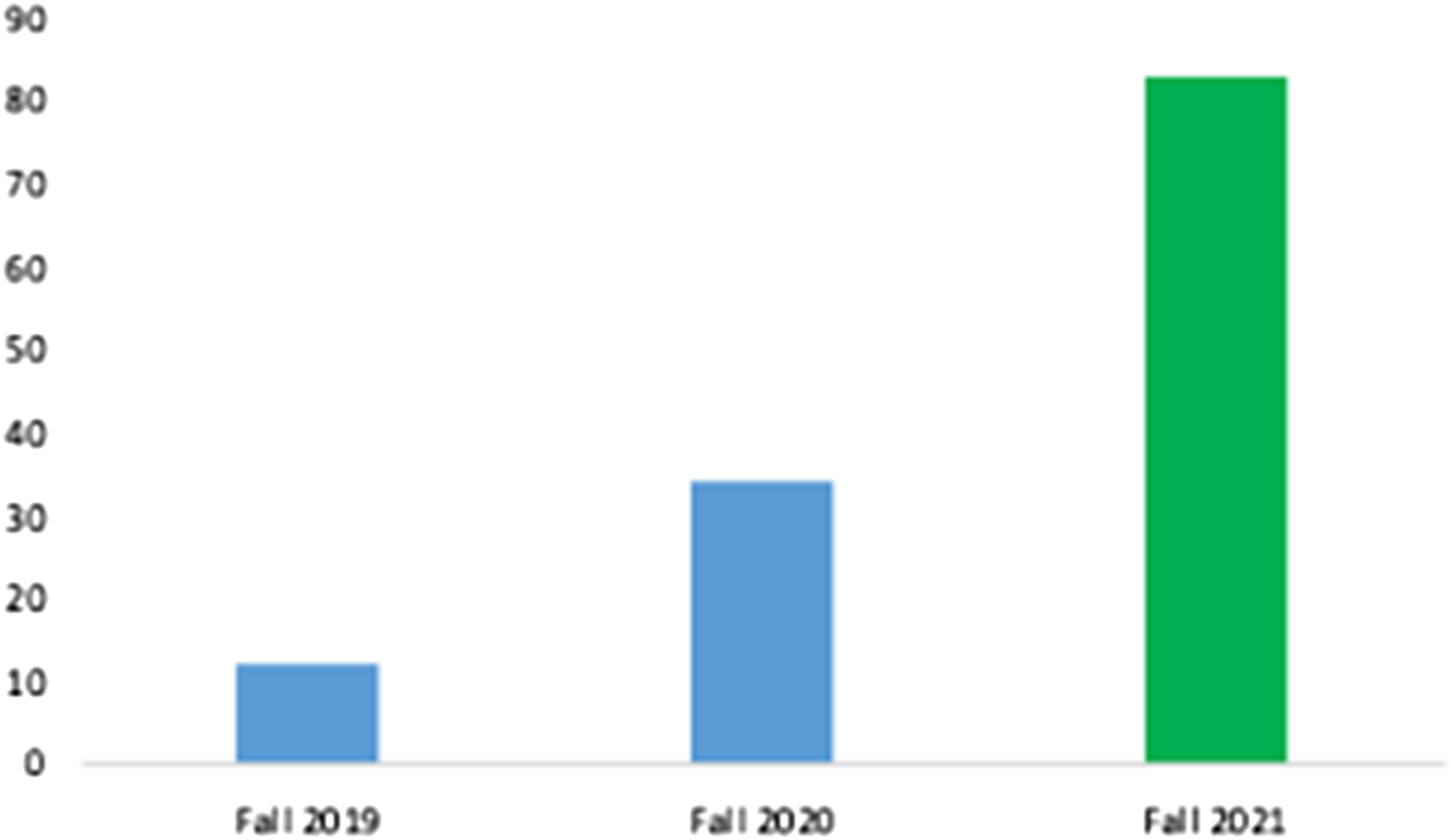
In addition, an equal number of students in the second cohort (Fall, 2020) enrolled in other STEM programs at the university. These students met the admission requirements for these programs and will benefit from the IT courses they completed by earning a minor in IT.
The Early IT ecosystem improves college access and extends affordability by enabling high school students to complete their first year of college through their high school, which may reduce the number of years to graduate and thereby the total cost of degree. The program also gives students early exposure to essential technical skills in computing areas including Cybersecurity, Software Development, Systems Administration, among others. By engaging in these formal courses earlier, students have more time to practice and elevate their hands-on technical skills, problem solving skills, and communication skills by the time of high school graduation. This academic momentum often propels students to a postsecondary degree (Adelman, 2006). The seamless linkage with higher education, through the automatic admission, and the integration of work experience, through co-op, eliminates barriers to college enrollment and career success. The integration of community colleges into the program adds options for even further cost savings and may increase transition and college completion rates.
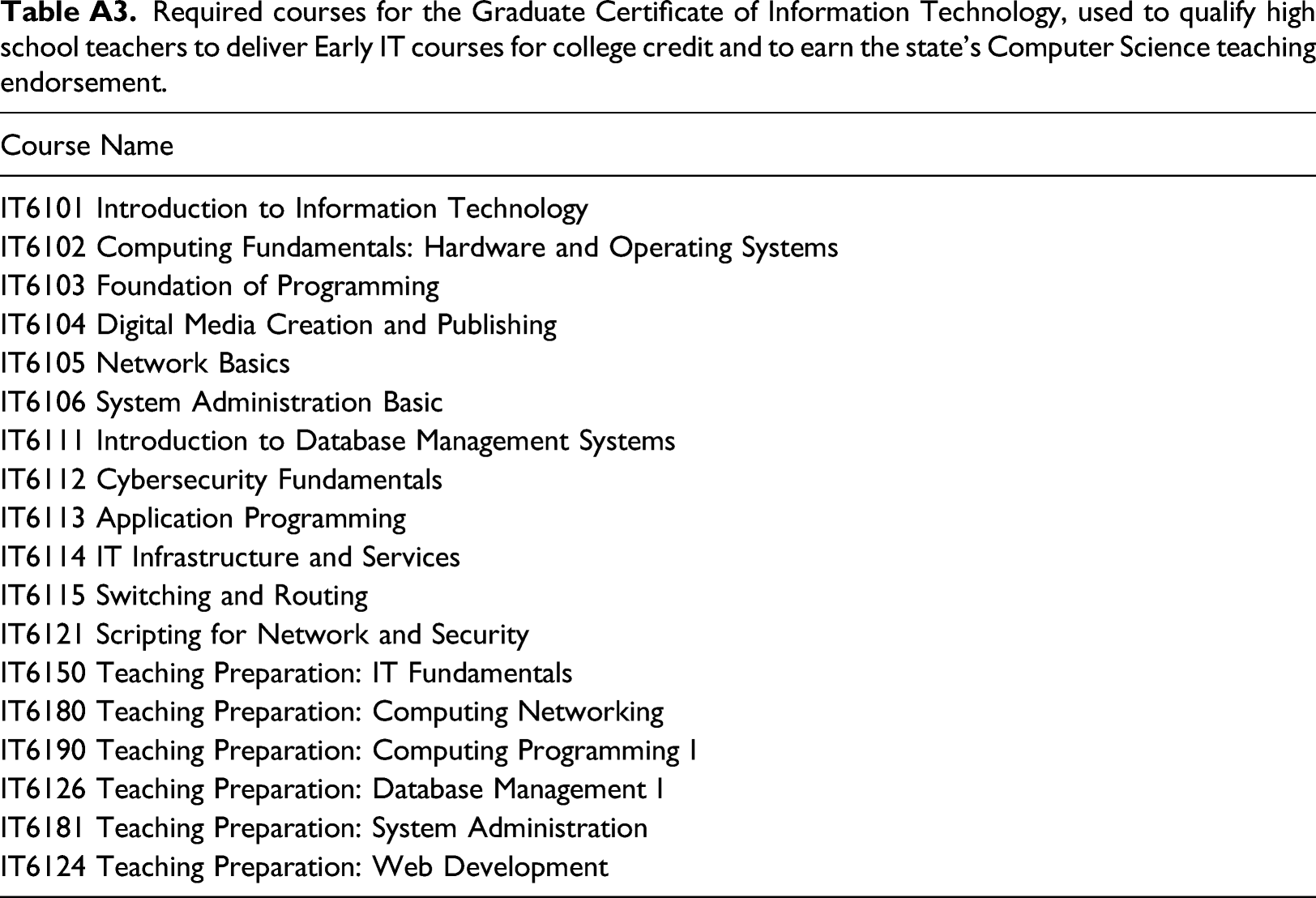
High school teachers in partner schools complete a training program to qualify to teach the IT courses to their students for college credit. The graduate certificate program consists of 18 graduate credit hours delivered through a competency-based online model. The courses in the certificate are outlined in Appendix A. Completion of the certificate makes teachers eligible for the Computer Science teaching endorsement through the state. The cost of the certificate is paid for by the Early IT program through state and federal grants, university scholarships, and industry support. There is no cost to the teachers. In addition to providing training for high school teachers, the program ensures their continued engagement through professional development and networking activities including an annual two-week Fellowship program, a roundtable event twice a year, webinars on teaching effectiveness, and opportunities for adjunct teaching at the University. High school teachers are major influencers for their students and the Early IT ecosystem ensures they have a key role in the program.
Four cohorts of high school teachers have enrolled in the graduate certificate program, and the fourth cohort is in the final weeks at the time of this writing. An additional 17 teachers are expected to complete the program for a total of 47 qualified teachers. The program is intended to be completed all at once. However, in AY18–19 some teachers started splitting the 18-hour requirement over two years. Many of these teachers return to complete the program in the following year. Figure 3 shows the number of teachers who enrolled in the graduate program. Count of high school teachers completing the graduate certificate program (AY20–21 is projected).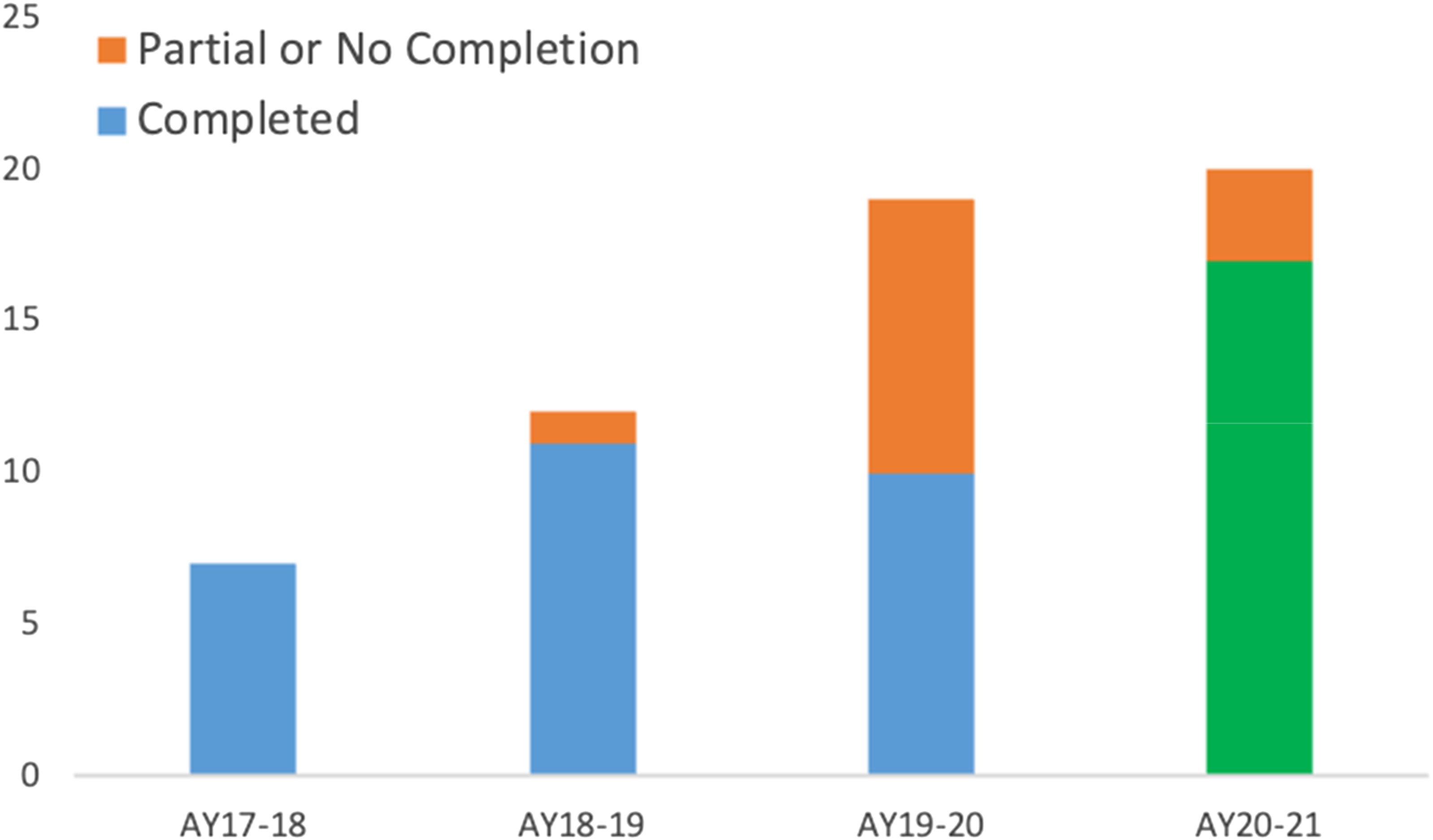
In addition to the formal academic program, the Early IT ecosystem includes several informal activities to support the students, teachers, and school administration. For instance, the college faculty and high school teachers collaborated on developing master content for each of the IT courses to be delivered in high school. The self-contained content, presentations, labs, assignments, and rubrics are offered for free to the schools. One of the assignments is used to measure the students’ attainment of the course learning outcomes. In addition, the SoIT developed and maintain a private cloud environment (Sandbox) to provision virtual computers to students enrolled in the classes. The Sandbox is accessible through the internet and web browser and hence reduces the technical requirements for the schools to deliver the program. High school students only need computers with internet access and a browser, and we provide the rest of the hardware and software through the Sandbox system. In 2019, the SoIT expanded the Sandbox environment in partnership with six state agencies to deliver Ohio’s Cyber Range. This partnership provides additional resources to expand the system and make it available to all students in Ohio. Furthermore, a 2 week summer camp for students provides opportunity to practice project-based solutions. The camp is followed by an industry internship program that was piloted in Summer 2020. Students are also invited to spend a day on campus, IT Academy day, each semester, and to participate in the annual IT Expo alongside undergraduate and graduate students.
The Early IT ecosystem is building a deep partnership among the educational institutions that continues to improve and innovate interventions and activities through a continuous improvement and quality management process. The program extends existing policies in innovative ways and creates an environment for policy innovation for the future.
Policy Frameworks and Context
The development of the Early IT ecosystem can be situated in Kingdon’s multiple streams framework (1984), which separates the policy process into three non-linear streams: a) the problem stream, b) the policy stream, and c) the politics stream. Kingdon (1984) suggests that these three separate streams must come together at the same time to create a policy window, or what Kingdon describes as a “window of opportunity,” in which people pay attention to a problem, a viable solution exists, and policymakers have the motive and opportunity to select it. In absence of these windows of opportunity, education systems often experience policy change only incrementally, and are resistant to large-scale change.
Within this framework, the Early IT developers have served as policy entrepreneurs, or key actors, who seize these moments to advocate for major change, often by presenting innovative solutions, brokering communication, and building coalitions (Mintrom and Norman, 2009). Policy entrepreneurs are responsible for coupling the three streams outlined above to take advantage of a policy window. In short, they must create a solution to an identified problem, and elevate it in the agenda setting process. In the Early IT case, the computing talent shortage and the push for K-12 computer science education, coupled with a push for dual credit options from the state legislature to reduce the cost of higher education, resulted in an open policy window, or a demand in the political landscape, and the Early IT is the innovative policy instrument that is meeting that demand.
While the overarching solution was the Early IT ecosystem itself, its developers had to act as policy entrepreneurs for many smaller solutions for the larger concept to work. These solutions often included significant shifts within the academic unit, college, and university, as well as utilizing existing state policies to their fullest in innovative ways. For instance, the faculty in the academic unit had to make collective decisions regarding creating a qualification pathway for high school teachers, utilizing an online competency-based education model to deliver that pathway, to create a new admission criterion based on students’ performance in the first-year courses to support the automatic admission, to collaborate with the teachers to develop master course content, and to support a continuous improvement process for quality management. At the college and university levels, examples include convincing the university to allow test-free automatic admission, to sign partnership agreements with the school districts, to allow bilateral agreements to offer courses as high school courses that still enable students to receive college credit, to accept the qualification experience for the teachers, and to provide scholarships to support the teachers’ program of study. The university handing over the first year of the degree to high schools, hence losing potential tuition income, was a significant policy shift to support the ecosystem. Examples at the state-level include developing graduation pathways for high school students that include a program like the Early IT, creating a state Computer Science teaching endorsement, a key recommendation in order to create equitable access to computer science education (Code.org Advocacy Coalition, 2020), and then accepting the graduate certificate to meet the requirements for that endorsement. As the Early IT ecosystem gains ground, more shifts are expected. For instance, the pilot industry internship program is initiating shifts for the industry’s view of its hiring pipelines and the benefit of integrating with an academic partnership such as the Early IT vis-a-vis hiring directly or managing their own pipeline.
Kingdon suggests policy entrepreneurs must be willing to invest resources and to use non-traditional ideas and strategies to create opportunities (1984). The Early IT developers continue to engage with regional and state leaders to make certain its innovations are on the agenda—within the higher education institution, with K-12, community college, and industry stakeholders in our region and across the state, and with local, regional, and national funding agencies.
We recognize that policy change does not always lead to desired outcomes, as policy implementation is equally critical in the process. As such, the Early IT developers have advocated for policy change where needed but have focused heavily on the conditions for facilitating implementation as well. Because we were not always certain how to tackle problems in sectors other than our own, we engaged in a process of policy learning, primarily with a bottom-up approach, listening carefully to stakeholders to refine strategies and implementation. Fullan (2007) describes educational change as technically simple, but socially complex. Local context and engagement matters—and we know our partners need to have a shared understanding of our goals and a shared commitment to pursue them. A bottom-up approach to implementation better allowed for local variation in our partner schools, but some top-down approaches make the work easier for our stakeholders, and more scalable. The Early IT ecosystem has thus operated in a shared-ownership method that engages the best of each approach, treating all stakeholders as strategic players, in order to be most effective.
It is our hope that the Early IT policy entrepreneurship and the results of its policy learning process can pave the way for others moving forward. Policy transfer is an important factor in policy change (Marsh and Sharman, 2009), and if others can use the Early IT example to inform their own work, we may be able to collectively bring about the education policy futures we envision below.
Policy Futures
The concept of earning college credit in high school is not new. Given rising college costs and student debt, policymakers have invested in programs to help high school students earn college credit—in theory, shortening time to degree and reducing costs, and thereby increasing access. Those goals have not always been actualized, however, and dual credit programs have been criticized as “inadvertently deepening a divide they were supposed to bridge, giving a head start to students who would have attended college without them” (Field, 2020), for being oversold as a way to save money and finish college sooner only for students to be faced with difficulties transferring credit and applying it to degrees upon matriculation to college (Gewertz, 2016), and for diluting quality and rigor by asking high school teachers to teach college-level courses (Field, 2020).
Researchers confirm that traditional dual credit programs have been plagued by persistent barriers to access for students from marginalized programs, and that there is inequity in offerings and participation rates both between and within schools (An and Taylor, 2019; Kolluri, 2018; Tobolowsky and Allen, 2016; Wozniak and Palmer, 2013). Because some of this disparity can be attributed to the school students attend (An and Taylor, 2019), the Early IT focus on the partnership at the district and school level is critical. K-12 administrators cite funding, student access, and credit acceptance as barriers to expansion of dual credit options (Wozniak and Palmer, 2013). These administrators stated that to fully incorporate dual credit options for all students, the ability for schools to participate needs to be addressed. They preferred “safe” options, like expanding AP, since it allows the school to retain programmatic control and does not require significant funds from the school. Higher education, however, views the expansion of AP as a less than desirable option. The Early IT program bridges this divide.
Researchers have also found that students and families struggle to understand whether dual credit courses will meet college requirements, and have to decide on courses to take without knowing if they will be admitted to a certain institution (Pretlow & Patterson, 2015). This is problematic because the credits institutions accept vary by school and by program. Further, links between dual credit instruction and college readiness are weak, and the popularity of these programs is based on little empirical work related to efficacy (Karp et al., 2007; Kolluri, 2018; Young et al., 2014). The Early IT addresses these concerns in a number of ways, including its support of teachers and assessment infrastructure, in addition to the direct readiness measure and automatic admission.
Some studies suggest that white and affluent students, compared to students of color, first-generation students, and low-income students, stand to gain greater benefits from dual credit programs, (Tobolowsky and Allen, 2016) and that dual credit courses do not reduce time to degree for students from low- and middle-socioeconomic backgrounds (An, 2012; as cited in Young et al., 2014). Research on the expansion of dual credit options to a wider group of students is limited (Karp et al., 2007). These concerns about quality, transferability, and effectiveness call into question whether dual credit programs meet their explicitly stated goals of addressing issues of cost and completion, and promoting access and readiness (Tobolowsky and Allen, 2016). Challenges foreseen for the future of dual credit are the lack of quality control, which affects a student’s ability to transfer credits, as well as funding (Tobolowsky and Allen, 2016).
The Early IT program addresses these concerns and differs from traditional dual credit programs in a variety of ways: (a) the courses taken in high school represent the first year of the bachelor’s degree and as such are directly linked to the undergraduate degree, (b) admission to the undergraduate program is tied to students' performance in the Early IT courses through the guaranteed admission, (c) Early IT allows school districts autonomy in program design, (d) Early IT empowers high school teachers to deliver the college courses through a graduate program, (e) Early IT creates an ecosystem of the school administration, teachers, and the college for experience sharing and continuous improvement, and (f) Early IT supplements the formal courses with informal activities to support students and teachers.
Below, we outline early successes in the Early IT ecosystem that suggest promising policy futures across a few key domains. First, we look at college credit pathways in high schools, and how we might expand options for schools and students who may be excluded from traditional dual credit programs. In this section, we also explore issues of instructional quality and credit alignment. Next, we look at college access and affordability, examining automatic test-free admission and college readiness, as well as co-op opportunities and time to degree. Finally, we look at a new future for P-20 partnerships, and specifically how well-designed dual credit programs might impact our conceptualization of teachers as professionals.
Policy Futures for Dual Credit
Without addressing issues of equitable access to dual credit programs, dual credit instruction, and dual credit degree applicability, programs will be insufficient in achieving large-scale change. For dual credit promises to be fulfilled, we must envision a new future for credit pathways, ensuring instructional quality, and credit alignment.
Pathway Options
Early questions that the Early IT ecosystem had to address were how do we award college credits to students while in high school, and who delivers the college coursework? Policymakers in Ohio have identified four methods through which high school students can earn college credit for courses taken while in high school: (a) awarded credit through accelerated learning opportunities like Advanced Placement (AP), (b) credit through the dual enrollment program College Credit Plus (CCP), (c) articulated credit for career and technical education (CTE) courses through Career Technical Assurance Guides (CTAGs), and (d) articulated credit through bilateral agreements developed between a school district and higher education institution. Table 2 lists these options and compares factors such as cost to districts and the impact on students and teachers.
While AP and CCP have been the most popular routes, their availability, cost, and academic requirements often exclude underrepresented students. CCP comes with a cost to the district and requires high school students to meet college admission requirements. In addition, the CCP option often requires students to leave the school building to go to the college campus. Research shows geographic, socioeconomic, and demographic disparities in access to both computing education itself, and to dual credit programs in general. Recent data shows that 57% of suburban high schools teach computing, compared to only 44% and 43% for city and rural schools (Code.org Advocacy Coalition, 2020). The same report finds that schools with higher percentages of economically disadvantaged students are less likely to teach computing. Data on dual credit programs shows that while 82% of all public high schools offer dual enrollment opportunities (Taie and Lewis, 2020), just over half of high-poverty schools offer such classes, and even in schools that do, Black and Hispanic students participate at lower rates than their white and Asian peers (Field, 2020).
The bilateral agreement option offers new possibilities for students for whom AP and CCP are barriers. Bilateral agreements are agreements between the school district and the university where a high school course description and the learning outcomes are equivalent to those of the college course. When taught by a qualified high school teacher, students earn college credit through advanced standing once they enroll in the college. This is free for students and families, school districts do not have to pay the college for delivering bilateral agreement courses, and the school districts, not the university or state, set the prerequisites for students to enroll.
Only two of the Early IT partner schools utilize the AP pathway in their Early IT program, and both use it in conjunction with other options. Because of community college engagement in the ecosystem, many of the Early IT partner schools do indeed engage in the CCP option. However, 60% of the partner schools make more than one dual credit pathway available to their students, and over two-thirds offer courses through bilateral agreement.
The Early IT ecosystem expands access and equity in unprecedented ways by offering schools the opportunity to choose the pathways that are best suited to their students and community. Empowering each district to design their own delivery mechanism makes the program adaptable to the needs of different districts. This customizable approach enables schools to expand their curriculum beyond their current capacity, which is often a result of financial or logistical constraints. The Early IT ecosystem empowers schools to provide more opportunities for their students without significant operational or fiscal burden. The school district, not the university, is the owner of this decision, ensuring equal ownership and partnership. This equality of stakeholders in P-20 partnerships is critical to the success of such programs but is rarely carried out in practice (Jeffery & Polleck, 2010). When school administrators from highly diverse and rural schools asserted that limiting the program to CCP would be a barrier for their students, they were right. We have found that most schools choose to design their programs using multiple credit pathways and this has opened the door to more students than traditionally served through AP and CCP, broadening participation and equity.
Instruction
Embracing a model that allows high schools to deliver college coursework themselves means issues around dual credit instruction are critical to ensuring scalability, especially as most high schools are not traditionally staffed with teachers qualified to teach computing (Vegas and Fowler, 2020). In fact, recent national grant solicitations have explicitly called for proposals that focus on providing high school teachers with preparation, professional development, and ongoing support in order to teach rigorous computing courses (National Science Foundation, 2020). The Code.org Advocacy Coalition includes funding for rigorous computing teacher professional learning and course support as one of their nine policy recommendations to make computing a fundamental part of the K-12 education system (Code.org Advocacy Coalition, 2020).
Many of the policies that restrict this work are governed by regional accrediting bodies with requirements related to college instructor qualifications. We advocate for changes in these policies in order to allow colleges to create more linkage programs to scale with high schools. We make this ask because these instructors do not need to teach the content of the entire bachelor’s degree; they just need to be qualified to teach the first year, often simpler and more foundational than later content, which may indeed require a master’s degree or higher. Further clarification around competency-based education would also better facilitate this work. Quality assurance is critical, especially as related to awarding credit as we will discuss later, but we advocate for placing autonomy with academic programs to determine standards for instructional quality and rigor.
As it stands, university programs are often already skeptical about students’ attainment of learning outcomes for college credits earned through dual enrollment programs (Mangan, 2016). These concerns about quality and rigor have prevented university departments, who often control credit equivalency decisions, from awarding degree applicable credit for credits earned while in high school (Gewertz, 2016; Reed, 2020). Early IT has taken steps to overcome this distrust by establishing a competency-based graduate certificate to prepare high school teachers to teach our courses, by distributing standard free course content to the qualified teachers, and by collecting data on students’ attainment of the learning outcomes for each of the courses taught. This data enables us to compare attainment outcomes from the courses taught in the high schools to those taught in our college to our traditional first-year students. We believe departmental faculty have the best expertise when it comes to credit equivalency in their discipline, and because they have been involved in the front end in this model, through training teachers, designing curriculum, and assessing learning outcomes, they can be confident in the quality of instruction, and ultimately, in awarding credit.
Credit Alignment
Many dual credit offerings are generic, and not tied to a specific pathway. Credit loss in general, and program credit loss, or the inability to apply transferred credits to a degree plan as mentioned above, is a large issue (Giani, 2019). The savings promised from dual credit programs are likely lost for students who lose significant portions of their earned credits upon matriculating to college (Belfield et al., 2017). Further, there is at least some indication that students from underrepresented groups are more likely to experience credit loss (Giani, 2019). Even in states that require colleges to accept dual credit in general, institutions do not have to count the credit towards a student’s intended major, which negates the purpose of saving time and money. Through the efforts to ensure instructional quality and content alignment described above, we have guaranteed that students earn credit for their first full year of college by the time they matriculate, thereby experiencing no credit loss and fully realizing the promise of dual credit programs in saving students time and money.
In addition, research shows that students who take computing courses and participate in dual credit programs in high school are more likely to attend college in general (Brown and Brown, 2020; Field, 2020), but we know they may not always choose to major in IT. The Early IT provides for earning credit towards minor or certificate programs so students who choose to pursue a career other than IT can still apply their credit earned in high school.
Policy Futures for Access and Affordability
College access and affordability issues prevent many students, especially those from underrepresented communities, from obtaining college degrees in Computing and STEM programs (Anderson, et al., 2020; Nguyen, 2019; Page, et al., 2019; Pulcini, 2018). In order to move the needle in terms of the diversity and number of students pursuing computing careers, the Early IT did two things to minimize these barriers for students: answered the question of college readiness differently and lowered the financial burden and cost to degree.
Automatic Admission
We discussed issues with credits not being tied to specific programs of study. Furthermore, credits earned through dual enrollment programs are rarely tied to admission decisions (Borden et al., 2013). In fact, students could earn a large number of credits and still get rejected from college, as credit earning while in high school is not linked to college admission. The Early IT addresses the policy issue of college readiness by tying credit-taking in high school to the admission decision for the program, since direct evidence of a student’s success is available. All students who complete the first year of the BSIT degree while in high school with a C or above are automatically admitted to the BSIT program. Using a student’s performance in the first year of courses as the measure for students’ readiness for college ensures students have the skills necessary for success in the degree program and career field. Further, guaranteeing their admission increases students’ motivation to excel in their academic work as they can see direct correlation between the work they put in the high schools and their college future.
As shown in Figure 2, only two cohorts have transitioned from high school to college through the Early IT program to date. However, between 2018 and 2020, the enrollment ratio of students from Early IT partner schools to the overall first-year student enrollment has increased by 19% overall. For districts with a student minority percentage of 40% or more, the enrollment ratio has already increased from 4% to 7%. We expect that ratio to continue to increase as schools new to the ecosystem have more time to fully implement their programs.
The ability to have a direct measure of student success in making an admission decision is especially relevant given that many institutions are moving to test-optional admissions due to the COVID-19 pandemic. This move is likely to inspire interest in other college readiness measures, and we think our approach has much to offer the discussion. The automatic admission also relieves burden and stress for families during what is a difficult process.
Affordability
The BSIT program integrates a 20-month work experience (five semesters of co-op), with median earnings of $57,600. Early IT students can even complete their first co-op the summer after high school graduation to have funds available to pay for the first semester of college tuition. The income from all required co-op experiences makes it possible to graduate with little or no debt.
In addition, the Early IT reduces the financial burden of college by making good on the promise to reduce time to degree. The credit alignment work discussed earlier ensures students transition to college with the full first year completed, which may represent a 25% reduction of the college cost. Students are then poised to complete the undergraduate degree and 20-months of integrated work experience (co-op) one year earlier than students following the traditional degree path. In addition, the SoIT offers an Accelerated Integrated Master’s program that enables undergraduate students to complete a master’s degree at the same time they complete their undergraduate degree. Options include the Master of Science in Information Technology (MSIT), Master of Business Administration (MBA), Master of Science in Criminal Justice (MSCJ), Master of Science in Health Informatics (MHI), and Master of Instruction Design and Technology (IDT).
Policy Futures for Teacher Professionalism
Changes in teacher work throughout the last several decades, coupled with negative rhetoric painting teachers as scapegoats who must be held accountable for the perceived failure of public education, has led to increased teacher deprofessionalization and demoralization (Wronkowski and Urick, 2019; Milner, 2013; Hatch, 2015; Kumashiro, 2012). It is common to doubt teacher expertise, to restrict teacher autonomy and creativity, and to fail to include teacher voice in policy development. These issues have contributed to teacher shortages, and many schools, especially disadvantaged schools, often have trouble recruiting and retaining qualified teachers (Carver-Thomas and Darling-Hammond, 2017; Podolsky et al., 2019; Sutcher et al., 2016). The Early IT offers a new future for teachers—one in which we invest in their professional development, trust their expertise, and involve them in program design and shared success. Instead of viewing teachers from a lens of control, or looking down on them as incapable or replaceable, we see their value and offer them opportunities to grow and contribute. This shift is good not only for scaling computing education in K-12, but for the education system and teacher pipeline in general.
We asked high school students who participated in the 2020 Early IT Summer Camp what influenced their decision to participate the most. They reported their teachers as most influential, followed by parents. More data is needed to fully understand the impact of the teachers on student decisions, but this early indicator confirmed our assumption that teachers are a critical component of success in our program. The policy changes around dual credit delivery and instruction discussed earlier would not only facilitate broader and more equitable access to computing education and dual credit programs, but would also impact the current policy climate related to teacher professionalism. Obtaining approval for high school teachers to teach college classes and then trusting them to deliver quality courses that meet the standards for rigor are important steps, but the impact here is bigger than that. If we treat teachers as professionals and do not doubt their instructional quality, we create an environment where teachers, and thereby their students, can flourish. We are there to provide guidance and support, and beyond that, teachers have autonomy to teach in a way that works for their students and context. This ties back to our approach to policy implementation—listening to our stakeholders and using a top-down approach only where it would be helpful and relying on a bottom-up approach to let teachers lead the way.
This trust in partner teacher expertise is a rarity in a time when teachers have seen their status as professionals erode and their expertise devalued. Teachers have been asked to work longer and harder, with fewer resources, while being held accountable for mandates they have no control over. Public perception of teachers has suffered over time, as evidenced by this quote about evaluating dual credit coursework for transfer credit: “A course taught by a high school teacher ‘just doesn’t quite ring the same way’” (Gewertz, 2016). Teachers desire and deserve professional status, compensation, and autonomy, as well as a voice in the decision-making process.
While the attack on teacher professionalism is a policy concern in and of itself that the Early IT indirectly addresses, it is of direct concern to us as the shortage of qualified instructors is a known barrier for dual credit programs and for computing education (Field, 2019; Wang, 2017). We need to find a way to train more teachers, but we also need to find a way to ensure teacher capacity for these efforts. It would behoove policymakers to involve teachers themselves in discussions about the shortage of qualified dual credit and computing teachers. The Early IT ecosystem reframes teachers as key players in the policy process by involving them intimately in the development of the program, increasing the likelihood that teachers will be engaged and interested in this work.
The SoIT expresses value for teachers by offering them professional development and collaboration opportunities, and by elevating their work through social media and other channels. The SoIT has also invited qualified teachers to serve as adjunct instructors for the first-year courses at the college-level, creating mentorship opportunities, recognizing their professional expertise, investing in their growth, and compensating them accordingly. Investing in the support of teachers, rather than expecting them to invest in order to meet our goals, is critical, and as such, we have covered the cost for more than 30 teachers to complete the graduate certificate training, and nine Early IT teachers have taught as adjuncts for the SoIT since Fall 2018. Creating a path for teacher development and reward and engaging in a continuous improvement process rather than a judgmental evaluative process is key to shifting the current lived policy experience of teachers.
Mapping the Way Forward
The Early IT ecosystem is poised to be an effective, scalable, and sustainable talent development system, integral to Ohio’s economic competitiveness. The ecosystem is centered around key innovative concepts that significantly reduce the total cost of a bachelor’s degree (economic efficiency) while improving the level of job readiness for the graduates (educational excellence). The benefits of Early IT to students are numerous: they gain awareness of and experience the value of IT as an applied computing field, and the ability to make informed decisions regarding college majors. They gain automatic admission to the BSIT, gain seamless transfer of courses among several institutions, and improved readiness and market competitiveness. They are able to reduce the cost of college by at least 25%, and co-op earnings, which often exceed tuition and fees, can be used to pay their college tuition, providing for debt-free college. Further, they have the ability to earn a master’s degree in the same time it takes to complete a bachelor’s degree.
While each component in this initiative is not new, the Early IT is unique in its ability to seamlessly integrate all components to address a series of workforce and education problems. Successful P-20 and industry partnerships are necessary in order to tackle the existing computing pipeline issues. In addition, we present that innovative computing education programs have potential to impact education policy problems writ large. We have early indications that the Early IT is indeed broadening access and equity in computing education, broadening access and equity to dual credit opportunities, increasing college access and affordability, and providing new opportunities for teachers. Windows of opportunity are still open for policy shifts around all these issues and our hope is that our policy learning will make the path easier for others to fully realize these futures outlined throughout this paper.
In the meantime, we continue to work to make these futures reality. The success of the Early IT will provide other disciplines or sectors with an applicable model to follow. The Early IT continues to pursue new partnerships with diverse schools in order to continue broadening access and equity. The Early IT continues to elevate the work of partner teachers by investing in their growth and success, and by learning and growing from their contributions and expertise. We may explore integrating the Computer Science endorsement into our preservice programs for select licensure areas, another Code.org Advocacy Coalition recommendation, in hopes of further increasing K-12 teaching capacity for computing (Code.org Advocacy Coalition, 2020).
We will continue to envision new realities in other areas that affect both computing education and education policy in general. One domain of interest is expanding the role and influence of community colleges. The Early IT is currently expanding by developing a program through which students can stay at and be supported by their community college after completing their associate’s degree, while finishing their BSIT degree online. We are also interested in a policy future that forges strong links between different educational sector data systems, especially those that connect K-12, higher education, and industry (Von Zastrow and Perez, 2019). The Early IT is developing data-sharing agreements and systems that will enable better understanding of the outcomes for all students.
Finally, the Early IT ecosystem will drive a new research agenda. Many of the references in this piece are from the popular press and private organizations, as there seems to be a dearth of academic scholarship in many of these areas, like computing education and dual credit
Footnotes
Declaration of conflicting interests
The author(s) declared no potential conflicts of interest with respect to the research, authorship, and/or publication of this article.
Funding
The author(s) received no financial support for the research, authorship, and/or publication of this article.

Note
Appendix
Required courses for the Graduate Certificate of Information Technology, used to qualify high school teachers to deliver Early IT courses for college credit and to earn the state’s Computer Science teaching endorsement.
| Course Name |
|---|
| IT6101 Introduction to Information Technology |
| IT6102 Computing Fundamentals: Hardware and Operating Systems |
| IT6103 Foundation of Programming |
| IT6104 Digital Media Creation and Publishing |
| IT6105 Network Basics |
| IT6106 System Administration Basic |
| IT6111 Introduction to Database Management Systems |
| IT6112 Cybersecurity Fundamentals |
| IT6113 Application Programming |
| IT6114 IT Infrastructure and Services |
| IT6115 Switching and Routing |
| IT6121 Scripting for Network and Security |
| IT6150 Teaching Preparation: IT Fundamentals |
| IT6180 Teaching Preparation: Computing Networking |
| IT6190 Teaching Preparation: Computing Programming I |
| IT6126 Teaching Preparation: Database Management I |
| IT6181 Teaching Preparation: System Administration |
| IT6124 Teaching Preparation: Web Development |