



Abstract
This article examines the experiences and perceptions of academics about student engagement and how their professional practice in a professional community enhances students’ persistence and success in a university in South Africa. While previous research has widely focused on students’ perception of how student engagement enhances student success and persistence, there is a paucity of research on the position of academics who constitute a professional community on how they could enhance student engagement in higher education. To address this knowledge gap, a qualitative research approach was used to gather and analyse data from a sample of 26 academics who shared their perceptions and experiences about how they contribute to enhancing student engagement in the university. Consequently, four main themes were explored to provide conceptual and empirical structure to the notion of engagement among academics in an expert community: institutional structure and culture, affective, behavioural and cognitive engagement. The results revealed that the cognitive, behavioural and affective features of student engagement as well as institutional structure and culture explain how academics experience and perceive how their professional practices enhances student persistence and success in relation to engagement. Particularly, the study shows that institutional culture, expert culture, professional community and institutional structure influence the perceptions and experiences of academics about student engagement. Conversely, when academics do not follow the expert and academic cultures of the institution, it could lead to poor professional practices that are antithetical to student persistence and success.
Introduction
Emergent research on student engagement has focused on students’ academic, psychological and sociocultural development in the learning environment that is inextricably linked to student transition, retention, success and graduation. In a broad context, engagement has gained prominence because of its usefulness in explaining the purpose of higher education in relation to knowledge, performativity and accountability (Zepke, 2018). Beyond the context of educational institutions, worldwide expectation for graduates who are knowledgeable and skilled to work in industry has placed enormous responsibility on higher education institutions (HEIs) to respond to this call by putting in place measures that enhance student persistence and success. Engagement takes place in classroom, school and community boundaries (McMahon and Portelli, 2004), and it involves the commitment of staff who also strive for strong student participation and attainment (Wong and Chiu, 2019). Efforts to conceptualise students’ persistence and success have revealed that student engagement at the institutional level comprises cognitive, behavioural and affective components (Fredricks et al., 2004; Kahu and Nelson, 2018; Lawson and Lawson, 2013). Significantly, these three components have been applied in various research studies to explain how student engagement could enhance student success and persistence in HEIs especially in the wake of global challenges in meeting the knowledge and skills demands of learners.
Currently, increasing student enrolment figures in South Africa comes with challenges such as a lack of lecture venues and laboratories, inadequate funding for students and increasing student and staff ratios. Additionally, universities are characterised by relatively low students’ success rates – (74 percent in 2011) as compared to the desired national norm of 80 percent and a low graduation rate of 15 percent as compared to the international norm of 25 percent (Department of Higher Education and Training (DHET), 2013). Available statistics show that average undergraduate success rate for contact students in 2018 was 81.90 percent while the graduation rate for undergraduate degrees was 17.20 percent. What these figures suggest is the need for HEIs to adopt professional practices that enhance student persistence and success including quality student engagement. While previous research has widely focused on students’ perception of how engagement enhances student persistence and success, there is a paucity of research on how the position of academics who constitute an expert community could support student engagement in higher education. Sequel to this knowledge gap, this study examines the experiences and perceptions of lecturers about student engagement and how their professional practice in an expert community enhances students’ persistence and success. Markedly, the relationship between professional community, improved instruction and student achievement has never been in doubt (Wahlstrom and Louis, 2008), especially, as it involves a process of organisational learning where academics learn to interact with colleagues and students.
Earlier research has demonstrated the importance of gathering teacher perceptions of student engagement in order to create environmental conditions that support teaching and learning (van Uden et al., 2013). Similarly, Hagenauer and Volet (2014) suggest that the importance of a healthy relationship between teachers and students includes the provision of affective and academic support that enhance the development of the knowledge of learners. Literature sources in South Africa have highlighted the significance of student engagement as a function of students’ persistence, retention and academic success (Schreiber and Yu, 2016; Wawrzynski et al., 2012). In complementary ways, Strydom et al. (2010) argue that student engagement is particularly important for the following reasons: the need for better retention and graduation rates and; improvement in student success as well as the efficiency and effectiveness of the HE system. Efforts to develop interventions to address institutional and individual challenges regarding students’ persistence and academic success have resulted in the development of the South African Survey of Student Engagement (SASSE) as an instrument to gauge students’ perceptions of engagement. Particularly, SASSE generates and analyses data on universities regarding students’ participation in education activities, interaction with teachers and peers, perception of the university environment and how these factors translate to enhanced student engagement.
While data from students over the years have provided researchers and managers of HEIs with information on students’ perceptions about institutional structures and support systems that aim at addressing their academic and social needs, there is a dearth of research on the experiences and perceptions of academics on the features that enhance student engagement. The prominence of examining the experiences and perceptions of academics about the features that enhance student engagement served as this article’s point of departure. Consequently, the current study adopted the student engagement and professional community perspectives in providing a theoretical structure to the research. Following widespread student protest across South Africa for free higher education, former President Jacob Zuma in January 2016 established the Commission of Inquiry into Higher Education and Training (Heher Commission). The intent of the commission was to investigate, make findings, report on and make recommendations on the feasibility of making higher education and training fee-free in South Africa, having regard to the Constitution of the Republic of South Africa among others. Resultantly, the Heher Commission Report explained that academic support assumes different forms such as extended programmes, additional classes, Information Technology innovation, language support and summer/winter schools (Heher, 2017). Central to these support functions is the role of academics in ensuring that students become persistent and succeed in their academic pursuit, especially through social and academic culture that is developed in a professional community. Beyond enhancing the social and academic culture of students, the role of academics in universities includes to, promote, maintain and improve student engagement (Wong and Chiu, 2019) and to be conscious and concerned about students satisfaction (Daniels and Brooker, 2014).
In order to examine the experiences and perceptions of academics on student engagement and in line with the aims of this study, I sought answers to three research questions: Research Question (RQ) 1. What factors enhance the experiences and perceptions of academics about student engagement in the university? RQ2. How can the factors (in relation to RQ1) influence the experiences and perceptions of academics regarding student engagement?
Student engagement
Student engagement has become important in recent years due to the need for HEIs to provide quality education that enhances student success, retention and achievement (Kahu and Nelson, 2018). Following these emergent expectations, it has become necessary for researchers to understand the contesting ontological and epistemological positions that give meaning to student engagement in HEIs. Arguably, student engagement is underpinned by ethical, pedagogical and political assumptions. For instance, Westman and Bergmark (2019: 792) argue that power relations, linearity and goals and pedagogical relationships underpin the ontoepistemology of student engagement in the context of democratic education. Although student engagement has been explained as a multifaceted and disputed construct with different theories (Kahu and Nelson, 2018), the current research aligns with the constructivist approach to explaining the experiences and perceptions of academics about student engagement in an HEI setting in South Africa. Jean Jacques Rosseau and John Dewey laid the foundation of constructivism (Krahenbuhl, 2016) which has been developed over the years to explain how students construct and reconstruct knowledge through a learning process. In particular, constructivism is grounded on the assumption that students construct their knowledge and experience learning as an active process rather than a passive process (Biggs and Tang, 2011; O’Connor, 2020).
The epistemological foundation of constructivism shows that knowledge is constructed by the human mind (Richardson 2003). Therefore, through student-centred learning approaches (Krahenbuhl, 2016; O’Connor, 2020) such as active learning, formative assessment and evaluation of learning processes, students construct their knowledge in a social setting. However, Krahenbuhl (2016: 97) argues that although some educators consider the learning theory of constructivism and pedagogical theory of constructivism as same, in practice, they are different. This distinction is important because student-centred learning approaches have direct impact on classroom climate, student engagement (Krahenbuhl, 2016) and the learning experiences of student in relation to how they construct and reconstruct their knowledge. While constructivism is replete with a lot of advantages as a theory, it is not without contestations. For example, Kirschner et al. (2006) argue that minimally guided instruction that includes constructivism is less effective because of the following: (1) it assumes an instructional procedure that takes no notice of the structures that create human cognitive architecture and; (2) it does not make reference to the features of working memory, long-term memory or the complex relations between working memory and long-term memory.
Beside the ethical and pedagogical perspectives of student engagement is the political view that includes neoliberalism. Neoliberalism is grounded on the assumption that markets represent an efficient way of making decisions and an effective way of promoting human welfare (Bamberger et al., 2019). In relation to student engagement, neoliberalism is demonstrated in the demand for practical knowledge, performativity and accountability (Zepke, 2018) and student voice (Buckley, 2018). Therefore, the emergence of concepts such as students as partners, pedagogical practices that satisfy the learning needs of a consumerist clients and activities that aim at enhancing university standings on various league tables (Matthews et al., 2019) are features of neoliberalism.
In order to conceptualise the experiences and perceptions of academics regarding student engagement, this study adopts a multidimensional framework that consists of three student engagement features that have been widely used in various research studies – cognitive, behavioural and affective/emotional. A fourth dimension – institutional structure – has been included to explain how academics who constitute part of professional community develop a culture that enhances student engagement in the university setting. First, the behavioural feature of engagement explains students’ participation in university activities within and outside the classroom setting. Fredricks et al. (2004) opine that behavioural engagement is defined in relation to three main aspects: positive conduct which includes adherence to rules and norms and the absence of disruptive behaviours; involvement in learning and academic tasks that rely on aspects such as persistence, concentration, attention, effort and contributing to class discussions and; third is participation in school-related activities such as governance and athletics. Second, cognitive engagement is centred on the notion of investment that involves thoughtfulness and wiliness to understand complex tasks, develop good ideas and master difficult tasks. Significantly, cognitive engagement explains investment in learning that includes self-regulation and strategic decisions on learning. However, different authors have examined cognitive engagement as a psychological investment in learning (Connell and Wellborn, 1991) and as an internal psychological quality that involves deeper understanding and mastering skills (Newmann et al., 1992).
Third is emotional or affective engagement that explains positive and negative reactions peers, instructors and other persons in an institution experience which enhance the creation of relationships to influence wiliness to work (Fredricks et al., 2004), trust and the development of emotional bonds (Pachler et al., 2019; Snijders et al., 2020). In relation to emotions, academics plan learning activities to include challenging tasks and opportunities to relate their learning to real-life activities and also develop a relationship that enables effective interaction on issues regarding students’ academic and career pathways. It is argued that positive emotions are associated with different motivational functions that enhance communication, flexible thinking, persistence, resilience and engagement (Rowe et al., 2015). The emotional component of student engagement explains the extent to which students identify with an institution and have a sense of belonging (Leithwood and Jantzi, 1999). Fredricks et al. (2004) further provide a nuanced explanation to behavioural engagement by arguing that it is centred on participation which includes involvement in academic and social activities that are linked to strong academic outcomes and reduction in dropout rates. Similarly, Hagenauer and Volet (2014) identified the affective dimension and the support dimensions as essential when describing the relationship between teachers and students. However, student engagement has not been wholly accepted without contestations. For instance, student engagement has been criticised on the grounds that it is generally under-theorised (Kahn 2014), does not address aspects that centre on ethical or political issues (McMahon and Portelli, 2004) and lacks consensus about its meaning and measures (Baron and Corbin, 2012; Buckley, 2018).
Institutional structure, culture and the professional community
This study examines the institutional structure and culture in relation to roles, obligations and expectations of members of a professional community who are academics and contributes to enhancing student engagement in the university. Previous research has shown that structural conditions, human and social resources influence professional communities in an institutional setting (Louis et al., 1996). Recent literature suggests that professional community refers to expert group of individuals who rely on distinct instruments, institutional arrangement, strategies, visions and procedures that guide a collective action including generating and sharing knowledge among members (Nerland and Hasu, 2021). In broad terms, the collective action among members of a professional community includes shared values, common effort on student learning, reflective dialogue, collaboration in curriculum development and continuous professional development (Banerjee et al., 2017; Wahlstrom and Louis, 2008). In the context of HEIs and in relation to the engagement discourse, an expert culture emerges from a professional community when academics interact, construct and share knowledge in a social setting with the aim of enhancing student persistent and success. However, there is a need to manage the tensions that arise from the diversity of knowledge-generating academics through clear guidelines and governance of services (Nerland and Hasu, 2021).
While evidence suggests that structural features and human resource characteristics influence professional communities in educational institutions (Louis et al., 1996), other research suggests that institutional culture is inextricably linked to professional communities (Banerjee et al., 2017). Institutional culture in the context of higher education has been explained as the collective and mutually shaping configuration of norms, values, beliefs, practices and assumptions that shape the behaviour of individuals and groups while providing a frame of reference that prescribes meanings to actions and events (Kuh and Whitt, 1988). The cultural environment influences how academics perceive themselves as contributors to student achievement (Banerjee et al., 2017) through elements of social culture and academic culture (Baron and Corbin, 2012). Secondly, the culture related to pedagogical practice is shared and learnt through practice community (Louis et al., 1996). Therefore, professional community is connected to improved instruction and student achievement (Hord and Sommers, 2008; Wahlstrom and Louis, 2008) which provides credence to the notion of academic culture. Extant literature has shown that through collaborative activities, teachers develop pedagogical practices that enhance students learning (Wahlstrom and Louis, 2008) and engagement. Particularly, the environment of educational institutions influences how academics perceive themselves as contributors to the knowledge construction process through cultures of collegiality and collaboration that enhance pedagogical practices, professional competence, shared values and practices that promote learning (Banerjee et al., 2017).
Materials and methods
The purpose of this study was to examine the experiences and perceptions of academics in a university setting on students’ engagement and how their perceptions shape their practice in relation to students’ persistence and success. A qualitative research approach was followed to gather and analyse data from academics who were drawn from three campuses and seven faculties in the university. Qualitative research is conducted to understand events in their natural setting with a focus on the perspectives and experiences of individuals that cannot be explained by way of objective measurements (Castleberry and Nolen, 2018; Kyngäs et al., 2020). Analogous studies from Bailey (2013) examined the subjective experience of academics at the interpersonal and institutional levels of academic life as well as the attitudes and beliefs of academics regarding their role and support for students in relation to their learning needs by way of a qualitative approach.
Study context
The history of the current study context which is similar to other historically white universities in South Africa has evolved through several years of transformation. Originally established in 1904 as a predominantly white university, the university has grown to become a racially diverse institution with three geographically dispersed campuses. The institution is a comprehensive university that focuses on mass higher education in the South African higher education system. Historically, public higher education system in South Africa has been hierarchical with research intensive universities at the apex, followed by comprehensive universities that focus on mass higher education and then universities of technology (UoTs) that emphasise the training of students to acquire technology-based qualifications (Leibowitz et al., 2015). The university currently has a total student population of 41,675 who are pursuing various programmes in seven faculties. There are currently seven faculties with different academic programmes offered at the degree, honours, masters and doctoral levels.
Sampling and participants
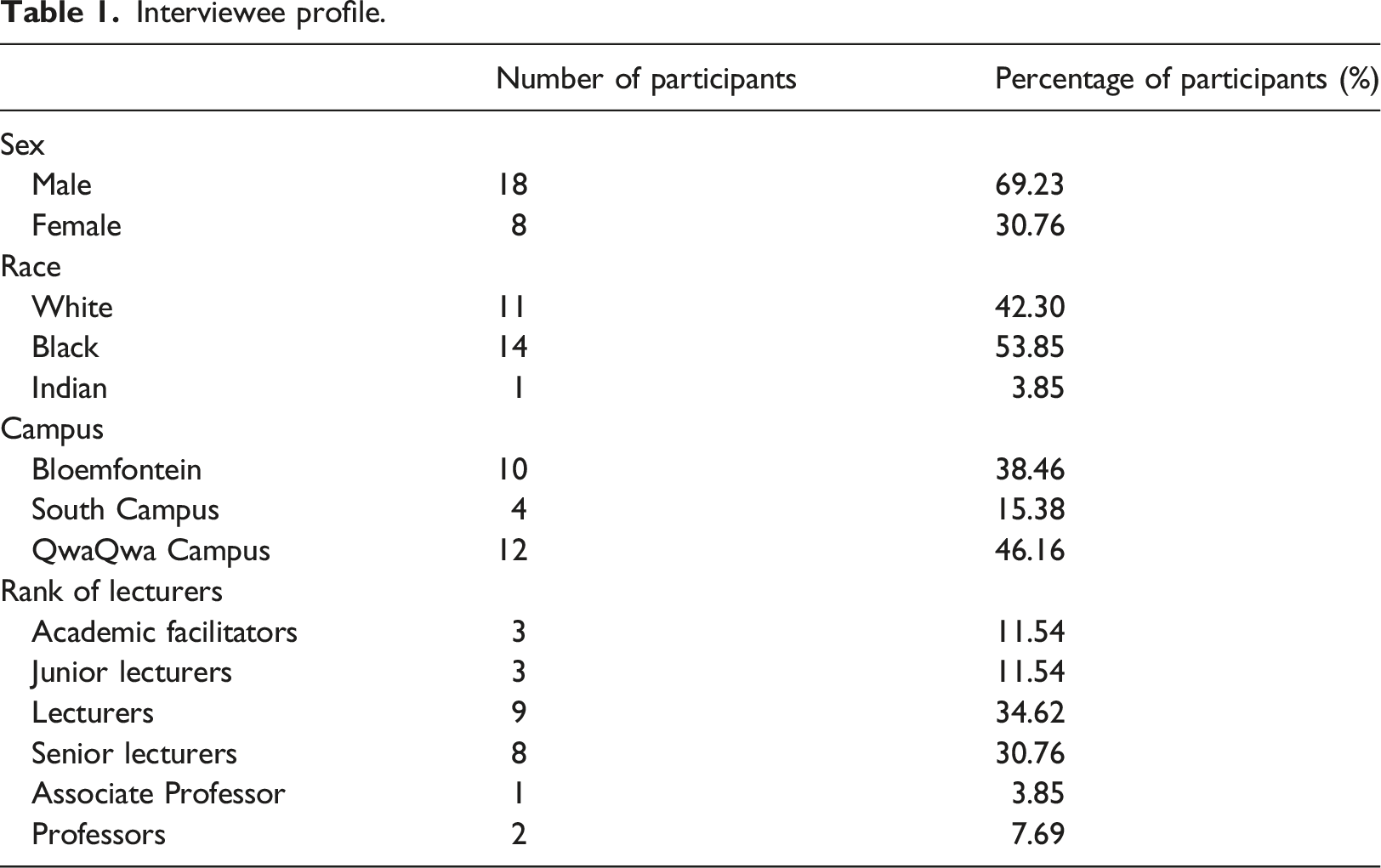
Purposive and snowball sampling techniques were followed to gather 26 participants for the study. Importantly, we gathered the details of academics from each of the faculties through direct contacts and referrals. We were particularly interested in staff who were willing to share their views on student engagement and also provide information on how students’ retention and success could be enhanced in the university.
Interviewee profile.
Procedure and measures
Formal invitation via email was sent to participants, and participants who consented to contribute to the study were contacted and then the interview dates were agreed upon. The duration of each interview was between 45 and 60 min. Participants were required to sign a consent form prior to the commencement of the interview, this was after they had been briefed about the purpose of the study and the information required from them. Each participant was briefed about the potential benefits and risks of the study as well as their right to withdraw from the interview if they deemed it necessary to do so based on possible discomforts that could arise. The interviews were held in a natural setting and in an environment with minimal noise to prevent distractions. Additionally, only the interviewer and the interviewee were present at the venue of the interview while the voice recorders were placed clearly at the sight of the interviewee. A semi-structured interview was used to gather data from academics regarding their perceptions of student engagement in the university and how it could serve to enhance student retention and success. The semi-structured interviews allowed the interviewers to probe and proceed with follow-up questions to give a better understanding of the views of participant on student engagement. In order to ensure the confidentiality of the information provided by participants, three processes were followed. Firstly, data was gathered in an environment where the participants freely and openly shared information. Secondly, each participant was assured of the processes adopted to safely process and store the data. Thirdly, participants were informed not to provide any personal identifiers that could easily link them to the data. Lastly, participants were informed that the study was solely designed for research purpose.
In order to strengthen the accuracy of the measures that was used to develop the instrument for this study, construct, criterion and content validity were checked particularly to ensure that the different constructs in the student engagement instrument measured the perceptions of academics as planned (Cook and Beckman, 2006; Heale and Twycross, 2015). Additionally, the reliability of the interview data sets and trustworthiness were carefully evaluated through repeated checks to ensure consistency in findings and thoroughness of the research design. In particular, trustworthiness in qualitative research has been explained as the methodical thoroughness of the research design, the credibility of the researcher, the authenticity of the findings and how applicable the research methods are to future research (Johnson and Parry, 2015; Rose and Johnson, 2020). Pratt et al. (2020) have cautiously argued that the extent to which other people can evaluate the honesty of a researcher on the processes used in conducting a research clearly defines trustworthiness rather than focusing on the replicability of the research.
Ethical consideration
This research was approved by the university’s Research Ethics Committee in fulfilment of the requirements for conducting research in the university. In line with the rules of ethical consideration, the rationale of the study, potential risks and benefits as well as the right of participants to withdraw from the interview if they felt they could not continue for personal reasons were explained to all participants.
Data processing and results
Sample responses of participants set to the various themes, categories and sample quotes.
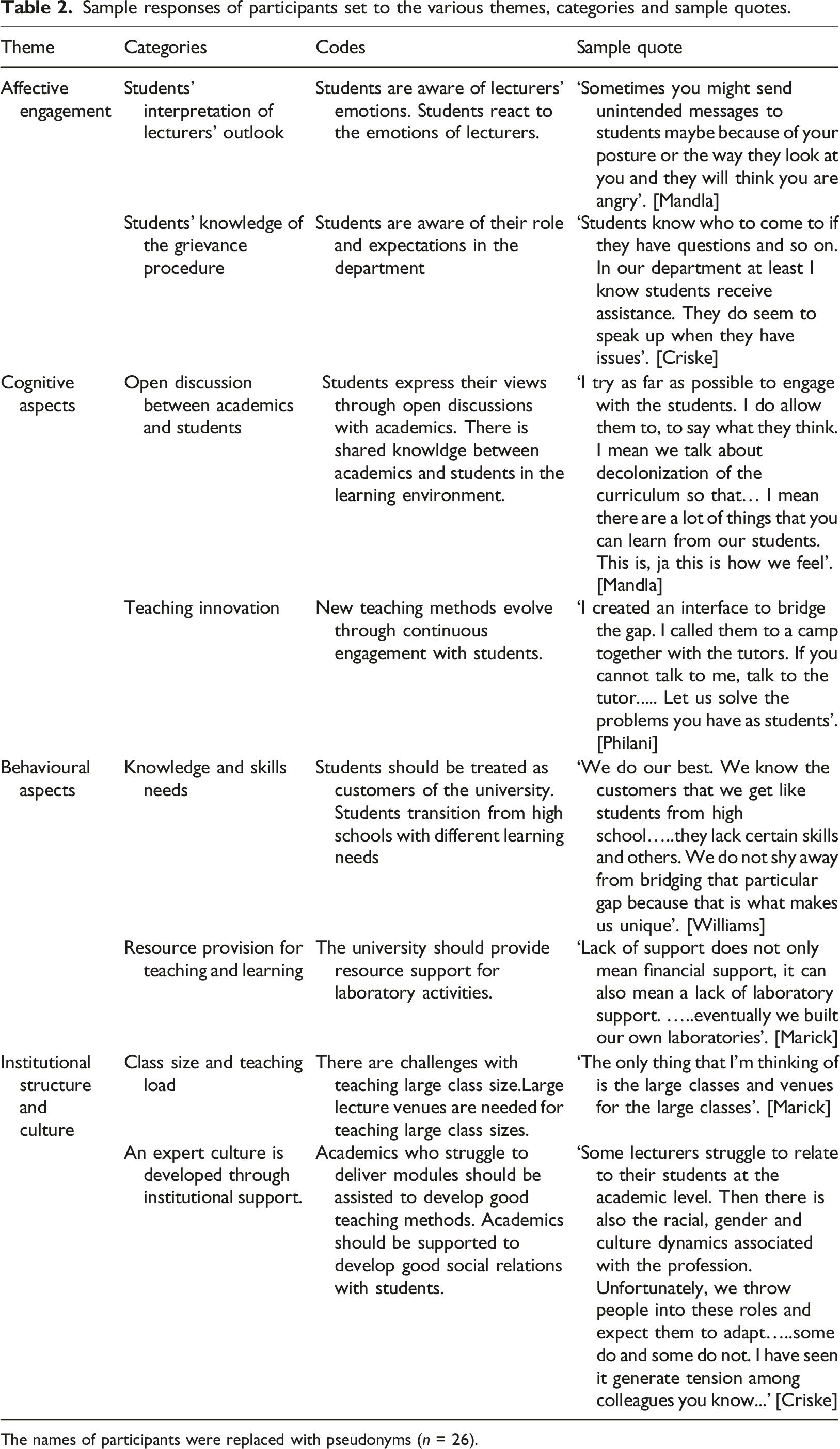
The names of participants were replaced with pseudonyms (n = 26).
Affective engagement
The affective feature of student engagement serves as the bonding mechanism for student – institution interaction. When students have strong sense of belonging, it serves to enhance their academic and social development. Christian who is a senior academic and has worked with the university for 7 years touched on the importance of developing good relationships with students in order to address their concerns regarding academic and non-academic issues. We should be accommodating to the students and ensure that we facilitate learning. Again, some students will tell you that some academics are quite friendly to them while other lecturers are not friendly and their body language tells many things [Christian].
Heinu is a professor and has worked at the university for 16 years. He explained the challenges academics face when students disregard the laid down processes for reporting grievances but rather resort to unconventional channels for redress. It seems that students are not well aware of the exact procedures that need to be followed when they have grievances. Students see the SRC as their first stop but it doesn’t work. We’ve had instances where for instance the SRC members confronted lecturers, which is not supposed to happen so [Heinu].
The responses of academics in relation to affective engagement revealed that students’ perceptions of their interaction and relationship academics, the need for continuous professional development and students’ interpretation of academics outlook are essential for enhancing the affective aspect of student engagement.
Cognitive engagement
Cognitive engagement is important for the knowledge and skills development of student in universities. The quality of engagement between academics and student in the lecture halls and laboratories is central to students’ persistence and success in the university. Philani who has worked in the university for 9 years and is an Assistant Dean highlighted the importance of teaching and learning in the engagement process, ‘recently, I introduced camping for my models as an interface to bridge possible gaps in student learning. This teaching innovation increased the student pass rate from 83 percent to more than 90 percent and other academics have adopted my method’. The views of Philani demonstrate the importance of teaching innovation in enhancing cognitive engagement in the university setting. Likewise, Criske who is an academic with 7 years of work experience at the university opined that teaching and learning innovation is an essential aspect of engagement that should be highlighted. There are few people to my knowledge that are trained to be innovative and are really do blended learning - not just putting notices, PDFs and power points on blackboard on blackboard but actually combine eLearning with face to face learning [Criske].
All the 26 participants identified the importance of cognitive engagement to students’ persistence and success in the university.
Behavioural engagement
Mandla who is a senior lecturer and has taught in the university for 7 years highlighted the importance of career advising to final year student. Students come for career advising, especially the fourth year students. We give them advice on the different areas of specialisation….to say you know curriculum looks at this, leadership looks at that etc. So it depends on what you want to do as a student. [Mandla]
Philip, an academic, touched on the challenges some academics face especially in managing large class sizes. He explained that, ‘because some lecturers have large classes it is difficult to give feedback to their students as compared to academics who have small class size’. Another participant proposed training for academics as a way of enhancing student engagement in the university – ‘Students are always going to be students and we were once students and we know what it is like and the tricks you pulled and so on…. I think staff could benefit from some training regarding how to engage with a 21st century student’. [Heinu]
Institutional structure and culture
The structure and culture of universities serve to guide the relationships between the different actors. Significantly, resources, class sizes and the provision of resources are some of the features of the structure of universities that could have latent and manifest consequences of student engagement. New staff adjustment to the university on the other hand explains how institutional culture serves as tool for internalising new entrants into the university space. The challenges regarding the employment of adjunct academics and how their level of engagement are perceived by students and other staff also highlighted by Lubanzi who is a senior lecturer with 9 years of work experience at the university. I would rather say for me, the greatest challenge is more on the usage of ad hoc staff members and contract staff because of the growth of the campus. Let me start by saying knowledge about it could be one challenge. Having known about it [Blackboard], one still needs some training around it and the time one spends on campus as well [Lubanzi].
Lubanzi acknowledged the challenges institution faces especially in relation to creating structures and maintaining cultures in multi-campus settings. Another participant, Lethabo, explained how culture links with affective engagement in the university setting. I think it has a lot to do with institutional culture you know, when somebody is your senior you give that respects….that is that. Even how they [students] call me, they call me ma’am and when I asked them why I am being called ma’am because I am too young for this, they say that it is for respect [Lethabo].
The opinion of Lethabo reveals the influence of culture on the relationship between students and staff and how it intersects the link between affective engagement and behavioural engagement. Importantly, when academics adjust to the social and academic culture of a university, they develop better understanding of the actions and expectations of students, relate with them well and serve their knowledge and skills needs better. The adjustment of academics involves supportive interaction where senior academics provide support to other academics. Bokamoso who is a head of department shared his opinion about how he provides support to his colleagues through supportive interaction in order to enhance pedagogical practices. We have few colleagues who still teach stereotypically, as if to say, I was taught this way so that is how I must teach. It is difficult for you to walk to a colleague’s office to try to solve a problem. However, in my position as the head, I advise such lecturers and tell them to join the teaching and learning support group. [Bokamoso]
Discussion
The aim of this study was to examine the experiences and perceptions of academics about student engagement and how their professional practice in a professional community enhances students’ persistence and success in a university in South Africa. Consequently, the findings of this study extend our previous understanding of the literature on the experiences and perceptions of academics about student engagement in two ways. Firstly, findings of the current research demonstrate the inalienable relationship between student engagement and the expert culture of academics that are necessary for enhancing student persistence and success in the university setting in South Africa. This finding is consistent with prior research that shows that the collective action of members of a professional community is connected to improved instruction, student achievement and success (Hord and Sommers, 2008; Wahlstrom and Louis, 2008). However, central to the role of academics as members of a professional community and contributors to student success is institutional structure and culture. Outstandingly, educational development, changes and systemic convolutions continue to shape higher education setting that is also facing increasing tensions (Blackmore et al., 2010). These tensions are also found in the linkage between the mission and institutional structure of universities that particularly work through individual autonomy of academics (Blackmore et al., 2010) and how they perceive the features that enhance student engagement.
Secondly, the process of enhancing engagement between academics and students could occur by way of changes at the institutional and individual level as shown in the results of the current study. As social structures evolve in response to human needs and changes in the environment, it has become necessary for HEIs to equip academics to develop their knowledge and skill and create new methods of enhancing student persistence and success. Institutional policies and strategies on student persistence and success and continuous professional development represent some of the measures HEIs can put in place to enhance improvement across different sectors. Prior research has shown that shared values, common effort at student learning, reflective dialogue (Banerjee et al., 2017), strategies and procedures that guide a supportive interaction and knowledge sharing among members (Nerland and Hasu, 2021) enrich the experiences of academics towards student success. Again, the use of pedagogical approaches such as interactive feedback systems and teaching innovations that are underpinned by constructivism could enhance students’ learning experiences as well as the construction and reconstruction of their knowledge. At the individual level, personal effort by academics to provide affective support to students, provide adequate and prompt feedback to students and develop pedagogical skills enhances students’ learning and success. Prior research has shown that socio-cultural and relational features especially at the micro level of education manifest through students’ experience of good teaching and learning (Bryson and Hand, 2007; Knight and Duncheon, 2020) which occur in the classroom.
The study revealed that all four features, cognitive engagement, behavioural engagement, affective engagement and institutional structure and culture, interconnect to provide meaning to student engagement among academics in the university as shown in Figure 1. Experiences and perceptions of academics about student engagement framework.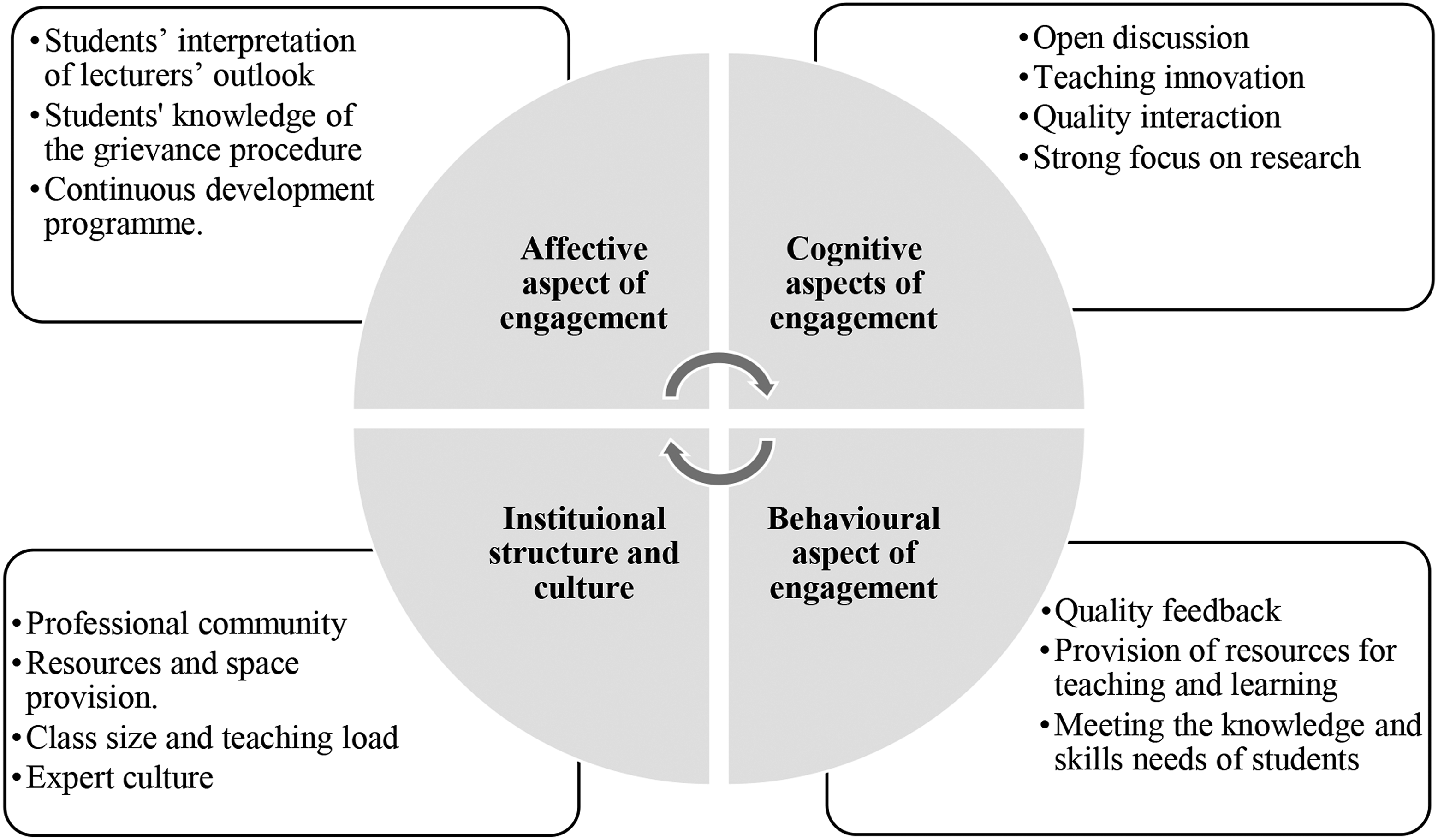
Across the findings, the experiences and perceptions of academics regarding the importance of cognitive engagement revealed to the need for open discussion between academics and students, teaching innovation, strong interaction and strong research focus in enhancing student success. Additionally, students’ view of academics’ disposition and their ability to receive and explain issues to students in class are important to the cognitive development of students. Contrastingly, when students perceive their relationship with academics as mundane and not strong, it certainly affects the conducive atmosphere needed for effective teaching and learning. Previous research by van Uden et al. (2013) revealed a strong association between teachers’ perceptions of student engagement and interpersonal teacher behaviour, pedagogical competence and didactic competence. Similarly, Xerri et al. (2018) show that better teacher–student relationship leads to perceived reduced workload by students, higher student engagement in academic activities and positive impact on student engagement.
Secondly, the results revealed that behavioural engagement is enhanced by the relationship between quality feedback and manageable class size, provision of resource for teaching and learning, students’ appreciation of quality engagement, career advising and identifying student as customers in the provision of quality education. This is consistent with Pachler et al. (2019) who show that there is a link between task performance, study engagement, students’ motivational states and transformational teaching on student creativity. While academics face challenges in managing large class sizes, the findings of this study point to two levels of possible intervention – institutional arrangement to reduce class sizes and professional development programmes for academics, and at the individual level, teaching innovation by academics to cope with managing large class sizes. At the institutional level, the findings of this study corroborate the result of previous research by Mulryan-Kyne (2010) that revealed that course, facilities, resources, seating capacity of lecture halls and the quality or intensity of interaction between students and academics are factors that influence large class size.
However, the effect of growth in enrolment should not be large class that can negatively affect the quality of instruction, but rather, there should be adequate academics to deliver modules in the various disciplinary areas (Department of Higher Education and Training (DHET), 2013). While a small class-size is important for effective teaching and learning, Knight and Duncheon (2020) assert that reduction in class size does not lead to students’ achievement gains especially when academics do not alter their teaching practice to reflect the knowledge needs of students. This therefore brings to the fore the importance of professional community where academics share ideas on best pedagogical practices that aim at enhancing student success. For instance, through collaborative activities (Wahlstrom and Louis, 2008), cultures of collegiality, shared values and practices that promote learning (Banerjee et al., 2017), teachers acquire additional knowledge and skills that are relevant for enhancing student engagement.
Feedback from participants revealed the importance of identifying students as customers of the university. However, the antithesis the neoliberal school of thought that suggests that the introduction of market systems defeats the purpose of education delivery as a right of every citizen irrespective of their sociocultural background. For instance, Buckley (2018) contests the argument that neoliberal approaches confine students’ voices by emphasising that neoliberal approaches provide students an important role as consumers in market system through their views. Notwithstanding these contestations, the educational environment should serve as a space to engender a disposition for teachers to listen to their colleagues and students, respect them and be tolerant towards them (Freire, 2005). It is also important for academics to be aware of their interpersonal behaviour and how it influences students’ attitudes towards the teaching and learning processes. When students identify their study tasks as challenging, interesting and enhance their personal growth, it leads to less experience or burnout and stronger engagement (Mokgele and Rothmann, 2014).
The affective feature of student engagement serves as the bonding element in the engagement domain particularly because it explains the relationship between students’ sense of belonging and their academic and social activities. Prior research has shown that the elements of ‘social culture’ and ‘academic culture’ which operate together could serve as spaces for encouraging disengagement in the university environment especially when weakness in one element could have negative effect on the other (Baron and Corbin, 2012). Therefore, it is important for universities to develop policies and clear rules of engagement that support students in terms of their social and academic activities. Additionally, students’ interpretation of academics’ outlook, their knowledge of the grievance procedure and continuous development programme for academics to appreciate the importance of engaging students are important to enhancing the affective elements of student engagement. This finding corroborates the results of previous research that suggest that instructors’ social and emotional outlook and support to students enhance student engagement in the learning space (Rotgans and Schmidt, 2011; van Uden et al., 2013).
The results further reveal the importance of a good relationship between students and academics that is built on mutual trust, cooperation, respect, students’ appreciation of grievance procedure and a conscious effort by management of universities to create an environment that enhances engagement. This finding aligns with prior research that has established the significant role of instructors in stimulating student engagement through a strong understanding of how students learn in a social context and the achievement of curriculum and its goals (Bransford et al., 2005; van Uden et al., 2013). Similarly, Snijders et al. (2020) show that quality and healthy interaction between academics and students enhance student engagement and student loyalty in the university environment.
While seminal research has focused on the cognitive, behavioural and affective features of examining students’ perceptions and experiences of engagement, this study extended this narrative by introducing the institutional structure and culture dimensions in relation to how academics work within a professional community. Firstly, the study revealed that institutional policies, strategies, availability of resources, class size, teaching load and physical learning spaces influence the experiences and perceptions of academic staff about student engagement and how they contribute to student success. Markedly, the complexities of a multi-campus setting with its inherent sub-cultures suggest the provision of different forms of support that aim at equipping academics to contribute to students’ persistence and success. Contra wise, disparities in resource allocation, a lack of experienced of academics in some campuses, a lack of mentoring support for academics, weak collaboration between academics and the unavailability of networks to enhance collegiality may create differences in the perceptions and experiences of staff in relation to student engagement and how it enhances student success.
Secondly, findings of the current study demonstrate that an expert culture emerges from a professional community when academics adjust to the university environment and when they receive assistance from other academics through supportive interaction and sharing of knowledge aimed at enhancing students’ persistence and success. As members of disciplinary community, academics are expected to have a sense of identity and personal commitment to group goals (Becher and Trowler, 2001). Of cause, disciplines in the university consist of recognisable identities and cultural attributes that include a professional language that is important for creating a cultural identity (Becher and Trowler, 2001). Conversely, when academics do not adjust to the social and academic culture of the university, they tend to develop and nurture professional practices that are unfamiliar to other academics and students. By so doing, they create disruptions to the social and academic culture that serves to enhance a collective action that leads to students’ persistence and success. This is consistent with prior research that suggests that professional community is inextricably linked with institutional culture (Banerjee et al., 2017) and improved instruction and student achievement (Hord and Sommers, 2008; Wahlstrom and Louis, 2008).
Thirdly, the adjustment of new academics to the university environment requires the active support of other academics who are conversant with the institutional structure and culture. Certainly, when new academics struggle to adjust to the academic environment, it raises serious concerns about the relationships in the professional community, existing traditions that may be adversative to new entrants and the lack of networks to support new academics. Particularly, supportive interaction among academics enables them to assume roles with one another as mentees and advisors (Wahlstrom and Louis, 2008).
Limitations and future research
The findings of the current study should be interpreted in the light of some weaknesses. Firstly, while the use of a university with three different campuses provides a unique context and experiences of academics about student engagement, comparison of the data across dissimilar universities would have enriched the findings of this study. Future research could examine the experiences of academics in dissimilar universities in relation to their contributions to student engagement. Secondly, the use of only interviews in gathering and analysing data from academics serves as a limitation of the study particularly because other forms of data collection tools would have presented the study with different strands of results that are not recorded in the current research.
Conclusion
The purpose of this study was to examine the experiences and perceptions of academics about student engagement and how their professional practice in a professional community enhances students’ persistence and success in a university in South Africa. Drawing on the major findings of this study, I argue that cognitive, behavioural and affective features of student engagement as well as institutional structure and culture explain how academics perceive and experience professional practices that enhance student persistence and success. Importantly, when academics see themselves as members of a professional community, they adopt the expert culture through interaction, collaboration, continuous professional development, shared values and a collective action that aim at enhancing student persistence and success. Secondly, the academic and social culture acquired by academics in HEIs serves to shape their perceptions about the cognitive, behavioural and affective features of engagement that is required to support the knowledge and skills development of students. Additionally, collaboration, interaction and the sharing of knowledge among academics within and across academic disciplines are important for the maintenance of an expert culture that prioritises student persistence and success. Thirdly, the unique institutional structure of the university presents diverse opportunities and challenges regarding the cognitive, behavioural and affective support academics could provide to students to enable them achieve their academic goals. In the context of the current study, that is a multi-campus setting, differences in resources, physical spaces and academic support systems could present different experiences and perceptions that could affect how students receive support that is essential to their academic persistence and success. This brings to the fore the significance of institutional policies, strategies and resources that are needed to enhance the relationship between academics and students and between academics and other staff across campuses of the university to ensure that students achieve success in their academic activities.
Footnotes
Declaration of conflicting interests
The author(s) declared no potential conflicts of interest with respect to the research, authorship, and/or publication of this article.
Funding
The author(s) disclosed receipt of the following financial support for the research, authorship, and/or publication of this article: This work was supported by the Universiteit van die Vrystaat grant number UFS-HSD2019/0340/0905.

Interview Protocol
1. What factors enhance your experiences and perceptions of student engagement in your department? 2. In relation to RQ 1, how do the factors you have provided enhance the quality of engagement between you and your students? 3. How would you describe the quality of engagement between academics and students in your department? 4. What are some of the challenges you encounter in your professional practice that negatively affect student engagement? 5. Please describe how the teaching and learning strategies in your department enhance student engagement? 6. What institutional culture elements enhance or negatively affect student engagement in the university? 7. In your opinion, how does the current institutional culture (including the academic culture) enhance student engagement in the university? 8. How do the current institutional structure and policies enhance or negatively affect student engagement in the university? 9. What additional information can you share in relation to your professional practice, academic culture and student engagement in the university?