




Abstract
Show-and-Tell is one of many activities recommended for encouraging children’s oral language production in classrooms across the world, but there is little research on the topic. From existing studies, teacher facilitation is posited as key to shaping children’s oral language production. This paper explores teacher strategies for facilitating children’s oral language production during Show-and-Tell, in the case studies of four Singapore preschool language teachers (English, Chinese, Malay and Tamil) sampled from a larger nationwide longitudinal study, with 47 children observed across the four classrooms. Using a coding scheme with high reliability (d = 0.80), a total of 1192 teacher utterances and 539 children’s utterances were coded to capture teacher strategies and types of children’s responses across the classrooms. Findings showed that the English teacher employed language modelling most frequently, while all other teachers most frequently facilitated through questioning. The potential of Show-and-Tell in encouraging children’s language output is observed in how self-initiated talk is among the most frequent form of child participation, especially in the English-language classroom, which was expected given the context of English-dominance among bilingual Singapore children. In response to teacher facilitation, children were more likely to respond with verbal responses and gestures, as compared to not responding. It was, however, noted that a lack of wait-time provided by teachers hampered children’s opportunities to express themselves during the activity. Our findings have implications on the need for different types of teacher strategies required to ensure the effectiveness of Show-and-Tell for promoting children’s oral language production.
Keywords
Introduction
In the early years, oral language skills development contributes to various aspects of language proficiency, including vocabulary (receptive and expressive) knowledge, syntactical awareness and narrative discourse processes (Dickinson and Porche, 2011; Roskos et al., 2009; Whorall and Cabell, 2016). Multiple linguistic aspects (e.g. phonology, morphology, semantics, syntax and pragmatics) need to be developed together in the preschool years to lay the foundation for ensuring effective communication over the lifetime (Roskos et al., 2009). A common activity used in preschool and elementary classrooms for developing children’s oral language competencies is Show-and-Tell (McMahon-Giles and Wellhousen-Tunks, 2008; Merville, 1954). It is sometimes also referred to as ‘Sharing Time’, and mainly involves individual children being invited to share objects or experiences with the class, while their classmates may either naturally respond (Murphy, 2003) or are scaffolded by the teacher to respond with comments or questions (Mortlock, 2014). Few studies have been conducted on Show-and-Tell, and existing studies highlight teacher facilitation as key to eliciting children’s oral language (e.g. Mortlock, 2014; Murphy, 2003).
The present study is situated in the multilingual context of Singapore, wherein children are required to learn two languages simultaneously from preschool: English plus one of three official ‘mother tongue’ languages 1 (MTLs) – Chinese, Malay or Tamil – as a key educational objective. This study focuses on both children’s oral language production and teacher facilitation strategies during the Show-and-Tell activity within language classrooms for English and the MTLs. Of central interest to the present study is the potential of Show-and-Tell for encouraging bilingual children’s oral language production, given that differing exposure to the children’s two languages and different opportunities to practise these languages outside the classroom contributes to different proficiency levels in the classrooms, as is the case in Singapore. Current studies reflect a tendency towards English-dominance in Singapore (Cavallaro and Serwe, 2010; Styles, 2019; Sun et al., 2018), making opportunities for oral language practice of the MTLs through Show-and-Tell especially relevant for children’s MTL acquisition. At the same time, English oral language production remains relevant in the English-medium education system following a bilingual education policy. Show-and-Tell is similarly recommended to Singapore teachers as a potential classroom activity, but there has not been much investigation into the different strategies used, and the effectiveness of this activity. To fill this gap in the research, we examine case studies of how Show-and-Tell was conducted by four teachers who each taught a different official language. The objective was to explore the similarities and differences in teacher facilitation strategies and children’s oral language production and participation. This is especially of interest when comparing between the English and MTL classrooms, given the noted difference in language dominance between these languages. This study will also consider the potential implications for ensuring effectiveness of the activity in engaging children and encouraging oral language production across the different languages.
Importance of oral language development and language instruction in Singapore preschools
Roskos et al. (2009) define oral language development as entailing five main areas: semantics (developing meanings for words), syntax (grammar), morphology (manipulating the smallest units of language), phonology (sound structure of the language) and pragmatics (social use). Language output is an important component of oral language development (Swain, 2007), and learners must express themselves, regardless of the quality of teacher input, in order to master novel words through communication. This forces the child to move from simple semantic processing for comprehension to production (De Bot, 1996 ). Children’s language output also serves to internalize linguistic knowledge (De Bot, 1996). Additionally, the output from learners also works to inform teachers of children’s level of acquisition, and therefore informs their proceeding instructional strategies (De Bot, 1996; Swain, 2007). Furthermore, looking at children’s fluency in output is indicative of the automaticity of language processing, thereby casting importance of enhancing fluency as well (De Bot, 1996). Along with family factors, preschool factors were found to predict bilingual children’s MTL vocabulary knowledge (Sun et al., 2020). In the classroom context, children’s oral language development is influenced by the linguistic environment where teachers create opportunities during interactions for children to express themselves verbally (Mashburn et al., 2008).
Preschool teachers’ complex vocabulary and intellectually stimulating conversations that engage children also have been demonstrated to predict the child’s literacy skills (Dickinson and McCabe, 2001; Dickinson and Porche, 2011). Through the use of questions, teachers model rich and descriptive language, while providing opportunities for children to produce extended responses and associations (Beauchat et al., 2009). To advance children’s oral language development it is important for teachers to create and maximize opportunities for conversations with children, thereby fostering language learning in the classroom.
In Singapore, the development of bilingual competency including oral language skills has been an objective since the launch of the bilingual education policy in the 1960s (Dixon, 2005). In the Nurturing Early Learners (NEL) kindergarten framework provided to teachers by Singapore’s Ministry of Education (2013a), there are learning goals specifically directed at developing children’s oral language, in both English and the MTL. This document emphasizes the importance of children being able to communicate effectively by interacting with people and playing with their friends (Ministry of Education, 2013a), in line with the relevant literature. As per Singapore’s bilingual education policy, from preschool children are required to learn at least two languages in school. While all children have to learn English, and English is the medium of instruction of all taught subjects except the MTL, children also attend daily lessons in an MTL for a proportion of instruction time, typically one hour out of a four-hour preschool programme (O’Brien et al., 2019). Children are assigned to learn one of the official MTLs (Chinese Mandarin, Malay or Tamil), based on their ethnicity, and based on the assumption that it is the dominant or home language, though it may not necessarily be the case (Dixon, 2009). For instance, Chinese and Indian children, who are assigned to learn Mandarin Chinese and Tamil in Singapore schools, respectively, may originate from homes that speak other dialects or languages such as Hokkien and Teochew, or Telugu and Hindi. Malay children are noted to most closely have a match between their home language and assigned MTL, though some households may also speak dialects such as Javanese or Boyanese (Dixon, 2009).
In line with findings worldwide that bilinguals do not develop their languages in an equal way (Bernardini and Schlyter, 2004), Singapore bilingual preschoolers have similarly been developed one language more than the other. Despite the expressed importance of developing balanced bilingualism, and due to Singaporean children’s increasing exposure to and preference for English, MTL usage and proficiency levels have decreased (Curdt-Christiansen, 2016; Sun et al., 2018). The Singapore Department of Statistics (2010) reported that only 32.2% of Indian, 42.2% of Chinese and 71.8% of Malay preschoolers speak their assigned MTL at home. The trends in shift of home language to English, especially in Chinese and Indian households, implies that the role of MTL teaching and learning in classrooms holds increasing influence as increasing English-dominance in homes may mean that children encounter the MTL for the first time in schools (O’Brien et al., 2020; Sun et al., 2018, 2020). This means that many preschool children will have unbalanced bilingual proficiency, and this has implications for how teachers may vary facilitation strategies for eliciting oral language production and participation from children of diverse language proficiencies, during Show-and-Tell in the different language classrooms.
Strategies to facilitate children’s oral language production in the early years
Strategies to facilitate preschool children’s language production are provided to teachers by Singapore’s Ministry of Education (2013a) in the NEL framework. The NEL framework, designed for Singapore’s early childhood educators, includes one volume on language and literacy, and another volume on MTL in each of the respective languages (Chinese, Malay and Tamil). The NEL’s language and literacy framework (Ministry of Education, 2013b) contains descriptions of seven strategies to promote language and literacy learning in the classroom, six of which are related to language production. These six strategies are related to both scaffolding strategies, such as modelling, and types of activities which comprise reading aloud, teaching target vocabulary, using songs, rhymes and finger plays, using functional role play and using language games. This reflects an emphasis on Singapore preschool teachers’ role in facilitating child participation and talk, wherein ‘teachers can also model and teach specific vocabulary and language structure’ (Ministry of Education, 2013b). For instance, teachers can model language production when they recast, extend and expand on children’s talk to build vocabulary. The NEL’s MTL framework (Ministry of Education, 2013a) listed strategies to facilitate oral language production, including questioning, creating various opportunities for interaction and conversations, and providing opportunities for self-expression. Relevant to more balanced bilingual development, ample opportunities for children to practise production of both their languages, but especially their weaker language, in activities such as Show-and-Tell allows them to also practise negotiating for meaning in the target language, and receive feedback from adults scaffolding their language acquisition. This suggests that facilitation strategies which increase child output would be effective for increased production for the weaker language.
The Show-and-Tell activity has been described as an oral language activity that provides children with opportunities to describe objects or recall experiences, typically from home, with the support of teachers (Evans, 1992; Mortlock, 2014). In the mentioned NEL frameworks (Ministry of Education, 2013a, 2013b), the Show-and-Tell activity is also described as an opportunity for listening and speaking when children share their experiences while relating to photos, drawings and items from home. It is also sometimes referred to as ‘sharing time’ and teachers have been reported to encourage children’s engagement in the activity differently. While an individual child is usually invited to present their experiences or items to the class, some teachers support more natural conversations between spectating and presenting children (Murphy, 2003), while other teachers play a more active role in eliciting comments and questions from spectating children (Mortlock, 2014). Show-and-Tell, in directing attention to individual children’s contributions to classroom talk, has been posited to have the potential to enhance children’s motivation and confidence in classroom participation and language production (McMahon-Giles and Wellhousen-Tunks, 2008; Ministry of Education, 2013b). Allowing children to more naturally discuss topics of their own interest, and of mutual interest to other children, also helps foster social connections between peers (Danielewicz et al., 1996; Mortlock, 2014). Poveda (2001) recommended that teachers maximize teachable moments to manage children’s sharing, and teachers in Singapore are also advised to maximize teachable moments for modelling and teaching related vocabulary and sentence structure during Show-and-Tell (Ministry of Education, 2013b). Given the potential benefits of Show-and-Tell for facilitating children’s active classroom participation and oral language production, further study into how this activity is conducted is warranted. With the paucity of research on the Show-and-Tell activity, we therefore developed a coding scheme that looks into teachers’ facilitation strategies and children’s responses in this activity, based on preliminary observation of the classroom videotapes as well as literature discussed below.
Scholars have reported different types of strategies to facilitate children’s oral language production (e.g. Edwards and Furlong, 1978; Van de Pol et al., 2010), and Dickinson (2011) suggested that varying practices and strategies affect children’s language and literacy outcomes. General strategies, such as classroom management in terms of facilitating the beginning and continuation of classroom activities (Pianta et al., 2008), and providing wait-time of at least three seconds after questioning (Wasik and Hindman, 2018), are considered integral in encouraging children’s language production. These were included in our coding scheme. In addition, scaffolding involves a set of facilitation strategies which adults adopt to assist children in producing oral expression, akin to Vygotsky’s (1978) Zone of Proximal Development concept where a more competent other brings about growth. These scaffolding strategies may be verbal or non-verbal in nature, across a variety of activities in the preschool classrooms (e.g. Ng and Bull, 2018).
Along with other sources, Van de Pol et al.’s (2010) two main aspects of scaffolding were closely considered in our coding scheme (refer to Appendix 1) as they were derived from a comprehensive review on scaffolding strategies in the classrooms. Van de Pol et al. (2010) considered two aspects of scaffolding: the intentions of scaffolding to exemplify what is being scaffolded, and the means for scaffolding to illustrate how scaffolding takes place. Similar to some of these intentions and means of scaffolding, Edwards and Furlong (1978) had proposed six types of meta-statements which teachers could utilize to facilitate children’s talk in the classroom. For example, the category on ‘questioning’ was based on Van de Pol et al.’s (2010) scaffolding means through asking questions. Van de Pol et al. (2010) also listed ‘modelling’ and ‘instructional feedback’ as scaffolding techniques through teachers’ demonstration as well as providing feedback when facilitating learners’ responses. The categories on ‘task management’ and ‘behavioural management’ were adapted from both Pianta et al. (2008) and Van de Pol et al. (2010), which involves providing instructions on tasks and managing behaviours which take place through the course of sharing. Through our initial observation, we had also noticed that teachers attempted to ensure spectating children’s attention and also rephrased or corrected children’s input. These observations corresponded with Edwards and Furlong’s (1978)meta-statements with functions to attract attention as well as editing children’s language production, and also Van de Pol et al.’s (2010) scaffolding intentions of recruitment, forming the category of ‘engaging interest’ in our coding scheme. Lastly, the category of ‘correcting and editing’ in our coding scheme was also included, based on Edwards and Furlong’s (1978)meta-statement in editing student’s language production (refer to Appendix 1).
Children’s participation in language classrooms
On top of the various observed strategies that teachers use for the Show-and-Tell activity, it is important to consider how effective these strategies are in facilitating children’s language output. While most studies attribute a lack of child responses in classroom activities to children’s individual differences (Urdan and Schoenfelder, 2006), others argue that teacher strategies for facilitating positive classroom interactions are also integral to student engagement (Reyes et al., 2012), which contributes to their overall academic achievement (Wang and Pomerantz, 2009). It has been argued that children’s active engagement in class affects their ability to understand and retain information, and has been linked to the development of their sense of challenge, motivation and persistence in the learning process (Brame, 2016; Hyun et al., 2017). As part of a child-centred approach in teaching, which has increasingly been recognized as integral to fostering developmentally appropriate practices for children’s freedom of expression, interests and abilities (Gupta, 2015), the Show-and-Tell activity could not only potentially facilitate children’s oral language production, but also provide children with autonomy to make choices and present their perspectives, thereby encouraging their participation by eliciting various forms of responses. These responses could be considered in terms of their frequency of utterances or the quality of talk; for example, in terms of quality of talk, Brown and Benson’s (1997) five categories of children’s responses observed during adult–child interaction in a language activity. Their categories comprised adequate response (objectively correct), inadequate response (objectively incorrect), ambiguous response (unclear adequacy), ‘I don’t know’ and clarification (request for more information).
Based on our preliminary classroom observations, we combined a number of categories to code for verbal quality of talk to indicate children’s participation. For example, the category ‘Gestures’ was included since children’s use of gestures with the support of adults has been demonstrated to promote language development and production (Singleton and Saks, 2015), even without child verbal output. Gestures aid in expressing understandings, as well as reflecting and extending thoughts when producing language (Goldin-Meadow and Alibali, 2013). Tompkins et al. (2013) examined children’s responses during group play activity in the form of whether children responded in high-production utterances (i.e. three or more morphemes) or low-production utterances (i.e. one or two morphemes). We simplified and adapted this into one-word response or more-than-one-word responses in our coding scheme. Another set of categories for questioning was adapted into our coding scheme from an investigation, the same longitudinal sample from the larger data sets of this study, on the impact of questioning for promoting classroom participation and talk in Singapore MTL classrooms (O’Brien, Sun, et al., 2019). The categories included different levels of literal questions (management, labelling and locating, describing, recalling, sentence completion) and inferential questions (judging, synthesizing, comparing, resolving, predicting, identifying cause, explaining), as related to the resulting types of children’s utterances: unintelligible, low (two or fewer morphemes), high (three morphemes or more) and no opportunity (no wait-time provided for child response). Teacher provision of wait-time was found to be important for eliciting child responses. This study further discussed how, despite the promoted use of inferential questions to extend children’s thinking and verbal responses, children’s language proficiency may influence whether they are able to process and respond to such questions. It suggests that for children with lower proficiency, literal questions may be more effective in eliciting responses. This might be most relevant to the MTL classes in the present study. In another investigation of the Singapore preschool classrooms, Ng and Sun (under review) developed a coding scheme that consisted of seven types of children’s responses as well as eight teachers’ strategies to facilitate social and emotional learning during shared book reading – a common language activity conducted in Singapore preschool classrooms. In observing utterances related to socio-emotional themes in 19 classrooms, the frequency of each type of response that corresponded with each facilitation strategy was reported. Thus, based on previous literature and observational studies, seven types of children’s responses were included in the coding scheme for the current study: Gestures; Yes/No Responses; Repetition of Teachers’ Words; Adequate Answers; Others; No Response; and Unclear Responses (see Appendix 2).
The current study extends research into teacher strategies and child responses to the Show-and-Tell activity, which is widely recommended for facilitating children’s language output. No study related to Show-and-Tell has yet been conducted in the Singapore context; hence, the current study aims to see how similarly or differently Show-and-Tell could be conducted to encouraged children’s classroom participation in Singapore preschool classrooms, for supporting bilingual development.
Current study
Curricular frameworks have emphasized the importance of promoting oral language development in preschool classrooms. However, little is known about how teachers are facilitating classroom conversations to encourage children’s active engagement and oral language production, especially in the widely practised but under-studied activity of Show-and-Tell. The Singapore context presents an interesting context for the study of Show-and-Tell, because of recent shifts in curricular frameworks away from teacher-focused, didactic approaches (Ang, 2006; Lim-Ratnam, 2013) toward more child-centred approaches where teachers are ‘facilitators’ and ‘co-constructors’ in ‘active’ and ‘authentic’ learning (following the NEL framework’s ‘iTeach’ principles; Tan, 2011). In addition, the bilingual education policy in Singapore presents challenges to practices supporting oral language development for two languages.
We adopted a qualitative case study approach to examine the oral language activity of Show-and-Tell, in four preschool language classrooms (English, Chinese, Malay and Tamil), to obtain rich data which could offer a nuanced insight into teacher facilitation strategies in the context of bilingual learners with diverse language proficiencies. This study will answer the following research questions:
What are the facilitation strategies adopted by teachers within the Show-and-Tell activity across the language classrooms? How did children respond during the Show-and-Tell activity across the language classrooms? Which teacher strategy elicited the most child’s talk during Show-and-Tell in the different language classrooms?
Methods
A case study approach was adopted for this study as it encourages in-depth exploration of an activity, event, programme, process, individual or a group of individuals, forming an in-depth understanding of cases within its context (Creswell and Poth, 2018; Yin, 2014). The detailed data from the cases enable various aspects to be investigated within its natural settings (Yin, 2014), particularly useful for building context-dependent knowledge in unknown or little-known areas (Flyvbjerg, 2006). As the video-recorded classroom data was derived from a larger project, data collected from naturalistic settings with Show-and-Tell segments available was limited. A total of four teachers were observed conducting Show-and-Tell at the Kindergarten 2 (K2) level. All four teachers whose video-recorded sessions were sampled and transcribed for this study were similar in their level of teaching qualification. This meant that our ability to control for certain variables that could affect teacher strategies and children’s participation and verbal language production was limited. Hence this study adopted a descriptive and exploratory approach in our attempt to bridge the gaps in research on Show-and-Tell, especially in the context of teachers catering to diverse bilingual learners’ language proficiencies.
Participants
Teachers
Four teachers from four K2 language classrooms (one English, one Mandarin, one Malay and one Tamil), were video-recorded and observed for these qualitative case studies. All observed teachers are female, and hold at least a Diploma in Early Childhood Care and Education to teach either English or MTL at the kindergarten level. Three out of four of the observed teachers reported an average of 7.33 years of teaching experience (SD = 2.08), with a range of 5–9 years. These teachers reported an average of 5.25 (SD = 2.30) out of 7 on their English proficiency as well, including areas such as understanding, speaking, reading and writing.
Children
Fifty-one children with an average age of 5 years 9 months (M = 69.23 months; SD = 4.11 months) were observed across the 4 K2 classrooms (where most children are aged from 5 to 6 years of age), with class size varying from 10 to 18 children (M = 12.75; SD = 3.59). These classrooms and children were observed and video-recorded as part of a larger longitudinal study called the Singapore Kindergarten Impact Project (SKIP; Ng et al., 2014). SKIP was a nationwide longitudinal study that assessed the impact of structural and process factors of early childhood education provision on various child outcomes including language and literacy. These four classrooms were included for this study because they were among the few classrooms observed to have conducted the Show-and-Tell activity. They were from two government-run, one commercial and one not-for-profit preschools. Additionally, these videos were observed across all languages only at the K2 level, and were thus chosen for comparison across four languages. These videos were obtained from videotaped observations of classrooms ranging from three to four hours on a typical day at school. Two of the classes selected for this study were from government-run preschools, one being a public provider and another one being a commercial provider. Participating children’s parents who completed a parental questionnaire regarding the children’s home environment on average reported having obtained a polytechnic diploma (mother’s education: M = 7.07, SD = 2.67, and father’s education: M = 7.21, SD = 2.43; range of 0–11, ranging from ‘No qualification’ to ‘Doctorate’). The average reported household income was between S$6000 and S$6499 per month (M = 11.92, SD = 5.68, range = 0–19, ranging from below S$1000 to S$10,000 and above, with a S$500 increment between each income level). This is above Singapore’s national average of $3488 in 2018 (Singapore Department of Statistics, 2019).
Classrooms
All four classrooms were from kindergarten programmes that are four hours long, with one hour allocated to English and one hour to MTL literacy instruction. As per the education model in schools across Singapore, the language of instruction in the remaining time across the four classrooms is English. However, one of the four schools allocated an additional half-an-hour, once a week, specifically for Show-and-Tell in English. In comparison, the MTL classrooms were sampled from schools where the Show-and-Tell activity was not allocated a specific time, but was conducted within the one hour of literacy instruction time allocated. While Show-and-Tell is not a compulsory activity in Singapore preschools, it appears in educator guides released by Singapore’s Ministry of Education as a recommended activity for providing children with the opportunity to develop confidence in their language use, to encourage interaction between children and to facilitate children’s self-expression, in English and their respective MTL (Ministry of Education, 2013a, 2013b, 2013c). Show-and-Tell is recommended as an activity where children share drawings, photos, videos, and products of classwork or items from home, and discuss related experiences with their class. Data that were available and transcribed at the time of analysis were included in this study. This study observes and analyses teacher strategies and child responses during Show-and-Tell video segments. The teacher–child turn ratio was also calculated for each class, to compare the frequency of teacher talk versus child talk. Teachers were observed to talk on average 2.71 times more than the children in the classrooms (SD = 0.88, ranging from 1.53 to 3.51). On average, 14 minutes 47 seconds (SD = 6 min 5 s, ranging from 10 to 20 min) of this activity were observed across video segments of the four classrooms. This was because we selected the videos to ensure that we compared similar activities and the resulting teachers’ instructions in the four classes, to best represent the naturalistic nature of our observation. In previous research, it has been shown that as little as 10 minutes of transcription are enough to gain an insight into teaching quality (Dickinson and Porche, 2011). Table 1 below provides more information on each observed class.
Basic information on observed classes for Show-and-Tell.
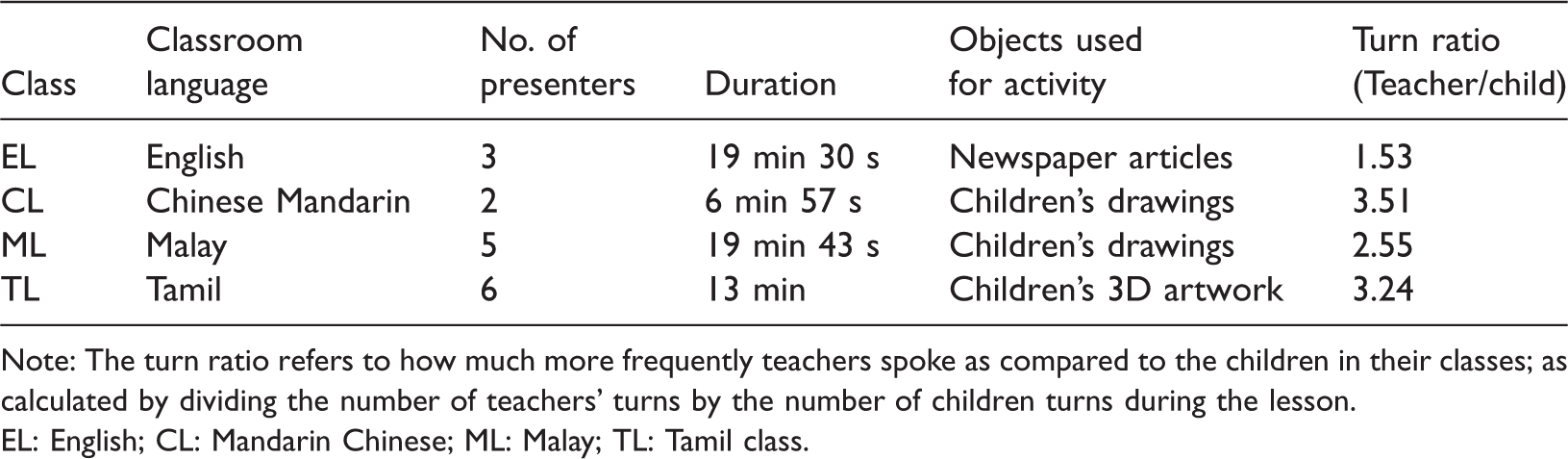
Note: The turn ratio refers to how much more frequently teachers spoke as compared to the children in their classes; as calculated by dividing the number of teachers’ turns by the number of children turns during the lesson.
EL: English; CL: Mandarin Chinese; ML: Malay; TL: Tamil class.
Procedures
Data collection and analysis
Ethics approval was acquired by the authors from the institutional review board of their university. For the classroom observations and recording, teachers’ voluntary participation was confirmed through discussions with teachers and school management, while children’s participation was acquired through parental or guardian consent forms. Consent was sought from parents of non-participating children in the classrooms that were videotaped, with non-consenting children’s identities being anonymized. At any one time, two research assistants with training in education, early childhood, psychology or a relevant degree conducted non-participatory and non-reactive observations. The aim of the observations was to capture typical classroom instruction and interactions. The teachers were not provided with any training or instructions for their sessions and they were informed that their data would be anonymized. Teachers were provided with a microphone, and their interactions with children were video-recorded. For this study, each teacher was observed once over the course of one full day. As the focus of the current study, the transcripts from the segments showcasing the Show-and-Tell activity were coded for teacher strategies and children’s responses, using the coding scheme developed for this study. Transcriptions were completed following the format of the Child Language Data Exchange System (CHILDES) Project (MacWhinney, 2000, 2018). A set of conventions was prepared to standardize the delimiting of utterances and the completion of transcripts in CHAT format based on the literature (MacWhinney, 2000; Ratner and Brundage, 2020).
Measures
Coding scheme
A coding scheme was developed (see appendices) to explore teacher strategies for facilitating children’s oral language production (Appendix 1) and types of children’s responses (Appendix 2) during the Show-and-Tell activity. For the facilitation coding scheme, the categories were adapted from areas in the literature relevant to language facilitation, as noted in the introduction; for instance, the function of our category on providing instructional feedback was based on Van de Pol et al.’s (2010) category of providing explanation. In another instance, our category of task management was based on Pianta et al.’s (2008) classroom management domain in their coding scheme. Similarly, for the children’s responses coding scheme, the categories were adapted based on sources; for example, the response of more than one word was based on O’Brien, Sun, et al. (2019) as well as Tompkins et al. (2013). These categories were selected as they were observed to contribute to facilitating children’s participation and talk, as well as observed in children’s responses in our preliminary observations. Details are provided in Appendix 1 (for teacher strategies) and Appendix 2 (for child output), and are described below.
Teacher facilitation strategies
The categories coded under teacher facilitation strategies included: intentions (engaging interest, behaviour management, and task management) and means (questioning, providing hints and prompts, modelling language, providing instructional feedback) (Edwards and Furlong, 1978; Pianta et al., 2008; Van de Pol et al., 2010). Coders generally coded teachers as using questions when their utterances required responses from children, while teachers’ rhetorical questions were not similarly coded. Different types of questions were not considered in this study as the focus was placed more generally across different types of strategies. Note that when a question is posed by the teacher that serve another function presented in our coding scheme, for instance behavioural management, it would be coded as behavioural management and not as a question to elicit children’s oral production. Provision of hints and prompts were coded when teachers were observed giving clues to scaffold children who expressed difficulty with producing responses. Hints may also be provided in terms of completion prompts where teachers provide partial sentences to direct children towards target vocabulary use, for instance. Teachers’ modelling of language were coded when teachers provide relevant vocabulary or translations to children struggling to express themselves in the target language, when teachers provide elaborations and explanations, and when teachers modelled reading of words and letters for children to repeat after. Teachers were coded as engaging interest when they direct the attention of children in the audience, to a child presenter’s or other peer’s discussion and questions. These were considered by coders as teachers’ attempts to scaffold children’s follow-up comments and responses to their peers’ classroom talk. Engaging interest was also coded when teachers selected specific children to provide responses or comments on the activity. Teachers were coded as providing instructional feedback when using both perfunctory and evaluative comments, repeating children’s contributions as a form of acknowledgement, requesting clarifications, and summarizing and concluding children’s relevant contributions during the activity. Behavioural management was coded when teachers used instructions and questions specific to maintaining agreeable behaviour from children to avoid disruption of the activity. Task management was coded when teachers provided instructions and questions specifically towards facilitating the beginning and continuation of the activity.
Children’s responses
The coding scheme also included another section on children’s responses (Appendix 2) to teacher strategies during the Show-and-Tell activity. Firstly, the extent of verbal quality was coded in terms of no opportunity to respond, no response (given adequate time to respond), responding through gestures, one-word responses and responses longer than one word (Goldin-Meadow and Alibali, 2013; O’Brien, Sun, et al., 2019; Singleton and Saks, 2015; Tompkins et al., 2013; Wasik and Hindman, 2013, 2018). We also considered whether children’s talk was merely repetition of teachers’ modelling or if children initiated talk themselves (Linell et al., 1988). Whether children had the opportunity to respond or not was coded based on whether teachers provided wait-time of up to three seconds for children to internalize and formulate a response to the question (Wasik and Hindman, 2018).
Reliability testing of the coding scheme was conducted on the English classroom with the consensus codes used for analyses. Firstly, the three coders went through all the codes in the coding scheme described above to standardize the codes’ definitions between themselves. Then they coded the Show-and-Tell activity using the coding scheme. The agreement between the three coders’ codes and the consensus codes, which was achieved through discussion and arriving at a unanimous decision, were then compared. After two rounds of reliability testing, where the coders had each coded two sets of transcriptions, their mean Cohen’s d was at 0.80, indicating a strong level of agreement. The coders then went on to code the classroom in their respective MTL. The Computerized Language Analysis (CLAN) software (MacWhinney, 2000, 2018) was then used to produce the frequencies for teachers’ strategies and children’s responses, and to explore the relationships between teacher strategies and child responses.
Results
RQ1: What are the facilitation strategies adopted by teachers within the Show-and-Tell activity across the language classrooms?
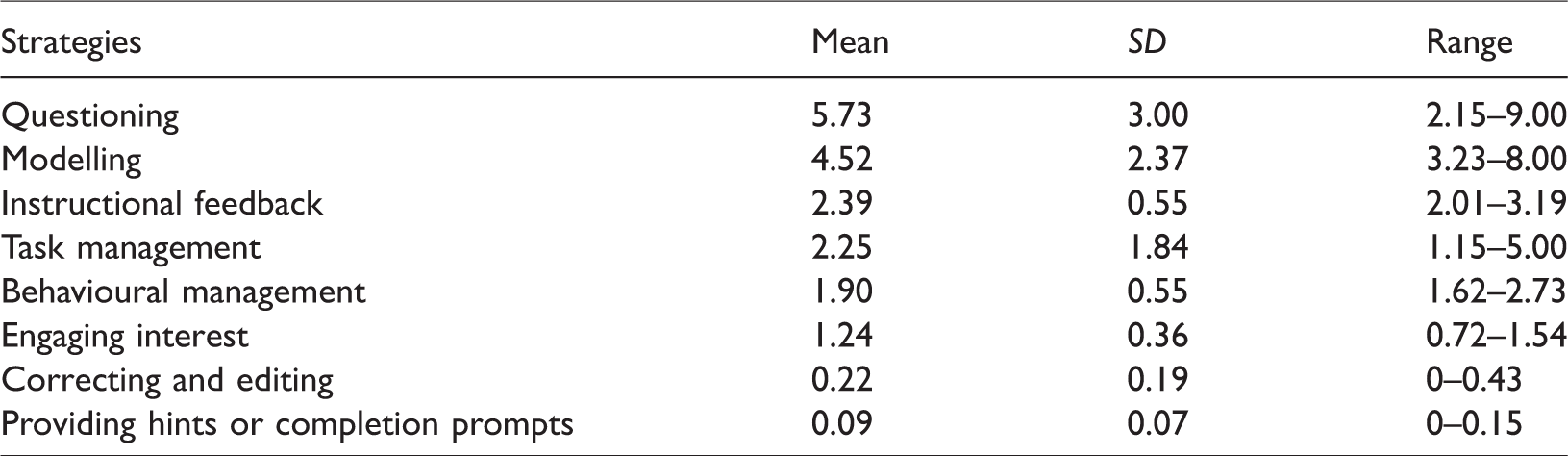
To address the first research question, the mean frequencies for teacher strategies across all language classrooms are shown in Table 2. Questioning was the most frequently observed strategy, followed by modelling, while the provision of hints and completion prompts was observed least frequently during the Show-and-Tell activity.
Mean, SD and range of occurrence of teachers’ strategies across language classes from most frequent to least frequent.
The frequencies of these strategies used per minute in each language are shown in Figure 1. The data labels at the top of each graph show the ranking of each strategy from most frequently to least frequently observed in the respective language classrooms. The figure reflects the tendency for the MTL teachers to more often employ questioning as a strategy, while the English teacher was most often observed using modelling.
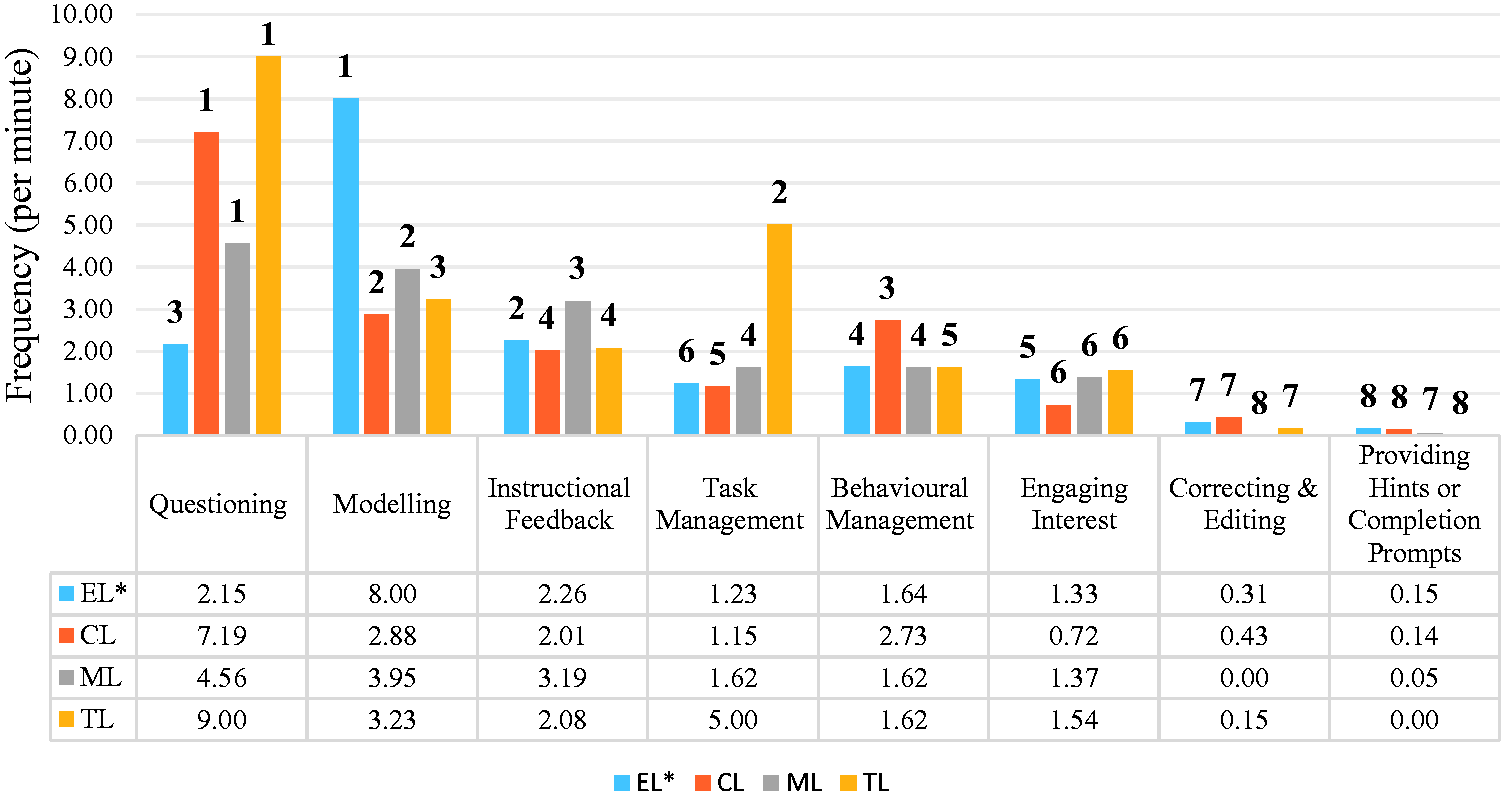
Teachers’ strategies for facilitating children’s talk during Show-and-Tell.
RQ2: How did children respond during the Show-and-Tell activity across the language classrooms?
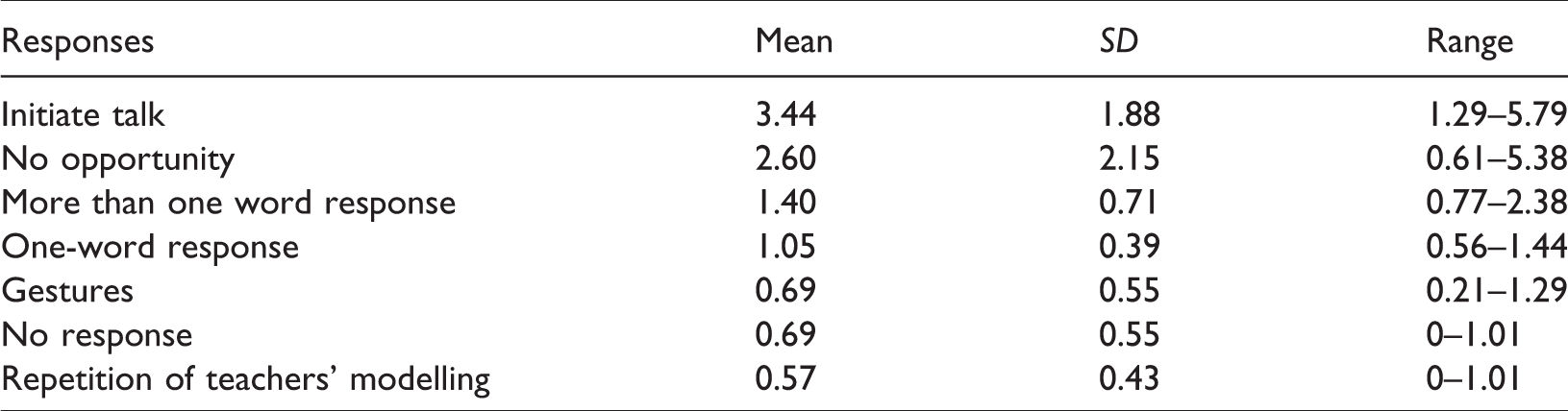
To address the second research question, the mean frequencies of children’s responses across all four languages are tabulated within Table 3. Across all four languages, the total number of turns in children’s responses, including no response and the use of gestures, was 588 turns. Interestingly, children’s oral language production was most frequently observed in talk initiated by children themselves, which paints a promising picture for the potential of Show-and-Tell in promoting children’s classroom participation though oral language production. At the same time, a lack of provided wait-time seemed to often limit child talk as this situation of ‘no opportunity’ was the second most frequent child's response observed. The problem of the lack of wait-time presents itself as a real obstacle for promoting child talk during Show-and-Tell, especially in considering that in situations where children did have the opportunity to respond, they were more often observed to provide ‘more than one word responses’ as compared to shorter responses, using gestures, not responding at all, or merely repeating after the teacher.
Mean, SD and range of occurrence of children’s responses across language classes from most frequent to least frequent.
The frequencies of these responses observed per minute in each observed language classroom are shown in Figure 2. The data labels at the top of each bar show the ranking of each type of response from most frequently to least frequently observed for each language classroom. While child-initiated talk was the most frequently observed talk type overall, children in the English classroom were observed to engage in this talk type more frequently than children in the MTL classrooms. Lack of wait-time, however, has arguably hampered extended child talk in the English classroom as opportunities to respond to teacher strategies were frequent. The trend also remains that in situations where children did have the opportunity to respond, they were more likely to provide longer responses than shorter responses, using gestures, not responding, or merely repeating after the teacher.
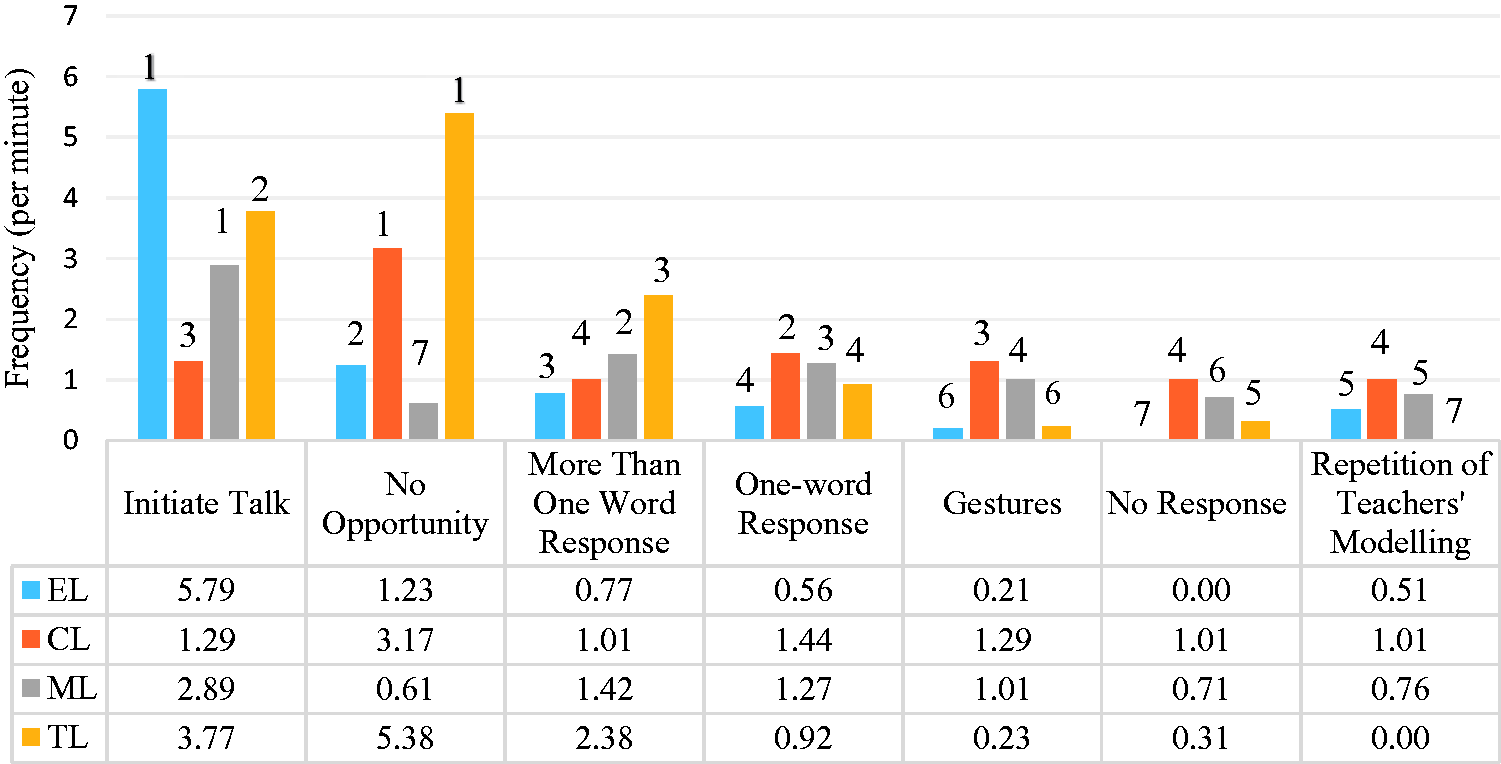
Children’s responses during Show-and-Tell.
RQ3: Which teacher strategy elicited the most child’s talk during Show-and-Tell in the different language classrooms?
As questioning was the most frequently observed teacher strategy employed during Show-and-Tell overall, we more closely examined the type of responses that questioning elicited across the language classrooms. The results are presented in Table 4. Children’s talk initiatives were omitted from the table, as they were self-initiated and not considered as a form of response to teachers’ facilitation.
Percentage of children’s responses to teachers’ questioning strategy in each language class.
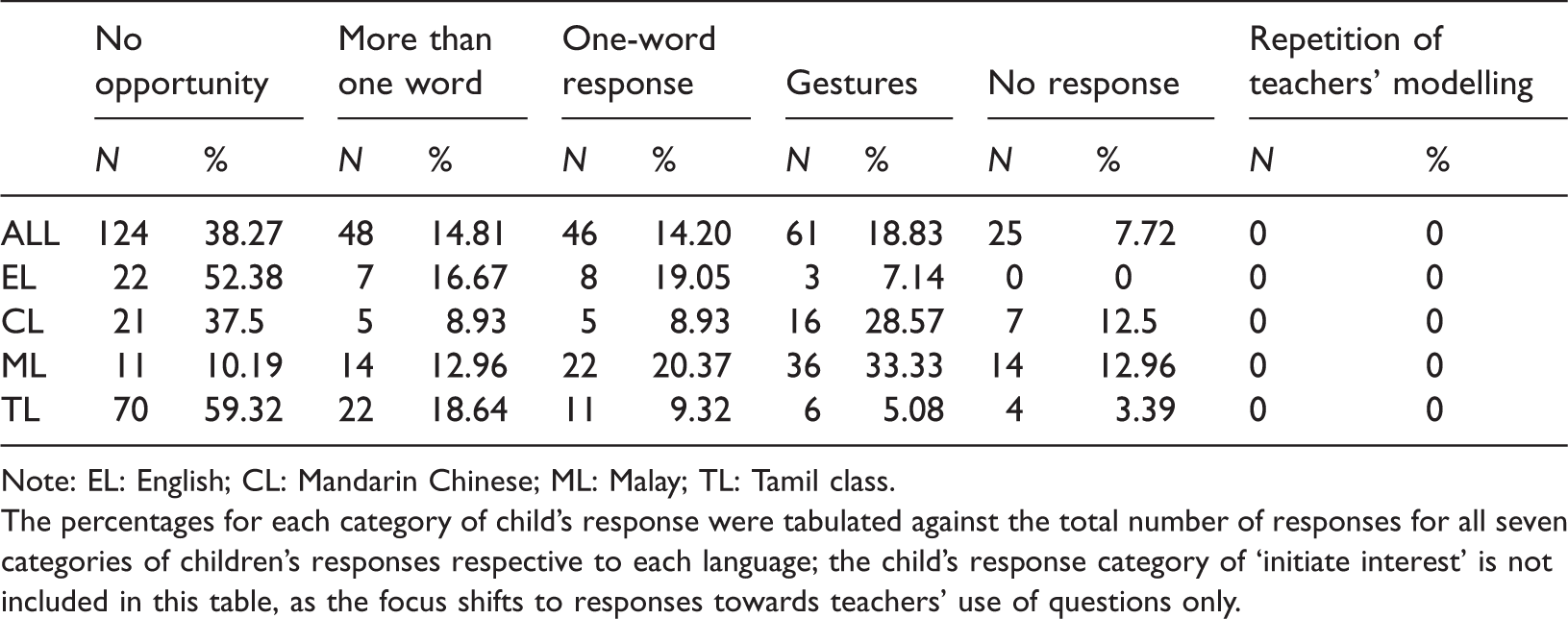
Note: EL: English; CL: Mandarin Chinese; ML: Malay; TL: Tamil class.
The percentages for each category of child’s response were tabulated against the total number of responses for all seven categories of children’s responses respective to each language; the child’s response category of ‘initiate interest’ is not included in this table, as the focus shifts to responses towards teachers’ use of questions only.
In response to teacher’s questioning, across all classrooms, children did not have the opportunity to respond due to lack of wait-time about one-third of the time (38.27%), and the trend of no opportunity to respond remains for the Chinese (37.5%) and especially in the English (52.38%) and Tamil (59.32%) classrooms, whereby children could not respond to all questions asked about half of the time. For children in the Malay class, no opportunity was less of a problem but they were more likely to respond with gestures (33.33%) to teacher questions, followed by one-word responses (20.37%) when given the opportunity to respond. Children in the Chinese class were also most likely to respond with gestures (28.67%) when given the opportunity. In comparison, children in the English class were more likely to respond with one-word (19.05%) or longer responses (16.67%), and children in the Tamil class were most often observed responding with more than one word responses when given the opportunity.
Teacher–child interaction in English Show-and-Tell session.
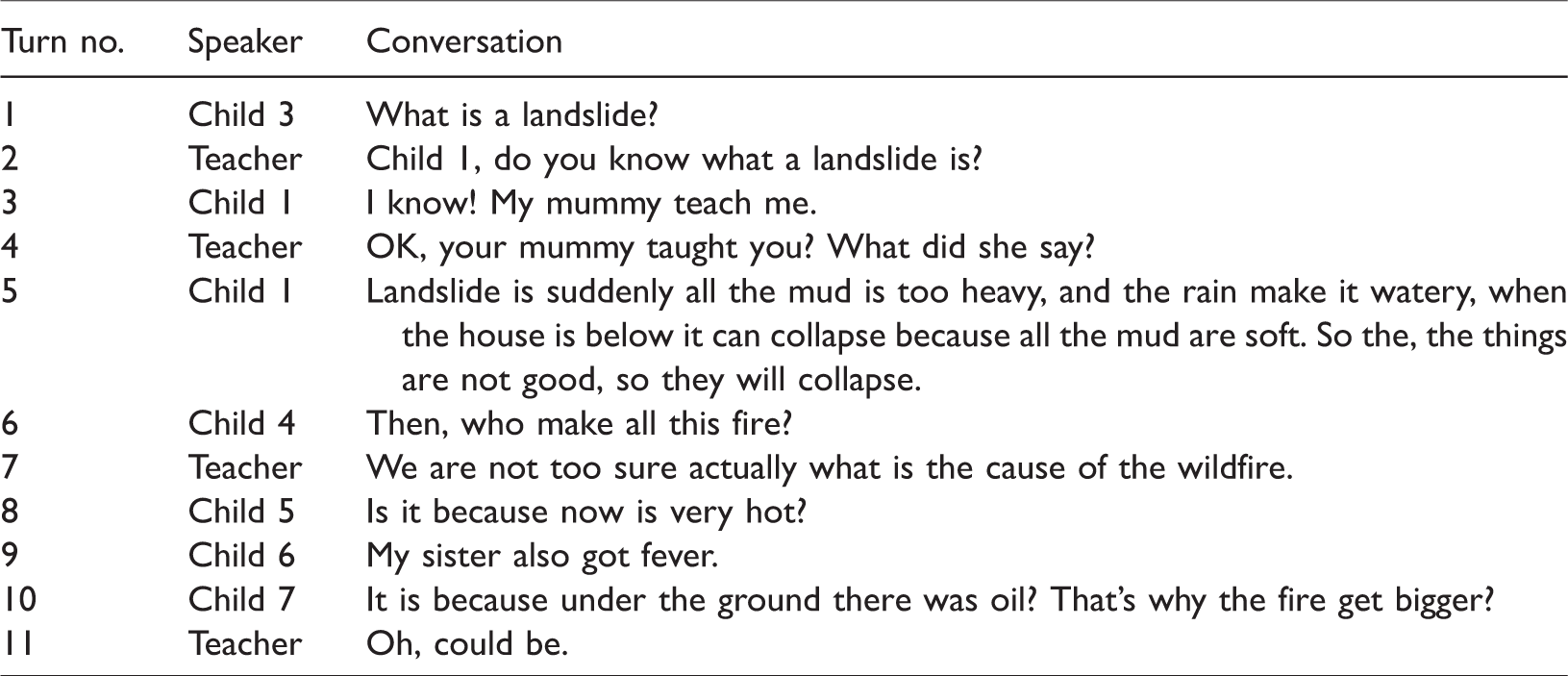
Individual child’s interest and participation is evident from turn 1 where Child 3 asked a question about the article being shared (‘What is a landslide?’). Instead of simply answering the question, the teacher posed the question to the presenter, Child 1 (turn 2) and provided affirmation in turn 4 (‘OK, your mummy taught you?’) towards facilitating Child 1’s responses in turns 3 and 5. Child 1 was observed to be excited to share what he has learnt about the word as indicated in turn 3, and in turn 5 he provided a lengthy explanation of a landslide. Aside from the amount of children’s talk elicited, allowing children the choice of topics within classroom conversations is arguably an effective way to facilitate their interest as well. In the following turns (6, 8, 9 and 10), we observed more children participating through their own questions and comments. Children’s talk within this excerpt reflected how allowing children to talk freely provided them with opportunities to exercise their thinking skills and engagement in the topic. For instance, in turn 6, Child 4 asked ‘Then, who make all this fire?’ After the teacher responded ‘We are not too sure …’, Child 5 reasoned ‘Is it because now is very hot?’ Child 7 added a hypothesis – ‘It is because under the ground there was oil? That’s why the fire get bigger?’ – and the teacher affirmed that it was a possibility.
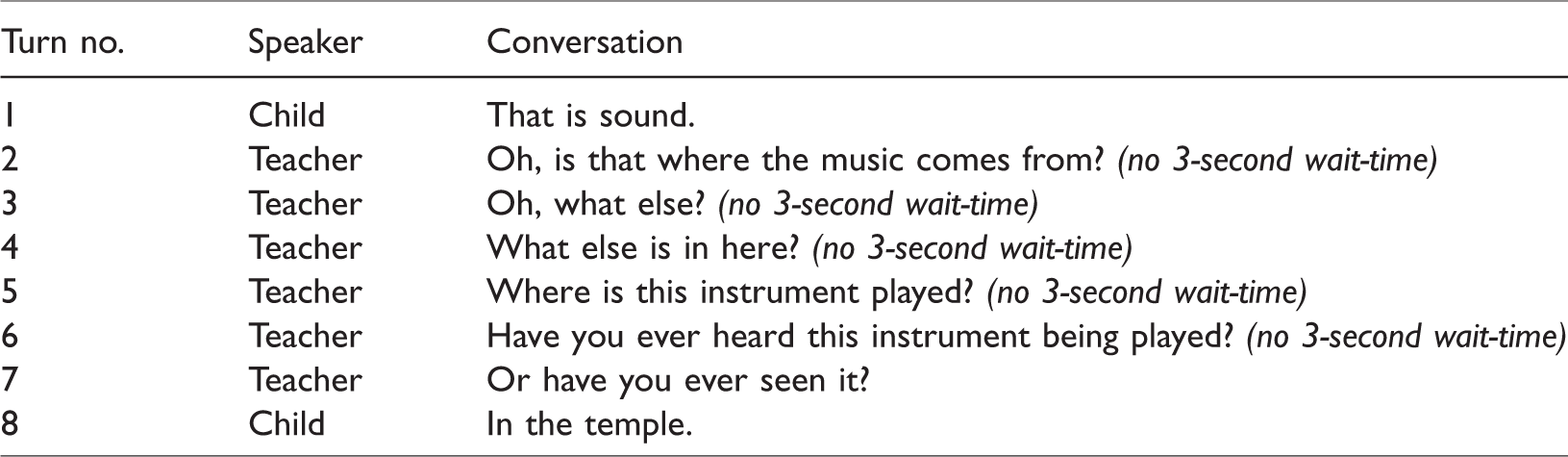
Translated teacher–child interaction in Tamil Show-and-Tell session.
Translated teacher–child interaction in Chinese Mandarin Show-and-Tell session.
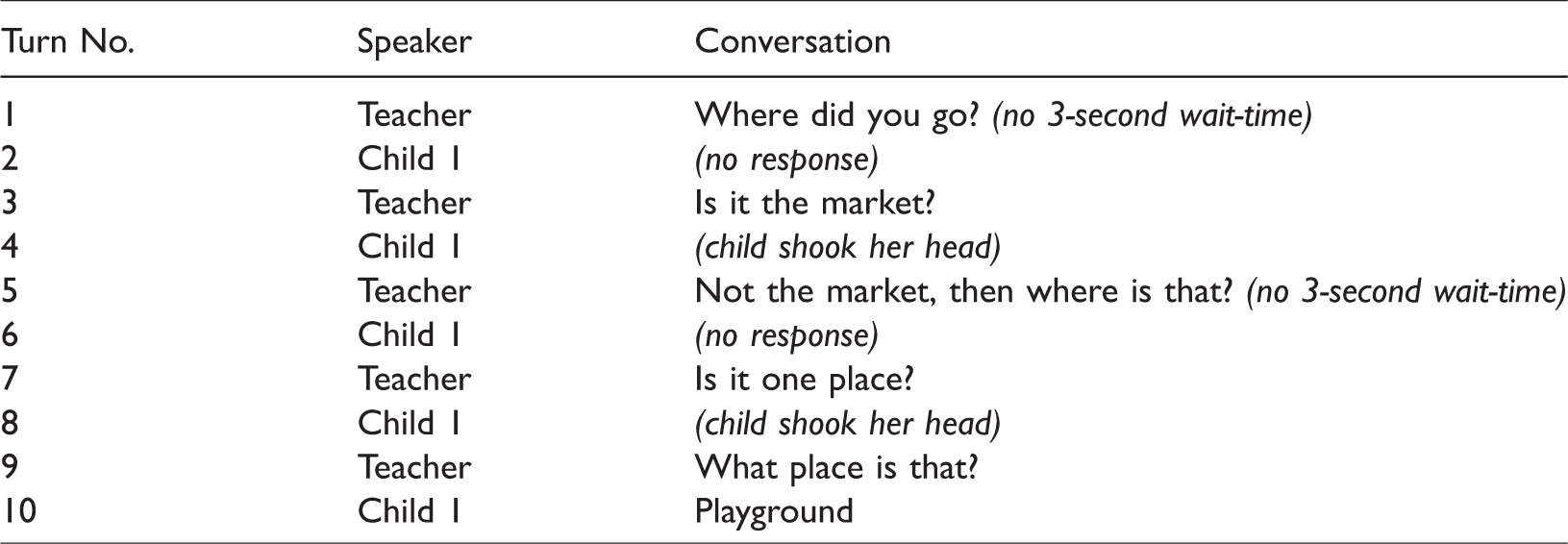
Translated teacher–child interaction in Malay Show-and-Tell session.
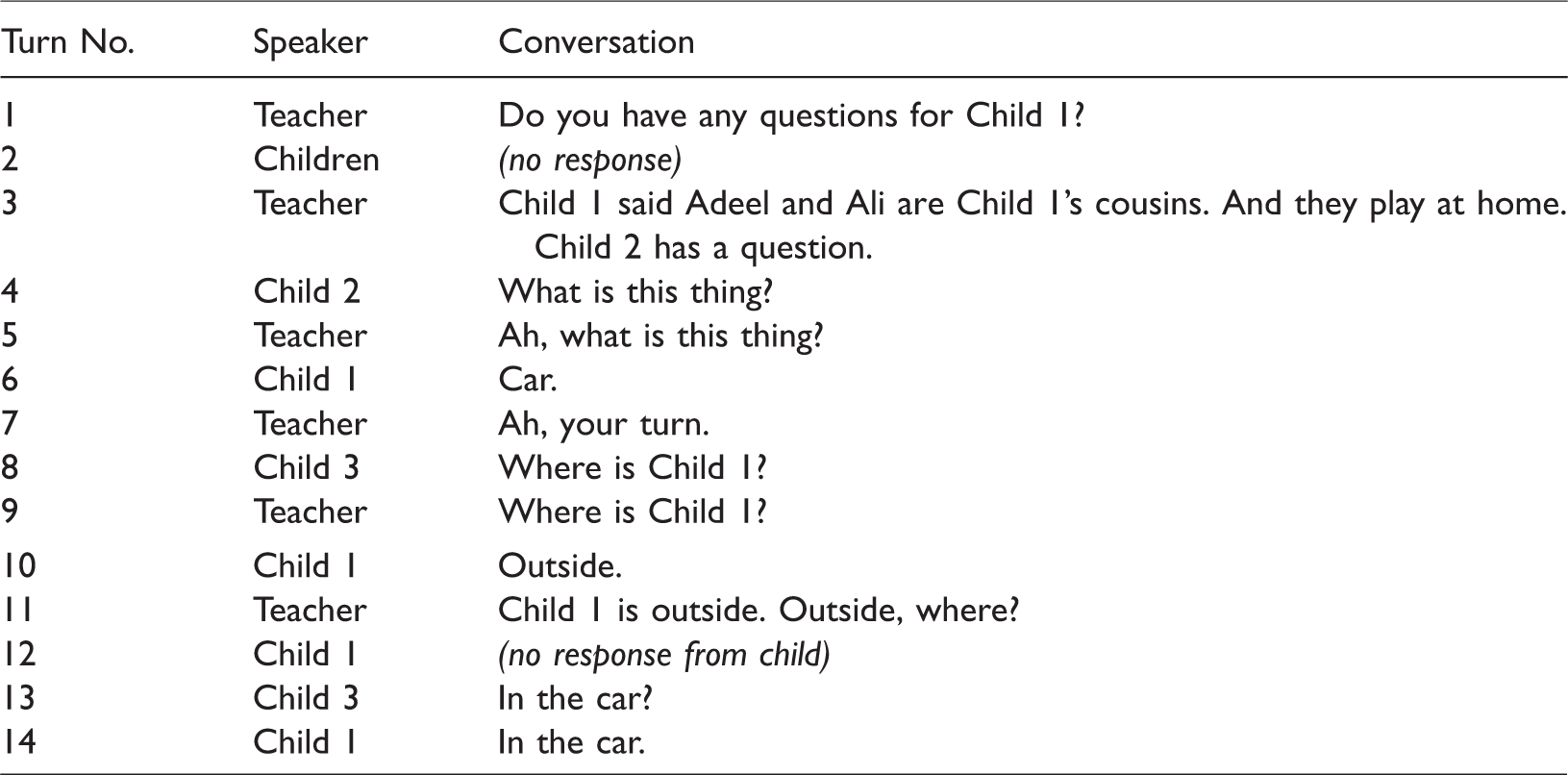
In Excerpt 4, children shared drawings of their family members in the Malay language classroom. The teacher was observed using questions to elicit talk not only from the presenter, but also from the spectating children. In turn 1, the teacher asked the spectating children: ‘Do you have any questions for Child 1?’ When there was no response, the teacher provided a summary of what Child 1 had earlier shared regarding their drawing. This encouraged Child 2 to ask: ‘What is this thing?’ (turn 4). The teacher acknowledged Child 2’s contribution to the conversation when she repeated it for Child 1 to respond (turn 5). Both instances of repetition and questioning managed to elicit talk, though they were one-word responses (turns 6 and 10). In turn 14 the presenting child merely repeated after a peer’s suggested response. It appears consistent with the previously provided excerpts that the type of question has the potential to affect the type of responses elicited. Aside from turn 1 where the teacher allowed spectating children to pose their own questions, all other questions posed were close-ended, which elicited one-word responses twice and a non-response once. Coupled with results from Table 4 which reflected that children in the Malay session mostly responded to questions using gestures, perhaps aside from questioning type, other factors should also be considered that may be limiting these children’s ability to provide longer responses. For instance, in comparison to the English session during which questioning effectively elicited long verbal responses, children in the Malay session were assigned a topic rather than allowed to choose. Similarly, children in the Tamil session may have answered with longer responses if they were talking about a more familiar topic as opposed to only Indian classical instruments. Language proficiency and children’s own hesitance and shyness could also be potential factors affecting the feasibility of conducting Show-and-Tell in Malay language classrooms like the one observed for this study.
Discussion
This study contributes to the limited research on Show-and-Tell, by examining teacher facilitation strategies for eliciting children’s language output. Observing teacher strategies for conducting the activity, children’s different types of language production in the activity, and the effectiveness of the activity in eliciting children’s class engagement and language production, we observed differences across English and MTL classrooms. Our findings firstly reflect how, while questioning was the most frequently observed strategy teachers employed overall, specifically in the English classroom modelling was the most frequently observed. In terms of child responses, aside from charting as the second most observed child response type overall, closer analysis of children’s responses to questioning specifically showed ‘no opportunity’ as the highest response type observed. This trend remained when observations were made per language, for the English, Tamil and Chinese language classrooms. This highlights the issue of how teachers could be missing opportunities for promoting child engagement and oral language practice due to a lack of wait-time for children to process questions and formulate responses. A few potential reasons for the lack of wait-time could be the feeling of time pressure that teachers often report as tight schedules mean they have to deliver various learning points within limited amounts of time (Tan, 2011). Another potential reason, especially in considering the situations in the MTL classrooms, is that perhaps in considering the trend of English-dominance among Singaporean children (e.g. Sun et al., 2018), MTL teachers pre-empted difficulty in their children’s language use and had employed questioning as scaffolding, perhaps without considering more closely whether the children needed scaffolding. Provision of wait-time before using further questioning as scaffolding may arguably allow teachers to be more contingent in their use of questioning (Wasik and Hindman, 2018).
Our findings in terms of children’s most observed talk type overall does show the potential of Show-and-Tell, as an activity that promotes children’s engagement and oral language production. This seems to be so, as children’s self-initiated talk was the most frequently observed type overall, with the pattern applying to at least three out of the four language classrooms (English, Malay and Tamil). Furthermore, children overall were observed to provide longer responses compared with shorter responses, but there are the situations where lack of wait-time resulted in no opportunity for children to respond. Teachers need to provide wait-time rather than attempting to simplify questions in order to elicit talk, as observed, for instance, in the Tamil language classroom where the teacher posed one question after another, providing little time – less than three seconds – for children to respond. This is in line with prior studies that reported teachers prompting with open-ended questions, and then rapidly following with either another question or their own response to the question (Hindman et al., 2019; Ingram and Elliott, 2016). Our finding further reiterates the importance of providing wait-time, which has been argued to influence the effectiveness of questioning as well as children’s oral expression (Bilaloglu et al., 2017; Hindman et al., 2019), and may be a solid addition to existing curricular frameworks and pedagogical guidelines.
In situations with opportunities to respond where children responded to teacher questioning, children in the different language classrooms replied in varying degrees using long, short or non-verbal gesture responses. As they were less likely not to respond at all, this shows that the activity has the potential to engage children and elicit language production as recommended in the NEL framework (Ministry of Education, 2013a, 2013b). Corresponding to the nature of the Show-and-Tell activity in encouraging children’s talk (McMahon-Giles and Wellhousen-Tunks, 2008; Mortlock, 2014; Murphy, 2003), the children observed in this study were observed most frequently to initiate talk, and were more likely to provide longer responses in situations with the opportunity to respond. This also suggested that local children were willing and able to play active roles through oral language production in the classroom, but teacher strategies need to be contingent to their needs, in order to maintain and extend their engagement and talk. Corresponding with prior literature on the use of gestures in expression when producing language (Goldin-Meadow and Alibali, 2013; Singleton and Saks, 2015), children in our study also responded to the teacher’s questions through gestures, such as head-nodding. Adults who acknowledge these gestures may stimulate non-dominant language learners or children with lower expressive language abilities in producing language. Perhaps children’s gestures are a pivot point where the teacher could follow up with modelling to scaffold children’s talk. Therefore, curricular frameworks may also consider emphasizing teachers’ support for the use of gestures as children advance in their language production.
Children in the English classrooms were observed to initiate talk more often as compared to children in the MTL classrooms, and given the backdrop of English-dominance in the Singapore context (Dixon, 2009; Styles, 2019; Sun et al., 2018) it could be expected that children were more comfortable in practising their English language as compared to their MTL due to the different language proficiencies they may have in each language. Interestingly, the children in the Tamil language classrooms recorded the highest incidence of children’s initiated talk among the MTL classrooms. This was despite the fact that the Singapore Department of Statistics (2010) noted that Indian children were the least likely to speak Tamil as a home language. However, as mentioned, this was when children had specifically prepared what to say, with the help of their parents. This might be due to the assigned theme of the Show-and-Tell being complex. Therefore, it might also be interesting to note how different the session might be with a topic that is accessible to the children and therefore without rehearsal or parental guidance. On the whole, the balance between the teacher’s and the children’s talk could also be explained by the power structures between teachers and children where control over talk can be handed from adults to children during classroom activities (Mortlock, 2014). Viewed through the lens of Foucault (1996), power exists and is transferred within interactions, which influence the behaviour of another and contribute to the production of knowledge or actions. In the classroom, such transfer of power from the teacher spurs children to further develop peer-to-peer talk (Murphy, 2003). Therefore, it would be integral for teachers to consider the power structures, particularly in MTL classrooms when children could be less confident in expressing themselves, as well as to encourage peer interactions, as a means to avoid prescriptive and rigid conversations as observed in Singapore classrooms (e.g. Bautista et al., 2018).
Material selection for the Show-and-Tell activity may influence how teachers facilitate Show-and-Tell, and thereafter how children participate and respond. For the MTL classrooms, children presented their own work on an art topic assigned to them by their teachers, while for the English classroom children could select any newspaper article to share. As children in the English classroom may have had more choice over the topic, perhaps by virtue of selecting newspaper articles, they were likely to encounter more modelling of reading and vocabulary use to explain what they had wanted to share in relation to the newspaper articles. Perhaps more autonomy over the choices of materials would heighten both intrinsic and extrinsic motivation, identified by Melzi and Schick (2012) as key in encouraging second-language learning. Allowing a higher degree of choice would satisfy children’s own curiosity (intrinsic knowledge) as they discover the value and significance of presenting a topic relevant to themselves (extrinsic: identified regulation). Therefore, future studies could investigate whether the use of certain materials stimulates a greater variety of teachers’ strategies or increased children’s responses. This would implicate materiality choice and use in classroom teaching and learning, and thereby recommending the use of such materials in the curricular frameworks.
Limitations
There were a limited number of classrooms observed conducting the activity of interest, Show-and-Tell, within the videotaped data that was collected as part of the larger project (SKIP; Ng et al., 2014). This meant that the selected videos captured the activity as teachers had planned it – with some variation in materials used and topics discussed in the activity. This could not be controlled, since our video observation aimed to capture the naturalistic activities in the classrooms. We did account for differences in duration for which the activity was conducted across language classrooms, however, by calculating the frequency of teacher strategies and children’s responses on a per minute basis. Future studies could focus the selection of classrooms on the activity with similar materials, topics and duration, which would allow for better comparisons and contrasts to be made in order to better elucidate factors influencing the effectiveness of Show-and-Tell for promoting children’s engagement and language production. The current study adopted a qualitative approach which could be supplemented with future quantitative design incorporating a larger sample. For considering bilingual development and the contrast of various language classrooms, larger samples beyond a case-based approach would be needed to confirm the observed English and MTL differences. It might also be interesting to compare the same children engaged in Show-and-Tell in the different languages or where the same topics are being shared. In addition, only one session per language classroom was observed, because this was the methodological approach utilized for the larger longitudinal study; observations of multiple sessions for each language classroom and teacher may provide a clearer understanding of classroom climate and routines that may also inform how willing children may be to engage and talk during classroom activities, including Show-and-Tell.
Further, while we considered the potential role of children’s language proficiency in affecting their engagement and language production, individual children’s language proficiency was not considered (because of the small sample, this would be hard to subdivide within single classrooms), so this would require further study. Another factor that we did not observe or measure, but which was noted in the literature to have a potential impact on children’s classroom participation, is shyness (Evans, 1992). Future studies may thus also incorporate additional measures to children’s bilingual proficiency, including shyness, etc., to understand factors affecting their engagement and language production.
Conclusion
This study contributes to the lack of studies on Show-and-Tell activity as well as to the lack of studies for this activity in the local context, for the elucidation of the strategies teachers employ and how children participate and practice language production across the four official Singaporean languages in the observed Singapore preschool classrooms. The findings highlight the importance of wait-time, arguably not only for the Show-and-Tell activity, but potentially also across any instances of questioning in the classroom. Aside from situations with no opportunity to respond arising from the lack of wait-time, the potential of Show-and-Tell as an activity for promoting children’s engagement and language production is demonstrated in how child-initiated talk was the most frequently elicited language production type observed, and that children were more likely to provide longer rather than shorter responses, gestures, repetition or no responses at all when allowed time to respond. As a means towards developing more balanced bilingualism, national campaigns have been launched to enhance training and support for MTL early educators as well as developing MTL learning resources for preschoolers (Early Childhood Development Agency, 2018). As learning extends from home to school and vice versa, our study recommends greater efforts to consistently support the cultivation of children’s interest and proficiency in utilizing MTLs within children’s immediate environment. The NEL’s language and literacy framework as well as the NEL’s MTL framework has extensively listed strategies which teachers could employ. Our study makes recommendations for curricular frameworks to stress the importance of wait-time when utilizing different strategies, the various possibilities of material selection and uses, and for teachers to support the use of gestures when co-constructing language during activities in the classroom. Aside from teachers’ facilitation, children require an appropriate amount of time to respond to adults’ prompts as well as the power to exercise autonomy and initiative in constructing understanding and knowledge in classroom conversations
Footnotes
Acknowledgement
This study was funded by the Education Research Funding Programme, National Institute of Education (NIE), Nanyang Technological University, Singapore, project no. OER 09/14RB. The views expressed in this paper are the author’s and do not necessarily represent the views of NIE. The authors would like to thank the participating children, teachers and schools.
Declaration of conflicting interests
The author(s) declared no potential conflicts of interest with respect to the research, authorship and/or publication of this article.
Funding
The author(s) declared the following potential conflicts of interestwith respect to the research, authorship, and/or publication of this article: This study was funded by the Education Research Funding Programme, National Institute of Education (NIE), Nanyang Technological University, Singapore, project no. OER 09/14RB.

Supplemental Material
Supplemental material for this article is available online.