




Abstract
Every year, worldwide, disasters affect approximately seven million children with disabilities, highlighting their potential vulnerability. Although there is a growing move internationally to promote the rights of children with disabilities, they still receive little attention from disaster risk reduction (DRR) researchers and policy makers. They are often excluded in DRR initiatives and are portrayed as ‘helpless’ in disaster contexts. This policy brief draws on a multiple case study of three schools supporting children with disabilities in three New Zealand regions. Through the voice of both children and adult participants, the study identifies associated gaps and constraints to disability-inclusive DRR. It makes recommendations that acknowledge diversity and ensure that those marginalized can become stakeholders in the DRR process.
Keywords
Inclusive disaster risk reduction overview
One of the principal resources overlooked in disaster risk reduction (DRR) planning remains the skills and capacities of children with disabilities. The United Nations Convention on the Rights of Persons with Disabilities (UNCRPD) (Article 11) provides fundamental legal instruments aimed at protecting and promoting the fundamental rights of persons with disabilities (UNCRPD, 2006). Alongside the Sendai Framework for Disaster Risk Reduction (2015), the topic of people with disabilities in DRR is further strengthened within the international policy and practice discourse on DRR (Stough and Kang, 2015). Schools, where children spend most of their lives, offer critical avenues towards achieving disability-inclusive DRR in line with the global comprehensive school safety framework (United Nations Educational Scientific and Cultural Organization [UNESCO], 2013). The framework emphasizes three school safety pillars: safety, DRR education and integrating children in DRR, through child-centred, child-participatory efforts in recognition of children’s rights to safety and protection. Crucially, the framework anchors key disability-inclusive DRR principles. These policy guidelines and principles recommend a twin-track approach (Christoffel Blindenmission [CBM], 2013) to accessing DRR initiatives, comprehensive accessibility, universal building design and non-discrimination, coordination and collaboration in all DRR efforts (CBM, 2013; Handicap International, 2014).
Study background and methods
This article reports on fieldwork carried out from August 2014 to April 2016 as a multi-case study in three schools working with children with diverse disabilities, from each of three regions of New Zealand: Hawke’s Bay, Auckland and Christchurch. The study areas reflect their differing geographical locations in New Zealand and their differing experiences of past disasters. Fieldwork activities began following consultation and planning with the school management, before obtaining a research ethics approval.
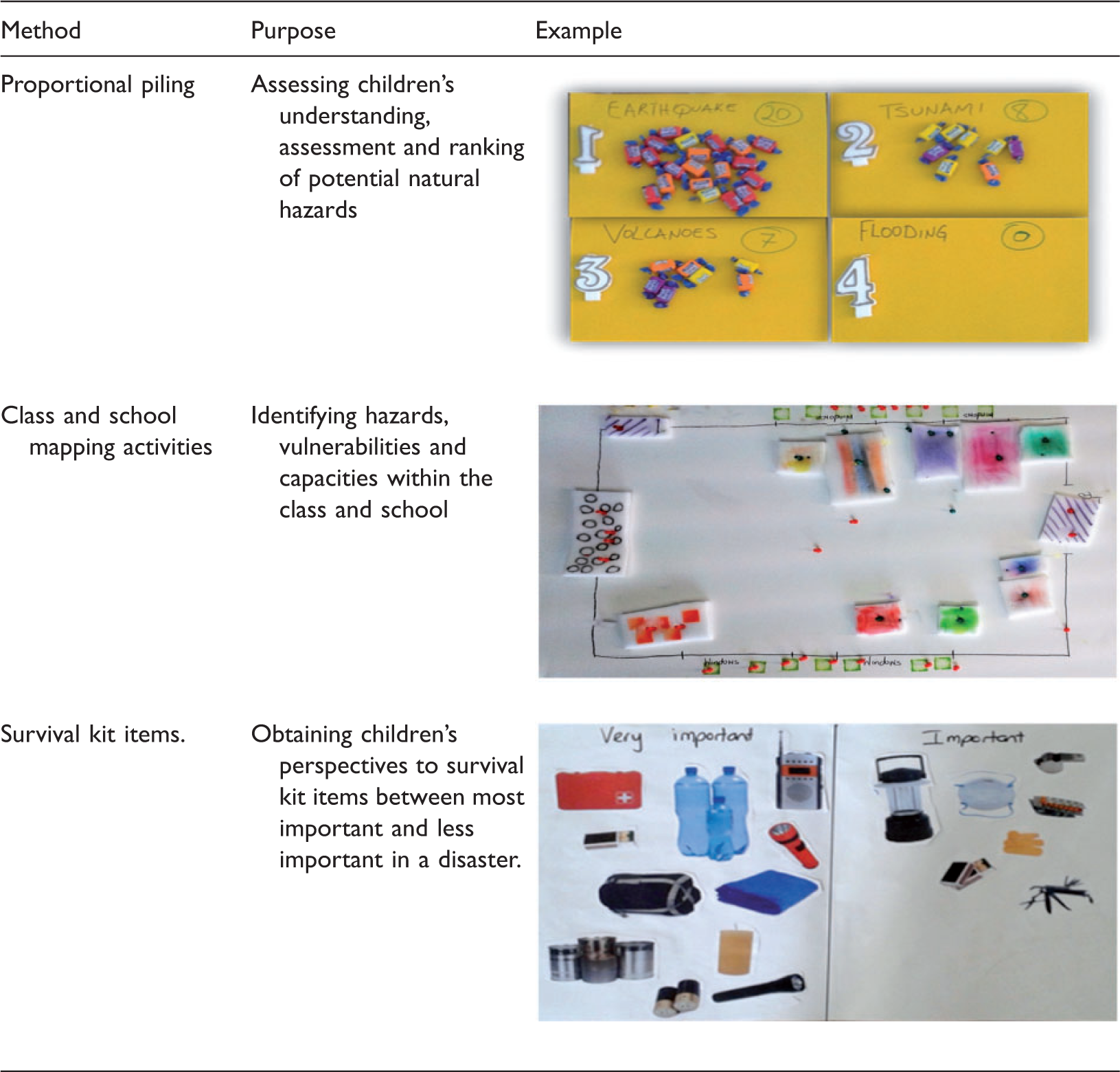
Data collection methods
Data collection methods.
Potential study limitations
Working among children with disabilities involved a delicate balance between when to rely on student’s voice or on input from the teachers or caregivers who would often correct or clarify children’s assertions. This difficult balance was largely a result of inconsistencies between what students would say and what happened in reality, or while would exaggerate their abilities or understandings. Importantly, teachers and caregivers provided support and help in assembling and annotating the maps, with the children providing relevant explanations. The research captures experiences from children who attend school, but another limitation is that the study may not apply well to cases from less developed countries where most children with disabilities probably do not attend school.
Highlights of children’s awareness and understanding of natural hazards
Children with disabilities showed a high level of awareness and understanding of natural hazards. For example the participants ranked an earthquake at the top of potential natural hazards in the region (Table 1).
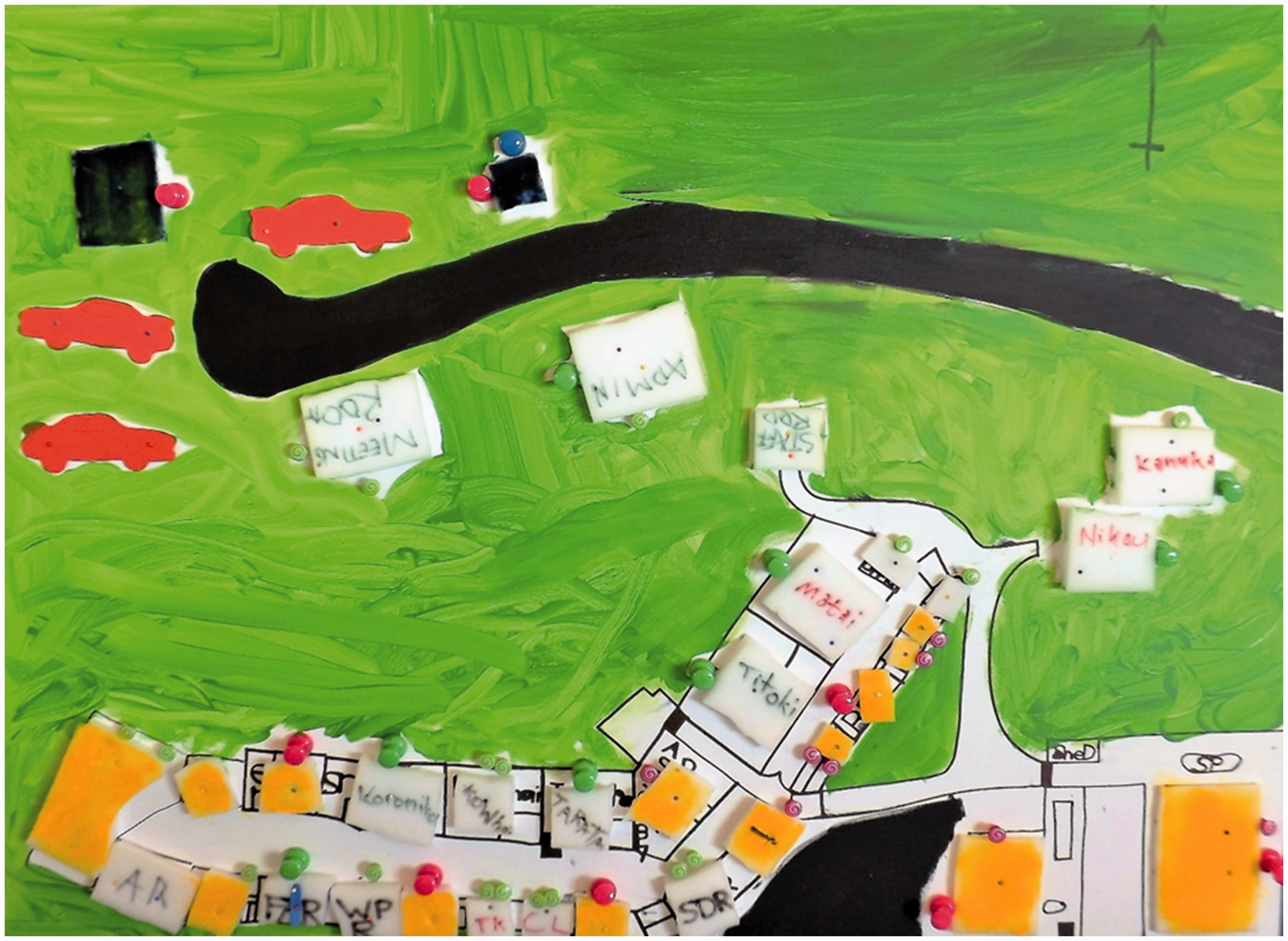
They consistently linked potential natural hazards with their potential effects and associated protective actions. For example, participants linked earthquakes to ‘violent shaking’ and associated them with tsunamis; ‘volcanoes’ with ‘lava’; ‘flooding’ with ‘drowning’, and ‘tornado’ with ‘violent wind’. Significantly, the children identified available resources within the school necessary in the face of a natural hazard, e.g. a water tank for clean water supply, spacious and accessible buildings in an earthquake. They also identified unsafe spaces to avoid should a natural hazard occur, e.g. near a power line, a glasshouse or a water tank (Figure 1). Hawke’s Bay School map: Safe and unsafe areas labelled with green and red pushpins respectively, as drawn by children with disabilities. Strengthening children’s potential in DRR.
A local civil defence official interviewed provided a fitting summary of their understanding: They actually understand a lot about disaster … what happened in Christchurch and other places … They know more than people give them credit for I think, but not necessarily on what to do and how to prepare. (civil defence official).
DRR initiatives therefore require approaches that consider perspectives and capacities of children with disabilities when faced with a natural hazard. However, evidence of children’s involvement in DRR planning was lacking. An Auckland school teacher interviewed reported her concerns that the children had not practiced DRR drills in two years and more that she has been at the school. In the Christchurch school, though the children took part, they largely following set DRR strategies, and they had no voice in planning (particularly in the school advisory group and in developing DRR resources). A teacher interviewed conceded that, though some students had the capacity to assess and make considered quick decisions, school routines and timeframes would not allow their inclusion. ‘We have got some students who could be part of that but it’s very routine-driven’ (Teacher, Christchurch). Instead, the students have their own student council but this overlooks their potential capacities: People don’t spend enough time with these children to realise that they can actually get the message across to them. One thing that I have learnt with my son (with disability) is that where you tell other children something three times, I have to tell my son over ten times … and they are not ignoring you. (Parent, Hawke’s Bay).
Recommendations: Potential way forward for disability-inclusive DRR
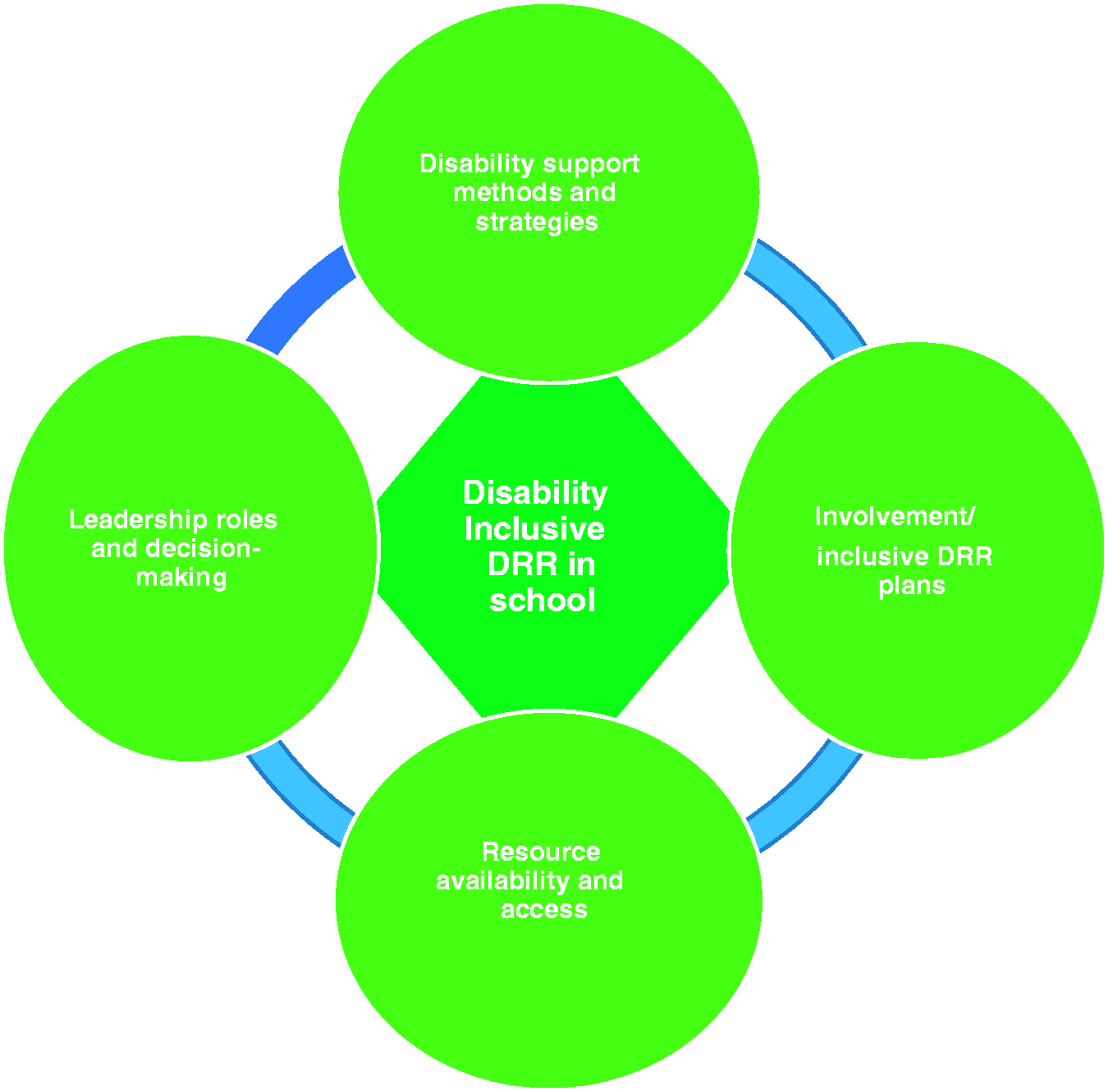
The policy brief reinforces the need to consider a wide array of vulnerabilities alongside capacities of children with disabilities in DRR within the comprehensive school safety framework (UNESCO, 2013). It recommends proper resource and policy provision, disability support strategies and the use of flexible participatory tools and approaches for inclusive DRR planning. The recommendations to consider and integrate vulnerabilities and capacities of children with disabilities in DRR should help strengthen the potential towards achieving disability-inclusive DRR (Figure 2) as outlined below.
Resource availability and access policies
Policy provision that requires new schools to be sited in safe locations and to ensure that existing schools have structurally safe and flexible building designs accessible to children with diverse disabilities in the face of hazard. School managers and government policy makers should consider incorporating building codes for new schools or upgrades of them that consider potential hazards appropriate to the geographical and risk location of the school. Establish and strengthen partnerships with relevant stakeholders such as Red Cross, local health officials and local civil defence organizations. This could be through a school board that addresses existing gaps and overlaps in policy implementation, a potential policy gap in schools.
Develop participatory tools, methods and strategies that enable children to access and use DRR resources.
Use children’s untapped potential by designing natural hazard (e.g. earthquake) scenarios in their school so they can gain tangible experience and a clearer understanding of reasons behind DRR plans such as swift evacuation procedures. Infuse and integrate age and ability-appropriate DRR education (UNESCO, 2013) and initiatives throughout the school curriculum, such as identification and assessment of potential natural hazards a school may be exposed to and other everyday threats within their school. Schools need to collaborate with relevant stakeholders (e.g. local health officials, civil defence and Red Cross) with the aim of supplementing DRR messages such as ‘drop cover and hold’ and options for children with diverse disabilities, for example, those using wheelchairs, and those with visual or hearing impairments.
Involve children with disabilities in DRR planning using participatory tools, and explore the need to further increase avenues for including their ‘voice’ among multi-stakeholder forums.
Schools can foster continued involvement in DRR plans and disaster simulation/drills. through targeted and effective participatory tools (e.g. maps) to help children feel included, and crucially inform DRR. Children with support can create individualized disaster plans, developed within the school context. The approach should involve teachers as an essential bridge to inclusiveness in school DRR.
Challenges to disability-inclusive DRR in schools
The research identified three interrelated challenges towards inclusive-DRR practices in schools working with children’s disabilities from the workshop activities, observation and semi-structured interviews. These are : (1) challenges associated with disabilities that affect resource access; (2) limited resources; (3) policy limitations affecting implementation of DRR initiatives. These themes are consistent with previous research among people with disabilities (CBM, 2013; Handicap International, 2014; Kailes and Enders, 2007; Peek and Stough, 2010; UNESCO, 2013).
Challenges associated with disabilities
Some children may have multiple and diverse impairments or experiences that intersect with diverse contextual situations and societal attitudes. These place them at varying degrees of vulnerability or marginalization (Pearce, 2012; Peek and Stough, 2010). This means that the children lack access to DRR resources, thus complicating disability-inclusive DRR efforts. For example, children – particularly those using wheelchairs – have challenges when required to evacuate the building swiftly; others struggle to get under a desk or table as per the recommended ‘drop cover and hold’. Children with autism reportedly struggle to cope with ‘excessive noise’ from a siren/alarm or a bell going continuously during simulations. Others are unable to follow instructions, and require prompts and adult or buddy support. Hence, such challenges prove that disability-inclusive DRR efforts are complex, particularly when considering children with diverse disabilities.
Resource availability and access limitations
Most families caring for children with disabilities are also poor (Alexander et al., 2012). As an example, the location of two case study schools in areas of limited resources and one of them situated at a tsunami evacuation zone mirrors this resource limitation. A local civil defence official also admitted having resource and staffing constraints to support children with disabilities. During an interview, a clinical doctor who works with the children and a Red Cross official provide a blunt assessment of the available support children with disabilities may receive: I mean, children with disabilities and their families are not very well supported, full stop.… Then you add the extra complication of a disaster. I doubt they will get a lot more help than that (Health official, Auckland). Our welfare centres, though big, were not suited for people who might have mobility issues. During the 2011 earthquake, a welfare centre turned away a person in a wheelchair because there were no provisions for people with disabilities (Red Cross, Christchurch).
In addition, lack of access to effective resources and information was evident in children’s perceptions. For example, some teachers noted the misunderstanding of earthquake messages, such as ‘drop cover and hold’, where ‘drop’ might literally imply ‘fall’. Interestingly, some students suggested words such as ‘get’ or ‘hide’ under a desk and ‘hold the side of the desk’ to avoid the confusing word ‘drop’. Hence, adult participants wanted accessible resource provision and development of consensus-based DRR messages that are tangible or easily processed by children with disabilities and others.
DRR policy constraints
These policies aimed at guiding the implementation of inclusive DRR plans. There are challenges associated with existing DRR policies: either having gaps or overlaps in their implementation. For example, there is no single oversight authority or organization tasked with ensuring adherence to DRR initiatives and guidelines in schools. In addition, a Red Cross official interviewed noted the many competing programmes in schools. He identified first aid, disaster and fire, and suggested a DRR package that include all these programmes, and are made compulsory, and to be coordinated/overseen by a mandated body or school board of trustees.
Concluding comment
Children with disabilities have diverse impairments, skills and capacities, which intersect with diverse contexts and societal attitudes. This results in varying degrees of vulnerability and marginalization that which require varied approaches to meet their needs (Pearce, 2012). This policy brief recommends an approach that aligns with the comprehensive school framework (UNESCO, 2013) and offers differing/scaled levels of DRR integration, depending on school resources, and provides tools for planning, implementation, and evaluation. Central to disability-inclusive DRR in schools are children with disabilities themselves and their capacities to participate, and ultimately a shift in attitude and power relations where children with disabilities contribute to DRR initiatives. DRR in schools should thus rely on continued sharing of knowledge and searching for consensus around identification of gaps and together design effective initiatives (Gaillard and Mercer, 2013) that are disability-inclusive.
Footnotes
Acknowledgements
The authors would like to acknowledge and express appreciation of the contribution of all the children and adult participants.
Declaration of conflicting interests
The author(s) declared no potential conflicts of interest with respect to the research, authorship, and/or publication of this article.
Funding
The author(s) disclosed receipt of the following financial support for the research, authorship, and/or publication of this article: This work was supported by the Earthquake Commission of New Zealand (EQC) and The University of Auckland (grant number EQC 13/U647).
 .
.