




Abstract
The purpose of this paper is to discuss the recent developments in the higher education system of Colombia in order to illustrate how these encourage stratification between (types of) universities and their students. We do so by discussing propositions generated by human capital theory and apply them to the experiences of students and graduates from Colombian universities.
We conducted a survey (n = 700) amongst graduate and undergraduate students at 12 low-fee private universities. Four interviews with (former) students served as an illustration. The majority of undergraduate students perceived the quality of their education as poor and wanted to attend another university. Both students and graduates expressed uncertainty about finding a job and anticipated difficulties as they felt they lacked essential skills. Due to relatively unhindered privatization and marketization of the columbian higher education sector, low-quality private provision in Colombia demonstrates this structural inequality.
Our study shows that investing in higher education does not always correlate positively with skills gained or future income, thereby revealing the necessity to use human capital theory in a more nuanced manner.
Introduction
The advancement of science and technology (Miller, 2012) is a major stimulator in developing countries. In addition to foreign investment and the stimulation of business in a globalizing world, education is an important factor. Innovation and competitiveness allow countries to perform well in international markets (e.g. Gacel-Ávila, 2012), while the incomes of people rise as a return on investment in education. The improvement in productivity and economic growth is expected to enhance social welfare as a whole.
A growing demand for higher education (HE) is a global trend and more acute in developing countries. We chose to focus primarily on the situation in Colombia. However, these phenomena are common in many developing countries, as shown in the later section “The higher education system in Colombia”.
Because HE in Latin America remains relatively under-researched (Berry and Taylor, 2014), we will discuss the Colombian HE system to illustrate that recent developments in this system reinforce inequality instead of diminishing them. We will show that the cost of enrolling at a university and the expected rewards after graduating differ significantly between institutions. There are a few expensive private HE institutions (HEIs) with recognized levels of quality, and a large number of private HE institutions in which the fees are very low, but where the quality of education seems to be quite poor. The fees charged by the public universities depend on the socio-economic situation of the students, as well as their abilities.
Graduate and undergraduate students expressed fears and uncertainties that appear to contradict several basic assumptions taken for granted in human capital theory (HCT). HCT associates investment in HE with positive future returns in the form of higher incomes. However, when taking the quality of education into account, some of its postulates are difficult to sustain. More years spent in education and, in particular, HE does not necessarily lead to higher salaries or other rewards.
Our investigations are based on a survey of 500 undergraduates and 200 graduates. In addition, four interviews with a current student and three former students of an elite university were held to serve as an illustration of our findings. This paper examines how current and former students perceive the quality of HE provided by inexpensive universities. Our findings reveal a number of difficulties faced by both graduate and undergraduate students when entering the labour market. They face a number of challenges in HE and in their future earning potential, social integration and discrimination. When the quality of education is taken into account, graduates from low-fee universities find it harder to find employment and, if they do, they expect to be paid less and are more likely to be underemployed, because of social and labour market discrimination.
The assumptions made by the traditional HCT do not reflect these problems, which are experienced by students and graduates from a number of low-quality, low-fee institutions. Our hypothesis, therefore, is that investments in HE do not always translate into positive returns, especially for low-income families who invest their scarce resources in HE so that their offspring may attend low-fee private universities.
We continue now with an overview of the basic assumptions of HCT. The subsequent sections “The HE system in Colombia” and “Some considerations on the quality HE in Colombia” deal with the HE system in Colombia and the returns on this investment. Our empirical evidence is presented in the section “Findings”. The paper ends with the discussion and conclusions.
Human capital theory: basic assumptions against a more nuanced view
HCT asserts that if individuals make a variety of investments in education and practice through formal education and on-the-job training, they will be eventually rewarded. Human capital is seen as a “stock of knowledge and characteristics of the worker, that contributes to his or her productivity, including schooling” (Acemoglu and Autor, 2011: 3). Schooling or education enhances their marketable skills and capabilities that in turn boost future incomes through positive rates of returns. To Ishikawa and Ryan (2002), for example, the earnings of an individual are determined predominantly by their stock of human capital. Thus additional years of schooling are associated with future higher earnings. Although health and nutrition are also important components of human capital, investments in education are related to monetary incentives. In this regard, education is often seen as the main form of human capital (Sweetland, 1996) that acts on at least two levels. Becker et al. (1990) likewise find that investments in education not only increase skills acquired through knowledge at a micro level, as a result of which the individuals gain future benefits in the form of higher wages, but also at a macro level, because education can improve productivity, foster innovation and stimulate economic growth, as affirmed by Nelson and Phelps (1966), Bashir et al. (2012). For the OECD (2012) and the European Commission (2013), investment in education is seen as a way to improve social welfare. This positive correlation between education (schooling) and earnings is well established in the empirical literature. For example, Tamasauskiene and Poteliene (2013: 198), assert that “…better educated individuals suffer less unemployment, work in more prestigious occupations and have more of other social returns like honour and status than their less well-educated counterparts”.
A number of authors have established a body of principles that frame HCT. Mincer (1957, 1974) found disparities of earnings and incomes within broad population groups classified by educational status. The causes of the differences in personal income distribution are attributed to dissimilarities in formal schooling and experience provided by on-the-job training. Schultz (1961), for example, stated that expenditure on education has accounted for the most remarkable rise in real earnings per worker. This form of capital improves individual well-being and yields a positive rate of return on the investment. Disparities in earnings are attributable to variations in health and education but are mainly the result of differences in investment in schooling. Becker (1962, 1964) established a relation between investments in human capital and schooling on the distribution of income and future real income. Finally, Becker and Chiswicks (1966) developed an alternative approach to calculating rates of return from human capital, in order to understand the determinants of the distribution of earnings.
Some studies, nevertheless, disagree with aspects of this basic theory. For instance, Nelson and Phelps (1966) emphasized human capital as the ability to acquire formal education, but coupled with people's ability to adapt to changing environments. To Spence (1973), observable measures of human capital are a sign of skills that are especially useful in the production process. Bowles and Gintis (1976) stressed the ability of individuals to work in organizations, adjusting to life in capitalist societies. The main work of the school should be teaching the correct ideology and preparing people for real life. Gardner (1993) pointed to a multiple intelligence perspective, rather than considering human capital as a one-dimensional type of skill.
There have been a limited number of studies up to now that have described a relationship between variations in education quality (especially in HE) and the dispersion of graduates' future earnings. This point was stressed by James et al. (1989: 247) who found that even while there is “… a voluminous literature on returns to quality in higher education, and the determinants of quality at primary and secondary schools, it is surprising how little work has been done on the causes and consequences of college quality …”. More recently, Zhang and Thomas (2005: 262) pointed out that, HCT provides perspectives to interpret the effect of college quality but does not suggest the magnitude of such an effect. However, considering the increasing gap between the costs of a college among colleges of varying quality, we expect that college quality has a significant effect on graduates' earnings if larger investments in human capital lead to higher income.
We presume that perceived HE quality has an impact on the future economic status of graduates. For Zhang and Thomas (2005) and the OECD (2012), the dynamics of the demand for tertiary education have led to a massive expansion of HE in the US and in Europe, as well as in developing countries, but this has also resulted in a proliferation of HEIs and extraordinary segmentation, differentiation and stratification of HE. Romo de la Rosa (2007) discussed the expansion of private academic institutions in the US and Latin America, while Castillo (2013) makes a specific reference to Colombia.
The work by Acemoglu and Autor (2011) considered schooling as the most observable component of human capital investment, despite involving a relatively small fraction of it. These authors take the differences between school quality into account, which consists of teacher–pupil ratios, per-pupil spending, the length of the school year and the educational quality of the teachers. They note that empirical data on these components is lacking. Therefore, we think that discussions around HCT deserve a more nuanced approach; they should go beyond the dichotomy of college versus non-college graduates or the average number of years of schooling, and equal weight should be put on education quality. Given the differentiation among HEIs, graduates are not a homogeneous group. Instead, there is a lot of diversity between graduate students, because of social perceptions of substantial differences in the quality of HEIs and the difficulties some graduates experience in entering the labour market, due to difficulties finding a job and discrimination. For some researchers, the quality of the education is an element in the construction of human capital and thus has an important effect on the earnings of graduates (Behrman and Birdsall, 1983; Ehremberg, 2000; Solmon, 1975; Thomas, 2003; Weisbroad and Karpoff, 1968), even though its influence is not always incorporated into the human capital analysis framework.
The importance of political context as a crucial factor is discussed in two studies by Van der Merwe (2010) and Molla (2014) on HCT in two African countries. They demonstrate that the traditional assumptions formulated by HCT do not hold in a neoliberal discourse. Van der Merwe (2010) carried out a case study in the South African HE system and discovered affirmation of the HCT proposition that individuals regard HE as an investment, or a “risk versus return” prospect. His study shows that the traditional HCT relies on improbable assumptions about human behaviour to model educational choice. Despite a very different HE system in Ethiopia, it is interesting to note that a study by Molla (2014) illustrates how HE reforms typically endorse neo-liberal policy agendas. His study demonstrates how these reforms affected the social equity both at discursive and policy level. While the problem of inequality is considered as a lack of access and a barrier to the formation of human capital, Molla reveals that the strive for greater efficiency and cost reduction are not consistent with so-called equity instruments for marginalized members of society. In other words, a broader social justice perspective is required to stimulate the provision of equity in terms of participation and successful completion of HE studies.
As HE expanded and became stratified, finer differentiation among graduates has meant that quality matters and plays an important role in graduate earnings (Zhang, 2005a). College quality has a statistically significant effect on graduate earnings, as shown by Thomas (2003), Hanushek and Wösmann (2007) and Suhonen (2014). The question that arises is how to measure the quality of teaching at universities. Researchers have demonstrated a variety of empirical results (Zhang, 2005b). Diverse measurements of HEI quality also affect the average cost of attending institutions of varying quality, creating stratification and differentiation or a premium on future earnings (Hersch, 2014)..
As the quality of education between universities is dissimilar, so are the costs of enrolment and graduate incomes. If any returns on these investments can be expected, they will likely diverge too. Low costs of enrolment could generally be linked with poor quality HEIs and low future earnings. So the returns on this investment will not amount to that which was hoped for, even though HCT presupposes this. The relationship between investments in HE, the cost of student fees at undergraduate level and the rate of return on this investment at some private universities, especially those with inexpensive fees in the Colombian case, deserve further investigation.
Publications currently available on HCT quite often discuss education and schooling in general, while the studies in HE are often economically focussed and refer to various forms of capital, such as social or cultural capital. Davies et al. (2014) discuss an integrated model of participation in HE in England, and show that social and economic factors are treated as complementary rather than competing, whilst Perna et al. (2014) present a typology to promote human capital development in international scholarship programs. A study by Callejo-Pérez et al. (2011) has quite a narrow focus within HE, as they discuss the added value of the doctorate in terms of intellectual capital.
We will use our data to explain why some of the basic assumptions behind HCT when considered within a broader context do not hold, and how and why the perceived quality of education should be taken into account, based on the experiences and opinions of students and graduates from these lower-fee universities.
The higher education system in Colombia
Colombia is a South American country with a land area of 1.14 million km2 and 47 million inhabitants. According to the National Administrative Department of Statistics, the average per capita income in 2013 was €4158.
For the World Bank (2014), Colombia is an upper-middle-income developing country in which HE must play a role in economic growth, given its relation to research, innovation, competitiveness and knowledge. As the European Commission (2013) pointed out, education “…plays a crucial role in individual and societal advancement; and, with its impact on innovation and research, it provides the highly skilled human capital that knowledge-based economies need to generate growth and prosperity …” (p. 3). Investing in education brings economic incentives for individuals (Mincer, 1974; Solow, 1956). The wellbeing of people is linked to education through the increase in personal incomes of graduates (Misas, 2004) (OECD, 2012). In Colombia, since the 1992 Act 30 of 28 December 1992, by which the public service of higher education is organized in public and private HEIs. These institutions are officially recognized as the providers of this public service, which is organized into undergraduate and graduate levels.
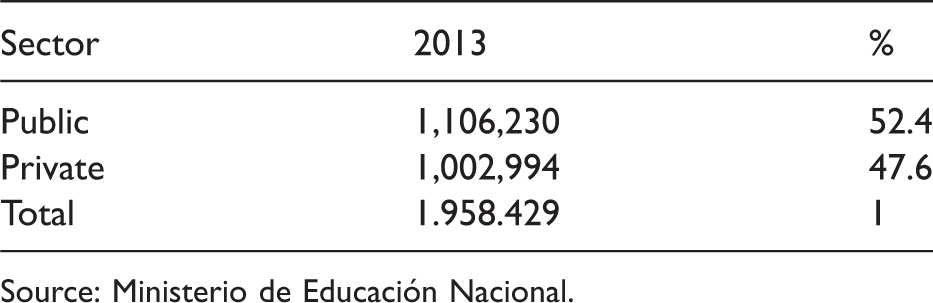
In 2014, according to the National Ministry of Education, the public sector accounted for 52.4% of the enrolment into HE (Ministry of Education, 2014). Colombian HEIs are classified into four levels: 1) professional technical institutions; 2) technological institutions; 3) university institutions; and 4) universities. The first two provide vocational training, which involves activities that develop skills for various trades and occupations. They provide training courses, and successful students are credited with the title of technician and senior technician, respectively. These two categories of education are not exempt from criticism, as they focus on lower-income groups and there is a social perception that they offer second-class education, free of charge and targeted at lower-income individuals. It is equivalent to the vocational education and training recognized in other countries.
University institutions represent the third level. They also contribute to educating (senior) technicians, but additionally provide professional vocational programs. When a student finishes a masters' degree, he or she becomes a professional in economics, medicine, etc. Finally, universities represent the highest level of HEIs. They provide undergraduate HE, MSc and PhD programs. Commonly, the last two categories or levels are referred to as university programs.
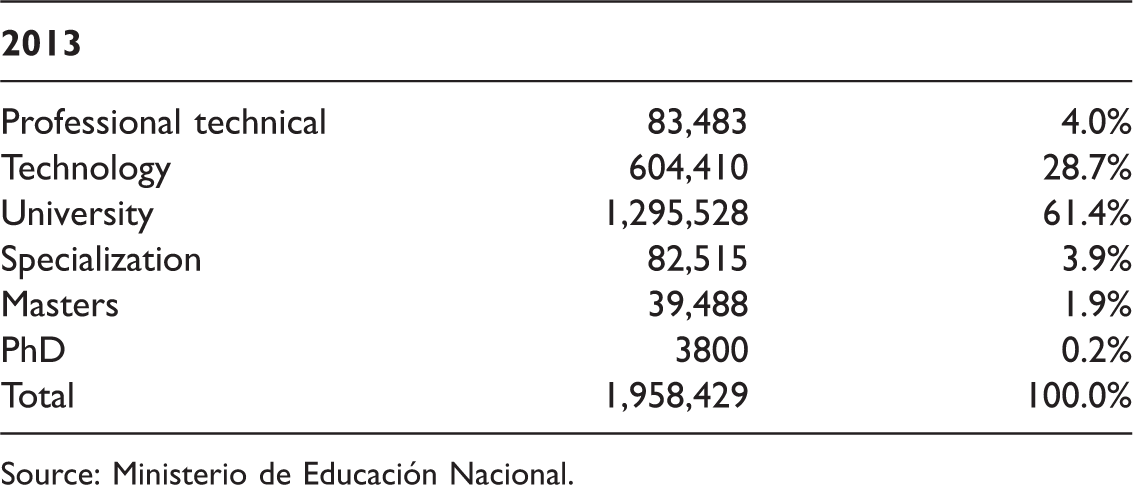
Total enrollment by level of education in all HE institutions, 2013.
Source: Ministerio de Educación Nacional.
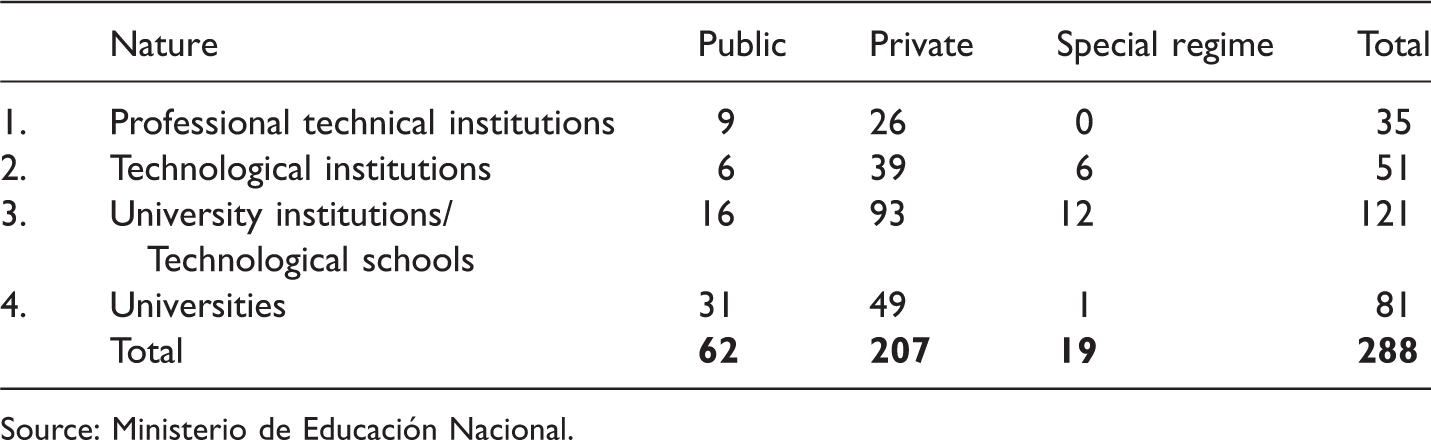
Major higher education institutions, 2012.
Source: Ministerio de Educación Nacional.
Enrollment by public or private sector, 2013.
Source: Ministerio de Educación Nacional.
Table 1 shows that 1.29 million student enrolments in 2013, out of 4.35 million, were to universities – a gross coverage rate of 28%. The gross coverage rate measures students enrolled at different HEIs as a proportion of the population aged between 17 and 21 years. These figures are taken from National Administrative Department of Statistics projections based on the 2005 census. This number does not include professional technician and technology students. These enrolments are low compared to international standards (Melo et al., 2014). About 2.37 million people of this age group do not attend HEIs.
Global trends demonstrate that the demand for HE is growing exponentially in developing countries, as indicated in the report for the European Commission (2013; see also British Council, 2012). The pace of demand for education is much faster than the capacity of public institutions to expand their activities, as its growth is limited by budgetary, institutional or physical constraints. So, the private sector plays an important role in the growth of the HE sector, as it is growing much faster than the public HEIs.
In line with this global trend, the population entering secondary education in Colombia is growing rapidly. Hence, the corresponding demand for HE is increasing dramatically in a context of lax state regulation. The supply of publicly funded HE is not growing at the same pace, due to budgetary or physical constraints. Because public HEIs are unable to accommodate more students, the private universities absorb this excess, which adds to the increasing importance of these institutions. As the demand for HE outstrips supply, this gives rise to a huge number of private HEIs (Castillo, 2013; Desiderio and Lechuga, 2012; Rama, 2010). Rabossi (2009) describes that through the neoliberal wave from the early 1990s onwards, the Colombian HE system developed quicker than other South American countries, from a rigid and elitist system into a more competitive model.
The enrolment data published by the Ministry of Education show the relative importance of university institutions and universities at the undergraduate level. The data in Table 1 show that only 0.2% of those enrolled in HE (some 3800 individuals) are enrolled in PhD programs.
Private HEIs outstrip public ones in numbers of institutions (Table 2), which is in line with the global trend (e.g. Levy, 2013). A total of 141 private HEIs enrolled 1,002,994 students in 2013 (47.6%) as shown in Table 3. Further, 46 public HEIs also accounted for a great number of enrolments: 1,106,230 students enrolled in 2013 (52.4%). Public HEIs accounted for a slightly larger number of students, but this is declining slowly in favour of private HEIs, while the total student numbers remain more or less equal.
While the number of private institutions is growing, their average quality is not improving. The quality of the education they provide is differentiated and stratified (Bonilla, 2007). The HEIs in the private sector are of two types: 1) a small number of private institutions that offer high-quality education for a small number of individuals at a very high cost; and 2) low-fee education offered through a large number of private institutions for many students that come from low-income families. Once graduated, students from the first type of HE gain access to the highest incomes and social recognition; but this is not the case for the second group (See for example Hanushek and Wößmann, 2012). In this group, universities are only fulfilling the minimum requirements for quality (i.e. qualified registration).
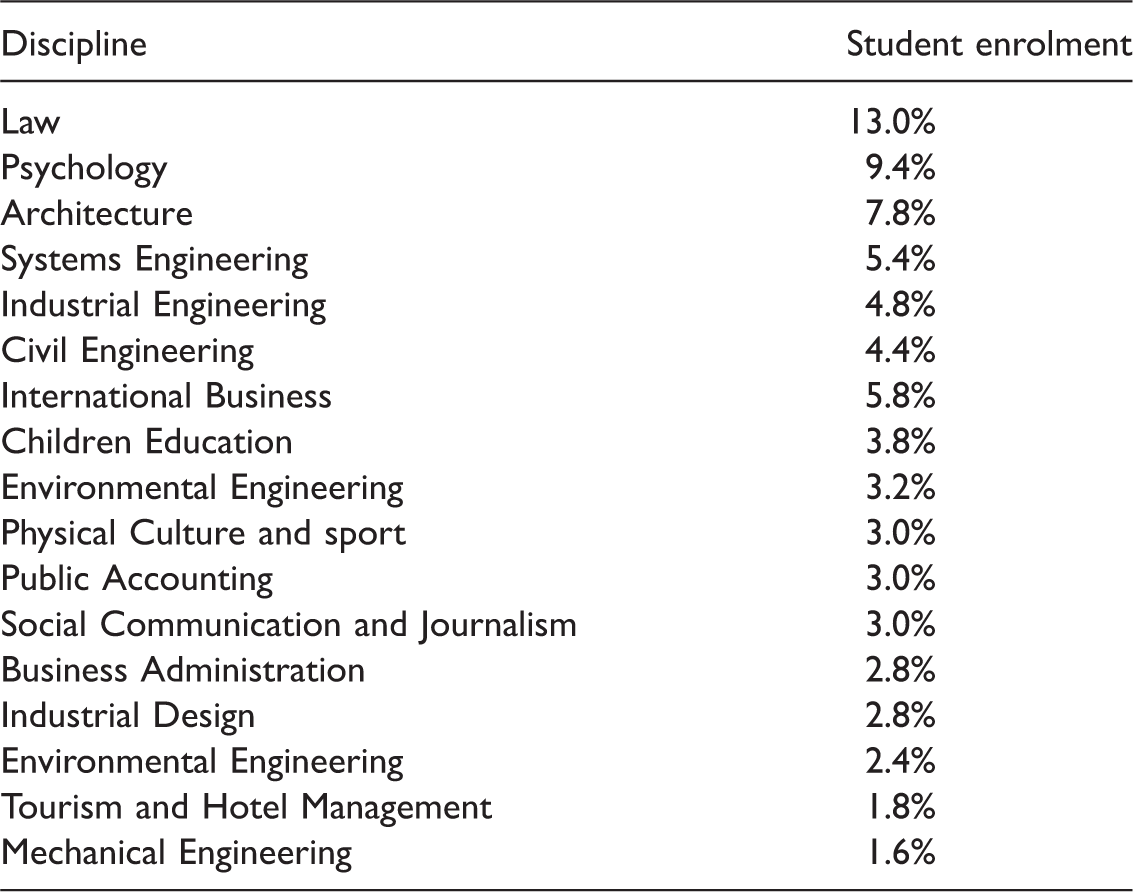
A substantial proportion of the students pursue their studies in low-quality programs and choose their courses for ease of access and the ability to attend classes at night. Students and graduates concentrate on a few fields of study, especially administrative sciences, education and law.
As explained, there is a wide hierarchy of establishments in terms of quality. This leads to a downgrading of some diplomas awarded to graduates in inexpensive establishments. Most of the private low-fee universities are known as demand-absorptive institutions, as they emerge on to the market without adequate public regulation. Students are unlikely to fulfil the standards of knowledge and skills required in the current labour market.
The weaknesses of teaching quality manifest themselves in several ways:
Teachers are often hired on an hourly basis. Research resources are improvised and very limited. There is limited student selection, leading to mass enrolment, particularly of students from low-income households.
Other problems associated with low-quality education are the inequalities of access. While the average gross rate of enrolment in the lowest income group was 8.5% for the period 2002–2007, for the highest income group this average rate was 88.3% (Castillo, 2013). This may be another factor that influences the dispersion of future earnings. Variations in quality have led to differentiation in educational attainment, the earnings that graduates receive, expectations, frustrations, underemployment and unemployment.
Some considerations on the quality of higher education in Colombia
The unfulfilled demand for HE has led, as explained, to the further proliferation of private institutions, following the Act 30 of Parliament of 28 December 1992 referred to above. However, this development has raised concerns about the quality of the education being offered by the system. The quality of private education seems to be more heterogeneous than that provided in the public sector, and their qualifications lack the academic rigour to fulfil the minimum requirements expected of a professional diploma. This has been addressed by several studies in the following countries, including: Chang (2007) for Malaysia; Tsevi (2014) for Ghana; Silas (2005) for México; Rodríguez and Viegas (2011) for Portugal; AUCC (2011) for Canada; and Radloff and Coates (2013) for Australia.
To ensure the quality of teaching, the Colombian state established a National System of Accreditation. One condition involves what is known as qualified registration (QR), a mandatory mechanism through which the Ministry of Education verifies and ensures that HEIs comply with a number of minimum quality standards that a HE program must meet. Every program must obtain QR to operate from its inception. Once given, it lasts for seven years. If the conditions are maintained, then this registration is extended for another seven years.
The registration is subject to academic and institutional conditions. The former denote the curriculum content (relevance), research training, human resources, number and quality of teachers, physical infrastructure and social relevance of programs. The institutional conditions establish mechanisms for the selection of future students, the evaluation of students and teachers, administrative and academic structures, self-assessment, monitoring policies for graduates, university welfare and financial resources. Financial conditions establish the financial viability of programs (Act 1295, 2010 [DECREE No. 1295 REPUBLIC OF COLOMBIA]).
Additionally, institutions can engage in a voluntary process to attain the highest quality standards. This type of accreditation is demanding and temporary, being granted for periods of three to 10 years for programs, and six to 12 years for institutions. In other words, accreditation is a mechanism through which institutions and/or programs demonstrate that they meet the high-quality standards prescribed by the National Accreditation Board. Some universities that are accredited as high quality do not get all their programs accredited.
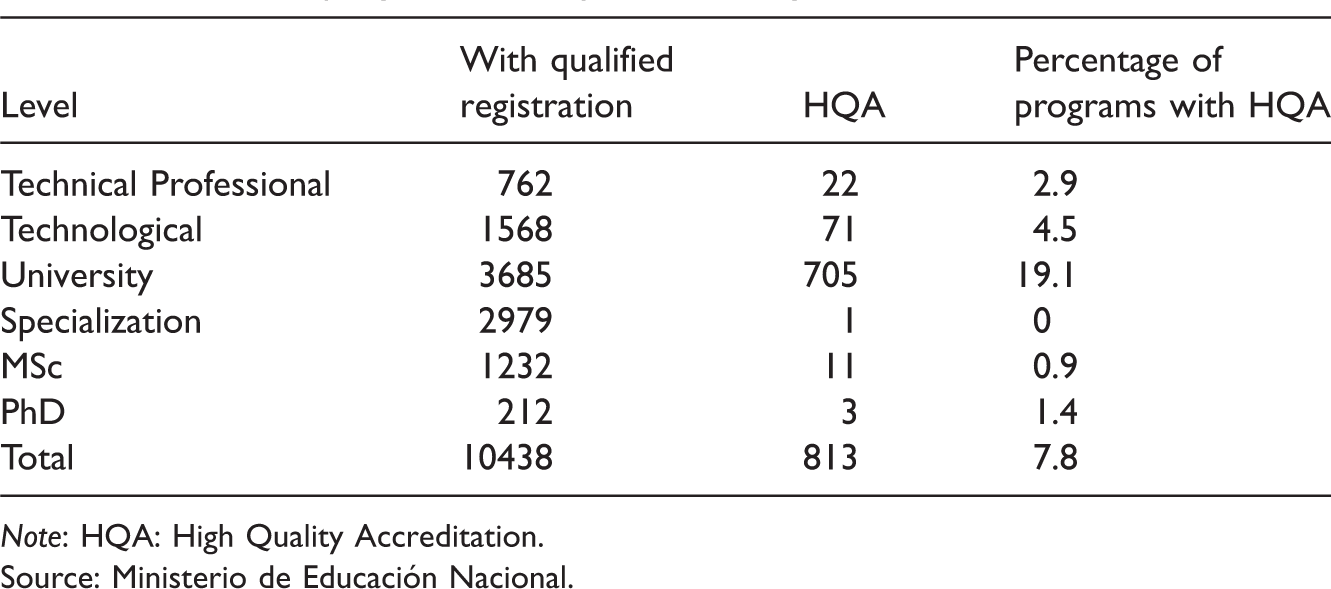
Academic programs offer by level training, 2014.
Note: HQA: High Quality Accreditation. Source: Ministerio de Educación Nacional.
While the private universities have to meet the first requirement, many of them do not meet the second, the high-quality accreditation (HQA) of undergraduate programs (see the next section). These programs do not have state recognition of the quality standards of HEIs and academic programs awarded under voluntary accreditation. According to the Ministry of Education in 2014, 19.3% (718 out of 3715) of undergraduate university programs were accredited with high-quality standards, while only 11.8% of private universities (34 out of 189) were accredited with high quality (CNA, 2014).
Provision of higher education, returns on investment and poverty traps
Referring back to the relationship between education and income in the framework of HCT, and the rising importance of private institutions providing HE, there is great diversity in the quality standards of the education that they offer (OECD, 2012). In some private HEIs, low-quality education may be the norm rather than the exception, which can have some distorting effects on personal income.
Data show that the minimum wage in Colombia is €245 per month, and 11.41 million people (57.5% of the employed workforce) earn the minimum wage or less (ACRIP Nacional, 2013). For people who earn the minimum wage it is financially difficult to send their children to university. Furthermore, about 50% of the labour force is informal, in the sense that these workers do not have an employment contract, earn salaries below the minimum wage and are without access to social security. According to the National Administrative Department of Statistics, 9.1% of the labour force was unemployed in 2014.
This situation has implications for a vast group of people in terms of their opportunities to get access to HE, see for example World Bank (2014). It is unaffordable for them, given the limited availability of publicly funded HE and the high cost of good quality private education. The lack of places at public universities and the expensive tuition at some prestigious private HEIs has led to a proliferation of low-quality private universities. Inexpensive university institutions can be seen as an attractive alternative for a large number of people who cannot access public education and are excluded from the best private universities because of the cost. There are few alternatives to choose from. However, even the low fees they charge take a large share of the incomes of these low-earning households. Individuals can pay for inexpensive but poor-quality education that, in the end, does not translate into higher future incomes. Some of them can get access to HE, but only that of an inferior quality, in institutions with a weak reputation. The quality of these sorts of institutions is measured by their mere compliance with the basic quality standards required for QR. This situation has economic as well as social consequences for those population groups with limited means.
Even when public education is the most important provider of education in a country such as Colombia, private education has a role to play in the process. Its performance needs to be evaluated in terms of the income of its alumni, and in the context of the relationship between investment in education quality and its returns.
Research method
The data used in this research were collected using two different questionnaires. Both questionnaires were piloted amongst four respondents and, consequently, slightly adapted. The first survey was filled out by 500 undergraduate students selected from 12 low-cost universities in Bogotá (between 40 and 50 per university) based on a non-probability convenience sampling. We visited the sites of these twelve universities and distributed the questionnaires on the spot. Between 60% and 90% of the students were willing to fill out our survey. The second survey involved a poll amongst 200 graduates, through a snowball sampling by email. Although these ways of non-probability sampling might affect our validity, we think that the large number of respondents used in this study can compensate this.
The private HEIs were selected based on the cost of their fees. Some of them are known as demand-absorption institutions (World Bank, 2012). For the purpose of illustration and validation of the findings of our survey, four interviews were held with one student from the best public university in Bogotá (National University of Colombia) and three graduates from low-fee universities.
The main aim of the questionnaire was to determine the respondents' perceptions regarding the quality of education they received. They were also questioned about their expectations of the future, such as their integration into the labour market. One of the most important variables was the expenditure of these students on their enrolment in HE, in other words, whether the reason for studying at a particular university was an economic one. Another variable involved how this related to expected returns on this investment, measured by the income they expected to earn. While a cheaper fee does not necessarily equate with a lower quality of education, we assumed a link between the cost of enrolment and the quality indicators. The survey consisted of three parts. It investigated: 1) whether the main reason for going to that university was economic or academic; 2) some quality variables of HE such as teachers, libraries and research activities; and 3) possible discrimination by students and graduates of other universities.
Graduates were asked about the university they had graduated from, their perceptions about the quality of education they received, their current remuneration and whether they had had difficulty finding a job. In addition, some questions about the relevance and worth of the knowledge and its applicability to the current labour market were used, as indicators as to whether they considered studying as a long-term investment to obtain higher incomes and a better quality of life.
Findings
Undergraduate students
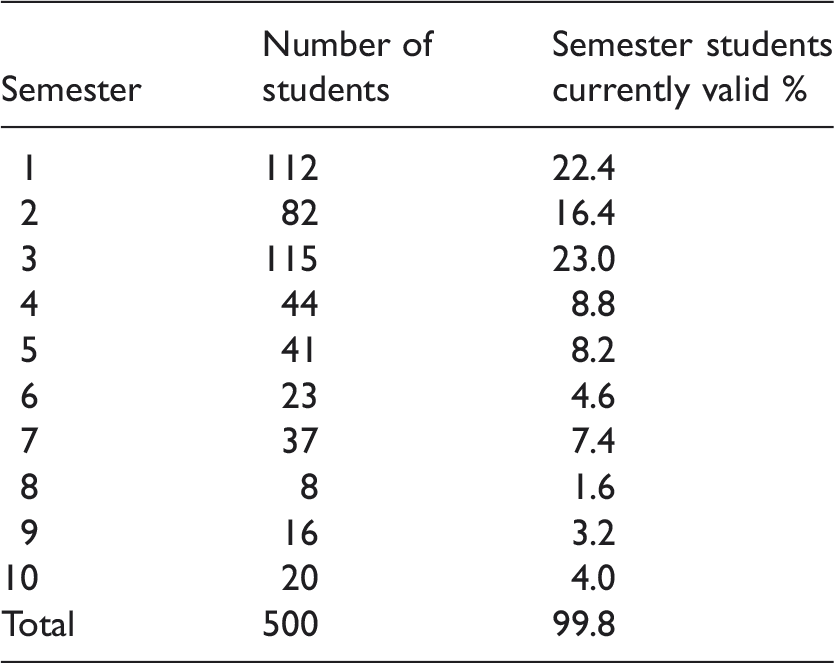
Coursing semester student.
The most popular major subjects among students.
Average costs per semester, 2014.
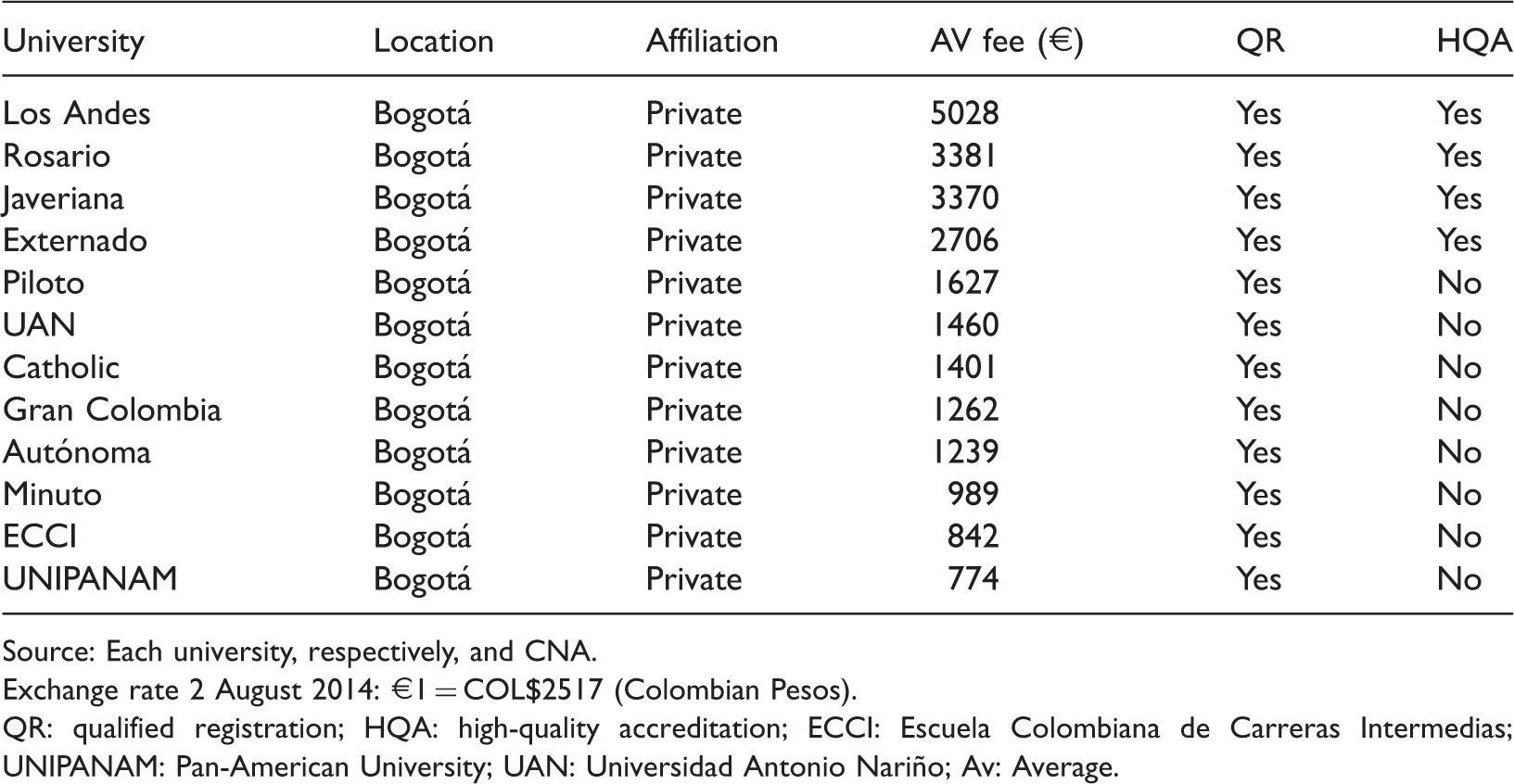
Source: Each university, respectively, and CNA.
Exchange rate 2 August 2014: €1 = COL$2517 (Colombian Pesos).
QR: qualified registration; HQA: high-quality accreditation; ECCI: Escuela Colombiana de Carreras Intermedias; UNIPANAM: Pan-American University; UAN: Universidad Antonio Nariño; Av: Average.
The cost of studying at all of these private HEIs ranged from an average of €5028 per semester at the University of Los Andes, the most expensive in Colombia, to €774 at the Pan-American University (UNIPANAM), as the cheapest one. But even between the most expensive universities, there are important differences in costs. For example, the difference in fees between the University of Los Andes and Rosario University is some €1647.
Table 7 shows an emerging pattern. It seems that according to the quality criteria of Colombian HE, which are materialized in the HQA, expensive education is generally of better quality than low-priced education. The former has both QR and HQA.
In low-fee universities, the costs range from €1648 per semester (Pilot University) to €774 (UNIPANAM). According to the data, for 50% of students the main reason for studying at one of these universities was academic. This means that they believed that the education was of good quality. However, 41% of them explained that economic considerations, or the costs of the fees, were an important reason for choosing a university. Despite the high number of students that are at those universities, supposedly for academic reasons, 72.2% of the respondents wanted to change university.
This high number implies that students are dissatisfied with their current university and would like to transfer to universities that are recognized as offering good quality, whether public or private. Examples of these include: National University of Columbia (public) 14.8%; Javeriana University (private) 6.4%; University of Los Andes (private) 6.4%; District University of Bogotá (public) 4.4%; Externado University (private) 3%; and Rosario University (private) 3.4%. In order of preferences, 25% of the students would like to study at a recognized public university, while 23% would like to change to a renowned private HEI. The students’ preferences coincided with the level of the fees, which could be considered an indicator of the quality of the institution as perceived by the students. In other words, the higher the fee, the more likely the quality of education is considered to be high, and the more eager students are to attend such an institution.
In addition, an average of 44.2% of students reported that they were certain that the quality of their teachers was inadequate. They believed that only some teachers were sufficiently qualified. This value was considered higher at Autónoma (60%) and UNIPANAM (56%). According to the data, this is in line with other findings related to the quality of teachers in the Colombian HE system. Between institutions, the percentage of the students who wanted to study in other universities was on average 72%. This ranged from 46% (which in itself is high) to one low-fee private HEI – the most inexpensive one – at which 90% wanted to transfer (see Figure 1).
Percentages of students wanting to study at another university. Note: Minute: Minuto University; G Colombia: Gran Colombia University; CUN: Corporación Unificada Nacional de Educación Superior CUN; UNNINCA: Universidad Incca de Colombia; ECCI: Escuela Colombiana de Carreras Industriales; UAN: Universidad Antonio Nariño.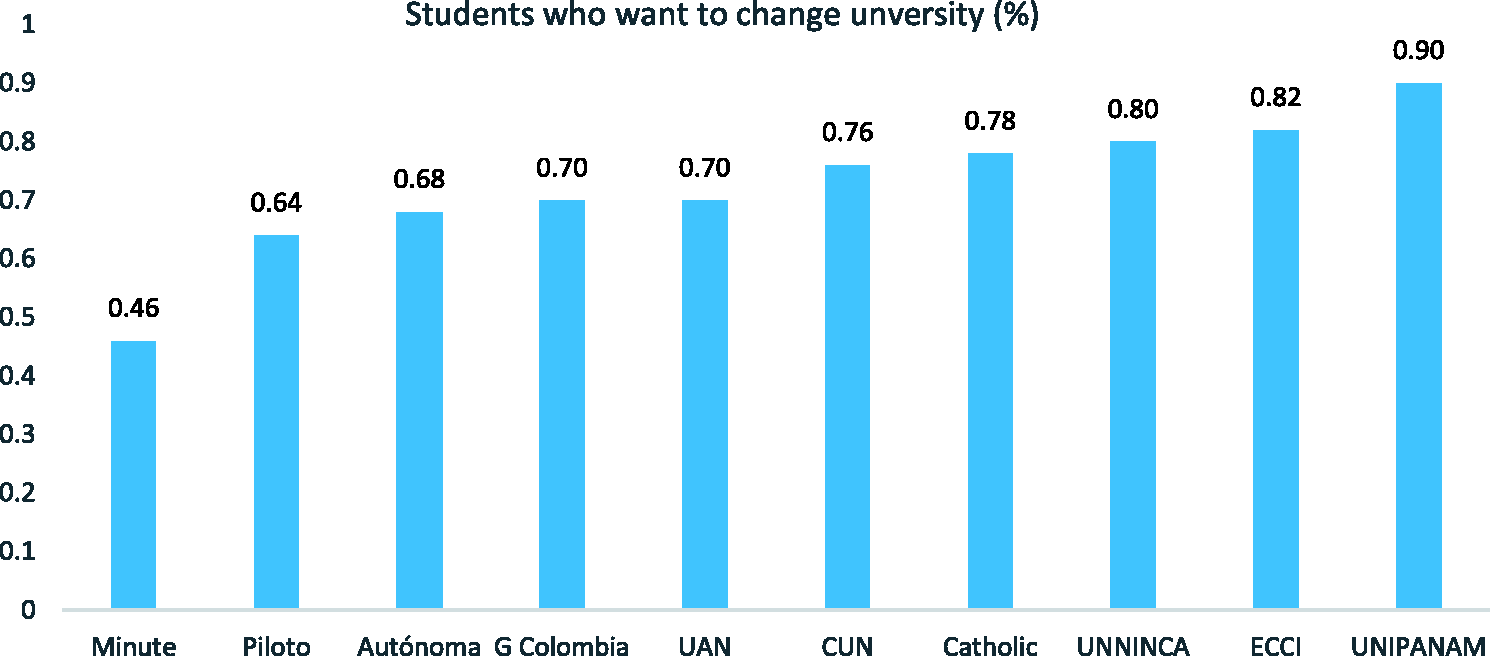
Out of all of the 116,819 university teachers in Colombia for the year 2014, 31% were full-time teachers and 14% were part-time teachers. More than half of the teachers (55%) were part-time teachers who were remunerated according to the hours they worked (Ministry of Education, 2014). However, the inexpensive universities hired part-time teachers who often worked simultaneously at more than one university. Staff with PhDs were more likely to be employed at the public universities and the expensive private universities. It is common that in low-fee faculties there are very few teachers and professors with a PhD. The students consulted in the poll stated that only 27% of the teachers spoke a second language apart from Spanish, while 22% of the students did not know whether the teachers spoke another language. In addition, 35% of the students were convinced that the facilities at their universities were of poor quality, especially the libraries (23%).
Part of the survey was directed at the students' opinions about the potential labour market. Many students, 42% (211) expressed the opinion that it would be difficult to find a job once they graduated. When asked whether they felt equal to graduates from expensive universities, 51% said they felt some degree of labour and social discrimination, while 100 students (20%) expected to earn a lower wage, and about 10% believed that they would be poorly paid and employed in a field outside of what they had studied.
Graduate students
The second part of our investigation involved 200 former students who had graduated from the lower-fee private HEIs. The graduates agreed that they considered the relationship between the investment in HE and returns on that investment as very uncertain. They thought that investing in tertiary education would not automatically give them a positive return, which contradicts the assumptions of HCT. Their frustrations seemed to be particularly caused by the quality of the education they had received, based on their own perceptions and the perceptions of their future employers.
Of the graduate students, 88% were employed, 83% were in a formal job, 44% of them had found it very difficult to find a job and 63% of them considered their salary lower than expected. Only 4% stated that they had found a well-paid job. Underemployment, in other words, being hired in a position that is not commensurate with their qualifications, or having to work more hours that they were actually paid for, was alarmingly high at 33.3%. Some graduates were working in fields different to what they studied. In that sense, 63% of the graduates stated that they felt underpaid, as they were working either in non-graduate jobs or in work outside the subject of their degree.
Strikingly, 35% of the graduates found that the education they had received was of poor quality; many of the current students wanted to study at another university. They generally considered the quality of the teachers, the facilities and libraries as inadequate, and found that the private HEI only complied with the basic requirements for teaching quality. Many teachers are only contracted for the two or four hours that they spend in the classroom each day and they do not feel strongly connected with the university. Full-time teachers or those on tenured contracts are rare in inexpensive universities.
A further problem is that 48% of the respondents found that their skills were incomplete or not of a high enough standard to enable them to find work in the current labour market: 33% of them found that they could not perform successfully in the current labour market, and 25% found that they could cope to some extent, but that they could not perform well. In total, 65% of the graduates had not reached an important position in their career path. What is more surprising is that a very high percentage of the graduates (38%) believed that the money they had spent on education had not proved to be an investment, while 29% revealed that they had suffered from discrimination. This discrimination was reflected in employers who preferred to hire graduates from some universities, while rejecting or paying lower wages to people from others.
Some of our findings were corroborated by the four interviews that were carried out as an illustration for this research. The first interview we conducted was with an engineering student at a recognized university in Bogotá. He was working and studying at the same time. He worked as supervisor in part time, but still had a better salary and position than a graduate engineer from a low-fee university, who would be very unlikely to reach a better position and earn more wages due to his educational background.
The graduates interviewed expressed frustration about the inability to meet their pay and career expectations because, although most of them had found a job, their employers underestimated their abilities. Their working hours were long and they were paid far below what a professional graduate from other universities received, even for similar jobs. “I feel discriminated against because I receive lower wages, work longer hours, and have less opportunities for promotion at work, than graduates from top universities” explained one of the respondents. So, for graduates from a low-fee university, there are fewer opportunities to regain their investment in terms of money and effort, dedication and personal sacrifice, at least in the short and medium term.
Discussion
HCT assumes that investing in education, especially HE, will provide greater returns through the higher salaries that would be earned once people graduate. We think that investments in HE do not always translate into positive returns, especially for low-income families who invest their scarce resources in HE so that their offspring may attend low-fee private universities.
Our most important findings relate to the dissatisfaction expressed by students and graduates with the lower-fee universities. As our results showed, 72% of the students enrolled at lower-fee universities in Colombia had wanted to study at another university, while 41% chose the university for economic and not academic reasons. This coincides with findings from the popular media and the Ministry of Education. The students’ choices were often limited to inexpensive private HEIs, as demonstrated, for example, in a special edition on HE featured in El Tiempo newspaper (El Tiempo, 2014). Students from low-income households commonly came from poorer quality schools (Montenegro, 2015; Banco Mundial, 2009) and they considered the quality of their lecturers as weak. According to Ministerio de Educación Nacional (2014), 38% of teachers in Colombia do not have a postgraduate qualification. The remaining 61.3% are postgraduate teachers, differentiated as follows: 31.6% have a specialization; 23.8% have a masters; and only 5.8% (6803 individuals) have a PhD. Our study shows that 60% of the graduate students from the same institutions expected to be underpaid and 40% felt they lacked sufficient skills to succeed in the current labour market.
Interestingly, Acemoglu and Autor (2011) consider school quality as a crucial factor when discussing investments in human capital. Amongst the components of school quality, they mention the spending per pupil and the educational quality of teachers, aspects which also appeared crucial in our findings.
Because our findings from the surveys and interviews demonstrate that students perceive they are getting lower-fee but inferior quality HE, the assumptions of the classical HCT are hard to maintain. Our study reveals that, for the poorest strata of the population, having access to HE can no longer be seen as a way out – that is, a step on the ladder towards economic and social improvements. In the views of the students/graduates, the education provided at low-fee private universities does not empower them with sufficient conditions, skills or abilities to break down the cycle of intergenerational poverty (Baum and Ma, 2007; Blanden et al., 2007).
When considering HE as part of the education sector for providing more equal opportunities, in Colombia the accessibility of universities is no longer the main object for discussion (e.g. Molla, 2014; Rabossi, 2009). Instead, the actual and perceived quality of HE should be taken into consideration, while focus should not be placed on a mere compliance with the basic quality standards, but should take into account the experiences and perceptions of students, graduates and employers. Our study has shown that when viewing the impact of HCT within a neo-liberal discourse, the further growth of a private but accessible HE sector can reinforce stratification and differentiation of opportunities, instead of creating more equality amongst the population.
Conclusion
In conclusion, it is clear that the quality of HE should play a more important role when investigating its outcomes. Our main findings suggest that not all funding spent on HE can be considered a long-term investment, as students and graduates do not expect or receive social recognition or a material return on such investments in terms of better employment prospects or a higher income.
Our findings demonstrate that students and former students of low-fee universities perceived the quality of education as weak; they seemed to lack certain skills and they experienced difficulties and discrimination in the labour market. As a result, graduates from these universities expected to be poorly paid, even if they found a job. Some were unemployed or underemployed. Many of them believed that they lacked the abilities necessary to function successfully in the current labour market.
The implications of the considerations outlined above mean that the authorities, such as the Ministry of Education and the related institutions, have to rethink the monitoring of the quality of HE in Colombia. Accessibility has become much less of an issue than the comparability of educational quality. Stricter compliance with the requirements of quality and discipline by private HEIs that do not fully meet the quality conditions is required. In order to achieve this, central government and regional authorities need to face up to the possibility of making the voluntary accreditation process more enforceable and shaking up the National Council for Accreditation. In addition, they must implement more stringent requirements in the process of authorizing the opening of more private HEIs. However, compliance with formal quality criteria is insufficient, as perceptions of students, graduates and employers play an important part.
As a follow-up to this study, a more elaborate investigation involving the collection of more data, for example in other Colombian cities outside Bogotá, is recommendable. This would help to expand the knowledge on HE quality and the importance of how quality is experienced and perceived. The stratifying effects of the expansion of private HE cannot be ignored when considering schooling in developing counties.
Footnotes
Declaration of conflicting interests
The author(s) declared no potential conflicts of interest with respect to the research, authorship, and/or publication of this article.
Funding
The author(s) received no financial support for the research, authorship, and/or publication of this article.