



Abstract
This study was the first of its kind in China to examine early childhood education experts’ perspectives on the urgent educational needs of preschool-aged children. Twenty-one nationally and regionally recognized experts, including university professors, practitioners and government officials, participated in interviews. They offered critical evaluations of early educational needs, pointing out the difficulties in socializing young children in the context of dramatic socioeconomic changes, the country’s single-child policy, labor migration in urbanization, and other societal forces. This study adopted a conceptual framework from cultural anthropology to present and interpret the experts’ perspectives in terms of the survival, economic and cultural goals of socialization. The experts’ perspectives suggest that early Chinese socialization should emphasize health, the acquisition of healthy habits, the development of well-socialized personalities, skills for future economic success, and the preservation of cultural beliefs and values, especially Chinese cultural emotions. These experts’ explanations constitute a call for adaptive early Chinese socialization and parenting, and offer a widely shared Chinese response to complex societal transformation in globalization.
Keywords
Three societal changes have had a great impact on China’s early childhood education: privatization of preschool as a business, rural preschool-aged children’s separation from their parents or migration with their parents, and the implementation of the single child policy. Although these changes have not always derived from one another, they intersect in Chinese young children’s daily life in both urban and rural areas. Chinese media and public discourse have constantly raised concerns about the effect of these changes on preschool-aged children’s socialization, that is, on their educational needs in contemporary China. However there has not been an informed assessment of such needs during dramatic societal change.
Early childhood education in China has become more and more market-driven despite the government’s efforts to invest in the expansion and enhancement of public preschools in western China and rural areas (Ministry of Education, 2013a, 2013b). Non-public owned preschools and childcare centers, many of which are unregulated, have exceeded public ones in number and overall enrollment. Of 181,251 preschools nationwide, 124,638 or 68.8% are privately owned; these private preschool have a total enrollment of 18.53 million or 50.3% of China’s preschool enrollment (Ministry of Education, 2012). The rise of private preschools was in part a response to China’s rapid economic growth and steadily increasing disposable household income. The annual per capita disposable income of urban households jumped from 6280 yuan in 2000 to 19,109 yuan in 2010 (National Bureau of Statistics of China, 2001, 2011).
China’s economic growth has accompanied a dramatic change in rural children’s lives as parents went into urban areas for employment. Recent data showed that 61 million rural children aged 0 to 17 years lived without their parents, but under their relatives’ care (Huang, 2015). In 2010, 36 million rural children followed their parents in entering urban life. Among them, 9.81 million, or 27.4%, were under the age of five, an increase of 38.6% from 2005 (China Federation of Women, 2013). In 2013, three out of 10 children in large cities like Beijing and Shanghai, were reported to come from rural areas (Liu and Fang, 2013; Ma, 2010).
Back in 1980 when China began its open-door policy to the global market economy, the labor migration from rural to urban areas co-occurred with China’s single child movement as twin social phenomena. The single child policy was implemented shortly before rural laborers flooded into cities in 1982 (Tsinghua University Sociology Department, 2008). Now, two generations of single children have enjoyed the rapid growth of societal and individual wealth that exerts a profound impact on young children’s socialization, including their attitude toward and use of material goods at home and in preschools.
How do these societal changes redefine preschool-aged children’s needs in development and learning? In China’s complex and yet rapidly changing society, there has been a shortage of informed assessment of the educational needs of preschool-aged children who grow up in a significantly different environment from that of their parents and grandparents. The current study examined the educational needs of preschool-aged children in China today from the perspectives of experts.
To learn the educational needs of preschool-aged children across home, preschool and society, across different regions and socioeconomic statuses, we adopted the research method of interviewing nationally known experts, individually or in focus groups. Experts in early childhood education were defined as professionals with a “large picture” perspective and professional specialties including extensive national and international involvement in their fields, such as early education policy, reform, play, toys, art, teacher education, parent education, and research. Except a few, all these experts were familiar with the national guidelines and preschool curriculum reform. We posed two main questions to them: What are the most urgent educational needs of Chinese preschool-aged children today? What are your regional or local top priorities in improving the life and education of young children? We used these two questions to invite the experts to share their perspectives on the nation’s common needs and their regional particulars. We led each interview process by following the participants’ explanations to compare, contrast and relate different points of view through the conversation. This report is a preliminary analysis of the interview data, using a cultural anthropological perspective to organize the findings.
Method
The interview method began with the above two research questions and continued with follow-up questions guided by the participants’ responses. The interviews were conducted by the first author individually except two group interviews which were carried out at the request of some participants. Interviews took place in Wuhan, Chongqing, Shanghai and Beijing. Each interview took about 40–90 minutes to complete. Most interviews were conducted in offices or meeting rooms. The atmosphere was informal and the conversation open and free, following the interviewee’s thoughts and feelings.
To identify potential participants, the research team asked the preschool education faculty of Nanjing Normal University, Central China Normal University and Southwest University (covering the east, central and western regions of China) to recommend nationally recognized experts in their fields. This effort was to seek a diverse group of experts representing a range of expertise, organizations and government agencies, including well-established academic experts in early childhood related fields: outstanding practitioners recognized for their contributions to the education of young children and their families; non-governmental organization (NGO) personnel committed to young children’s education and well-being; and government officials in charge of early childhood related affairs.
Number of experts interviewed by city.
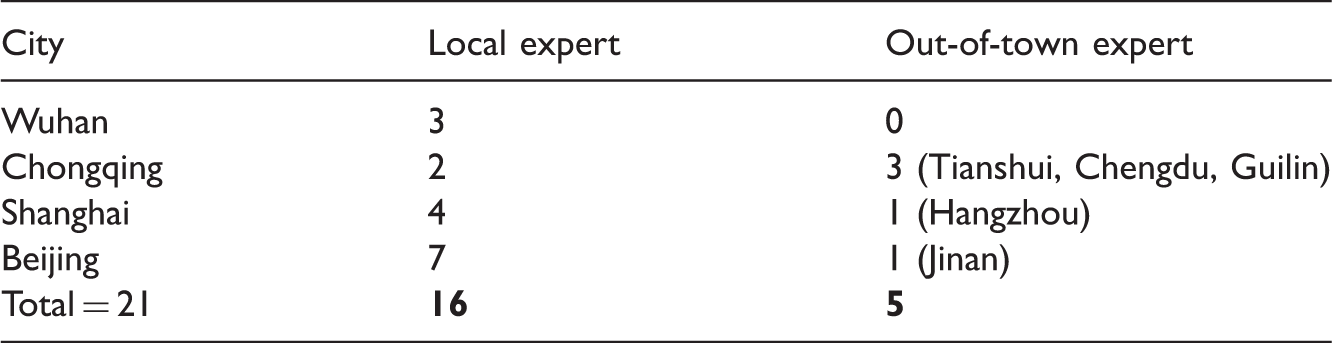
The interviewing of experts allowed us to secure information quickly although ideally the voices of children, parents and teachers should be heard and presented in any discussion of young children’s needs today. We will be mindful of this reflective quality of the narratives from the experts who spoke on behalf of those in the same ecological context and from whom we learn and interpret the urgent educational needs of preschool-aged children in China.
All the interviews were first transcribed. Then a three-person research team went over the transcripts individually and in a group to identify the themes across the interviews. The conceptual framework of the parenting goals the world over, which we will introduce below, guided the process of theme identifications. The analysis focuses on the themes and takes into account the three societal changes that have impacted child-rearing in China to highlight the educational needs and difficulties in socializing preschool-aged children.
Interpreting urgent educational needs by “parenting goals”
Based on discussion over the transcripts, the research team shared the view that despite the analytic complexity presented by the experts’ comments, most experts described and explained the identified needs from four perspectives: (1) the children’s own; (2) the parents’; (3) teachers’ or social institutions’; and (4) the government’s. This observation suggested a possible way to organize the data, one which might remind the reader of Bronfenbrenner’s (1975) concentric model of the ecology of human development. However, in our analysis, cultural anthropology offered a more useful framework for interpreting the experts’ points of view. An anthropological conceptual framework (LeVine, 1988) suggests that children’s needs are conceived and expressed fundamentally as a socialized developmental process in a particular cultural community.
The anthropological perspective is helpful in conceptualizing continuity over time. It became clear in the interview process that when the experts described and explained the educational needs of young children, they pointed to the needs of the present and future society. Their professional experiences across China lent them a large-scale view of Chinese early education over time to show the cultural continuity. The anthropological perspective is also useful because of the parallel between parenting goals in society (the focus of much anthropological research) and educational goals in the current research.
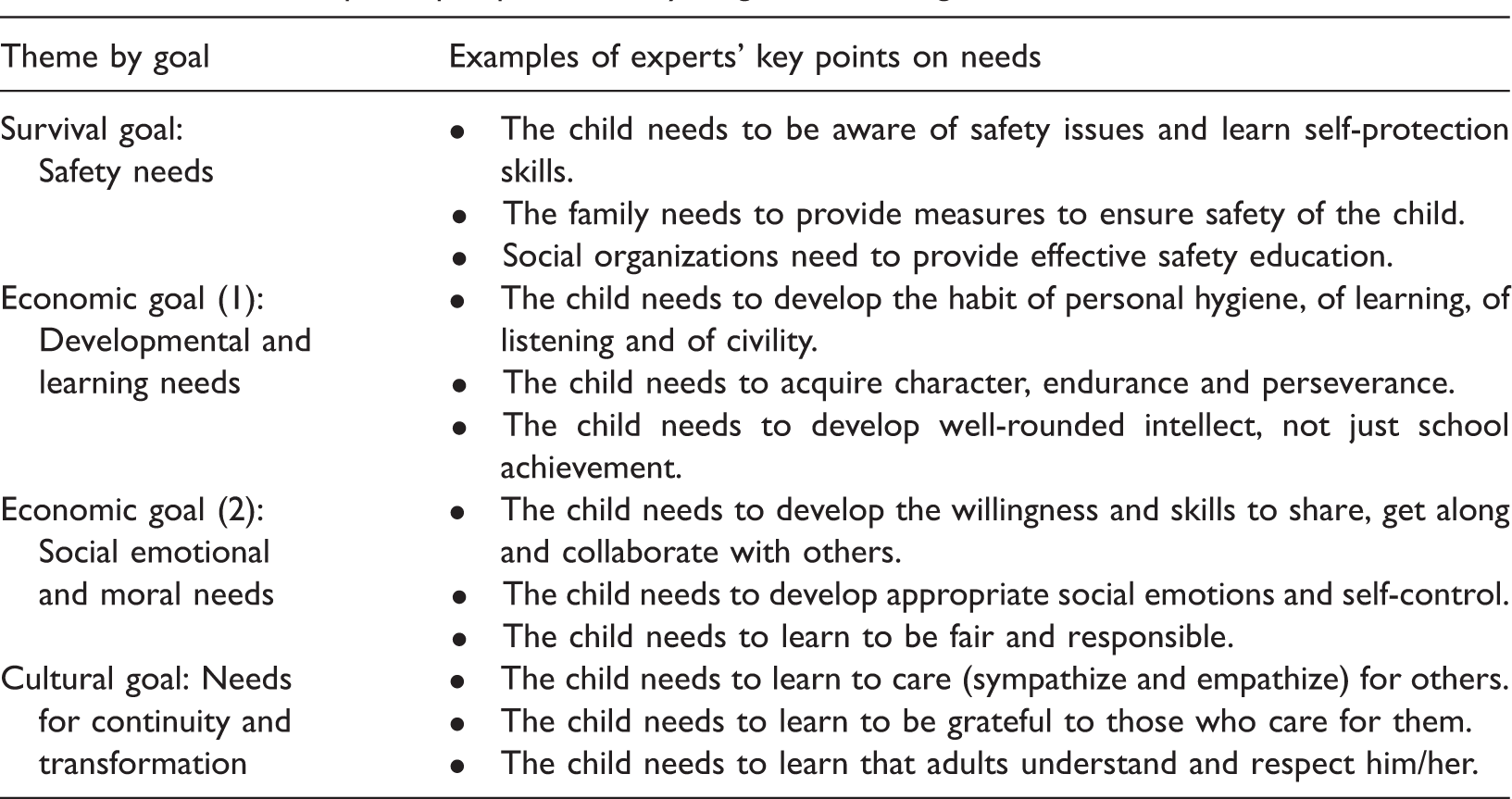
Themes in experts’ perspectives on young children’s urgent needs.
Survival goal: Health and safety needs in early childhood
Recent data show that China ranks 77th in the world for mortality of children under the age of five. Specifically, there are 14 deaths per 1000 children in this age group each year (WHO, 2013). Despite the gigantic strides China has made in the past decades to lower the mortality rate of children, preschoolers’ lives remain vulnerable to diseases and human errors. At the turn of the new millennium, western influence on China’s early phase of reform of the kindergarten curriculum was prominent, for example, the emphasis on personal initiative, self-expression and individuality. This influence was particularly salient in Shanghai where the traditional priority of care, at the time, gave way to children’s initiatives and self-expression. Huang Qiong, Director of Preschool Research at the Shanghai Education Bureau, recalled the early reform: “For a while we overemphasized the individuality and self-expression, but realized later that this was a misplaced emphasis. In keeping with the national guidelines on kindergarten education and our observation of daily practice, we revised our assessment tools to prioritize physical health, the most important of early development” (12.88–90). 1 Many other experts also mentioned this aligned local–national health priority in early education. In a way, it was both a local and national reaction to the globalized notion of individualized orientation from western countries.
However, most experts voiced grave concerns about the safety of preschool-aged children—an increasing problem nationwide. Within one year of our interviews being conducted with the experts, three traffic accidents in Guangdong, Gansu and Jiangxi provinces resulted in the deaths of several dozen preschoolers involving unregulated kindergarten school vehicles. In this context, almost all the experts we interviewed addressed the specific educational need for young children’s safety, especially those who live in rural areas or who have moved to the city from villages. Professor Wang, a specialist in family education from northwest China, told us, “[Young children’s] safety issues involve their lives, body injuries, and properties. In the rural area, people’s safety awareness is particularly lacking due to a variety of resource shortages,” (10.56). Professor Liu, a specialist in children’s nutrition and health, described this situation: “Rural children come with their parents from villages to the large cities. In a very uncertain and unstable environment, they live under the poverty line. Their parents are too busy or not sensitive enough to watch for various lurking threats to the safety of their children, often resulting in the loss of young lives” (4.126).
Because traffic and playground accidents involving young children are numerous and frequent, many of them do not get mass media exposure of the kind that might raise public awareness. Professor Ding, a specialist in play curriculum, said, “when a bad safety problem occurred, few people took notice” (6.17). He argued that safety precautions should include proper playground equipment maintenance and routine supervision: “It is not uncommon that playground equipment is unstable, causing falling or fatal accidents and injuring young children. For example, last year a preschool’s enclosed slide tube had a loose screw, causing a fatal accident when a boy’s jacket hood was caught by it as he slid down” (6.43).
Professor Cai, chair of a preschool education department, noted, “Young children are not acutely aware of the risk they are faced with… not to mention that they are little informed of how to protect themselves” (16.16). “In recent years, accidents involving young children have happened more frequently than before. Children need to develop necessary safety awareness” (16.266). Indeed, the need for safety education for rural children is most urgent, not only because they lack resources, but also because their living environment presents different risk factors than those in urban areas. Professor Yan Chaoyun, a specialist in rural preschool education, noted, “There is a big gap in safety education between the rural and the urban setting. We focus more on cities where traffic and falling accidents are salient, but rarely give adequate attention to the rural children who experience more drowning, fire, and bodily injuries of various sorts.” In resonance with this observation, Director Xu, a researcher familiar with rural preschool education in Chongqing, commented, “In our underdeveloped region, the major causes of injury to young children are often rabies and burns at the hotpot meal [a common fondue-style local food with hot soup and fire on the table]” (8.409).
The emphasis on both safety awareness in young children and the urban versus rural distinction seems to suggest that preschoolers should be given the opportunity not only to be protected by parents and teachers, but also to acquire skills to protect themselves. On this dual safety issue, experts noted a Chinese modernization dilemma: the more urbanized the preschool establishment is, the more adult protection is required, and the less children’s own agency is sought in protecting themselves.
The experts observed a paradox in which urban preschool teachers and administrators unfailingly use “safety concerns” as a precaution against various educational activities, such as going to museums or parks. Parents and teachers have co-constructed a series of rationales as part of a Chinese cultural argument regarding this. First, an economic and legal rationale: the child as the only child is the parents’ irreplaceable investment, thus liability lies with teachers. Second, a cultural one: the child’s safety ensures the continuity of the family, the core social unit in Chinese society. Third, a psychological one: the investment and family continuity are both at the heart of family happiness. These rationales are noticeably entangled with one another, resulting in an understandable reason why teachers are cautious: adult protection ought to override children’s own agency in obtaining the ability and skills needed to protect themselves.
Economic: The need to become a productive member of society
The Chinese experts emphasized the need for the young to develop and learn in order to become productive citizens of tomorrow. It is in this realm of socialization or education that we found the economic goal manifested in the interviews. Because the experts expressed extensive concerns about how to live in a future society, we organized these concerns into two large categories of socialization needs, as shown in Table 2. The first category focuses on children as individuals, following notions of developing and learning. The second category focuses on social emotions and interpersonal relationships. Rather than seeing economic preparation in terms of technology or a knowledge-base, we argue that the goals for preparing economically productive citizens in China today lie mainly in children’s social emotional socialization and interpersonal skills. These skills rely on traditional cultural values but can also conflict with these values. However, both the individual and the social emotion categories refer to critical adaptabilities that parents and educators expect of future economically productive individuals, family members and citizens of the world.
Developing and learning good habits from an early age. It is a common perception that Chinese parents expect their young children in preschool to acquire knowledge, skills, attitudes and good behavioral habits that will contribute to the children’s future economic wellbeing. The Chinese experts had similar expectations, although they phrased their expectations by linking important habits to personality. It is crucial to grasp the Chinese notion of personality in order to understand the economic goals for preparing a child for economic success. A socially desirable personality has a shared core of acceptable patterns of behaviors such as perseverance, the ability to concentrate, persistence and modesty. The experts described the development of the habit of perseverance as an important need with regard to the personality development of young children, especially in urban areas where young children are likely to be pampered (7.269; 16.36).
In this regard, the experts often used the expression “good habit formation” (yangcheng lianghao xiguan 养成良好 习惯) as a critical goal of early education. This goal is only second to that of health. Interestingly, most of the habits are socially defined, as Director Huang from Shanghai put it, “The habits of daily routine, of civilized behaviors and especially of listening to others” are second only to health and safety. Good habits provide the foundation for a socially desirable personality. She continued, “When we reevaluated the Shanghai Standards for Early Growth and Development, we adjusted our value hierarchy to place these important habits higher in the hope that our young children develop not only healthy bodies, but also socially healthy personalities” (12.90–93).
Refocusing on habits, a tradition in Chinese early education was a reaction against the previous prioritization of children’s initiative, creativity and self-expression that directors and teachers in Shanghai sought to encourage in children. “But this early high priority brought us a new problem.” Director Huang told us, “Our children were so excited all day with little sense of concentration and orderliness. When encountering difficulties, their earnestness and perseverance in overcoming difficulties evaporated.” However, these educators did not entirely abandon such western influences; instead they put them lower on their priority list. This educational effort to refocus on habits illustrates the notion of glocalization (Robertson, 1995) in that, the educators adopted globalized ideas of early childhood education only to iterate through practice and reflection into a new curricular integration. One of the important habits to develop was listening. Director Huang explained, “A child with a poor listening habit will not go far in life. In a group, you need to listen. In school, the child needs to listen, being good at listening to his peers, and his teacher” (12.59–78). The experts saw “habit formation” in the early years as an urgent, indispensable educational need for young children’s social adaptation. In turn, those who have a set of socialized habits are likely to be successful future citizens economically.
Social emotions, socialized thoughts and feelings. The previous section introduced some of the experts’ views about what kind of core personality a future citizen should have. It can be argued that these same characteristics are valued in many societies, including the United States. But in our sample of national experts, the discourse converged on the socialization of habit formation in early years as critical preparation for the future. This emphasis strongly suggests cultural resistance to changes recommended by curriculum reform and a consequent landscape change in the Chinese perception of what is missing in preschool education, in the context of the complex socioeconomic changes in recent decades. Recall, for instance, Director Huang’s reflection on Shanghai preschool curriculum reform.
The experts in our study focused on young children’s social emotional socialization as a basic preparation for acquiring economical skills. While addressing our main questions, these experts often phrased urgent educational needs in terms of what they expected children to learn and acquire socially as essential preparation for future economic success. A critical argument they put forth was that young children must actively interact with others in order to be socialized into competent society members. In fact, most experts expressed disappointment with the current socialization experiences young children have in China. They suggested that families, preschools and other social organizations should prioritize the development of the whole child, with a lifespan perspective, rather than focus on creating talented high-achieving students for school.
Highlighting the need to raise young children as future contributing society members, Director Cong Zhongxiao, China National Children’s Center, offered three points: first, young children urgently need to experience the world using their senses or perceptions, raise their own questions and pursue their own answers. Second, there is an urgent need for young children today to focus on those “non-cognitive elements”, such as communicating with others, entering the social group, and acquiring useful life skills. Third, young children need to communicate regularly with adults in order to contribute more to the ways in which adults treat children. Director Cong’s points all focus on the socialization of the young. She particularly downplayed formal schooling, high-tech submersion and top-down instruction that appealed to many parents and some social institutions (2.6–30).
“Non-cognitive elements” (非智力因素) is a common term that refers to any elements outside of school knowledge or the way in which school knowledge is transmitted or obtained. Professor Chen Yinghe, a developmental psychologist at Beijing Normal University, also used this term to describe what should be learned first: “During preschool years, children should be facilitated to develop all the non-cognitive elements such as collaboration, fair competition, and sense of fairness—these are important psychological dispositions or, as we often call it, a habit of conduct. However, I have not seen these in China’s preschool education because most preschools are trying to get children to be high achievers in school” (1.31–37).
Director Mao commented, “For most people, early enlightenment and education mean to teach the established knowledge that is heavily loaded with cognitive elements. On the other hand, now college education includes basic non-cognitive elements like appropriate code of conduct, for example, no spitting in the public place. It is ludicrous to ask adults to get into such habits when they should have done that in preschool” (13.358–361). She used the notion of EQ (情商) as an example of non-cognitive elements to say, “When we see a lively child arrive in the morning to greet the teacher first, we say she has a high EQ. We don’t have to worry about her social emotional development” (13.291–293). EQ stands for Emotional Quotient as opposed to IQ, Intelligence Quotient. The use of EQ became widely spread in China a few years after Goleman (1995) published his well-known book, Emotional Intelligence. Director Mao prized the child’s social skills above any school-based cognitive elements. But it is worth noting that she used the notion of EQ in a culture-specific way to describe what a successful child of the future should act like now when arriving at preschool. Her reasoning added a cultural meaning, a localized interpretation, to the widely globalized notion of EQ.
Other interview participants viewed the early formation of social emotional habits as essential to the growth and development of young children. Professor Yin, a specialist in children’s media, suggested that educational media programs for preschoolers should first appeal to children’s feelings, not their cognitive ability (3.116–125). Professor Ding, the play curriculum specialist, highlighted the acquisition of socially acceptable emotional expressions as key in early education, “Joyful expression in play reaches deep in the child’s pleasant experience; playing with other children enhances the joy of being with others; sharing activities with teachers and parents builds up a stable familial tie. All have life-long impact on the child” (6.326–327).
Director Huang from the Shanghai Education Bureau highlighted the difficulty of preschoolers’ emotional socialization: “Our teachers teach the school knowledge with ease because it is prescribed and itemized. But feelings and emotions are not always tangible and concrete. As a result, our overall curriculum does not delve into the depth of children’s concerns and feelings. In our reflection, this weakness in early education shows up from the municipality policy down to preschool pedagogy, to teachers and parents. The single-child reality exacerbated the lack of preschoolers’ socialized emotions” (12.59–66). Professor Cai from central China concurred: “The socialization in Chinese young children is the weakest link. The lack of social emotion socialization embodies a system-wide problem in China’s early childhood education” (16.222). Also from the central China region, Director Wu, a provincial leader in preschool education, agreed: “The desperate needs are young children’s emotional needs. Today’s parents can readily meet the material needs of the child, but ignore their child’s needs for friends and playmates, for loving care. Often, parents don’t have time for their children, and can’t play with them. And to compensate for what they don’t do, they pile on their child more material goods, but leave the child to the grandparents” (17.48–52). This comment resonates with Tobin et al.'s (2009) recent anthropological study of preschool in China. They noted that in the early 1980s, when the single-child policy was fully implemented, one big public concern was that the only child would get too much family attention. However, in the new millennium, the opposite became common. Many young children were neglected by parents who were too busy making money to have time for their child, never mind the child’s emotional socialization.
Traditionally, it was a virtue for grandparents to help out in caring for grandchildren as a family of three or more generations could live together. However, in the rapidly urbanized society, many grandparents take over parenting jobs, even acting as surrogate parents. A recent study led by Director Wu in the Wuhan metropolitan area showed that 50% of children were mostly or completely cared for by grandparents. “Young children these days have already had trouble understanding parents’ work and life. Like their parents, many children turned to material goods as a means of showing love for parents and others. They encounter social emotion difficulty with teachers and other children in the preschool” (17.78–87). In Sichuan Province, Professor Yan Chaoyun concurred with this evaluation and estimated that one-third to one-half of marital conflicts derived from issues about grandparents’ parenting of the grandchild, an issue which added emotional stress to the entire family life.
One distinction may be made about young children’s emotional socialization. Rural children’s social emotional problems arose partly from the absence of their parents who left for the city, while urban children’s social emotional problems arose partly from the unavailability of their parents who were nearby but handed them over to be cared for by grandparents or other caregivers. The former is mostly attributable to the modernization process, but the latter to an unhappy cultural solution in response to massive urbanization. Not only do parents and grandparents find themselves in conflict with one another more than before, but also the social emotional needs of the young have emerged as a new educational challenge for present and future generations.
From the experts’ perspectives, the parenting goal of ensuring that the child becomes an economically productive society member could be guaranteed only through appropriate social emotion socialization. In previous times, when family and community relationships were tied to the land or to manufacturing facilities, social relationships were shaped by the labor force’s relationship with tools and related skills including school-like knowledge of the industry. China’s rise in the world economy was caught not only in the old fashioned industrial revolution, but also by post-industrial societal change—a kind of change that demands dramatically different human relationships, different relationships between machines and workers, and a different societal superstructure to govern and be governed by the newer relationships. Of all these changing relationships, people’s social emotional relationships become more and more salient and even critical in locating jobs, being productive, affluent, and happy, because many current jobs and more future jobs require sophisticated interpersonal skills, a collaborative aptitude and social understanding. However, the complex situations that future productive society members will encounter are not separable from the cultural practice that has been kept, confronted or transformed through societal change.
Cultural: the need to inherit cultural values
Preschool teachers, like parents, are among the child’s first socializers who are obligated to enculturate the young (Tobin et al., 2009). The experts in our interviews explicitly prioritized the needs for cultural socialization in two ways. One is to emphasize the need to preserve traditional values in children’s daily activities, thus maintaining their cultural selves, and the other is to regulate and transform Chinese cultural emotions in response to the needs to restructure various changing relationships in China’s dramatic socioeconomic change.
Preserving traditional cultural values. Some cultural values have already appeared in the previous discussion. Here, a cultural analysis should be added in order to further that discussion, as parental goals in a culture are always intertwined. Take, for example, young children’s listening habits. Director Zhang from Guangxi Province pointed out the need for children to listen attentively and laid this responsibility on mothers of infants (9.108–118). She argued that infants have a natural need to listen but that present parenting neglects this, even though a child weak in listening will not become a successful member of society: “The ability to listen attentively means the ability to heighten the awareness of tasks. It will affect a child’s whole life. The child who doesn’t know how to listen will not be able to understand and complete a task given to him. The listening ability is just like the habit of hygiene that needs to be cultivated in the young between age 0 and 6” (9.132–138).
As mentioned earlier, Director Huang of the Shanghai Education Bureau spoke of the importance of listening as habit formation. It can be argued that expectations for the young to listen and to pay attention are widely observable around the world. But the value placed on listening as early habit formation is not equally evident across cultures. In the Chinese culture, the young child needs to listen as a way to become a Chinese listener and eventually a responsible and accomplished Chinese person (Li, 2012; Wu, 1996). Traditionally, Chinese parents described children’s listening as tinghua (听 话), an equivalent of being obedient which was still prevalent in 1990s China (Wu, 1996: 12). However, this tinghua was not an easy skill to acquire as, the child must develop from being able to tinghua to being good at tinghua—a crucial skill for one’s economic success in the old days. Today, the expectation of experts seems to be neither very traditional nor the opposite of tradition. What we heard was their reasoning that the listening habit must be returned to early socialization after an extended period of effort to encourage children to talk freely, as influenced by the western notion of the free child. It is unclear how listening will be redefined, and whether the new generation’s listening habit will be a hybrid string that integrates western and Chinese notions of how a young child should listen and be heard.
For example, as Director Huang explained, curriculum reform was once designed to encourage children to talk. In fact, as a long-time tradition, speaking in front of others has been promoted in Chinese preschools, in a form that differs from the self-expression preference of the United States (Tobin, 1995; Tobin et al., 2009). Instead of telling others how one feels, speaking skills in Chinese children have long been the means to train children’s characters—to be brave enough to express oneself in public, to overcome one’s shyness, to overcome one’s weak self, and to be part of the group (Tobin et al., 2009). Professor Yan Chaoyun, who studied rural preschoolers, observed that self-expression was less a problem in urban than rural areas. “Rural children need to learn to express themselves. Developmentally they are able linguistically, but socially they are timid, fearful and tongue-tied in front of a stranger. Self-expression is an important means of communicating with others and to be connected with others. Many rural children really need help in order to speak in front of others” (7.557–572). This urban–rural distinction in children’s speech learning captured regional differences even though cultural emphasis on character training is unanimous. Other such needs can be differentiated by the regional context, including the need to become modest, polite and perseverant, and to acquire a long-lasting sense of orderliness in daily life. One could hear the experts discuss not only needs with specific cultural expectations, but also changes in how these needs are culturally valued. One example many experts shared with us was what we call cultural emotions.
Regulating and transforming cultural emotions. Social emotions, such as the self-conscious emotions of embarrassment, pride, respect, shame and guilt, are often deemed universal. But cultural emotions refer to emotional experiences, functions and interpretations that organize cultural community participants’ activities (Rogoff, 2003) as does implicit cultural logic (Tobin et al., 2009), the meaning of which is shared among cultural participants in a cultural community. If we follow Rogoff’s (2003) conceptualization of a cultural community that changes over time, we will also recognize that cultural emotions continue to change. In the context of the urgent needs of preschool-aged children, we found that the experts emphasized caring (sympathy and empathy), gratitude and respect for elders including teachers.
Professor Chen Yinghe, developmental psychologist from Beijing, enumerated a number of important things preschool-aged children should learn: “Be polite, be observant of rules, follow the etiquette, and be helpful.” But she brought these together to one point: “All these things will come down to concerning oneself with others, being genial and supportive” (1.36–38). Director Lu, of a Shanghai private preschool, echoed this view: “The urgent educational need for the young is to learn to become an upright social person (zuoren 做人). Nowadays, it rarely occurs to the young that they should concern themselves with others, care for others, share with others, and get along with others. Even if it does occur, they have no idea of how” (11.312–323). She believed that coastal cities saw a continuous rise of this problem due to changes in child rearing and the only-child problem. In her observation, “The problem is not so salient with rural children or with those children who came with their parents to live in the city” (11.327).
In discussing the issue of emotional disconnect between the child and others, Director Mao of a Shanghai preschool was worried about the moral emotional state of young children, specifically the basic sense of gratitude for being helped, taught and cared for. She believed that nurturing children’s deep-down feeling of gratitude toward others was the priority of priorities. She asserted, “A child must be grateful, tolerant, and magnanimous to those who work hard and care for him” (13.190). However, she also recognized the fact that this emotional problem among young children was shaped by poor parenting and the thriving private preschool business which caters to parents. She argued, “To develop in the child the proper sense of gratitude, we don’t cater our service to parents’ taste. What organization is ours? An educational organization. Our duty is to shape future generations, not merely to be a service provider” (13.206). She continued, “For a paid service, your utility ends where the service ends. Gratitude is never there” (13.282).
For the older generations in China, Director Mao’s words probably do not need further explanation. She equated the meaning of respect to that of gratitude—two emotions that are not easily exchangeable in English. As Li and Fischer (2007) argued, Chinese view respect as an emotion that derives from our sense of profound connection, love and, above all, gratitude to the person we respect. In central China, Director Zhao, of a Wuhan preschool, explained this connection in young children’s emotional socialization: “Nowadays, gratitude and respect are very difficult to cultivate in this world of only children” (18.227); “From birth, the child is closely surrounded by six adults (4 grandparents and 2 parents). All his needs will be met with exceedingly lavish and beyond-necessary responses. He takes all he receives for granted. Why does he have to feel grateful? How can he appreciate his parents’ painstaking efforts to raise him?” (18.231).
The rhetorical question Director Zhao posed can be heard all over China, where only children are the norm. But can we say that this explanation captures the essence of the problem that young children these days are ungrateful and disrespectful? Partially it does. It captures the need to inherit and enhance cultural emotions such as respect, but it also suggests the other side of the same problem: parents do not yet know how to respect their children by giving them excessive attention and help. The call for respecting children has been heard in the field of early childhood education for at least 15 years (Hsueh and Tobin, 2003). Interestingly, several experts emphasized the need to respect children as if it were a new plea, suggesting a tenacious difficulty in equalizing respectful feelings between the young and the old.
For this reason, it is important to note that societal change is a complex and sometimes paradoxical process, one which may reflect the irregular transformation of a cultural practice. Professor Liu, of Southwest University, probably represented many experts in voicing a plea to all parents of young children in the whole of Chinese society: “Young children must be respected, understood and listened to. Parents often follow their own biases to control children or do things for them. We have to take young children’s perspectives in order to see to it that their needs be accepted and understood” (8.260). Professor Liu was critical of the excessive attention parents, grandparents and even teachers pay to the child, for it leaves the child little room to discover and exercise his own ideas and act upon them. Together, the call for children to become respectful and the call for parents to respect children suggest that the preservation and transformation of the culture are under way simultaneously. The experts we met were taking both movements seriously.
Conclusion
In this study of Chinese early childhood education experts’ perspectives on the urgent educational needs of preschool-aged children, we used an interpretative approach that follows the conceptual framework of parenting goals. The approach fits well with the interview data we gathered from the informants who viewed early education as the main means for enculturating Chinese young children. The experts’ responses to the two research questions offered us a large picture of the national, regional and economic discrepancy in the socialization needs of young children. They expressed the belief that the growing market-driven mentality, and out-of-date socialization attitudes and methods intensified the educational needs of preschool-aged children, offering a number of insiders’ assessments of such needs during dramatic societal change.
For about a century, the Chinese preschool has integrated care and education within the same social institution. The teacher who educates children must care for them as an obligation, not an option. This cultural practice was embedded in the concept of early education and can be traced back to the Confucian doctrine of state as a cosmos of family. This tradition has not diminished even when curriculum reform has recently advanced teachers’ professionalism and separated teachers’ job descriptions from caregivers’ in many urban areas. This cultural practice allows the experts to describe the perspective of preschool educational professionals as if it were a parental perspective. There is reason to believe that the views expressed in this study were shared by professionals and parents rather than being divisive.
We heard from many experts who highlighted: (1) the priority of care that is comparable to the survival goal of parenting; (2) the importance of socialized personality, skills and relationships as necessary to the future of young children, indispensable in the achieving of economic goals; and (3) the complex transformation of cultural values placed on preschool-aged children’s social and emotional socialization as a way to preserve cultural beliefs, values and customs while accommodating social change.
Among the urgent educational needs of Chinese preschool-aged children that the experts helped us identify, a host of core needs center on the social and cultural emotions of children. Whether we view these needs using the lens of universal parenting goals or based on the consensus of the Chinese experts, Chinese preschool-aged children need to become enculturated as Chinese while being socialized to become citizens of the world—an identity that is different from the past and the present. A central concern was how children could form various new relationships with others, i.e. parents, grandparents, peers, teachers, elders, those who serve children, and those whom children will meet during their lives. The experts were calling for new ways to socialize the young to replace the dominance of traditional parenting and formal schooling geared toward accelerating school achievement. The experts’ paradoxical emphasis on both cultivating children’s respect and gratitude, and on the desperate need for parents to respect children, reflects a wide range of issues in caring for and educating Chinese preschool-aged children in a changing society. At the same time, the consensus stands that the present Chinese socialization of the young is caught in a period of rapid change between the past and the future, between globalized early educational ideas and the localized rendition of those ideas, and between the need for new ways to socialize the young and the need to bring up Chinese children as Chinese.
Footnotes
Funding
The author(s) disclosed receipt of the following financial support for the research, authorship, and/or publication of this article: The research was conducted with support from the Sesame Workshop, New York.
Note
Author Note
The authors are grateful to all the interview participants who took time to meet the researcher and generously shared their views about the contemporary educational needs of Chinese young children. June Lee, Guimin Su, Yan Yang, Jie Zhang, Zongkui Zhou provided extensive assistance in various phases of the project. Lu Liu at the University of Memphis facilitated the research preparation and communications. An early version of the paper was presented at the conference of International Research in Early Childhood that Åsta Birkeland organized at Bergen University College, Norway.