




Abstract
Advances in computer-aided architectural design led to an increased interest in the field for cross-disciplinary creative collaborations. However, this process rarely accounts for the agents outside of the discipline’s intellectual framework, such as craftsmen, failing to include existing production capabilities in the digital transformation of the industry. To tackle this issue, we investigate an approach that implements encapsulated instruments as enablers of creative collaborations between computational designers and craftsmen. We evaluate this approach by designing three cement tile models, a traditional handmade construction element used in Brazil. The results demonstrate that encapsulated instruments expand the craft’s design space through creative decisions operated by the craftsman, and interviews with the tile makers elaborate on their perceived change in creative agency, identifying limitations when disrupting social roles and hierarchical relationships in craftsmanship. Results also raise opportunities for expanding this approach at other scales and systems, helping to democratize and distribute design knowledge.
Keywords
Introduction
Collaboration has long been a subject of interest to computational design theorists and practitioners. The discourses on this theme encompass a range of fields, such as human-machine interactions in design decisions, 1 the evolving relationship between architecture and structural engineering, 2 participatory processes that enable mass customization, 3 and recent developments in co-creation with artificial intelligence. 4 However, most of these ideas and discourses overlook or intentionally remove from the equation those agents lying outside the intellectual framework of the industry—the craftsman—emphasizing what Carpo 5 calls the modern authorial paradigm, which ascribes more creative value to the design of an object than to its making.
While this position might be reasonable in the context of developed economies, recent works started to contest the frictionless adoption of these discourses in the Global South, 6 to evaluate regional challenges in CAAD practice and education, 7 and to propose alternatives to the dominant view of technology as neutral or autonomous. 8 Other works9–13 address this duality between craftsmanship and computation in different cultural contexts through ethnographic research and encoding of practices, demonstrating possibilities for exploring interactions between disciplines that document traditional knowledge and expand their applications. More recently, Noel 14 elaborated on Computational Regionalism as a process that addresses the gap between traditional techniques and computation in architecture, establishing a framework to combine both while being attentive to the repatriation of this new knowledge. Nevertheless, we identify an absence of discussions on the creative interaction between computational designers and craftsmen in these works, something that could potentially expand the design possibilities of both realms.
This paper builds upon these critical evaluations of theoretical and technological deployment to propose a new approach for merging manual craftsmanship and computational design focused on promoting creative collaborations between designers and craftsmen. We argue that through encapsulation—that is, embedding an instrument with operative aspects of design knowledge that “enable the execution of complex operations without mastery of concepts underlying that complexity” 15 —we can expand the design space of the craftsman instruments, allowing them to operate computational knowledge without necessarily employing digital design tools, and as a result to transform their roles in digital practice by including them as creative agents in the process without disrupting their typical production methods.
We evaluate this hypothesis through a case study on the design of cement tiles, a traditional handmade construction element used in Brazil. In partnership with a cement tile factory, we tested methods for merging manual and digital techniques, exploring new ways of making cement tiles to subvert them into a product of our time. Through three models of tiles Orgânico (Organic), Camadas (Layers), and Traço (Stroke)—we present collaboration systems between architects, tile makers, and tile setters that incorporate computational design and additive manufacturing techniques in the process by encapsulating these technologies in the instruments of tile making: the tile geometry, mold, and recipe. After prototyping and iterating with the tile makers to create the tiles, we interviewed two of them to understand their perceived difference between making our tiles and traditional models and whether we achieved any change in creative agency.
The results show that our approach made it possible to (1) assimilate contemporary production methods, such as digital fabrication, into a century-old and labor-intensive craft; (2) expand and enrich its design space by merging unconventional geometries with traces of manual craftsmanship; and (3) enable creative collaborations across the production chain from design to production to assembly. However, the results also demonstrate the complexity behind disrupting engagement and social hierarchies of a craft in a factory environment and how encapsulation itself did not sustain those collaborative strategies in the mass production of our tiles, creating opportunities for methodological improvements. Nevertheless, our work provokes new research questions related to the instrumentation of design agendas and the potential to apply this approach at different scales.
In the following sections, we will briefly explain the history and production methods of cement tiles along with the literature review on the interactions between craftsmanship and digital processes; expand on the motivation and hypothesis of this research around the notions of encapsulated technologies; describe the digital and physical tools used in our investigation process while presenting each tile model, their geometric properties, and the collaboration mechanisms embedded in their systems; and discuss our findings and future works.
Background
With around 200 years of history, the invention of cement tiles has a tight link to the research for new uses for cement. The French company Lafarge was one of the first to present multicolored cement tiles at the International Exposition of 1867—produced from residues of their factory by a neighboring company—and the material was widely available at the International Exposition of 1878. 16 This increase in such a short period reflects the growing demand at the time for standardized, durable and easy to clean materials, mainly for the construction of public buildings such as stations and schools. In the Americas, cement tiles found ground in the late 1800s, benefiting from their relative manufacturing simplicity, which required only the importing of molds and presses to set up production. 17 But, as in Europe, cement tiles declined in popularity in the 1940s against the growth of mass-produced ceramic tiles and carpets, transforming what once was seen as modern and technological into traditional and outdated. 18
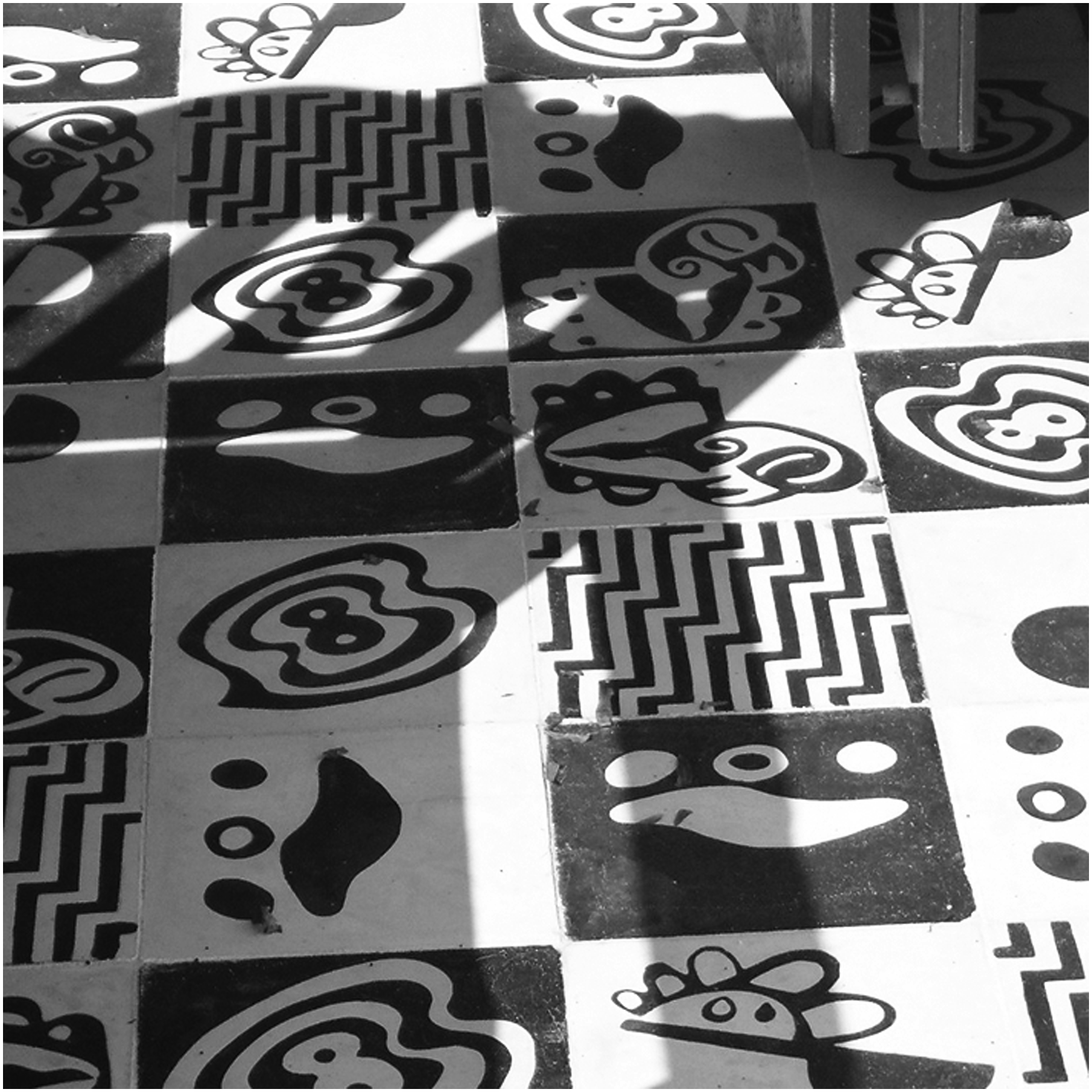
Reflections of this change in taste are seen in precedents of critical appropriation of this element in Brazilian Modernism. The cement tiles series Five Human Senses designed by Flávio de Carvalho in 1937 (Figures 1 and 2) for his housing complex project on Alameda Lorena in São Paulo,
19
is an example that break apart from the tile graphics imported to the Americas, influenced by decorative arts and used as metaphors for traditional textile carpets, by juxtaposing indigenous inspired drawings and shapes with industrialized materials, such as steel and glass. The Five Human Senses collection, designed by Flávio de Carvalho. Published with permission from Dalle Piagge Ladrilhos Hidráulicos. (a) Tasting. (b) Smelling. (c) Hearing. (d) Touching. (e) Seeing. Photograph of a house with the Five Human Senses collection installed. Published with permission from Dalle Piagge Ladrilhos Hidráulicos.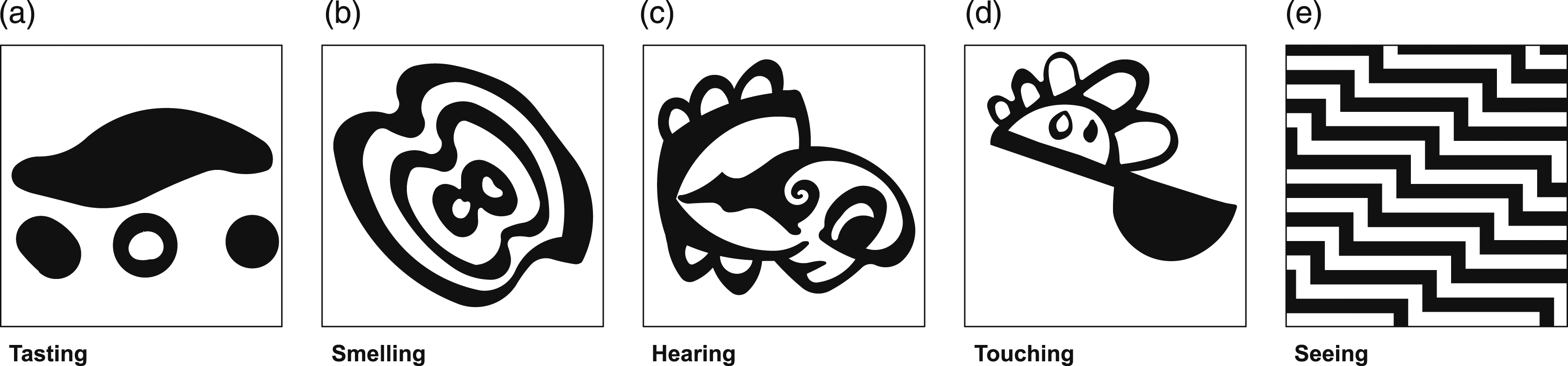
But despite these changes in graphical style, the manufacturing process of cement tiles has been relatively the same since its inception, except for the innovation of its chromatic palette.
20
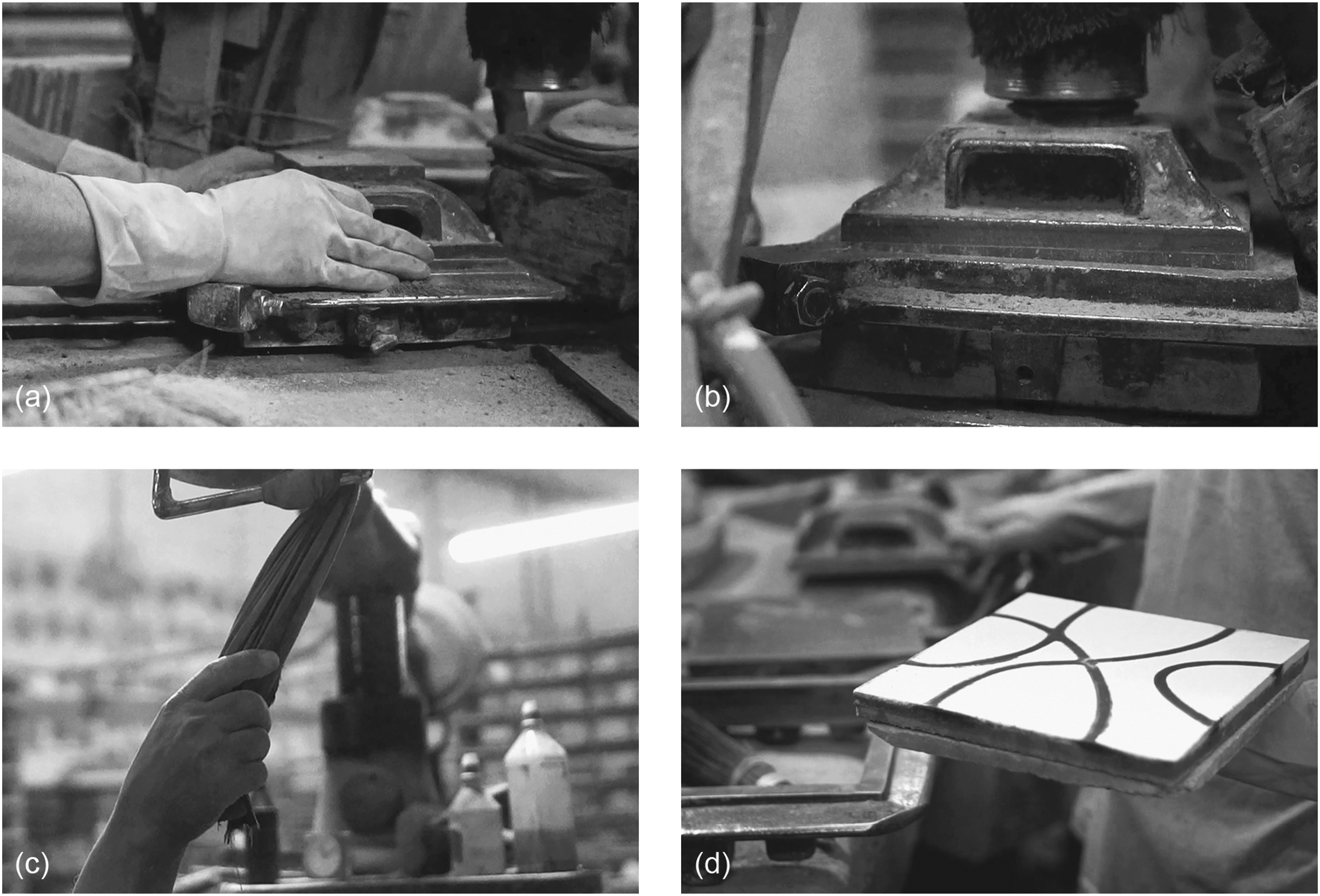
It involves the production of one piece at a time, structured in four stages: the preparation of the pigments, molding, hydraulic pressing, and letting the tile cure and dry (Figures 3 and 4). Each cement tile has three layers: the front layer, which contains patterns and colors created from cement, marble powder, water, and iron oxides; the middle layer, with cement, sand, and water; and the back layer, made of cement and sand. The front layer is when the tile maker fills the mold, typically made of brass, and when there is some creative autonomy with the coloring decisions made by the tile maker or the client. After filling and removing the mold, the tile maker adds the other two layers of mortar, presses the tile, and unmolds it. In the final stage, they let the tile stabilize overnight and immerse it in water for a few hours to initiate the curing process, after which the drying begins without the need for firing or burning, lasting at least 2 weeks.
21
This process of the same person operating the production of the piece from start to finish and guaranteeing the quality of the final product characterizes the production of cement tiles as a craft, and due to the handmade nature of the process, every tile ends up with some variations, such as its final height. The making process of a cement tile (a) and (b) filling the mold with the front layer; (c) filling the mold with mortar; (d) closing the mold for pressing. The making process of a cement tile. (a) Putting the mold into the hydraulic press; (b) and (c) pressing the mold; (d) the tile before the curing process.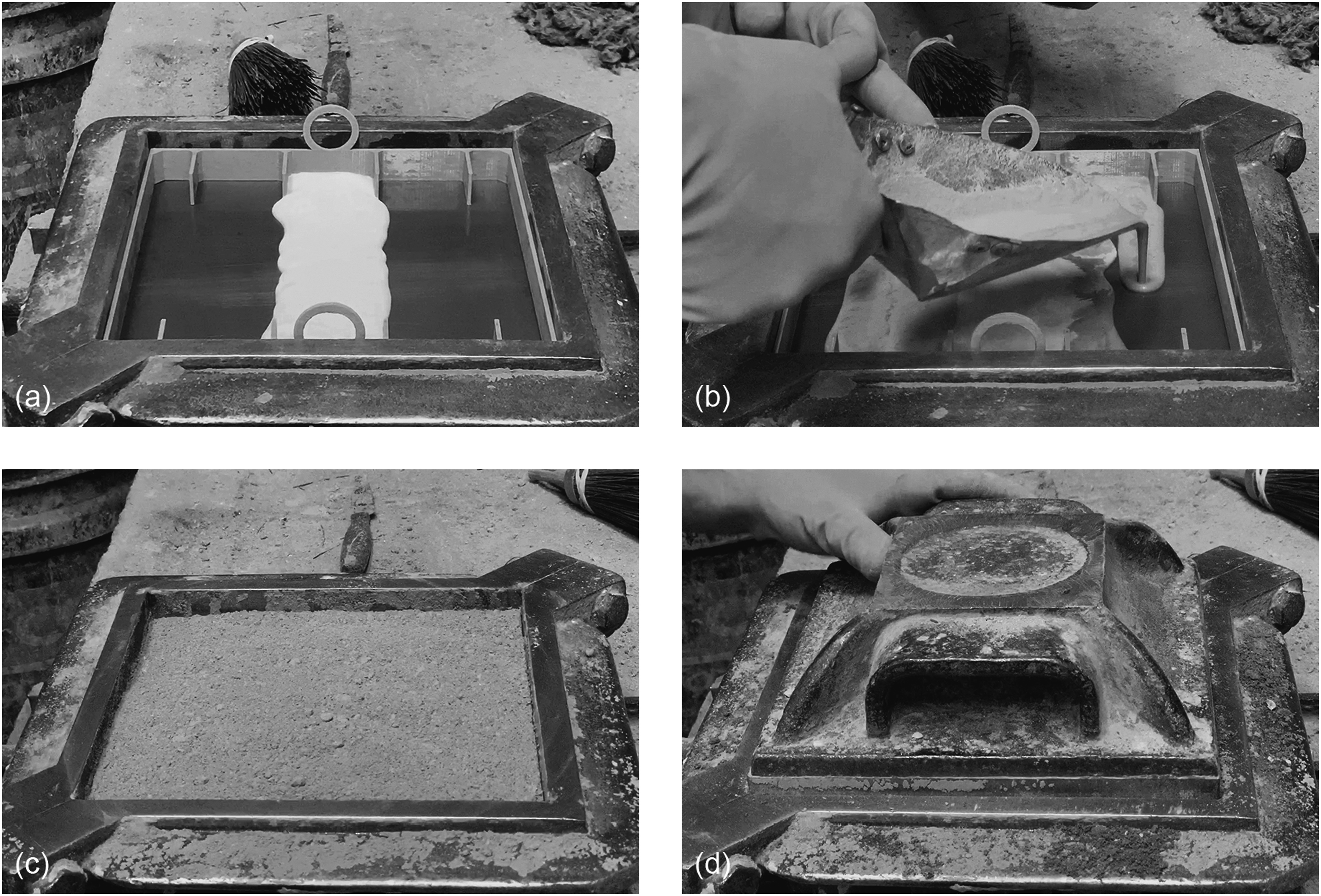
The reintroduction of traditional elements, such as cement tiles, to the forefront of architectural debate and practice is likely a consequence of the growing discussions on social and environmental sustainability issues, which increased the appreciation for handmade products in recent years. 22 In conversation with the cement tile factory owner, he also added that the regained popularity of cement tiles in Brazil is due to the clients’ interest in the exclusivity and uniqueness of each tile, something that is not available in mass-produced ceramics or carpets. This scenario that highlights the social and symbolic values of these artifacts also instigates new research topics for those interested in addressing the integration of traditional techniques with contemporary methods from a critical perspective, emphasizing the inherent values and qualities of each while preserving the traditions and knowledge of making, enabling their application in other contexts.
Within this line of research, different authors demonstrate the possibilities of interacting with traditional craftsmanship through computational tools and methods. Cortés-Rico and Pérez-Bustos 9 reflected on the interactions between textile craftsmanship and digital tools in Colombia, noting that there needs to be a mutual exchange between these two domains to ensure that one does not overshadow the other and to prevent the digital from contributing to the disappearance of the artisanal work, underscoring the importance of comprehending which stages should be reinterpreted or encoded using digital tools. Cortés-Rico and Pérez-Bustos also note that the act of making the artifact is when the exchange of knowledge between disciplines occurs, indicating its indispensability and significance when conducting this kind of research. Chand Inglis 10 described the use of digital manufacturing tools in the temple building industry of western India from the perspective of different agents of the production process, including an artisan that produces sculptures that are digitized and an engineer that improvises the use of CNC machinery to achieve novel results that were not predicted by the machine’s manufacturers, arguing that both experiences have altered architectural labor and relations with historical artifacts. However, Chand Inglis also highlights how the artisan’s piece is discarded after being scanned, creating a feeling of uselessness in the craftsman and removing him from other stages of the process, making technology, in this case, a contributor to an extractive production dynamic.
Related to the encoding of crafts, Muslimin, 11 based on ethnographic studies of Passura glyphs, presented an inductive approach to develop Shape Grammars when access to the craftsman and their making process is available (in opposition to the deductive approach where one only has access to the artifact) demonstrating how to document design and making knowledge in a tacit environment. Similarly, Noel12,13 developed the Bailey-Derek Grammar that describes the Trinidad and Tobago wire-bending techniques, discussing how this tool is capable of restoring a craft that is dying due to the absence of a pedagogical system capable of passing down manual knowledge to a new generation, including missing groups in this practice, and expanding the craft applications to other domains, such as architecture. In a more recent work, 14 Noel addresses one gap we also explore in this study regarding the lack of a framework for merging traditional techniques and computation in architecture, questioning how we can amplify local social relations and roles within the making process and proposing a theorization of Computational Regionalism that can generate creative expressions of tectonic and tactile knowledge and skill attached to local crafts.
Overall, these works focus on documenting craftsmanship knowledge —some of which are on the verge of extinction—for their understanding, perpetuation, replication, and transmission. Missing from these works is a discussion on how computational designers and craftsmen can actively co-create, and we identify an opportunity to incorporate their findings to build platforms that mutually benefit the practitioners throughout the process with a sensibility to how these workers affectionately relate to their craft. In the case of cement tiles, a craft that is still flourishing, we observe a rigid definition of roles where the tile maker has little to no creative agency when it comes to the tile graphics, making it an opportunity to broaden the possibilities of the practice by innovating in this front, and contributing to the continued relevance of this artifact by adapting it to contemporary design languages. Thus, our work raises the question of how to expand creative collaborations beyond the technical and intellectual fields of design while acknowledging and enriching the traditional expertise of local production agents?
Motivation and hypothesis
Due to the inherent limitations of implementing digital tools, such as a computer, in the production environment of cement tiles (craftsmen are dealing most of the time with watery and powder materials and wearing rubber gloves), we started to reflect on the potential collaboration with tile makers within their known production instruments: the tile geometry, mold, and recipe. To address this problem, we needed to embed those instruments with means to operate computational knowledge while making it intuitive for craftsmen to be comfortable to act on their creative tasks. It is important to note that the definitions of creativity and collaboration vary across fields, and it is not within the scope of this work to rigidly evaluate one specific definition. Thus, we adopt a less strict definition of creative collaboration as intentionally producing something novel, 23 with the final product carrying the intentions of each expert’s actions after joint activity of negotiation and evaluation, with participants acting as “individual experts addressing design issues from their perspectives.” 24
In this sense, we can summarize that our main research problem is to understand whether encapsulating these instruments with computational knowledge is an effective technique to promote creative collaborations between computational designers and craftsmen, resulting in the expansion of the design space of their craft and the amplification of their role in the production process. By encapsulation we mean encoding an instrument with a specific kind of knowledge that enables its users to consume that knowledge as long as they know how to operate such an instrument. This approach extends our research to address not just tile making but also to question whether the tile design itself could encapsulate computational knowledge that is operable by tile setters, stretching the tile from a product to a tool. Thus, encapsulating collaboration means to embed a tool with the processes needed for the craftsmen to operate design decisions within a scope that was previously negotiated and evaluated by both the designer and the craftsmen and making them responsible for operating and creating variations of the design space.
Adoption of encapsulated instruments in architecture is not a novelty, and Witt 15 describes how drawing machines—such as ellipsographs—transformed the application of mathematics in design throughout history by making complex geometric operations more accessible and repeatable. This same concept extends to digital practice as most software used by architects encapsulates mathematical operations that foster geometric innovation without users having to understand the principles behind them. Within this culture of instrumental knowledge, we posit that the same effects of exchanging techniques among disciplines could occur in the encapsulated interactions between manual crafts and computing, making the encapsulation extend beyond representation to encompass design agendas.
Methodology
Given the nature of our research problem, that involved the design of new artifacts to test our hypothesis, we needed a framework at which we could propose ideas, collect feedback from the production process and its outputs, and evaluate if the experiments achieved the desired result of promoting creative collaborations through our designed instruments. Thus, this research occurred in three steps: (1) developing the tile design and its collaboration instruments, (2) evaluating the outputs of our designs by prototyping tiles, and (3) interviewing the tile makers to understand their perception of agency in this collaboration.
It is also important to note that these tiles are the result of a commercial partnership between the researchers and the cement tile factory, which limited the scope of our work to the design of new tiles. In this sense, we do not delve into a comprehensive ethnographic study and encoding of the practice, as established in the framework of Computational Regionalism proposed by Noel, but we consider this an opportunity to evaluate if these steps are required in cases where one wants to expand the design possibilities of a craft without disrupting their production processes. Regardless, visits to the factory to learn more about the making process of cement tiles were essential to kick off the design stage and to evaluate our design constraints.
Tile design
Firstly, we created each tile design and formulated their embedded collaboration strategy with a consideration for its final appearance, composition possibilities, and production parameters. For this step, we used the computer-aided design (CAD) software Rhino 3D and the plug-in Grasshopper, which allowed us to explore geometries that are not conventional in cement tile design and facilitated adjustments by adopting a parametric modeling approach. In this step, we also created the 3D models of the molds for prototyping tiles, accounting for how the tile maker operates existing molds and their overall properties, such as wall thickness and inner structure. The three models created—Orgânico, Camadas, and Traço—test distinctive collaboration strategies underpinned by unique conceptual foundations in their graphics.
Orgânico
Inspired by the textures of Hypoestes phyllostachia leaves (Figure 5), the Orgânico model operates an algorithm with two stages, one digital (the parametric model) and one physical (the tile recipe). The inspiration for the Orgânico model. Left: leaf of a Hypoestes phyllostachia (adapted from Wikimedia Commons [CC BY 3.0]), right: the Orgânico tile.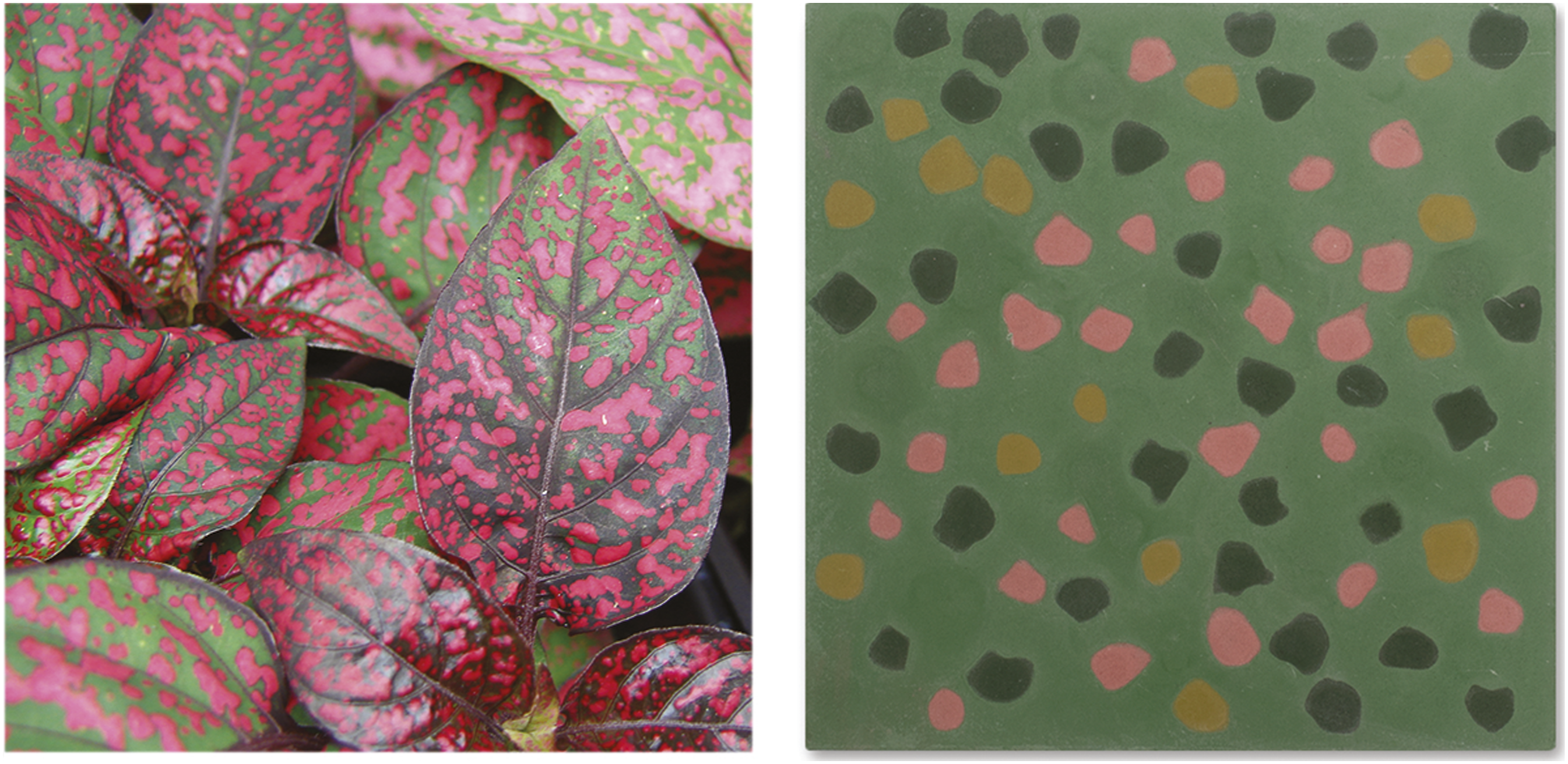
The parametric model creates both the tile design and the 3D file of the mold for printing. The tile design is composed of 75 circles that are randomly deformed and positioned inside the 20 × 20 cm tile, and the center points of these shapes are used to compute a Delaunay Triangulation that creates the bridges to structure the mold. The tile recipe (Figure 6) specifies how many dots should be filled by the tile maker (the tile density) and how many of each color we should have in the final product (the color scheme). The tile maker is responsible for deciding which dots to fill and the colors that go in them, given the colors available in the color scheme. After filling the recipe, the tile maker fills the empty spots with the same color as the background and finishes the tile at the press. The color schemes follow the same shades found on the leaves of Hypoestes phyllostachia (pink, green, and gray), and we carefully considered the amounts of each color to create balanced compositions. Tile recipes for the Orgânico. (a) Mold design. (b) Tile density 1. (c) Tile density 2. (d) Tile density 3. (e) Tile density 4.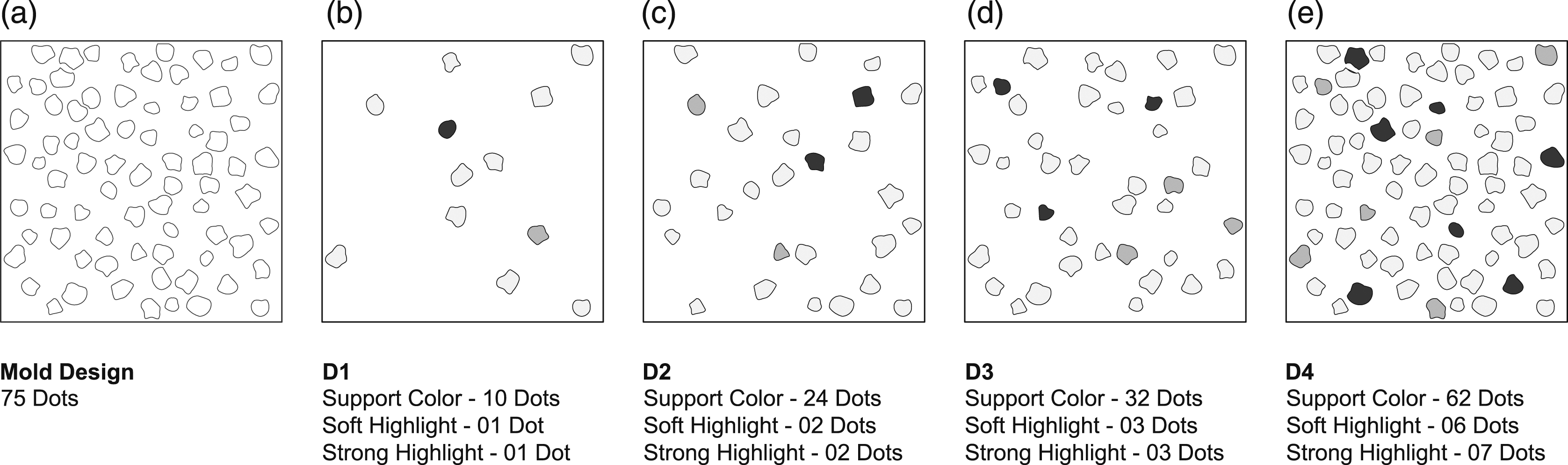
In this case, the mold encapsulates a highly constrained design space proposed by the designers while the recipe encapsulates the collaboration platform where the tile maker operates their creative decisions.
Camadas
The Camadas model results from the intention of amplifying the creative freedom of the tile maker while maintaining production scalability and design consistency in the system. Inspired by the manual gestures of the tile makers when filling the first layer of cement, we created a tile that has in its mold only the minimal features needed to fulfill our intents, creating a system where every tile carries the creative signature of its maker.
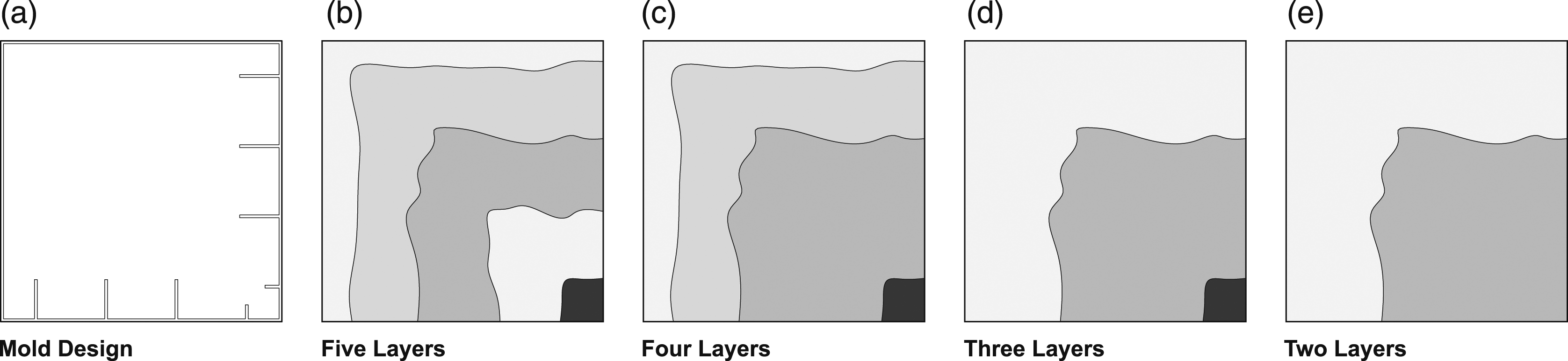
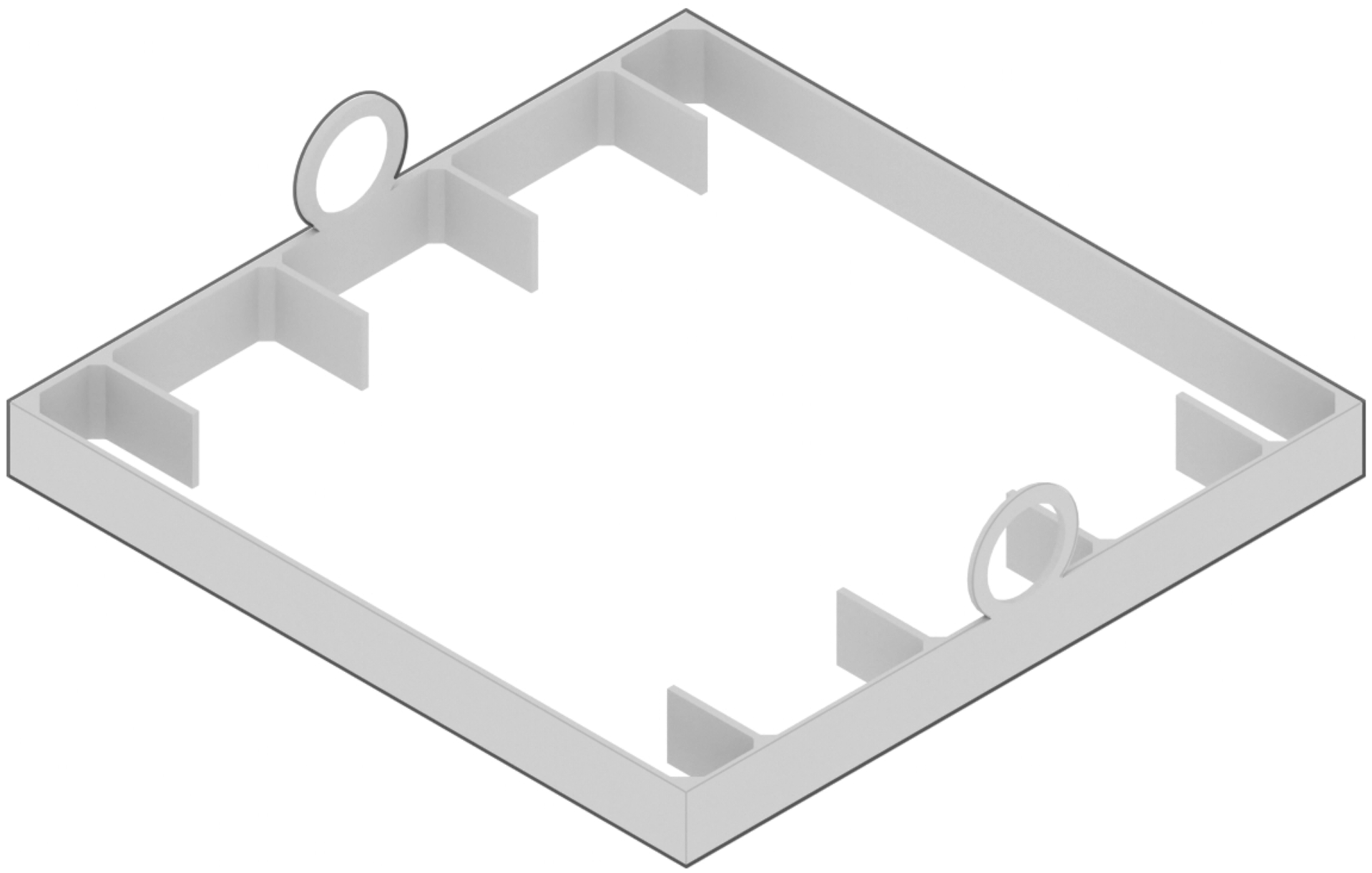
The mold is a 20 × 20 cm square divided into five linear sections, delimited on the left and right sides of the mold by 2.8 cm flaps. These flaps guarantee connectivity between tiles, with the space between them being available for the tile maker to pour cement as they like, as long as they do it linearly. In terms of colors, the tile can have from two to five colors filling these sections, increasing the design diversity of the system (Figure 7). To increase the composition possibilities, we also created a corner variation that allows the design of rectangular zones and pathways, resembling the traditional graphics of 1800s cement tiles (Figure 8). Like in the linear version, the mold is a simple square with internal divisions, but in this case, the tile maker can create either linear or radial compositions. While this model didn’t rely on computational tools to define its graphics, the production of the tile still has to account for different parameters that affect the final result, including the cement viscosity, the filling order, the speed of pouring, and the abruptness of movements. The Camadas (straight) and some variation of layer composition. (a) Mold design. (b) Five layers. (c) Four layers. (d) Three layers. (e) Two layers. The Camadas (corner) and some variation of layer composition. (a) Mold design. (b) Five layers. (c) Four layers. (d) Three layers. (e) Two layers.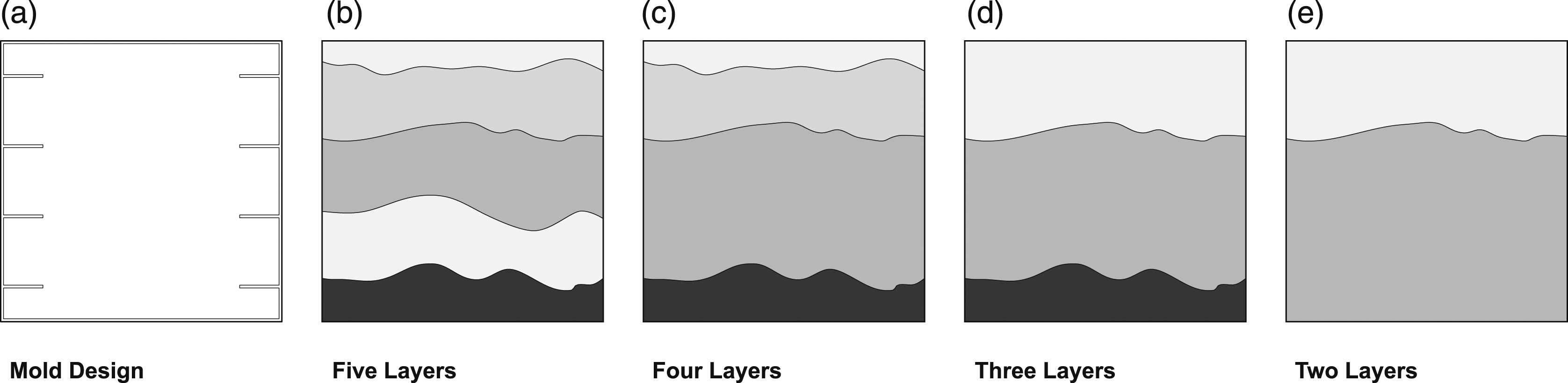
In this case, the mold encapsulates a less constrained design space proposed by the designers, while the tile maker is responsible for more creative decisions when operating the instrument, relying on their manual skills to achieve good results.
Traço
The Traço model is a reinterpretation of the combinatorial studies of Sébastien Truchet, published in 1704 as a treatise on tiling patterns.
25
In contrast with previous examples, this tile focuses on the collaboration between architects and tile setters, encapsulating mathematical properties in a simple-to-use instrument that creates diversity through a single operation: rotation (Figure 9). The 20 × 20 cm Traço in the 2 × 1 combinations with a single tile rotation. (a) 0° rotation. (b) 90° rotation. (c) 180° rotation. (d) 270° rotation.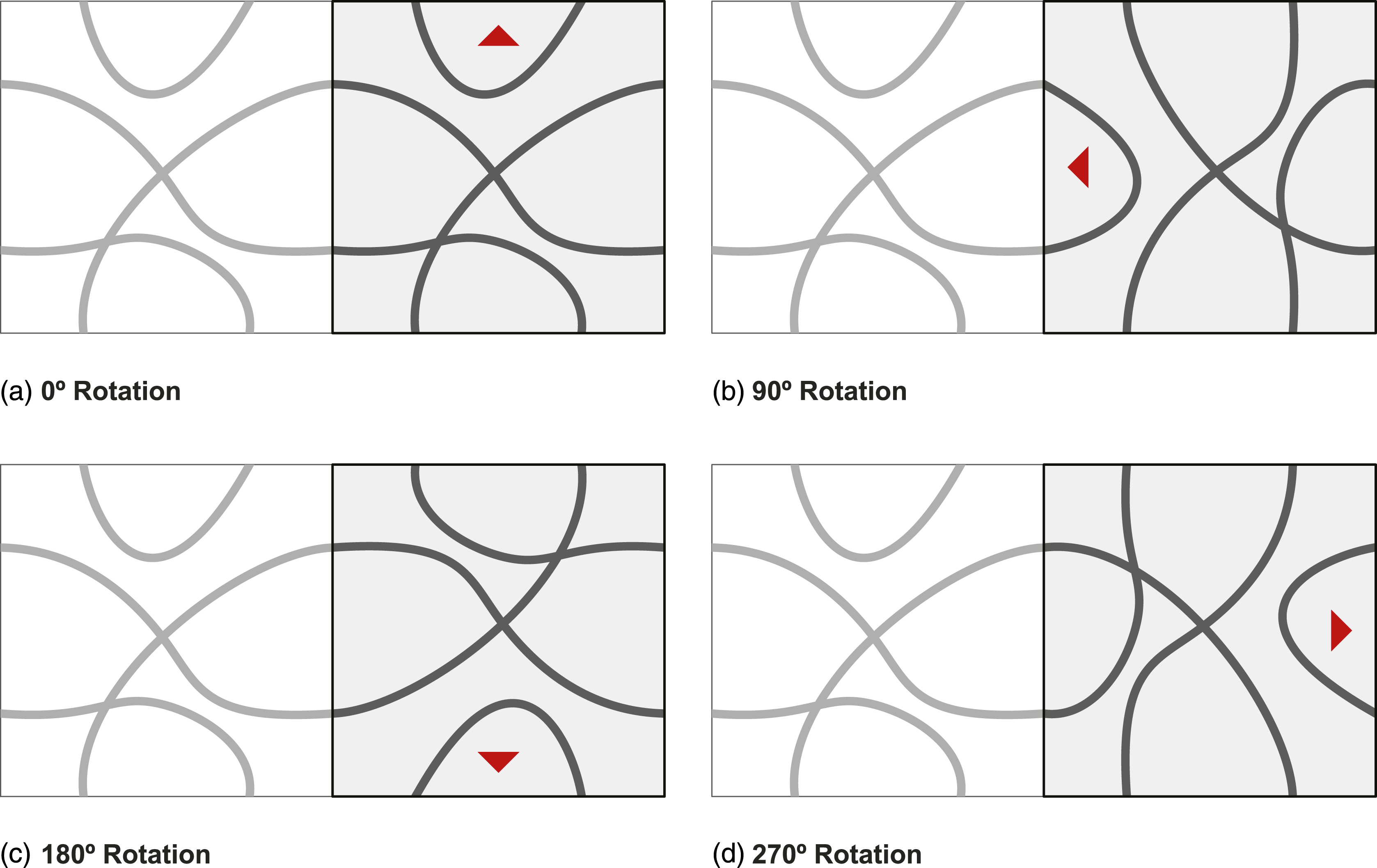
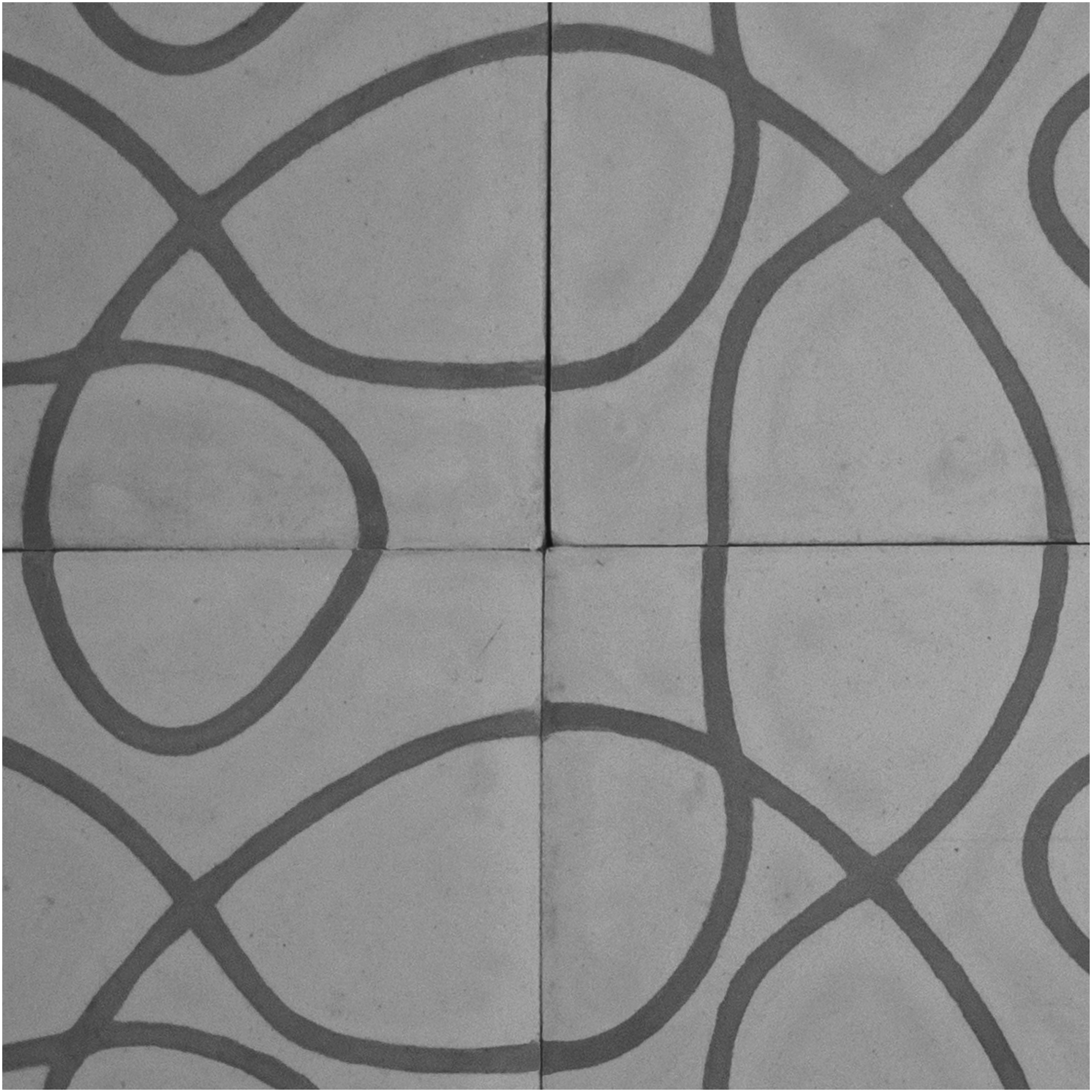
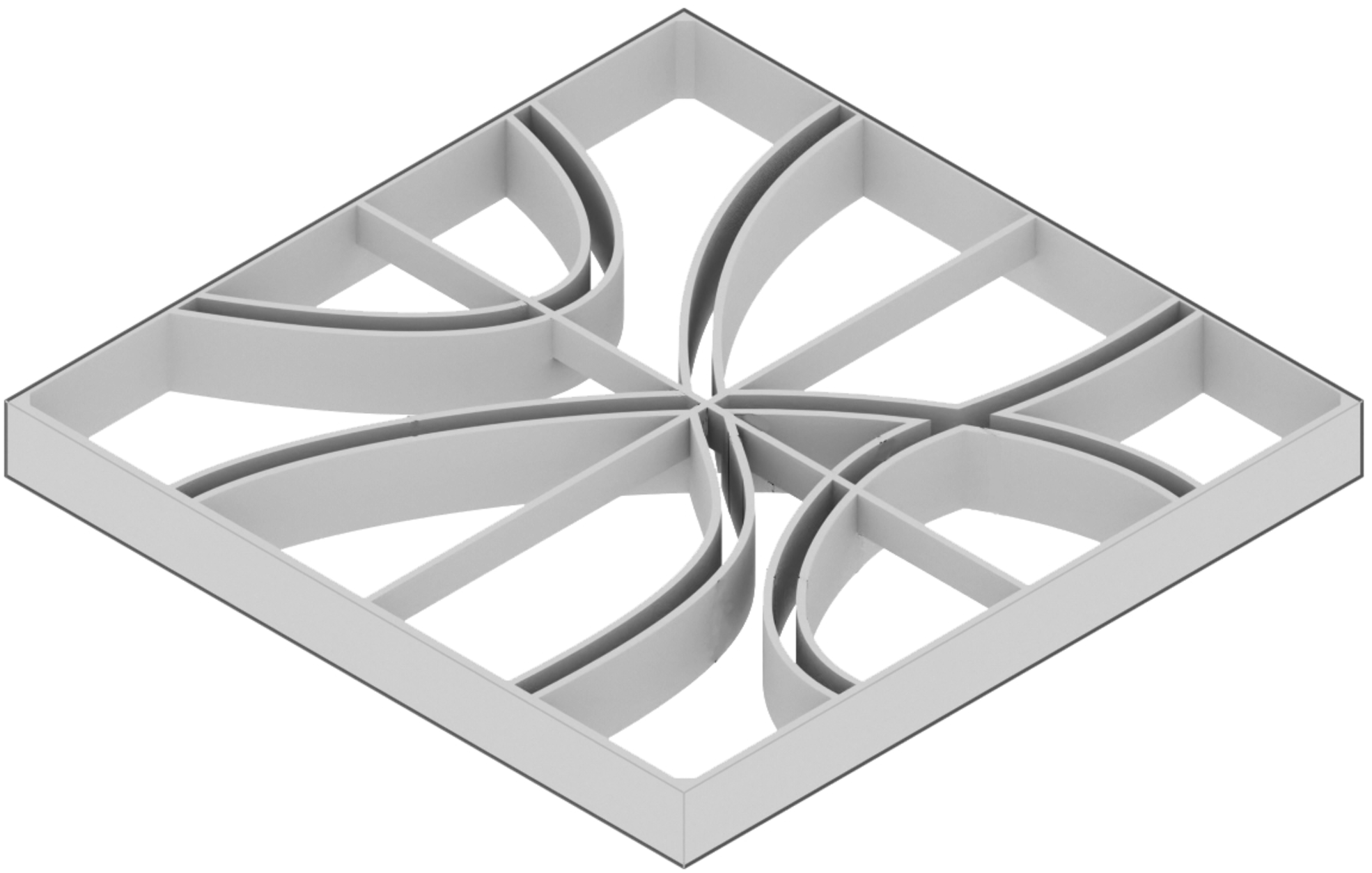
Using Mottaghi and Khalilbeigi’s Parakeet plug-in for Grasshopper, we designed tiles that compose interconnected curves that resemble a scribble, leaving some of their ends deliberately non-perpendicular to the tile edge. With this decision, we intentionally accommodate the visual consequences of errors and installation tolerances, which wouldn’t be possible with absolute precision in our geometry—something unattainable in a handmade cement tile. This geometry, like in Truchet Tiles, also creates an interplay between positive and negative spaces, where you can highlight the background, the scribble, or even mix the two possibilities in a single composition. Going beyond the traditional square tile, we also applied the same algorithm to a 30 × 10 cm tile (Figure 10) that accommodates typical parquet floor patterns when used by itself or creates new designs with the 20 × 20 cm tile, given that the curves in both models connect seamlessly, expanding the composition possibilities of the system. The 30 × 10 cm Traço in the 2 × 1 combinations with a single tile rotation and its combination with the 20 × 20 cm tile. (a) 0° rotation. (b) 180° rotation. (c) 20 × 20 cm tile and 30 × 10 cm tile combination.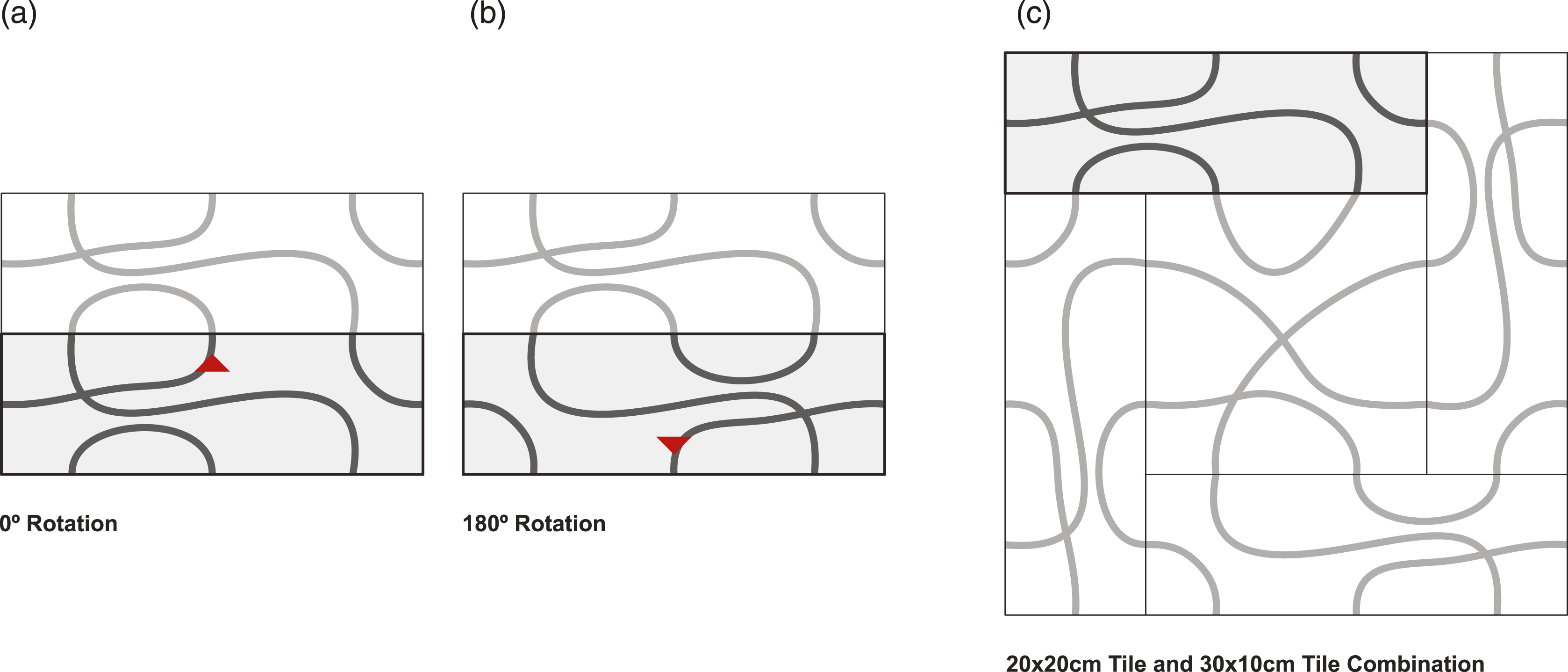
In this case, the encapsulation occurs in the tile graphics itself, which becomes a tool for creating diversity through combinatorial methods. This gives the designer—be it an architect, the tile setter, or even a regular client—the opportunity to operate these methods at will, creating and discovering compositions in the process.
Tile mold
Typically, the tile maker uses molds that are handmade by a third-party with brass or iron casting, which are expensive and time-consuming to fabricate, reducing the margin for adjustments in their design. To improve the prototyping process, we relied on FDM 3D printing to fabricate all our molds with off-the-shelf PLA filament, reducing the time between feedback loops and the cost of each mold by 90%. Producing the mold ourselves with input of the tile makers also increased our control over the mold features and dimensions, which had to account for the easiness of cement pouring, sturdiness to resist the production process, and include elements to remove the mold without damaging the design.
With the printed molds, we tested our collaboration strategies at the cement tile factory, where we observed the tile maker prototyping our tiles, evaluated with them if the product was considered good, compared the expected aesthetical output with the materialized product, and collected feedback from them to improve the mold if necessary. Given that we argue that the craftsmen only have to operate their known production instruments in the process, they also had to be as intuitive as possible to compel them to collaborate creatively. Each tile had three to four rounds of testing, where we adjusted wall thickness, mold removing elements, or overall geometry to improve the production process or final output. This step is where the interaction between the research team and the tile maker was most intense. Figure 11 summarizes this iterative process that considers the production of tiles at scale as its output, thus reducing the interaction between agents after completing the encapsulated instruments. Each tile mold evolved and adapted according to their production needs, which were sometimes directly communicated by the tile maker or observed by the researchers in the prototyping process. The iteration process for our tile design, highlighting the steps at which interactions between the tile maker and the designers are most intense.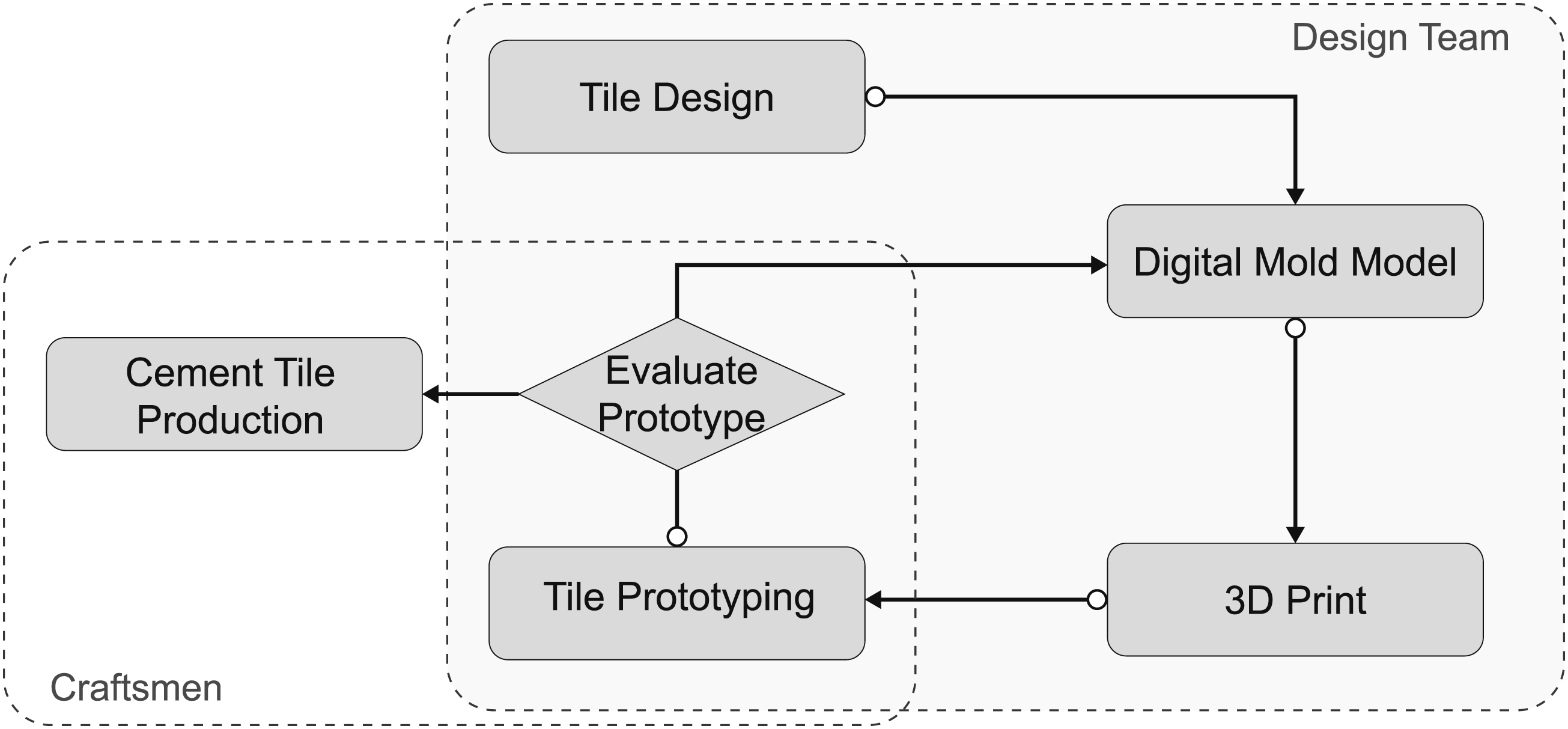
Tile maker
After testing and approving the tile models, we interviewed two tile makers, Eduardo and Nino, to understand whether they felt any change in their production process, how they felt about this technological support in their production environment, and how they made their design decisions. Eduardo has been making cement tiles for 35 years, while Nino started 12 years ago, with both being highly skilled in making some of the most decorated tiles in the factory. We conducted these interviews in person and asked the following questions: (1) How did you feel making these tiles?; (2) What difference do you see in producing the tile with the plastic mold compared to the traditional metal mold?; (3) Do these models require any change in attention from you?; (4) How do you choose what holes to fill (in the case of the Orgânico)?; (5) How do you typically fill the tile lines (in the case of the Camadas)? Through these conversations, we also expanded on the training of new generations of craftsmen and learned more about their personal experiences with tile making. In addition to them, we also interviewed the cement tile factory owner, Divo, to better understand the impacts of digital technology insertion in the process of creating new tiles and the challenges facing the craft business.
We also note that our evaluation of the Traço model, which focuses on the collaboration with tile setters, was limited due to a lack of access to clients that bought and installed these tiles. Thus, in this case, our reflections are restricted to how architects and workers could potentially use this model in a design setting, with concrete cases being considered a future development of this work.
Results and discussion
In this section, we present and discuss our findings by describing the results achieved in each tile model, the exchange of knowledge that occurred when refining the encapsulated instruments, and the response from the tile makers regarding our tiles.
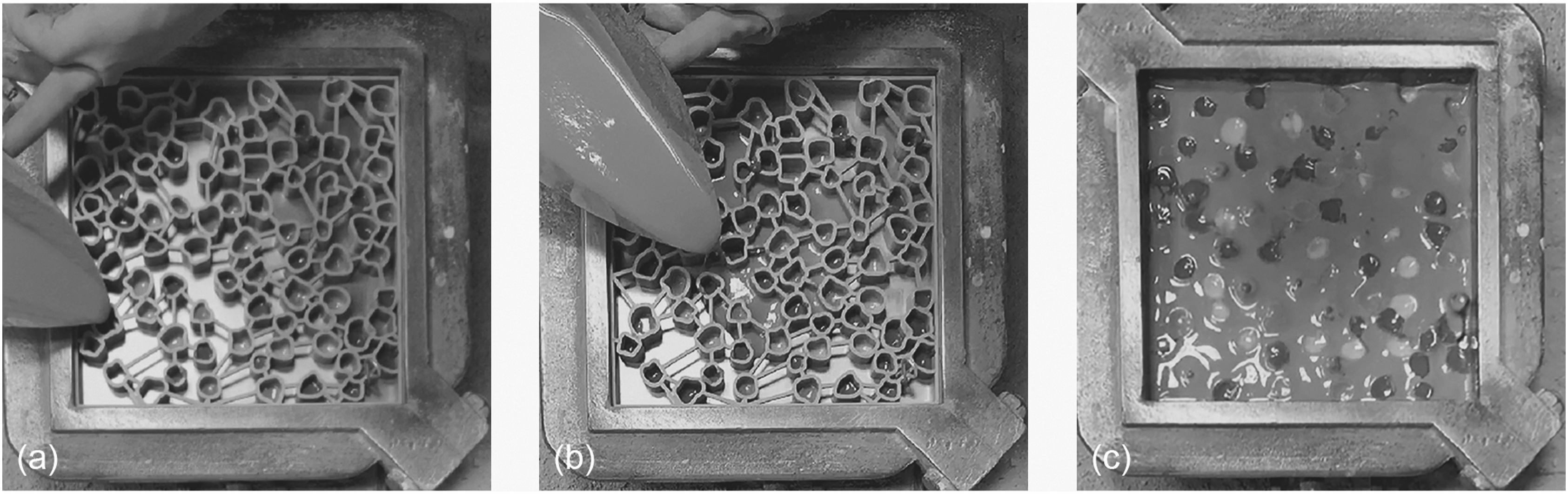
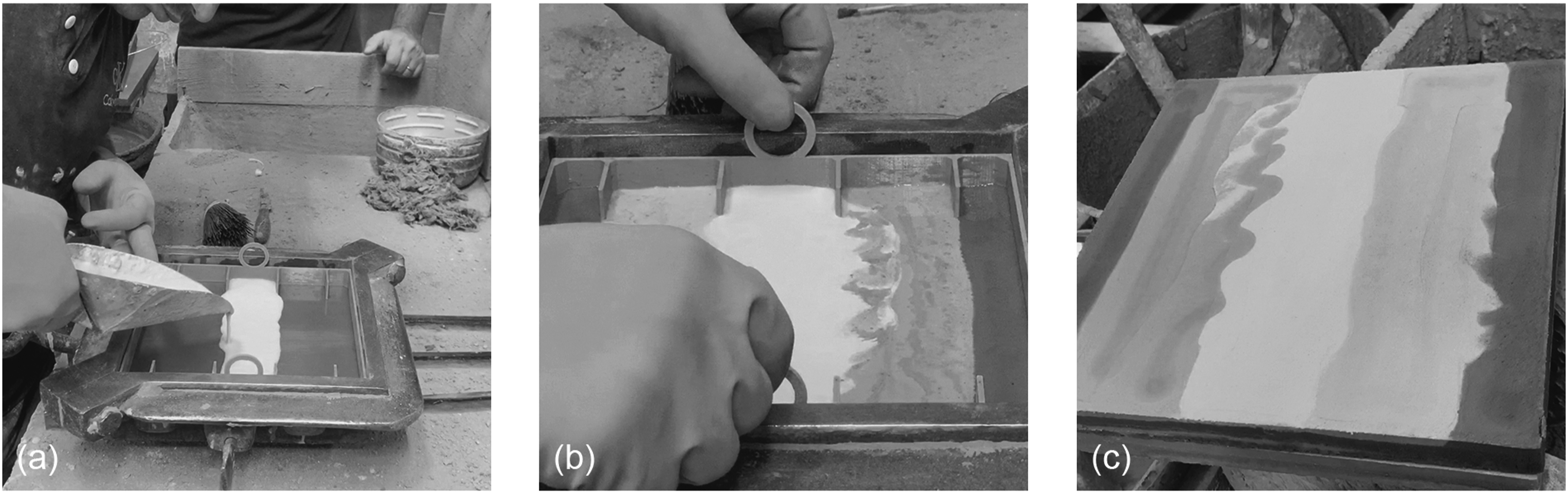
On the results of the tile graphics (Figure 12), we noted an expansion of the design space with the inclusion of the tile maker as a creative agent in the making process compared to traditional cement tiles, where chromatic palette is the only composition parameter. Both the Orgânico and Camadas models presented solutions for creating tile diversity with a single mold, relying on the creative input of the tile maker to operate this diversity through the geometries and color compositions encapsulated in the tile design. However, this diversity in the Orgânico model comes at a higher cost per tile, resulting from the increase in time it takes for the tile maker to fill all the spaces with proper care (Figure 13). Beyond diversity, the Camadas model demonstrates how to encapsulate design rules within a typical production instrument that enhances the traces of the tile maker manual abilities (Figure 14), while the Traço model demonstrates that incorporating the inherent variability of tiles into the geometry can create an aesthetics of imperfection and tolerance (Figure 15), where even if the setter makes a mistake through the process, the composition still works and can be appreciated. We also note how 3D printing expanded our geometric exploration space within the craft, allowing us to create a lot of elements inside the tile without worrying about the costs or feasibility of the mold. Having a highly decorated design—such as the Orgânico—or a simple mold—such as the Camadas—became irrelevant to the design decisions, allowing us to focus on other aspects that we wanted to achieve within each model. Front view of the cement tiles. (a) The Orgânico model, (b) the Camadas model, (c) the Traço model. Published with permission from Superlimão. Production of the Orgânico model, (a) filling the dots; (b) filling the background; (c) the whole front layer finished. Figure (b) is modified from the Homo Faber 3.0: Appropriations of Digital Fabrication from Latin America catalog.
26
Early prototype of the Camadas model, (a) filling the first layer; (b) removing the mold; (c) the finished tile. Detail of the Traço model showing the connection between tiles.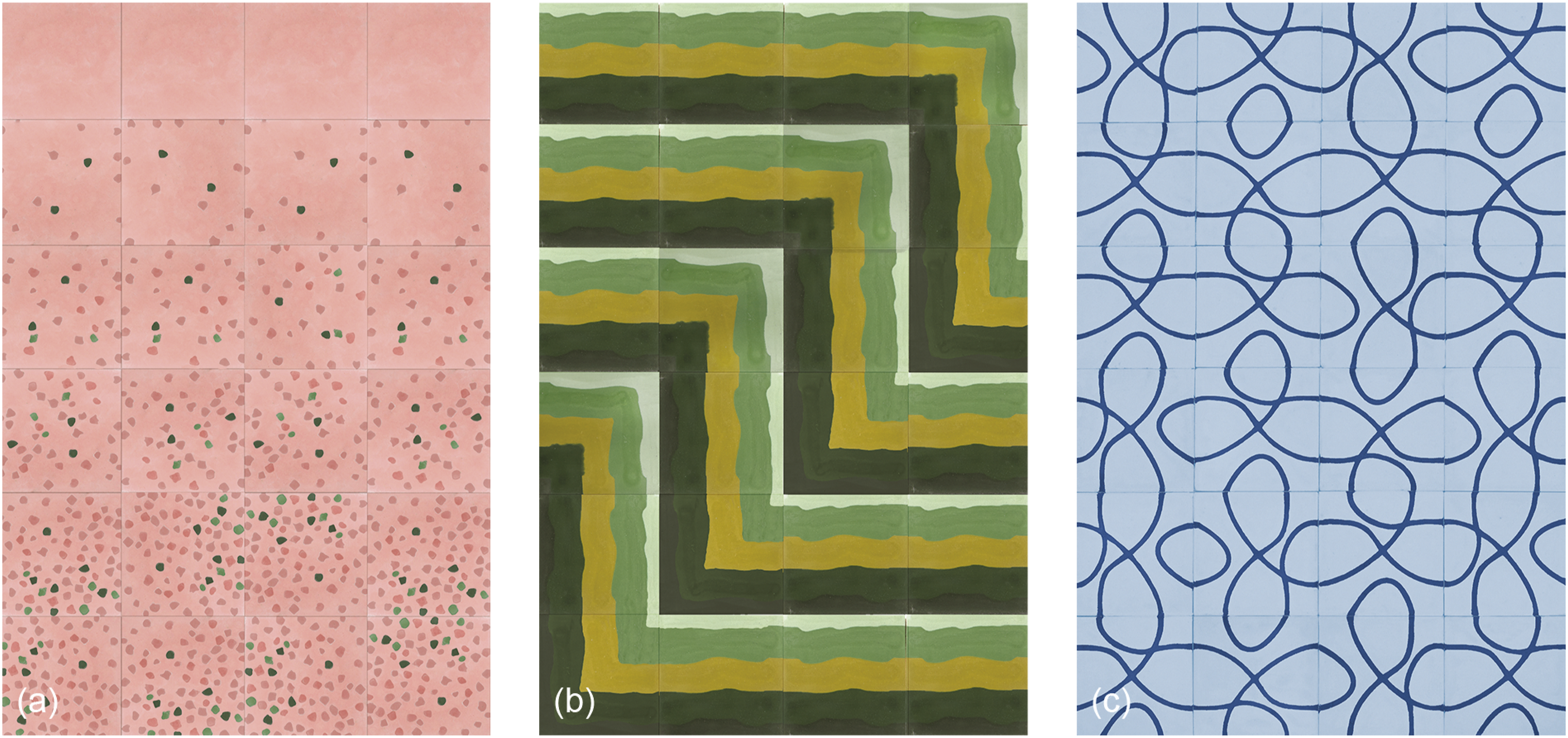
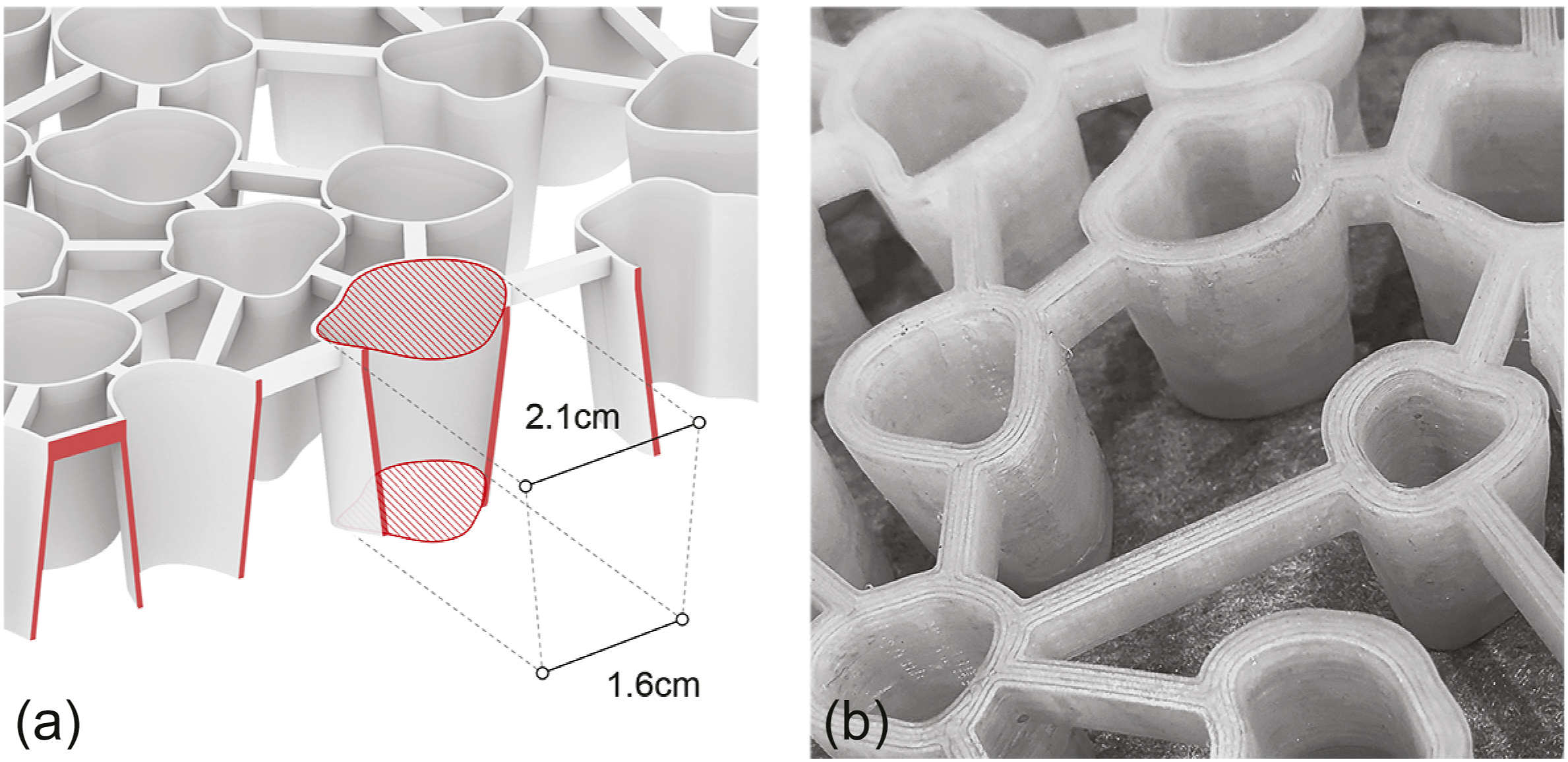
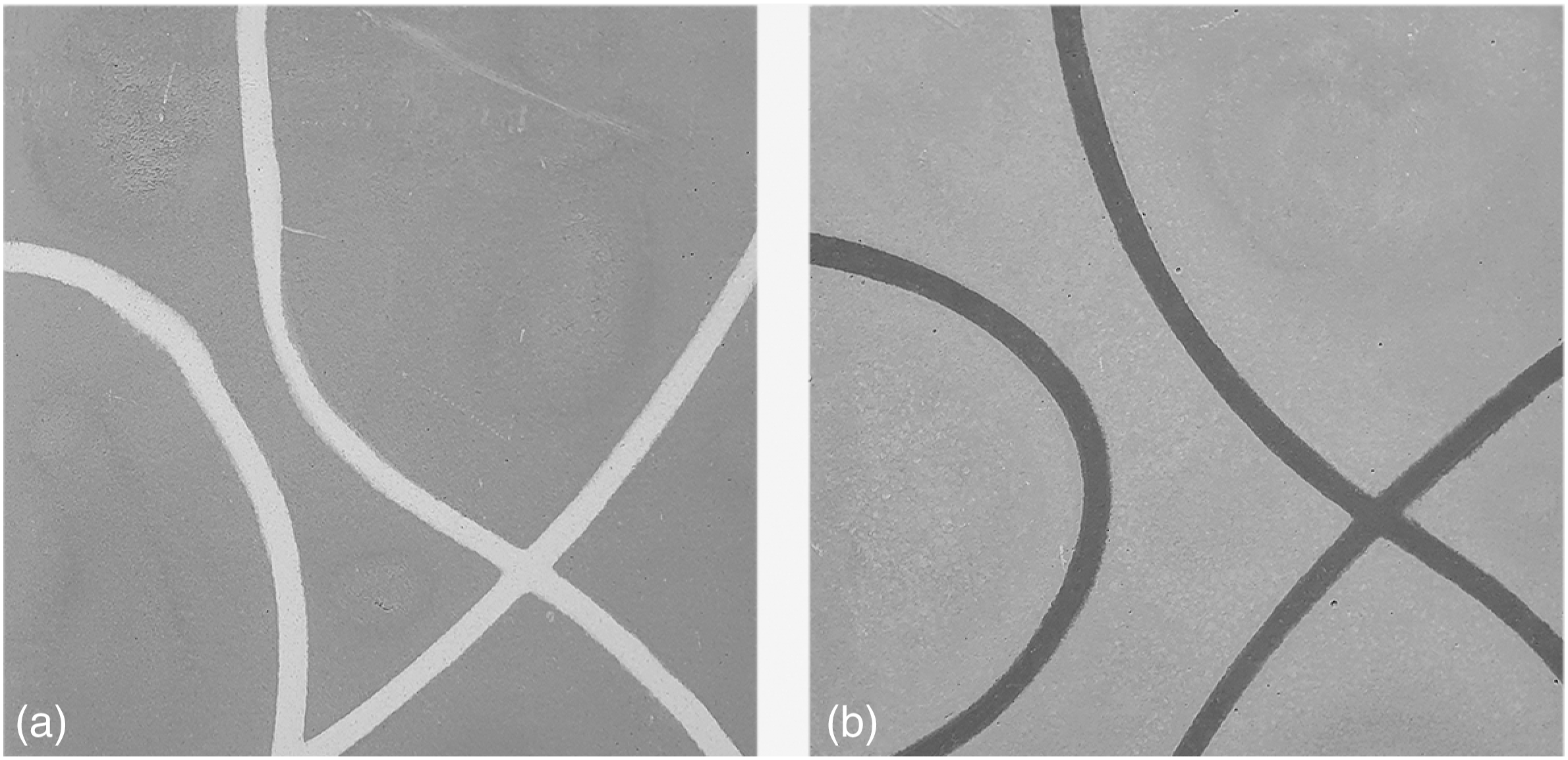
On the exchange of knowledge between the researchers and the tile makers, we observed that working within the existing production instruments instead of adding a new tool to the process made it easy for them to understand how to operate our design intentions and to gather their contributions to the improvement of the molds. Figures 16–18 show the 3D models of each tile mold. In the Orgânico model, for example, we adjusted the tile mold to include funneled surfaces in the dots, creating larger openings for cement at the top to make it easier for the tile maker to fill them efficiently (Figure 19). These funneled surfaces were only possible due to the capabilities of 3D printing, given that other fabrication processes available for complex surfaces, like casting, would be cost-prohibitive for our iterative process. The tile makers also learned how the 3D printed molds differed from brass molds, most significantly in the wall thickness, and adjusted their production process to guarantee the design quality, particularly in how they started to remove the mold with increased care. Within the iteration processes, we found that a 2 mm wall was the minimum for 3D printing less structured molds (like the Camadas and Traço), which is four times thicker than brass molds. This limitation compelled adjustments on the Traço mold to include a central bracing element to improve the grip of the tile maker and reduce damage to the thin lines. Nevertheless, as soon as the first orders came, the tile makers requested a brass mold for this model, as they mentioned that they needed it to be “more like a knife” to guarantee productivity. Figure 20(a) shows a Traço tile made with our 3D printed mold and (b) a tile made with a brass mold, highlighting the differences in precision that occur when mass producing it. The 3D model for the Orgânico mold. The 3D model for the Camadas mold. The 3D model for the Traço mold. Detail of the Orgânico mold, highlighting the funneled surfaces. (a) Diagram with top and bottom dimensions of the funnel, (b) detail of the 3D printed mold. Figure (b) is modified from the Homo Faber 3.0: Appropriations of Digital Fabrication from Latin America catalog.
26
Detail of the Traço tile, highlighting the difference in result between molds. (a) Tile made with a 3D printed mold, (b) tile made with a brass mold.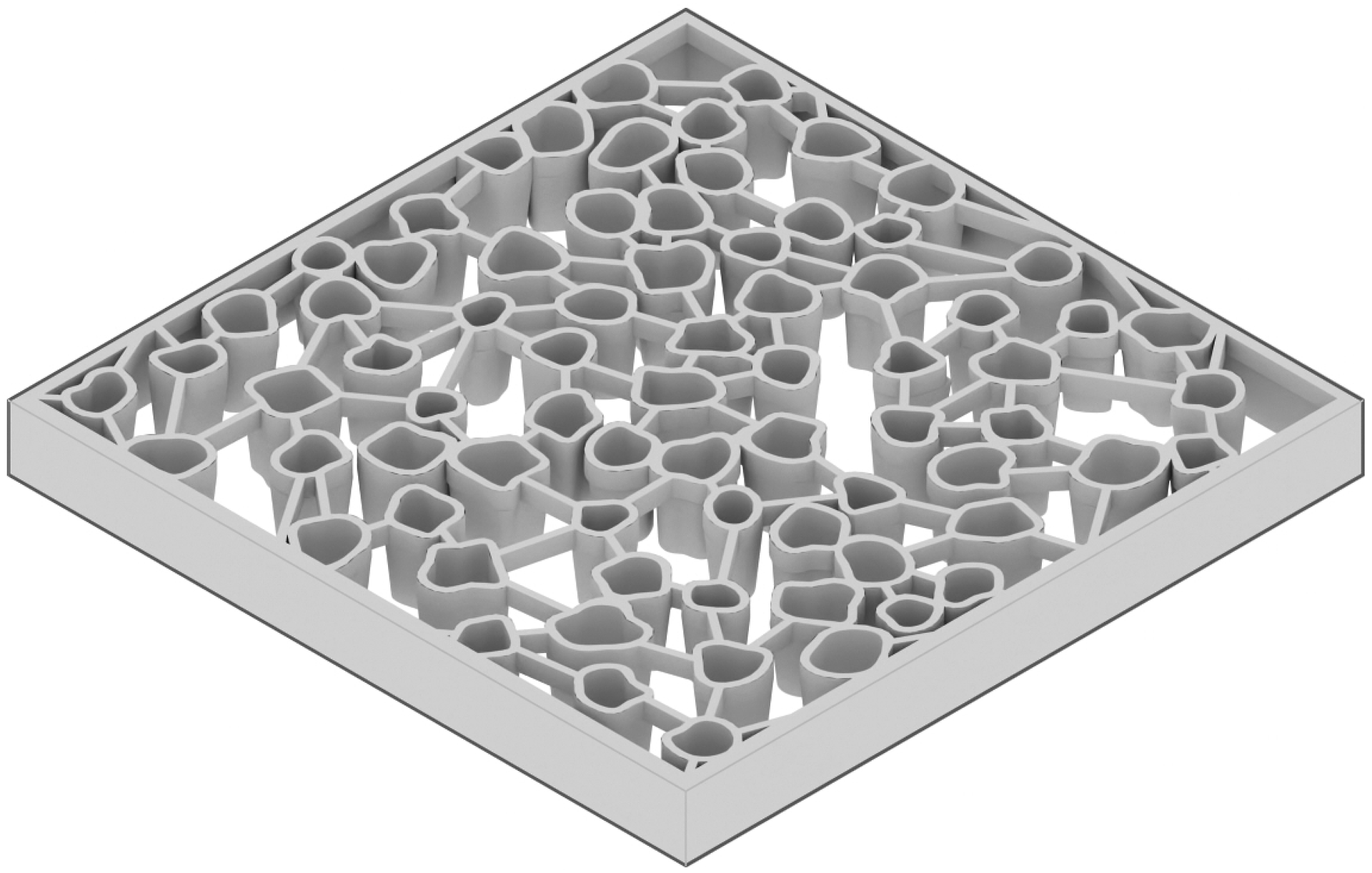
On the tile makers perception of creative agency, both Eduardo and Nino defined their creative role not concerning the intellectual work invested in the design decisions they made when operating our encapsulated strategies but in terms of every decision that happens throughout the process, from the preparation of pigments to the tile pressing. “Focus” is a word that was constantly mentioned by both as the prerequisite for a good tile. And what we first assumed as a limitation in their agency, they saw as an inherent part of tile making, where the joy of crafting a tile comes from seeing the final result and delivering a good product, regardless of the constrainment level of the design. In this sense, we understand that while our concept of creative collaborations was achieved in the prototyping cycles we did with them, its scalability was constrained by our own perceptions of how design and making works, failing to communicate with the tile makers within the same terms.
Specifically about our tiles, they highlighted that the Orgânico model is more labor-intensive, but the Camadas model requires more attention to details, as pressing it too hard might cause the stripes to merge improperly. They also mentioned how, when mass producing the Orgânico, they rarely change the order or position of colored dots because it would differ from what the client saw in the catalog, making their first prototypes the templates for mass production. When expanding on this topic, they talked in terms of their position as artisans serving their clients and how productivity is an important factor in this craft, something that resonates with the inherited culture of a craft that is done in the environment and setup of a factory. Evaluating whether that is good or bad goes beyond the scope of this work, but it demonstrates some of the limitations posed by social roles and perceived hierarchy when collaborating in the design professions. In this sense, we recognize that a previous ethnographic study of the practice to go beyond the technical aspects of tile making could have improved the impact of our encapsulated instruments and our collaboration strategies.
From the perspective of the factory owner, implementing 3D-printed molds was a welcoming innovation, as he sees it as an opportunity to improve the development of new tile graphics by lowering the initial costs to create a design collection. Consequently, it becomes easier to include younger designers in the process and to perpetuate the cement tile regained relevance. And while this subject is beyond the scope of this work, we also note how the factory and the tile makers constantly cares about the transmission of knowledge to younger generations, with Nino mentioning how he already included his brother and cousin to the craft, Eduardo talking about how he incentivizes younger workers to challenge themselves by making highly decorated tiles (something that demands a lot of skill, care, and focus), and Divo talking how the cement tile survivability depends on this constant process of introducing younger generations to the craft.
Conclusion
This paper demonstrates, through a case study on the design of cement tiles, that encapsulation can be a useful technique to establish creative collaborations between computational designers and craftsmen, enabling them to operate computational knowledge without disrupting their typical modes of production or introducing digital tools in the process. However, it is also clear that disrupting engagement and hierarchy in traditional crafts is a complex endeavor, and our work demonstrates that the encapsulated tools by themselves were insufficient to alter the craftsman role in the process within its full potential.
The three models of tiles presented (Orgânico, Camadas, and Traço) have embedded in their systems methods to enable creative decisions by the craftsman while simultaneously operating computational design concepts, such as customization, without relying on their mastery of digital tools, expanding the design space of the craft. Using additive manufacturing techniques, such as FDM 3D printing, also increased the geometrical possibilities of the tiles while reducing the overall cost of prototyping in comparison to the traditional methods of mold making, appropriating digital technologies in a low-technology production environment and reducing the barriers to entry for younger designers interested in creating new tile graphics. The results of these systems, already used in different architectural projects (Figure 21), highlight the potential of deploying technological frameworks within a contextualized understanding of their applications and the advantages of expanding creative collaborations beyond the technical and intellectual fields of design by including the traditional expertise of local production agents to create artifacts that have cultural and material significance. Projects with the tiles installed. (a) The Orgânico model, (b) the Camadas model, (c) digital simulation for the Traço model. Figure (a) is modified from the Homo Faber 3.0: Appropriations of Digital Fabrication from Latin America catalog,
26
(b) and (c) are published with permission from Superlimão.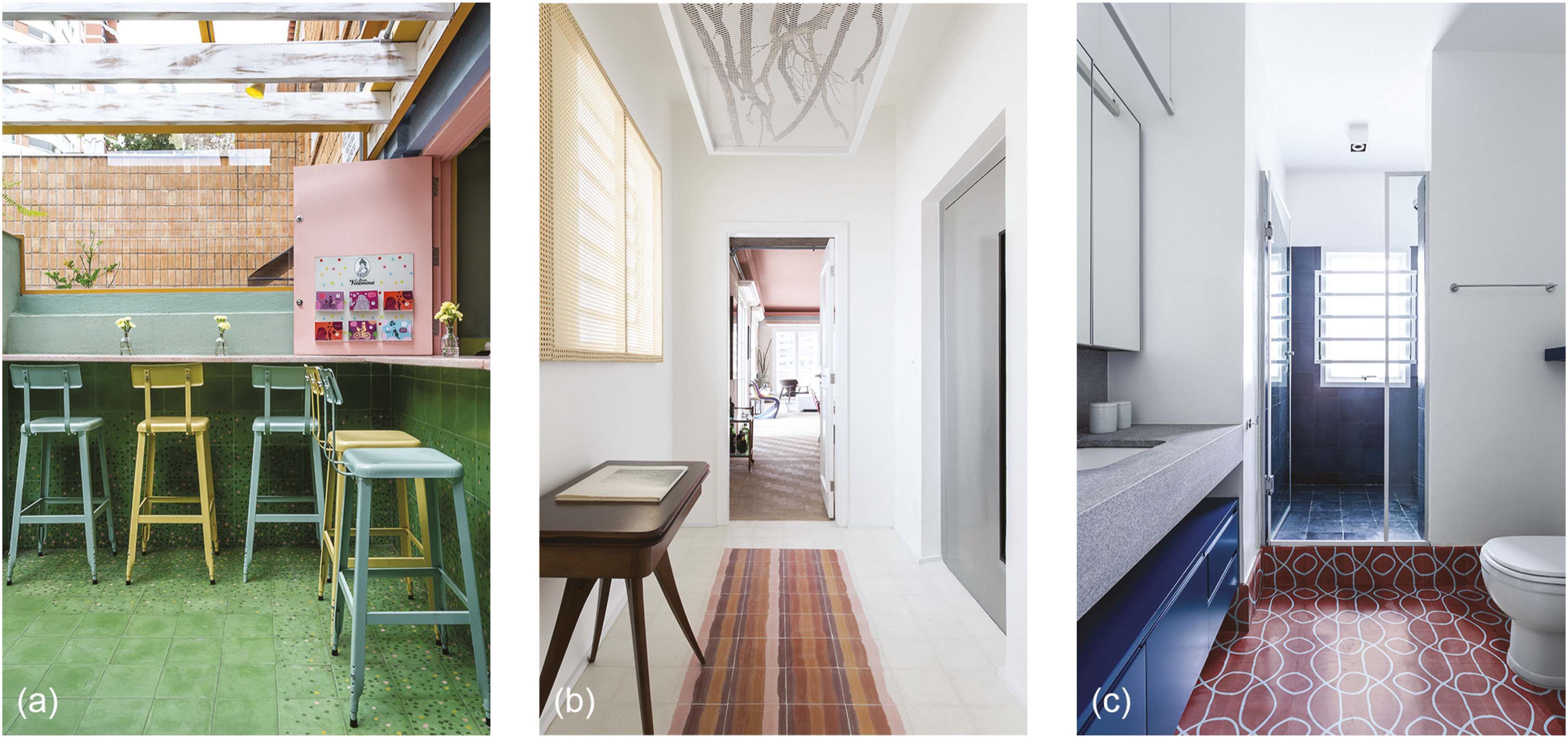
On the other hand, the interview with the tile makers showed that we failed to communicate with them on the same understanding of what creativity or creative decision means and that the environment where the craft takes place inherits hierarchical relationships and productivity metrics that disincentivizes an horizontal relationship between craftsmen and architects. This result indicates that developing an ethnographic study of the practice before the design of the encapsulated instruments was a necessary step to increase its effectiveness, recognize existing limitations, and sustain the design agendas and strategies they embed.
Nevertheless, our work provokes new research questions related to the proposed approach. Given the inherent limitations of the cement tile, such as its size and bidimensionality, we consider that future works related to the encapsulation of creative collaborations can include its application in three-dimensional objects (i.e., wood panels), large-scale systems (i.e., facades), and any other architectural element that benefits from craftsmanship expertise. We also consider it possible to expand this approach of making encapsulated instruments to how we design buildings, especially in contexts where the self-building of houses plays a significant role. Would encapsulated instruments be a better way to distribute design knowledge and democratization? What kind of knowledge we want to distribute, and what instruments could encapsulate the operation of this knowledge? To what extent can computational design theories be brought to the front without the operation of digital tools? Bringing to light these discussions inevitably opens the opportunity for theories of digital architecture to increasingly accommodate regional disparities and effectively tackle the global challenges of our age.
Footnotes
Acknowledgements
The authors would like to thank Lula Gouveia, Thiago Rodrigues, Vitor Curti, Marina Brant, and Fernando Ferrari for their contribution at different stages of the design process of our tiles collections; Dalle Piagge Ladrilhos Hidráulicos for their ongoing partnership with Superlimão in the development of this research; Luiz V. F. de Mello Filho and Lia Corazza for insightful comments on the results of this paper; Divo, Eduardo and Nino for sharing their vast knowledge on cement tiles with us; and the Homo Faber 3.0: Appropriations of Digital Fabrication from Latin America curators, for seeing value in our work as something worth of being shared and discussed with the CAAD community.
Declaration of conflicting interests
The author(s) declared no potential conflicts of interest with respect to the research, authorship, and/or publication of this article.
Funding
The author(s) received no financial support for the research, authorship, and/or publication of this article.
