




Abstract
Latvia’s adult education system, established in 1997, has evolved into a comprehensive strategy for lifelong learning. The Lifelong Learning Policy Framework 2007–2013 aimed to institutionalise adult education, focusing on competencies acquired through everyday learning (informal, formal, and non-formal education). The Latvian long-term development strategy 2030 implementation monitoring report in 2012 highlighted the need for future human capital development, which is crucial for building a modern and globally competitive Latvian adult learning policy. Despite lagging behind the EU average, Latvia is showing a steady increase in adult participation, with one in ten adults participating in learning and the share of adults participating in learning doubling in 2022 compared to 2014. The OECD project ‘Supporting Employers to Promote Skills Development in Latvia’ and the European Commission Technical Support projects have developed in 2021–2023 proposals for an ecosystem of support measures for employers to promote employee training. The projects assessed the current situation in Latvia, development trends, and experiences of other countries, while also considering the views of social and cooperation partners, and industry representatives. The paper appears at Latvia’s shift from institutionalised adult education to ecosystems for lifelong learning, highlighting both the opportunities and challenges that are currently faced.
Keywords
Introduction
The adult education system in Latvia was initially developed in the 1920s and 1930s as a second-chance education for adults who couldn’t attain compulsory primary and lower secondary education due to social, economic, or health reasons. Local governments established supplementary schools, folk schools, and higher education institutions to provide opportunities for formal second-chance education. The Adult Education Association (AEA) was founded to actively participate in developing the ‘Law on Adult Education’ in 1932, which required mandatory opening of adult schools in towns and populated centres with state or local government financing. A draft law on adult schools was also introduced during the educational reform of 1932 (EduMAP, 2017).
During the Soviet period (1946–1988), schools for workers and peasants were established, later known as ‘Evening schools for all adults’. Higher education was also considered adult education, and the ‘Research Institute of Adult General Education’ existed (Koķe, 1999, 2005).
Latvia’s adult education system, established in 1997, has evolved into a comprehensive approach to lifelong learning. From 2003 to 2007, Adult Education (AE) served as a foundation for lifelong learning in country, with well-established and publicly funded regional adult education centres, evening schools, and folk’s high schools (Kārkliņa & Papule, 2017). However, the 2008 economic crisis led to the closure of these centres and the opening of evening classes at mainstream schools. Currently, country is shifting towards ‘education for adults’, focusing on formal, non-formal, and informal learning for adults, benefiting learners, employers, and the wider community (European Commission, 2024). Opportunities for young vulnerable adults (Pata et al., 2021) include on-the-job training, second-chance education, and validation of informal education and competences (Cabinet of Ministers of the Republic of Latvia, 2012).
The Lifelong Learning Policy Guidelines 2007–2013 outline the institutionalisation of adult learning, emphasising skills acquired through non-formal, formal, and informal learning (Cabinet of Ministers of the Republic of Latvia, 2007). A state ‘Programme on Lifelong Learning 2008–2013’ was adopted during this period (Cabinet of Ministers of the Republic Latvia, 2008). It guaranteed the financing and coordination of adult education from the state budget and increased opportunities for adults to access non-formal education. Several regional adult education centres were created with financial support from the state and municipalities. There was also support for non-governmental organisations that offered new possibilities for non-formal education. However, between 2008 and 2011, the adult education system stagnated due to cuts in public funding during the economic crisis. This resulted in the closing of adult education centres and evening schools and stimulated the opening of evening classes on the premises of general and vocational schools (Maslo & Fernandez Gonzalezs, 2015). The adult education system became fragmented because of the absence of coordination. Steps are being taken to overcome the fragmentation and overall inefficiency of the adult learning system in country. An Adult Education Governance Model Implementation Plan for 2016–2020 was adopted by the government on 3 May 2016. The Governance Model aimed to develop and implement an improved LLL strategy for the country (Cabinet of Ministers of the Republic of Latvia, 2016).
Opportunities and challenges of transitioning from an institutionalised adult education system towards ecosystems of lifelong learning in country are analysed ‘towards the shift in policy framework for International Development from Global North-South Divide (1970–2015) to Sustainability (2015 onwards)’ (Singh, 2020) in this paper.
Guided by Singh and Ehlers’s (2019) statement on the necessity to shift from adult education in LLL contexts to a broader view beyond the boundaries of institutionalisation to adult learning ecosystems, which are flexible and inclusive, challenges and opportunities facing the country in this transformation will be reflected in this paper. Drawn from the original theoretical framework, the methodology of analysis of challenges and opportunities of the policy transformation towards the lifelong ecosystem will be explained, and analytical findings presented. Finally, the limitation of the transformational changes and further lifelong learning development demands, as well as the practical and policy implications of the current study results, will be discussed and conclusions drafted.
Theoretical Framework
The institutionalisation of lifelong learning is a continuous process that builds a lifelong learning system throughout society. Lifelong learning is not a deductive phenomenon but rather creates self-territories through repetition and conceptualisation. Understanding lifelong learning requires observing historical, cultural, and political events and capturing emergent patterns and expansion processes (Han, 2023). In the Latvian context, it is an institutional system that offers education for children and adults (schools, LLL centres, universities, private traders, etc.).
Institutionalisation of education offers advantages, but it also has vices such as gratification for those involved, systematic exclusion, and learning poverty. To move towards a new architecture that supports learning, it is crucial to consider cutting costs and making it accessible for everyone, regardless of institutionalisation. Transitioning to a learning regime can extend opportunities to adult learners with limited resources, and tools like prior learning recognition and validation can help (Singh, 2024). However, Singh’s studies show that institutionalisation can act as a barrier against learning and negatively impact inclusion, social emancipation, and social justice, especially when profit-making dominates. The dichotomy between the duty to learn and the right to education is therefore not always supported by facts worldwide, despite its theoretical appeal. In contrast to learning systems, which can be formal and structured and therefore exclusive to those who fit into them, the advocacy for the right to LLL calls for the exact opposite. ‘It represents a broader view beyond the boundaries of institutionalisation, i.e., beyond education, and tends to include learning across disciplines, in all forms, contexts, and settings in learning ecosystems, which are flexible and inclusive’ (Singh & Ehlers, 2019, p. 55–56).
A comprehensive literature review of over 70 academic papers and other sources, produced mostly between 2016 and 2022, has informed the development of learning ecosystem frameworks that identify key factors enabling the development of effective learning ecosystems. One of them is ‘policies and plans at the national and local level that support effective learning within and across various learning environments’ (Economist impact, 2022, p. 3). One of the findings of this research points to a lack of holistic action to support the learning of people globally. The newest literature review states that the contributions of smart education to lifelong learning from the perspective of learning ecology establish a foundation to emphasise the importance of developing resilient capacities (Rodríguez et al., 2025) in the post-digital era (Gratani et al., 2023). This necessitates the transformation of institutionalised lifelong learning to lifelong learning ecology systems through smart education for smart human lifelong learning capability as the key to a sustainable economic, political, social, and environmental future (Cairns & Malloch, 2024; Maslo, 2021) and the capacity to flourish in complexity (OECD, 2024) to transform society and shape the future for better lives ‘creating new value, reconciling tensions and dilemmas, and taking responsibility’ (OECD, 2019a, p. 4).
At the national, regional, and local levels, governments can significantly support sustainable development (UNESCO, 2025) of lifelong learning ecology systems towards a Holistic Wisdom Model (Kallio et al., 2025). Following a number of important international publications providing the theoretical underpinning, strong examples of learning ecosystems in practice, and a growing evidence base on their impact, policymakers are beginning to see the potential of this approach to address the challenges and opportunities of equitable and inclusive education. Pipelines, pathways, and ecosystems metaphors as paradigms of participation represent an interconnected set of notions of empowerment for policies change: The pipeline paradigm is most appropriate when we need to emphasize the ways in which participants are acted upon by a surrounding system and have little agency to change their course. The pathway paradigm is most appropriate when we need to emphasize the multiple ways in which participants can navigate a system, either by choice or by influences external to themselves. And the ecosystem paradigm is most appropriate when we need to emphasize the ways in which participants interact within a surrounding system. (Lee, 2019)
Conceptual and Analytical Categories of Transformation of LLL ‘From Its Institutionalisation to an Ecosystem of LLL’
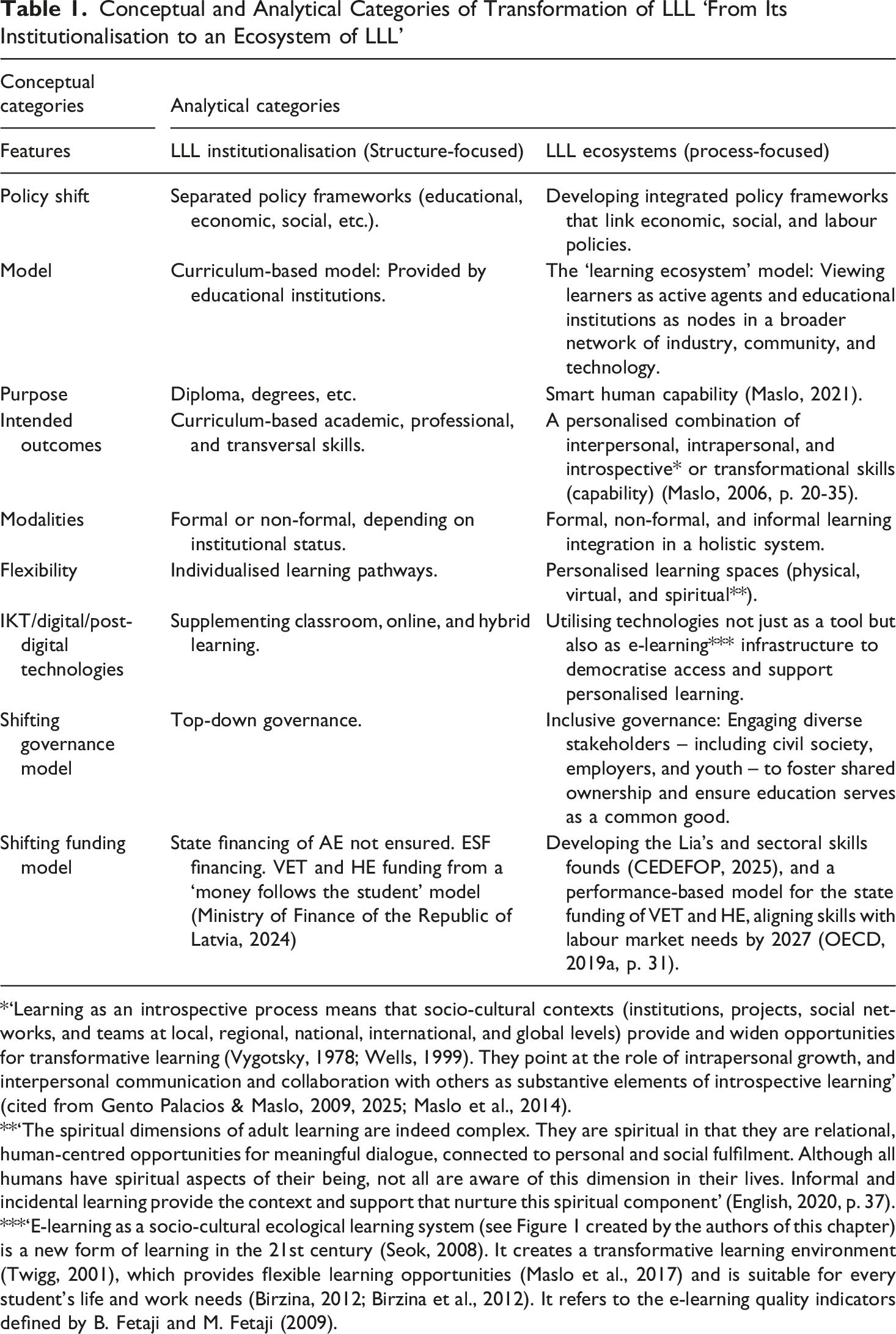
*‘Learning as an introspective process means that socio-cultural contexts (institutions, projects, social networks, and teams at local, regional, national, international, and global levels) provide and widen opportunities for transformative learning (Vygotsky, 1978; Wells, 1999). They point at the role of intrapersonal growth, and interpersonal communication and collaboration with others as substantive elements of introspective learning’ (cited from Gento Palacios & Maslo, 2009, 2025; Maslo et al., 2014).
**‘The spiritual dimensions of adult learning are indeed complex. They are spiritual in that they are relational, human-centred opportunities for meaningful dialogue, connected to personal and social fulfilment. Although all humans have spiritual aspects of their being, not all are aware of this dimension in their lives. Informal and incidental learning provide the context and support that nurture this spiritual component’ (English, 2020, p. 37).
***‘E-learning as a socio-cultural ecological learning system (see Figure 1 created by the authors of this chapter) is a new form of learning in the 21st century (Seok, 2008). It creates a transformative learning environment (Twigg, 2001), which provides flexible learning opportunities (Maslo et al., 2017) and is suitable for every student’s life and work needs (Birzina, 2012; Birzina et al., 2012). It refers to the e-learning quality indicators defined by B. Fetaji and M. Fetaji (2009).
Since learning is often considered an essential component of a transitional period or liminality (Evans, 2023), the concept of liminality can be interpreted through the lens of challenges and opportunities studies as a fertile, emergent, and powerful stage where ordinary life or social states are disrupted – periods of time where transformation and transition can take place. Therefore he research questions raised in this paper are:
(1) What challenges in the transformation of LLL from its institutionalisation to the LLL ecosystem did the country face in the time span from 2015 to 2022, and how were these transformed into new opportunities? (2) What challenges in the transformation of LLL from its institutionalisation to the LLL ecosystem does the country face currently (2023 to 2025), and how are these transformed into new opportunities?
Methodology
From 2016 to 2025, the author served as one of 28 independent national experts in adult education and adult skills networks, which were established by the ECORYS and the ICF for the European Commission's Directorate-General for Employment, Social Affairs and Inclusion. During this period, an analysis of adult learning across European countries was conducted to support the transformation of European adult education policies. The selected national sources have been mapped (Wilson et al., 2016) into discrete building blocks. The linkages between adult learning outcomes and system features, particularly participation, were studied in relation to the system as investments in training. The relationships of the outputs themselves, such as outcomes and benefits, both social and economic, for individuals and the community; and the relationship of the adult learning outputs and outcomes to specific policy actions are the main characteristics of the effectiveness of adult learning systems identified in this earlier study (Maslo, 2017, 2020). These building blocks were tested using evidence from country case studies, which were reviewed by high-level experts for consistency, quality, and clarity of expression, ensuring the reliability and validity of findings by applying the communicative validation (Call-Cummings, 2017).
The study presented in this paper aims to reflect the adult learning system’s future performance (Provost, 2021). A secondary analysis (Snyder, 2019), of publicly available data, mapped and retrieved from in-depth analytical studies of adult policy (European Commission, Directorate-General for Employment, Social Affairs and Inclusion, 2015), was conducted to select the newly acquired data (Mills et al., 2017) for the thematic analysis (Braun & Clarke, 2006). This analysis focused on evident challenges and opportunities of transitioning from an institutionalised adult education system to an ecosystem of lifelong learning of adults in the country.
Since the transformation of challenges into new opportunities is characterised on the one hand by limitations and on the other hand by a continuous performance process of the transformation of lifelong learning ecosystems, as mentioned in the theoretical framework, thus, changes should be seen as periods of transformation and transition. In the Latvian context, this appears to be the period 2015–2022 and 2023–2025, with one transition from challenges to new opportunities and the next from new challenges to new opportunities for transformation (Figure 1). Challenges–opportunities model of reflection on the transition from institutionalised adult education to lifelong learning ecosystems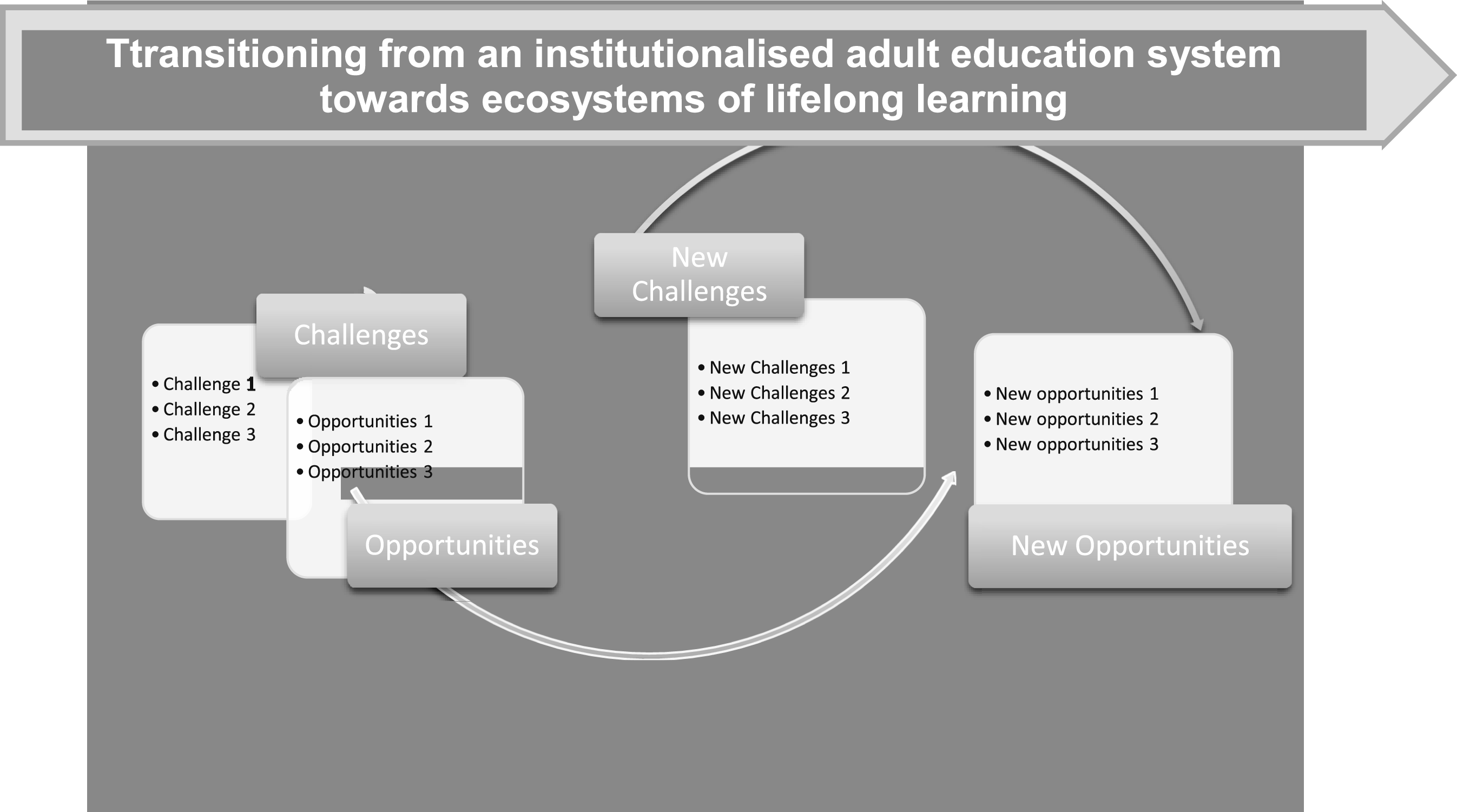
The institutionalised participation paradigm addresses the problems and aims at removing the barriers to enabling participation in adult education. The LLL ecosystem paradigm focuses on participation challenges and capacities (potentiality) to offer new opportunities for the learning capability (the power or ability to do something) of all adults. Considering that the participatory paradigm of LLL institutionalisation differs from the participatory paradigm of the LLL ecological system, the novel WPR (What’s the Problem Represented to be?) approach (Bacchi & Goodwin, 2016) to analysis was adapted to the research questions of the policy study – What are the challenges represented to be?
Therefore, a systematic review of well-documented written evidence (Grimshaw et al., 2003; Robinson et al., 2021) on the adult learning policies transition was conducted. Applying the WPR method to thematic analysis led to two certain categories/themes: ‘challenges in LLL of adults’ and ‘opportunities as provided by policy conditions to the learning of all adults’. Within the adapted-to-current study ‘What’s the Problem Represented to be?’ (WPR) framework, three interconnected types of effects have been analysed together to fully understand the implications (Riemann, 2023): What is left unchallenging in the represented challenge (opportunity needed)? How did that representation impact policies? How did that representation shape policies to provide new transformation opportunities? (Figure 2). The adapted-to-current study ‘What’s the Problem Represented to be?’ framework (WPR)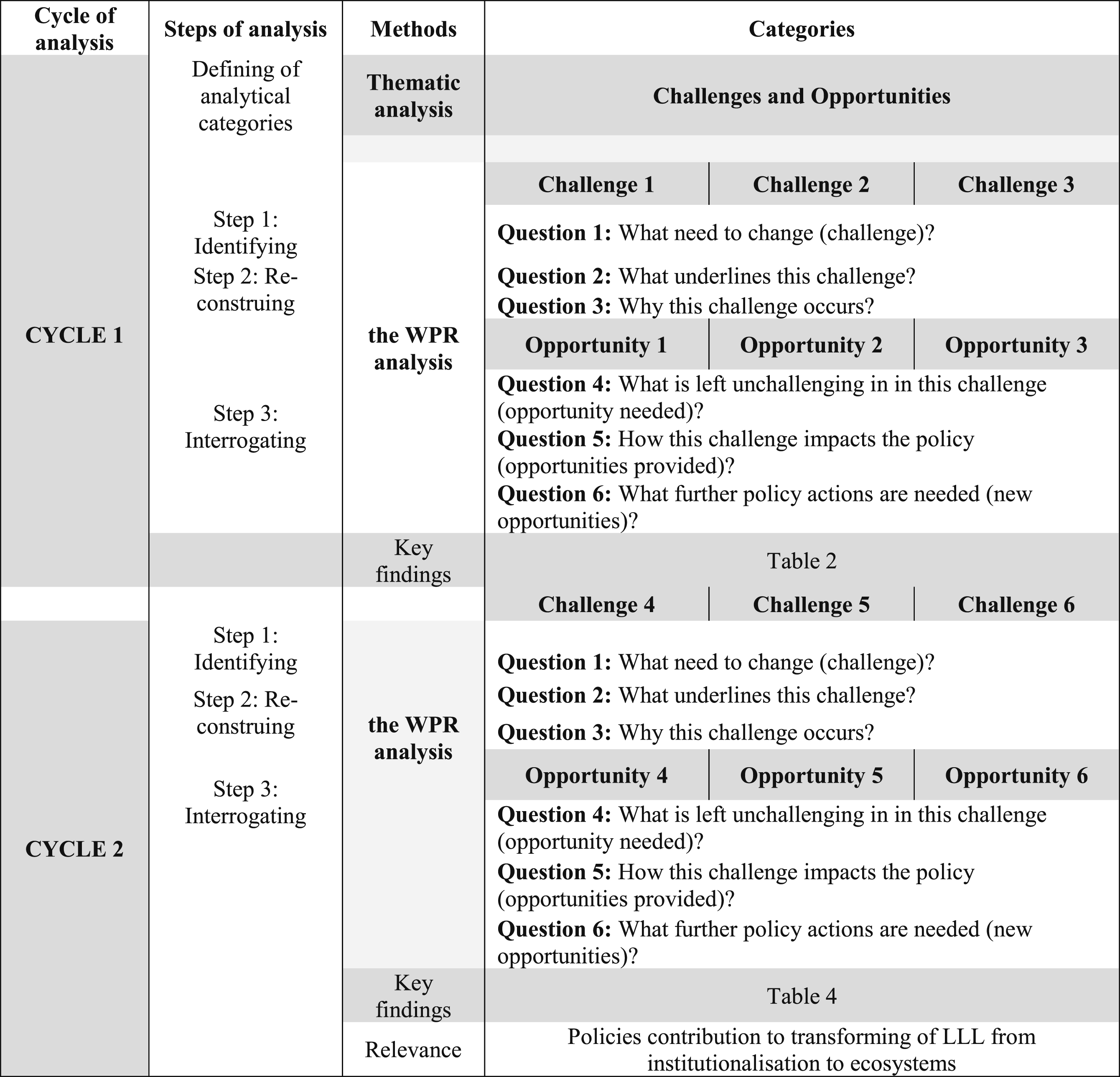
The next section will present the key challenges and opportunities for transforming these challenges into new opportunities for the transition of the LLL policy from an institutionalised adult education system towards ecosystems of lifelong learning, responding to the research questions.
Findings
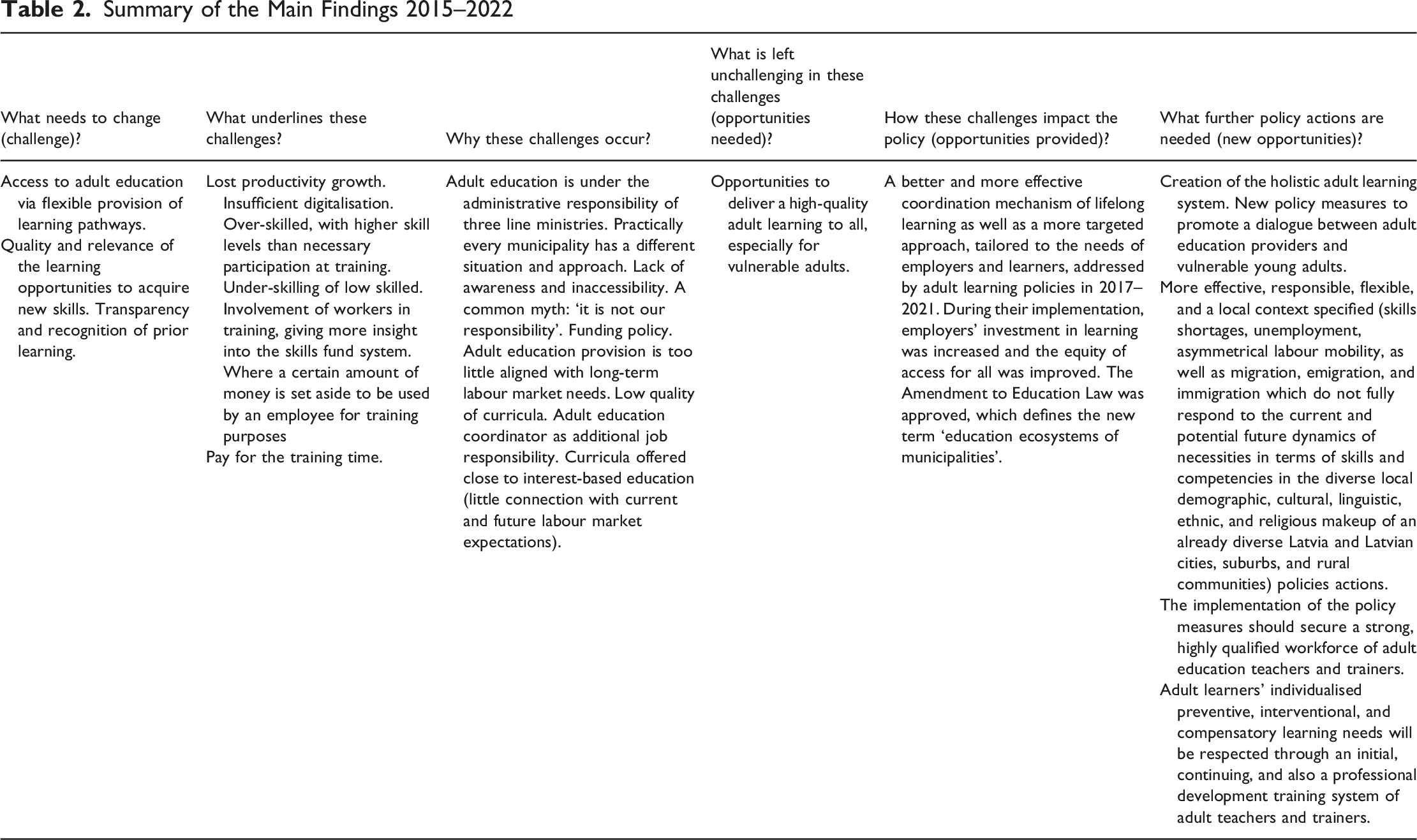
Summary of the Main Findings 2015–2022
What Challenges in the Transformation of LLL From Its Institutionalisation to the LLL Ecosystem did the Country Face in the Time Span From 2015 to 2022, and How Were These Transformed Into New Opportunities?
What Needs to Change (Challenges)?
A rise in adult learning engagement faced four major challenges from 2015 to 2022, each of equal importance. They related to access to adult education via flexible provision of learning pathways, quality and relevance of the learning opportunities to acquire new skills, and transparency and recognition of those.
Access to adult education via flexible provision of learning pathways (Challenge 1). Flexible working arrangements, including teleworking, became the new normal during the pandemic: In June, one fifth (20.9%) of employees worked remotely from home, but 79.1% did not. The highest number of online workers was in the age group 15–34 (31.2%), slightly less (27.0%) - in the age group 45–54. Almost half (47.5%) of all online workers in June were employed in the trade and services sector. Slightly fewer (46.2%) employees worked in the other services sector. Senior specialists worked most often online (42.7%). 63.7% of employees working remotely worked full-time in June, 18.3% - regularly 3-5 days a week, 7.8% - regularly 1-2 days a week. 5.2% of employees worked remotely a few days a month, but 5.0% - regularly part-time or a few hours. (ir.lv, 2020, p. n/a)
Micro-qualifications as measures for providing access to adult learning were successfully used in country’s higher education and professional education, but their quality assurance in non-formal education remained variable (Līce, 2021).
Quality and relevance of the learning opportunities to acquire new skills (Challenge 2). In country, a competence-based approach that spans several subjects integrates learning for sustainability (LfS) into the curriculum. The United Nations Sustainable Development Goal 4 – ensuring that all students gain the knowledge and skills necessary to advance sustainable development – is linked to country’s educational policy goals through the Education Development Guidelines for 2021–2027 ‘Future Skills for Future Society’ (Cabinet of Ministers of the Republic of Latvia, 2021) initiative. Languages, art, people and society, and an introduction to science and technology are among the subjects covered in the required curriculum. Though the degree to which this occurs varies from teacher to teacher, these subjects have the potential to integrate sustainability concepts across a variety of disciplines. All things considered, country’s dedication to giving students an education that equips them for the challenges of sustainable development is reflected in the curriculum’s incorporation of sustainability.
Any future skills will be needed by reaching out to everyone and including people from all walks of life in lifelong learning and by reminding businesses that providing training and quality non-formal education for employees is a major investment in the development of their business. Not only are 21st-century skills needed, but also skills and competences specific to Latvia, defining workplace learning as an investment, not forgetting the self-employed. Competitiveness skills development requires different levels, including those developed in other countries, which could be developed and recognised (Baiba Bašķere, Deputy Director of the Department of Vocational and Adult Education of the Ministry of Education and Science in EPALE, 2019, p. n/a).
Transparency and recognition of skills (Challenge 3). Ensuring the transparency and recognition of adult skills (basic, transformative, etc.) obtained through informal and non-formal learning was stated as challenging (Maslo, 2021; Maslo & McGinley, 2017; Pata et al., 2021).
What Underlines These Challenges?
The mismatch in skills required by the EU is responsible for 2% of lost productivity growth, 90% of which is due to insufficient digitalisation. If workers are over-skilled, with higher skill levels than necessary, the loss is even higher than with under-skilling. However, we have a higher level of positive experience than the EU average. Linda Romele talked about the involvement of workers in training, giving more insight into the Skills Fund system, where a certain amount of money is set aside to be used by an employee for training purposes over a certain period of time. You must pay for the training time (Expert of the Latvian Free Trade Union Confederation on Education and Employment Linda Romele in EPALE, 2019, p. n/a).
Why These Challenges Occur?
The most important barriers to engaging in adult education are access to funding, time availability, and family responsibilities (Maslo & Fernandez Gonzalezs, 2015). Adult education is under the administrative responsibility of three line ministries. Practically every municipality has a different situation and approach. Lack of awareness and inaccessibility. A common myth: ‘it is not our responsibility’. Funding policy. Adult education provision is too little aligned with long-term labour market needs. Low quality of curricula. Adult education coordinator as additional job responsibility. Curricula offered close to interest-based education (little connection with current and future labour market expectations). (EPALE, 2020, p. n/a)
What Is Left Unchallenging in These Challenges (Opportunities Needed)?
Opportunities to deliver a high-quality adult learning to all, especially for vulnerable adults.
How These Challenges Impact the Policy (Opportunities Provided)?
The key challenges identified for adult learning were being more or less appropriately addressed by the existing policy framework: During 2016-2019, Latvia continuously progressed in overcoming the identified challenges in adult learning. A better and more effective coordination mechanism of lifelong learning as well as a more targeted approach tailored to the needs of employers and learners were addressed by adult learning policies in 2017-2021. During their implementation, employers’ investment in learning was increased and the equity of access for all was improved. (Maslo, 2020, p. 2)
The country’s policy documents developed over the last 3 years 1 of this period take into account the EU priorities to increase adult learning participation and address the challenges identified.
What Further Policy Actions Are Needed (New Opportunities)?
Specific policy actions must be planned ahead of time from a long-term, sustainable perspective (including funding), taking into account not only the present needs but also the upcoming challenges and demands of adult learners. The new challenges in creation of the holistic adult learning system, emerged between 2019–2020, remain new policy measures which should promote a dialogue between adult education providers and vulnerable young adults more effective, responsible, flexible and a local context specified (skills shortages, unemployment, asymmetrical labour mobility, as well as migration, emigration and immigration which do not fully respond to the current and potential future dynamics of necessities in terms of skills and competencies in the diverse local demographic, cultural, linguistic, ethnic and religious makeup of an already diverse Latvia and Latvian cities, suburbs and rural communities. (Romele in EPALE, 2019, p. n/a) The implementation of the policy measures included in policy documents covers the implementation gaps for creating an internationally recognised adult learning system (for formal, non-formal, and informal learning). It should also secure a strong, highly qualified workforce of adult education teachers and trainers. Adult learners’ individualised preventive, interventional, and compensatory learning needs will be respected through an initial, continuing, and also a professional development training system of adult teachers and trainers. (Maslo, 2017). Nearly 80% of teachers would like to receive training in sustainability issues, and only 34.5% have access to appropriate teaching materials. (Vasilevska & Geske, 2020). Adult teacher and trainer demographic profiles by type of learning provided in formal and non-formal adult education and training across all country’s geographical regions and geographical areas affected by teacher shortages should be made available. (Strode et al., 2022).
The European Commission Technical Support projects and the OECD project ‘Supporting Employers to Promote Skills Development in country’ have developed proposals for an ecosystem of support measures for employers to encourage employee training in 2021–2023 (OECD, 2019b, 2020; 2022b; 2022a). The Amendment to Education Law was approved on 20 October 2022, which defines the new term ‘Education ecosystems of municipalities’ (Table 2).
What Challenges in The Amandment of LLL From Its Institutionalisation to the LLL Ecosystem Did the Country Face in the Time Span From 2023 to 2025, and How Were These Transformed Into New Opportunities?
What needs to change (challenges)? The State Audit 2023 identified next three significant challenges facing country’s adult education system transitioning from an institutionalised adult education system towards ecosystems of lifelong learning (Latvian State Audit Office, 2023).
Adults with low educational attainment in training (Challenge 4). Increasing the participation of adults with low educational attainment in training is the first challenge, necessitating significant changes to the adult learning system.
Making training more responsive to the demands of the labour market (Challenge 5). With long- and medium-term projections that take regional viewpoints into account, this challenge is to make training more responsive to the demands of the labour market. In order to achieve this, adult learning must be more sensitive to the demands of the labour market and directly affect employment. The educational programmes offered must incorporate a regional perspective, taking into account the labour market trends and training needs, particularly in economically disparate regions.
Adult learning should be better planned (Challenge 6). Improving adult learning planning and establishing quantifiable national goals within specific participation indicators for important target groups constituted the challenge.
It is necessary to prevent the institution in charge from financing its operations twice. Specific participation indicators have to be established for important target groups, and the national adult learning goals are very general and include the number of participants in training over a given time period. At the national level, it was advised to avoid duplicating funding for adult education and to prevent overlapping functions. The improvement of adult learning planning lays out quantifiable goals at the national level within particular participation indicators for significant target groups (Latvian State Audit Office, 2023).
What Underlines These Challenges?
Figure 3 shows that the non-participation rate of low-skilled adults is very high in Latvia. Non-participation in adult education by sex, age, educational attainment, and labour status in 2022. Author’s construction using the Official Statistics Portal of the Republic of Latvia data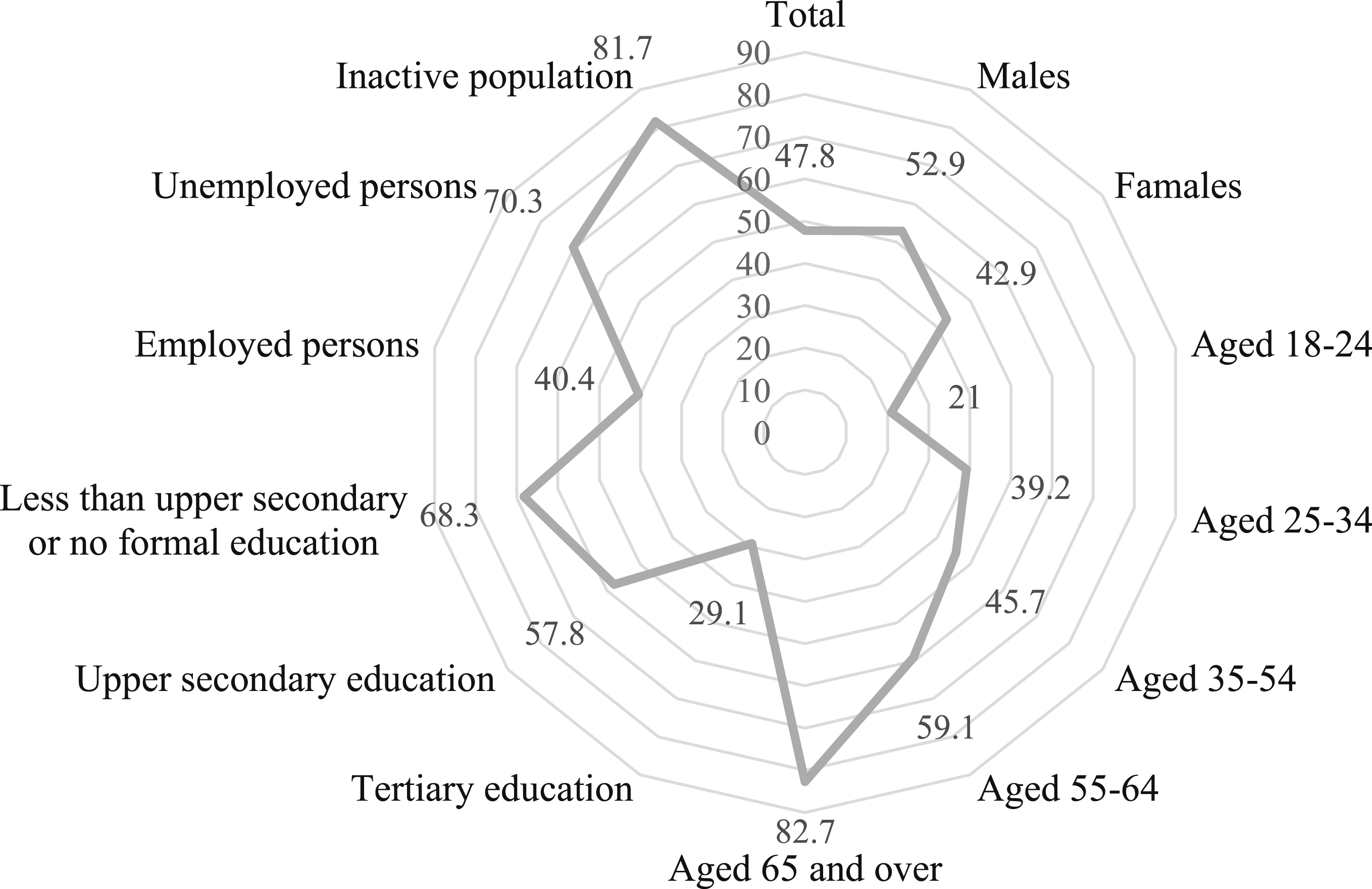
Figure 4 shows the participation disparities by regions. Participation in adult education by region – year, indicator, education activity, and territorial unit (%). Author’s construction using the Official Statistics Portal of the Republic of Latvia data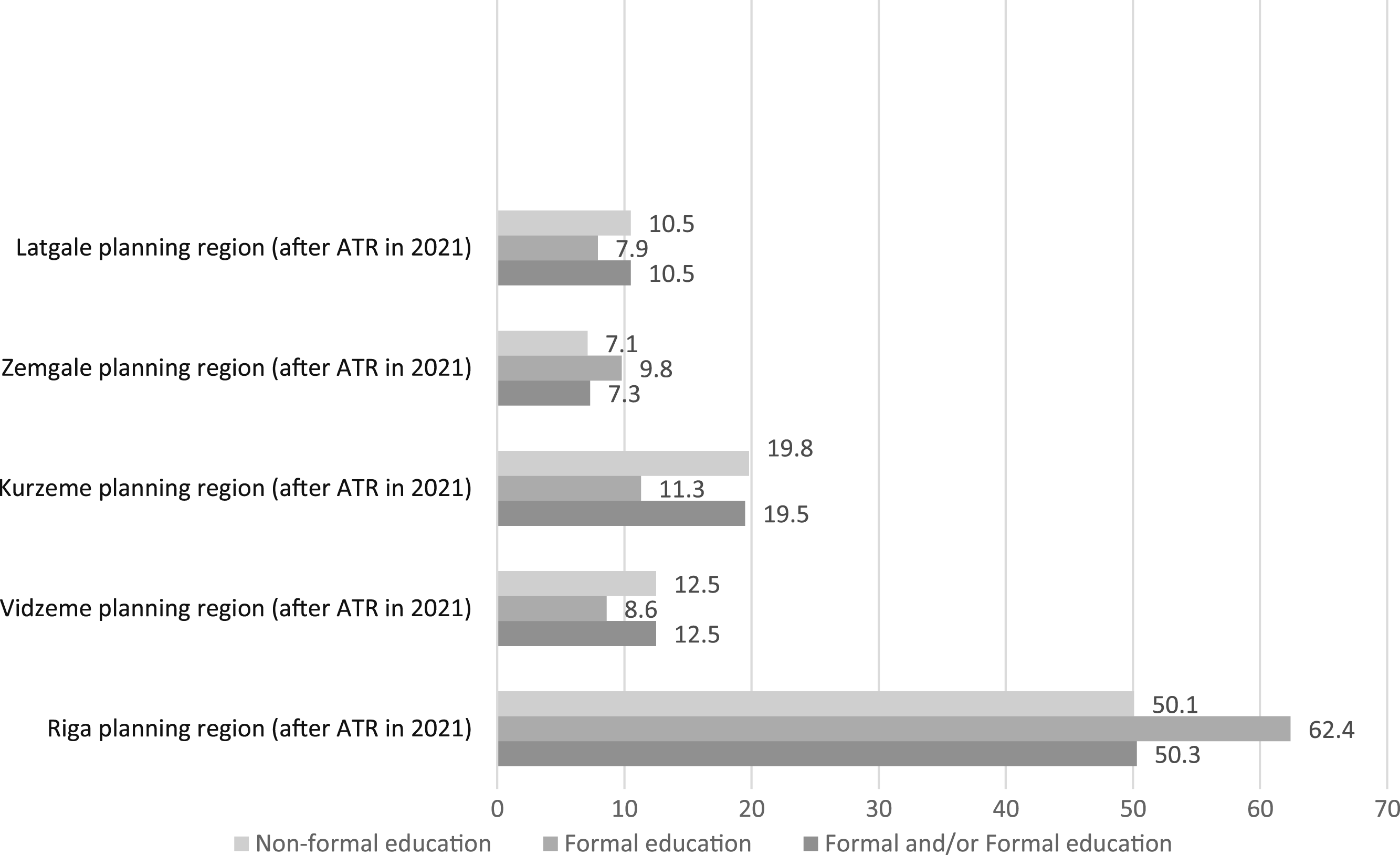
The disparity in adult participation in country’s regions suggests that regional perspectives on financing adult education in the planning documents are still needed. Figure 3 shows that the participation rate is satisfactory in only one of the Latvia’s planning regions (Riga), while improvements are needed in all other regions of the country.
Results to Be Achieved (State Chancellery of the Republic of Latvia, 2024a). Author’s Construction Using Official Statistics Portal of the Republic of Latvia data
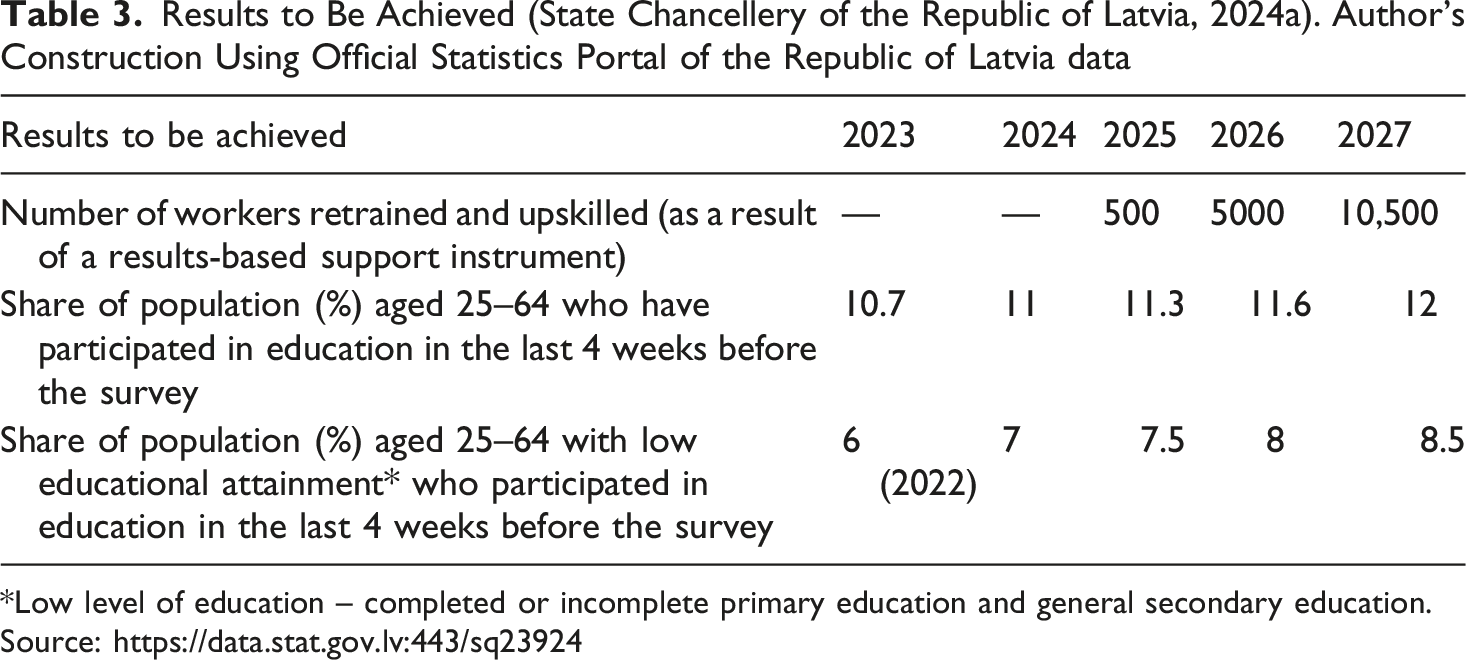
*Low level of education – completed or incomplete primary education and general secondary education.
Why These Challenges Occur?
Despite the existence of frameworks and guidelines, actual practice may differ (European Commission, 2024).2,3 Country’s teachers are increasingly recognising the importance of sustainability in their teaching, but they feel inadequately trained to do so. Over half of country’s teachers have participated in training courses on environmental and sustainability but only 9.5% consider their methodological level. (Schulz et al., 2023)
Lifelong learning in Latvia lacks regional and local learning ecosystems that promote recognised education and training for all ages, whether in formal education and training institutions, at work, or at home: Learning takes place across all ages and in diverse settings, whether in formal education and training institutions, at work or at home. Lifelong learning involves a broad set of knowledge, skills, competences and attitudes through which a learner’s agency is both recognised and fostered. In the age of digital technology and AI, the learning ecosystem is interconnected, employing both online and offline resources to enable learning to take place anywhere, anytime, via individualised pathways. (https://www.uil.unesco.org/en/learning-ecosystems)
Long-term and medium-term labour market forecasts must incorporate a regional perspective.
However, country lacks a specific mechanism for discussing and monitoring green policy initiatives, and while cooperation mechanisms exist, greening is not yet being adequately addressed (European Commission, 2024).
What Is Left Unchallenging in These Challenges (Opportunities Needed)?
Significant changes must be made to the LLL system: • Personalised lifelong learning strategies and actions (Maslo & Cronhjort, 2020) versus individual are necessary to engage the population with low educational attainment in adult learning, both at physical and virtual as well as spiritual learning spaces (Malloch et al., 2011), which require not only professional, technological, and transversal intra- and interpersonal competences but also a transformational change of the mind-set (introspective transformational competences). • E-learning plays a significant role in widening participation in education by making learning more accessible and flexible, particularly for underrepresented groups. It can break down geographical, financial, and social barriers, offering diverse learners opportunities to engage with educational content and resources, potentially leading to increased participation in adult learning. Local and regional governments are vital in inspiring priority target groups. It is necessary to strengthen the capacities of regional and local authorities to make it easier for priority target groups to attend training. • Adult learning should be better planned across the local and regional ecosystems that regard the shift from top-down planning to the bottom-up approach involving all stakeholders.
How These Challenges Impact the Policy (Opportunities Provided)?
Country changed its adult education policy in a substantial way: • In order to support the development and availability of human resources in accordance with future labour market demand and structural changes in the economy, the Human Capital Development Council was founded in 2023, and the Addendum to the Recovery and Resilience Mechanism Plan was approved for the implementation of the coordinated inter-ministerial cooperation and decision-making in planning, designing, implementing, and monitoring necessary labour market adjustments (Cabinet of Ministers of the Republic of Latvia, 2023). • The Human Capital Development Strategy 2024–2027 was created with the goal of creating a human capital-focused, sustainable adult education system that will help the populace become more skilled. Strategic objectives and lines of action for human capital development were identified in consultation with social partners and other non-governmental organisations (State Chancellery of the Republic of Latvia, 2024a). • The first quarter of 2024 saw the review and consolidation of adult education institutions, leading to the creation of the Human Capital Development Strategy 2024–2027, and the fourth quarter of 2024 – the approving of the Human Capital Development Action Plan 2025–2027 (State Chancellery of the Republic Latvia, 2024b). • Cabinet of Ministers Regulations were approved to support sectoral needs-based adult learning to promote lifelong learning, in particular by offering flexible skills development and retraining opportunities for all, taking into account entrepreneurial and digital skills, better anticipating change and the need for new skills based on labour market needs, facilitating career transitions, and promoting professional mobility (Cabinet of Ministers of the Republic Latvia, 2024b, June 25). • An information report on medium- and long-term labour market projections for 2040 by the Ministry of the Economy highlighted opportunities to improve the current adult education offer inside of an integrated education and science policy, employment and social policy, and economic policy. However, its consideration is postponed (State Chancellery of the Republic Latvia, 2025). • A future format for higher education in country is the introduction of a system of micro-credentials in colleges and universities (Ministry of Economy of the Republic Latvia, 2023, October 24). • The national tax policy has been evaluated (Ministry of Finance of the Republic Latvia, 2024b), and work on tax changes
4
and reform guidelines continues (Dārziņa, 2024, July 9), as ‘the fiscal impact (in percentage points of GDP) on expanding active labour market policies and improving adult education is −0.4 (p. 32)’ (OECD, 2024).
The econometric model of short-term labour market forecasting and the forecast real value added of the Ministry of Economy by sectors/industries provide forecasting of employment and skills by economy and sectors/industries: Labour demand forecasts are based on two components: expansion demand and replacement demand. Expansion demand is linked to economic growth, while replacement demand is related to employee departures due to factors like incapacity for work, migration, retirement, or occupational mobility. These forecasts are based on value-added and econometric models, the labour force survey data, and SRS data about employees in the Latvian economy. Forecasts are obtained by sectors/ industries, professions, and skill groups, and in the economy as a whole. Forecasts have been also prepared for changes in the demand for the skill sets in the labour market. The skill set matrix predicts changes in employment levels by occupational group, sector/industry, and region. Forecasts are made in April each year, with periods from April to March. (Ministry of Economy of the Republic of Latvia, 2025),
At the national level, it was advised to avoid duplicating funding for adult education and to prevent overlapping functions. The improvement of adult learning planning lays out quantifiable goals (Table 2) at the level of particular participation national indicators for significant target groups (Latvian State Audit Office, 2023).
The ILA’s approach concept and customised measures are essential: The country’s law defines the implementation of Individual Learning Accounts (ILA) as a new strategy to increase adult participation in learning. The State Agency for Development of Education in cooperation with the Ministry of Education and Science is developing the Latvian context-specific Individual Learning Account approach as an element of a sustainable and socially responsible adult education support system, creating more opportunities and individualised learning offers according to labour market priorities. The platform ‘Stars’ is currently under development and is continuously being developed and improved. The full functionality of the platform will be operational in the second half of 2026. (Cabinet of Ministers of the Republic of Latvia, 2024a),
Country plans to pilot the Skills Fund (SF) in early 2025 involving a public-private partnership established by sectoral employers’ organisations in collaboration with the ministries and trade unions. The SF will support activities such as analysing skills needs, training employees, and evaluating training outcomes. The partnership’s vision and readiness for implementation will be assessed, including the capacity to attract sustainable co-financing from sectoral companies: The Skills Fund approach will provide an opportunity to develop a social dialogue-based framework for sectoral human capital development and to develop sectoral and employer ownership of human capital development and planning, including practical solutions in the medium and long term. The new approach will also contribute to the development of quality training provision and learning approaches that meet employer requirements in a competitive environment, increasing the involvement of the workforce in skills and qualification development in their sector. The development of skills pools will improve commissioning and provide an opportunity to increase resources for the education ecosystem, which is essential for a sustainable funding approach for functioning adult learning. (State Chancellery of the Republic of Latvia, 2025).
By 31 May 2026, a report on the results of the Skills Fund pilot project and proposals for its development and further implementation by 2029 has been agreed.
What Further Policy Actions Are Needed (New Opportunities)?
The intended actions for implementation of ILAs and Skills Funds approach are limited, and their funding is allocated only to a few measures, such as specific research activities and the implementation of a pilot programme on improving adults’ digital skills.
Summary of the Main Findings 2023–2025
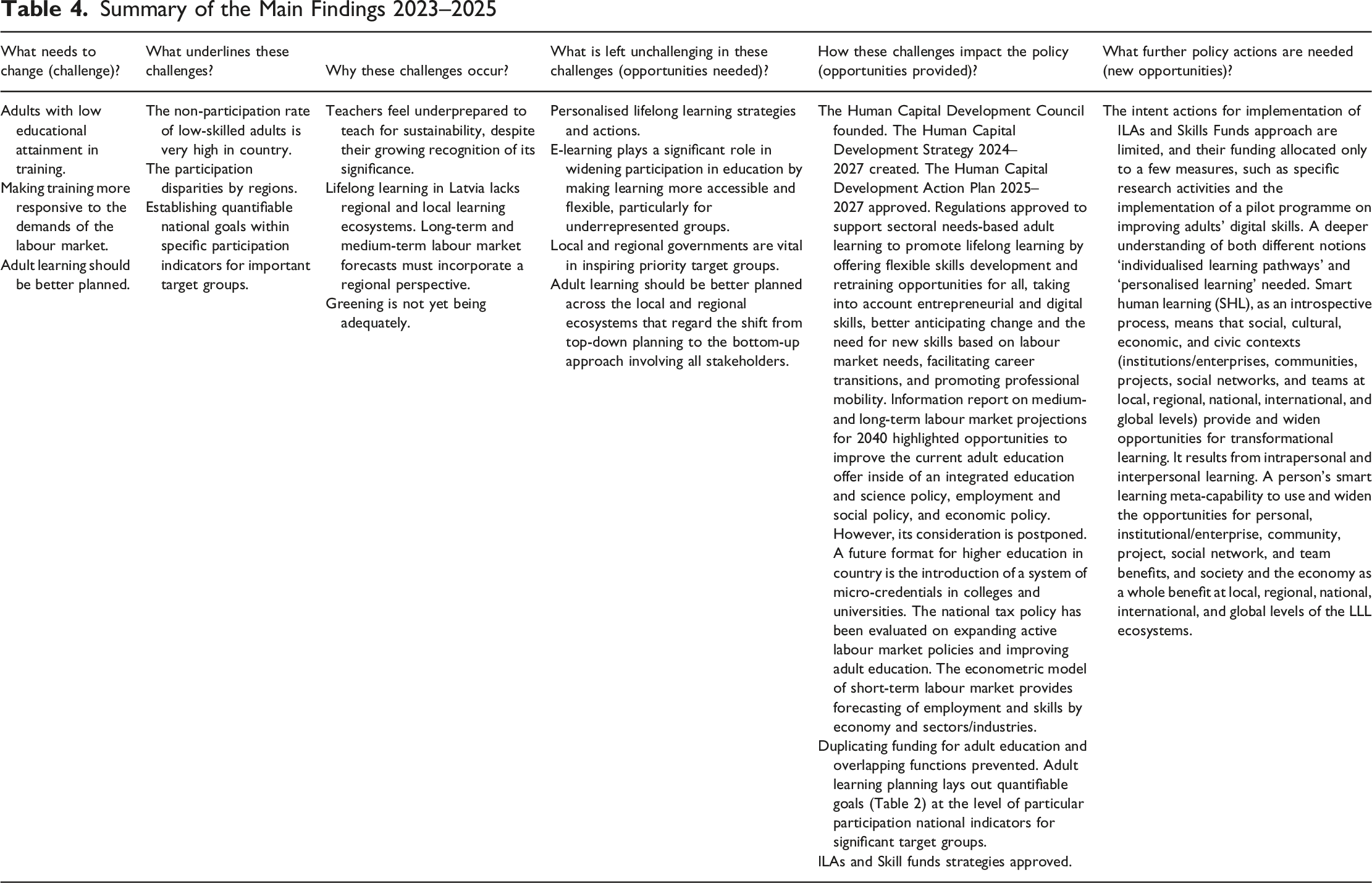
Responding to challenges identified, country has significantly transformed LLL, establishing the Human Capital Development Council in 2023 to support human capital development and economic changes. The first quarter of 2024 saw the review and consolidation of adult education institutions, leading to the creation of the Human Capital Development Strategy 2024–2027 and the Human Capital Development Action Plan 2025–2027. The Cabinet of Ministers Regulations were approved to support sectoral needs-based adult learning, promoting lifelong learning and flexible skills development. The Ministry of Economy’s information report on labour market projections highlighted opportunities for improvement. A future format for higher education in country will involve micro-credentials in colleges and universities. ILAs and Skill funds ‘reflect and act on long-term political and financial commitments in this field’ (Benavot et al., 2022, p. 187). Consequently, by ensuring the financing of adult education as a sub-sector, the function that the state grants local authorities in encouraging low-skilled adult learning can be strengthened by supplying them with the public funds they need to carry out this function (Figure 5). Transitioning from an institutionalised adult education system towards ecosystems of lifelong learning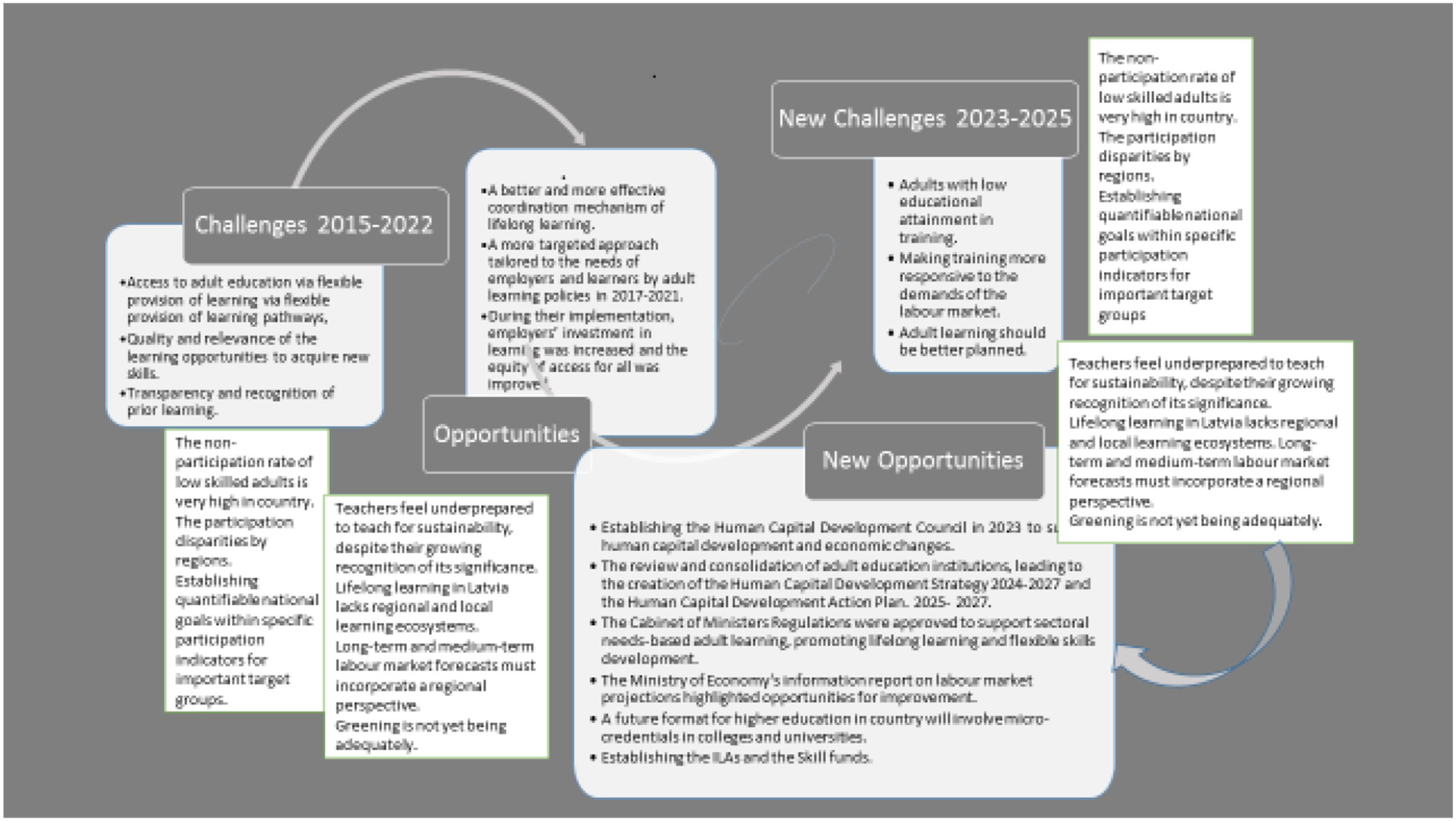
However, there are evident limitations that occurred in the transitioning from an institutionalised adult education system towards ecosystems of lifelong learning: A new concept has now been introduced into the Education Law – the municipal education ecosystem – giving greater responsibility to municipal education authorities. In the future, they will be responsible for personnel, finances, the quality of the educational support process, and communication. It is a huge challenge for local authorities to implement these new functions, which requires reorganising the economy of the municipality or state city and finding new tools for better results. (Agita Zariņa-Stūre, Chair of the Saeima Education, Culture and Science Committee at the Saeima conference Challenges for local governments in implementing the education ecosystem: Experience in data-based decision-making) (October 20, 2023).
Only one municipality mentions the LLL ecosystem in the 2024 report ‘Adult Education in Municipalities’ in terms of experience, collaboration, and best practices.
Discussion
Liminality (Evans, 2023) of the conducted analytical study refers to the transitional or in-between state that occurs during any period of change. It’s a state of “betwixt and between”, neither here nor there, yet holding the potential for transformation (Le Hunte, 2022) to a new lifelong learning ecosystem that is organic, fluid, and actively evolving and inventive rather than being mechanically institutionalised. Transitions occurred in the country through the lens of challenges and opportunities studies as fertile, emergent, and powerful periods from 2015 to 2022 and from 2023 to 2025, where transformation took place, were reflected. The options left unchallenging were identified:
From 2015 to 2022
Opportunities to deliver high-quality adult learning to all, especially for vulnerable adults.
From 2023 to 2025
• Personalised lifelong learning strategies and actions for fostering collaboration at self-determined physical, virtual, and spatial life as well as workspaces enable personalised learning experiences that demonstrate the breadth and depth of transformational changes (Kersh et al., 2021). • E-learning, which plays a significant role in widening participation in education by making learning more accessible and flexible, particularly for underrepresented groups integrates existing and emerging digital and post-digital technologies to meet the demand for flexibility of personalisation of learning at local, regional, national, and worldwide contexts rather than merely as a technological tool (Maslo et al., 2014). • Smart human learning ensures smartness of themselves as collaborative persons specifying them in diverse social, cultural, and economic contexts of multidimensional inclusive ecological environments, emphasising its potential to influence and be influenced by various elements of LLL ecosystems (Cairns & Malloch, 2024; Maslo, 2021). This viewpoint emphasises how crucial it is to comprehend intelligent (smart) human learning as a system integrated into LLL ecosystems. Local and regional governments are vital in inspiring priority target groups.
Hence, it is necessary to better plan adult education in both local and regional ecosystems. In addition to involving all stakeholders, this calls for avoiding unchallenging policies that are necessary for the shift to the post-digital era’s LLL ecosystem participation paradigm, which emphasises how participants interact within a surrounding system (Lee, 2019) (Figure 6). A framework of the Smart Human Learning Ecosystem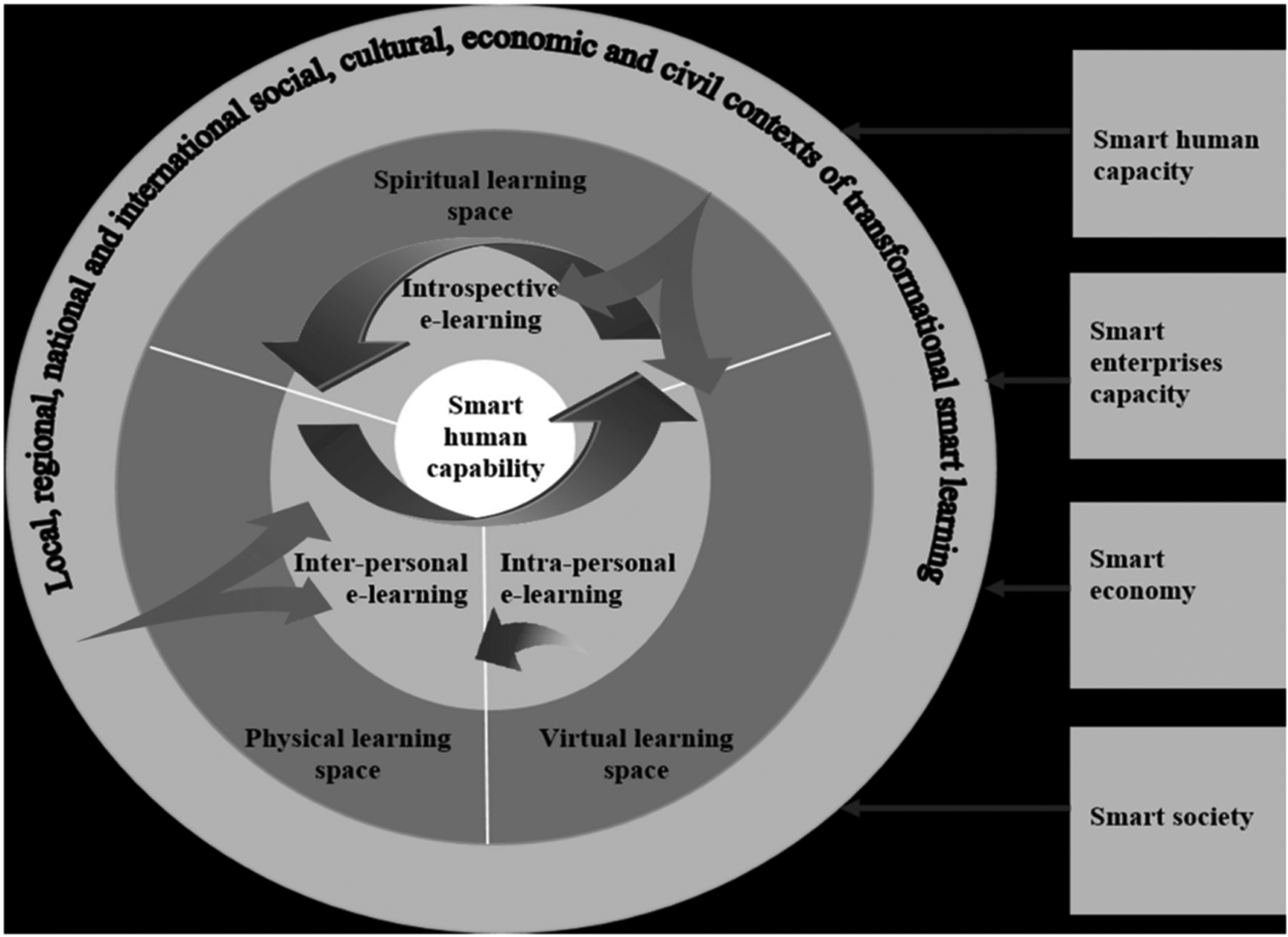
By combining digital and post-digital technologies to create personalised, easily accessible, and captivating learning experiences, smart human learning makes a substantial contribution to lifelong learning ecosystems. By removing conventional barriers to learning and encouraging ongoing development in both life and the workplace, it enables all adults to learn at their own pace, in their own way, and on their own terms. People with the will and capability to do so are the ones who create eco-social systems. Imagination, planning, decision-making, observation, and action modification are all part of these processes, which interact with situations in their contexts and are influenced by astute ideas and self-motivated actions.
Conclusions
Following Singh’s (2024) theoretical appeal and paying attention to the dichotomy between the duty to learn and the right to education that is not always supported by facts worldwide, the analysis contrasts learning systems, which can be formal and structured and therefore exclusive to those who fit into them, with advocacy for the right to LLL, which calls for the opposite. The analytical findings of the current study reflect a more comprehensive perspective going beyond the evidence of six challenges country’s adult education system faced in 2015–2022 and 2023–2025. These were: access to adult education via flexible provision of learning pathways, quality and relevance of the learning opportunities to acquire new skills, transparency and recognition of prior learning in 2015–2022; and increasing the involvement of adults with low levels of education in training, making training more responsive to labour market needs, and improving adult learning planning in 2023–2025. The evidence available before the study confines institutionalisation of LLL and tends to encompass settings in learning ecosystems, which are inclusive and flexible (Singh & Ehlers, 2019).
The added value of this study is in its focus on critically examining how policies implicitly define and represent the challenges they aim to address. Instead of accepting a policy’s stated challenge at face value, the adapted WPR encouraged the analysis of the underlying assumptions, potential consequences, and alternative perspectives embedded within the policy’s challenge representation. Throughout the identification, re-construction, and interrogation of the challenges represented in the transition of LLL policy from institutionalised to ecosystems mode (Tables 1–3 and Figure 5), the conducted study contributes to the theory and practice of analysis of challenges and opportunities in transforming institutionalised adult education in the LLL ecosystem for learning of all adults. The adapted WPR approach is a powerful tool for uncovering the hidden politics of challenges and opportunities definitions and promoting a more critical and reflexive approach to policy analysis and social critique of the historical governmental practice (Bacchi, 2015; Fairclough, 2013).
Practical and Policy Implications
Further policy actions are needed for the implementation of the ILAs and the Skills Funds approaches which are currently limited, and their funding is allocated only to a few measures, such as specific research activities and the implementation of a pilot programme on improving adults’ digital skills.
A deeper understanding of three different notions – ‘individualized learning pathways’, ‘personalized learning’, and ‘smart human learning’ (SHL) – is needed. The last one, notion as an introspective process, means that social, cultural, economic, and civic contexts (institutions/enterprises, communities, projects, social networks, and teams at local, regional, national, international, and global levels) provide and widen opportunities for transformational learning. It results from intrapersonal and interpersonal learning. A person’s smart learning meta-capability to use and widen the opportunities for personal, institutional/enterprise, community, project, social network, and team benefits, and society and the economy as a whole, benefits at local, regional, national, international, and global levels of the lifelong learning ecosystems.
Footnotes

Funding
The authors received no financial support for the research, authorship, and/or publication of this article.
Declaration of Conflicting Interests
The authors declared no potential conflicts of interest with respect to the research, authorship, and/or publication of this article.