



Abstract
For more than three decades, recognition of prior learning (RPL) has appeared as a pivotal mechanism in widening access to higher education, particularly for mature adult learners whose knowledge and skills have been acquired outside formal schooling. In South Africa, RPL has been embedded in post-apartheid policy frameworks as a strategy for equity, social justice, and epistemic redress. Despite its strong policy orientation, RPL practices have often been contested, unevenly applied, and limited in their pedagogical depth. This article examines the Portfolio Development Hybrid Programme (PDHP), a redesigned model for RPL implementation and undergraduate access at a South African university. Anchored in digital pedagogy, adult learning theory, and activity theory, the PDHP represents a significant curriculum renewal that aims to both validate experiential knowledge and strengthen academic readiness for higher education study. Drawing on a qualitative case study design, the article analyses the rationale, design, and outcomes of the PDHP. The findings suggest that embedding digital pedagogy within RPL delivery enhances candidates’ academic literacy, digital skills, and confidence, while also addressing structural inequities in access. The paper contributes to global debates on RPL by illustrating how digital innovations can transform RPL from a compliance-driven exercise into a specialised pedagogy that is transformative, inclusive, and future-oriented.
Keywords
Introduction
Recognition of prior learning (RPL) is widely acknowledged as a mechanism for widening participation in higher education, particularly for mature and marginalised adult learners who lack formal entry qualifications but possess equivalent knowledge and skills (Osman & Castle, 2001). Globally, RPL is associated with three central goals: access, redress, and recognition (Bohlinger, 2017). In South Africa, its role has been especially significant within the post-apartheid transformation agenda, where it has been embedded in national policy since the 1990s to address historical inequalities, foster social justice, and validate diverse knowledge systems (Bolton et al., 2016). Here, RPL has been applied predominantly as an access mechanism, enabling adults to enter undergraduate and postgraduate study (Cooper & Harris, 2013). However, while the policy commitment is strong, questions remain about whether RPL functions effectively as an equitable and credible pathway into higher education (Cooper et al., 2018).
Candidates entering through RPL are often adult learners with extensive workplace or community-based experience but limited academic literacy and digital competence (Cooper & Harris, 2013). They typically face systemic barriers, including institutional scepticism, uneven pedagogical support, and socio-economic constraints. These challenges have been compounded by digital inequalities, which became more visible during the rapid shift to online education in the COVID-19 pandemic (Astuti et al., 2022). While digital pedagogy has gained traction in mainstream higher education, its integration into RPL remains underexplored (Astuti et al., 2022). This raises a critical question: how can digital pedagogical practices be embedded within RPL to enhance both access and academic readiness for adult learners?
This paper examines that question through a case study of the Portfolio Development Hybrid Programme (PDHP) at a South African university. The PDHP evolved from earlier iterations of the Portfolio Development Programme (PDP), redesigned in 2019–2020 to incorporate blended and digital pedagogies. The programme provides candidates with structured opportunities to compile digital portfolios of evidence, develop academic literacy, and build digital competencies required for successful transition into higher education. By analysing this model, the study argues that curriculum renewal – specifically through the integration of digital pedagogy – enhances academic preparedness, challenges deficit framings of RPL candidates, and strengthens the legitimacy of RPL as a transformative access mechanism.
The study is guided by the following research questions: I. What limitations of the earlier Portfolio Development Course (PDC) and Programme (PDP) necessitated the development of the PDHP? II. How can digital pedagogical practices be integrated into RPL processes to enhance access, academic literacy, and digital competencies for adult learners? III. From a curriculum perspective, what enablers and barriers do candidates encounter in participating in a digitally mediated RPL programme? IV. To what extent does the PDHP strengthen the legitimacy and transformative potential of RPL in South African higher education?
Curriculum renewal
The earlier PDC, offered at the case study institution in South Africa from 2001 to 2018, represented an important initial step in widening access for adult learners through structured portfolio compilation (Ralphs, 2012). While it created opportunities for many candidates, its pedagogical approach remained relatively limited in scope. The PDC was delivered in a compressed format of six Saturday sessions, primarily emphasising compliance with assessment requirements. As a result, portfolio development often risked becoming a largely technical exercise rather than a deeper developmental process of academic engagement oriented around preparing the adult learner for success at university (Cooper et al., 2017). Although this design enabled participation within constrained institutional resources, it risked reinforcing deficit perspectives of RPL candidates by implicitly framing them as lacking, rather than fully recognising the legitimacy and richness of their experiential knowledge. Scholars of RPL pedagogy have consistently cautioned against such reductive approaches. Cooper et al. (2017), for instance, argue that RPL requires a ‘specialised pedagogy’ that acknowledges the distinct position of adult learners, the contested status of experiential knowledge, and the pedagogical necessity of bridging informal and formal knowledge systems. From this perspective, the PDC’s orientation toward procedural compliance and its limited scope for academic development overlooked the deeper epistemological and pedagogical challenges inherent in RPL, thus constraining its transformative potential.
In response to these limitations, the PDP was introduced as a more comprehensive model that embedded reflective practice, academic literacy development, and structured mentorship. The PDP advanced closer to the vision of RPL as specialised pedagogy, scaffolding candidates’ engagement with academic discourse and affirming the diversity of their knowledge resources. However, its reliance on face-to-face delivery presented accessibility challenges, particularly for working adults and candidates residing at a distance from the university. The transition from PDP to the PDHP was accelerated by the onset of the COVID-19 pandemic and the rapid shift to emergency remote teaching and learning. This disruption not only demanded a reconfiguration of delivery modes but also challenged entrenched assumptions about RPL candidates’ technological access and digital competencies. Contrary to deficit narratives that positioned adult learners as digitally marginalised, the PDHP demonstrated that candidates were capable of acquiring, adapting, and exercising the digital literacies required to succeed in a hybrid learning environment. In this study, transformation refers specifically to (i) epistemic validation of experiential knowledge, (ii) capacity development for academic discourse, and (iii) adult learners’ agency-building through digitally mediated reflective learning and scaffolded identity transition into university study. This transformation aligns with a growing body of independent research that is now examining how candidates experience portfolio development in fully online contexts compared with hybrid models, highlighting both the challenges and opportunities that digitalisation introduces into RPL pedagogy. In this sense, the PDHP represents a more responsive and forward-looking model. Building on lessons from both the PDC and PDP, it integrated digital and blended modalities to enhance flexibility, broaden participation, and equip candidates with critical digital literacies increasingly required in higher education. The PDHP therefore operationalises the framework proposed by Cooper et al. (2017), moving RPL beyond a compliance-driven process toward a transformative pedagogy that both validates prior knowledge and develops the academic and digital readiness of adult learners (Ralphs, 2012). The current study employs a qualitative, portfolio-based case study to explore curriculum renewal in RPL by examining the design evolution and impact of a digitally mediated hybrid portfolio programme. It investigates how digital pedagogy can strengthen academic and digital readiness for adult learners seeking undergraduate university access through RPL, while addressing structural barriers to epistemic and institutional inclusion. The programme under study is therefore framed not simply as an alternative admissions mechanism but as a specialised, enabling pedagogy capable of fostering interdisciplinary identity transitions from workplace learning into sustained higher education success. This qualitative case study therefore explicates how hybrid digital pedagogy shifts RPL from static evidence submission toward a dynamic readiness-building curriculum that advances equity, legitimacy, and adult learner success.
Theoretical framework
The RPL PDHP is anchored in three interrelated theoretical perspectives: digital pedagogy (Lewin & Lundie, 2016), adult learning theory (Knowles, 1978), and activity theory (Engeström et al., 1999). Together, these perspectives provide a robust and multi-layered framework for understanding both the design and impact of the programme. Triangulating these theories allows for a more comprehensive lens: while digital pedagogy frames the epistemological and practical transformation of teaching, adult learning theory foregrounds the learner’s lived experiences and agency, and activity theory situates the curriculum within a dynamic socio-cultural system. Digital pedagogy provides the overarching frame for curriculum renewal. Defined as the critical and reflective use of digital tools to enhance learning, digital pedagogy emphasises not only the adoption of technology but also its transformative integration into pedagogy (Johnston et al., 2019). Within the PDHP, digital pedagogy moves beyond the instrumental use of online platforms; it reshapes how adult learners engage with knowledge, scaffolds academic literacies, and disrupts entrenched biases about RPL candidates’ capacity to succeed in digitally mediated spaces. Recent work has further demonstrated how artificial intelligence (AI) can extend the transformative potential of digital RPL pedagogies. Rambharose (2025b) shows that AI-enabled tools can support formative feedback, pattern recognition in portfolio evidence, and personalised scaffolding for adult learners, thereby enhancing assessment transparency and epistemic inclusion. This aligns with the PDHP’s digital pedagogy approach, which foregrounds reflective practice and iterative learning, but also signals future possibilities for automating low-stakes feedback and strengthening assessor consistency. The integration of AI into RPL, therefore, represents an emergent frontier in curriculum renewal, enabling more equitable, efficient, and learner-centred validation of prior learning.
Adult learning theory (Knowles, 1978; Merriam & Bierema, 2013) complements this frame by emphasising learner-centredness, experiential knowledge, and relevance. RPL candidates bring extensive experiential and workplace learning which must be recognised as legitimate epistemic capital rather than a deficit. Designing the curriculum through this lens ensures that prior knowledge is validated, while simultaneously extending learners’ competencies for academic contexts. Activity theory (Engeström, 2009) further strengthens the analysis by situating the PDHP within a system of mediated learning (Engeström, 2009). Here, the portfolio and its digital templates function as tools, institutional policies and assessment criteria operate as rules, and the network of facilitators, peers, and assessors constitutes the community. These interacting elements mediate learning processes and outcomes, illuminating both tensions and possibilities. By framing curriculum renewal as an ‘expansive learning’ process, activity theory (Garraway & Winberg, 2020) highlights how the object of activity shifts from the narrow goal of producing portfolios to the broader ambition of preparing candidates for sustained success in higher education. Taken together, the triangulation of digital pedagogy, adult learning theory, and activity theory generates an enriched, systemic understanding of the PDHP. It not only provides explanatory power for how and why the programme works, but also legitimises it as a case of curriculum renewal that addresses both epistemological and structural barriers for adult learners in higher education.
Case study: The RPL Portfolio Development Hybrid Programme (PDHP)
The PDHP represents the latest iteration of portfolio-based RPL at the University of the Western Cape. Developed in 2019–2020, it emerged in response to critiques of earlier models – the PDC and PDP – and to the rapid pivot to emergency remote teaching during the COVID-19 pandemic (Ali, 2020). The shift from the PDP to the PDHP was significant. While the PDP was delivered largely in contact mode, the PDHP adopted a hybrid design that challenged the prevailing assumption that RPL candidates lacked the technological resources, digital literacy, and resilience to succeed in online learning. Instead, the programme revealed high levels of adaptability among adult learners, while independent studies are now examining how candidates experience portfolio development in fully online versus hybrid contexts. The PDHP combines synchronous online workshops, asynchronous digital tasks, and limited face-to-face contact where necessary. Candidates engage in structured activities to: I. Reflect on prior learning experiences. II. Map experiential knowledge against programme entry requirements. III. Develop academic writing, referencing, and critical thinking skills. IV. Acquire digital skills for portfolio compilation and online learning.
This model enhances accessibility for working adults, rural candidates, and those balancing professional and family responsibilities. Its innovation and impact have been recognised nationally and internationally. In 2022, the PDHP received a global award from the European Centre for Validation of Prior Learning for its relevance and policy alignment. Within South Africa, it has been cited and adopted as a best-practice model across multiple institutions. Documenting its evolution therefore offers valuable insights not only into access but also into how RPL can support sustained participation and success in higher education.
Methodology
This study adopts a qualitative case study design (Yin, 2009), focusing on the RPL for accessing PDHP at a South African university. A case study methodology is well suited for exploring curriculum renewal processes in depth, as it captures the complex interplay of pedagogical, organisational, and technological dimensions within a bounded context. Data sources included programme documentation (such as course outlines and policy guidelines), curriculum design artefacts, facilitator reflections, and anonymised candidate portfolios. These sources provided multiple vantage points for examining how the PDHP was conceptualised, designed, and implemented, and for analysing the pedagogical shifts required to support adult learners in hybrid and digital environments. Data were analysed thematically (Braun & Clarke, 2006, 2021) guided by the study’s theoretical framing. The PDHP combines synchronous and asynchronous digitally mediated activities including portfolio templating, academic writing induction, adaptive change management workshops, peer engagement forums, and structured digital tool training. The learning process is iterative rather than transmissive, enabling adult learners to receive continuous formative guidance while applying tools in practice (Rambharose, 2025a). As a curricular system, the PDHP explicitly avoids deficit framing, positioning candidates as capable knowledge holders engaged in readiness-building rather than remediation. Digital pedagogy therefore functions not as a delivery mode but as a transformative learning scaffold, pedagogical mediator, and system equaliser aligned to the epistemic demands of digitalised higher education. Digital pedagogy informed the identification of themes related to the use of technology for curriculum transformation; adult learning theory shaped the analysis of learner-centred and experiential elements; and activity theory provided a systemic lens for examining how tools, rules, and community mediated candidate learning and academic readiness. This triangulation of theory and method ensured analytical depth, enabling a holistic understanding of the PDHP as both a pedagogical intervention and an institutional response to equity in higher education.
Results
The renewal of the PDP which gave rise to the current PDHP was guided by the need to address limitations in earlier models and to respond to broader questions of equity, access, tailored student support for adult learners, and academic readiness and upskilling (refer to research questions in the Introduction section). Curriculum renewal was therefore not only a pedagogical choice but also a systemic necessity to ensure that RPL remained relevant, rigorous, and responsive to the evolving needs of adult learners and the evolving landscape of higher education.
The original PDC and its subsequent evolution into the PDP were foundational in enabling access through RPL. However, critiques emphasised that these programmes tended to operate within narrow parameters, privileging technical compliance over pedagogical depth (Ralphs, 2012). Candidates were often supported in compiling evidence of prior learning but received limited scaffolding in academic literacy, critical engagement, or digital competency. This left many adult learners underprepared for the epistemic demands of higher education. The absence of sustained academic upskilling contributed to uneven outcomes, reinforcing deficit views of RPL candidates.
Curriculum renewal has been identified as central to higher education transformation, particularly in postcolonial contexts where exclusionary structures persist (Boughey & McKenna, 2021). For RPL, renewal is not only about updating content but about reimagining the curriculum as inclusive, flexible, and empowering. Adult learners entering through RPL bring diverse forms of experiential knowledge, yet they require structured opportunities to translate this knowledge into academic discourse and practice (Bolton et al., 2016). Without curriculum renewal, RPL risks becoming a gatekeeping mechanism rather than a transformative pathway. Portfolio development remains one of the most widely used practices in RPL globally because it provides candidates with a tangible means of evidencing and reflecting on prior learning (Michelson & Mandell, 2023). In the South African context, it has been particularly effective in mediating between experiential knowledge and academic requirements. However, portfolios must be embedded within a curriculum that offers explicit support in academic writing, reflective practice, and digital literacy. The renewal of the PDP into the PDHP sought to move beyond a compliance-based approach to portfolio building toward a holistic developmental programme, integrating digital pedagogy and scaffolding for academic readiness.
Learning goals and example activities.
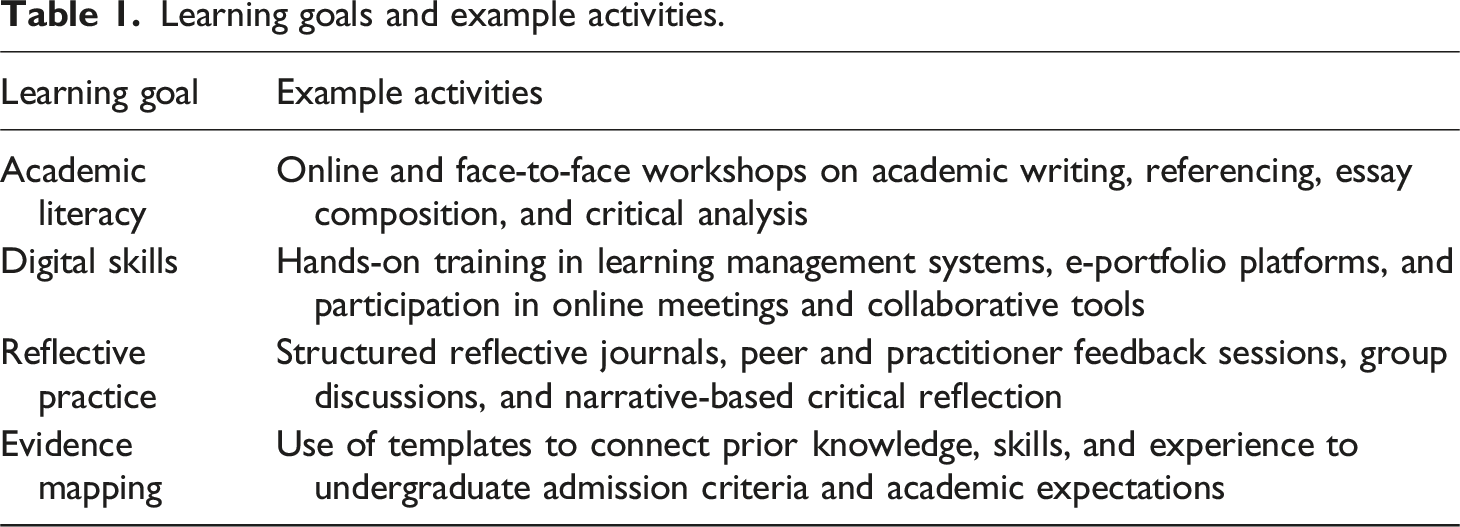
Adult learners entering higher education via RPL often juggle complex socio-economic, work, and family responsibilities. They also frequently face structural disadvantages in terms of language, technology, and academic preparedness (Johnson, 2011). For these learners, a traditional, one-size-fits-all curriculum is insufficient. Inclusive curriculum renewal is therefore critical – it provides tailored opportunities for upskilling in academic literacy, digital competence, and reflective learning, thereby levelling the playing field. As Du Plessis (2021) argues, adult education in South Africa must actively resist deficit framings and instead design curricula that validate prior learning while equipping learners for future success. By situating curriculum renewal within the portfolio development model, the PDHP advances a specialised pedagogy of RPL that recognises diverse knowledge forms, integrates digital teaching and learning, and foregrounds the academic development of candidates. This responds to both the structural barriers facing adult learners and the systemic critiques of earlier RPL models. The renewal is thus both a practical intervention and a contribution to the broader project of higher education transformation, offering a more equitable, inclusive, and future-facing approach to access and success.
Activity theory illuminates why the PDHP represents a qualitative shift from earlier models. In the PDC and PDP, the object of activity was narrowly framed as ‘portfolio production’. In the PDHP, the object expands to ‘academic and digital readiness’, with portfolios serving as both a product and a process of learning. Mediating tools such as e-portfolio platforms and online collaboration spaces enable candidates to engage in iterative reflection and knowledge construction. The rules of the system – assessment rubrics, institutional policies – are reframed to support inclusivity and transparency. The community of practice expands to include facilitators, peers, and digital networks. This reconfiguration fosters expansive learning (Engeström, 2009; Garraway & Winberg, 2020), positioning the PDHP as a transformative space rather than a gatekeeping mechanism.
The curriculum development and implementation of the PDHP revealed complex dynamics that shaped candidate experiences and institutional outcomes. The findings are organised into enablers, barriers, and outcomes, showing how digital pedagogy both facilitated and constrained RPL practice. The PDHP curriculum and implementation revealed complex dynamics shaping both candidate experiences and institutional outcomes. The findings highlight how digital pedagogy both facilitated and constrained RPL practice and how curriculum design addressed these factors. Several enablers supported candidate success. Digital integration through hybrid and online modalities allowed learners from geographically distant or professionally demanding contexts to participate in RPL. Asynchronous submissions and online workshops reduced logistical and time constraints, aligning with global evidence that digital platforms widen participation for adult learners (Bloomberg, 2021; Love et al., 2023). Scaffolded support for academic and digital literacies further enhanced readiness. Sequenced workshops, online tutorials, and structured portfolio tasks developed confidence in academic writing and digital competence, consistent with Bloomberg’s (2021) assertion that scaffolding transforms experiential knowledge into recognised academic evidence. Communities of practice, fostered through facilitated peer discussions and digital forums, supported identity formation and persistence, helping learners normalise challenges, celebrate progress, and reduce marginalisation (Love et al., 2023). Despite these enablers, several barriers persisted. Digital inequalities, particularly among rural candidates, limited participation due to insufficient internet access or outdated devices (Tshephe & Govender, 2025). Academic adjustment posed another challenge, as candidates often struggled to translate experiential knowledge into academic discourse, referencing, and critical writing (Donham et al., 2022). Institutional scepticism also emerged, with some academic staff questioning the credibility of RPL and perceiving it as lowering standards, a challenge echoed in international RPL literature (Bohlinger, 2017).
Systematic overview of PDHP curriculum components in addressing barriers and enhancing enablers.
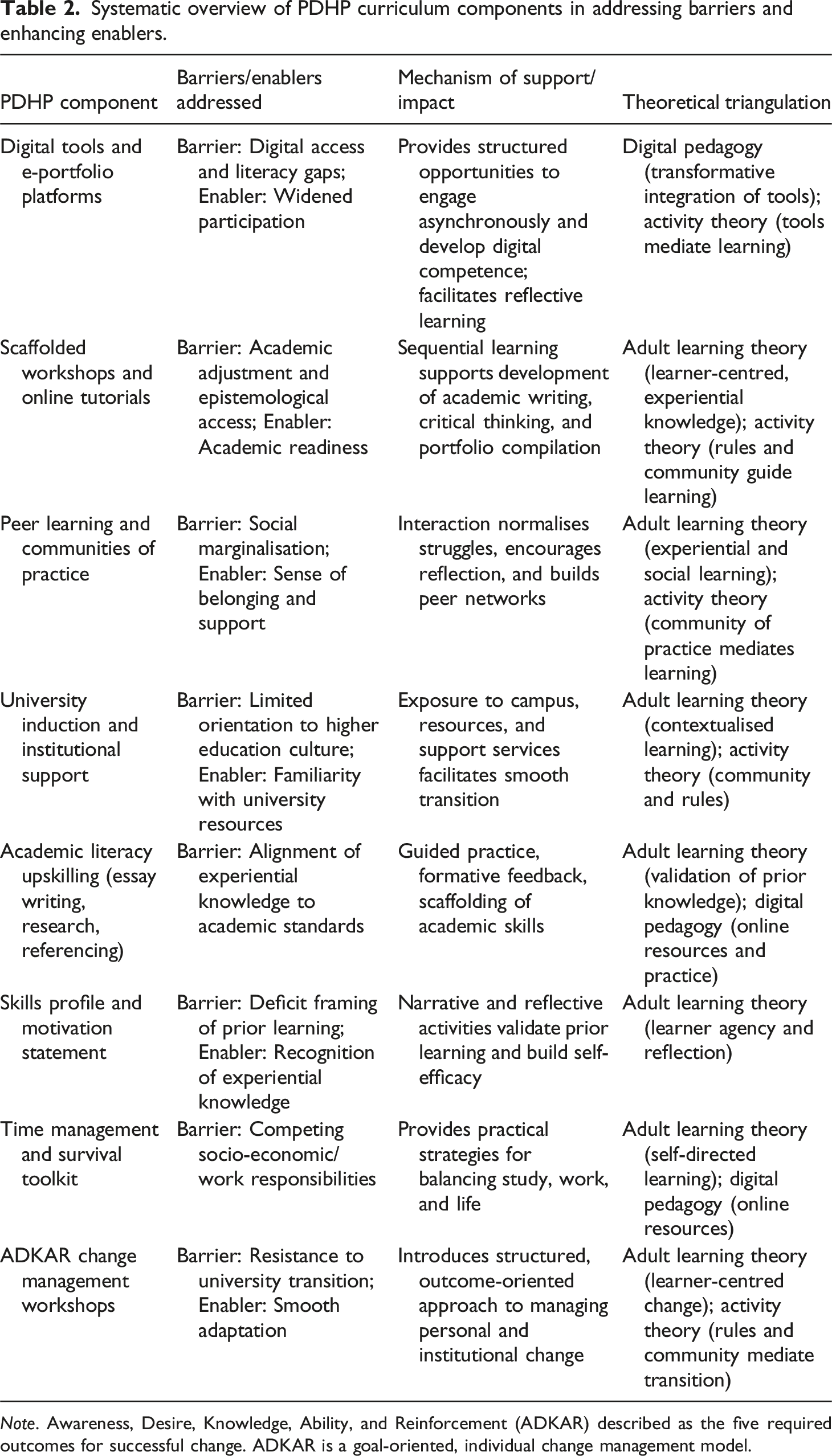
Note. Awareness, Desire, Knowledge, Ability, and Reinforcement (ADKAR) described as the five required outcomes for successful change. ADKAR is a goal-oriented, individual change management model.
Curriculum renewal for RPL requires not only pedagogical innovation but also a theoretical rationale that explains how diverse knowledge systems, learner backgrounds, and institutional requirements intersect. To this end, this study draws on and extends Engeström’s (1987) activity theory as a framework for conceptualising the challenges and opportunities in digital RPL curriculum design. Activity theory, rooted in Vygotskian traditions of socio-cultural learning, emphasises how learning is mediated through tools, communities, and rules within an activity system (Engeström, 2009; Engeström et al., 1999). In adapting this framework, the RPL Academic Enrichment Activity Theory Model was developed (Figure 1). Adaptation of Engeström’s (1987) activity theory: The RPL Academic Enrichment Activity Theory Model. Source: image developed by the author.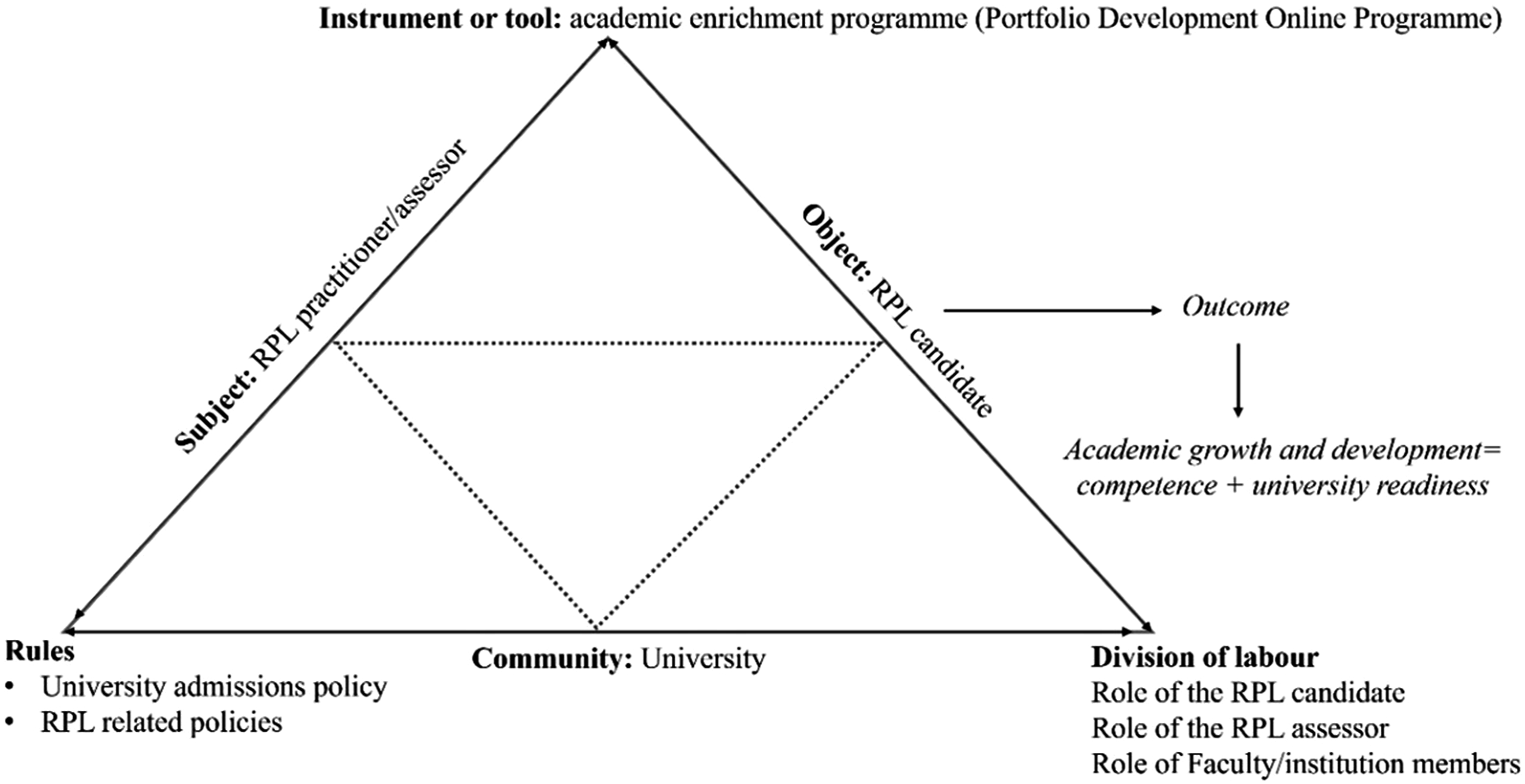
This model acknowledges that RPL candidates navigate two distinct yet overlapping communities: the workplace and the academic institution. Following Naudé’s (2016) pioneering work, the convergence of these communities is conceptualised as a ‘third space’, where candidates’ experiential knowledge is legitimised within academic structures through carefully mediated curriculum and assessment design. Within this adapted model, digital pedagogical tools – such as e-portfolios, online learning management systems, and virtual collaboration spaces – function as mediating artefacts that bridge the experiential knowledge of adult learners with the disciplinary expectations of higher education. This alignment creates a feedback loop: RPL candidates’ engagement with digital tools enhances their academic readiness, while institutional practices evolve to better support adult learners’ diverse needs. Such a system positions curriculum renewal not as a technical adjustment but as a transformative process that redefines the role of RPL in advancing equity, legitimacy, and academic success. This rationale underpins the design of the PDHP by framing RPL as a dynamic learning system rather than a static assessment mechanism. It also responds directly to the research question: How can digital pedagogical practices be leveraged to enhance access and academic readiness for RPL candidates? The model demonstrates that academic skills, digital literacies, and disciplinary readiness are co-constructed in the third space, thereby advancing both access and success imperatives.
The analysis of the PDHP curriculum and implementation revealed a myriad of both enabling factors and persistent challenges. Several structural and pedagogical enablers facilitated successful implementation. First, the integration of digital pedagogies – particularly the use of e-portfolios, online collaboration platforms, and blended modes of delivery – supported the development of academic literacies and digital fluency among RPL candidates. This design aligned with the recognition that adult learners often enter higher education with significant experiential knowledge but limited exposure to academic conventions (Cooper et al., 2017). By embedding digital tools directly into the learning process, the PDHP bridged this gap and strengthened readiness for university study. A second enabler was the scaffolded structure of the programme, which incrementally developed learners’ portfolios, academic writing, and reflective capacity. This progression helped adult learners not only document prior learning but also reposition themselves as capable participants in academic discourse. Supportive facilitation, peer collaboration, and formative assessment loops further reinforced engagement and persistence.
Number of RPL candidates endorsed.
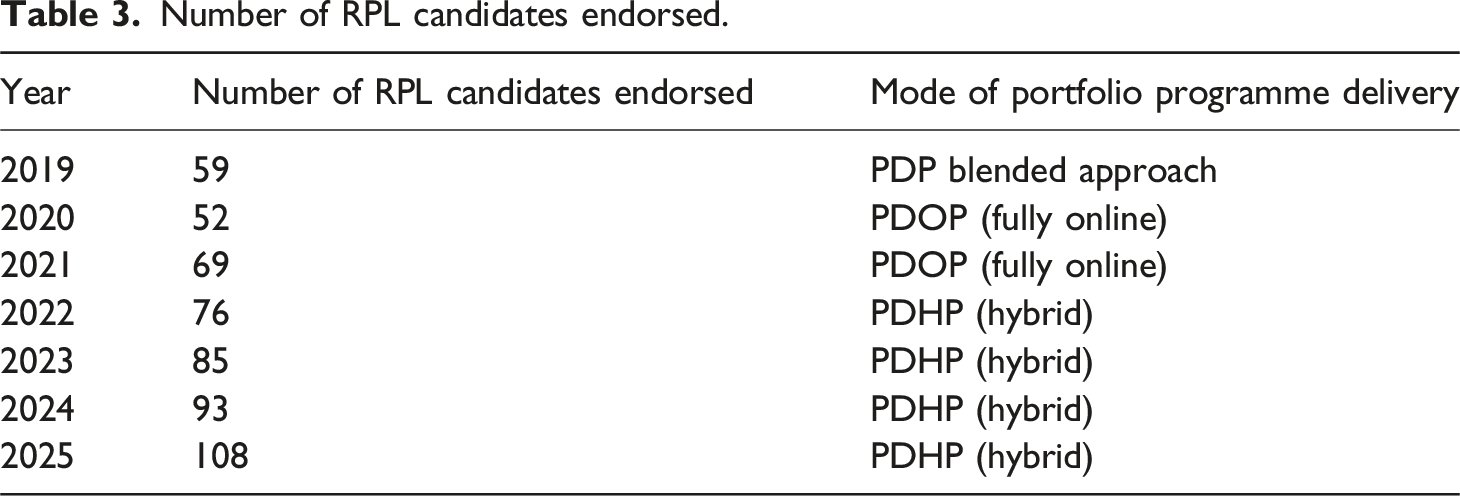
The upward trend in student intake, from 59 candidates in 2019 to 108 in 2025, underscores how the renewed curriculum with its blended and hybrid modes, digital orientation, and scaffolded academic support has facilitated broader participation. Supporting this trend, Mabidi (2024) highlights that the digital revolution in South African higher education has led to increased student enrolment, particularly through Massive Open Online Courses and technology-enhanced curriculum redesigns. Similarly, Goto and du Toit (2025) found that university students’ satisfaction with hybrid learning positively correlated with increased engagement and participation, suggesting that well-implemented hybrid models can enhance student retention and success. These studies collectively affirm that curriculum renewal through hybrid and digital pedagogies can lead to increased student intake and broader participation in higher education.
Discussion
The PDHP demonstrates how curriculum renewal can reposition RPL beyond its traditional function as an admissions mechanism, toward an enabling pedagogical process. By integrating digital pedagogy, the programme addressed dual challenges: ensuring equitable access for adult learners and preparing them for the digitalised academic environments that now characterise higher education globally (Love et al., 2023). This illustrates the growing necessity for RPL curricula to move beyond static documentation of prior learning and embrace dynamic, technology-enabled learning designs.
Adult learners, the primary beneficiaries of RPL, face complex constraints including employment responsibilities, family commitments, and socio-economic precarity. They also often confront significant academic readiness gaps due to long absences from formal study or limited prior schooling (Houlbrook, 2012). In this context, curriculum renewal is not optional but essential. Without intentional scaffolding of academic literacies, digital competencies, and reflective practice, access alone risks becoming a hollow achievement. The PDHP demonstrates that when adult learners are supported through diverse, inclusive, and structured curricula, they can transition successfully into higher education and challenge deficit framings that portray them as ‘underprepared’.
Recent scholarship reinforces these insights, positioning adult learning and portfolio-based pedagogies as central to curriculum renewal in higher education (Lwandle, 2024; Wrigley, 2018). For instance, Khasawneh et al. (2025) highlight how portfolio development fosters reflexive and transferable competencies critical for adult learners navigating transitions. Similarly, Du Plessis (2021), Lwandle (2024), and Muraina (2022) highlight the urgency of curriculum responsiveness to address equity and employability gaps, while Muñoz-Rodríguez et al. (2020) argue that digital inclusion is a non-negotiable dimension of contemporary adult education. From an institutional change perspective, Boughey and McKenna (2021) and Du Plessis (2021) show that curriculum renewal initiatives are most impactful when embedded within systemic strategies for lifelong learning and professional development. Finally, Harris and Wihak (2017) and Naidoo et al. (2020) demonstrate how RPL-associated curriculum renewal initiatives contribute to dismantling structural inequalities by aligning pedagogy, assessment, and student support. Taken together, these studies situate the PDHP within a growing international movement that views curriculum renewal not as incremental reform but as transformative practice capable of reshaping higher education for diverse adult learners. This holistic framing is further supported by Rambharose (2025a), who argues that interdisciplinary and inclusive digital RPL models are critical for disrupting siloed knowledge systems and enabling adult learners to navigate multiple epistemic spaces. That study demonstrates how digital RPL practices can operate as ‘third spaces’ where workplace, community, and academic knowledge intersect, reinforcing learner identity, confidence, and academic belonging. The PDHP mirrors these findings by positioning candidates within a mediated learning system that values experiential knowledge while intentionally scaffolding academic discourse. This reinforces the argument that digital RPL is not merely procedural but constitutes a powerful curriculum intervention that advances social justice, epistemic access, and institutional transformation.
At the systemic level, the PDHP offers evidence that RPL can serve as both an access pathway and a site of curriculum innovation. Its recognition by international and national bodies demonstrates the potential for such programmes to influence broader policy and institutional practices. However, scalability remains contingent on addressing resource constraints, institutional scepticism, and the digital divide. The findings suggest that sustained policy commitment, coupled with professional development for RPL practitioners, is required to ensure consistency, credibility, and impact across the sector.
Conclusion
This study addressed four guiding questions concerning the necessity of curriculum renewal in the RPL Portfolio Development Programme, the integration of digital pedagogy, the enablers and barriers to hybrid RPL models, and the outcomes of embedding digital practices. The analysis confirms that curriculum renewal was essential to overcome earlier limitations, particularly the absence of digital integration and limited scaffolding for adult learners. By embedding digital pedagogy, the programme strengthened learners’ academic preparedness and technological competencies, making RPL more accessible, relevant, and future-oriented. The findings further highlight a dynamic interplay of enablers and barriers, yet the evidence strongly points to positive learner outcomes and systemic gains in access, equity, and academic readiness.
The study offers three key contributions. Theoretically, it extends activity theory to the field of RPL curriculum design by conceptualising how digital pedagogy mediates between experiential and academic knowledge in a ‘third space’. Practically, it delivers an empirically grounded model of curriculum renewal that scaffolds adult learners’ academic literacies, digital skills, and reflective capacity. At the policy level, the study demonstrates how systematically renewed RPL programmes can strengthen institutional credibility and global legitimacy, offering a replicable template for scaling best practices in higher education. Limitations of the study include the focus on a single institutional context, which may limit the generalisability of findings. Additionally, while the study captures broad outcomes and systemic impacts, it does not explore the lived experiences of individual learners within the programme or track their academic readiness post-admission within the university settings.
Future research should adopt a phenomenological approach to deeply examine RPL candidates’ experiences, capturing how they navigate the hybrid learning environment, engage with digital tools, and integrate prior knowledge into academic practice. Such studies could provide nuanced insights into learner agency, identity formation, and persistence. Furthermore, there is potential to investigate how findings inform RPL policy reform, particularly around standardising practices, improving institutional support, and embedding digital pedagogies across higher education. Comparative studies across institutions and countries could also illuminate how hybrid RPL models function in varied socio-political contexts. Finally, the PDHP offers a scalable model for other universities seeking to enhance access, academic readiness, and equity through RPL, demonstrating that curriculum renewal can serve as both a practical and transformative mechanism in higher education. Ultimately, the PDHP illustrates that curriculum renewal is not merely about updating content or delivery but about reimagining the role of RPL. By embedding digital pedagogies, centring the needs of adult learners, and addressing systemic barriers, the programme affirms that access can be coupled with readiness, credibility, and success. In doing so, it positions RPL as a transformative mechanism for social justice in South African higher education and beyond.
Footnotes
Acknowledgements
The author would like to acknowledge and thank the reviewers and editorial team for their time and effort in engaging with this work.
Declaration of conflicting interests
The author declared no potential conflicts of interest with respect to the research, authorship, and/or publication of this article.
Funding
The author received no financial support for the research, authorship, and/or publication of this article.

Data Availability Statement
The data collected and analysed used in this study is available from the author.