



Abstract
The COVID-19 pandemic significantly disrupted economic and social life across Europe and the wider world. Currently, the European Commission is heavily investing in recovery and resilience facilities to encourage economic and social reforms in Member States. As part of the European Semester, the Commission formulates annual Country-Specific Recommendations (CSRs) to steer and advice Member States on their policy directions. This paper aims to investigate to what extent the European Commission’s recommendations include advice on education, training, and skills development to boost economic and social progress. Four specific aims were to investigate (1) the content of CSRs that mention the need for actions relevant to adult education, training, and skills development, (2) the extent to which these CSRs focus on economic versus social goals, or both, (3) the extent to which the content and focus of these CSRs shifts over years, and (4) the extent to which there are visible patterns within the content and focus of CSRs across the 27 EU Member States. Results indicate that CSRs in the first year of the COVID-19 lockdowns – 2020 – heavily focussed on the need for digital skills development. CSRs in 2022 were not dominated by advice on education, training, and skills development apart from the focus on skills mismatches in some countries. The 2023 CSRs were strongly targeted towards the need for green skills development. In line with previous academic debates around education and training, CSRs contained text on economic and social goals, although social aspects tend to lead back to the integration of vulnerable adults in the labour market for economic purposes, instead of treating education holistically. While CSRs are country-specific, it is clear from the analyses that core recommendations feature across Member States, linked to broad European agendas such as the Twin transition to a green and digital economy.
Context and rationale
This paper investigates the extent to which the European Commission recommends adult education, training, or skills development to accelerate economic and social progress within their Member States, specifically in the post-COVID-19 years. This will be done through a systematic screening of annual Country-Specific Recommendations – further explained below – for all 27 EU Member States since 2020.
As widely documented, the pandemic caused severe disruptions across economic sectors, put strain on the health system, and turned education systems into online learning environments (Breslin, 2021; Ingham, 2023). Lockdowns resulted into reduced economic activity, increased levels of unemployment, had unequal impacts on adults with different skill levels (Blundell et al., 2021; Goudeau et al., 2021; Johnson-Lans, 2023), and made the digital skills gap more visible through increased reliance on web-based services (Aissaoui, 2022; Crisan et al., 2023; Litchfield et al., 2021). While social and economic challenges such as unemployment and social inequalities were already visible across Europe before the pandemic, the outbreak and subsequent spread of COVID-19 exacerbated these difficulties. As such, in 2021, each Member State had to file a national Recovery and Resilience Plan (RRP) that outlined their intended strategies for economic and social reform to cope with the aftermath of the pandemic, to be achieved by the end of 2026 (Bekker, 2021; Bokhorst & Corti, 2023; Vanhercke & Verdun, 2022). Countries’ progress towards their intended RRPs is important as successful implementation of their reforms and initiatives is needed to trigger the corresponding financial incentives attributed to them. For the next years, the monitoring of the implementation of the RRPs will be complementary to the CSRs countries receive. While a detailed account of CSRs will be provided below, it is important to highlight that RRP and CSR are different given CSRs do not come with financial incentives while RRPs do. While RRPs focus on the implementation of specific post-COVID-19 recovery goals, the annual CSRs are broader in scope and are intended to steer country’s policy priorities for subsequent years. Although CSRs are written by the European Commission, ‘European power’ varies across policy domains and is often referred to as ‘hard’ versus ‘soft’ power (Eeva, 2021; Nye, 2021). For example, Member States need to adhere to the principles of the single market and must therefore comply with agreements on the free movement of goods, services, capital, and people. However, EU Member States are responsible for the development and implementation of their own education, training, and skills development policies, given it is a ‘soft’ power domain. That said, CSRs received by or RRPs rubberstamped by the Commission that are relevant to ‘soft power domains’ such as education are not ‘neutral’ or independent from broader desired European directions (Casagrande & Dallago, 2022). The RRPs, worth EUR725 billion upon its inception explicitly coupled the need for economic and social resilience to the Commission’s ambitions to transition towards a green and digital economy, commonly referred to as the ‘Twin Transition’ (Benedetti et al., 2023; Pasnicu, 2023). Similarly, the CSRs contain policy ‘steers’, directed towards the fulfilment of these European goals. In relation to this ‘Twin Transition’, the core aims of the green transition are to be climate neutral by 2050 and to ensure that economic growth can be achieved in a sustainable way. To enable this, workplaces will need to adapt some of their practices, for example, the use of renewable energy. Similarly, the core argument for the digital transition is to enhance economic growth through investments in more efficient and effective digital infrastructures. This requires increased connectivity and reliance on online services across the globe, both within the workplace and at home. Both transitions come with relevant implications for education, training, and skills development throughout life (Schultheiss & Backes-Gellner, 2023). Adults will be required to engage in upskilling and reskilling to keep up to speed with the introduction of new ways of working and living – for example, the need to gain knowledge on the installation and use of solar panels at home or the need to accelerate digital and financial skills to cope with the demands of online banking.
Given these rapid developments in recent years, it is worthwhile to investigate to what extent the European Commission integrates the need for education, training, and skills within the advice they formulate under the CSRs. The focus of this topic requires a further framing within debates on the European Commission’s approach to adult education, training, and skills development. Insights from these debates will be used to make sense of relevant education, training, and skills advice that is provided to countries. More specifically, this paper aims to investigate: 1. The content of CSRs that mention the need for actions relevant to adult education, training, and skills development, 2. The extent to which these CSRs focus on economic versus social goals, or both, 3. The extent to which the content and focus of these CSRs shifts over years, 4. The extent to which there are visible patterns within the content and focus of CSRs across the 27 EU Member States.
This paper will now turn to a presentation of academic debates on the European Commission’s approaches to adult education, training, and skills strategies since the 1990s. Afterwards, it will provide in-depth insights into the technicalities of the CSRs and highlight relevant previous research. This will be followed by an outline of methodological procedures used to screen CSRs.
European adult education, training, and skills policies since the 1990s: Insights from academic debates
The European Union (EU) was officially established in 1992 through the signing of the Maastricht Treaty (European Commission, 1992). This followed on from collaborative work between European countries in the aftermath of the Second World War. The need for economic stability and peace in the after-war years led to further economic integration and cooperation within the structures of the European Coal and Steel Community, established in 1951, and the European Economic Community, founded in 1957. European debates in the 1980s, in the run up to 1992 and since the mid-1980s led by President Jacques Delors, underlined the need to develop robust social policy agendas underpinned by social dialogues in the workplace, stronger workers’ rights, the distribution of social funds to enhance community cohesion, and anti-poverty actions (Warlouzet, 2024; Holford & Milana, 2023). The Maastricht Treaty recognised education and training as important tools to enhance both economic growth and to achieve stronger social cohesion between its citizens. This was fuelled by changing circumstances such as the collapse of the USSR and the acceleration of globalised capitalist societies (Holford & Milana, 2023).
While economic and social angles remain present in current European education and training policies, debates in the academic literature have mainly labelled the social aims as ‘secondary’ priorities versus the economic arguments as the ‘primary’ concerns. Holford and Milana (2023) traced this development back to the publication of the 1993 White Paper ‘Growth, Competitiveness, Employment’ (European Commission, 1993) in which education and training strategies were framed to serve the purpose of economic growth and to prepare citizens for employment in line with the needs of the labour market. While the focus on the broader aims of education and training has continuously remained in the background, the signing of the Lisbon Treaty in 2000 strongly underlined the desire to become the most competitive knowledge-based economy in the world (European Commission, 2017; Hervás Soriano & Mulatero, 2010). What followed was an intensive period of work on the formulation of benchmarks and indicators to measure progress towards targets such as participation in adult education and training, and the development and implementation of tools such as the European Qualifications Framework (see Méhaut & Winch, 2012) to enable comparisons between levels of foreign credentials and to accelerate the use of standardised terminologies (European Centre for the Development of Vocational Training, 2008). While the social angle remained present in policy discussions in the early and mid-2000s, the financial crash and economic recession at the end of the decade strongly prioritised the economic dimension (Holford & Milana, 2023). Training as part of Active Labour Market Policies (ALMP) provided additional support to help adult to (re)gain employment. This economic and social ‘shock’ period subsequently influenced the tone of the Education and Training Strategy 2020 implemented throughout the 2010s. Throughout this period, the academic literature has picked up the increased use of the term ‘skills’, evident in the names of initiatives such as the New Skills Agenda and Upskilling Pathways, both launched in 2016. The focus on skills for employability and economic recovery remains important in the first half of the 2020s, especially in the aftermath of the COVID-19 pandemic and the implementation of the European Skills Agenda (European Commission, 2020).
As a result, recent debates in the academic literature have continued to focus on the tensions between the economic and wider social aims of education and training for adults. For example, Brandi et al. (2023) critiqued the Commission’s 2023 European Year of Skills as firmly embedded in a human capital approach with a strong focus on employability. Similarly, Holford and Milana (2023) praised the development of the European Pillar of Social Rights but not without the reflection that social actions are in fact mainly aimed to enable more citizens to enter the labour market and contribute to economic growth. The first Pillar – out of 20 – refers to ‘access to quality education, training and lifelong learning’ and is linked to further Pillars that underline the need for broadened inclusion and access to the labour market of all. Rasmussen (2024) discussed the influence of critical theory on adult education policy, drawing on Adorno, Horkheimer, and Negt. Engagement with their work has advanced thinking on the holistic approach to adult education, which needs to go beyond the focus on vocational skills but include learning for social and personal purposes, and to critically engage with ‘the realities of contemporary society’ (Rasmussen, 2024, p. 14) such as democracy and civic responsibility. As highlighted above, generating further insight on the interaction between economic and social goals in the domain of education, training, and skills is a core aim of this paper.
Country-Specific Recommendations (CSRs): Technicalities, critiques, and previous research linked to education, training, and skills
CSR and the European Semester
The CSRs are part of the European governance model and are an aspect of the European Semester (Stevenson, 2019). CSRs belong to Europe’s economic policy strategy and aim to advice Member States on actions they can undertake to boost productivity and social inclusion (Maricut & Puetter, 2018; Milana, 2020; Verdun & Zeitlin, 2018). They also encourage actions towards fiscal stability and the reduction of unemployment rates. During the late 2000s, the European Semester was put in place to cope with the aftermath of the economic and financial crash, followed by a global recession. CSRs have been issued since 2011 and were initially vital to support the stabilisation of the Euro area (Milana, 2020). CSRs and the European Semester have been discussed as providing ‘enhanced surveillance’ (see Milana, 2020, p. 114) by the Commission given their regular visits to Member States to review progress towards economic and social goals.
CSRs are published on an annual basis, typically near the end of the second quarter of the year, just before the start of the Summer. The formulation of CSRs is the result of a step-based approach which starts with the formulation of an Annual Growth Strategy that sets out the Commission’s priorities, both socially and politically (Rainone, 2022). This Strategy, typically produced around November, feeds into a Joint Employment Report. Before drafting the CSRs, individual Country Reports are produced to provide a state of the art of their social, economic, and employment performances through in-depth reviews (IDRs). Within the European Semester, country insights are then interpreted against ongoing reform plans and used to formulate CSRs. Employment-related CSRs are drafted by staff at the Directorate General for Employment (DG EMPLOY) (Milana, 2020). During a typical European Semester cycle, the CSRs are available to Member States around the Summer period. Governments are then required to implement these recommendations in their financial budgeting (Milana, 2020). While CSRs are not legally binding, taking them into account is expected as part of showing commitment to the European political project. This does not only relate to the desire to create economic stability across the Member States but additionally needs to be understood as an ambition towards creating increased convergence between countries, for example, to prioritise the ‘twin transition’. While initially designed as ‘soft power’ governance mechanisms, Juncker’s European presidency was perceived as a shift towards a more ‘binding agenda setting’, although in practice still an example of ‘soft’ power (Milana, 2020). Not taking actions towards implementing CSRs can therefore result in sanctions such as the payment of fines. Progress towards the implementation of the CSRs by the Member States is monitored within the CSR database and can be found online (see: https://ec.europa.eu/economy_finance/country-specific-recommendations-database/). It has been debated by scholars whether CSRs are helping to boost countries’ performances. Research by Casagrande and Dallago (2022), based on reviews of CSRs formulated between 2011 and 2018 and their subsequent performances, concluded that ‘CSRs have not prevented a progressive deterioration of stability and cohesion from an economic, political and social perspective’ (p. 487).
CSRs and their economic versus social focus
While initially strongly designed to stimulate fiscal and economic issues (see Maricut & Puetter, 2018), scholars have seen a shift towards the ‘socialising of the European Semester’ (Zeitlin & Vanhercke, 2018). Since 2018, CSRs explicitly pay attention to the principles of the European Pillar of Social Rights (EPSR), discussed above (Rainone, 2021). The Commission’s work on social and economic issues has also started to reflect on other international objectives such as the United Nations’ Sustainable Development Goals (SDGs) (United Nations, 2015). However, scholars have labelled the ‘socialising of the European Semester’ ‘ambigious’ given many of these social policies are underpinned by a neoliberal stance (Casagrande & Dallago, 2022, p. 487).
Recent research discussed that the earliest CSRs were mainly underpinned by austerity-driven advice to cope with the aftermath of the late 2000s recession, often resulting in spending cuts. The post-COVID-19 focus shifted to an ‘investment-led growth strategy’ to stimulate reforms to accelerate progress and growth instead of reducing spending (Corti & Vesan, 2023, p. 513). Similar observations were made by other scholars who labelled this shift ‘from austerity to investment-oriented policy ideas’ (Cavalieri & Karremans, 2023, p. 1).
Previous research on the CSRs in relation to education, training, and skills development
A limited numbers of academic papers have focussed on the governance and policy aspects of the CSRs in the education and training domain. For example, McGuinness et al. (2018) reviewed existing research on skills mismatches in Europe and integrated a review of the 2016 CSRs into their analyses. They found explicit references to ‘skills shortages’ in the CSRs for Belgium, Estonia, Germany, and Lithuania and mentioning of the term ‘skills mismatch’ in the CSR documents for Belgium, Bulgaria, Finland, Ireland, Spain, and the United Kingdom. While the recognition of skills mismatch was perceived by the authors as positive, they also criticised the limitations of the CSRs for their lack of explicit advice on how to encourage more targeted reforms and interventions. A paper on education governance in the EU by Eeva (2021) extensively discussed the role of the European Semester and the CSRs in steering education and training towards policy agendas that are explicitly economic and employment-related in nature. Like the arguments presented above, Eeva (2021) discussed the use of CSRs as a tool to put pressure on Member States to implement recommendations through ‘persuasion, negotiation and consensus-building’ (Eeva, 2021, p. 13), reflecting on ‘soft’ instead of ‘legal’ power the Commission has in the domains of education and training. In line with ongoing debates on education and training policies since the EU’s inception in 1992, Eeva used the term ‘the economisation of education’ (Eeva, 2021, p. 14) observing that the CSRs favour skills development for utilisation in the workplace and the generation of short-term economic profits instead of long-term sustainable social benefits. Eeva’s comments are thus also critical reflection on the proclaimed ‘socialising’ of the European Semester approach through linkages with EPSR (Zeitlin & Vanhercke, 2018). Applied to adult education and training, this means an employability and economic competitiveness focus prioritised over a holistic approach (Rasmussen, 2024). This tension between the economic versus social focus of CSRs will be further investigated within this paper as part of the research aims. Another academic paper, recently published by Corti and Vesan (2023), matched planned investments in RRPs against recommendations received in CSRs. They found three categories of educational reforms, labelled as (1) early childhood education, (2) general, vocational, and higher education, and (3) adult learning.
Outside the academic literature, it is important to acknowledge the CSR reviews undertaken by the European Trade Union Institute (ETUI) (see Rainone, 2021, 2022). Their reviews, typically published on an annual basis, are undertaken through classification of CSRs in eight domains: (1) wages, (2) employment protection, (3) labour market participation, (4) youth unemployment, (5) pensions, (6) social dimension and assistance, (7) child poverty, and (8) tax. The third category on labour market participation does not only present CSRs on labour market participation of distinct socio-demographic and socio-economic groups such as women, older workers, and low-skilled adults but also includes a subcategory on stimulating participation in training. While analyses on the CSRs have been undertaken by ETUI long before the pandemic, the subcategory on training was in fact only introduced post-COVID-19 (Rainone, 2021). This decision was stimulated by the Commission’s urge to develop stronger digital skills amongst the population to cope with the demands of rapidly changing technologies and the accelerated use of automation processes.
Methodological considerations
As mentioned above, this paper aims to investigate: 1. The content of CSRs that mention the need for actions relevant to education, training, and skills development, 2. The extent to which these CSRs focus on economic versus social goals, or both, 3. The extent to which the content and focus of these CSRs shifts over years, 4. The extent to which there are visible patterns within the content and focus of CSRs across the 27 EU Member States.
Investigating the extent to which elements of education, training, and skills development were included in CSRs can be done through a focussed text-based analysis on these recommendations (Atkinson & Coffey, 2004). Deductive coding was applied on the CSR reports published post-COVID-19 outbreak. This analytical approach can be labelled as a ‘directed’ content analysis given ‘education, training, and skills development’ were the key terms used as the top-down coding of existing text (see Hsieh & Shannon, 2005). Given the public availability of the CSRs as downloadable pdf documents on the European Commission’s website, using them for analytical purposes is cost-efficient and guarantees the completeness of data given the public files represent the finalised versions of the CSRs (Bowen, 2009).
As discussed above, the ETUI CSR reviews intentionally added ‘training’ to their classification of recommendations as a subcategory within the larger ‘labour market participation’ because of COVID-19 (Rainone, 2021). Given the current dominant discourse on skills, for example, evidenced by the European Skills Agenda, it was decided to include the word ‘skill’ within the deductive coding, on top of ‘education’ and ‘training’. Using the term ‘skill’ in ‘stem’ format, terms such as upskilling and reskilling, skills, and skilled were additionally searched. Education was used as a generic term on top of training to ensure recommendations in the broader educational area were captured too. Judgements on the distinction between initial versus adult education recommendations were made based on the interpretation of the recommendations. Initially, analyses were carried out per year and afterwards integrated in a summary to track differences between years and countries.
The software programme Python was used to assist in the text-based analysis and to provide tables with an overview of sentences that contain one of the keywords. Python recognises terms through applying the ‘stemming’ procedures explained above. Additionally, it breaks down sentences in lower case words as part of its procedures using its Natural Language Toolkit (see Bird, 2016). Given the manageable volume of text, and as a robustness check, coding was double checked by the author on printed versions of all relevant CSRs using pen and paper. Based on the text-based search results, tables were generated by year. For each year, a table was created that contains the exact wording of the relevant ‘education’, ‘training’, or ‘skills’ recommendation received by the Commission. These tables were used as the foundation for the analyses, aligned to the four aims of investigation indicated above. As such, 1. A content analysis was undertaken on the terms within the relevant recommendations, to present an overview of the major topics of the CSRs per year. 2. For each recommendation, words indicating economic or social goals were marked in a different colour to recognise the focus of the relevant CSRs. Keywords on the description of social groups have been underlined in the CSR texts presented below. 3. A comparison of the content and focus of the relevant CSRs was done over the different years to identify shifts over time (see Gaber & Gaber, 2007). 4. Countries were compared to each other on a case-by-case basis to reveal similarities and differences in the content and focus of the CSRs they received across the years (Ragin, 1987).
Results: Content, focus, shifts, and patterns in post-COVID-19 CSRs
The results section is organised as follows. It starts with an overview of the CSRs that mention the keywords Education, Training, or Skills, ordered by year. Within these CSRs, words that resemble social aspects as integrated in the EPSR are
First CSRs after the COVID-19 outbreak published in 2020
The European Semester cycle was disrupted during the pandemic. CSRs were published in 2020, followed by tailored fiscal recommendations in 2021. No wider CSRs were published in 2021.
Examples of an Explicit Recommendation Versus Implicit Mentioning for Digital Skills Training, Comparing the Three Nordic Countries.
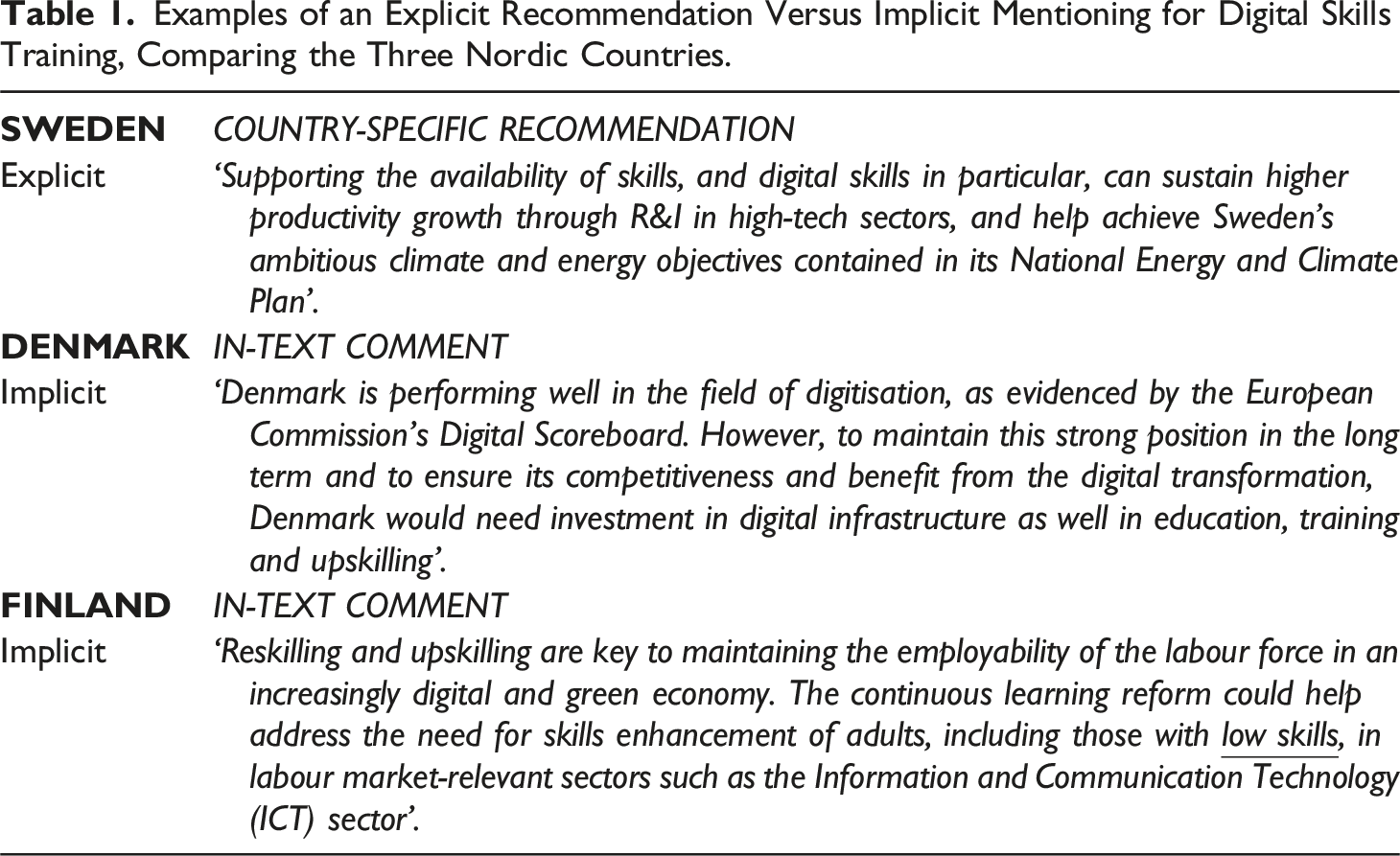
An interesting observation is that the countries with implicit recommendations contain the term ‘maintain’. This indicates already ongoing actions in relation to this area but with an implicit recommendation to keep investing. However, several explicit recommendations received by countries also indicated evidence of ongoing actions. An example includes: Further efforts in activation, upskilling and reskilling will be instrumental to
Recommendations for some other countries start from the observation that the digital skills base is too low. The Polish case is used as an example: The COVID-19 crisis brings out the overall structural challenge with digital skills attainment, as nearly half of the adult population
Recommendations to Support Digital Curricula.
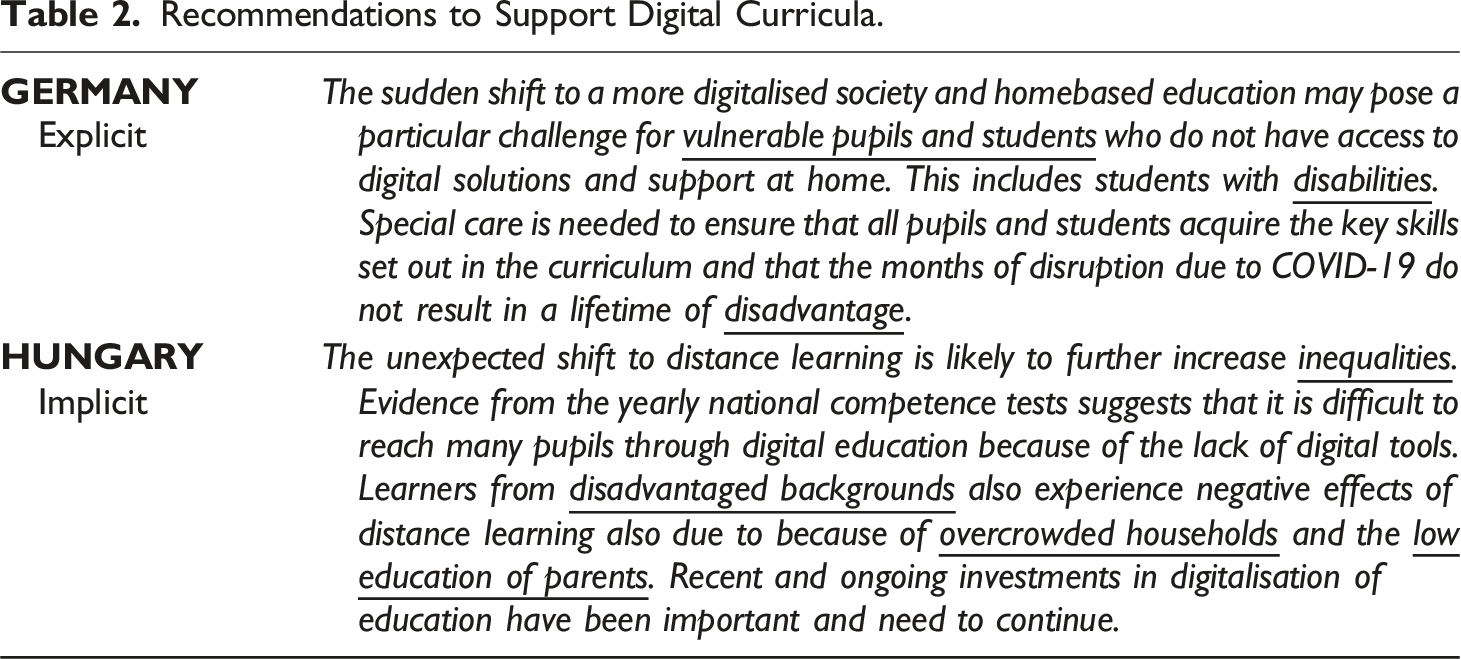
Recognising this focus on digital skills within Germany and Hungary singles out Estonia as the notable exception on digital skills. Scrutinising their CSRs, their recommendations were on unemployment benefits and the healthcare system. While these aspects were also covered within other countries’ CSRs, training and skills development was not highlighted in the Estonian case.
The 2022 CSRs
CSRs Received in 2022 Relevant to Training, Education, and Skills Development.
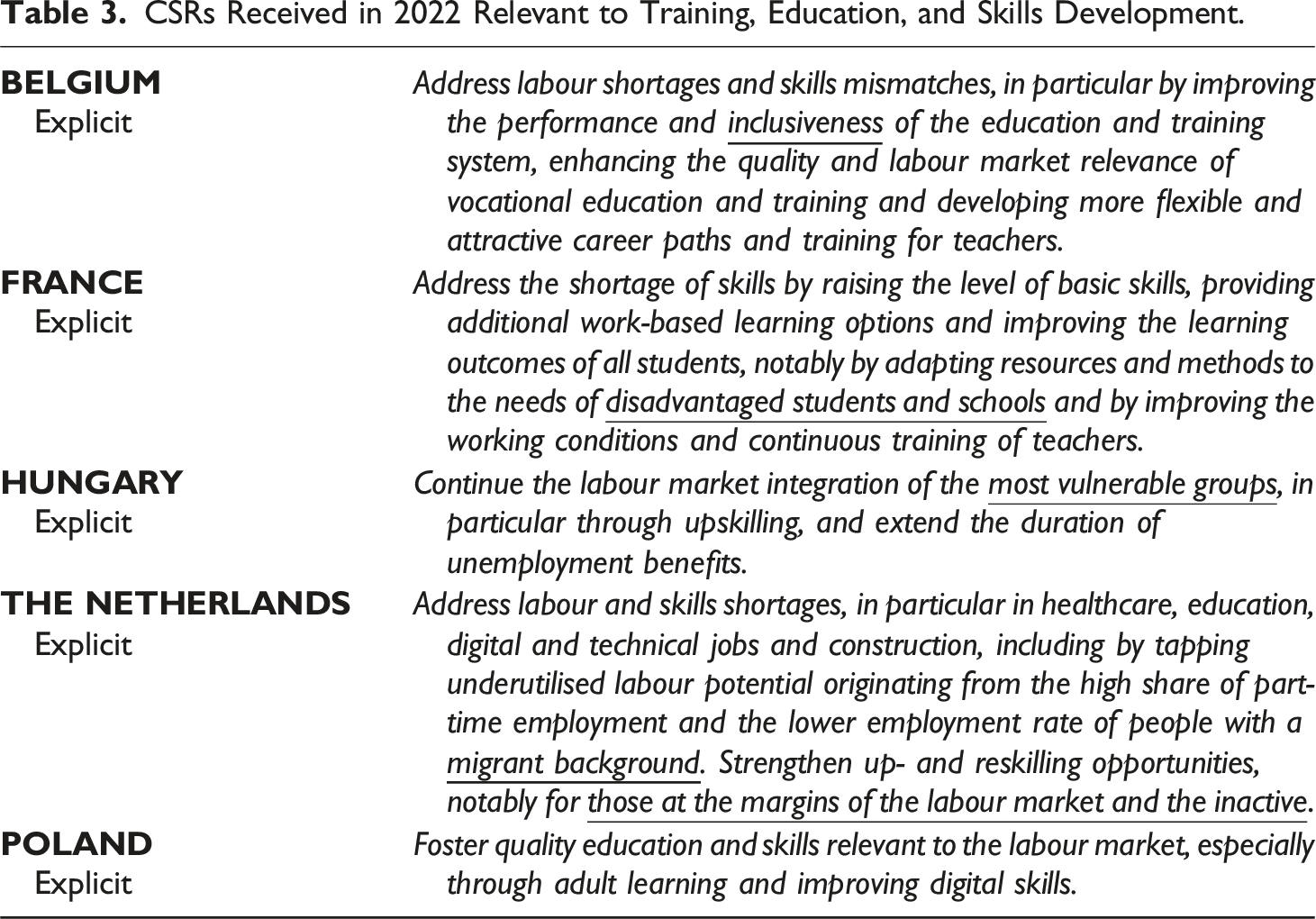
As evident from the text, all relevant CSRs strongly align with labour market purposes. The focus on ‘digital skills’ was still present, although the mentioning of target groups such as vulnerable adults, those who are inactive or disadvantaged, and migrants became more visible. Teachers were also mentioned throughout several CSRs, and while the previous analysis highlighted the need for ‘including’, the 2022 ones also mentioned the need for ‘improving’ and the need to ‘address’ issues. Shortages in the labour market and skills mismatches were pointed out, and in the case of the Netherlands, mentioned specific sectors such as healthcare and construction.
The 2023 CSRs
The 2023 CSRs were published just before the Summer of 2023. In comparison to 2022, the number of recommendations that contain the terms education, skills, and training significantly increased. Relevant recommendations for 2023 were found in all Member States and can largely be classified into two types.
Firstly, all countries received recommendations on the development of green skills to support the transition to more energy-efficient and sustainable economies and societies. In fact, many countries received exactly the same recommendation which was formulated as follows: Step up policy efforts aimed at the provision and acquisition of skills and competences needed for the green transition.
This exact sentence was found in the CSRs of Austria, Belgium, Bulgaria, Croatia, Cyprus, Czechia, Denmark, Estonia, Finland, France, Hungary, Ireland, Italy, Latvia, Lithuania, Luxembourg, Malta, Poland, Portugal, Romania, Spain, and the Netherlands. These countries represent 22 out of the 27 Member States. Recommendations for the need of green skills were also formulated in the other five countries but with their own nuances.
Germany’s recommendation reflects on the need to ‘further policy measures’ without utilising the word ‘step up’. Sweden’s recommendation was tied into a sentence on the need to reduce the use of fossil fuels and to switch to an increased use of renewable energy. While this focus is also present in the contextual information in other CSR reports, the Swedish recommendation made this more explicit with their sentence of skills needs. Finally, the recommendations in Greece, Slovakia, and Slovenia were more refined through the inclusion of the need for making buildings more energy efficient, for example, through the instalment of smart meters. This was tied in with a focus on helping households to lower their energy use. Slovenia’s recommendation also explicitly mentioned the role of the transport sector.
Relevant CSRs 2023 Other Than Green Skills.
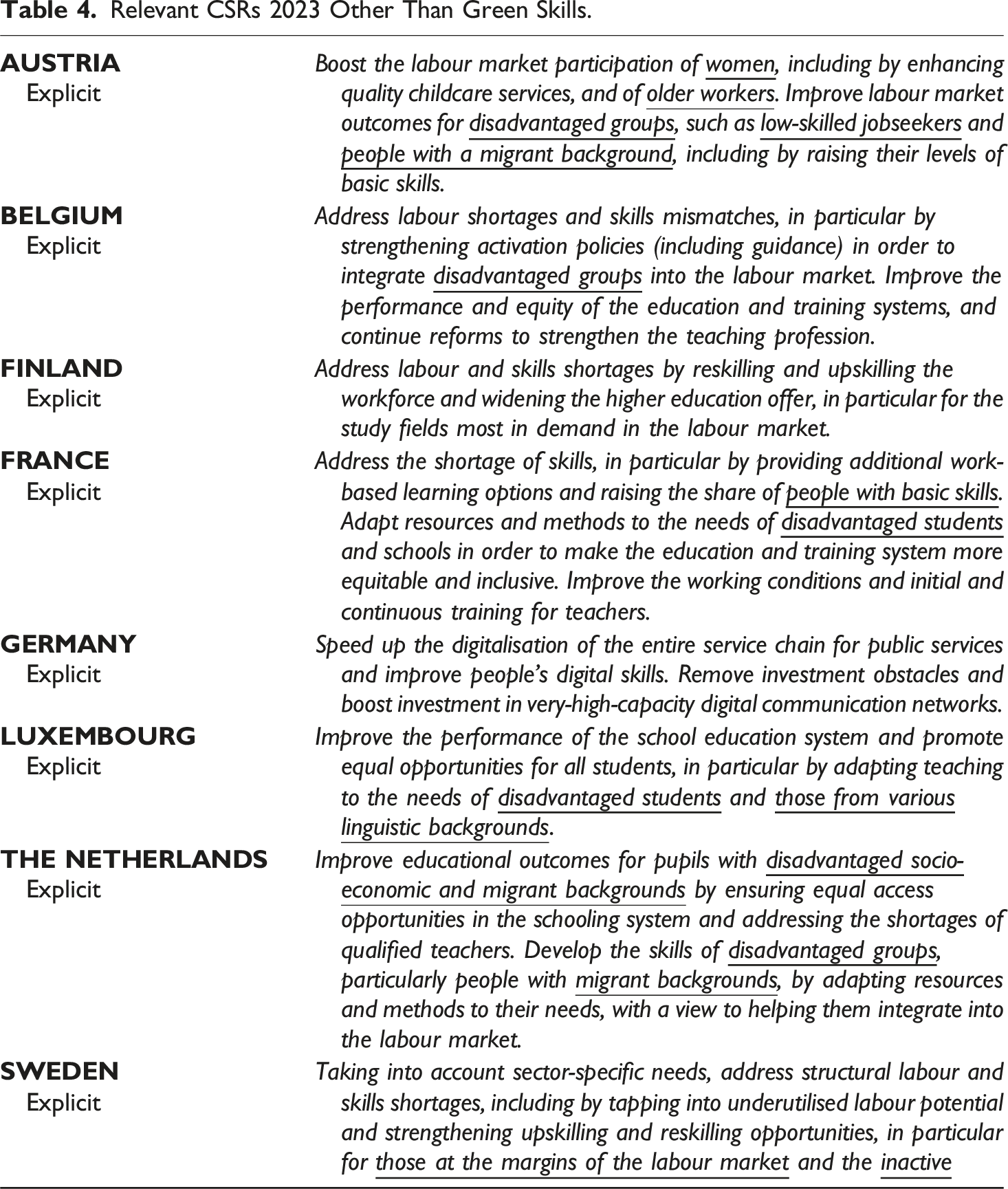
As in previous years, CSRs focus on the need for skills, although the word ‘competences’ features here as well. The 2023 CSRs are heavily targeted towards the skills needed to support the green transition. This needs to be understood in relation to the need for Member States to foresee provision so that adults have opportunities to acquire these skills.
Linking back to the research aims
The aims of this paper were to investigate 1. The content of CSRs that mention the need for actions relevant to education, training, and skills development, 2. The extent to which these CSRs focus on economic versus social goals, or both, 3. The extent to which the content and focus of these CSRs shifts over years, 4. The extent to which there are visible patterns within the content and focus of CSRs across the 27 EU Member States.
In relation to the first aim, it was observed that CSRs that contained advice on education, training, and skills development largely focussed on the need for competencies to support the green and digital transition. Additional recommendations focussed on skills mismatches, unemployed, and the integration of vulnerable adults in the labour market. As evident from the earlier parts of this paper, these topics feature highly in current European policy strategies such as the European Skills Agenda. The second aim was to uncover the extent to which relevant CSRs favour economic versus social goals, or both. Overall, there is a clear focus on economic goals in the sense that the development of skills has been framed to support the green and digital transition. This has a strong labour market focus and is in line with previous academic debates on the directions of European adult education policy. Several of the CSRs contained terms to highlight a social reflex. Examples included the mentioning of vulnerable adults, the low-skilled, the unemployed, etc. While it is thus possible to discover a ‘socializing’ of the recommendations in line with the EPSR, the observed use of the terms can also be interpreted through the arguments used in previous research (see, e.g., Eeva, 2021): that the social focus of European education and training policies is secondary to the primary aim of including more adults into the labour market for economic purposes. This is in line with Rasmussen’s critique on the move away from traditional holistic approaches to adult education and training (Rasmussen, 2024). Societal issues and tensions such as democracy, civic life, tolerance, and peace are not explicit part of the CSRs, and they thus represent a fragmented and economically tailored approach to education and training. This is thus in contradiction to the focus of critical, social, and cultural traditions to aim for broad life-wide adult education system that go beyond vocational skills acquisition.
The third aim of this paper was to investigate whether the focus of CSRs shifted during the post-COVID-19 years. The text-based analysis revealed that the 2020 CSRs prioritised advice on digital skills development. This needs to be seen as a response to the ‘COVID’ shock that pushed societies in lockdowns and created a stronger than before reliance on online modes of working and living. In the aftermath of the lockdowns, the CSRs in 2022 did not prioritise education, training, and skills development in most countries although ongoing issues with skills mismatches and underrepresentation in the labour market were further highlighted for several countries. While the Green Deal was originally signed off in December 2019, the COVID-19 outbreak delayed some of its intended initiatives. Nevertheless, skills to enable the green transition were a clear focus of the 2023 CSRs. The shift in priorities is visually represented in Figure 1. Schematic overview of priorities.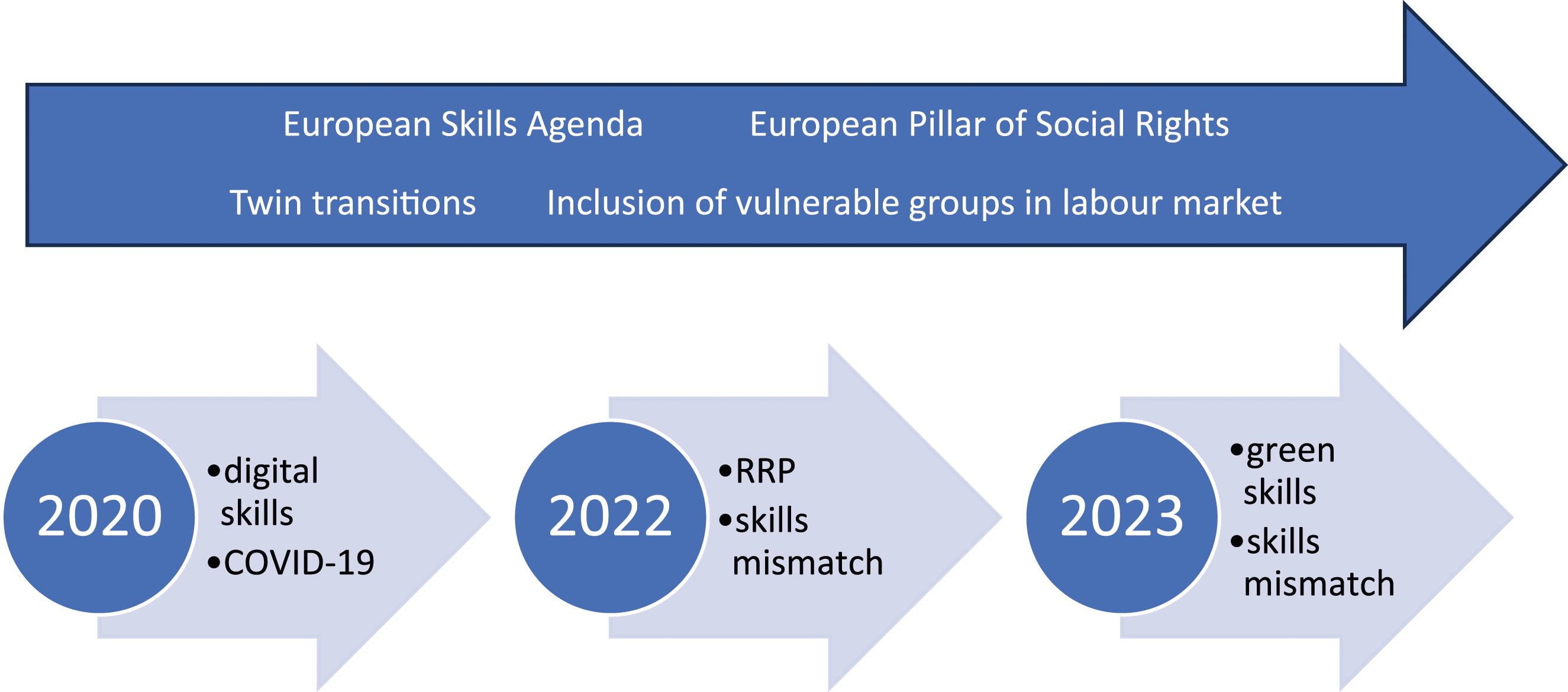
The fourth aim of the paper was to investigate to what extent the content and focus of CSRs relevant to education, training, and skills development do or do not differ between the 27 Member States. Advice on the need for digital skills in 2020 and for green skills in 2023 was common across Member States. The only country that did not receive a digital skills recommendation in 2020 was Estonia. All countries received advice on green skills development. This highlights the European Commission’s desire to create further convergence between countries as part of its economic goals. The focus on skills mismatches was only made to a select number of countries. Interestingly, many of these countries were already part of the European Economic Community in the 1950s, notably Belgium, France, and the Netherlands.
Conclusions
In their recent work, Corti and Vesan (2023) observed that the tone of CSRs since their inception in 2011 has shifted from being ‘austerity’ to ‘investment’-led. Instead of reducing public expenditures, governments have now been stimulated to invest in policy and reform actions to boost economic and social progress in their Member States. While CSRs are ‘country specific’, Member States clearly receive common steers to fulfil broader European goals, notable on the green and digital transition. Advice on social goals is in line with the principles of the EPSR and cannot be separated from the economic goals – basically to increase access to education and to raise adults’ skills to enhance their integration or position in the labour market. The analyses provided evidence on the European Commission’s shift away from adult education as a critical endeavour that combines vocational skills training with reflections on critical, societal, and cultural issues such as democracy and civic behaviour (Rasmussen, 2024).
Aforementioned research by Casagrande and Dallago (2022) stated that CSRs throughout the 2010s have not prevented economic and social destabilisation across the continent. While progress towards CSRs is monitored online, recommendations from the last few years do have little or no information on their progress to date. As such, it is difficult to judge to what extent and within which time frames we will be able to see progress – if any. For the next couple of years, CSRs will inevitably remain interlinked with the investments trigged through the RRPs. To what extent these post-COVID-19 investments and the follow-up of CSRs will lead to economic and social progress remains an open question and will need to be evaluated at later date. Variations in progress between countries could then be compared, potentially controlling for the intensity in which Member States invested in education, training, and skills development.
Footnotes
Declaration of Conflicting Interests
The author(s) declared no potential conflicts of interest with respect to the research, authorship, and/or publication of this article.
Funding
The author(s) received no financial support for the research, authorship, and/or publication of this article.
