



Abstract
‘Continuous meritocracy’ was introduced in Singapore to redefine the concepts of talent and ability in Singapore society. This expanded meaning of meritocracy serves as another way to further support the SkillsFuture Singapore movement (Skillsfuture Singapore, 2023b), which was launched in 2016. ‘Continuous meritocracy’ complements Work-Integrated Learning (WIL) programs, which were to provide adult learners opportunities to integrate practical work experiences with academic learning. However, to fully operationalize WIL in the domain of adult learners, this paper points out that it is vital for the Singapore government and the different stakeholders to endorse the different forms of successes by making them more visible in the society. Utilizing Pierre Bourdieu’s key theoretical concepts, this paper discusses the relationship between blue-collar adult learners’ dispositions and WIL and proposes an ecosystemic approach that is based on work-integrated (adult) learning (WIAL) to transform the Singapore blue-collar workers’ habitus with the aim to visualize ‘continuous meritocracy’ at the ground level.
Introduction
Regardless of socioeconomic background and ethnicity, governments in many countries aim to provide high quality education and foster an inclusive learning environment for all students to flourish and achieve their full potential. Therefore, it is important to consider how various stakeholders’ perceptions and actions could shape the translation of the concept of continuous meritocracy and the recognition of non-academic competencies in workplaces (Tan & Dimmock, 2015). In Singapore, the challenge is that the concept of meritocracy has been deeply rooted in the society. Although the objective of meritocracy is to promote equal opportunity to succeed based on hard work and abilities, it fails to account for the systemic and structural inequalities that could affect individuals’ opportunities and outcomes (van Dijk, 2020). Former president of Singapore, Mdm Halimah Yacob cautioned that Singapore must not allow systemic inequalities to take root and weaken its society. She stressed that Singapore ‘must re-examine how society rewards different skills and talents and accord greater value to those who are skilled with their hands’ (Chew, 2023a). Likewise, Education Minister Mr Chan Chun Sing reminded Singaporeans that, ‘A static and narrow metric for defining talent and ability will not help Singapore build a resilient society with diverse strengths to meet future challenges’ (Teng, 2023a).
This paper discusses the need for Singapore to recognize and value all forms of work and talents, and to reward everyone fairly, which is crucial for Work-Integrated Learning (WIL). Significant evidence indicates that authentic or ‘real’ work experience benefits students’ learning, and when individuals believe that their talents and skills are recognized in society, they would more likely embark on WIL. Utilizing Bourdieusian ‘[(habitus) (capital)] + field = practice’ framework (Bourdieu, 1984, p. 101), this paper proposes an ecosystemic approach to transform Singapore blue-collar workers’ habitus since it affects their access to opportunities, capitals, and social networks, as well as their perceptions of WIL. The application of a Bourdieusian perspective would provide a deeper consideration to the social dynamics, power distribution and cultural influences in the country’s social structure, education system and economic development. Here, Bourdieu’s framework becomes a valuable lens to understand the complex interplay of the conceptual tools of habitus, field and capital, especially in a country that places a huge emphasis on education, the development of human capital, and a highly competitive academic environment. At the same time, an ecosystemic approach is adopted to refer to the inter-relationships of the different aspects of the ecosystem; in this case, the society, its systemic structures, and various stakeholders, as well as how the concept of meritocracy, a central tenet of Singapore societal structure has created social mobility and inequality. It stresses the need to consider how multiple relationships can be established in the human ecosystem through physical, social and symbolic strategies (Van Lier, 2010). Although the workers’ skills and knowledge could be strengthened through WIL, it must be accompanied by physical visibility (showcasing successes in public spaces), social visibility (using different platforms to raise awareness of the benefits of WIL) and symbiotic visibility (creating and fostering more partnerships with different stakeholders to create more opportunities to be integrated into the existing meritocratic systems). The aim of this paper is to emphasize the important role of the government and institutions in creating ‘spaces’ for adult learners who have undertaken WIL to gain employment opportunities to increase their individual agency in the society.
Meritocracy in Singapore: The perils of blue-collar workers
Singapore is a tiny Southeast Asian country that is devoid of any natural resources.
Meritocracy plays an integral role in the Singapore education system whereby students, regardless of their socioeconomic background, are given equal access to opportunities and resources based on their talents and hard work (Zhang, 2021). However, in reality, there is unequal access to education facilities as it perpetuates social stratification and concentration of power in the hands of the elites. According to Oxfam International, 2 Singapore has been ranked among the top in the world for highest Gini coefficient 3 but yet also ranked among the lowest in addressing inequality in its society. Although it was reported that income inequality had fallen in 2022 (Chin, 2023), the income gap between the highest and lowest income earners in 2007 had grown from S$8,236 in 2007 to S$12, 661 (Hofmann, 2018). One causing factor is the ‘persisting inequalities across population groups potentially affected by social stratification’ (Raghavan, 2018).
The Singapore government introduced the concept of ‘continuous meritocracy’ in an attempt to expand the idea that success should not be determined by a single test or point in time in a person’s life. This new idea includes recalibration of success whereby it goes beyond adopting restrictive measurement of success which could have serious implications on one’s life trajectory (Teng, 2023a). Adult learners are generally very well experienced in work and life and possess deep practical knowledge. Here, adult learners refer to mid-career workers who have been working for at least five years. They possess a unique set of habitus built from their life and work experiences, education, sociocultural background and socioeconomic status, which is very different to fresh graduates. Among the adult learners who do not have a university degree, they inherit a different set of habitus due to their experiences and connection to close-knit work communities. In Singapore, blue-collar workers, also referred to as workmen, ‘operate machinery and vehicles or are involved in manual labour, such as cleaners, construction workers and labourers’ (MOM, 2023).
In Singapore, a growing concern has been that the country is fast becoming a society where certain skills, such as vocational skills, are valued less, and a certain class of people tend to receive less respect and feel less worthy than others. Consequently, this has created a system of privilege that disadvantages those with less ‘valued’ skills (Chua, 2018). A survey conducted by the Institute of Policy Studies (IPS) in 2022 with over 1000 working Singaporeans and permanent residents found that blue-collar workers and semi-professional workers believed that they were unlikely to have meaningful careers and do not have the capacity to make a positive impact on society. These workers ‘have [even] internalised this lower valuation in how they see their own careers’ (Tay, 2023). Furthermore, the less educated lower wage workers (aged 21–40) are less likely to pursue training and benefit from it despite evidence that training would improve wages for all workers over time (Teng, 2023b).
Deputy Prime Minister Mr Lawrence Wong cautioned that if the current Singapore economy continues to place ‘too much of a premium on cognitive abilities–what we deem as “head work,” there will be a growing divergence between those workers from ITE, polytechnic and university graduates’ (Prime Minister’s Office Singapore, 2023). Many critics have argued that such a narrow emphasis on success may have created a situation where there are serious limitations on what success, talents and skills should look like, and this one-dimensional definition of what it means to be successful has already been filtered to schools. Specifically, the ‘types’ of education that one receives influences their perceived ability and social status, and certain types of schools have been regarded to be of higher social status than others because of their academic performances (Ong & Cheung, 2016). The consequence is that it has created ‘a cycle of social stratification and reproduction across generations’ (Tan & Dimmock, 2015, p. 3).
Social class is defined as an individual’s relative position in a hierarchical system of stratification that is based on power, privilege, prestige and access to resources within a society defined by income/wealth, occupation and education level (Bourdieu, 1996; Dimer & Ali, 2009), and such ranking creates societal stereotypes and inequalities (Durante & Fiske, 2017). This class issue was reported in The Straits Times, an English-language daily newspaper based in Singapore, stating that, ‘The sharpest social divisions in Singapore may now be based on class, instead of race or religion’ (Yong, 2017). Minister Chan stated that ‘Singapore must let go of the idea that there is a pre-defined pathway to success’ (Ng, 2022), and thus there is a critical need to redefine success and meritocracy, and how WIL could provide an avenue for these adult leaders to reduce social disparities, stigma and biases. This paper argues that WIL can be a powerful tool for empowering individuals, and it must be supported by a more holistic and ecosystemic approach.
Work-Integrated learning in adult education
Unlike traditional front-loaded education whereby the emphasis is on academic learning, WIL programs for learners are targeted at the learners’ specific trade or industry. McRae et al. (2018) characterized WIL as learning that consists of classroom learning and time spent working in industry, public or community organizations.
Integrating WIL with academic studies is considered more practical because it provides an important avenue for students who possess impressive work experiences and records but may not have a university qualification to bolster their credentials. For example, innovative programs, such as those offered in the Singapore Institute of Technology (SIT), are delivered in ‘Term-in Term-Out’ (TITO) model whereby students can return to their workplace during stipulated periods of their undergraduate studies (SIT, 2023). During these ‘Time-Out’ periods, they will be able to translate what they have learned in their workplaces and vice versa. In Singapore, the government encourages its citizens to take on a ‘significant skills reboot’ (Chew, 2023a) by focussing on growing and honing their skills. Ideally, workers should gain sufficient knowledge and skills at university before they join the workforce since for a long time ‘the role of education served to compensate for the realities of employment rather than being a preparation for it’ (Brown, et al., 2020, p. 13). As early as in the 1970s, lifelong learning or continuing learning was a popular idea when adult learners used to set new goals for themselves to self-actualize their enormous potential (Tough, 1979). According to Maslow (1970), self-actualization is ‘the full use of talents, capacities, potentialities, etc.’ (p. 150).
WIL programs are gaining popularity in Singapore. These programs provide students a platform to gain necessary skills and knowledge that is relevant to their jobs, so as to become more relevant and ‘improved’ in order to be better aligned to the industrial needs. WIL, also known as ‘cooperative education’ in the United States and Canada, can take in the forms of work placements, internships, field experience and many other forms. In the area of service learning, course-related volunteer activities can be completed on or off-campus, locally or internationally (Jackson, 2013). The incorporation of job-related experience is one way to improve the quality of education since performance on the job requires both formal training and experience (Mincer, 1981). However, Billet and Choy (2011) pointed out that ongoing learning-working life has become increasingly important, and hence, there is a need to extend WIL to ‘support learning across working life that include experiences in educational settings, to complement what can and is being learned through practice settings’ (p. 25). For example, SIT offers programs for the Land Transport Authority (LTA) for their staff to enrol in a degree program in sustainable infrastructure engineering (land) whereby a significant portion of the program will be delivered through workplace learning (Yang & Ng, 2021). The Singapore University of Social Sciences (SUSS) offers Continuing Education and Training (CET) Work-Study Programs that are designed in partnerships with industry and practitioners for adult learners to obtain specialist diploma certifications through internships to obtain actionable knowledge that is immediately relevant (SUSS, n. d).
With technological advancement and automation, lifelong learning is fast becoming a ‘natural’ route for adult learners to maximize their skills to remain competitive in this ever-changing job market. Therefore, the above examples point out that the adult learners are most likely working full time who tend to align their studies with their occupational needs. Billet and Choy (2011) explained that integrating lifelong learning and experiences in education settings could enable these adult workers to ‘enrich and extend their existing knowledge, access and learn knowledge that would be otherwise inaccessible to them in practice settings alone, and meet the needs of those requiring their knowledge to be certified through qualifications’ (p. 28). Therefore, WIL could provide these experienced workers a way to be in a full-time employment and earn credentials for their expertise. Hence, building on WIL from students’ initial preparation for their occupations to one that promotes lifelong learning for adults, this paper reconceptualizes WIL to work-integrated (adult) learning (WIAL) to fully capture the ongoing development for adult workers, that is, lifelong learning for ongoing employability for adult learners.
For a long time, obtaining ‘a degree from a brick-and mortar university was used by some employers as a proxy assessment of a candidate’s potential and capabilities, not necessarily their skills’ (Kis, 2021). Hence, despite these programs being offered to adult learners, it is equally important to question and challenge the deeply and entrenched held value of education especially when the traditional views of education in the society tend to be linear. For example, in Canada, although adult education provides skills development for better job opportunities and improves well-being, it remains the ‘poor cousin’ of compulsory and higher education and inherits significant stigma for both the learners and adult educators. Walker (2022) stressed that in order for Canada to fully materialize its Future Skills Initiative, adult education needs to be promoted ‘in consultation with all stakeholders - adult education providers, learners, educators, government officials, employers, Indigenous governments and communities, and others’ (p. 20). The whole society needs to value adult learners and professional growth throughout one’s career. Singapore therefore also needs to place greater recognition on adult learners and establish stronger relationships between the various stakeholders so that WIAL can be a rewarding endeavour that will bring personal, professional and societal benefits for these adult learners.
The way forward: Bourdieu’s key theoretical concepts in adult learners
Baudrillard (1998) explained that as society matures, there are new social segregations ‘being registered in more subtle criteria: type of work and responsibility, level of education and culture (the way of consuming everyday goods may itself be a kind of “scarce commodity”), participation in decision-making’ (p. 57). There is a growing differentiation and discrimination, and Bourdieu’s key concepts can be adopted as valuable thinking tools or useful theoretical framework in the analysis of social class and successes in a society. The key theoretical frameworks are adopted to understand how early exposure to education could affect the continuous social inequality and social exclusion, such as the promotion or reinforcement of dominant class of cultural capital (Bourdieu, 1977; Formosa, 2006; Gilbert, 2019; Tan & Liu, 2022). Since an education system ‘is a class institution… as not everyone has the same educational chances’ (Baudrillard, 1998, p. 59), this paper adopts Bourdieusean concepts to delve deeper into adult learners’ habitus. It explores how WIAL is shaped by social dynamics and how it could serve as a corrective measure to reduce social disparities, and proposes the following formula: [(habitus) (capital)] + field = practice (Bourdieu, 1984, p. 101). This is to illustrate the interlocking relationship between habitus (one’s disposition), capital (one’s position in a field) and field (social arena), which are key components that impact practice (Maton, 2008).
Habitus
According to King (2000), the concept of habitus is the most cited, recognized and contested due to its complexity. It is multidimensional since its orientation is drawn from a number of sources and ‘in ambivalent undisclosed ways’ (Silva, 2016, p. 75). Some critics called it ‘a poor cumbersome concept’ and ‘lacks explanatory potential for an account of fragmentation in the operation’ (Ibid, p.76), as ‘notoriously difficult to pin down’ (Calhoun, 2003, p. 292), or conceptually ‘far from well understood’ (Swartz, 1997, p. 92). The confusion surrounding habitus perhaps reflects the complexity of individuals or social agents interacting with the various structures in the society (Tan & Liu, 2022). For example, Wacquant (2016) described it as incoherent due to its ‘dynamic, multi-scalar, and multilayered set of schemata [that is] subject to “permanent revision” in practice’ (p. 64). Nonetheless, Bourdieu’s (1977) concept of habitus describes a person’s perceptions of their everyday life through their set of dispositions, values, beliefs and practices that were shaped by their interactions with their social environment. This paper proposes that it could still be used to understand blue-collar workers’ trajectories and social position in a society.
Translating this to the field of education, Bourdieu’s habitus has been recognized to illustrate how cultural resources are converted to capital to support students’ educational experiences (Tan & Liu, 2022). In education, ‘habitus contributes to a child’s ability to acquire capital’ (Wu, 2022, p. 324). As these dispositions are ‘a past which survives in the present and tends to perpetuate itself in the future’ (Bourdieu, 1977, p. 82), this paper argues that WIAL alone would have a limited impact to transform blue-collar workers’ habitus to internalize a refined reality of possibility without the intentional support from the key stakeholders. This internalized thought could create barriers to progress whereby these workers could remain a gated community and form unique enclaves along their socioeconomic lines. Since ‘habitus helps to shape an individual’s present and also future practices’ (Yang, 2014, p. 1525), deliberate interruptions from key stakeholders, such as the government, are needed to address issues and promote positive change.
Capitals
Bourdieu’s (1986) notion of capital takes the forms of economic, social, cultural and symbolic forms. Economic capital includes all types of financial resources, such as income, property, material possessions, investments and savings. Social capital consists of social contacts, networks or relationships (membership or kinship of a group), which could be utilized to generate privileges and legitimize social memberships. Cultural capital comprises three forms: institutionalized, such as academic qualifications that give its own legitimized recognition; embodied, such as experiences and language proficiency; and objectified, as in the forms of books and computers. It ‘refers to transmissible parental cultural codes and practices capable of securing a return to their holders’ (Tzanakis, 2011, p. 77). Symbolic capital is materialized in the form of individual power to mobilize all of their capitals and transform them into social ranking, class position, etc. (Bourdieu, 1986; Joy et al., 2020). Essentially, the types and accumulation of capitals determine individuals’ social hierarchies, positions and perceived value in a society, which will impact their socioeconomic status and their social space in the society. For example, parents with financial capacity can provide additional academic help for their children as compared to their underprivileged counterparts (Wu, 2022). Thus, different segments of capital will have different strengths. At the same time, class barriers, notably, the transfer of cultural capital will be more difficult to pass to their children, but once it is obtained, ‘its role as class barrier is very strong’ (p. 4).
Fields
Field refers to the social context or space where individuals interact, utilize and convert their capitals into values (Bourdieu, 1986). This social space ‘consisted of positions occupied by agents (people or institutions) and what happens on/in the field is consequently boundaried’ (Thomson, 2012, p. 67). Social power is negotiated, and social positions are shaped through struggles. There are multiple fields coexisting in one social context and they operate semi-autonomously where ‘each field has its own distinctive “logic of practice”’. Agents or actors, in this case blue-collar workers, occupy particular positions in a society and how they should and could behave in the field (Ibid, p. 68). Basically, the social field also consists of distinct sub-spaces within the global space encompassing spheres of activities (Hilgers & Mangez, 2015), with “differentiated social ‘universes’, ‘worlds’ or ‘microcosms’ (Bourdieu & Wacquant, 1992, p. 97).
The construction of these fields are a result of the process of the power negotiation and struggle between different groups of individuals, which then create a unique system of rules and regulations to legitimize and recognize social structures, behaviour and practices within a culture. With each field and the nested sub-fields having their own rules that can reinforce or contradict each other and affect values of individuals’ capitals (Joy et al., 2020, p. 2545), this has created forces to exercise power within the field and in other fields (Hilgers & Mangez, 2015). These three key concepts have strong inter-relationships with one another and cannot be operationalized without the other. For example, Bourdieu and Wacquant (1992) explained that a capital does not function unless it is situated in a field whereby its value is determined, which in turn shapes the individuals’ position in relation to others in that field, which then leads to the development of their habitus.
Applying Bourdieu’s theory to understand blue-collar workers
When applying Bourdieu’s key concepts to blue-collar workers, it enables us to understand the connection between the social dynamics that influence their experiences and social occupational realities to their social conditions of possibilities (Mangez & Liénard, 2015). Social conditions influence perceptions; they are deeply embedded and act as a lens in which they shape individuals’ chances to complete their WIAL programs successfully. Social conditions also influence how individuals see themselves and the positions that they occupy in different fields in society. In these fields, the concept of habitus becomes central as individuals begin to regulate their behaviour based on their internalized set of dispositions. The individuals’ habitus comprises primary and secondary habitus; one that is inculcated in their childhood and the other learned later when they enter the workforce, which then generate practices that reproduce or reinforce the social structures (Power, 1999). Therefore, since blue-collar workers’ habitus are shaped by their overall life experiences, such as education level, work experiences and social networks in the Singaporean cultural context, all these could influence their willingness to learn and adapt to new situations including WIAL. Critics have also pointed out the inadequacy and rigidity of habitus since individuals are simply producing and repeating the same social practices that are endorsed by those structural conditions thus ruling out any possible social change (King, 2000). However, if there is a structural modification led by the government and key stakeholders, such as the various government agencies, new perceptions and appreciations could result in the creation of new social realities and transformation of the blue-collar workers’ relationship with others in the Singapore context.
Structural barriers and individuals as social agents
In Singapore, the blue-collar workers’ habitus is characterized by a lower expectation of their contribution to the society, inevitably resulting in tensions and struggles within the field of WIAL as they negotiate their position with others and how they would be judged by others in that field. For example, if they do not see the value and importance of WIAL, they would likely feel less intrinsically motivated to learn since completing WIAL may not bring many changes to their current status. The already severely differentiated and discriminated position of blue-collar workers could become an obstacle in pursuing WIAL. Although critics have highlighted that ‘the habitus reduces social reproduction to the mechanical imposition of prior social structures onto the practices of individuals’ (King, 2000, p. 429), the rise of the Internet and social media has empowered individuals to call for and make significant changes to society and social structures, such as the #MeToo movement, which could challenge prior social structures and individuals’ practices. Therefore, social media and other online platforms could serve as a powerful tool to publicize and showcase the benefits and rewards of WIAL, which in return promotes continuous meritocracy where rewards and ongoing merit are recognized. This paper argues that such prior rigid social structures could be reconstructed through these platforms by publicizing and visualizing new forms of practices.
Reducing social reproductions across generations
As mentioned, Singapore society places lesser value on blue-collar work, and this clearly influences how these workers see themselves and interact with other individuals. This phenomenon has been deeply embedded into the Singapore society over time, and blue-collar workers’ habitus has become more permanent and transportable to different fields (Yang, 2014). This perceived inferior status of technical or service jobs is influenced by the beliefs that outstanding academic achievement and high qualifications are valued and are therefore more ‘superior’ than the rest. Such internationalization of low self-value would deter these workers’ desire to pursue WIAL due to the unequal power relations in these fields. It was found that even school children were acutely aware of the academic differences and their perceived position in school. A study by OnePeople.sg found that students who were from the less academically talented class felt ignored, discriminated against and looked down upon by those who were more academically talented and in ‘better’ classes or programs. These less academically talented students also chose not to ‘hang out’ with their academically talented counterparts since they believed that they were more ‘stupid’ and did not ‘behave the same as them’ (CNA, 2019). These students’ profound shame and insecurity experiences in school could translate into inferiority complex later in life (CNA, 2020). Since social capital is defined as actual or potential resources that individuals have within a network of relationships, these less talented students and later adults may not be able to mobilize this capital in another field since they are perceived to be inferior and more ‘stupid’ (Lehman, 2019). Therefore, for WIAL to be fully effective, transformation has to start from schools, as schools and institutions form an important physical and social space where students engage with others and with the education system; it is also a place where their knowledge, abilities, practices and perceptions are formed.
De-Stigmatization of blue-collar workers
In reality, blue-collar workers do possess other forms of capitals that are valuable. For example, they tend to possess specialized skills and knowledge that are related to the specific industry that could add advantage to their WIAL experiences. They are also more likely to have strong social capital, such as social connections within their communities and industries, and these relationships could provide valuable opportunities in practical and hands-on work. Therefore, it is critical that these capitals must be seen as equally valuable (Lehman, 2019). This paper suggests that for blue-collar workers to place and receive greater value in WIAL, they must change how they interpret and understand their perceived realities and the value of their work, and this shift needs to happen from a holistic ecosystemic approach. At this point, it is important to note that regardless of which social class and which vocations, all workers should be rewarded based on their merits and worth.
Perception shapes how people understand reality, which in return shapes how they interact with their world. Yet, perception is also difficult to change. This paper proposes a modified framework for continuous meritocracy:
When supporting adult learners in WIL, it is critical to motivate them to learn ‘visually’ (see Figure 1). What this means is that adult learners need to see, experience and participate in this ‘value-added’ physical and social learning space with real life successes of other blue-collar adult learners. In other words, in addition to showcasing success stories in the local newspapers, news or social media, they must be made visible in all parts of Singapore society. Wu (2022) pointed out that to reduce stigmatization, the media has been trying to project a ‘positive image’ of students who have achieved success despite coming from the less academic streams. Unfortunately, such success stories were rare. Importance of visibility.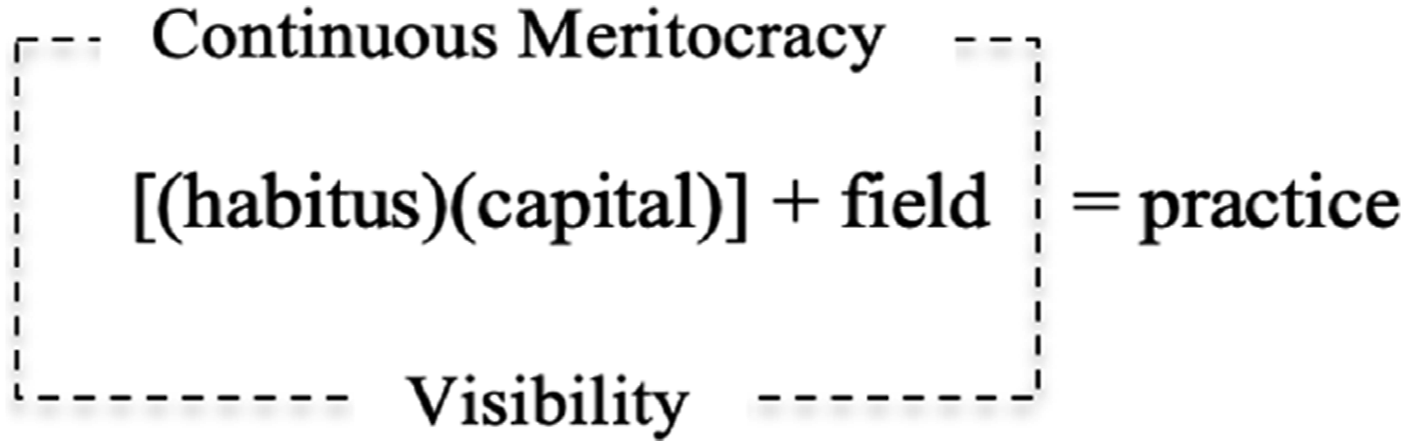
The role of the Government
To begin with, the Singapore government will need to redefine success and values, creating new social realities by showing how these individuals have equal opportunities to serve the public at the macro level as they become visible ambassadors for ‘talents in different fields’. This includes widening the ‘scholar-pool’ to include different types of ‘scholars’ so that different workers would be afforded with a diversified route into the civil service and be offered with different opportunities for accelerated career progression into leadership roles (Ye & Nylander, 2015). Therefore, simply showcasing success stories in the media is not enough. Instead, WIAL learners should be given opportunities to interact, work and learn from their predecessors who have gone through same educational route, and at the same time received fair recognition for their ongoing merit and performance. Similarly, securing employment in the government sector could improve these workers’ economic, social and cultural capitals, and compel them to mobilize these capitals in the society, which in return will benefit them and the economy. With more recognition and lesser structural constraints, they will progress in a renewed meritocratic system where both hands-on and academic skills are valued equally.
According to Chew (2023b), this can be one way of ‘affirm[ing] the dignity of our differently-abled citizens and enable them to realize their full potential’. This intervention also aligns with Bourdieu’s conceptualization of habitus whereby it stresses the importance of both perceptual structures and embodied dispositions that influence how individuals see and behave in their specific world (King, 2000). Hence, this creates physical, social and symbolic visibility when the benefits of continuous meritocracy are amplified in the government structures and public spaces whereby there are opportunities for social mobility and career advancement pathways in the government sectors. More importantly, society would witness a widening metre for defining talent and ability at the ground level. When this group of people experiences less structural barriers, it may lead to deeper reflection on their deeply ingrained dispositions and attitude, which could then lead to a change in behaviour and a renewed commitment to personal growth and continuous transformation. Such top-down intervention will create a corresponding change in schools for students from less academic streams. As these students receive more opportunities in schools and witness greater value accorded to workers who have gone through similar educational route in the government sectors, this will likely encourage them to pursue alternative educational pathways since they could be rewarded based on their ability and effort in their respective field, and no longer a rarity.
The role of the institutions
Since post-secondary and higher institutions are tasked to provide WIAL programs to adult workers, they could provide greater access to employment opportunities for these workers who are interested in becoming collaborative trainers or coaches. These trainers and coaches can become symbolic representations of the working class. Through interactions with colleagues from other social classes, this could result in a reshaping of one’s dispositions when generalizations, biases and stereotypes are broken down, and individuals are given opportunities to learn from one another, thus, ‘encouraging the professionalization of adult educators in some form could help bring legitimacy to the field’ (Walker, 2022, p. 22). In this case, aside from professionalization of adult educators, those who have undergone WIAL would be empowered, and this would have a positive impact on their psychological well-being. Specifically, societal views about the capabilities and contributions of the working class would be reshaped when greater opportunities for social mobility are provided. In turn, when those who have gone through WIAL are given opportunities to become mentors and coaches to other adult learners from the same societal class, these mentors can leverage from the new social networks to accumulate the different forms of capitals. As they adapt approaches to meet the expectations of the field, these mentors help others who are in their same social class to maximize their chances of success in that field. More importantly, they possess relevant experiences, industry knowledge and role modelling abilities. They will also become strong adult instructors who are able to improve and enhance andragogical approaches. Not only do they understand the challenges and are relatable to those who are in WIAL, they are better abled to have greater exchange of knowledge with industry partners whom they have worked with. Basically, by leveraging the experiences of predecessors, WIAL for current adult learners can be enhanced and connections can be established for their future career.
Minister Chan reminded Singaporeans that the broadening of the definitions of merit in our school system must be accompanied by tangible differences in earnings and at the workplace (Teng, 2023b). Therefore, besides translating into tangible differences in earning, both ‘heart’ and ‘hand work’, blue-collar workers’ merits must be converted into tangible differences that are made visible in both post-secondary institutions, such as ITE, and higher education. Here, physical, social and symbiotic visibility are activated because diversified talents are made visible, reducing devaluation and stigmatization when they become experts in this field. Consequently, this creates a more inclusive and respectful workplace with more opportunities being integrated into the existing meritocratic systems. Therefore, WIAL alone will not improve the working-class occupational hierarchy in Singapore society. Although selections and differentiations in a society are inevitable, they can be beneficial if there is social cohesion. In other words, the various stakeholders need to acknowledge the struggles inherent in social life and make a concerted effort to increase individual agency in the society. Basically, Singapore will need to pivot its outlook from ‘all about class’ to ‘all about us’ if the country truly wants to embrace continuous meritocracy. In short, we argue that visible continuous meritocracy must be spearheaded by the government, the various government agencies, and in the education field. For example, government policies, such as Singapore-registered companies can secure up to 70% of course fees and enhanced funding of up to 90% of subsidy for jobseekers with greater needs for Singapore Citizens (Skillsfuture Singapore, 2023a, 2023b). Essentially, when both hands-on and academic skills are visibly recognized and awarded accordingly by the government agencies, inevitably, cultural mindsets will begin to shift. Currently, the ‘Singapore Public Service employs about 150,000 public officers working in 16 Ministries and more than 50 Statutory Boards. Within the Public Service, comprising about 86,000 officers working in the Ministries’ (Career@Gov, 2023). Therefore, a sustained effort and collaboration across sectors, including public and private institutions, must be in place to promote societal change. Although societal transformation is a gradual process and requires time, when the government and government agencies become role models, this would be a powerful motivator for adults to embark on WIAL since Singapore adopts a centralized system in governing the country.
Conclusion
One of the key theoretical premises of blue-collar workers embarking on WIAL in Singapore is that they share common values, needs and desires with the white-collar workers of the Singapore society. The other fundamental premise is that recognition of their contributions to the society is an important symbolic aspect of what makes a united Singapore where all forms of work – head, hands or heart work – are considered valuable in the city-state that has a strong interventionist government. Since the society is a multidimensional space consisting of numerous fields and the different forms of capitals, Bourdieu’s concepts of capitals, field and habitus could be applied to argue that a transformed habitus is needed in Singapore to promote certain behaviours and social values that would support blue-collar workers to better negotiate their power in different fields. Therefore, we propose an intentional and organic approach to create a ‘visual’ and supportive ecosystem to support WIAL, and to bolster better social and economic outcomes. In this case, a powerful visual mental framework is created of what a continuous success and outcome would look like.
This paper posits the importance of not only understanding the blue-collar’s sociocultural beliefs and the factors that shape the experiences of these workers in WIAL programs but also to provide visible employment opportunities to bolster their intrinsic motivation to learn and career trajectory. This is especially important because these individuals are acutely aware about their surroundings, or in this case, the various fields. As discussed previously, the current concept of success has been challenged and debated by the government and the people. In such a situation, a different order or social reality would be needed, and the government will be the best ‘interrupter’ to disrupt the present field (Bourdieu, 2020; Yang, 2014). Although there have been support systems, resources and opportunities provided by the Singapore government to narrow the skills gap and improve career advancement, and the subsequent call to promote a more broadened meritocracy whereby all types of work are deemed valuable, they are still insufficient. Instead, there must be visible actions to promote an overall shift in perceptions whereby blue-collar workers’ skills are fairly rewarded and recognized for their worth in the society based on their ‘merits’. By including physical, social and symbolic visibility, it could address the stigma, biases and social class through continuous meritocracy. In addition to uplifting the less privileged, there must also be an upsizing of visible opportunities for everyone so that Singapore can remain competitive in this global economy.
Footnotes
Declaration of conflicting interests
The author(s) declared no potential conflicts of interest with respect to the research, authorship, and/or publication of this article.
Funding
The author(s) received no financial support for the research, authorship, and/or publication of this article.
