




Abstract
While procedural justice research has established that uncaring, insensitive or intimidating police treatment is linked to negative mental health outcomes for crime victims, the psychological consequences of exclusion remain underexplored. Using data from an online survey of crime victims who interacted with the police (n = 504), this study tested four hypotheses: the direct harmful effect of procedural injustice on mental health (H1), the negative impact of police-induced exclusion on mental health (H2), the link between procedural injustice and police-induced exclusion (H3) and whether procedurally unjust police behaviour worsens feelings of exclusion, further undermining mental health (H4). Findings challenge the initial hypothesis that police procedural injustice harms crime victims’ mental health by inducing exclusion. Instead, they suggest a dual impact: procedural injustice both harms mental health and fosters exclusion, but these effects appear to operate independently rather than being directly linked. These results remained consistent even after accounting for crime type and severity, and demographic and socio-economic factors. Qualitative survey responses and four follow-up interviews provide valuable lived experiences and context that enrich the survey findings. They suggest that procedural injustice may harm mental health by stripping victims of the core conditions necessary for psychological recovery – safety, validation, justice and agency – while also undermining their trust in the police. The study underscores the need for emotionally intelligent and procedurally fair policing to support victims’ psychological well-being.
Introduction
Victims of crime often turn to the police not only for protection and justice but also for recognition, validation and support (Brooks-Hay, 2020). The way police respond to victims during these interactions can have lasting consequences, shaping both their psychological well-being and their trust in the justice system. While some victims report positive experiences in which officers treat them with empathy and respect, others describe encounters that leave them feeling dismissed, disbelieved or even retraumatised. A growing body of research highlights that fair and compassionate police treatment can mitigate distress, whereas insensitivity, hostility or procedural injustice can exacerbate psychological harm (Acquaviva and Gullion, 2024; Elliott et al., 2014; Greeson et al., 2014; Hohl et al., 2022, 2023; Wemmers, 2013). However, less attention has been paid to why this may be the case. What is it about the experience of unfairness that causes such harm?
In this study we investigate the potential role social exclusion – the experience of feeling marginalised, unimportant and disconnected from society as a direct result of police interactions – may play in shaping mental health outcomes. We build on existing literature by examining police-induced exclusion as a potential mechanism through which procedural injustice harms victims’ mental health. When victims feel ignored, dismissed or disbelieved, they may internalise a sense of rejection that extends beyond the immediate encounter, reinforcing feelings of powerlessness and alienation from the justice system and society at large (Morissette and Wemmers, 2016). While procedural justice research has established that respectful and fair treatment fosters trust and well-being amongst crime victims, the psychological consequences of exclusion remain underexplored.
Throughout this paper we use the term ‘mental health outcomes’ to refer to psychosocial impacts such as distress, feelings of exclusion and reduced psychological well-being resulting from police interactions, rather than diagnosable mental health disorders. While there is a well-established body of work examining procedural justice and its effects on individuals with diagnosable mental illness (e.g., Morgan and Higginson, 2023; Watson and Angell, 2007), our focus is on the psychosocial impact of police interactions on victims of crime more generally.
Procedural justice and psychological implications
Procedural justice refers to the fairness of police processes – whether victims feel heard, respected and valued in their interactions (Walters and Bolger, 2019). Contemporary procedural justice scholarship highlights four key principles that shape these perceptions: trustworthy motives, voice, dignity and respect, and neutrality (Goodman-Delahunty, 2010; Morgan and Higginson, 2023). When police interactions reflect these principles, they do more than promote psychological well-being – they also enhance perceptions of police legitimacy, or the belief that police act fairly and deserve to be obeyed (Tyler, 2006). Perceived legitimacy, in turn, is strongly associated with victims’ willingness to cooperate with police, which is essential for effective investigations and the pursuit of justice (Tyler and Fagan, 2008).
Importantly, procedurally just encounters may also address victims’ heightened feelings of self-uncertainty – a psychological state in which people question their social standing, value and place in society after experiencing harm (De Cremer and Sedikides, 2005; Van den Bos and Lind, 2001). By treating victims with respect and fairness, police can reduce this uncertainty, helping individuals regain a sense of predictability and control. This sense of trust, and the security and engagement it engenders, may in itself provide redress to the psychological harms of victimisation and may even actively promote psychological benefits. In this way, procedurally just treatment fosters psychological safety, allowing victims to feel more in control, validated and less threatened in the aftermath of trauma. When individuals perceive that they are treated with dignity and that their experiences matter, it can contribute to emotional healing and resilience. Conversely, procedural injustice – when victims feel dismissed or mistreated – can erode trust, undermine police legitimacy, reduce cooperation, exacerbate self-uncertainty and worsen psychological distress (Greeson et al., 2014; Hohl et al., 2023).Research on victims of sexual violence illustrates the devastating impact of procedural injustice. A large-scale study of nearly 2000 rape and sexual assault survivors in England and Wales (Hohl et al., 2023) found that while some reported positive experiences with empathetic officers, most described negative encounters that left them feeling disbelieved, unsafe and unsupported. The psychological toll was severe – three out of four survivors reported worsened mental health due to police interactions, and many regretted reporting their assault. Some even described police treatment as more harmful than the crime itself.
How police interact with victims of crime extends far beyond the handling of a case. As first responders, police officers set the tone for victims’ experiences, influencing not only their immediate emotional state but also their long-term recovery. For many victims, police officers are the first – and sometimes only – representatives of the justice system they engage with. Research on adolescent sexual assault survivors (Greeson et al., 2014) underscores this point: when police demonstrated care and compassion, victims were more likely to feel emotionally supported and continue engaging with legal proceedings. In contrast, dismissive or insensitive police behaviour led to heightened distress and disengagement from the justice system altogether.
The role of police-induced exclusion
While the link between procedural injustice and mental health is well-documented in the victim's literature, less is known about why these effects occur. Importantly, victims often seek more than justice in a narrow legal sense – they seek recognition, validation and assurance that their suffering is acknowledged and taken seriously (Feldthusen et al., 2000; Herman, 2003; Pemberton et al., 2019). Pemberton's work on the ‘big two’ needs – agency and communion – is helpful here: communion refers to the fundamental human need to feel connected to and included within the social world. When communion is threatened, as may occur during procedurally unjust police encounters, victims may experience psychological harm that extends beyond the immediate event. One potential explanation for this process is therefore police-induced exclusion – the experience of feeling marginalised, rejected and disconnected from society due to police interactions.
Feeling excluded is more than just an emotional reaction – it is a process that shapes individuals’ perceptions of their place in society. When people approach the police as victims, they enter the interaction as citizens who, at least in principle, are entitled to a just and appropriate response to the crime they have endured. Their expectations are shaped by normative values grounded in notions of fairness and institutional responsibility. In this context, police officers are perceived as agents of state authority, entrusted with the duty to address wrongdoing, provide justice and restore the status of victims of crime. This aligns with the principles of Procedural Justice Theory (PJT), which frames police as not just enforcers of legal codes but as symbolic representatives of broader social entities – whether the community, the nation or shared moral values (Bradford et al., 2014; Murphy and Cherney, 2018; Tyler and Jackson, 2014). for victims, engaging with the police is often driven by the expectation of support and advocacy – essentially, a belief that officers will stand by their side in the pursuit of justice. When this expectation is not met the experience can foster disillusionment, leading victims to perceive the police as detached or even antagonistic figures who do not reflect or uphold the values of their community. Importantly, such procedurally unjust encounters can also undermine perceptions of police legitimacy, weakening victims’ belief that the police act fairly and represent shared moral values (Jackson et al., 2012). In some cases, this disconnect extends beyond the police, causing individuals to feel estranged from the wider set of societal structures that are meant to protect them (see Koskela et al., 2016).
Research specifically examining the social psychological effects of victims’ interactions with police officers is surprisingly sparse (although see Greeson et al., 2014; Hohl et al., 2023), but we can turn to broader literature on victim engagement with the criminal justice system and society at large to support our argument. Research highlights the profound impact of social responses to victimisation, demonstrating that negative reactions can significantly shape survivors’ psychological well-being. For instance, Ullman and Peter-Hagene (2014) found that the way others respond when victims disclose their experiences particularly in cases of sexual assault – can influence the development of PTSD. Their findings suggest that social rejection or dismissive reactions can have severe psychological consequences. More broadly, studies indicate that when victims feel ignored, disbelieved or dismissed within the criminal justice system, they often internalise a sense of rejection, deepening feelings of powerlessness and invisibility (Morissette & Wemmers, 2016). This experience can leave them feeling devalued, unwelcome and marginalised by the very institutions meant to provide justice and protection. Such exclusion not only compounds the trauma of the initial crime but can also intensify psychological distress, reinforcing a sense of abandonment, vulnerability and isolation.
The potential link between exclusionary police practice and psychological harm provides a way of understanding the link between procedural injustice and harm to victims. Because police represent important social categories to many people (Sunshine and Tyler, 2003), officers’ behaviour can send messages of inclusion or exclusion to those with whom they interact (Bradford et al., 2014; Radburn et al., 2018). Feelings of exclusion may therefore provide a ‘causal mechanism’ linking the experience of procedural (in)justice to (poor) psychological outcomes. Yet, despite the theoretical plausibility of this relationship, little research has explicitly examined how police-induced exclusion may mediate the link between procedural injustice and mental health outcomes. The current study seeks to address this gap.
Research questions
This study examines the relationship between police procedural injustice, police-induced exclusion and mental health outcomes among crime victims. Specifically, we seek to determine whether feelings of exclusion explain why procedural injustice is associated with worse mental health outcomes. We address the following four research questions, while accounting for crime type and severity, and demographic and socio-economic factors:
1. 2. 3. 4.
By explicitly testing exclusion as a mediating factor, this study aims to deepen understanding of how procedural injustice affects victims. It shifts the focus from procedural unfairness as a direct predictor of harm to recognising exclusion as a possible explanatory mechanism, offering insights into how policing practices can be improved to reduce the psychological burden placed on victims.
The current research
To address our research questions on the role of exclusionary experiences in explaining how police procedural injustice affects the mental health of crime victims, we conducted an online survey with 504 participants who had interacted with the police as victims of crime. The survey gathered data on various factors, including police contact, evaluations of these interactions, mental health, vulnerability and demographic and socio-economic information. Alongside closed-ended questions, the survey included open-ended items to capture qualitative insights into the mental health challenges participants faced and any discrimination or bias they experienced during their interactions with the police. To complement the quantitative and qualitative findings from the survey, follow-up interviews were conducted with a small subset of participants (n = 4). These interviews provided a deeper exploration of key themes from the survey, such as perceptions of procedural injustice, feelings of exclusion during police interactions and their impact on mental health. The limited number of interviews reflected the sensitive nature of participants’ experiences, particularly for victims of serious abuse, which posed challenges to securing participation.
We specify four hypotheses to answer our research questions (see Figure 1): H1: Victims of crime who perceive police behaviours as procedurally unjust – failing to exhibit neutrality, respect or fairness – are more likely to experience poorer mental health outcomes. [RQ1] H2: Victims of crime who feel excluded during interactions with the police – such as feeling unimportant, marginalised or unsupported – are more likely to experience poorer mental health outcomes, including increased depression, anxiety and stress. [RQ2] H3: Victims of crime who perceive the police as procedurally unjust, viewing their behaviours as disrespectful, biased, or unfair, are more likely to feel excluded as a result of police interactions. [RQ3] H4: The relationship between perceptions of procedural injustice and mental ill-health is mediated by police-induced exclusion. Perceptions of procedural injustice during police interactions lead to greater feelings of exclusion, which in turn negatively impact mental health. [RQ4]
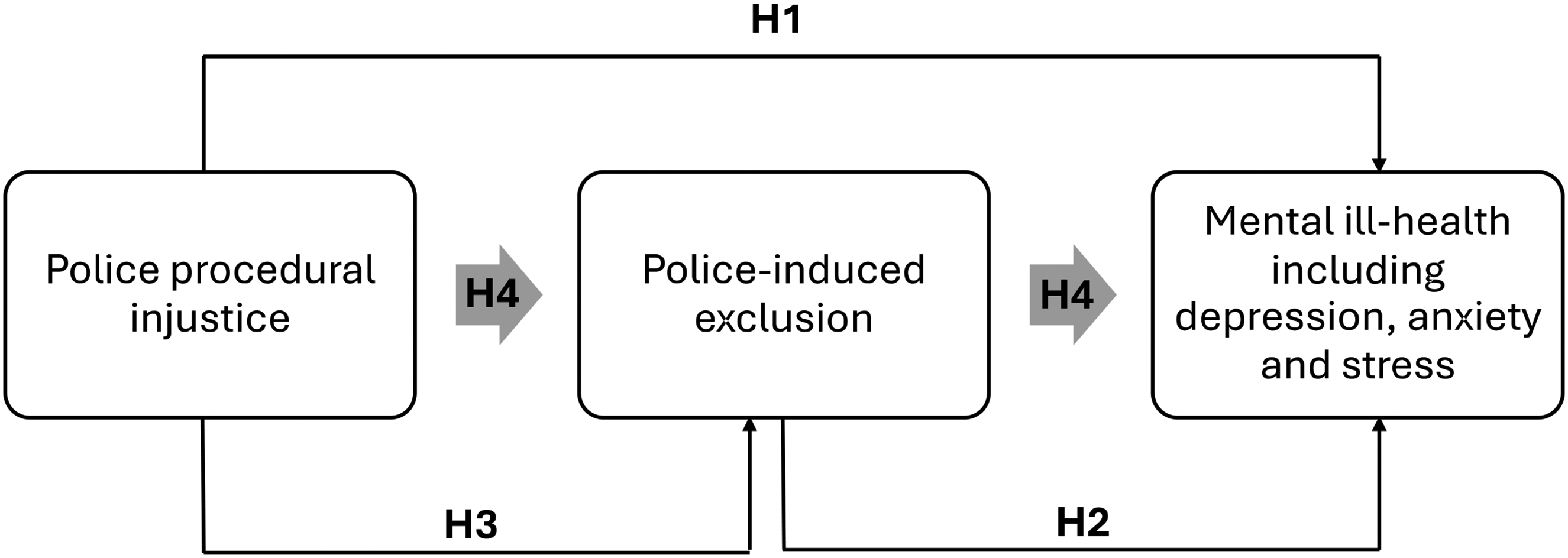
Conceptual model illustrating the four hypotheses tested in the study.
As outlined below, our procedural justice measure evaluates participants’ perceptions of how fair and respectful the police were in their treatment, including whether the police listened to them, treated them with dignity and acted impartially, and whether they gave participants an opportunity to express their views. Our measure of exclusion captures how interactions with the police make individuals feel socially marginalised, including feeling excluded from society, feeling less important than others and feeling like they do not belong. This is not just a reflection of broader societal exclusion but a specific emotional and relational response to the police interaction. Since both procedural injustice and exclusion are subjective evaluations of police interactions, this model reflects how people's cognitive evaluations of police conduct (how procedurally just they were treated) feed into their emotional experiences (feeling excluded by police).
Method
Survey design and sample
A survey was distributed via Prolific to participants in December 2024 who indicated they had been victims of crime in the last 2 years (n = 745). Prolific is a crowdsourcing platform that identifies and recruits participants based on researcher-defined screening criteria; in this case, prior victimisation within the specified timeframe. Participants were compensated at a rate of £8.12 per hour in line with Prolific's fair payment guidelines. The survey was administered online and took approximately 15 min to complete.
From this pool, 504 participants reported having interacted with the police in relation to their victimisation, forming the sample for the present study (see Table 1). The survey collected data on a range of variables, including police contact, assessments of these interactions, mental health and demographic and socio-economic information. In addition to closed-ended questions, the survey incorporated open-ended questions to gather qualitative insights. Participants who indicated that they had experienced mental health challenges or distress were invited to describe the nature of those experiences (‘Please briefly describe the nature of the mental health challenges or distress you experienced’). Similarly, those who reported experiencing discrimination or bias during their interactions with the police were asked to provide further details (‘Please briefly describe the nature of the discrimination or bias you experienced’). They were also given space for any additional comments or feedback.
Perceptions of officer behaviour predicting victim mental health.
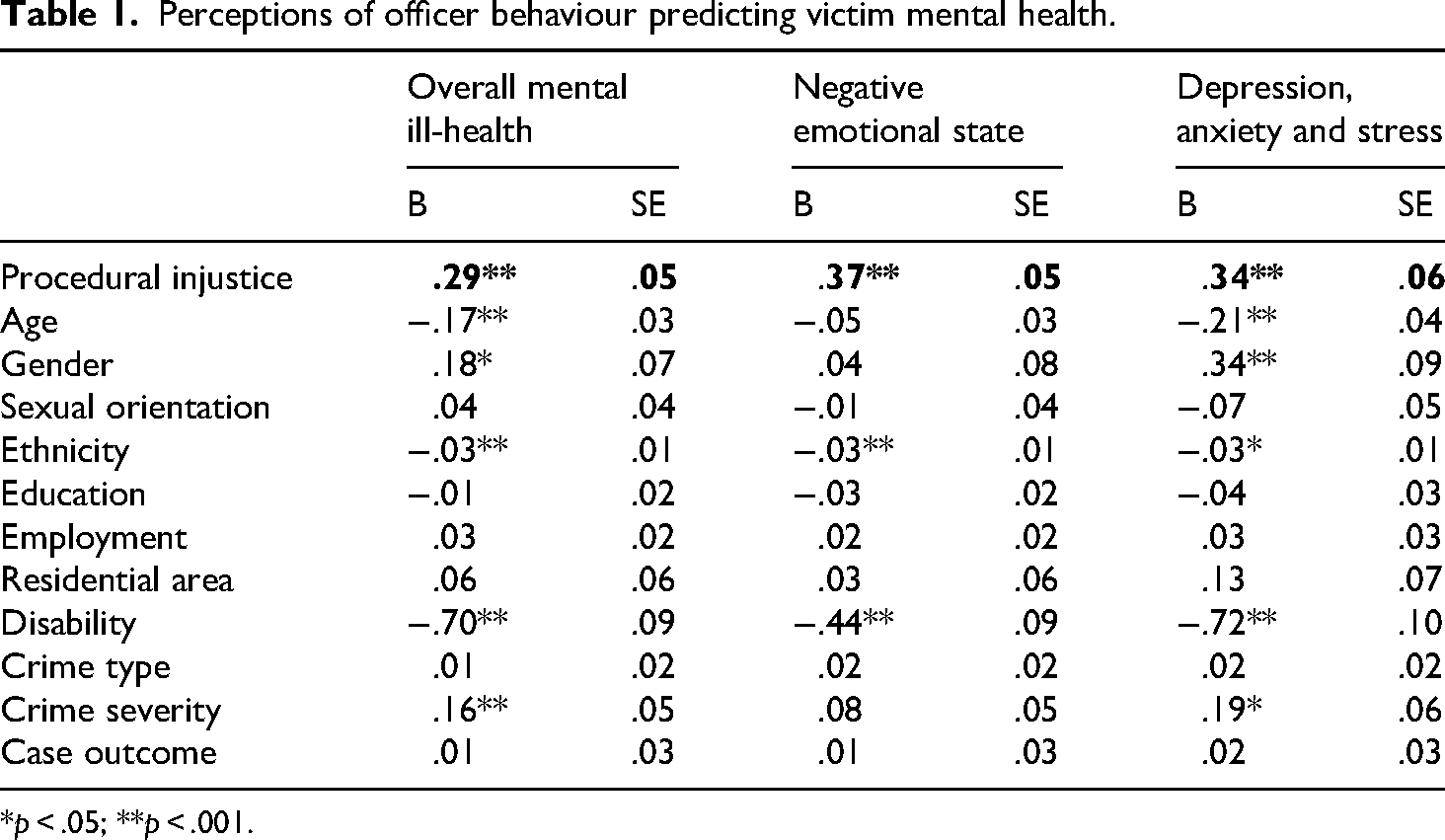
*p < .05; **p < .001.
Recruitment was restricted to individuals located within the United Kingdom – the sample is in this sense national, although cannot be considered representative of the population of victims within the country. Ethical approval for this study was granted by the University College London (UCL) Research Ethics Committee.
A pilot study (n = 202) was conducted prior to the full study. However, it did not account for key factors such as the type of the crime or its severity. To address these gaps, the full study incorporated additional variables, including the nature of the crime experienced and the resulting impact of the crime.
Follow-up interviews and qualitative analysis
To complement the survey data, we conducted follow-up interviews with a small subset of participants (n = 4). These interviews offered an opportunity to explore in greater depth the key themes raised in the survey, such as perceptions of procedural injustice, feelings of exclusion and the impact on mental health. The interview questions focused on the experiences of crime victims with police support, exploring their perceptions, emotional responses and the effectiveness of police actions in aiding their mental well-being. The questions also sought feedback on potential improvements in police response, training and resources to better support crime victims. The small number of interviews achieved reflected the sensitive nature of the participants’ experiences.
All qualitative data – including open-ended survey responses and interview transcripts – were systematically analysed. Survey responses were coded using content analysis to identify recurring issues and illustrative examples, while interview transcripts were subjected to thematic analysis to examine broader patterns across participants’ narratives. The lead author conducted the initial coding, and the resulting themes were reviewed collaboratively with the second author to refine and finalise the thematic structure.
Data integration and analysis
We employed a triangulation approach, integrating quantitative survey results with qualitative data from both the open-ended survey responses and follow-up interviews. This method allowed us to enrich the numerical findings with personal narratives, providing a more comprehensive understanding of the lived experiences of crime victims. The interview quotes and open-text responses help illustrate and contextualise the themes that emerged in the quantitative data, particularly around issues of procedural justice, exclusion, perceptions of bias and mental health.
Results
The results are presented in two parts: (1) descriptive statistics covering demographic and socio-economic characteristics, details on the crime experienced, police interaction assessments and mental health; and (2) hypothesis testing for four key hypotheses, which is accompanied by qualitative insights that complement the quantitative data. The results of the pilot study aligned with those of the full study, albeit with the limitation that the pilot did not control for factors such as crime type and severity. We therefore exclude the pilot's quantitative findings 1 but incorporate its qualitative insights into the analysis below.
Descriptive statistics
Demographic and socio-economic characteristics
The sample was relatively evenly distributed across age groups, with the largest group (28%) aged 25–34, followed by 26.2% aged 35–44, 20% aged 45–54, 13.1% aged 55–64 and smaller percentages in other age brackets. A majority of participants identified as female (52.2%), with 47.4% identifying as male and 0.4% identifying as other. The majority identified as heterosexual (86.3%); 6.9% identified as bisexual, 4% as gay or lesbian and smaller percentages chose other categories. Most participants were White (74.4%), with smaller percentages identifying as other ethnicities, including Mixed (5.4%), Black (13.5%) and Asian (5.8%).
Levels of education within the sample were generally high. Some 42.5% of participants held a Bachelor degree or equivalent, followed by 21.4% with a Master degree or equivalent. The remaining participants had various other qualifications, with a smaller proportion having GCSEs, A-levels, diplomas, doctoral degrees or ‘Other’ educational backgrounds. The majority of participants (76.6%) were employed, with 5.8% unemployed, and the remainder distributed across students, retired and other categories. Most participants lived in suburban residential areas (52.2%), while 32.9% lived in urban and 14.9% lived in rural residential areas. Finally, 26.2% of participants reported having a long-standing illness, disability or infirmity.
Details on the crime experienced
Participants were asked to provide details on the last crime they had experienced within the two-year recall period. They reported experiencing a range of crime types, including physical assault (20.8%), robbery (10.5%), burglary (16.1%), theft (26.2%), vandalism (14.1%), stalking (4%), harassment (22%), fraud or identity theft (9.1%) and other crimes (4.8%). Regarding crime severity, 12.5% of participants reported that the crime involved a weapon, 19.8% experienced physical injury, 12.7% required medical attention, 20.6% faced life threats, 8.1% reported that another person was harmed as a result of the crime and 33.7% incurred significant financial loss (over £1000). These figures would suggest that participants tended to recall relatively serious crimes – incidents of lower-level crimes and ‘anti-social behaviour’ are less well covered in the data (recall also that participants needed to have contacted the police about the crime, which may have further depressed the number of less serious offences included in the dataset).
We asked participants about the severity of the effects the crime had on them, with responses on a scale of 1 to 5 (where 1 = not at all severe, 5 = extremely severe). The perceived impact of the crime varied, with mean severity ratings of 2.23 for physical safety, 3.26 for emotional well-being, 2.31 for financial situation and 3.22 for overall trauma. Regarding case outcome, in 33.1% of cases, the police closed the case without identifying a suspect. 9.3% said someone was arrested but not charged, 6.7% noted the case was still open, 18.8% did not know the outcome and 13.5% selected ‘something else’. Only 18.5% knew that the culprit had been arrested and charged. However, this is a significantly higher charge rate than national figures would suggest, 2 possibly again reflecting recall bias (in this case, that participants were more likely to focus on crimes that ended in a positive outcome).
Assessment of interaction with the police: Procedural injustice and feelings of exclusion
Regarding procedural justice, participants generally had positive views about the police's respect, authority, impartiality and understanding of the problem, as well as their helpfulness. Items were adapted from established procedural justice scales commonly used in policing research (e.g., Sunshine and Tyler, 2003). Specifically, a substantial majority (75.6%) agreed that the police treated them with respect and dignity; 74.2% agreed that the police had the authority to deal with the problem; 67.6% agreed that the police were impartial; and 78.6% disagreed with the statement that the police did not understand their problem, suggesting they believed the police did understand. Moreover, 68.5% of participants agreed that the police knew what they were talking about; 64.7% agreed that the police gave them an opportunity to express their views before a decision was made; and 65.2% of agreed that the police listened before making decisions. Finally, 55.2% of participants disagreed with the statement that the police were unhelpful, indicating they found the police helpful; and 60.3% agreed that the police tried as hard to help them as they would anyone else. These items were combined (with positively worded items reverse-coded where necessary) to form a composite procedural injustice scale (α = .92), where higher scores reflect greater perceived unfairness in police handling of the case.
Regarding feelings of exclusion, participants generally did not feel excluded from society (73.2%), less important than other people in their community (69%), like they didn’t belong (77.6%), or like society is not on the side of victims like them (59.5%), due to their interactions with the police. These items were combined (with the one positively worded item reverse-coded) to form a composite police induced exclusion measure (α = .70), where higher scores reflect greater perceived exclusion.
Mental health
We measured mental health with a range of items taken from validated and widely used scales, including the Depression, Anxiety and Stress Scale (DASS-21; Henry and Crawford, 2005), the Positive and Negative Affect Schedule (PANAS; Watson et al., 1988) and single-item global mental health measures (NHS Digital, 2022). Overall mental ill-health was assessed using a single global self-rated item. Negative emotional state was calculated by combining items on emotional experiences over the past month, with positive emotions reverse-coded where appropriate (α = .96). Depression, anxiety and stress were each measured with individual items and then combined into a single composite indicator of psychological distress (α = .89).
When asked to rate their overall current mental health most participants reported their mental health as either good (38.1%) or average (34.7%), while a smaller portion rated it as excellent (13.5%), poor (12.1%) or terrible (1.6%).
The majority of participants agreed that they had felt joyful (48.8%), happy (60.3%), positive (60.9%), good (64.5%), pleasant (65.1%) and content or satisfied (58.9%) in the past month. A notable proportion of participants expressed neutral feelings across all categories, however, and smaller percentages had not felt positive emotions.
A significant portion of participants experienced feelings of stress (31.4%), anxiety (42.6%) and being down, sad or uninterested (45.2%) in the last month.
Finally, approximately a third of participants (32.3%) reported experiencing mental health challenges or distress following their interaction with the police as crime victims. The analysis that follows seeks to explore which aspects of these interactions may contribute to these feelings, while also noting that, according to the descriptive statistics above, a significant number of participants had positive experiences with the police.
Hypothesis testing
To test H1, we conducted a series of regression analyses to determine whether perceptions of procedural injustice in interactions with police influence self-reported mental health, while controlling for potential confounders (see Table 1). Perceptions of procedural injustice was entered into the model as the independent variable; the mental health measure was entered as the dependent variable; and age, gender, sexual orientation, ethnicity, education, employment status, residential area, disability, crime type, crime severity and case outcome 3 were entered as control variables. The first model included overall current mental ill-health as the dependent variable (Model 1), the second model included a more negative emotional state as the dependent variable (Model 2), and the third model included depression, anxiety and stress as the dependent variable (Model 3). The models explained 27% of the variance in overall current mental ill-health (R2 = .27), 18% of the variance in negative emotional state (R2 = .18) and 25% of the variance in depression, anxiety and stress (R2 = .25).
Perceiving the interaction as procedurally unjust was associated with higher levels of mental ill-health, more of a negative emotional state, and higher levels of depression, anxiety and stress. These associations persisted even controlling for the array of demographic and situational factors.
Qualitative data support the idea that procedural injustice is associated with poorer mental health. Participants frequently described experiences that violated the four principles of procedural justice – dignity and respect, voice, neutrality and trustworthy motives – and explained how these experiences worsened their psychological well-being. Dismissive or minimising treatment, for example, left victims feeling invalidated and blamed: I was raped, and the officer said it was ‘just young people experimenting.’ That comment shattered me. It made me feel like I was overreacting, like maybe it wasn’t as bad as I thought. But it was. (Survey participant, female, aged 20–30)
Others described being excluded from decisions about their cases, which eroded their sense of agency and hope: They said pursuing the case would be too stressful for me. That should have been my decision, not theirs. (Interviewee 1, female, aged 40–50)
Participants also described how perceived bias and inconsistency undermined trust: Because we were Black, they suggested we were exaggerating. I wondered if they even saw us as victims. (Survey participant, male, aged 20–30)
And in some cases, participants felt that police were unwilling or unmotivated to act, which left them feeling unable to ‘move on’ from the crime: They closed my case without even interviewing witnesses. How am I supposed to move on when I know my attacker is still out there? (Interviewee 2, female, aged 50–60)
Together, these accounts illustrate how violations of procedural justice principles can leave victims fearful, powerless and emotionally distressed – aligning with the quantitative evidence that procedural injustice predicts higher levels of mental ill-health. They also highlight the way procedural justice concerns can blur into issues of police efficacy, as victims often interpret fair treatment and effective action as intertwined elements of justice (McGlynn and Westmarland, 2018).
To test H2, we conducted a similar series of regression analyses to determine whether feelings of exclusion in interactions with police influenced self-reported mental health, while controlling for potential confounders (see Table 2). Feelings of exclusion in interactions with police was entered into the model as the independent variable; the mental health measure was entered as the dependent variable; and age, gender, sexual orientation, ethnicity, education, employment status, residential area, disability, crime type, crime severity and case outcome were entered as control variables. The first model included overall current mental ill-health as the dependent variable (Model 1), the second model included negative emotional state as the dependent variable (Model 2), and the third model included depression, anxiety and stress as the dependent variable (Model 3). The models explained 25% of the variance in overall current mental ill-health (R2 = .25), 16% of the variance in negative emotional state (R2 = .16), and 22% of the variance in depression, anxiety and stress (R2 = .22).
Feelings of exclusion in interactions with police predicting victim mental health.
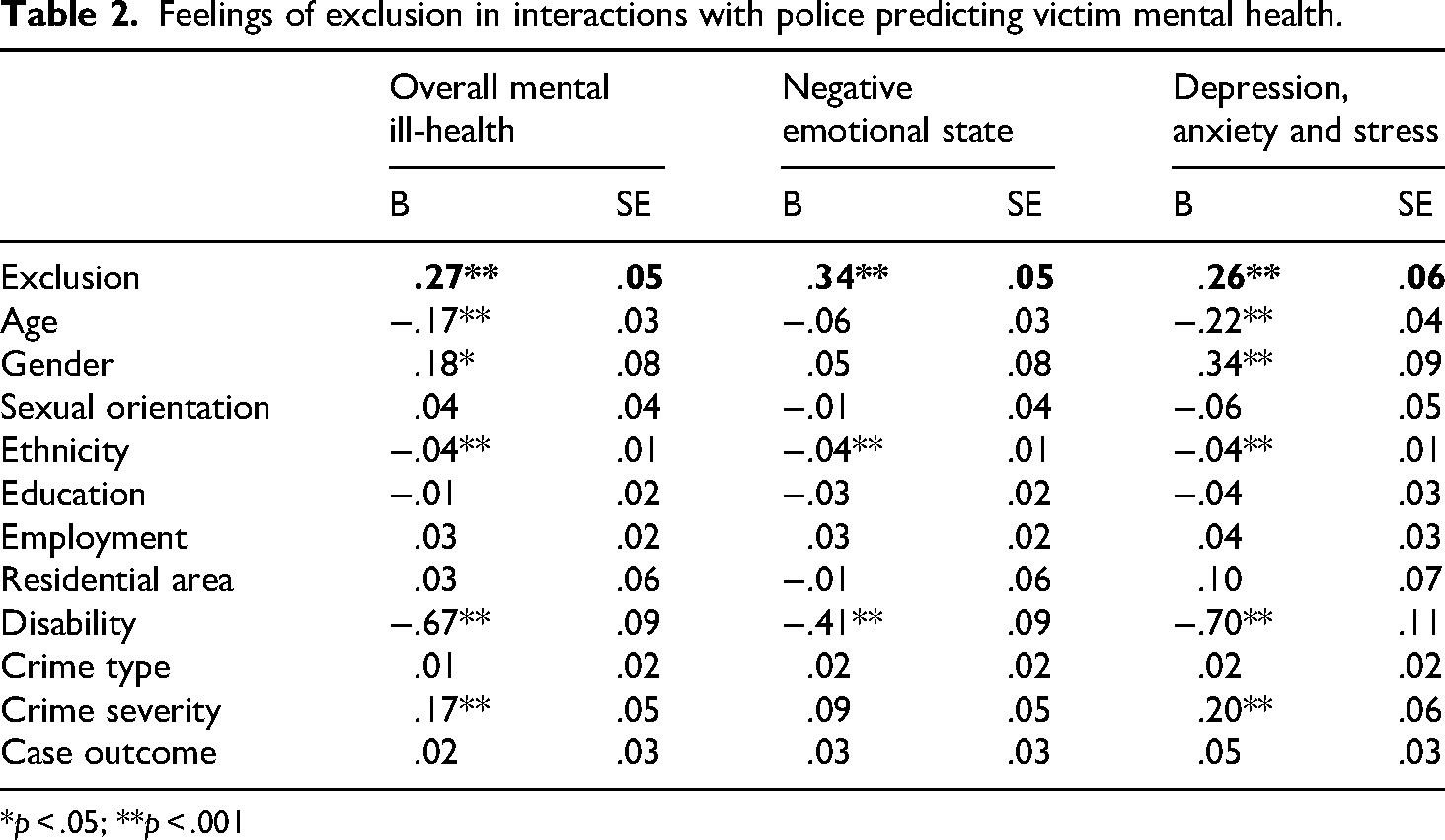
*p < .05; **p < .001
Feelings of exclusion in interactions with police were associated with higher levels of mental ill-health, more of a negative emotional state, and higher levels of depression, anxiety and stress. These associations persisted even controlling for the array of demographic and situational factors.
The qualitative accounts again align with the statistical finding that feelings of exclusion are associated with poorer mental health. Participants frequently described feeling invisible, dismissed, or unwelcome in their interactions with police, and these experiences were often linked to heightened distress, hopelessness and disengagement: It was like I was invisible. They didn’t see me or hear me, no matter how many times I asked for help. (Interviewee 2, female, aged 50–60) They acted like I was wasting their time. Like I was just another problem they didn’t want to deal with. (Interviewee 4, male, aged 55–65)
For those interviewed, such treatment deepened their sense of isolation and contributed to worsening psychological well-being, reinforcing the conclusion that exclusion is an important predictor of mental health outcomes.
To test H3, we conducted a series of regression analyses to determine whether perceptions of procedural injustice in interactions with police influence feelings of exclusion in interactions with police, while controlling for potential confounders (see Table 3). Perceptions of procedural injustice was entered into the model as the independent variable; police-induced exclusion was entered as the dependent variable; and age, gender, sexual orientation, ethnicity, education, employment status, residential area, disability, crime type, crime severity and case outcome were entered as control variables. The model explained 42% of the variance in police-induced exclusion (R2 = .42).
Perceptions of procedural injustice predicting feelings of exclusion in interactions with police.
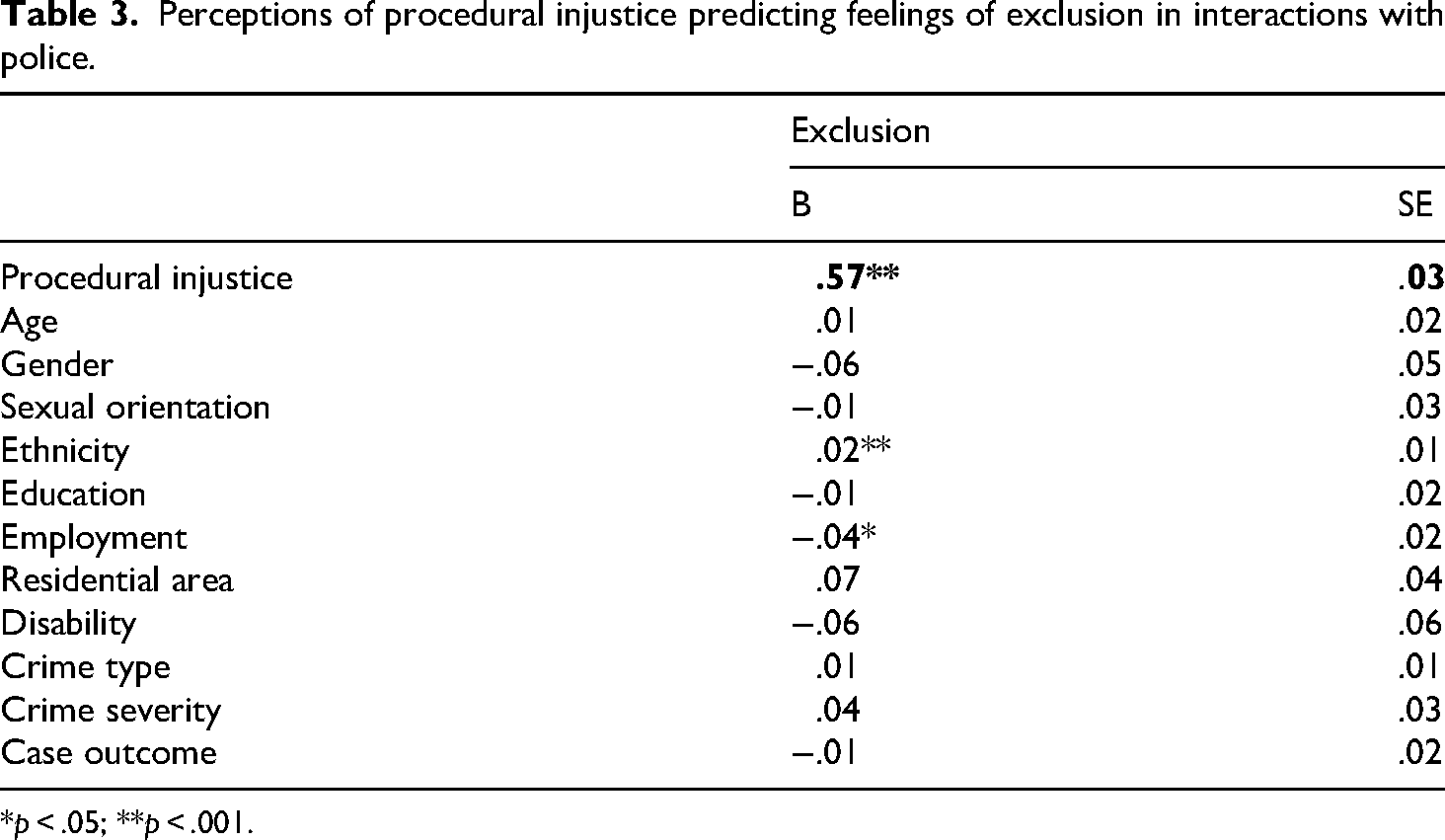
*p < .05; **p < .001.
Perceiving the interaction as procedurally unjust was associated with greater feelings of exclusion in interactions with police. These associations persisted even controlling for the array of demographic and situational factors.
The qualitative data illustrate how procedurally unjust encounters generate feelings of exclusion, supporting the association found in the regression model. Participants described being ignored, disbelieved, or dismissed – violations of dignity and respect – as well as perceiving bias (lack of neutrality) and a lack of trustworthy motives. These experiences made them feel marginalised and disconnected from the justice process.
One participant, who had repeatedly sought help from the police but felt continually let down, described eventually shutting down and withdrawing: I clammed up … I couldn’t trust them with my life. (Interviewee 1, female, aged 40–50)
Others had similar experiences of repeated inaction and minimisation. One participant recalled: It goes from frustrating to infuriating to numb to anger to, ‘Well, what's the point in this?’ Nobody was helping. Nobody would take it seriously. (Survey participant, female, aged 30–40)
Another reflected on their disappointment and loss of faith in the system: I expected things to work better. I expected the processes to work better … I just thought the whole experience would have been conducted in a more professional and proper way … I felt so let down by the police … it was almost like they didn’t really care. Like it wasn’t serious enough to warrant proper attention. (Interviewee 3, male, aged 45–55)
Together, these accounts show how procedural injustice can lead victims to feel excluded from the very system meant to protect and support them. H4 The relationship between perceptions of procedural injustice and mental ill-health is mediated by police-induced exclusion. Perceptions of procedural injustice during police interactions lead to greater feelings of exclusion, which in turn negatively impact mental health.
We ran three mediation models, where the independent variable was perceptions of procedural injustice in interactions with the police. The mediator was participants’ feelings of exclusion in interactions with police, and the dependent variable was one of three mental health outcomes: overall mental ill-health (Model 1), negative emotional state (Model 2) and depression, anxiety and stress (Model 3). Once again, age, gender, sexual orientation, ethnicity, education, employment status, residential area, disability, crime type, crime severity and case outcome were entered as covariates in the models. The models explained 26% of the variance in overall current mental ill-health (R2 = .26), 18% of the variance in negative emotional state (R2 = .18) and 25% of the variance in depression, anxiety and stress (R2 = .25). A summary of the mediation analyses is presented in Table 4.
Mediation analysis summary.
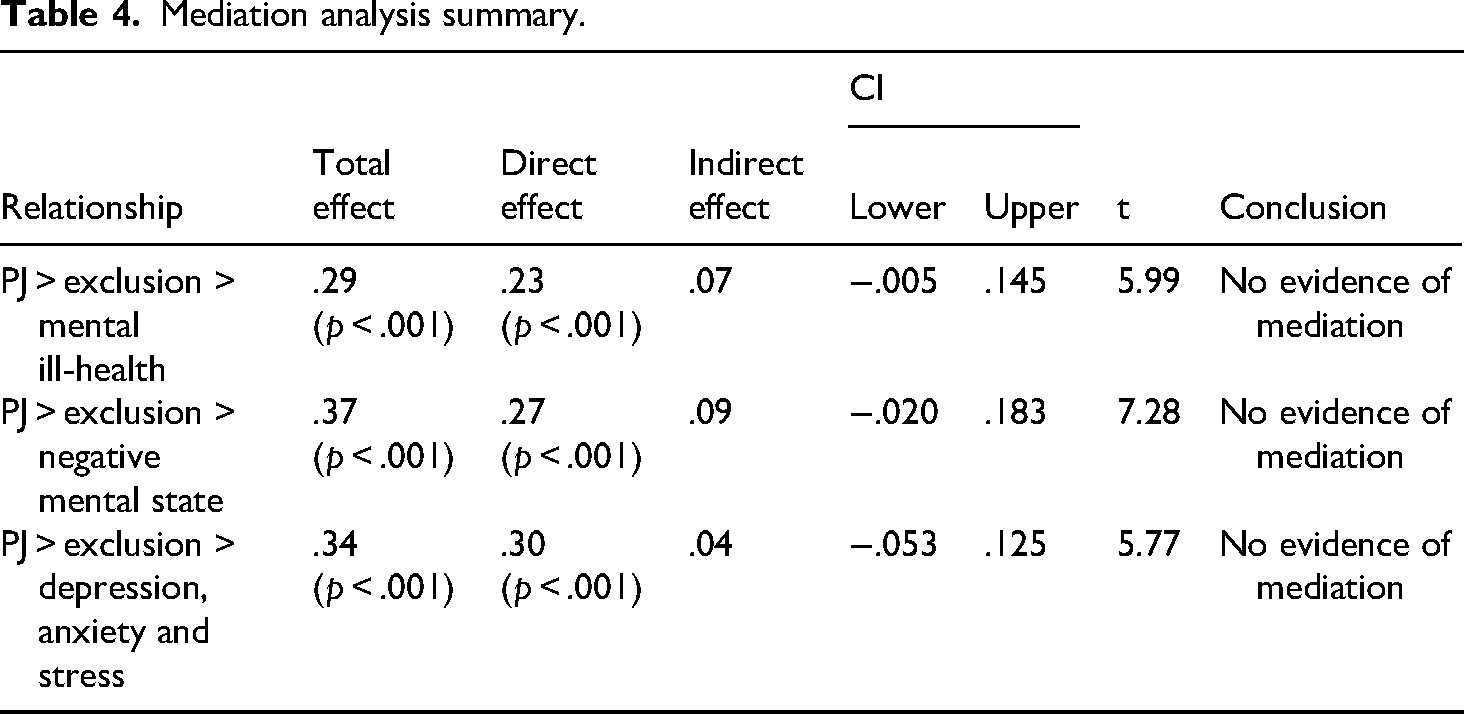
Although the direct effects of perceptions of procedural injustice on overall mental ill-health (Model 1: b = .23, p < .001), negative emotional state (Model 2: b = .27, p < .001) and depression, anxiety and stress (Model 3: b = .30, p < .001) in the presence of the mediator were significant; when procedural injustice and exclusion were included in the same model, the association between feelings of exclusion and overall mental ill-health was no longer significant (Model 1: b = .12, p = .077), nor was its link to negative emotional states (Model 2: b = .13, p = .061) or symptoms of depression, anxiety and stress (Model 3: b = .06, p = .429). As such, the results revealed no evidence of mediation for impact of perceptions of procedural injustice via feelings of exclusion on overall mental ill-health (Model 1: b = .07, t = 5.99), negative emotional state (Model 2: b = .09, t = 7.28) and depression, anxiety and stress (Model 3: b = .04, t = 5.77).
Hence, feelings of exclusion in interactions with police did not mediate the relationship between perceptions of procedural injustice and overall mental ill-health (Model 1), negative emotional state (Model 2), nor depression, anxiety and stress (Model 3). This means that although when procedural injustice is higher (i.e., people perceive police behaviour as unfair), feelings of exclusion tend to be greater, greater feelings of exclusion, are not, in turn, associated with increased overall mental ill-health, a more negative emotional state and higher levels of depression, anxiety and stress.
Re-evaluating the mediation hypothesis: Understanding the role of exclusion
Returning to our hypotheses, we find, first, that procedural injustice predicts mental ill-health (H1 supported). Second, exclusion predicts mental ill-health, but only when procedural injustice is not controlled for (H2 partially supported); third, procedural injustice predicts feelings of exclusion (H3 supported). However, we find no evidence that feelings of exclusion mediate the association between procedural injustice and mental ill-health (H4 not supported).
There are several possible explanations for this last and unexpected finding. One is that the lack of evidence for mediation is a statistical issue, stemming from the high correlation between procedural injustice and police-induced exclusion (r = .63**). In the absence of the measure of procedural injustice, exclusion predicts mental health, but when both constructs are included in the same model, the measure of exclusion loses significance. This suggests that conditioning on procedural justice there may be little variance in exclusion remaining to uniquely contribute to mental ill-health.
Another explanation is that procedural injustice serves as a common cause of both exclusion and mental ill-health. In other words, rather than exclusion acting as the mechanism through which procedural injustice harms mental health, procedural injustice itself directly contributes to both negative outcomes – both increasing feelings of exclusion and worsening mental well-being.
Finally, it is also possible that our measurement of exclusion does not fully capture its independent role in the process. For example, three of the four items measuring exclusion referenced ‘society’, which may have been too broad and abstract to be salient in relation to victims’ mental health. Items referencing ‘community’ or ‘other people’ might have captured a more immediate sense of social connection or disconnection. Rather than reflecting feelings about a specific group, what may be at stake is victims’ perception of whether they are recognised and treated by police as rights-bearing, morally worthy individuals.
The key takeaway from the analysis presented above is thus not, as initially hypothesised, that police procedural injustice harms the mental health of crime victims by inducing feelings of exclusion. Instead, the findings suggest that police procedural injustice harms the mental health of crime victims and induces feelings of exclusion, but these two ‘outcomes’ of procedural justice do not appear to be otherwise linked to one another. Ultimately, it seems that the effect of procedural injustice is so strong that it effectively ‘absorbs’ any additional explanatory power that exclusion might have had in predicting mental ill-health. This does not mean that procedural injustice does not induce feelings of exclusion, nor that exclusion is unrelated to poorer mental health. Rather, it suggests that the mental health consequences of procedural injustice are not driven by exclusion but instead occur alongside it. If this is the case, there is a need to think again about why procedural injustice is linked to poor mental health, an issue which the qualitative data offer insight into.
There are hints of an answer to this question in the ways participants described procedurally unjust encounters not only as leaving them feeling excluded but as inhibiting or undermining the psychological resources needed for recovery: safety, validation, justice and agency. When police failed to protect them, some victims reported heightened fear and hypervigilance, undermining their sense of safety: When even the police couldn’t help I would lock myself in the room … I barely slept, barely ate, just staying locked away, because that felt safer than relying on the police or anyone else. (Interviewee 2, female, aged 50–60)
Others spoke of being disbelieved or blamed, which denied them validation and intensified emotional distress: The officer told me, ‘You should’ve been more careful’. That stayed with me. I kept thinking maybe it was my fault. (Interviewee 1, female, aged 40–50)
The denial of justice was another common theme, with participants expressing frustration and anger when police inaction allowed offenders to go unpunished: They ignored my concerns, and because of that, others were harmed. That causes me so much rage. It could have been prevented. (Interviewee 3, male, aged 45–55)
Finally, many victims described being discouraged from pursuing cases or excluded from decision-making, which stripped them of agency and was linked to a feeling of hopelessness and apathy: At some point, you just stop fighting. You realise no one cares, so why even try? (Survey participant, male, aged 40–50)
Together, these narratives suggest that the psychological harm caused by procedural injustice may arise primarily through the erosion of critical recovery resources – a sense of security, agency, positivity and hope – rather than through exclusion alone, helping to explain the lack of mediation observed in the quantitative analyses.
Discussion
This mixed-method study has explored whether crime victims’ mental health is affected by how fairly and respectfully they feel treated by the police. It also looked at whether feeling excluded during police interactions plays a role in this relationship and whether exclusion helps explain the link between unfair treatment by the police and poor mental health.
Building on research showing that fair and compassionate police treatment can reduce distress, while insensitivity, hostility and procedural injustice can intensify psychological harm (Acquaviva and Gullion, 2024; Elliott et al., 2014; Greeson et al., 2014; Hohl et al., 2022, 2023; Wemmers, 2013), the quantitative findings revealed that victims who perceived police behaviour as procedurally unjust – lacking neutrality, respect or fairness – were more likely to report poorer mental health. Similarly, victims who felt excluded during police interactions – perceiving themselves as unimportant, marginalised or unsupported – also reported higher levels of mental ill-health. Perceptions of procedural injustice were strongly associated with feelings of exclusion. Social exclusion – feeling disconnected, dismissed or devalued due to police interactions – is a distinct outcome of the experience of procedural injustice among victims.
Contrary to expectations, however, feelings of exclusion – as measured in our quantitative study – did not explain the link between perceived procedural injustice and mental ill-health. Qualitative findings help clarify why, revealing limitations in how we operationalised exclusion. Our group-based measure focused on social rejection (Bradford et al., 2014), but participants described more internal and existential experiences – dehumanisation, invisibility, disempowerment and a loss of agency (cf. Pemberton et al., 2017). These accounts reflect a broader sense of alienation, closer to anomie than interpersonal exclusion. Pemberton et al.'s (2017) concept of communion helps make sense of this pattern: victims’ narratives suggest that procedurally unjust encounters undermine their basic need to feel connected and valued. The absence of communion may therefore be a more precise way of understanding the psychological harm described by victims. Similarly, recent work on relational justice highlights that procedural justice may act as a broader relational signal, absorbing much of the explanatory power that might otherwise be attributed to exclusion (Hohl et al., 2025). While broadly aligned with our theoretical model, these insights suggest our measure may have oversimplified the construct. Future research should aim to reconceptualise and refine exclusion measures – perhaps by incorporating indicators of communion – to better capture victims’ lived experiences of alienation and disconnection.
Despite this mismatch, the qualitative data offer valuable insight into how procedural injustice may affect mental health. Two psychological mechanisms emerged. First, procedural injustice appeared to undermine recovery by depriving victims of the key elements of safety, validation, justice and agency. Participants described feeling unsafe, dismissed, disbelieved, and excluded from decisions, all of which contributed to ongoing distress. These findings align with research showing that trauma recovery depends not only on external outcomes, but also on psychological resources. Perceived safety reduces fear and anxiety (Janoff-Bulman, 2002); validation counters shame and self-blame (Campbell and Raja, 2005; Ullman, 2010); the denial of justice fuels anger and prolonged suffering (Orth, 2002; Wemmers, 2013); and loss of agency fosters helplessness (Victim Of Crimes Commissioner, 2023). While this literature does not focus specifically on police-victim interactions, it highlights what victims need in order to heal – and unjust treatment at the hands of police seems to inhibit this process.
Second, the qualitative findings suggest that a loss of trust in police may serve as a psychological mediator linking procedural injustice to poorer mental health. Several participants described feeling not just let down but fundamentally unsafe or unanchored following their experiences with police. This resonates with Giddens’ (1991) conception of trust as a stabilising force in modern life; when institutional trust is broken, individuals can be left feeling existentially insecure and unmoored. In this light, procedural injustice is not just about poor service delivery – it can be a deeply trust-destroying experience, with lasting psychological consequences. This theme was especially salient in participants who described feeling unwelcome, unworthy of care or entirely invisible in their interactions with the police.
Together, these insights suggest that procedural injustice may harm mental health through two interrelated pathways: by depriving victims of key conditions needed for recovery, and by undermining their fundamental sense of trust in institutions meant to protect them. Although the themes identified in our qualitative analysis are consistent with prior research documenting victims’ experiences with police (Lorenz et al., 2021), we extend this work by explicitly situating these experiences within the procedural justice framework and highlighting how the loss of recovery resources may constitute a mechanism linking procedural injustice to poor mental health outcomes. Importantly, we distinguish these relational harms from issues of police effectiveness or competence (i.e., the instrumental model of legitimacy; Lee et al., 2022): our analysis focuses on whether victims felt heard, respected, and fairly treated – not on whether police successfully resolved the case or prevented further harm. This distinction is crucial, as our findings speak to the psychological consequences of unfair treatment rather than the practical outcomes of police performance.
That said, our findings also align with the idea of ‘kaleidoscopic justice’ developed by McGlynn and Westmarland (2018). The qualitative data indicates that participants in our study did not see procedural justice as separate or distinct from other aspects of fairness or justice that were important to them, which include concerns about consequences for the offender, prevention and protection. The concept of kaleidoscopic justice’ is particularly useful here as, like communion, it encompasses recognition and connectedness; again, these concerns are not separate to procedural justice traditionally defined – respect, dignity, voice – but intimately connected to it (Hohl et al., 2025). Indeed, this may be another reason why, conditional on procedural justice, we failed to identify a unique link between exclusion and mental health. Exclusion may be better conceived of as a justice-based concern, not something that flows from such concerns. Positioning it at a mediator may therefore be to mis-specify its relationship with procedural justice.
Future research should explore these psychological mechanisms in greater depth, as a better understanding of these dynamics can inform both policy and practice. Our findings underscore the need for procedurally fair and emotionally intelligent policing – where officers not only uphold fairness, transparency and inclusion, but also recognise the psychological weight of their interactions. Fair treatment, combined with compassion, sensitivity and trauma awareness, can help mitigate harm, foster trust and support victims in their recovery (cf. Wemmers et al., 2023).
In addition to highlighting the problem, it is important to consider potential solutions. Improving police procedural justice will likely require a multi-layered approach, including training that emphasises relational skills, communication and trauma-informed practice; recruitment processes that prioritise empathy and interpersonal competence; and organisational reforms that (a) ensure officers work within procedurally just environments and (b) offer them the time and other resources to behave in procedurally just ways. (Skogan et al., 2015). We suspect that although training will of course be part of the solution, recruitment and organisational reforms may be the most important factors. As Morgan (2022) notes, for example, contradictions between community-oriented training and paramilitary-style policing can undermine efforts to improve the way police deal with vulnerable people. Sustainable change will depend not only on individual officer training but also on organisational culture and structural incentives that consistently reinforce procedurally just behaviour and do not create structural and cultural barriers for officers attempting to behave in such ways.
Limitations
This study has several limitations that should be acknowledged. First, our measurement of exclusion referenced ‘society’, which may have been too broad and abstract to fully capture the construct's relevance for victims’ mental health. Future research could test more specific wording, such as items referring to ‘community’ or ‘other people’, to better assess feelings of disconnection at a more personally meaningful level. Second, while our qualitative findings enriched our interpretation of the quantitative results, the small number of follow-up interviews (n = 4) limits the breadth of perspectives represented. The open-ended survey responses partly offset this limitation by providing a larger qualitative dataset, but the small interview sample still constrains the depth of thematic analysis. Larger and more diverse qualitative samples would allow for a deeper exploration of victims’ experiences and strengthen the generalisability of these insights. Finally, our data were cross-sectional and self-reported, which limits causal inference and may be subject to recall or response bias.
Conclusion
This study adds to growing evidence that police procedural injustice can negatively affect victims’ mental health. While we found that it both harms well-being and fosters feelings of exclusion, exclusion – as measured in our quantitative study – did not fully explain the psychological impact. Instead, our qualitative findings point to two key pathways: procedural injustice may hinder recovery by depriving victims of safety, validation, justice and agency, and by eroding trust in the police. When institutional trust breaks down, victims may feel unprotected and emotionally unanchored. These insights emphasise the need for not only fair procedures but also emotionally intelligent policing that recognises the psychological stakes of victim interactions. Looking ahead, future research should refine how exclusion is measured, moving beyond group-based models to capture more diffuse, existential forms of alienation. Further studies should also examine the psychological mechanisms identified here – particularly the loss of trust and access to recovery resources – to better understand and mitigate the mental health consequences of procedural injustice.
Supplemental Material
sj-docx-1-euc-10.1177_14773708261427331 - Supplemental material for The dual impact of procedural injustice: Police procedural injustice harms the mental health of crime victims and induces feelings of exclusion
Supplemental material, sj-docx-1-euc-10.1177_14773708261427331 for The dual impact of procedural injustice: Police procedural injustice harms the mental health of crime victims and induces feelings of exclusion by Arabella Kyprianides and Ben Bradford in European Journal of Criminology
Footnotes

Ethical considerations and informed consent
Ethical approval for this study was granted by the UCL Research Ethics Committee, and all participants provided informed consent after reading the participant information sheet.
Funding
The authors disclosed receipt of the following financial support for the research, authorship and/or publication of this article: This research was supported by the Economic and Social Research Council (ESRC; ES/X003434/1).
Declaration of conflicting interests
The authors declared no potential conflicts of interest with respect to the research, authorship and/or publication of this article.
Supplemental material
Supplemental material for this article is available online.