




Abstract
This article aims to enhance our understanding of social assistance providers as important sites of potential human trafficking identification, prevention, and disruption, particularly in countries newly experiencing the phenomenon of mass incoming migration. We do so by examining the experiences of Romanian NGOs and other voluntary actors in Romania providing assistance to migrants traveling from Ukraine during the early months of the Russian invasion. Drawing upon data from semistructured qualitative interviews and site visits with over 20 distinct civil society initiatives in summer 2022, we identify five themes that enhance our understanding of system capacities to address human trafficking in countries unaccustomed to migration, and discuss the implications for criminal justice. The article has implications for countries encountering migration due to regional conflicts, but also for migration related to natural disasters, climate change, and other causes.
Introduction
On 24 February 2022, Russia invaded Ukraine, resulting in the largest displacement of people Europe had experienced since World War II. Armed conflict in the area first began in 2014 with the occupation of the Crimean Peninsula by Russian forces, followed by the war in Ukraine's Donbas region. An estimated 6.9 million have fled Ukraine since the beginning of the war, with the vast majority migrating to neighboring European countries (UNHCR, 2025). An additional 3.7 million are believed to be displaced internally in Ukraine (UNHCR, 2025). As a result of the mandatory military draft, requiring all males between 18 and 60 years of age to fight in the war, it is estimated that 90% of migrants leaving Ukraine are women and children (UNICEF, 2022). Even before the war, one in four Ukrainians (or 12 million) indicated that they would like to emigrate to another country if they had the opportunity (Elinder et al., 2023), reflecting long-standing economic challenges and political instability present within the country.
While humanitarian efforts have been carried out by most European countries, those geographically closest to Ukraine, such as Poland, Hungary, the Czech Republic, and Romania, have borne the brunt of this catastrophe, experiencing an unparalleled influx of migrants (UNHCR, 2025). Given the magnitude of the situation and the sheer volume of those fleeing Ukraine as a result of the war, on 4 March 2022, the EU invoked for the first time the Temporary Protective Directive (TPD), an emergency measure that was initially established in 2001 following the Yugoslav war (Luyten, 2024). Under TPD, people fleeing Ukraine were given one year of temporary protection within the EU, including temporary residence and working permits along with access to health care, housing, and education for their children. Since its activation in 2022, 4.2 million people fleeing Ukraine were provided aid under TPD, with the highest number of temporary protections issued by Germany, Poland, and the Czech Republic (Luyten, 2024). Due to the ongoing conflict in Ukraine, the temporary protections outlined under TPD were extended past the one-year mark to 4 March 2026 (Luyten, 2024).
Relatedly, at the outset of the war, Europol (2022) issued a security alert to all EU countries regarding potential increases in criminal activity, in particular for sexual exploitation, labor trafficking, and forced begging. The European Commission (2022: 1), via the Common Anti-Trafficking Plan, described the threat of human trafficking in the context of the war in Ukraine as ‘high and imminent’. Reports of sexual harassment, intimate partner violence, and sexual exploitation were documented at border crossing points, transit centers, and bomb shelters (United Nations Office for the Coordination of Humanitarian Affairs [OCHA], 2022). An increase in online searches for sexually explicit content for Ukrainian women and girls was also documented at the outset of the war (Organization for Security and Co-operation in Europe [OSCE], 2022). Human trafficking hotlines operating in Europe reported a call volume five times higher than the normal average following the Russian invasion (Hoff and de Volder, 2022), although calls covered a range of concerns, coming from both Ukrainian migrants and their host families. In 2022, EU host countries reported some increases in human trafficking cases, particularly for labor trafficking, among Ukrainian migrants fleeing the war, with 402 cases identified compared to 65 the year prior to the war (UNODC, 2025).
Despite increasing concerns, research in this area - human trafficking in the context of the war in Ukraine – is limited (with the few studies available summarized below). Thus, the current article seeks to address this gap in the literature by enhancing our understanding of social assistance providers as important sites of potential human trafficking identification, prevention, and disruption, particularly in countries newly experiencing the phenomenon of mass incoming migration. We do so by examining the experiences of Romanian NGOs and other voluntary actors in Romania assisting migrants traveling from Ukraine during the early months of the Russian invasion. Drawing upon data from semistructured qualitative interviews and site visits with over 20 distinct civil society initiatives in summer 2022, we identify five themes that enhance our understanding of system capacities to address human trafficking in countries unaccustomed to migration and discuss the implications for criminal justice. These include: (1) lack of governmental oversight, coordination, and formalized processes, (2) individual vulnerabilities, (3) existing systemic risks, migration routes, and pathways into human trafficking, (4) war-time rape and other conflict-related sexual violence, and (5) barriers to identification and reporting of human trafficking cases.
Literature review
Romanian context of migration and human trafficking
Migration landscape
Romania has one of the highest emigration rates in the world, ranking among the top five globally (Organisation for Economic Co-Operation and Development [OECD], 2019). As many as 17% of the Romanian population currently resides abroad, with the vast majority living in Italy, followed by Germany and Spain (OECD, 2019). More recent estimates suggest that these numbers are much higher, with the Romanian diaspora believed to be closer to 8 million people (Ernst, 2022). Two historical events have been linked to the mass exodus of Romanian people to wealthier nations and contributed to Romania's unique migration landscape, including the fall of communism in 1989 and Romania's accession into the EU in 2007 (OECD, 2019). Although Romania has had a long history of being a migrant sending country, of late it has experienced an increase in foreign-born migrant workers, particularly in the construction, retail, and hospitality industries (Cosciug et al., 2024). Migrants from South Asian countries, such as Nepal, India, and Sri Lanka, comprise the vast majority of the Romanian labor immigration market (Cosciug et al., 2024).
Since the start of the war, over 6.2 million migrants entered Romania from Ukraine (UNHCR, 2025), creating chaos at border crossing points given that local, regional, and national capacity were strained, especially during the earlier months of the invasion (Flanigan and Bejinariu, 2024; Stănică et al., 2023). In this context, local NGOs and other civil society organizations took on gap filling roles in areas where government and state capacity were low, such as service provision, financial assistance, and professional skills (Flanigan and Bejinariu, 2025). Of those who entered Romania since the start of the war, as many as 179,820 remained in the country under temporary protective status (UNHCR, 2025), preferring Romania over other nations due to its proximity to the Ukrainian border and a relatively low cost of living compared to other countries in Western Europe (Flanigan, 2022). Regardless of their intention to remain in Romania or travel west to wealthier nations, for many, Romania represents the first port of entry after fleeing Ukraine.
Domestic and cross-border trafficking
Romania serves as a country of origin and transit for victims of human trafficking (Hernandez and Rudolph, 2015; Kligman and Limoncelli, 2005; Shelley, 2014; Surtees, 2008), and has been since the fall of communism in 1989, largely due to the socioeconomic conditions present within the country. The Balkan peninsula, of which Romania is part, functions as a gateway between the East and the West and is a main transit route for human trafficking (Kligman and Limoncelli, 2005). Romania criminalized human trafficking in 2001 with the adoption of Law No. 678/2001 on Preventing and Combating Human Trafficking in Human Beings, aligning with international legislative frameworks and standards (i.e. the UN Protocol to Prevent, Suppress and Punish Trafficking in Persons, Especially Women and Children, commonly known as the Palermo Protocol, 2000).
Given its geographical location and economic challenges, Romania experiences high rates for both domestic (within national borders) and cross-border trafficking. For instance, official data suggests that over a 10-year period (2010–2020), 8985 human trafficking cases were identified involving Romanian nationals, with 56% (or 5033) of these involving cross-border trafficking within the EU (European Commission, 2020). In 2020, 596 human trafficking cases were identified involving Romanian nationals, representing a 15% decrease from the previous year. Of the total numbers reported in 2020, 46% (or 275) involved cross-border trafficking, with the United Kingdom, Germany, Italy, Spain, and Sweden identified as the top five destination countries for Romanian victims (European Commission, 2020). The vast majority of victims were trafficked for sexual purposes (72%), were women and children (77%), and had a middle school education (68.5%), while nearly a third had a high school or vocational degree (European Commission, 2020). It is important to note that official data may underestimate the scale of human trafficking, given that many cases go unreported or undetected.
Analyzing data from 120 source countries and 13 EU destination countries between 1998 and 2009, Hernandez and Rudolph (2015) identified Romania as one of the top countries of origin for human trafficking victims along with Ukraine, Russia, Nigeria, and Bulgaria. The largest number of Romanian victims of human trafficking was found in Spain (84), UK (44), Greece (35), the Netherlands (22), Austria (18), Switzerland (16), and Belgium (9) (Hernandez and Rudolph, 2015). Additionally, Kragten-Heerdink et al. (2023) found that nearly 18% of cross-border sex traffickers in their study of all (>1000) prosecuted domestic and cross-border sex trafficking cases in a 10-year period (2008–2017) in the Netherlands were from Romania, second only to sex traffickers from Hungary. The large majority of cross-border sex traffickers recruited victims from EU countries in Central and Eastern Europe, with over 23% of victims from Romania. Similarly, in surveying 150 service providers from Spain over a two-year period, Villacampa et al. (2023) found that 41% of sex trafficking victims originated from Eastern European countries, with most victims recruited into sex trafficking by relatives or friends (31.9%). As can be seen, even outside of a context of conflict and migration, Romania is a country where knowledge and networks relevant to trafficking of women and children are prevalent.
Looking at data from across Europe, we find that domestic and cross-border human trafficking does look somewhat different. For example, in their comparison of all (>1000) prosecuted domestic and cross-border sex trafficking cases in a 10-year period (2008–2017) in the Netherlands, Kragten-Heerdink et al. (2023) find that cross-border sex traffickers are more likely than domestic sex traffickers to be involved in criminal organizations, to subject their victims to longer periods of exploitation (a year compared to six months), and have multiple victims (four or more). Similarly, Reid (2012) indicates that cross-border sex trafficking victims more often are pressured into sex trafficking to support family members economically, face community crises in their home country, and are from disadvantaged communities.
Kragten-Heerdink et al. (2023) find cross-border trafficking victims statistically significantly less likely to present as those traditionally vulnerable in higher income countries (e.g. underage or youth, homeless, institutionalized, experiencing mental health challenges, having intellectual disabilities, or using substances). In contrast, cross-border trafficking victims are statistically significantly more likely to be older than domestic trafficking victims, are more likely to be caregivers for others, and are more likely to have financial problems and no/low educational attainment (Kragten-Heerdink et al., 2023). This is a profile that is a closer match to migrants from Ukraine to Romania, who often are female mothers and caregivers. Kragten-Heerdink et al. (2023) find the threshold for traffickers and their victims to get involved into domestic sex trafficking is lower than for cross-border sex trafficking, as cross-border trafficking requires resources and expertise. However, migrants entering Romania find a country rife with trafficking experts, and as migrants enter new countries due to conflict, climate change, or other human or natural disasters, they may be vulnerable to domestic traffickers as well.
Human trafficking in contexts of conflict and migration
Previous research has well documented how armed conflict, humanitarian crises, and political unrest can facilitate and exacerbate risks for crimes, including human trafficking and sexual exploitation (International Organization for Migration, 2015; Kligman and Limoncelli, 2005; McAlpine et al., 2016; Nelson et al., 2004; Smith and Smith, 2011; UNODC, 2022), especially for women and children. Additionally, poverty and limited economic opportunities present within source (or origin) countries have been shown to increase individual's vulnerabilities to trafficking (Akee et al., 2010; Kligman and Limoncelli, 2005; Surtees, 2008).
Others argue that risks for human trafficking are higher in areas with high migration, suggesting that human trafficking patterns in Europe mirror mass migration flows in the region (Hernandez and Rudolph, 2015; Mahmoud and Trebesch, 2010; Salt and Stein, 1997). For instance, Salt and Stein (1997) conceptualize human trafficking as a migration business that involves three stages: (1) mobilization, (2) en route, and (3) insertion and integration of migrants in the destination country. This provides insight into the organizational structure of human trafficking networks, which rely on the existence of migration routes for recruitment and movement purposes (Salt and Stein, 1997).
Given the ongoing conflict and recency of the war in Ukraine, research examining risks of human trafficking within this context is in its infancy (see Cimino and Degani, 2023; Cockbain and Sidebottom, 2025; Dean, 2025; Hodlevska, 2023; Hoff and de Volder, 2022; Monastyrova, 2024; Paliichuk, 2023). For instance, Cimino and Degani (2023) document the challenges the Italian government faces in identifying potential human trafficking victims due to the short time frame Ukrainian migrants spend at transit locations. With border crossings into Italy (from Slovenia and Austria) as brief as 15 minutes to an hour and a half, there is limited opportunity to intervene and identify potential human trafficking victims (Cimino and Degani, 2023). These scholars also document that when Ukrainian migrants first started arriving in Italy, rental apartment scams were very common, with many unaware of the potential risks for exploitation (Cimino and Degani, 2023).
Research completed by Cockbain and Sidebottom (2025) presents findings from a U.K. evidence-gathering roundtable addressing risks of human trafficking and exploitation among Ukrainians seeking refuge in the United Kingdom, noting an increase in the presence of Ukrainian women in brothels. Similarly, Hodlevska (2023) documents prevention efforts that were established in Poland, such as the ‘Safe Poland’ educational campaign, to raise awareness about human trafficking, improve victim identification and victim assistance programs for Ukrainian refugees, following policy recommendations outlined by the Council of Europe Group of Experts on Action against Trafficking in Human Beings.
Dean (2024) finds that at the outset of the war, antitrafficking initiatives in Ukraine experienced a 36% reduction in operational efforts, with some organizations having to close their offices or move their headquarters to Poland to remain operational. Additionally, a 75 million UAH funding deficit was reported and an 82% decrease in victim identification, while the national migrant and antitrafficking hotline was at an all-time high (Dean, 2024). The decline in victim identification was attributed to NGOs’ reduced institutional capacity, stating, ‘This is why we see fewer victims now. Self-identification happens through NGOs and social service providers, but they are focused on helping IDPs and displaced individuals, so we will see a delay in identifying victims’ (Dean, 2025: 62; quote from interview transcript).
Using the context of the war in Ukraine, Ochodničanová and Heys (2024) propose a new typology of conflict-related human trafficking. At the macro level, they argue that conflict drives human trafficking both directly (by armed forces) and indirectly (by existing trafficking networks who capitalize on the vulnerabilities of displaced populations). At the meso level, they identify four geographical spaces where human trafficking occurs: within, out of, into, and outside of the conflict zone. At the micro level, they identify sexual exploitation, labor trafficking, child soldiers, and trafficking for organ removal as the most prevalent types.
The role of service providers and other settings as sites of potential human trafficking identification, prevention, and disruption
Front-line service providers or street-level bureaucracies, especially health and human service providers (Nothdurfter and Hermans, 2018; Virtanen et al., 2016), can serve as important sites of potential human trafficking identification, prevention, and disruption. This is due to the ways in which employees interact directly with individual service recipients and, as part of the nature of their discretionary work, have opportunities to make observations and decisions that directly impact processes and outcomes for service recipients (Lipsky, 1980). For example, in analyzing 358 human trafficking cases reported to the police during a 10-year period (2003–2013) in Norway, Bjelland (2017) found that reports were likely to be generated through front-line providers. While victim-initiated reports were most common (50%), police-initiated reports (30%), reports initiated by third parties (15%) such as local NGOs or child protective services were also prevalent (Bjelland, 2017).
However, front-line workers often lack training to identify victims of human trafficking. In Bjelland's (2017) study of Norwegian cases, when cases were initiated through police efforts, they were 13 times more likely to lead to a criminal prosecution as compared to cases initiated by victims or third parties (Bjelland, 2017). Even criminal justice professionals, such as police, often lack relevant knowledge to identify human trafficking victims. For instance, in analyzing self-report data from 363 border patrol officers in Bosnia and Herzagovina, Muftić (2014) found that 48.2% had not received training on sex trafficking and less than 10% had worked on a human trafficking case in the past year. Other scholars highlight the importance of providing human trafficking training to police officers and other service providers who come in contact with victims (Bejinariu et al., 2021; Meshkovska et al., 2016; Villacampa and Torres, 2017).
These recommendations echo findings from U.S.-based research where training rates for police range from 8% to 18% (Farrell et al., 2008; Mapp et al., 2016; Wilson et al., 2006). When it comes to other types of front-line professionals, relevant knowledge to help identify human trafficking victims may be even lower. For example, training rates range from 3% to 10% for medical professionals and other mandated reporters (Chisolm-Straker et al., 2012; Hartinger-Saunders et al., 2017), even though focus groups with 107 sex trafficking survivors in the United States showed that 88% had contact with a health care professional during their time of exploitation (Lederer and Wetzel, 2014).
Given the lack of training associated with front-line workers, it is important to consider other types of street level bureaucracies – such as transportation personnel – as important sites for human trafficking prevention, identification, and intervention. Transportation personnel regularly interact with the public and are thus well positioned to recognize indicators of trafficking and intervene at critical stages, including during recruitment, transit, and exploitation. Although limited, studies on the effectiveness of human trafficking training for transportation personnel support their utility (Bejinariu, 2022).
We add to this important literature by discussing the street level experiences of humanitarian aid providers and opportunities for interventions for better human trafficking identification in social assistance settings. For example, both government social assistance providers and NGOs or nonprofit assistance providers, who are frequent partners of the state in aid provision in many countries (Smith and Grønbjerg, 2006; Toepler et al., 2023) and as such sometimes considered part of a shadow workforce of the state (Light, 1999; Skleparis, 2015), interact with migrants at moments that are important stages in the human trafficking process (such as transportation and accommodation), as will be discussed in our findings. A study by Diviák et al. (2023) that analyzed five women trafficking networks, four of which were heavily Eastern European in membership, showed the stages of recruitment, accommodation and exploitation are logistically intense and require close collaboration among actors. Humanitarian assistance providers are often highly involved in transportation and accommodation arrangements for migrants, meet with migrants at very sensitive and vulnerable periods during their journey, and are often staffed by volunteers who interact with important and sensitive immigration documentation.
Methodology
Procedure in the parent study
Between July and August 2022, a total of 26 interviews were conducted with individuals from 22 civil society organizations and initiatives assisting migrants from Ukraine in Romania. Participants were recruited using purposive sampling and were included if they held a senior leadership role in a migration-focused organization, or if they worked in a similar role in an organization with a broader mission (e.g. social service provision, health care, or education) but addressed issues of migration or needs of migrants in some capacity. The NGOs in our sample originally had different core missions (of serving primarily Romanian citizens) and had no experience working with migrants, but expanded their services to migration-related work in 2022, specifically because of the unprecedented flow of migrants caused by the war in Ukraine.
Given the unique situation the Russian war in Ukraine created in Romania, the original sampling frame was expanded and snowball sampling techniques were also employed to include independent volunteers, many of whom took on senior roles partnering with government actors in assisting migrants from Ukraine. Because the interview participants held senior roles in their organizations or initiatives, theoretical saturation was achieved (Glaser and Strauss, 1967), which does not imply that a researcher has exhausted all that could be learned in a substantive area, but means gathering additional data no longer provides new insights (Charmaz, 2006). Saturation and redundancy based on sample size (N = 26) was also achieved, where the threshold in qualitative studies ranges between 25 and 30 interview participants (Dworkin, 2012).
Interviews were based on a semistructured protocol that asked questions on the topics of (a) policy advocacy and design, (b) service provision and (c) human trafficking in light of the war in Ukraine. The interviews were completed in person during site visits to all but six organizations, and were almost all audio recorded unless a participant preferred written notes be taken instead. Six interviews were conducted using online platforms such as Zoom and WhatsApp. Most of the interviews were conducted in English or a combination of English and Romanian, while four interviews were conducted fully in Romanian by a professionally proficient but nonnative speaker. The Romanian interviews and the Romanian segments of mixed interviews were later translated and transcribed by a native Romanian speaker to ensure accurate understanding of the data. While the English interviews were transcribed by research team members, which consisted of a multidisciplinary team including criminal justice and public policy researchers, and graduate and undergraduate students from each discipline. On average, each interview lasted approximately one hour. Five additional interviews were conducted with key informants including Romanian policy makers and researchers, and were used for supplemental context, along with observations conducted during site visits. The research procedures described herein were approved by University-Level Institutional Review Board (Protocol No. HS-2022-0142). Additional information pertaining to the methods of this study can be found at Flanigan and Bejinariu (2025).
Research site location
The in person on site interviews were conducted across two counties, namely: (1) Ilfov County, where Bucharest, the capital of Romania is located, and (2) in Suceava County, which is located in the northeastern part of Romania and borders Ukraine. Suceava is located only 40 km (or 25 miles) from the Ukrainian city of Cernăuți and has been operating as a staging center for migrants from Ukrainian since the beginning of the war. An additional six interviews were conducted online via Zoom or WhatsApp across four counties including: Sibiu County, Valcea County, Prahova County, and Ilfov County, specifically in Bucharest and outlying communities. All counties are centrally located, with their geographical location displayed in Figure 1.
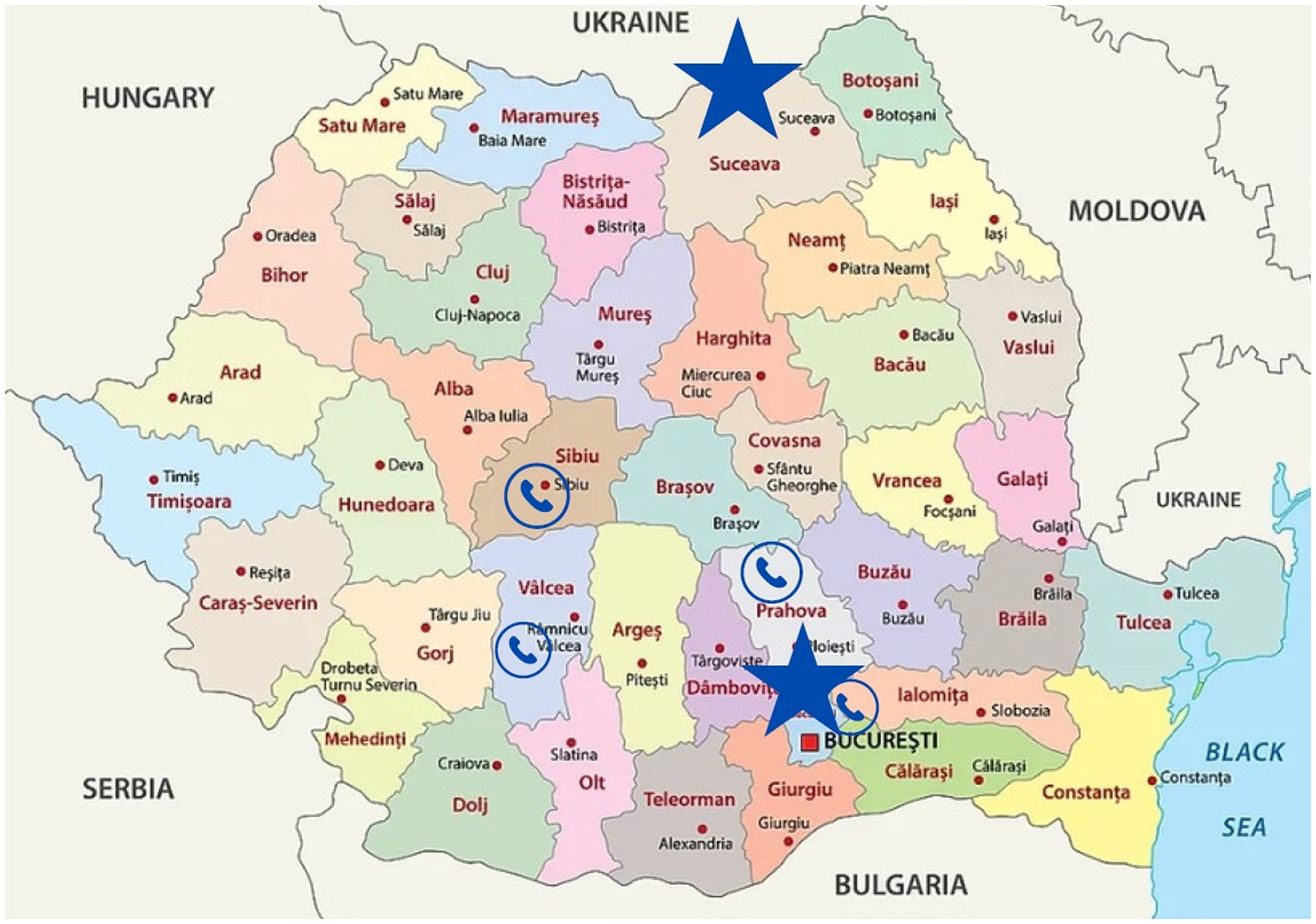
Map of Romania research sites.
Data analysis and coding process
Coding was done manually using a team-based approach. In the first coding cycle, we selected two analytical coding methods described by Saldaña (2021): (1) elemental methods, including structural coding, and (2) procedural methods, including protocol coding. In the second coding cycle, the research team moved to grouping the codes into categories in a process of axial coding (see Figure 2). Then we moved to theming the data into higher level conceptual findings while carefully using participants’ exact words or phrases to preserve the authenticity and richness of their experiences (Corbin and Strauss, 2008; Saldaña, 2021; Strauss, 1987; Strauss and Corbin, 1990).
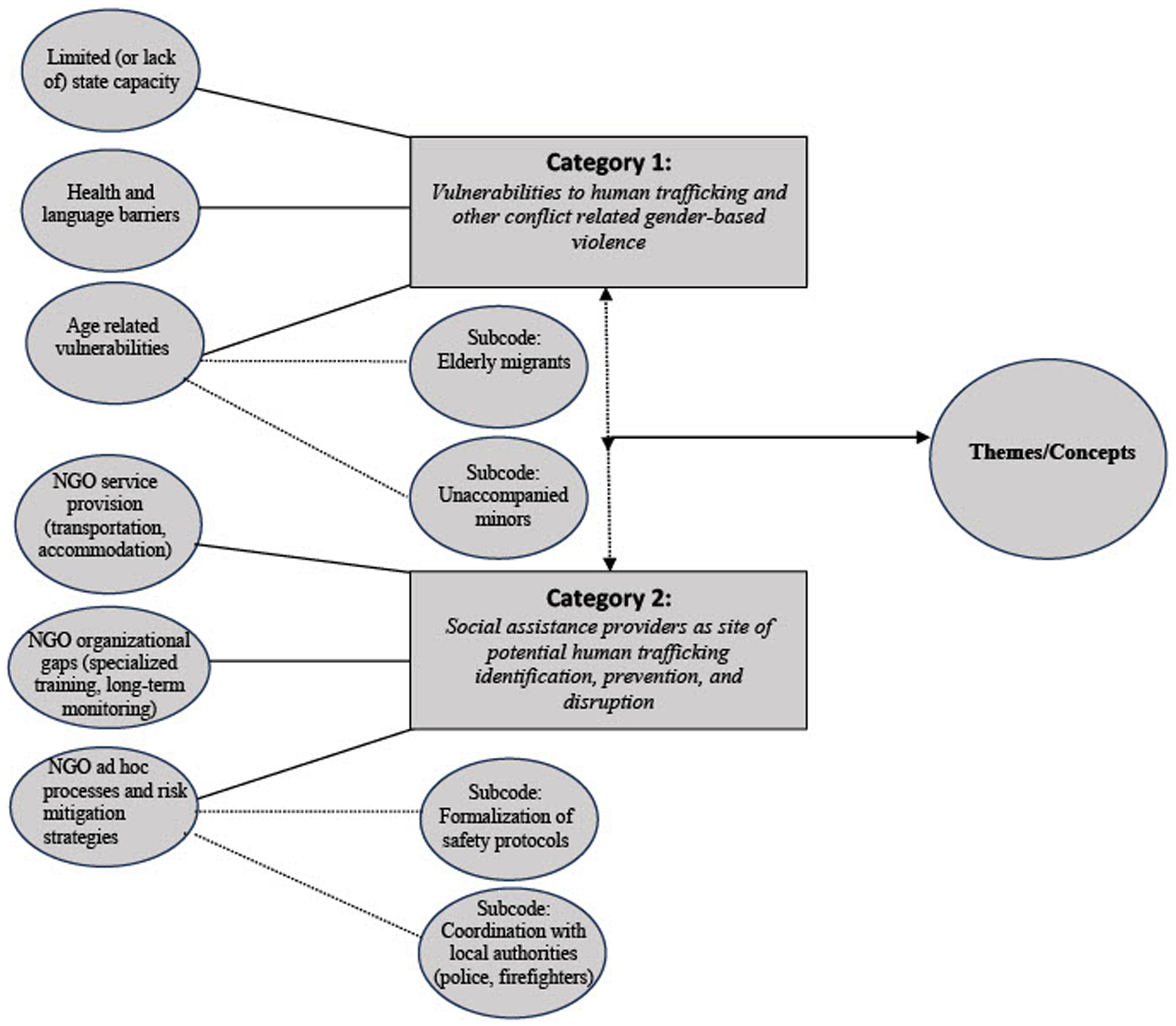
First and second cycle coding methods.
Limitations
A number of limitations are associated with this study. Interviews were conducted using a nonprobability sampling design and focused only on Romanian NGOs serving migrants from Ukraine, limiting the generalizability of the findings. Additionally, with any qualitative research there is the possibility of potential bias. However, efforts were made to reduce the likelihood of bias by having multiple research team members responsible for the coding and thematic classification of the data. Our research team's diverse backgrounds – a Romanian national, a researcher with substantial experience in Romania and other parts of Central and Eastern Europe, and researchers with some to no experience in the region – offered us a unique opportunity to arrive at interpretive convergence (Saldaña, 2021), better understanding that codes and phrases expressed in the interview data were similarly understood across cultural perspectives. Important to note that findings were based on participants’ lived experiences and their understanding and interpretation of events surrounding them. Despite these limitations, the findings presented herein are timely and relevant as they increase our understanding of social service providers as important sites of potential human trafficking identification, prevention, and disruption, especially in countries unaccustomed to handling migration-related challenges, and thus provide visibility to an area of research that is often understudied.
The current study
Of the 26 interviews conducted with individuals from NGOs, 14 participants (or 54%) discussed the topic of human trafficking, war-time rape, and other conflict-related sexual violence during their interviews. During the coding process, we were able to establish that only those with preexisting migration expertise were aware of human trafficking risks. This number represents only a small subset of the sample (key informants or individuals working in specifically migrant-serving NGOs). At the time the interviews were conducted, there were very few migrant-serving NGOs operating in Romania, estimated to be under 10 domestic NGO service providers.
The individuals who participated in the study were involved with migrants from Ukraine in a variety of ways. In the earliest months of the conflict, a majority of interview participants (n = 16) had traveled to ports of entry from Ukraine to work directly with migrants as they crossed the border from Ukraine to Romania. Many did so informally even if they were employed in their cities of residence by an NGO, and very few did so with migrant-serving organizations, since the landscape of migrant-serving NGOs in Romania at the onset of the Russian war in Ukraine was quite small. Ports of entry to Romania from Ukraine are mostly small towns and villages where one may cross by motor vehicle, and a ferry crossing across the Danube River at the village of Isaccea (see Figure 3).
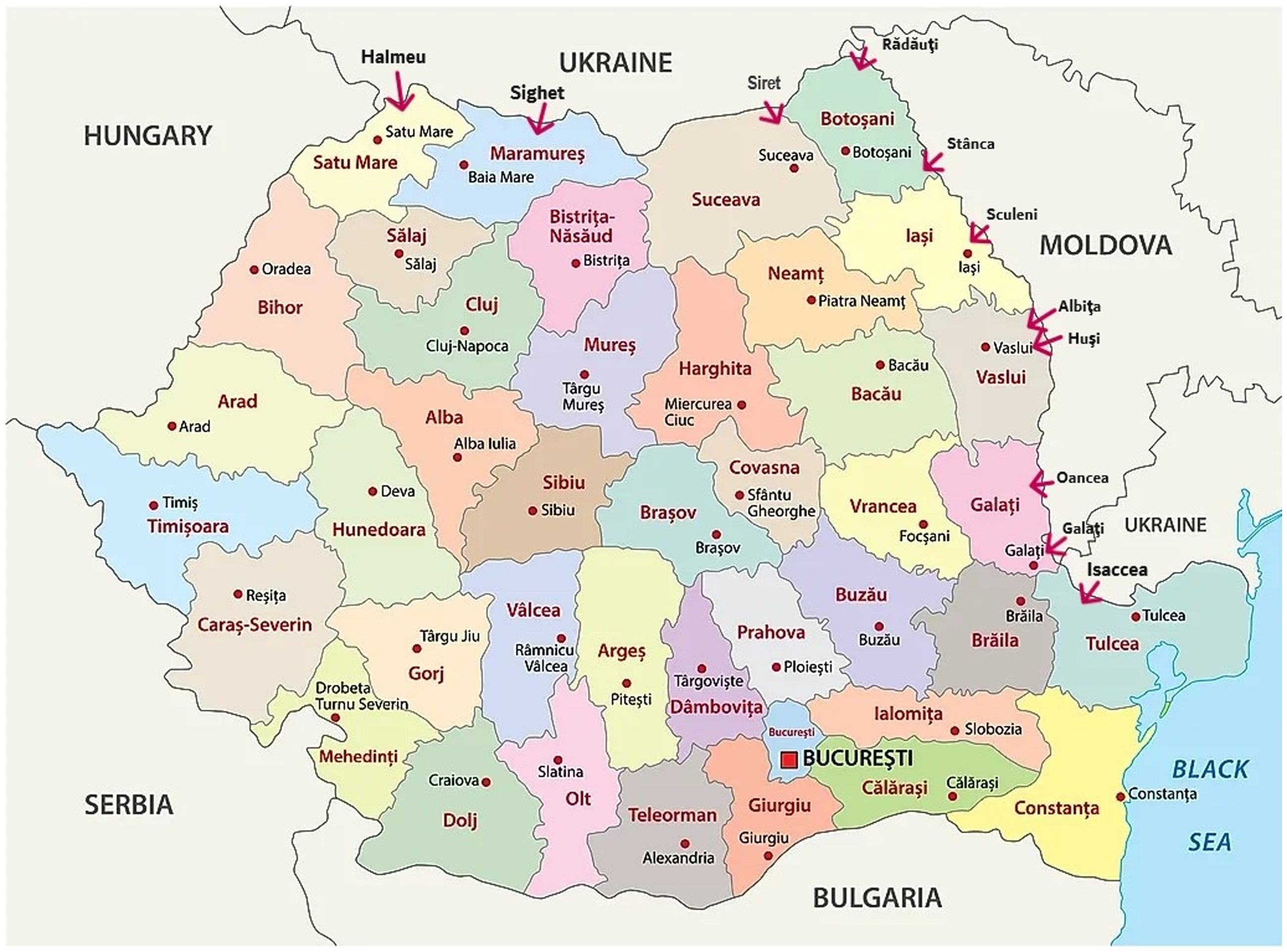
Map of border crossings from Moldova and Ukraine into Romania.
Upon arrival at the border, these individuals assisted with tasks such as arranging transportation and accommodation for newly arrived migrants; providing essentials such as food, clothing, and medical items to migrants; assisting government partners with logistics and organization; assisting border control employees with document translation and processing, particularly in the case when organizations had Moldovan nationals as volunteers, who are bilingual in Romanian and Russian and can read the Cyrilic alphabet; assisting to coordinate services, health care, host stays, and accommodation with other organizations further in Romania's Ministry of Internal Affairs; and a myriad of other senior-level tasks (e.g. overseeing the logistical flow of all aid operation at Romanian – Ukrainian border crossing points). As the conflict endured over many months and the Romanian government gained better control over the influx of migrants at the border, NGOs and volunteers moved back to their home cities where they often hosted Ukrainians and other migrants traveling out of Ukraine as part of their usual services.
Additionally, Romanian NGO staff began providing migrant-specific services, such as coordinating transportation at regional transportation hubs including bus stations and train stations; organizing accommodation based on Romania's housing scheme that, until May 2023, gave strong incentives to offer housing to migrants from Ukraine in private homes with very little documentation (Porumbescu and Coşciug, 2024); providing job integration training and placement; and Romanian language lessons. Many of these services overlap with important stages of the human trafficking process such as transportation and accommodation, as we note in the literature review section.
Thematic findings
In analyzing interview transcripts obtained from fieldwork conducted in Romania with NGOs providing aid to migrants from Ukraine, five themes were identified: (1) lack of governmental oversight, coordination, and formalized processes, (2) individual vulnerabilities, (3) existing systemic risks, migration routes, and pathways into human trafficking, (4) war-time rape and other conflict-related sexual violence, and (5) barriers to identification and reporting of human trafficking cases. The most salient quotes were included below to provide additional context to the five themes identified.
Lack of governmental oversight, coordination, and formalized processes
Participants expressed concerns about risks of human trafficking and exploitation due to the lack of governmental oversight, coordination, and formalized processes for appropriate vetting of volunteers. For instance, one participant from a social services and educational NGO recalled that ‘there were some [human trafficking] cases done by volunteers or by people who would say that they would help refugees’.
Another independent volunteer echoed this sentiment and stated, In the beginning, many civilians came and said, okay, I have a free car, four empty seats. I can take them anywhere. And in the beginning, they were like, ‘okay, go’.
Indeed, poor organizational response to emergency situations can exacerbate risks of human trafficking and exploitation, allowing existing criminal networks to operate freely and pose as volunteers and benevolent civilians offering to help. Lack of regulation and governmental oversight in response to the influx of migrants created a ‘free space’ for human trafficking to happen (as described by an independent volunteer). It also negatively affected those rendering aid, with the same independent volunteer stating, ‘You cannot sleep well at night knowing that you sent a woman with a small child with a stranger’.
In this context, some participants described developing their own ad hoc processes for mitigating human trafficking risks, such as over time formalizing processes like requiring identification from volunteer drivers and/or requiring registration with local authorities such as police, firefighters, and/or NGOs. Thus, any civilians who were interested in offering rides were required to go to the police or firefighters’ station and register as a volunteer, using their IDs as well as acquiring documentation from an NGO indicating that the organization was able to track their ride and location in real time. Other ad-hoc strategies for risk mitigation included transporting migrants only by bus or official NGO vehicle; and/or holding female and child migrants in refugee camps until official NGO sanctioned transportation was available.
Institutional collapse and corruption can also exacerbate risks of exploitation, as one participant from a social services and educational NGO pointed out: There were lots of bribes at the border, … which meant there was automatically a good opportunity for guys that were looking for cheap prostitutes and sex workers.
Individual vulnerabilities
Participants also discussed the importance of risk management and the need to provide migrants fleeing Ukraine with adequate support based on their individual unique needs and vulnerabilities. Here, risks highlighted by participants included: traveling alone, especially for unaccompanied minors or those separated from their families; being elderly; and lacking awareness and knowledge of the potential dangers for human trafficking. For instance, one independent volunteer described Ukrainian mothers traveling alone as being ‘disoriented’, making them more prone to victimization, while another participant from a social services and educational NGO indicated that their awareness of potential risks for exploitation is limited: They are not aware of what can happen to them … the situation is very delicate and people are very vulnerable because usually people who are coming from Ukraine are women with kids, young women, elderly women …, people with different levels of education as well. So being so vulnerable, it's dangerous for them.
Additionally, exhibiting ‘a series of vulnerabilities’ was also common, including experiencing severe trauma and needing special accommodations because of it, as another participant from a social services and educational NGO recalled, ‘They told me that they were abused and that they were afraid of living with other people’.
Youth traveling alone were also believed to be at an increased risk of human trafficking and exploitation due to lack of guardianship and supportive measures during transit points and during the relocation process. While most accounts were anecdotal, one participant who worked at a social services NGO described her experience working at a center for trafficked and exploited youth in Bucharest. At the time this interview took place, there were 19 children residing at the center, including Syrian, Afghani, Romanian, and Ukrainian children, with an average center capacity of 100 children per year.
Similarly, another participant from a social services and educational NGO recounted how at the beginning of the war his organization was contacted by Ukrainian Child Protective Services and Romanian Child Protective Services to see if they would be able to house orphan children from the Odessa area. Located in the South-West part of Ukraine, Odessa is Ukraine's third most populated city after Kyiv and Kharkiv, with a population of over 1 million people. The Ukrainian government officials feared that the Russian army was forcibly removing Ukrainian orphans and children living in the state's care, especially those located in villages in Odessa, and taking them to Siberia, a Russian province.
Given the gravity of the situation, ‘they (the Ukrainian officials) were desperately searching for places where they can shelter the children’ (as recalled by the same participant). Since his organization had the space to accommodate a large number of children, evacuation efforts began immediately after an on-site visit to the Romanian facility. A total of 75 orphans, from newborns to 5-year-olds, along with 52 Ukrainian staff members (e.g. doctors, nurses, caretakers) and their children, were evacuated from orphanages in Odessa to an NGO in Romania, which had previous experience with reentry programs for adults exiting the criminal justice system and was able to renovate a donated building to serve as family housing. Since none of the NGO staff members spoke Ukrainian, and some of the Ukrainian children had health problems, it was paramount that the orphanage staff members were relocated along with the children. They are expected to remain in Romania until martial law is lifted in Ukraine.
The rumors heard by the Odessan government officials that the Russian military was forcibly relocating Ukrainian children to Russia have been confirmed and now widely reported by other sources (e.g. see Human Rights Watch, 2022; Khoshnood et al., 2023; Moba, 2023; New York Times, 2023). Thousands of Ukrainian children are believed to have been taken and placed in Russian state care since the start of the war. For instance, Khoshnood et al. (2023) estimate this number to be well over 6000, identifying a network of 43 Russian camps where Ukrainian children are being held. Human Rights Watch (2022) documents the forcible transfer of Ukrainian civilians from the regions of Mariupol and Kharkiv to Donetsk, a Russian-occupied region of Ukraine. Ukrainian civilians were also subjected to a ‘filtration’ process, where they were screened by Russian authorities for their ‘biometric data without their informed consent, including fingerprints and front and side photographs; searched their bodies, belongings, and phones; and questioned about their political views and affiliations’ (Human Rights Watch, 2022: 73), with processing time lasting upwards of 14 days. International law defines the forcible removal of children from one specific ethnic or national group to another as an act of genocide (see the Convention on the Prevention and Punishment of the Crime of Genocide; Rome Statute of the International Criminal Court). Thus, on 22 February 2023, the International Criminal Court brought war crime charges against Putin and Russia's Children's Rights Commissioner, Maria Lvova-Belova (Moba, 2023).
In subsequent WhatsApp communications, upon being sent an article link by one of the authors, in March 2023, the participant shared he had received an additional 200 children, stating (with permission to be quoted), Yes, we have heard this too (about Putin's abduction and deportation of Ukrainian children) and unfortunately, it's so true, everything that they say there. It is not only the kids from Odessa, those 75 orphans, but now we have another 200 children, which almost half are orphans, and we work with more groups to bring more groups down too. So, it's an against-the-clock work, we do this every day, by God's grace, we manage that at least some children are safe.
Plans to acquire additional locations and shelter space to accommodate more children are also underway, in light of the bombings in Odessa. This begs the question of whether the children's long-term stay in Romania will have any unintended consequences? Will they de facto become Romanian and lose their ‘Ukrainian’ identity in any way?
Existing systemic risks, migration routes, and pathways into human trafficking
Well before the start of the war, human trafficking was an issue of concern in Eastern Europe (Hernandez and Rudolph, 2015; Kligman and Limoncelli, 2005; Shelley, 2014; Surtees, 2008). As such, the few participants who already worked in the arena of migration were acutely aware of existing systemic risks, migration routes, and pathways into human trafficking. They recognized the need for increased attention and monitoring of the situation, especially in light of the war and given the sheer volume of those fleeing. For instance, one key informant with migration expertise emphasized: In terms of human trafficking, Romania, Ukraine, Republic of Moldova [countries which share borders with Romania], they are on the top list of countries that are providing trafficking persons. We were very attentive. And then we have the General Directive for Social Protection and Child Protection.
1
We have a federation of NGOs working on trafficking.
Echoing this sentiment, a participant from a migrant services NGO added: We have multiple projects about human trafficking and with regards to Ukraine one of the first things and this was amazing because not just (our NGO) but all of our organizations that deal with immigration in the very first few days looked and paid attention to people who offered accommodation and transportation from one place to another.
In discussing the role Romania plays in the human trafficking nexus, one key informant knowledgeable about migration acknowledged, ‘we definitely encounter human trafficking’ [domestically, within country borders], but added that Romania still serves as ‘a source of human trafficking for other European countries’, [internationally, across country borders] including for sexual exploitation, labor exploitation, and forced begging. Concerns about risks of human trafficking and exploitation centered beyond Romanian citizens and migrants fleeing Ukraine following the war. Some of the geographical areas flagged as particularly vulnerable to human trafficking by participants included the Philippines and the Middle East, indicating that Romania also serves as a destination country for foreign nationals from less economically developed countries, as a participant from one of the few migrant services NGO pointed out: So, we have many cases of people coming from the Philippines that have been exploited by their employers so we have been very active about these concerns for this specific community, whether they need accommodation or they need some food or something else.
Similar concerns were voiced regarding human smuggling by yet another key informant with migration expertise, adding that ‘There is also this niche of trying to smuggle people from the Middle East and Afghanistan that want to go to Germany’, where there is a demand for cheap labor. Another independent volunteer with migration expertise acknowledged the demand for sex trafficking, When the refugees would come to Romania, they were different people from different races … I had a lot of cases. They want to solve them in other countries. There were kidnappings and they wanted to go into the market and sell it for sexual pleasures.
War-time rape and other conflict-related sexual violence
In addition to reports of human trafficking cases, participants described receiving calls and reports of rapes, domestic violence, and other conflict-related sexual violence. For instance, one key informant with knowledge of crime reporting recalled ‘a few cases where women were reporting tentative of rapes in Maramures, but very, very few, fortunately’. The Maramures region is located in the Northern part of Romania and borders Western Ukraine. The ongoing conflict left many vulnerable to victimization, as pointed out by yet another participant from a social services and educational NGO, who states, I understood that there were people who took advantage of the women because of the circumstances and of course they pressed charges.
Another participant from a medical services NGO acknowledged receiving domestic violence calls, indicating, We were called about abused mothers. We always answered and we found a place to redirect them … I'm convinced that there were people who were kidnapped, abused and so on.
In discussing the topic of domestic violence, one participant from a migrant-serving NGO mentioned that the ongoing conflict might have had an unintended consequence, stating, The war was a good opportunity for a very small category of women who were maybe in abusive relationships to get away from their abuser.
Barriers to identification and reporting of human trafficking cases
Identification of human trafficking cases can be difficult for a number of reasons (Troshynski and Bejinariu, 2018). Fear, mistrust, or trauma can prevent some victims from coming forward and reporting the crime. For instance, one participant from a migrant services NGO noted the difficulty in getting people to open up and trust them: It is very hard to find cases and even if we have some situations where we have been able to identify people who may be a victim to human trafficking it is very hard to take that person and make that person open to speak about the problems.
Similarly, another participant from a social services and educational NGO echoed this sentiment: It's normal to be afraid when you've been abused. You start to have this trauma. And this trauma is, you know, you fear for your future, for your kids, you prefer maybe to not speak about it.
In discussing the war in Ukraine and risks of human trafficking, another participant from a migrant-serving NGO raised similar concerns: So human trafficking in general, I would say it's a complicated subject as well in Romania. We do know that we are somewhere in the top providers of human trafficking victims at the EU level. On the other hand, right now, in the context of the Ukrainian crisis, we don’t really have a lot of reports. So, we do not know if the issue is under-reported or if there are generally no problems.
Limited or temporary physical oversight of people has also been presented as a challenge to the identification of human trafficking cases. For instance, one participant from a migrant-serving NGO indicated, For us, the signs come from observing a person for a week or two or three months but in the center, people usually stay for about two weeks and then they go somewhere else. So, it is a bit hard to identify the cases.
Lastly, a participant from a social services and educational NGO emphasized the need for additional training on human trafficking risks and mitigation strategies.
Discussion
The purpose of this study was to increase our understanding of humanitarian aid providers’ abilities to address human trafficking in countries unaccustomed to mass migration flows, as a result of regional conflicts. First, we identify how lack of formalized processes for appropriate vetting of volunteers increases risks of human trafficking. These risks were heightened during transportation and relocation efforts, which were initially arranged by individuals who had not been vetted or registered as a volunteer/NGO staff member, and who operated outside of NGO-sanctioned or government-approved transportation services. To mitigate these risks, NGOs developed their own ad hoc strategies, including vetting volunteer drivers, coordinating with local authorities, and creating safer transportation and accommodation protocols. Second, we document how lack of guardianship and supportive measures during transportation can exacerbate risks of human trafficking, and other war crimes, especially for children who are traveling alone. This finding has been confirmed by other sources (Human Rights Watch, 2022; Khoshnood et al., 2023; Moba, 2023; New York Times, 2023). Third, we note how preexisting trafficking networks impact individuals’ vulnerabilities to human trafficking. Lastly, we document accounts of conflict-related sexual violence and identify barriers to identification and reporting of cases. Given that humanitarian assistance providers interact with migrants at vulnerable stages during their journey, it is imperative that these individuals are knowledgeable about human trafficking risk factors and barriers to help-seeking. Taken together, these findings suggest that there is much overlap between the type of work NGOs engage in and the sites where human trafficking risks occur. Therefore, we argue that human services providers are well positioned to identify human trafficking, similar to other street level bureaucrats (e.g. police, medical staff, and transportation personnel).
Policy implications
Based on these findings, effective strategies against human trafficking require appropriate vetting of civilians to prevent existing criminal networks from posing as volunteers and infiltrating amongst vulnerable groups. Improved coordination between governmental groups and NGOs to facilitate rendering of services is also needed. Atkinson and Hamilton-Smith (2022: 920) have argued that in order to combat human trafficking ‘partnership ethos’ must be developed and involve collective efforts from the police, the public, and public sector agencies. Similarly, Friesendorf (2007: 386) contends that ‘successful security governance against human trafficking depends on intense transnational cooperation among specialized state agencies, and on the participation of international organizations, NGOs, and private businesses in policymaking and implementation’. Lastly, efforts should be made to increase awareness about risk factors.
NGOs and other humanitarian aid workers expressed an interest and willingness to receive training on human trafficking risks and mitigation strategies, and an uneasiness when they encountered what they suspected might be human trafficking risks. In some cases, NGO workers and informal volunteers created their own ad hoc strategies to mitigate these risks. In countries unaccustomed to immigration, rapid response training and readily available ‘best practices’ tool-kits for humanitarian aid providers could go a long way to mitigating human trafficking risks encountered in migrant serving settings. Indeed, training personnel on human trafficking risks has been shown to promote victim identification in studies on police (Wilson et al., 2006; Wilson and Dalton, 2008), medical professionals (Beck et al., 2015; Chisolm-Straker et al., 2012; Donahue et al., 2019; Grace et al., 2014), and transportation personnel (Bejinariu, 2022).
Footnotes
Acknowledgments
We would like to thank the interview participants for generously sharing their time and experiences with us. We would also like to extend our gratitude to Ghiocel Bejinariu and Alexandra Frîncu for their invaluable assistance in the field

Funding
The author(s) disclosed receipt of the following financial support for the research, authorship, and/or publication of this article: This research was supported by the American Councils Title VIII Research Scholar Program Fellowship.
Declaration of conflict of interests
The author(s) declare no potential conflict of interest with respect to the research, authorship, and/or publication of this article.