



Abstract
The concept of organized crime has dynamically evolved, with researchers contending that it is a social construct or an umbrella concept encompassing different empirical manifestations. Scholars have often suggested classifying organized crime groups into those involved in “racketeering” or “governing” and those engaged in “transit crime” or “trading.” However, these propositions were never assessed at the level of individual criminal careers. We address two primary objectives: first, we test differences in the criminal careers of organized crime offenders between organized crime contexts that are historically different—comparing Italy, which is primarily known for racketeering organized crime, to the Netherlands, which is characterized more by transit crime. Second, we explore differences between criminal careers of organized crime offenders born in different decades; doing so allows us to measure differences in offending patterns in shifting organized crime contexts due to broader social changes while considering more country-specific changes in law enforcement and organized crime policies. The study relies on the criminal careers of 4480 organized crime offenders in Italy (n = 3360) and the Netherlands (n = 1120). We analyze the distributions of criminal career parameters, crime categories, age-crime curves, and offending trajectories. Offenders in Italy exhibit higher offending, earlier violence, earlier onset, and decline; offenders in the Netherlands display later onset, slower decline, and a greater involvement in drug and property offenses. Also, both samples show generalist offending patterns, long-lasting careers, and involvement in organized crime in adulthood. We also find substantial variation across decades of birth, with younger offenders in both countries reporting higher frequencies. We attribute this to the interplay of increased offending among younger individuals, the implicit selection bias in the sampling, and greater law enforcement pressure due to stricter anti-organized crime policies since the 1980s and 1990s.
Introduction
In recent decades, the concept of organized crime has evolved dynamically, sparking debates and driving policy discussions. The definition of organized crime is multifaceted and varies across nations, historical periods, and criminal activities. The concept of organized crime is shaped by diverse factors, including the actual manifestations of organized crime, policies to combat it, and the influence of media, politics, and societal dynamics. This study delves into the complex notion of organized crime, whose definitions often diverge from empirical realities, to empirically test theoretical and empirical propositions about the different activities and manifestations of organized crime at the level of individual criminal careers.
Our study has two primary objectives. First, we empirically compare the criminal careers of organized crime offenders in Italy and the Netherlands, two countries confronted with serious—albeit different—organized crime problems. Italy is known for its historical ties to “governing” or “racketeering” organized crime, deeply rooted for over a century and entangled with politics and the legal economy (Catino, 2020; Gambetta, 1993; Paoli, 2003, 2014; Varese, 2014, 2020). In contrast, the Netherlands’ organized crime landscape is characterized by “trading” or “transit,” closely linked to the emergence of major transnational drug markets (Fijnaut et al., 1998; Kleemans, 2007). By examining the criminal careers of individuals in these two distinct contexts, we test the distinctions between governing versus trading (or racketeering versus transit) at the level of individual criminal careers.
Second, we explore whether the observed patterns in the criminal careers of organized crime offenders persist when comparing individuals born in different decades. Recent research has started to address a key knowledge gap by examining whether criminal careers have evolved over time due to social changes. Studies on general samples in the United States found relevant inter-cohort differences, largely attributable to changes in the criminal justice system and society in general (Neil et al., 2021; Neil and Sampson, 2021). Given the substantial changes in organized crime definitions, legislation, and policies in recent decades, it is imperative to analyze shifts in the criminal trajectories of organized crime offenders both across countries and over different periods of time.
Our results show noteworthy distinctions between offenders in Italy and the Netherlands, encompassing various aspects of criminal careers, types of offenses, the shape of age-crime curves, and offending trajectories. Furthermore, we observe substantial changes in criminal careers when considering different birth decades, highlighting a trend where younger individuals exhibit higher offending frequencies. We suggest that these variations may be attributable to a combination of higher offending among younger organized crime offenders, implicit selection bias in the sampling, and broader social changes including changes in law enforcement efforts.
In the next section, we review the literature on organized crime and criminal careers related to our two primary objectives. The second section elaborates upon the methodology and the limitations of this study, whereas the third section presents the results regarding the country samples and decades of birth. The last section discusses the results and concludes.
Background
Organized crime: Definitions and empirical realities
Organized crime is a contested concept: its definition changes across types of crimes, countries, and historical periods (Paoli and Vander Beken, 2014; Von Lampe, 2016; Woodiwiss, 2003). Nevertheless, most definitions share the idea that at least two or three co-offenders need to cooperate for a prolonged period in some (serious) criminal activities. Divergences between wide and narrow definitions hinge on perspectives on the required structure of co-operation (from stable, pyramidal organizations to flexible criminal networks with fluid co-offending relationships or even single criminal “entrepreneurs”) and the types of activities performed (Finckenauer, 2005; Hagan, 2006; Paoli, 2002; Varese, 2010; Von Lampe, 2016).
In fact, the definition of this concept emerges from a social construction process, often diverging from empirical realities (Paoli, 2002; Paoli and Vander Beken, 2014; Von Lampe, 2001; Woodiwiss, 2003). The social construction of organized crime is influenced by the actual manifestations of organized crime in different countries and over time, the policies implemented to address these manifestations, and by media representations, political influences, and societal dynamics.
In the last decades, the concept of organized crime has evolved dynamically, expanding its scope considerably, as exemplified by the definition of an organized criminal group included in Article 2 of the UN Convention Against Transnational Organized Crime. 1 The broadening of the definition of organized crime aimed at encompassing a wider variety of organizations and crimes under a common label. While this process supported the development of anti-organized crime policies, it also led to a dilution of the meaning of organized crime—at times making it difficult to distinguish it from the joint perpetration of offenses by multiple offenders (Calderoni, 2010; Paoli and Fijnaut, 2004; Paoli and Vander Beken, 2014).
Reacting to the broadening of the definition of organized crime, some scholars contended we should reject the concept in favor of the organization of crime for profit (Levi, 2012; Naylor, 2003; Van Duyne, 2003). Others observed that organized crime had become a prominent topic in public debates and policies, making it de facto worthy of scientific attention (Paoli and Vander Beken, 2014: 25). They also suggested organized crime could be considered an “umbrella concept” encompassing different manifestations (Kleemans and van Koppen, 2020: 417; Von Lampe, 2016: 34). Von Lampe proposed to break down the all-encompassing notion of organized crime into a conceptual framework comprising the three basic dimensions: activity, structure, and governance (2016: 31–34).
When examining organized crime activities, the literature differentiates between transit crimes and racketeering (Kleemans, 2007), or trading and governing (Breuer and Varese, 2022; Campana and Varese, 2018). Transit crimes or trading involve organized crime's engagement in the (international) movement and illicit trade of goods, such as drug trafficking. Racketeering or governing describes organized crime's acquisition of control over specific regions or economic sectors, effectively assuming the role of an “alternative government.” These distinctions have a longstanding tradition in organized crime research, resonating with Block (1980)'s concepts of “power syndicates” and “enterprise syndicates” in his analysis of organized crime in New York in the 1930s–1950s. The trading versus governing distinction, however, has until present resulted from different theoretical elaborations, qualitative/historical studies, and case studies, often focusing on the group level.
Differences in activities may also influence the types of criminal careers of organized crime offenders. Nevertheless, to date, there is no empirical comparison of the criminal careers of organized crime offenders across different nations. Conducting such comparisons would provide an empirical test of the applicability of the transit/racketeering or trading/governing distinctions at the individual level. Furthermore, this knowledge could significantly enhance our understanding of the actual crimes and offending patterns exhibited by organized crime offenders in different contexts. Lastly, it would support the improvement of anti-organized crime policies: these policies were often imported from other countries, disregarding the different manifestations of organized crime. A greater understanding of the similarities and differences in individual-level offending may provide indications to design policies more specifically designed to tackle the manifestation of organized crime in a given country.
To address this research gap, the first objective of this study is to empirically compare the criminal careers of organized crime offenders in Italy and the Netherlands. Both countries have serious organized crime problems but are also quite different in terms of the history and the nature of organized crime. Italy is often referred to as a prime example of “governing” or “racketeering” organized crime, with deep historical roots, dating at least back to the nineteenth century, and connections with politics and the legal economy (Catino, 2019; Paoli, 2014; Varese, 2017). Conversely, the nature of organized crime in the Netherlands is better characterized as “trading” or “transit” and is tightly connected to the emergence of the major transnational drug markets (Kleemans, 2007). We empirically link individual criminal careers to higher-order organized crime contexts and, doing so, we aim to test theoretical assumptions about organized crime at the individual level. Given these premises, we anticipate that the Italian sample will report more prolific, longer-lasting, and violent criminal careers, while the Dutch sample will exhibit less prolific, shorter, and drug-related criminal histories. To achieve this objective, we perform a matched comparison of the criminal careers in the two samples holding constant the decade of birth and the length of the follow-up, and synchronizing the key crime measures.
Comparing criminal careers in organized crime
To the best of our knowledge, to date, there are no systematic, empirical comparisons of criminal careers in organized crime. In the last decade, however, several empirical contributions analyzed these careers across various countries, including the Netherlands, the United Kingdom, Australia, and Italy (for an extensive review, see Kleemans and van Koppen, 2020). This research consistently revealed key patterns regarding organized crime offenders.
First, organized crime offenders are predominantly males—from 91% to 98% of existing samples (Campedelli et al., 2021; Francis et al., 2013; Fuller et al., 2019; Van Der Geest et al., 2020). Second, organized crime offenders join criminal organizations around the age of 30 on average (Campedelli et al., 2021; Francis et al., 2013; Kleemans and de Poot, 2008; Van Koppen et al., 2010b). Third, most individuals involved in organized crime have more prior contacts with the criminal justice system, often for more serious offenses, compared to individuals of similar ages in the general population (Francis et al., 2013; Meneghini et al., 2023; Van Koppen et al., 2010b; Voce et al., 2021). Fourth, criminal careers in organized crime follow different developmental trajectories comprising early starters, adult-onset offenders, and individuals with no criminal records before the involvement in organized crime (Campedelli et al., 2021; Francis et al., 2013; Morgan and Payne, 2021; Sokalska and Kotowska, 2022; Van Der Geest et al., 2020; Van Koppen et al., 2010b). Fifth, a substantial number of offenders exhibit a late onset (Campedelli et al., 2021; Van Koppen et al., 2010a). Last, organized crime offenders tend to be generalists rather than specializing in specific offense categories (Campedelli et al., 2021; Francis et al., 2013; Fuller et al., 2019).
Despite the consistent findings from previous studies, much is still unknown about the criminal careers of organized crime offenders. When comparing criminal careers across countries, we are essentially examining individuals within different contexts, different types of organized crime, and different periods. Furthermore, empirical studies must contend with discrepancies in legal definitions and law enforcement practices—particularly relevant for organized crime. As a result, the literature exhibits substantial diversity in sample sizes and selection, follow-up periods, and operationalizations of career parameters and crime categories. This variety often leads to a focus on similarities across samples rather than specific differences, which may be attributed to methodological variations. However, emphasizing similarities may underestimate the heterogeneity of manifestations of organized crime across countries and time periods. While the idea of uniform organized crime careers is attractive from a theoretical perspective, it demands more robust empirical support from systematic, comparative studies adopting consistent methodologies and approaches.
One of the main knowledge gaps is whether criminal careers in organized crime have changed over time, an issue that has been addressed in recent research. A study on Australian members of outlaw motorcycle gangs (OMCGs) showed that younger members were ‘more likely to have early-life violence and intimidation and weapons offences recorded’ (Voce et al., 2021: 15). At the same time, recent research on criminal careers based on general samples in the United States showed important inter-cohort differences, mostly attributable to social change and evolutions in the criminal justice system (Neil et al., 2021; Neil and Sampson, 2021). Overall, these studies show that criminal careers change, and that evolution may stem from both internal and external factors. In light of the substantial changes in organized crime definitions, legislation, and policies over the past few decades, it becomes crucial not only to analyze the similarities and differences in the criminal careers of organized crime offenders across countries but also to track these trends over time.
The second objective of this study therefore aims to explore whether the similarities and differences between the criminal careers of organized crime offenders in Italy and the Netherlands are present also when comparing individuals born in different decades.
Methodology
Data
The Dutch sample of organized crime offenders originates from the Organized Crime Monitor (OCM) in the Netherlands. This is an ongoing research project monitoring organized crime. The OCM contains a strategic selection of 150 cases (for data collection waves 1–4) from a total population of all closed criminal investigations of national and regional investigation teams (including the fiscal police) into organized crime. 2 It focuses not only on traditional drug trafficking cases (cocaine, heroin, and cannabis; n = 37), but also on other—less frequently prioritized—phenomena such as synthetic drugs (production and export; n = 15), mixed cases (including traditional drugs and synthetic drugs; n = 21), human smuggling (n = 16), human trafficking (n = 18), fraud and money laundering (n = 32), and other criminal activities (n = 11) (for more information, see Kleemans, 2015; Kruisbergen et al., 2012; Kruisbergen et al., 2019). For this study, the initial sample from the 150 cases in the OCM comprised 1152 individuals, all males. Based on offending information from the Dutch Offender Index, we dropped 32 individuals who did not have major convictions for organized crime offenses before age 60. The resulting Dutch sample comprises 1120 individuals, convicted for 11,530 offenses. The minimum age at crime commission is 12, which is the minimum age of criminal responsibility in the Netherlands, and the maximum is 76.
The Italian sample was drawn from the Proton Mafia Member dataset (hereinafter PMM), which includes the criminal careers of 11,138 offenders convicted for mafia association in Italy from 1982 to 2016 (Campedelli et al., 2021; Meneghini et al., 2023; Savona et al., 2020). The sampling procedure ensured comparability with the Dutch sample by sex and decade of birth: for each decade of birth, we sampled offenders in Italy three times the offenders in the Netherlands to account for the variability in the PMM. 3 Furthermore, the sample was also representative of the larger PMM dataset, with small deviations (see Tables A1 and A2 in the Appendix). The resulting Italian sample comprises 3360 males, convicted for 55,546 offenses. The minimum age at crime commission is 14, consistently with the minimum age for criminal liability in the Italian criminal law, and the maximum age is 74.
Over 98% of the Italian sample was born and residing in Italy. As for the Dutch sample, almost two-thirds of individuals (64.9%) were born either in the Netherlands (55.1%) or in the former colonies of the Netherlands Antilles (2.1%) and Suriname (7.7%). Other offenders were born in Morocco (2.1%), Turkey (7.9%), and other countries classified as Western (8.4%) or non-Western (16.3%). Independently from the place of birth, however, all individuals in the sample were residing in the Netherlands from age 12. For brevity, we refer to these samples as organized crime offenders in Italy and the Netherlands in the rest of this study.
Measures
The two samples were merged into a single dataset of 4480 offenders, with anonymized unique identifiers. The dataset includes criminal career parameters, the count of crimes within seven crime categories, and the number of crimes committed at each age. For each offender, we included the year of birth, age at first crime (or onset), the age at first organized crime, the number of committed crimes, and the number of crimes and violent crimes before the first organized crime. We also computed additional criminal career parameters: duration is the difference in years between the year of the last and the first crime (Piquero et al., 1999, 2004; Weisburd and Waring, 2001); the diversity index ranges between 0 (when all offenses fall within the same category) and 1 when they are equally distributed across all categories (Lussier et al., 2017; Piquero et al., 1999; Sullivan et al., 2006; Wright et al., 2008) 4 ; frequency is the ratio between the total committed crimes and the duration; and seriousness is an ordinal five-level variable (1 = lowest and 5 = highest seriousness). 5
The seven crime categories, based on the Dutch standard classification of offenses (CBS, 2010), include: drugs (production, trafficking, selling), misdemeanors (excluding traffic and administrative violations), organized crime (mafia association for the offenders in Italy and the criterion offense for the offenders in the Netherlands), other (all offenses not included in the other categories), property (including theft, fencing, false documentation and forgery, damages to property), violent (murder, assault, extortion, robbery, threats), and weapons.
We classified the individuals across decades of birth. Due to the smaller sample sizes, individuals born before 1950 entered one category (<50s) as well as individuals born after 1979 (≥80s). For brevity, we refer to individuals born in the 1970s and 1980s as “younger offenders” and those born before 1950 and in the 1950s as “older offenders” throughout the rest of this study.
Limitations
This study has several important limitations, in addition to the measurement issues already discussed above. The inclusion criteria for the two samples have some differences. The Italian sample relied on final convictions for mafia association, while the Dutch sample included individuals based on police investigations for a broader range of criterion offenses linked to organized crime. The Dutch sample may thus encompass more diversity in organized crime manifestations than the Italian one. Also, in Italy, there are offenders primarily involved in illicit markets but not directly related to the mafias. Their criminal careers might differ from those of mafia offenders, potentially aligning more with the Dutch sample. Regrettably, data for these specific offenders in Italy are currently unavailable. Future research endeavors could involve comparing different samples to validate the robustness of our analyses.
Furthermore, due to the different inclusion criteria, the Dutch sample initially included a broader range of individuals, some with no convictions at all. Conversely, the Italian sample focused only on convicted offenders, overlooking offenders who were investigated, prosecuted, and tried for mafia association but received no final conviction. Furthermore, Italy adopts a mandatory prosecution system that necessitates investigation and prosecution whenever evidence is sufficient, whereas the Netherlands allows more discretion to the prosecution, possibly resulting in fewer convictions, especially among younger or first-time offenders. These differences may introduce distinct biases in the samples. To mitigate these differences, we included in the Dutch sample only individuals with at least one final conviction, ensuring that the analyses compared individuals associated with organized crime and convicted of at least one crime during their lifetime.
Due to the different selection criteria, the two samples reflect varying definitions, law enforcement practices, and measurements of organized crime between Italy and the Netherlands. The Dutch sample is more likely to encompass offenders involved in illicit trafficking, while the Italian sample focuses on mafia-related offenders. Despite these differences, we argue that the two samples effectively represent what each country considers a typical manifestation of organized crime. In Italy, the mafias hold a central place in discussions of organized crime, while in the Netherlands, the OCM is a government-funded program aimed at gaining insight into organized crime within the country. Therefore, the samples accurately reflect the prevailing perceptions of organized crime held by the public, policymakers, and governments in the two countries. Rather than assuming uniformity in definitions and samples, we acknowledge the distinct conceptions of organized crime between Italy and the Netherlands, evaluating how these perceptions are reflected in the criminal careers of individual offenders.
Analytical strategy
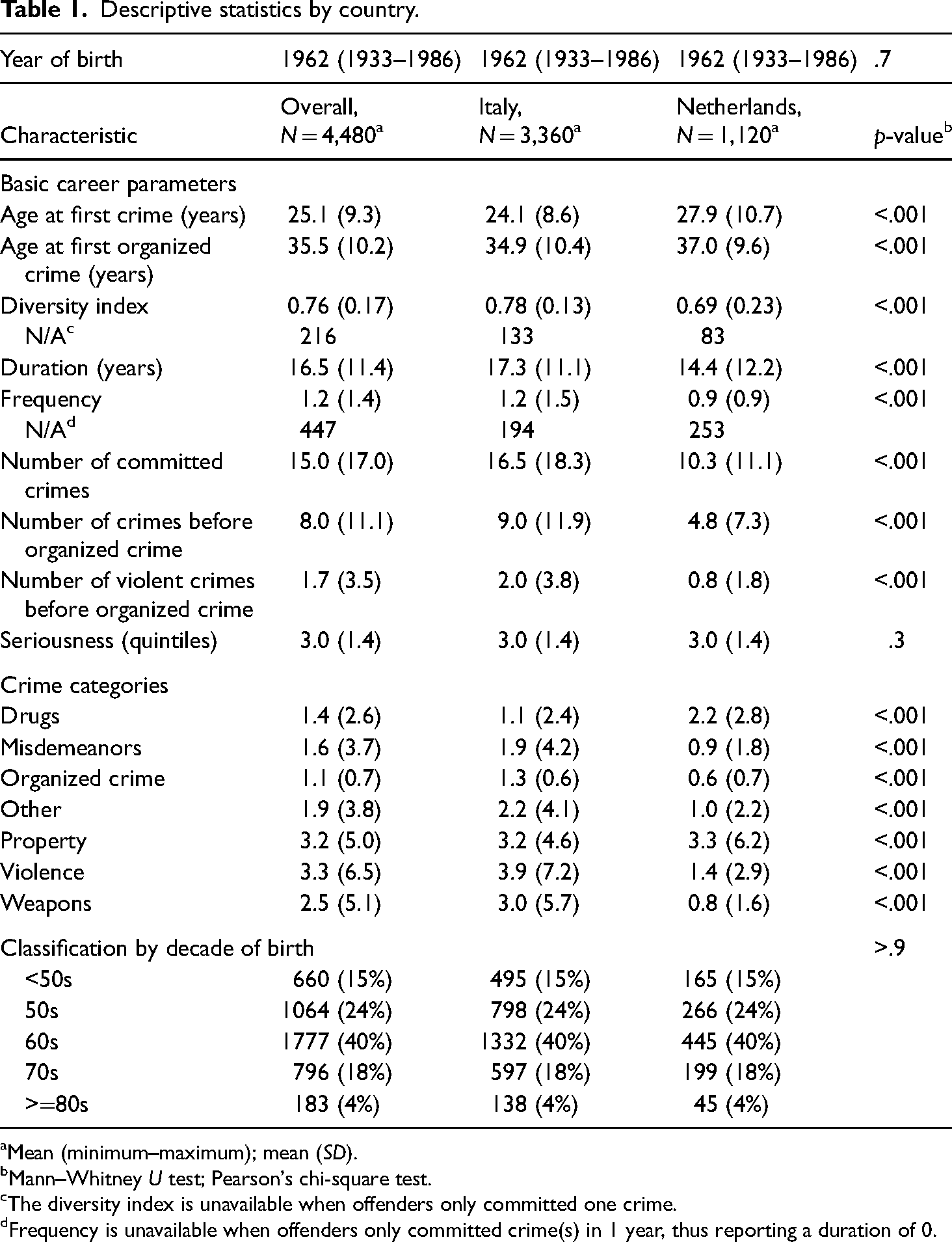
First, we examined the distribution of the basic parameters and crime categories in the two country samples (Table 1). We tested whether the differences between countries were statistically significant through a non-parametric, two-sample, Mann–Whitney U test (also known as Wilcoxon rank sum test). We analyzed the evolution of offending across the life course in the two country samples. Due to the limited information on the individuals’ deaths, these analyses examined the potential career from the year of birth and the end of the observation period (2016 for both countries). This may result in overestimating the offending frequencies, especially at later ages when a few individuals may be dead. To partially account for the possible bias, we focus the longitudinal analyses on the 14–60 age window. We generated age-crime curves to gain an overview of offending frequencies at different ages in the two countries. Subsequently, we applied group-based trajectory modeling (GBTM; Nagin, 2005) to unpack the country curves into different developmental patterns of offending. GBTM approximates the age-crime curve's underlying continuous distribution of offending patterns into a discrete number of groups. We fitted a zero-inflated Poisson model because offenses are rare events and therefore zeros are overrepresented in our yearly measures of offending. The use of an inflation parameter allows individuals to have short periods of nonoffending without this resulting in disjunct changes in the modeled rate of offending. The model parameters that define the shape of the trajectory vary across groups, allowing different groups to follow different trajectories. We detail the selection of the number of groups and present postestimation diagnostics in the Appendix. We conducted a non-parametric, independent samples Kruskal–Wallis rank sum test to examine the distribution of criminal career parameters across the trajectories.
Descriptive statistics by country.
Mean (minimum–maximum); mean (SD).
Mann–Whitney U test; Pearson's chi-square test.
The diversity index is unavailable when offenders only committed one crime.
Frequency is unavailable when offenders only committed crime(s) in 1 year, thus reporting a duration of 0.
Second, we replicated the analysis for the different decades of birth and tested the differences between countries for each decade with Mann–Whitney U test. We also explored the distribution of individuals from different decades of birth across the offending trajectories, tested with a Pearson’s chi-square test and mosaic plots. Mosaic plots are the graphical equivalent of contingency tables where the size of each tile is proportional to the observed cell counts and the shadings are based on the standardized Pearson's residuals: blue shadings point out higher counts and red shadings lower counts than expected with an independent distribution (Hofmann, 2000; Meyer et al., 2008).
Results
Country samples
The distributions of the career parameters and crime categories (Figure 1) between the two countries always showed statistically significant differences based on a non-parametric, two-sample Mann–Whitney U test (Table 1). The relatively large sizes of the samples may explain these differences. Based on the Z score of the test, the largest country differences for the career parameters were the diversity index, number of crimes and of violent crimes before organized crime, as well as the number of committed crimes overall; conversely, the smallest difference concerned the age at first organized crime offense and the duration. For the crime categories, the largest differences were for organized crime, violence, weapons, and drugs, whereas property offenses were more similar.
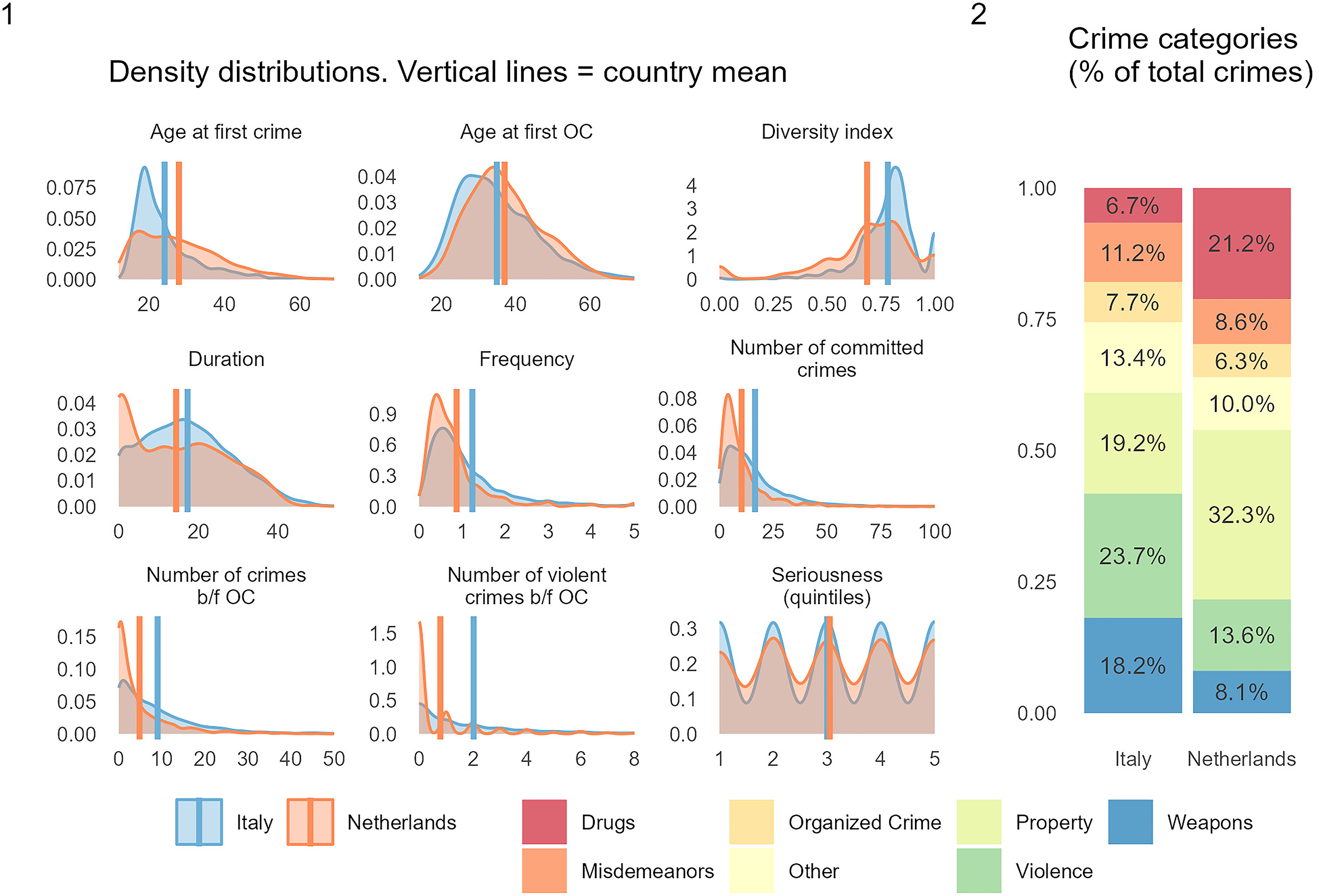
Distribution of basic criminal career parameters (1) and crime categories (2) by country.
Offenders in Italy showed higher offending frequency and more diversity in the crime mix; they also committed more crimes—including violent crimes—before organized crime, and more crimes overall. Conversely, the offenders in the Netherlands committed their first crime at a later age. Interestingly, the age of the first organized crime and the duration showed very close average values between the samples, although the distribution of the Dutch sample for the duration was more skewed to the right. Regarding the crime categories, offenders in Italy reported a greater share of violent and weapon-related offenses, whereas the offenders in the Netherlands had larger proportions of property and drug-related crimes.
Also, the age-crime curves were different (Figure 2): offenders in Italy peaked between age 20 and age 30, and then declined steeply; offenders in the Netherlands slowly increased up to a peak between age 35 and 40, followed by a slower drop.
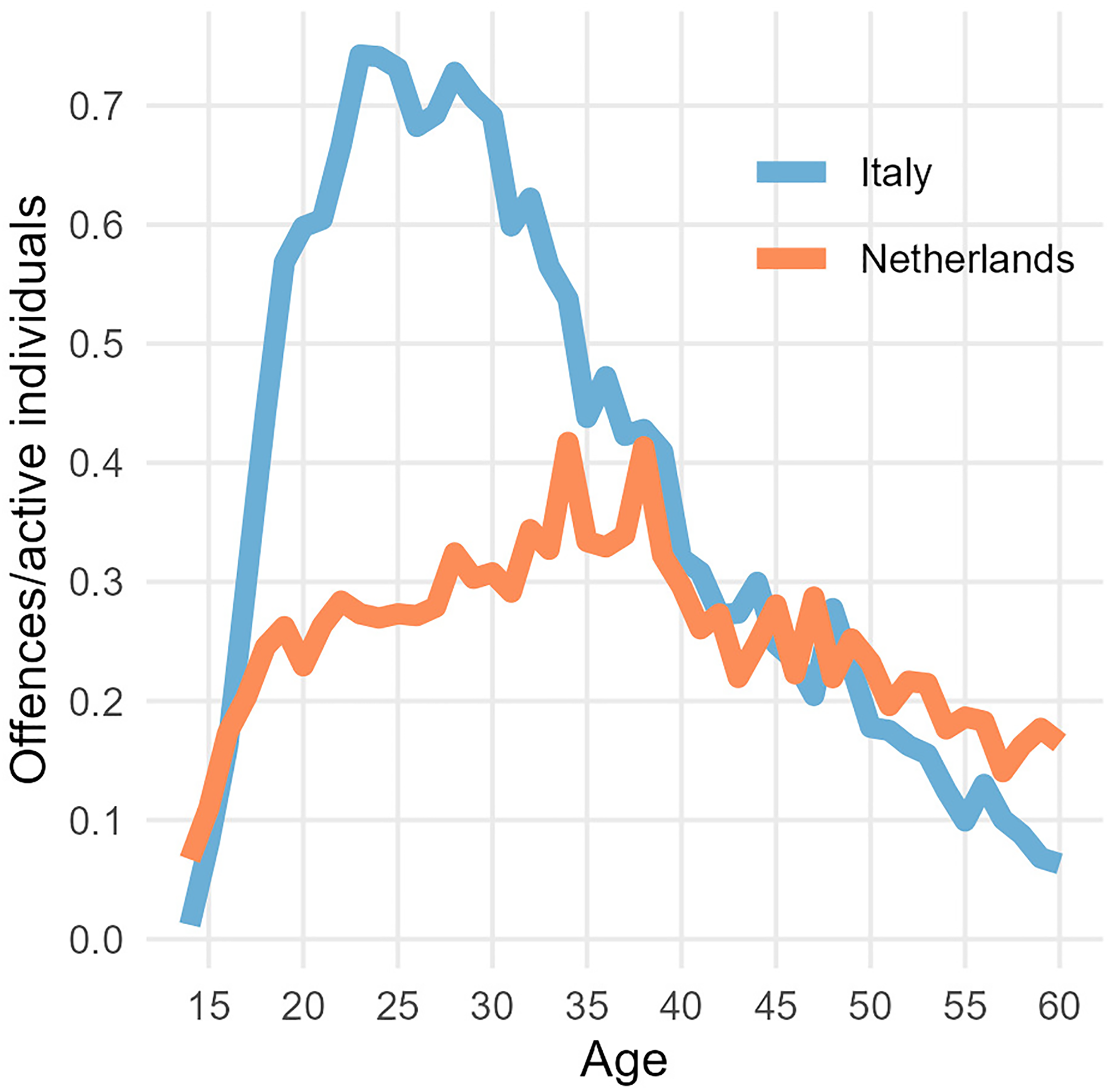
Age-crime curves by country.
GBTM identified six trajectories, showing that the sample comprised different offending patterns (Figure 3, panels 1 and 2 and Table 2). Two trajectories with comparatively low offending accounted for over 6 out of 10 offenders: Mid adulthood (31%), peaking around age 30 with a slow decline; and Sporadic (30.6% of offenders), with low offending, late onset, and late peak. Two other trajectories showed high frequencies during youth: Medium-level chronics (13.6%) featuring high offending during adolescence and subsequently linearly declining; and Young adulthood (10.8%), with an early peak in the mid-20s and followed by a steep decline. We also found a Late high-frequency trajectory, with a slow increase, peaking around age 40 (7.2%), and an Early high-frequency trajectory peaking around age 30 (6.8%).
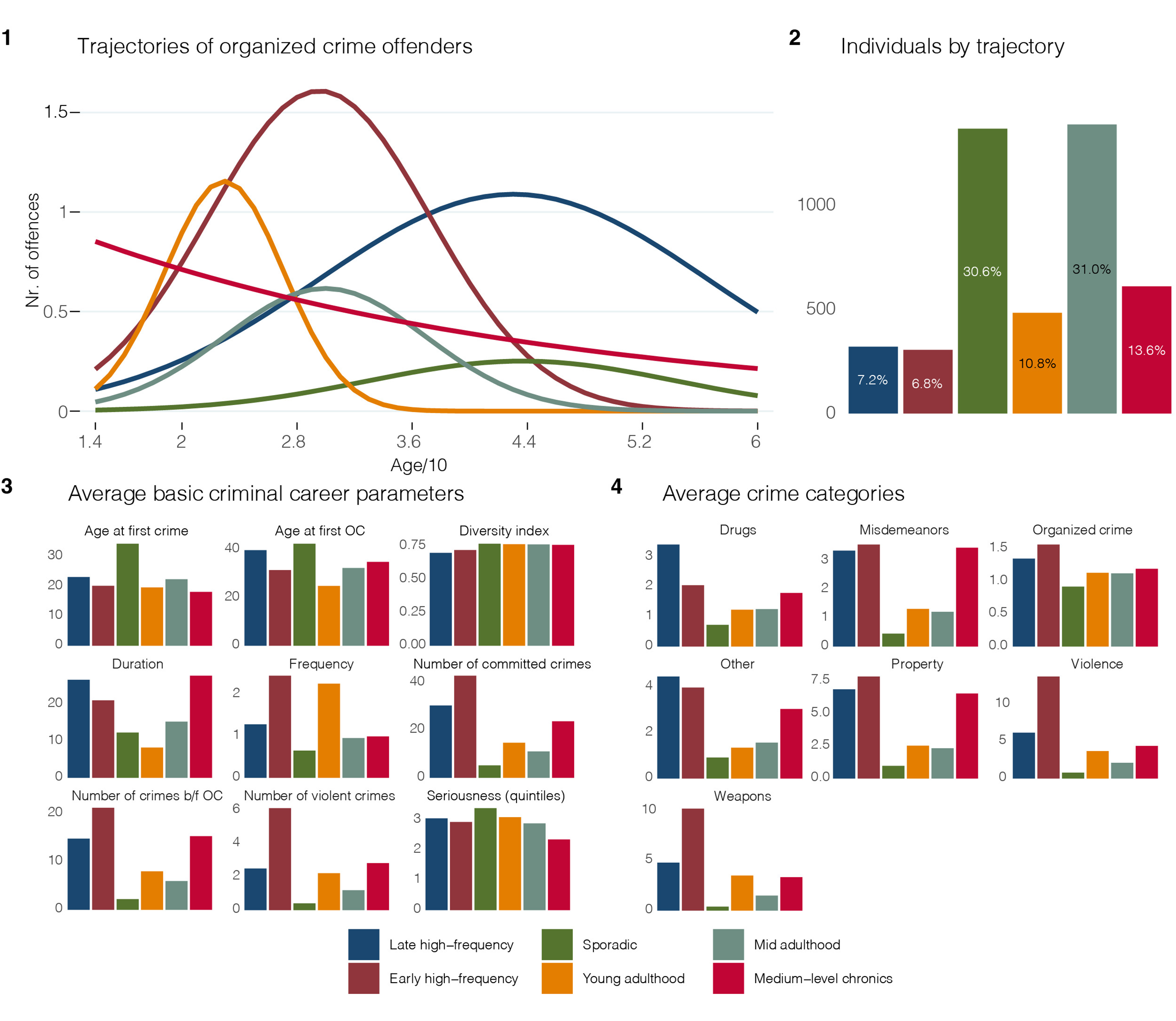
Trajectories and average values of basic career parameters and crime types.
Descriptive statistics by offending trajectorye.
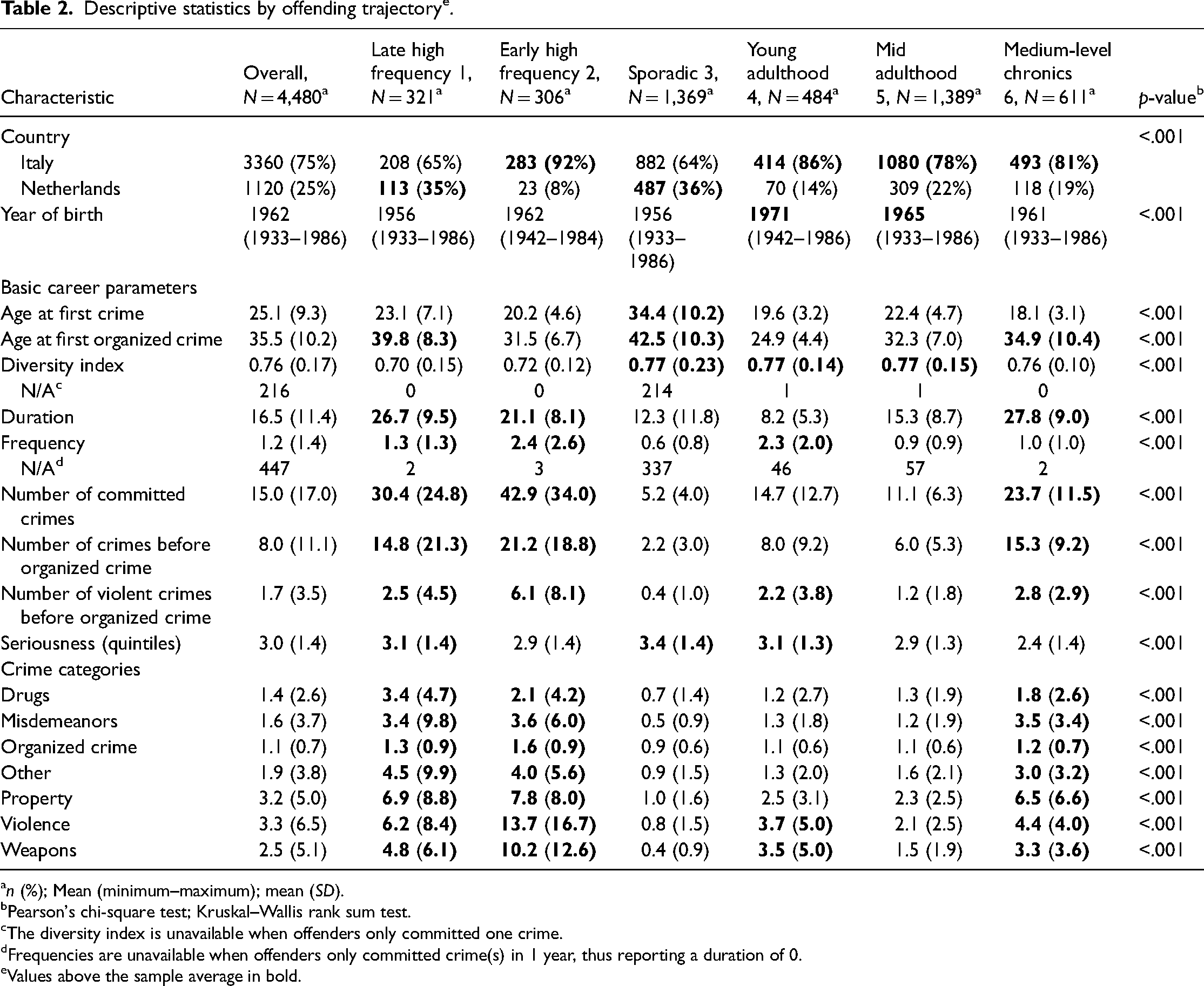
n (%); Mean (minimum–maximum); mean (SD).
Pearson's chi-square test; Kruskal–Wallis rank sum test.
The diversity index is unavailable when offenders only committed one crime.
Frequencies are unavailable when offenders only committed crime(s) in 1 year, thus reporting a duration of 0.
Values above the sample average in bold.
The distributions of the countries, basic career parameters, and crime categories were different across the six trajectories, based on a non-parametric, independent samples Kruskal Wallis test (Figure 3, panels 3 and 4 and Table 2). First, in the Italian sample offenders were overrepresented in trajectories peaking before age 30 (Early high-frequency, Young adulthood, and Medium-level chronics), whereas the offenders in the Dutch sample were overrepresented in trajectories with later peaks (Late high-frequency and Sporadic offenders). Second, the largest groups encompassed less prolific offenders with the lowest average frequency, number of committed crimes, weapons, and violence; Young adulthood included offenders with the shortest duration, earliest first organized crime offense, and a high frequency; Medium-level chronics comprised individuals with the lowest age at first crime, the longest duration, low frequency, and high values of misdemeanors and property offenses. The smallest trajectories encompassed the most prolific and violent offenders, with higher-than-average offense in all categories—Late high-frequency reporting the highest frequencies for drugs and other crimes, Early high-frequency for violence, weapons, property, and organized crime (Figure 3, lower panels).
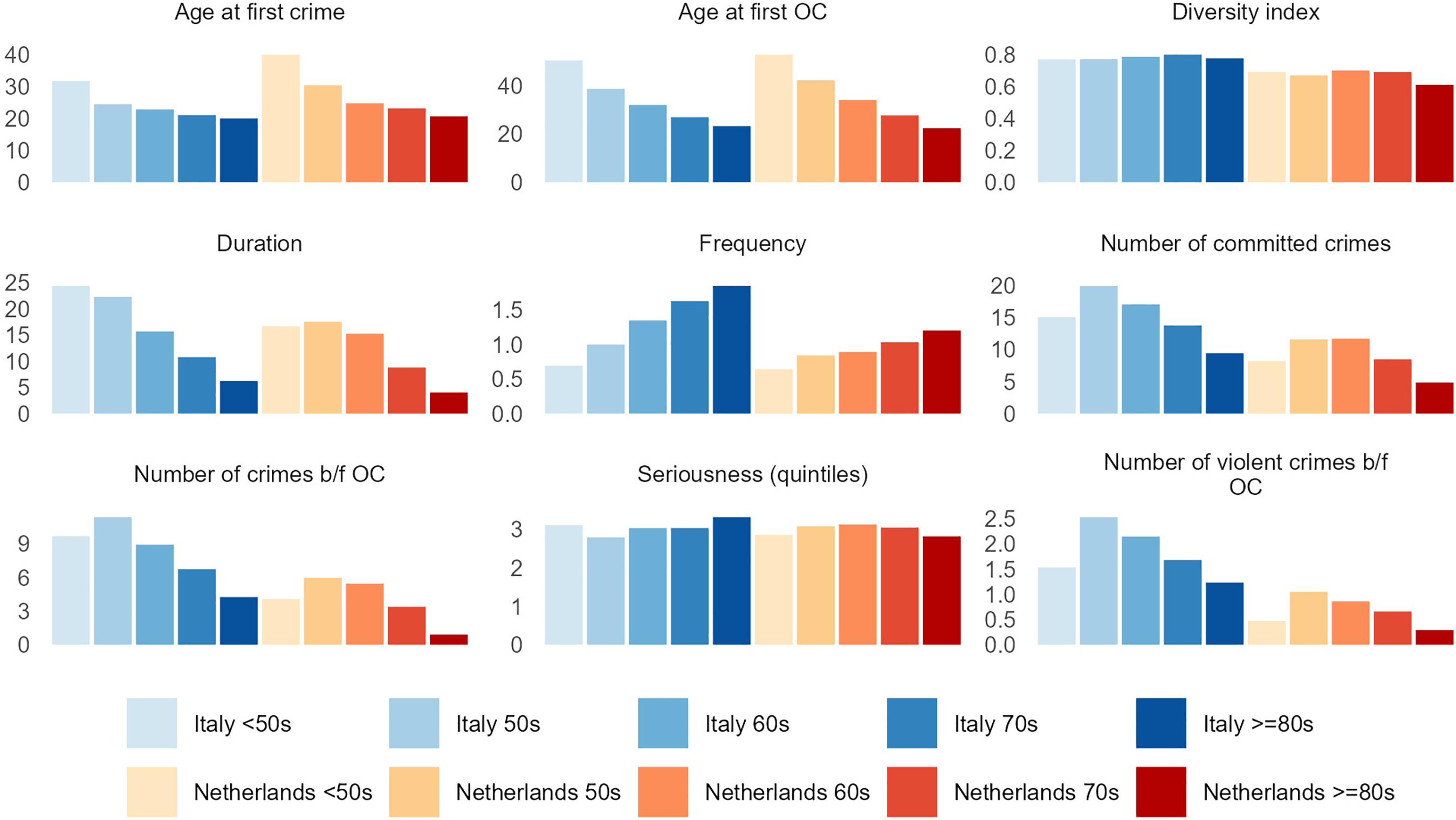
Average basic criminal career parameters by country and decade of birth.
Decade of birth
The analysis of the criminal career by decade of birth showed important differences both between Italy and the Netherlands and across decades.
In both countries, the age at first crime, the age at first organized crime, and the duration linearly decreased as offender cohorts got younger (Figure 4). In other words, older offender cohorts exhibited higher average values, all other factors being equal. Conversely, the frequency increased among younger offenders. These patterns are the consequence of having a longer follow-up period for the older cohorts. However, the number of crimes (total and before organized crime) was a partial exception—offenders born in the 1950s and offenders in the Netherlands born in the 1960s reported higher averages than older offenders. The diversity index and seriousness hardly exhibited any clear trend.
When comparing countries, offenders in Italy reported more serious, frequent, diverse, and prolonged offending along with an earlier onset and first organized crime offense. We found statistically significant differences in the distributions of the variables between countries within each decade of birth based on a non-parametric, two-sample, Mann–Whitney U test (Table A6 in the Appendix). 6 Yet, there were converging or diverging trends between the Italian and Dutch samples across decades of birth (Figures A1 and A2 in the Appendix). Convergence occurred in the age at first crime and age at first organized crime: in the first decades, offenders in the Netherlands report a later onset, whereas in the last decades, the difference decreases. Divergence regarded the diversity index, with younger offenders in the Netherlands reporting higher specialization (i.e., lower diversity index); similarly, the overall offending frequency of offenders in Italy increased more among younger individuals than offenders in the Netherlands. Seriousness reported non-statistically significant differences between countries for most decades of birth, indicating that the distributions are generally similar.
Regarding the crime categories (Figure 5), in the Italian sample offenders exhibited an increasing share of drug trafficking among younger offenders, a decline of property and other crimes, and a consistent prevalence of weapons and violence. This prevalence was consistently higher than that of offenders in the Dutch sample. Conversely, offenders in the Netherlands always had larger shares of drug and property crimes, with the youngest individuals reporting the largest share of drug offenses and misdemeanors, while property crimes dropped to nearly 14%. Most differences in crime categories between the two countries were statistically different across decades (Figure A2 and Table A6 in the Appendix).
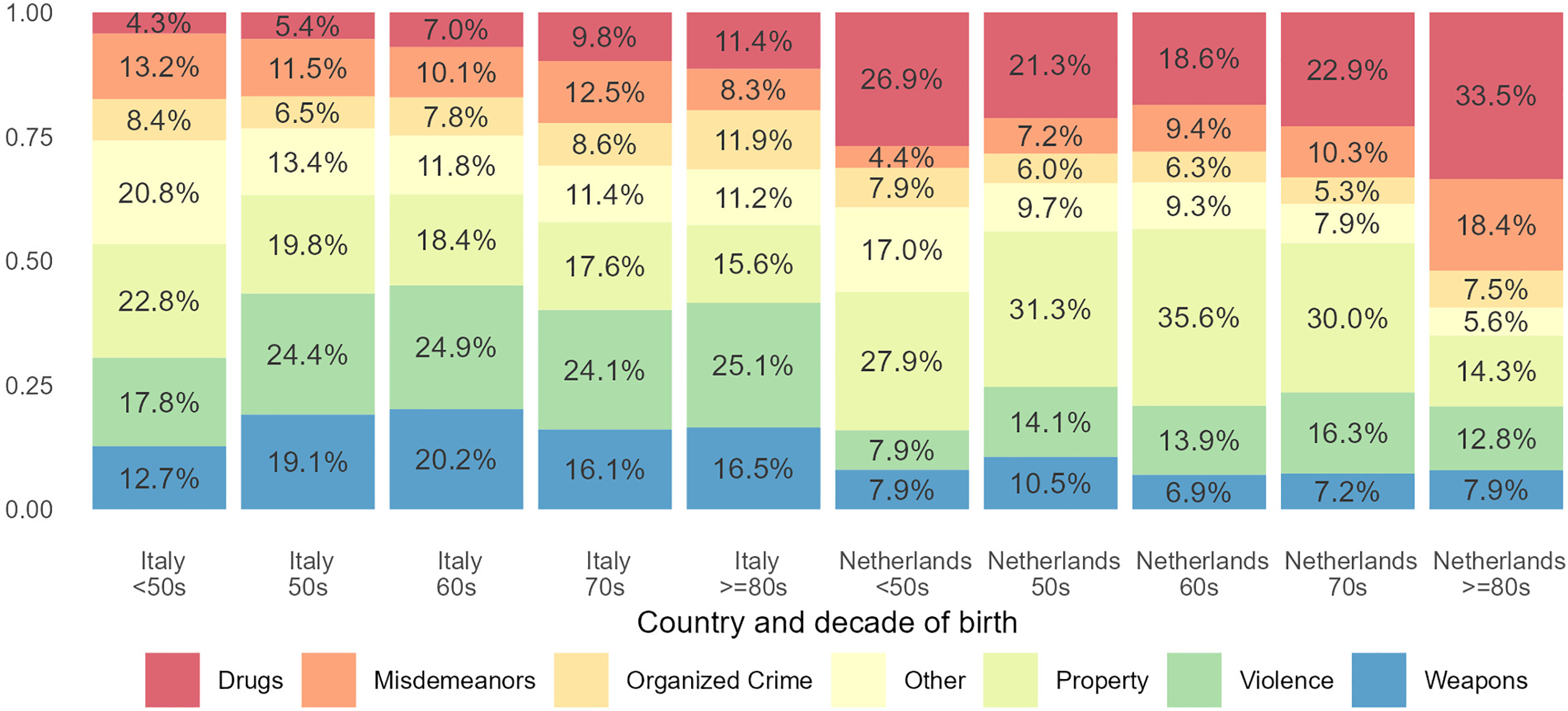
Crime categories as share of total offenses by country and decade of birth.
The age-crime curves revealed very different patterns across decades of birth and countries (Figure 6). First, for offenders born before 1950, curves gradually increased, peaking around age 45–50. Second, in both countries, younger individuals reported peaks at progressively earlier ages. Third, offenders in the Italian sample consistently displayed higher crime frequencies during younger ages, while offenders in the Dutch sample surpassed them at later ages. Last, only the age-crime curves for offenders in Italy born in the 1970s and 1980s aligned with findings from general population samples, exhibiting a rapid increase during adolescence, a peak in early adulthood, a decline in full adulthood, and convergence toward zero at later ages.
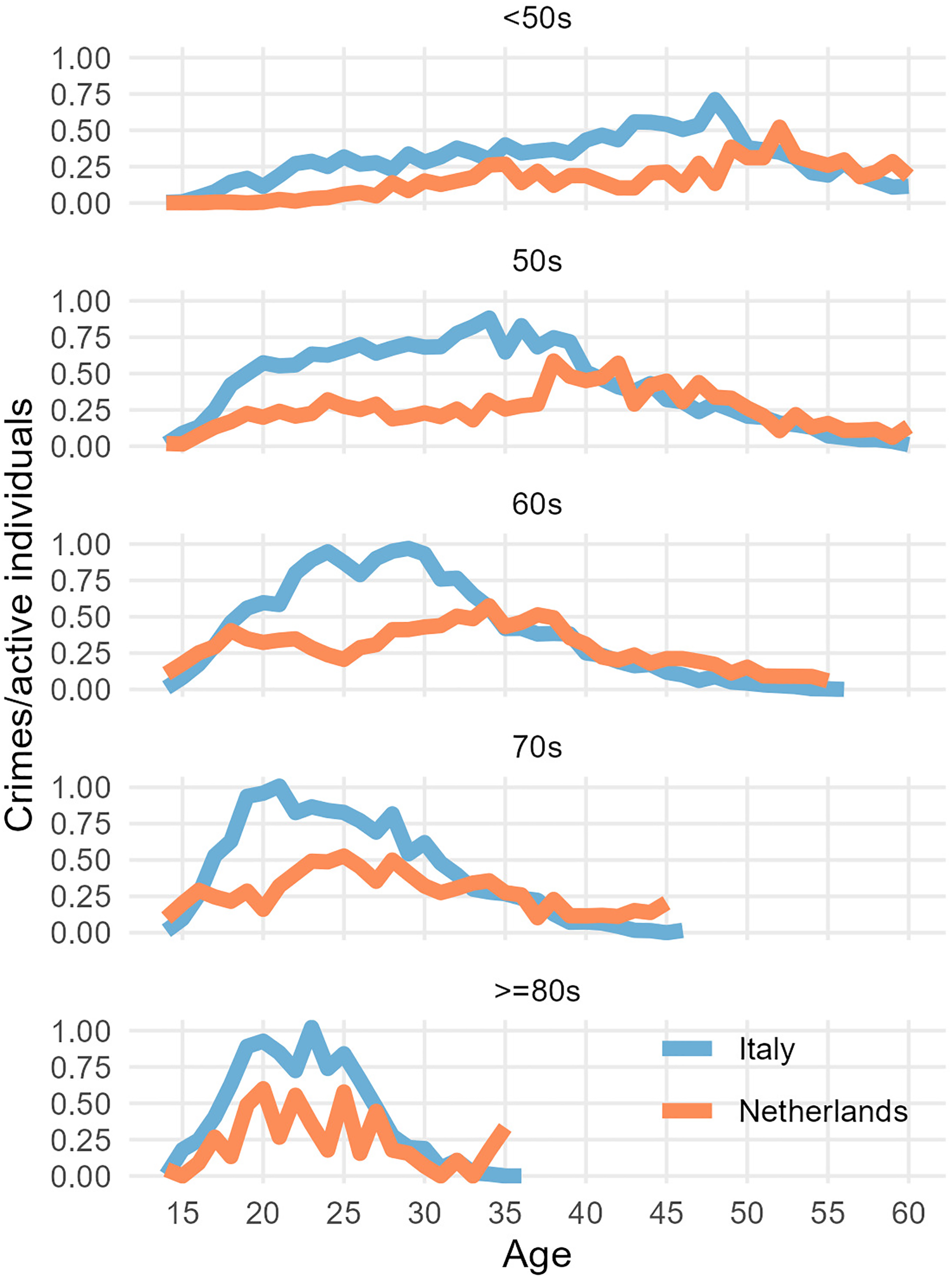
Age-crime curves by country and decade of birth.
Offenders born in different decades tended to be assigned to different offending trajectories. We observed unequal distributions of individuals across trajectories and decades, as evidenced by a chi-square test and a mosaic plot (Figure 7). The mosaic plot showed that older offenders were overrepresented (blue shadings) in the late-peaking Late high-frequency and Sporadic offenders groups; individuals born in the 1950s were more likely assigned to the Early high-frequency, the Late high-frequency, and the Medium-level chronics trajectories; offenders born 1960s were more likely to belong to the Mid adulthood group; and offenders born in the 1970s and later were overrepresented in the early-peaking Young adulthood offenders group.
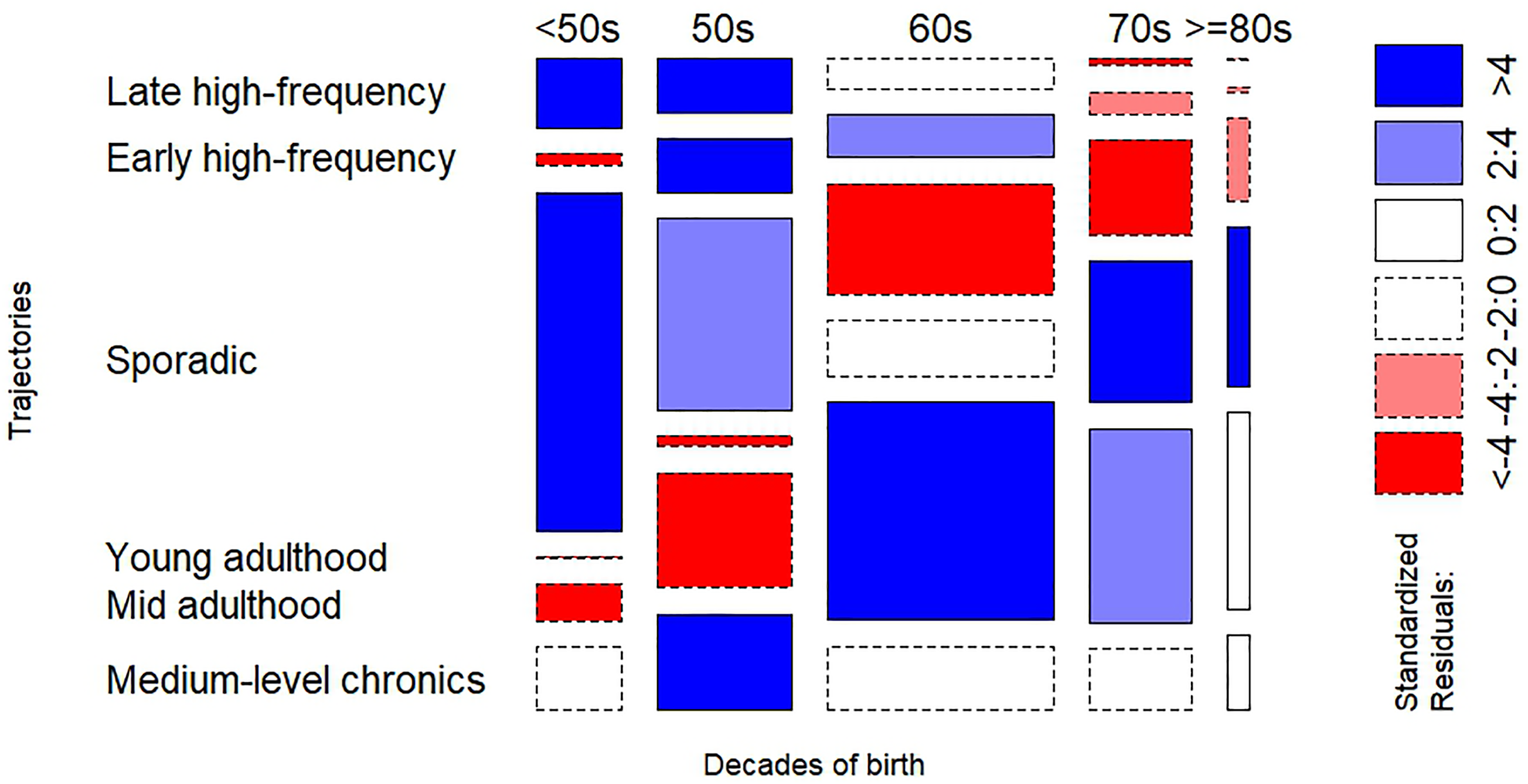
Mosaic plot trajectories and decade of birth.
Discussion and conclusions
Regarding the first objective, which aimed to compare the criminal careers of organized crime offenders in Italy and the Netherlands, we found that offenders in the Italian sample had a higher rate of offending and an earlier onset of criminal activity. They were more often involved in violent offenses, and their age-crime curve quickly grew to a peak around age 30 and then declined. Offenders in the Dutch sample showed a later onset, with a greater share of drug-related and property offenses; their age-crime curve showed a slower increase, peaking between age 35 and 40, followed by a slower decline. The whole sample yielded six different offending trajectories: while offenders in Italy were overrepresented in earlier peaking trajectories, offenders in the Netherlands more often followed later peaking trajectories. Among all these differences, we uncovered relatively similar values for age at first organized crime and career duration.
Overall, our findings indicate that—next to similarities—differences in the criminal careers of organized crime offenders exist between Italy and the Netherlands. These differences relate to the types of crimes and criminal career patterns over age. The findings are consistent with the idea that Italian mafias focus on governance or racketeering control-oriented activities (Campana and Varese, 2018; Von Lampe, 2016). Conversely, Dutch organized crime offenders are more often engaged in transit crimes and trading, involving international illegal traffic and property offenses (Breuer and Varese, 2022; Kleemans, 2007). While prior studies had acknowledged these distinctions, to the best of our knowledge, our research is the first to provide empirical evidence for these differences by examining individual offenders in two countries using consistent crime classification. More generally, our findings support the idea that organized crime is a broad umbrella concept encompassing a variety of empirical manifestations. Notwithstanding these differences, our data are consistent with the patterns from prior research on criminal careers in organized crime: our sample comprised only males, who on average joined organized crime in their mid-30s, committed their first crime around age 25, perpetrated about eight crimes before organized crime involvement, exhibited heterogeneous offending trajectories—including late-onset offenders—and were generalists rather than specialists (Kleemans and van Koppen, 2020). However, our analysis uncovered variability in these patterns. For example, offenders in Italy committed about 16.5 crimes in total, whereas offenders in the Netherlands committed about 10 offenses. Also, while offenders in the Italian sample committed on average nine crimes before the organized crime offense, offenders in the Dutch one perpetrated only five crimes. Comparison with the prior literature exposes further variability. For example, we found the average diversity index to be 0.8 for offenders in Italy and 0.7 for offenders in the Netherlands, respectively, indicating that both samples tended to comprise generalist offenders. Using the same corrected diversity index and classification into nine categories, studies on Australian OMCG offenders reported an overall mean diversity score of about 0.6 and classified about 20% of their sample as specialist offenders (diversity index ≤0.4) (Fuller et al., 2019; Morgan and Payne, 2021). Only 3.7% of our sample would qualify as specialist offenders according to the same measurement (about 2% for offenders in Italy and 9% for offenders in the Netherlands, respectively).
The analysis by decade of birth exposed further important differences both across different decades and between countries. Most parameters are linearly associated with the decade of birth, with two exceptions: the diversity index and seriousness. For most variables, younger individuals tended to report lower values, including age at first crime, age at first organized crime, duration, and the number of crimes. However, frequency was an exception, as younger individuals had higher frequencies. Age-crime curves in both countries followed similar trends: older offenders displayed flatter, late-peaking patterns, while younger offenders exhibited higher frequencies and earlier peaks. The distribution of offenders from different decades across the offending trajectories further confirmed this pattern. We offer multiple complementary interpretations for these results.
First, organized crime offenders may have changed over time, with newly recruited members becoming more prolific, violent, and dangerous. The “generational shift” interpretation was also proposed by Voce and colleagues in analyzing Australian members of OMCGs, where younger cohorts committed more crime in early adulthood (Voce et al., 2021). Similarly, Van Deuren and colleagues reported higher offending for Dutch OMCG members who joined in more recent years (van Deuren et al., 2022). For this interpretation, we see only partial support in our data: seriousness and the violent category showed few differences across decades of birth. Also, the age-crime curves for the older decades of birth exhibit peculiar shapes: low offending during adolescence and early adulthood and peaks well into late adulthood. Such patterns contrast with findings from the literature that showed that offending peaks during adolescence and early adulthood across a variety of places and periods (Blanc, 2020; DeLisi, 2015; Loeber and Farrington, 2014).
Second, the differences may be due to the sampling procedures: more recent decades include offenders involved in organized crime at a relatively young age. This may select prolific, higher-frequency offenders and thus affect the results. This interpretation aligns with the findings of Van Deuren and colleagues that the higher offending among offenders joining OMCGs in more recent years disappeared when controlling for age (van Deuren et al., 2022: 13). Conversely, Voce and colleagues lacked information on the date of entry into OMCGs, preventing the assessment of this effect. Our data support this interpretation: among offenders who committed their first organized crime offense before age 30 (n = 1436), the differences across decades in the average frequency leveled off and lost statistical significance (Figure A3 in the Appendix). 7
Third, the context around organized crime offenders has changed: younger offenders receive greater law enforcement pressure compared to older generations. Since the introduction of the mafia association offense in 1982, Italy has substantially strengthened its anti-mafia legislation. Similarly, the Netherlands has stepped up organized crime investigations since the late 1980s and early 1990s, particularly focused on international drug trafficking and (synthetic) drug production. These evolutions have likely impacted organized crime offenders by increasing the risks of identification, prosecution, and conviction of younger generations. These processes may, per se, result in higher offending, but they may also trigger selection and reaction processes within organized crime groups. For example, only risk-prone individuals—more likely prolific offenders—may be willing to join criminal organizations; or criminal organizations may actively recruit individuals with higher criminal profiles. Previous research on OMCGs contended that these processes are unlikely to explain the differences observed in early adulthood, likely before joining the OMCGs (van Deuren et al., 2022: 13–14; Voce et al., 2021: 15–16). Our research design did not specifically address this issue, but several elements in our data suggest that the increased enforcement may explain the differences across decades of birth. First, the unusual shapes of the age-crime curves from different decades suggest that the curves for older offenders poorly reflect their actual offending. In other words, older individuals attracted the attention of the criminal justice system only well into adulthood, whereas younger offenders did so much earlier. Second, the growing share of misdemeanors among younger offenders in the Dutch sample may signal increasing criminal justice pressure in a discretionary prosecution system. Third, both samples report a growing proportion of drug offenses, which reflects the attention to drug trafficking in Italy and the Netherlands across the last decades. Lastly, in both countries, younger offenders have spent a greater share of their adult time in prison: the offenders in Italy were imprisoned much more intensely than the ones in the Netherlands (see Figure A4, panel 1 in the Appendix); however, both countries reported a similar growth of imprisonment versus the oldest offenders (Figure A4, panel 2). In theory, such evolution may reflect more serious offending among younger individuals. However, our seriousness parameter is stable across decades, and the hypothesis contrasts the high number of murders committed by mafia offenders in Italy in the 1980s and 1990s. Conversely, our findings are consistent with recent research showing that social change, particularly within the criminal justice system, had an important impact on the criminal careers of individuals when controlling for potential confounders (Neil et al., 2021; Neil and Sampson, 2021).
Overall, the evolution in the criminal careers of organized crime offenders in Italy and the Netherlands may be a combination of younger individuals’ higher offending, an implicit self-selection effect of the inclusion criteria, and/or greater law enforcement pressure. While disentangling the effects of these factors is outside the scope of this study and may be the object of future research, we emphasize the need to specifically consider the impact of increased law enforcement against organized crime offenders.
In conclusion, our study sheds light on key differences in the criminal careers of organized crime offenders in two different countries, Italy and the Netherlands, fulfilling our first objective. Our findings underscore that the concept of organized crime is not uniform across countries, supporting the notion that it is an umbrella concept encapsulating various empirical manifestations. These differences are generally amenable to the “transit versus racketeering” and “trading versus governing” distinctions formulated in prior research. Our findings corroborate this research with individual-level evidence. It is imperative to acknowledge these differences when formulating policies, cautioning against directly adopting anti-organized crime strategies from other nations. Our analysis of the criminal careers of organized crime offenders born in different decades addressed our second objective and revealed significant variations over time, potentially due to a generational shift, sampling procedures, or intensified law enforcement pressures. Younger offenders in both countries appeared to be more prolific and faced heightened legal scrutiny, suggesting that increased enforcement against organized crime offenders may significantly influence their criminal careers. Future research may delve deeper into these factors, emphasizing the necessity of considering the impact of intensified law enforcement efforts on this distinct group of offenders.
Footnotes
Acknowledgements
The authors wish to acknowledge the contribution of Gian Maria Campedelli, and Cecilia Meneghini in the early stages of the data collection for the PMM dataset, of Giovanni Nicolazzo for the assistance in the sampling process, and Vere van Koppen, Edwin Kruisbergen, and the Dutch Recidivism Monitor Team for their support in the Dutch part of the PROTON project. This contribution originates within the framework of PROTON project.
Author contributions
All authors contributed to the study conception and design. FC and VvdG coordinated the data acquisition process. Data preparation and analysis were performed by FC, TC, and VvdG. EK and FC drafted the introduction and background sections. All authors contributed to the methods section and data analysis and interpretation. FC and VvdG wrote the results section. The last section was drafted by FC and revised by all authors. FC drafted the revision with inputs from TC, EK, and VvdG. All authors read and approved the final manuscript.
Funding
The author(s) disclosed receipt of the following financial support for the research, authorship, and/or publication of this article: The PROTON project has received funding from the European Union's Horizon 2020 Research and Innovation Program under Grant Agreement No. 699824.
