



Abstract
The purpose of this article is to investigate how changes in the environment of a library affect the safety conditions of both visitors and staff. Using principles of Crime Prevention Through Environmental Design, crime and incidents of public disturbance from 2017 to 2020 from libraries in Stockholm, Sweden, are analyzed and later mapped using 3D models in CAD. These findings are inspected via fieldwork visits and then compared with answers from a safety survey with library visitors (N = 112) and interviews with library personnel (N = 6). Analysis of variance shows that crime and incidents of public disturbance decrease after these interventions, with clear impacts on their geography. A third of visitors indicate that there have been fewer problems after changes in the library are introduced while staff suggests that training prepares them to manage conflict situations more efficiently. The study concludes with a critical assessment of the methodology and makes suggestions to improve safety conditions in libraries.
Introduction
Libraries attract crime. Like any public facility, libraries can be the scene of thefts, assaults, property damage, and incidents of public disturbance, often resulting from conflicts among visitors or between visitors and staff (Adewuyi and Adekanye, 2011; Carey, 2008; Cromwell et al., 2008; Henrich and Stoddart, 2016; Simmons, 2018). What happens in libraries depends on the quality of their environment (design, size, location, maintenance, immediate surroundings) and management practices (Henrich and Stoddart, 2016; Kahn, 2008). Yet while evidence shows that changes to the environment can produce safety at the street- and neighborhood levels (Branas et al., 2011; Kondo et al., 2018; MacDonald et al., 2019), there is little evidence of the impact of changes to indoor environments on crime within facilities such as libraries.
This study contributes to this body of knowledge on situational crime prevention (Clarke, 1997) by assessing whether and how changes to the environment of a library (including the physical design and the ways in which the staff work) affect the safety conditions of both visitors and staff. Principles of Crime Prevention through Environmental Design (CPTED) were used as the theoretical framework of this impact evaluation, primarily to define safety interventions that focus on crime opportunity-reducing measures in a broader sense, whether through library design or through management practices in the library. Using analyses of variances (ANOVAs), the analysis starts by checking whether there has been a significant reduction in crime and incidents of public disturbance in the studied library, compared to two control libraries in 2017 and 2020. The library's crime and incidents of public disturbance were then mapped using a 3D CAD model, showing where these physical changes occurred. The methodology also involves fieldwork visits, and a selected number of interviews with library personnel, as well as the results from a safety survey with visitors conducted after the changes were carried out.
The first step was to identify a test site, in cooperation with practitioners. Högdalen is a public library connected with a transit station and one of 40 owned by the City of Stockholm. Back in 2017, the library faced several challenges: dark spaces were perceived as messy, old, and crowded, used as hiding places for drug addicts and youth gangs who had a habit of disturbing the peace, and staff was unprepared to deal with these security problems. In 2019, Högdalen underwent a complete renovation and changes in staff's work methods with the goal of improving its safety conditions. There was an initiative from safety experts at Stockholm municipality to assess the effect of these measures, which was funded by the Swedish National Council for Crime Prevention (BRÅ). This article reflects the evaluation of this initiative.
The study is novel because it tests for the first time in microlevel indoor environments the effect of environmental changes in libraries on safety, as has been previously shown in neighborhood-level research (Garvin et al., 2013; MacDonald et al., 2019; Moyer et al., 2019).
Building on the literature of crime and micro-places (e.g., Favarin, 2018; Lee et al., 2017; Weisburd, 2015; Wilcox and Eck, 2011), this case study aims to understand the criminogenic characteristics of libraries as risky facilities (Clarke and Eck, 2007) and, in particular, the effect of physical design and the way staff work through training on crime and delinquency. We deliberately take distance from the analysis of street segments as a unit of analysis since they are ambiguous and fail on function, ownership, and sometimes size, as suggested by Eck and Guerette (2012). The study combines multidata sources and makes use of CAD—Computer-Aided Design software—in environmental criminology for visualization of crime location and concentrations in libraries in multistory buildings. Finally, research on safety in libraries is often from North America or other Anglo-Saxon countries, while this study contributes to the international literature by illustrating libraries in a Nordic European context.
The article is divided into six parts, first discussing theory and current research in the relevant areas. Then the case study is framed, followed by a description of the methods. Then the nature of crime and public disturbance in the libraries is presented, followed by evidence of potential changes, comparing it with two other control libraries. The article concludes by bringing together evidence from site records, fieldwork inspection, interviews with personnel, a survey with visitors, and evaluation of maps, as well as briefly making suggestions to improve safety conditions in libraries.
Theoretical background
Facilities are places with specific public or private functions, such as libraries, stores, bars, restaurants, mobile home parks, bus stops, apartment buildings, and public swimming pools (Clarke and Eck, 2007), with varying levels of crime, some attracting more crime than others. Libraries, in particular, are multifunctional places. Visitors use these facilities for different reasons (reading, searching information, work, social interaction in cafes, or social areas) which demands particular safety plans and considerations. Crime and incidents of public disorder in the library are dependent on multiscale environmental conditions that are at work at various settings in the building and its immediate surroundings, some of them varying over time Ceccato et al. (2023). Previous research suggests that libraries are more vulnerable to safety issues in comparison with other public facilities, such as museums: ‘whereas museums, archives and other cultural buildings usually have guards on site, alert to various dangers, libraries all too often do not, which invites trouble’ (Shuman, 2002: 70). Libraries have no access fee and are normally undefended buildings, allowing a wide range of visitors, with different motivations for spending time in the building.
The international literature not only shows the importance of the physical environment of libraries but also stresses the importance of the ways they are maintained and managed. As part of a situational crime prevention toolbox, a recurrent methodology used in these studies is CPTED, which specifically addresses architectural design and safety, as well as directions for place management. Some of these principles linked to natural surveillance in particular date back to the 1960s and 1970s (Jacobs, 1961; Jeffery, 1977; Newman, 1973) and have long been suggested as guidelines for improving safety in neighborhoods (Cozens and Love, 2015). Crime Prevention Through Environmental Design takes advantage of, for example, opportunities for natural surveillance and access control, and territorial reinforcement. The advantage is that CPTED can be used both at the design stage of a building or when the building already exists.
There is a mature body of literature on the effectiveness of CPTED, although the validity of the causal inference drawn from the available impact evaluations should be improved (see Cozens, Saville, and Hillier, 2005; Cozens and Love, 2015). Nevertheless, studies unearthed global evidence which supports the implementation of CPTED in different settings. Over 100 studies demonstrate that opportunity-reducing measures can lead to reductions in crime (Clarke, 1997). A review by Meir and Meir (2003) offers an insightful layout of the evidence on CPTED, including night clubs, university campuses, suburbia, jail suicides, and many other settings. A seminal study by Felson et al. (1996: 1) in a transit facility showed that ‘modifications in design and management made the facility much less of a crime generator, crime attractor, and fear generator. Crime was prevented and was not displaced to the vicinity.’
Moreover, a review of 16 studies on the utility of CPTED to reduce robberies suggests that ‘all primary multiple-component CPTED programs experienced a percentage change in robberies ranging from −84% to −30%’ (Casteel and Peek-Asa, 2000). Similarly, Loren et al. (2013: 1) conclude, based on 47 studies, that ‘[t]here is some evidence for the effectiveness of specific environmental interventions in reducing some indicators of fear of crime.’
Natural surveillance refers to an environment's capacity to maximize visibility and observation. This can be ensured by the quality, location, and type of lighting, by windows, entrances, fencing, and natural elements, such as vegetation and furniture. Activity support references facilitating activities that can help promote reductions of problematic behavior, while access control not only refers to property control through barriers, enclosures, and entry portals but also encourages internal movement throughout the place. Territoriality is intended to create a sense of ownership and refers to how physical design can develop a sense of ownership of specific areas. This is created by delineating activity zones, or edges. Target hardening is about how the design of a space can make it difficult for people to steal or damage private and/or public property (e.g., by using padlocks). Poor management does affect crime (Eck, 2019). Managers, guardians, and handlers can exercise social control and have been shown to be key in preventing crime (Felson, 2006; Linning and Eck, 2021). Few rules, lax enforcement, and poorly trained personnel encourage individuals to commit crimes and get away without being noticed (Clarke and Eck, 2007; Linning and Eck, 2021). Bad management provides a poor foundation to deal with conflict and other challenging situations and gives a sign that nobody is in control of the area (Lewis and Maxfield, 1980). A solution is to train the staff to employ a set of five steps of conflict management (Thompson, 2006). This involves techniques to take control of the situation through communication by approaching the person politely, clarifying the situation, and offering the person alternatives of action, including conflict resolution. If these steps fail, other personnel, security guards, or police are contacted as a last resort.
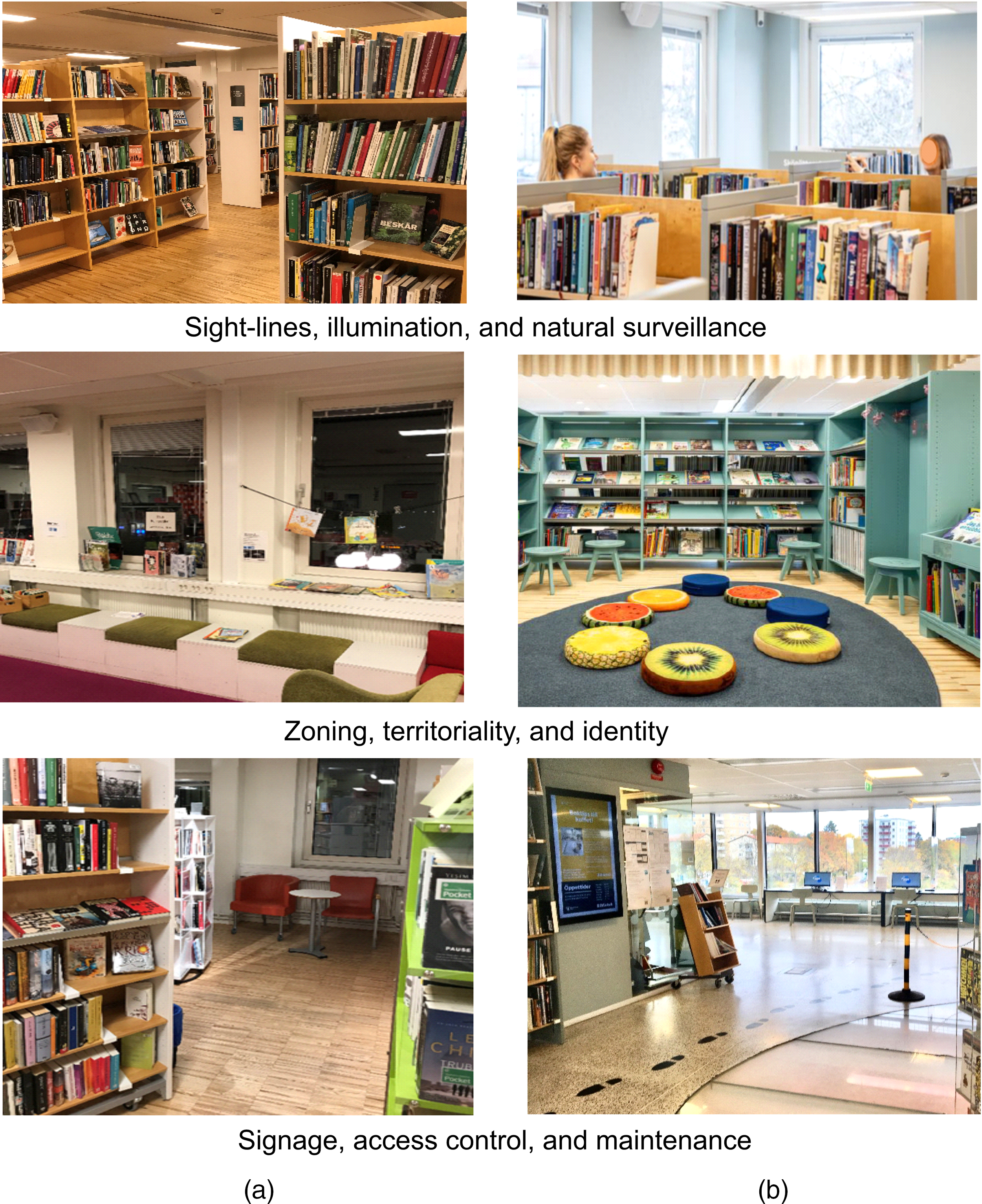
The library environment: (a) before and (b) after the renovation.
An evolving literature over the last few decades has started documenting safety incidents in libraries, from minor issues of public disorder to acts of crime. Morris (1986) indicates the role of natural surveillance in improving a library's safety, and later Shuman (1999) includes a checklist for safety and security in libraries. More recent studies call for increased knowledge on challenging situations including acts of terrorism (Cromwell et al., 2008; Henrich and Stoddart, 2016; Kahn, 2008; Shuman, 1999; Simmons, 2018). Only a handful of these studies empirically examine how personnel and/or visitors are affected by crime. If evidence exists, it is almost always based on cases in North America or other Anglo-Saxon countries. Most of these studies are limited to a single library (therefore, they are not comparative), few assess interventions over time, and none focus on changes in the environment of the library. Examples are found in neighborhood-level studies in criminology that show how place-based interventions (fixing doors and windows, building breathe-easy homes, maintaining vacant plots for tree planting) significantly impact people's safety and quality of life (for a summary, see MacDonald et al., 2019). Yet, findings are not from microlevel indoor environments. Therefore, we turn to our empirical study to address some of these gaps, and report on the assessment of how changes in the library affect the safety conditions of both visitors and staff in Stockholm, the capital of Sweden.
Safety conditions in libraries: The Swedish context
We studied these three Swedish libraries to cast light on the following research questions:
Which are the most common types of crimes and incidents of public disturbance in these three libraries in Stockholm? How much does crime and incidents of public disturbance range among libraries? Did crime and incidents of public disturbance decrease after the safety interventions in studied library in comparison with those libraries that have not received such interventions? Does the geography of crime and incidents of public disturbance also change? What do library staff perceive as problematic from a safety perspective? Have they noticed the impact of the interventions on the safety conditions of the library? Do personnel and visitors feel safer in the library?
Research design
Setting
Högdalen is one of 40 public libraries in the City of Stockholm and has around 200,000 visitors per year and is therefore considered one of the city’s medium-sized libraries. Högdalen subway station is directly adjacent to the library, which means that the premises are easily reached via an escalator from the ticket hall or alternatively via the square outside the library. Back in 2017, the library faced several challenges: messy, old, and crowded spaces used as places for addicts to use drugs, youth gangs who disturbed the order, and staff who were unwilling to deal with the security problems. In 2019, Högdalen underwent a complete renovation and changes to staff's work methods with the goal of improving its safety conditions.
Högdalen, the treatment site, was matched with two control libraries: Stadsbiblioteket and Kista. Stadsbiblioteket is the largest public library in Stockholm and is located in the inner-city area, while Högdalen is what is called ‘metro-library’ which means it is located near a metro station in the periphery of the city along with the transit system. Kista is also located in the outskirts of the city and is connected to a shopping center and a transport node with metro station and buses. These comparable components are as close as possible to the treatment sites, which are the optimal settings to test whether the conceptual model can be used in different libraries in different neighborhood and city contexts.
The safety intervention in Högdalen
During the security renovation at Högdalen's library, CPTED has been applied in various ways to increase safety and security at the library (Figure 1). Högdalen's local tattoo studio was commissioned to transform the entrance and created an artwork on the walls illustrating Högdalen's skyline with inspiration from Alice in Wonderland. Inside, a complete transformation was carried out, and, among other things, a new entrance was constructed in a strategic location with the aim of creating better visibility for both staff and visitors. The new entrance gives the staff the opportunity to welcome all visitors and strengthens the feeling that everyone is being seen, both to induce feelings of comfort and to reduce the risk of unwanted behavior. The most noticeable transformation, however, was probably the new design and furniture in the library. In order to create natural surveillance, bookshelves were created at different heights and placed in the library in such a way that sightlines were not obstructed for the staff working in the fixed information points—for example, higher bookshelves were placed along the walls and lower bookshelves were placed in the central parts of the library (Figure 1). Clear sightlines were created toward all entrances/exits, as well as between the two information points to offer the staff the opportunity to always be in contact with each other. In addition, sightlines have been created along walls in the library, as well as straight through all zones and departments. In addition, the new design increased the amount of light, which made the environment clearer, more pleasant with better management/image.
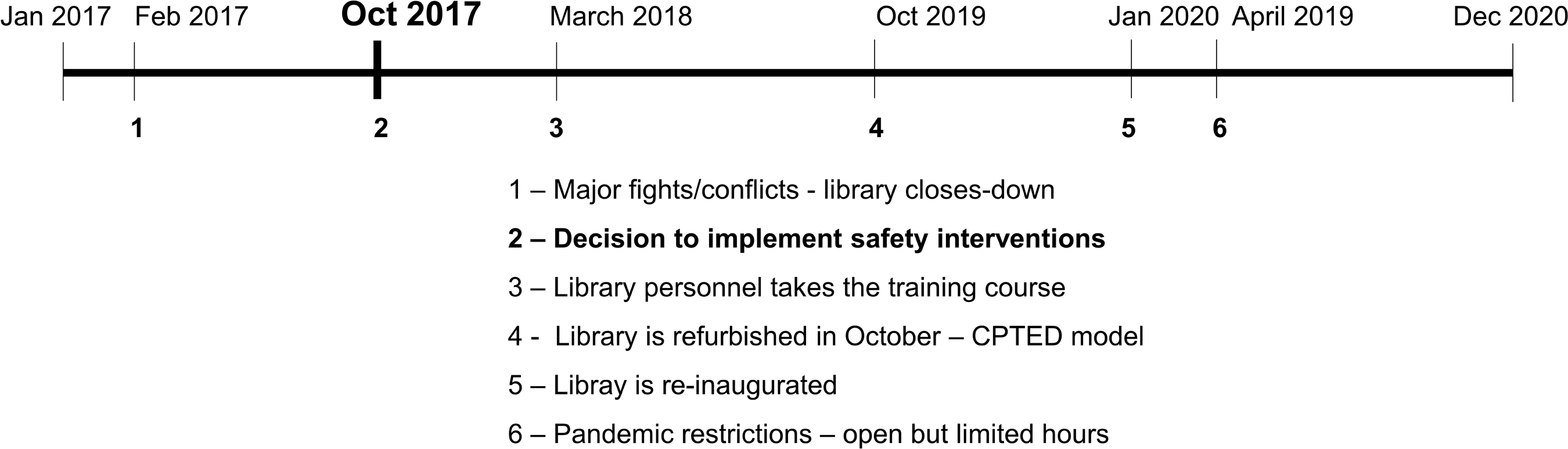
Timeline of safety interventions in Högdalen library.
The specific needs of library users were also taken into account. The library did not previously have clear separations between sections (territoriality), which led to visitors having difficulty deciphering the correct use of the various areas and thus using them in ‘an inappropriate way,’ especially in connection with the use of the children's areas. In the refurbishment of the library, it was therefore decided that great focus would be placed on zoning and that, for example, young people would be given a specific section with a nicer atmosphere than they previously had. It is shown that the youth department has been placed in the quiet zone to the left of the children's department (Figure 1).
The change from bookshelves of only one height to bookshelves in different heights, which are placed in a specific way so that no lines of sight are obstructed, was carried out, aiming to maximize visibility in the premises and reduce the number of hidden spaces. Sightlines toward all entrances, exits and information points, as well as sightlines along walls, through all zones and departments, are other measures that can increase the natural surveillance. Zoning creates a special place for kids and generates a sense of territoriality for a particular group, in this case children, as is illustrated in the second set of photos.
Högdalen's staff training
Another part of the safety intervention has involved training the library staff with the aim of increasing safety at the workplace, the library, and surrounding areas. Previous reports indicate feelings of discomfort in situations with troublesome visitors, as well as in situations when staff have had to deal with visitors who are socially vulnerable; for example, people without homes or drug addicts.
Staff training was divided into four separate parts. The first part was about service and reception, which was carried out with the aim of increasing staff awareness within the subject areas and emphasizing the impact the staff has on library visitors. The training was also about encouraging staff to develop knowledge as to how visitors are welcomed in a service-oriented way, as well as how visitor contacts are taken care of in the long term in order to maintain good relationships, in particular with other local stakeholders around the library. Parts two and three consisted of communication skills and conflict management, which aimed to give the staff an increased understanding of the communication process, the emergence of conflicts and its complexity, as well as an increased understanding of treatment, body language, and linguistic communication. In connection with the third part, a conflict management method was presented, which is intended to be used as a basis in the event of conflict situations. Finally, the last part of the training consisted of providing staff with basic knowledge of the value of safety for personnel and visitors, as well as knowledge of commonly occurring crimes in libraries. The training included also reviewing the library's necessary routines and routine descriptions for handling burglar alarms, as well as for contacting the security guard, police, or emergency services in the event of disturbances, threats, and violence.
Data
Different sets of data were used in this study as listed below:
Incident data: the dataset used in this research was collected by library employees between 2017 and 2020 containing the date, time, occurrence of the event, and free text with a description of what happened in the library in terms of crime and events of public disturbance. Estimated number of visitors during opening hours provided by Stockholm libraries from 2017 to 2020. Plan drawings of different floor levels of the two libraries: Högdalen and Stadsbibliotektet. Data collected through fieldwork inspection performed during a series of visits to the libraries—in particular the environments most targeted by crime and incidents of public disturbance from July 2021 to May 2022. Six interviews with personnel carried out between May and July and September and October 2021, four women and two men, who had been working in the library for more than three years. A safety survey from visitors (N = 112), 70% was conducted via the internet in May and June and the rest face-to-face in October and November 2021.
Methods
Preparation of the dataset
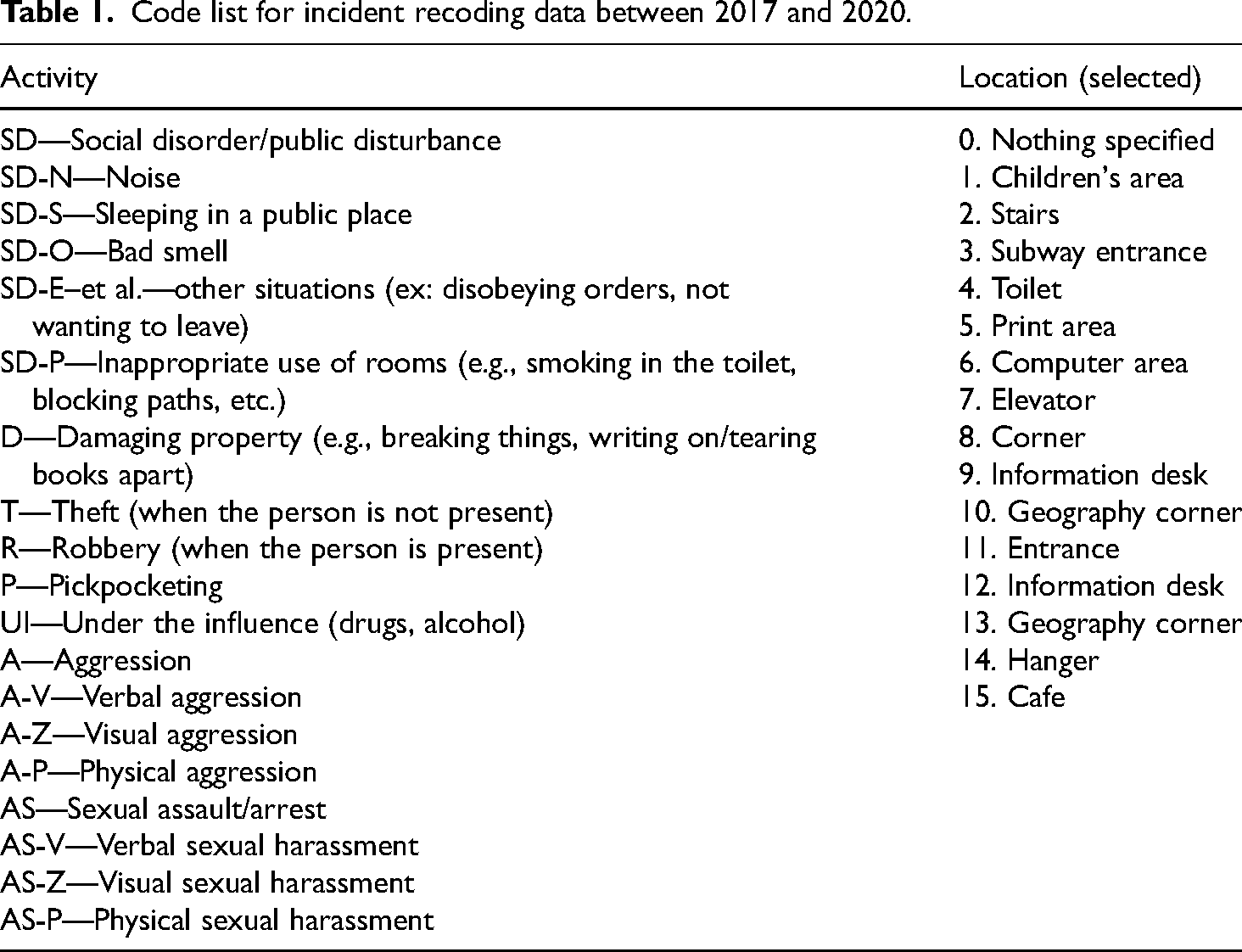
We recalculated all event description data that took place between 2017 and 2020 (Table 1) because there were multiple cases where there were two to three events recorded as one case. With several spreadsheets, we coded the events based on their date, time, event type for Högdalen and the two control libraries: Stadsbibliotek and Kista. Some of these codes have been aggregated (e.g., at the beginning different codes for places have been used) several times and are shown according to the images in the results section, which are shown both in number and percentage.
Code list for incident recoding data between 2017 and 2020.
Analytical mixed-methods approach
Before–after, between-group comparisons
We assessed the impact of the safety interventions to Högdalen, in comparison to the control libraries (Stadsbibliotektet and Kista). Figure 2 illustrates the timeline of the experiment, from the initial conditions in 2017 to the end of the study period in December 2020. A number of interventions were put in place after October 2017, namely training of staff and changes to the library's environment. Note that in April 2019, the library was open but had limited hours because of pandemic restrictions. According to library staff, errands to the libraries changed after the beginning of the pandemic, as multiple public functions ceased to function, and the library become a central point for information or for residents to make copies or use computers. Although Sweden imposed mild pandemic restrictions, it was expected that there would be a reduction of visitors to the libraries after the stay-at-home orders were imposed, which may have indirectly impacted the number of incidents in all libraries, not only in Högdalen.
Analysis of variance was used to test for causal estimates, and then η2 was used to calculate the treatment effect, with October 2017 as a reference. We hypothesized that the strongest effect (which is the size of the difference between periods before and after intervention) is for Högdalen than for the two control libraries, that were not the target of the safety interventions. We used partial eta squared (η2) to convert the results into meaningful effect sizes for ANOVAs results. As per Miles and Shevlin (2001), partial η2 = .01 is understood as a small effect size; η2 = .06 is a medium effect size, and η2 = .14 or above is considered a strong effect size, signifying a statistically substantial variation between the study groups.
Visualization in CAD
Plan drawings were used to create a three-dimensional model of the building using CAD, or ‘computer-aided design.’ Each floor was considered a separate layer connected by limited access corridors or ways (elevators and stairs) that could also be visualized together and be the basis for analysis. Then, the next step was to populate this model with crime data using percentages for both libraries. From the total incidents, about 10% had no location and were not mapped. Places that appear more than once in the map were mapped with the same value, as the information available does not specify, for example, in which toilet or elevator the incident happened. Incidents that happen at ‘entrance,’ but no location was specified were mapped proportionally (two-thirds were associated with the main entrance and one-third with a secondary entrance). The analysis of location and frequency was carried out using spreadsheets.
Fieldwork inspection
The library was inspected on several occasions by the researchers from July 6, 2021 to May 20, 2022. Using the conceptual model as a reference (Ceccato et al., 2023), a fieldwork protocol was applied to inspect the library (Ceccato et al., 2022). Natural surveillance was assessed based on visitors' ability to see what happens in a particular area of the library (sightlines), which was highly affected by the design of the setting, and by environmental and temporal contexts. How visitors use spaces to communicate ownership of the library was an indication of territoriality. Access control was evaluated by the existence of entrance checks (mechanical), security guards, or personnel at the entrance. Means to increase the efforts that offenders must expend in the commission of a crime was an indicator of target hardening, while maintenance routines were an indicator of image of the library. Finally, the use of design and signage to encourage intended patterns of usage of public space was investigated in activity support of the library.
Interviews with staff
The interviews with library staff were executed with permanent well-experienced staff who had been working more than three years in these facilities, predominantly women. The semistructured interviews included open-ended questions in order to give the respondents a chance to formulate their own answers and perceptions on the following subjects: (a) personnels' experiences about the library's working environment; (b) personnels' personal experiences of safety problems encountered at the library, and focus on the library environment and their training; (c) personnels' perceptions of safety; (d) the working methods and routines at the library to support their work in dealing with safety problems.
Surveys of visitors
We asked visitors how they experienced safety conditions in Högdalen before and after the measures were implemented. The survey was based on a convenience sample executed partly via the internet and partly in paper format at the libraries. Visitors’ perceived safety at Högdalen's library was measured by asking a series of questions about: (a) visitors’ experiences of the library's environment; (b) visitors’ perception of the most common problems in the library; (c) visitors’ personal experiences of problems in the library; and finally, (d) visitors’ opinions about the safety experience today in comparison with those three years ago. Based on our research questions, we analyzed the 112 responses using spreadsheets and a statistical software database. Of 112 people, 68% answered the survey via social media, and 32% via a paper survey; 64% identify themselves as women, 33% as men, 2% do not want to state and 1% identified as nonbinary; 15% were under 30 years old, 50% were in the age group 31–50, 17% were in the age group 51–64, and 18% were in the age group 65 and older; 65% answered that they have a university education or the equivalent; 73% live in Högdalen district; 41% visit often the library; 64% visited the library for the first time before 2017; 64% visit the library only in the afternoon.
Results
Safety incidents in Högdalen and control libraries
Högdalen attracts a variety of incidents; most of them are acts of public disturbance (61%), followed by misbehavior of visitors under the influence of alcohol and/or drugs (15%), violence such as aggression against personnel and other visitors (15%), physical damage and vandalism (7%), sexual harassment (2%), and finally a few cases of crimes against private property such as thefts and robberies (Figure 3). There is little specification as to what was stolen or robbed; however, these events occur mainly where people leave their personal belongings unattended, for example, when they make use of personal computers and stay for longer periods. The entrance/exit area attracts a high number of incidents (a fifth of the total), which is where people spend time on the stairs, sleeping or drinking, waiting on a bus, on the way to the metro entrance.
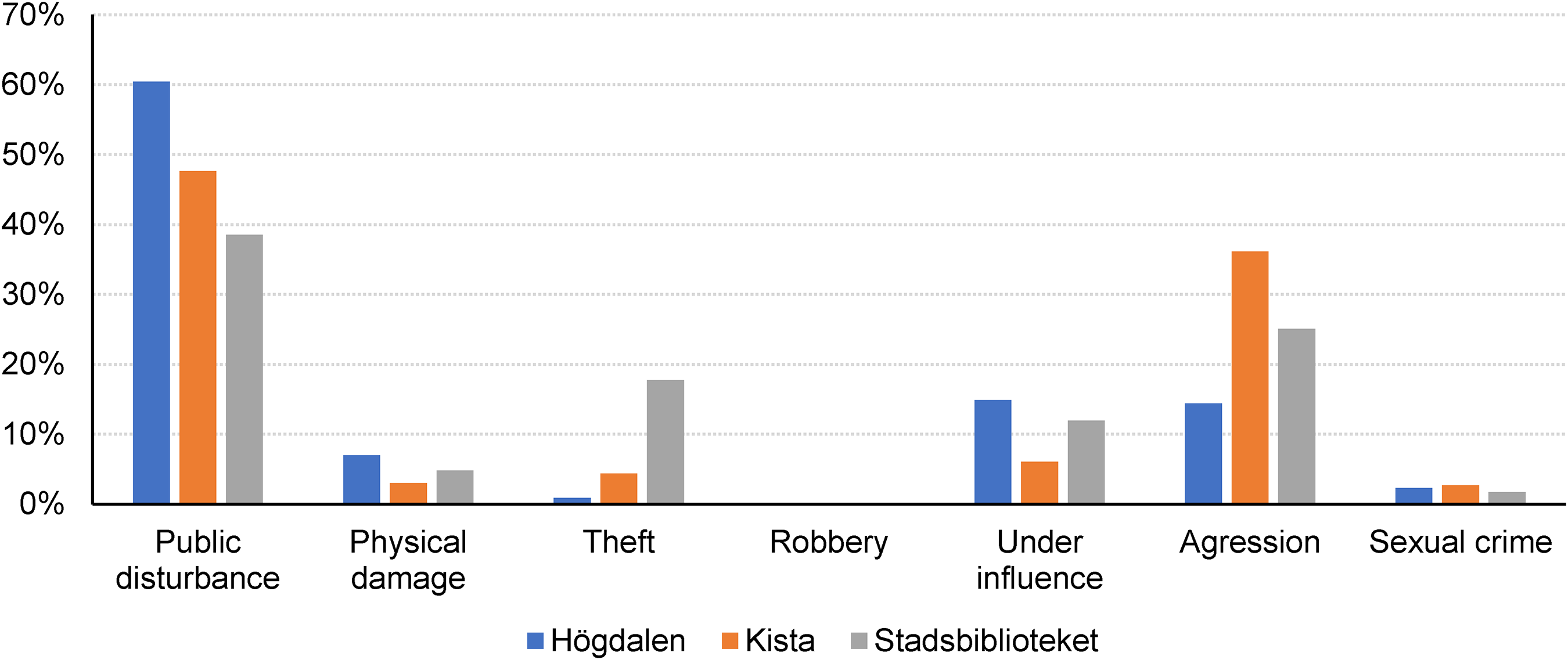
Crime and incidents of public disturbance in Högdalen (N = 296) and the two control libraries (Kista, N = 430; Stadsbiblioteket, N = 1170), 2017–2020.
Incidents of public disturbance include inappropriate use of space, for example, smoking in the toilet, sitting in the children's room, blocking the entrance, etc., as well as noise, people sleeping, people who do not want to leave the library, and individuals under the influence of drugs and/or alcohol. Although events of public disturbance dominate the records in three libraries, aggression (Kista) and theft (Stadsbibliotektet) are more common in the control libraries than in Högdalen. Land use and the socioeconomic and criminogenic characteristics of the surrounding areas influence what happens in these libraries.
Assessing safety interventions: Temporal impact
A set of interventions was applied to Högdalen. First was a change in leadership in 2017, and the start of the implementation of changes that included employment of security guards. The design of the library was also changed following CPTED principles (Figure 1). From the time the interventions started (October 2017), Högdalen has experienced a 88.12% decrease in the number of crimes and incidents of public disturbance while control libraries experienced increases: 126.76% in Kista and 24.90% in Stadsbiblioteket (Table 2). We note that in 2020 all libraries were open, and incidents related to the pandemic restrictions were excluded from the database.
Crime and incidents of public disturbance in 2017 and 2020.
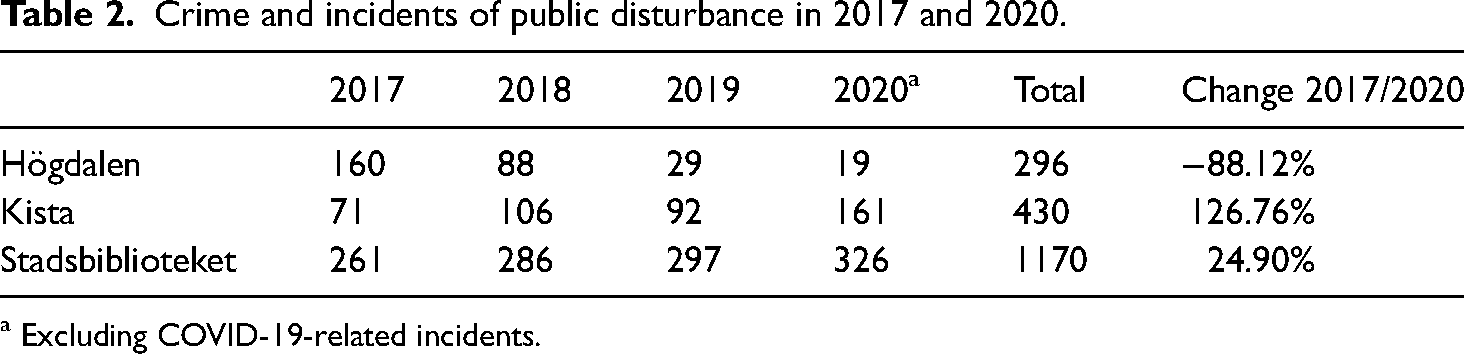
Excluding COVID-19-related incidents.
Casual estimates
As we show in Table 3, there was a greater and statistically significant reduction in crime and disorder in Högdalen compared to the control libraries (reference point October 2017). The strongest effect (which is the size of the difference between periods before and after intervention) is greater for Högdalen (η2 = 0.030, 95% CI 0.02, 0.05) than the two control libraries, that is, Kista (η2 = 0.005, 95% CI 0.00, 0.01) and Stadsbiblioteket (η2 = 0.012, 95% CI 0.00, 0.02). The profile of these crimes has not changed; the few cases in 2019 in Högdalen's library are dominated by incidents of public disturbance. Not only has crime and disorder decreased between 2017 and 2020 but the crime geography has also changed internally within the library. In the next section, we discuss these changes in detail.
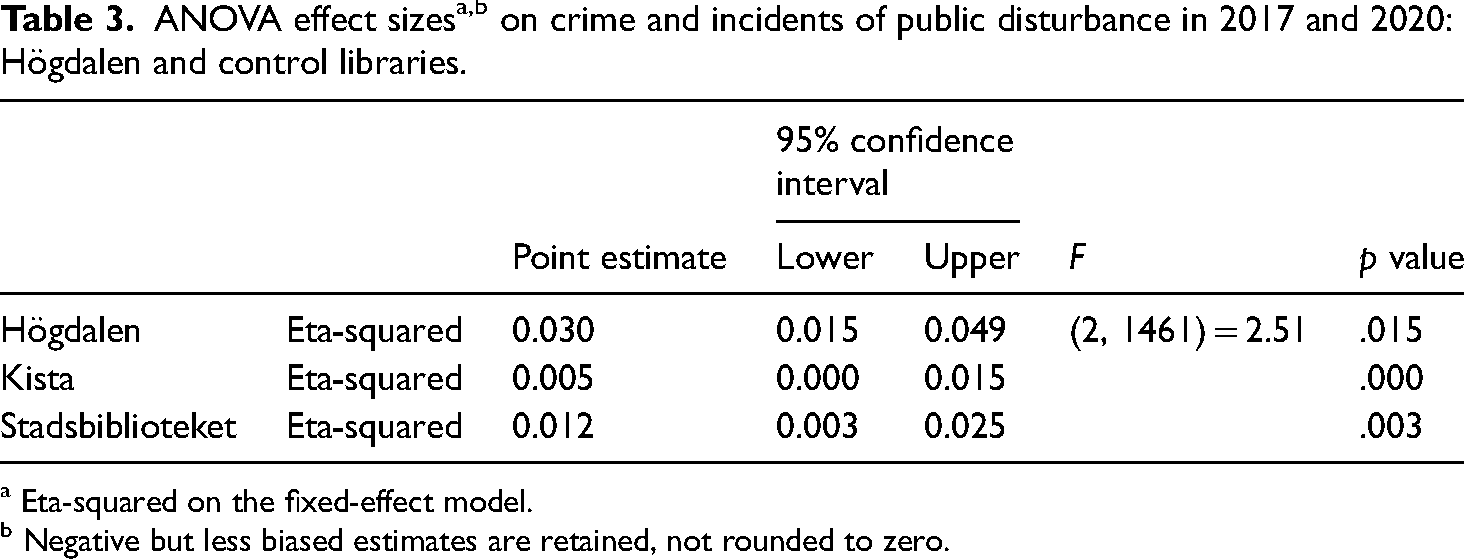
Eta-squared on the fixed-effect model.
Negative but less biased estimates are retained, not rounded to zero.
Assessing safety interventions: Spatial impact
Renovation of the physical environment based on CPTED principles appears to have a direct impact on crime and security disturbances at the library. The children's area attracted a large number of problems in 2017, followed by the bathrooms, as well as wherever there were computers. Some of these places still concentrate crime and incidents of public disorder in 2020 but, by and large, the crime geography and intensity have changed. Figure 4 shows the change at Högdalen's library.
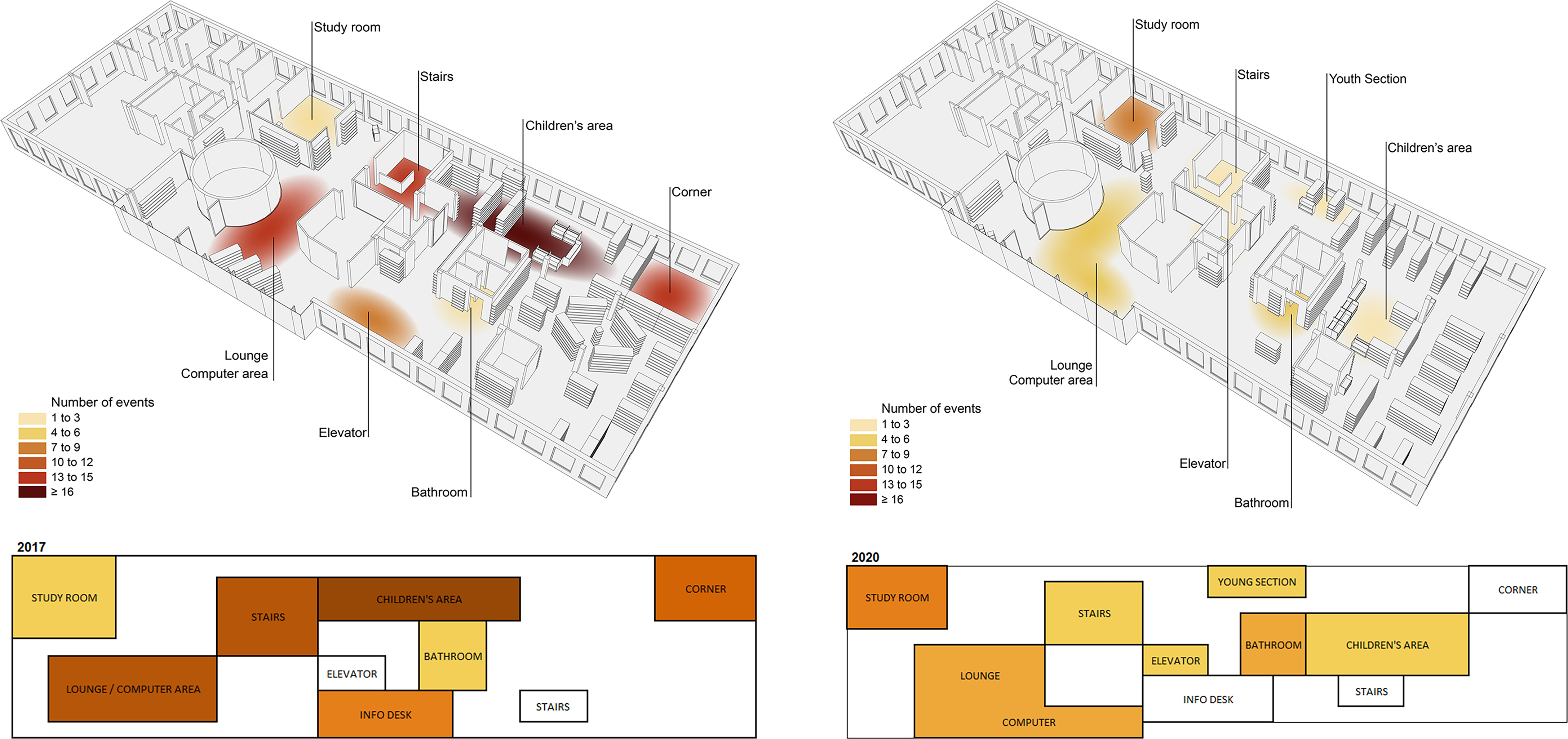
The geography of crime and incidents of public disturbance in 2017 and 2020.
The library consisted of many shelves and could be experienced as ‘crowded.’ The design of the room in combination with the many shelves gave that feeling of being in a ‘maze.’ The library consisted of many hidden spaces, in some places even dark hidden spaces. These spaces are widely not only used by visitors to read or study but are often also used by addicts and young people. The library has been redesigned in a way that brings about natural surveillance. A clear sightline has been created toward all entrances/exits, as well as between the two information points to offer the staff the opportunity to always be in contact with each other. In addition to the fact that this design method created clear sightlines throughout the library (shelves are now lower), it has also increased the amount of light, making the environment brighter and more pleasant. Since the leadership of the library has changed, the staff has worked intensively on the treatment of visitors by introducing a safety management course that is discussed in detail below.
Assessing safety interventions: Staff perspectives
Half of the staff took part in the interviews. Regarding the effectiveness of the interventions, they declare being satisfied, although a few are a bit doubtful about the zoning (separation of activities in space). They are particularly positive toward the signage, and also to the layout of the environment, the shelves (‘before it was a maze’). Most see the separation of activities in space as positive because it improved a lot since all the computers are out in the lounge, separated from the rest of Högdalen.
They say that they have never felt ‘really unsafe’ in the library before the changes were made, but a few mention circumstances which have made them feel uncomfortable, powerless, and/or anxious in confrontation with visitors. Dealing with people under the influence of drugs/alcohol or being a woman and feeling intimidated by groups of young men were examples of these situations. The frequency with which they need to deal with these situations was ‘once a week or every two weeks,’ but one of the staff suggested that these problems ‘come in waves’ and reflect what is happening in the community. They all agree that these challenging situations were more common in the past than they are now.
The training has provided them with new tools to work with challenging situations. For example, they mentioned that ‘the goal is to respond to the situation in a polite and friendly way, try to give library users choices and solve the problem without adding to the problem.’ If the situation gets out of hand, the staff contacts the guards in Högdalen's center, who, according to respondents, normally get to the library quickly. In addition to that, they put a set of precautions into place. The staff never work alone and at closing times, ‘when certain situations may arise, there are at least two people together.’
Many conflicts in Högdalen were about inappropriate use of the space. Almost everyone who was interviewed still see difficulties in organizing their activities around the various functions that libraries are expected to have today. Security is only one dimension of it. The library is a place where you borrow books, but it is also a meeting place, a place for social interaction, often complete with cafes and restaurants. Visitors have different expectations of how different places should be used or how they should look. The challenges also include adaptation of the activities to different groups of visitors. An area or zone planned for young people may not be suitable for children or adults.
Assessing safety interventions: Visitors’ perspectives
Of the 112 people who answered the survey, 38% answered that they see a minor difference after the renovation that took place at Högdalen's library, 37% answered that they see a major difference, 24% answered that they did not know, and 1% did not answer the question. Those who suggest that the library is better now mentioned, for example, that it is because the library has become ‘open and bright,’ ‘with pleasant staff present,’ the ‘entrance has become nicer,’ ‘presence of security guards,’ ‘less ‘mess’ than before, even if it occurs,’ ‘the noise level has become better,’ ‘visitors have a better overview of the premises,’ ‘the groups of rowdy young people are no longer there,’ and ‘it feels safer when it is well-kept, clean and quiet.’
Most visitors who responded to the survey feel overall ‘very safe’ in Högdalen's library (60%), but the entrances/exits felt less safe. Around 10% have been exposed to (and 20% witnessed) crime and/or incidents of public disturbance in the library, yet the large majority declare feeling safe during the library's opening hours. Those who feel unsafe in the library complain mostly about incidents of public disturbance and rarely about acts of violence. Around 25% of those who answered the survey suggest that the library's entrance is the problematic place and that there is a need to create better opportunities to control what is happening outside the library. Other suggestions include the need for surveillance cameras, security guards, better orientation, better lighting, better maintainance, and more helpful/professional staff.
Discussion
Libraries are not all the same; some attract a disproportionally large number of incidents while others just a few (Ceccato et al., 2022). Therefore, it is important to identify which reasons are in operation in each type of facility (Clarke and Bichler-Robertson, 1998).
Public libraries such as Högdalen have not regularly been examined as a risky facility. The reason may be data related (given data are collected from libraries rather than police records) and/or because they are not traditionally seen as criminogenic environments. As they turn into multifunctional spaces, public libraries require knowledge on how to prevent crime tailored to the activities they offer. In this study, we employed principles of CPTED as a reference to define safety interventions that tackled crime opportunity-reducing measures in a broad sense, whether through design or management of the library by improving staff skills to deal with conflict situation.
Greater and statistically significant reductions in crime and incidents of public disturbances were found in Högdalen than in the two control libraries after the safety interventions started in October 2017. Although events of public disturbance dominate the records in three libraries, aggression (Kista) and theft (Stadsbibliotektet) are more common in the control libraries than in Högdalen, mostly reflecting the difference in the size of these libraries, and in their design, location (Högdalen and Kista are peripheral libraries while Stadsbibliotekt is a central library), and city contexts (Högdalen is connected to a subway station and a bus stop, Kista is part of a shopping center and transportation hub while Stadsbibliotekt is surrounded by commercial establishments [restaurants in particular], parks, and a university, attracting slightly different types of incidents). High crime areas tend to affect victimization at libraries and perhaps vice versa, as Bowers (2014) suggests that there is a positive relationship between internal and external crime in an area. Libraries that are located in inner city areas may be extra vulnerable to crime spillover from mixed land use, with criminogenic and badly managed bars and restaurants (Eck, 2019; Newton, 2018), this is particular the case of Stadsbibliotekt.
The profile of these crimes did not change (the few cases in 2019 in Högdalen's library are dominated by incidents of public disturbance) but the geography did. While most incidents were concentrated in the children's areas and the computer areas before the interventions, a number of events appeared in the study room and bathrooms after the changes were made but to a lesser extent. Areas of increased safety concerns in both libraries are the children's areas, where the most diverse clientele can be found (see also in the literature, Carey, 2008). These areas attract high number of public disturbances, which is also the most common type of incidents recorded in both facilities.
Maps and figures show that most problems happen in relatively few places, confirming previous research in microplaces (e.g., Favarin, 2018; Weisburd, 2015) but vary by incident type. There is also some evidence of incidents location specialization, such as the fact that conflicts happening in reading area/children's area/study room are often associated with noise or inappropriate use of space. The 3D visualization helps to show how crime concentrates in space, which helps corroborate previous studies on crime concentration in microplaces, in particular when multistory buildings are the study area.
Design and layout have an important role to play in libraries safety conditions. In Högdalen, the fact that the new design created clear sightlines throughout the library has increased the amount of light, making the environment brighter and more pleasant. This is because areas with poor natural surveillance, such as those behind and between bookshelves, have great potential for crime (Cromwell et al., 2008). Dark areas and corners that lack proper illumination are also safety-related areas of concern, as previous research suggests (Carey, 2008; Cromwell et al., 2008; Henrich and Stoddart, 2016). Some areas are criminogenic because of the activities they attract. For example, areas of increased safety concerns are settings where children's and teens' periodical collections are located, but also the adult fiction reading room, were the most diverse clientele may be found (Carey, 2008). Rooms with valuable collections or CRAVED products such as computers are also vulnerable places for theft (Carey, 2008; Cromwell et al., 2008; Smith, 2018).
Both staff and visitors recognize that the changes in the library led to an improvement in safety conditions. Since the leadership of the library has changed, the staff has worked intensively introducing a safety management course, which has been also recognized by the staff as a positive change because it supports them in dealing with conflicts and challenging situations. In terms of the environment of the library, they are particularly positive toward signage and the layout of the environment.
Moreover, as in any other mapping methodology, the detailed analysis of the library is highly dependent on accurate, precise, and complete datasets. Around 10% of the records were not mapped because information about location was not available. A similar problem was found for events with missing time stamps. A third limitation was the inaccessibility of researchers to areas when doing fieldwork in the so-called ‘private areas’ of the libraries, where only the staff have access. Finally, it is important to keep in mind that with COVID-19 restrictions the number of visitors decreased in 2020 (despite the fact the libraries were open to the public as usual and were the few public establishments providing access to public computers and copy machines), which has affected the criminogenic conditions of all the libraries in this study.
The paper examines the impacts of physical design changes to a single library relative to two other libraries that did not experience changes. Its design is a variant of the nonequivalent control group design, making it relatively strong against most threats to internal validity. Its limitations are various interactions between site selection and site history, for example, the selected treatment site might have a different crime history than the selected controls. Nevertheless, it is a far stronger design than multivariate cross-sectional modeling designs, which cannot address temporal order.
Much like the overall evidence on CPTED, the evaluation of this intervention in two out of the three libraries was not conducted as a randomized controlled trial, and the number of ‘units’ participating in this study would likely position this quasi-experiment as a Level 3 out of 5 on the Maryland Scientific Method Scale (Farrington et al., 2003). We call for more rigorous evaluations of environmental manipulations, a request that has been raised in the systematic reviews we highlighted in the literature review (see more broadly Ariel et al., 2022)). While the overall evidence appears strong and in favor of designing out crime, the validity of the causal inference remains a concern, as it does in our study. We were unable to control for many potential extraneous variables, including the level of policing in the area, the dynamics of crime patterns in the library and the areas around it, or the lighting and infrastructural elements beyond those we have listed.
We are also cognizant that the control conditions are not pure counterfactuals, as some level of surveillance as well as structural elements to prevent crime and deviancy must exist in the nontreatment sites, which dilute the differences between experimental and control conditions, not least by increasing variance between the study arms. There may also be measurement variations between the sites in the form of noncomparable recording of events or a different culture of registering incidence altogether. With a greater number of units of analysis, preferably with a randomization component to address baseline comparability and longer follow-up periods (Sutherland et al., 2017), replications of our study would be greatly improved.
Finally, our study suffers from a ‘black box’ phenomenon (Fagan, 2017), whereby the precise intervention and its dosage were not meticulously kept, at least in the comparison sites. There is a growing attention in criminology to the recording of outcomes and outputs, and we urge scholars in this area to pay more attention to these important data points in terms of crime and delinquency measures as well as in terms of the intervention and its components.
Conclusions
With this study, we expected to detect signs of reduction in crime and incidents of public disturbance after safety interventions were implemented in absolute terms and in comparison with two control libraries. The hospitality of staff toward visitors would have been improved, and they would feel better prepared to handle different types of safety incidents in Högdalen. The library's environment would be perceived by both visitors and staff as safer and more pleasant after the measures, with fewer problems. Overall, these findings are corroborated by the number of incidents, fieldwork inspection, interviews with staff, and a survey with visitors. By comparing Högdalen's situation in 2017 and 2020 with two control libraries in Stockholm that have not undergone these measures, we have found a greater and significant reduction in crime and other disturbances in Högdalen's library compared with the control libraries. This study is unique in that it employs detailed temporal and spatial analyses resulting from a combination of multiple data sources to investigate the effects of changes in the physical environment of the library together with developments in the way staff work on safety and security in the library and its surroundings—something missing in the national and international literature.
Our results make a direct contribution to criminological theory in several ways. First, the study corroborates evidence of the power that environmental changes have in making places safer (Garvin et al., 2013; MacDonald et al., 2019; Moyer et al., 2019) including staff practices in risky facilities (Clarke and Eck, 2007; Eck, 2019). Second, this is a unique investigation because it focuses on microplaces of crime such as indoor environments. The importance of analyzing microplaces at the level of facilities, such as bars, stations (Sherman et al., 1989), or street segments (e.g., Favarin, 2018; Weisburd, 2015), has long been reported in the international literature (Curman et al., 2014; Taylor, 1997) but few studies focused on the nature of crime in indoor environments, much less on the potential impact of interventions based on changes of these environments on crime and events of public disturbance.
In terms of the contribution to methodology, the study combines multiple data sources and makes use of CAD—Computer-aided design in environmental criminology—for visualization of crime location and concentrations in libraries in multistory buildings. Moreover, the study embraces the indispensable know-how of staff, as well as visitors of the library as a natural step in research, not by spoon-feeding researchers (or the other way around), but through a bridge-building process based on withstanding two-way (sometimes conflicting) interactions. Finally, this study is based on a Nordic European context which is novel, since the international literature is dominated by studies from North America or other Anglo-Saxon countries. Although findings are specific to these libraries in Stockholm, they are relevant for public libraries elsewhere, specially those located in European continent.
In practice, our findings show that it pays to plan for libraries that have good overview of the premises with clear sightlines that are designed with a clear separation of activities and signage for increased orientability. Most CPTED techniques and personnel training can be introduced without large investments, and research should test, in a more controlled manner and over a longer term, the potential effect of libraryies microplaces on crime and safety of visitors and personnel.
Footnotes
Acknowledgments
The authors are grateful to the library staff who took the time to support the study, and the library's visitors who answered the safety survey.
Funding
The author(s) disclosed receipt of the following financial support for the research, authorship, and/or publication of this article: This work was supported by the Swedish National Council for Crime Prevention (BRÅ), Grant number 5.1-0296/20.
