



Abstract
Introduction
Research suggests that fear of burglary affects a large proportion of the population. While there is limited research on fear of burglary in the general population, Cook and Fox (2011) found that fear of burglary affected as many as 52% of respondents participating in a students’ survey at a large university in the Southeastern United States in 2008/9. Fear of burglary is important to study, as it appears to be a wider problem and can have serious health and well-being implications (Atkinson and Blandy, 2016; Robinson and Keithley, 2000). This is also a problem that appears to be susceptible to socioeconomic inequality, as it is likely to particularly affect people living in high-crime areas (Robinson and Keithley, 2000). However, home security measures can be considered as a solution to this problem, as they reduce the risk of burglary (Vilalta, 2012). Therefore, they are highly relevant and integral parts of this research.
The aim of this research is to investigate the relationship between a number of sociodemographic and attitudinal factors on fear of burglary, and the influence fear of burglary may have on selected home security measures, examining subsequently the possible effects of factors associated with fear of burglary on home security measures. This study attempts to test the hypothesis that certain demographic characteristics, in particular gender, age, race, economic disadvantage and tenure, are predictors of fear of burglary and in turn, fear of burglary affects installed home security measures.
While fear of crime is a widely researched topic within the field of criminology, this is one of the very few research studies (Rollwagen, 2016; Sakip et al., 2018; Vilalta, 2012) addressing specifically fear of burglary and associated topics (Cook and Fox, 2011), particularly in the UK context. The findings from this study have a number of implications and can be applied to UK policy development.
Theoretical background
Fear of crime
The concept and research on fear of crime present challenges that previous studies have attempted to overcome by measuring emotional or behavioural responses to crime, perceived risk of victimisation and perceived prevalence of crime in participant’s areas (Cook and Fox, 2011; Hale, 1996). Nevertheless, many of the early measures of fear of crime were vague and allowed for different interpretations. For example, focus on the perception of safety in the neighbourhood cannot be directly translated into the fear of crime or lack thereof (Ferraro and LaGrange, 1987; Henson and Reyns, 2015).
An alternative approach to this definitional and conceptual ambiguity has been offered by scholars suggesting that we cannot establish a causal relationship between risk perception, fear of crime and respective response (Cabrera and Ardoy, 2017; Rader, 2004). This is due to the non-determinable relationship between a person's protective or avoiding behaviour, and emotional response to crime as presented through the expression of fear (Doran and Burgess, 2011; Liska et al., 1988). Therefore, a reconsideration of examining the reciprocal relationship between these phenomena might provide further insights.
Further to this, academics suggested that fear of crime measures should focus on specific types of crime, rather than crime in general because, for example, the fear of violent crime may be very different to fear of property crime (Cook and Fox, 2011; Ferraro and LaGrange, 1987; May, 2001; Wilcox et al., 2007). While more recent studies attempted to measure fear of different types of crime, the focus has been mainly on fear of violent crime (Cook and Fox, 2011; Fisher and Sloan, 2003; May, 2001; McCreedy and Dennis, 1996). Fear of property crime has been largely under-researched.
Factors associated with fear of crime
A large body of literature is focused on the impact of certain demographic factors such as gender, age, race and socioeconomic status on the reported fear of crime (Day, 1999; LaGrange and Ferraro, 1989; Pain, 2001; Pantazis, 2000; Schafer et al., 2006). For instance, several studies show that women are generally more fearful than men (Adams and Ray, 1993; Cook and Fox, 2011; Fox et al., 2009; May, 2001; Schafer et al., 2006). Nevertheless, most of these studies do not account for the shadow of sexual assault hypothesis that suggests women's fear of crime is largely inflated by their fear of sexual assault that may co-occur with other types of crime such as burglary; this can result in overestimation of women's fear of these crimes (Ferraro, 1995; Fisher and Sloan, 2003). Interestingly, research dedicated specifically to fear of property crime has not discovered significant gender differences (Wilcox Rountree, 1998).
When it comes to age, older people are commonly portrayed as more fearful and vulnerable (Braungart et al., 1980; Cook and Cook, 1976; LaGrange and Ferraro, 1989). Nevertheless, more recent studies that looked particularly into fear of property crime suggest that the elderly do not necessarily exhibit higher levels of fear of this particular type of crime (Chon and Wilson, 2016). On the contrary, they might even present the least fear in comparison to those aged 18–25 who exhibit the highest levels of fear of property crime (Ferraro and LaGrange, 1992).
In addition to gender and age, race is another factor often investigated in relation to fear of crime. Numerous studies concerned with the relationship between fear of crime and race showed that people of colour report higher levels of fear of crime than White people; this can impact people's quality of life and their behaviour (Day, 1999; Pain, 2001; Walker, 1994). It has been found that people living in areas with higher levels of racial violence experience more severe effects of fear of crime, as the threat is more targeted (Pain, 2001).
Further research suggests that economic status is a significant factor affecting levels of fear of crime. Will and McGrath (1995) found that those living in poverty are generally more fearful than the wealthier ones, even after controlling for other factors like age, gender or size of the city of residence. Even more so, the general neighbourhood's socioeconomic status might be impacting individuals’ fear of crime since people living in deprived areas with limited social cohesion tend to be more fearful (Scarborough et al., 2010).
It becomes inevitable then that perceived and actual vulnerability should be approached and analysed in relation to individuals’ sociodemographic characteristics. According to vulnerability theory (Killias, 1990), fear of crime and perceived likelihood of victimisation fluctuates depending on one's gender, age and socioeconomic status. In that respect, even though related studies have not provided with consistent results in relation to age and socioeconomic background influence on perceived sentiment of vulnerability, gender has shown to be a rather consistent determinant (Podana and Krulichová, 2021). Nevertheless, while most of the aforementioned studies have examined the influence of sociodemographic factors on fear of crime, Day (1999) argued that age, gender and social class alone cannot fully explain the phenomenon. These factors affect one another, and so each combination of these results in different experiences and levels of fear of crime (Day, 1999). Similarly, Pain (2001) pointed out that social identities, such as gender, race, sexual orientation and many others should not be studied in isolation.
Fear of burglary
While research should be inclusive regarding the different factors associated with fear of crime, it would further be beneficial for studies to be particular about the exact type(s) of crimes they are referring to. With this in mind, this present paper focuses on factors associated with the fear of burglary.
Although burglary rates decrease consistently over recent years, domestic burglary is still a serious and widespread problem in England and Wales (ONS, 2020). In the last indicative pre-COVID year ending March 2020, there were 356,017 cases of burglary recorded by the police (ONS, 2020). According to the Crime Survey of England and Wales latest data, this figure is even higher with approximately 582,000 incidences of domestic burglary and 24 in 1000 people affected between April 2019 and March 2020 (ONS, 2020). Burglary is a noteworthy crime as it can not only cause large financial losses, but also can have serious emotional and psychological impacts (Mawby, 2013). Burglary can induce a daily and persistent sense of risk and fear, while its occurrence can further perpetuate the fear and add a worry of recurrence (Mawby, 2013).
To understand the meaning and impact burglary can have on an individual, it is important to understand the meaning of home (Atkinson and Blandy, 2016; Bell et al., 1996). According to environmental psychology, home is an essential factor needed to satisfy basic human needs of safety, security and privacy (Bell et al., 1996). With such an important role, it is unsurprising that people experience home-related anxieties and feel the need to protect their homes.
There is limited research available specifically about the fear of burglary. However, the available studies suggest that fear of this type of crime affects a large proportion of people. For example, Cook and Fox's (2011) study found that 52% of surveyed students reported they were somewhat to very afraid of burglary while away during the day and 70% were afraid during the night. Furthermore, similarly to fear of crime in general, fear of property crime can have serious psychological, wellbeing and health impacts affecting people's standard of living. This is especially apparent in communities living in poverty and areas with high crime rates (Robinson and Keithley, 2000). Still, most literature related to fear of crime and its health impacts is focused on violent crime with little research being carried out into property crime such as burglary (Robinson and Keithley, 2000).
When it comes to property crime, Routine Activity Theory assists in framing our understanding regarding the importance of home security measures. According to this theoretical framework, a crime occurs when ‘a motivated (or “likely”) offender comes across a suitable opportunity in the absence of a capable guardian’ (Tilley and Sidebottom, 2017: 419). Home security measures then play the role of the ‘capable guardian’ or aim at ‘target hardening’ (Tilley and Sidebottom, 2017). It has been shown that home security measures help to reduce burglaries (Budd, 1999; Osborn et al., 2004). Some home security measures function as barriers aimed at increasing the offender’s effort to get into the property such as locks, chains or bars designed to protect properties (Vilalta, 2012). Studies showed that this type of home security measure significantly reduces the risk of burglary (Ekblom and Tilley, 2000; Osborn et al., 2004). However, these can only be effective given that the home security measures are appropriately utilised, that there is a suitable existing infrastructure that would allow installation of, for example, better locks and that all key home entry points are secured (Tilley and Sidebottom, 2017). Another approach to reducing the risk of burglary is increasing the risk for the offender by increasing the chances of their apprehension. This can be achieved by installing burglary alarms, appropriate lighting or CCTV (Tilley and Sidebottom, 2017). All such measures decrease the risk of burglary (Dodd et al. 2004; Tilley and Sidebottom, 2017). Tseloni and colleagues (2017) found that lights outside the property and double locks on doors, especially in combination, offer the most protection against burglary being 20 times more effective than no installed security measures, while burglar alarms are the least effective.
While home security measures are beneficial, the literature suggests that they are mostly available to those of higher social status. The wealthy have means of acquiring expensive home security systems and protecting themselves from property crime, while the poor remain largely unprotected (Nilsson and Estrada, 2006). Similarly, Hope (2001) suggested that since home security measures involve costs, it can be assumed that the poor will not have sufficient resources to afford increased home security. At the same time, those of higher socioeconomic status can ‘buy themselves out of risk and into security’ (Hope, 2001: 193).
Additionally, as per Atkinson and Blandy (2016) tenure in property may be another significant factor contributing to the fear of burglary: generally, homeowners have more freedom when making adjustments to their homes; they can install additional home security measures when and how they please as long as they receive appropriate permits (where it’s required). On the other hand, tenants have to seek approval from their landlord to proceed with such installations – an approval that is not always granted (Atkinson and Blandy, 2016). This would suggest that tenants might experience higher levels of fear of burglary than homeowners on the grounds of potential insufficient home security. According to Tseloni and colleagues (2004), this fear is not unjustifiable since tenants in the UK tend to experience higher burglary rates than homeowners.
Another contributing factor to the levels of worry about the burglary is the concept of responsibilisation. The concept emerged from a neo-liberal policy transformation, which emphasised individual responsibility to contribute to crime reduction (Atkinson and Blandy, 2016; Rose, 2000). Responsibilisation suggests that the individual, rather than the state, is held accountable for crime and risk of victimisation. Thus, investing in security measures with the aim to protect one's home, becomes the individual's responsibility (Rose 2000). As per Atkinson and Blandy (2016), fear of property crime and the sense of personal responsibility for one's protection is further fuelled by the police and the security measures industry. For example, many police forces issue guidance on how to secure the property, often by implying that homes should be turned into ‘fortresses’ (Atkinson and Blandy, 2016). Furthermore, the home security industry and its advertising and marketing strategy could also contribute to the heightened levels of fear of property crime by raising awareness about home vulnerabilities to increase their sales (Atkinson and Blandy, 2016).
To summarise, past studies focused on the fear of burglary or property crime tended to be small scale and lack generalisability, or were carried out abroad where the wider context of the study may be different and results may not apply to the UK (Barberet and Fisher, 2009). There is also limited literature investigating the link between fear of burglary or property crime and home security measures (Barberet and Fisher, 2009; Cook and Fox, 2011; Vilalta, 2012). Therefore, the aim of this study is to add to existing knowledge and fill this gap in available studies. This paper will provide insight into the relationships between sociodemographic and attitudinal characteristics of members of the public, their fear of burglary and the home security measures they currently have installed by testing the following research questions: RQ1. What factors (respondent characteristics or attitudinal variables) significantly predict fear of burglary?
RQ2. What is the relation, if any, of fear of burglary while selecting home security measures?
Methodology
Data source
The dataset used in this research project is the Crime Survey for England and Wales 2017/2018 dataset. The data has been collected between April 2017 and March 2018. Adults aged 16 and older were asked to report on crime-related experiences in the past 12 months; hence the data covers crime incidents experienced between April 2016 and February 2018.
The issued sample size was designed to yield interviews with 35,000 participants with the target of at least 650 interviews in each of the 42 Police Force Areas in England and Wales (ONS, 2019). A total of 34,175 adults have been interviewed, with a response rate of 73 percent in 2017/18.
The survey was split into modules and sub-modules. Some questions were asked of all participants, and then the participants were randomly allocated to respond to particular modules and sub-modules of the survey. This means that some questions were only answered by a proportion of participants, which resulted in a large volume of missing data. The Little's MCAR test revealed that data is not missing completely at random (p > 0.05). However, since it is known that the missing data is largely due to the structure of the survey and that participants were selected at random to respond to particular modules, it can be assumed that the data are missing at random.
Key variables
This is exploratory research; hence the demographic variables have been selected to represent as many groups in the population as possible. A particular emphasis has been placed on variables related to age, gender, ethnicity, socioeconomic status and tenure as these factors are often associated with fear of crime in the literature (e.g. Atkinson and Blandy, 2016; Day, 1999; LaGrange and Ferraro, 1989; Pain, 2001; Will and McGrath, 1995). Table 1 shows the frequencies based on the full dataset. The survey structure relies on modules, so only a proportion of respondents are asked some of the questions. In Table 1, missing data refers to data that was never intended to be collected as well as non-response.
Demographic variables.
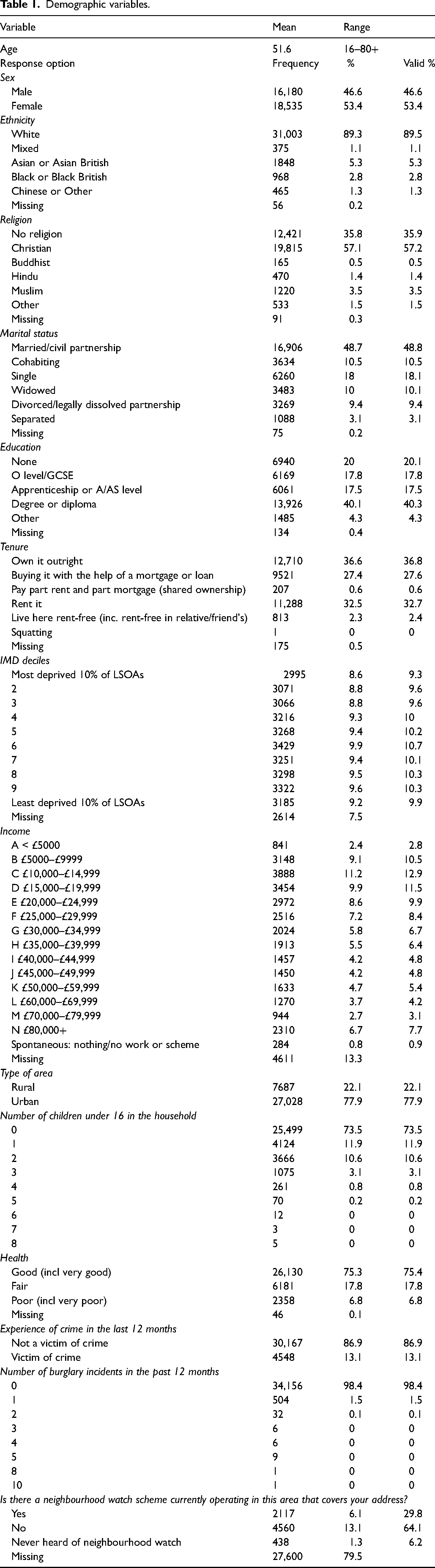
Further to this, a set of available attitudinal variables has been selected (Table 2). This is because attitudinal variables may act as predictors of behaviour (Ajzen and Fishbein, 1973).
Attitudinal variables.
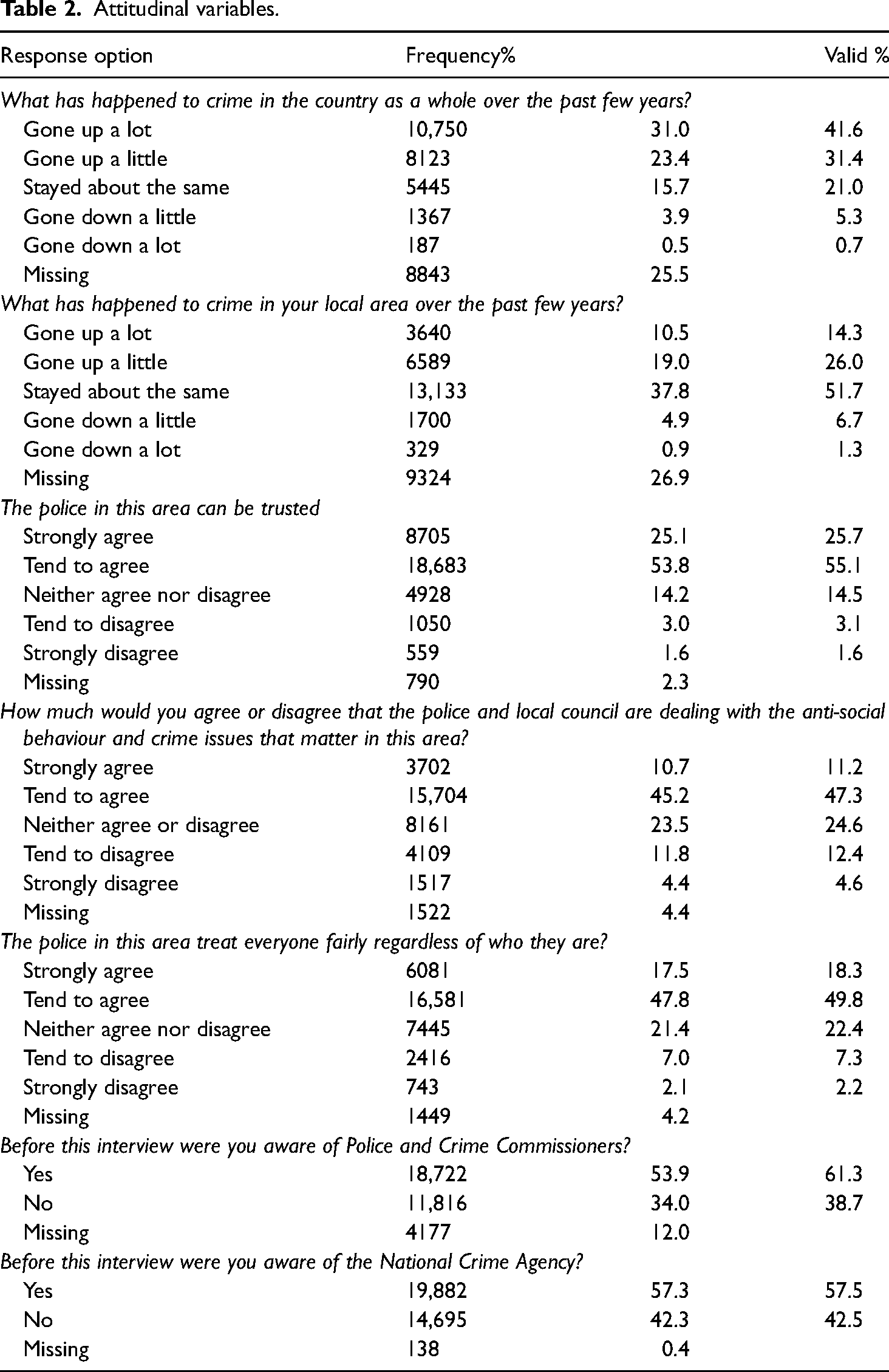
The key variable used in this research is the worry about burglary variable (Table 3). The variable used in the analysis has been re-coded by the data providers (ONS) from a 4-options answer scale to a dummy variable. The recoded variable was used in the analysis.
Worry about burglary variable.
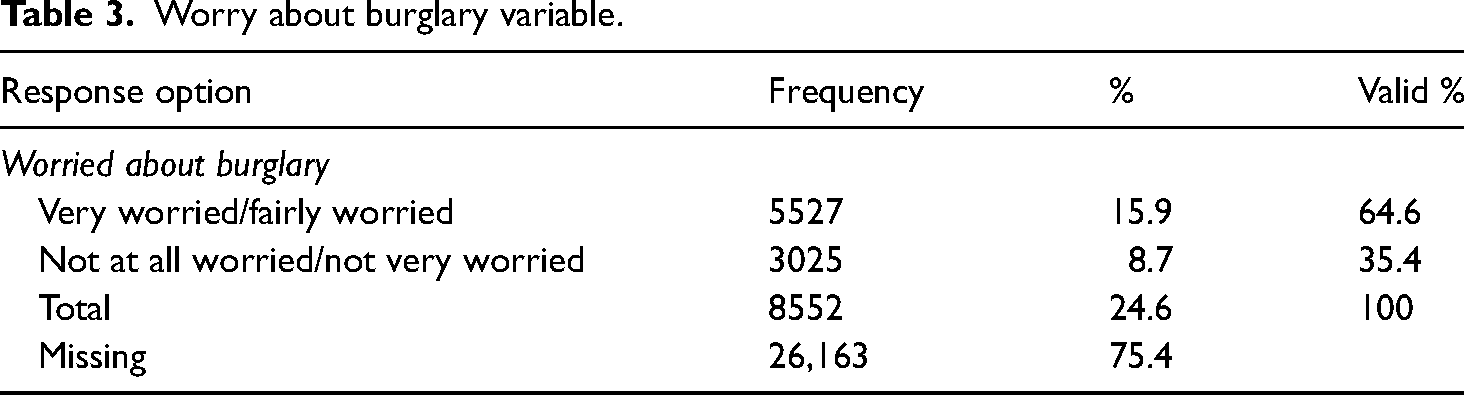
For this question, respondents were asked ‘How worried about having your home broken into’ and therefore, it is hereafter assumed that worry and fear are the same and are used interchangeably throughout this article. However, previous research showed that defining fear of crime may be challenging and different wordings can be interpreted differently by the respondents (Cook and Fox, 2011; Hale, 1996). Nevertheless, the question was concerned with a specific type of crime and it allowed measuring levels of worry rather than its mere presence (Cook and Fox, 2011).
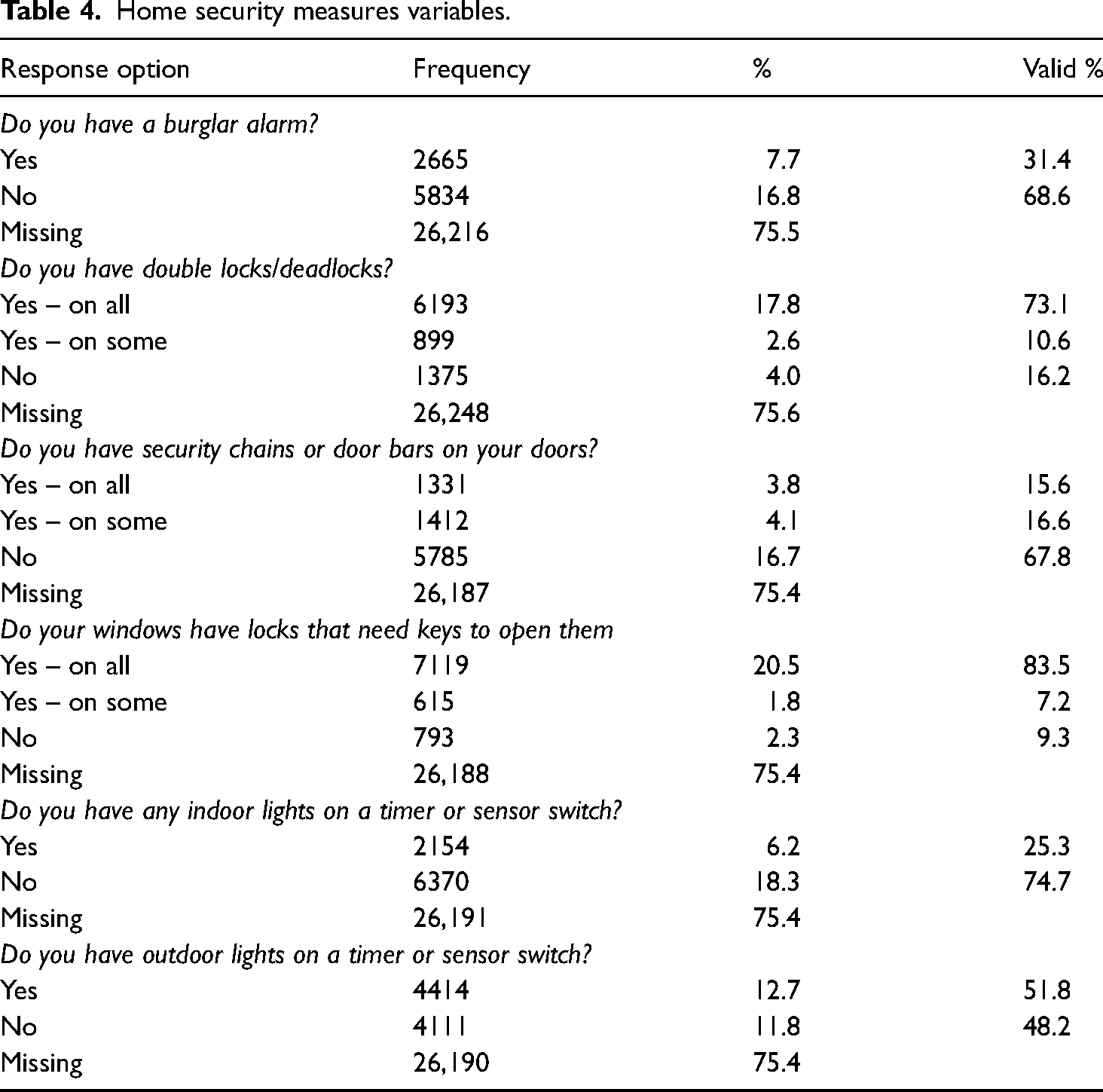
The questions about home security measures were specific and detailed (Table 4). They were also asked about currently installed security measures, which likely reduced the recall bias.
Home security measures variables.
Analytical approach
The first stage of the analysis involved developing a good predictive model using logistic regression to establish which and to what extent respondent characteristics predict fear of burglary. The first model included only variables commonly mentioned in the fear of crime literature such as age, sex, ethnicity, socioeconomic status or tenure. The second model included an extended list of demographic variables and a set of attitudinal variables in an attempt to establish a stronger model.
Once an acceptable prediction model has been established, the second stage of analysis involved factor analysis to reduce a large number of variables to a smaller set of dimensions. A principal component analysis (PCA), which is a type of exploratory factor analysis (EFA), has been carried out.
All variables used in the logistic regression model were included in the factor analysis, apart from basic demographic characteristics (age, sex, ethnicity and religion) as these are unlikely to have further underlying dimensions and are better suited to be included as stand-alone variables. Factors that were not significant predictors of worry about burglary were included in the factor analysis, as they could still have a significant effect on home security measures. Home security measures variables were also included in separate factor analyses.
Missing data was deleted listwise. To allow for easier interpretation of results, a varimax rotation method has been used.
The resulting factor scores were used in the final logistic regression model investigating the relationship between worry about burglary, demographics and the resulting factors, followed by two multiple linear regression models investigating the relationship between the two types of home security measures, demographics, factors and worry about burglary.
Findings
Logistic regression analysis
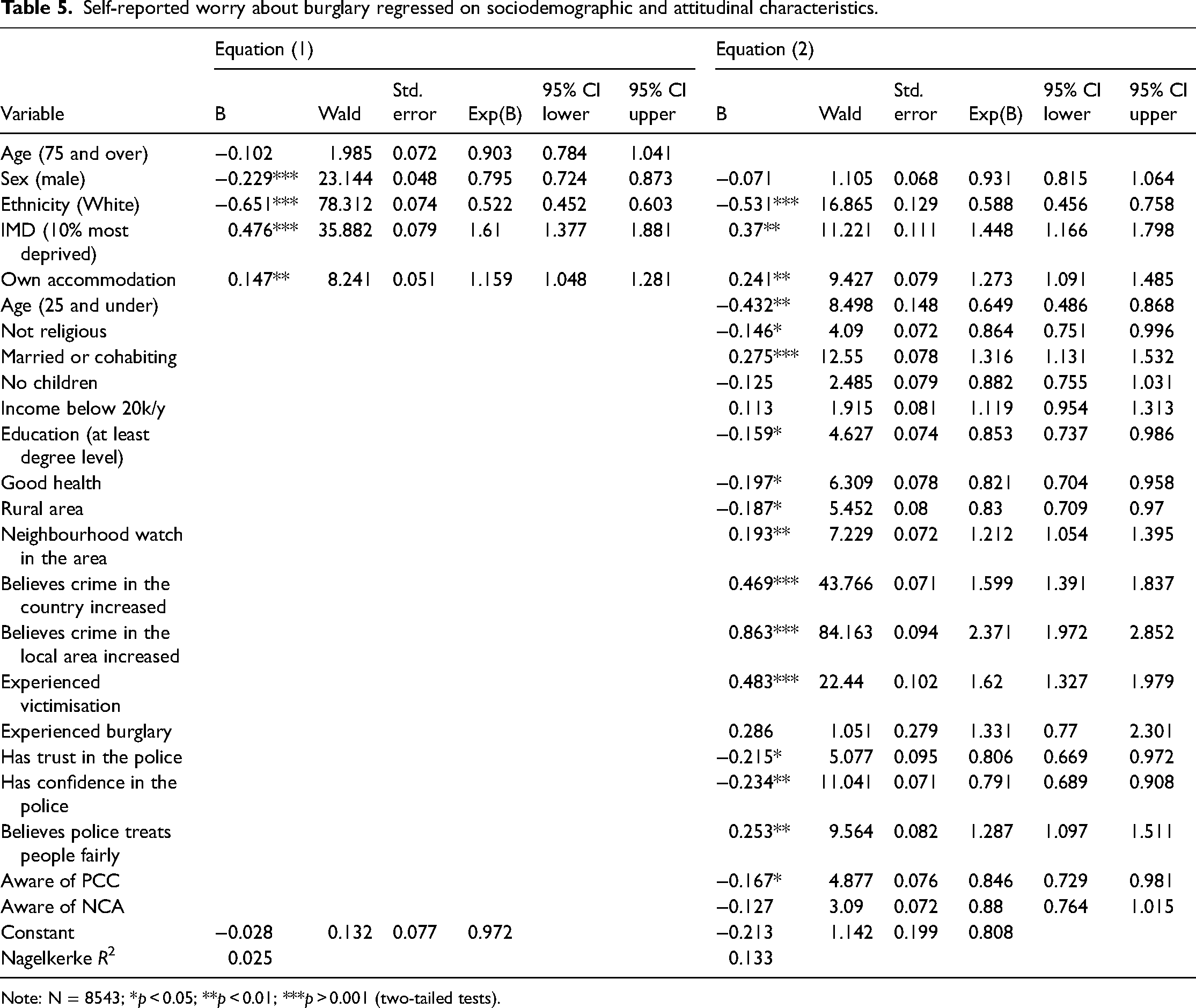
Table 5 shows the result of two logistic regression analyses. Both models were statistically significant: equation (1): χ2(5) = 146.117, p < 0.0001; equation (2): χ2(21) = 456.691, p < 0.0001. The first model shows results of worry about burglary regression on basic socioeconomic characteristics, commonly associated with fear of crime in the literature: age, sex, ethnicity, deprivation and tenure (Day, 1999; LaGrange and Ferraro, 1989; Pain, 2001; Pantazis, 2000; Schafer et al., 2006). Three of the five proposed characteristics significantly predict worry about burglary when controlled for the remaining characteristics: ethnicity, deprivation and sex. The stronger predictor of worry about burglary appears to be ethnicity; the analysis shows that White people were 0.522 times significantly less worried than people of other ethnicities (B = −0.651, p < 0.001). The 10% of most deprived respondents as per the Multiple Deprivation Index were 1.61 times more worried about burglary than those less deprived (B = 0.476, p < 0.001). Another significant predictor of worry about burglary, when controlling for age, ethnicity, deprivation and tenure, was sex. Men were about 0.795 times less worried about burglary than women (B = −0.229, p < 0.001). Interestingly, the regression revealed that older age is not a significant predictor of worry about burglary. Older age remained not significant even when included in the second regression model (p < 0.05). Although the first regression model revealed some interesting findings, it only explained about 2.5% (Nagelkerke R2) of the variance in worry about burglary and correctly classified 64.4% of cases. Therefore, the hypothesis that factors commonly associated with fear of crime are also strong predictors of fear of burglary can be rejected. The literature points out the fear of crime is a very wide expression, covers all sorts of crimes and can be interpreted in various ways (Cook and Fox, 2011; Ferraro and LaGrange, 1987). On the other hand, fear of burglary is related to a very specific type of criminal activity, suggesting that different types of crime should be researched separately for more accurate results. Such a conclusion was also reached by Cook and Fox (2011), who considered researching fear of crime in general a limitation of previous studies.
Self-reported worry about burglary regressed on sociodemographic and attitudinal characteristics.
Note: N = 8543; *p < 0.05; **p < 0.01; ***p > 0.001 (two-tailed tests).
The second regression model has been developed in an attempt to account for more variation in the worry about burglary. The new model includes additional socioeconomic characteristics as well as a set of attitudinal variables. This model explained about 13.3% (Nagelkerke R2) of the variance in worry about burglary and correctly classified 68.1% of cases. It also revealed that some of the original socioeconomic characteristics became significant or not significant after controlling for the additional variables. Sex became a non-significant predictor of worry about burglary after controlling for other socioeconomic and attitudinal characteristics (p < 0.05). This would suggest that other characteristics correlated with sex are better predictors of worry about burglary than sex alone.
The new model showed that the strongest predictors of worry about burglary are believing that crime has gone up a lot in the local area (B = 0.863 p < 0.001) and believing that crime has gone up a lot in the country as a whole (B = 0.469, p < 0.001). Those who believe that crime has gone up a lot in their local area were about 2.371 times more worried about burglary than those who believe that crime has gone up a little, not at all or has gone down. Similarly, those who believe a crime has gone up a lot in the entire country were about 1.599 times more worried about burglary. Ethnicity (B = −0.531, p < 0.001) and deprivation (B = 0.37, p < 0.01) remained strong predictors of worry about burglary with White people being 0.588 times less likely and those living in the most deprived areas 1.448 more likely to worry. Other significant predictors of worry about burglary are the experience of victimisation in the last 12 months with victims being 1.62 times more likely to worry (B = 0.483, p < 0.001), but not the experience of burglary (p < 0.05). Experience of burglary was very rare in the sample; only 1.8% of respondents reported ever being burgled. Therefore, the lack of significance may be due to the sample characteristics rather than the true lack of effect. Additionally, all of the proposed attitudinal variables significantly predict worry about burglary.
In order to strengthen the regression model, the analysis involved manipulation of the age variable to investigate whether different age comparisons would have an effect on the overall model. Interestingly, age became a significant predictor of worry about burglary when old age has been replaced with young age. Those aged 25 and younger were about 0.649 times less worried about burglary than older respondents (B = −0.432, p < 0.01). This finding suggests that while the elderly are not more afraid, people aged 25 and younger are less afraid than the rest of the population. As aforementioned, Ferraro and LaGraange's (1992) research showed opposite results with young people reporting the highest levels of fear of property crime. The two studies were carried out decades apart and in different contexts (the US vs. the UK), therefore, the findings may not be comparable. Still, it may be that there was a shift in fear of burglary between people of different ages. It would be interesting to further investigate if that is the case and if so, why.
Factor analysis
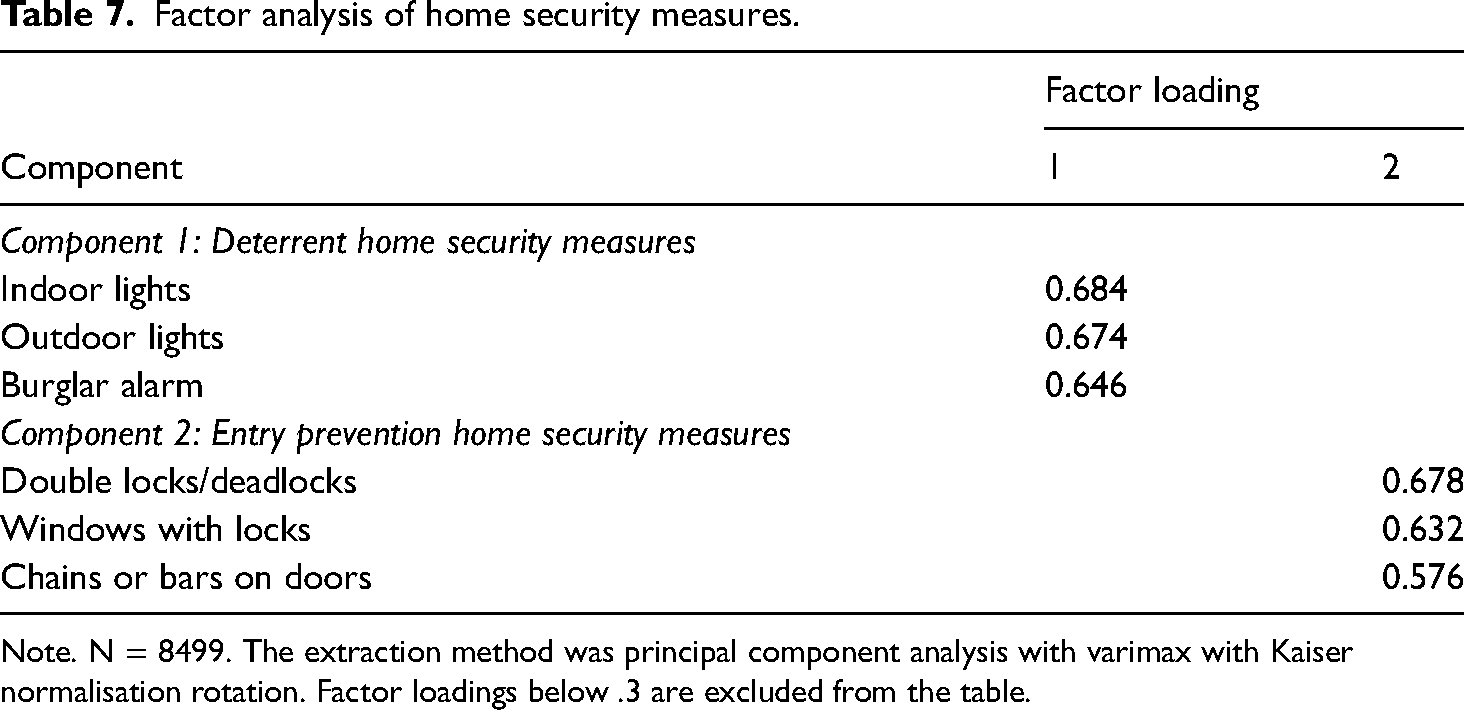
The next stage of the analysis involved factor analysis which was carried out on different types of home security measures and grouped them into two very distinctive components. Indoor lights, outdoor lights and burglar alarms were grouped and named ‘deterrence home security measures’ and double locks/deadlocks, chains and bars were grouped and named ‘entry prevention home security measures’. A similar distinction is also visible in the literature; however, this may be the first time that it has been confirmed with statistical analysis. Essentially, ‘deterrence home security measures’ are designed to increase the risk of detection for potential burglars and deter them from attempting burglary, while ‘entry prevention home security measures’ are designed to make burglary physically more difficult (for example, a burglar would have to use appropriate tools in an attempt to get past a chained door; Tilley and Sidebottom, 2017).
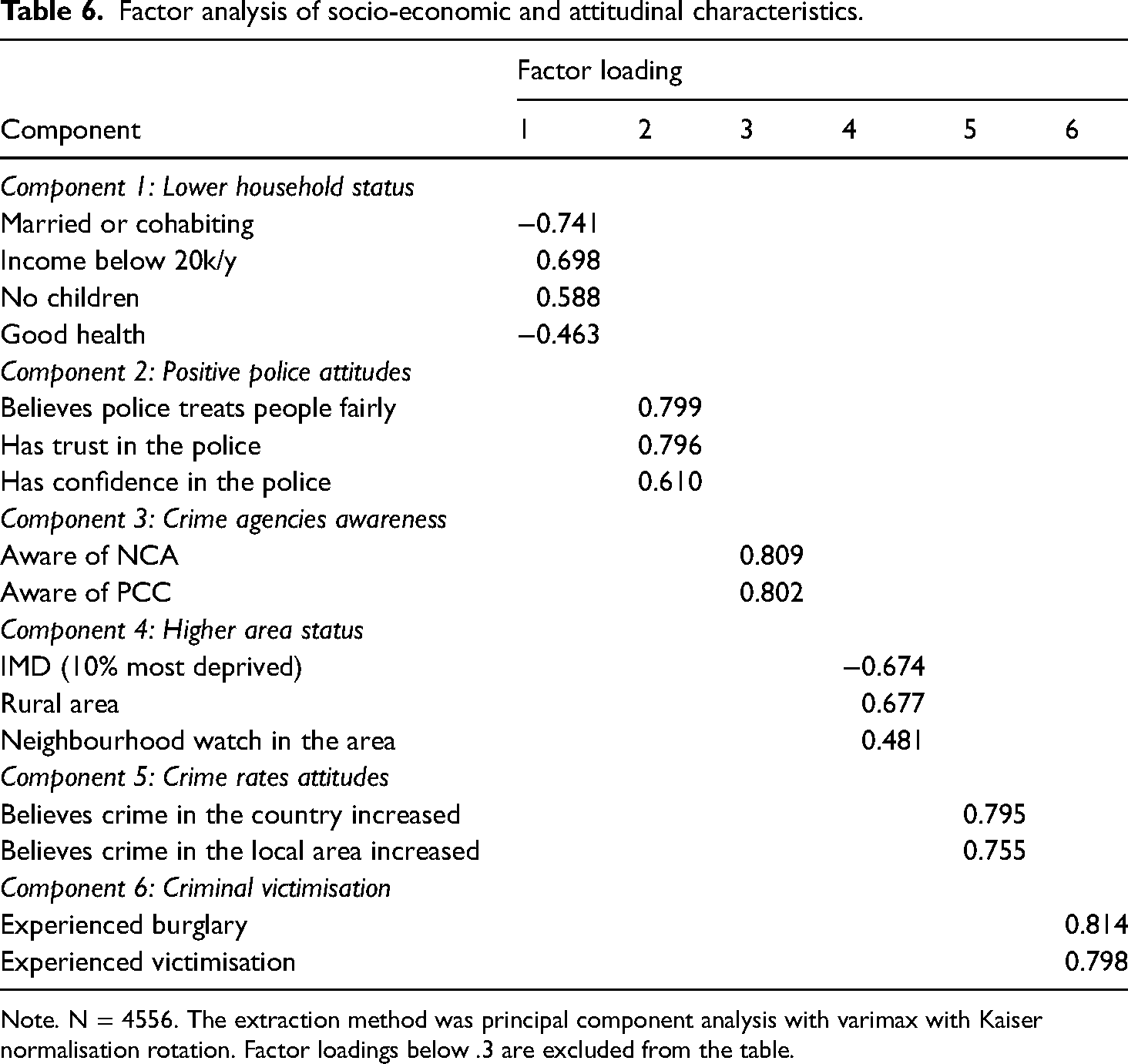
The second step of the analysis was the reduction of factors from the second regression model with factor analysis to simplify further regression models. Factor analysis transformed 17 factors into six coherent components (Table 6): lower household status, positive police attitudes, crime agencies awareness, higher area status, crime rates attitudes and criminal victimisation. The extracted six components account for 55.2% of the total variance. Factor loadings of less than .3 were not included in Table 7. All factor loadings are at least .2 higher than factor loadings in other components as recommended by the literature (Garson, 2018). One factor, tenure, was removed from factor analysis due to cross-loadings that differed by less than .2.
Factor analysis of socio-economic and attitudinal characteristics.
Note. N = 4556. The extraction method was principal component analysis with varimax with Kaiser normalisation rotation. Factor loadings below .3 are excluded from the table.
Factor analysis of home security measures.
Note. N = 8499. The extraction method was principal component analysis with varimax with Kaiser normalisation rotation. Factor loadings below .3 are excluded from the table.
The second-factor analysis has been carried out to reduce the number of home security measures variables. The analysis reduced six variables into two distinctive components:
- Deterrence home security measures - Entry prevention home security measures
As previously, factor loadings of less than .3 were not included in Table 7. All factor loadings are at least .2 higher than factor loadings in other components as recommended in the literature (Garson, 2018). No factors were excluded from the analysis due to cross-loadings. Factor analysis reduced the number of factors to two distinctive components. The two components account for 45.1% of the total variance.
Final logistic and multiple regression models
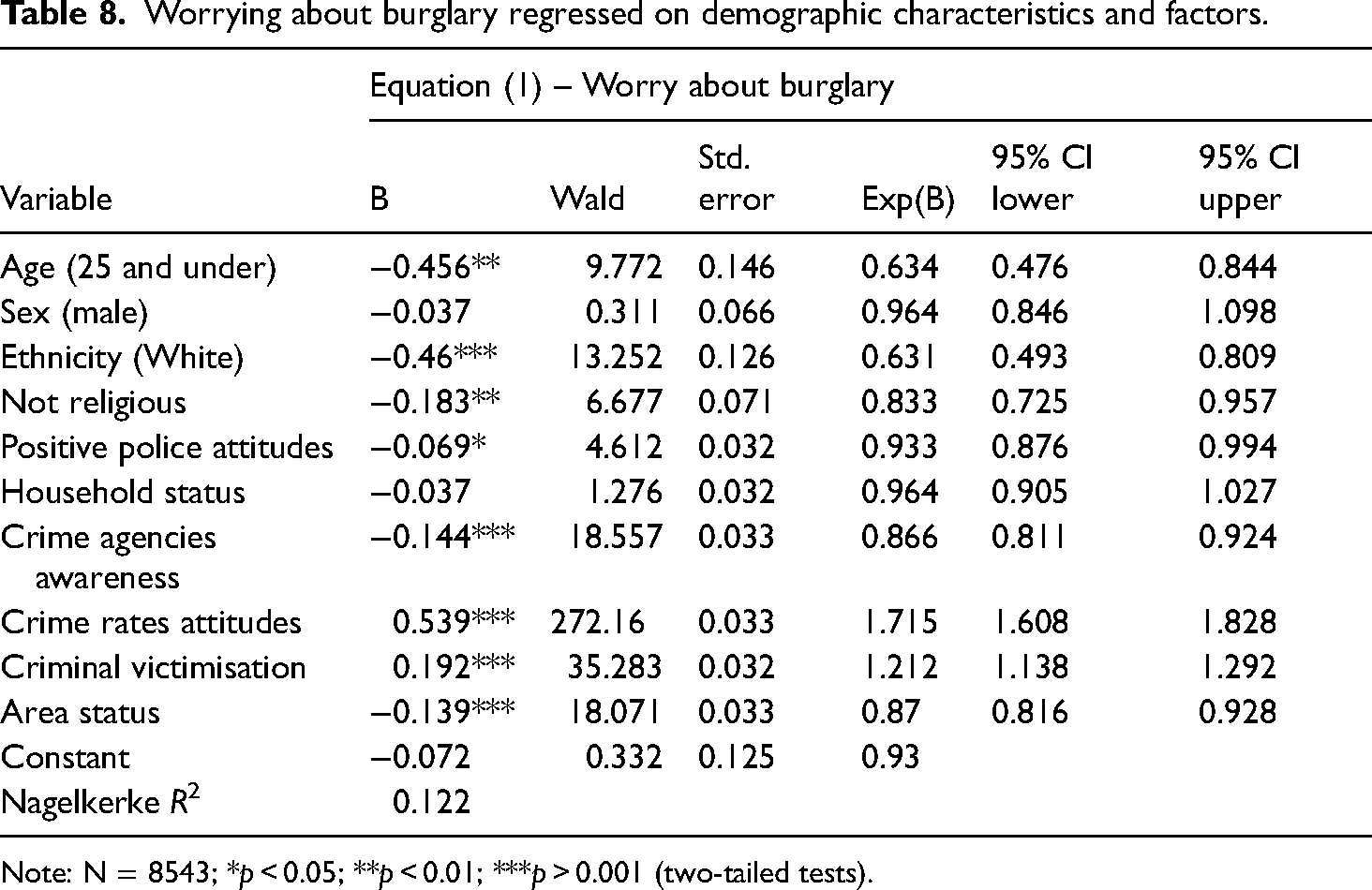
Crime rates attitudes have the highest impact on worry about a burglary. Those who believed that crime rates increased locally or nationally reported about 1.715 times higher fear of burglary than those who believed crime rates decreased or stayed the same (B = 0.539, p < 0.001). Such findings suggest that higher emphasis should be placed on informing people about the current state of criminality in England and Wales as well as in their local areas. Also, increased exposure to exaggerated crime news in the media may create a false sense of higher criminality than in reality (Jewkes, 2009). Therefore, in addition to accurate crime reporting in the media, official crime rates should be made more readily accessible to the public.
The related logistic regression analysis (Table 8) showed that people who were young (B = −0.456, p < 0.01), White (B = −0.46, p < 0.001), or non-religious (B = −0.183, p < 0.01) and those living in richer areas (B = −0.139, p < 0.001) were less afraid than people who were older, non-White, or reported being religious (respectively, they were 0.634, 0.631, 0.833 and 0.87 times less likely to be afraid). The model was statistically significant, χ2(4) = 424.396, p < 0.001 and explained 12.0% (Nagelkerke R2) of the variance in worry about burglary, correctly classifying 67.8% of cases. These findings are in line with the literature concerned with the fear of crime in general. However, as aforementioned, a previous study on property crime showed that young people are more afraid than other age groups (Ferraro and LaGrange, 1992). However, these findings may not apply to the current UK context. Furthermore, unsurprisingly, previous experience of criminal victimisation is a significant predictor of worry about burglary, with previous victims reported feeling 1.212 times more worry (B = 0.192, p < 0.001). This finding is also in line with the fear of crime literature (Braungart et al., 1980; Cook and Fox, 2011).
Worrying about burglary regressed on demographic characteristics and factors.
Note: N = 8543; *p < 0.05; **p < 0.01; ***p > 0.001 (two-tailed tests).
Attitudinal variables associated with lower worry about burglary are positive police attitudes (B = −0.069, p < 0.05) and awareness of crime agencies in the UK (B = −0.144, p < 0.001). Those reporting positive police attitudes reported 0.933 times less worry, similar to those aware of crime agencies who reported 0.866 times less worry. This suggests that people who have confidence and trust in the police believe that the police treat people fairly and are less worried about burglary. Similarly, those who were aware of the National Crime Agency and Police and Crime Commissioner before taking part in the Crime Survey for England and Wales reported lower levels of worry.
Looking at the impacts of worry about burglary on home security measures overall (Table 9), the model revealed that worry about burglary is a significant predictor of deterrence but not entry prevention security measures. Those more worried about burglary are less likely to have installed deterrent home security measures (Beta = −0.15, p < 0.001). There is no significant relationship between worry about burglary and entry prevention home security measures. This suggests that there is a clear distinction between these two types of home security measures and the factors contributing to their installation at private properties.
Home security measures regressed on demographic characteristics, factors and worry about burglary.
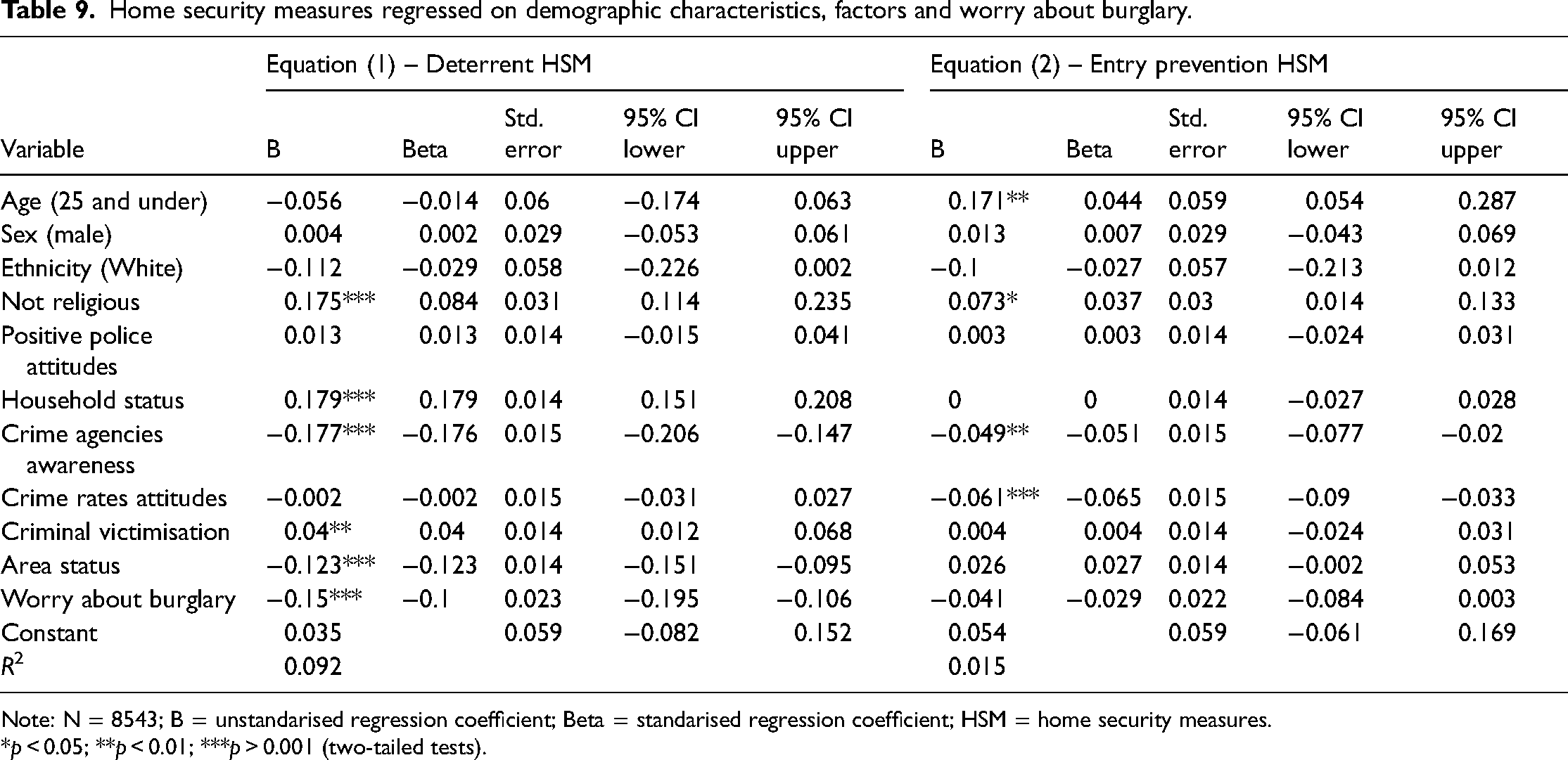
Note: N = 8543; B = unstandarised regression coefficient; Beta = standarised regression coefficient; HSM = home security measures.
*p < 0.05; **p < 0.01; ***p > 0.001 (two-tailed tests).
The effects of attitudinal and personal characteristics on home security measures also vary between the two types of home security measures. The model showed that those of lower household status are more likely to have installed deterrence home security measures (Beta = −0.179, p < 0.001), while those living in richer areas (Beta = −0.123, p < 0.001) are aware of crime agencies (Beta = −0.176, p < 0.001), more worried about burglary (Beta = −0.1, p < 0.001), and are less likely to have deterrence home security measures installed.
This is an interesting finding as the literature suggests that those in worse socioeconomic circumstances tend to report higher levels of fear of crime and are less likely to be able to afford home security measures (Hope, 2001). The current analysis shows, however, that those living in poorer areas, even though they report higher levels of worry about burglary in line with the literature, are less likely to install deterrence home security measures.
To address the higher likelihood of deterrence home security measures being installed in homes of people of lower socioeconomic status and living in poorer areas, it can be assumed that deterrence home security measures, such as indoor or outdoor lights, are cheaper than entry prevention home security measures such as window bars or double locks (Tilley and Sidebottom, 2017). Therefore, the analysis would suggest that people invest in home security measures they can afford. This conclusion, however, has to be approached with caution as the model did not provide evidence that people of higher socioeconomic status or living in richer areas are more likely to have entry prevention security measures installed than people of lower socioeconomic status. Perhaps those living in areas of lower status find it more pressing to protect their homes from the heightened criminal activity in their areas than those living in richer, safer neighbourhoods. This would explain the lack of significant difference between richer and poorer respondents in their possession of more expensive entry prevention home security measures. Poorer respondents, living in less safe neighbourhoods invest in cheaper deterrence home security measures as they feel the need to protect their homes due to the higher risk of burglary in their area and select home security measures they can afford. Richer respondents, on the other hand, living in safer neighbourhoods don’t feel the need to invest in home security measures as they are not afraid of having their homes broken into. Therefore, the analysis revealed no difference between the people of different socioeconomic statuses in their entry prevention home security measures.
This finding points to a wider issue of socioeconomic inequality in the UK and is especially important in light of the expanding responsibilisation. As discussed in the literature review, there is a higher pressure on individuals to protect themselves from crime (Rose, 2000). Given that the poor may not be able to afford appropriate protection and the state's approach is to support individuals in managing crime risks by, for example, providing them with advice rather than actively and directly tackling the issue places the poor at a serious disadvantage, in real risk and exposes them to higher levels of fear (Atkinson and Blandy, 2016; Rose, 2000).
In regards to the entry prevention home security measures, the regression model revealed that being young (Beta = 0.044, p < 0.01) and not religious (Beta = 0.037, p < 0.05) increase the likelihood of having this type of security measure installed; while, being aware of crime agencies (Beta = −0.051, p < 0.01) and believing that crime rates increase locally or nationally (Beta = −0.065, p < 0.001) decrease the likelihood of entry prevention home security measures being currently installed. Worrying about burglary has no significant effect on this type of home security measure.
Home security measures and socioeconomic status
Looking at the results it can be concluded that socioeconomic status is a significant factor when investigating home security measures. Therefore, a follow-up analysis has been conducted to examine the effects of raw socioeconomic variables on deterrence and entry prevention home security measures (Table 10).
Effects of socioeconomic status on home security measures.
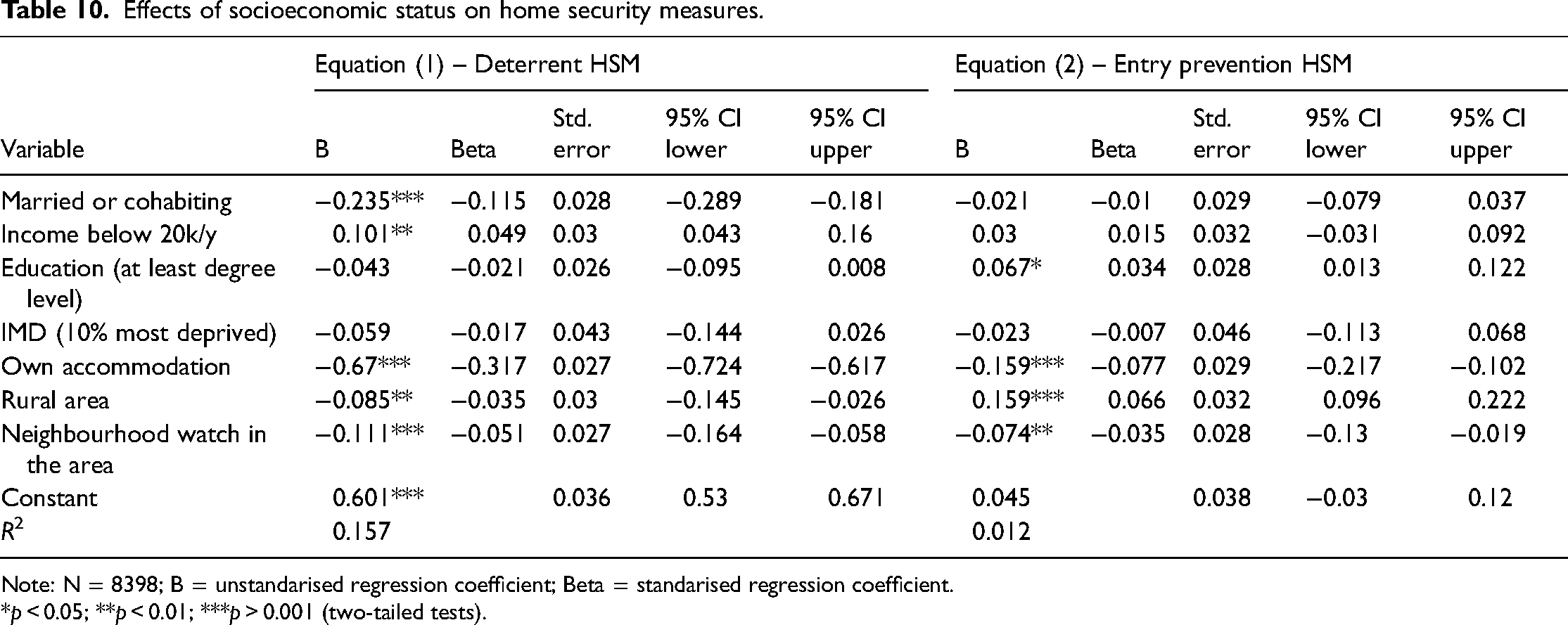
Note: N = 8398; B = unstandarised regression coefficient; Beta = standarised regression coefficient.
*p < 0.05; **p < 0.01; ***p > 0.001 (two-tailed tests).
The first regression explained 15.7% of the variance in deterrence home security measures using only common socioeconomic variables. This suggests that socioeconomic status is an important factor contributing to having deterrence home security measures installed. These results imply that people with lower income (income below £20,000 per year) are more likely to have deterrence home security measures installed (Beta = 0.049, p < 0.001); while those married or cohabiting (more likely to have higher combined income) (Beta = −0.115, p < 0.001), homeowners (Beta = −0.317, p < 0.001), those living in rural areas (Beta = −0.035, p < 0.01) and in areas with neighbourhood watch (Beta = −0.051, p < 0.001) are less likely to have deterrence home security measures installed. These are indicators of higher socioeconomic status. Notably, being a homeowner has the highest impact on deterrence home security measures after controlling for all the other socioeconomic variables. The model also shows that homeowners are much less likely than those renting their accommodation to have home security measures installed. This finding is also true for entry prevention home security measures (Beta = 0.077, p < 0.001) and it comes in opposition to Atkinson and Blandy's (2016) hypothesis that suggested that homeowners are more likely to have home security measures installed as they have more control over their property and potentially more wealth. Further investigation into this phenomenon would be needed to understand the reasons behind such a state of things.
Interestingly, when it comes to entry prevention home security measures, income or being married or cohabiting do not have a significant impact (p > 0.05). Other important factors impacting on both security measures are neighbourhood watch in the area and whether the area is rural or not. Similarly to deterrence home security measures, neighbourhood watch reduces the likelihood of any home security measures being installed (Beta = −0.035, p < 0.01). Those living in rural areas are much more likely than those living in urban areas to have this type of home security measure installed (Beta = 0.66, p < 0.001). The socioeconomic variables account for only 1.2% of the variance in having entry prevention home security measures installed.
Discussion
This study addresses the issue of fear of burglary focusing in particular on home security measures. While this topic has been approached in other contexts referring to countries such as Mexico, Malaysia and Canada (Rollwagen, 2016; Sakip et al., 2018; Vilalta, 2012) results and findings are rarely applicable to the UK context.
Paying particular attention to the UK context, using the strategically designed CSEW, this study revealed that fear of burglary is a very complex phenomenon and is impacted by a variety of factors, many of which are yet to be uncovered. Furthermore, the analysis showed that one of the key factors associated with fear of burglary and installed home security measures is socioeconomic status. It appears that those of lower socioeconomic status are more worried about burglary and they are more likely to only install more affordable deterrence home security measures. The relationship between fear of burglary, home security measures and socioeconomic status is very complex and would benefit from further investigation. Furthermore, it looks like not only wealth but also neighbourhood characteristics may be an important factor impacting worry about burglary as well as home security measures installation. For example, neighbourhood watch in the area has an impact on installed home security measures.
As with every study, a set of limitations needs to be taken into account. Firstly, since it was a secondary analysis study, the survey was not specifically designed to answer this study's research questions; while the data was sufficient to address the research questions, an original study could include additional questions around fear of burglary as well as more attitudinal questions that could contribute to the predictive models. The regression models in this study explained approximately 10% of the variance in fear of burglary indicating that there is further room for improving the models. Also, the survey was delivered in modules and not every respondent was asked to complete every module leading to a large amount of potentially useful data not being collected. This could have been avoided in the original, primary research.
Even with the listed limitations, this study revealed some interesting and important findings. It contributed to existing criminological knowledge on the topic in the UK context and it can be used as a building block for further research. This study raised several interesting questions that would enhance our understanding on the topic through further investigation.
Conclusion
The aim of this study was to investigate the relationship between various factors and fear of burglary, the impact of fear of burglary on home security measures and the influence of factors associated with fear of burglary on home security measures. This is one of the very few studies addressing this issue and one of the first in the UK context. The study used a large, high-quality dataset from the Crime Survey for England and Wales 2017/18 and a number of advanced statistical analyses including regression modelling and factor analysis.
The findings revealed that fear of burglary may be inherently different from fear of crime in general as factors commonly associated with fear of crime explained very little variation in fear of burglary. A new, expanded regression model proved to be better suited. This article showed that age, ethnicity, index of multiple deprivations, tenure, religion, marital status, having children, education, neighbourhood watch operating in the local area, crime rates attitudes, victimisation, attitudes towards police and awareness of crime agencies are all important factors impacting on fear of burglary. However, these still explain only 13.3% of differences in the population's fear of burglary. A much more advanced model would be needed to better understand the fear of burglary.
This article also showed that fear of burglary has a statistically significant impact on deterrence home security measures but not on entry prevention home security measures. This suggests that these two types of home security measures are different and should be researched in separation to fully appraise the complexities and caveats of this topic.
Among other findings, the use of further regression models revealed an association between socioeconomic status, fear of burglary and home security measures. It appears that people of lower socioeconomic status are more afraid and are more likely to invest in cheaper home security measures options; while people of higher socioeconomic status are less afraid and are less likely to invest in home security measures in general. This may be due to poorer areas being perceived as more dangerous in comparison to richer areas. It appears that less advantaged people feel a higher need to secure their homes, but can only afford cheaper deterrence home security measures. This finding highlights the wide range of inequality in society. Given the responsibilisation approach and the emphasis on individual responsibility for crime reduction and ensuring one's security, perhaps future interventions related to burglary prevention should focus on providing more affordable but effective home security measure options to the more disadvantaged. Requiring people to take care of their own safety but dismissing the wide-ranging socioeconomic inequalities only places poor people at further disadvantage.
Further to this, this research raised several potential future research topics, including expanding understanding of the fear of burglary, differences between various types of home security measures or further investigating the relationship between socioeconomic status, fear of burglary and home security measures.
This article added to the existing evidence on fear of crime and contributed to a better understanding of complex relationships between various personal and attitudinal factors, fear of burglary and home security measures while focusing on the UK context through the use of relatively recent data.
