




Abstract
Inspection and monitoring bodies have an important role in the protection of prisoners’ rights. Although these bodies are seen as widely beneficial, there is limited research examining their operations in practice. This study addresses this gap in the existing literature by identifying unique profiles of prisoners based on their familiarity with prison oversight bodies. In addition, the relationship between profiles and key factors (personal characteristics, sentence-related variables and those related to life in prison) was examined using multinomial regression. Participants were 508 males randomly selected from three prisons in Ireland. Data were collected between November 2018 and February 2019, using self-administered surveys. Latent class analysis revealed four subgroups of prisoners characterized by distinct patterns of awareness and contact with prison oversight bodies: (1) Low familiarity (44.1 percent); (2) High awareness with low contact (26.4 percent); (3) High familiarity with the Visiting Committees but low with other oversight bodies (14.2 percent); and (4) High familiarity (15.4 percent). Notably, the largest group was the low familiarity group, and few prisoners belonged to the high familiarity group. Nationality, sentence length, confidence in staff and complaint usage were linked to class membership. The results of this study point to the importance of increasing awareness of inspection and monitoring bodies among prisoners in general, and among certain groups in particular.
The retention and protection of rights in custody sends an important message of inclusion to those in prison (Behan, 2016). Prison inspection and monitoring are resources that seek to prevent human rights violations in places where rights may be vulnerable. Although the activities of inspection and monitoring bodies are widely seen as beneficial, there is limited research examining how prisoners, the ultimate beneficiaries of their work, experience their interventions. This research addresses this gap in the literature by providing the first assessment of prisoners’ familiarity with prison inspection and monitoring bodies.
Protecting human rights in prisons: Inspection and monitoring bodies and prisoner familiarity
Prisons are designed to remove people from the public gaze; they are places where residents are radically dependent on staff for the fulfilment of their needs (Beijersbergen et al., 2014; Liebling, 2011) and where protest against their treatment can be risky (Behan, 2016; Carrabine, 2005). Prisons are places of ‘pains’ (Sykes, 1958), some of which are inherent to the experience of the deprivation of liberty, and others that are violations of human rights. Some groups within prisons may be especially vulnerable to rights violations, including foreign prisoners (Van Kalmthout et al., 2007; Warr, 2016) and those who do not speak the dominant language (Boone and Kox, 2014), older prisoners (Caravaca Sánchez et al., 2020), prisoners with disabilities (Baldry et al., 2013) and those in segregation (Dhami et al., 2007; Gullone et al., 2000). There are multiple examples, both in Europe and globally, of treatment that falls below the minimum standards required under domestic and international law (Cliquennois and Snacken, 2018; Daems and Robert, 2017; Van Zyl Smit and Snacken, 2009). Although the threats to rights in prisons are well known, few studies have examined how prisoners perceive mechanisms to protect rights (Piacentini and Katz, 2017). Moreover, there is some scepticism about the ability of human rights frameworks to create humane and dignified environments (Armstrong, 2018).
Recognising the threats to human rights in prisons, international law has identified the need for independent bodies to visit places where people are deprived of their liberty on a regular basis, with a view to preventing ill-treatment. The United Nations Standard Minimum Rules for the Treatment of Prisoners were first concluded in 1955 and contained a requirement for prison inspection and monitoring, which was substantially strengthened in 2015 when they became known as the Mandela Rules (UN General Assembly, 2016). The Council of Europe’s European Prison Rules (Council of Europe, 2020) also require Member States to establish internal or governmental inspection bodies for prisons and external or independent forms of prison monitoring. The United Nations’ Optional Protocol to the Convention Against Torture and Other Cruel, Inhuman or Degrading Treatment or Punishment (OPCAT) requires States Parties to create ‘national preventive mechanisms’ (NPMs), which are bodies with the authority and powers to visit places where people are deprived of their liberty (United Nations, 2002: Articles 3 and 4). Their remit is to seek to prevent torture and inhuman and degrading treatment or punishment through visits (Murray et al., 2011; Nowak and McArthur, 2008). Within the European Union, OPCAT’s coverage is quite extensive, with 24 out of 27 Member States having designated an NPM (Aizpurua and Rogan, 2020). Indeed, Europe is seen as something of a pioneer in promoting the independent oversight of prisons, having developed the first international prison monitoring body, the European Committee for the Prevention of Torture and Inhuman or Degrading Treatment (CPT), in 1987 (Daems and Robert, 2017).
Under international and domestic law, prison inspection and monitoring bodies are important safeguards against breaches of human rights in places far from public view. Although these bodies have a central place in human rights frameworks, research into how they are used and understood by prisoners remains very limited (Padfield, 2018). The scarce literature that exists raises questions about prisoners’ perceptions of oversight bodies. For example, prisoners in Martin and Godfrey’s (1994) study of the system in England and Wales felt that the Boards of Visitors 1 were invisible, irrelevant, aligned with the prison management, and ineffective.
Prison inspection and monitoring bodies cannot be effective if those who are key sources of information for them about prison conditions and treatment in prisons are unable to access these bodies because they simply do not know they exist or do not know how to get in contact with them. More broadly, the credibility of bodies that are tasked with supporting the prevention of human rights violations in prisons rests on their ability to inspire confidence in those whose rights are most vulnerable: the prisoners. If prisoners, or particular cohorts of prisoners, are unfamiliar with prison inspection and monitoring bodies, the credibility of such bodies may be undermined. As discussed by Padfield (2018) in the related area of complaints, the Prisons and Probation Ombudsman for England and Wales receives a significant number of complaints that have not been through the internal prison procedure owing either to a lack of knowledge about the requirement or to a lack of trust in the system. This results in these complaints being automatically dismissed on procedural grounds. Such issues risk the development of mistrust in external bodies.
Information in prisons is mediated to a great degree by prison staff (Boin and Rattray, 2004), with vital details of how to access services sometimes used as a mechanism of control (Shuker and Jones, 2007). Inspection and monitoring bodies are tasked with supporting the protection of human rights in prison, and determining whether prisoners are in fact aware of them is of essence. International human rights bodies have emphasised the need for inspection and monitoring bodies to make themselves visible within prisons (CPT, 2010, 2016, 2017) and to ensure that they have direct contact with all prisoners, not just those who have directly expressed a wish to talk with them (CPT, 2015, 2016). The United Nations’ Subcommittee on Prevention of Torture (SPT) also refers to the need to raise awareness of the work and mandate of NPMs among those in custody (UN SPT, 2016).
We know that prisoners from backgrounds of particular vulnerability may experience differential, and less favourable, access to services while imprisoned (Crewe and Bennett, 2012; Van Kalmthout et al., 2007). To our knowledge, there are no studies examining whether a prisoner’s background also affects their awareness of external prison oversight bodies. This study addresses this gap in the literature by identifying unique profiles of prisoners based on their familiarity with prison inspection and monitoring bodies. To do this, we explore the case of Ireland.
Prison inspection and monitoring in Ireland
Domestic prison inspection bodies have great variety across countries in terms of their mandates and powers (Vagg, 1994). Neither the Mandela Rules, nor the European Prison Rules, nor OPCAT specify a particular model that states must follow. Some countries use offices of the Ombudsman, others specific prison inspectorates, and others use a variety of bodies (Aizpurua and Rogan, 2020). Ireland’s approach is to use the prison inspectorate approach through the Office of the Inspector of Prisons (OIP), combined with a system of Visiting Committees (VCs).
Ireland established an Inspector of Prisons on a statutory basis in 2007, with the powers of the Inspector set out in the Prisons Act 2007 (Government of Ireland, 2007a). The OIP is responsible for carrying out inspections in all prisons in Ireland, as well as for investigating deaths in custody. The OIP has the power to enter any prison or part of the prison at any time, to request or obtain any records or documents from the Governor of the prison, and to bring any issue of concern to the attention of the Governor, the Director General of the Prison Service or the Minister of Justice. The office is not responsible for individual complaints and instead has a general oversight role concerning how complaints are managed by the prison system. The OIP produces annual reports on the activities carried out each year, as well as other types of reports (for example, prison specific reports or thematic reports).
VCs consist of 6 to 12 people appointed to each prison by the Minister for Justice under the Prisons (Visiting Committees) Act, 1925 (Government of Ireland, 1925). VCs are to visit the prison to which they are attached at frequent intervals, hear complaints from prisoners who wish to bring complaints to their attention, and report to the Minister on matters of concern. If a prisoner wishes to meet the VC, the Governor or director of the prison must bring that request to the VC ‘without undue delay’ (Prison Rules 2007, Rule 56 – Government of Ireland, 2007b). Members receive a fee for their work, but their role on VCs is not a full-time position. They have no powers under law to seek access to documents or to carry out formal investigations. VCs do not have the power to require action on the part of the authorities. Their role is a more informal one, seeking to resolve problems on behalf of prisoners through interceding with prison management, and as a way of providing some public oversight of prison. VCs may enter the prison they are responsible for at any time and have free access to each part of the prison. The VCs produce annual reports on their activities for the year. Under the Prison Rules (2007) prisoners should receive information on their rights and entitlements while in prison, which includes their ability to access the VCs and the OIP.
In addition to the national bodies, Ireland is a member of the Council of Europe and party to the European Convention for the Prevention of Torture, Inhuman or Degrading Treatment or Punishment under which the CPT operates. The CPT has visited Ireland on seven occasions, most recently in September 2019. Ireland has signed but not ratified OPCAT, despite repeated assurances that it will do so. Although Ireland is an exception compared with its neighbours in the European Union in this regard, we believe that our findings are of broader interest given that the Inspector of Prisons does have comparable powers to those found under OPCAT, as well as offering the potential for future comparative studies.
Current study
Prison inspection and monitoring are recommended under international human rights law to protect people in prison from human rights violations. However, remarkably little is known about how prisoners interact with them in practice. To better understand prisoners’ familiarity with prison inspection and monitoring bodies, we aim to answer the following research questions:
What, if any, are the classes of prisoners according to their familiarity with prison inspection and monitoring bodies?
How do these classes of prisoners differ in their demographic characteristics and other variables related to prison life?
In this study, familiarity was operationalised as (a) knowing about, (b) having met and/or (c) having contacted the bodies, and awareness is defined as knowing that the bodies exist. Because of the paucity of research in this area, we did not formulate specific hypotheses in relation to the research questions. However, we expected that different classes would emerge and that they would be unique in their composition. The identification of classes may provide critical information on subgroups of vulnerable prisoners to target for prevention and awareness-raising efforts by both correctional authorities and prison oversight bodies, offering valuable information for policy and practice.
Methods
Participants and procedure
Participants were 508 males, randomly selected from three prisons considered to be medium security in Ireland. 2 To be eligible for the study, prisoners had to meet the following criteria: (1) be serving a sentence and being imprisoned for more than one month, and (2) have sufficient competence in English, the language of the questionnaire. Data were collected between 14 November 2018 and 18 February 2019, using self-administered paper-and-pencil surveys. Participants were provided with a three-page questionnaire, an information sheet, a consent form and a sealable envelope. Materials were distributed by the first author to the prisoners’ cells and collected on the same day. For those respondents identified as having reading difficulties (n = 4), the researcher read the questions to them and recorded their responses; no incentives were offered for participation. To increase awareness of the study, posters were placed throughout the prisons advertising the study prior to and during data collection. Of the 616 prisoners invited to participate, 517 accepted, yielding an overall response rate of 83.9 percent (response rates across these facilities ranged from 79.5 percent to 88.0 percent). After excluding nine participants with missing information on most variables, the final analytic sample comprised 508 prisoners. All study procedures received ethical approval and relevant permissions from the home university and the Irish Prison Service.
Instrument and measures
The questionnaire was designed by the authors and pre-tested using a sequential design, combining three methods: Question Understanding AID software (Graesser et al., 2006), expert reviews (two national and two international experts), and respondent debriefing (four former and four current prisoners) between September and November 2018. The questionnaire included questions about staff–prisoner relationships, complaints, inspection, litigation and background information. The variables used in this study to define latent classes examine familiarity with prison oversight bodies, and covariates in later analyses include prison life indicators, sentence-related variables and background information. The exact wording for all questions and response options is provided in Table 4 in the Appendix.
Latent class indicators
Familiarity with prison oversight bodies was measured using nine dichotomous questions (0 = no, 1 = yes) that asked respondents whether or not they had heard, personally contacted and met two domestic and one European oversight bodies (the Inspector of Prisons, Visiting Committees and the CPT).
Variables related to prison life
To explore whether class membership was linked to prison life, four variables were included in the analyses: sense of safety, respect for rights, confidence in prison staff and complaint usage. Sense of safety was measured using a three-item scale on respondents’ perceived safety in prison (for example, ‘I feel safe from other prisoners in this prison’). These items were measured on five-point scales, ranging from 1 (strongly disagree) to 5 (strongly agree). They were combined into a single scale, in which higher scores indicated greater perceived safety. These three items loaded on a single factor, with loadings ranging from 0.58 to 0.93 (α = .82). Respect for rights was measured using three questions that asked respondents the extent to which rights are respected in prison, they feel informed about their rights and they are able to assert them (α = .82). These items were measured on scales ranging from 1 (strongly disagree) to 5 (strongly agree). An exploratory factor analysis revealed that all three items loaded on a single factor (factor loadings > .65), with the resulting scale having good internal consistency (α = .82). Responses were averaged to create this scale, on which higher scores indicated a greater perceived respect for rights. Confidence in prison staff was measured by asking respondents whether they agreed or disagreed with eight statements (for example, ‘If I have an issue, I can talk to staff about it’). Responses to these items were averaged to produce a scale, on which higher scores indicated greater confidence in prison staff (factor loadings > .55; α = .92). Usage of the complaint system was measured through a binary question that asked respondents whether they had used the complaint system during their current sentence.
Background information
Demographic information included age (in years), nationality (Irish, other) and education level (primary education or less, lower secondary education, upper secondary education, and college). Three sentence-related variables were incorporated into the regression models: prison where respondents were housed, sentence length in ranges (from less than 1 year to 10 years or more), and protection status (yes, no). ‘Protection’ is used in Irish prisons to describe prisoners who, requested by them or imposed by the authorities, are separated from the general population to protect their safety or the safety of others.
Analytic approach
Descriptive statistics were computed for all study variables. Then latent class analysis (LCA) was used to identify groups of respondents based on their familiarity with prison oversight bodies. LCA is a person-centred approach designed to identify latent subgroups (classes) of individuals based on a set of variables. The LCA was performed using nine variables measuring awareness, personal approach and contact with three prison oversight bodies. Models with an increasing number of categories were estimated (1–9 classes) and multiple indices were used to determine the optimal number of classes. These included: log-likelihood (LL), Bayesian information criterion (BIC), Akaike’s information criterion (AIC), entropy and class size. In interpreting these indices, lower values of BIC, AIC and entropy indicate a superior fit of the model. To avoid selecting an over-extracted and potentially unstable class solution, models containing classes with less than 5 percent of the sample were excluded (Nylund-Gibson and Choi, 2018). The final model was selected based on the model fit, as well as the meaningfulness of the response patterns. The R package ‘PolCa’ was used to perform the LCA (Linzer and Lewis, 2011).
Once classes were determined and individuals were assigned to them, differences among classes in demographic and prison life indicators were explored. Multinomial logistic regression was used to assess the association between class membership, demographic variables and life in prison indicators. The examination of variance inflation factors suggested no multicollinearity problems in the model (VIFs < 2.5). The percentage of missing data across the variables ranged between 0 percent and 18.3 percent. In total, 162 out of 508 records were incomplete. Multiple Imputation was used to create and analyse 20 multiply imputed datasets. Incomplete variables were imputed under fully conditional specifications using Stata 14. The parameters of substantive interest were estimated in each imputed dataset separately and combined using Rubin’s rules (Van Buuren, 2018).
Results
Descriptive statistics
Table 1 presents the proportion of prisoners who had heard of, personally contacted or met each of the three oversight bodies, alongside their background information. The body that was best known by prisoners was the Visiting Committee, with nearly 7 in 10 prisoners (69.1 percent) indicating that they have heard of it. Nearly half of the prisoners reported being aware of the Inspector of Prison (49.0 percent), but only one in four (25.0 percent) indicated having heard of the CPT. Only a minority of the respondents had contacted or personally met these oversight bodies. Once again, the percentages were highest for the VCs, followed by the OIP and the CPT. In terms of demographics, the average respondent was 36 years old (M = 36.40, SD = 11.92), was of Irish nationality (91.5 percent) and had lower secondary education or below (64.8 percent). Regarding sentence-related characteristics, nearly half of the prisoners were serving sentences of 1–5 years (47.9 percent) and slightly over one in three residents were on protection (35.9 percent). The sample is therefore similar to the male prison population in Ireland in terms of nationality, age and sentence length (Irish Prison Service, 2018a) (a table comparing these three characteristics is available in Table 5 in the Appendix). 3
Description of the study sample, including familiarity with oversight bodies, demographic characteristics and sentence-related variables.
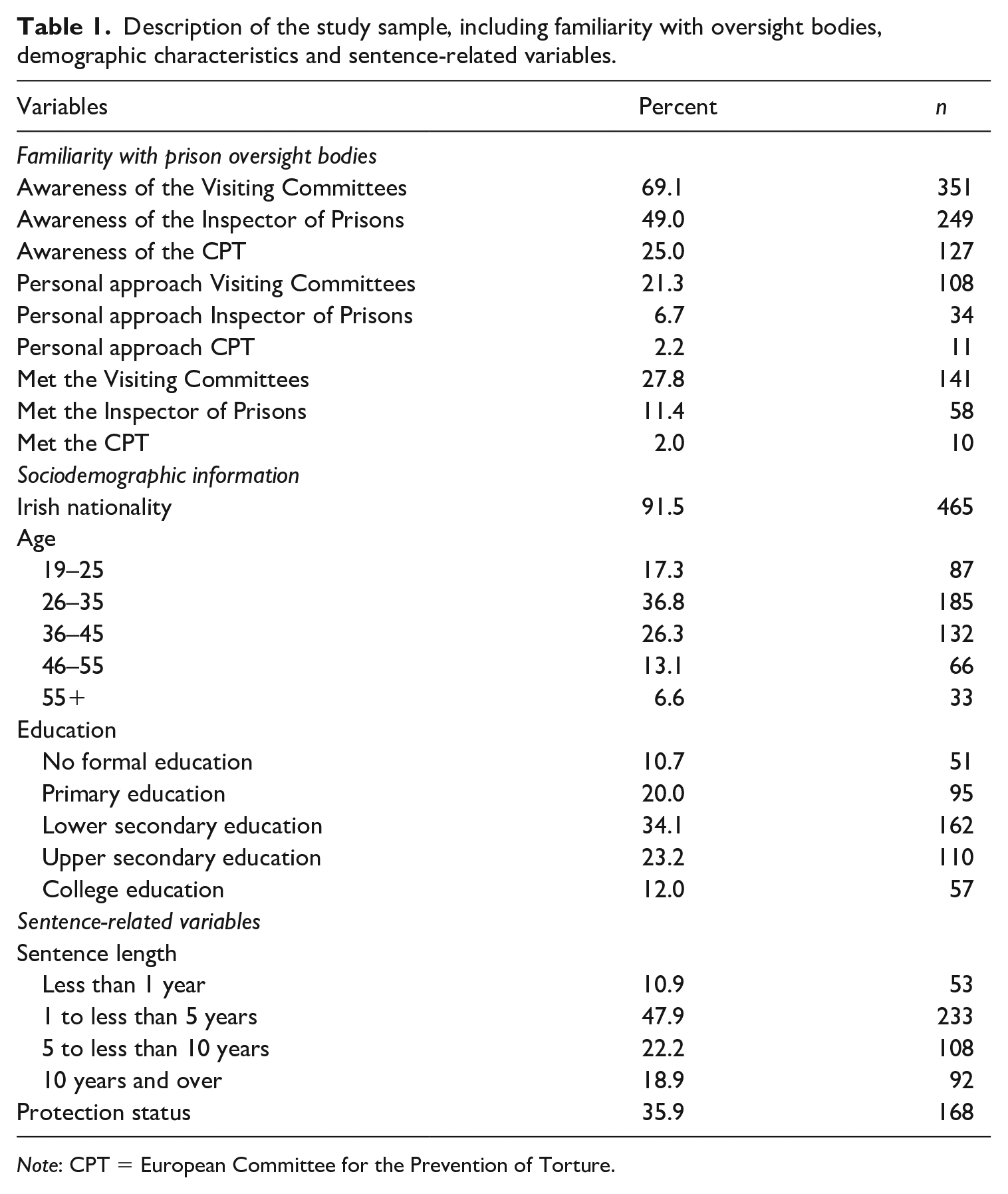
Note: CPT = European Committee for the Prevention of Torture.
Latent class profiles
Model fit indices for the nine solutions are presented in Table 2. The four-class and five-class models fitted the data best, exhibiting the lowest – almost identical – BIC values. 4 Because one of the classes in the five-class solution comprised less than 5 percent of the sample (n = 22), the model with four classes was selected; it provided good-sized distributions of prisoners among groups and resulted in interpretable classes. In addition, the reduction on the BIC, AIC and entropy values associated with the solutions with a higher number of classes was considerably smaller than that of previous classes.
Model fit statistics from one- through nine-group latent class analysis solutions.
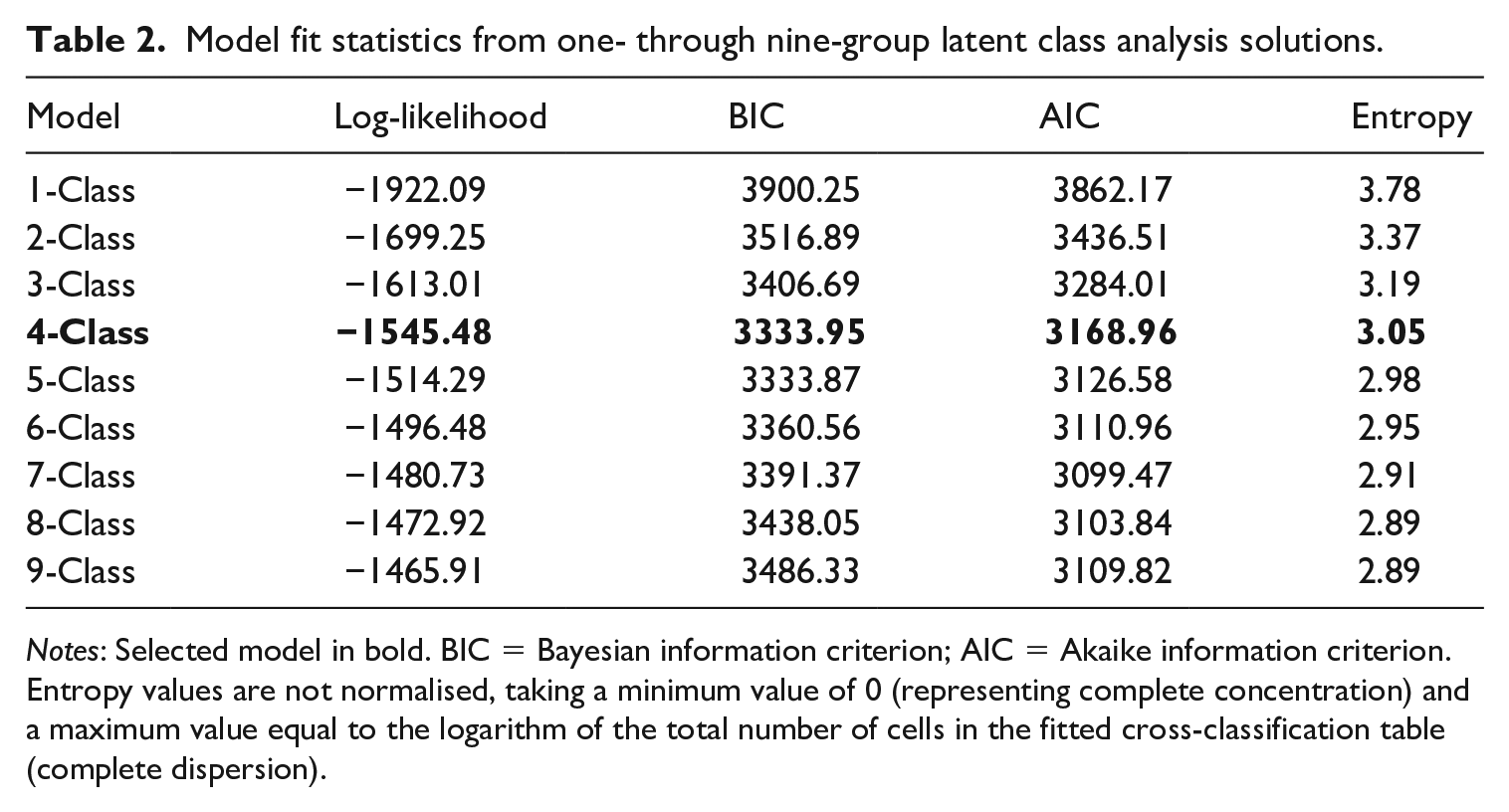
Notes: Selected model in bold. BIC = Bayesian information criterion; AIC = Akaike information criterion. Entropy values are not normalised, taking a minimum value of 0 (representing complete concentration) and a maximum value equal to the logarithm of the total number of cells in the fitted cross-classification table (complete dispersion).
As shown in Figure 1, the four classes in the model are distinguishable from each other according to their familiarity with prison oversight bodies. Based on these distributions, the classes were labelled as low familiarity, high awareness with low contact, high familiarity with the VC but low with other oversight bodies, and high familiarity. Class 1 was the largest group (44.1 percent of the sample) and was characterised by the lowest awareness, personal approach and contact with prison oversight bodies. Members of this class had probabilities close to 0 on all nine indicators. Class 2 (26.4 percent of the sample) had high probabilities of being aware of the three oversight bodies but low probabilities of having approached or met them. Class 3 (14.2 percent of the sample) was highly familiar with the VC in terms of awareness, personal approach and contact, but familiarity with the other oversight bodies was low. Finally, members of Class 4 (15.4 percent) had the highest probabilities of being aware and having approached and met all three bodies. Based on this response pattern, this class was defined as high familiarity.
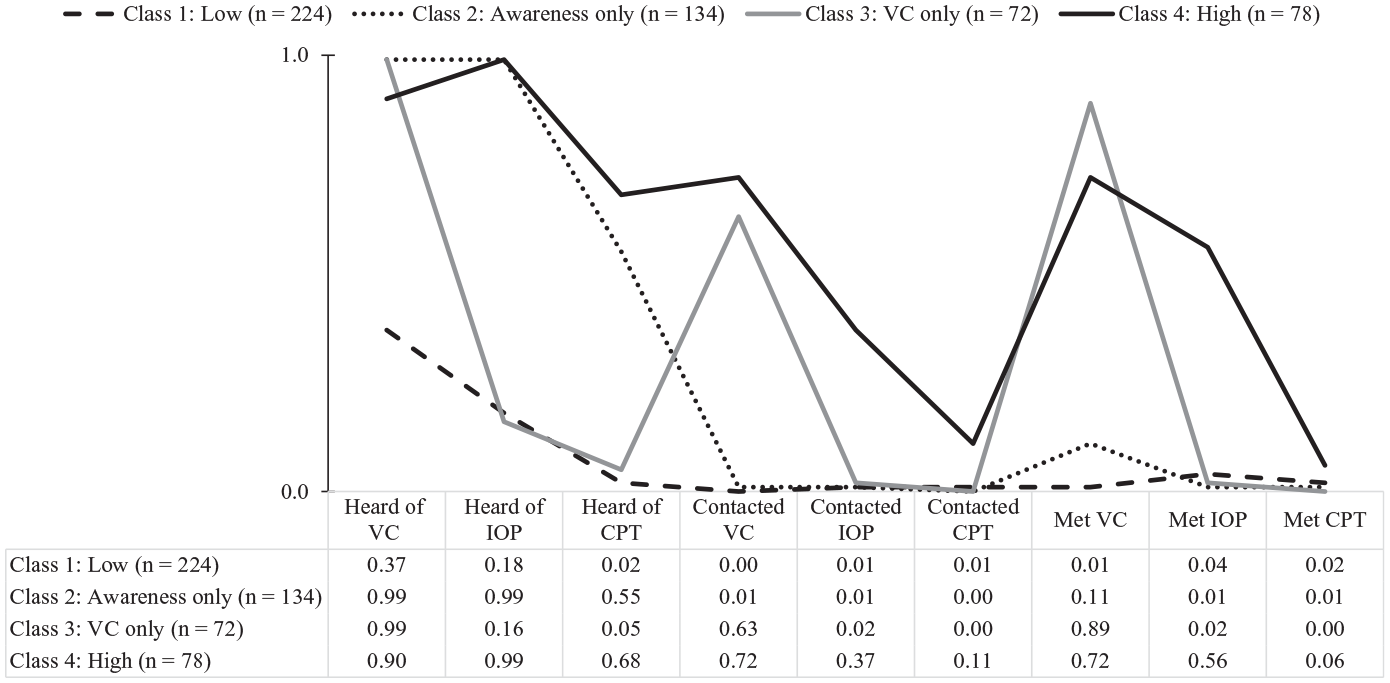
Predicted probabilities by class.
Associations between class membership and covariates
After identifying the classes, we explored differences among them in terms of sociodemographic characteristics, sentence-related variables and those related to life in prison. Latent class membership was regressed on these covariates using multinomial logistic regression. The results from this analysis, including relative risk ratios (RRR) and 95% confidence intervals (CI), are presented in Table 3. The reference for comparison was the low familiarity class (the one housing the greatest number of prisoners), and each of the other classes was compared with it. Significant differences were observed in two of the sociodemographic variables. Irish nationality was related to membership in the high awareness and high familiarity classes (RRR = 2.84, p = .020, and RRR = 8.83, p = .009, respectively). Compared with the low familiarity class, members of the familiarity with the Visiting Committee only and high familiarity classes were less likely to have completed lower secondary education (RRR = 0.39, p = .014, and RRR = 0.40, p = .019, respectively).
Multinomial regression results.
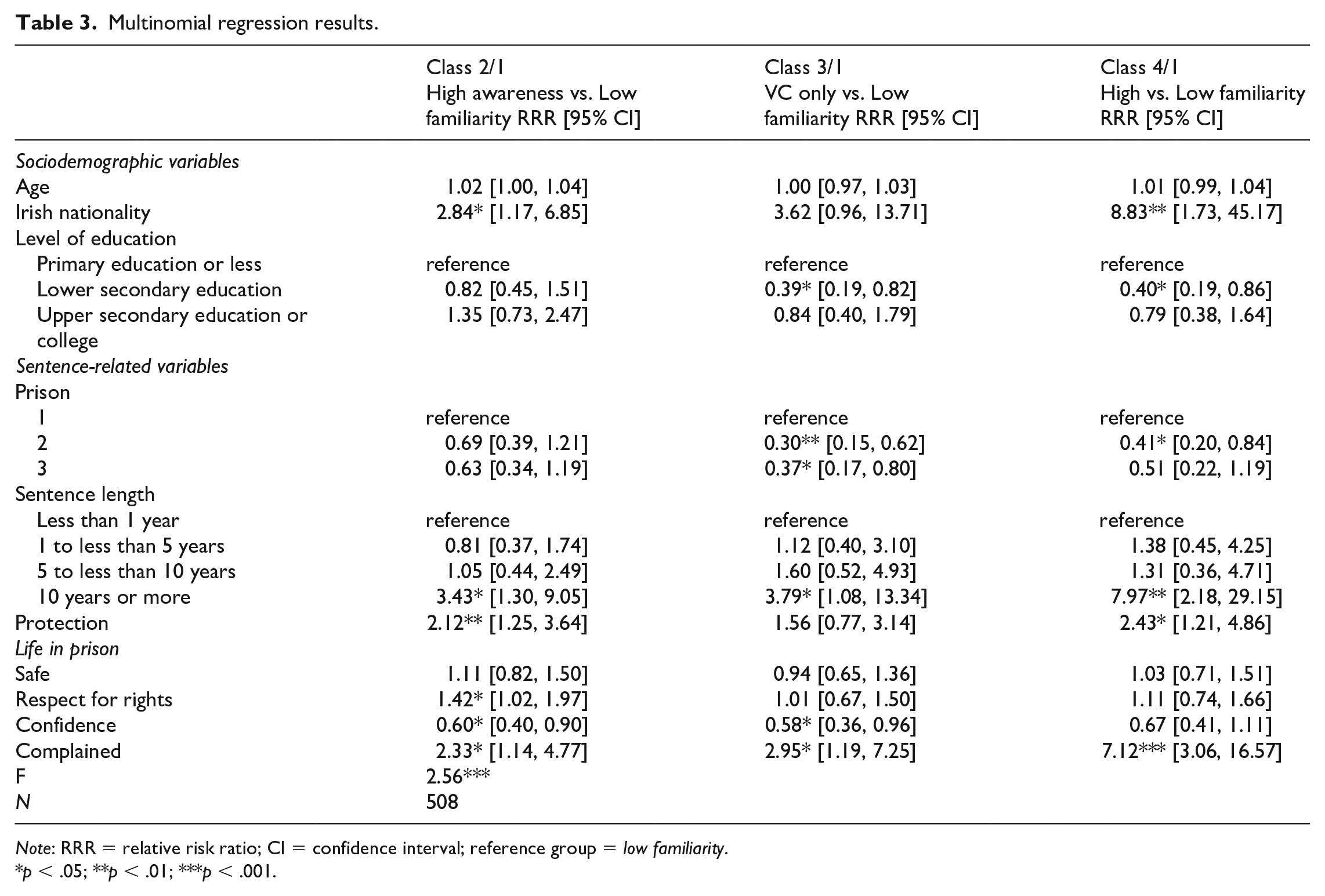
Note: RRR = relative risk ratio; CI = confidence interval; reference group = low familiarity.
p < .05; **p < .01; ***p < .001.
In terms of sentence-related variables, class membership was associated with prison facility. Specifically, participants incarcerated in prison 2 were less likely to belong to the high familiarity class (RRR = 0.41, p = .015). In addition, those serving their time in prisons 2 and 3 were less likely to belong to the VC class (RRR = 0.30, p = .001, and RRR = 0.37, p = .012, respectively). Sentence length consistently influenced class membership. Prisoners serving the longest sentences (10 years and over) were more likely to belong to the classes with more familiarity (high awareness, high familiarity with the VC, and high familiarity). Protection status differentiated between the low familiarity, high awareness, and high familiarity classes. In addition, members of the high awareness and high familiarity groups were more likely to be on protection (RRR = 2.12, p = .006, and RRR = 2.43, p = .012, respectively).
Three of the four variables relating to life in prison were significant in the model. Lower confidence in staff was linked to class membership in the high awareness and high familiarity with the VC groups (RRR = 0.60, p = .015, and RRR = 0.58, p = .033, respectively). In addition, prisoners with a greater perception that rights are respected in prison were more likely to belong to the high awareness class than to the low familiarity class (RRR = 1.42, p = .039). With respect to complaint usage, a consistent pattern was identified. Compared with those in the low awareness group, the three other classes were significantly more likely to have used the complaint system while in prison. Specifically, having complained increased the risk of belonging to the high awareness, high familiarity with the VC and high familiarity classes by 133, 195 and 612 percent.
Discussion
This study identified four classes of prisoners based on their familiarity with prison oversight bodies using survey data from three prisons in Ireland. This four-class solution provided an adequate and interpretable fit to the data, and the resultant classes were found to differ quantitatively (that is, levels of familiarity) and qualitatively (that is, different experiences with different bodies). The largest group (44.1 percent) reported low levels of familiarity with all bodies, and few prisoners (15.4 percent) belonged to the most familiar group. The other two profiles – high awareness with low contact, and high familiarity with the VCs only – reflected a variety of experiences with prison inspection and monitoring bodies.
The finding that the largest portion of prisoners in our sample were not familiar with any of the prison inspection and monitoring bodies operating in Ireland is of concern. It is perhaps not surprising that three in four prisoners were not familiar with the CPT because its most recent visit to Ireland before the current study was in 2014, although prisoners are able to contact the CPT at any stage and should be informed by local prison authorities of this possibility. More worrying, however, is the finding that many prisoners were not aware of the domestic OIP (51.0 percent) or the VC (29.9 percent), particularly the latter body, which should be visiting prisons on a very regular basis. Information on the fact that such bodies exist, and how to contact them, should be provided to all prisoners. The requirement to provide a copy of this information through the provision of the Prison Rules on arrival in a manner that is understandable to the prisoner is contained not only in Irish law (Government of Ireland, 2007b), but also in the Mandela Rules and the European Prison Rules. These findings suggest that some prisoners are either not being informed of the possibility of accessing prison oversight bodies or are not retaining this information during the time of transition in the committal process.
Questions also arise about the awareness-raising efforts of prison inspection and monitoring bodies among prisoners. At the least, this research should prompt prison oversight bodies to question whether prisoners are aware of their role and how to contact them. Owing to resources, such bodies may not be able to engage with most prisoners in the general population. They may therefore target their efforts and activities on groups of prisoners who are in especially vulnerable situations, such as those who are in segregation or undergoing a disciplinary sanction. Deeper questions as to the reasons for this situation also arise. Information, or deliberate deprivation of information, in prison can be a tool of coercion or manipulation (Gariglio, 2017). Information about bodies that are tasked with supporting the promotion of human rights in prison may be information that it is not desirable to share, especially when the bodies are not sufficiently visible themselves to provide the information. It is also important to consider the fact that most people in prison come from backgrounds of disadvantage, characterised by a limited ability to exercise rights and entitlements in general, with evidence of highly conflicting and paradoxical views of fairness and the legitimacy of legal processes (Calavita and Jenness, 2015). These findings may simply be an extension of wider and life-long disenfranchisements from the machinery of civic life.
It is notable that the body prisoners were most familiar with is the Visiting Committee. This body is likely to visit prisons more frequently than the other two, given their more local nature (being attached to an individual prison rather than visiting all facilities) and their duty to visit at frequent intervals. This suggests that frequency of visits and types of activities might matter in terms of prisoner awareness. The fact that VCs play a role in listening to prisoner complaints may also impact on prisoners’ familiarity with the body, a finding bolstered by the fact that those prisoners who had made complaints were more likely to belong to the high familiarity group. Prisoners may be more likely to seek out information on rights protection once they have a complaint rather than engaging with an inspection body on a more general basis. As discussed by Linos and Pegram (2017) in the context of national human rights institutions, complaint-handling provides for a direct opportunity to engage with those bodies. As noted in their study, awareness of the role of such institutions often came about only when a person needed help. This may be the case here. However, it should be noted that the Visiting Committee is the weakest body of all three in terms of formal powers; unlike the prison inspectorate or the CPT, they have no formal powers in law to obtain access to documents for example, and there is no duty on the prison authorities to comply with their requests for information.
The fact that prisoners with a higher perception that rights are respected in prison were more likely to belong to the high awareness class suggests that perceptions of respect for one’s rights is linked to knowing that rights protecting bodies exist. It may be that knowing such bodies exist leads to a greater feeling that one’s rights are protected, although much more research across several countries is needed to examine this possibility. It could also be that those with a higher perception that their rights are protected are more likely to make themselves aware of bodies that should help to protect those rights. Either way, this finding also suggests that prison oversight bodies would do well to reach out to those who perceive low respect for their rights, because they may be the group most in need of their attention. The prison population is comprised of largely disadvantaged groups who may struggle to identify and assert their rights.
These findings also contribute to the limited scholarship on prisoners’ awareness of their rights. Hulley, Liebling and Crewe (2011: 20) have argued that ‘some prisoners are well informed about their rights’, but Karamalidou (2017) found extremely low awareness of human rights among prisoners in certain English prisons. Using quantitative methods, this study provides a basis for further work exploring prisoners’ understanding of their rights while in prison and a first effort to understand the extent of prisoners’ access to prison inspection and monitoring bodies. The finding of the current study suggesting that, in general, there are low levels of awareness of human rights protecting bodies in prison resonates with studies from related fields. Buck et al. (2010) noted that, in several studies among the general population, there were low levels of awareness of the office of the Ombudsman. Therefore, lack of experience with oversight bodies might not be specific to the prison context and should be examined among other populations.
Another finding of concern is that even those who were aware of the oversight bodies did not seek to engage with them for the most part. 5 Further research is necessary to explore the reasons behind this position fully, but previous research has noted the lack of trust in VCs (Behan, 2016) and similar bodies in England (Crewe, 2012). It may be that oversight bodies have limited opportunity to build trust among prisoners (Crewe and Bennett, 2012), which could be compounded by concerns prisoners may have about the possible negative consequences of speaking to an outside body, or a sense that raising concerns is futile (Crewe, 2012). Additionally, prisoners are reliant on staff to progress through the prison and may be reluctant to bring attention to themselves by speaking to an external rights body (Drake, 2012). This finding merits attention from prison oversight bodies and prison authorities alike to address any concerns regarding perceptions of trust or futility among prisoners.
Correlates of class membership
Several characteristics of the respondents were key identifiers of classes. The likelihood of membership in the high familiarity and high awareness classes, compared with the low familiarity class, was significantly lower for foreign prisoners. This is a troublesome finding given the increasing number of foreign prisoners and the additional challenges they face in prisons (Bhui, 2004, 2007). In the case of Ireland, committals of non-Irish prisoners increased 50 percent between 2015 and 2018 (Irish Prison Service, 2020). Among the challenges faced by foreigner prisoners are language barriers, which impact their ability to communicate with others and build relationships (Boone and Kox, 2014). They may also experience practical difficulties around culture and getting to grips with the administrative and bureaucratic requirements of an unfamiliar system (Bhui, 2004; Kaufman, 2015; Ugelvik, 2014), and they may be especially vulnerable to mental distress, self-harm and suicide (Borrill and Taylor, 2009; Van Ginneken et al., 2019). Foreign national prisoners may also face much greater hurdles when it comes to planning for release (Warr, 2016). One might expect that, given their vulnerability, prison inspection and monitoring bodies would be more likely to target their activities toward foreign nationals. These findings cast doubt on the effectiveness of such efforts. Being more likely to be unfamiliar with prison inspection and monitoring bodies means that foreign prisoners have fewer opportunities to raise concerns about their treatment with these bodies. This situation also means that such bodies are missing out on a potentially important source of information about treatment and conditions. Further research is necessary to explore the reasons behind the low levels of awareness among foreign national prisoners and to see if this is replicated in other jurisdictions.
Prisoners serving longer sentences were more likely to belong to higher familiarity classes. This finding is perhaps not surprising given that longer sentenced prisoners may have had more time to become familiar with prison inspection and monitoring bodies, or have a greater incentive to do so. Long sentenced residents may have more motivation to find out about the avenues for raising concerns about their treatment and possible release, given the longer periods they will be spending in those conditions and the greater burdens they experience while detained (Jewkes, 2005; Warr, 2020; Wright at al., 2017). On the other side, prison inspection and monitoring bodies may have a greater desire to speak to long sentenced prisoners in order to get a sense of the ‘true’ prison or how prison conditions have changed over time. There is, however, complexity here, given Warr’s (2020) findings that life and indeterminate sentenced prisoners in particular feel they must perform a certain role to support their chances for release and to prove that they had ‘changed’. These feelings may militate against the chances of prisoners serving longer sentences seeking to discuss concerns with external bodies, though the length of their sentence could also mean they feel they have less to lose by doing so. Further research is necessary to explore the strategies that prison inspection and monitoring bodies use to select those prisoners with whom they wish to speak in order to assess what makes long sentenced prisoners more likely to be in the high awareness and high familiarity groups, and also to explore how long sentenced prisoners view their interactions with such bodies.
The data also revealed that protection status was predictive of class membership. In comparison with the low familiarity group, prisoners on protection were more likely to be in the high awareness and high familiarity classes. This finding is reassuring in the sense that it may mean that prisoners in situations of particular vulnerability are aware of and do access human rights protecting bodies. Those bodies, in turn, may also be more likely to dedicate attention to people who are spending long periods in segregation and those in solitary confinement, which may also explain this finding. 6 However, a more negative interpretation may also be made. It is well established that prisoners who are subject to segregation have lower psychological wellbeing than the general population (Dhami et al., 2007), with segregation being negatively associated with the ability to adapt to prison life (Gullone et al., 2000). Although not all prisoners in segregation in Ireland are subject to solitary confinement, some are. Prisoners who are held in solitary confinement are particularly at risk of health problems, both psychologically (Ahalt et al., 2017; Kaba et al., 2014; Reiter et al., 2020) and physically (Williams, 2016). Prisoners who are segregated from the general prison population may therefore simply be seeking access to prison inspection and monitoring bodies because of their more challenging circumstances, overcoming barriers to doing so. It is also possible that it is those who are viewed as recalcitrant or difficult by the prison authorities for seeking to exercise their rights or question the exercise of power over them who are more likely to find themselves in segregation.
Confidence in staff and complaint usage are variables that indicate class membership. Prisoners who reported lower confidence in staff were more likely to belong to the high awareness and high familiarity with the VC classes. Furthermore, complaint usage was associated with class membership in the high familiarity classes. These findings raise interesting questions about the relationship between prisoners’ familiarity with prison inspection and monitoring bodies and a broader sense of the legitimacy of their detention. There is an abundance of literature demonstrating the importance of staff–prisoner relationships to prisoners’ sense of the legitimacy of their detention and prison regime (Liebling assisted by Arnold, 2004). Prior research has found that positive perceptions of treatment by staff and feelings that one’s treatment is procedurally fair lead to a variety of better outcomes, including better self-reported mental health, wellbeing and sense of autonomy (Van Ginneken et al., 2019) and lower misconduct (Beijersbergen et al., 2015). This research adds to that work, finding that lower levels of confidence in staff are also associated with higher awareness of and familiarity with external bodies designed to protect human rights. Those with lower confidence in staff may have experiences which make it more likely that they feel the need to seek out information on bodies which could respond to their issues. It is not unsurprising, therefore, that those who feel less trustful of staff may have more problems to raise with outside bodies, though it is notable that we also found that those with a higher perception that their rights were protected were more likely to belong to the high awareness class. Another consideration arises. Those who have lower confidence in staff may also have fewer informal opportunities to resolve issues. Many complaints procedures, and indeed the European Prison Rules (Rule 70.2) advocate that complaints are first dealt with at an informal stage, with the opportunity for local resolution. Those who have strong relationships with staff may not feel the need to seek out alternative ways to bring attention to a concern. Those with higher confidence in staff, should not, however, be at a remove from oversight bodies. As the CPT (2016, 2017) has stated, inspection and monitoring bodies should not confine themselves to talking with those who seek them out. Understanding the social norms, meanings and culture in an environment, especially an institution such as a prison, requires engaging with those who live in those institutions to gain a deeper understanding of the experiences and challenges in that environment (Terry, 2003). Excluding groups of prisoners from interacting with oversight bodies can create an incomplete picture of the prison environment, potentially missing significant information.
Limitations and strengths
The findings of the current study should be interpreted within the context of the following limitations. First, our data are cross-sectional and the temporal relation among variables cannot be determined. Longitudinal studies are needed to improve our understanding of how familiarity with external oversight bodies influences staff–prisoner relationships and complaint usage. Second, this sample includes only those prisoners with sufficient competency in English to complete our questionnaire. Despite our sample being comparable to the population in terms of nationality, age and sentence length, nonresponse bias might exist if non-English speakers systematically differ from respondents in other characteristics. As such, our findings are limited in their generalisability to incarcerated men who are literate in English. Although prisoners were randomly selected within prison, and we collected data in 3 of the 10 facilities housing males in Ireland, prisons were not selected at random. Future studies would benefit from using random probability methods at all stages of the process. Third, data were based on self-reports, which may be subject to recall and reporting errors. It is also important to note that this study examined familiarity with a limited number of bodies and did not consider the frequency or the quality of the contact. Future research including additional bodies and items capturing such variations in experiences is warranted. Because Ireland is one of the very few EU countries in which an NPM has not been designated yet, it would be beneficial to replicate these findings in states with such bodies and to examine potential differences based on their structures, activities and powers. Finally, we assessed only a limited number of covariates. Future research should replicate and build on our findings to examine associations between classes and other variables such as prisoners’ wellbeing, peer relationships, the staff–prisoner ratio or the activity level of the oversight bodies.
Despite these limitations, the results of this study have important implications for research, policy and practice. On a theoretical level, the study represents the first attempt to identify distinct profiles of prisoners based on their familiarity with oversight bodies. Our findings suggest that it is possible to identify meaningful profiles of prisoners that differ in terms of their background characteristics and experiences in prison. The four classes were significantly different in terms of nationality, sentence length, confidence in staff and complaint usage. Acknowledging that there might be different typologies of prisoners in this area has the potential to advance, not only our understanding of prisoners’ experiences with oversight bodies, but also our development of awareness-raising strategies, and it suggests that particular attention needs to be focused on foreign prisoners to ensure they are aware of prison inspection and monitoring bodies and feel able to engage with them. Prison inspection and monitoring bodies will also need to be alert to the possibility that prisoners with higher levels of trust in staff are less likely to be aware of outside bodies. This finding speaks to the importance of relationships, but this time in a novel context – interaction with inspection and monitoring bodies. It also shows that those with higher levels of trust are less likely to have such awareness. While this may indicate such a group has fewer issues or more opportunities to resolve problems, inspection and monitoring bodies and prison authorities may wish to ensure that resources, time and interaction are put into ensuring that all people in prison are aware of such bodies and to build up relationships with them. Such activity may also support the inclusion of a broader range of experiences in the work of these bodies.
Conclusion
This study is the first to identify and characterise heterogeneous patterns of familiarity with prison inspection and monitoring bodies among prisoners and to examine associations between these patterns and several demographic, sentence-related and prison variables. Latent class analysis revealed four groups of prisoners with distinct patterns of awareness and contact with prison oversight bodies: low familiarity, high awareness with low contact, high familiarity with the Visiting Committee only, and high familiarity. Notably, the largest group was the low familiarity class, pointing to the importance of increasing awareness of oversight bodies among prisoners in general. Our findings reveal that there are distinctions among classes in terms of personal characteristics (nationality and education level), sentence-related variables (prison facility, sentence length and protection status) and those related to life in prison (confidence in staff, perceived respect for rights and complaint usage). These differences in the composition of the classes provide additional information to target policy and awareness-raising strategies and to support further research into prisoners’ interactions with human rights protecting bodies. It is notable that neither the Mandela Rules, nor the European Prison Rules nor OPCAT refer specifically to the importance of raising awareness of and providing information on prison inspection and monitoring bodies on an ongoing basis. Although information on prison life should be made available to prisoners under these standards, we suggest that they should also include this specific obligation. More broadly, we know that prison climate and prisoners’ experiences of prison are influenced by their perceptions of safety, respect, fair treatment and the promotion of dignity. Prison inspection and monitoring bodies are tasked with precisely supporting these aspects of prison life. Although their presence is not a substitute for good and decent treatment, our findings indicate that many prisoners are not even aware of the existence of these bodies, raising doubts about their ability to contribute to an improved prison climate or feelings of legitimacy. Further efforts are needed to ensure that prison inspection and monitoring bodies are able to fulfil their vital mandate.
Footnotes
Appendix
Comparison of the achieved sample with the male prison population in Ireland, as of 30 November 2018 (percent).
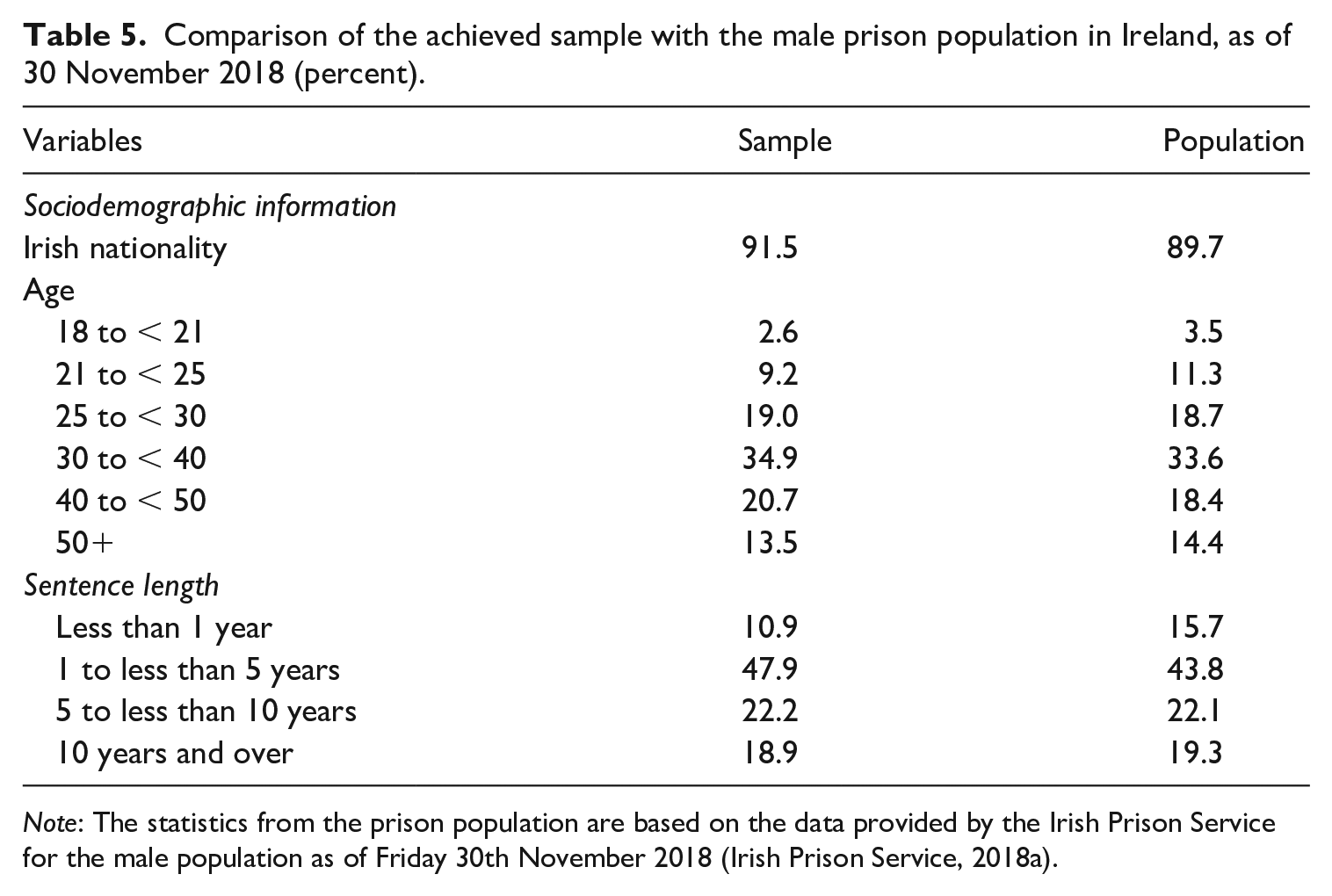
| Variables | Sample | Population |
|---|---|---|
| Sociodemographic information | ||
| Irish nationality | 91.5 | 89.7 |
| Age | ||
| 18 to < 21 | 2.6 | 3.5 |
| 21 to < 25 | 9.2 | 11.3 |
| 25 to < 30 | 19.0 | 18.7 |
| 30 to < 40 | 34.9 | 33.6 |
| 40 to < 50 | 20.7 | 18.4 |
| 50+ | 13.5 | 14.4 |
| Sentence length | ||
| Less than 1 year | 10.9 | 15.7 |
| 1 to less than 5 years | 47.9 | 43.8 |
| 5 to less than 10 years | 22.2 | 22.1 |
| 10 years and over | 18.9 | 19.3 |
Note: The statistics from the prison population are based on the data provided by the Irish Prison Service for the male population as of Friday 30th November 2018 (Irish Prison Service, 2018a).
Funding
The author(s) disclosed receipt of the following financial support for the research, authorship, and/or publication of this article: This article stems from the ‘Prisons: the Rule of Law, Accountability and Rights’ project, with funding from the European Research Council under the European Union’s Horizon 2020 research and innovation program (grant agreement 679362).
