



Abstract
Increasing concern about environmental issues has heightened the need for the effective enforcement of environmental regulations and for research supporting these efforts. This study incorporates intersectoral analysis and examines regulatory voids. The aim is to analyse whether regulatory voids exist and how they affect the enforcement efforts related to the prevention, supervision and detection of illicit waste activities and, furthermore, waste crime in Finland. The Delphi method is used to analyse different aspects of regulatory voids in enforcement and crime prevention. The three-round Delphi comprised a panel of 74 participants from different sectors and had a significantly high response rate: 91 percent in the first round, 82 percent in the second and 80 percent in the third, respectively. Not only do the findings indicate that political, institutional and knowledge-regulatory voids exist, the study also suggests that the knowledge void should be further divided into informational and professional void – and, as such, there are actually four regulatory voids to be found that should be analysed. Findings also suggest that there is lack of consensus on regulatory enforcement, severe challenges in the flow of information and insufficient resources, which together form a contradictory regulatory regime based on trust between regulators and regulatees, on the one hand, and underlying assumptions of foul play, on the other. The study concludes that enforcement authorities walk a regulatory tightrope between compliance with and punishment of regulatory strategies, trying during the course of their work to avoid falling into the regulatory voids.
Introduction
Studies on environmental harm have emphasized the toll that pollution takes on natural, social and economic environments as well as on human health (Crofts et al., 2010; Jarrell and Ozymy, 2012; Michalowski and Brown, 2020; Ruffell and Dawson, 2009). This increasing concern about environmental issues has heightened the need for regulatory strategies that address the complexity of environmental harm and also environmental crime. Although considerable research has been devoted to the effectiveness of regulatory strategies and corporate compliance (see, for example, Gunningham and Grabosky, 1998; Malik, 2007; Simpson et al., 2013), less attention has been paid to the authorities’ perspectives on regulatory enforcement (see, for example, Du Rées, 2001; Fineman, 2000; Sahramäki, 2016). Previous studies have indicated the need for analysis involving a broad range of specialists in order to address different aspects of the multidimensional phenomenon of environmental harm and crime in Finland (Sahramäki, 2016; Sahramäki and Kankaanranta, 2014, 2016b).
This study answers the call for intersectoral analysis by giving a voice to environmental supervisory agencies, preliminary investigation authorities, academia, and the private and third sectors. The study has two aims. First, it sets out to examine whether there are regulatory voids in the prevention and supervision of illicit waste activities in Finland and, second, if so, it asks what the voids are and how they affect enforcement. Regulatory void is defined here as spaces where regulation is perceived to be deficient (Short, 2013: 27).
The study explores the Delphi method, which, although supporting intersectoral analysis is, at least in our estimation, rarely used in criminology. 1 The Delphi method consists of a panel of topic-specific experts, sequential questionnaires, and an iterative process of feeding the findings back to the respondents for further comments (Franklin and Hart, 2007: 238). Delphi is considered to be appropriate when, for example, the problem being explored benefits from subjective judgements on a collective basis and when there is a need for the contribution of individuals with diverse experiences and expertise in the examination of a broad and complex problem (Linstone and Turoff, 1975: 4; see also Grisham, 2009: 115). Both of these considerations are present in the topic at hand: the prevention of illicit waste activities and the enforcement of environmental regulation are a complex subject involving representatives from several different professions. Waste crime is often characterized as a victimless crime or a regulatory crime, driven by weak legislation, the increased costs of legal operations, the inelastic price of waste, asymmetries in regulation and legislation internationally, enforcement difficulties such as under-resourcing, and the complexity of businesses and actors, whose nature and physical appearance may be manipulated and mixed, to mention a few (Baird et al., 2014; Dorn et al., 2007; Massari and Monzini, 2006; Tompson and Chainey, 2011; Van Daele et al., 2007).
Although we acknowledge the challenges of defining what environmental crime and harm actually are per se and the importance of contesting them as a part of a green criminology agenda (see Brisman and South, 2013; Lynch, 2020; White, 2008), for the purposes of this study we adopt a legalistic approach, whereby criminal law defines which harms are subject to criminal prosecution and may lead to convictions of environmental crime (Situ and Emmons, 2000: 3).
The article is organized as follows. First, there is a brief description of the regulatory agencies and environmental crime in Finland. Second, the concept of ‘regulatory void’ is explicated. Third, the Delphi method and data are illustrated. Fourth, the findings are introduced. Finally, there is discussion of the findings, reflections on the limitations and practical implications of the study, and final conclusions.
Environmental crime and environmental enforcement in Finland
In Finland, environmental offences vary from illicit waste dumping, dredging, transportation of dangerous substances and breaches of environmental permits for example (Finnish Environmental Crime Monitoring Group, 2020: 58–9). For example, between 1994 and 2014, a total of 36 cases of waste-related impairments of the environment were handled in the courts of appeal. These cases dealt with the dumping and transportation of dangerous substances, construction or demolition waste, scrap or waste from vehicles, and so on (Sahramäki and Kankaanranta, 2016a: 2–3). Environmental pollution and impairment may be due to a corporation’s activities or private persons’ actions alike. However, in this study, the focus is on the breaches committed by corporations.
The number of suspected offences is quite low, which has led to the assumption that a substantial number of violations remain hidden (Sahramäki et al., 2015). From a statistical point of view, an average of 187 suspected violations of the Waste Act, 170 impairments of the environment, eight aggravated impairments of the environment, 218 environmental infractions, and three negligent impairments of the environment were reported to the police annually in the period 2012–19. 2
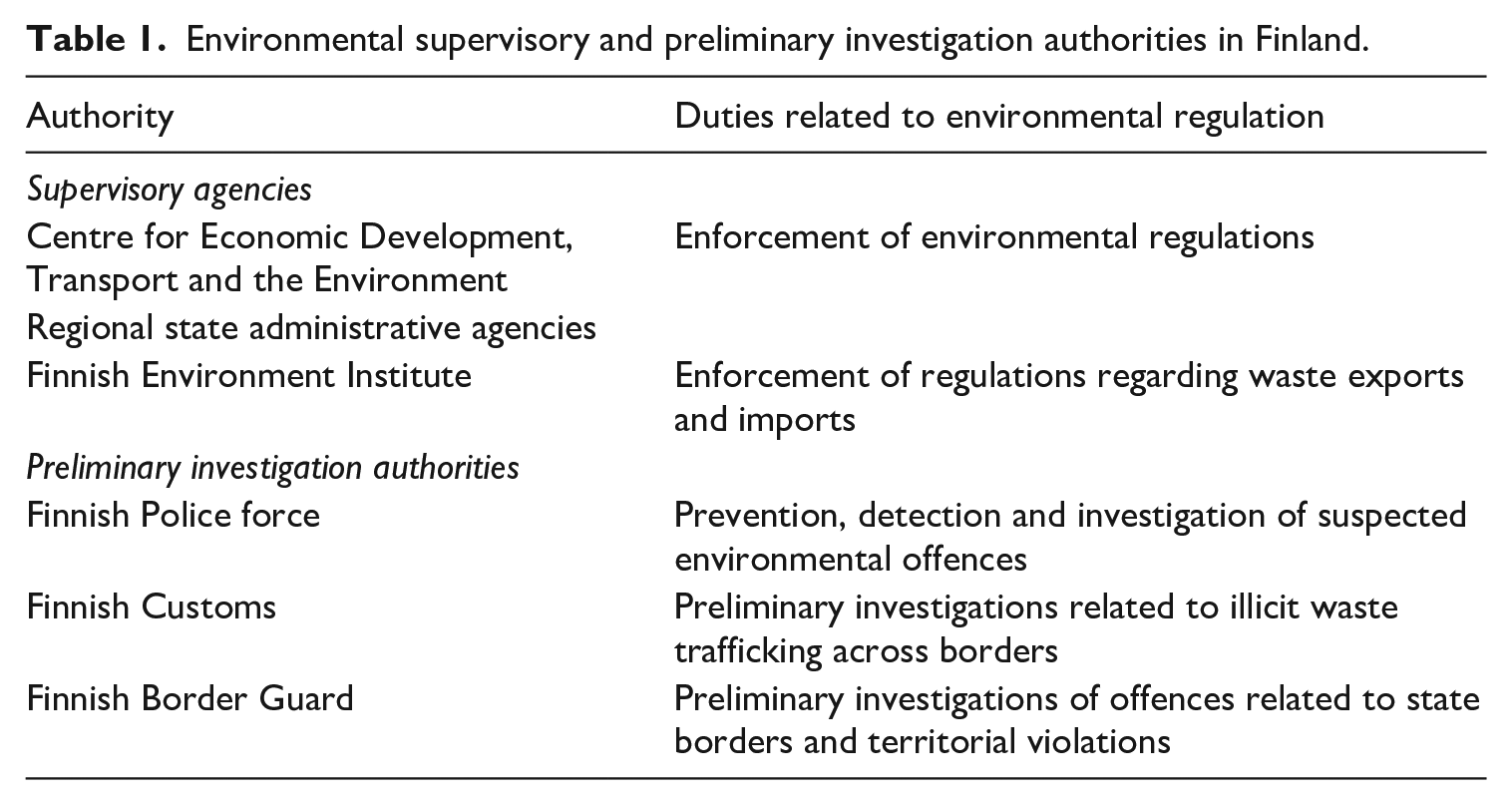
In Finland, supervisory agencies (see Table 1) are obligated to notify the relevant preliminary investigation authority when the provisions of Criminal Code Chapter 48, ‘Environmental offences’ (39/1889), are met. However, according to Section 188 of the Environmental Protection Act (527/2014 188§), ‘no notification is needed if the act can be considered minor in view of the circumstances and the public interest does not require charges to be brought’.
Environmental supervisory and preliminary investigation authorities in Finland.
Regulatory voids
Generally, environmental regulation is characterized by the heterogeneity of environmentally regulated entities and the complexity of topics and issues under it, both of which highlight the fact that not every possible future circumstance can be foreseen by legislation and rules (Carter and Morgan, 2018: 1789). In addition, regulatory agencies may suffer from, for example, inertia, malaise, under-resourcing and capture by the industries the agencies are regulating (Hutton, 2000). These challenges make environmental regulation vulnerable to the possibility of regulatory failures, which may be acute, such as incidents causing serious harm to the environment and human health, or chronic, such as a lack of public trust in regulatory agencies (Carter and Morgan, 2018: 1790–1). Furthermore, gaps in regulation may provide opportunities for illicit activities. For the purposes of this study, we approach regulatory failures and gaps through the concept of ‘regulatory void’. We lean on Short’s (2013: 27–8) categorization of ‘regulatory voids’ into political, institutional and knowledge voids. Short’s goal was to explore situations where governmental regulation is perceived as deficient and self-regulation is typically adopted, and how self-regulation may effectively mitigate these regulatory voids. However, our purpose is to explore how the concept of regulatory void may be used to study regulatory enforcement of environmental crime, and of waste crime in particular.
Political voids are formed when there is disagreement over the nature of the problem and how it should be handled. As such, politics may prevent effective regulatory enforcement (Short, 2013: 28). On the EU level, unclear legal frameworks and problems in the supply chain facilitate waste crimes. In addition, owing to differences between member states in justice response systems, criminals will choose to operate in countries where the rules and sanctions are the least stringent (Morganti et al., 2020; see also Rucevska et al., 2015). Furthermore, a lack of political support for regulatory enforcement and deterrence actions may lead to a compliance trap: without political support, regulators struggle to increase the effectiveness of enforcement and deterrence actions, which results in poor regulatory compliance and a lack of legitimacy (Parker, 2006).
The enforcement of environmental regulations highlights these challenges associated with the policy level. Harm to the environment, such as a certain amount of industrial air pollution, is accepted as a part of consumer society. Subsequently, regulatory enforcement is trapped in a political framework that determines when financial benefits outweigh the harm caused to the environment, which environmental harms should be prevented and which enforcement tools are available (Koski, 2007; White, 2013: 268). Furthermore, environmental laws and regulations are social constructions that often reflect the interests of powerful groups (Lynch, 2020).
Institutional voids may occur when there is a lack of the resources and skills needed to regulate effectively (Short, 2013: 28). According to Hajer (2003: 175), an institutional void arises if ‘there are no generally accepted rules and norms according to which policy making and politics is to be conducted’. The influence of the institutional void has been analysed in many research settings (see Enticott and Franklin, 2009; Vilcan and Potter, 2019). For example, in rural communities, institutional voids were reported to appear in the form of the lack of a statutory regional framework for development planning, assessment and management, as well as a shortage of data-sharing (Morrison et al., 2012). Thus, institutional voids can lead to poor-quality decisions or unsuccessful outcomes (Pinkse and Kolk, 2011). As a more recent example, Fitzgerald and Spencer (2020) name the Volkswagen emissions fraud case as a regulatory failure in Canada because the authorities failed to respond to the breaches, whereas in the United States the fraud resulted in several charges. Seror and Portnov (2020) also pointed out that, to be effective, environmental enforcement policy should be put into action quickly, which is challenging if one takes into account the presence of regulatory voids.
Knowledge voids originate from a lack of sufficient information and knowledge and cause failure in the existing regulatory regime (Short, 2013: 28). As an illustration, previous research has suggested that the lack of sufficient information affects not only the extent to which regulatory goals are met, but also the choice of compliance strategy adopted by, for example, the regulated company (Andarge and Lichtenberg, 2020: 199–200). Also, Van Erp and Huisman (2010) have suggested that the problem of E-waste may actually be better solved by regulating the recycling market than by continuing to criminalize E-waste. This would require intersectoral information-sharing and thinking outside of the regulatory boundaries in order to gain deeper knowledge of how to prevent this particular type of illicit activity effectively. In addition, as Short (2013: 27) aptly describes, ‘knowledge may be produced and deployed strategically to construct particular activities as unproblematic or unregulatable’, which also relates to the question of who has the power to frame activities as illicit and how they are regulated (see, for example, Snider, 2010).
The Delphi method and data
The origins of the conventional Delphi method, whereby consensus is sought among participants, can be traced back to the 1950s (Dalkey, 1969). Nowadays, however, Delphi studies may encourage collaborative decision-making or identify dissenting opinions in addition to consensus-building and may be carried out in various ways (Fletcher and Marchildon, 2014: 3; Linstone and Turoff, 1975: 5).
This study utilized a modified policy Delphi. The intention was to bring forward alternatives, opinions, and arguments for and against instead of seeking a consensus. A three-round Delphi study was conducted in Finland between autumn 2014 and spring 2015. The eight phases of the Delphi study, which are all based on one another, are presented in Table 2.
Phases of Delphi study.
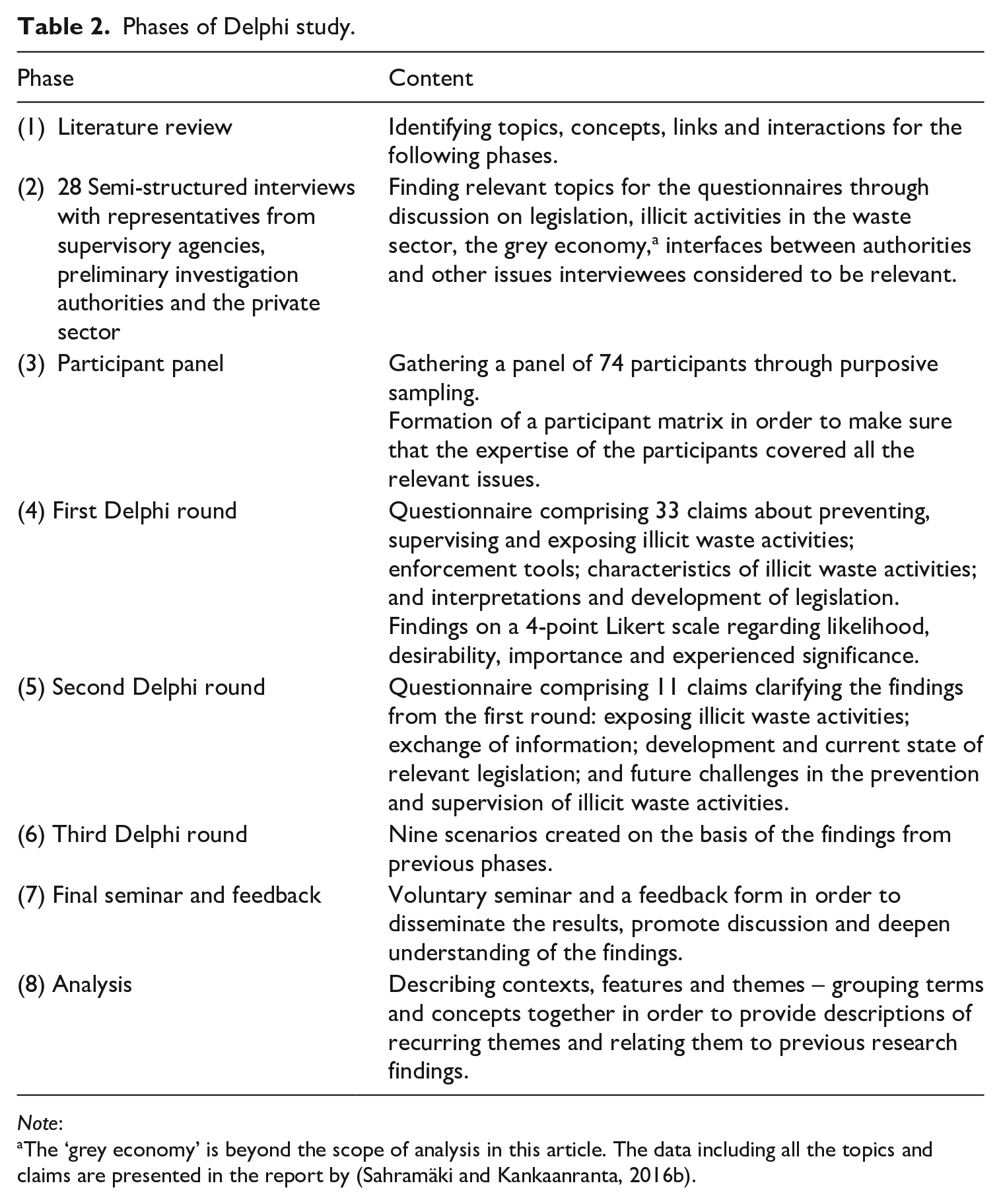
Note:
The ‘grey economy’ is beyond the scope of analysis in this article. The data including all the topics and claims are presented in the report by (Sahramäki and Kankaanranta, 2016b).
The participant panel was gathered through purposive sampling during phase 3. The panel also included interviewees from phase 2 because they possessed relevant expert knowledge essential to the topic in question, given the fairly limited number of experts in Finland. We acknowledge the representation challenges that the use of purposive sampling creates, but it was used to gather participants from different professional and organizational backgrounds (Turoff, 1975: 84–5). Purposive sampling presumably also contributed to the high response rate, because the participants were involved in the topic and, as such, they were committed to participating in all three rounds (see Hasson et al., 2000: 1010). The number of invited participants and their background information and response rate are presented in Table 3.
Respondents’ background information and response rate.
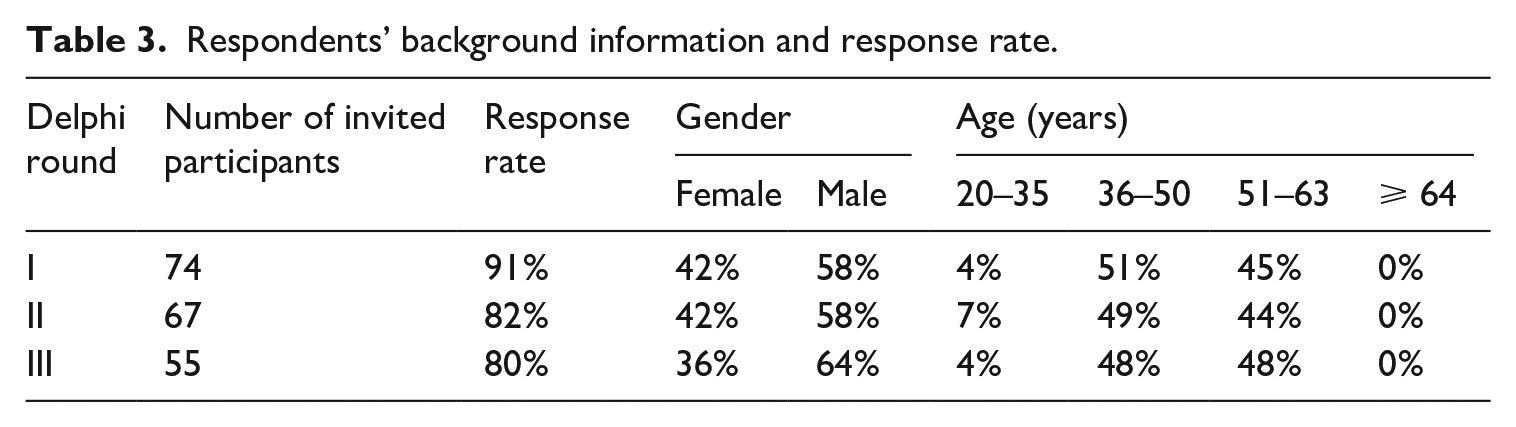
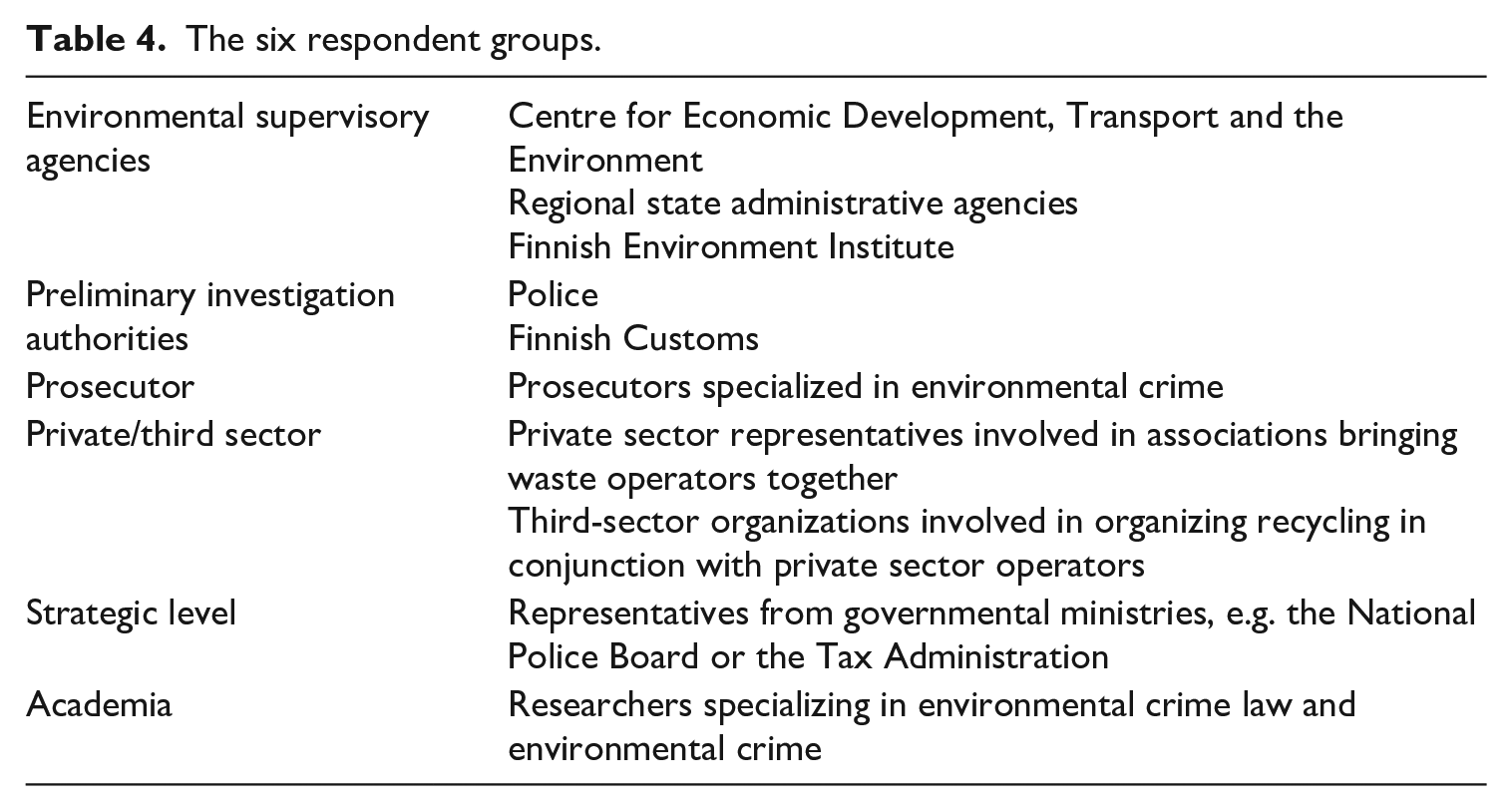
The panel was quasi-anonymous: although the researchers were aware of the participants’ identities, their responses remained anonymous to the other participants and the participants were unknown to each other, with the exception of during the voluntary final seminar (phase 7) (McKenna, 1994: 1224). Members of the participant panel were asked to specify their line of activity and this resulted in six respondent groups (see Table 4 and Figure 1).
The six respondent groups.
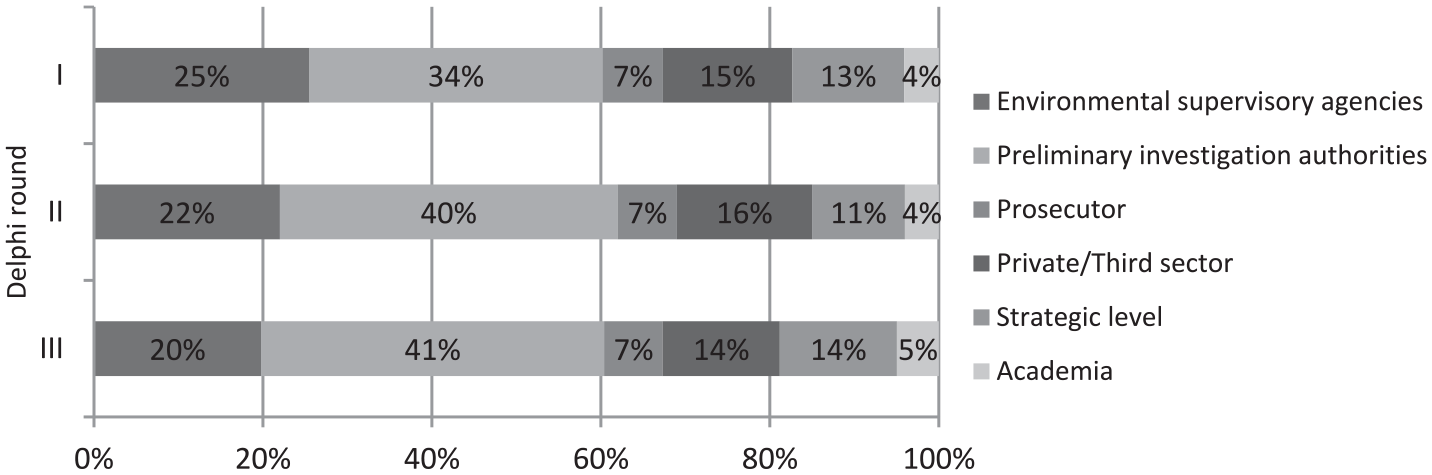
Respondent groups in Delphi rounds I–III.
Online questionnaires in all three rounds during phases 4–6 provided the means by which participants located in different parts of Finland were contacted in a cost-effective manner. The participant panel was given two weeks to respond to each round. After each round, the findings were fed back to the participants for further comments. This was done to check the trustworthiness and rigor of the data and to provide an opportunity for response (Brady and O’Connor, 2014: 216). Each questionnaire also included spaces for comments, which participants actively used to evaluate, comment on and specify the claims made and topics discussed, which added value to the data (see Hasson et al., 2000: 1011). It should be noted that the analysis of the findings was ongoing throughout the Delphi rounds.
Findings
In the following, the findings are presented from political, institutional and knowledge vantage points, which resonate with the three levels of regulatory void discussed earlier.
Political aspects
Authority powers
The participants had differing views on whether the current legislation provides the authorities with sufficient powers to supervise and prevent illicit waste activities. This discrepancy was also evident within the respondent groups; 47 percent of the supervisory agencies and 43 percent of the preliminary investigators found the claim to be likely or very likely. Surprisingly, the private/third sector respondent group had the most negative view, with 78 percent of them finding it to be unlikely or very unlikely that sufficient enforcement powers exist.
On the basis of these mixed results from the first round, participants were asked in the second round to specify which kinds of powers were needed and how the current powers could be used more efficiently. The participants felt that the current powers are sufficient but that there is a lack of knowledge of how to use them. They further emphasized the need for cooperation between sectors instead of increasing powers while also underlining the importance of training on how to use the existing powers more efficiently, and they noted that challenges in information exchange form barriers to the effective use of powers. Some participants also mentioned the lack of resources, the fragmentation of authorities, and the lack of assigned responsibility.
Furthermore, only 33 percent of the participants found it to be likely that operative-level insight was sufficiently taken into account by government ministries, even though the vast majority (95 percent) believed that it would be important. Two respondent groups contradicted the majority: 56 percent of the strategic level and 41 percent of the supervising agencies’ respondent groups found that the operative level is sufficiently taken into account. Several participants also commented that legislation often does not respond to the needs of practitioners.
Future areas of political concern
In the third Delphi round, the participant panel was presented with claims regarding future developments that should be areas for concern. The general view of the panel was that the number of illicit activities will increase in the future if no action is taken to empower prevention efforts. For example, illicit waste dumping will be concentrated in sparsely populated areas to which waste from cities might be transported; and national inconsistencies in prevention, supervision and sanctioning will lead to the concentration of illicit activities in poorly supervised regions.
The panel took the view that the number of foreign waste operators will continue to grow and that, if prevention efforts are not conducted, there will be a growing threat of cross-border waste crime and waste-related organized crime in the future. An increase in organized crime due to the lack of resources in environmental crime prevention was also seen as a possible future scenario by the majority of the panel. A few of the participants considered these to be unlikely because Finland’s geographical location is unattractive and the size of its waste market is limited.
The panel also suggested that citizens will become more active in reporting suspicious environment-related activities to the authorities in the future. Additionally, cooperation between authorities was seen as becoming more efficient and it was believed that environmentally friendly values would spread in the future, leading to the prevention of the aforementioned scenarios.
Institutional aspects
Self-regulation and self-reporting
The panel was asked to estimate the trustworthiness of self-reporting and self-regulation on a sliding scale. Over half of the participants presumed them to be quite untrustworthy. It should be noted that over half of the supervisory agency respondents did consider self-regulation to be trustworthy, whereas the preliminary investigators had the most negative view. One of the participants illustrated the situation in the following way: The resources of the environmental supervisory agencies, at least in the governmental supervisory agencies, are continuously reduced. This is why the supervision is based more and more on self-regulation and reports sent to the supervisor. Due to limited resources, it is impossible to verify these reports. The starting point of the supervision is that regulated firms are sincere and their undertakings are trustworthy.
However, 94 percent of the participant panel considered it to be likely or very likely that, although environmental enforcement is largely based on self-reporting, the transportation of waste across borders actually goes unreported.
Additionally, the panel was asked to evaluate whether self-regulation would be more trustworthy in the future if private sector operators’ awareness of legislation increases owing to enhanced communication between the private and public sectors. The panel largely rejected this scenario on the basis of the view that awareness of the regulations does not decrease illicit activities due to crime as a conscious activity, nor does it decrease the variety of illegally acting operators or the need for criminal sanctions as deterrents. The participant panel was of the opinion that the amount of hidden environmental crime is substantial. However, few participants commented on the growth of environmental values as the reason for compliance.
Resources
The participant panel was in nearly unanimous agreement (98 percent) on the claim that inadequate resources decrease other actors’ trust in the ability of supervisory agencies to supervise and prevent illicit activities. At the same time, the panel saw it as very likely (40 percent) or likely (36 percent) that the prevention of illicit environmental activities focuses too much on the supervision level, because the resources of the preliminary investigation authority are insufficient. Participants commented on the importance of the allocation of resources and specified several effects of diminishing resources, such as situations in which illicit operators take advantage of the lack of efficient supervision or authorities try to impose duties on other authorities. Limited resources also resulted in prioritizing other efforts such as detecting drug trafficking across borders instead of illicit waste trafficking.
In the third Delphi round, the participant panel was presented with the future scenario of the supervision and prevention of environmental crime being a cross-sectoral process in which duties fluctuate across administrative borders. Few participants considered the trend to be desirable, with a few of them also taking the view that this development had already begun. It was evident across the comments that cooperation is seen as essential to the efficient prevention of illicit activities in the future. Some respondents wondered about the leadership challenges that a cross-sectoral process may pose and saw the scenario as being too optimistic in the near future. Once again, the adequacy of resources was raised as a major obstacle to this scenario becoming reality. As one of the participants described the situation: We should wake up to the need for the prevention of environmental crime and vigorously invest in cooperation between authorities locally and nationally. If enough resources are not allocated to this, these problems will explode in our face. ‘Out of sight, out of mind’ is not an option here!
Detection
The panel considered it to be very important (31 percent) or important (43 percent) that the illicit activities related to dangerous substances should be the focal point of supervision and prevention and that their transportation forms a major part of illicit waste activities. One of the major concerns has been the transportation of used car batteries in passenger ships; if these modes of transportation are conducted illicitly without permits and taking the necessary safety measures, the result is a serious safety hazard. Concerns related to the transportation of dangerous substances over land were also connected to adequate safety measures and whether the substance was transported to an appropriate facility for further treatment; if not, health and environmental hazards may be the result. Another examples of concerns related to dangerous substances are illicit dumping and burial below ground, especially in groundwater areas.
The panel also found traffic enforcement to be a significant (44 percent) or very significant (26 percent) part of the supervision and prevention of illicit waste activities and traffic enforcement to be a desirable way to detect the illicit flow of waste across borders. Half of the participants suggested that more enforcement should be targeted at these flows of waste. A growing concern was that firms do not always report the correct amount of transported waste to authorities and illicit transport to third world countries via other European countries.
Altogether, 61 percent of the participant panel considered cooperation between preliminary investigators and the private and third sectors to be essential in detecting illicit activities. The panel was asked to evaluate how likely it is that site inspections are the most important available tool in the supervision and prevention of illicit waste activities. Even though 28 percent of the participants considered this to be very likely; 28 percent considered it to be unlikely or very unlikely. Several participants commented that resources make it difficult to use site inspections effectively as a detection tool, as one of the participants wrote: Site inspections are a very important part of the prevention of illicit activities. Surprise site inspections in particular would support this [prevention], but due to the decreasing resources of the supervisory agencies, site inspections will most likely be cut back in the future.
According to the panel, illicit activities related to waste water and demolition waste would be most efficiently detected either at the point of origin, such as industrial facilities, or at the final destination, such as recycling facilities and dumping sites. Illicit activities in waste exports and imports were seen to be detected most efficiently during transportation. However, the participants had differing views on whether illicit activities related to electronic waste, scrap cars, scrap yards, dangerous substances and the reuse of waste were detected most efficiently at the point of origin or during transportation, including roads, railroad, waterways and ports, or at the final destination. For example, the views of the preliminary investigators regarding electronic waste were quite evenly distributed between all three options. This was also reflected in views at the strategic level. However, 56 percent of the private/third sector, 67 percent of prosecutors and 50 percent of the supervisory agencies’ respondent groups found transportation to be the best point of detection. Their views on where illicit waste dumping should be detected were also distributed between all three options.
Regarding prevention and detection efforts, the panel’s views varied as to how likely and desirable it would be to centre the preliminary investigation of illicit waste activities nationally. Altogether, 61 percent of the participant panel found it to be desirable or highly desirable and 74 percent found it to be unlikely or very unlikely, with the supervisory agencies’ respondent group having the most positive view regarding this possibility. On the other hand, 91 percent of the preliminary investigators found centralization to be unlikely or very unlikely and, interestingly, 57 percent of them found the trend to be desirable or very desirable.
In the third Delphi round, the panel suggested that, in the future, the police will take an active role in reducing waste crime and that previously hidden crime will be detected due to intelligence and cross-sectoral information, which will be easily accessible by all authorities. The participants highlighted the need for more cooperation, the development of information systems, and networking in order for this scenario to be realized.
Sanctions
The panel took the view that the use of various sanctions was not flexible, appropriate or consistent nationally. There were, however, differing opinions as to whether administrative or criminal sanctions would be the appropriate consequence for smaller infractions, with 28 percent of the panel leaning toward issuing a criminal fine instead of administrative monetary sanctions.
The participant panel was asked to evaluate how desirable and likely they viewed the development that supervisory agencies would be given the power to impose fines in addition to administrative sanctions in order to back up enforcement activities. The views on the desirability and likelihood of this claim differed between and within the respondent groups. Half of the preliminary investigators found this possibility desirable, but only 23 percent found it to be likely. Overall, 60 percent of the prosecutors found it to be both desirable and likely, and 40 percent of the private/third sector and 47 percent of the supervisory agencies’ respondent groups found it to be very desirable. Meanwhile, only 12 percent of the supervisory agencies found the trend to be likely.
National variation
The panel had differing views regarding the likelihood of illicit waste activities varying nationally and whether these differences pose challenges for supervisory and prevention efforts. National variation includes, for example, illicit transportation on inland roads and through ports in coastal areas, as well as, for instance, concerns about illicit dumping being a bigger problem in rural areas than in the Helsinki metropolitan area.
The participants were asked to specify these variations in the second round. Altogether, 37 respondents specified their view: 24 percent mentioned the lack of nationally unified operational models, 19 percent underlined the role of illicit activities moving to areas with weak enforcement, 19 percent highlighted the lack of resources and their uneven distribution nationally, and 11 percent mentioned the lack of sufficient knowledge on the part of the authorities. The remaining comments were related to, for example, the difficulties of enforcement in sparsely populated areas.
From the perspective of unifying activities, the panel considered the availability of national guidelines and operations models to actors as being both desirable and important. The participants estimated that there was a greater need for guidance and training at the national level than at the local level. However, it was highlighted that not enough of either was available. One participant commented: Supervision agencies have a fairly high threshold when informing the police about suspected crime. The reason might be that they don’t know how to act in such cases because the number of cases is limited and they don’t recognize cases [in which preliminary investigation would be justified]. Guidelines may offer significant assistance to this situation.
Knowledge aspects
Flow of information
The majority of participants considered information exchange between sectors to be important (20 percent) or very important (76 percent). At the same time, however, the flow of information was also seen as a significant challenge. The lack of resources, the lack of knowledge of the responsibilities of the authorities, the underdevelopment of networks, the individual allocation of activities, and the lack of proper instructions on the enforcement of legislation were all seen as major obstacles to the flow of information. For instance, legislation and regulation also create barriers inside governmental agencies, because not all governmental employees are entitled to use the same information systems and share information.
In addition, dialogue between the private and third sectors and the authorities was seen as important or very important but dysfunctional. The panel was asked to consider whether dialogue would increase private and third sector awareness of the legislation; would need more networking in order to work; should be the responsibility of the authorities; would be possible with the resources currently available; and would prevent environmental crime. Even though the participants’ views generally differed on all of these claims, the panel did highlight the need for more networking in order to facilitate dialogue. Functioning dialogue was seen as part of increasing private/third sector knowledge of legislation and the prevention of environmental crime. Nevertheless, more resources were seen to be needed if dialogue is to be successful. Promoting dialogue was seen to be the responsibility of the authorities.
Definition of waste
The participant panel was asked to evaluate the likelihood that the definition of waste creates confusion in separating illicit activities from licit ones and to estimate the significance of these possible uncertainties for supervision and prevention activities. The majority of the participants found it to be very likely (32 percent) or likely (45 percent) that confusion arises from the definition and that it poses very significant (31 percent) or significant (43 percent) challenges to prevention efforts. By contrast, only 24 percent of the supervisory agencies and 24 percent of the preliminary investigators found it to be unlikely or very unlikely that confusion exists, with 30 percent of the supervisory agencies’ respondent group finding that the challenges posed by the definition are insignificant. As one of the participants concluded: In one criminal case, the district court found the statement of the Finnish Environment Institute on the definition of electronic waste inadequate. This should illustrate how challenging the topic [definition of waste] is.
The definition problems concern, for instance, whether the object in question may be reused or should be classified as waste; or whether it is actually raw material or waste. For instance, the regulation on the transportation of electronic equipment across borders for reuse is different from that for equipment classified as waste. Another example is plastic containers that have been used to store chemicals, which may be seen as hazardous waste or as reusable after cleaning.
The panel considered that some private sector operators lack knowledge of the relevant legislation and regulations. Nevertheless, the panel had differing opinions on whether it would be likely that private sector operators would be able to define waste and act accordingly if they had better knowledge of the legislation and regulations: 46 percent of the participants considered this to be likely or very likely. Moreover, only 36 percent found it to be desirable or very desirable that private sector operators should be responsible for the definition of waste.
In addition, the participant panel found it to be important (39 percent) or very important (36 percent) that the definition of waste should be clarified at the strategic level. However, 60 percent of the supervisory agencies and 65 percent of the strategic-level respondent group found this to be unimportant.
Discussion
The findings indicate that regulatory voids exist and they have several effects on enforcement. On the basis of the empirical findings of this study, we suggest further dividing Short’s (2013) ‘knowledge void’ into ‘information void’ – highlighting the lack of information and sufficient knowledge – and ‘professional void’ – addressing the understanding of a problem and the professional framework within which regulation occurs. We therefore suggest four categories of regulatory void, as presented in Figure 2: professional, informational, institutional and political voids.
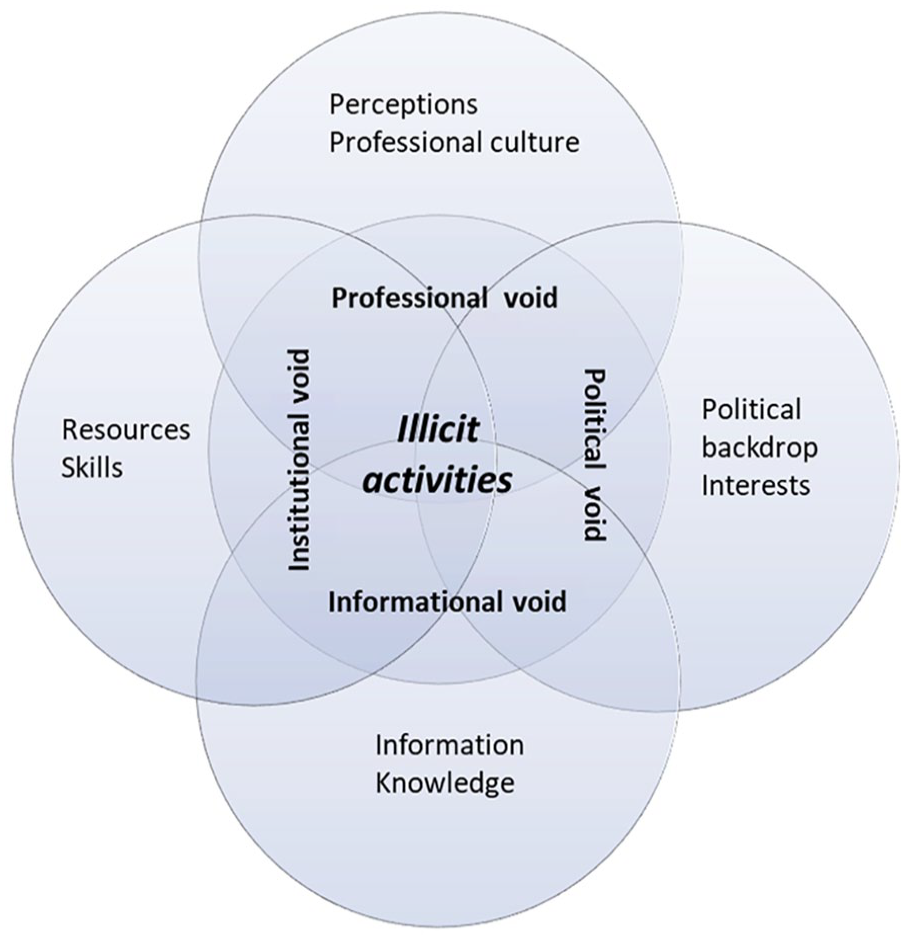
Regulatory voids.
Previous literature also offers examples of professional voids. Fineman (2000) studied environmental regulation through the eyes of a regulator and found that regulation is characterized by interpretative discretion, characteristics and the outlook of regulatory officials. Also, enforcement officials may drift into fruitless negotiations with a violator, because proceeding to prosecution is perceived as a professional failure (Harrison, 1995: 240–1). Furthermore, not only do enforcement agencies struggle to find the optimal form of compliance, such as finding the balance between the benefits of compliance and the social costs of enforcing it (Ogus and Abbot, 2002: 289), they also construct the world through cultural lenses and frames, such as beliefs, perceptions and appreciations (Schön and Rein, 1994; White and Heckenberg, 2014). Compliance has contested meanings if there is no shared understanding of how regulatory requirements should be interpreted (Parker, 2006: 592). As an example, Finnish legislation leaves room for interpretation, which has created difficulties and disagreement between the authorities over whether a violation of environmental regulation is potentially a breach of criminal law and, as such, merits criminal investigation (Sahramäki, 2016; Sahramäki and Kankaanranta, 2014, 2016b). In addition, previous literature has found several regulatory failures that indicate professional voids, such as malaise and capture (Hutton, 2000).
In addition to findings related to professional voids, the present study found several characteristics of regulatory enforcement that indicate the existence of other types of regulatory void. First, incoherence was evident throughout the Delphi study. Professional culture and frames create voids between different sectors, which appear to be a lack of a unified view on regulatory enforcement; for example, there are differing views on how waste crime could be prevented and what the problem actually is. There are also contradictions regarding how enforcement should be organized efficiently, as well as which sanctions should be used and how. A lack of knowledge regarding the choice of sanctions and their efficiency also implies the existence of informational voids.
Professional voids are also present in the findings related to the role of the private sector in the prevention of illicit activities. Self-regulation and self-reporting were seen to be quite untrustworthy and it was also assumed that waste transported across borders goes unreported. However, supervisory respondents had a more positive view of the trustworthiness of self-regulation and self-reporting than did those from the preliminary investigation authorities. For example, the supervisory agencies considered the compulsory reports provided to the authorities to be truthful because professional consultants are often involved in the reporting process. A general criticism, however, is that in some cases it is actually a matter of window-dressing (see, for example, Short and Toffel, 2010). Previous research has shown that compliance improves when self-regulation is combined with tough inspections (Short, 2013: 25), yet the panel had an incoherent view on how important site inspections are as an enforcement tool and pointed out that under-resourcing limits the opportunities for on-site visits. These problems were highlighted in a case of aggravated illicit waste dumping in Finland, which resulted in imprisonment and fines in 2013. Despite self-reporting and site visits, the company was able to illicitly dump and treat sewage, oil waste and grease extraction well waste in the Helsinki metropolitan area in significant amounts between 1999 and 2008 (Sahramäki and Kankaanranta, 2017).
Incoherence is also clear with regard to sanctioning. There was, for example, disagreement over whether supervisory authorities should have the power to issue fines. This is concerning, because previous studies have shown, for example, that fining a waste-processing plant increases a regulator’s credibility and amplifies the impact of the fine: the number of violations committed by the fined operator and other operators in the same jurisdiction decreases (Shimshack and Ward, 2005: 538). Interestingly, there appears to be only a narrow institutional void regarding enforcement powers: half of the panel found it likely that sufficient powers exist. During the Delphi study, the participants’ comments, discussions and findings centred on criminal sanctions when several other sanctioning methods were available, such as licence withdrawal. This observation is supported by previous literature, which has come to the same conclusion on the infrequent use of tougher administrative sanctions (see Ogus and Abbot, 2002; Watson, 2005).
The findings on incoherence are supported by the observation that there is a lack of a unified view about where illicit activities should be detected. Previous studies have found that, in the waste sector, criminal enforcement agencies have often focused on illicit transport, whereas administrative enforcement bodies concentrate on static sites (Dorn et al., 2007). On the basis of the findings of this study, however, we are unable to support or contradict this observation.
There is confusion and differing viewpoints regarding which regulatory strategies are most efficient and how they should be used. Indeed, it appears that elements from both softer and harsher enforcement strategies are in place, creating a contradictory regulatory regime that is based, on the one hand, on trust between regulators and regulatees and, on the other, underlying assumptions about foul play being committed. Combining these findings on incoherence indicates challenges in developing a unified and credible authoritative response to illicit waste activities, which again decreases the deterrence effect that regulatory enforcement may have on potential offenders. The same incoherence is present in previous studies: some suggest that regulatory surveillance, rather than the threat of punishment, is an effective enforcement tool when it comes to enhancing self-regulation (Short and Toffel, 2010: 386–87), whereas others show that cooperative enforcement is effective only when it is combined with the threat of prosecution (Harrison, 1995: 242), and that the threat of intervention acts as a powerful deterrent that is potentially even stronger than actual interventions (Earnhart, 2004: 678–9).
Second, findings indicate severe challenges in the intersectoral flow of information, which create major informational as well as institutional voids. However, the importance of cooperation and intersectoral information exchange were highlighted as an essential part of efficient enforcement throughout the Delphi study. In addition to cooperation between the authorities, interaction between the private and public sectors was considered important. Interestingly, previous studies found that cooperation improves the effectiveness of softer enforcement tools but decreases the effectiveness of harsher ones (Raff and Earnhart, 2018: 1375), and that emphasizing bargaining, negotiation and discussions between regulators and regulated firms goes against several values such as transparency and accountability (Yeung, 2013: 314). On the other hand, it has been suggested that positive relationships between the regulator and the regulated provide incentives for compliance owing to the normative commitment and desire to earn social approval for business activities (Burby and Paterson, 1993: 756).
Institutional and informational voids are also present in findings suggesting that an ambiguous definition of waste poses challenges for enforcement. Despite this, there were participants who found the difficulties in separating illicit activities from licit ones to be insignificant or almost non-existent. A possible explanation for this might be that the panel included representatives from several authorities that enforce different aspects of the relevant regulations. Some regulations may be easier to interpret and therefore make enforcement more straightforward. However, there were also incoherencies within the respondent groups regarding the possible confusion that the definition of waste creates. As such, there appears to be fragmentation in terms of both how to interpret the legislative definition of waste and who should define waste. It should be noted that the complexities associated with the definition of waste on the international level also create criminogenic opportunities (Vander Beken et al., 2006).
Finally, insufficient resources deepen all regulatory voids. For instance, not only do findings suggest institutional voids, because the authorities lack the resources to perform their duties, but they also indicate professional voids, because presumptions are made regarding the abilities of the authorities to perform their tasks. The topic of the under-resourcing of enforcement is far from new. Under-resourcing results in prioritizing enforcement subjects and thus limits the scope of regulatory enforcement. This is concerning because, if there is a low probability of being subject to enforcement, the optimal strategy for operators may be to delay developing compliance protocols until warned to do so and to implement them only if inspected (Andarge and Lichtenberg, 2020: 183).
The findings show that waste crime is primarily seen as a regulatory crime that may be prevented by increasing communication between sectors, clarifying regulatory guidelines and directing resources toward regulatory enforcement. In addition, the detection of waste crime is primarily based on regulatory monitoring, leaving offenders working without environmental licences on the margins of authorities’ response to illicit activities. Interestingly, the participants were concerned about the waste crimes that remain hidden and they also recognized the potential increase in these illegal activities in the future.
The existence of regulatory voids has two significant implications for practice that we wish to emphasize. First, the flow of information and cooperation between sectors should be highlighted. Information, training and guidelines should be clearly stated and available. These topics are vital, because environmental harm and crime are multidimensional issues requiring advanced knowledge, expertise and a multidisciplinary approach if harms to the environment, humans and the economy are to be prevented or at least reduced. Second, under-resourcing and incoherence within different sectors will lead to inconsistent regulatory enforcement and create criminogenic opportunities. As such, allocating resources specifically to preventative and supervisory activities would be essential in order to avoid an increase in waste crime and other illicit activities related to the environment in the future. Another indication that emerges from this study is the existence of political voids in the prevention of illicit waste activities in Finland. Further research should be done to investigate the content of this political void and its implications for the prevention of environmental harm and crime.
These data must be interpreted with caution because of the purposeful sampling in the formation of the participant panel, which raises two limitations. First, the participant panel included only a small proportion of the people involved in the prevention and supervision of illicit waste activities, which raises questions about the degree of representativeness of the panel. Second, the participant panel included only a few participants from each sector, even though the overall number of participants was quite large for a Delphi study. The view from each sector is therefore fairly limited. The primary purpose of the Delphi was, however, to analyse the findings of the whole panel rather than focusing on the respondent groups separately. It should be noted that face-to-face interviews might have produced more and richer data than an online survey (Brady and O’Connor, 2014: 225). Indeed, the present study resulted in a large amount of different types of data, including interviews, questionnaires, scenarios and a workshop, which, again, made the analysis and handling of data quite challenging (see Hasson et al., 2000: 1010). Although we acknowledge these challenges, our findings suggest that the Delphi method can not only reveal voids in enforcement that may remain hidden in studies focusing on corporate compliance but also promote intersectoral discussion.
Conclusion
In general, these findings contribute to the discussion on regulatory enforcement by arguing that professional cultures and the enforcement deficiencies they potentially create should be incorporated into theoretical considerations of regulatory strategies. Moreover, whereas the level of resources is decreasing, the opportunities and incentives for illicit waste activities are increasing. This pressing concern is not limited to Finland and has potential far-reaching consequences if not addressed accordingly.
On a practical level, this study suggests that there is a shared view on the current state of illicit waste activities in Finland. The path ahead seems to be clear in terms of the need to enhance regulatory enforcement and crime prevention. It is also evident where the path may lead if no action is taken – to more pollution and an increase in environmental criminality. There is, however, a long way to go before a shared understanding is reached regarding the ways in which illicit activities should be regulated, detected and prevented most efficiently. To conclude, the authorities walk a tightrope between achieving the most effective regulatory enforcement and crime prevention and attempting to avoid falling into the regulatory voids.
Footnotes
Funding
The author(s) disclosed receipt of the following financial support for the research, authorship, and/or publication of this article: The work of Iina Sahramäki was supported by the Kone Foundation. Data were collected during a research project financed by the National Police Board and the Ministry of the Interior of Finland.
