



Abstract
The role of the victim in the criminal trial process has evolved considerably in recent decades. On a European level, an important driver has been the EU Directive 2012/29/EU, according to which European countries are legally bound to afford certain rights to crime victims. In the Netherlands, the EU Directive has instigated several extensions of existing victims’ rights, and in the Code of Criminal Procedure a separate section has been devoted to the victim. The current study specifically addresses one of the victims’ rights, that is, the right to be legally represented. The Dutch government has financially invested in access to and specialization of victim lawyers in order to promote the realization of victims’ rights, specifically for victims of serious crimes and sex offences. The goal of the current study was to investigate the added value of victim lawyers and the extent to which they contribute to the fulfilment of victims’ rights in the criminal law process. A literature study was conducted to examine legislation pertaining to victims’ rights; a questionnaire study was conducted to investigate the perspective of victim lawyers (n = 148); and interviews were conducted to examine the perspective of the police, Victim Support Netherlands, Public Prosecuting Service, and criminal courts (n = 17). The results show that victim lawyers were important to the realization of victims’ rights. They were considered most necessary with respect to the right to claim compensation and with respect to the right to gain access to the case file. They were also required because victims’ rights have not yet been smoothly incorporated into legal practice. In addition, victim lawyers’ presence in the courtroom was considered important because it contributes to victims experiencing that they are taken seriously. It has been concluded that the support of victim lawyers is an important contribution to victim participation in criminal proceedings.
Introduction
The role of the victim in the criminal trial process has evolved considerably in recent decades. Thirty years ago, in the criminal court, victims had no role other than reporting the crime and acting as a witness. The trial was about judging the offender; the victim was to sit in the audience. Internationally, the first steps towards victims’ rights were taken in 1985 by the United Nations Declaration of Basic Principles of Justice for Victims of Crime and Abuse of Power. 1 In the UN Declaration, it was stated that victims should get access to justice, fair treatment, restitution, compensation and assistance. The UN Declaration was of course soft law but, at the European level, the EU Council adopted a legally binding Framework Decision in 2001 on the standing of victims in criminal proceedings. 2 This framework prescribed, among others, that victims have the right to receive information, protection, respect and recognition, and mediation. In 2012, this Council Framework was replaced by EU Directive 2012/29/EU of the European Parliament and Council of Europe. 3 This EU Directive determined the minimum standards for the rights, support and protection of victims of crime. Compared with the Council Framework of 2001, the EU Directive 2012 is more detailed. The Netherlands implemented the EU Directive in 2017. The Council of Europe has specifically addressed victims’ right to claim compensation in the European Convention on the Compensation of Victims of Violent Crimes (1983), 4 currently ratified by 26 out of 46 Members, 5 in which it is considered necessary to establish minimum financial support for victims of crime. This Convention came into force in the Netherlands in 1988. In 2004, the European Union developed Council Directive 2004/80/EC relating to compensation for crime victims. 6
In the Netherlands, victim awareness grew from the 1970s onwards owing to emancipation and the increase in crime and victimization rates (Leferink, 2012). The first step towards enhancing victims’ rights was an extension of the right to claim compensation in 1995. Before 1995, victims in criminal trials were entitled to have their claim awarded up to a maximum of 1500 guilders (€680). However, since 1995, as a result of the Terwee Act, there is no longer a fixed maximum for a claim. Another important implementation was the advance payment scheme for victims of violent and sexual crimes, which was introduced in 2011. The Central Judicial Collection Agency (Centraal Justitieel Incasso Bureau) deals with collecting court-awarded compensation from the offender. The state makes an advance payment of the awarded compensation to the victims, and then will (try to) recoup this from the offender. In the case of violent and sexual crimes, there is no maximum to this amount; for other crimes the maximum is €5000. Because of the Central Judicial Collection Agency, victims are guaranteed to receive compensation, even if the offender does not have sufficient financial resources. As an alternative to compensation that can be claimed through the criminal trial process, there is also a public fund from which victims of criminal offences can claim fixed amounts of reparation without the obligation of going through the criminal trial process. This is the Violent Offences Compensation Fund (Schadefonds Geweldsmisdrijven), the Dutch fund for state compensation as envisioned by EU Directive 2004/80/EC and the European Convention on the Compensation of Victims of Violent Crimes.
The second major development in the enhancement of victims’ rights was the introduction of the right to speak at criminal justice proceedings in 2005. The right to speak allowed victims (and a single next of kin of deceased victims) of serious crimes to state their views in court about the consequences of the crime (victim impact statement). In 2012, the number of next of kin who were allowed to speak in court was expanded to a maximum of three. In 2016, the right to speak became unlimited, meaning that victims could state their views not only about the consequences of the crime but also about the evidence, the culpability of the offender and appropriate sentencing. Besides the right to claim compensation and the right to speak, other victims’ rights that were officially implemented were: the right to be informed by police and prosecution about the case and the trial; the right to be treated respectfully; the right to access the case file; the right to add documents to the file; and the right to be (legally) represented. Victims’ rights are designated in Title IIIA, Article 51 of the Dutch Code of Criminal Procedure (Wetboek van Strafvordering, Sv). 7
As a consequence of the recent developments in victim rights, legal representation of victims became a more important and increasingly developing legal specialism within the legal world. The development of the legal specialism of victim lawyers was stimulated by the Dutch legislature, which considered it important that victims could get access to legal representation. In 2006, a law was put in place allowing victims of serious crimes (that is, sexual and violent crimes) to access a state-funded lawyer, regardless of the victims’ income (Law on Legal Aid [Wet op de Rechtsbijstand], Article 44). State funding involves the state paying the victim’s lawyers a standard fee of €1155 per case, covering 11 hours × €105 (see also Van der Meer et al., 2017). This fee is meant to cover an extensive legal service package, that is, attending the police interrogation, studying the prosecution file, appointing medical experts to establish the damages, drafting the compensation claim, preparing a plea, providing support with drafting the victim impact statement, attending the victim–prosecutor meeting, and attending (pre-)trial(s) (Raad voor de Rechtsbijstand 2019). Payment and registration of state-funded lawyers of victims is being monitored via the Dutch Legal Aid organization (Raad voor de Rechtsbijstand, 2019). Victim lawyers who are registered with the Legal Aid organization fulfil certain quality criteria: they should be a member of a specialized lawyer association, or have completed an educational course on victim representation and have handled a minimum of five victim cases in the previous year. The educational course is a basic course, which comprises three to four half-days. Since 2015, a specialization course is available for victim lawyers. The specialization course is more intensive than the basic course (17 × three-hour lessons). The development of and registration fee for this specialization course were (partly) funded by the Dutch government.
The financial investments of the Dutch government into the funding and education of victim lawyers raised the question of to what extent victim lawyers contribute to exercising victims’ rights. Nationally, not much is known about the potential impact of lawyers on exercising victims’ rights. Internationally, there has been a US study that investigated whether offering legal representation to crime victims (called ‘clinic attorney’ in the study) has an impact on compliance with victims’ rights in the US (Davis et al., 2012). In this study, 125 victims were asked to what extent they were aware of specific victims’ rights. The study showed that victims who were represented by a lawyer more often reported that they were aware of their rights, such as notification of a defendant’s release from jail; the victim impact statement; notification of the case disposition; and referral to counselling services (Davis et al., 2012). In the Netherlands, no study had been conducted on the role that lawyers play, nor on the extent to which victims’ rights were exercised. The existing national survey of victim satisfaction with the criminal law process (the Victim Monitor) involves only one item on victims’ rights, which is whether victims were satisfied with the information that was provided to them by the police (Andringa et al., 2017). Victims, on average, rated their satisfaction with the information provided by the police at 3.6 on a scale from 1 to 5 (Andringa et al., 2017). Whether other victims’ rights were realized had not been evaluated, nor whether the involvement of a victim lawyer had an impact on exercising victims’ rights.
The goal of the current study was to investigate to what extent legal representation contributes to the realization of victims’ rights for victims of serious crimes in the Netherlands. Rather than asking victims to what extent their rights were addressed, this study involved the professionals: victim lawyers, the police, Victim Support Netherlands, the Public Prosecution Service and the criminal court. The overall aim of the study was to investigate what role victims’ lawyers played in the realization of victims’ rights. The victims’ rights under investigation were: (i) the right to be informed (Article 51ab Sv); (ii) the right to access the case file (Article 51ac Sv); (iii) the right to add documents to the file (Article 51b Sv); (iv) the right to speak in court (Article 51e Sv); and (v) the right to claim compensation (Article 51f Sv). The study was conducted in the Dutch criminal law context. The criminal law system in the Netherlands is generally characterized as ‘moderately accusatorial’, meaning that inquisitorial elements are stronger in the run-up to the trial than in court. The average victim journey through the criminal law system starts with the victim reporting the crime to the police. The police conduct an investigation. All victims have access to the services of Victim Support Netherlands. In the Netherlands, Victim Support is a large, well-organized, state-funded non-profit organization, providing both emotional and legal support. The victim can be heard as a witness during the police investigation by a court magistrate. After the police investigation is finished, the Public Prosecution Service decides whether to prosecute. If the Public Prosecutor decides to prosecute, the Public Prosecution Service brings the case to the criminal court. During the criminal trial, the judge questions the suspect and, potentially, questions the victim in their role as a witness. Victim lawyers ideally are involved directly after the crime has been reported until after the criminal trial. More information about the role of different stakeholders during the criminal trial was derived in the current study.
Method
The method for this study is a mixed method design with three elements: (i) a literature study, (ii) a quantitative study, and (iii) a qualitative study. The aim of the literature study was to investigate what victims’ rights entail for the legal process according to the legislation. The aim of the quantitative study (questionnaires) was to investigate what victim lawyers think about their role in assisting victims of severe crime. The aim of the qualitative study (interviews) was to investigate how the police, Victim Support Netherlands, Public Prosecution Service, and court, think about the role of victim lawyers in exercising victims’ rights. The quantitative study and the qualitative study were conducted consecutively.
Desk research
The aim of the desk research was to investigate how victims’ rights are intended to shape legal practice. We analysed (inter)national legislation, jurisprudence, policy documents, and academic literature regarding victim rights. International legislation included the EU Directive 2012/29/EU regarding victim participation in criminal proceedings. National legislation specifically involved Title IIIA, Article 51 of the Dutch Code of Criminal Procedure. Policy documents included the parliamentary history of the development of Title IIIA, specific guidelines for Public Prosecution and police, and court decisions in which judges have decided how certain victims’ rights in a specific case must be interpreted. Academic literature involved publications in Dutch legal journals since 2012. Other literature was found in standard works on victims’ rights and legal commentaries.
Analysis
One author with a criminal law background [SM] conducted the desk research.
Questionnaire study
The aim of the questionnaire study was to examine how victim lawyers think about their role in assisting victims of serious crime.
Participants
The participants in the questionnaire study were lawyers who represent victims of serious crime. Participants were recruited through the public Legal Aid website (Raad voor de Rechtsbijstand, 2018). In February 2018, 434 lawyers were registered to represent victims in a criminal trial process. Email addresses are publicly available on the Legal Aid website. Lawyers received an email inviting them to participate in the research. The questionnaire took on average 15–20 minutes to complete. Two reminders were sent, respectively, two and four weeks after the original invitation to potential participants who had not yet completed the questionnaire. The questionnaire was anonymous and voluntary. The questionnaire was administered from March to April 2018. In total, 148 of 434 victim lawyers filled out the questionnaire (a response rate of 34 percent). The flow chart of participants is displayed in Figure 1.
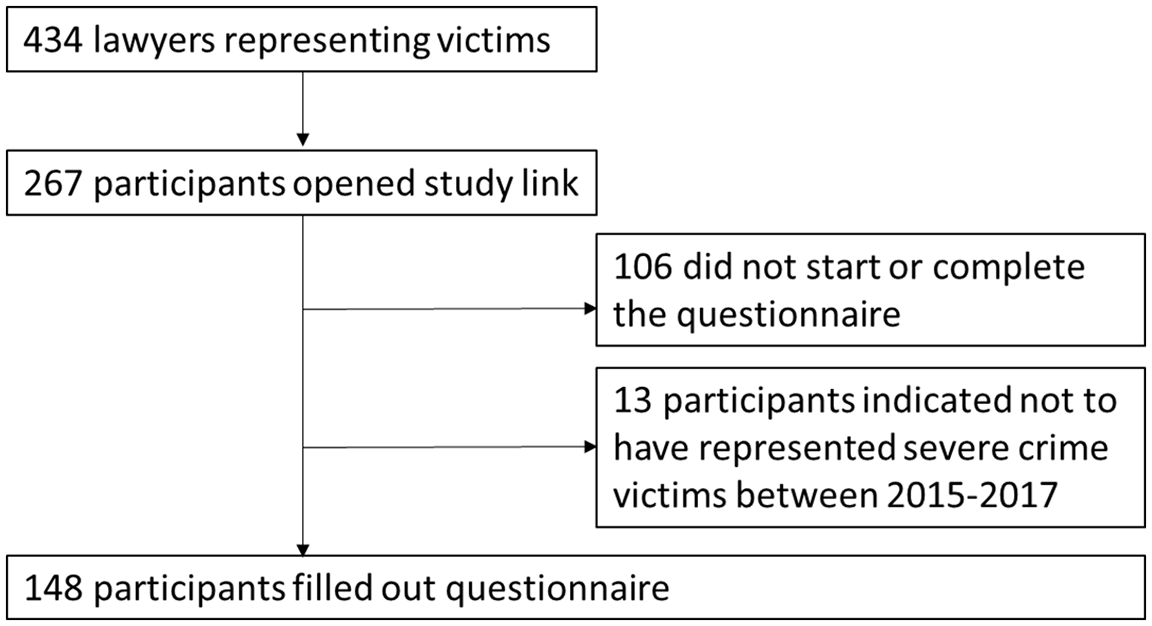
Flow chart of participants.
Questionnaire
The questionnaire consisted of two parts. 8 First, participants were asked about their tasks, including the amount of time spent on each of the five victims’ rights (no time, little time, average, a lot of time, most of the time) and whether they experienced problems with respect to each victim right (no/yes, if yes: comment box). Second, participants were asked about demographic variables, that is, age (range: <30, 31–40, 41–50, 51–60, >60), gender (female/male), province in which they were working (choice: one of 12 provinces listed), and caseload, that is, how often they represented victims of serious crimes between 2015 and 2017 (range: <5, 6–10, 11–20. 21–30, 31–40, 41–50, >50 times). The questionnaire was programmed in Limesurvey (open source online survey tool) and administered online. All questions were closed questions with answer options provided. Most questions contained an open comment box to leave additional comments.
Analysis
The analysis of the closed questions involved deriving descriptive statistics (means and percentages) using SPSS software (version 25). Some answer categories were clustered for simplicity purposes. For example, for the question about the amount of time spent on each victim right, the answer categories ‘no time’ and ‘little time’ were combined, as were ‘a lot of time’ and ‘most of the time’. Also, the right to be informed originally consisted of general information about victims’ rights and case-specific information about the case, which were lumped together. The open answer questions were analysed qualitatively using Atlas.ti software (version 8), meaning that main themes were identified and coded. One author [IB] with experience in qualitative coding conducted the analysis.
Interview study
The aim of the interview study was to investigate to what extent key judicial stakeholders think victim lawyers contribute to the exercise of victims’ rights.
Participants
The participants in the interview study were the key stakeholder organizations involved in handling serious crime cases: the police, Victim Support Netherlands, the Public Prosecution Service, and court magistrates. 9 At each stakeholder, specific participants were recruited, that is, those officers who are involved in assisting victims of serious crimes. Participants were recruited using a snowball method, which is a nonprobability sampling technique in which new participants are recruited via already participating subjects. To start with, the steering committee (see the Acknowledgement section) and the authors provided an initial list of participants. Hereafter, some interviewees presented further participants. Participants were recruited using purposeful sampling, which means that participants with different perspectives were sought. Some interviewees also consulted their colleagues before the interview to be able to provide a more general view about the topic. Participants were approached through email. A rule of thumb is that between 12 and 26 interviews are needed to reach data saturation (Luborsky and Rubinstein, 1995). Data saturation means that no new themes come up in the interview. In total, 22 invitations were sent to potential participants. In total, 17 participants were interviewed (5 participants did not respond to the invitation, or to the reminder): 3 police officers, 3 Victim Support Netherlands employees, 9 people from the Public Prosecution Service (3 case coordinators, 5 Public Prosecutors, 1 policy maker), and 2 criminal trial judges.
Interview
The interview scheme consisted of two main parts. 10 First, participants were asked about their opinion on the five victims’ rights in general and what their own role was in exercising victims’ rights. Secondly, participants were asked about the role of victim lawyers in representing victims’ rights. Subtopics were the added value, problems, good experiences, and points of improvement. The interview scheme was semi-structured, meaning that the topics were predefined but, during the interview, the interviewer could vary the emphasis. Most interviews were held face-to-face at the participant’s work location. One interview was held via telephone. Interviews took on average one hour. The interviews were voluntary and anonymous. One author who is experienced in interviewing and legal proceedings [NE] carried out the interviews. All interviews were audio recorded and transcribed verbatim. Interviews were conducted in Dutch, and held between May and July 2018.
Analysis
The results were analysed using a qualitative approach, using Atlas.ti software (version 8). The analysis consisted of open, axial and selective coding (Strauss and Corbin, 1998). The author who conducted the interviews [NE] conducted the analysis. For validity purposes, the findings were communicated back to the interviewees. The interviewees were asked to check if they thought their findings were well represented and were invited to provide feedback. Most interviewees agreed with the findings. Some interviewees addressed some minor misinterpretations, which were corrected. For this article, quotes were translated by the authors from Dutch to English and integrated in the results. Quotes are indicated by quotation marks.
Ethics
The Ethics Committee of the Law Faculty of the Vrije Universiteit Amsterdam approved the study protocol.
Results
Literature study
Below we report how victims’ rights are exercised in legal proceedings according to the literature and what role the lawyer can play.
Right to be informed
The right to be informed (Articles 51ab and 51ac Sv of the Dutch Code of Criminal Procedure) involves victims having the right to receive general information about their rights and specific (case-related) information about the date, location, time, progress and outcome of the case. The police and the Public Prosecution Service are responsible for providing information to the victim in their first contact. The Public Prosecution Service generally provides information through letters. Victims of serious crimes can also request a face-to-face meeting with the Public Prosecutor. Only the Public Prosecution Service is obliged to provide specific case-related information to victims; there is no mention of having to provide information to the victim lawyer. The role of the lawyer regarding the right to be informed has not been discussed in the literature. They are in a position to inform the victim about their rights, to explain legal information to the victim, and to actively request information from the Public Prosecution Service about the date and time of the trial.
Right to access the case file
The right to access the case file (Article 51b Sv of the Dutch Code of Criminal Procedure) states that victims are entitled to access all documents that are relevant to them; that is, the complete case file or parts of it. Victims have to ask the Public Prosecution Service to gain access to their file. The Public Prosecution Service can provide access to the file electronically or in person, with an option of providing access under supervision. The Public Prosecutor can deny access based on the three reasons; that is, if access to the file would (i) have a severe impact on a witness, (ii) strongly affect the police investigation, (iii) impact state security. To deny access, the Public Prosecutor needs to obtain the written authorization of the judge. Jurisprudence shows that courts differ in their opinion on whether psychological reports on the suspect should be accessible to the victim. Victim lawyers can play an important role in asking the Public Prosecutor for the file. The lawyer can also explain the content of the file to the victim, and, if access is denied, the lawyer can ask again, file a complaint or appeal.
Right to add documents
The right to add documents to the file (Article 51b sub 2 Sv of the Dutch Code of Criminal Procedure) allows victims to add documents that they consider relevant. In this way, they are considered to be able to contribute to the content of the file. Documents that they can add are, for example, documents to substantiate the damage, such as medical files or reports from an employment expert, the results of a private investigation, or documents regarding culpability. Victims cannot bring witnesses or experts into the hearing. Victims have to provide their documents to the Public Prosecutor. The Public Prosecutor can deny documents based on the same three criteria described above regarding the right to access the file, for which he also needs to obtain written authorization by the judge. Victim lawyers can fulfil an active role in collecting evidence by conducting a private investigation. If a Public Prosecutor denies the addition of information, the victim lawyer can repeat the request or appeal.
Right to speak
The right to speak in court (Article 51e Sv of the Dutch Code of Criminal Procedure) allows the victim (or next of kin) to make a statement at the trial, for instance about the consequences of the crime, the evidence, the culpability of the suspect and the sentencing. Victims are allowed to speak in cases where the crime involves a sentence of imprisonment of eight years or longer and/or certain specific crimes (for example, sexual crimes). No guidelines exist (yet) about the duration (length of time) of the statement and at what point during the trial the right to speak can be exercised. The right to speak primarily allows victims to state their views in court, but judges may take the victim impact statement into account in their sentencing. The right to speak can be exercised verbally, but victims are also allowed to submit a written impact statement. The lawyer can assist in drawing up the statement but, in practice, Victim Support Netherlands assists victims in that.
Right to claim compensation
The right to claim compensation (Article 51f Sv of the Dutch Code of Criminal Procedure) provides for victims to claim material and immaterial costs related to the crime, such as the costs of damaged goods, medical costs, travel costs, loss of income, and pain and suffering. Article 51f Sv does not indicate a time frame in which the claim has to be submitted to the Public Prosecution Service. The Public Prosecution Service forwards the claim to the defence and to the court. The judge decides whether to approve or deny the claim, or to declare it inadmissible. If the court denies the claim, the victim can appeal. Where the claim is considered inadmissible, the victim cannot appeal. The judge can declare the claim inadmissible if the claim imposes a disproportionate burden on the trial (that is, makes it too complicated). There is no maximum to the amount of compensation that can be claimed. The role and added value of the lawyer is that the lawyer is better able to substantiate claims, if necessary with the help of experts (reports). Furthermore, the lawyer can explain the claim at the hearing and respond to the opinion of the Public Prosecutor and to questions from the court. If the claim is somewhat more complicated, the lawyer can certainly be of added value.
Questionnaire study
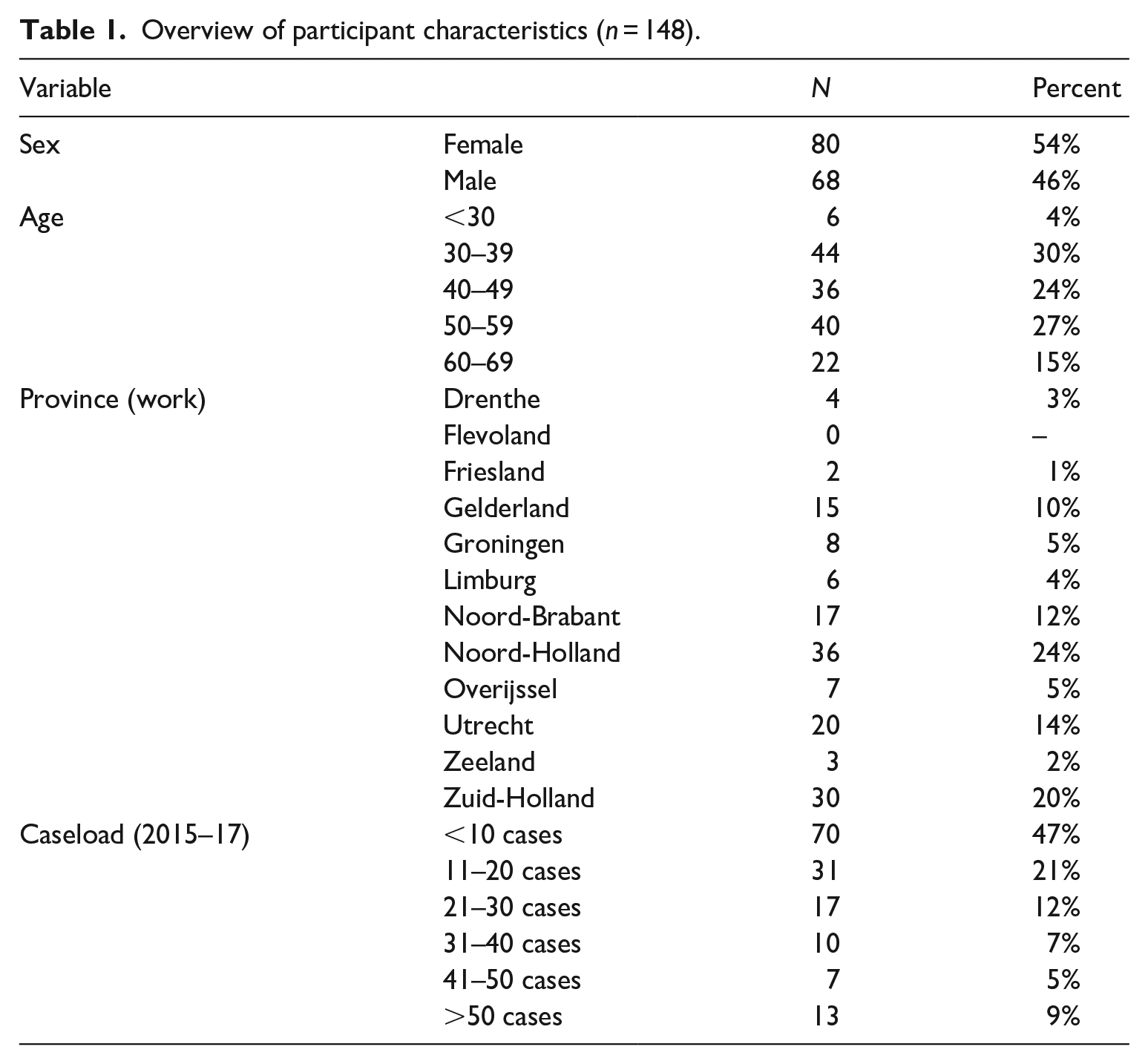
In total, 148 victim lawyers filled out the questionnaire. The sex of the participants was relatively equal (54 percent female, 46 percent male) and age was normally distributed (M = 46.3 years, SD = 11.6). The spread of our participants regarding work area was similar to the spread of population: 47 percent of participants indicated that they represented fewer than 10 serious criminal cases during the period from 2015 to 2017. An overview of participant characteristics is found in Table 1. How much time the participants said they spent per victim right and whether they experienced problems in exercising these victim rights is reported below. The percentage of participants spending most and least time per victim right and the percentage of participants experiencing problems in exercising victim rights are displayed in Figures 2 and 3 respectively.
Overview of participant characteristics (n = 148).
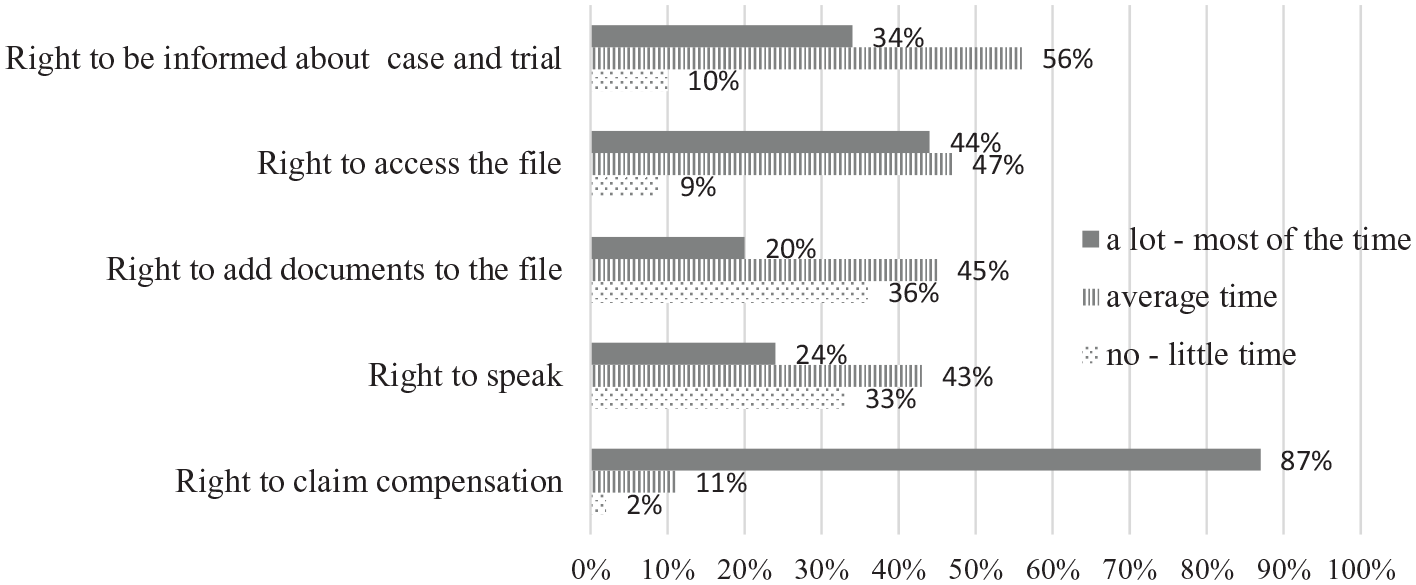
Percentage of participants (x) and amount of time spent (z) per victims’ right (y).
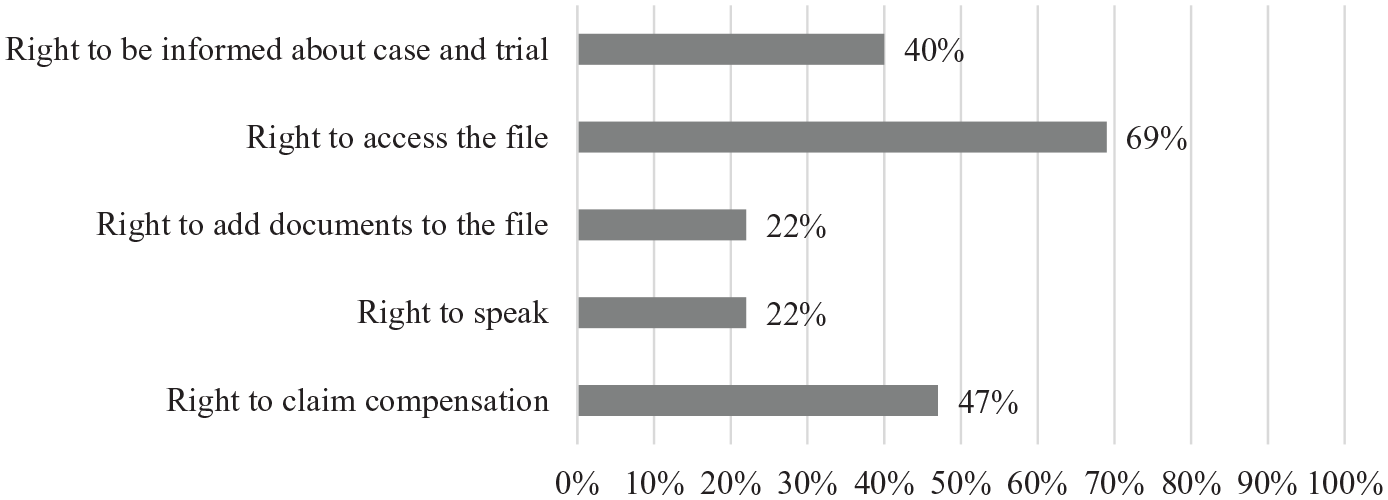
Percentage of participants (x) perceiving problems per victims’ right (y).
Right to be informed
About one-third (34 percent) of participants indicated that they spent a lot or most of their time on the right to be informed. Participants said this comprised providing information about the case file and the criminal proceedings, but also preparing the victim for attending the hearing. Some of the participants indicated that they would like to spend more time on informing and preparing the victim for trial, to make sure the victim understands the proceedings, feels taken seriously, and feels supported. Forty percent of participants experienced problems regarding the right to be informed. The issues mentioned most were that the Public Prosecution Service and/or the court did not always take the victim and their lawyer into account when planning trial dates, and did not inform them about either postponement or progress of a trial or interrogations.
Right to access the case file
Nearly half of participants (44 percent) indicated that they spent a lot or most of their time on the right to access the case file. Notably, a high percentage of participants (69 percent) experienced problems regarding the right to access the file. The problems were around three themes: it takes a lot of effort to obtain the file, the file was not sent to the victim lawyer on time by the Public Prosecutor, and the file was not complete. The victim lawyers believed that the reason obtaining a (complete) case file is difficult is because the Public Prosecutor wants to protect the privacy of the defendant and/or wants to maintain the option of calling the victim as a witness. Participants say they need access to the file in order to be able to write a proper claim.
Right to add information
The right to add information is the right that generates the least time for victim lawyers (generally): 36 percent of participants said that they spent little or no time on adding documents to the case file. About one-fifth of participants (22 percent) experienced problems with respect to the right to add documents to the file. The biggest issue the participants mentioned was that documents sent by lawyers were not always actually added to the case file. Participants say this is frustrating, especially for the victim.
Right to speak
Around one-quarter (24 percent) of participants reported spending most or a lot of their time on the right to speak; whereas 33 percent said they spent little or no time on this right. Some victim lawyers related relying on Victim Support Netherlands to help the victim draft a statement so that the lawyers themselves could focus on other aspects of the case. Participants also experienced issues with respect to the right to speak (22 percent). They stated that there is no clear legal framework regarding the precise implementation of this victim right. It is unclear when and how often during the trial the victim is allowed to speak; it is also not clear where the victim should sit in court. The participants say that, although the law allows victims to exercise their right to speak, practice is still searching for ways to implement this right properly.
Right to claim compensation
Most participants (87 percent) indicated that they spent a lot or most of their time on the right to claim compensation. They stated that gathering all the necessary information and subsequently writing a claim is a time-consuming process. Nearly half of participants (47 percent) experienced problems concerning the right to claim compensation. The most reported issue is that the claim is not always distributed properly before trial, causing the other parties to be unaware that the victim wishes to claim compensation. Another problem is the deadline the victim lawyer is given for submitting the claim to court. The lawyers said that the Public Prosecutor imposes a deadline of 14 days before the trial, whereas the law allows claims to be submitted at the trial. Some participants found the 14-day deadline problematic because (medical) information concerning injury to the victim is sometimes available only shortly before the trial. Finally, some participants considered it a problem that some claims are simply declared inadmissible, even if the claim is not complicated: according to them, this is due to the fact that some criminal courts have too little knowledge of civil (compensation) claims to handle them.
Interview study
In total, 17 participants were interviewed: 3 police officers, 3 Victim Support Netherlands employees, 9 people from the Public Prosecution Service, and 2 criminal trial judges. The participants had a lot of work experience. Some participants had asked the views of colleagues in order to report a general picture, which contributes to the validity of the interviews. What interviewees said about the role of victim lawyers in exercising victims’ rights is reported below.
Right to be informed
Interviewees said that each stakeholder provides information to the victim in different phases. Nevertheless, victim lawyers were considered to have added value with regard to ‘explaining the legal matters to victims at every stage of the process’, because the lawyer is usually present during the whole process, whereas other stakeholders, such as the police and the Public Prosecutor, are mostly present during specific phases of the criminal process. A judge said that lawyer involvement often implies that ‘victims have better expectation management of the process and sentencing’. On the other hand, several interviewees said that some lawyers also contribute to ‘mistaken expectation management’, for example by suggesting ‘unrealistically high sentencing or compensation amounts’. Unrealistic expectations were said ‘to undermine the victims’ acceptance of the outcome’. One participant from Victim Support Netherlands mentioned another problem being that ‘lawyers in the urban agglomeration area seem to invest less time in providing information than in other parts of the Netherlands’ (that is, in suburban areas).
Right to access the case file
According to various interviewees, ‘victims rarely wish access to their file’. Nevertheless, some interviewees considered lawyers to have added value. They are needed because the Public Prosecution Service and the court do not provide access to the file to a victim without a lawyer or even to a case manager of Victim Support Netherlands. Even when a lawyer is involved, Public Prosecutors considered it questionable whether victims (lawyers) should have access to all case file information, especially when it concerns psychological reports on the suspect. Public Prosecutors were of the opinion that ‘providing access to psychological reports on the suspect violates the suspect’s rights’. An issue with respect to lawyer involvement was that, according to some Public Prosecutors, ‘some lawyers frustrate the police investigation by insisting upon access to the complete file immediately’. Another problem that was mentioned was that ‘some lawyers just pass on the file to the victim, including photos of, for example, a murder case, without a proper introduction, which could be traumatic for the victim’.
Right to add documents
In general, several interviewees stated that ‘victims almost never make use of the right to add documents to the file’, except for the written victim impact statement, which is added to the file more regularly. Nevertheless, the added value of victim lawyers was considered to be that victim lawyers are the only player that can oversee what evidence or documents are missing in the file: ‘they know which documents should be added to support the case’. Another added value was that ‘victim lawyers can sometimes get access to certain files, such as the victim’s medical files, which even the police or the victim failed to access’. A problem with respect to the role of the legal profession, according to a Public Prosecutor, was that some lawyers consider the right to add documents to the file as ‘an opportunity to conduct their own private investigation’, which was considered ‘undesirable, as that could frustrate the [Public Prosecutor’s] job in leading the police investigation’. Another issue was that some lawyers add documents to the file during the trial: documents should preferably be added to the file pre-trial, because then a Public Prosecutor ‘can decide whether it is relevant’.
Right to speak
Several interviewees said that few victims make use of the right to speak. The added value of victim lawyers with respect to the right to speak was that victims with a lawyer often get a front row seat to exercise the right to speak, which is not always the case for victims represented by Victim Support Netherlands. One participant said that ‘lawyer involvement results in more professional victim impact statements, because extreme accusations against the defendant have been removed’. Participants also noted that some lawyers nowadays use the right to speak to make a plea about the evidence and sentencing. Some interviewees consider that a good development; others consider that a problem: according to them, ‘some lawyers “misuse” the right to speak to make an extensive plea to discuss all the evidence and to advise on sentencing’. Some victim lawyers ‘even’ make a second plea, which causes an imbalance: ‘the Public Prosecutor may feel everything has already been said by the lawyer and it makes the accused feel overpowered’. According to several interviewees, the problem is that the law is not clear about when and how often victim lawyers can plead.
Right to claim compensation
Of all victims’ rights, the interviewees considered victim lawyers to have ‘most added value in the context of the right to claim compensation’. The interviewees said that victims often make use of the right to claim compensation. Several interviewees said that substantiation of the claim is better when a lawyer is involved: the compensation is set up more realistically, better explained, and more likely to be considered admissible in criminal proceedings. Some interviewees thought that lawyer involvement was associated with higher compensation claims or higher chances of a claim being awarded. The legal aid department of Victim Support Netherlands can help with the compensation claim for simple claims, but they said ‘a lawyer is desirable in the case of a difficult claim, for example where the victim suffers from permanent injury and future loss of income needs to be estimated’. Problems with respect to the legal profession and the right to compensation were that ‘some lawyers aimed for unrealistically high compensation’. Furthermore, ‘some lawyers do not orally explain their claim at the hearing’, and some submit the compensation claims too late (that is, only a day before the hearing), which often results in the claim being declared inadmissible. Finally, very lengthy and over-complicated calculations were also said to run the risk of being considered too complex and therefore inadmissible.
Other themes
Two other overarching themes emerged from the interviews. The first was that various interviewees indicated that a lawyer is of psychological value during the trial. It was suggested that being represented by a lawyer helps victims to feel taken seriously and being recognized in their suffering. Several interviewees said that ‘having a lawyer is important to victims for equality, because the accused also has legal representation’. This may contribute to a ‘feeling of emancipation’. The second overarching finding was that some interviewees expressed the importance of the more traditional role of the lawyer – being ‘on their side’, and, for example, ‘being equipped with all the tips and tricks of the trade, if necessary, to prevent dismissal of the case’. A problem, according to a Public Prosecutor, is that some lawyers make counterproductive use of their rights. ‘Sometimes lawyers “want all sorts of things and make requests”, which cannot all be granted. That behaviour sometimes contributes to victim incomprehension, causing the victim to feel misunderstood and not heard.’
Discussion
The current study investigated the extent to which legal representation of victims of serious crimes and sex offences contributed to the exercise of victims’ rights. Based on the perspectives of key legal professionals and victim lawyers, it could be concluded that victim lawyers have an important added value in exercising victims’ rights. Victim lawyers were considered to contribute to each individual victim right. Their most important contribution was with respect to the right to claim compensation. Victim Support Netherlands is also capable of assisting victims with drafting and calculating compensation claims, but this was still considered the main specialism/expertise of lawyers. Especially in the case of complex injuries, victims were thought to be better off in the hands of victim lawyers, who may have more expertise in calculating future damages in the event of permanent disability. It was suggested that compensation claims are drafted and supported better and may even be more likely to be awarded if a lawyer is involved. The fact that victim lawyers spend most time on claiming compensation may reflect the traditional view that the way in which the law can assist victims’ needs is financial (Akkermans, 2009). The question is what victims would like their lawyer to spend time on. The literature showed that victims consider financial compensation important but that is often not the most pressing need. Victims have many non-material needs, such as the need for information, to know what happened, to prevent it happening to other people, to be heard, to tell their side of the story, to be acknowledged and (possibly) to receive an apology from the offender (Ten Boom and Kuijpers, 2012). It has been advocated that lawyers should focus more on meeting the non-material needs of victims, rather than only on financial compensation (Akkermans, 2009). This suggestion fits within the new EU victims’ rights strategy 2020–25, in which a paradigm shift is suggested for departing from (insufficient) pecuniary payment towards adopting a broader view of reparation, recognition, restitution, support and care (Milquet, 2019).
The added value of victim lawyers that emerged in the current study is related to the changing role of the victim in the criminal proceedings, which brings implementation problems: some problems are just practical and some are more fundamental. An example of a fundamental problem could be, for example, the problems experienced regarding the right to access the case file. The Public Prosecution Service and the court agreed that they do not readily provide access to the file to the victim, especially when the file includes psychological reports on the suspect. Their explanation was that providing access to psychological reports on the suspect would entail a violation of the offender’s rights, which leads to a fundamental discussion around the tension between balancing victims’ rights and offenders’ rights. Other times the added value of victim lawyers was more related to the fact the victims’ rights were not yet well fulfilled in legal practice. For example, the right to be informed: legislation prescribes that the police and Public Prosecutor should provide victims with general and case-specific information. In practice, however, this does not always happen, so victim lawyers are required to request and double-check the date, time, place, progress and outcome of the trial. It was said that these practical implementation problems may be resolved within a couple of years, once legal practices have incorporated victims’ rights fully into their procedures. Finally, in addition to the added value of victim lawyers with respect to victims’ rights, victim lawyers were found to fulfil an important overarching role in assisting victims of crime: victim lawyers can protect the victim from the harmful psychological impact of the criminal proceedings (secondary victimization), they can make sure the victim is heard (procedural justice), and they can provide empowerment and equality of arms in the courtroom.
The finding that legal practice is still getting used to the implementation of victims’ rights may be relevant for the current (Dutch) political climate in which victims’ rights keep being extended. In a relatively short time frame, criminal law practice has undergone several important changes in implementing victims’ rights. These changes had a big impact on legal practice. And there is an ongoing political push to expand the role of the victim further. The Dutch Ministry of Justice is preparing to implement further extensions to victims’ rights in 2020, such as the obligation for the offender to be present when the victim exercises the right to speak. Extending victims’ rights has prompted a discussion about whether the rights of the accused are being violated (Geeraets and Veraart, 2017). Several participants in the current study, as well as academics, have argued the importance of first stabilizing current victims’ rights before extending them (Malsch, 2018; Van der Aa, 2018; Van der Aa and Groenhuijsen, 2012).
Notwithstanding the added value of victim lawyers that was found in this study, it is important to mention that victim lawyers could also have a negative effect on victims’ rights. A criticism raised by some participants was that some victim lawyers create (too) high expectations about the sentencing or amount of compensation. Unrealistic expectations could undermine victims’ acceptance of the court decision. Potentially, the kind of role the lawyer ascribes to themselves also seems relevant. In the current study, it was suggested that some lawyers act in quite an adversarial manner whereas others favour a more restorative approach. An adversarial attitude is understandable, maybe even necessary for legal development, but it may also damage victims’ trust in the legal system. A potential negative effect was also shown in the US study that was mentioned in the introduction: it showed that victim lawyers had a positive effect on victim awareness of their rights, but victims with a lawyer were also less satisfied with the court process and their case outcome when compared with victims without lawyer (Davis et al., 2012). The researchers gave two potential explanations: either victims who sought out attorneys were already dissatisfied with their treatment in the criminal justice system or higher awareness of victims’ rights resulted in disappointment at what actually happened in court (Davis et al., 2012). The latter explanation suggests that more information may not always be better. The relationship between lawyer involvement and a negative effect on outcome satisfaction and the various roles that lawyers can play in this (adversarial versus restorative approach) could be an interesting implication and an area of further research.
Another suggestion for further research is to conduct a follow-up study in which victims are included. This suggestion comes from a limitation of the current study, which is that victims were not included. The perspective of professionals has provided a unique insight into the matter; however, in order to draw a general conclusion about the impact of victim lawyers on victims’ rights, it would be necessary to conduct a follow-up study in which the experiences of victims with and without legal representation are compared. The outcome measure of that study would ideally be the extent to which victims’ rights have been exercised (see, for example, Davis et al., 2012).
Even though the current study has revealed problems with respect to the implementation of victims’ rights, the Netherlands is still a front-runner compared with other European countries. This was already found in a study in which the implementation of the principles of Recommendation (85) 11 of the Council of Europe was evaluated (Brienen and Hoegen, 2000). Recommendation (85) 11, which was adopted in 1985, contains the first guidelines on how victims of crime should be treated by the criminal justice authorities in criminal proceedings against the offender. Out of 22 European countries, the Netherlands, together with England and Wales, was found to have best implemented the Recommendation principles (Brienen and Hoegen, 2000). The study evaluating the implementation of the Victims’ Rights Directive 2012/29/EU also showed that the Netherlands, together with Belgium, Czech Republic and Hungary, were the only (four) EU countries (out of 27) that transposed all 28 articles of the Directive (European Parliamentary Research Service, 2017). Another interesting finding was that victims in the Netherlands were found to have fewer rights to participate in the proceedings compared with Austria, Germany, Poland and Portugal; however, the extent to which the practitioners grant an active participatory role to victims was higher in the Netherlands compared with the other four countries (FRA, 2019).
With respect to providing state-funded access to legal aid, the Netherlands does not seem to be fulfilling a special role: access to legal aid, notably access to legal representation free of charge, is generally available to victims in nearly all (26) EU Member States (FRA, 2015). The only countries in which no legal representation is granted are Ireland and the UK, because in these countries the victim is not a party to the criminal proceedings (FRA, 2015). However, in most cases, as in the Netherlands, free legal representation is available for only specific categories, such as serious crimes, sexual offences, victims of domestic violence or minors. Other victims are subjected to an economic means test (FRA, 2015). It is notable that free legal advice is available as a fundamental right in only 7 of 28 EU countries, including the Netherlands (FRA, 2015). Another EU report in which victim responses in seven European countries were compared showed that in six out of the seven countries victims said they wished they had more legal advice (FRA, 2019). The exception was Austria, in which victims were content with the legal advice they received. In Austria, two counsellors accompany victims of violent crime during the proceedings: one for psychosocial support and one for legal advice. Their legislation on procedural assistance received an award in 2014 and was used as an example of a promising practice (FRA, 2019).
In conclusion, this study has shown that victim lawyers are required for victims to access their rights, specifically in relation to claiming compensation and accessing their case file. Because legal practice is still getting used to the implementation of victims’ rights, it appears to be important that victims have access to a lawyer who will ensure that they can actually access their rights. However, lawyers have to be careful to provide the right expectation management in order not to be detrimental to victim expectation. The fact that the Dutch government has provided victim access to a state-funded lawyer regardless of income is an important sign that the government takes victims of crime seriously. Insight into how victim lawyers and victims’ rights play out in practice could be of interest to other European countries. It is concluded that the support of victim lawyers is an important development in victim participation in criminal procedures.
Footnotes
Acknowledgements
We thank our participants for engaging in this study and the steering committee for monitoring the progress of the research. The steering committee provided access to their network for participant recruitment. The steering committee was neutral and independent, and it did not influence the research findings. The research results have been published in a Dutch report (Elbers et al., 2018). In the current article, the findings are discussed in an international context, with a special focus on European legislation and practices. It is written as an original and standalone piece.
Conflict of interest
The author(s) declared the following potential conflicts of interest with respect to the research, authorship, and/or publication of this article: All authors have contributed to the design of the study, the design of the questionnaires and drafting the report. To prevent a potential conflict of interest, AS did not contribute to the analysis of the data and interpretation of the findings owing to an additional role as a part-time lawyer alongside her academic position.
Funding
The author(s) disclosed receipt of the following financial support for the research, authorship, and/or publication of this article: The research was funded by the Scientific Research and Documentation Center (WODC), which is an independent research organization conducting research at the request of the Dutch Ministry of Justice and Safety. The WODC drafted the research question and commissioned the research from the authors following an official tender procedure, in which multiple research teams applied. The WODC appointed the steering committee. The WODC was part of the steering committee, but did not influence the research findings.
