



Abstract
The discovery of intrinsically photosensitive retinal ganglion cells in the eye and their interaction with melatonin has shown that light has significant effects beyond vision. The present study compared the effect of an integrative lighting system, providing low-intensity melanopic illuminance with the effect of an ordinary, qualitatively equivalent, electric lighting system. The study utilised a 2 × 7 randomised mixed experimental design. The sample consisted of 13 women and 11 men. Salivary melatonin secretion and subjectively perceived sleepiness in the evening were measured every half hour during 3 hours of light exposure. The chronobiologic typology (stability and amplitude) and trait-like negative and positive affect were measured once and analysed as covariates. The results showed a general increasing linear effect for both melatonin and sleepiness. A significant nonlinear effect of time was present in the group exposed to integrative lighting, indicating delayed melatonin secretion. The findings were stable across all levels of the examined covariates. These results confirm that the integrative lighting system produces effects beyond vision under otherwise ordinary lighting conditions. Furthermore, the results corroborate research suggesting that melatonin secretion and sleepiness may not be directly linked. The integrative lighting system provides new opportunities to develop indoor electric lighting resembling daylight.
1. Introduction
For years, indoor lighting design has predominately facilitated visual proficiency, making it easier to accomplish visual tasks faster with increased quality and reduced error. The discovery of photosensitive ganglion cells in the eye (intrinsically photosensitive retinal ganglion cells (ipRGCs)) shows that light, in addition to visual effects, also has substantial effects beyond vision (i.e. non-image forming). 1 This finding has stimulated a new field of research aiming to understand how lighting affects the human body and how this knowledge can be utilised to generate healthy, well-functioning indoor work environments. 2
As humans are diurnal primates, evolution has moulded our circadian rhythm so that we prefer to engage in activity when there is light and rest when it is dark. Presently, this evolutionary adaptation is challenged by electric lighting. According to evolutionary theory, deviations from the environment for which our species has developed specific phenotypic adaptations, often denoted evolutionarily novel environments,3,4 may create evolutionary stress. 5 The evolutionary adaptations no longer function properly, with diminishes our ability to cope and increases the risk of negative health development and human error. Environments corresponding with the conditions of our natural habitat should accordingly reduce evolutionary stress and prevent the development of negative repercussions. Normally, human vision exhibits high tolerance for different lighting conditions, but this may necessarily not be the case with light-dependent effects beyond vision. Thus, depending on its use and spectral power distribution (SPD) electric lighting may produce effects beyond vision that may affect human health and well-being.
With regard to electric indoor lighting, particular interest has been directed towards the acute effects of light on the secretion of the hormone melatonin, sleepiness, alertness, and how such temporary effects relate to the circadian rhythm.6,7 Our internal biological clock does not follow an exact 24-hour rhythm and needs to be adjusted or reset each day.2,8 Melatonin is an important circadian marker secreted nocturnally with onset under dim light conditions in the evening. 9 Light entering the eye, especially at wavelengths in the range of 460–480 nm, suppresses the synthesis of melatonin10,11 and functions as a chronobiotic agent by resetting the internal clock each morning.12,13 The effect of light on melatonin is not confined to light exposure in the morning. Integrative lighting (i.e. a lighting aiming to integrate both vision and effects beyond vision 14 ) has been shown to suppress melatonin throughout its secretion cycle.15–17 Light has also been shown to reduce sleepiness and increase alertness in the evening/night, and in some instances, this effect has been linked to reduced melatonin secretion.18,19 Consequently, concern has been raised that blue-enriched light (i.e. lighting with a higher content of radiation in the short wavelength part of the spectrum) in the evening, especially from modern screen technology, may disrupt sleep among children and adolescents,20,21 as well as adults. 22 Others argue that increased exposure to integrative lighting may be an appropriate measure in night work, especially night work requiring sustained attention and alertness. 23 However, the causal link between light, melatonin suppression and sleepiness/alertness is rather complex. A pertinent question in this regard is whether suppression of melatonin affects sleepiness/alertness directly or whether the effect is more indirect, for example, mediated through reduced sleep quality and/or a circadian phase shift. 24
Research indicates that exposure to light during the daytime, when melatonin blood values are almost zero, 25 affects health, sleepiness, alertness, sleep quality and the circadian rhythm.26–29 Effects beyond vision seem to be present under daylight 28 as well as electric lighting conditions.26,27 The mechanisms behind these effects are still not completely understood, but ipRGCs are most likely involved in the process. ipRGCs contain the light-sensitive photopigment melanopsin, which has a peak light absorption at approximately 480 nm.30,31 In addition to responding to light themselves, ipRGCs respond to summarised synaptic input from rods and cones.32–35 Thus, ipRGCs seem to be highly versatile and able to respond to a variety of lighting conditions.
Both elevated brightness and blue-enriched light have been discussed as means to implement integrative light in indoor lighting design.6,36–40 However, both solutions affect the appearance of the lit environment. It is well known that large variations exist in individual lighting preferences, both with regard to the light level and the correlated colour temperature (CCT).41–43 Departures from current standards and guidelines (e.g. EN 12464–1) 44 should nevertheless be avoided, as this may create indoor environments considered unfamiliar, unpleasant and undesired by many users. Another unwanted by-product, especially with elevated brightness, is increased energy expenditure. Sustainability is a growing concern globally; thus, increased energy consumption is not desirable. Solutions encompassing unconventional design and the placement of luminaires, such as specialised desktop luminaires,26,45 may also pose a problem. New and unfamiliar products, technologies and environments are generally considered riskier and potentially annoying.46,47 This may lead to the rejection of new solutions regardless of the actual associated risk or benefit. 48
To counteract such undesired effects, solutions opting to mimic the SPD of daylight without significant alterations to the level of ambient indoor lighting, CCT or other luminous environmental conditions have been suggested and examined to some extent.45,49–51
The introduction of light-emitting diode (LED) technology has revolutionised lighting design by providing unprecedented opportunities for controlling and tailoring lighting for specific purposes. 52 Capitalising on this development, an integrative electric lighting system was developed. To be considered integrative, the lighting system must be able to produce acceptable visual conditions and at the same time also demonstrate the effects beyond vision, 14 notably the ability to suppress melatonin. The lighting system should be able to do so under conditions resembling ordinary use. To achieve this goal, the integrative lighting system combines a single blue and several white LEDs mounted in a conventional ceiling suspended pendant luminaire. A specialised control unit, developed for this purpose, directed low-intensity melanopic illuminance emitted by the single blue LED to relevant work areas. The overhead position of the luminaire ensures light exposure of the inferior retina, previously shown to be potentially the most sensitive to light-induced suppression of melatonin.53,54 The luminous environment provided is flicker free, does not increase energy expenditure significantly and corresponds to what is commonly found in the office sector in the Nordic countries.
The versatility of the ipRGCs makes melatonin suppression likely, and may possibly also cause changes in sleepiness/alertness, even with low levels of melanopic illuminance. 30 Thus, changes in melatonin secretion and sleepiness/alertness may also occur with ordinary electric lighting. Therefore, the effect of an integrative electric lighting system should be more pronounced than what is found with typical electric lighting currently used in the office sector. Furthermore, the effect should be present even when compared to electric lighting systems that, apart from the monochromatic light emitted by the blue LED, displays equivalent lighting parameters, such as brightness and ambient CCT, as well as design and placement of the luminaires.
People differ in both the amount of melatonin secreted and in their melatonin profiles over time.25,55 Some of these variations can be attributed to random situational factors, while others could result from more trait-like dispositions. Individual differences in circadian rhythm are of special interest in this regard. Based on circadian rhythmic expressions, such as the degree of sleepiness, fluctuation of the core body temperature and the timing of the peak of nocturnal melatonin, several chronobiological typologies have been suggested. Some typologies are primarily concerned with variation in the phase dimension of the circadian rhythm (i.e. morningness–eveningness), while others emphasise differences in the amplitude and the stability components. 56 The different types vary on dimensions that may affect the secretion of melatonin and the development of sleepiness in the evening.57,58 Individual differences in chronobiology may thus represent a potential confounder in studies investigating integrative lighting.
Individual differences in how humans experience and regulate negative emotions, often termed negative affect (NA), might also be important. Several studies suggest a link between circadian rhythms, personality traits and emotional conditions.58–61 Direct effects of light on mood, cognition and learning appear to be present.62,63 Recent research indicates that this effect may be bidirectional, at least in some individuals, where changes in melatonin levels seem to affect and be affected by changes in fatigue and affectivity. 64 Moreover, a bidirectional relationship appears to be present between sleep and emotion regulation. 65 Pertaining to integrative lighting, NA may consequently constitute a source of individual variation that may affect melatonin secretion and sleepiness. Positive affect (PA) has not received the same attention. However, previous research has shown that PA is prone to impact the subjective appraisal of ambient lighting. 66 Thus, PA may possibly affect the relationship between sleepiness, melatonin secretion and integrated electric lighting.
The aim of the present study was to investigate the effect of prolonged exposure to an integrative electric lighting system on melatonin secretion and perceived sleepiness, compared to the effect of a typical but qualitatively and functionally equivalent electric lighting system. The experiment was conducted in a setting resembling a typical office environment with stable and familiar lighting conditions to increase generalisability. Chronobiological typology, and NA and PA were included to control for potential confounding effects of individual differences.
2. Method
2.1 Participants
The sample comprised 13 women and 11 men aged between 18 and 20 years (mean = 19.04, standard deviation (SD) = 0.36). The participants were recruited from a Norwegian ‘folk high school’. Compared to ordinary peer groups, students enrolled at a folk high school experience very similar environmental conditions. The students live closely together in dormitories on campus, follow the same daytime tuition programme and spend most of their leisure time together. They eat all regular meals together and are subject to the same sleep–wake cycle. Following the direct saliva melatonin test manual, 67 the participants were instructed to abstain from particular foods such as bananas and chocolate and to avoid medications containing Ibuprofen on the day of the experiment. All participants had normal, or corrected to normal vision, without any known colour deficiencies. The participants were also instructed to wear glasses instead of contact lenses during the experiment. Contact lenses have been associated with dry eyes, especially in the evening,68,69 and this may be misperceived as fatigue and sleepiness. A relationship between contact lenses and longer duration of melatonin secretion has also been reported. 70 Other sources of unsystematic errors were expected to be cancelled out by random assignment to the experimental conditions.
2.2 Design and procedures
The experiment utilised a 2 (SPD) × 7 (time of measurement) mixed experimental design with randomised allocation of subjects to the two lighting conditions. The difference in SPD constituted the between-subjects factor in the design and the seven measurement sessions across time, constituted levels of the within-subjects factor. All procedures except for the manipulation of SPD were identical for the two lighting conditions.
To ensure high external validity, the experiment was conducted in six one-person cell offices, all located on the same floor in the same office building. The floor area of each office was approximately 10.5 m2 and the offices had similar room layouts. The flooring was wooden oak parquet, wall surfaces were light grey and matte white acoustic tiles were used on the ceiling. Each office was furnished with a wooden office desk, an adjustable office chair and a personal computer positioned towards one of the walls. All the offices were equipped with the same type of luminaire. The lower edge of the luminaire was approximately 2.2 m above the floor level. The luminaire was placed along the front of the office desks, that is, partially over the head of the participant but without creating significant shadows. A sample picture of one of the offices is shown in Figure 1.
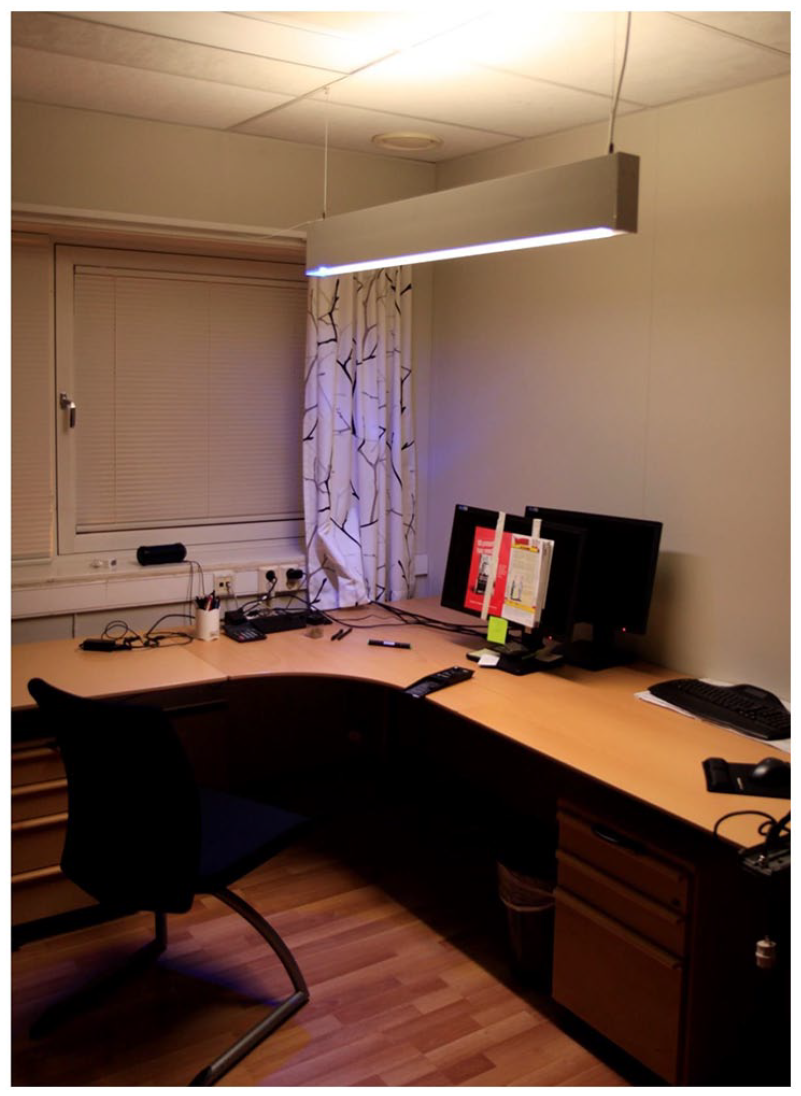
Sample picture of one of the offices equipped with the new integrative lighting system
The luminaires in the three offices providing the experimental conditions were fitted with the integrative lighting system. Additional to the ordinary polychromatic white light, the integrative lighting system delivers directed monochromatic light in the most efficient part of the action spectrum of melanopsin (460–480 nm) to relevant parts of the work area. In the remaining three offices, which provided the control condition, light sources with the same SPD as in current standard luminaires with 4000 K were used. Due to its northern latitude, Norway has large seasonal variations in daylight. Therefore, to ensure a maximum effectiveness of the lighting intervention and to minimise the influence of daylight, all data were collected during the winter months. Data were collected over four evenings, two at the beginning of November and two in early February. The time schedule was chosen to ensure comparable hours of daylight (approximately 8 hours and 30–45 minutes) on the day of the experiment for all participants. The schedule warranted that the number of participants with a light history with decreasing daylight hours equalled the number of participants experiencing increasing daylight. Six participants were tested each evening, one person in each office.
To ensure measurable melatonin levels, the experiment was conducted from 20.00 to midnight, which was approximately 1 hour after the participants’ habitual bedtime (as defined by the school regulations). All windows were covered to prevent outside light from affecting the measurements. The hallway, bathroom and surrounding areas were lit by candlelight only (<30 lx). The light level of the individual office was adjusted to approximately 300 lx, measured horizontally at the work desk. Illuminance at the eye level was measured vertically. Both horizontal and vertical illuminance were measured with a Hagner Digital Luxmeter, model EC1 (B. Hagner AB, Solna, Sweden). The illuminance values for each office are shown in Table 1.
Horizontal illuminance at the work desk and vertical illuminance at eye level for each office

Upon arrival, the participants were escorted to a meeting room lit by candles, which provided 20 to 30 lx at eye level. The participants were served a light meal, and the procedures and information about the study were reviewed. An individual informed consent was collected, and the participants were informed about their right to withdraw from the experiment at any time.
The first saliva sample (baseline) was collected prior to office allocation at 21.00. The first subjective ratings of sleepiness were collected immediately after office allocation. Measurements of saliva melatonin and sleepiness were repeated every half hour until midnight, providing seven repeated measurements.
Chronotype is considered a relatively stable disposition or trait and is thus not expected to change across a 3-hour time span, as applied in the present experiment. In accordance with Thompsen, 71 NA and PA were conceptualised as traits. Single assessments were therefore assumed to be sufficient. However, it should be noted that NA and PA can also be conceptualised as states. This is often the case in lighting research where state NA and PA have been considered prone to the effects of varying lighting conditions. 72 The measures were collected during the first hour of the experiment following the same time schedule and order for all participants.
The participants stayed in the office with the same light exposure for 3 hours. The participants were not allowed to use computer screens or other devices containing illuminated displays during the experiment. Each office was equipped with paper-based reading material, such as weekly magazines, comics and novels. The participants were encouraged to bring their own reading materials. Although the participants were free to use the time as they pleased, the participants were instructed to stay put in the office chair and to mimic the postures they usually would use when doing regular office work. The effect of the lighting system should consequently not deviate much from what would be found during ordinary office work.
The study was planned and conducted according to the ethical principles of the Helsinki Declaration and was evaluated and approved by the internal ethics committee at the Department of Psychology, University of Oslo.
2.3 Technical properties of the lighting systems
Both lighting systems fulfil the visual quality requirements defined by the European Union standard for light planning in workplaces, EN 12464–1. 44 The standard includes the following minimum requirements: (1) Eavg = 300 lx, (2) uniformity 0.6 in the specified work area, (3) Ra = 80, (4) Unified Glare Rating (UGR) = 19 and (5) CCT = 4000 K (see Supplemental Material, Figure S1 and Tables S1–S8, for measurement details).
The luminaires, both in the experimental and control conditions, contained four regular white LED modules (Phillips Fortimo, Signify B.V., Eindhoven, the Netherlands) controlled by a standard DALI driver. Both luminaires were covered by microprismatic diffusers to prevent potential glare and provide a uniform light distribution.
In addition to white LEDs, the integrative lighting system contained a single monochromatic blue (470 nm) LED (Osram Platinum Dragon, Osram GmbH, Regensburg, Germany). The luminaire was equipped with a single address for a common control system. A newly developed control unit secures a constant proportionality between the light emitted from the blue LED and the light emitted from the white LEDs. This is done in the control unit by measuring the light emitted from the white LEDs. In addition, the controller uses a linear current controller instead of a switch-mode converter to ensure flicker-free light emitted from the blue LED. The direction of the luminous flux was controlled by a combination of lens and asymmetric microprismatic optics.
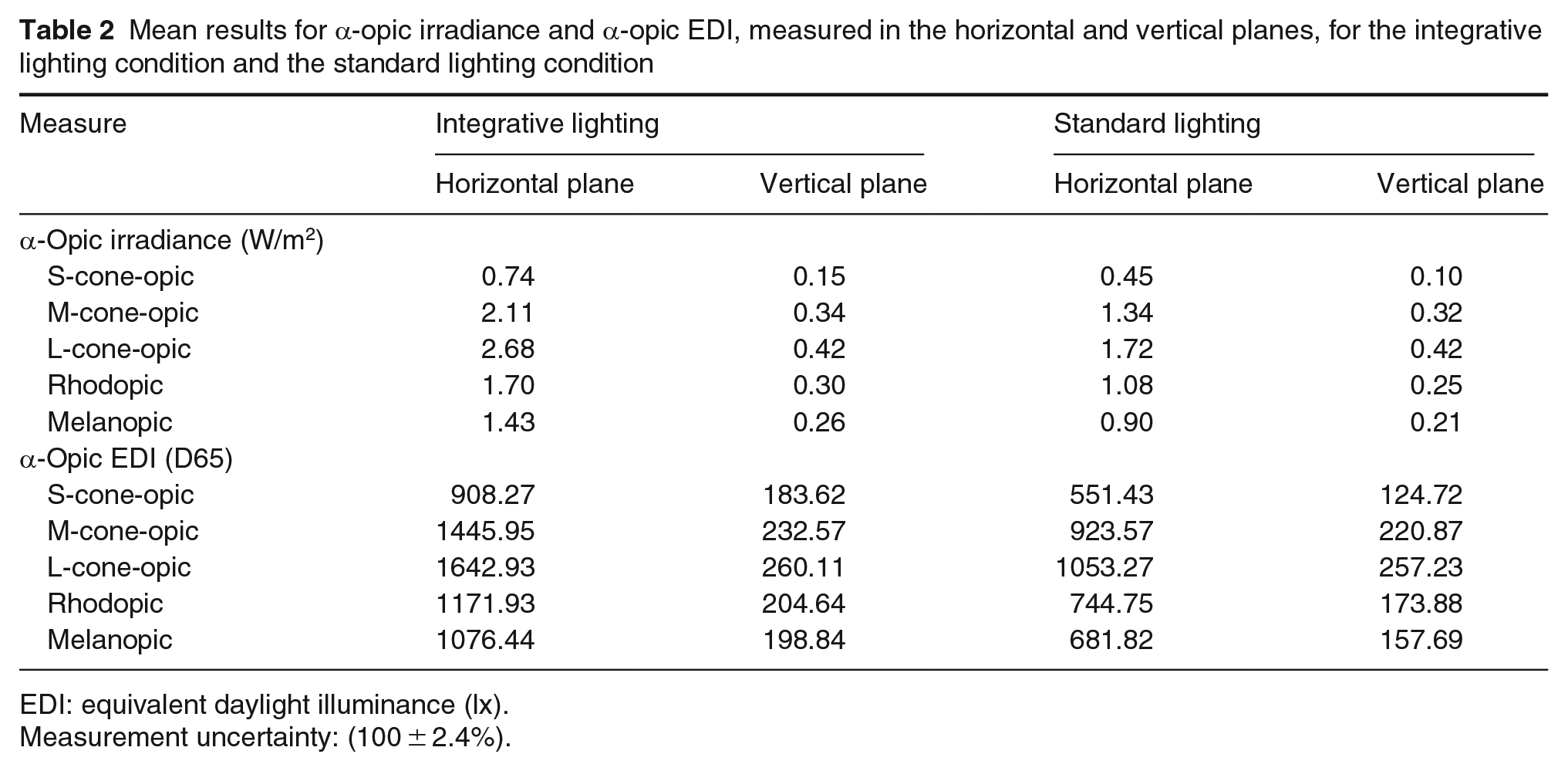
Following the recommendations by Spitschan et al., 73 the SPDs were measured on-site at the horizontal and vertical planes for both lighting conditions. The measurements were conducted 100 cm from the wall and 120 cm above the floor level (approximately a seated person’s eye level) using a JETI Specbos 1201 Spectroradiometer (JETI Technical Instruments GmbH, Jena, Germany). The α-opic irradiance and the α-opic equivalent daylight (D65) illuminance (EDI) were calculated using the International Commission on Illumination toolbox. 74 The mean results for offices in the integrative lighting condition and the standard lighting condition are shown in Table 2. The SPDs for both conditions are displayed in Figure 2.
Mean results for α-opic irradiance and α-opic EDI, measured in the horizontal and vertical planes, for the integrative lighting condition and the standard lighting condition
EDI: equivalent daylight illuminance (lx).
Measurement uncertainty: (100 ± 2.4%).
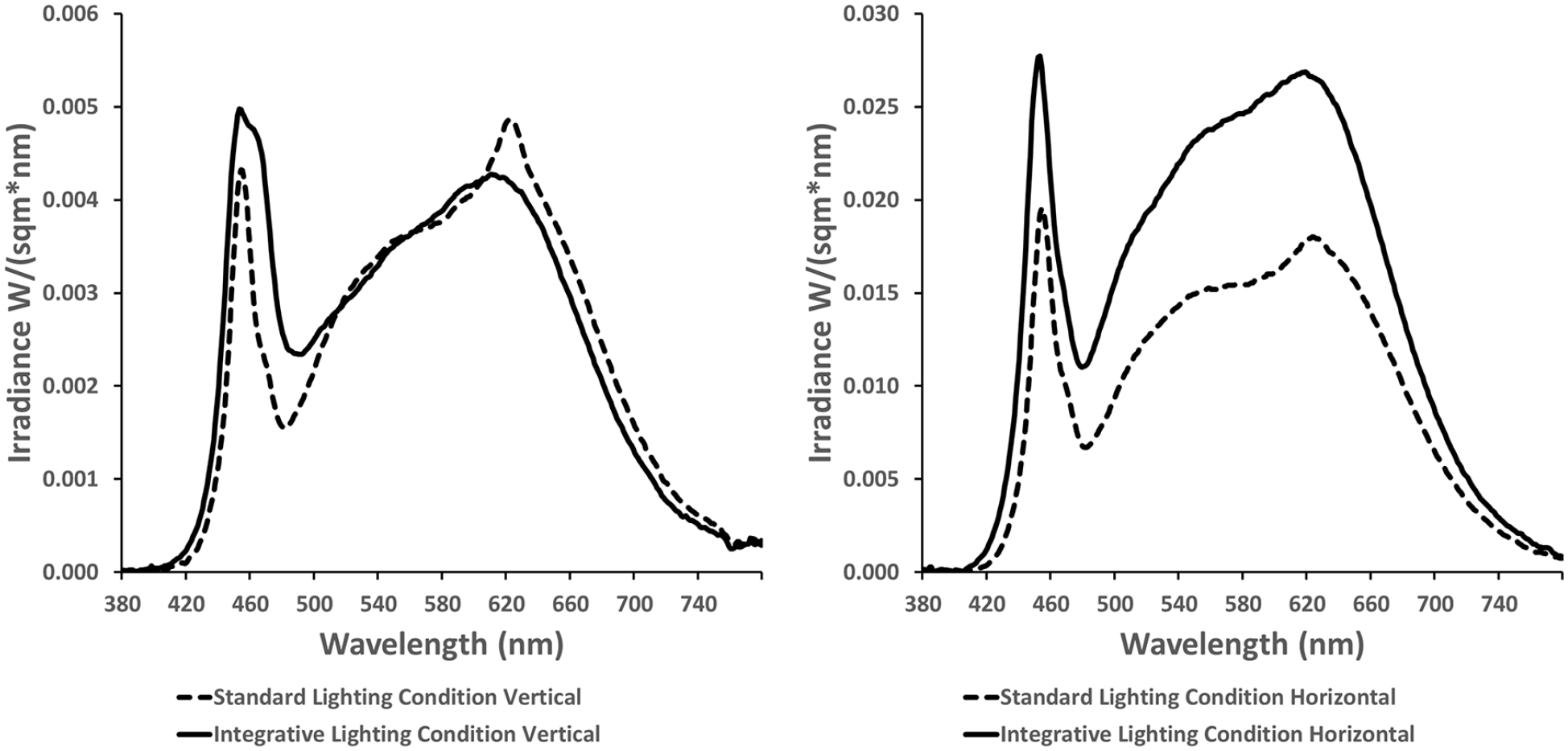
SPDs measured on site of the ILC and the SLC. Left panel: SPD measured in the vertical plane. Right Panel: SPD measured in the horizontal plane
The measurements shown in Figure 2 and Table 2 indicate, as expected, an overall increase in melanopic strength in the integrative lighting condition compared to the standard lighting condition. The increase in vertically measured melanopic EDI was 26%. Disregarding differences in measurement procedures and light intensity, this increase is comparable to the difference between the experimental conditions reported by Cajochen et al. 49 but substantially lower than the difference reported by Souman et al. 75
2.4 Measures
2.4.1 Melatonin level
Salivary melatonin was measured using a Salivette cotton swab (Sarstedt, Newton, NC, USA). Samples were centrifuged, frozen immediately after collection and stored in a freezer at −20°C before being analysed. An independent laboratory performed the analysis. An enzyme-linked immunoassay kit (Bühlmann Direct Saliva Melatonin ELISA (EK-DSM), Bühlmann Laboratories AG, Schönenbuch, Switzerland) was used for the analyses. Two hundred microlitres of saliva were pretreated with 25 µl sodium hydroxide and neutralised with 25 µl hydrochloric acid. The samples were centrifuged at 10,000 rpm and analysed using ELISA kit plates as described in the kit’s instructions. The intra-assay and inter-assay variabilities were 13% and 23%, respectively. The lower limit of detection was at least 0.1 pg/mL.
2.4.2 Subjective sleepiness
Subjective sleepiness was measured by the Karolinska Sleepiness Scale (KSS). 76 The participants were asked to assess their sleepiness in the last few minutes on a 9-point interval scale with semantic descriptors for every second value. The scale ranges from ‘very awake’ to ‘very sleepy’.
Following Gillberg et al., 76 sleepiness was also measured by a 10 cm visual analogue scale (VAS). The participants were asked to mark how awake/sleepy they felt at the moment. Verbal descriptors were ‘very sleepy’ on the left and ‘very awake’ on the right. The VAS assessments were reverse coded before being analysed.
2.4.3 NA and PA
NA and PA were measured by the short form of the dispositional (i.e. trait) version of the International Positive and Negative Affect Schedule. The short form was developed to reduce redundancies and ambiguities associated with some original items. The scale has been shown to have satisfactory validity and reliability. 71 The measure comprises 10 items describing both negative and positive emotions. The informants were asked to rate each item on a numeric 5-point interval scale, measuring to what extent they experienced the emotion ‘in general’.
2.4.4 Chronobiological typology
Chronotype (also denoted circadian type) was measured by the Norwegian version of the Circadian Type Inventory – Revised (CTI-R). 77 The measure contains 11 items and yields two indices: CTI-R-FR measuring the stability (Flexible/Rigid typology) and CTI-R-LV measuring the amplitude (Languid/Vigorous typology) of the circadian rhythm. Individuals characterised by flexibility can change their habits and sleep at irregular times without major problems. A propensity towards rigidity makes such behaviour more difficult, as individuals tend to prefer tighter regulated eating and sleep schedules. People expressing high chronobiological amplitude, known as vigorous types, are more able to overcome sleepiness and are less sensitive to sleep loss than languid-type people.56,77 Two continuous scores were calculated: CTI-R-FR, ranging from 5 to 25 (a higher score indicates greater flexibility), and CTI-R-LV, ranging from 6 to 30 (a higher score indicates a higher languidness).
2.5 Statistical analyses
Inadequate volume in a total of five saliva samples contributed to missing data. Two inadequate saliva samples were collected from each of two participants, and one inadequate sample from a third participant. Two inadequate saliva samples were collected in the first measurement session. The three remaining samples were collected in the second, third and fourth sessions. For the KSS and VAS, one observation was missing in the fourth measurement session. Missing value analyses yielded a non-significant Little’s Missing Completely At Random (MCAR) test, χ2(50) = 54.856, p > 0.05, indicating that missing data were not systematic.
As expected, the two measures of sleepiness were highly correlated (r = 0.87), and a combined measure with equal weighting of the two measures was applied for all analyses. For convenience, the combined measure was standardised as T-scores (mean = 50, SD = 10).
Measures of melatonin secretion and perceived sleepiness were correlated across the seven repeated measurements – mean correlations were 0.80 for melatonin secretion and 0.60 for perceived sleepiness.
Multilevel growth curve modelling was used to analyse time-dependent changes in melatonin secretion and perceived sleepiness. Level one variables comprised the seven (within-subject) repeated measurements of melatonin secretion and perceived sleepiness, while level two (subject level) variables comprised type of lighting, chronotype, and NA and PA. Level two observations were modelled as fixed (time-invariant) covariates in the analyses. All statistical analyses were performed with IBM SPSS Statistics version 26.
3. Results
3.1 Descriptive statistics
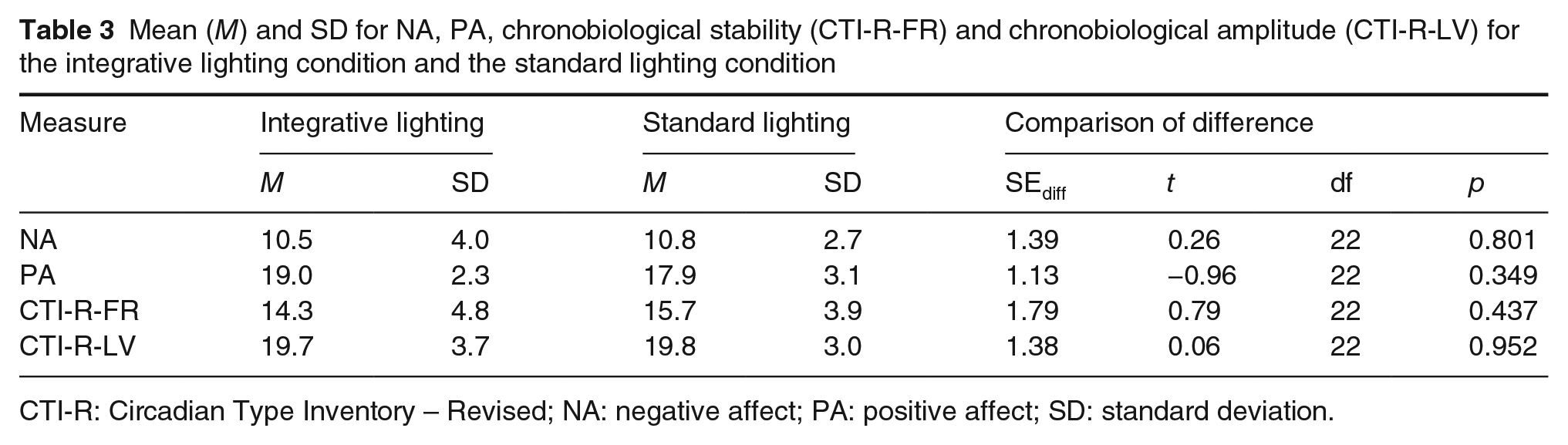
Descriptive statistics for NA, PA, and chronobiological stability and amplitude are presented in Table 3.
Mean (M) and SD for NA, PA, chronobiological stability (CTI-R-FR) and chronobiological amplitude (CTI-R-LV) for the integrative lighting condition and the standard lighting condition
CTI-R: Circadian Type Inventory – Revised; NA: negative affect; PA: positive affect; SD: standard deviation.
As shown in Table 3, the mean and SDs were fairly comparable between the two conditions for all covariates. The largest differences were found for PA and chronobiological flexibility. PA was somewhat higher in the integrative condition, while chronobiological flexibility seems somewhat more pronounced in the standard lighting condition. No mean differences were statistically significant.
3.2 Effects of lighting conditions on melatonin and sleepiness across time
As the measures of melatonin secretion and sleepiness were observed at seven fixed intervals for all participants, time was simply modelled as a variable ranging from 0 to 6 in fixed intervals. Development over time was modelled by a second-order polynomial model (Equation (1)) allowing for possible curvilinear relationships between time and dependent variables:

with I (0–6) indexing sessions across time.
Time was centred to ensure the interpretation of β1 as a linear effect of time and β2 as an added nonlinear effect. First, an intercept-only model was fitted, allowing only the intercept to vary across individuals. Then, a random-coefficients model 78 allowing all the parameters in the above model to vary across individuals was fitted.
The Bayesian Information Criterion (BIC) was applied as measure of model fit. For melatonin secretion, a substantial improvement in model fit (BICdifference = 189.31, χ2 = 174.56, df = 5, p < 0.001) supported substantial individual variability in across-time development. The same pattern was found for the measure of sleepiness (BICdifference = 28.20, χ2 = 53.79, df = 5, p < 0.001).
According to the above findings, models allowing for individual variability in all the parameters depending on the lighting condition (LC) were fitted. For level one parameters, the model (Equation (2)) can be written as follows:
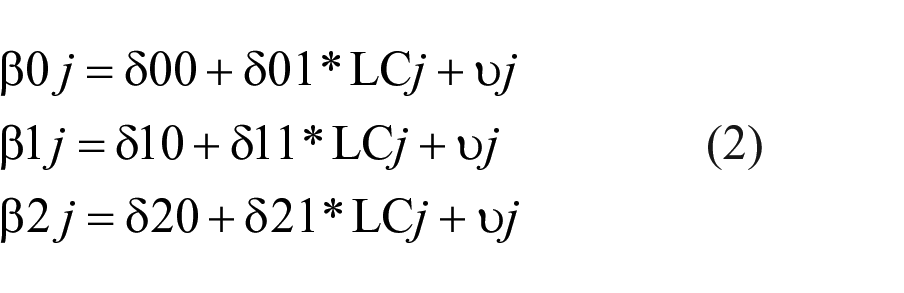
The results from fitting the random coefficient models to the measures of melatonin secretion and sleepiness are shown in Table 4. As shown in Table 4, the overall nonlinear effect of time was statistically significant (b = 0.198, p = 0.028, 95% confidence interval (CI) = 0.023–0.372) and dependent on the lighting condition (b = 0.209, p = 0.021, 95% CI = 0.035–0.384), while no such effects were found for the measure of sleepiness. For ease of interpretation, the predicted values from the fitted random-coefficient models are presented in Figure 3.
Results from fitting the random coefficients models to the measures of melatonin secretion and sleepiness
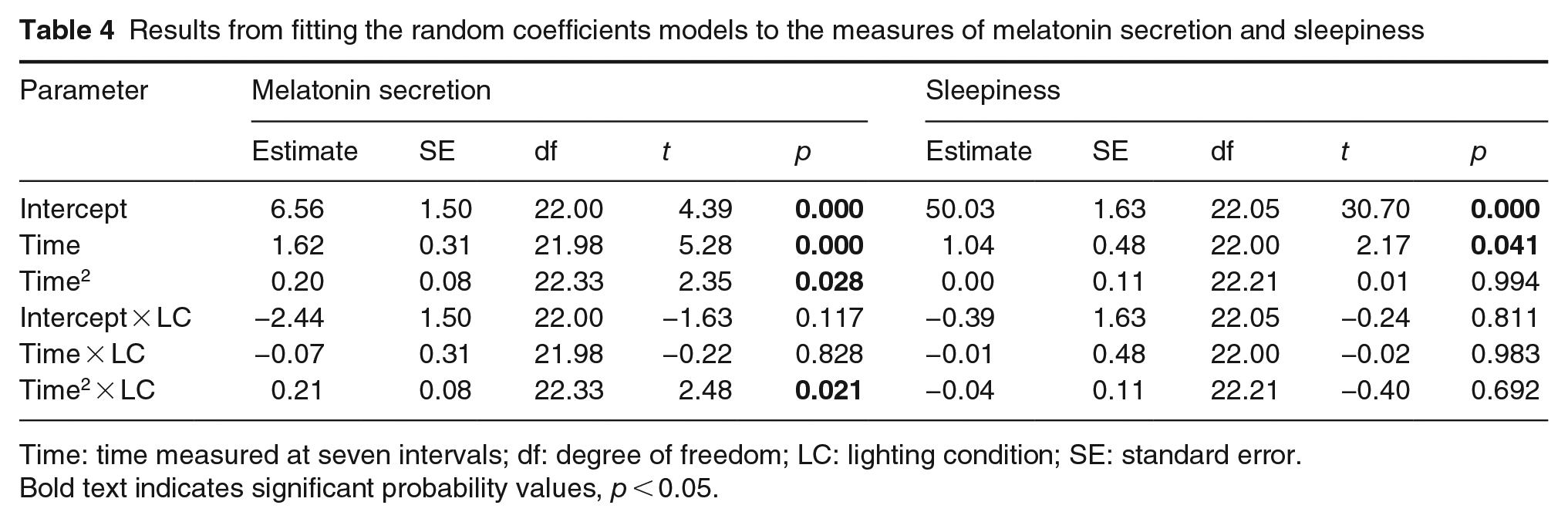
Time: time measured at seven intervals; df: degree of freedom; LC: lighting condition; SE: standard error.
Bold text indicates significant probability values, p < 0.05.
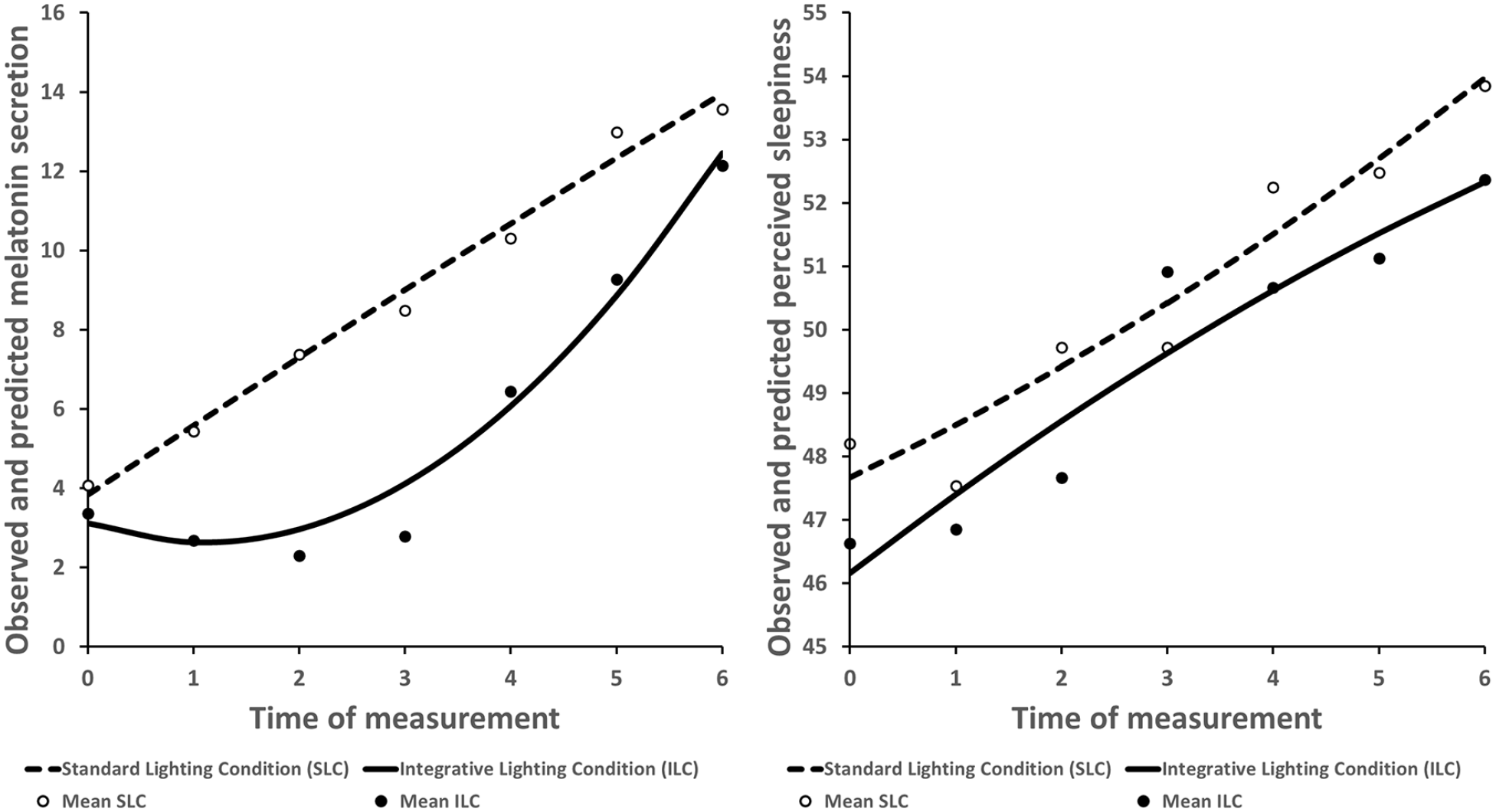
Observed mean scores and predicted values from the fitted random coefficient models by lighting condition (SLC and ILC). Left panel: Melatonin secretion. Right Panel: Perceived sleepiness
As shown in Figure 3, the results for melatonin secretion indicated a nonlinear effect of time in the integrative lighting condition. Melatonin secretion dropped initially, raising to a level comparable to the standard lighting condition at the end of the sessions. In the standard lighting condition, melatonin secretion showed a linear increase throughout the sessions. This pattern was not replicated for measures of perceived sleepiness, where linear increases were found in both lighting conditions. The overall linear effects of time showed no systematic variability across lighting conditions for neither melatonin secretion nor perceived sleepiness. These results are in accordance with the observed mean scores across time shown in Figure 4, where scores for melatonin secretion and sleepiness are standardised for ease of comparison.
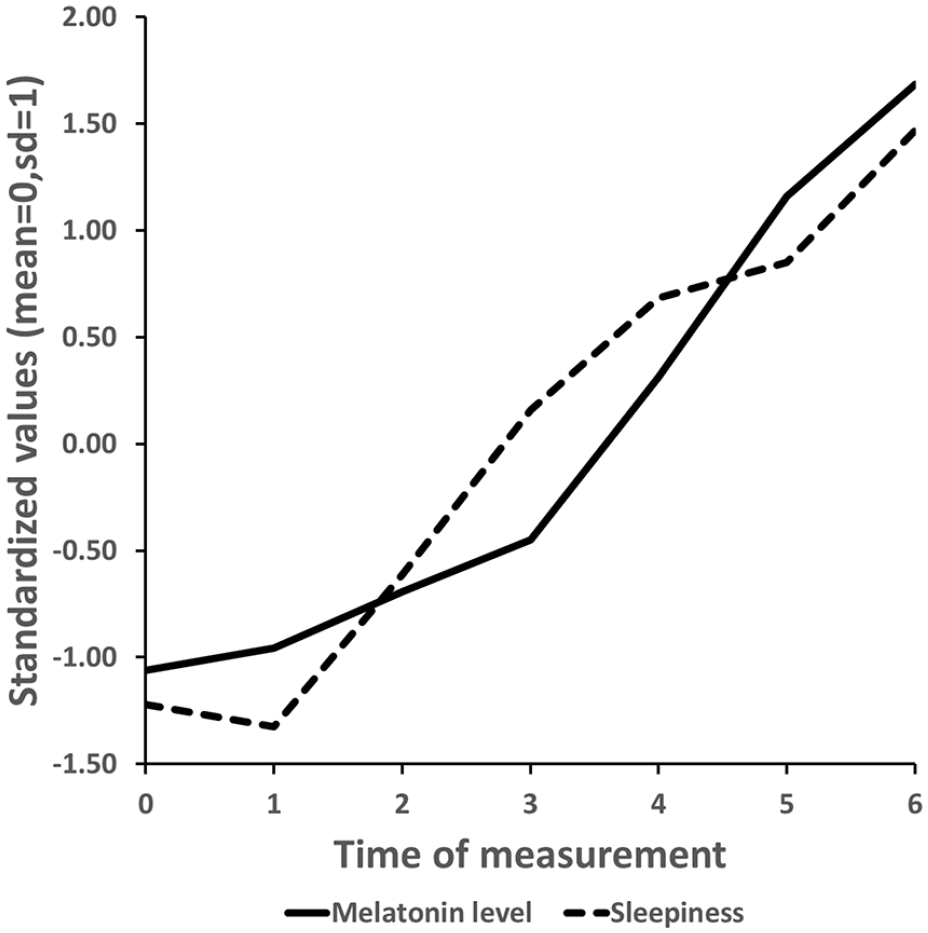
Development of melatonin secretion and perceived sleepiness measured at seven time intervals (standardised values) in the full sample (N = 24)
3.3 The possible confounding effects of chronotype and PA/NA
To examine the possible confounding effects of level two covariates, we fitted separate models including each of the four covariates (C1–4) described in the methods section. The examined models (Equation (3)) can then be written as follows:
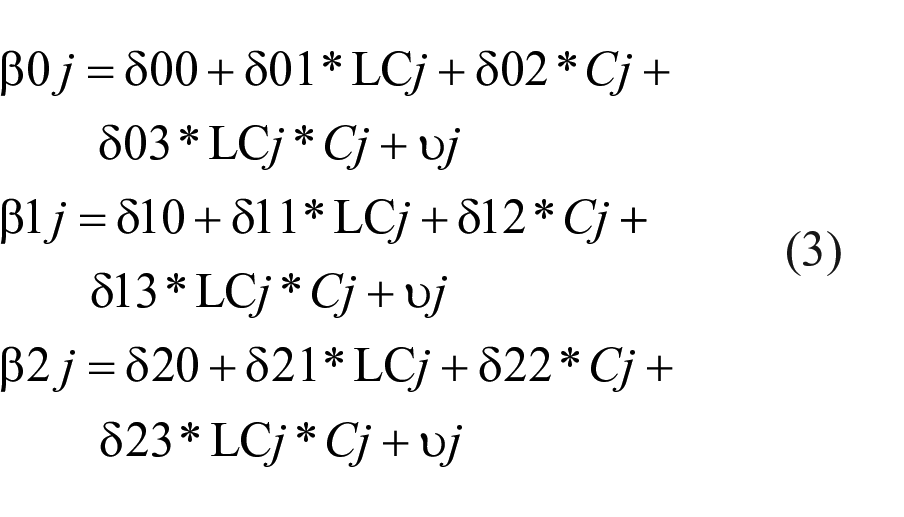
with C indicating each additional level two covariate.
The results of the analyses described above showed no effects of any of the included covariates on the effects of the lighting conditions (no LC by covariates interactions).
3.4 Effects of person-level covariates
Finally, the overall relationships between mean melatonin secretion, mean perceived sleepiness and the person-level covariates were investigated. Although some correlations failed to reach statistical significance (p > 0.05), the results showed an overall pattern in which perceived sleepiness was negatively correlated with mean CTI-R-FR (r = −0.43, df = 22, p = 0.04), positively correlated with mean CTI-R-LV (r = 0.34, df = 22, p = 0.11) and positively correlated with mean NA (r = 0.37, df = 22, p = 0.07). Only very weak correlations between mean melatonin secretion and person-level covariates were observed.
4. Discussion
The present study aimed to investigate the non-visual effects of an integrative lighting system providing low-intensity directed melanopic illuminance. To this end, the effects of the lighting system on melatonin secretion and sleepiness in the evening were measured and compared to the effects of ordinary office lighting. Furthermore, chronobiologic typology (stability and amplitude) and trait-like emotional regulation (NA and PA) were measured and analysed as potential confounders.
The results can be summarised as follows: for measures of both melatonin secretion and perceived sleepiness, an increasing linear effect across time was evident. This main effect did not vary across the lighting conditions. For melatonin secretion, a nonlinear effect of time was evident in the experimental group (see Figure 3, left panel). This finding was not replicated for perceived sleepiness (see Figure 3, right panel). These findings were stable across the levels of the examined covariates.
The current results for melatonin secretion agree with previous research investigating the effect of short-wavelength light.30,75,79,80 and confirm that the technical solution used in the integrated lighting system elicits acute effects beyond vision. Previous research has often been conducted under strictly controlled conditions using specialised lighting equipment that does not resemble ordinary working conditions. The current study adds to the previous literature by demonstrating the effects beyond vision of directed short-wavelength light in ordinary office settings encompassing standard lighting conditions (i.e. illumination intensity and SPD in the room, as well as the location and design of the luminaires), with participants experiencing ordinary light conditions over the preceding days.
Somewhat unexpectedly, the observed suppression of melatonin seemed to fade towards the end of the experiment, as the participants in both light conditions reached approximately the same level of melatonin after 3 hours of light exposure, approximately 1 hour after their habitual bedtime. This result differs somewhat from previous research, which indicates reduced melatonin secretion throughout the stimulation period with melanopic illuminance.16,75,81
Light-dependent melatonin suppression has been shown to be dose dependent, following a sigmoidal curve.82,83 In the present study, the melanopic radiant flux was held constant at relatively low levels. The vertical illuminance at eye level was below 300 lx, and the ambient CCT was 4000 K. Although laboratory studies have demonstrated melatonin suppression with very low levels of melanopic illuminance, 30 it is possible that the current light stimuli were not sufficient to override the internal biological clock completely. Nevertheless, delayed melatonin onset shortens the duration of melatonin secretion, which reduces the total volume of nocturnal melatonin. 15 Whether this effect is strong enough to shift the circadian rhythm to later remains to be investigated.
A corresponding effect of lighting condition was not observed on perceived sleepiness. As discussed by Souman et al., 75 this may be explained by reduced sensitivity to melanopic illuminance caused by extended light exposure at daytime, before the experiment. However, corresponding lack of effect has been reported also in other studies.27,84,85 This corroborates the view that sleepiness is not directly linked to acute changes in melatonin secretion. A plausible explanation may be found in the properties connected to the sleep-regulating mechanism. According to the two-process model of sleep, 86 two distinct but reciprocally related processes control the sleep–wake cycle. The process of sleep homeostasis (process S) primarily governs the propensity to sleep and perceived sleepiness. The circadian rhythm (process C) adjusts the sleep–wake cycle in relation to night and day and is important for the timing of sleep. Current knowledge indicates that the effect of sleep homeostasis (process S) on the circadian rhythm (process C) is stronger than the opposite. Thus, according to this model, acute changes in sleepiness should probably not be expected from light-induced melatonin suppression, although sleepiness might be crucial in maintaining a stable circadian rhythm over time.
Associations were found at the individual level between aggregated scores of perceived sleepiness and chronobiological stability (CTI-R-FR) and amplitude (CT-I-LV). The results suggest that people expressing a tendency towards high stability (less flexible and more rigid) and/or high amplitude (less vigorous and more languid) experience higher perceived sleepiness in the evening. This result corresponds with previous research,56,87 although studies investigating the effect of chronobiological stability and amplitude with ordinary people under normal conditions in the evening seem to be scarce.
A positive association was also observed between aggregated scores of perceived sleepiness and NA. Although this relationship is sparsely studied, it has received some indirect support. NA has been associated with reduced sleep quality 88 and daytime sleepiness. 89 Elevated scores on affective states, arousal and the trait of neuroticism have been related to higher levels of perceived sleepiness. 90 NA and neuroticism are highly correlated; 91 thus, high NA scores probably reflect neuroticism to a certain extent. Slavish et al. 92 substantiated this interpretation by showing that the effect of neuroticism on sleep disturbances became non-significant when controlling for NA. High NA has been related to enhanced stress reactions 93 and since stress has been related to increased sleepiness in the evening94,95; it is not surprising that also NA and sleepiness in the evening are associated. Thus, even though precautions should be taken as an observed link between NA and sleepiness was not anticipated beforehand, the association seems reasonable given current knowledge.
In lighting studies, the age of respondents can be a possible confounder, as previous research has shown that young people are more sensitive than adults to higher CCTs (5600 K), often associated with melanopic illuminance. 16 In the present study, both age and CCT were held constant by including only young respondents and providing light at 4000 K for both conditions. While confounding effects of age thereby were avoided, generalisability of conclusions would be strengthened by including samples from populations with a broader age range in future studies.
Subjectively perceived lighting quality was not examined in the present experiment, and consequently not measured. Although this may be considered a limitation in integrative lighting research, perceived lighting quality assessments were not considered to provide crucial information regarding the validity of the experimental manipulation (SPD).
First, the difference in the luminous environment between the two conditions was expected to be small. Professional lighting designers planned the lighting conditions to be qualitatively equivalent, apart from the light emitted by the blue LED in the integrated lighting condition. The on-site lighting measures provided for the two conditions further indicate that the two lighting conditions were qualitatively comparable.
Second, the reading material provided was not considered particularly strenuous. Minor differences in lighting quality should consequently not have differential effects on sleepiness across lighting conditions, provided the relatively short time frame applied in the experiment.
Third, it was considered important to avoid unnecessary attention to specificities in each lighting condition. In the experiment, each participant was exposed to only one of the lighting conditions. Research has shown that people tend to rely on salient features, which may or may not be of importance from a technological or ergonomic perspective, when unable to compare different luminous environments directly. 96 In the present experiment, the inclusion of subjective lighting assessments may thus increase the risk of introducing systematic differences between the two conditions based on irrelevant features. However, we acknowledge that long-term effects of integrated electric lighting systems on phenomena, such as fatigue, performance and colour constancy, should be included in future studies.
Many people find it difficult, especially during the winter season, to schedule activities in ways that provide adequate daylight exposure. Ordinary indoor lighting deviates from daylight with respect to its spectral distribution, intensity, directionality and variability. Based on the notion of evolutionary adaptations, it seems reasonable to assume that properties found in daylight are essential for not only maintaining a natural circadian rhythm, but also for several other biological processes. Integrative electric lighting may represent a technology that can be used to supplement the amount of daylight exposure in modern lit environments.
However, much is still unknown about the effect of regular use of integrative lighting during daytime or nighttime. Smoulders et al., 97 for example, were unable to replicate the dose–response curves available of nighttime light intensity on alertness for daytime situations. A pertinent problem, as mentioned by Souman et al., 75 is that many experiments investigating the effect of integrative lighting rely on lighting conditions, lighting equipment and procedures that differ from what is usually found in conventional lighting outside the laboratory. Whether or not these lighting installations and the observed effects can be adapted to ordinary real-world conditions remains to be investigated. The integrative lighting system investigated in the current study resembles conventional office lighting both regarding lighting conditions and the design and placement of the luminaires. This makes the lighting system well suited for longitudinal field studies investigating the possible lighting effects beyond vision, and maybe especially for studies investigating the possible long-term effects on phase resetting and/or the entrainment of the circadian rhythm.
Implementing integrated lighting should not compromise the visual aspect of lighting. The primary goal of any lighting system should be to provide lighting that suits the user’s needs. Inappropriate and inferior tools, work processes and indoor climate may lead to lower performance and productivity, both in terms of reduced quantity and quality. 98 There is no reason to believe that this effect does not apply to lighting as well. The researcher should also pay attention to the design and placement of the luminaires as both may have an impact on the experience of the luminous environment. Thus, lighting solutions that make it more difficult or unpleasant to accomplish the visual task at hand should be avoided whenever possible.
5. Conclusion
The present study shows that directed low-intensity melanopic illuminance provided by an integrated electric lighting system affects melatonin secretion in the body. The result confirms that effects beyond vision are obtainable without significant deviations from ordinary lighting conditions and without the use of specialised luminaires. Showing that sleepiness and acute changes in melatonin secretion are not directly linked, the current results substantiate previous findings as well as the assumption that sleepiness and melatonin secretion are independent processes, but still indirectly associated. The study also revealed relatively high correlations between perceived sleepiness and NA, chronobiological stability (CTI-R-FR) and chronobiological amplitude (CT-I-LV). The possibility of such links should be considered in future research.
The experimental design used in this study was developed with external validity in mind. The aim was to examine a lighting system that may be attractive and usable for people in ordinary real-world situations. Used in a cautious and evidence-based manner, the technology provides new opportunities to develop indoor electric lighting resembling daylight.
Supplemental Material
sj-pdf-1-lrt-10.1177_14771535221123237 – Supplemental material for Implementing integrative lighting in conventional office luminaires: Effects on melatonin secretion and sleepiness
Supplemental material, sj-pdf-1-lrt-10.1177_14771535221123237 for Implementing integrative lighting in conventional office luminaires: Effects on melatonin secretion and sleepiness by KI Fostervold and DE Eilertsen in Lighting Research & Technology
Footnotes
Acknowledgements
The authors would like to express their appreciation for the kind cooperation of the management and students at the folk high school who participated in the study. We also want to thank Pål Johannes Larsen and Dag Andreas Hals Samuelsen for valuable assistance with the lighting measurements and Peter Koren for helpful comments on earlier drafts of this paper.
Declaration of conflicting interests
The authors declared no potential conflicts of interest with respect to the research, authorship and/or publication of this article.
Funding
The authors disclosed receipt of the following financial support for the research, authorship and/or publication of this article: This study was carried out in offices located on the premises of the lighting company Luminator AS, Norway. The luminaires were developed and made available by Luminator AS, Norway. Analysis of saliva samples was funded by Luminator AS and conducted by VITAS – Analytical Services AS, Norway.

Supplemental material
Supplemental material for this article is available online.
References
Supplementary Material
Please find the following supplemental material available below.
For Open Access articles published under a Creative Commons License, all supplemental material carries the same license as the article it is associated with.
For non-Open Access articles published, all supplemental material carries a non-exclusive license, and permission requests for re-use of supplemental material or any part of supplemental material shall be sent directly to the copyright owner as specified in the copyright notice associated with the article.
