




Abstract
The advent of LED lighting has renewed concern about the possible visual, neurobiological, and performance and cognition effects of cyclic variations in lighting system luminous flux (temporal light modulation). The stroboscopic visibility measure (SVM) characterises the temporal light modulation signal to predict the visibility of the stroboscopic effect, one of the visual perception effects of temporal light modulation. A SVM of 1 means that the average person would detect the phenomenon 50% of the time. There is little published data describing the population sensitivity to the stroboscopic effect in relation to the SVM, and none focusing on people subject to visual stress. This experiment, conducted in parallel in Canada and France, examined stroboscopic detection for horizontal and vertical moving targets when viewed under commercially available lamps varying in SVM conditions (SVM: ∼0; ∼0.4; ∼0.9; ∼1.4; ∼3.0). As expected, stroboscopic detection scores increased with increasing SVM. For the horizontal task, average scores were lower than the expected 4/8 at ∼0.90, but increased non-linearly with higher SVMs. Stroboscopic detection scores did not differ between people low and high in pattern glare sensitivity, but people in the high-pattern glare sensitivity group reported greater annoyance in the SVM ∼1.4 and ∼3.0 conditions.
1. Introduction
The introduction of solid-state lighting to the marketplace has brought renewed concern about possible adverse consequences of exposure to temporal cyclic or transient variations in lighting system luminous flux, known as temporal light modulation (TLM) (or more commonly referred to as ‘flicker’). TLM may have visual, neurobiological, performance and cognitive effects on viewers.1–3 Visual perception effects such as the stroboscopic effect occur very quickly, with very short exposures.1–3 TLM can also cause ill effects on a longer time scale, such as disruptions to eye movements, 4 visual and task performance5,6 and headaches and eyestrain 7 (see also the French expert report on health effects issued in May 2019 8 or the English summary 9 ). There is not yet expert consensus about all of the possible health and behavioural effects of TLM, and no single metric to predict their occurrence. This remains an active area for research and standardisation. 10
The visual perception effects are collectively known as temporal light artefacts (TLA), comprising flicker, the stroboscopic effect and the phantom array effect. The stroboscopic effect is said to occur when an observer who views a moving object under a lighting system that exhibits TLM experiences ‘a change in motion perception’. 11 Usually this change in motion perception is of the form that the motion appears interrupted or jerky, rather than smooth.
TLM can be characterised in several ways, all derived from measurements of the light output waveform. Among the parameters available to describe TLM are the dominant frequency, the modulation depth, the IES flicker index, 12 a predictor of visible flicker from the International Electrotechnical Commission (IEC), called PSTLM, 13 the stroboscopic visibility measure (SVM) 11 and the ASSIST stroboscopic acceptability measure. 14 Others may be developed as research progresses, and to support the development of new metrics, the International Commission on Illumination (CIE) Technical Committee TC 2–89 is tasked with developing a technical note to describe a rigorous method for measuring and reporting TLM waveforms.
For the present investigation, which concerns the stroboscopic effect, we characterised the independent variable in terms of the SVM. The SVM is a visibility measure that is derived from measurements of the TLM of the light source or lighting system. This characterisation of the TLM relates to the visibility of the stroboscopic effect and is scaled such that, by definition, a value of 1 means that the average person would detect the phenomenon 50% of the time; thus, a light source having an SVM value of 1 would mean that the average person can detect the stroboscopic effect 50% of the time when that light source is the sole source of illumination.11,15 As noted by the CIE and by the National Electrical Manufacturers’ Association (NEMA), the visibility threshold (i.e. SVM = 1) is not a guarantee of acceptability of the visible phenomenon.11,16
Prior to the development of the SVM, Bullough et al. 17 examined the visibility and acceptability of flicker and of the stroboscopic effect across a range of TLM frequencies, modulation depths and duty cycles, and obtained data from 10 participants viewing each of nine conditions once, for less than 2 minutes. The stroboscopic effect was detectable at frequencies up to 300 Hz for a hand waving under the lamp, but acceptability of what had been seen was high for all frequencies at and above 120 Hz (controlling for modulation depth), and when modulation depth was 33% (but not 50% or 100%).
A subsequent experiment, 18 also with 10 participants but changing the task to a wand waved under the light source, found that 100 Hz TLM was detected 80% or more of the time for modulation depths equal to or greater than 25%. The conditions were rated as just acceptable, on average, when the modulation depth was 25%, but unacceptable at higher values of modulation depth. The small sample sizes in these two studies (N = 10 each, with more males than females in each one) limit their generalisability to the general population, and the fact that individuals controlled the wand movement risks inconsistency in the visual task.
The most relevant paper to the question of acceptability is that of Perz and her colleagues 19 who reported a series of experiments as one data set with a combined range of SVM conditions from 0 to 4.9. An unknown number of participants performed various office-work-type tasks for variable amounts of time under varying sets of these conditions, and then rated the acceptability of the room conditions. Based on these data, Perz and his colleagues constructed a logistic function to predict the percentage of annoyed people in relation to the SVM, concluding that 20% of the population would be annoyed at an SVM of 1.5, and ∼12% at an SVM of 1. It is problematic that there is no information available about the sample size or composition, because it is impossible to assess how generalisable the results might be. Moreover, by combining the results from studies in this way, the function combines within-subject and between-groups variation, which adds to the difficulty of interpreting the results.
To the best of our knowledge, the published literature does not address the population rates for stroboscopic motion detection under varying levels of the SVM. The metric’s development has included several experiments, each with samples ranging from 20 to 35 individuals ranging in age from a low of 17 years to a high of 47 years. The data from these experiments show considerable individual variability in responses to TLM.15,20 Perz and her colleagues developed the SVM based on data for the visibility of the stroboscopic effect when viewing a white dot on a black disc rotating at 4 m/s, viewed under various TLM conditions. The waveform for the stimulus was captured and analysed in the frequency domain using a Fourier transform to identify the frequency components in the signal. These are then normalised using an average visibility threshold function derived from empirical data, and summed to provide the definition that at SVM = 1, the average individual should detect the stroboscopic effect 50% of the time (the visibility threshold).11,15 Although this is a valid choice to characterise the population average, it does not provide information on the full range of perceptions across the population.
Data have not been published showing the effect of varying levels of the SVM on stroboscopic visibility in the population at large: That is, what proportion of the population do, in fact, detect the stroboscopic effect when SVM = 1? Put another way, at what value of the SVM does the stroboscopic effect become almost undetectable? Furthermore, are there differences in stroboscopic visibility between people who might be at risk for visual stress 21 and those who are not?
We report here the final findings of an experiment designed to answer these questions. (A preliminary paper from this experiment, based on a partial data set, was presented at the CIE 29th Quadrennial Session
22
.) The objectives of the project were as follows:
Test the visibility of the stroboscopic effect for five levels of the SVM (targeting 0, 0.4–0.6; ∼1; ∼1.6; and >2) using an experimental method as similar as feasible to the published work from which the metric was developed.15,20 Examine the population frequency of pattern glare sensitivity [PGS],
23
which is known to predict sensitivity to headache and disrupted eye movements in response to TLM. If possible, establish preliminary information about the visibility of the stroboscopic effect by individuals high in PGS; and Collect preliminary information about how people judge the acceptability of the conditions.
2. Research design and hypotheses
This is a repeated-measures experiment with one independent variable, light source; it had five levels. The five light sources were commercially available products chosen because they are known to exhibit the chosen levels of the metric SVM.15,24 They were chosen based on the following criteria: about 800 lm output; ∼2600–3000 K correlated colour temperature; PstLM << 1, and having close to the target SVM values (0, 0.4–0.6; 1; 1.6; and >2). To the extent possible, chromaticity coordinates were matched, although this was dependent on the existence of alternatives at any given SVM value.
The hypotheses tested were:
H1: Participants will detect the stroboscopic effect on 50% of trials for SVM = 1.
H2: Participants will detect the stroboscopic effect on an increasing percentage of trials with increasing SVM.
H3: Comfort and pleasantness drop with increasing SVM, and annoyingness increases with increasing SVM.
Data were collected in parallel in Canada and in France, using the same protocol. In Canada, this research protocol was reviewed and approved by the National Research Council of Canada Research Ethics Board (Protocol 2018-139) and by the Carleton University Research Ethics Board-B (CUREB-B Clearance # 109982). This research complies with the EU and French General Data Protection Regulation (GDPR).
2.1 Participants
The number of participants in each demographic group shown by location
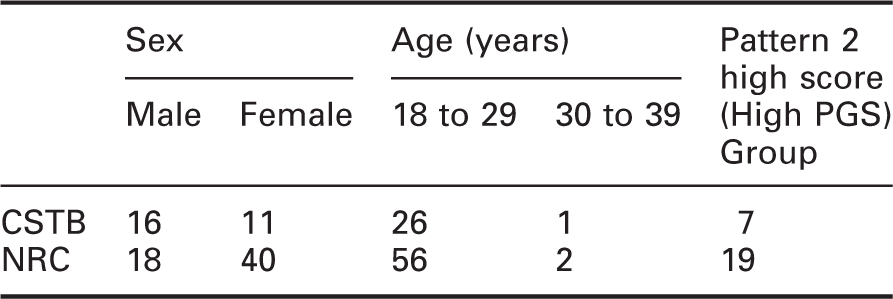
The Wilkins and Evans Pattern Glare Sensitivity test asks the observer to look, in sequence, at three patterns of horizontal stripes of three spatial frequencies, pattern 1 having the lowest spatial frequency and pattern 3 the highest.23,26 Sensation scores on Pattern 2 were used as the indicator of a higher risk of visual stress, as suggested in Wilkins et al. 26 There was no difference between NRC and CSTB on this variable (Mann–Whitney U test, Z = −0.50, p = 0.62). Another suggested indicator of pattern glare sensitivity is the difference between responses to pattern 3 and pattern 2. 23 We have not reported this value because we have learned that scores on pattern 3 may be unduly affected by visual capabilities, making it less reliable than is desirable. 26
The relationship between pattern 2 sensation scores and discomfort ratings for pattern 2 was high for CSTB (r = 0.53, p = 0.005, N = 27), whereas it was moderate for NRC (r = 0.26, p = 0.05, N = 58). We considered this adequate evidence for the validity of the pattern 2 sensation scores as the indicator of sensitivity and of risk of visual stress. Therefore, we created a grouping variable (PGS) for this purpose by selecting the top 30% of the full sample, which were the individuals having scores of 4 or greater on this variable (“high-PGS”), versus the lower 70% of the sample (“low-PGS”). We chose this value based on the evidence that for the highest scores on that pattern, approximately 30% of the population report adverse effects (discomfort). 26
2.2 Lighting conditions, apparatus and setting
At both sites, testing occurred in a dedicated, small, windowless room. The room was minimally furnished with a desk and chairs. During the session trials, all the illumination came from the custom desktop luminaire described below. During the instructions and demographic questionnaires, a desk lamp with the low-SVM condition was used on a separate desk from the one holding the apparatus (see Figures 1 and 2)).
These are images of the NRC apparatus installed in the test room. For the image on the left, the hallway outside provided ambient light for the photograph, but the door was closed during testing. The image on the right shows the desk surface as seen by the participant This shows the CSTB apparatus installed in the test room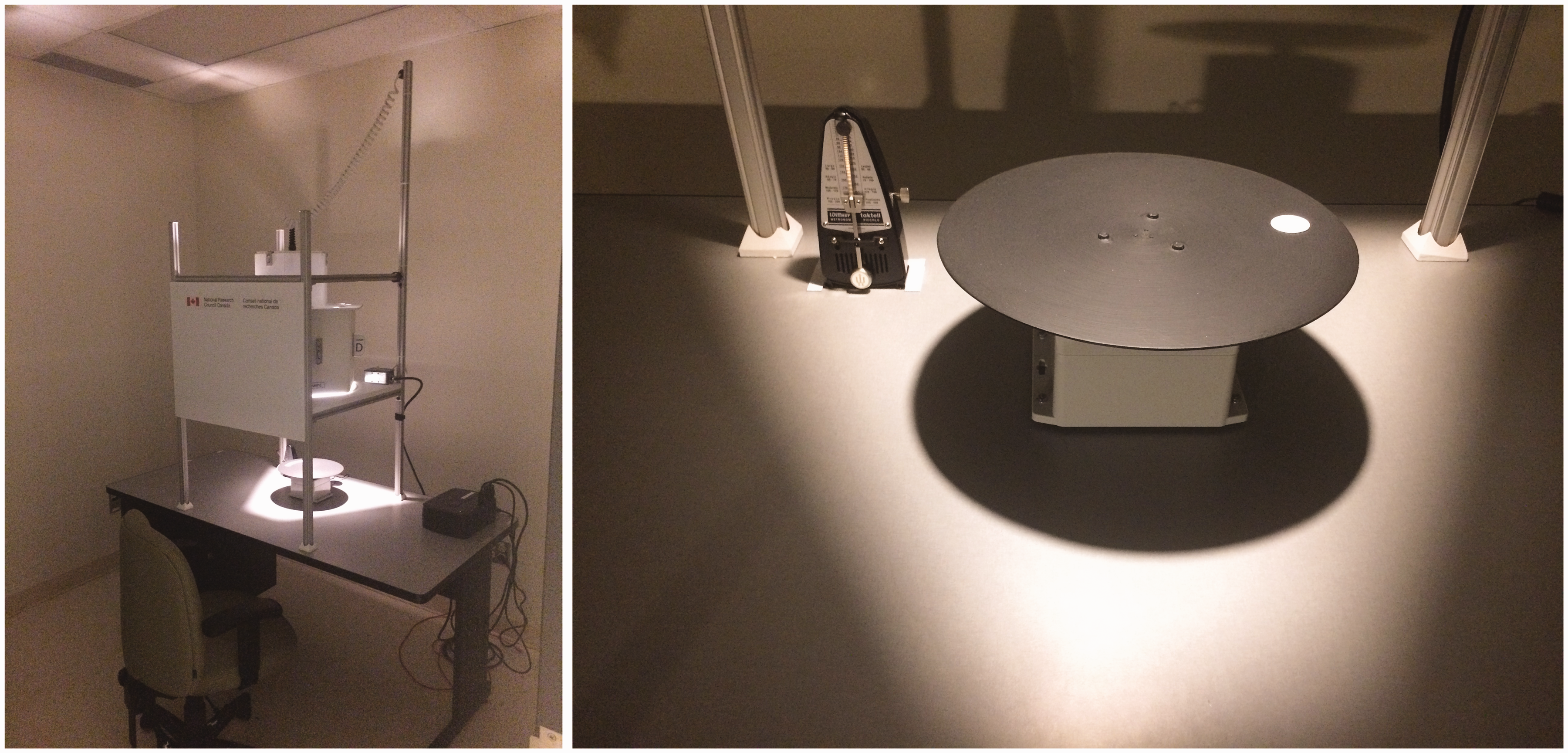
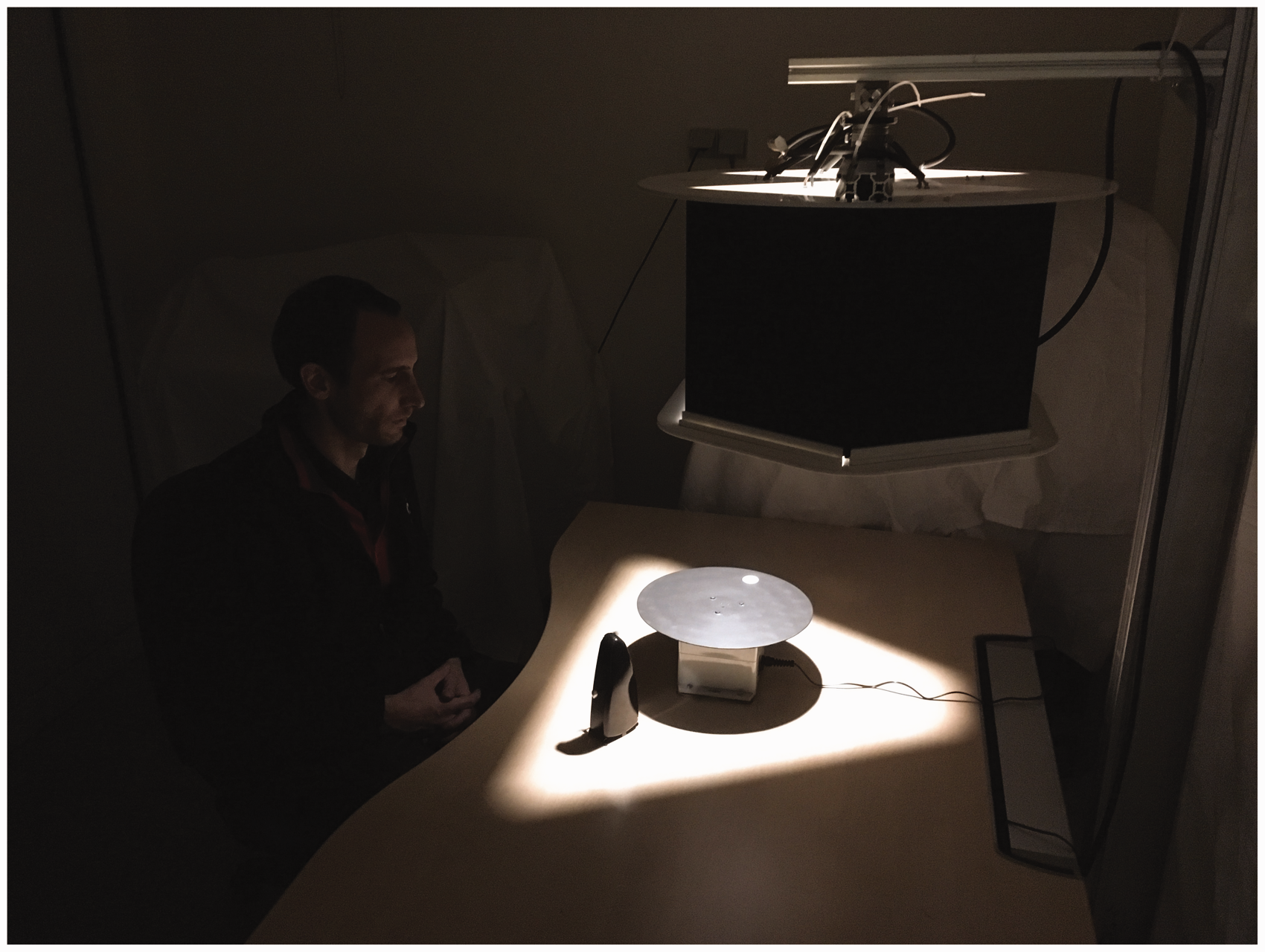
Each site designed its own custom luminaire consisting of an aluminium frame supporting a light box, although the details differed between sites. The central light box had six chambers, in each of which was a standard E27 socket. Five locations were used, each with one of the five lamps (described below). All lamps were turned on, warmed for an hour before the first session and remained on until the end of the testing session to maintain constant temperature and light output.
At NRC, the light box drum could be rotated such that one chamber was located over an aperture that allowed light to fall onto the desk surface, while the other lamps were blocked by the plywood base of the light box. The chambers in the light box were painted black (NRC) or covered with black adhesive velvet sheets, but some were modified with white reflective plastic to increase the illuminance on the desk below when that chamber was in use. There was no diffuser over the lamps, but the participant was shielded from any view of the aperture by a cover on the frame. At CSTB, each chamber of the light box had an individual shutter. The selection of the chamber was also done by rotating the device.
The height of the luminaire was adjusted once so that all the lamps delivered ∼330 lx on the surface of the principal task, a rotating disk (see below). There were no sides to the frame, so that viewers had the full field of view available to them and light from the luminaire could provide ambient illumination for the rest of the room beyond the desk on which it sat. An uninterruptible power supply was used by NRC to ensure clean power for the luminaire during testing. A laboratory specification AC power supply was used by CSTB for the same purpose.
LED lamps were selected and purchased from the market to match the five SVM levels, and hence represent SSL products available in the market in North America and Europe. Although the specific lamps used by the laboratories were different in the two countries, the five experimental conditions were matched in terms of the SVM for methodological consistency.
Test lamp characteristics claimed CCT and luminous flux, and light characteristics measured horizontally at the location of the rotating disk under the light box for each of the five lighting conditions
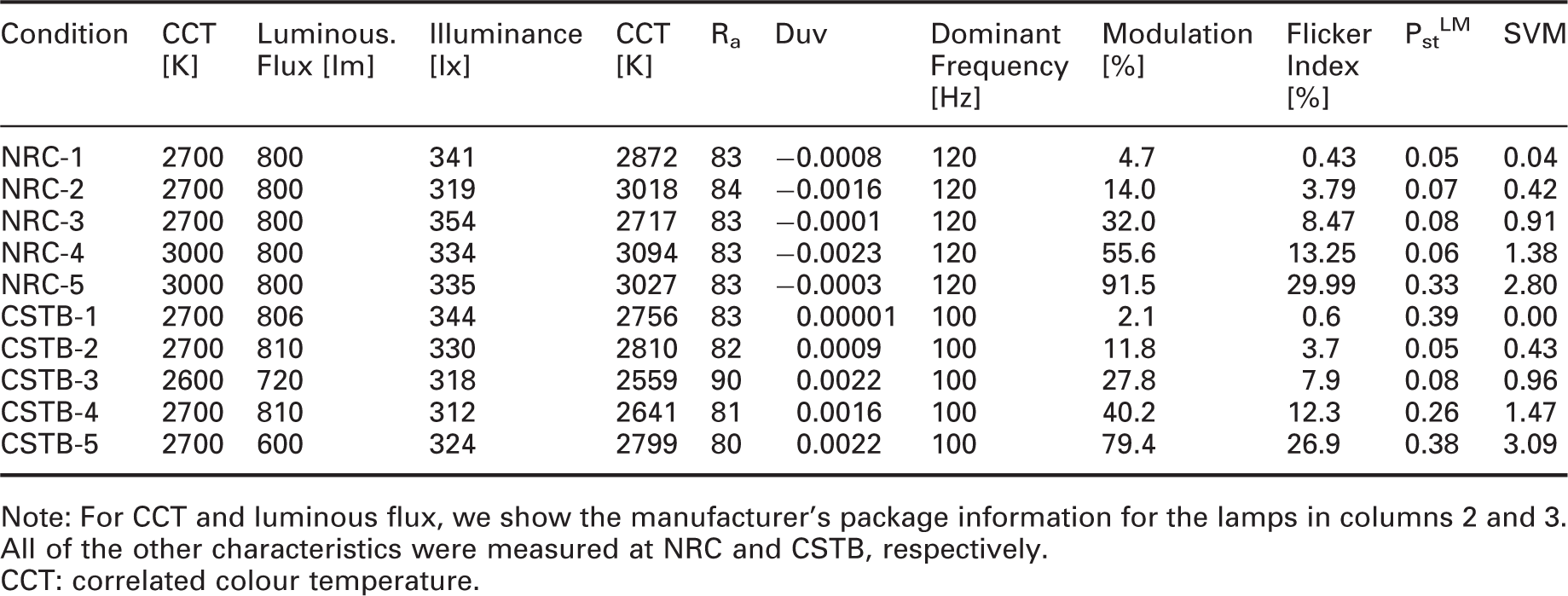
Note: For CCT and luminous flux, we show the manufacturer’s package information for the lamps in columns 2 and 3. All of the other characteristics were measured at NRC and CSTB, respectively.
CCT: correlated colour temperature.
2.3 Dependent variables
The same questions and tasks were used in both countries. They were originally written in English and translated to French at CSTB.
2.3.1 Stroboscopic effect
Within each trial, there were two probes for the stroboscopic effect. The first of these used a white dot on a rotating horizontal black disk, as was used by prior researchers11,15,20,27 (see Figure 1). The dot on the disk rotates at a speed of 4 m/s, which the prior researchers considered to be the upper limit of the speed of hands moving in an office context. The participant was asked to look at the disk and to report whether or not they saw individual dots (stroboscopic effect) (see Figure 3). The rotating disks used in this experiment were designed, assembled and programmed at NRC using a programmable DC motor, two being shipped to CSTB with a suitable power cable for operation in France. The reflectance of the black surface was ρ = 6.96% and that of the white dot was ρ = 90.85%, making the luminance ratio 13.05:1, as similar as possible to the original paper.
20
For each trial, the participant was asked to answer ‘yes’ or ‘no’ to the question ‘Do you see white dots?’ at NRC and ‘oui’ or ‘non’ to ‘Voyez-vous des points blancs ?’ at CSTB.
This series of images shows conceptually the effect of increasing the SVM on the detection of the stroboscopic effect on the rotating disc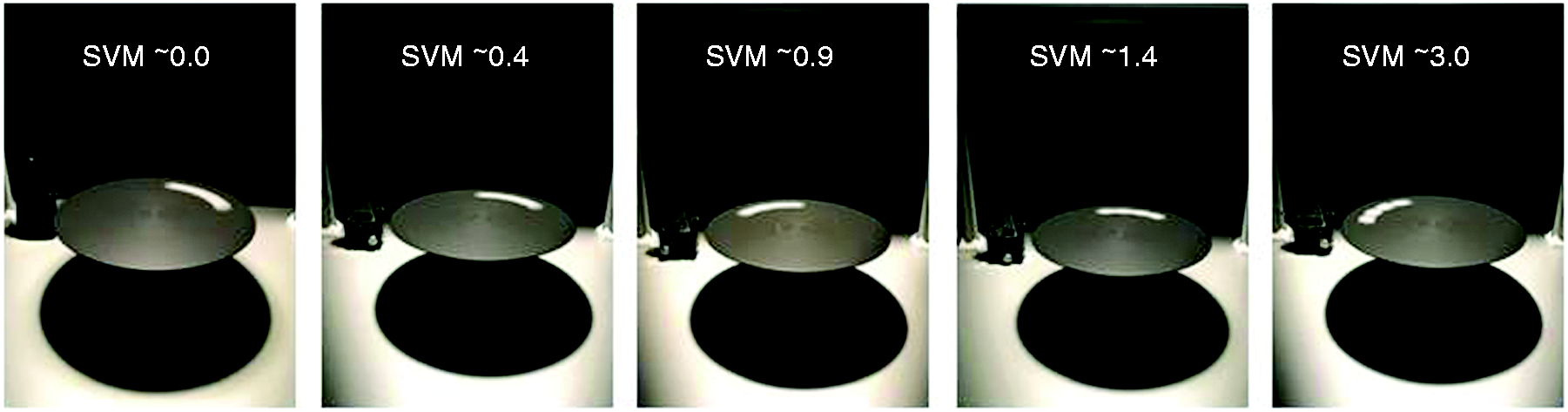
We also added a vertical task. Participants were asked to look at a black dot on the end of the arm of a mechanical metronome moving at 208 beats per minute (bpm) in the data reported here. (Veitch and Martinsons 22 reported preliminary data for 180 bpm in Canada and 150 bpm in France in the first round of data collection, but increased the metronome speed to 208 bpm for both locations for the remaining sessions.) For each trial, the participant was asked to answer ‘yes’ or ‘no’ to the question ‘Do you see black dots?’ at NRC and ‘oui’ or ‘non’ to ‘Voyez-vous des points noirs ?’ at CSTB (see Figure 1 for the metronome used in Canada and Figure 2 for France). The metronomes were identical in the two countries, but each team made and attached its own black dot. The metronome location differed slightly for the NRC and CSTB. At NRC, it was farther from the observer than the rotating disk, and slightly to the side, with the white wall (ρ ∼0.7) of the room behind (see Figure 1, right image). At CSTB, the line of sight placed the very light grey desk surface behind the moving metronome arm (see Figure 2).
2.3.2 Judgements of light sources.
The light source judgements were asked in English at NRC and in French at CSTB
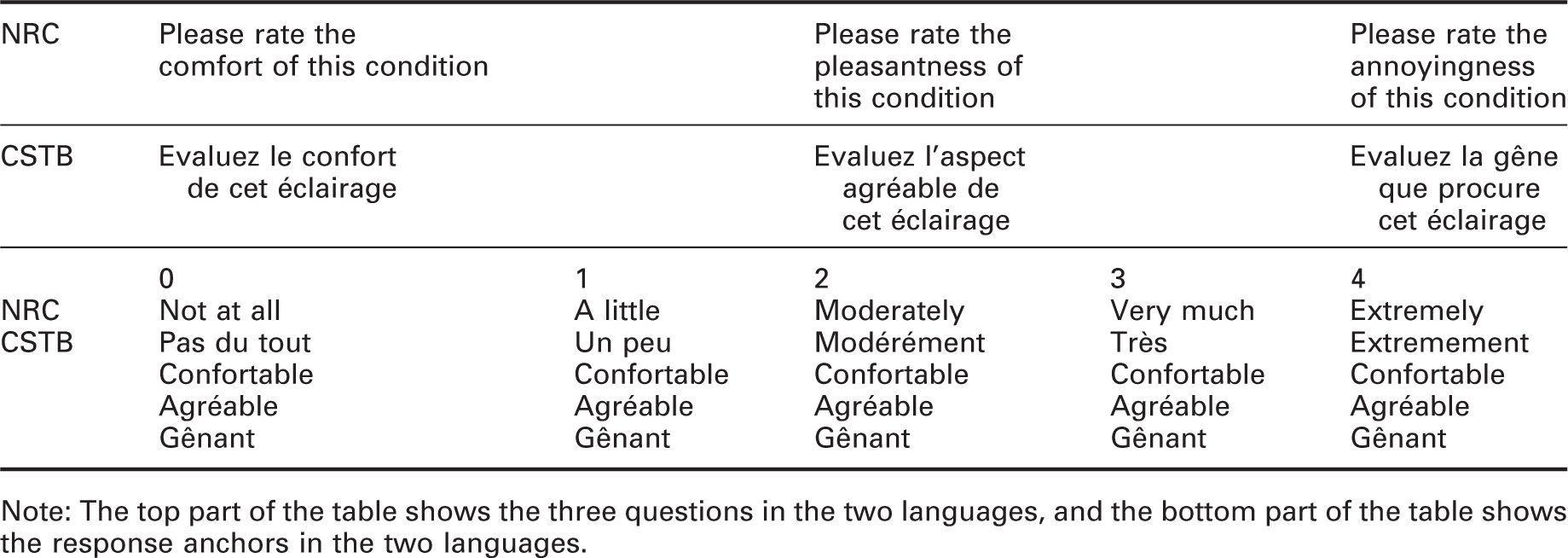
Note: The top part of the table shows the three questions in the two languages, and the bottom part of the table shows the response anchors in the two languages
2.4 Procedure
When participants arrived, a lamp at the lowest SVM level provided the room light. Participants received information about the study and signed the consent form in this condition. They also completed a short paper-based questionnaire to record demographic information (age, sex, education, eye colour 28 and visual corrections).
For the visual perception trials, the participant was asked to rotate away from the desk that held the task (facing the opposite wall) and to close his or her eyes while the researcher set up each trial. Setting up involved moving the light box to reveal one or another light source. Light sources were presented in blocks of five with the conditions in random orders in each block. The random orders of presentation were listed on a pre-printed data sheet for that session. The experimenter asked the participant to turn around, and to look at first the rotating disk to answer the question ‘Do you see white dots?’ with an answer ‘yes’ or ‘no’. Next, the same question was asked for the metronome. After this second question, the participant turned away and closed his or her eyes while the next trial was set up.
In the final block of five trials, the participant was asked to rate the appearance of the condition on the three scales described above after the metronome question.
At the conclusion of the session, the participant was provided the debriefing information sheet and asked not to share the information with other potential participants.
Participation took approximately 50 minutes. In Canada, participants either received an honorarium of $20 for their participation or were awarded 1% bonus credit for a Psychology undergraduate course. In France, participants received a 15 € gift card for their participation.
A total of 96 people were tested in the two countries. Five cases from France were excluded because one of the lamps presented was the wrong lamp and participants had not seen the condition with the SVM = 0.40. The assistants who collected the data reported that some participants had not paid attention to the instructions and appeared not to have attended to the visual task. Rather than relying only on these impressions, we identified six cases (two from Canada and four from France) for exclusion from analysis because they scored 4 or higher positive responses to the condition SVM = 0 (i.e. greater than chance reporting of the stroboscopic effect where none should exist). These cases were consistent with the assistants’ notes taken at the time, which suggested that these individuals might be responding randomly regardless of what they saw rather than giving a true response. Thus, the total sample on which results are based numbered 85.
2.5 Data analysis
We used non-parametric tests because the distributions for the stroboscopic effect detection scores did not meet the assumptions of normality required for parametric tests (e.g. analysis of variance), and applied the same statistical model to all analyses. In all analyses in this report, the alpha criterion for statistical significance was set to p < 0.05. Sample sizes vary between the analyses because of missing data, as explained below.
For every level of the SVM, we compared the data from the two locations (CSTB vs. NRC). We also combined the data from both sites, and then formed groups based on individuals’ PGS pattern 2 scores (see Section 2.1). The comparisons between locations and the comparisons between PGS groups used the Mann–Whitney U test. The tests were repeated for each individual SVM level and for an overall score formed by averaging the detection scores for the five SVM levels.
We also tested for differences between the SVM levels in four successive planned comparisons (0 vs. 0.4; 0.4 vs. 0.9; 0.9 vs. 1.4; 1.4 vs. 3). For these repeated-measures, we used the Wilcoxon Signed Ranks test. We performed these repeated measures tests both for the combined sample and separately for the two locations and for the high and low pattern sensitivity glare (PGS) groups.
3. Results
3.1 Stroboscopic effect – Rotating disc
Data from the first two trials were treated as training runs, and not included in the analysis. For each participant, we averaged the responses to trials 3–10 and scaled them out of a score of 8 (detection score, with theoretical minimum = 0 and maximum = 8). The SVM metric was originally developed from this task. It is intended that the average performance for an SVM = 1 light source should be a detection rate of 0.50, which would mean a score of 4 in this experiment.
There were no statistically significant differences between the two locations in rotating disc detection score: the outcomes for CSTB and NRC were the same for each SVM level (Table 4) and for the overall average (Mann–Whitney U test, Z = −0.39, p = 0.69). Therefore, we present the combined data for the full sample of 85 participants graphically in Figure 4. Looking to the Wilcoxon tests between the SVM levels (Table 4), we see that the distributions of rotating disc stroboscopic detection scores for SVM ∼0 and SVM ∼0.4 did not differ. The rotating disc detection scores did increase for each successive SVM level, with results that reached the criterion level of statistical significance. The pattern of Wilcoxon test results was similar when the sample was split into two groups by location.
This chart shows the detection score for the rotating disc for all participants at both sites at each SVM level, displaying the means in bars and the 25th, 50th, and 75th percentiles overlaid Results of the stroboscopic detection scores for the rotating disc (N = 85) Note: For all tests, the criterion for rejecting the null hypothesis of no effect (statistical significance, α) was p < 0.05. Statistically significant test results are shown in bold text. Splitting the sample by testing location, or by PGS, did not change the results. PGS: pattern glare sensitivity.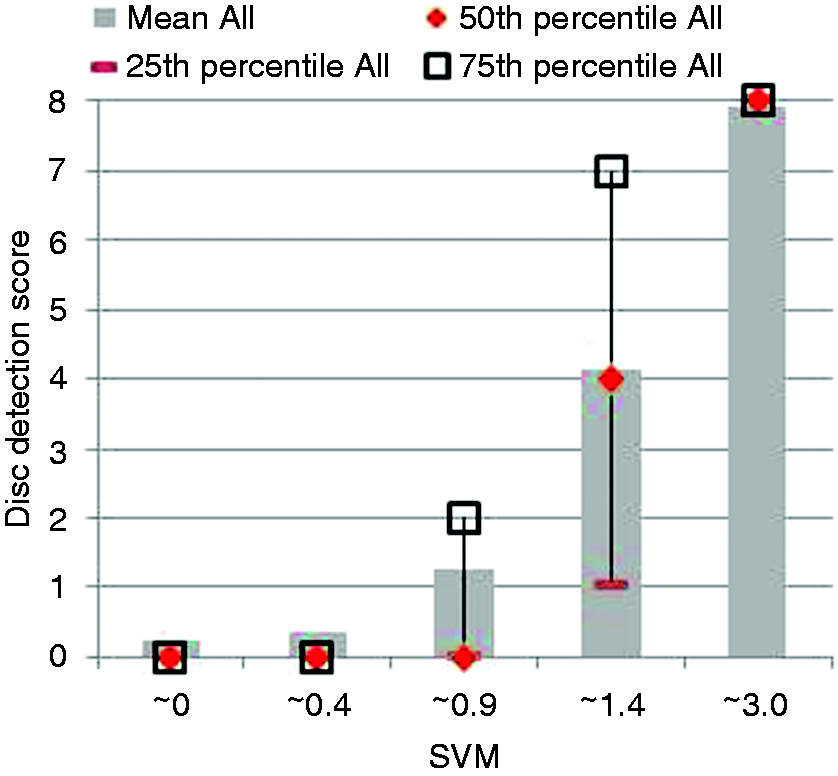
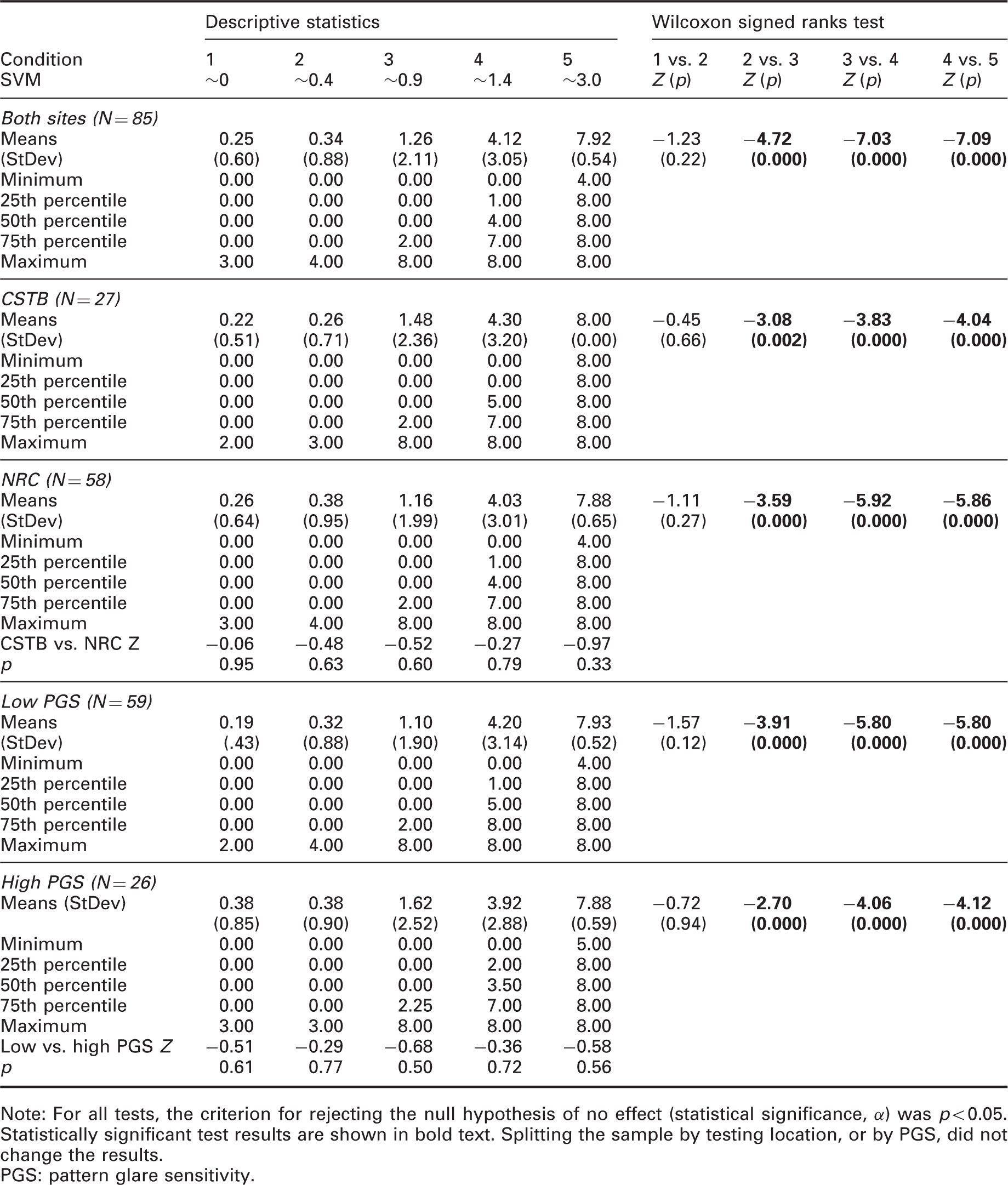
Similarly, there were no statistically significant differences in the Mann–Whitney test results for comparisons between the low and high PGS groups for any SVM level, nor for the overall average (Mann–Whitney U test, Z = −0.01, p = 1.00). When the sample was split into these groups, the pattern of results for the Wilcoxon comparisons between the different SVM levels was the same for both groups (Table 4). PGS, an indicator of sensitivity to ill-effects of visual stress, did not predict performance on this stroboscopic visibility task in this experiment.
3.2 Stroboscopic effect – Metronome
The data reported here are for the detection of the stroboscopic effect on a metronome (vertical task) moving at 208 bpm, replicating Bullough and Marcus. 29 This rate was adopted partway through the study, so there are fewer participants. As for the horizontal disc detection task, we used only the responses from the last eight trials, averaging the responses and scaling them to a maximum of eight. One person from CSTB missed several trials of the metronome question and was not included for this variable. The total sample size for this outcome was N = 50.
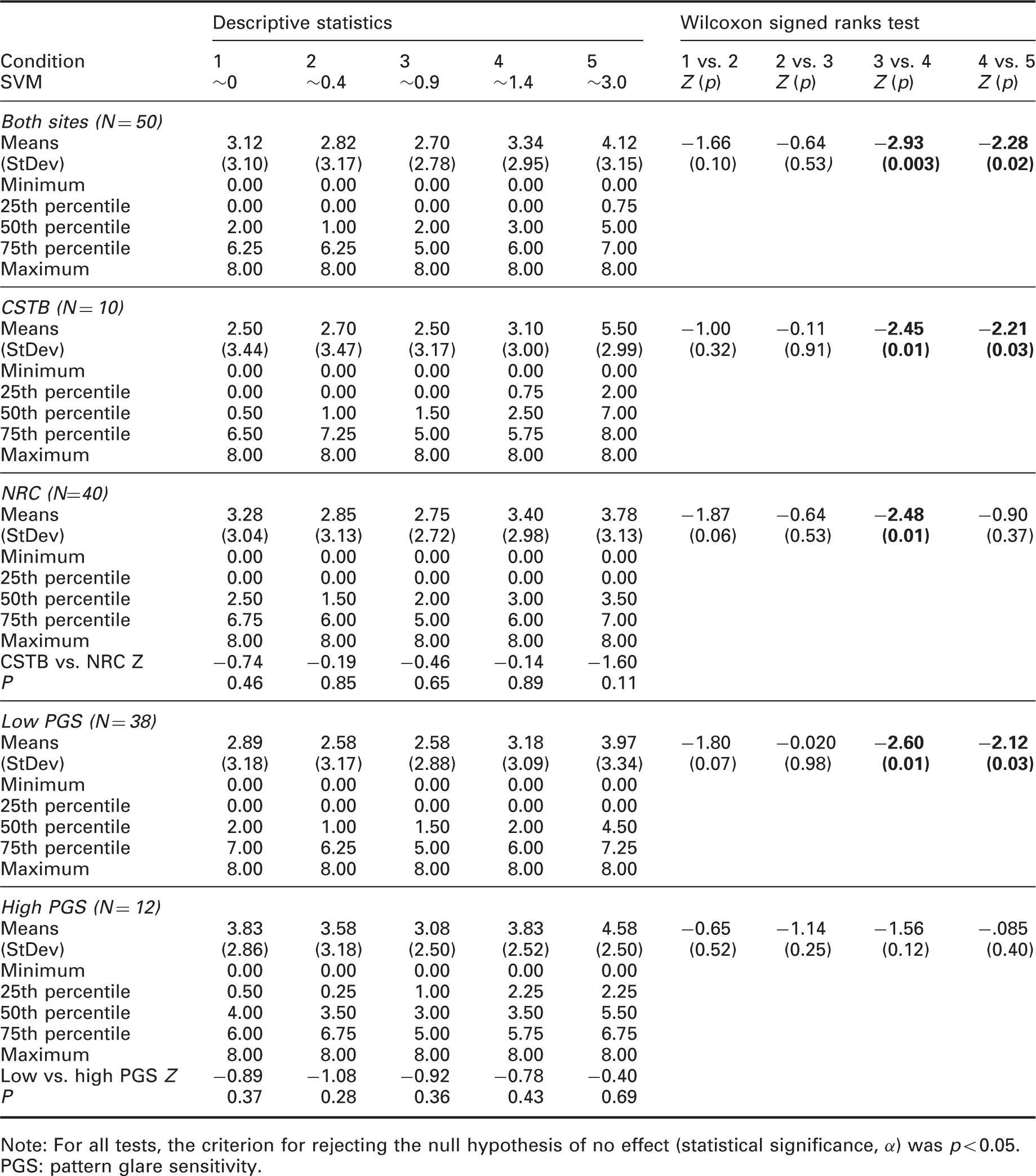
Results of the stroboscopic detection scores for the metronome beating at 208 bpm at both locations (N = 50)
Note: For all tests, the criterion for rejecting the null hypothesis of no effect (statistical significance, α) was p < 0.05.
PGS: pattern glare sensitivity.
The Wilcoxon Signed Ranks tests for the full sample showed that the stroboscopic effect detection scores for the three lower SVM values did not differ from one another. However, the stroboscopic effect became more visible at SVM ∼1.4 as compared to ∼0.90, and still more visible for ∼3.0 as compared to ∼1.4. There were some differences in the subgroup analysis: At NRC, there was no difference between metronome detection scores at 1.4 and 3.0. For the high-PGS group, there were no differences in metronome detection scores between the levels. Figure 5 displays the descriptive statistics for the full sample as a bar chart.
This chart shows the stroboscopic effect detection score for the metronome for all participants at both sites at each SVM level, displaying the means in bars and the 25th, 50th, and 75th percentiles overlaid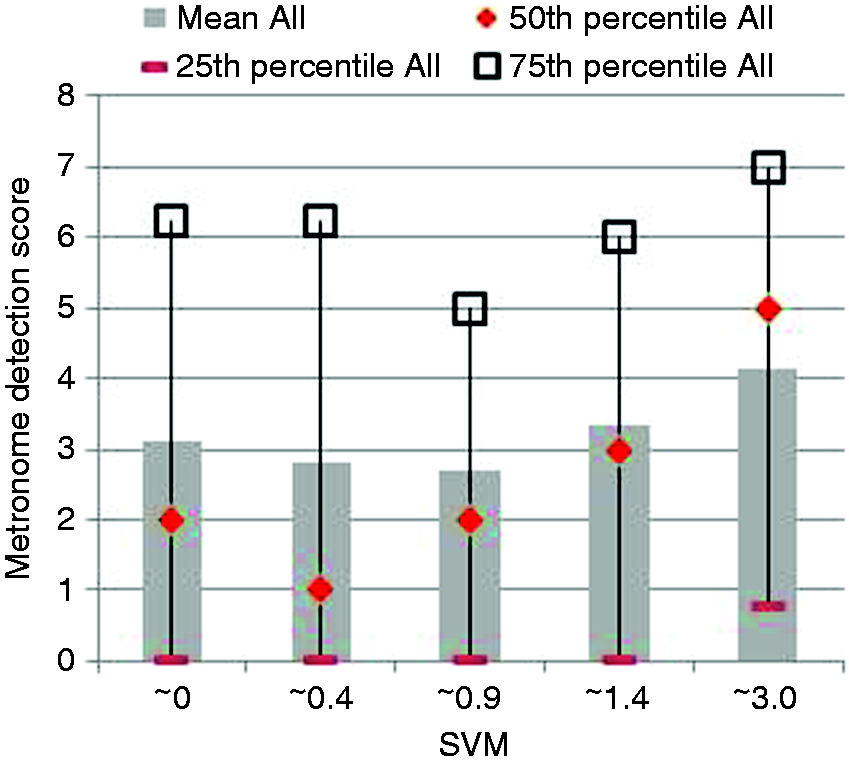
3.3 Acceptability ratings
An internal reliability analysis of the ratings for ‘comfort’, ‘pleasantness’ and ‘annoyingness’ showed that the annoyingness rating did not correlate well to the other items. Therefore, we formed one scale for ‘acceptability’ by averaging the ratings for comfort and pleasantness (higher scores meaning better conditions, theoretical range 0 [not at all] to 4 [extremely]). The Cronbach’s alpha indicator of internal consistency reliability for this two-item scale was 0.81, which by a common rule of thumb is considered very good. We analysed the annoyingness rating separately as a single rating (see Section 3.4).
Table 6 displays the results for the average acceptability ratings and the comparisons between the SVM conditions and groups. The mean and median overall acceptability for each SVM condition were close to the midpoint of the scale (see Figure 6), and did not differ from one SVM condition to the other. The overall average acceptability (across all SVM conditions) was not different between CSTB and NRC (Mann–Whitney U test, Z = −1.06, p = 0.11). Looking at the comparisons between locations, we see statistically significant differences between CSTB and NRC for the acceptability ratings of the conditions SVM ∼0.9 and SVM ∼1.4. In both cases, the CSTB conditions were rated as slightly more acceptable; however, when considered as a difference in median between 2.0 and 1.5 on a scale of 0–4, the difference is small. There also was one difference between sites in the SVM comparisons; the NRC site showed a drop in acceptability between SVM ∼0.40 and SVM ∼0.90. This drop is consistent with predictions, but there was no consistent effect across the SVM conditions (higher SVM conditions were not any less acceptable).
The acceptability of the light conditions in these short exposures did not differ by SVM condition Results of the acceptability ratings of the light sources, both the descriptive statistics and the comparisons Note: For all tests, the criterion for rejecting the null hypothesis of no effect (statistical significance, α) was p < 0.05. PGS: pattern glare sensitivity.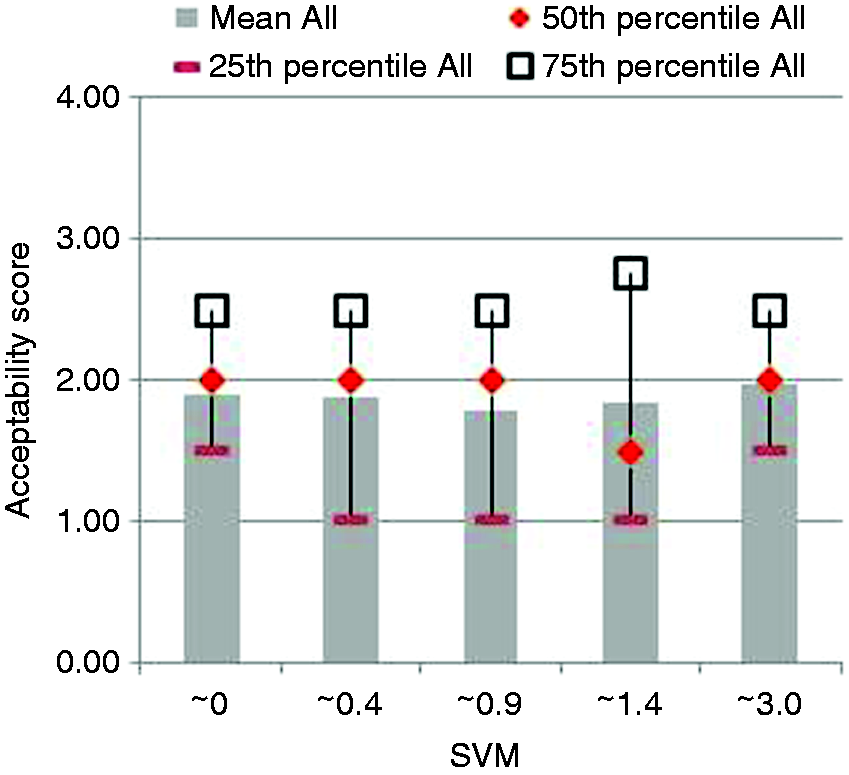
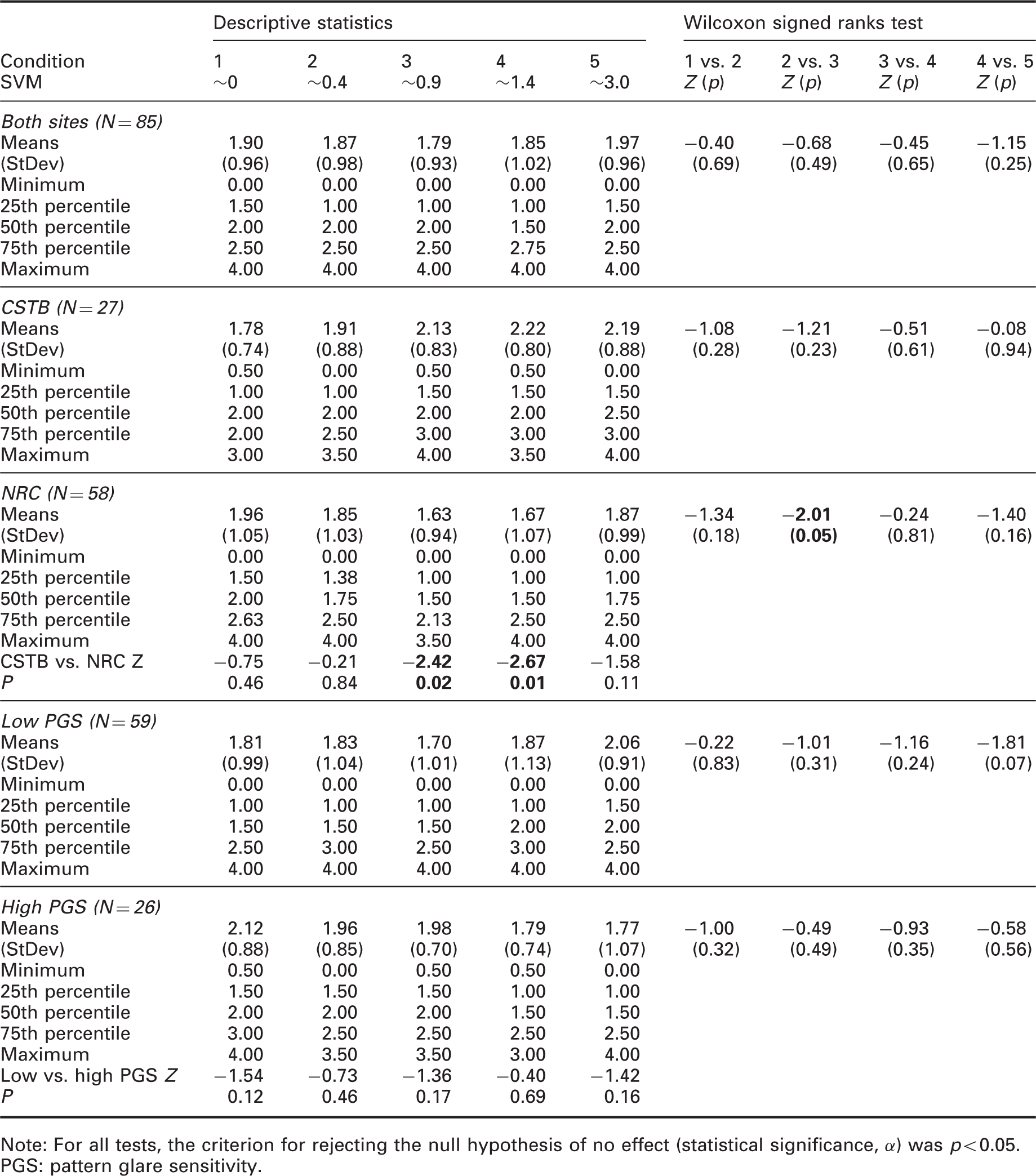
There were no differences between the PGS groups in the acceptability of the conditions, shown in the individual SVM tests (Table 6) nor in the overall average scores by PGS groups (Mann–Whitney U test, Z = −0.62, p = 0.54). Similarly, the two groups showed the same pattern of comparisons across the SVM conditions (Wilcoxon tests).
3.4 Annoyingness ratings
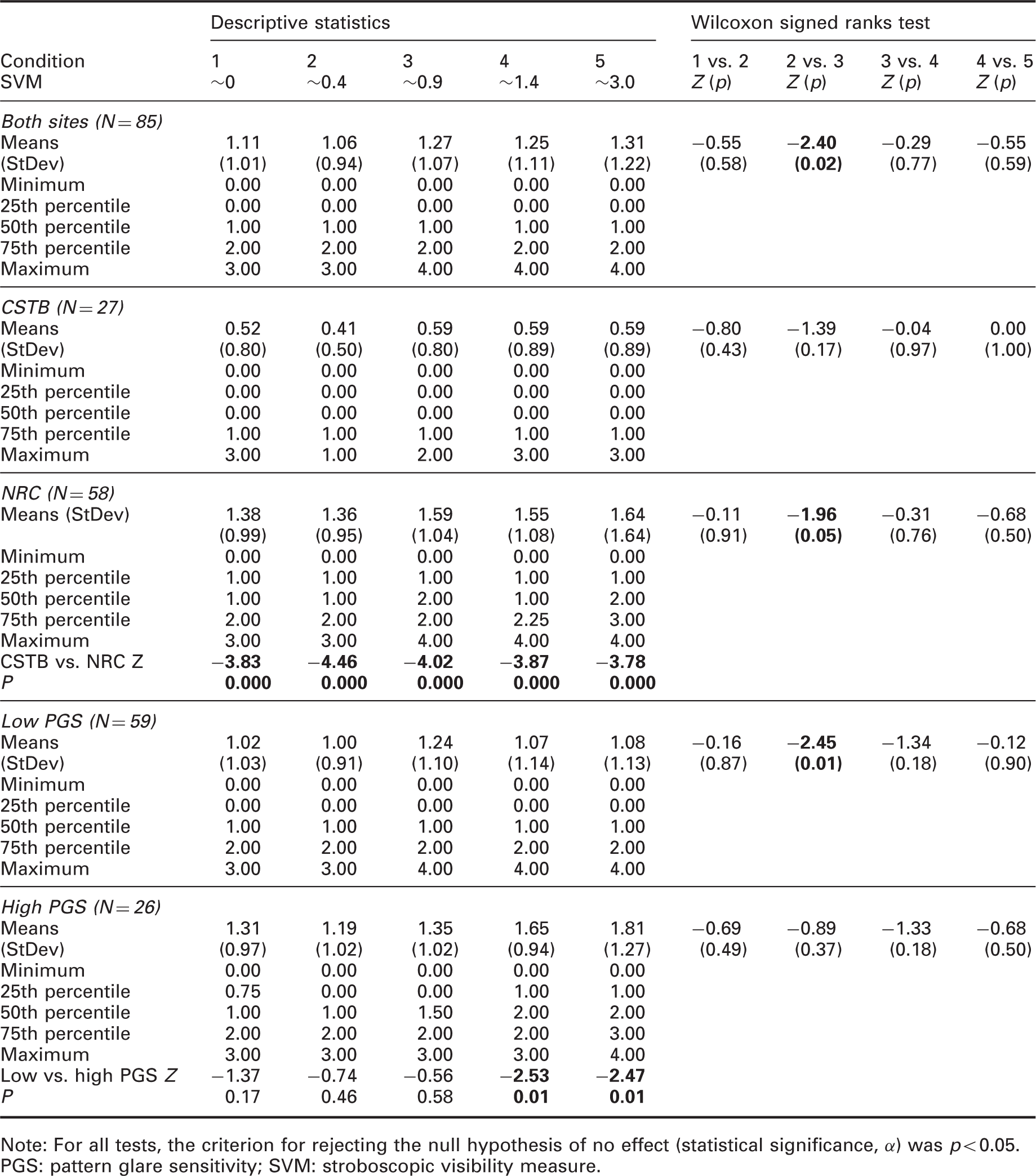
Results of the annoyingness ratings of the light sources, both the descriptive statistics and the comparisons
Note: For all tests, the criterion for rejecting the null hypothesis of no effect (statistical significance, α) was p < 0.05.
PGS: pattern glare sensitivity; SVM: stroboscopic visibility measure.
There were differences in responding between CSTB and NRC on the ratings for each SVM level, and in their overall average annoyingness ratings (Mann–Whitney U test, Z = −4.85, p = 0.000). The CSTB participants rated their light sources as consistently less annoying than the NRC participants. Note that the CSTB sessions took place in French and the NRC sessions took place in English. We cannot rule out the possibility that the difference in annoyingness ratings reflects a translation effect; perhaps the words used in the two languages had subtly different meanings. It is also possible that the difference reflects the fact that the dominant frequency of the TLM was 100 Hz for CSTB and 120 Hz for NRC; however, this seems unlikely to explain the difference for two reasons. First, there was no difference in perception between the two countries, as one might expect if the dominant frequency influenced perception directly. 29 Second, the direction of this effect is opposite to what would be expected; the lower frequency should be more easily detected and, by extension, possibly more annoying. Overall, the language difference seems the most likely explanation.
Looking at the comparisons between SVM levels within the two sites, we see that none of the comparisons showed any statistically significant differences in the CSTB data. Within the NRC data, there was an increase in annoyingness between SVM ∼0.40 and SVM ∼0.90. The higher level of annoyingness persisted for the NRC participants for SVM ∼1.4 and SVM ∼ 3.0.
The split of the data set based on PGS scores also showed differences between the groups in the annoyingness ratings, and these were as one would expect, with annoyingness ratings being higher for the high-PGS participants: There was an overall difference in average annoyingness between PGS groups (Mann–Whitney U test, Z = −2.12, p = 0.03; low-PGS median = 0.80 and high-PGS median = 1.5). For SVM ∼1.4 and SVM ∼3.0, annoyingness was higher for the people higher in PGS. The high-PGS group showed no statistically significant differences in the comparisons between the SVM conditions, but the low-PGS group showed a small increase for SVM ∼0.90 in comparison to SVM ∼0.40.
Figure 7 displays the overall result graphically, for the full sample. Overall, the annoyingness ratings were low, but there was a small increase from SVM ∼0.40 to SVM ∼0.90.
The annoyingness of the light conditions in these short exposures showed a small increase between SVM ∼0.40 and SVM −0.90 in the full sample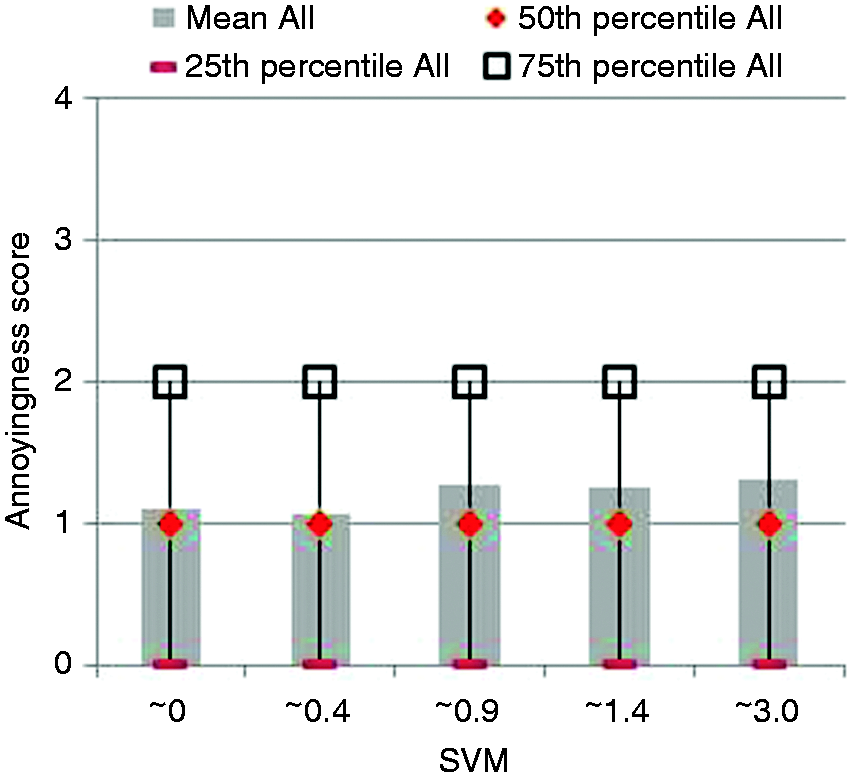
3.5 Inter-relationships
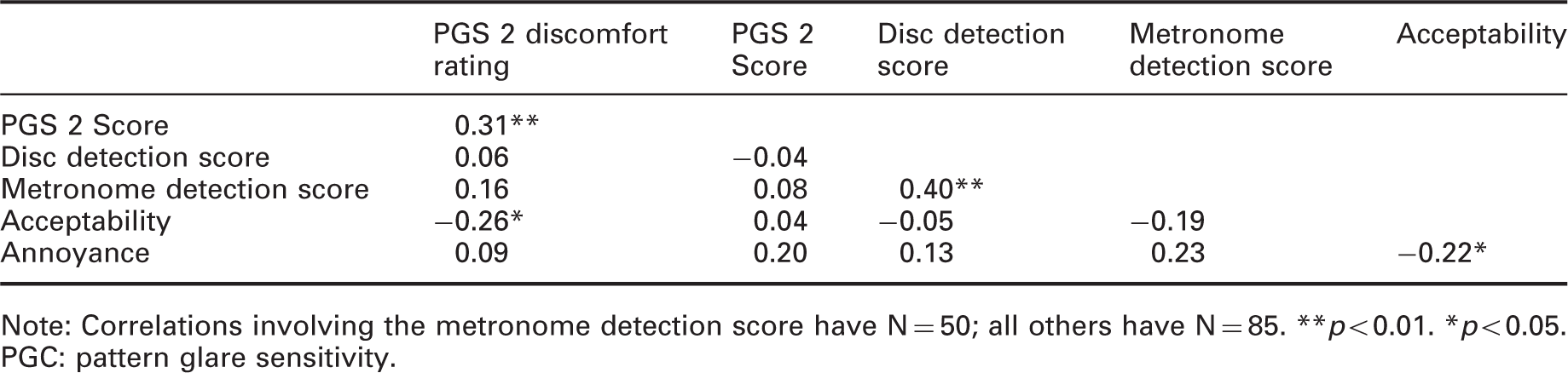
Pearson correlation coefficients between the principal variables
Note: Correlations involving the metronome detection score have N = 50; all others have N = 85. **p < 0.01. *p < 0.05.
PGC: pattern glare sensitivity.
People with higher scores on PGS pattern 2 also tended to experience greater discomfort while looking at that pattern (r = 0.31, p = 0.004, N = 85). Given that the viewing time for each pattern was short, this relatively low correlation is to be expected because of restricted variability in discomfort among people who were less sensitive. People who tended to see the stroboscopic effect for the rotating disc also tended to see it for the metronome (r = 0.40, p = 0.004, N = 50). Average acceptability was negatively correlated with average annoyingness (r = −0.22, p = 0.04, N = 85) and with the discomfort experienced in response to pattern 2 (r = −0.26, p = 0.02, N = 85). Given the short exposure times to each condition when the ratings were made, the correlations are best interpreted as providing guidance for new hypotheses to be developed. The directions of these correlations are as expected, which adds evidence for the validity of these outcome measures and suggests that they could be useful in studies with longer exposure times, from which guidance about the effects of SVM in application could be derived.
4. Summary and conclusions
In the preparations for this experiment, both laboratories acquired a variety of commercially available LED replacement lamps that are available on the North American and European markets in 2018. In the laboratory, the lamps were measured under clean sinusoidal power supply conditions and found to exhibit a wide range of TLM characteristics, from nearly none to very high SVM. Each laboratory selected five lamps for this experiment, based on their SVM characteristics, taking care to seek similar performance at each chosen level to permit the data to be combined. The primary visual perception task in this experiment was carefully chosen to replicate the rotating disc task with which the SVM was developed.15,20,27 The metric is defined such that the average person ought to detect the stroboscopic effect 50% of the time if SVM = 1.
The results of this experiment showed that, under these experimental conditions, the average rotating disc detection was lower than expected. For our SVM∼0.9 condition, the average score was 1.26 (out of 8) and only 25% of the people scored above 2 out of 8. The definition of the SVM would lead to the expectation that the average should be closer to 3, or perhaps close to 4, when the SVM approaches 1.0. There were two individuals who scored 8 when the SVM was ∼0.90. The 90th percentile was 5.4 at the SVM ∼0.90, indicating that 10% of the population (eight people) scored higher than this. The rotating disc stroboscopic detection performance is strongly non-linear with increasing SVM (see Figure 4), and that it appears that even small increases in the SVM above 0.9 can dramatically increase the disc detection score. For SVM ∼1.4, half of the sample scored more than the threshold detection (4 out of 8) and 25% of the sample scored 7 or 8.
The metronome task replicated Bullough and Marcus, 29 who examined a metronome moving at 208 bpm. They reported that a logarithmic function of the SVM values of their range of experimental conditions explained 79% of the variance in average metronome detection at 100 Hz, which compares very well to the 78% explained variance for the data reported here (excluding our SVM = 0 condition, for which a log function cannot be fit). This consistency gives us greater confidence in the interpretation of the metronome detection results. Most notably, the increase in metronome detection scores between SVM ∼0.9 and SVM ∼1.4, and between SVM ∼1.4 and SVM ∼3.0 were statistically significant. Note that the metronome task was based on a negative contrast, whereas the disc detection task had a positive contrast; contrast polarity is another variable that might influence stroboscopic visibility and could be worthy of further investigation.
The judgements of acceptability (pleasantness and comfort average) did not show any consistent relation to the SVM, but over the whole sample, annoyingness did increase from SVM ∼0.4 to SVM ∼0.9 and stayed at that level for higher levels of the SVM. Annoyingness was higher for the NRC participants than the CSTB participants, a difference that could have been caused unintentionally in the translation from the English used at the NRC to the French used at the CSTB.
Visual stress is a syndrome characterised by headache and the occurrence of unwanted visual illusions. 21 We had hypothesised that stroboscopic effect detection would be higher for people with greater risk of visual stress, which are those with high sensation scores when looking at pattern 2 of the Wilkins and Evans 23 Pattern Glare Sensitivity test. However, there were no differences in stroboscopic detection scores for either the horizontal rotating disc or the vertical metronome. The acceptability ratings also did not differ between the groups based on this indicator of sensitivity; however, the more sensitive group (high-PGS) did report greater annoyance with the SVM ∼1.4 and SVM ∼3.0 conditions than the less sensitive (low-PGS) group. Note that these ratings occurred following a very short exposure to the conditions. Longer exposures could be expected to lead to different outcomes.
Future research will be necessary in order to address the inevitable limitations of this experiment. The limitations, and suggestions for studies that could address each, include:
A greater number of female than male participants overall – future studies should aim for a better balance between the sexes. Only young participants – other research will need to extend the work to older people, who might be less sensitive, but who might also find conditions less acceptable and more annoying. Similarly, a limited range of eye colour and ethnicity in the sample might have excluded some sensitive individuals – replication in a broad sample of varied ethnicity and eye colour is needed for the best population characterisation. Short viewing times – effects that develop over a longer time course than visual perception (e.g. health effects) will require longer exposures. Only an overhead view of the horizontal task and a straight-on view of the vertical task – other geometries of moving objects should be investigated. Only five TLM levels, leaving gaps where information is lacking – future studies could include conditions between the SVM levels studied here, or could characterise the light sources using other indicators of TLM (e.g. frequency; modulation depth; flicker index; etc.). Non-immersive surroundings (which had been the setting for prior research
15
) – future investigations could vary the TLM of ambient room lighting, perhaps also including multiple luminaires in the field of view; and, Only one visual perception outcome investigated, the stroboscopic effect – thus, these data cannot inform concerning possible effects of TLM (whether characterised by the SVM or any other metric) on detection of the phantom array, nor on complex phenomena like eyestrain, headache, reading or cognitive performance, which are outcomes that have also been identified as being of interest for the writers of standards and regulations related to TLM.
10
This report provides the first set of population data concerning stroboscopic detection in response to commercially available lamps, characterised specifically by the SVM, and including consideration of the possible sensitivity of the observers. This experiment was conducted to contribute data for discussions concerning limit values for TLM where, at present, very limited evidence exists. 16 There remains discussion concerning which metrics would be the best predictors of the various effects of TLM,10,11 questions which this experiment was not designed to address. Regardless of which metric or combination of metrics are chosen based on the evidence, the decision to place a limit on any metric involves two choices: (1) The acceptable frequency of the outcome occurring; and (2) the acceptable proportion of the population who might experience this outcome. 10 These choices are value judgements that research can inform but cannot determine.
Supplemental Material
LRT898718 Supplemental material1 - Supplemental material for Detection of the stroboscopic effect by young adults varying in sensitivity
Supplemental material, LRT898718 Supplemental material1 for Detection of the stroboscopic effect by young adults varying in sensitivity by JA Veitch PhD C Martinsons PhD in Lighting Research & Technology
Supplemental Material
LRT898718 Supplemental material2 - Supplemental material for Detection of the stroboscopic effect by young adults varying in sensitivity
Supplemental material, LRT898718 Supplemental material2 for Detection of the stroboscopic effect by young adults varying in sensitivity by JA Veitch PhD C Martinsons PhD in Lighting Research & Technology
Footnotes
Acknowledgements
The authors thank Carsten Dam-Hansen from the Technical University of Denmark and Steve Coyne of Light Naturally (Australia) for their guidance and input in the project design and review of the findings. The authors also express their deep gratitude to Peter Erwin (Der LichtPeter laboratory, Germany), for his contributions to the lamp choices for CSTB, and Naomi Miller of Pacific Northwest National Laboratory (USA) for her assistance in the selection of the LED lamps used by the NRC. At the NRC, contributing staff included Chantal Arsenault, Erhan Dikel, Steven Kruithof, Sandra Mancini, Travis Moore, Saša Muradori, and Mark Vuotari. We thank Prof. Chris Herdman of the Carleton University Applied Cognitive Engineering Laboratory for his assistance with data collection. At the CSTB, contributing staff included Nicolas Picard, Jan Jagla and Simon Bailhache.
Declaration of conflicting interests
The authors declared no potential conflicts of interest with respect to the research, authorship, and/or publication of this article.
Funding
The authors disclosed receipt of the following financial support for the research, authorship, and/or publication of this article: This work was funded by the IEA 4E SSL Annex with contributions from the governments of Australia, Canada, Denmark, France, Sweden and the United Kingdom. Additional support was provided by the National Research Council of Canada High Performance Buildings program (project A1-014733) and by the Centre Scientifique et Technique du Bâtiment through its Health and Comfort Program SEC 2.1.

References
Supplementary Material
Please find the following supplemental material available below.
For Open Access articles published under a Creative Commons License, all supplemental material carries the same license as the article it is associated with.
For non-Open Access articles published, all supplemental material carries a non-exclusive license, and permission requests for re-use of supplemental material or any part of supplemental material shall be sent directly to the copyright owner as specified in the copyright notice associated with the article.
